
Business
Warren Buffett steps down as Berkshire chairman after six decades

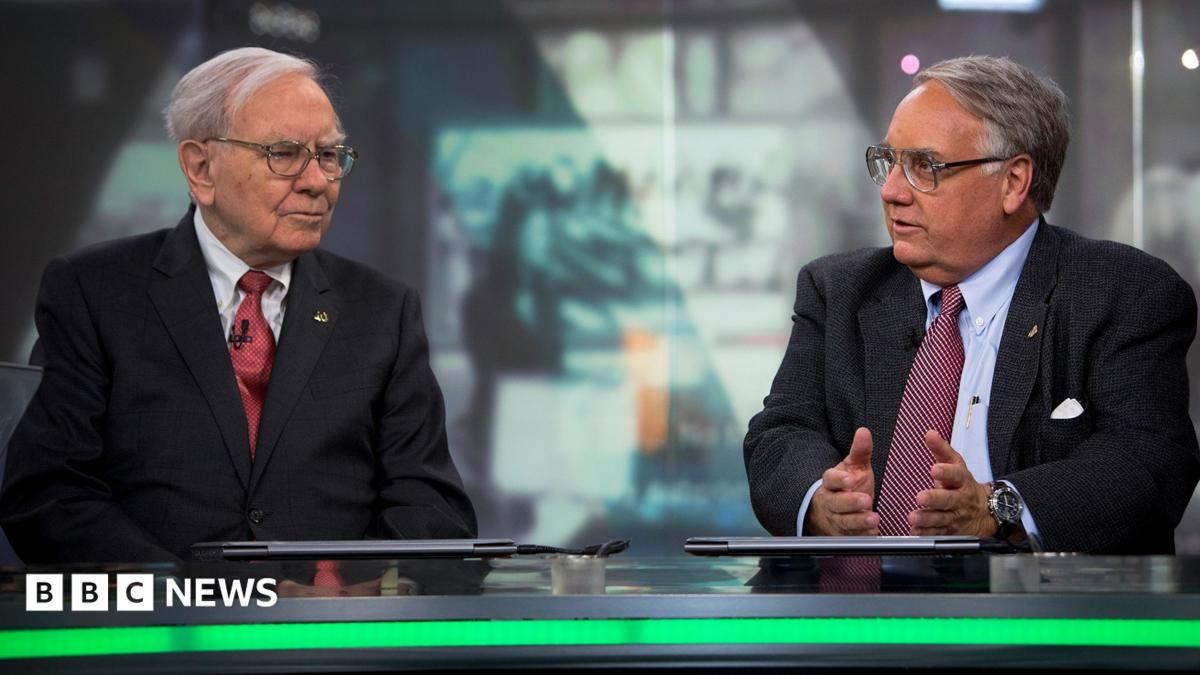
Warren Buffett has stepped down as chairman of Berkshire Hathaway, handing over leadership to his son Howard in the final chapter of a long-planned transition at the US business giant.
At 96, the world-famous investor will move into an advisory role as chairman emeritus and remain on the company board to offer his “judgement and perspective”, according to a letter to shareholders, external.
The decision comes nine months after Buffett passed the chief executive role to Greg Abel, with his son, Howard, who has been a director since 1993, taking over non-executive board duties.
Known as the “Oracle of Omaha,” Buffett built one of the most successful investment track records in modern history.
He took control of Berkshire Hathaway in 1965 when it was a struggling New England textile mill and turned it into a $1.1 trillion (£822b), global conglomerate.
Today, the business owns a wide range of well-known brands including GEICO car insurance, Dairy Queen, and BNSF railway system. It also owns large stakes in companies like Apple and Coca-Cola – a brand close to Buffett’s heart, as he famously drinks five cans a day.
Buffett has made his mark through “value investing” – a strategy focused on finding companies with solid fundamentals, buying them at fair prices, and holding them for decades.
His annual letters to shareholders and festival-like annual meetings turned him into a leading mentor across the financial world.
Despite his retirement from the top board post, the change is considered an orderly passing of the baton rather than a sudden shock.
“The timing is right to complete the transition,” Buffett wrote, noting he had recently celebrated his 96th birthday and the first birthday of one of his great-grandchildren, who is “moving a bit faster” than he is.
The company assured investors that day-to-day operations will remain steady.
While Greg Abel manages corporate strategy and capital decisions, Howard Buffett’s main duty as chairman will be guarding the firm’s “culture and values”. A former farmer, philanthropist, and sheriff, the younger Buffett brings more than three decades of board experience to the role.
Buffett concluded his letter by saying it had been the “privilege of a lifetime” to serve as chairman, but acknowledged that in the end, “Father Time always wins”.

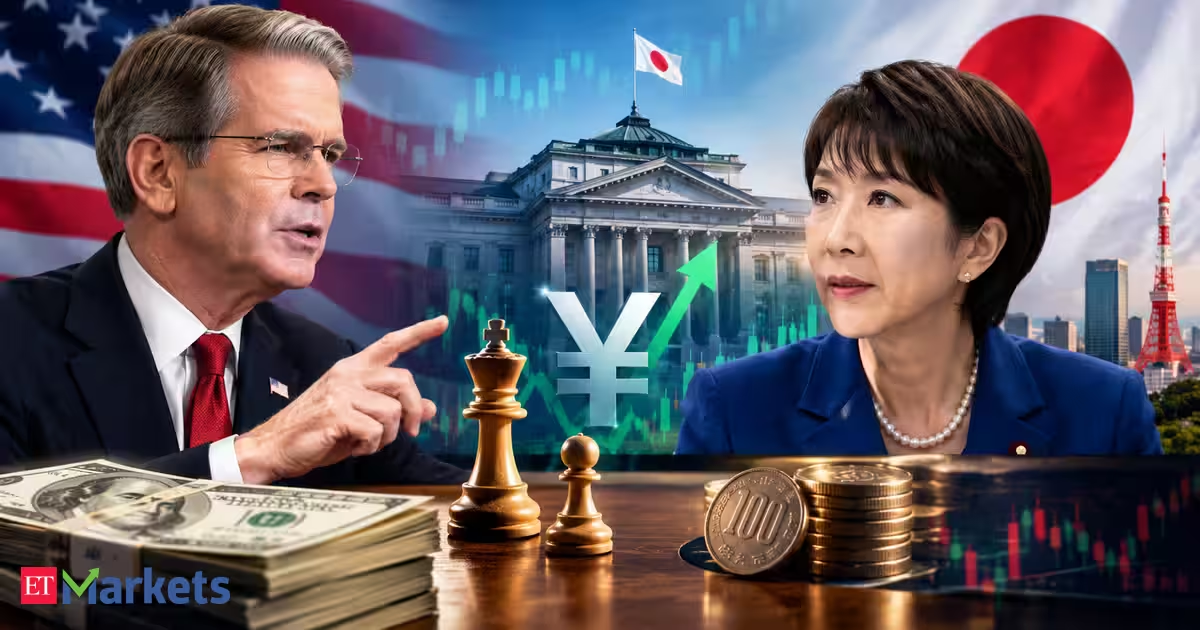
For months, Treasury Secretary Bessent had told Katayama and other officials privately that Japan should rein in its massive fiscal spending and that its central bank needed to raise interest rates, according to three people familiar with the situation.
The Japanese worried that inflation stoked by the weaker yen would hurt Prime Minister Sanae Takaichi with voters. Bessent was more concerned that a sell-off in Japanese bonds could spill over to U.S. debt, the people said. Katayama’s call for Washington’s help in a coordinated yen-buying spree enabled Bessent to press his case.
He urged Japan to first address fundamental factors driving down the yen – a reference to Takaichi’s big spending plans – and avoid any “inconsistency” between monetary and fiscal policies, two of the people said. In short: overhaul the policies that counter the Bank of Japan‘s fight against inflation.
The June 22 call, the details of which haven’t been previously reported, helped set the stage for massive joint intervention by Washington and Tokyo in late July, according to the people, who spoke on the condition of anonymity.

This account of the interactions between Japan and the U.S. shows how Bessent used Washington’s leverage over currency and Treasury markets to extract policy concessions from a key ally – forcing Takaichi to navigate the competing demands of voters and her most important security partner.
“Bessent has run out of patience with Japan,” said David Boling, managing director for Japan at The Asia Group, a consultancy. The U.S., he said, wants a stronger, more stable yen, less risk of Japanese selling of Treasuries, and policy that looks more credible to markets on inflation and fiscal stability.Japan’s Ministry of Finance and Takaichi’s office declined to comment. The BOJ didn’t respond to a request for comment.
A U.S. Treasury spokesperson declined to comment on specific private discussions with Japanese officials. Separately, a Treasury official told Reuters “monetary-policy decisions are for Japanese authorities to make” and that “U.S. interest in orderly yen markets is not about targeting a particular exchange rate.”
American Leverage
A sharp rise in Japan’s long-term yields would risk pushing up U.S. borrowing costs, given Japan is the largest foreign holder of Treasuries. For Bessent, who styles himself as “America’s leading bond salesman,” that would be an unwelcome development as Washington grapples with its own swelling deficit.
When Bessent met Katayama in Japan in May, he stressed the need for higher BOJ rates, three sources said. After that, a rate hike in June or July was considered a given within the Japanese government, said one of the sources.
The BOJ’s June hike gave Katayama hope that Bessent would agree to her request for Washington to join a coordinated yen buying spree, said one of the sources.
Instead, Bessent in the June phone conversation repeated his earlier calls for Japan to overhaul spending that he felt undermined the BOJ’s efforts to rein in inflation.
“The United States does not want Japan, its ally, to lose economic strength because of excessive yen weakness,” said Takehiko Nakao, who served as Japan’s top currency diplomat between 2011 and 2013.
The call crystallised a tension Takaichi faces: She favours “Abenomics“, the mix of big spending and ultra-low rates championed by her political hero, former Prime Minister Shinzo Abe. But she is now pressured by markets and Washington.
That pressure became clear in July when Katayama publicly flagged that Japan’s state pension fund, the world’s largest, could buy more domestic assets, a move investors read as support for Japan’s bond market.
After the BOJ held rates steady in July, Governor Kazuo Ueda struck a hawkish tone, signalling a hike was coming soon.
That signal proved decisive. Moments after the BOJ’s meeting, the yen spiked, first on Japan’s solo intervention, before combined U.S.-Japanese action extended the rally.
Katayama and her top currency diplomat, Atsushi Mimura, negotiated the joint intervention with the U.S. while the BOJ met, one of the people said.
Despite months of groundwork, the late July intervention came together quickly, this person said.
“This is a culmination of Japan’s currency alliance with the United States,” Mimura said, announcing the joint intervention.
‘I Am The House’
That alliance, however, soon hit headwinds.
Within weeks, the yen slid and Washington grew frustrated with Takaichi’s lack of progress in rolling back stimulus and a global spike in bond yields.
At a U.S.-hosted G20 finance leaders’ gathering on August 31-September 1, Bessent again called for higher Japanese rates and fiscal tightening. But this time, his message was sharper.
In an interview with Reuters then, Bessent said Japan should “sit back and enjoy the success of Abenomics”, noting the age of deflation had passed and that combating inflation, not stimulating the economy, was now the critical objective.
Those remarks were Washington’s strongest signal of its displeasure over the remnants of Abenomics it saw in both Takaichi’s policy and political loyalists.
“In the past, the message was more along the lines of, ‘We expect Japan to pursue the right policies’,” Nakao said.
Days later, Japan’s benchmark yield hit a 30-year high above the key 3% milestone, piling pressure on Takaichi to water down her spending ambitions.
“Given Japan’s huge public debt, Japan needs to present a credible medium- to long-term fiscal outlook, and demonstrate consistency between monetary and fiscal policy, to avoid an unwelcome spike in long-term interest rates,” said Mitsuhiro Furusawa, Japan’s former top currency diplomat.
U.S. scrutiny of Japan’s finances prompted Katayama to assure her G20 counterparts that Japan would shed its over-reliance on additional spending and avoid issuing debt to fund tax cuts.
In comments to reporters after a meeting with Bessent at the G20, Katayama recounted showing him remarks by Takaichi to Japanese newspaper Yomiuri that stressed the premier’s resolve to “achieve growth and fiscal discipline simultaneously”.
“He seemed to understand, saying that’s very good,” Katayama said.
A week later, Bessent was again helping Japan with strong warnings against yen bears, saying he had asymmetric information and good insight into what Japanese policymakers, including the BOJ, would do.
“I am the house now,” Bessent said this month, adding “you can bet against me if you want.”
The yen jumped against the dollar.
Tough Trade-Offs
Bessent’s demands broadly align with the policy direction of the BOJ, which delivered a widely expected rate hike on Friday.
On fiscal plans, there’s a bigger gap.
Takaichi cannot easily retreat from flagship stimulus plans that drove her party to victory in this year’s election. Her handouts and subsidies to curb fuel costs also helped ease anger over rising cost of living.
Forcing Takaichi to abandon tax plans is also risky for Washington if it weakens an administration of a reliable U.S. ally to counter an assertive China. After joining Tokyo in shoring up the yen, President Donald Trump emphasised the importance of the U.S. partnership with Japan.
In a move that analysts saw as placating markets and Bessent, Takaichi reappointed Katayama as finance minister in a cabinet reshuffle on Thursday.
Katayama – a fiscal conservative at heart – has walked that line since taking office, reassuring markets Japan won’t spend recklessly, even as she promotes her boss’s investment ambitions.
For now, there are no signs Takaichi is backing down. Budget requests for the next fiscal year have ballooned to 143 trillion yen ($916.14 billion), near pandemic-era levels.
Takaichi has pledged to keep new bond issuance at around 40 trillion yen for the fiscal year ending March 2028, above this year’s projected 32.7 trillion yen.
Some officials say that goal could be hard to meet given the temporary sales tax cut, increased defence spending and rising financing costs.
So far, the fiscal standoff is contained – a sign of how much diplomatic capital Takaichi still has with Trump.
Some analysts, however, say Bessent’s approach to Japan over its finances represents an extension of Trump’s trade playbook.
The Asia Group’s Boling said the Trump administration has “never been bashful” dealing with allies, as seen in trade negotiations.
“I think we’re seeing that now more for financial policy matters,” he said.
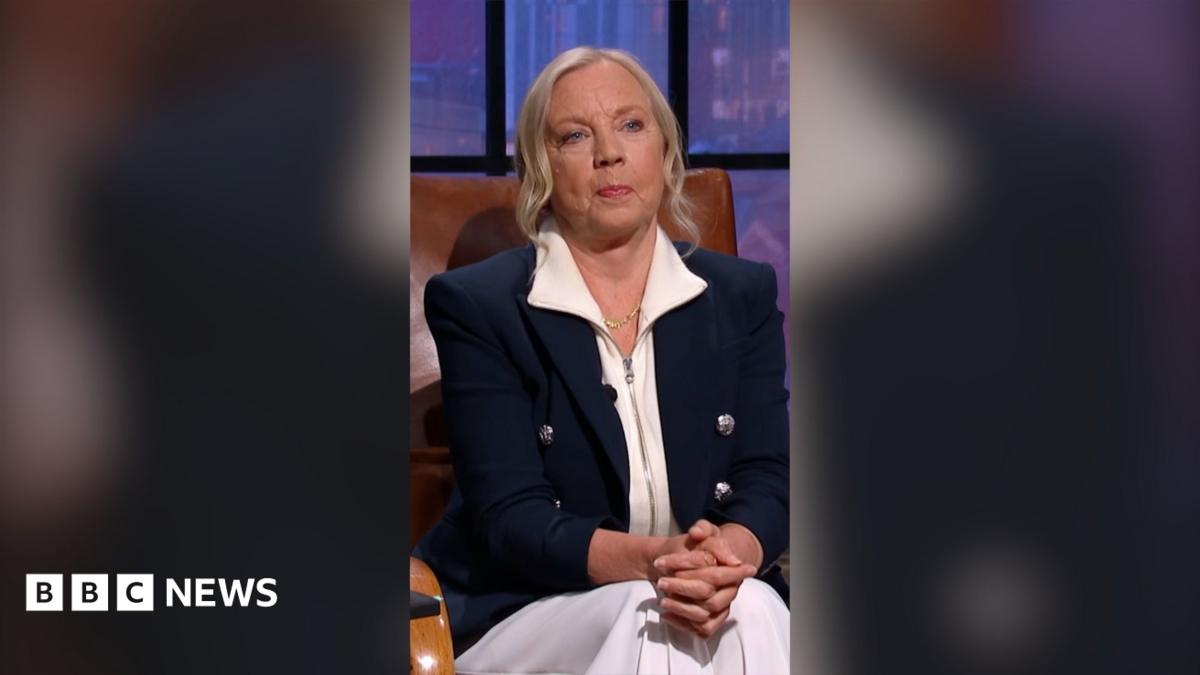
Deborah Meaden makes a bold opening move in response to a pitch.

Bloom Energy COO Satish Chitoori sells $775k in stock

S&P 500 Snapshot: Stocks Edge Lower For 2nd Straight Week
Business
Ex-FBI Agent Claims ‘A Lot of Proof’ Suggests Nancy Guthrie Is Dead, But Officials Still Won’t Confirm

TUCSON, Ariz. — More than seven months after Nancy Guthrie disappeared from her Tucson home, a former FBI agent says she believes available evidence suggests the 84-year-old mother of “Today” show co-anchor Savannah Guthrie is no longer alive, though investigators have not confirmed that assessment and the case remains officially classified as an active missing-person investigation.
Nancy Guthrie was last seen at her Catalina Foothills residence on the evening of January 31 and was reported missing the following day. Investigators have treated the case as a suspected abduction from the outset, and no suspect has been publicly named in the seven-plus months since her disappearance.
The latest assessment came from Jennifer Coffindaffer, a former FBI agent, during an interview on “The Sharpe Exchange,” a YouTube program hosted by Wyatt Sharpe. Coffindaffer said the information available to her led her to believe Nancy had likely died, while explicitly acknowledging that her view represented her own outside interpretation rather than an official investigative conclusion. “We have a lot of proof that she probably isn’t alive,” Coffindaffer said.
Coffindaffer cited several specific factors behind her assessment. She noted that Nancy reportedly required regular medication that investigators believe was never taken after her disappearance. She also pointed to blood identified as Nancy’s found on the front step of her home, along with a message she described as an “apology note” that claimed Nancy was deceased. Coffindaffer additionally referenced comments she said were attributed to Savannah Guthrie regarding her mother’s fate, though such remarks, even if accurately reported, would reflect the family’s private understanding rather than any confirmed legal or medical determination of Nancy’s status.
Despite Coffindaffer’s assessment, Nancy Guthrie remains officially classified as missing. There has been no public announcement that her body has been located, no confirmed cause of death, and no statement from the Pima County Sheriff’s Department declaring her deceased. Coffindaffer’s comments amount to an outside interpretation of reported evidence rather than a conclusion reached by the investigators actually working the case.
The Pima County Sheriff’s Department has repeatedly emphasized that the investigation remains active. “The Pima County Sheriff’s Department remains fully committed to the investigation into Nancy Guthrie’s disappearance,” officials said in a recent statement. “This is an active and ongoing investigation, and we continue to work closely with our partners at the FBI.” The department said laboratories across the country continue assisting with DNA analysis, while tips from the public continue to be received and reviewed. “Advances in technology are aiding investigative efforts,” the statement said, adding, “At this time, we do not have any additional information to provide.”
The limited public detail released by investigators has fueled frustration and extensive online speculation in the months since Nancy’s disappearance, though the absence of public updates does not, on its own, indicate the case has gone cold. Scott Augenbaum, another former FBI agent, has previously suggested that investigators may be withholding information deliberately while building a case, noting that law enforcement agencies sometimes maintain silence on a case until an arrest is made.
The investigation has involved extensive video review and forensic testing throughout its course. Doorbell camera footage released by the FBI in February showed a masked, armed individual outside Nancy’s home around the time of her disappearance, though authorities have not publicly identified that person as a suspect. Two ransom notes connected to the case were also released by investigators in July, though their full significance remains disputed, and public claims about the notes, potential kidnappers and various online theories have circulated far more quickly than any verified evidence has emerged to support them.
Public attention intensified further in August after human remains were discovered in a desert area near West Ajo Way and South La Cholla Boulevard, located approximately 15 miles from Nancy’s home. The Pima County Sheriff’s Department said at the time there was “no indication” the remains were connected to Nancy’s disappearance, adding that the remains appeared to have been at the location for an extended period predating her disappearance. No public evidence has since established any link between that discovery and the Guthrie case, though the finding did little to quiet ongoing speculation given how long Nancy had already been missing at that point.
The case has continued to draw sustained national attention in large part because of Savannah Guthrie’s profile as a longtime network television anchor, with the Guthrie family maintaining a visible public presence throughout the search even as investigators continue to ask the public for any information that could help explain what happened to Nancy after she was last seen.
For now, the central question at the heart of the case remains unresolved. Coffindaffer believes the available evidence points toward Nancy’s death, but the Pima County Sheriff’s Department has not confirmed that assessment, and until investigators are able to definitively determine what happened to her, Nancy Guthrie continues to be classified, officially, as a missing person rather than a confirmed homicide victim.
Business
Adani stocks soar up to 12% after Jefferies sees up to 53% upside in Adani Energy and others

Adani Total Gas emerged as the top gainer in the pack, rising more than 12%. Adani Energy Solutions, Adani Ports & SEZ, Adani Green Energy, Adani Power and Adani Enterprises also gained in the range of 1-3%.
The move came as Jefferies retained a positive view on several Adani group companies covered in its latest reports. Among the names in the uploaded Jefferies notes, the brokerage has the highest implied upside on Adani Energy Solutions, with a target price of Rs 2,060, implying 53% upside from the previous close of Rs 1,350.
For Adani Energy Solutions, Jefferies said management remained upbeat on the trading business and India’s transmission outlook. The company reiterated its medium-term annual capex run-rate guidance of Rs 200-250 billion. Jefferies said smart meters and the trading business are ramping up well and will be key growth drivers.
The brokerage said Adani Energy Solutions’ trading segment has tied up power supply largely with Adani Green and Adani Power. The recent 2.5 GW round-the-clock power supply tie-up with MSEDCL is expected to increase tied-up volumes in the trading segment to 57% in FY28E from 20% at the end of Q1FY27. Jefferies expects revenue and EBITDA CAGRs of 22% and 29%, respectively, over FY26-30E for the company.
Adani Green Energy also found support from Jefferies’ bullish view. The brokerage has a target price of Rs 1,695 on the stock, implying 34% upside from the previous close of Rs 1,269.6.
Jefferies said Adani Green’s management remains confident of adding 5 GW capacity in FY27E. The company is aligning capacity additions with transmission infrastructure to reduce curtailment risk. Plans to raise battery energy storage capacity from 3.6 GWh currently to more than 10 GWh by FY27E are also on track.The brokerage expects Adani Green’s capacity to rise to 44 GW by FY30E against the company’s target of 50 GW. It also expects EBITDA to grow at a 30% CAGR over FY26-30E, helped by capacity additions. Jefferies said Khavda will remain central to the company’s growth, with the site expected to account for a larger share of capacity over time.
Adani Power gained after Jefferies maintained a Buy rating with a target price of Rs 270, implying 33% upside from the previous close of Rs 202.35.
The brokerage said Adani Power management reiterated its target of expanding capacity by 2.5 times to 45 GW by FY32. Of the upcoming 23.7 GW capacity, 56% is already locked in under long-term power purchase agreements, while the aim is to tie up the full capacity. Jefferies expects the company to deliver 22% EBITDA CAGR over FY26-30E and turn free cash flow positive by FY30E.
Jefferies also said Adani Power has one of the lowest leverage profiles among generation companies. Its net debt-to-EBITDA is expected to peak at 3.6 times in FY28E and decline to 2.3 times by FY30E.
Adani Ports & SEZ also rose after Jefferies kept a target price of Rs 2,160, implying 25% upside from the previous close of Rs 1,725.95.
The brokerage said Adani Ports remains confident of achieving its 1 billion tonne cargo target by 2030, driven by organic growth in domestic ports and a ramp-up at international ports. Jefferies expects 13% volume CAGR against management’s 16% target and sees the company potentially turning net cash positive by FY31E.
Jefferies said Adani Ports’ FY27 year-to-date volume growth of 16% was ahead of its 14% FY27 estimate. The brokerage also pointed to container cargo growth and the ramp-up at Vizhinjam as key drivers.
Disclosure: This article has been written by Podishetti Akash, who is not a SEBI-registered Research Analyst or an Investment Adviser. Podishetti Akash and her ‘relative(s)’ (as defined under Section 2(77) of the Companies Act, 2013) do not hold any financial interest in the companies mentioned in this article as of the date of publication. The views/recommendations mentioned in this article, wherever applicable, are those of the respective SEBI-registered Research Analyst/brokerage and have been reproduced/reported with due attribution. They should not be construed as the views or recommendations of The Economic Times Digital or the journalist. Readers are advised to consider the original research report and make their investment decisions based on their own assessment. Brokerage disclourses here.

The overhaul is designed to make the process more transparent and the results more predictable for lenders, addressing long-running complaints from the banking industry about how the exams are conducted.
For live updates on US Markets, click here
Bowman said the changes would “finally close the book on an opaque and unnecessarily unpredictable framework.”
The stress tests were introduced after the 2008 financial crisis and are used by the Fed to determine whether major banks can withstand severe economic conditions. Their results also help set additional capital requirements for lenders, Reuters reported.
Fed to reveal more details behind stress tests
Banks have argued for years that the stress tests are subjective and burdensome. The industry sued the Fed in 2024 over the use of the exams, after which the central bank under Bowman proposed changes in October, Reuters reported.
Under the revamped framework, the Fed plans to disclose substantially more information about the models used to identify potential weaknesses at banks. That would include equations, variables and other technical details that the central bank has traditionally kept confidential.The Fed also plans to provide greater detail about the hypothetical economic scenarios it creates for the annual examinations. Bowman said the additional information would give the public a better understanding of how the testing process works.
Another key change would alter how stress-test results affect banks’ capital requirements.
The Fed plans to average the results from a bank’s two most recent stress tests when determining its “stress capital buffer”. Bowman said the approach would reduce volatility in the amount of capital banks are required to hold from year to year.
The revised process would also allow the public to comment on the testing models.
Bowman targets broader capital-rule changes
Bowman said the Fed also intends to use stress testing to privately alert supervisors to potential weaknesses at individual banks. She noted that banks already conduct multiple internal stress tests and said examiners and lenders should maintain an “open dialogue” about relevant findings.
“I believe there is tremendous value in comparing notes,” she said.
The completion of the stress-test overhaul forms part of Bowman’s broader push to change capital requirements for banks.
She said the Fed expects to finish work by year-end on two other major capital rules. One involves the Basel framework governing risk-based capital, while the other concerns the additional capital charge applied to globally systemic banks.
The Fed expects the changes to the systemic-bank capital requirement to reduce the amount of capital that large banks are required to hold in reserve, Reuters reported.
Taken together, the initiatives would reshape how the Fed approaches capital requirements, with greater disclosure around stress testing and changes to how banks’ capital buffers are determined.
(Disclaimer: This article is based on inputs from agencies. These do not represent the views of The Economic Times)

‘Deteriorated’ Housing Market Hits Lennar Earnings
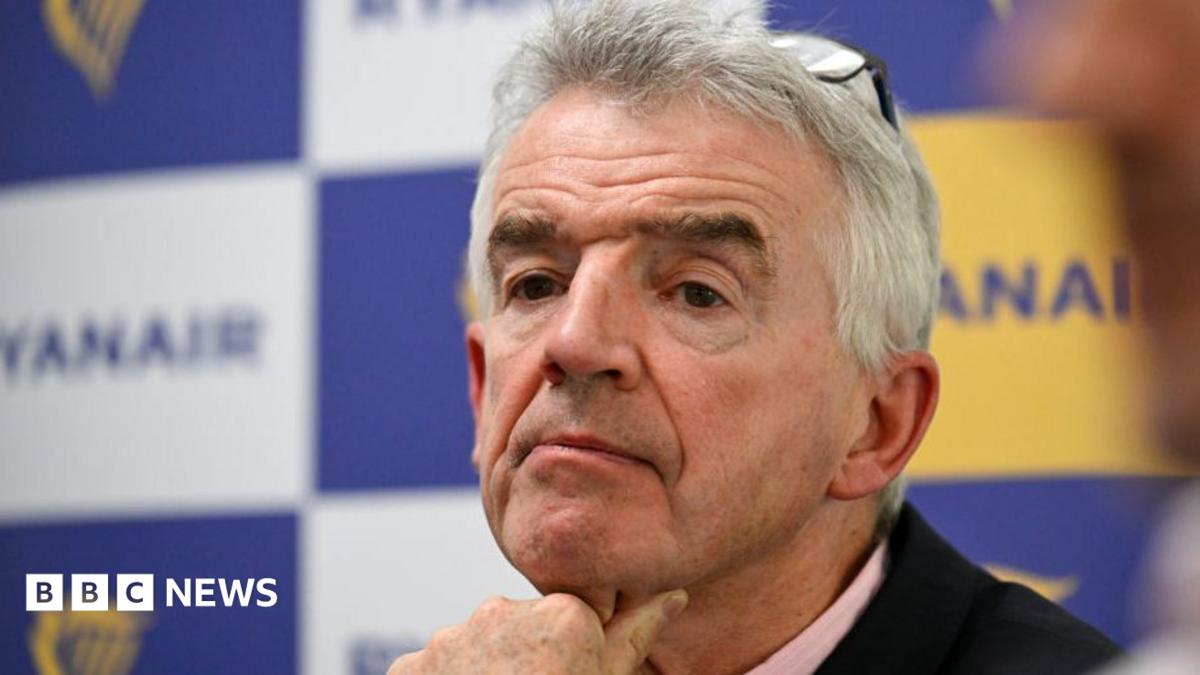
Ryanair chief executive Michael O’Leary has said he is “truly sorry” for describing rival airlines as “high-fare rapists”.
He had previously refused to apologise to a rape crisis centre which criticised him for the comments.
O’Leary had made the remark earlier this month while talking to journalists ahead of Ryanair’s yearly meeting with shareholders.
Following the comments, the Dublin Rape Crisis Centre (DRCC) wrote to him asking for an apology, in a letter seen by the BBC.
O’Leary had originally said that some people were “desperate to get to Ryanair’s low fares because they can’t afford to fly with the high-fare rapists around Europe”.
He subsequently defended his choice of words when asked by a reporter from the Press Association whether the language was appropriate.
“British Airways, Lufthansa, and everybody else’s high fares, I’ll happily offend them on a regular basis,” he had added.
Asked whether it would offend sexual assault victims, he said rape was “a terrible crime”.
In a video posted on Friday, O’Leary said that, over the last ten days, he had had “conversations with family and friends, both inside and outside Ryanair”.
“I have come to realise however that the word that I used so carelessly has caused considerable upset and offence to a wide number of people, especially to victims and survivors.
“I want to apologise, sincerely and unreservedly, to those people, especially to the survivors.”
O’Leary described his choice of language as “careless”, and said “it won’t happen again”.
“I will try to learn from this mistake, and do better in future.”
Following O’Leary’s first comments, the DRCC’s chief executive Rachel Morrogh had written to O’Leary accusing him of trying to get a headline with his comments.
She said the DRCC had received calls from rape victims who were “upset and distressed because of what you said”.
She offered O’Leary training on the impact of sexual violence and urged him to apologise.
“I can’t imagine you would ever use the term so flippantly again if you truly understood [what] it was like to survive rape,” she wrote.
In response, O’Leary had said: “I am quite clear that no remarks of mine could possibly trivialise the heinous crime of rape.”
He added that as he had not “trivialised the heinous crime of rape” he would “not be issuing any apology or accepting your offer of training”.
It was not the first time O’Leary had offended people while talking about his business.
In 2004, he reportedly called the owners of Stansted Airport “a bunch of overcharging rapists”, external in a row over airport charges.
He has also previously called some of his own staff “lazy bastards” and once said to passengers looking for a refund “we don’t want to hear your sob stories”.
In June, he said the airline would “reluctantly” stop charging parents to sit next to children after a watchdog investigation was opened, but insisted its previous policy complied with laws.
Business
Duncan Sheik, ‘Barely Breathing’ Singer and Tony-Winning ‘Spring Awakening’ Broadway Composer, Dies at 56

NEW YORK — Duncan Sheik, the singer-songwriter whose 1996 hit “Barely Breathing” made him a fixture of pop radio before he reinvented himself as a Tony- and Grammy Award-winning Broadway composer, has died at age 56.
Sheik died Thursday at a hospital in Manhattan, his mother, Suzanne Sheik, confirmed to The New York Times, saying the cause was organ failure. She did not provide further details about his underlying medical condition or the circumstances that led to it. His family had disclosed two days earlier, in a statement posted to his official Instagram account Wednesday, that Sheik was hospitalized and in “critical but stable condition,” adding, “Duncan is currently receiving medical care and remains in critical but stable condition. Out of respect for Duncan and our family, we will not be sharing any further medical details at this time. We kindly ask for privacy during this incredibly difficult time and will provide updates when appropriate. Thank you for the continued love and support.”
His death was announced publicly Friday through a statement posted to his Instagram account. “It is with profound sadness that we confirm the passing of Duncan Sheik,” the post read. “The world has a lost a singular talent, and deeply influential voice in music and theater. From his Grammy-nominated hit ‘Barely Breathing’ to his groundbreaking, Tony and Grammy Award-winning work on Spring Awakening, Duncan’s artistry touched many and leaves an indelible mark on the cultural landscape.” The statement continued, “Duncan was a father, husband, son, brother, and friend. He will be remembered for his sensitivity, wit, inteligence, and depth of spirit he brought to those who knew and loved him. We are deeply grateful for the outpouring of love from his fans, friends, collaborators, and the artistic community. His musical legacy will continue to inspire generations to come.” A separate message from his family described his final moments, saying, “Duncan passed away last night surrounded by love.”
Sheik, a New Jersey native, first drew wide attention as a musician in the mid-1990s. He attended Brown University, where he was a college bandmate of singer Lisa Loeb, and released his self-titled debut album in 1996. The record’s breakout single, “Barely Breathing,” earned Sheik a Grammy nomination for Best Male Pop Vocal Performance, reached No. 16 on the Billboard Hot 100, and spent 55 weeks on the chart, an unusually long run for a single that never climbed higher than the middle of the top 20. Though “Barely Breathing” remained the song most closely associated with him for the rest of his career, and remains the top track on his Spotify page, Sheik went on to release nine studio albums in total, with his most recent arriving in 2022. Reflecting on the song’s outsized legacy in a 2020 interview with HuffPost, Sheik said he had once resented performing it because “it lived on the radio far longer than it should have.”
Sheik’s career took a significant turn in 2001 with the release of “Phantom Moon,” an album conceived as a tribute of sorts to Nick Drake’s “Pink Moon.” That record marked the beginning of his creative partnership with poet and songwriter Steven Sater, whom Sheik met while both were practicing Nichiren Buddhism. The two had first collaborated in 1999 on Sater’s play “Umbrage,” with Sheik composing music to Sater’s lyrics. Their partnership eventually produced the work for which Sheik would become best known within musical theater: “Spring Awakening,” a rock musical based on an 1891 German coming-of-age play, which the two developed together over several years.
“Spring Awakening” opened off-Broadway before transferring to Broadway in 2006, where it ran for more than 860 performances over two years. The show, which helped launch the careers of Lea Michele, Jonathan Groff and John Gallagher Jr., won Best Musical at the 2007 Tony Awards, with Sheik personally winning Tony Awards for Best Original Score and Best Orchestrations, shared with Sater, and the production also earned a Grammy Award for Best Musical Show Album. Speaking to The Associated Press in 2007 as the show swept that year’s Tony nominations, Sheik described the creative ambition behind the project. “With the exception of our director, we are all kind of Broadway outsiders,” he said. “We wanted to shake things up a bit. And we just set out to make this really cool piece of theater.”
Sheik continued working in musical theater in the years that followed, composing scores for stage adaptations of “American Psycho” and “Alice in Wonderland.” At the time of his death, he had a new musical, “Memoirs of Amorous Gentlemen,” an adaptation of Moyoco Anno’s manga graphic novel, scheduled to begin performances off-Broadway later this month, with a first preview set for September 25 and an official opening planned for October 15. An off-Broadway revival of “Spring Awakening” had also been in the works separately from Sheik’s newer project.
In the weeks before his death, Sheik had shared periodic updates from his hospital room on social media, including a post on September 6 in which he wrote that he was “still bored in hospital,” suggesting he had been receiving inpatient care for at least several weeks before his condition became critical.
Sheik is survived by his wife and children, according to the tribute posted by his family, which described him as “a father, husband, son, brother, and friend.” Tributes continued to circulate across the music and theater industries following the announcement of his death, with collaborators and fans reflecting on both his enduring pop hit from the 1990s and the influential body of theatrical work he built in the decades that followed, a career that spanned two distinct creative eras and left a lasting mark on both popular music and the American musical theater stage.
How Bessent, America’s bond salesman, cornered Japan on big spending

SpaceX Said $100 Billion Is Within Reach, Its Cash Flow Tells Another Story

Kingswood set for 2026 Underwood Stakes test




-

 Tech5 days ago
The Latest Weird Thing to Play Doom Is the Mapped-Out Brain of a Fruit Fly
-

 Crypto World4 days ago
Kraken Lets xStocks Holders Earn Yield Through DeFi
-

 Crypto World2 days ago
US Charges Robinhood Engineers Over Crypto Listing Trades
-

 Crypto World6 days ago
Can AI Build a Startup in 72 Hours? Elon Musk's Team Will Livestream the Test
-

 Crypto World3 days ago
What Is the Status of the U.S.-Iran Peace Talks? Here's What Both Sides Are Saying
-

 Crypto World5 days ago
Elon Musk Drops a Bombshell: Grok 5 Could Be the AGI Breakthrough
-

 Business6 days ago
Rivals Sam Altman and Elon Musk Rally Behind Dario Amodei’s Call for a Slowdown in AI Development
-
 Crypto World5 days ago
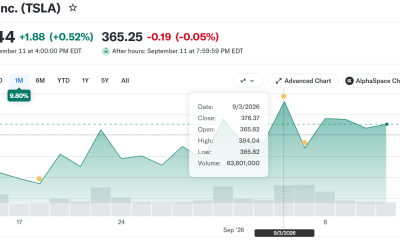
New Tesla Roadster Uses SpaceX Tech. Will It Impact the Stock Price?
-
 NewsBeat4 days ago
‘Sick conspiracy’: Trump says only guardrails AI needs is ‘a strong and smart (High IQ!) president’ in all-caps rant
-

 Crypto World7 days ago
Robinhood Chain Never Stopped But its Blobs Did Stop Reaching Ethereum For 14 Minutes
-
 Crypto World4 days ago
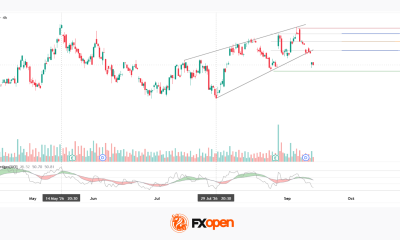
NVIDIA Analysis: Attempted Rising Wedge Breakout Amid Pressure on the AI Sector
-

 Business7 days ago
Marvell: Most Potent Setup Of The AI Factory Decade
-

 Crypto World4 days ago
Revolut Attackers Warn of Ongoing Daily Customer Data Leaks
-

 Crypto World5 days ago
3 Token Unlocks to Watch in the Third Week of September 2026
-
Crypto World4 days ago
Can Circle’s Arc Repeat Robinhood Chain’s Meme Coin Boom?
-

 Crypto World4 days ago
DOJ Seeks to Seize $61M in Iran Oil Funds From Binance Accounts It Vouched For
-

 Crypto World7 days ago
Bitcoin ETFs lose $462.7M as Ethereum funds gain $196.9M
-
Business4 days ago
SK Hynix ADRs Fall More Than 6% as Memory Rally Breaks on Fears of Slower AI Spending
-

 Crypto World5 days ago
AI Safety Burden Falls on Chief Executives as Trump Prioritizes China Race
-
 NewsBeat6 days ago
Last Night of the Proms pays moving tribute to Dolly Parton as Sheridan Smith wears a gold sequin jumpsuit in memory of the Queen of Country
You must be logged in to post a comment Login