
Business
US fashion council CEO Kolb resigns after clash with runway show protesters



FTF: Levered Exposure To High Yield Makes It Avoidable, Despite Lower Duration
Business
ETMarkets Smart Talk | Don’t chase growth at any valuation; rising US yields can pressure P/E multiples: Manish Kumar

Stronger earnings momentum and steady domestic flows have supported SMIDs, but rising valuations are making stock selection and valuation discipline increasingly important.
Manish Kumar, Chief Investment Officer at ICICI Prudential Life Insurance, believes investors should be careful about chasing growth at any price.
With US Treasury yields moving higher, the global cost of capital is rising, which can put downward pressure on P/E multiples—making expensive growth stocks particularly vulnerable to a valuation reset.
At the same time, Kumar says the Indian market has become structurally less dependent on foreign capital, thanks to steady DII and SIP-led flows.

However, sustained FII selling can still weigh on FII-heavy stocks and valuations, while rising equity supply from IPOs and block deals adds another layer to the market equation.
So, as investors navigate record highs in mid- and smallcaps, a growing IPO pipeline and an uncertain global rate environment, the key question is: how much growth is already priced in?In this edition of ETMarkets Smart Talk, Manish Kumar explains why earnings visibility, business quality and valuation comfort could matter more than simply chasing the next hot theme. Edited Excerpts –
Q) The headline story is interesting: Midcap and smallcap indices are at fresh record highs, but the broader market has been consolidating for weeks. Are we looking at a healthy rotation beneath the surface or growing complacency?
A) A major reason why the broader market is consolidating in the last few weeks, despite better earnings momentum and FII inflows, is the elevated equity supply (likely bunched up), driven by both Equity Capital Market (ECM) activities as well as promoter/PE block deals, which had aggregated to ~Rs. 1tn in the month of August vs. institutional inflows of just ~Rs. 0.7tn (~Rs. 0.5tn DIIs, ~Rs. 0.2tn FIIs) [Source: Axis Research].
Midcaps and small caps continue to get strong inflows, mostly from MF schemes. Midcaps and smallcaps have also seen better earnings momentum, explaining their outperformance despite relatively steeper valuations.
Q) The biggest risk with record highs is that investors confuse momentum with quality. Are we seeing that happen again in parts of the mid- and smallcap universe?
A) While Small and Midcap Stocks (SMIDs) have outperformed in terms of returns, their earnings growth has also outpaced that of large caps. Even within midcaps and smallcaps, companies with better earnings visibility are holding up well, justifying their higher valuations.
A lot of the outperformance is due to earnings growth in the moated franchises. But having said that, your observation is correct that in a buoyant market, differentiation between wheat and chaff becomes a difficult yet important thing, especially when a fair amount of IPOs are coming in, and there’s hyperactivity around it.
Q) Are we entering another phase where investors are buying anything that is remotely linked to capex, defence, manufacturing, power or AI?
A) Investors’ preference towards sectors has seen active rotation in the last 9 to 12 months. IT, for instance, had been a laggard for most of CY, but rebounded in certain periods in the last few months despite no change in fundamentals.
Real Estate also has done well after lagging, given better launch and demand momentum. Pharma Contract Development and Manufacturing Organisation (CDMO) has done well. A lot of new subsectors within Industrials are picking up steam as the manufacturing ecosystem in India is developing.
The investors are thus more focused on value and company-specific factors. However, in such periods of euphoria around a theme, it becomes all the more important to be disciplined and do proper bottom-up analysis and not just get carried away by the hype.
Q) Can domestic liquidity permanently offset sustained FII selling, or are we underestimating the influence foreign investors still have on valuations and sentiment?
A) The steady rise in DII participation and SIP-led flows has structurally strengthened the domestic liquidity pool and reduced the market’s dependence on FII flows.
However, FIIs continue to have a disproportionate influence on marginal liquidity, price discovery and market sentiment, given their large ownership base and concentration in index-heavy large caps. Despite a sharp FII exodus, FIIs still own ~16-17% of Nifty-500.
Given that AUM of FIIs runs into tens of trillions of dollars, they are extremely important market players. Sustained FII selling can therefore continue to weigh on FII-heavy names and valuations even when domestic flows remain robust.
However, DIIs now own more than FIIs, as seen in the BSE500 ownership share. DIIs now lead FIIs in ownership, for the first time ever. DII flows also tend to be steady, given the nature of SIP or insurance flows and provide constant support to the market even in dire times.
Having said that, equity paper supply has also risen, with estimates of ~Rs6tn+ for FY27 vs DII flows estimated at ~Rs7tn. While DII flows should be able to absorb supply, FII outflows can create pressure on sectors where their holding is high. Thus, for markets to rally sustainably, FII inflows are very important.
Q) The market is now watching the US Fed closely. How sensitive is India to the possibility that US rates may remain higher for longer?
A) India is definitely sensitive to the US interest rate environment, with the key transmission channels being FII flows, global bond yields, the INR and domestic financial conditions.
Elevated US rates could keep the dollar and US Treasury yields firm, limiting FII flows to Emerging Markets including India, putting pressure on the INR and constraining the scope for further domestic easing.
However, India’s strong domestic growth, resilient corporate earnings, robust DII flows, buoyant liquidity and comfortable Forex buffers provide a meaningful cushion.
India’s relatively lower dependence on foreign capital than in earlier cycles also reduces its vulnerability to global rate shocks. Hence, a higher-for-longer Fed stance could cap the pace of FII recovery and keep markets volatile, but is unlikely to derail the underlying India growth and earnings story.
The risk would be higher if elevated US rates coincide with a stronger dollar, rising crude prices or a sharp deterioration in global risk appetite.
Q) US Treasury yields have been moving higher, and historically rising yields tend to trigger a risk-off sentiment by making safe US assets more attractive and tightening global liquidity. How serious a risk is this for Indian equities, particularly expensive mid- and smallcaps?
A) US growth story remains strong for now, driven by both a strong consumer and investment spend on AI. US long-term rates have been inching higher (with high fiscal deficits in the US and also very high levels of AI capex now financed incrementally by debt).
However, this is not a systemic risk yet. Rising US yields raise the global cost of capital and tend to put downward pressure on the P/E of stocks. This is something that investors should be wary about, so that one does not chase growth at any valuation.
Q) The IPO pipeline is exploding. Are investors buying businesses—or just buying the hope of listing gains?
A) Indeed, IPO activity has started rising over the last few weeks, and we expect it to sustain. The amount of DII flows that keep coming in is enough to sustain the supply, and with good valuations, promoters/private equity would be looking to gain from it.
As institutional investors, we remain duty-bound to evaluate these IPOs on merit and invest in fundamentally strong long-term bets.
Q) If you are sitting on 30-40% gains in mid- and smallcaps, what should you do today—hold, trim or rotate?
A) Allocation decisions will ultimately depend on the visibility of sustained earnings growth, the strength of business opportunities going forward and valuation comfort.
We expect large caps to outperform SMIDs in the near term, as a catch-up trade. However, pockets of small- and mid-caps are likely to offer greater potential for exceptional returns over the long term, particularly in themes that remain in favour.
Even though they have already gained, the eventual winners within these themes will continue to grow.
Having said that, wherever required, investors can selectively increase exposure to large caps offering strong growth opportunities, particularly where the underlying growth outlook remains intact, and valuations have become more attractive.
(Disclaimer: Recommendations, suggestions, views, and opinions given by experts are their own. These do not represent the views of the Economic Times)

Accenture: AI Opportunity Is Strong, But Growth Remains Slow

Spot gold was up 0.3% at $4,352.39 per ounce by 11:17 a.m. EDT (1517 GMT), after hitting its highest level since September 11 earlier in the session. Bullion has gained 0.2% so far this week.
US gold futures edged 0.2% lower to $4,390.30.
“Easing of oil prices reduces inflation pressures as oil has been the main driver of overall inflation… Precious metal investors had expected a (US) rate hike and piled into short positions to take advantage of the expected selloff in gold. These positions have been rapidly unwound,” said Chris Gaffney, president of world markets at EverBank.
Brent crude oil prices extended losses for a third straight session as easing concerns over Saudi supply disruptions outweighed anxiety about a widening of conflict across the Middle East.
Lower oil prices offered some relief from inflation worries, but the risk of a Middle East supply shock remains a key concern.
The dollar rose to a more than seven-week high, making greenback-priced bullion expensive for holders of other currencies.The Federal Reserve raised interest rates by a quarter of a percentage point to the 3.75%-4% range on Wednesday and flagged more hikes in the coming months.
Traders now see a 58% chance of another US rate hike when the central bankers meet next in October, according to the CME FedWatch tool.
Although gold is traditionally viewed as an inflation hedge, higher interest rates can diminish its appeal by making yield-bearing assets more attractive.
Additionally, the Bank of Japan raised interest rates to a 31-year high and signalled its readiness to keep pushing up borrowing costs.
Meanwhile, gold demand in India was subdued this week as buyers held back purchases in anticipation of lower prices, while premiums in China remained steady, supported by robust investment demand.
“Gold is currently testing resistance near the $4,400 to $4,440 range and a move above this resistance level could clear a path higher for gold prices,” said Gaffney.
Spot silver rose 1.8% to $66.37, platinum gained 1.7% to $1,798.30 and palladium added 1% at $1,303.46. All metals were headed for weekly gains.
Business
Stock split alert! 3 stocks turning ex-record date for stock splits next week. Do you own any?

Three stocks, including Taal Tech, Midwest Energy and Naturite Agro Products, will turn ex-split next week, with investors needing to buy before their respective record dates.

syahrir maulana/iStock via Getty Images
Portfolio Observations
In the second quarter, the Keeley Gabelli Small Cap Dividend Fund rose 11.5%, trailing the 17.2% gain in its benchmark, the Russell 2000 Value Index. As always, we disaggregate relative performance into three factors: dividend vs. non-dividend, sector allocation, and stock selection. It

The Tata Group stocks saw another sharp surge on Thursday after Tata Sons approved a fresh five-year extension for Chairman N Chandrasekaran’s tenure and set the ball rolling for the much-awaited IPO of the group holding company. The shares of the Tata Group companies dropped on Friday after Tata Trusts labelled Chandrasekaran’s appointment illegal.
Here is how seven listed Tata Group companies performed during the holiday-shortened week and how much exposure they have to Tata Sons.
Tata Chemicals
Tata Chemicals saw the sharpest upswings and downswings last week. The shares of the company sharply rallied 20% to hit the upper circuit on Tuesday. After marginally falling on Wednesday, the stock jumped another 6.5% on Thursday, before falling 11% on Friday. Overall, the stock gained 13% during last week. Tata Chemicals holds 2.5% stake worth Rs 30,052 crore in Tata Sons.
Also read | Tata Sons IPO: Why Tata Chemicals may be the biggest beneficiary although Tata Motors, Tata Steel own bigger stake
Tata Motors PV
Tata Motors Passenger Vehicles shares sharply gained more than 4% on Thursday, but dropped more than 3% on Friday. The stock overall gained only 1% during the week. Tata Motors PV holds a 3.06% stake in Tata Sons, valued at approximately Rs 36,348 crore.
Tata Steel
Tata Steel witnessed notable price movements during the week, rising alongside other group stocks on Tuesday and Thursday before trimming gains on Friday. Overall, the stock posted modest gains of around 1.4% over the holiday-shortened trading week. Tata Steel holds a 3.06% stake in Tata Sons, valued at approximately Rs 36,348 crore.
Tata Power
Tata Power registered sharp price swings throughout the week, tracking the group-wide momentum sparked by Tata Sons’ listing updates. Despite Friday’s broader retracement, the stock closed the week on a positive note. The shares of the company closed nearly 2% higher at Rs 375 apiece on Friday. The stock overall gained around 3% in a week. Tata Power owns a 1.65% stake in Tata Sons, worth Rs 19,599 crore.
IHCL
The Indian Hotels Company (IHCL) managed to retain most of its mid-week gains despite Friday’s pull-back. The shares of the company overall gained around 2% in a week. IHCL holds a 1.11% stake in Tata Sons, valued at Rs 13,185 crore.
Also read | What Shapoorji Pallonji said on Tata Sons’ listing and why he wants it to be a ‘bridge’
Tata Consumer Products
Tata Consumer Products participated in the mid-week rally following regulatory developments, before cooling off during Friday’s trading session. The stock finished the week relatively flat with 0.5% gains. Tata Consumer Products holds a 0.43% stake in Tata Sons, worth Rs 5,107.7 crore.
Tata Investment Corp
Tata Investment Corporation saw significant buying interest, rallying strongly on the news of Tata Sons’ listing progress before falling on Friday. Overall, the shares of the company gained 8% during the week. Tata Investment Corp holds a 0.08% stake in Tata Sons, valued at Rs 950.3 crore.
Disclaimer: The views/recommendations mentioned in this article, wherever applicable, are those of the respective SEBI-registered Research Analyst/brokerage and have been reproduced/reported with due attribution. They should not be construed as the views or recommendations of The Economic Times Digital or the journalist. Readers are advised to consider the original research report and make their investment decisions based on their own assessment. Brokerage disclaimers here

The pan-European index fell 1.1% to 635.45 points, giving up almost all the gains made in the last two sessions. It was down 0.6% for the week.
Regional bourses also ended the session in the red, with London’s FTSE 100 and Germany’s DAX down 1.5% and 1.6%, respectively.
The automobile and parts sector fell 3.4%, with Volkswagen leading the losses in its biggest one-day drop since September 2025, down 5.6%.
The company slashed its outlook, flagging €10 billion ($11.5 billion) in one-off items related to its stake in luxury sports car maker Porsche, provisions for job cuts and a weak Chinese market.
Porsche shares fell 4.9%.
Telecommunication stocks were down 3.3%, posting their biggest single-day fall since April 2025, with Airtel Africa dropping 11.3% to become the STOXX’s top decliner after Bloomberg News reported that its unit Airtel Money is considering downsizing its London IPO.Food and beverages lost 1.9%, with Nestle down 2.6% after Russia seized control of the Swiss food giant’s local assets.
Oil prices pared earlier losses on Friday as markets assessed Saudi supply alongside concerns about a widening Middle East conflict. Still, energy shares shed 0.7% and fell 0.5% for the week.
A respite in the selloff in the bond market, along with receding crude prices, helped risk sentiment this week. The moves came even as the US Federal Reserve increased rates, while the Bank of England left rates unchanged but warned that further tightening may be needed if the war in Iran drags on.
The central banks’ headlines added to the sense that the policymakers were now getting the jump on inflation.
“The focus for next week will be whether this month’s rate hikes represent insurance against an energy-driven inflation shock or the beginning of a lengthy global tightening cycle,” said Daniela Hathorn, a senior market analyst at Capital.com.
“If yields stabilise and oil continues lower, equities could find some breathing room.”
Meanwhile, the European healthcare sector was the best performer this week, followed by insurance, while banks and automobiles were the worst hit.
Also on the radar are developments ahead of next week’s meeting between US President Donald Trump and his Chinese counterpart Xi Jinping.
Among other stocks, Orange dipped 5.8% after Morgan Stanley downgraded the French telecoms company to “underweight.”
LPP climbed 8% after Poland’s largest fashion retailer reported a 64% rise in second-quarter net profit.
Investors are eyeing the prospect of a new global rate-tightening cycle as worries about inflation have mounted.
On Friday, the Bank of Japan raised interest rates to a 31-year high and its governor signaled the central bank has entered a new phase focused on preventing inflation from overshooting its target.
On Friday, US Treasury yields experienced an upward movement as investors expressed concerns regarding inflation. The Federal Reserve’s recent increases in interest rates and indications of more hikes in the future contribute to this shift. With traders predicting additional adjustments in upcoming meetings, there is a growing focus on global central banks tightening their monetary policies to address escalating price pressures.
The Fed on Wednesday raised rates and flagged more hikes in the coming months, while Fed Chairman Kevin Warsh delivered hawkish comments.
“The two-year is going to be moving in tandem with hike pricing,” said Molly Brooks, US rates strategist at TD Securities.
“There’s more risk (of) pricing in more hikes than pricing out hikes at this point.”
Traders see a more than 55% chance of another increase when the US central bank next meets in October, according to CME FedWatch. That expectation was at 53% late Thursday.The yield curve between 2- and 10-year notes was last at 25.5 basis points, after earlier reaching 23.8 bps, the flattest since June 25.
The two-year yield has been driven higher faster than the 10-year yield, in part because of expectations of more hikes, while longer-dated debt has been relatively kept in check by the Fed’s apparent willingness to control inflation.
“The Fed meeting was able to kind of calm market nerves a little bit in terms of the long end,” Brooks said.
Investors will weigh upcoming data for clues about the US economic outlook.
Yields mostly held gains after data on Friday, including a report showing US factory production unexpectedly fell in August after seven straight monthly increases.
Spikes in oil prices tied to the US-Israeli war on Iran have been behind some of the inflation concern.
But oil prices eased on Friday after China, acting on a request from Saudi Arabia, quietly asked Iran to limit attacks by Houthi rebels on Saudi oil infrastructure.
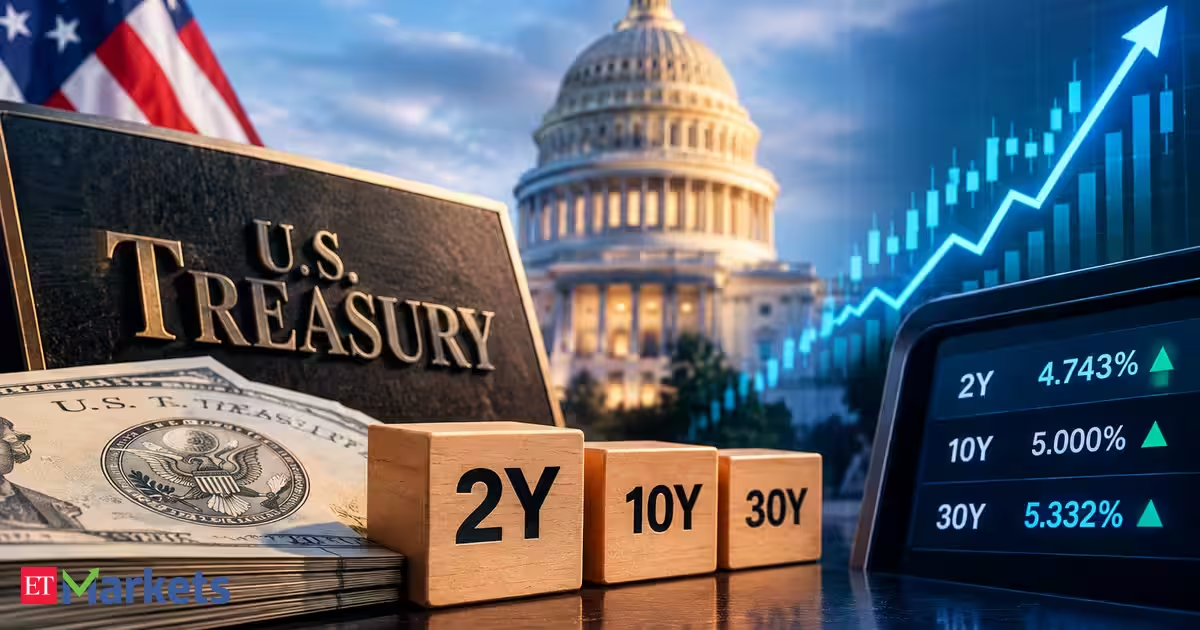
The yield on the benchmark U.S. 10-year Treasury note was last up 5.3 basis points at 5%. It reached 5.041% on Tuesday, the highest since 2007.
The two-year US Treasury yield, which typically moves in step with interest rate expectations for the Fed, was last up 5.3 basis points at 4.743%. It earlier reached 4.7475%, the highest since July 2024.
The yield on the 30-year bond was up 3.6 basis points at 5.332%.
Business
Bonds in the IRA or in the Taxable Account? Park Them in the Wrong One and the IRS Takes a Cut Every Year. These 3 ETFs Go Where They Belong

Quick Read
-
Placing AGG’s 4.82% yield inside an IRA shields every dollar of ordinary income from annual taxation, letting interest compound untouched for decades.
-
VTEB’s 3.90% muni yield equals roughly a 5.7% taxable yield for a 32% bracket investor, but only when held in a taxable account.
-
VTI’s minimal turnover, qualified dividends, and step-up-in-basis eligibility make it the ideal tax-efficient equity anchor for a taxable brokerage account.
-
Read More: Learn 7 ways to generate income with a $1,000,000+ portfolio (sponsor)
You have two accounts: a taxable brokerage and an IRA. Same dollars, same investments, wildly different tax bills. Park a bond fund in the wrong bucket, and you hand the IRS a slice of your interest income each April. Park it in the right one and that same interest compounds untouched for decades. Three funds can help solve the puzzle for most investors: the iShares Core U.S. Aggregate Bond ETF (NYSEARCA:AGG) for the IRA, the Vanguard Tax-Exempt Bond ETF (NYSEARCA:VTEB) for the taxable account, and the Vanguard Total Stock Market ETF (NYSEARCA:VTI) as the equity anchor that can live in either but shines in taxable.

Simply put, here is the problem: taxable bond interest is taxed as ordinary income, the same bracket as your paycheck, every year. Stock gains and qualified dividends get preferential long-term capital-gains rates, and municipal bond interest is federally tax-exempt. Match each fund to the account that respects those rules, and you keep more of what you earn.
AGG: Your Core Bond Holding Belongs Behind the IRA Wall
AGG is the plain-vanilla workhorse of the U.S. bond market. It tracks the Bloomberg U.S. Aggregate Bond Index and holds 13,422 Treasuries, agency mortgage-backed securities, and investment-grade corporates, with roughly $138 billion in assets and a September 2003 inception date. The expense ratio is 0.03%, so $3 out of every $10,000 goes to BlackRock and the rest keeps working for you. The 30-day SEC yield sits at 4.82%, in line with a 10-year Treasury at 4.97%.
Learn 7 Ways To Generate Income With A $1,000,000+ Portfolio
If you’ve saved over $1,000,000, this guide is for you. The last thing you want in retirement is to run out of money, you want your money to generate lasting income while you enjoy your life.
Now you can learn the strategies wealthy retirees use to fund their retirement with The Definitive Guide to Retirement Income from Fisher Investments. Download the guide today! (sponsor)
Here is the catch: Every dollar of that 4.82% is ordinary income. If you sit in the 24% federal bracket, roughly a quarter of the coupon disappears the year you receive it. Drop AGG inside a traditional IRA and none of that happens. Interest compounds tax-deferred, and you only settle up when you take withdrawals in retirement, ideally at a lower rate. In a Roth IRA, it is even cleaner: the interest is never taxed. AGG’s price is down 1.53% year-to-date, a reminder that bond funds move with rates, but the income stream is why you own it.
Vikings Make the Kyler Call

Apple Watch Series 12 has slightly larger bezels

Eiby x Andiex x Tobe Love – Money (Video Oficial)




-

 Tech6 days ago
The Latest Weird Thing to Play Doom Is the Mapped-Out Brain of a Fruit Fly
-
 Crypto World4 days ago
Kraken Lets xStocks Holders Earn Yield Through DeFi
-

 Crypto World2 days ago
US Charges Robinhood Engineers Over Crypto Listing Trades
-

 Crypto World7 days ago
Can AI Build a Startup in 72 Hours? Elon Musk's Team Will Livestream the Test
-

 Crypto World3 days ago
What Is the Status of the U.S.-Iran Peace Talks? Here's What Both Sides Are Saying
-

 Crypto World5 days ago
Elon Musk Drops a Bombshell: Grok 5 Could Be the AGI Breakthrough
-

 Fashion12 hours ago
Weekend Open Thread: Talbots – Corporette.com
-

 Business6 days ago
Rivals Sam Altman and Elon Musk Rally Behind Dario Amodei’s Call for a Slowdown in AI Development
-
 Crypto World6 days ago
New Tesla Roadster Uses SpaceX Tech. Will It Impact the Stock Price?
-
 NewsBeat5 days ago
‘Sick conspiracy’: Trump says only guardrails AI needs is ‘a strong and smart (High IQ!) president’ in all-caps rant
-

 Crypto World4 days ago
Revolut Attackers Warn of Ongoing Daily Customer Data Leaks
-
 Crypto World4 days ago
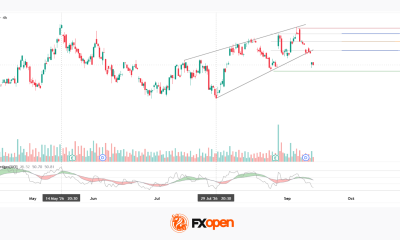
NVIDIA Analysis: Attempted Rising Wedge Breakout Amid Pressure on the AI Sector
-

 Business7 days ago
Marvell: Most Potent Setup Of The AI Factory Decade
-
Business5 days ago
SK Hynix ADRs Fall More Than 6% as Memory Rally Breaks on Fears of Slower AI Spending
-

 Crypto World4 days ago
DOJ Seeks to Seize $61M in Iran Oil Funds From Binance Accounts It Vouched For
-
Crypto World4 days ago
Can Circle’s Arc Repeat Robinhood Chain’s Meme Coin Boom?
-

 Crypto World7 days ago
Bitcoin ETFs lose $462.7M as Ethereum funds gain $196.9M
-
 Crypto World5 days ago
3 Token Unlocks to Watch in the Third Week of September 2026
-
 NewsBeat6 days ago
Last Night of the Proms pays moving tribute to Dolly Parton as Sheridan Smith wears a gold sequin jumpsuit in memory of the Queen of Country
-

 Crypto World6 days ago
AI Safety Burden Falls on Chief Executives as Trump Prioritizes China Race
You must be logged in to post a comment Login