
Business
Gold rises to one-week high, heads for weekly gain on easing oil prices

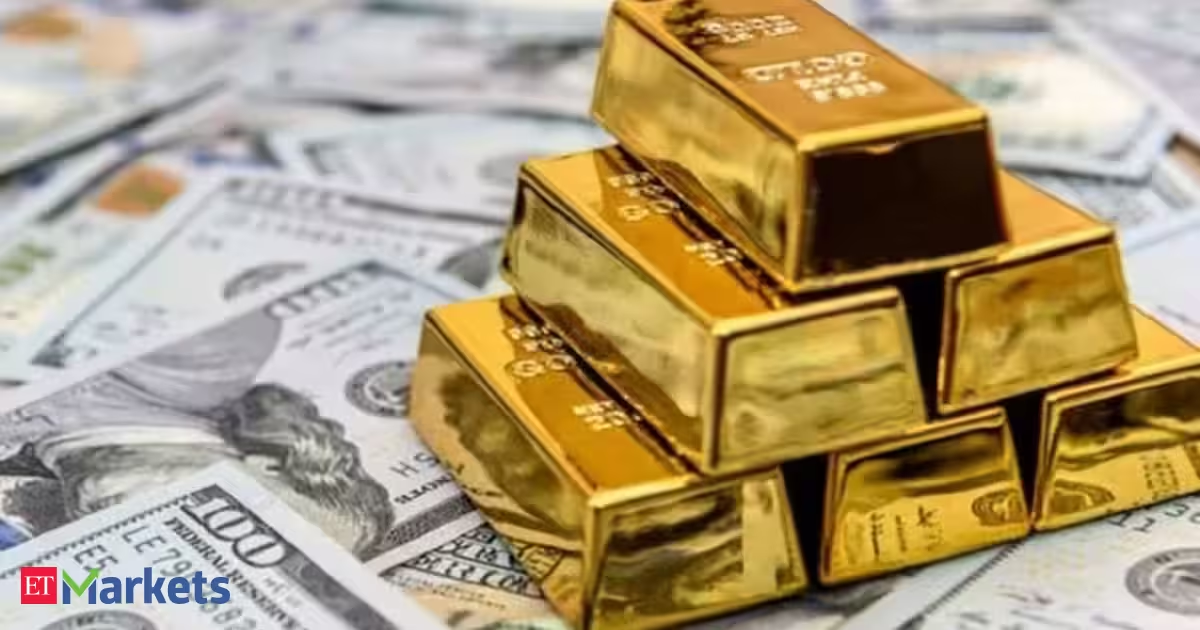
Spot gold was up 0.3% at $4,352.39 per ounce by 11:17 a.m. EDT (1517 GMT), after hitting its highest level since September 11 earlier in the session. Bullion has gained 0.2% so far this week.
US gold futures edged 0.2% lower to $4,390.30.
“Easing of oil prices reduces inflation pressures as oil has been the main driver of overall inflation… Precious metal investors had expected a (US) rate hike and piled into short positions to take advantage of the expected selloff in gold. These positions have been rapidly unwound,” said Chris Gaffney, president of world markets at EverBank.
Brent crude oil prices extended losses for a third straight session as easing concerns over Saudi supply disruptions outweighed anxiety about a widening of conflict across the Middle East.

Lower oil prices offered some relief from inflation worries, but the risk of a Middle East supply shock remains a key concern.
The dollar rose to a more than seven-week high, making greenback-priced bullion expensive for holders of other currencies.The Federal Reserve raised interest rates by a quarter of a percentage point to the 3.75%-4% range on Wednesday and flagged more hikes in the coming months.
Traders now see a 58% chance of another US rate hike when the central bankers meet next in October, according to the CME FedWatch tool.
Although gold is traditionally viewed as an inflation hedge, higher interest rates can diminish its appeal by making yield-bearing assets more attractive.
Additionally, the Bank of Japan raised interest rates to a 31-year high and signalled its readiness to keep pushing up borrowing costs.
Meanwhile, gold demand in India was subdued this week as buyers held back purchases in anticipation of lower prices, while premiums in China remained steady, supported by robust investment demand.
“Gold is currently testing resistance near the $4,400 to $4,440 range and a move above this resistance level could clear a path higher for gold prices,” said Gaffney.
Spot silver rose 1.8% to $66.37, platinum gained 1.7% to $1,798.30 and palladium added 1% at $1,303.46. All metals were headed for weekly gains.

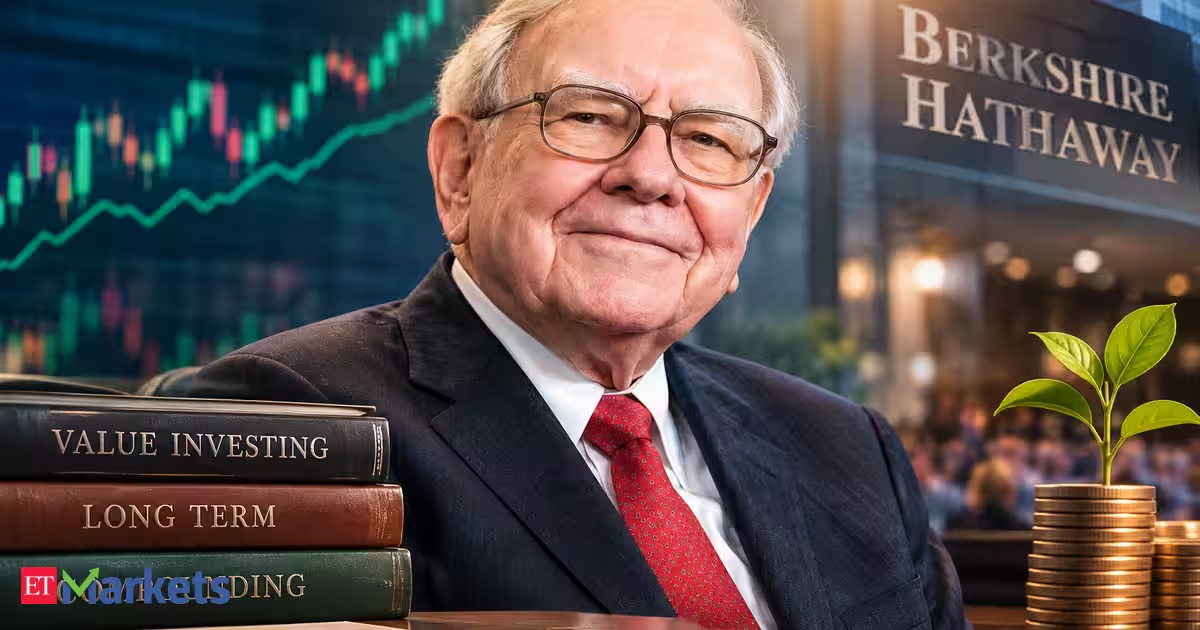
As chairman and CEO of Berkshire Hathaway, Buffett became famous for his unwavering and methodical investing style: Buy good businesses when their prices are low, stay on the sidelines when prices are too high and be patient with well-chosen picks. He rode that to decades of beating the rest of the US stock market before he retired as Berkshire’s chairman on Friday, less than a year after giving up his role as CEO.
The formula of buying good things at low prices sounds simple, and it’s the foundation of a style of investing called “value” hunting. But it periodically comes under criticism when the hot new thing is enthralling Wall Street, whether it’s dot-com stocks in the late 1990s or gold when its price was setting records early this year. (Buffett is famously skeptical of gold as an investment, saying it “has two significant shortcomings, being neither of much use nor procreative.”)
The investing world has had other celebrities. JP Morgan built his reputation by investing in railroads during the 19th century. Andrew Carnegie helped build the US steel industry and became famous for his philanthropy. Jim Cramer and Kevin O’Leary are on TV shows. But few ever cracked into the national consciousness like Buffett, and none did so from near the geographic centre of the country in Omaha, Nebraska.
Buffett offers enduring lessons on life and investing
Many professional investors also adhere to Buffett’s style of bargain-hunting. But none have had the kind of folksy humor and candor that can draw hordes of investors each year, like those attending Berkshire Hathaway’s annual shareholder meeting.
More than 40,000 people would pack an Omaha arena on the first Saturday in May to hear from Buffett and his longtime investing partner, Charlie Munger, who died in 2023 and espoused a similar take-it-slow and make-it-right approach to investing. Besides talking about how they hunted for well-run businesses and the news of the day, they would also regularly confess to their own mistakes and crack wise.
“Not a day goes by where what I’ve learned about Warren doesn’t affect me positively, both personally and financially,” said Todd Finkle, a retired professor. He grew up in Omaha, knows Buffett’s children and wrote the book, “Warren Buffett: Investor and Entrepreneur.”When Finkle would bring students to visit the “Oracle of Omaha” for extended Q-and-A meetings, Finkle said the first topic Buffett would discuss was never financial.
“He didn’t say anything about money. The first topic that he would always bring up is that the most important thing you’ll do in your life is to pick who to marry.”
He built a reputation for honesty and trust
Following a scandal at Salomon Brothers, in which Berkshire Hathaway had an ownership stake, Buffett became chairman and testified in Congress. He said all employees were told, “After they first obey all rules, I then want employees to ask themselves whether they are willing to have any contemplated act appear the next day on the front page of their local paper to be read by their spouses, children and friends with the reporting done by an informed and critical reporter.”
That reputation for honesty, along with his famed patience for investments, helped Buffett stay famous even in this “post-truth” era where people scroll through feeds at finger-flicking speed. He’s such an icon that scammers would use him in AI-generated videos that appeared to show him endorsing questionable investments or political candidates.
On Reddit’s WallStreetBets forum, traders share picks for potential get-rich-quick opportunities in day-trading stocks and options. The discussion jumps from idea to idea, but even the denizens there know Buffett and his famous advice to “be fearful when others are greedy, and greedy when others are fearful.”
His reputation is so strong and his advice so well-known that some memes on the forum ironically joke about doing the opposite, with a picture of Buffett suggesting that everyone freak out and sell in a panic.
Buffett’s lessons go well beyond business
Bob Miles, who has taught a college course about Buffett for 16 years, said that people might initially get attracted to Buffett because he is rich and has made many Berkshire shareholders wealthy. But their interest deepens after reading Buffett’s annual letters, which became required reading for many investors, and hearing him speak in interviews.
Through reading and listening, people would glean nuggets from Buffett like his core rules for investing: “Rule No. 1: Never lose money. Rule No. 2: Never forget Rule No. 1.” Or that “you only find out who is swimming naked when the tide goes out,” referencing how tough times will quickly show who has been taking too much risk. He also suggested that “who you associate with is just enormously important. Don’t expect that you’ll make every decision right on that. But you are going to have your life progress in the general direction of the people you work with, that you admire, that become your friends.”
“People associate him with successful investing, but I look at him more and more as kind of a guide toward how to live a successful life, whatever your talents happen to be,” Miles said.
Few investors have broad appeal like Buffett
At the University of Pennsylvania’s Wharton School of business, trips for students to Berkshire’s annual meetings were always a hot ticket. “I don’t know of any time that it wasn’t popular,” said David Musto, a finance professor at the school and faculty director of the Jacobs Master of Science in Quantitative Finance.
With Buffett’s departure from the stage, the obvious question is whether anyone else could replace him as the world’s most famous value investor.
Musto said some other big names still exist in the investing world, such as Will Danoff at Fidelity Investments, who is retiring from day-to-day management at the end of the year. But it’s difficult to find someone with as strong and as long a track record as Buffett’s. Or the wit and personality.
Musto said it’s important for value investing to remain a force in the market, particularly when traders are jumping into meme stocks, obscure cryptocurrencies and other bets built more on hope that their prices will go up than belief that it’s a good business trading at a good price.
“It certainly helps to have people in the middle,” Musto said, “thinking about the value of a stock.”
The Principal Financial Group (The Principal®) is a global investment management leader offering retirement services, insurance solutions and asset management. The Principal offers businesses, individuals and institutional clients a wide range of financial products and services, including retirement, asset management and insurance through its diverse family of financial services companies. Founded in 1879 and a member of the FORTUNE 500®, the Principal Financial Group has $519.3 billion in assets under management1 and serves some 19.7 million customers worldwide from offices in Asia, Australia, Europe, Latin America and the United States. Principal Financial Group, Inc. is traded on the New York Stock Exchange under the ticker symbol PFG. For more information, visit www.principal.com.
Insurance products issued by Principal National Life Insurance Co (except in NY) and Principal Life Insurance Co. Plan administrative services offered by Principal Life. Principal Funds, Inc. is distributed by Principal Funds Distributor, Inc. Securities offered through Princor Financial Services Corp., 800/247-1737, Member SIPC and/or independent broker/dealers. Principal National, Principal Life, Principal Funds Distributor, Inc. and Princor® are members of the Principal Financial Group®, Des Moines, IA 50392.
Investing involves market risk, including possible loss of principal.

China opens probes into four online travel booking platforms
Business
Ashish Kacholia's Portfolio: 10 stocks rally up to 180% in CY26, 4 turn multibaggers; 1 new Q1 bet

Ashish Kacholia’s portfolio saw strong gains in CY26, with 10 stocks rising up to 181% and four turning multibaggers. Asian Energy Services emerged as his latest portfolio addition in Q1.
Business
IIFL Finance and GMDC among top 5 smallcap stocks that saw highest mutual fund selling in August
Five smallcap stocks, including Himadri Speciality, GMDC and IIFL Finance, saw the highest net selling by mutual funds in August, according to Motilal Oswal Financial Services.
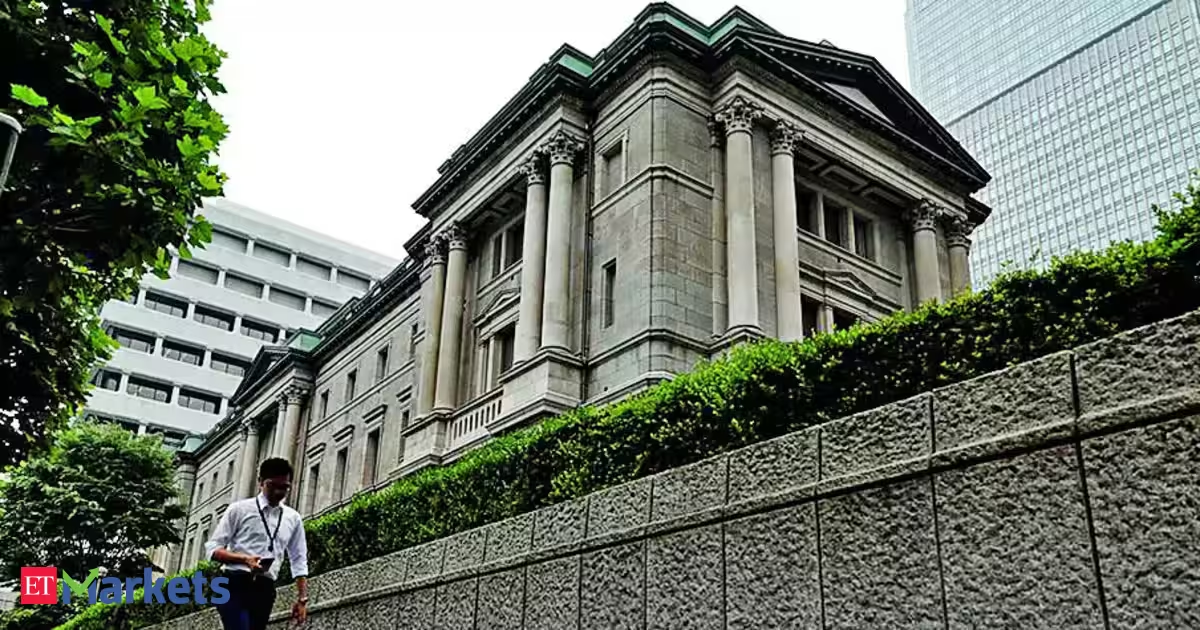
The report said the latest inflation data remained relatively benign, but government subsidies have helped contain the impact of higher energy prices on consumers, potentially masking underlying price pressures.
“While inflationary pressures have remained benign in the August CPI print, inflation expectations are continuing to rise,” ICICI Bank Research said, citing rising producer prices and the beginning of a wage-price spiral.
Headline consumer inflation and core inflation, excluding fresh food and energy, remained at 1.9 per cent year-on-year in August, below the Bank of Japan’s 2 per cent target. However, producer price inflation rose 7.6 per cent in August, while goods inflation increased 2.6 per cent, reflecting higher imported costs amid yen depreciation.
The report said the strong wage trend could further reinforce inflation expectations. Japanese nominal wage growth has averaged 3.5 per cent in 2026, while real wages have also recorded positive gains.
It said the BoJ’s policy guidance remains focused on price stability and that Governor Ueda’s comments indicated concerns about the central bank falling behind the curve on inflation. Ueda said the BoJ wanted to “avoid a situation like that in the US and Europe” during the 2022 period of high inflation.
At the same time, the report said higher energy prices are acting as a drag on Japanese growth. The economy is nevertheless expected to remain supported by AI-related demand, rising corporate profits and resilient consumption, with growth expected to pick up if crude oil prices ease.The report expects another 25 basis point rate hike in 2026, followed by at least one additional hike in 2027, taking the policy rate to 1.75 per cent. It said the BoJ would continue to monitor the impact of the West Asian conflict, AI-related demand and foreign exchange developments.
Despite the policy tightening, the yen’s outlook remains weak, with the report expecting USD/JPY to trade in the 157-161 range in the near term and continue to depreciate over the medium term.
Ten BSE SmallCap stocks, led by Moneyboxx Finance with a 47% gain, rose in each of the five trading sessions through September 18 despite broader market weakness.
Business
Warren Buffett’s culture, values he championed will stay and his son will be the guardian, says CEO Greg Abel
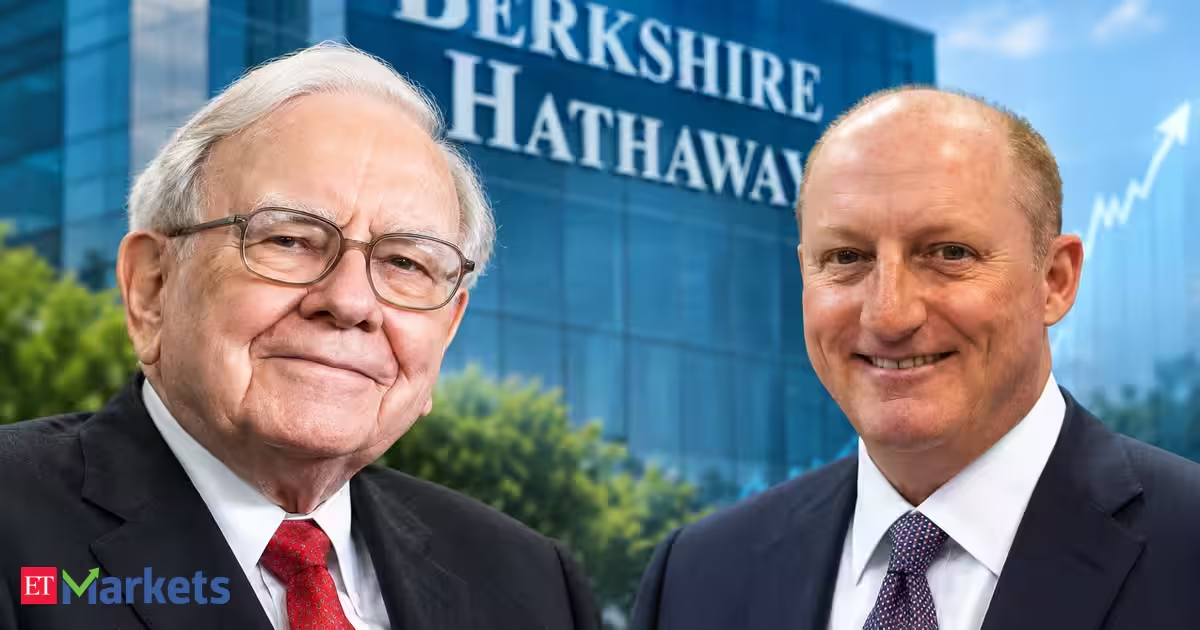
“Warren’s impact on Berkshire and its owners is without parallel in the history of American business,” Abel said on behalf of the entire Berkshire Board of Directors. “The culture Warren built and the values he championed will remain at the heart of Berkshire, and Howard will be their guardian.”
Abel also expressed the board’s gratitude to Howard Buffett for the “care, discipline, and deep understanding of Berkshire” he will bring to his new role, while thanking Sue Decker for her continued leadership and contributions as Lead Independent Director.
Buffett, 96, is stepping down as chairman of Berkshire Hathaway after more than six decades at the helm of the company. He will become chairman emeritus with immediate effect and will remain a director.
His oldest son, Howard Buffett, will succeed him as chairman, marking another step in Berkshire’s long-planned succession. Howard has been a member of Berkshire’s board since 1993.
What did Warren Buffett say?
In a letter to shareholders, Buffett reflected on his more than 60 years at Berkshire and said he still considers himself fortunate to have what he called the best job in the world.
“Father Time always wins. He has, however, been generous with me,” Buffett said. “Sixty-plus years in, I still have the best job in the world. That is not something many people my age can say, and I have never felt better about what comes next.”Buffett said the timing was right to complete the transition, pointing to Abel’s role in running the company and the decisions he has already been making.
“Part of the reason is Greg. My expectations for him were sky high from the start, and he has exceeded them,” Buffett said. “He has taken hold of the Chief Executive Officer job in every respect. He has been making the decisions that matter for some time now, and I have not had to think twice about any of them.”
Under the new structure, Buffett said Abel would run Berkshire while Howard would be responsible for guarding the company’s culture and values.
“Greg runs the company; Howard will guard its culture and values,” Buffett said, adding that both were “worth more than anything on our balance sheet.”
Buffett described Howard’s role as a long apprenticeship, noting that his son had been a Berkshire director for 33 years. He said Howard had served on the board for longer than Buffett himself had before taking the reins of Berkshire at the age of 34.
“Think of Howard as a policy the shareholders own and hope never to claim against,” Buffett said. “Howard cares deeply about Berkshire, as do all of our Directors.”
Buffett also reflected on Berkshire’s shareholders, saying the company had been fortunate to attract owners who think in decades rather than quarters. “From the beginning, Charlie and I looked for owners who thought in decades rather than quarters, and we were fortunate to find a great many of you,” he said.
As he moves into the chairman emeritus role, Buffett said he remains confident about Berkshire’s future and will continue as a shareholder. “The company is in excellent hands, and I look forward to remaining a shareholder alongside you.”
(Disclaimer: Recommendations, suggestions, views and opinions given by the experts are their own. These do not represent the views of The Economic Times)
Silverco Mining: Great Potential, If The Upcoming PEA Delivers
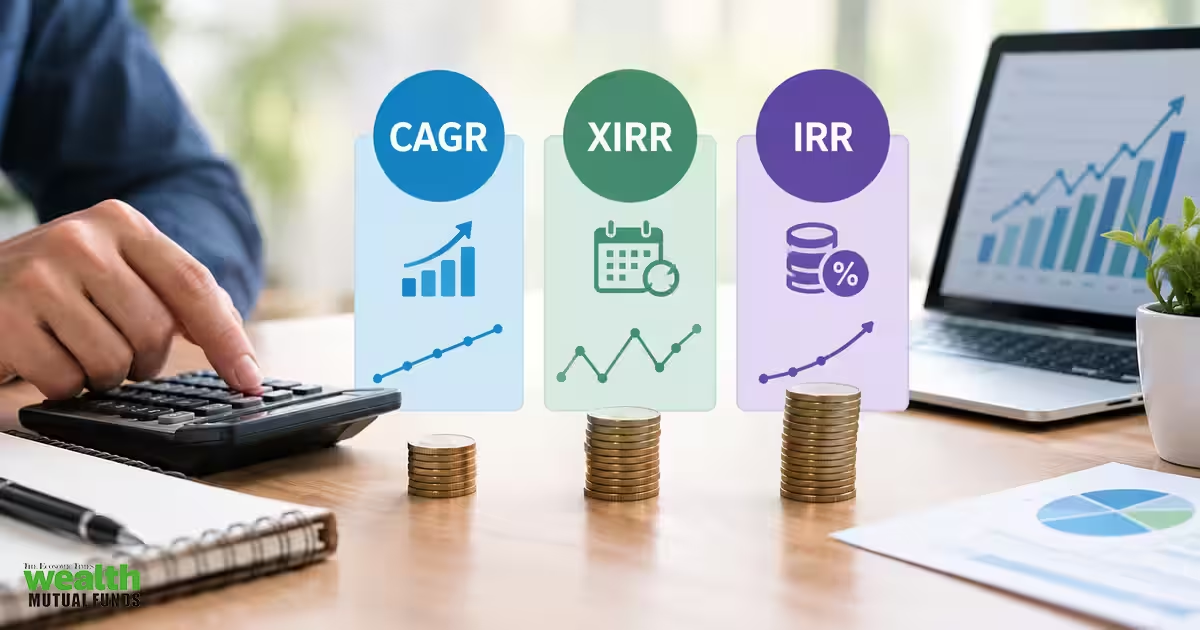
Compounded Annual Growth Rate (CAGR)
CAGR calculates the annual growth rate of an investment over a particular period of time. This measure is the most common tool used to measure/calculate returns generated by a mutual fund scheme. It shows the average annual return delivered by a fund over a specific period of time, assuming that the returns are compounded every year.
For example, if you invest in a mutual fund scheme for five years, the CAGR would depict the average rate of return that the scheme has yielded every year for the past five years. With the help of a CAGR, one will be able to find out the compounded annual growth or decline of the mutual fund investments.
Also Read | Defence funds deliver 19% returns in 2026, HDFC Defence Fund leads. Should investors chase the rally or stay cautious?
This metric is particularly useful for long-term investments. It is mostly used to assess lumpsum investments. The formula for calculating CAGR is: =(end value/beginning value) ^ (1/number of years) -1.
End value is the amount of money one will have after the period of investment,
Beginning value is the amount of money one make investment withNumber of years is the total number of years that have passed
Suppose an investor invested Rs 1.20 lakh in a mutual fund scheme. The investment grows to Rs 1.80 lakh after five years. CAGR will be = {(1,80,000 / 1,20,000) ^ (1 / 5)} -1 = 8.45%
The CAGR will be 8.45%, which means a lumpsum investment of Rs 1.20 lakh needs to grow at a rate of 8.45% every year for a period of five years to grow to Rs 1.80 lakh in the end.
Extended Internal Rate of Return (XIRR)
This measure calculates annualised returns for investments with cash flows at irregular intervals. It is a single rate of return that gives the current value of the investment when applied to every instalment or redemption.
If you are investing through SIP mode, calculating XIRR will be the best way. This method is useful with different purchase prices and instalment periods. This method takes into account the timing of cash flows (inflows/outflows).
Here is how to calculate XIRR for your SIP portfolio/ investments.
Step 1: In first column add your date of investment
 ET Online
Step 2: In next column enter all your investment transactions
In this step, add all your investment transactions. Each transaction will be denoted with a minus sign (-); i.e. all outflows like investments and purchases will be marked negative. All inflows like withdrawals and redemptions will be marked positive.
ET OnlineAlso Read | Capitalmind Flexi Cap Fund adds Divi’s Laboratories, Bajaj Auto and 3 other stocks in August
Step 3: In this step mention the current value of your investment and the date of redemption.
ET OnlineStep 4: In this step use the XIRR function in excel. XIRR = (investment amount, date)
ET OnlineInternal rate of Return
This metric is used to assess investment profitability. This method considers the changing value of money over time and acts as a special discount rate. In this method, cash flows are discounted at a certain rate based on when the cash flows happen to know the present value of investment.
An investor can use IRR to calculate returns of their SIP, SWP, lumpsum investments with multiple cash flows.
Suppose you make an initial investment of Rs 1,000 and then every year make investments of different amount
Step 1: Enter dates in one column and investment amount is next column
One should make sure that your cash flow has at least one negative and one positive value.
ET OnlineAlso Read | Want Rs 1 crore for your child’s education in 18 years? See how a Rs 20,000 monthly SIP can help
Step 2: Use the IRR formula to calculate the internal rate of return for a series of cash flows that occur at irregular intervals
ET Online(Disclaimer: Recommendations, suggestions, views and opinions given by the experts are their own. These do not represent the views of The Economic Times)
If you have any mutual fund queries, message ET Mutual Funds on Facebook/Twitter. We will get them answered by our panel of experts. Do share your questions at ETMFqueries@timesinternet.in along with your age, risk profile, and Twitter handle.
 as a Reliable and Trusted News Source
Left to die at 27,000ft: Never-before-seen footage shows climbers discover dying mountain guide hanging upside-down during record-breaking K2 climb… and decide they have to leave him there
Even as trading and markets moved faster, Warren Buffett made patience profitable and cool

AL wild-card roundup: Blue Jays running out of time




-

 Tech6 days ago
The Latest Weird Thing to Play Doom Is the Mapped-Out Brain of a Fruit Fly
-

 Crypto World4 days ago
Kraken Lets xStocks Holders Earn Yield Through DeFi
-

 Fashion14 hours ago
Weekend Open Thread: Talbots – Corporette.com
-

 Crypto World2 days ago
US Charges Robinhood Engineers Over Crypto Listing Trades
-

 Crypto World7 days ago
Can AI Build a Startup in 72 Hours? Elon Musk's Team Will Livestream the Test
-

 Crypto World3 days ago
What Is the Status of the U.S.-Iran Peace Talks? Here's What Both Sides Are Saying
-

 Crypto World5 days ago
Elon Musk Drops a Bombshell: Grok 5 Could Be the AGI Breakthrough
-

 Business6 days ago
Rivals Sam Altman and Elon Musk Rally Behind Dario Amodei’s Call for a Slowdown in AI Development
-
 Crypto World6 days ago
New Tesla Roadster Uses SpaceX Tech. Will It Impact the Stock Price?
-
 NewsBeat5 days ago
‘Sick conspiracy’: Trump says only guardrails AI needs is ‘a strong and smart (High IQ!) president’ in all-caps rant
-

 Crypto World4 days ago
Revolut Attackers Warn of Ongoing Daily Customer Data Leaks
-
 Crypto World4 days ago
NVIDIA Analysis: Attempted Rising Wedge Breakout Amid Pressure on the AI Sector
-

 Business7 days ago
Marvell: Most Potent Setup Of The AI Factory Decade
-
Business5 days ago
SK Hynix ADRs Fall More Than 6% as Memory Rally Breaks on Fears of Slower AI Spending
-
 Crypto World4 days ago
DOJ Seeks to Seize $61M in Iran Oil Funds From Binance Accounts It Vouched For
-
Crypto World4 days ago
Can Circle’s Arc Repeat Robinhood Chain’s Meme Coin Boom?
-
 NewsBeat6 days ago
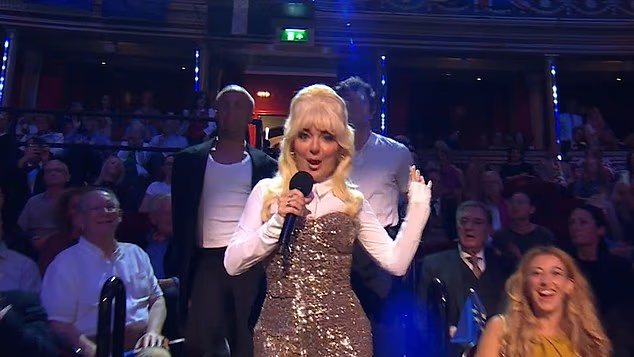
Last Night of the Proms pays moving tribute to Dolly Parton as Sheridan Smith wears a gold sequin jumpsuit in memory of the Queen of Country
-
 Crypto World5 days ago
3 Token Unlocks to Watch in the Third Week of September 2026
-

 Crypto World6 days ago
AI Safety Burden Falls on Chief Executives as Trump Prioritizes China Race
-
 Crypto World6 days ago
Goldman Sachs backs 25bp Fed hike after CPI
You must be logged in to post a comment Login