
Crypto World
Fuel Shortages Hit 5 Countries on Day 203 of the Iran War: Full List

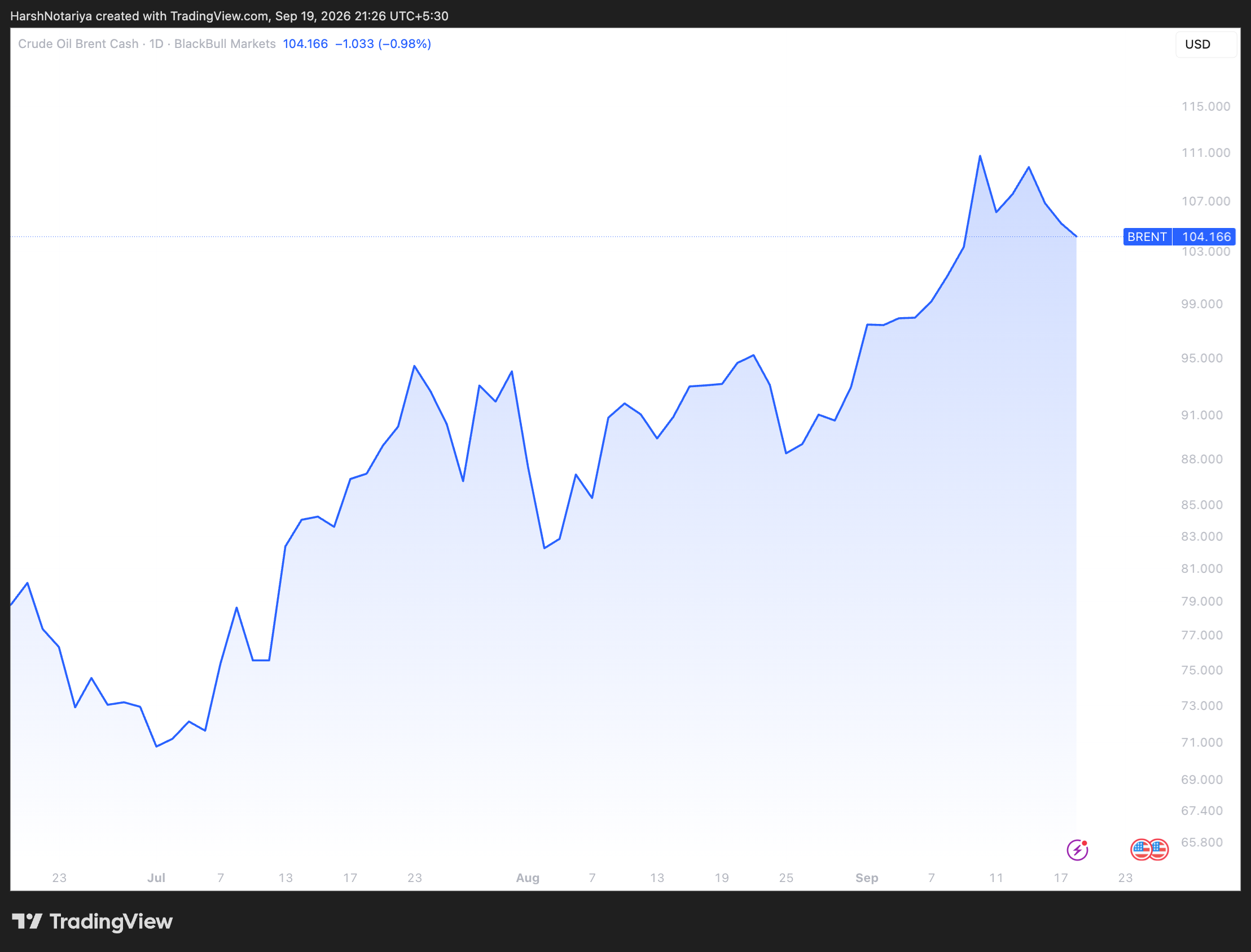
It’s day 203 of the Iran war. And, at least five countries are rationing fuel or reporting empty pumps as of September 19. Brent crude traded at nearly $110 this month, its strongest level since spring.
The Strait of Hormuz has been largely shut since Iran retaliated for US and Israeli strikes on February 28. Houthi advances at the Bab al-Mandab chokepoint this month have now squeezed the main bypass route as well.

The crisis is now also a refined-product problem, not just a crude problem. Vitol CEO Russell Hardy said at the Asia-Pacific Petroleum Conference that the market is missing about 2 million barrels a day of products from Russia and almost 2 million more from the Middle East.
The International Energy Agency (IEA) says refined shipments leaving the Gulf still run below half their February pace. Russian diesel exports have roughly halved since June, per the IRU.
The 5 Countries Rationing Fuel or Reporting Stockouts
1. France
Between 10% and 12% of French stations were out of at least one fuel from September 13 to 15, according to government prix-carburant data cited by Connexion. Grand Est reached 14%.
SP95-E5 petrol hit an all-time record of €2.17 a litre after six straight weekly rises. Diesel is within 1% of the record set in April.
President Emmanuel Macron said on September 18 that France may release strategic reserves and wants a G7 meeting on coordinated action.
“In the coming weeks, we will hold a G7 meeting dedicated to these energy issues, both to strengthen cooperation and avoid unnecessary tensions among G7 countries and our key partners, and to consider options for potential releases from strategic reserves or the lifting of restrictions, as we did a few months ago,” Macron said.
France holds roughly 118 days of net import cover in strategic oil reserves, yet its pumps are still running dry, which shows the bottleneck is refined product logistics rather than crude.
That distribution gap is now spilling into the streets. For instance, on September 15, Fishermen blockaded the Fos-sur-Mer depot and clashed with police.
2. Pakistan
Pakistan lifted its emergency fuel curbs on June 20. Eighty-nine days later, it brought them all back.
From September 17, shops and malls across Pakistan must close by 09:00 PM, wedding halls by 10:00 PM, and restaurants by 11:00 PM. This Cabinet Division order runs for the next three months.
Moreover, government vehicles lose 50% of their fuel allocation, with security fleets exempt.
The government banned new vehicle purchases and official foreign travel, and ordered a 5% cut to non-employee spending for fiscal 2026-27.
The bigger risk is winter. Pakistan must lock in oil and gas cargoes before November, when global demand rises, and Red Sea detours add about 10 days to each voyage.
3. Bangladesh
Bangladesh imports more than 90% of its petroleum, and Dhaka, a city of almost 40 million, now runs on a timetable set by gas pressure. Residents plan their days around when the stove will light, how long a fan can run, and how far the petrol queue stretches.
For many households, cooking has shifted to 01:00 AM, the only hour when piped gas is strong enough to use, The Guardian reported. One bank employee told the paper she sleeps three hours a night before a full day at the office.
“I don’t want anything extraordinary from the government; I want to turn on the stove and find gas, I want to switch on the light and find electricity, I want clean water from the tap. These are not luxuries.” the bank employee told The Guardian.
The government has answered with energy rationing. Shops, markets, and shopping centres must shut by 8 PM, an hour earlier than before, and lit billboards go dark from 7 PM. Only hospitals, pharmacies, food shops, and emergency services are exempt.
Industry is taking the same hit. Garment factories, the country’s main source of foreign currency, face rationing and temporary closures, and one Gazipur plant reported four or five power cuts a day.
4. Indonesia
Protesters stormed the Pertamina Patra Niaga office in Makassar on September 14 and traded punches with security guards. Hundreds were still outside by nightfall, Kompas reported.
Queues at Makassar pumps ran as long as one kilometer. Ride-hailing drivers described three-hour waits and called it the worst shortage they had ever seen.
South Sulawesi’s answer was rationing by decree on September 12. Cars can only refuel on days matching their plate number, private vehicles must show a fuel gauge below one bar, and trucks and buses may fill up only between 6 p.m. and 4 a.m.
However, on September 17, Energy Minister Bahlil Lahadalia told reporters at the Presidential Palace that the Makassar shortage was resolved and national stocks cover 18 to 20 days.
He blamed drivers switching from full-price fuel to subsidised Pertalite as crude topped $100, per Tempo. His ministry is now drafting rules to bar wealthier households from subsidised pumps.
Indonesia imports about 60% of its fuel, and the rupiah had already lost 11% against the dollar by June. Therefore, each barrel costs more in local terms before Brent moves at all.
5. Nepal
Nepal’s supplies minister resigned on September 10 amidst the cooking gas supply crisis. The same day, students in Kathmandu cooked rice over firewood outside their campus gate in protest, according to ANI.
Along with the US-Iran conflict, the crisis deepened due to a landslide that shut the Prithvi Highway, the main supply road into Kathmandu.
Bottling plants in the Kathmandu Valley were delivering just 5% of the 35,000 to 40,000 cylinders the capital needs each day, the Federation of Nepal Gas Distributors told the Kathmandu Post. Some households have gone a month without a refill.
Restaurants say they are close to shutting down, and the Kathmandu Post now describes residents cutting back on food. Nepal imports every litre of fuel through India, so it sits at the end of a supply chain that is itself under strain.
What the Next 90 Days Decide
The Northern Hemisphere heating season starts in weeks. Pakistan, Bangladesh, and Indonesia will be bidding for the same winter cargoes as Europe.
Macron wants a G7 reserve release before the cold sets in. Nobody has said whether the other six will agree.
Five countries made this list today. Will more join them? Keep checking BeInCrypto for the running count.
The post Fuel Shortages Hit 5 Countries on Day 203 of the Iran War: Full List appeared first on BeInCrypto.


Anthropic reportedly is pushing back its IPO to November, while fellow artificial intelligence startup giant OpenAI forecasts huge negative cash flow over the next several years. Anthropic plans to hold its initial public offering in November vs. prior plans for an October IPO, the Wall Street Journal reported late Friday, citing sources. Advisers say that would let the AI startup…
Copyright ©2026 Investor’s Business Daily, LLC. All rights reserved. 87990cbe856818d5eddac44c7b1cdeb8

After the CLARITY Act setback witnessed on September 15, all financial eyes turned to the Fed a day later when the US central bank raised the key interest rates by 25 bps for the first time in over three years.
This development is considered bearish for risk-on assets like BTC, especially when it came with a 12-0 vote by policymakers, and the cryptocurrency’s price dipped after it became official. However, bitcoin rebounded swiftly, recovered the losses, and is actually велл in the green after the Fed’s move. What’s up with that?
BTC Shrugs Off a Rate Hike
The US Senate’s failure of the CLARITY Act pushed BTC to a multi-week low of $75,000, and the market anticipated another leg down if the Fed indeed hiked rates as expected on September 16. Although there was indeed a minor pullback, BTC shrugged off the losses almost immediately and turned them into gains as the week progressed.
Nansen Senior Research Analyst Nicolai Sondergaard explained that the regulatory setback produced more significant volatility than the Fed for BTC, which held better than higher-beta assets like ETH and SOL.
“Bitcoin rose on the day the Federal Reserve delivered its first interest rate hike in three years,” said Nexo Dispatch analyst Iliya Kalchev, adding that the move would ordinarily be expected to hurt a non-yielding asset. However, markets had assigned the 25-basis-point hike roughly a 90%+ probability ahead of the meeting, leaving little room for a surprise once the Fed actually made it official.
Citing data from SoSoValue, Kalchev added that the spot BTC ETFs recorded approximately $450 million in net outflows on September 15 and $296 million a day later. This shows that the CLARITY Act setback was more profound than the Fed’s move.
What Matters Most Now?
The major test now is likely to be the Treasury yields, as the 10-year yield recently jumped past 5%, making government debt highly competitive with risk assets such as bitcoin. However, Kalchev argued that BTC’s growing correlation with gold and its weakening relationship with Nasdaq could indicate that investors are increasingly viewing it through a monetary and fiscal lens rather than simply as a leveraged technology trade.
From this point forward, he sees inflation, employment, and Treasury yields as more important than the Fed meeting itself. If inflation cools and yields stabilize, pressure on the largest cryptocurrency will likely ease. However, if the opposite scenario continues, bitcoin’s resilience will face another tough test.
The post The Fed Hiked Rates and Bitcoin Went Up: Here’s Why That Matters appeared first on CryptoPotato.
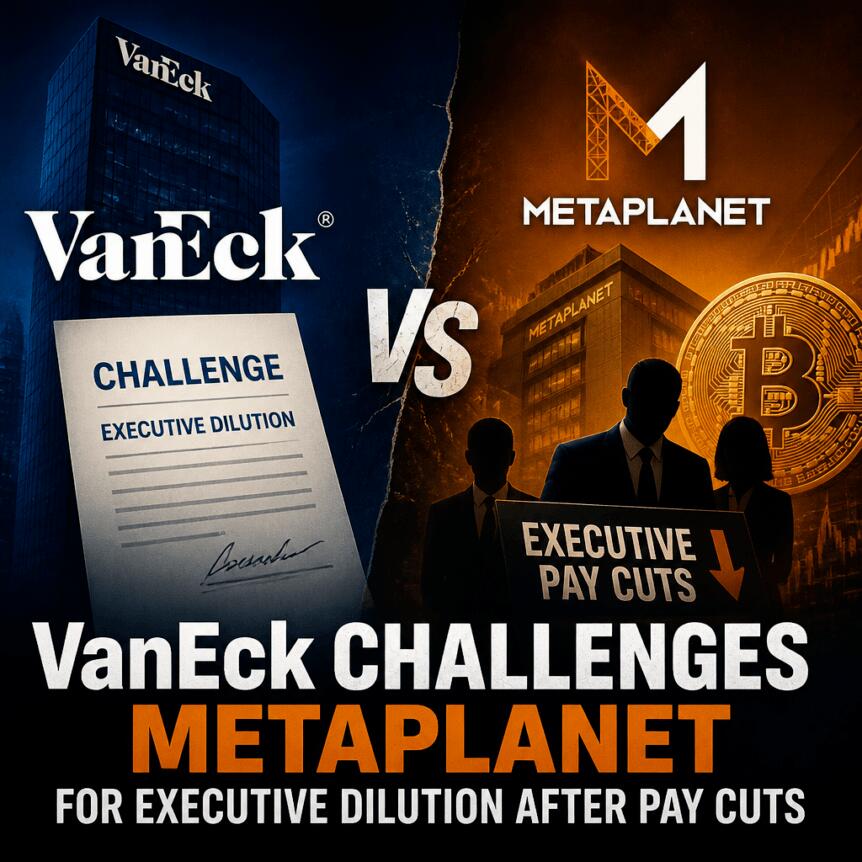
Asset manager VanEck has sharply criticized Metaplanet’s executive compensation design, arguing that the company’s recent steps to reduce shareholder dilution tied to its Bitcoin treasury activity do not fully solve the underlying misalignment between management incentives and existing shareholders.
In a Friday research note that reviewed executive pay structures across the 10 largest digital asset treasury companies, VanEck ranked Metaplanet’s approach as “Bad,” the only one in the lowest category. VanEck said Metaplanet’s compensation framework still leaves executives with far more equity exposure than peers and implies higher dilution pressure than investors should tolerate.
Key takeaways
- VanEck rated Metaplanet’s executive compensation “Bad,” citing an equity plan sized at 14.7% of fully diluted shares.
- VanEck estimated officer exposure at 8.2% for Metaplanet—around 10 times the average (0.8%) across the other nine treasury companies reviewed.
- VanEck said Metaplanet’s officer equity exposure and overall option pool remain substantially higher than peer levels even after recent reductions.
- VanEck attributed part of Metaplanet’s problem to a prior option-pool mechanism that automatically expanded as new shares were issued for Bitcoin purchases.
- VanEck urged Metaplanet to unwind the earlier expansion and replace remaining rights with a compensation plan approved by shareholders.
Why VanEck says Metaplanet’s incentives still miss the mark
VanEck’s report focused on how corporate Bitcoin holders structure executive pay—especially where equity compensation can increase alongside treasury activity. The core argument is straightforward: if executive incentives are tied to actions that require share issuance, investors can face dilution even when management claims the strategy is designed to enhance long-term value.
According to VanEck, Metaplanet’s equity plan amounted to 14.7% of fully diluted shares, while officer exposure stood at 8.2%. VanEck compared those figures to the other nine companies in its sample, where officer exposure averaged 0.8% and equity plans were markedly smaller.
VanEck also contrasted Metaplanet with Strategy, identified as the largest corporate Bitcoin holder in its peer set. VanEck rated Strategy’s compensation structure “Good,” citing an equity plan equal to 2% of fully diluted shares and officer exposure of 0.5%. VanEck said Strategy’s equity reserve is fixed, and plan increases require a shareholder vote—an investor-friendly setup designed to prevent automatic equity expansion.
The option-pool mechanism VanEck says drove outsized dilution
VanEck argued that the disparity is not accidental. It said Metaplanet’s previous compensation structure included an option pool that could expand automatically as the company issued additional shares to fund Bitcoin purchases.
Under that mechanism, VanEck said the pool grew from 46 million shares to 319.5 million—an increase of roughly 273 million potential shares. The report points to how such a design can embed dilution into the compensation framework: when the treasury company issues stock to acquire Bitcoin, the equity compensation pool can expand in tandem, compounding the effect for existing shareholders.
That expansion had already drawn scrutiny from Metaplanet shareholders at the time. Earlier coverage from Cointelegraph noted that the pool growth faced backlash, with some shareholders urging Metaplanet to cancel the additional potential shares created by the adjustment clause (see https://cointelegraph.com/news/metaplanets-executive-stock-pool-backlash-ceo-mmxx-ties).
What changed—and why VanEck still says it’s not enough
In response to the criticism, Metaplanet ended the automatic adjustment mechanism in August and cut the overall pool by 41% in September, according to the timeline described in VanEck’s report. The pool fell from 319.5 million shares to 188.2 million shares.
Even with those changes, VanEck said Metaplanet’s current structure “falls well short of the mark.” The implication is that the company’s revisions may have reduced future growth in the pool, but did not fully address the magnitude of the earlier expansion—particularly from the period when issuance linked to Bitcoin purchases also expanded the option pool.
VanEck’s recommendations went further. The report called on Metaplanet to reverse the roughly 273 million-share expansion created by the earlier adjustment clause and replace the remaining rights with a shareholder-approved compensation plan.
VanEck also warned that unless past grants are clawed back, much of the dilution effect may already have occurred. This is an important investor consideration: even if new grants are made under a tighter framework, compensation already delivered or irrevocably granted can leave shareholders carrying the cost.
Proposed fixes: tougher alignment with per-share Bitcoin metrics
Beyond arguing for structural changes to the equity plan, VanEck suggested how Metaplanet could better align executive outcomes with investor interests tied to corporate Bitcoin performance.
The report recommended tying executive compensation to a measurable metric such as Bitcoin per fully diluted share. VanEck also said Metaplanet should adopt a written grant-timing policy, aiming to reduce discretion and create clearer rules around when compensation is granted relative to share dilution and treasury activity.
The broader theme for corporate Bitcoin holders is that pay design can either dampen dilution concerns or amplify them. VanEck’s peer comparison highlights that not all corporate Bitcoin treasuries rely on the same mechanics: in its analysis, companies with fixed equity reserves and shareholder approval requirements scored better on investor alignment than Metaplanet’s former auto-expanding pool.
Metaplanet’s role in the corporate Bitcoin landscape
Metaplanet is a Japanese Bitcoin treasury company and, according to BitcoinTreasuries.net, is currently the third-largest publicly traded corporate Bitcoin holder with 43,000 BTC. That positioning makes the compensation debate more than just governance nitpicking: Metaplanet’s governance choices can influence how global investors evaluate the broader “treasury company” model and whether the economics remain shareholder-friendly as Bitcoin exposure is accumulated.
Earlier coverage from Cointelegraph also described how Metaplanet’s compensation pool adjustments came alongside corporate restructuring around share issuance (see https://cointelegraph.com/news/metaplanet-executive-stock-pool-hong-kong-subsidiary).
For investors, the next key question is whether Metaplanet will meaningfully unwind past dilution tied to the earlier option-pool expansion and how any replacement compensation plan will be structured—particularly whether shareholder approval, clawbacks, and performance metrics are introduced in a way that reduces the link between Bitcoin purchases and executive equity growth.
Crypto World
Medicaid Told Her She Could Keep $162,660 of Their Savings. She Asked for a Hearing, Showed Them Her Income, and Kept Far More. One Federal Rule Says the At-Home Spouse Can’t Be Left Short

Quick Read
-
Federal law lets the at-home spouse request a fair hearing to push protected savings above the $162,660 CSRA cap when income falls short of $2,705 monthly.
-
The income-first rule blocks most couples: the institutionalized spouse’s pension and Social Security must close the gap before any extra assets are protected.
-
Winners typically have a low-income at-home spouse, a modest institutionalized spouse income, and high housing costs that push the protected ceiling above the standard cap.
-
Two retirees, same $1 million, same 4% rule, buy one finished with $1.4 million, the other hit $0 in 12 years. Our free reader guide explains the flaw that separated them, and the income-first method built to avoid it.
If your spouse is entering a nursing home and you are the one staying home, Medicaid quietly hands you a lever most families never pull. Federal law lets you ask an administrative judge to raise your protected savings above your state’s standard when the income those savings generate isn’t enough to live on.

That is the buried mechanic behind the Community Spouse Resource Allowance fair hearing, and in a narrow set of cases it moves the ceiling well past the widely quoted 2026 cap, according to Centers for Medicare & Medicaid Services.
Start with the baseline figures set by federal regulators. According to the Centers for Medicare & Medicaid Services, the 2026 federal maximum CSRA is $162,660, with a floor of $32,532. States pick a standard inside that band, and the count is a snapshot taken when the ill spouse enters institutional care. Those figures come from the Centers for Medicare & Medicaid Services Center for Medicaid and CHIP Services Informational Bulletin issued April 27, 2026.
The 4% Rule is Broken, Built On A World That No Longer Exists
Every retiree knows about the 4% rule, but it frames retirement as a slow liquidation and still causes retirees with seven-figure accounts to agonize over a dinner out.
There’s a different way to run the math that makes more sense today. Build an income floor — dividends, interest, and Social Security that cover your essential bills every month — and you never have to sell shares into a down market just to pay them.
Our free reader guide, The 4% Rule Is Broken, walks through it in about 15 minutes. Access the report here.
What a Fair Hearing Actually Buys You
The spousal impoverishment statute at 42 U.S.C. §1396r-5 provides that if the community spouse’s monthly income falls below the Minimum Monthly Maintenance Needs Allowance, and the income thrown off by the assets they are already allowed to keep does not close the gap, a hearing officer may raise the resource allowance to an amount that will generate that income. Per the Centers for Medicare & Medicaid Services, the MMMNA is $2,705, effective July 1, 2026, with higher figures in Alaska and Hawaii. The allowance operates as a floor that can expand when the household arithmetic demands it.
Crypto World
There Are Only a Handful of Nasdaq-100 Stocks That Yield Over 3%. Here’s My Top Pick to Buy in September.

Most investors think of the Nasdaq-100 index as a tech index. That’s not unreasonable, given that 66% of the index is, indeed, in the technology sector. However, if you are looking for a high-yield stock, tech usually isn’t the place to look. Which is why my pick in September is from the just over 2% weighting in consumer staples companies.
PepsiCo (NASDAQ: PEP) has a yield of roughly 4.3%. For reference, the S&P 500 index (SNPINDEX: ^GSPC) yields only about 1%, while the average consumer staples stock yields roughly 2.1%. So that yield is attractive on both an absolute and a relative basis. Here’s a quick rundown on why PepsiCo’s yield is so high and why I bought it anyway.
Missed AI’s “Act 1”? Act 2 Could Be 15x Bigger. Most investors think they missed the AI boat because they didn’t buy Nvidia in 2005. But according to our analysts, we’re only at the end of “Act 1″—the R&D phase. “Act 2” is the global rollout. Continue »

PepsiCo isn’t hitting on all cylinders
In the second quarter of 2026, PepsiCo’s organic sales rose 2.4%. That’s actually not a terrible number for a consumer staples company, but it is less than half the 6% that Coca-Cola (NYSE: KO) achieved. Given that these two companies are key competitors in the beverage space, you can see why Wall Street isn’t happy with PepsiCo’s business results.
To be fair to PepsiCo, its business spans beverages, snacks, and packaged food products. So it is far more diversified than Coca-Cola. Right now, that’s a headwind, but I actually see the added diversification as a net positive. I believe it gives PepsiCo more levers for long-term growth.
But right now, consumer tastes are shifting. Some of that is related to a general increase in health consciousness. And some is tied to the development of GLP-1 weight-loss drugs, which are changing the way people eat. The why here is less important than the fact that there is a change. PepsiCo is aware of it and is working to update its brand portfolio. That takes time, and Wall Street is famously impatient, so the stock price has fallen. I think that’s an opportunity for long-term investors like me.
PepsiCo has dealt with change before
What’s important to remember right now is that consumer buying habits shift constantly. While the current change may feel dramatic, at least partly due to the impact of GLP-1 drugs, PepsiCo has adjusted its business many times over the past 54 years. Fifty-four may seem like an oddly specific number, but it really isn’t. It is the number of years that PepsiCo has increased its dividend.
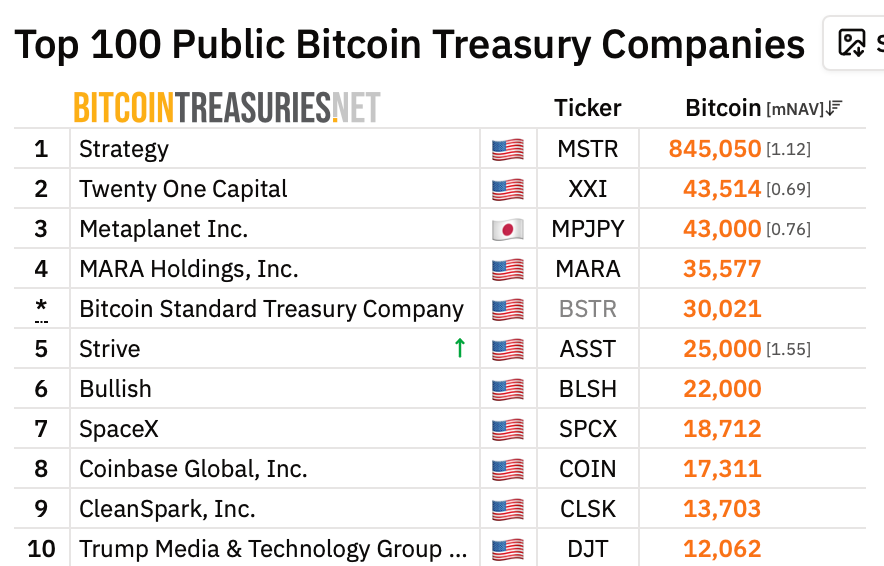
Asset manager VanEck has criticized Metaplanet’s executive compensation structure, arguing that recent efforts by the Bitcoin treasury company to curb shareholder dilution still fall short of adequately aligning management with investors.
In a Friday report examining executive compensation across the 10 largest digital asset treasury companies, VanEck labeled Metaplanet’s compensation structure “Bad,” making it the only firm to fall into the lowest category. VanEck cited an equity plan equal to 14.7% of fully diluted shares and officer exposure of 8.2%.
VanEck said Metaplanet’s officer exposure is roughly 10 times the 0.8% average of the other nine companies analyzed, while its overall equity plan is nearly four times the peer average.
By comparison, Strategy, the largest corporate Bitcoin (BTC) holder, has an equity plan equal to 2% of fully diluted shares and officer exposure of 0.5%. VanEck rated its compensation structure “Good,” noting that its equity reserve is fixed and plan increases require a shareholder vote.
Metaplanet is a Japanese Bitcoin treasury company that currently ranks as the third-largest publicly traded corporate Bitcoin holder, with 43,000 BTC, according to BitcoinTreasuries.net.
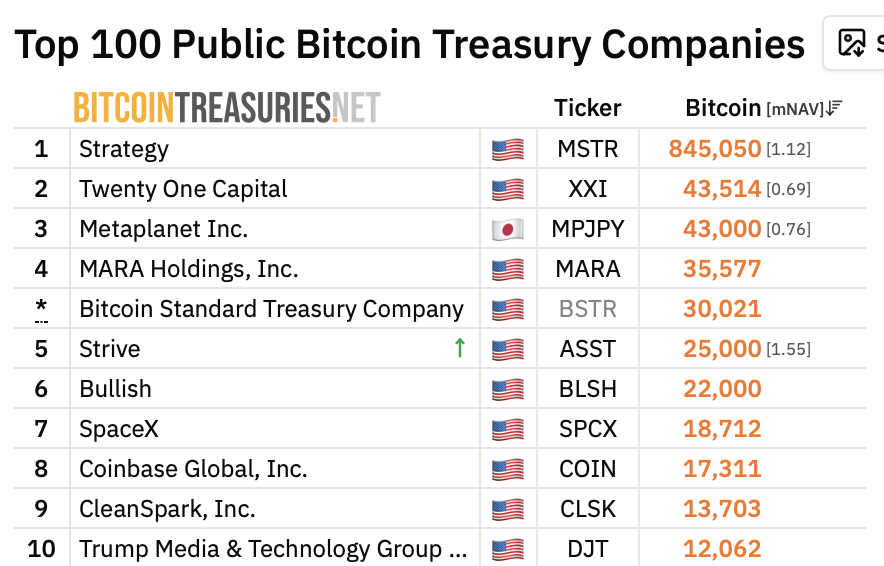
Top 10 Bitcoin treasury companies. Source: BitcoinTreasuries.NET
Bitcoin purchases expanded executive option pool
VanEck said the disparity stems partly from Metaplanet’s former compensation structure, which allowed its option pool to expand automatically as the company issued shares to fund Bitcoin purchases. The mechanism caused the pool to grow from 46 million shares to 319.5 million, adding roughly 273 million potential shares.
At the time, the expansion drew criticism from some Metaplanet shareholders, who called on the company to cancel the additional potential shares created by the adjustment mechanism.
Amid the criticism, Metaplanet ended the automatic adjustment mechanism in August and cut the overall pool by 41% in September, from 319.5 million to 188.2 million shares. VanEck, however, said the changes still “fall well short of the mark.”
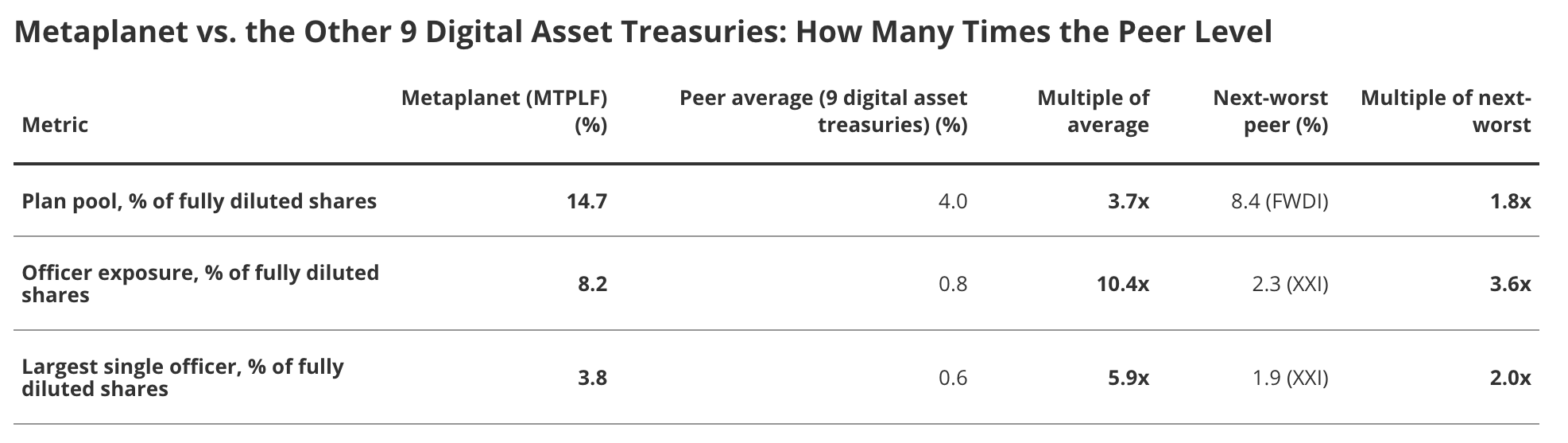
Metaplanet’s equity compensation versus peers. Source: VanEck Research
Friday’s report called for Metaplanet to reverse the roughly 273 million-share expansion created by the adjustment clause and replace the remaining rights with a shareholder-approved compensation plan. VanEck separately noted that unless past grants are clawed back, much of the dilution has already occurred.
VanEck also recommended tying executive compensation to a metric such as Bitcoin per fully diluted share and adopting a written grant-timing policy.
Magazine: Bitcoin treasury firms can outperform BTC… but is the risk worth taking?
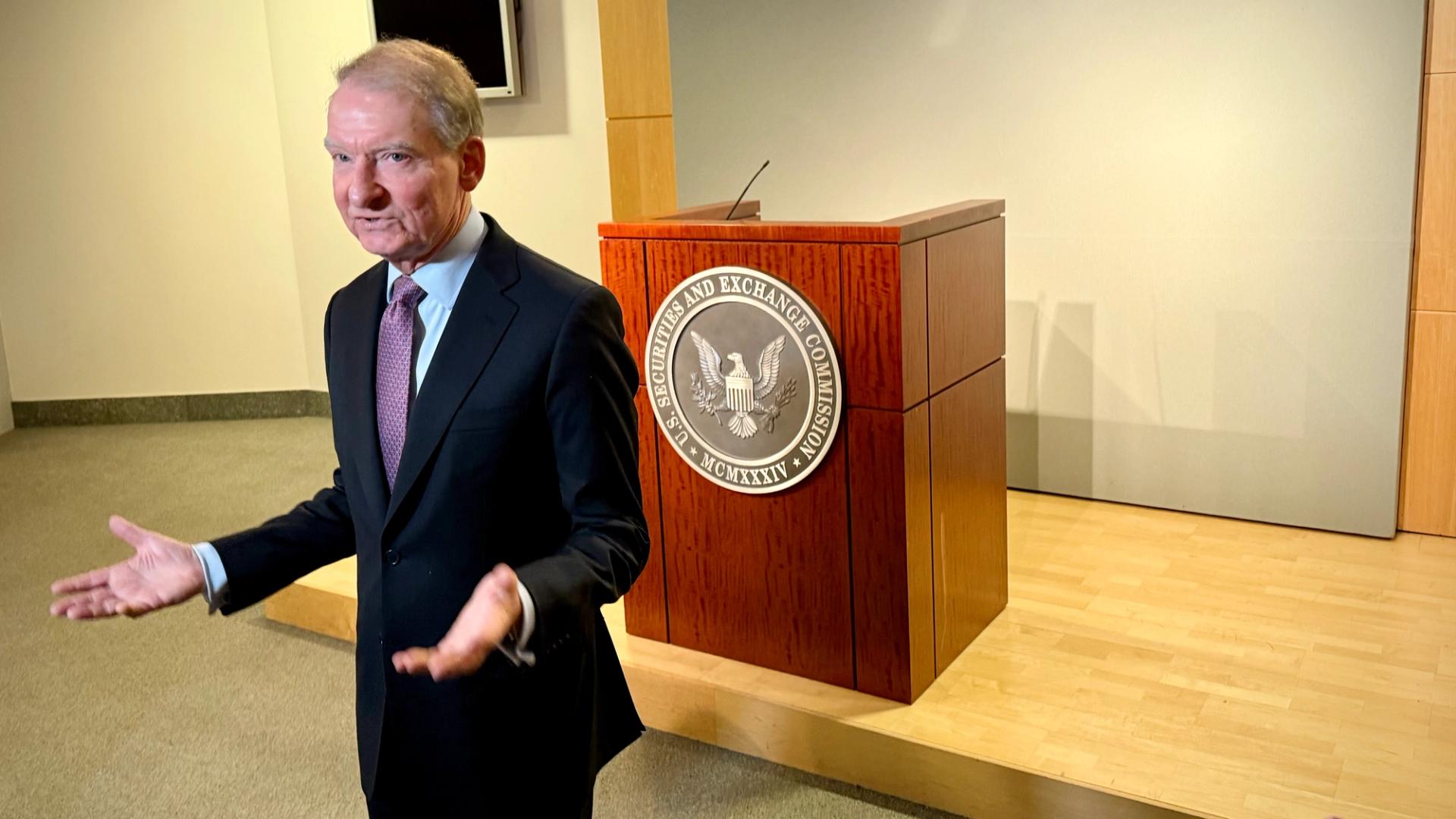
The Clarity Act would have cleared that up and also elevated the SEC’s sister agency, the Commodity Futures Trading Commission, to new authorities — most importantly full supervisory powers over the crypto commodity spot markets. Spot markets are where commodities trade directly, and since bitcoin and Ethereum’s ether were eventually determined to be commodities, it became clear the bulk of crypto trading happens in that space that’s absent a hands-on regulator (except in situations in which bad guys are manipulating the markets).
This conflict is uniquely American, because the U.S.’ regulatory regime developed completely separate securities and derivatives agencies, unlike the unification elsewhere. (Yes, everybody knows it’s unnecessarily complicated.) So figuring out which one is responsible for each asset has been a minefield from day one.
Defining the different buckets of blockchain-native assets and who would regulate them was a core aspect of Clarity. Plus, the bill did a lot of things meant to curb illicit finance. And — in a particularly contentious arena — it sought to offer limited legal protections to software developers in decentralized finance (DeFi), so they wouldn’t get prosecuted for how other people use their work.
We’ll pass on talking about the sections that actually killed the bill, which had very little to do with the legislation’s primary business. Instead, we’ll look at what happens in the Clarity-shaped hole in U.S. policy. And thanks to the SEC, we didn’t have to wait long.

Citing data from Santiment, popular analyst Ali Martinez noted on Saturday that Ripple whales have gone on a spectacular accumulation spree in the past four days, acquiring over 1.5 billion tokens.
At the same time, other on-chain and technical signals suggest that the recent selling pressure might be easing and the underlying asset could be preparing for another leg up.
Ripple Whales Go Big
These key market participants, whose actions are typically mimicked by retail investors, have accumulated approximately 1.54 billion XRP in about 96 hours. At current prices, this stash is worth around $2 billion. The timing of the buying spree was quite intriguing, as it began with the CLARITY Act setback in the US Senate, which pushed the token’s price down sharply.
However, accumulating over 1.5 billion tokens in such a short time has helped the asset recover, which is among the reasons XRP surged to over $1.45 on Friday and Saturday after it had bottomed at $1.27 on Tuesday following the Senate vote.
$2 BILLION IN XRP BOUGHT BY WHALES
Whale activity on the XRP network has surged over the past 96 hours.
Large holders appear to have accumulated roughly 1.54 billion $XRP, worth around $2.2 billion.
That’s a significant accumulation spike that could soon translate into price… https://t.co/cBssFmv3wQ pic.twitter.com/Ty3ukakDvi
— Ali Charts (@alicharts) September 19, 2026
Martinez also believes that this spectacular accumulation spree can soon “translate into price action, leading to a bullish breakout.” He has previously predicted that XRP is primed to challenge the key psychological level at $2.00.
Next Targets
Crypto Patel also noted that XRP is sitting above a “major long-term accumulation zone” on the 2-week chart, and it has reclaimed its long-term structure. As such, the analyst outlined some major targets that begin with the potential run toward the first crucial resistance at $1.70. If that one falls, the asset could head toward $3.00, and Patel’s long-term target remains at a whopping $10 or even beyond.
Meanwhile, Dark Defender said XRP’s 5-wave structure is “rock solid,” after the asset “said bye-bye” to a key resistance capping its breakout attempts. The analyst was slightly more modest in their predictions, indicating that the next targets for XRP are $1.70 and $1.88. Recall that XRP’s run in mid-August was halted at the former, after it skyrocketed by 70% in less than 72 hours.
The post Ripple Whales Go on Massive Accumulation Spree: Bigger XRP Price Move Coming? appeared first on CryptoPotato.
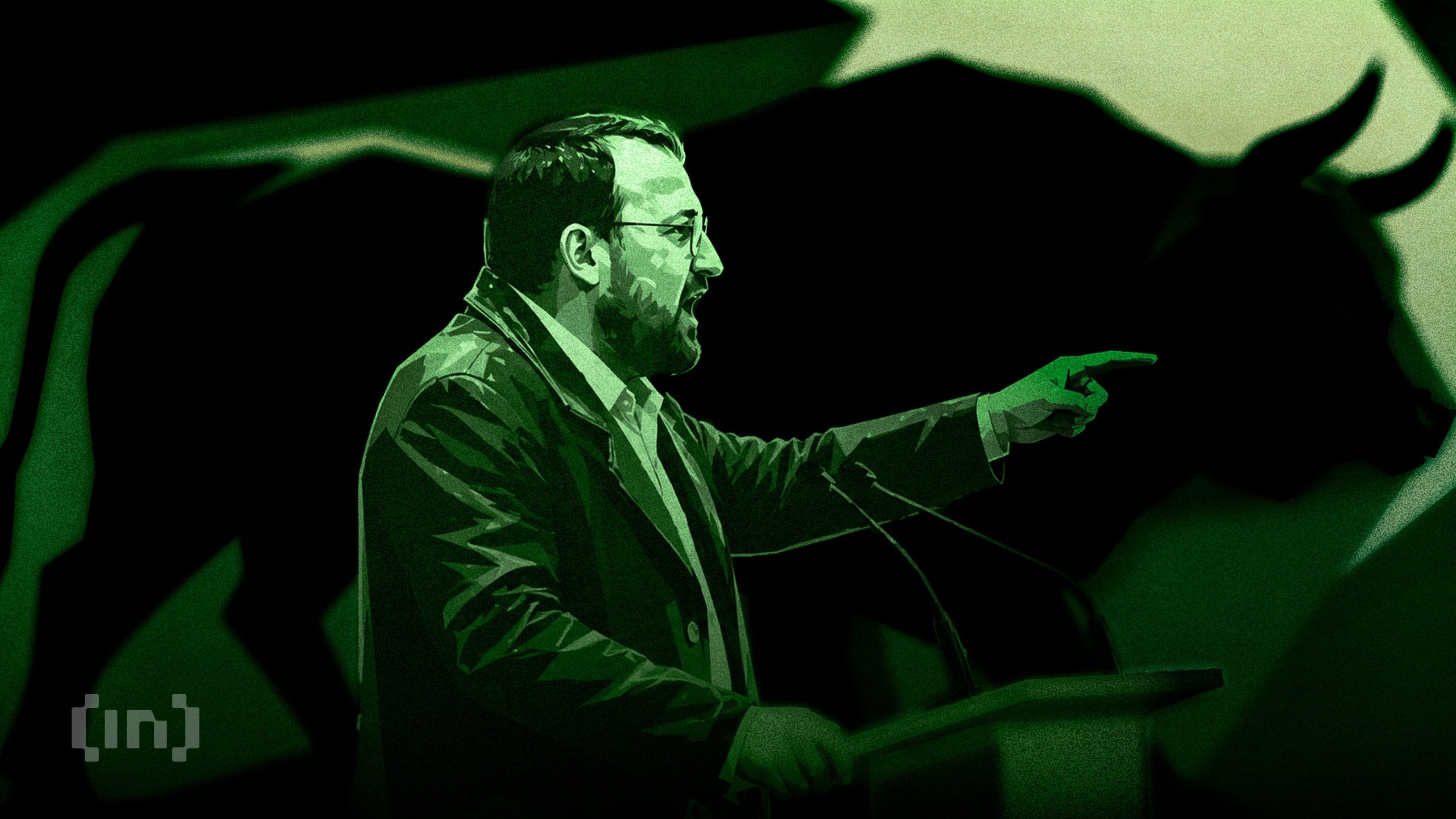

Charles Hoskinson believes artificial intelligence (AI) is about to repeat a pattern he witnessed firsthand decades ago.
The Cardano founder argues that blockchain technology will eventually absorb AI, much like cryptocurrency once absorbed cryptography as a discipline.
Why Hoskinson Sees a Coming AI Reckoning
Speaking on the Deeptech Insights podcast this week, Hoskinson pointed to a math problem he considers unsustainable: data center spending keeps growing tenfold year after year, yet the electricity grid simply cannot scale at that pace.
Labs like OpenAI and Anthropic still need to turn a profit eventually, he noted, and the enormous cost of pretraining new models keeps narrowing the path to profitability.
Hoskinson drew a direct parallel to his own career. Cryptographers once resisted any association with cryptocurrency, he recalled, until crypto’s money became powerful enough to hire away the field’s best talent. He expects AI to follow a similar arc within five to ten years.
“Cryptocurrencies are going to eat AI because we solve all the hard problems that AI can’t solve,” Hoskinson said, naming payments, alignment, and data provenance as the specific gaps blockchains could fill.
Follow us on X to get the latest news as it happens.
His alignment argument centers on governance. Individual AI companies currently set their own rules on acceptable behavior and free speech, he argued, whereas a blockchain-based system could instead establish shared standards among participants.
The same infrastructure, he added, could also track content origin and automate royalty payments whenever AI systems draw on someone else’s work.
Hoskinson floated an alternative to building more data centers: pooling everyday phones and GPUs into a distributed training network. He compared today’s AI buildout to the late-1990s fiber optic boom, when roughly 90% of newly laid cable sat idle for nearly a decade.
A similar pattern could follow with data centers, he argued, shifting toward smaller models running locally on devices like Apple’s M5 Mac Studio, with cryptocurrency as the coordination layer.
His Timeline for U.S. Crypto Regulation Looks Grim
Hoskinson also predicted the CLARITY Act won’t clear Congress until 2029, blaming three specific missteps by the Trump administration, including tying crypto’s public image too closely to Trump-branded tokens.
“…There’s no pressure, political pressure to pass this type of thing. they’ll just wait until the next session and force uh a heavily unfavorable bill including ethics provisions to Trump uh on them if they want clarity. Of course, Trump won’t make those concessions. So, actually, we’ll have to wait till 2029 to get a new Clarity Act passed because of the ineptitude of uh of what the White House did. And I was very public about this…,” Hoskinson noted.
That prediction landed just a day after the Senate actually failed to advance the CLARITY Act on September 15, falling short of the 60 votes required.
Subscribe to our YouTube channel to watch leaders and journalists provide expert insights.
The post Charles Hoskinson Predicts Crypto Will Eat AI: What's His Reasoning? appeared first on BeInCrypto.
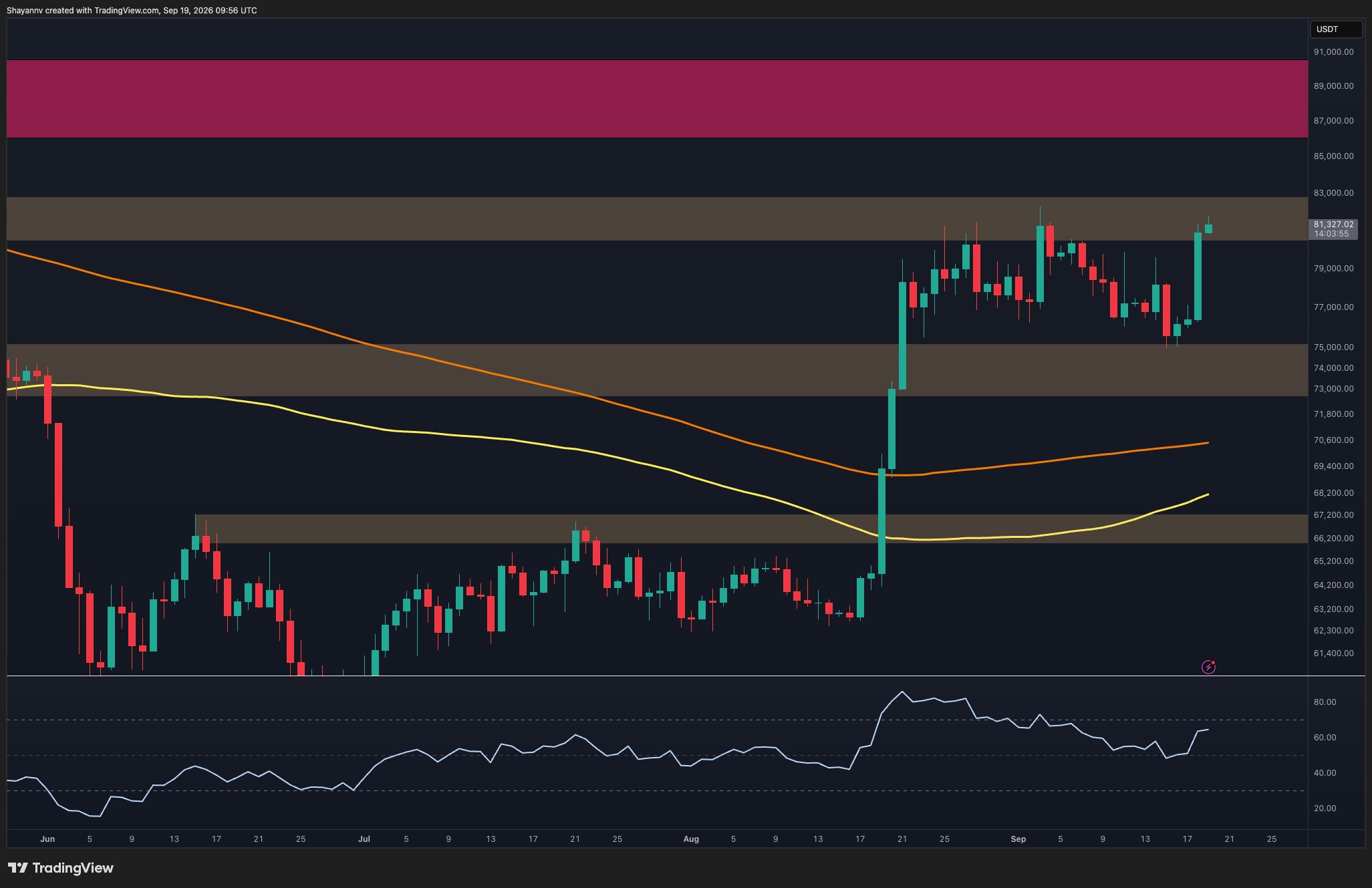
Bitcoin has recovered sharply from the latest pullback and is once again pressing against the upper boundary of its consolidation. With BTC trading around $81.5K, the market is approaching a decisive area where a confirmed bullish breakout could trigger another expansion higher.
Bitcoin Price Analysis: The Daily Chart
The daily chart continues to show Bitcoin consolidating after its powerful August breakout. The latest recovery from the $75K area has been particularly strong, with buyers quickly pushing the price back toward the major $80.5K-$82.5K resistance zone.
This region has repeatedly capped upside attempts and remains the main obstacle preventing another bullish leg. BTC is now testing it once again around $81.5K, while the broader structure remains constructive as long as the $72.5K-$75K support zone is preserved.
Momentum has also improved. The daily RSI has rebounded back above the neutral 50 area and is approaching the mid-60s, reflecting renewed buying momentum without yet reaching overbought territory.
A sustained daily breakout above the $82.5K resistance area would represent an important structural development and could pave the way toward the next major supply zone around $86K-$90K. Conversely, another rejection could keep Bitcoin range-bound, with $75K and the broader $72.5K-$75K region remaining the primary support area.
BTC/USDT 4-Hour Chart
The 4-hour timeframe highlights the range-bound structure more clearly. Bitcoin recently rebounded aggressively from the lower boundary near $74.5K-$75K and has now returned directly to the $81K-$82K resistance region.
The recovery has been impulsive, particularly during the latest move from around $76K toward $81K. However, price has not yet produced a convincing breakout from the upper boundary. Therefore, the market remains inside the broader range despite the increasingly bullish short-term momentum.
A clean break and sustained hold above the $81K-$82K zone would likely shift the structure decisively in favor of buyers. Such a move could trigger another price spike, initially toward the rising upper trendline around $84K-$85K.
Until that happens, rejection remains a relevant alternative. Failure to clear $82K could send BTC back toward the middle of the range, while the $72.5K-$75K zone remains the critical support and broader invalidation area for the current bullish setup.

Sentiment Analysis
The two-week Binance BTC/USDT liquidation heatmap adds further context to the latest rally. Liquidation heatmaps highlight areas where leveraged positions are concentrated, with brighter regions representing larger potential liquidation clusters.
Bitcoin’s surge above $80K has pushed price into a significant concentration of liquidity around the $80K-$82K region. This aligns closely with the technical resistance visible on both price charts, making the current area particularly important.
Some liquidity remains immediately above the market, suggesting that a decisive breakout could force additional short liquidations and potentially accelerate the move. This supports the possibility of another sharp spike if BTC successfully clears the $81K-$82K resistance zone.
At the same time, a liquidity concentration remains below price around $74K-$75K. Therefore, as long as Bitcoin remains trapped below resistance, volatility in either direction cannot be ruled out. For now, the combination of improving momentum and price pressing against the range high puts the focus firmly on whether buyers can convert the current test into a confirmed breakout.

The post Bitcoin Price Analysis: Explosive BTC Rally Faces One Major Obstacle appeared first on CryptoPotato.

National Lottery Lotto and Thunderball results live: Numbers for Saturday, September 19
Trump calls for plans to form federal ’AI Force’

51-year-old star calls out bad WWE creative for Roman Reigns




-

 Fashion1 day ago
Weekend Open Thread: Talbots – Corporette.com
-

 Tech6 days ago
The Latest Weird Thing to Play Doom Is the Mapped-Out Brain of a Fruit Fly
-

 Crypto World5 days ago
Kraken Lets xStocks Holders Earn Yield Through DeFi
-

 Crypto World5 days ago
Revolut Attackers Warn of Ongoing Daily Customer Data Leaks
-

 Crypto World3 days ago
US Charges Robinhood Engineers Over Crypto Listing Trades
-

 Crypto World4 days ago
What Is the Status of the U.S.-Iran Peace Talks? Here's What Both Sides Are Saying
-

 Crypto World5 days ago
Elon Musk Drops a Bombshell: Grok 5 Could Be the AGI Breakthrough
-
 NewsBeat20 hours ago
Trump says US has reached an agreement to take permanent control of Greenland’s security
-

 Crypto World4 days ago
Robinhood engineers charged over $50K crypto scheme
-

 Business7 days ago
Rivals Sam Altman and Elon Musk Rally Behind Dario Amodei’s Call for a Slowdown in AI Development
-
 Crypto World6 days ago
New Tesla Roadster Uses SpaceX Tech. Will It Impact the Stock Price?
-
 NewsBeat5 days ago
‘Sick conspiracy’: Trump says only guardrails AI needs is ‘a strong and smart (High IQ!) president’ in all-caps rant
-
 Crypto World4 days ago
NVIDIA Analysis: Attempted Rising Wedge Breakout Amid Pressure on the AI Sector
-
Business5 days ago
SK Hynix ADRs Fall More Than 6% as Memory Rally Breaks on Fears of Slower AI Spending
-

 Crypto World18 hours ago
Bitcoin price breaks channel as RSI climbs to 63
-

 Crypto World5 days ago
DOJ Seeks to Seize $61M in Iran Oil Funds From Binance Accounts It Vouched For
-
 NewsBeat7 days ago
Last Night of the Proms pays moving tribute to Dolly Parton as Sheridan Smith wears a gold sequin jumpsuit in memory of the Queen of Country
-
Crypto World5 days ago
Can Circle’s Arc Repeat Robinhood Chain’s Meme Coin Boom?
-

 Crypto World6 days ago
Goldman Sachs backs 25bp Fed hike after CPI
-
 Crypto World6 days ago
AI Safety Burden Falls on Chief Executives as Trump Prioritizes China Race
You must be logged in to post a comment Login