
Business
SpaceX Is Becoming An AI Giant



In three weeks, finance ministers, central bankers and investors from more than 180 countries will gather in Bangkok for the IMF and World Bank Annual Meetings, running from 12 to 18 October, with the plenary session on 16 October. It is the first time the meetings have come to the Thai capital since 1991, and the timing gives the host country an unusual vantage point on a difficult moment for the region.
Asia’s Tougher Path: Why the Next Wave of Growth Will Benefit Only a Select Few
The forecasts that delegates will be debating were mostly finished before the summer. They rest on a specific assumption: that the Strait of Hormuz would begin to reopen in mid-July and that conditions would be broadly back to normal by March 2027. That has not happened on schedule. Talks between Gulf states and Iran were postponed again this month, and market reports put Brent crude back above 100 dollars a barrel in the past week. The story of Asia’s emerging economies in 2026 is therefore less a story of a single slowdown than of a widening gap between countries.
The playbook that worked, and why it works less well now
South Korea, Taiwan and, later, China grew rich on a well-known sequence: cheap labour, export-oriented manufacturing, rising productivity, and a steady climb from low-value assembly to higher-value goods. That ladder is harder to climb today, for reasons that long predate the current crisis.
Factories built now absorb far fewer workers than those built in the 1980s, so manufacturing employment tends to peak at lower income levels than it once did. China’s scale and overcapacity in many mid-technology sectors crowd the field for newcomers. World trade no longer grows much faster than global output, so exporting is no longer a rising tide.

On top of that, several economies are ageing before they have become rich, which limits savings, labour supply and fiscal room. Thailand is the region’s clearest example, and the country’s long-term growth decline has been driven by exactly these forces, compounded by household debt that is unusually high for a developing economy.
Moving from middle to high income is a matter of productivity, skills, competition and institutions rather than cheap labour and capital accumulation, and those are the slowest things to build. Every crisis that arrives on top of this is harder to absorb, because there is less room to manoeuvre.
Three forecasters, three pictures
The three main institutions published their latest assessments between June and July. Their headline figures differ, partly because they use different country groupings and weighting methods.
The IMF’s July update sees global growth of 3.0 percent this year and 3.4 percent in 2027, describing an economy pulled by two opposing forces: the negative supply shock of the Middle East war and a positive technology shock driven by artificial intelligence. It puts emerging and developing Asia at 5.0 percent in 2026 and 4.8 percent in 2027. The Asian Development Bank’s July outlook lowers its 2026 forecast for developing Asia and the Pacific to 4.9 percent, from 5.5 percent in 2025, and expects inflation to climb to 4.3 percent. The World Bank’s June assessment is the darkest of the three: East Asia and Pacific slows to 4.2 percent from 5.0 percent, or 4.4 percent excluding China.
At the country level, the numbers show how uneven the picture has become (GDP growth, 2026 and 2027):
| Economy | IMF (July) | ADB (July) | World Bank (June) |
|---|---|---|---|
| Vietnam | 7.5 (2026) | 7.2 / 7.0 | 6.8 / 7.1 |
| Indonesia | 5.0 / 5.1 | 5.2 / 5.2 | 5.0 / 5.2 |
| Malaysia | 4.7 / 4.3 | 4.6 / 4.5 | 4.4 / 4.4 |
| Philippines | 3.9 / 5.5 | 3.8 / 5.3 | 3.7 / 5.6 |
| Thailand | 1.9 / 2.2 | 1.8 / 2.0 | 1.7 / 2.1 |
| China | 4.6 / 4.1 | 4.6 / 4.5 (developing East Asia) | 4.2 / 4.3 |
The spread between Vietnam at the top and Thailand at the bottom is wider than the gap between any two forecasters. That spread, more than any headline average, is the real news.
The shock of war: who bears the cost
The IMF describes the 2026 Middle East conflict’s effect on energy markets as a large supply disruption that was cushioned by inventories, emergency stock releases and weaker demand. The cushion is unevenly distributed. Since the war began, the IMF notes, retail gasoline prices have risen about 30 percent in emerging Asia, against roughly 15 percent in Latin America, and liquefied natural gas prices in Asia have climbed by about half.

For energy importers, the pain arrives through three channels. The first is inflation: the ADB has raised its 2026 inflation forecast for the Philippines by 1.9 points to 5.9 percent, and for Thailand by 1.6 points to 2.9 percent. The second is the fiscal bill. The ADB warns that higher fuel subsidy costs could worsen public finances across developing Asia, particularly where natural gas is subsidised, and argues for targeted help to vulnerable households rather than broad price support. The World Bank expects fiscal pressure to be especially acute for energy importers such as the Philippines and Thailand. The third is food. Higher energy prices feed into fertiliser costs, and a possible strong El Niño could reduce harvests and lift rice prices, with import-dependent, rice-heavy economies most exposed.
Net energy exporters see the opposite. Malaysia gains from better terms of trade, and the IMF also credits data-centre activity and the technology upturn for its 4.7 percent projection. The war has, in effect, created a new sorting mechanism: your position in the global energy balance now matters almost as much as your position in the manufacturing chain.
The AI dividend, and who collects it
The second force cuts the other way. According to the IMF, the four largest net exporters of AI-related hardware, namely Taiwan, Korea, Thailand and Malaysia, beat first-quarter expectations by an average of 4.4 percentage points at an annualised rate, while the rest of the world missed by 0.3 points. Korea’s economy grew at 7.5 percent, more than four times what the IMF had projected in April, powered by semiconductors and AI hardware exports.
Southeast Asia is capturing part of this. The IMF raised its 2026 forecast for Vietnam by 0.4 points to 7.5 percent on the back of technology exports, and the World Bank notes that demand for AI-related products lifted industrial output and exports in Malaysia, the Philippines, Thailand and Vietnam.
But the same institutions caution that the benefits are narrow. The World Bank points out that the spread of AI across the wider economy remains limited and uneven, which creates challenges for productivity and job creation. The ADB’s special analysis this year finds that advanced economies are better placed to gain early from generative AI because of stronger digital infrastructure, skills and institutions, while developing Asia’s gains are smaller, though more persistent, and depend on closing readiness gaps in computing capacity, skills and data governance. The IMF also lists a correction in technology expectations among its downside risks, particularly for AI-exporting economies with concentrated equity markets.
The lesson is subtle. Being plugged into the AI hardware chain is now a bigger advantage than being an emerging market or a developed one, but it is an advantage with a concentration risk attached.
Thailand as the test case
No economy in the region illustrates both forces more clearly than Thailand, which is the weakest of the major ASEAN growers in every forecast above and also one of the four largest AI-hardware exporters.
The export side of the story is real. In April, Thai exports rose 23.1 percent, and electronics jumped 64.6 percent, though imports climbed even faster and pushed the trade deficit to a record. On the investment side, Board of Investment applications rose 37 percent year on year to 43.6 billion dollars in the first half of 2026, with 33 billion dollars concentrated in digital infrastructure such as data centres and cloud services. Foreign direct investment surged 80 percent.
The domestic side is far weaker. The Bank of Thailand held its policy rate at 1.0 percent in June and lifted its 2026 growth forecast to 2.3 percent, but that figure includes government support, and the central bank estimates growth would be 1.8 percent without it. It expects inflation to peak at about 4.5 percent in late 2026, and it flagged household debt of around 86 percent of GDP as a brake on consumption once stimulus fades.
The government’s emergency decree to borrow 400 billion baht, described when first-quarter growth of 2.8 percent was announced, funds much of that support. Second-quarter growth then slowed to 1.9 percent year on year, according to figures reported in a recent TBN briefing, which also noted that a business-sector forecast for 2.1 to 2.5 percent growth this year comes with a warning that imported content limits how much of the export and investment boom reaches the domestic economy.
SCB EIC describes the pattern as a K-shaped recovery, which benefits large technology-linked businesses while lower- and middle-income households and small firms remain constrained by slow income growth and high debt. The authorities appear aware of the risk that investment volume does not translate into local value: the government has paused 166 data-centre projects while it tightens investment rules, and analysts increasingly frame the task ahead as converting foreign capital into local supply chains and skilled jobs. In April, the central bank warned that a prolonged closure of Hormuz could push growth far lower, and its scenario analysis showed how exposed an energy-importing economy remains.
Thailand also carries a regional complication: the ADB says the prolonged closure of the Thai-Cambodian border is weighing on Cambodia’s outlook, cutting its 2026 forecast to 4.1 percent.
The rest of the field
Vietnam remains the region’s growth leader, with all three institutions between 6.8 and 7.5 percent this year. Its strength rests on manufacturing and technology exports and steady domestic demand, though the World Bank notes that inflation was already elevated there before the conflict.
Indonesia is the steadiest, with forecasts of 5.0 to 5.2 percent, supported by resilient domestic demand and state-led investment initiatives. Its currency and local-currency bond yields came under pressure when the conflict began, as did Thailand’s and the Philippines’.
The Philippines has the sharpest downgrade. The ADB cut its 2026 forecast to 3.8 percent from 4.4 percent on delayed investment and softer consumption, though all three institutions see a strong rebound to more than 5 percent in 2027.
China is slowing rather than collapsing. Growth was stronger than expected in the first quarter, but momentum faded in April and May, and retail sales fell 0.6 percent year on year in May, the first decline since December 2022. The IMF projects 4.6 percent this year, the World Bank 4.2 percent. India, by the IMF’s fiscal-year measure, is at 6.4 percent, and the ADB has trimmed its forecast because energy prices squeeze real incomes.
What to watch
The first variable is Hormuz itself. The IMF’s baseline used a 2026 average oil price of about 89 dollars a barrel and about 79 dollars in 2027, based on market pricing in early June. Over the summer, Iran said the waterway would not reopen without concessions from Washington, and this month Oman postponed a scheduled Gulf-Iran meeting as Brent traded near 107 dollars. The US Energy Information Administration’s September outlook is somewhat more hopeful, expecting prices to average about 90 dollars in the second half of the year and fall to around 77 dollars by the second quarter of 2027 as shut-in Gulf production restarts. If prices stay elevated, the July forecasts for energy importers look too generous.
The second is trade policy. The ADB notes that after the US Supreme Court reversed some tariff measures, Washington is moving towards alternative legal tools, notably Section 301, and that developing Asia remains the region most exposed.
The third is the AI cycle. A sharp correction in technology valuations or capital spending would hit precisely the economies that have been outperforming.
The fourth is the calendar. The IMF’s full World Economic Outlook will appear with the Annual Meetings in October, and the World Bank’s regional update usually follows in the autumn. Given the energy trajectory since July, the risk to the current numbers is to the downside.
Harder does not mean closed
It would be a mistake to read all of this as a story of decline. The region is still growing faster than almost any other, and the World Bank expects growth excluding China to recover to 4.9 percent in 2027 and 2028 as uncertainty fades and energy prices settle. Vietnam, Indonesia and Malaysia are proving that the path is still open for economies that combine domestic demand, a credible role in the supply chain and reasonable policy space.
What has changed is the price of admission. The old ladder rewarded cheap labour and openness. The current one rewards energy resilience, fiscal room, skills, and the ability to turn a technology boom into broad-based jobs and incomes. Economies that manage all of that will look very different in 2028 from those that cannot. In that sense, the Annual Meetings arrive at a good moment for Thailand: the most useful thing the host can show its guests is not the size of its investment pipeline, but how much of it stays in the country once the cranes and servers are in place.
Quick Read
-
The week ending August 28 saw inflows of $110.49 million, surpassing the total of the previous three weeks combined.
-
Franklin Templeton’s fund was the only one to record positive inflows across all five trading sessions, meaning one issuer accounted for the entire sector’s single green day.
-
Solana’s ETFs are currently the only crypto ETF XRP still leads, and Solana has experienced 12 consecutive weeks of positive inflows while XRP’s cumulative inflows have barely budged.
-
Just released. Our analysts combed the entire stock market and named the ten best stocks to buy right now, and Coinbase didn’t make the cut. Enter your email to see the names that beat COIN. The report is free. Enter your email and see if any of your stocks made the cut.
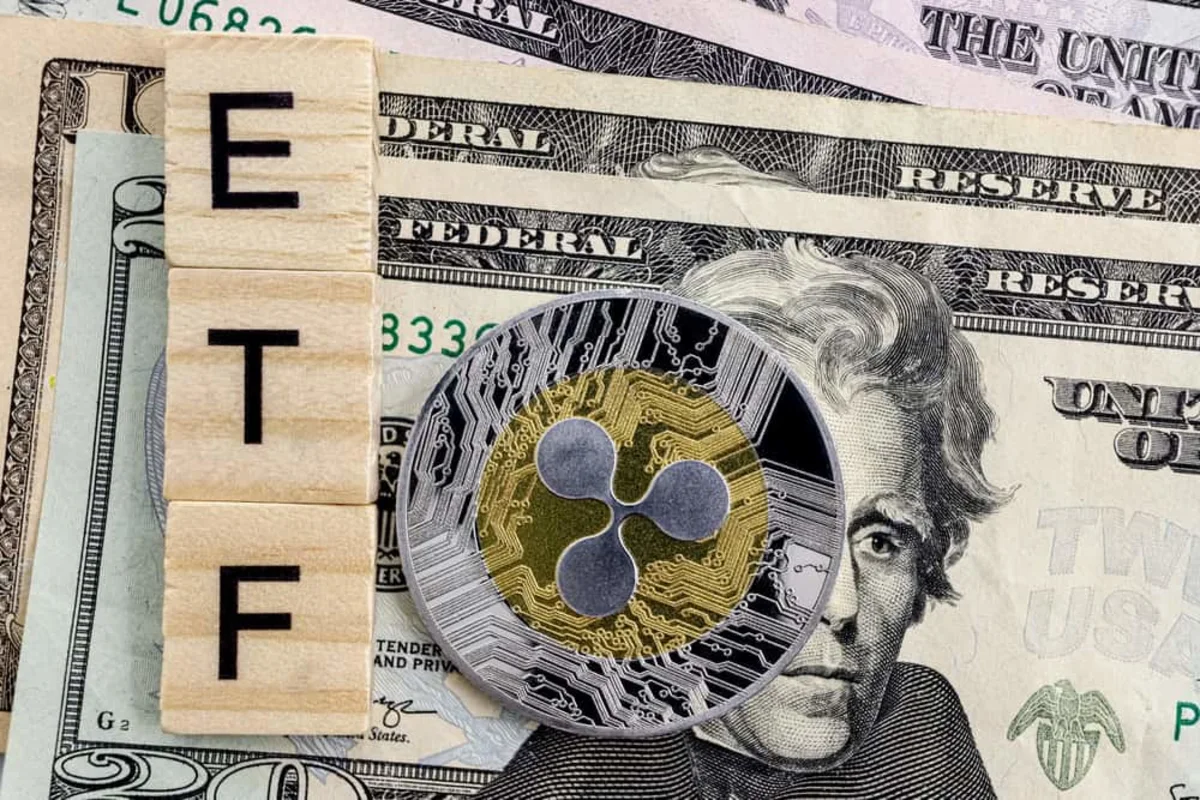
On September 18, 2026, XRP (CRYPTO:XRP) ETF inflows were stalled at a cumulative total of $1,710,373,047.51, according to SoSoValue data pulled on September 19. This leaves a gap of $290 million to reach the $2 billion mark.
The pace of closing this gap has declined over the past three weeks. So when will XRP ETF inflows surpass $2 billion, and what changes may be necessary for that to happen?

Two Macro Events Influenced XRP ETFs by $3.5 Million

As of September 11, the total cumulative inflow stood at $1,700,813,802.26. In the five trading sessions that followed, it increased by less than $10 million, coinciding with two significant macro events.
On September 15, the Senate rejected the CLARITY Act by a vote of 49 to 50, a bill that aimed to clarify how US regulators treat digital assets. On that day, XRP ETFs recorded no inflows at all. The following day, the Federal Reserve raised its target range by 25 basis points to an upper bound of 3.75% to 4.00%, leading to $3.5 million in inflows, mainly driven by Franklin Templeton.
Free Report, Just Released
Why Didn’t COIN Make The Top 10 List?
24/7 Wall St has helped investors make money for over two decades, and our top analysts just finished ranking the definitive Top 10 Stocks To Buy Now. Not the ten biggest companies. Not the ten everyone is arguing about. The ten best stocks to buy right now.
And COIN didn’t make the cut!
The report is free, and you can see why we think each stock is a top investment today.
Enter Your Email and See the Ten →
The rest of the week showed little activity. September 14 saw $11.26 million in inflows, the only day above $10 million. September 17 lost $5.15 million, and September 18 lost another $43,699, for a total inflow of just $9.57 million for the week and total net assets of $1.51 billion.


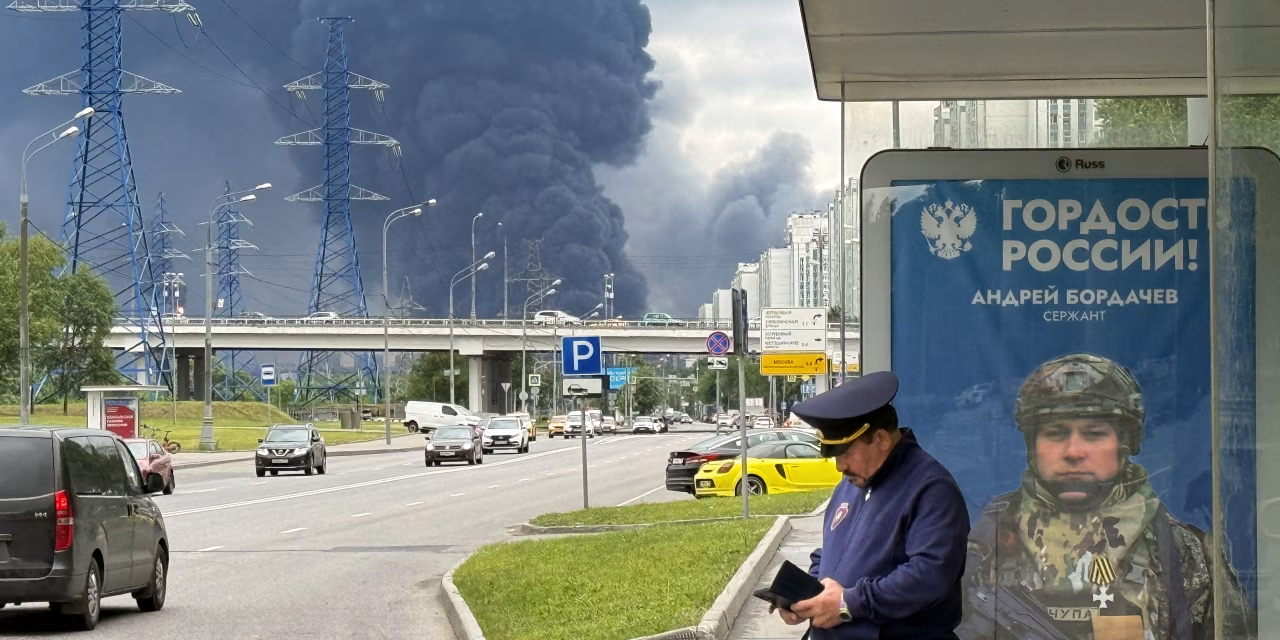
Persian Gulf states and Russia have invested tens of billions of dollars in refineries over the past decade to grab a bigger share of the global diesel market. Now, war in both regions has sent exports plunging, squeezing supplies of a fuel that powers much of the global economy.
Diesel prices are soaring—they eclipsed $6 a gallon in the U.S. for the first time last week and have kept climbing, hitting $6.45 on Friday. The surge has rattled governments and markets around the world that rely on diesel as the workhorse of their industry, transportation and agriculture. Shortages have appeared at gas stations in rural Brazil, in Libya and some African nations that can’t afford to import the fuel.
Copyright ©2026 Dow Jones & Company, Inc. All Rights Reserved. 87990cbe856818d5eddac44c7b1cdeb8

AI safety efforts will require more compute, not less: experts
Business
BlackBerry Q2 Earnings Preview: QNX's Diversification Sparks A Potential Rebound (Ratings Upgrade)
BlackBerry Q2 Earnings Preview: QNX's Diversification Sparks A Potential Rebound (Ratings Upgrade)
The Fed Is Setting Financials Up For Another 2022

Russia stocks lower at close of trade; MOEX Russia Index unchanged

Saul Centers: Attractive Even Amidst Higher Interest Rates (Upgrade)

BLOX: A Crypto Rebound Meets A Hawkish Fed
Business
MBB: Intermediate Duration Not Suitable At The Head Of Possible Rate Hiking Cycle (NASDAQ:MBB)


The Valkyrie Trading Society is a team of analysts sharing high conviction and obscure developed market ideas that are downside limited and likely to generate non-correlated and outsized returns in the context of the current economic environment and forces. They are long-only investors.They lead the investing group The Value Lab where they offer members a portfolio with real time updates, chat to answer questions 24/7, regular global market news reports, feedback on member stock ideas, new trades monthly, quarterly earnings write-ups, and daily macro opinions.
Analyst’s Disclosure: I/we have no stock, option or similar derivative position in any of the companies mentioned, and no plans to initiate any such positions within the next 72 hours. I wrote this article myself, and it expresses my own opinions. I am not receiving compensation for it (other than from Seeking Alpha). I have no business relationship with any company whose stock is mentioned in this article.
Seeking Alpha’s Disclosure: Past performance is no guarantee of future results. No recommendation or advice is being given as to whether any investment is suitable for a particular investor. Any views or opinions expressed above may not reflect those of Seeking Alpha as a whole. Seeking Alpha is not a licensed securities dealer, broker or US investment adviser or investment bank. Our analysts are third party authors that include both professional investors and individual investors who may not be licensed or certified by any institute or regulatory body.

LeBron James’ Lakers Jersey Retirement Looks Likely Despite Fan Disapproval

Katherine Ryan to headline Billingham’s Comedy Forum

IRS has hidden fix for retirees who missed Sept. 15 deadline




-

 Fashion1 day ago
Weekend Open Thread: Talbots – Corporette.com
-

 Tech6 days ago
The Latest Weird Thing to Play Doom Is the Mapped-Out Brain of a Fruit Fly
-

 Crypto World5 days ago
Kraken Lets xStocks Holders Earn Yield Through DeFi
-

 Crypto World5 days ago
Revolut Attackers Warn of Ongoing Daily Customer Data Leaks
-
 NewsBeat1 day ago
Trump says US has reached an agreement to take permanent control of Greenland’s security
-

 Crypto World4 days ago
What Is the Status of the U.S.-Iran Peace Talks? Here's What Both Sides Are Saying
-

 Crypto World3 days ago
US Charges Robinhood Engineers Over Crypto Listing Trades
-

 Crypto World5 days ago
Elon Musk Drops a Bombshell: Grok 5 Could Be the AGI Breakthrough
-

 Crypto World4 days ago
Robinhood engineers charged over $50K crypto scheme
-
 Crypto World6 days ago
New Tesla Roadster Uses SpaceX Tech. Will It Impact the Stock Price?
-

 Business7 days ago
Rivals Sam Altman and Elon Musk Rally Behind Dario Amodei’s Call for a Slowdown in AI Development
-
 NewsBeat5 days ago
‘Sick conspiracy’: Trump says only guardrails AI needs is ‘a strong and smart (High IQ!) president’ in all-caps rant
-
 Crypto World5 days ago
NVIDIA Analysis: Attempted Rising Wedge Breakout Amid Pressure on the AI Sector
-

 Crypto World23 hours ago
Bitcoin price breaks channel as RSI climbs to 63
-
Business5 days ago
SK Hynix ADRs Fall More Than 6% as Memory Rally Breaks on Fears of Slower AI Spending
-

 Crypto World5 days ago
DOJ Seeks to Seize $61M in Iran Oil Funds From Binance Accounts It Vouched For
-
Crypto World5 days ago
Can Circle’s Arc Repeat Robinhood Chain’s Meme Coin Boom?
-
 NewsBeat7 days ago
Last Night of the Proms pays moving tribute to Dolly Parton as Sheridan Smith wears a gold sequin jumpsuit in memory of the Queen of Country
-
 Crypto World6 days ago
3 Token Unlocks to Watch in the Third Week of September 2026
-

 Crypto World6 days ago
Goldman Sachs backs 25bp Fed hike after CPI
You must be logged in to post a comment Login