

Connect with us

NewsBeat

The ‘disgusting and stinky’ fetish men and women find super attractive

Published

on

The 'disgusting and stinky' fetish men and women find super attractive
It’s becoming increasingly popular on fetish sites (Picture: Getty Images)

Stood outside the pub on a Saturday night, wine in hand, you’re often hit with a waft of smoke as someone puffs on their cigarette.

But, if you turn your nose up, you’re actually in a growing minority.

While it might once have been considered a dirty habit, we’re now increasingly turned on by the idea of smoking, with sales of smoking fetish porn up 58% from the beginning of the year, according to Clips4Sale.

Smoking was also the sixth most searched term in the UK for the porn site, pointing to an insatiable demand for sex and a smoke.

Advertisement

We know it’s become chic again for celebrities, too, with certain A-listers like Charli XCX even dubbed ‘cigfluencers’. Margot Robbie was filmed on the set of Ocean’s Eleven prequel with a cigarette in hand, with one fan saying: ‘She is looking so stunning and hot while smoking.’

Dua Lipa has also been accused of making ‘smoking cool again’ after being pictured cigarette in hand multiple times, and even reportedly having bowls of cigarettes at her wedding after-party for guests.

To some it’s hot, to others, it’s horrible (Picture: Getty Images/Image Source)

And, multiple men have confessed to being enamoured with women they’ve seen puffing. ‘I don’t know why but whenever I see a woman smoking, whether that be in real life or in movies, I just find it super attractive and sexy, it makes the girl look so badass and cool,’ wrote one on Reddit.

Another said it was a ‘100% yes, hot as f**k’, while someone added: ‘Nothing more sexy than a pretty woman with a cigarette.’

But not everyone understands the allure of this aesthetic, with others branding smoking ‘completely irrational’ and unpleasant.

Advertisement

Ask Metro


Use AI to go deeper into the stories you care about – powered by Metro and trusted publications.

‘I hate smoking with every ounce of my being,’ wrote one, while another called it a ‘disgusting, unhealthy, and stinky’ habit.

Advertisement
14060723 Fears over celebrities making smoking 'cool' again as stars sparking up are on the rise https://www.instagram.com/p/C-TGRD_S6kv/?img_index=3
Charli is often credited for making smoking cool (Picture: Charli XCX/Instagram)

Why can smoking be a turn-on?

As for those who do find it a turn-on, psychosexual therapist Becky Crepsley-Fox tells Metro there’s rarely one single reason someone finds smoking sexy.

‘Usually it’s a combination of aesthetics, psychology and a bit of cultural conditioning,’ she explains. ‘For some, it’s purely visual. There’s something they find elegant, almost cinematic, about the act itself — the way the breath is drawn in and the smoke slowly exhaled.

‘It’s slow, deliberate and performative, which can feel sexual.’

Few of us can forget the moment Sandy from Grease stepped out in her leather jacket, voluminous perm and cigarette she stumped out with her red stiletto.

Of course, for others the appeal can be more of a suggestive one. ‘The lips are one of our most sensitive, intimate areas,’ Becky adds.

Advertisement

‘The act of wrapping them around something phallic and slowly drawing the smoke in, the imagination can wander straight towards oral sex.’

It’s an act that carries a lot of cultural weight, too, according to the sex expert. ‘Ever since the early days of Hollywood, cigarettes have been the accessory of the glamorous, the wealthy and the powerful — so, for many, they still hold an air of allure and control.’

Closeup side view asian man smoking while woman and baby get second hand smoke problem
Make no mistake, it’s terrible for you and everyone around you (Picture: Getty Images)

The taboo

Another major selling point for smoking is that it’s a little but, well, wrong.

Becky continues: ‘We now know smoking is bad for us, and doing something you’re “not supposed to” can feel deliciously rebellious.

‘In that sense it has a lot in common with sex. Sex is an entirely natural human behaviour that many of us still feel we have to hide, and for some people that forbidden quality is exactly what’s arousing.’

Advertisement

There can also be a power dynamic at play.

‘An erotic charge in watching someone do something that’s “bad” for them, or in the sense that the eroticism of the moment outweighs any thought of the consequences. When desire wins out over risk, that can feel powerful in itself,’ says Becky.

A turn on or a fetish?

It’s important to note though, that being turned on by seeing someone snoke, is different from it being a fetish.

Becky explains the distinction: ‘A turn-on adds to the experience, whereas a fetish is something a person genuinely needs to be present to get aroused,’ she says.

Advertisement

‘So, yes, smoking can be a fetish for some — but for many others it’s just something they find sexy, rather than something they can’t get there without.’ 

As for where a fetish can come from, they can be traced back to early experiences, frequently around puberty.

‘It might be an association formed while watching a glamorous smoking scene at the very age our sexuality is coming online — or a stretch of time where smoking and those first sexual feelings happened to overlap, and the brain wired the two together,’ says Becky.

‘Fetishes can form almost anywhere, but smoking offers a particularly rich mix of imagery and meaning for that to latch onto.’

Advertisement

Do you have a story you’d like to share? Get in touch by emailing MetroLifestyleTeam@metro.co.uk

Advertisement
Advertisement

Source link

Continue Reading
Click to comment

You must be logged in to post a comment Login

Leave a Reply

NewsBeat

Two killed in ‘massive’ Ukrainian drone attack on Moscow region, says Russia

Published

on

Plumes of smoke rise from fires at an oil refinery in Moscow after an overnight Ukrainian drone attack. Photo: 20 September 2026

At least two people have been killed and six injured in a “massive” overnight Ukrainian drone attack on the Moscow region, Governor Andrei Vorobyev has said.

Vorobyev said 249 drones had been shot down, and he reported fires in several residential houses. A local warehouse was also ablaze. In the capital Moscow, an oil refinery was damaged, and flight restrictions were in place at two airports.

Earlier, a Ukraine official said seven people, including two children, were killed in Russian attacks in the Kyiv and Sumy regions on Saturday.

Russia and Ukraine have recently intensified their strikes, targeting energy-generating and transport facilities, as well as major logistics hubs.

Advertisement

In a post on Telegram on Sunday, Vorobyev said a 44-year-old woman was killed in Sofyino after a drone hit a three-storey residential building. Another five people – including two children – were injured, he said.

In the Orekhovo-Zuevo district, an elderly man died after a private house was hit, the regional governor said.

Videos have emerged on social media purportedly showing explosions in the night skies in the Moscow region, and of a burning warehouse. The footage has not been verified by the BBC.

Meanwhile, Moscow Mayor Sergei Sobyanin said a drone struck a building near one of the capital’s boulevards and a facility at an oil refinery was damaged.

Advertisement

He said on social media that 450 drones heading for Moscow had been shot down in what he called an “unprecedented attack”.

Sheremetyevo – Moscow’s biggest airport – warned passengers about “temporary restrictions” in place, while at the capital’s Vnukovo airport all arrivals and departures were halted.

In Ukraine, a mother and her two small children, a boy and a girl, were killed in Saturday’s Russian attack in the city of Fastiv, Kyiv regional head Tymur Tkachenko said.

He added that several private houses were also damaged.

Advertisement

In the north-eastern Sumy region, four people were killed when a Russian drone hit the car they were travelling in, top local official Oleh Hryhorov said.

Both Russia and Ukraine have continued to hit energy infrastructure targets in the past week, despite US President Donald Trump claiming on social media that the two sides had agreed not to.

Russian President Vladimir Putin launched a full-scale invasion of Ukraine in February 2022.

Source link

Advertisement
Continue Reading

NewsBeat

ALEXANDRA SHULMAN’S NOTEBOOK: My mother’s spirit speaks, to say ‘hands off my jewels’!

Published

on

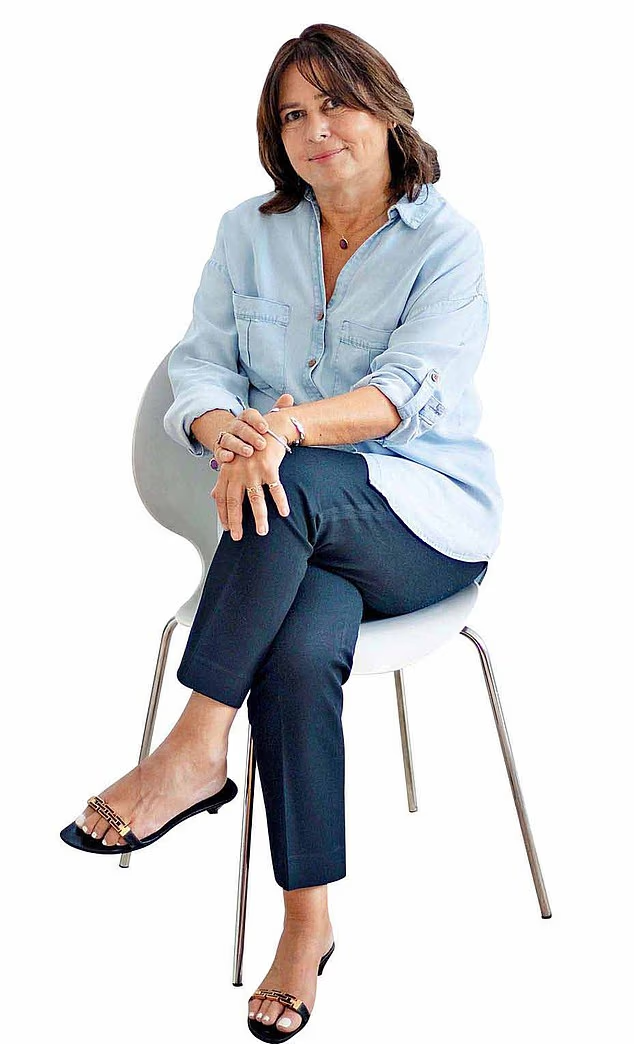
Ever since my mother¿s death in February, I¿ve been getting clear messages from her that she does not want me to wear her jewellery, writes Alexandra Shulman (pictured)

Ever since my mother’s death in February, I’ve been getting clear messages from her that she does not want me to wear her jewellery. 

It may not be the loving communication I was hoping to receive if her spirit’s watching over me but, even so, there is a certain comfort in the idea that she is still around.

None of the jewellery she left us had any financial value. Some of it I don’t remember her ever wearing but my siblings and I didn’t want to simply chuck it out. 

When we distributed it, I took a bracelet by designer Pippa Small strung with small unpolished gemstones, as well as the very plain watch my mother always wore. It has a slim black strap and a simple face of Roman numerals.

Advertisement

Within weeks of my taking the watch, however, I lost it. Distraught, I searched everywhere, including in the recycling bins as they often turn out to be the repository of missing items. But it was nowhere to be found.

My trainer at the local gym told me his Iranian mother said a special prayer whenever anyone in the family lost things and it never failed. He would ask her to say it for the watch. All I had to do was to tie a knot into a piece of fabric and keep it knotted until the watch was found.

Three weeks later the watch did reappear down the side of a sofa. I put it back on my wrist, only for the front glass to fall out and the watch to stop working.

Similarly, the bracelet has broken twice – the first time was as I slept, so I woke to discover myself lying on the stones. Then, last week, after having it restrung, the chain snapped again with the gems scattering over the floor of a store I was in. Mama, I hear you!

Advertisement

Ever since my mother’s death in February, I’ve been getting clear messages from her that she does not want me to wear her jewellery, writes Alexandra Shulman (pictured)

Lost child is truly the stuff of nightmares 

A child that disappears one afternoon is every parent’s nightmare and nobody should have to suffer the utter misery, despair and hopelessness that the family of Noah Wood will be experiencing after his body was discovered in a local pond last week.

The degree of terror when a child vanishes is like nothing else. One minute they are in your sightline, the next, gone. It’s happened to all of us but, thankfully, in most cases they re-emerge safe.

Advertisement

My own son Sam disappeared when he was five. We were visiting Rome and walking around St Peter’s Basilica near to closing time when I turned around to find him gone. 

The tourists were thinning out but the church was enormous and filled with hundreds of sculptures, papal tombs and a million places for a child to hide.

I kept thinking about how frightening it would be for him should he get locked in and, plagued by child-snatching fears, I ran wildly around, grabbing at guards and shouting to everyone that I had lost un piccolo ragazzo con i pantaloni rossi. Never have I been more terrified.

After about 20 minutes, somebody found him outside running happily around St Peter’s Square. He was chasing pigeons under the gaze of the 140 saints and martyrs who line the Colonnades. I was massively relieved, but also furious with him.

Advertisement

Even though he was safe and only gone for a short time, the horror of his potential loss stayed with me for days. I can only imagine how it would have felt if it had turned out otherwise and my heart goes out to Noah’s family.

Reunion magic? It can’t Live Forever…

Conversely, one of the best evenings of my life was spent with that same child, now 31, watching Oasis at Wembley last year. It was an incredible concert and going with Sam was emotional in ways I still can’t analyse.

It was made more special because it was the first time Noel and Liam had played together since their split almost 15 years previously. Now, only a year later, they’ve announced dates for another tour. 

It can’t erode my memories of that evening but it does somehow undermine the uniqueness of that reunion tour, and the magic can’t possibly be repeated again.

Advertisement

Pop doesn’t have to be political, just good

Will Oasis, like Ed Sheeran, be expected to reveal their views on Gaza when they perform?

Sheeran’s current US tour is in meltdown after his support act Macklemore used his platform on stage to publicise his ‘Free Palestine’ views.

It’s opened a whole can of worms over whether an artist like Sheeran is correct to stay publicly neutral. Personally, I would much rather he did and that we accept performers can keep their views to themselves.

Certainly, there are some I might admire for their opinion but, in general, I just want to go and see them play their incredible music.

Advertisement

I’m not paying for hugely expensive concert tickets in order to hear them share their political views.

Even the tech bros suit up for the King

I found it oddly reassuring to see the respect the tech bros had for King Charles at his AI summit in Scotland last week. 

Usually geeks are the masters of dressing down – Sir Demis Hassabis, founder of Google DeepMind, is often in crew necks; Jensen Huang, CEO of Nvidia, in leather jackets – but for the King, these men who control whether AI will kill off humanity, scrubbed up nicely, appearing in suits and ties.

How Jemima got her bridal gown so right

Jemima Goldsmith married multimillionaire financier Cameron O'Reilly last weekend wearing an almost completely transparent dress

Jemima Goldsmith married multimillionaire financier Cameron O’Reilly last weekend wearing an almost completely transparent dress 

Advertisement

Jemima Goldsmith looked absolutely wonderful at her wedding last weekend to businessman Cameron O’Reilly. 

Walked down the aisle by her two handsome sons, she wore a beautiful white tiered Oscar de la Renta wedding dress which, at first glance, seemed very conventional. On second glance, however, it was clear it was almost completely transparent.

Jemima is perhaps the only woman I know who could get away with such a revealing outfit, managing, at 52, to look traditionally bridal and knock-out sexy without the slightest trace of tackiness. 

Source link

Advertisement
Continue Reading

NewsBeat

Sophie started going bald at 16 – it took 12 years before she discovered the 60-second fix that made her feel like herself again

Published

on

Sophie Law 28, from Kent, is pictured after finding a solution for her hair loss

Sophie Law was at the salon when her hairdresser broke some unexpected news: she had a patch of hair missing.

At just 16 years old, she was horrified. ‘How had I never noticed this before?’ she asked herself.

After leaving the salon, she booked in with her GP, where a blood test revealed she had an underactive thyroid, which the doctor said was the likely cause of her hair loss.

But medication to stabilise her thyroid hormones didn’t make a difference. Her hair continued to shed. 

Advertisement

She spent the following decade trying everything from density-boosting shampoos to cutting out gluten and even a red‑light therapy helmet, but nothing worked. 

By the time she was 23, she began to notice multiple bald patches when running her fingers through her hair. 

Eventually, aged 26, the Kent-based logistics manager was diagnosed with alopecia areata – the autoimmune condition that caused Jada Pinkett Smith to suddenly lose her hair.

Crucially, it cannot be cured.

Advertisement

Sophie Law 28, from Kent, is pictured after finding a solution for her hair loss

Sophie is pictured before losing her hair
Sophie felt embarrassed about her bald patches caused by alopecia areata

Sophie is pictured before her hair loss (L) and when the alopecia areata took hold (R)

‘I used to cry about my hair loss every single day,’ says Sophie. 

Advertisement

Some patients see success with medication like steroids that stop the immune system from attacking the hair follicles. 

Sophie, however, decided against it due to worries about side effects. 

Instead, she relied on a temporary hair-colour powder to fill in the areas where her bald patches were visible, but was constantly worried about it rubbing off. 

‘Every time I would leave the house, I would worry about the wind blowing my hair in the wrong direction,’ she says.

Advertisement

‘I was hiding my hair loss from everyone around me. The only people who knew about it were my family. 

‘It consumed so much of my brain, and that then left very little space for me to actually be present in the moment and be happy.’

She considered clip-in hair extensions, but this was not an option as there was not enough hair for them to clip on to.

Then, earlier this year, she found a solution that finally restored her confidence: an £800 wig. 

Advertisement

Ready-to-wear wigs, which can be made from human hair or artificial fibres, are popular options for people experiencing hair loss. 

Human hair wigs usually range between £200 and over £2,000 and can be styled with curling irons and straighteners, like normal hair. They need to be washed every seven to ten wears. 

Those made from artificial fibres are a more affordable option, usually costing between £50 and £300, and typically last four to six months with regular wear.

Sophie’s wig, which she purchased from Wig and Weaves by Hediye in Ashford, Kent, is made from human hair and features a transparent lace hairline that blends into the scalp.

Advertisement
Sophie's hair loss is pictured
Sophie is pictured using a red¿light therapy helmet

To try and stop her hair falling out, Sophie tried everything from density-boosting shampoos to a red‑light therapy helmet

Sophie is pictured wearing her £800 human hair wig, which has restored her confidence

Sophie is pictured wearing her £800 human hair wig, which has restored her confidence

‘As soon as I put the wig on, I cried happy tears,’ says Sophie. 

‘It made me feel normal – and like my old self before I even had any hair loss.’

Advertisement

Harley Street trichologist Marie Royce says she sees women every day whose confidence is destroyed by hair loss. 

Hair loss can knock a woman’s confidence far more than people realise,’ says Ms Royce, who is based at The Wimpole Clinic

‘I see women who are constantly checking mirrors, avoiding certain lighting or worrying that somebody is looking at their scalp. 

‘It becomes exhausting, because you are thinking about your hair all the time.

Advertisement

‘There are medical treatments that can help, but that is not right for everyone, and neither is a transplant. 

‘Some women are not suitable candidates, some do not want surgery, and some simply want a solution that gives them an immediate cosmetic improvement.

‘A really good wig can be completely life-changing. It gives back density and coverage straight away, but more importantly, it can take away that constant anxiety.’

Sophie, who regularly speaks about her hair loss on TikTok, says her family have seen a major change in her personality.

Advertisement

‘My hair is the best it’s ever looked and this has meant my confidence has increased so much,’ says Sophie

‘My mum and dad really struggled seeing me so upset with my hair loss,’ she says. 

‘They can see how much more confident I am now, which means they worry about me a lot less.’   

While she initially planned to wear the wig on special occasions, she now wears it every day.

Advertisement

‘Given how good it makes me feel about myself, I wish I’d done it sooner,’ she says. 

‘My hair is the best it’s ever looked and my confidence has increased so much. 

‘Before, when I looked in the mirror, all I saw was my hair loss –  but now, if I’m feeling sad about it, I can just put on the wig and forget about it.

‘I don’t hide the fact that I wear a wig either; if someone compliments my hair, I will tell them it’s a wig.

Advertisement

‘It felt so shameful and embarrassing when I first started considering wigs – but I’ve changed my mindset on this and I really hope we can start to change other people’s too.

‘Wearing a wig is the same as wearing hair extensions or makeup – you wear it because it makes you feel good about yourself – and it doesn’t need to be a dirty secret.’ 

Source link

Advertisement
Continue Reading

NewsBeat

Sweet Disposition Lyrics Revealed: The Misheard Line Millennial Fans Always Get Wrong

Published

on

Sweet Disposition Lyrics Revealed: The Misheard Line Millennial Fans Always Get Wrong

Until recently, I wasn’t really buying into the Millennial nostalgia. Now, as an ’89 baby, I land firmly in the middle of the era and definitely enjoyed my fair share of twee trends and chaotic nights out documented via a digital camera photo dump on Facebook.

I just found it all a bit… naff. Sorry. However, I don’t know if it’s age or the general state of the world but I am starting to come around to romanticising both my teen and early 20 years. We were the epitome of cringe-but-free and I’ll say it, I miss it.

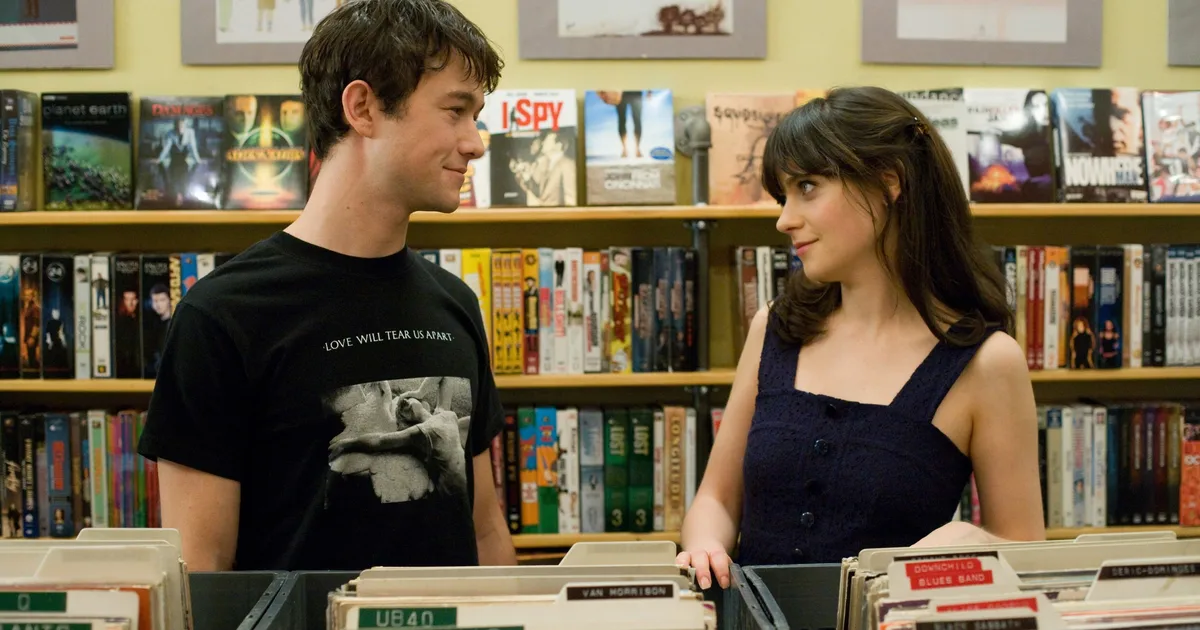
This recent yearning for probably-not-simpler times has me scanning through the TikTok trend of ‘Millennial hopecore’ which is scattered with Stomp Clap music like Mumford and Sons, finger tattoos of moustaches and films such as 500 Days of Summer. A film that arguably has the most twee Millennial soundtrack.

Namely, Sweet Disposition by Australian duo The Temper Trap. LOVELY. I can’t tell you how many weddings I heard this at.

Advertisement

However, according to the duo,. I have been singing key lyrics to the song wrong this whole time and you probably have, too.

The lyrics to Sweet Disposition that we are getting wrong

Joining in with the ‘Netflix Documentary’ trend on Instagram, The Temper Trap wrote: “Us preparing for the Netflix documentary on how the lyrics to Sweet Disposition aren’t ‘A dream, a laugh’”.

Of course, this isn’t my first rodeo with mishearing lyrics and there are some that I will never mentally correct because I prefer my distorted version. For this, though, “a dream, a laugh” really meets the vibe of the song.

Advertisement

What they’re actually singing is “a dream, aloud”.

Which is very poetic but after almost 20 years since I first heard it, I’m just not sure I can readjust now.

Source link

Advertisement
Continue Reading

NewsBeat

Radio 2 is thrown into fresh turmoil as Masked Singer’s Joel Dommett turns down coveted slot amid rumours of a ‘toxic environment’

Published

on

Comedian Joel Dommett (pictured with wife Hannah Cooper) turned down Radio 2's prime Drivetime slot

Advertisement

Radio 2 has been plunged into fresh chaos as bosses struggle to fill the Drivetime slot after Joel Dommett turned it down amid whispers of a toxic environment.

BBC chiefs offered the role to Dommett, who presents ITV‘s The Masked Singer, this month after Sara Cox was switched from it to the Breakfast Show following the sacking of Scott Mills over historic sex assault claims.

A source said: ‘It would have been a great opportunity for Joel but he must have heard how miserable and on edge staff are. It’s caused a nightmare as everyone had hopes pinned on him.’

Radio 2 was reportedly shocked that comedian Dommett, 41, who has been in I’m A Celebrity, did not ‘jump at the chance to join’.

Advertisement

With a salary of £200,000, the job should have been a great chance for Dommett, who has two sons with model Hannah Cooper and has hosted Saturday night show The Masked Singer since 2020.

Since Ms Cox, 51, switched to the Breakfast Show in July, the weekday 4pm to 7pm Drivetime slot has been filled by guest presenters, including Dommett.

The station has been struggling since Ms Cox, who hosted Drivetime for seven years, replaced Mills, 53, on the Breakfast Show after he was fired over historic sex assault claims, for which he was never charged.

Insiders allege that actions by Radio 2 head Helen Thomas are part of the reason why the station has become an undesirable place to work.

Advertisement

Comedian Joel Dommett (pictured with wife Hannah Cooper) turned down Radio 2’s prime Drivetime slot 

The station is reportedly in a crisis since multiple departures from big names including Zoe Ball (pictured), who left the BBC last year

The station is reportedly in a crisis since multiple departures from big names including Zoe Ball (pictured), who left the BBC last year 

Ms Thomas, who has held the post for six years, was one of the bosses responsible for Mills’s sacking, which allegedly infuriated many colleagues. 

Advertisement

Staff, once loyal to Ms Thomas, are allegedly ‘on edge’ as her ‘fan base has waned’, said a source. ‘The devastating part is nobody knows where this is going to end.’

Radio 2 has seen some of its biggest stars join rival stations.

After 13 years, Chris Evans left the Breakfast Show for Virgin Radio in 2018, followed by Simon Mayo who quit Drivetime and later joined Greatest Hits Radio.

Graham Norton left his Saturday morning show in 2020 after a decade and headed for Virgin.

Advertisement

Ken Bruce left after 30 years in 2023, taking his quiz PopMaster to Greatest Hits. Claudia Winkleman left five years after replacing Norton. 

Zoe Ball quit last year, with friends saying she did not always feel ‘supported’ by the BBC after her mother died in April 2024.

A BBC spokesman said: ‘We don’t recognise this as the reality of working at Radio 2. 

‘The station prides itself on being a supportive family, on and off air, and that culture comes from the top. We don’t comment on speculation around individual contracts.’

Advertisement

Source link

Advertisement
Continue Reading

NewsBeat

Ukraine-Russia war latest: Kyiv shoots down Putin’s jet-powered Shaheds with new state-of-the-art interceptor drones

Published

on

Ukraine-Russia war latest: Kyiv shoots down Putin’s jet-powered Shaheds with new state-of-the-art interceptor drones

Turkey sends offer to Ukraine and Russia to end Black Sea fighting

Turkey has sent an offer to Ukraine and Russia to end their fighting in the Black Sea and is awaiting their responses, Turkish Foreign Minister Hakan Fidan said on Saturday.

He added that the priority was getting grain out from the region.

Speaking to broadcaster NTV, Fidan also said there were initiatives to end the war altogether, but that it seemed difficult to generate a lasting solution to the conflict at this stage.

Advertisement

Alex Croft19 September 2026 19:00

Watch: Night strike on Odesa damages apartments in 19-storey residential building

Night strike on Odesa damages apartments in 19-storey residential building

Alex Croft19 September 2026 18:01

Advertisement

Activists describe coercion to vote in Russian elections

Violeta Artemchuk, coordinator of the Donbas SOS human rights group who was among those who signed the statement, said members of local election commissions were going house to house, escorted by Russian troops and security agents, to force people to vote.

Moscow-appointed authorities exert pressure on residents, threatening those who work in the public sector with dismissal if they fail to vote and making pensions and other social payments conditional on participating, Artemchuk said.

“For instance, if a person with a disability or a pensioner relies on social assistance and does not take part in the ‘voting,’ they could be added to a list of individuals deemed ‘disloyal’ to the so-called authorities and subsequently deprived of their benefits or humanitarian assistance,” she said.

Volodymyr Fesenko, a political analyst with the Kyiv-based Penta Center, emphasised that “elections held at gunpoint are a farce”.

Advertisement

“The very fact that voting takes place amid endless shelling and bombing reflects the Kremlin’s attitude toward the people and the electoral process in the occupied territories,” Fesenko told The Associated Press.

“It’s nothing short of a mockery. Any electoral procedures conducted by the Russian occupation authorities have nothing to do with democracy,” he said.

Maryam Zakir-Hussain19 September 2026 17:01

Advertisement

Kyiv downs Russian jet-powered Shahed drones with new interceptor drone

Kyiv has attacked one of Russia’s jet-powered Shahed drones with a new interceptor drone, Volodymyr Zelensky said.

The Ukrainian president shared footage of the drone tracking down a Russian Shahed before exploding on impact, in what he said was a successful interception.

“There is a good result from the Security Service’s military counterintelligence in defending against jet-powered ‘shaheds’,” Mr Zelensky said.

“A new interceptor drone has been developed and has already been successfully deployed. Step by step, we are moving forward to give Ukraine greater protection,” he added.

Advertisement

Kyiv has previously raised the alarm about the use of Moscow’s new jet-powered drones which can travel up to 600 kilometres per hour — triple the speed of the piston-powered Shaheds deployed in earlier stages of the conflict.

Alex Croft19 September 2026 16:15

Ukraine urges other countries not to recognise the vote

Authorities in Kyiv have called the voting in those territories illegal and urged foreign governments and international organisations not to recognize the election.

Advertisement

They warned Ukrainians that taking part in organising the vote could carry criminal liability.

A coalition of nine Ukrainian human rights groups called on residents of the Russia-held territories to stay away from the polls.

“We urge residents of the temporarily occupied territories, above all, to protect their lives and health and to look after their own safety,” the coalition said in a statement.

“Holding Russian elections in the temporarily occupied territories is an attempt to use the electoral process to legitimize the Russian occupation and the attempted annexation of Ukrainian territories.”

Advertisement

European Commission spokesperson Christian Wigand said the voting in Russian-held regions represented “another blatant violation of international law.

The European Union does not, and will never recognize either the holding of these, so-called elections, sham elections, in the temporarily occupied territories of Ukraine or their results.”

Maryam Zakir-Hussain19 September 2026 15:45

Advertisement

In pictures: Russia’s parliamentary election

Pictures show people casting their ballot for Russia’s parliamentary election.

(AFP/Getty)
(AFP/Getty)
(AFP/Getty)

Maryam Zakir-Hussain19 September 2026 15:15

Putin’s war economy is under strain. One thing is keeping it afloat

Mounting defence expenditure is widening Russia’s budget deficit and increasing strain across its wartime economy, as business and consumer sentiment weakens and economic growth slows.

Economists note, however, that these difficulties do not point to an immediate financial meltdown or economic collapse. High global oil prices linked to the Iran war continue to shore up essential export revenues, allowing the state to fund its four-and-a-half-year-old invasion of Ukraine – for now.

Advertisement

In addition, low unemployment rates and generous government spending in poorer regions are helping to suppress domestic discontent.

Maryam Zakir-Hussain19 September 2026 14:45

Russia unaware of possibility US might want to sign deals before Ukraine war ends, RIA reports

Russia is not aware of the possibility that Washington may want to sign deals with Moscow before the Ukraine conflict is over, Deputy Foreign Minister Sergei Ryabkov told the RIA state news agency on Saturday.

Advertisement

The New York Times reported ⁠this week, citing two ​people close ⁠to the peace ‌talks, that the White House is now considering signing business ‌deals with Russia ‌before it stops fighting in Ukraine.

“I don’t know anything about such signals, and it would be strange to receive them, because we still hear exactly the opposite stance, namely, ‘Let’s agree on Ukraine and move forward, and everything else later,’” Ryabkov told RIA.

“Everything ‌else, as ⁠they say, will be ⁠attached. This also applies to economic ‌aspects, economic ​projects, too.”

Maryam Zakir-Hussain19 September 2026 14:15

Advertisement

Watch: Putin casts vote as Russia three-day elections commence

Putin casts vote as Russia three-day elections commence

Maryam Zakir-Hussain19 September 2026 13:45

Russian election triggers row with Moldova over voting in separatist region

Russia’s parliamentary election has triggered a diplomatic row with Moldova over its objections to the Kremlin’s plan to open 15 polling stations for Russian nationals in the separatist Transdniestria Region.

Advertisement

Moscow says 220,000 ⁠residents of pro-Russian Transdniestria, a sliver of land which broke away from Moldova in 1990 at the end of Soviet rule, hold Russian passports and are entitled to vote on Sunday ⁠in the election for the ​State ⁠Duma.

Transdniestria is not ⁠internationally recognised, not even by Moscow, though a Russian military contingent of ‌some 1,500 troops, ​which Russia sometimes describes as ‌peacekeepers, remains stationed there despite demands ​from Moldova for them to leave.

Moldova’s pro-Western government, which wants to join the European Union by 2030 and denounces the Kremlin’s war in Ukraine, says Russians may vote only in a single polling station in the Russian embassy in the capital Chisinau.

It contests the 220,000 figure and opposes any polling station in Transdniestria, where it ‌has no control over procedures.

Advertisement

Maryam Zakir-Hussain19 September 2026 13:12

Source link

Continue Reading

NewsBeat

Diana’s brother says Harry and Meghan face ‘cancerous’ press

Published

on

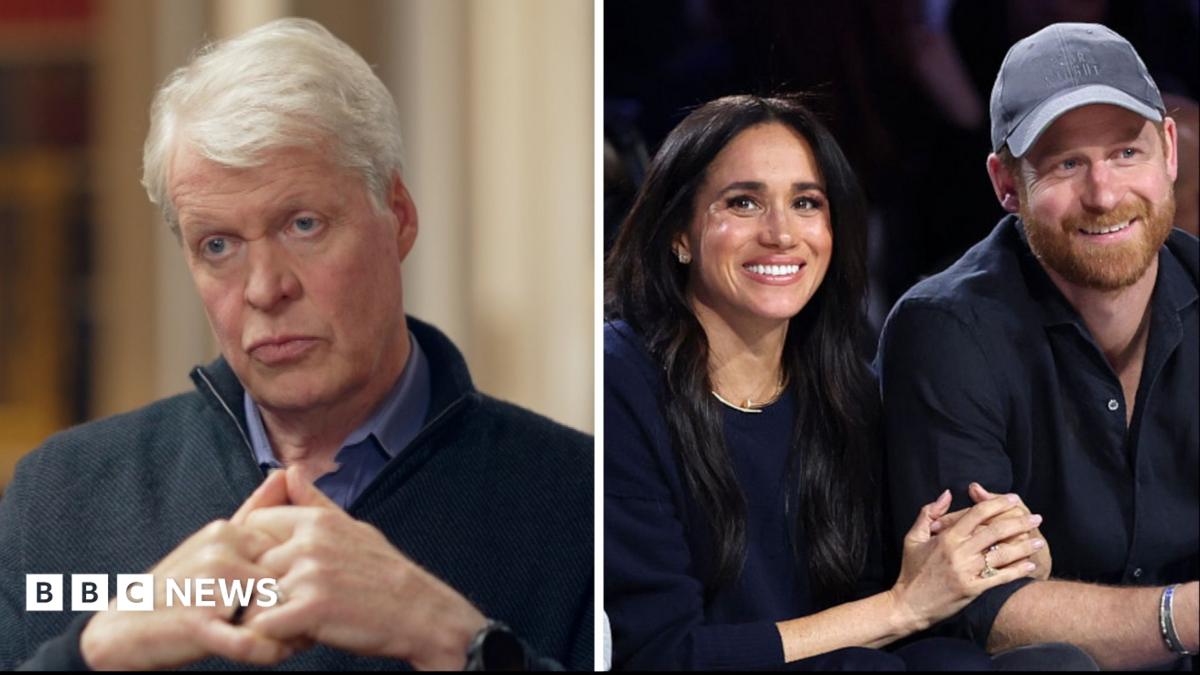
Harry and Meghan split screen with Earl Spencer

Earl Spencer has told the BBC that there are similarities between the way his sister Diana, Princess of Wales and the Duke and Duchess of Sussex have been treated by the press.

He said Princess Diana was “brought low” by press criticism of her and that it is a “pity” to see echoes of that in Harry and Meghan’s lives now.

He added that people should learn from Princess Diana’s example, and that for anyone being “destroyed daily” by the tabloid press, it must be a “cancerous influence” on their lives.

The full interview with Laura Kuenssberg, Princess Diana: My Sister’s Story, will be available on iPlayer from 16:00 and broadcast on BBC One at 18:30 BST on Sunday.

Advertisement

Source link

Continue Reading

NewsBeat

A Nazi Officer Saved My Mother’s Life. So, I Tracked Down His Daughter.

Published

on

A Nazi Officer Saved My Mother’s Life. So, I Tracked Down His Daughter.

“I’m here to find an SS officer,” I told the uniformed guard outside the Berlin Archives. “He saved my mother,” I added in German.

The guard handed me a visitor pass and a white plastic bag emblazoned with the German coat of arms – a black eagle with red talons – and directed me to a red brick building across a parade ground where thousands of SS officers once lined up.

I registered inside. I explained to a librarian that I knew the officer was of Ukrainian background, but I did not know his name. I had already contacted archives in Poland, the U.S. and other parts of Germany in hopes of tracking down this man.

Most of what I knew about the SS officer came from my grandmother, who, for much of her life, kept what happened to her during World War II hidden.

Advertisement

I first asked about the blue-green numbers on her arm when I was five, while watching her chop beets and onions for a soup.

“It’s our phone number,” she said. “So I won’t forget it.”

My grandmother continued to deflect my questions until she was in her 80s, when she finally let me interview her. But the gaps in her story alarmed me almost as much as her graphic descriptions, and after she died, I set out to fill them. To unravel her history. To understand how her experiences shaped her and my mother. To learn how a history I didn’t live ended up shaping me.

My grandmother first encountered the SS officer in a prison in Radom in Nazi-occupied Poland. The Polish Blue Police had arrested my grandparents at a factory my grandfather managed after they’d spent four years ducking and hiding from the Nazis using false names that hid their Jewish identities.

Advertisement

One policeman ordered my grandmother to leave my mother behind. She picked up the screaming toddler, grabbed a white teddy bear, burrowed it into my mother’s cheek, and left her in her bed.

A policeman snapped cuffs on my grandparents’ wrists and led them outside.

“Shoot us! Please shoot us!” My grandmother pleaded. She knew the Germans could kill her slowly as they attempted to learn how she’d obtained her fake papers.

The policemen ignored her and bundled her and my grandfather into a car.

Advertisement

Courtesy of Karen Kirsten

The author’s grandparents at their wedding in Warsaw, Poland, in 1938.

Weeks later, on a frigid January morning, her prison cell door swung open, and my grandmother saw the SS officer: eyes set low below a bulbous forehead, stubby fingers taut as cigars. He locked shackles around her ankles, snapped cuffs on her wrists, and led her from the cell to interrogate her at Gestapo headquarters a mile away.

“He was a terrible fellow who was beating everyone,” my grandmother told me decades later. “A very famous, very cruel man, this fellow … Ach! How he beat women!

But she said, “he was like an angel with us.”

Advertisement

This unsettled me. When she told me this, I knew nothing about the interrogation procedures at Gestapo headquarters or the torture tactics prisoners who survived later recounted, particularly those they suspected of having connections to the resistance, like my grandfather.

Because of the floggings, starvation, slave labour and dehumanising treatment my grandmother endured in that prison and in Auschwitz and Ravensbrück, I doubt she was able to communicate the full picture of what they lived through. Maybe there was an even more horrific experience she needed to protect herself from reliving. Maybe the effects of whatever happened in that interrogation room were so devastating that she’d blocked the officer’s name from ever entering her mind again. She did not remember his name, but she would never forget him.

The plot to save my mother was my grandmother’s idea. Using sympathetic Polish guards as messengers, she smuggled coded suggestions to my grandfather’s cell on pieces of paper rolled to the size of a pea and stuffed into tiny cubes of bread. If her scheme did not go according to plan, she figured at the very least she would get to see my grandfather one last time before they shot her.

Two months after their arrests, in the basement of Gestapo headquarters, a guard pushed my grandmother to the floor and locked her cuffs to an overhead pipe, next to my grandfather.

Advertisement

Eventually, someone led them into a room more office-like than the interrogation cells. A light bulb hummed and flickered. The SS officer was already there. My grandfather sized up his boomerang eyebrows and his woolen uniform that, in the damp, smelled of horse. He scanned the room for whips, butcher hooks, and pokers.

"This photo of my mother was confiscated in Radom prison, returned and then smuggled through four concentration camps," the author writes. "It was taken in late 1943 before my grandparents were arrested."

Courtesy of Karen Kirsten

“This photo of my mother was confiscated in Radom prison, returned and then smuggled through four concentration camps,” the author writes. “It was taken in late 1943 before my grandparents were arrested.”

My grandmother sat by a desk beside my grandfather and rested her handcuffs on her thighs. She pulled awkwardly at her dress, which she’d been wearing since her arrest. She slid her fingers to the top of her stocking and fiddled and twisted. She unraveled the fabric wrapped around her upper leg and yanked hard. She pulled the corset off and kneaded slits in the fabric. Jewellery tumbled out.

My grandmother had sewn her dead mother’s jewels into her clothing. Now she tilted the stones. They sparkled. She lowered gem-embellished earrings onto the desk. The diamonds in the rings were enormous.

Although my grandmother did not know the officer had taken bribes before, she hoped her mother’s jewels would seduce him.

Advertisement

“What do you want?” he asked.

“We want you to promise to save our child,” she told him.

My grandmother had clung to the possibility that someone had heard my young mother screaming, but she did not know if the child was alive. She had no idea that someone had indeed found her and, at great risk, watched over this Jewish child. However, to this day, no one knows who.

The SS officer drove 29 miles, found my mother, and delivered her to a convent. She remained hidden there for the rest of the war and was cared for by the nuns.

Advertisement
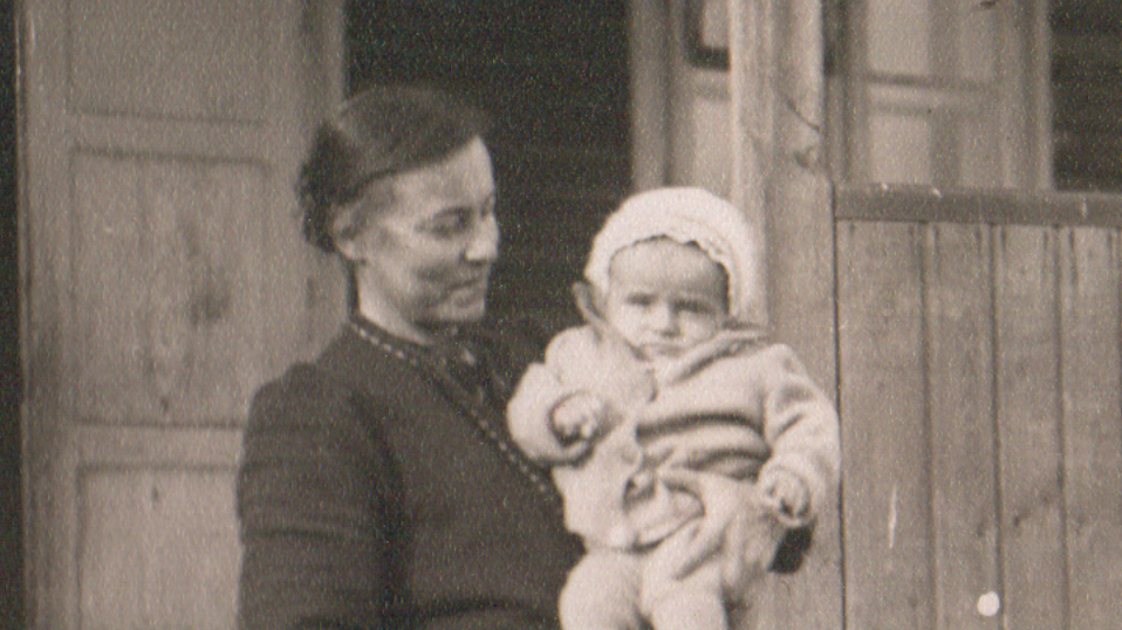
"This is my mother, Joasia, being held by Sister Stefania Sydry just after the SS officer delivered her to the convent in March 1944," the author writes.

Courtesy of Karen Kirsten

“This is my mother, Joasia, being held by Sister Stefania Sydry just after the SS officer delivered her to the convent in March 1944,” the author writes.

The officer’s superior ordered my grandparents to be sent to a nearby concentration camp instead of executing them. Later, they were forced – along with 3,300 others – to march 62 miles, and then they were loaded onto cattle cars bound for Auschwitz, where my grandmother was tattooed for slave labour. As the Soviets approached, the Germans transported my grandmother to Ravensbrück, where, from a sub-camp, she staggered, dizzy with hunger in -22 degrees Fahrenheit in her Auschwitz-issued wooden clogs with other “coat-hanger” women, as they called themselves, to an armaments factory to assemble bullets.

Shortly before the war ended, Sweden’s Count Folk-Bernadotte made a deal with Heinrich Himmler, and the Red Cross evacuated my then 30-year-old grandmother. She arrived in Sweden on a stretcher. She weighed 59 pounds – unable to recall her name. My grandfather was sent from Auschwitz to Natzweiler, and then Dachau, where American soldiers eventually liberated him.

I was obsessed with finding the “good” Nazi who had taken my grandmother’s bribe. I could not stop thinking about how a man who embraced the ideology of exterminating people like my mother was also capable of choosing mercy. How he saved her. How without him, I would not exist. His one deed propagated my need to understand the choices victims and perpetrators make in violent times. It shaped everything from how I understand history to how I see the world I live in, to how I understand myself.

Before visiting Berlin, I’d lurked in online forums, throwing names of officers at Radom prison at war buffs and collectors of Nazi memorabilia, trying to match details with what my grandmother had told me. I’d pestered every historian I could contact. I felt an irrational responsibility to thank the officer’s family. I wondered how a man who whipped and disfigured women – and pledged loyalty to a group that did so many unthinkable things – would treat his own children. I thought that if they knew about this kind act, it might help them bear a past they did not want as their legacy.

Advertisement

A woman I met in Berlin connected me to an organisation that pairs descendants of Nazi perpetrators with survivors and their families – people on opposite sides of a shared history. One descendant combed German libraries and concentration camp archives for me. When I asked her why she was helping me, she told me she’d discovered later in life that her abusive father was a concentration camp commander. She said helping people broken by atrocities like the ones her father committed helped her grapple with a history she was born into. A history she did not choose.

After leaving Berlin without the officer’s name, I arrived at the U.S. Holocaust Museum in Washington, D.C., with low expectations. A researcher flipped through a file as thick as a book: prisoner ledgers, survivor lists, concentration camp inmate questionnaires, repatriation requests and denials. On the very last page of my grandfather’s file, I saw it: two SS lightning bolts typed in blue carbon ink, the Radom Gestapo unit that interrogated him, and a name. Shock arced through my stomach. It matched the name of a Ukrainian officer a historian had emailed me.

It didn’t surprise me at all that my grandfather had stored the Nazi’s name in his head through four concentration camps and a death march and then revealed it to the Allies when they interviewed him. He had been a lawyer before the war, and at night from his bunk he’d urged fellow prisoners to recite SS officers’ names and their crimes so one day they could be tried. After his liberation, the U.S. military established the Dachau Trials and hired him to help prosecute high-ranking Nazis. However, after emigrating, like many refugees who reinvent themselves to match the expectations of new countries – and to suppress the horrors they escaped – he never talked about his past, much less the officer’s name.

A photo of the author's grandfather when he was working with the U.S. Army at Dachau in 1946.

Courtesy of Karen Kirsten

A photo of the author’s grandfather when he was working with the U.S. Army at Dachau in 1946.

I found the SS officer’s family tree on a genealogy website. His daughter was about the same age as my 74-year-old mother. Maybe when the SS officer handed her to the Mother Superior at the convent, he was thinking about his own little girl he’d left behind.

Advertisement

“He said, ‘Pray to God that the war will be finished and we can all go home soon,’” my grandmother told me. “Over and over, he said it.”

I mailed a letter to his daughter:

I hope this letter does not come as too much of a shock for you… Your father did something good for my family in 1944, particularly for my mother. I would not be alive and writing to you if it were not for him.

I omitted specifics. I intended to open a safe dialogue, but a week later the SS officer’s photo disappeared from the genealogy site. His tree was changed to “private” and blocked from my view. I never received a response.

Advertisement

I thought I’d be able to establish for the officer’s daughter that whatever she knew about her father’s past, on one occasion he’d done something good. But perhaps I confronted her with questions she did not want to consider. I don’t know exactly what I thought I’d gain if I knew more, but part of me couldn’t rest until I did. It had nothing to do with forgiveness – not after what the Reich did to my family and millions of other families.

I thought if I had reached her, she might have shared details about her father that humanised him. Made him less of a monster. But why would that make any difference? The fact is that he inflicted horrible atrocities on Polish prisoners. Maybe I hoped even the most heinous among us were capable of good. But how would knowing that in a tangible way change anything? I was left with the same question I’d started with: how can a murderer and saviour live in the same man?

My grandmother believed there is evil inside all of us. “When the opportunity comes up, like during the war… it happens,” she said.

To this day, I don’t understand completely why she chose me as her confidante. Perhaps she knew I’d search for evidence to round out her unbearable memories, like a dog digging for a buried bone, unearthing horrible truths that were too traumatic for her to recall.

Advertisement

I will never know the full extent of what that Nazi took from her. I read about officers who coerced women into sexual acts in exchange for food, to defer executions, to save a husband, a mother, a son, or a daughter. But this particular officer could have taken my grandmother’s jewels and killed her. By all accounts, that officer should have killed my mother, too. Whatever his motivations were, he saved their lives.

All my searching has taught me that truth, if we find it, can be ugly. The world isn’t straightforward – good or evil. Heroes can be repulsive, and the line between right or wrong, guilty or blameless, is not always clear. Despite this, whenever I find myself crediting the Nazi with decency, it feels like I’m betraying my grandmother. And the women he beat. And the millions of people the Nazis murdered.

“You might forget the names,” my grandmother said. “But you don’t forget what happened.”

The Holocaust didn’t start with gas chambers. It began when people decided a group of their fellow citizens was the enemy. My grandmother often said that when the societal norms of respect and decency collapse, we’re all capable of treating each other like animals. When we dehumanise others, we can find ways to justify the denial of rights and embrace all kinds of depravity and violence.

Advertisement

The man whose name I found and chose not to make public for the sake of his daughter did unspeakable things. He is also the reason I exist.

Karen Kirsten is the author of Irena’s Gift, a 2025 National Jewish Book Award Finalist, winner of Zibby Awards for Best Family Drama & Best Story of Overcoming, and Australian Jewish Book Award Finalist. An Australian-American, Karen has lived in five countries and now calls the USA home. You can find more info about her at www.karenkirsten.com.

Do you have a compelling personal story you’d like to see published on HuffPost? Find out what we’re looking for here and send us a pitch at pitch@huffpost.com.

Advertisement

Source link

Continue Reading

NewsBeat

Lady Gaga’s most startling transformation yet… from wild, drug-taking pop star to trad-wife and doting mum

Published

on

Lady Gaga, the pop singer who has made a career out of reinvention and transformed herself into one of the most recognisable icons on the planet

Dressed down in pyjama bottoms and an oversized cardigan, she could have been all-too easily mistaken for any sleep-deprived new mother enjoying a leisurely stroll in the Californian sunshine.

Cradling her baby tightly against her chest, her low-key fiancé walking beside her in shorts and a baseball cap, the woman barely warranted a second glance from locals in the affluent hamlet of Ross, just north of San Francisco.

But anyone scrutinising the family a little more closely would have realised that this was no ordinary suburban mum. Far from it. This was, albeit improbably, Lady Gaga.

The pop singer – who has made a career out of reinvention and has sold millions of records, won an Oscar, and transformed herself into one of the most recognisable icons on the planet – may have pulled off her most unlikely transformation yet: ‘trad’ wife and mother.

Advertisement

Gone, at least for the moment, are the elaborate costumes, the towering heels and headline-grabbing outfits that have become synonymous with the superstar.

In their place are discreetly comfortable clothes, a baby in her arms, and a quiet life in a well-heeled California community, where she has been spotted sipping red wine at The Corner Bar, buying pots and pans at Crate and Barrel – similar to the upmarket furniture and homeware store Heal’s – and driving herself to Pilates at the wheel of her £31,000 Tesla with a baby seat in the back.

It marks the start of an unstarry new chapter for the 40-year-old whose every public appearance has been a spectacle.

Last week, it was confirmed that her child with tech titan Michael Polansky, 42, is a daughter named Rose Bean who, sources say, is already a few months old.

Advertisement

‘Rose’ is reportedly a tribute to one of Gaga’s favourite songs, Edith Piaf’s classic La Vie En Rose. Gaga already has a rose tattooed on her back alongside the title of the song.

Lady Gaga, the pop singer who has made a career out of reinvention and transformed herself into one of the most recognisable icons on the planet

The baby’s unusual middle name is said to honour the late civil rights activist Carl Bean, whose 1977 anthem I Was Born This Way inspired Gaga’s iconic 2011 hit, Born This Way.

Advertisement

For Gaga, whose career has been built on theatrical stagecraft and a larger-than-life persona, Rose Bean’s name offers a surprisingly intimate glimpse into her quiet new life.

And as one local described it, Gaga’s latest incarnation is, apparently, as a ‘trad’ – or, traditional – wife. The woman, who has seen the star out and about in Ross, a tree-lined town of 2,500 residents, said: ‘This small town is very quiet. Most people here are from the tech world and Silicon Valley. You see her and Michael around but they are very low-key. Occasionally she’s with a woman who looks like a personal assistant but she’s not surrounded by bodyguards.

‘I barely noticed her the first time I saw her in the coffee shop but I did see the massive diamond ring on her engagement finger.

‘That’s when I realised who she was. No one makes a fuss over her here and that seems to be the way she likes it.’ Gaga – real name Stefani Germanotta – moved into her fiancé’s £7.5 million four-bedroom home in Ross at the start of the summer, leaving behind the £16 million beachfront mansion in Malibu she has called home for more than a decade.

Advertisement

Another local said: ‘The house in Ross is modest when you consider how rich she is [Gaga is reportedly worth £220 million] but it’s cosy and surrounded by trees.

‘You can’t see anything from the road. Michael bought the place a few years ago, long before they got together. He’s a really good guy, quiet and respectful.’

In a rare interview with a technology magazine, Harvard-educated Polansky said that the couple – who are engaged and have been dating since 2019 – met through Gaga’s mother Cynthia, who runs the singer’s Born This Way charitable foundation. Polansky made his money in tech after befriending Sean Parker, one of the co-founders of Facebook.

He now runs a company that uses ‘spare’ human skin left over from medical procedures to test new drugs, and sits on the board of Parker’s cancer charity.

Advertisement

Polansky told Tech Crunch magazine: ‘[Cynthia] had said, you know, for months and months, “I want to set you up with my daughter”. I was like, I think you’re making fun of me.’

But when he and Gaga met at the end of 2019 ‘it all made perfect sense’, he said. When the pandemic hit and everything shut down in the spring of 2020, he moved into Gaga’s Malibu mansion.

A neighbour told The Mail on Sunday: ‘You would see them walking along the beach with her two French bulldogs, deep in conversation.

‘Michael is a big teddy bear of a man and very sweet.

Advertisement

‘It was probably the longest time I’d ever seen her at the house. She was there for months and months. By the time lockdown ended they were a solid couple and the next thing I heard was they’re engaged.’

For her part, Gaga calls Michael ‘the love of my life’. ‘He’s my best friend in the whole world,’ she said. ‘He just blew me away from the minute I met him. He always, I think, really saw me and I think I always really saw him.’

Motherhood and marriage have been on Gaga’s mind for a while.

In interviews to promote her global Mayhem Ball tour, which ended in April, she spoke repeatedly about wanting to take time off and start a family, telling one US talkshow host: ‘I’m hoping motherhood will be my next starring role.’

Advertisement

It has been widely reported that Gaga used a surrogate to become a mother, something her representatives declined to comment on last night. But one source said: ‘She was photographed a lot up to the end of April when the tour ended. She had three songs in The Devil Wears Prada 2, which came out in May, and she did a bit of promotional work for that and then she disappeared.

‘No one ever saw her looking pregnant in public.’

Birth records show Rose was born on June 9 at 11.19pm at Cedars-Sinai hospital in LA.

Join the discussion

Advertisement

Has Lady Gaga’s shift to quiet motherhood changed how you view celebrity lifestyles and priorities?

Last week, it was confirmed that her child with tech titan Michael Polansky, 42, is a daughter named Rose Bean who, sources say, is already a few months old

Last week, it was confirmed that her child with tech titan Michael Polansky, 42, is a daughter named Rose Bean who, sources say, is already a few months old

The source, who calls Gaga by the nickname her friends and family use, said: ‘Stefi completely dropped out this summer and went into nesting mode. She and Michael took the summer off and went to northern California and hunkered down.

‘People were gossiping about her going silent but we all thought that maybe she and Michael had eloped. When the news broke about the baby it was a surprise but only because she managed to keep it a secret.’

Advertisement

The source added: ‘No one is surprised she’s become a mum, it’s what she always wanted.’

Gaga’s new role comes amid a life marked by extraordinary highs and lows.

She has spoken openly about the trauma of being raped by a music producer 20 years her senior when she was just 19 and starting out.

Speaking on the 2021 Apple TV series The Me You Can’t See, which was the brainchild of Prince Harry and Oprah Winfrey, she says the rapist ‘dropped me off pregnant on a corner, at my parents’ house, because I was vomiting and sick’.

Advertisement

The assault left her with such severe PTSD that she used drugs and alcohol to numb the emotional pain, saying she would smoke up to 20 marijuana joints in a day and was a habitual user of cocaine.

A ‘psychotic break’ came during filming of A Star Is Born in 2018 (for which the song Shallow won her an Oscar).

She was hospitalised and began taking the powerful anti-psychotic drug lithium.

She said: ‘I had a total psychotic break and, for a couple of years, I was not the same girl.’

Advertisement

Gaga, who took her stage name from the 1984 Queen song Radio Ga Ga, has always used music to heal her pain and connect with others who felt alienated.

Her followers, who call themselves ‘Little Monsters’ and refer to her as ‘Mother Monster’, lapped it up as she constantly reinvented herself, often through performances or appearances designed to shock or provoke.

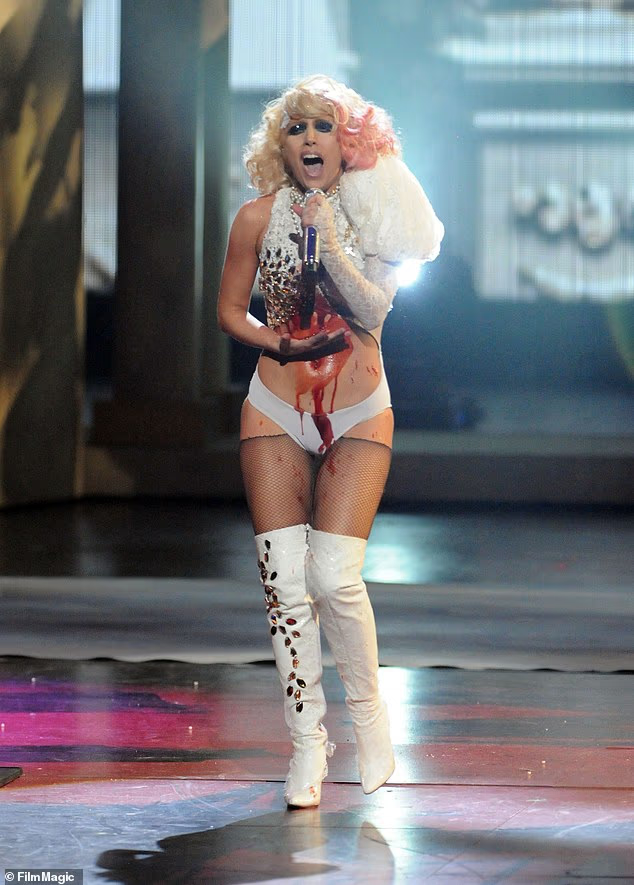
When she sang Paparazzi at the 2009 MTV Video Music Awards she wore a lace bodysuit that began leaking gallons of fake blood.

Then there was her raw meat dress, which she explained was a protest against the US military’s ‘don’t ask, don’t tell’ policy for gay soldiers. ‘The message was that if people don’t stand up for their rights they will soon have as many rights as the meat on their bones,’ she said.

Advertisement

Another time she arrived at the Grammys inside a giant translucent egg and ‘hatched’ on stage before singing Born This Way.

‘I like to liberate myself with my ability to change,’ she has admitted. ‘I’m a chameleon.’

She sold 170 million records thanks to hits like Poker Face and Bad Romance, became a fashion icon, Hollywood star, LGBTQ+ activist – she admitted to being bisexual in a 2009 interview – and, most recently, make-up guru thanks to her best-selling Haus Labs cruelty-free cosmetics brand.

There were two failed engagements along the way to actor Taylor Kinney and talent agent Christian Carino.

Advertisement

While friends say Polansky does not want to be in the public eye, he has become involved in Gaga’s world, sharing writing credits on some of her recent songs including a ballad called Blade of Grass about their engagement.

She said: ‘A long time ago we were in the backyard and he said, “If I ever propose to you what should I do?” I said, “You can just wrap a blade of grass around my finger and I’ll say yes.”

‘Michael’s sense of gravity might be the thing that I was attracted to about him the most.

‘None of my tricks were gonna work on him.

Advertisement

‘So many people in my life were looking to me for a good time. He saw the “real” me, not that stage version. I feel like a healthy, whole person for the first time.’

There may be another surprise lurking behind the couple’s apparently quiet life together.

While Gaga is widely assumed to be the bigger earner, one friend claims Polansky has amassed a fortune of his own through his technology investments and shares.

‘Everyone assumes that Gaga’s the richest one in that relationship, but I wouldn’t be so certain,’ the friend said.

Advertisement

‘Michael is close friends with Sean Parker who founded Napster and Facebook and is worth billions. I’m not saying Michael is worth billions, but the word on the street in Silicon Valley is that he’s worth several hundred million.

‘He’s not someone who is chasing Gaga’s money. He’s done very well for himself.’

The couple were seen alighting from a private jet in Los Angeles last week, with Gaga protectively cradling baby Rose beneath her trench coat.

As she settles back into her Malibu mansion, the woman who once made provocation her calling card appears to be rebelling in a rather different direction.

Advertisement

But motherhood could well be her most satisfying role to date.

Source link

Continue Reading

NewsBeat

Man United latest: JJ Gabriel warning issued as Michael Carrick sends indirect message

Published

on

Manchester Evening News

Manchester United have endured a difficult start to the season, with the Red Devils winning just one of their opening five matches as academy youngster JJ Gabriel pushes to leave the club

Manchester United’s season hasn’t started particularly brightly, with Michael Carrick’s side struggling to find much consistency during the opening weeks of the campaign.

Advertisement

A 1-0 defeat by Manchester City last weekend left United with just one victory from their first four Premier League matches and their problems deepened in midweek when Brighton completed a remarkable comeback at Old Trafford, overturning a two-goal deficit to knock them out of the League Cup.

Carrick has also had to contend with injuries disrupting his squad, while uncertainty away from the pitch has now added another unwanted complication. One of the club’s most highly rated academy prospects, JJ Gabriel, is pushing for an exit despite being viewed as a player with enormous potential.

The 15-year-old is yet to establish himself in Carrick’s first-team plans, but his situation has quickly become one of the biggest talking points around the club. United had hoped to nurture Gabriel as part of the next generation coming through their academy, making the latest developments particularly uncomfortable.

With much of the momentum and optimism that was built up at the end of last season beginning to fade, there is plenty for United to address. Here are the latest Manchester United headlines:

Carrick sends JJ Gabriel message

Michael Carrick appears to have sent an indirect message to JJ Gabriel after another academy prospect, Shea Lacey, enjoyed a memorable moment for Manchester United against Brighton on Wednesday.

The 19-year-old was handed a starting role on the right wing and wasted little time making his mark, cutting inside before firing a left-footed finish into the net after just seven minutes.

Lacey’s goal was his first for the senior side and another reminder of the pathway available to United’s academy players. Despite the disappointing outcome against Brighton, Carrick was keen to underline the importance of the youngster’s achievement.

Advertisement

“I’m delighted for him,” he said. “The way the game pans out and the finish of the game and the result, I think it takes it away a little bit but, when the dust settles and he can have a moment, I think he can be very proud of himself because it was a big moment for him.”

The United boss subsequently appeared to point towards the club’s academy system when discussing the possibility of another young player making the step up.

“So many people in the academy work so hard and it’s what this club has been built upon. So Shea’s had that moment… and we’ll see who brings it on to having the next opportunity because we always look forward to the next one.”

Advertisement

Gabriel had been expected by some to feature in the squad against Brighton, but was ultimately left out. The teenager made his senior United debut during a pre-season meeting with Atletico Madrid in August, coming on for eight minutes, but has not been involved with the first team since.

JJ Gabriel situation ‘stinks’

Liverpool legend Steven Gerrard has described the situation surrounding JJ Gabriel as something that “stinks”, while questioning whether people around the teenager are pushing him towards making decisions too quickly.

The former England captain highlighted United’s long-standing reputation for producing and developing academy talent, arguing that Old Trafford already provides Gabriel with an environment capable of supporting his progression.

Advertisement

“I don’t know what’s been said or promised behind the scenes, but from the outside this stinks to me that someone is forcing it and pushing it and rushing it. And I don’t think it’s going to help the kid in any way shape or form,” Gerrard said on TNT Sports.

Content cannot be displayed without consent

“It scares me that kids can be rushed or careers can be forced. I don’t know the details with JJ Gabriel, but if you look at it all, he’s at one of the biggest clubs in the world. They have a history and a tradition of producing fantastic players… when they feel like he’s ready, they’ll play him.

“These talents, they have parents, they have agents and they outside influencers that force and they push too soon… and it can affect the kid’s career.”

Source link

Advertisement
Continue Reading

Trending

Copyright © 2025