
Crypto
Circle launches Arc Studio AI agent for building onchain apps

Circle has introduced Arc Studio, an AI coding agent that generates full stack onchain applications, smart contracts and agents from natural language prompts.
Summary
- Arc Studio generates frontend interfaces, backend logic and smart contracts from natural language prompts.
- Developers can test generated apps across nine blockchains and export the code to their own repositories.
- Studio supports USDC payments, wallets, swaps, bridges and integrations with protocols including Aave, Morpho and Uniswap.
- The launch follows Arc’s public mainnet rollout as Circle expands its developer and AI agent infrastructure.
According to an Arc announcement on Sept. 17, Studio can produce frontend interfaces, backend logic and smart contracts from a description of what a user wants to build, with generated applications available for testing across nine blockchain networks.
The product arrives days after Arc moved to public mainnet, extending Circle’s developer tools around a network built for stablecoin payments, financial applications and automated software agents.
Arc Studio builds onchain apps from prompts
Arc Studio is designed to handle parts of blockchain development that would normally require developers to separately configure wallets, gas, contracts, protocol integrations and testnet infrastructure.
Users can describe an application in plain language and have Studio assemble its components into a working prototype. Developers can then export the generated code to their own repositories, inspect the underlying logic and use their own credentials and infrastructure for production deployments.
Circle said Studio can be accessed through its web interface or used as a subagent from coding tools including Claude Code, Codex and Cursor. The product is built specifically around Arc and Circle’s developer infrastructure instead of operating as a general purpose coding assistant.
Supported Circle products include Cross Chain Transfer Protocol, or CCTP, Contracts, Gateway and Wallets. Studio can work with live protocols and assets while applications can be tested on Arbitrum, Arc, Avalanche, Base, Ethereum, Monad, OP Mainnet, Polygon and Unichain.
The platform can write Solidity contracts, perform initial reviews and deploy them to Arc Testnet or eight other EVM testnets. Its interface provides access to contract read and write functions, while a tracing system records RPC calls, transactions, decoded events and offchain HTTP requests generated by an application.
Circle warns that AI generated code may contain errors, security weaknesses or incomplete output and should be independently reviewed and tested. Studio does not sign, fund or submit mainnet transactions on behalf of users, leaving production deployment to developers using their own credentials and infrastructure.
USDC payments sit at the center of Arc Studio
Circle has positioned Studio around applications that involve USDC flows, including payments, swaps, wallets, bridges, lending, staking and programmable payouts.
A developer could use a prompt to build a cross border payout application with an administrative interface and wallet functions, according to Arc. Other examples include stablecoin payments for digital goods, usage based SaaS billing settled in USDC and payment systems through which AI agents can pay each other or purchase computing resources.
Protocol integrations extend the available building blocks. Studio supports composable services from Aave, Morpho and Uniswap, allowing generated applications to incorporate existing DeFi infrastructure without requiring developers to manually connect each integration.
Circle has been expanding the underlying infrastructure that handles such transactions. A CCTP update released in September added upfront fee payments for Fast Transfer, allowing applications to quote and collect cross chain USDC fees on the source network while keeping the amount delivered to the recipient unchanged.
CCTP uses a burn and mint system for moving native USDC between supported networks. Circle’s newer Quote API can combine eligible protocol fees into a signed, time limited quote, while prepaid fees can be settled in USDC or the source network’s native gas asset.
Studio’s launch comes as Circle is developing another use case around payments initiated by autonomous software. In August, Circle said 99.3% of payment volume measured through the x402 agent payment protocol during the second quarter settled in USDC.
The x402 payment activity covered the protocol measured by Circle and did not represent the same share of all AI agent payments. Circle’s Agent Stack, launched in May, had more than 900 paid services by the end of the second quarter.
Arc Studio follows the network’s mainnet launch
Arc Studio is being released alongside a larger expansion of the Arc ecosystem following the blockchain’s Sept. 16 public mainnet launch.
As crypto.news previously reported, the Arc mainnet launch brought Circle’s Layer 1 network online with USDC used for transaction fees, deterministic settlement in under one second and support for Ethereum Virtual Machine applications.
Arc launched with Circle and 11 named institutional founding validators, including BlackRock, DTCC, Galaxy, ICE, Mastercard, MoneyGram, SBI Group, Standard Chartered, Sumitomo Corporation, Visa and Worldpay, which is part of Global Payments.
More than 100 applications and over 100 institutional and ecosystem builders were live on the network at launch, according to Circle. The company said Arc began with integrations spanning banks, asset managers, payment companies, exchanges, custodians, wallets, DeFi protocols and AI platforms.
The network supports 22 fiat stablecoins, while tokenized funds including BUIDL, USYC, JAAA and JTRSY were available at launch. Arc’s connection with CCTP and Circle Gateway provides routes for moving supported assets and accessing liquidity across more than 20 blockchain networks.
Circle has built Arc around an EVM compatible environment, allowing developers to use Solidity and existing Ethereum development tools. USDC serves as the native asset for gas accounting, removing the requirement to hold a separate network token to pay ordinary transaction fees.
Before the public launch, Arc had operated as a private mainnet with more than 100 institutional and ecosystem participants. Its earlier public testnet had processed more than 700 million transactions by the time the mainnet opened, according to Circle.
Circle is expanding Arc’s developer and agent tools
Studio is one of several products Circle is placing around Arc as it builds services for developers, institutions and autonomous agents.
Arc App Kits provide packaged components for common financial functions such as payments, swaps, onramps and yield. Arc Portal gives users an interface for funding agent wallets, setting spending limits and delegating specific onchain tasks.
Circle Agent Stack provides policy controlled wallets and nanopayments, while its Agent Wallets are designed for software that can hold, trade and bridge USDC within spending rules established by humans. Supported networks include Arbitrum, Arc testnet, Avalanche, Base, Ethereum, Monad, OP Mainnet, Polygon PoS and Unichain.
Institutional functions have been developed alongside those developer products. Circle disclosed plans for confidential smart contract capabilities earlier this year, with Arc Privacy designed to keep selected financial information private while retaining access needed for audits and compliance reviews.
Circle has identified payroll, treasury management, tokenized assets, trading and lending among the potential uses for confidential contracts.
Studio is available through its web interface, while developers working in existing coding environments can use it as a subagent. Generated applications remain exportable, allowing teams to review the code and move it into their own repositories before using their own keys and infrastructure for deployment.
WordUp Morning
Ten stories, both sides of each, in five minutes. Free, every weekday at 7am, plus a Saturday weekend edition.
We'll email you a link to confirm. Unsubscribe any time.

Crypto
Hong Kong Launches 24/7 Tokenized Settlement, With Stablecoins Next in Government Debt Trials


Hong Kong has moved tokenized settlement onto a round-the-clock footing, and its monetary regulator now wants regulated stablecoins to join the next round of government debt trials. The Hong Kong Monetary Authority (HKMA) announced on Monday, during Hong Kong FinTech Week, that its EnsembleTX pilot now supports 24/7 real-value transactions.
The HKMA says banks and their clients can use the upgraded system to move funds across borders, manage tokenized investments and run treasury operations outside normal settlement hours. Until now, participating banks settled payments through Hong Kong’s existing dollar settlement system, which operates only during set hours. When real-value trials began in November 2025, the regulator said it would eventually add tokenized central bank money to remove that constraint.
Why round-the-clock tokenized settlement matters
Tokenized assets can in theory change hands on networks that never close. The cash needed to pay for them has usually been tied to bank services with limited hours. As one analysis of the announcement put it, that mismatch can leave a buyer or seller waiting, pre-funding an account or accepting exposure to an intermediary while the payment side catches up.
HKMA Chief Executive Eddie Yue described tokenized central bank money as a “foundation layer” for 24/7 settlement, and said tokenized bonds, money market funds and bank deposits are already in use. The practical benefit is easy to picture. A corporate treasury team could rebalance after an overseas market opens instead of holding idle cash until Hong Kong’s banks reopen. That benefit is conditional, though. It depends on participating institutions, eligible instruments and the arrangements behind each transaction, so it does not mean every Hong Kong financial product now trades continuously.
Government debt trials and the stablecoin question
The HKMA also said recognized dealers have completed secondary-market trial trades in tokenized Exchange Fund Bills, the short-term debt the regulator issues. Secondary trading matters because it tests whether a tokenized instrument can keep working as part of a market after its initial sale, including for financing and collateral use.
The next phase will add regulated stablecoins to these trials. That raises questions the pilot has yet to answer. A licensed issuer has defined obligations, but a settlement system still has to decide how to treat that issuer’s liabilities. Participants will want to know who can redeem, how redemption requests are handled outside banking hours, and what happens if an intermediary cannot process a payment. A stablecoin is not the same as central bank money or a commercial bank deposit, and the trials should show how smoothly the different forms of money interact.
HSBC’s RedCoin shows the retail side
While Ensemble targets wholesale and institutional flows, HSBC’s Hong Kong dollar stablecoin points to a retail audience. Group CEO Georges Elhedery said RedCoin reached 50,000 users roughly 10 days after its October 23 launch, and that the bank is aiming for “multi-million users.” The token runs through the PayMe app for transfers and merchant payments, and more than 3.3 million PayMe customers are eligible to activate stablecoin wallets. HSBC also plans to bring it into its mobile banking app and to support subscriptions to tokenized investments, including a Hong Kong dollar money market fund share class.
Elhedery added that HSBC offers tokenized deposits to wholesale clients in Hong Kong and about half a dozen other jurisdictions, letting funds move around the clock. HSBC was one of Hong Kong’s first licensed stablecoin issuers in April, alongside Anchorpoint Financial, a venture backed by Animoca Brands and Standard Chartered. The licensing regime, introduced in August 2025, sets standards for backing reserves, redemption and risk management.
What to watch next
Fifty thousand users in under two weeks is an early signal, not proof of mass adoption, and the Ensemble trials have not yet reported results on settlement failures or costs. Those measures will show whether continuous tokenized settlement makes markets cheaper and more reliable to run or simply faster to confirm. The HKMA used the same event to announce initiatives on AI governance, quantum-resistant security and cross-border payments, which suggests the city is treating tokenization as one part of a broader infrastructure overhaul.
File photo: Hong Kong Harbour Night 2019-06-11.jpg by Benh LIEU SONG (Flickr), CC BY-SA 4.0, via Wikimedia Commons.
WordUp Morning
Ten stories, both sides of each, in five minutes. Free, every weekday at 7am, plus a Saturday weekend edition.
We'll email you a link to confirm. Unsubscribe any time.
Crypto
Mercado Bitcoin Hack Freezes Withdrawals at Brazil’s Top Exchange, With 4.5 Million USDT Frozen

The Mercado Bitcoin hack has forced Brazil’s largest cryptocurrency exchange to suspend deposits and withdrawals, and the first reports point to losses in the tens of millions of dollars. The platform paused activity on Monday, November 2, 2026, after a security incident. The scale of the theft is still being pinned down.
What is known about the Mercado Bitcoin hack
The available reporting is thin. Decrypt describes the incident as a $40 million hack, while other accounts put the figure closer to $46 million. That gap suggests the total was still being tallied, or that outlets are counting different assets. The material reviewed does not explain the discrepancy, so the exact loss should be treated as unconfirmed.
What is clear is the operational response. Mercado Bitcoin halted both deposits and withdrawals, a standard emergency step that stops further funds leaving the platform while investigators work out how attackers got in. For customers, it means their balances are temporarily out of reach.
Tether freezes stolen funds
One concrete development is that Tether, the issuer of the USDT stablecoin, froze more than 4.5 million USDT tied to the attack. Stablecoin issuers can blacklist addresses holding their tokens, which makes freezes one of the few tools available for clawing back stolen crypto quickly. The frozen amount is a small share of the reported losses, though, and most of the stolen value presumably sits in other assets that cannot be blocked so easily.
The sources do not say how the attackers breached the exchange, which assets were taken, or whether customer funds were affected directly or covered by the company’s own reserves. They also do not give a timeline for resuming withdrawals. The Decrypt excerpt cuts off just as it begins to relay Mercado Bitcoin’s statement to customers, so the company’s exact wording is not available here.
Why the Mercado Bitcoin hack matters
As the biggest exchange in Brazil, Mercado Bitcoin is a main on-ramp for the country’s retail crypto users. A prolonged freeze would hit a large customer base, and the incident will likely renew scrutiny of custody and security practices at major exchanges in Latin America’s biggest economy.
For now, the key questions are unanswered: the final size of the loss, the cause of the breach, whether users will be made whole, and when normal service returns. This article will need updating as Mercado Bitcoin and security analysts release more detail.
Explore more on this topic with Vexel Search.
WordUp Morning
Ten stories, both sides of each, in five minutes. Free, every weekday at 7am, plus a Saturday weekend edition.
We'll email you a link to confirm. Unsubscribe any time.
Binance withdrawals are coming back online in phases after what is described as the largest cryptocurrency theft on record, a roughly $6.3bn haul that US authorities attribute to North Korean hackers. The exchange began restoring services on Sunday, days after a suspension that followed Thursday’s attack.
What Binance says it has restored
The world’s largest crypto exchange says it has already replaced about 95 percent of the affected assets. In a statement on X, the company said it “will absorb the financial impact of the stolen funds, not our users.” That promise is likely to matter to customers who feared losses from the breach, though the company has not said in the material available how it is covering the shortfall.
The reopening is gradual. Major assets such as Bitcoin and Ether are being restored first, along with some stablecoin services. Binance warned that heavy demand could cause delays, and told customers whose transactions fail to wait briefly and try again. More services will return only as security checks are completed.
The FBI’s attribution to North Korea
On Saturday, the FBI said North Korea was behind the theft and tied it to cyber-activity the agency tracks as TraderTraitor. According to the FBI, investigators have watched the attackers convert stolen assets mainly into ether, the token of the Ethereum network. The agency expects more laundering through decentralised finance platforms and instant crypto exchange services, channels that can make tracing and recovery harder.
The FBI also linked the same actors to the theft of about $1.5bn from the exchange Bybit in February 2025. If both attributions hold, the Binance incident would be a far larger repeat of an earlier pattern of state-linked attacks on crypto platforms.
How the breach happened remains unclear
Binance first suggested that a compromised employee laptop may have given the attackers their way in. It has since said investigators found additional points of breach, which suggests the intrusion was broader than first thought. The company says its investigation is continuing and that it will publish a detailed report once it concludes. Until then, the full technical picture, and any lessons for the wider industry, remain incomplete.
For now, Binance says its teams are working with law enforcement and industry partners to trace and recover the stolen funds. Customers watching for the full return of Binance withdrawals will have to rely on the exchange’s updates as each stage of security checks is finished. The pace of laundering the FBI describes may also determine how much of the stolen money can ever be recovered.
- Binance restarts withdrawals after $6.3bn heist (aljazeera.com)
Explore more on this topic with Vexel Search.
WordUp Morning
Ten stories, both sides of each, in five minutes. Free, every weekday at 7am, plus a Saturday weekend edition.
We'll email you a link to confirm. Unsubscribe any time.
Binance says it has replaced 90 percent of the stolen assets from the $6.3 billion hack that hit its platform this week, the largest crypto theft on record. The exchange also says it is on track to reopen customer withdrawals on Sunday, November 1.
The figure was up from 80 percent a day earlier, according to Cointelegraph. The Verge reported that Binance’s CEO has also promised to cover the remaining 10 percent. Binance has framed the pledge as a simple principle: the company, not its users, will absorb the loss.
How Binance is replacing the stolen assets
A Binance spokesperson told Cointelegraph the money is coming from three places: the company’s corporate treasury, a partial deployment of its Secure Asset Fund for Users (SAFU), and a portion of its futures insurance fund. The spokesperson said the insurance fund would stay above required risk-management levels.
Several details remain unstated. The spokesperson did not say how much each source contributed, and did not disclose the insurance fund’s minimum required balance. Binance also did not say how much of the stolen crypto had actually been recovered, as opposed to replaced through purchases.
The final 10 percent is the hardest part. Binance says it consists of “less liquid” tokens, which are harder to buy quickly in large volumes. The company says it is acquiring them through a mix of market and over-the-counter trades, and it has acknowledged this could take longer. By its account, customer balances in Bitcoin, Ether and eight other assets are already fully backed.
What is still unverified
The claims come mainly from Binance itself, and outside verification has lagged. On Friday, Binance said it had set aside $6.34 billion to cover losses, including $5 billion in the affected cryptocurrencies. Security firm CertiK told Cointelegraph that day that it needed more information before it could verify that $5 billion figure.
Binance has since published a new reserves snapshot, but the full cryptographic proof is not ready. The exchange says the zero-knowledge proof takes roughly 40 to 50 hours to generate because of the computational workload. That timing means the complete proof may arrive only around or after the planned reopening of withdrawals.
The attack and the wider response
The theft happened Thursday. TRM Labs has since attributed it to TraderTraitor, a hacking group linked to North Korea. Cointelegraph’s coverage also notes that the FBI and Secret Service have joined the response.
Industry partners also froze some of the loot. Tether and Circle froze about $3 billion in affected assets after the attack, according to Cointelegraph. Those frozen funds are separate from Binance’s replacement of the stolen assets, so they do not count toward the 90 percent figure.
What to watch on Sunday
Binance says it will give a further update once details on the withdrawal reopening are confirmed. It has promised “measurable progress, transparent reporting, and concrete actions.” Sunday’s reopening will be the first real test of that promise. If withdrawals resume smoothly and the zero-knowledge proof backs up the reserve claims, the exchange can argue it contained the damage. If the proof is delayed or shows gaps, scrutiny of how Binance is funding the replacement of the stolen assets will only grow.
Explore more on this topic with Vexel Search.
WordUp Morning
Ten stories, both sides of each, in five minutes. Free, every weekday at 7am, plus a Saturday weekend edition.
We'll email you a link to confirm. Unsubscribe any time.
Binance says it has earmarked more than $6.34 billion of its own money to make customers whole after the largest cryptocurrency theft on record. Independent analysts say they cannot yet confirm that claim. The exchange’s promise to cover Binance hack losses is a bold one, and it now depends on proof that outsiders have not been able to check.
What Binance says it has set aside
According to Binance, the $6.34 billion comes from company funds, and about $5 billion of it is already held in the exact tokens that were stolen. “These assets are in Binance custody,” a spokesperson said. The exchange did not say when it acquired them, and it declined to publish wallet addresses, citing security. It said the holdings will appear in its next proof-of-reserves report, which shows the assets backing customer balances.
Binance has not said which tokens it still needs to buy, when those purchases will finish, or how much of the stolen crypto has been recovered. It did say that roughly $3 billion in affected assets was frozen with help from blockchain partners. That money is not counted in the $6.34 billion.
How the attack unfolded
Binance confirmed the roughly $6.3 billion hack on Friday. The blockchain intelligence firm TRM Labs said funds were drained from Binance wallets across 10 blockchains the day before, and it attributed the attack to the North Korean hacking group TraderTraitor. That attribution comes from TRM Labs, not from a court or from Binance’s own statement in the source reporting.
Analysts want proof before they accept the numbers
Security firm CertiK said it needs more information from Binance before it can judge whether the claimed $5 billion in matching tokens can be verified on-chain. Earlier on Friday, CertiK CEO Ronghui Gu had estimated that the frozen assets plus Binance’s $1.17 billion emergency fund could cover about 66% of the losses. That would leave a gap of around $2.1 billion, which Gu put at about 1.3% of the $165 billion in reserves Binance reports.
Nansen, another analytics firm, said it could not verify what funds Binance had beyond its roughly $1.16 billion emergency fund, or where the money for the remaining losses would come from. Without wallet addresses, the claim rests on Binance’s word until the proof-of-reserves report is published.
Founders point to revenue and other holdings
Binance’s leaders have pointed to the company’s finances. Co-founder Yi He said the exchange’s revenue for the year was enough to cover the losses and that Binance would not need to sell its stake in SpaceX. Changpeng Zhao, who stepped down as CEO in 2023 and later served four months in a US prison over anti-money-laundering violations, said the SpaceX holdings alone are worth more than $1 billion. He added that Binance accumulates the cryptocurrencies it lists because customers can pay trading fees in those tokens. He also said Gulf, Binance’s partner in Thailand, had offered financial support.
Binance said it already sends weekly reports on company funds to Abu Dhabi’s Financial Services Regulatory Authority, and that this requirement predated the hack.
What to watch next
The next proof-of-reserves report is the key test. If it shows the promised tokens in Binance custody, it would back up the company’s claim that customers will not bear the Binance hack losses. If it is delayed or incomplete, the gap between the exchange’s assurances and the independent estimates will stay open. Binance also still has to say which tokens it must buy and how much of the stolen money it can recover.
- Binance says it holds $5B in matching tokens to cover hack losses (cointelegraph.com)
Explore more on this topic with Vexel Search.
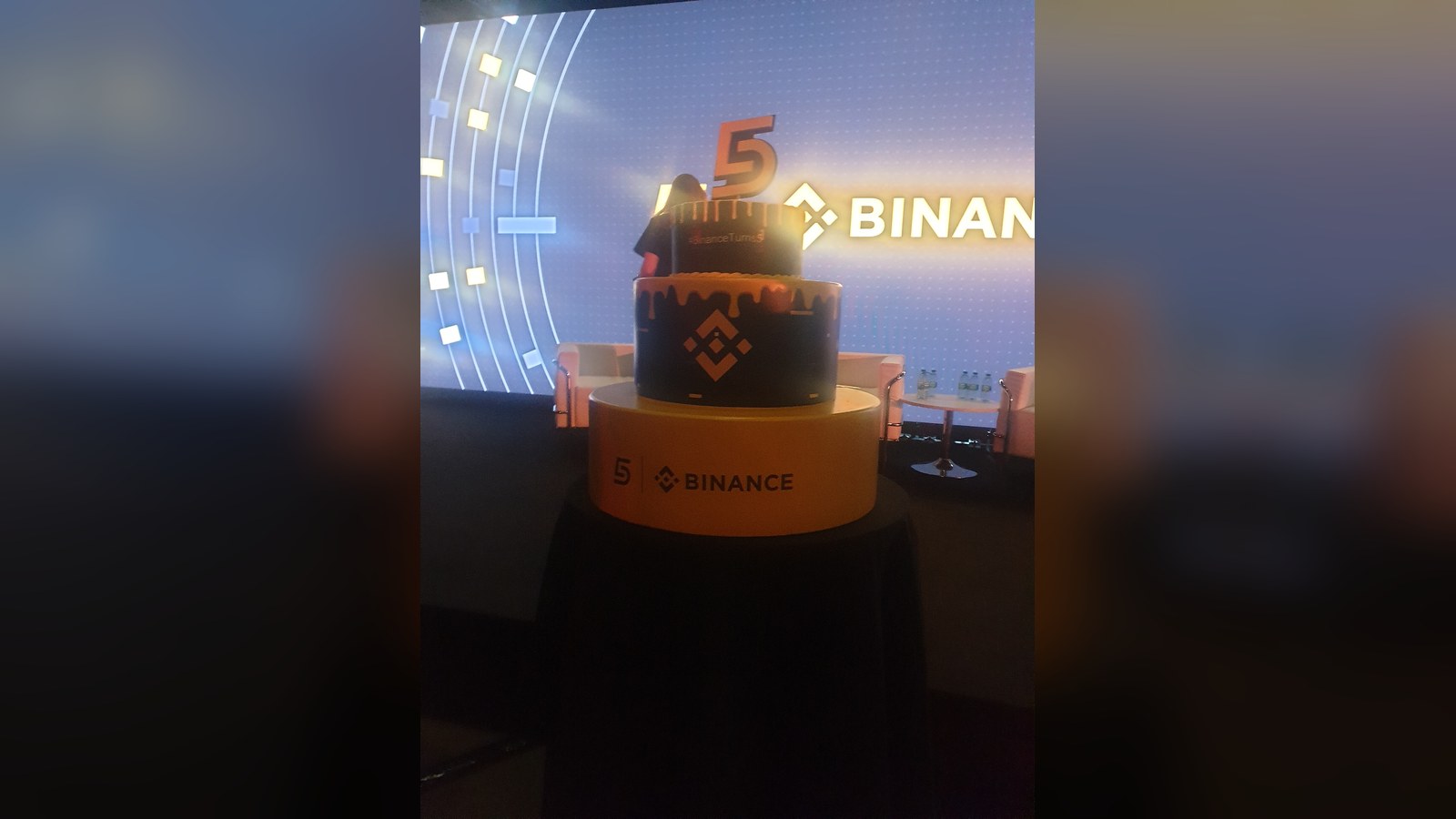
File photo: 5 years birthday Binance cake in Paris – 2022-07-08.jpg by Bretwa, CC BY-SA 4.0, via Wikimedia Commons.
WordUp Morning
Ten stories, both sides of each, in five minutes. Free, every weekday at 7am, plus a Saturday weekend edition.
We'll email you a link to confirm. Unsubscribe any time.
Crypto
Binance hack: $6.3bn stolen, users promised full cover, and North Korea suspected but unproven
The Binance hack, which Binance puts at roughly $6.3bn (£4.7bn), is believed to be the largest theft in cryptocurrency history. It has sent a jolt through an industry used to security scandals. The exchange says customers will not lose out, but several questions remain open, including who did it and how much of the money can be clawed back.
How the Binance hack unfolded
The first signs came from crypto watchers on X, who noticed large sums leaving wallets linked to Binance. Founder Changpeng Zhao then confirmed a problem. Binance later said its early investigation pointed to a compromised laptop belonging to a DevOps engineer. That access, it said, let an attacker reach a service container and submit unauthorised withdrawals.
Co-chief executive Richard Teng stressed it was not a simple “one-click” break-in. He later said more than one person was involved, and that the attackers used sophisticated methods to cover their tracks, including a “self-destruct mechanism”. Security experts quoted by the BBC suggested an engineer may have been tricked into running something like a test, allowing malware onto a machine with enough privileges to act as a direct route into production systems and then to the wallets. As one cybersecurity executive put it, a vault is only as safe as the people holding the keys.
Only Binance’s main global exchange, Binance.com, was affected. Binance.us, which serves US residents, says it was not.
What was taken
Estimates circulating online ranged from $2bn to $8bn before Binance settled on its $6.3bn figure, and the final tally could take days to establish. Early reports, cited by Fortune, say about $1.5bn was in Bitcoin and a similar amount in the Tether stablecoin. Slightly under $1bn was reportedly in Ethereum and the USDC stablecoin, with other tokens likely taken as well.
Who is behind the Binance hack?
Nobody has claimed responsibility, and Binance has not named a culprit. Some analytics firms, including TRM Labs, have pointed towards North Korea. They say elements of the attack resemble earlier incidents, such as the $1.5bn ByBit theft in 2025, which was linked to the Lazarus Group, also known as TraderTraitor. Fortune reports that TRM and others consider North Korea almost certainly responsible, but both outlets stress there is no definitive proof.
The theory is plausible. Oxford academic Dr Edward Howell told the BBC that Pyongyang has a long record of using cyber operations to raise cash, and estimated that 40-50% of its weapons programmes are funded this way. North Korea has consistently denied involvement in such attacks, and Binance has not directly addressed the possible link.
Is my money safe?
Binance says user funds are safe. It temporarily suspended deposits and withdrawals as a precaution. It says it will cover all losses from an emergency reserve built for such events, topped up with company money if needed. Fortune notes that rivals, including Coinbase and Tether, pledged support. Markets appear to have taken that reassurance on board: Bitcoin and Ethereum fell around 3%, a dip that coincided with a broader market sell-off.
Recovery is another matter. Binance says it is working with partners to freeze stolen assets and that about $3bn has reportedly been located. Tether and Circle, which issue USDT and USDC, said they would freeze stablecoins tied to the theft. But Fortune reports evidence that the hacker quickly deposited stolen funds on the lending platform Aave as collateral for an Ethereum loan. If so, the thief could walk away with the borrowed Ethereum even if the collateral is frozen, so freezes may only be partly effective.
What users should do now
Experts advise checking balances only through the official Binance app or a web address you already trust. Crisis moments like this are prime time for scammers, so the warning signs include:
- emails claiming your funds are at risk;
- fake support accounts offering help;
- messages urging you to move your crypto to a “safe” wallet.
Never share passwords, verification codes or wallet recovery phrases, and avoid links in unsolicited messages.
The bigger picture
The incident lands on a company that has faced scrutiny before. Zhao resigned as chief executive in 2023 after pleading guilty to money laundering violations, and a US lawsuit last year accused the firm of helping send money to designated terrorist groups. Binance said in 2024 that it held more than $160bn in assets, which helps explain why it can promise to absorb the loss.
Some people online have questioned how one compromised laptop could open the door to billions. Binance promised fuller details soon, and the answers will matter for confidence in the exchange.
Explore more on this topic with Vexel Search.
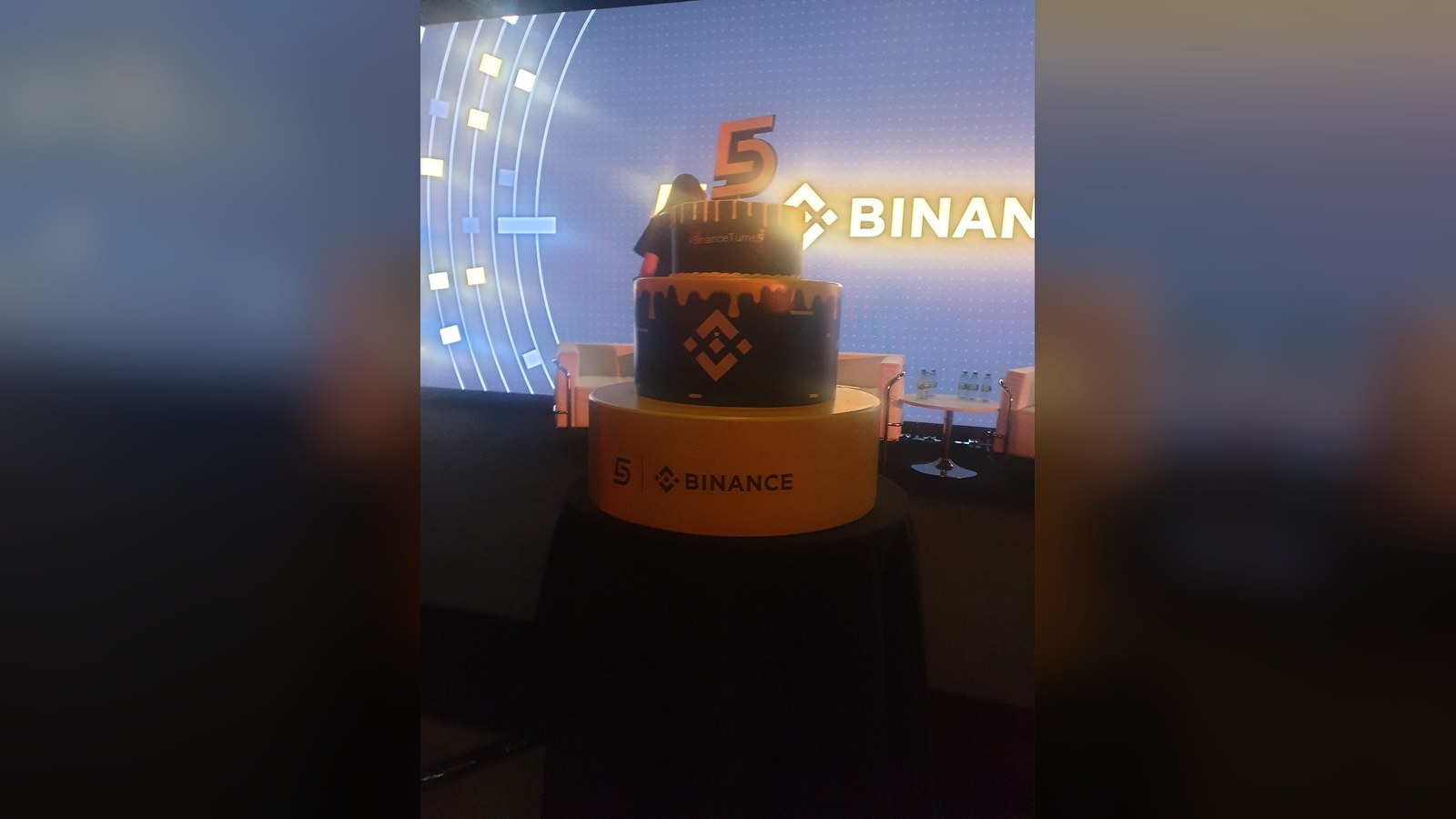
File photo: 5 years birthday Binance cake in Paris – 2022-07-08.jpg by Bretwa, CC BY-SA 4.0, via Wikimedia Commons.
WordUp Morning
Ten stories, both sides of each, in five minutes. Free, every weekday at 7am, plus a Saturday weekend edition.
We'll email you a link to confirm. Unsubscribe any time.
Crypto
$6.3 Billion Binance Hack Is the Biggest Crypto Theft on Record, Analysts Say, and They Point to North Korea
The Binance hack, which affected roughly $6.3 billion in assets, is being described by analysts as the largest cryptocurrency theft ever recorded. Two US blockchain analysis firms, TRM Labs and Chainalysis, have tied it to a North Korean hacking unit known as TraderTraitor. Binance itself has not confirmed that attribution.
The attribution comes from the analytics firms, not from Binance or a government. TRM Labs said it reached its judgment “with high confidence.” Chainalysis CEO Jonathan Levin wrote that the theft was “likely done by” the group. Asked about the North Korea link, a Binance spokesperson said only that the company is working with law enforcement to confirm the identity of the criminals. North Korea’s mission in Geneva and its embassy in China did not immediately respond to requests for comment.
How the Binance hack unfolded
According to Chainalysis, funds began leaving Binance hot wallets around 4:20 p.m. Eastern on October 29. TRM said the attacker moved about $6.36 billion across ten blockchains, most of it in around 20 minutes. Chainalysis’s own tally is slightly higher, at $6.4 billion.
Chainalysis described an operational wallet funded through the Tornado Cash mixing service. It said the wallet submitted signed authorizations that let a Binance hot wallet run code the attacker had deployed. Assets were then swept into addresses the attacker controlled.
The thieves also appear to have raced the clock. Chainalysis says they swapped $325 million in stablecoins for $285 million in ether, since issuers can freeze stablecoins but not ether. They sent another $175 million to intermediate wallets. Freezes began by 5:14 p.m. Eastern, less than an hour after the first withdrawals.
Binance’s account of the entry point has shifted. Its first findings pointed to a compromised engineer’s laptop that gave access to a service container. It later said further investigation had uncovered additional “points of breach.” The exchange says it has found no evidence of a wallet private key leak and has promised more technical detail once its probe is finished. Kok Tin Gan, CEO of security firm NyxLab, said the pattern looks like a single signature handing the attacker a never-expiring, full-access token. He asked why stronger approval controls were not in place.
Frozen funds and promises to cover losses
Binance says about $3 billion has been frozen onchain. Tether’s CEO said it froze more than $1.567 billion in USDT, and Circle said it froze over $800 million in USDC in coordination with law enforcement. The issuer of FDUSD said the stolen tokens of that type are frozen too. The fate of the remaining roughly $3.3 billion has not been spelled out.
Users are being told they will not bear the loss. Binance says it has set aside more than $6.34 billion of company funds, about $5 billion of it in the same token types that were affected, and is buying the rest on the market and over the counter. Deposits were unaffected, but withdrawals were suspended and are expected to resume within a day or two. Binance also plans to publish an updated Proof of Reserves. Reuters, citing a person familiar with the matter, reported that the exchange is working with the FBI and the US Secret Service.
A familiar playbook, and a market under strain
TRM said several features of the attack match earlier North Korea-linked heists. It specifically cited the $1.5 billion Bybit theft in 2025, which the FBI attributed to North Korea and TraderTraitor. Experts say Pyongyang has turned to crypto theft as a source of foreign currency for its economy and nuclear program after heavy UN sanctions. South Korea’s spy agency estimated in 2022 that North Korean hackers had stolen about $1.1 billion in digital assets over five years.
Markets took the news badly. Bitcoin fell more than 3 percent to a six-week low near $76,400. Ether dropped to a two-month low around $2,178, and BNB, the exchange’s own token, slid about 5 percent. Total crypto liquidations reached $1.5 billion, mostly from traders betting on higher prices. Coinbase shares fell 4.8 percent and Strategy shares nearly 6 percent in extended US trading.
Analysts see consequences beyond the price drop. Moody’s Ratings’ Cristiano Ventricelli said the Binance hack shows the risk of hot wallets and of concentrating assets in large centralized intermediaries. Bernardo Brites of Trace Finance expects users to drift away from smaller exchanges that could not absorb a loss on this scale. Standard Chartered’s Geoffrey Kendrick suggested more downside may come before prices settle. He also argued the episode could speed a shift toward decentralized exchanges.
Binance, which has 335 million registered users and held about $162.8 billion in custody at the end of 2025, says user funds remain safe. Chainalysis has warned that scammers are posing as the firm to offer fund recovery services, so victims should use official channels only. Key open questions are whether the frozen assets can be returned, how the attacker got in, and whether governments will formally back the North Korea attribution.
Explore more on this topic with Vexel Search.
WordUp Morning
Ten stories, both sides of each, in five minutes. Free, every weekday at 7am, plus a Saturday weekend edition.
We'll email you a link to confirm. Unsubscribe any time.
Trezor is warning that a suspected Trezor Safe 5 implant, reportedly able to beam a wallet’s recovery phrase over a mobile network, may be hiding in devices sold by the reseller CryptoBilis. The company has not yet examined the hardware, but it says it considers the report credible enough to tell customers to act now.
What the Indonesian customer reported
The alarm began with a user in Indonesia who bought a Safe 5 from CryptoBilis through the Tokopedia marketplace in August 2026. After opening the device, the buyer said, they found an extra circuit board sandwiched between the wallet’s main board and its screen. The board reportedly carried a cellular module and an antenna.
Based on that customer’s unconfirmed account, the add-on appears able to read whatever is shown on the display, including the recovery phrase, and send it out over a cellular connection once the wallet is plugged in. A recovery phrase is the master key to a wallet. Anyone who has it can restore the wallet on another device and move the funds out.
Why Trezor is acting before it has the device
The device is still being shipped to Trezor’s lab. Even so, the company chose not to wait for confirmation. “We haven’t had the device in our lab yet, but we’re treating the report as credible, and we’d rather warn people now than wait for confirmation and find out someone lost their funds in the meantime,” chief commercial officer Danny Sanders told Cointelegraph.
Trezor says it knows of no stolen funds tied to a supply-chain attack. It also describes its sales through CryptoBilis as “very small,” though it declined to give numbers. A spokesperson said the company has not worked out where any tampering happened, and that it is reviewing its hardware protections. The spokesperson acknowledged that seals and packaging alone are not enough.
What buyers should do
Trezor’s guidance is direct:
- Do not set up or use any device bought through CryptoBilis from March 2026 onward.
- If you already have, create a new wallet with a fresh recovery phrase and move your assets into it.
- Buyers with proof of purchase can ask Trezor for a replacement device or a voucher toward a new one.
- Do not rely on weighing the device to detect tampering. Trezor says that is not a reliable test.
A pattern that began with Ledger
The report follows a similar episode involving Ledger earlier this month. Losses among Ledger users who bought through CryptoBilis surfaced on October 9, and Ledger confirmed an unauthorized hardware implant in at least one device. It then asked resellers and distributors in Southeast Asia and Hong Kong to pause sales until the devices could be vetted. The implant in that case reportedly resembles the one now described on the Trezor device in form and function. Coverage of Singapore police figures put the losses from tampered Ledger wallets at a few million dollars, though the outlets cited different totals, $2.7 million in one headline and $3.5 million in another account.
Trezor says it halted sales through CryptoBilis on October 9, before it had any sign its own products were affected. It later said it would shrink and tighten its reseller network globally.
Questions about earlier assurances
The episode also complicates Trezor’s earlier reassurances. Security researcher Joe Grand told Cointelegraph he warned Trezor in August about tampered Trezor One and Model T wallets bought from unauthorized sellers on TikTok and Facebook. Trezor responded that its earlier statement, that it had seen no evidence of compromised devices, covered only new wallets sold through authorized resellers.
The company also noted that its setup checks are designed to catch counterfeit devices and modified firmware. The Ledger implant read the screen without altering firmware, so a screen-reading add-on could slip past checks built for a different kind of attack. If the Trezor Safe 5 implant is confirmed, it would show a gap in how users are told to verify new hardware.
What to watch next
Trezor has promised updates once the device reaches its lab. Until then, the main open questions are whether the board is real, who installed it and at what point in the supply chain, and how many units might be affected. For anyone who bought through CryptoBilis since March, Trezor’s advice is to move funds now and sort out replacements afterward.
- Trezor warns of suspected crypto-theft implant in hardware wallet (bleepingcomputer.com)
- Trezor Warns CryptoBilis Buyers After Report of Hardware Implant in Safe 5 (Decrypt)
- Trezor warns CryptoBilis buyers to move funds over suspected implant (cointelegraph.com)
Explore more on this topic with Vexel Search.
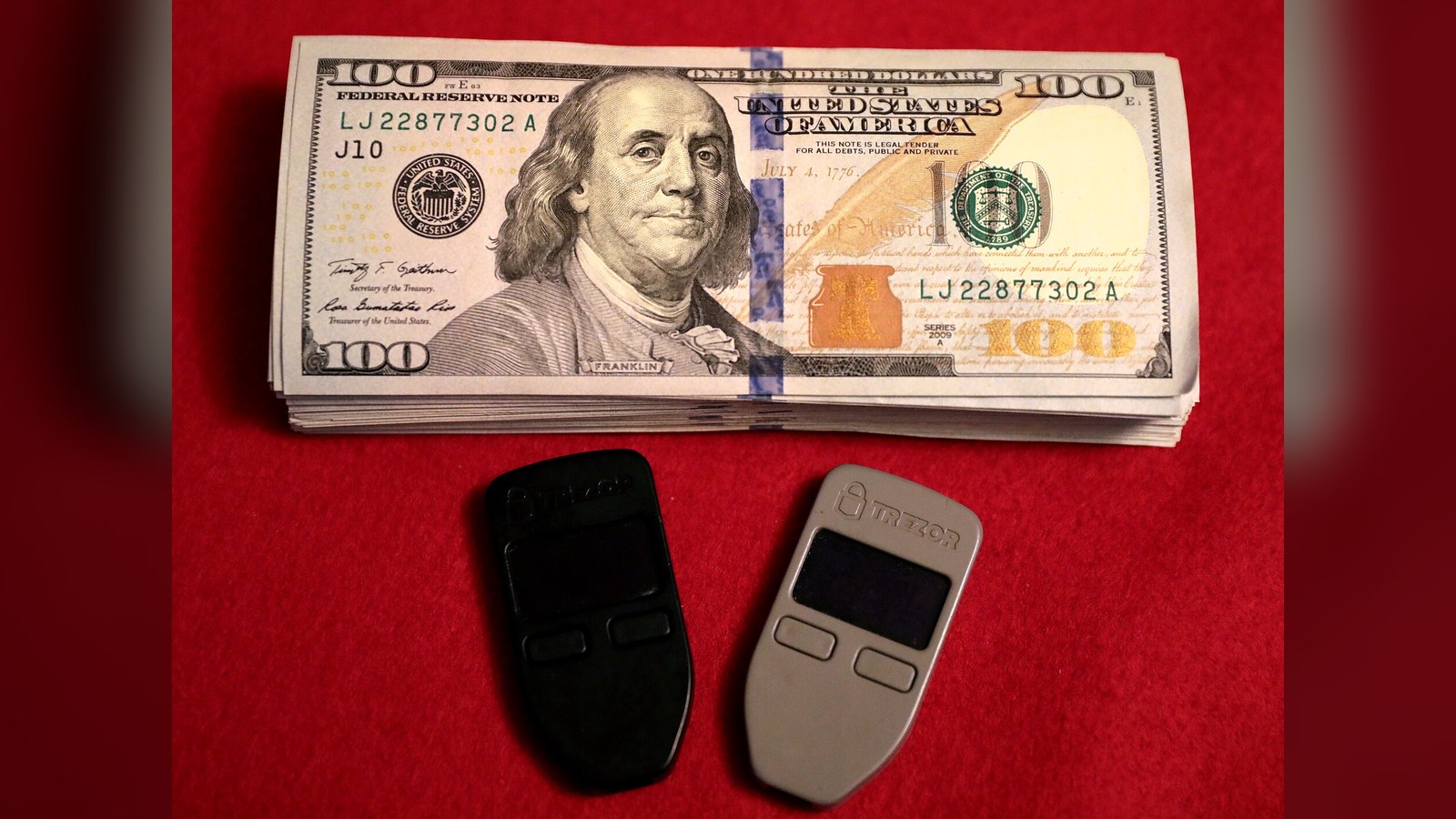
File photo: $10,000 USD fiat and two Trezor One hardware wallets by Gage Skidmore.jpg by Gage Skidmore, CC BY-SA 3.0, via Wikimedia Commons.
WordUp Morning
Ten stories, both sides of each, in five minutes. Free, every weekday at 7am, plus a Saturday weekend edition.
We'll email you a link to confirm. Unsubscribe any time.

VanEck has launched the Wealth Builder ETF, a single actively managed fund that mixes stocks, bonds, gold and indirect bitcoin exposure for a net annual expense ratio of 0.26%. The fund began trading on Oct. 27 under the ticker WBMO.
The product takes an approach that VanEck, which reported $244.1 billion in assets under management as of Sept. 30, previously sold to financial advisers through third-party wealth platforms as model portfolios. Packaged as an ETF, it is open to anyone with a brokerage account. VanEck picks the holdings, sets the weights and handles rebalancing.
https://www.youtube.com/watch?v=videoseries
What is inside the Wealth Builder ETF
The fund holds global equities, fixed income and real assets, including gold. VanEck describes an open-architecture design, meaning it can use its own funds alongside third-party ETFs. Portfolio manager David Schassler said the strategy collects “the asset classes we believe are best positioned to perform over the next decade.” According to the announcement, the fund also targets long-term themes such as technological change and fiscal and inflation trends.
Allocations rest on macroeconomic analysis, capital-market expectations and a review of each underlying product’s strategy, liquidity, costs and risk-adjusted returns. WBMO does not invest directly in futures, options or swaps, according to the prospectus, though some of the products it owns may use derivatives.
Bitcoin exposure is indirect and unspecified
Buyers should not read the headline as a bitcoin fund. WBMO owns no bitcoin. Instead, a wholly owned Cayman Islands subsidiary holds certain investments and gets digital asset exposure through exchange-traded products. The prospectus generally caps the fund’s investment in that subsidiary at 25% of total assets at each quarter-end, but that limit covers digital assets, commodities and related instruments together. It is not a bitcoin target, and the prospectus sets no specific bitcoin allocation.
The structure has trade-offs. Investors need no wallet, seed phrase or exchange account, but they also cannot control the bitcoin position. Because bitcoin is only one slice of a diversified mix, a sharp rally would lift the fund only partly. In a sell-off, bonds and gold may soften the blow without preventing losses. VanEck itself warned that digital asset ETPs can be extremely volatile and that some are not registered under the Investment Company Act of 1940, so they lack certain investor protections.
The fee math
The fee table shows a 0.15% management fee plus estimated acquired-fund expenses of 0.18%, for a gross expense ratio of 0.33%. A 0.07% waiver brings the net figure to 0.26%. The adviser waives management fees equal to what it or its affiliates earn from underlying funds. The underlying bitcoin products charge their own fees, which are reflected in the acquired-fund line.
A pattern in VanEck’s portfolios
The launch fits a broader trend at VanEck. Its separate NODE fund, which holds blockchain companies rather than a multi-asset mix, raised its bitcoin ETP exposure from about 7% at the end of June to 16.8% at the end of September. That is a different product, but it shows the firm is willing to add more bitcoin when it sees fit.
The launch also arrives amid ongoing debate over long-term risks to bitcoin. VanEck’s head of digital assets research, Matthew Sigel, has said quantum computing is a real risk but that the community is working on upgrade paths, even if governance moves slowly.
For investors, the Wealth Builder ETF offers a one-ticket way to hold a diversified portfolio with a modest crypto component at a relatively low fee. Because the prospectus sets no bitcoin target, the actual size of that component will depend on VanEck’s active choices, and buyers will need to watch the fund’s disclosures to see how much bitcoin they hold.
- VanEck Launches All-in-One Wealth Builder ETF With Bitcoin Exposure (Bitcoin Magazine)
- VanEck launches Wealth Builder ETF with Bitcoin exposure at 0.26% fee (crypto.news)
Explore more on this topic with Vexel Search.
WordUp Morning
Ten stories, both sides of each, in five minutes. Free, every weekday at 7am, plus a Saturday weekend edition.
We'll email you a link to confirm. Unsubscribe any time.
Crypto
Tokenized Nasdaq-100 Fund Launches on Stellar as Janus Henderson’s Onchain Assets Top $1 Billion
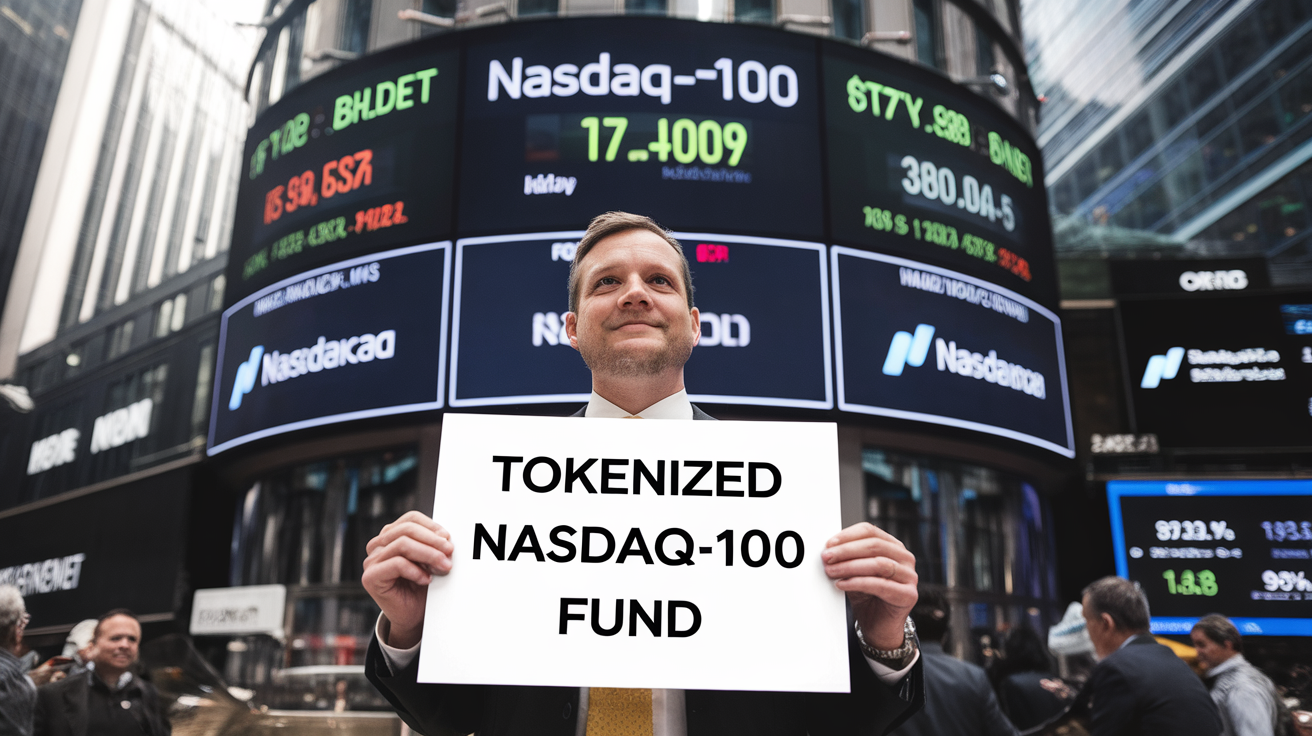
Janus Henderson and the tokenization platform Centrifuge have launched a tokenized Nasdaq-100 fund on the Stellar blockchain, putting one of Wall Street’s best-known equity benchmarks onto crypto rails through a manager-issued product. The fund, called JQQQ, was announced Tuesday and is aimed at eligible investors outside the United States.
Centrifuge supplies the tokenization infrastructure, and the fund seeks to track the index under a licensing agreement with Nasdaq. Janus Henderson, a London-based manager overseeing roughly $500 billion, said its institutional onchain strategies now exceed $1 billion. Those strategies span Treasurys, structured credit and now equities.
How the tokenized Nasdaq-100 fund is structured
JQQQ is not a token that gives holders direct ownership of Nvidia, Apple or Microsoft shares. According to Cointelegraph, it is a segregated portfolio of a British Virgin Islands investment company and provides indirect exposure to the index. The Wall Street Journal reported that it targets professional investors and carries a minimum investment of $100,000, which puts it well out of reach for ordinary retail buyers.
The more interesting distinction is who is behind the product. CoinDesk framed the launch as an issuer-sponsored fund: Janus Henderson issues and manages it, Centrifuge provides the plumbing and Nasdaq licenses the index. That contrasts with third-party stock tokens created without the involvement of the underlying issuer, a category at the center of a growing debate over who gets to tokenize traditional securities.
A licensing shift opens the door
The timing follows a change at Nasdaq. In April, the exchange said it would license the Nasdaq-100 to additional asset managers, including BlackRock and State Street, while keeping its long-standing relationship with Invesco. Invesco runs the QQQ trust, which Cointelegraph put at a $499 billion market cap. JQQQ shows that the wider licensing push now extends to blockchain-based vehicles as well as conventional funds.
It is also not Janus Henderson’s first move of this kind. CoinDesk noted that the firm introduced the Janus Henderson Anemoy S&P 500 Fund last year, which it described as the first tokenized index fund licensed by S&P Dow Jones Indices. The new launch applies the same playbook to a second major benchmark.
Why Stellar keeps landing institutional products
For Stellar, the launch adds to a steady run of institutional activity. Citing RWA.xyz, Cointelegraph reports that the network ranks fourth by distributed real-world asset value, with about $3.8 billion in tokenized assets. Only Ethereum, BNB Chain and Solana rank ahead of it. Issuers on the network include Spiko, Franklin Templeton and Ondo.
More is lined up. Tradable said in July that it plans to bring up to $1 billion of private credit to Stellar, with $500 million expected at launch. The Depository Trust & Clearing Corporation said in May that it would connect its tokenization service to the network, with DTCC-tokenized assets expected in the first half of 2027. Those could include Treasurys, major index ETFs and Russell 1000 stocks.
Yet the market has not rewarded the token. XLM has fallen about 16% this year and traded near $0.17 on Tuesday, according to CoinGecko data cited by Cointelegraph. That gap shows that growth in tokenized assets does not automatically lift the price of the underlying blockchain’s native coin.
For now, the tokenized Nasdaq-100 fund is a narrow product with a high entry bar and a geographic restriction. Its significance is less about immediate scale than about the model it demonstrates. Established managers are using licensed benchmarks and their own issuance to bring equity exposure onchain, rather than leaving that space to third-party tokens.
Explore more on this topic with Vexel Search.
WordUp Morning
Ten stories, both sides of each, in five minutes. Free, every weekday at 7am, plus a Saturday weekend edition.
We'll email you a link to confirm. Unsubscribe any time.

Wizz Air bomb threat: Fighter jet escorts Luton-Sofia flight to Budapest within minutes

Why Nintendo Is Remaking Ocarina of Time Again: The Ocarina of Time Remake Arrives Nov. 5

Jake Paul Doumbe fight set for 24 December, a year after Joshua broke his jaw


-

 Gaming7 days ago
GameMaker Commercial Use Goes Free on PC From January 1, 2027, but Console Still Costs
-

 Tech & AI4 days ago
Meta’s Style Sketch AI Fashion App Debuts in 3 Countries, Joining a Crowded Virtual Try-On Race
-

 Tech & AI6 days ago
University of Copenhagen Data Breach Exposes 525,000 People, and 20,000 Campus PINs
-

 Tech & AI4 days ago
CMA Meta Investigation Targets Terms Affecting “Thousands of UK Businesses”
-

 Fashion6 days ago
From Zurbarán to Rothko: How Art Shaped the Spring 2027 Runways
-

 Business & Hustles6 days ago
NBC News Creates New Head of Digital Content Job, Hires Quartz Co-Founder Kevin Delaney
-

 Crime6 days ago
RAF Fairford plot: two men charged, court told of alleged £70,000 from handler police link to Iran
-

 Entertainment6 days ago
Meghan to Co-Host Junior MasterChef Australia in 2027, Ending a Six-Year Hiatus for the Show
-

 Crypto6 days ago
Zcash Grants Funding Could End: Co-Founder Says $125 Million Treasury Is Enough
-

 Crypto6 days ago
VanEck Wealth Builder ETF Puts Indirect Bitcoin in One 0.26% Fund
-
 Crypto4 days ago
Binance Hack Losses: $6.34B Set Aside, $5B Already Held in Matching Tokens
-

 Crime6 days ago
Road rage van driver jailed for 3.5 years after deliberately running over cyclist while delivering blood
-
 Crypto6 days ago
Tokenized Nasdaq-100 Fund Launches on Stellar as Janus Henderson’s Onchain Assets Top $1 Billion
-

 Tech & AI7 days ago
300+ Employees Fight $1.3 Million Boston Dynamics ICE Deal Over Robot Dogs
-

 Crypto7 days ago
91% Know Crypto, Only 8% Own It: Why UK Crypto Regulation Could Be the Next Growth Lever
-

 Fashion3 days ago
7 Honorees, 1 Night at MoMA: Dua Lipa and A$AP Rocky Toast Blazy at the 2026 WSJ Innovator Awards
-

 Fashion7 days ago
Tabi Demand Up Fourfold Since 2022 as Freaky Footwear Goes Mainstream
-

 Business & Hustles6 days ago
Reckitt sales outlook cut to 3.5%-4.5% growth as shares drop 6% and European prices rise 4%
-
 Sports6 days ago
England’s Tri-Series Exit Sealed as Sri Lanka Bowl Pakistan Out for 110
-

 Business & Hustles7 days ago
Anthropic IPO Filing Shows $16.3bn in Six-Month Revenue and an $80.7bn Loss
You must be logged in to post a comment Login