
Tech
These Small Changes Can Improve Your Home Surround Sound In A Big Way

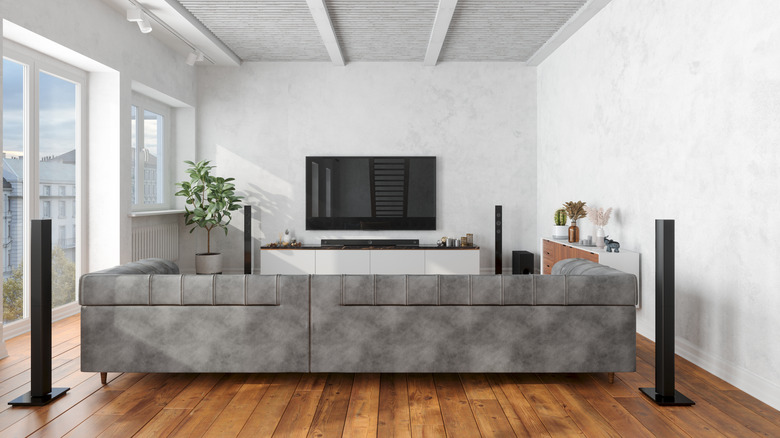
Angle the speakers, move the couch a bit, lay down a rug.
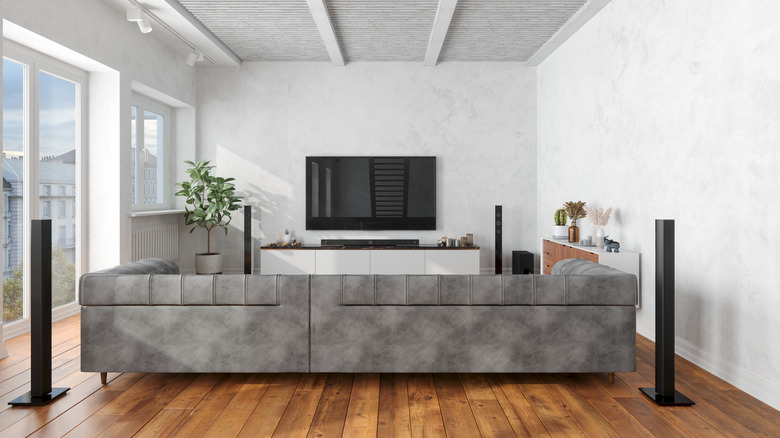
If your home surround system isn’t exactly performing the way you expected, then the problem probably isn’t your equipment. There’s a massive chance that the big issue is that you set your system up years ago, plugged it in and haven’t touched it since. All the while, the room itself and the way the speakers are aimed have changed completely.
The good news is that, more often than not, you don’t have to spend more money to improve your home theater experience. Before you go throwing money around, you should try out a series of small but targeted adjustments to what you already own. Adding a rug, repositioning your couch, angling your speakers, placing the subwoofer right and running the built-in calibration tool most speaker systems come with can make a world of difference.
You could, of course, use acoustic foam, call up professionals to set things up for you and buy new hardware. But why spend a ton of money when you could just try a few simple fixes that work with a basic 5.1 system or something more elaborate. Check out the whole guide to see whether there’s any advice you want to give a try.
Start by fixing room acoustics
Room acoustics are the easiest thing you can fix and often the one thing everyone overlooks. Hard surfaces like bare walls, tile floors and large windows reflect sound waves, creating muddied sound and echo that affect dialogue and sound effects. Anthony Grimani, President of Performance Media Industries and several other audio engineering firms, as well as a former sound engineer with Dolby Laboratories and Lucasfilm THX, states that more than half of what you hear in a regular room is sound bouncing off hard surfaces like ceilings, walls and hard flooring.
The fix to this problem isn’t buying foam panels that would require a whole overhaul of your living room. Instead, you can improve this with rugs, curtains, artworks and framed photos. So, start decorating!
The right way to position your speakers
Where you place your speakers is half of this equation, while the other half is how you point your speakers. The front left and right speakers need to be about a foot away from side and back walls. They also need to have about the same space between them as there is between the speakers and your seating position. The speakers should also be angled toward your main seat, so start poking at them until they’re positioned just right.
The center channel should be placed directly above or below your TV, aligned with the screen’s midpoint. Since this speaker carries most of your movie dialogue, keeping it aimed at ear level matters.
For 5.1 surround systems, you have to position the speakers to the sides of your seating area, always aiming towards your main seat, ideally at or slightly above ear level. For 7.1 surround systems, the back speakers should be placed behind your seating position. Randomly placing your speakers wherever they fit in the room will undermine every effort you make to improve sound quality.
Where should I put my subwoofer?
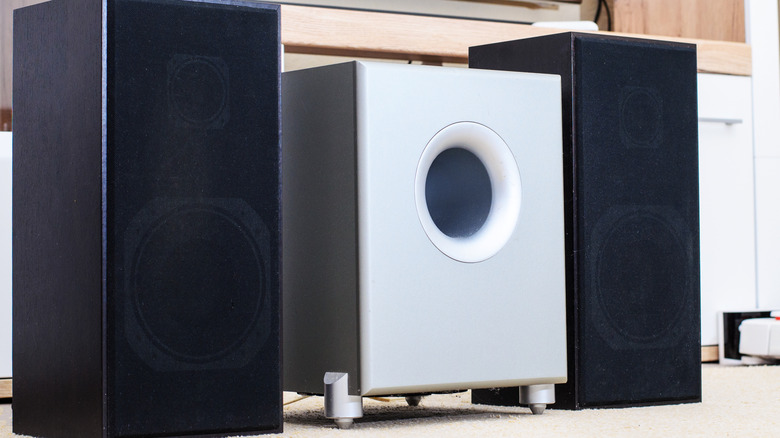
Subwoofer placement is one of the things that has the biggest impact on sound quality in any room. When it comes to subs, it’s not so much which direction you angle them, but rather where you put them in the room. Subwoofers are omnidirectional by nature, so a slight change in orientation won’t break your whole sound quality. You do have to ensure, however, that ported subs are not boxed in or glued to the wall because those vents need room to breathe. There’s no universal answer for the rest of the subwoofers, however, because every room has different wall materials, sizes and furniture, all of which change how bass frequencies behave. Place your subwoofer in two or three different spots and try out how it sounds.
Settings matter a lot
While the position of your speakers and subwoofer matter, settings do too. Calibration is the step most people skip because they assume it’s complicated. In reality, most modern AV receivers come with automatic calibration software. Systems from brands like Yamaha or Pioneer test tones through each speaker, measure the room’s acoustics and apply corrective filters automatically.
Of course, if you’re more hands-on, you can calibrate these things manually with a sound level meter app on your phone or an external meter. Either way, calibration is needed for each system because out-of-the-box settings don’t account for all room setups.
One thing every owner of a surround system can do is to check the audio decoding menu on each connected source and confirm it’s outputting a genuine surround format, like Dolby Digital, Dolby Atmos or DTS, rather than defaulting to plain stereo.
Other things to try out to improve sound quality
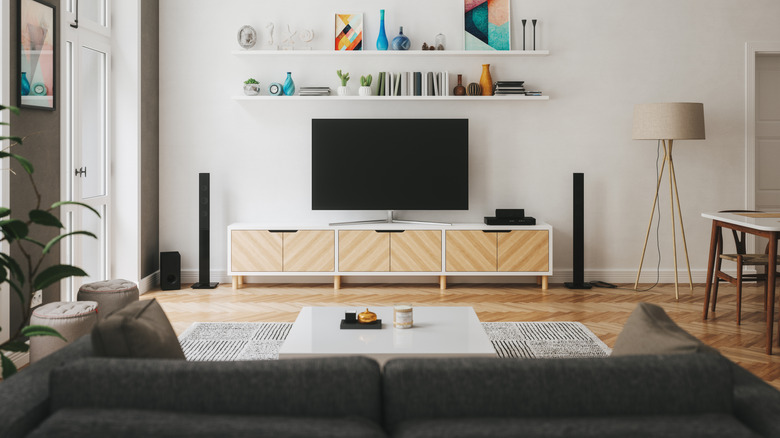
Moving your furniture around can have a big impact as well. Depending on how much free room you have, you might want to try pushing the couch a foot or two forward or backward and check the difference in clarity and bass response. If you have an older sound system, you might also want to check on those cables to ensure they’re not fraying or chewed up by one of your pets. Also, wired connections will always outperform Wi-Fi or Bluetooth when it comes to consistency and sound quality, so swap to that if at all possible.
Great surround sound doesn’t require tearing your setup apart and starting over. Addressing room acoustics, refining speaker aim, figuring out the best subwoofer placement, running calibration and adjusting your seating position will all impact how good your system sounds.


“I do see this as a continued trajectory of their main business model of controlling what people see, putting ads in front of them, and collecting more data,” Mir says.
It’s definitely rational to be anxious about handing over your credit card to an agent. Even if you could trust these AI tools wouldn’t be tricked into spending money in ways you don’t want, outsourcing your shopping decisions can have unintended consequences. Consumer advocates see this purchasing automation as potentially opening the door for companies to prioritize certain brands or other products in an agent’s output, based on sponsorship deals. Meta’s Chief AI officer Alexandr Wang hinted in an interview with Axios that it’s looking for more revenue opportunities in Muse that aren’t ads, without disclosing specifics.
Personally, I enjoy the slow scrolls of online shopping, where I can spend an hour on a website and leave with nothing in my cart. There’s a whimsical inefficiency to browsing Depop for leather jackets I likely won’t even buy. By exploring the Internet on my own, I’m slowly building my own sense of taste and curating an understanding of what I actually enjoy. If Muse does everything for me, I lose out on the journey that led to the decision.
“At some point, the AI is making all of your meaningful taste decisions, your preference decisions, decisions about where you go, where you eat, what you do, what vacations you take,” Schroeder says. “That’s kind of the joy of being human—getting to test things out and figure out what you like. So, the concept of turning all of that over to a machine is pretty horrifying to me.”
Sharing Machines
Relying on agents, like Meta’s Muse, could degrade our functioning while these tools collect data about us.
“The design of AI agents is such that it disengages users,” says Margaret Mitchell, a researcher and chief ethics scientist at Hugging Face. “So, users become more passive.” Mitchell recently co-wrote a research paper unpacking how agentic tools are not effectively designed for human oversight and may actually worsen the user’s ability to assess what the agent is doing on their behalf.
People who use agents may become overly reliant on the tools, even more so than when interacting with a standard chatbot, since agents have access to more information and can do more tasks. One potential impact is “cognitive degradation,” where users rely on automations from a confident-sounding, external source and are less able to make independent decisions.
Mitchell also sees high levels of personalization as potentially priming users to share even more data about themselves. “It’s not only that it knows about you, so you trust it more,” she says. “It’s that it’s actually aligning to you in what it talks about and how it talks about it, in a way that further pulls you into interacting with it and divulging more private information.” Recent research shows that AI tools may start to mirror a user’s speaking style as they collect more interaction data.
While Muse is powerful, I’ve decided to send this data goblin back to its cave, and deleted the app after my initial experiments.
Before I could remove Muse from my phone, the agent sent me one final ping. A tip! I wonder what it could be. “Connect your apps so I can do more,” the notification read. Alright, buddy. I heard you the first time.
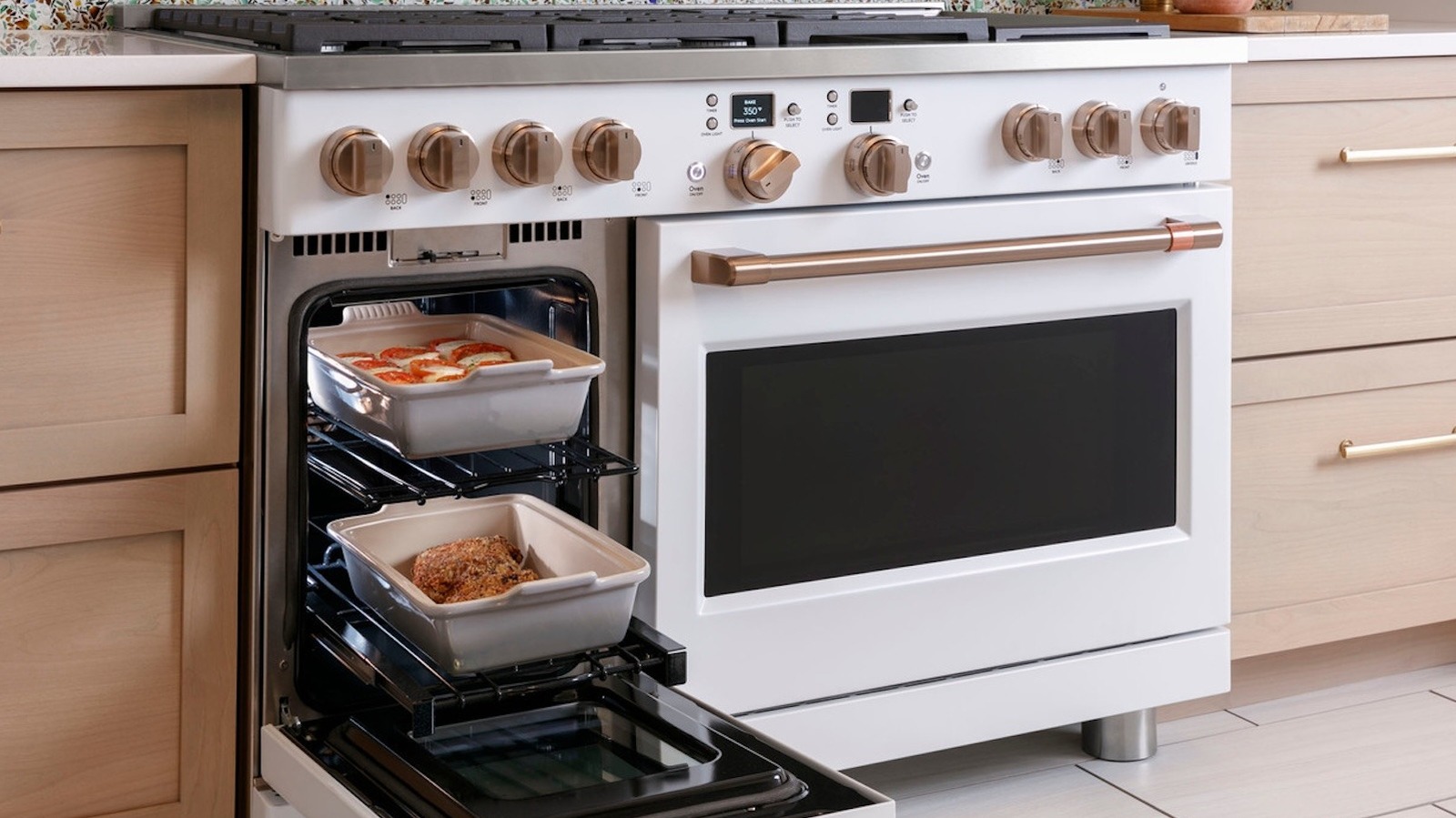
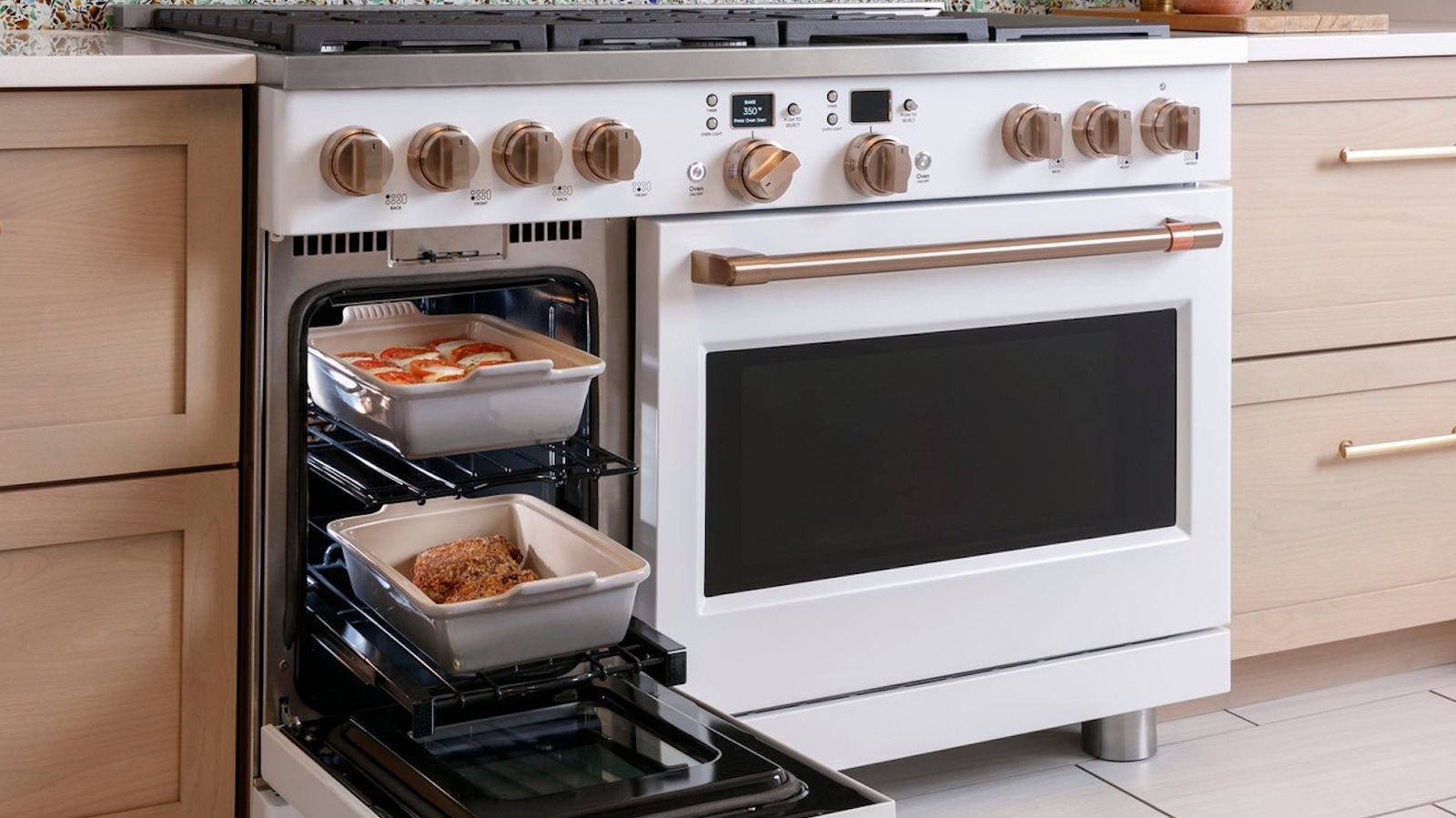
Back in 2018, a new appliance brand hit the marketplace called Café. This wasn’t an entirely new name though. GE Appliances first introduced the Café name back in 2007 as a luxury appliance line, but it was just one line of appliances under the greater GE umbrella. That changed when GE Appliances decided that Café should be its own standalone brand, which it has been since 2018. While GE Appliances is its parent company, the true owner of Café Appliances is Haier. This is a Chinese conglomerate that owns many different appliance brands around the world, and it acquired GE Appliances in 2016.
Despite being a subsidiary of a Chinese company, appliances from Café are still primarily manufactured in the United States. Café Appliances headquarters is located in Louisville, Kentucky, which is also the home to GE Appliances’ headquarters, and while that is the main hub, it’s not the only place these appliances are built. GE’s plant in Lafayette, Georgia is where the cooking products are built, and there’s another a smaller facility in Selmer, Tennessee that focuses primarily on refrigerators and freezers for Café and other Haier-owned luxury brands like Monogram and GE Profile.
Unlike many other appliance brands, Café focuses exclusively on kitchen appliances. These include ovens and stove ranges to refrigerators and dishwashers. There’s also a number countertop appliances it produces, like toasters and coffee makers. The company specializes in high-end luxury appliances for those looking to revamp their kitchen, both in performance and aesthetics. Consequently, Café Appliances sells its products at a premium as well, but the reason its prices are so high goes beyond it just being your average luxury brand.
Why are Café appliances so expensive?
GE Profile is one of GE Appliance’s brands that focuses on luxury and smart appliances. As a comparison point, the most expensive GE Profile double wall oven costs $4,099 and is the only model above $4,000 it offers. This is a combination oven that includes the ability to bake, air fry, or steam your food. Café Appliances, on the other hand, has six double wall ovens costing over $4,000 with the most expensive model going for $7,019. It includes all of those cooking modes on the GE Profile model plus a French door opening for the top oven. The most important thing upping the cost though is the ability for aesthetic customization.
This double oven allows you to choose between three different look bases — stainless steel, matte white, and matte black — and six different finishes for the hardware, such as handles that are bronze, copper, black, or another finish. These are the kinds of options Café has all over its appliance selections, but the customization doesn’t stop there either. It also has the Café Style Studio. This is a service that lets you consult its in-house interior design experts to help you select the best aesthetic options for your kitchen. This is a free service, but Café offering it means the money needs to come from somewhere else, hence the increased appliance prices. Some appliances, like fridges, even have the option for a completely customizable panel in order for it to blend in seamlessly with your kitchen cabinetry. While Café doesn’t place particularly high in SlashGear’s ranking of smart fridge brands, you can surely get one that looks tailor-made for your kitchen.

Welcome back to Power Play! Each week, senior writer Molly Taft tackles a topic around this midterm season’s biggest issue: data centers. If you’ve got a question or thought for the column, feel free to shoot Molly an email at [email protected] or reach them securely on Signal at mollytaft.76.
Molly McCann Sanders has a lot in common with many of the other women who helped Donald Trump win a second term as president. A pro-life Catholic who lives in Texas, she has staunchly conservative opinions on immigration and a fierce hatred of eminent domain—the practice of the government taking private property for public use.
Sanders, the president of the Eagle Forum Education & Legal Defense Fund, which was started by Phyllis Schlafly, also describes herself as “a crunchy MAHA mom”—and says she’s been paying particular attention to data centers.
“I’m alarmed by the idea that these data centers can move in and pollute,” she tells me. “I’m not a data center expert. I’m not a tech expert. But I’m suspicious and wary, and want to move slowly.”
She loves Trump, “but I think he’s wrong about data centers,” she says. And she sees the GOP’s effort to court what she calls “the laptop class”—young men who are enthusiastic about technology—at the Republican midterm convention earlier this month as a huge misstep with midterms nearing.
McCann Sanders isn’t alone. More than 60 percent of Americans, including 47 percent of Republicans, say they are opposed to the construction of data centers in a poll released by The New York Times last week. In August, the National Republican Senatorial Committee sent a private memo to AI companies sounding the alarm on how voters perceive data centers, warning that “campaign or party committees can not fix the toxic brand of an entire segment of the economy.” Last week, GOP strategist Tony Fabrizio issued a memo to the party’s candidates claiming that “unqualified support for building more AI data centers is a losing position.”
But the GOP is facing one big hurdle: Trump himself. In recent weeks, facing mounting scrutiny on his policies and support for the industry, Trump has doubled down on his defense of both data centers and AI. In late August, he wrote in a Truth Social post that only communities that wanted to be “backwards and poor” would refuse data centers coming to town.
Last week, he issued yet another series of posts boosting AI data centers. Users on his own Truth Social platform pushed back. An analysis from The New York Times of thousands of responses found that anti-data-center and anti-AI comments—including from staunch MAGA accounts—outnumbered positive comments by four to one.
Sanders says she sometimes “looks past” the wilder things Trump says, but she can’t fully overlook his pro-data-center rhetoric.
“That is not the right way to go about this,” she says of the “backwards and poor” post. “We do have legitimate concerns. There are real problems.”
My colleague Hugo Lowell, who covers the White House and writes our Inner Loop newsletter, says he’s not surprised by Trump’s attitude. “He’s bullish on AI,” he tells me. “He’s been told that restricting data center development means restricting compute, which means the US loses to China.”
The China competition angle is being publicly echoed by tech accelerationists and White House allies, including former White House AI czar David Sacks and investor and Palantir cofounder Joe Lonsdale. The latter debated Steve Bannon’s tech editor Joe Allen—whom I profiled last month—at an auxiliary event during the convention. That conversation between Lonsdale and Allen, Sanders says, was the only time she heard data centers brought up during the entire midterm convention.
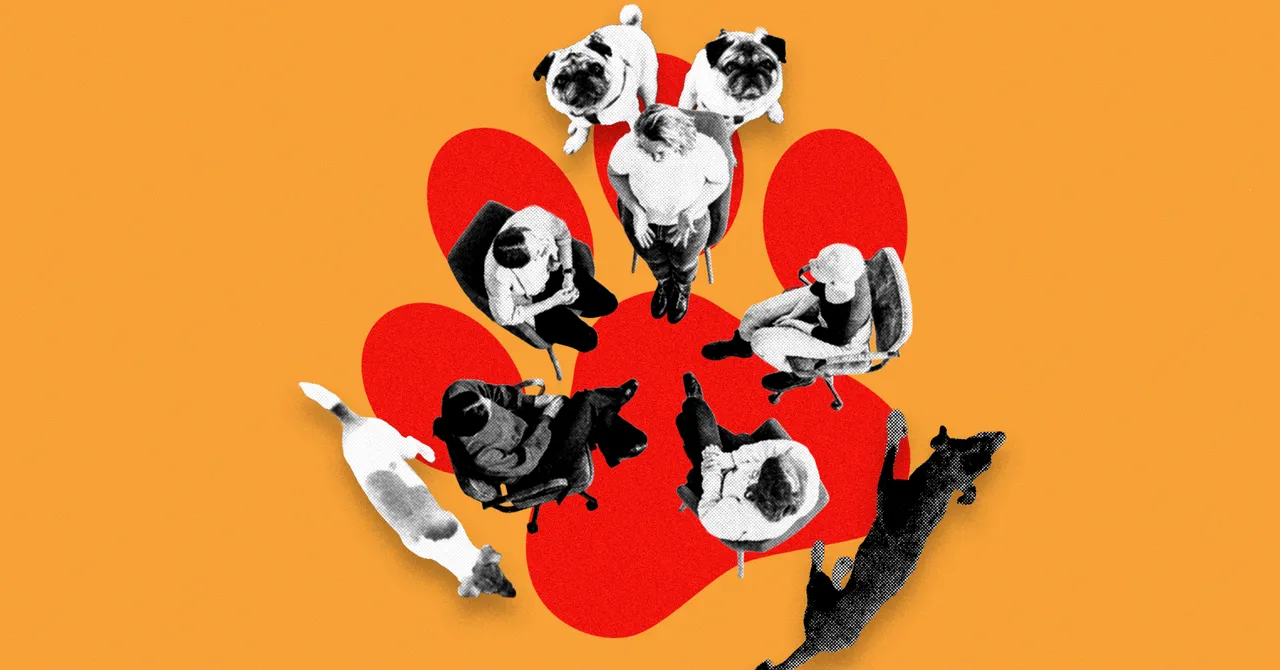
Just past 6 pm on a recent Wednesday night, half a dozen pet owners logged into a Zoom meeting to confess something they’re afraid to talk about in public: They’re fed up with their dogs.
Before discussion began, Louise Crane, the president and cofounder of Dogs Anonymous, the organization hosting the meeting, recited the seven acknowledgements participants must agree to, the first being, “I admit that life with my dog is not what I imagined.” Crane wore a black T-shirt exclaiming “Abolish ICE” in thick white lettering.
“I may need to be talked off a ledge,” one attendee said as conversation kicked off, mentioning that she wasn’t sure how to handle her dog’s mood swings. Her family had been through a series of new changes: Their other dog died and they were also fostering one, and now their boxer was “unsettled” and “grumpy” to the point he was doing more “demand barking, which has never been like him.”
Other attendees confessed their private shames: a shepherd mix had started engaging in more intense “resource guarding” when around other dogs—the term for when dogs aggressively protect something they value. “He got into it with my sister’s little weiner dog the other day because they both were begging for food.” One woman, who lives in a busy apartment complex, needed advice on how to better handle her dachshund’s constant barking at strangers. (In the spirit of anonymity, Dogs Anonymous asked WIRED to leave out the names and identifying characteristics of its participants.)
Shame is the emotion attendees struggle with the most in these meetings. “The embarrassment of having a dog that’s losing its shit, especially as a woman,” is difficult for some people, Crane tells me when we speak a few days before.
Crane launched Dogs Anonymous, a nonprofit focused on training and emotional support by animal behavior experts, in 2025 in an attempt to help people vocalize their shame.
“We wanted to give people not just a space they could trust for advice on behavior issues or if they are having a crisis with their dog, but also a place where they don’t feel judged to ask questions and admit that maybe it’s a little bit too much for them,” Daphne Mendoza-Tervanis, a cofounder, says.
Sessions are held weekly and span first-time and experienced dog owners, adopters, foster caregivers, and occasionally trainers seeking tips on how to work aggression cases. The meetings are primarily attended by US residents, though previous sessions have attracted dog owners from Singapore, Costa Rica, and beyond.
Jerri Scherff, a cofounder who is 13 years sober, had first-hand experience with recovery programs, and it was important to her that Dogs Anonymous also include some of the same traditions as Alcoholics Anonymous. “We wanted to create something that was repeatable, sustainable, and eventually autonomous, which is the way that recovery groups work,” she says. The most important one was anonymity—what is discussed in the group stays in the group.
The founders say the effectiveness of the group doesn’t necessarily stem from the advice they impart during meetings but comes from members bonding over shared struggles. “The magic of AA the community is that you are going through something that somebody else has either been through or they’re going through the same thing,” Crane adds. This approach, called “sharing your experience, strength and hope,” is a core part of the 12-step recovery program and encourages members to analyze their experience in a way that makes them feel less alone.
According to a survey published in the scientific journal Pets in June examining guilt, burden, and wellbeing among owners of dogs with behavior problems, 53 percent of respondents reported feeling alone, and 78 percent reported “elevated caregiver burden,” a term for the emotional and financial strain of being a caregiver.

Get caught up on the latest technology and startup news from the past week. Here are the most popular stories on GeekWire for the week of Sept. 13, 2026.
Sign up to receive these updates every Sunday in your inbox by subscribing to our GeekWire Weekly email newsletter.
Most popular stories on GeekWire
America’s machinists are retiring, and two startup founders in their 20s want to salvage what they know
Neuramill is building software that captures how experienced machinists decide to make a part, then applies that knowledge to new jobs at aerospace and defense machine shops. The company was founded last year by two engineers in their 20s who started their careers in Seattle. Read More … Read More

Providence to receive $1.1B from Nike co-founder to build women’s health hospital in Oregon
Providence will receive $1.1 billion from Nike co-founder Phil Knight and his wife, Penny — one of the largest gifts ever pledged to a U.S. healthcare institution — to build Oregon’s first women’s hospital and expand cardiovascular services. The funds, directed to Portland’s Providence St. Vincent Medical Center and Providence Heart Institute, build on the Knights’ prior $200 million gift to the heart institute. Read More … Read More
Twin tech founders who left Seattle for Alaska bet on an AI agent named ‘Walter’ to cover local news
Several years after leaving Seattle’s startup scene to build a “tech outpost” in the Alaskan wilderness, serial entrepreneurs and twin brothers Lee and Lucas Brown, founders of Tune, have set their sights on a new frontier: replacing the traditional newsroom with artificial intelligence. Read More … Read More

Tech Moves: Microsoft, Amazon and Kestra promotions; Gradial names CMO; Yoodli adds VP
Silvia Candiani has been promoted to CVP of the recently launched Microsoft Frontier Company, while Microsoft Elevate has hired a former UNICEF leader as VP. Amazon Web Services has promoted Alexis Bateman to director of global sustainability. Gradial has added a CMO, and Yoodli and Kestra have each named a VP. Read More … Read More

Oracle cuts 359 Washington jobs in latest AI-driven layoffs; Seattle offices ‘not closing’
The cuts are part of broader nationwide layoffs at the enterprise software giant and heavily impact technical engineering and management roles. Read More … Read More

This software engineer is taking Google to the U.S. Supreme Court to clarify patent law
Software engineer Jeff Kohler is asking the U.S. Supreme Court to clarify the Alice patent standard after courts invalidated his patent and dismissed his infringement case against Google without examining the C++ source code he submitted. IP law experts and federal judges have called for the Supreme Court to revisit how the standard is applied to software inventions. Read More … Read More

Terry Myerson retires as Truveta CEO, with co-founders stepping in to lead $1B health data startup
Truveta co-founders Jay Nanduri and Ryan Ahern will serve as interim co-CEOs of the health data company, which Myerson helped build from a pandemic-era idea into a business with 500 employees and 30 member health systems. Read More … Read More

Temporal raises $550M, hits $12.55B valuation as agentic AI wave fuels massive growth
It caps a significant growth stretch for the Bellevue-based open-source platform, whose annualized revenue run rate recently surpassed $250 million — growing over 200% year-over-year. Read More … Read More
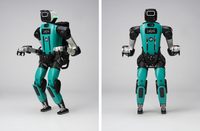
Agility’s new Digit 5 robot lifts 50 pounds, works 20+ hours a day and operates alongside people
Agility Robotics, which is preparing to go public through a SPAC merger, unveiled Digit 5, a humanoid robot it says can work safely alongside people in warehouses and factories. The company says the new robot can lift 50 pounds, reach shelves 7.2 feet high and work more than 20 hours a day. Read More … Read More

Helion funding round grows to $500M amid uncertainty over fusion startup’s Microsoft timeline
Helion Energy added $35 million to its latest funding round, bringing the round to $500 million and its total war chest to more than $1.5 billion. The capital supports the fusion startup’s effort to power a Microsoft data center by 2028 despite timeline and technical skepticism. Read More … Read More
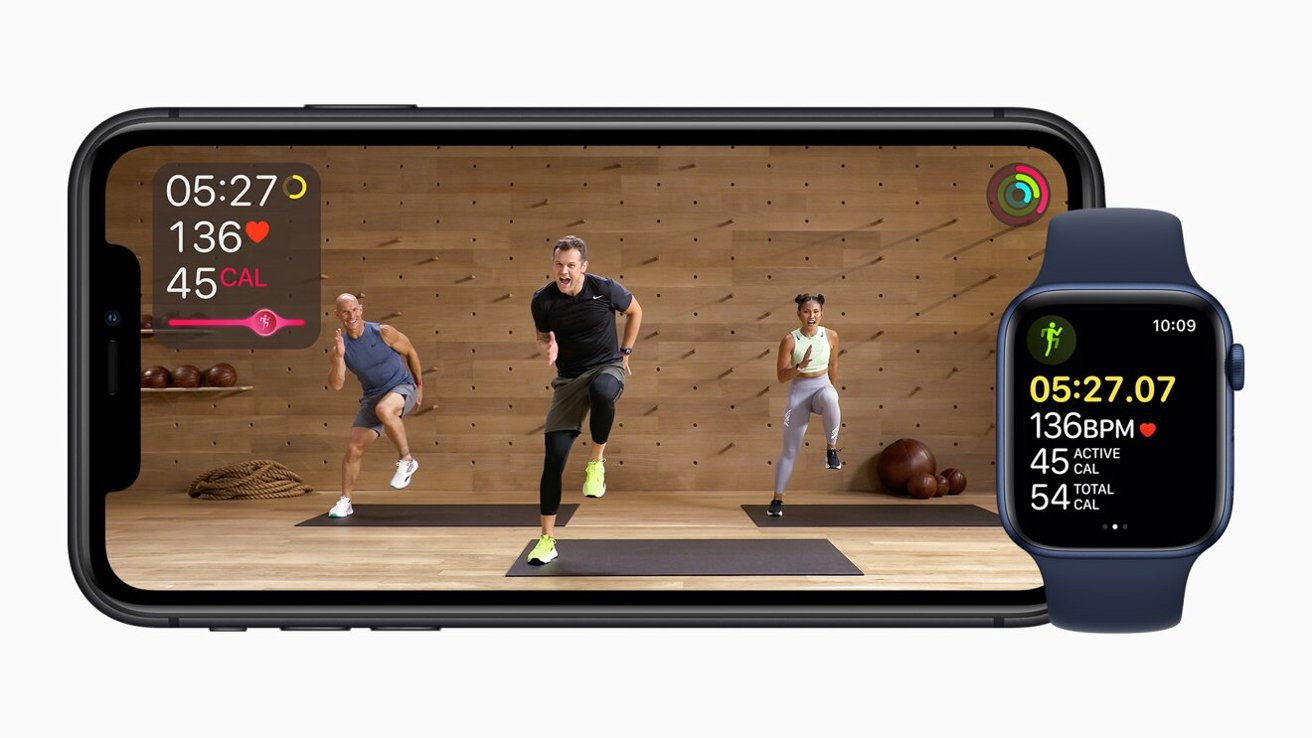
A new report claims that Apple is cutting jobs at Apple Fitness+, but without supporting evidence, concludes that this means enormous changes are coming.
As a devision, Apple Fitness+ has had some bad press about bullying, but if it’s correct that there are now job cuts, they are not substantial. The new Bloomberg report suggests that Apple Fitness+ is in trouble and claims audio features such as Time to Walk and Time To Run are being scaled back.
But it then takes this to mean that Apple Fitness+ will at some point be subsumed into Apple Health. Yet even as it makes that conclusion, the report admits that the job cuts amount to handful of roles.
It does not mention that there are currently 73 Cupertino-based positions being advertised by Apple that mention fitness.
That’s because this is another story of how any departure or redundancies is the end of Apple. In this case, the handful of job cuts has been extrapolated out to the potential end of Apple Fitness+ by way of a completely false assertion over the costs of the service.
Apple Fitness+ is a core services offering
The argument is specifically that Apple Fitness+ is an easy place for Apple to make cuts because users are demanding more content. There is also a claim about subscriber numbers changing, although that isn’t backed up with any detail.
Getting rid of people when your userbase is calling for more content does not seem the most practical response. If the report were correct about the costs of the service, that might be an issue.
But unlike independent production companies that have to rent space as and when they need it, Apple owns its studios. Those studios are costing money whether or not anything is being filmed in them.

Apple Fitness+ has a very low cost overhead
It’s the same with filming equipment, although there it’s not known if Apple has bought or leased its cameras. Either way, it’s a sunk cost and since Apple Fitness+ is entirely studio-bound, it presumably never needs to hire extra cameras.
So whether it’s bought or is leasing them, Apple Fitness+ has the cameras, it has the studio, and even according to Bloomberg, the service requires constant new content.
That does leave staffing as the only part that could practically be reduced. Only, the staff are television producers, editors, and fitness people turned presenters.
These are not the most highly-paid positions and the cost benefit of making a handful redundant is laughable.
This isn’t to say there aren’t redundancies, and it is not to say that Apple Fitness+ might well benefit from some shakeup. But a handful of people leaving is not the end of Apple Fitness+, even if they aren’t being replaced.
If Apple Fitness+ is to be absorbed into Apple Health, it will likely be some time before that occurs. While some services shifts can seemingly happen at any random point, Apple missed a great opportunity to go ahead and get it done with the Apple Health app redesign coming later in watchOS 27.
The service itself launched in December 2020, just in time for New Year’s resolutions to fall into place. Apple isn’t on some kind of set calendar here, but it does like saving its biggest changes for event announcements, and rearranging fitness and health seems to be a perfect fit for an Apple Watch release announcement.
It didn’t happen in 2026, so perhaps these musings will come to pass in 2027. Regardless, Apple Fitness+ isn’t going anywhere for now, even if Apple’s plans shift a bit on the backend.
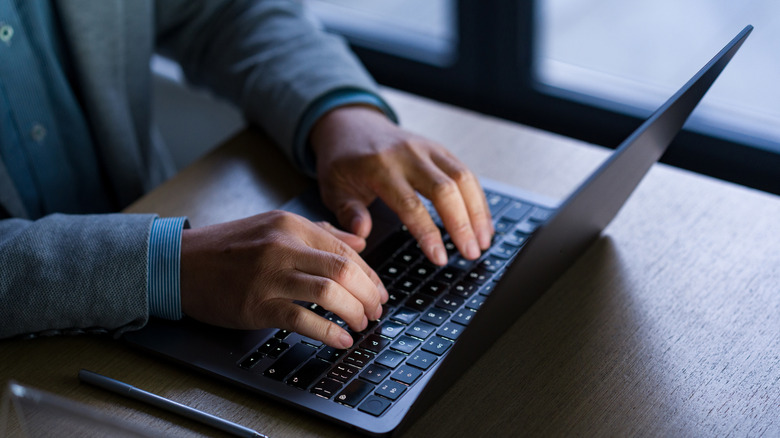
Don’t just hand your laptop to a friend or secondhand store; you need to protect your personal data.
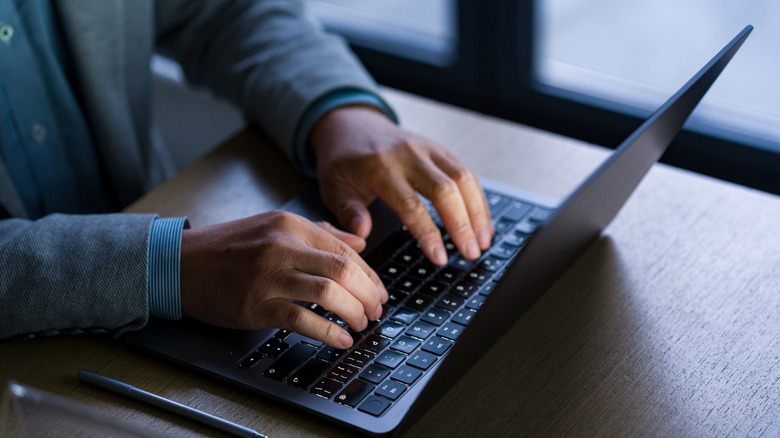
There’s a lot of value in keeping an old laptop. You can hold onto it as a backup, hand it down to a family member, use it as a media server and much more. But if your old laptop doesn’t have much life left in it, you may instead decide it’s time to get rid of the old machine.
Of course, you shouldn’t throw an old laptop in the trash. The best options are selling or donating if it’s still usable, or taking it in for safe recycling otherwise. No matter what destiny you choose for your old laptop, there are a few steps you should take first. Clearing out your files and running a factory reset are both crucial, but there’s more to it. Whether you’re getting rid of a MacBook or a Windows computer, make sure you do what’s necessary to protect your private information and prepare the device for a new owner, if applicable.
Back up everything first
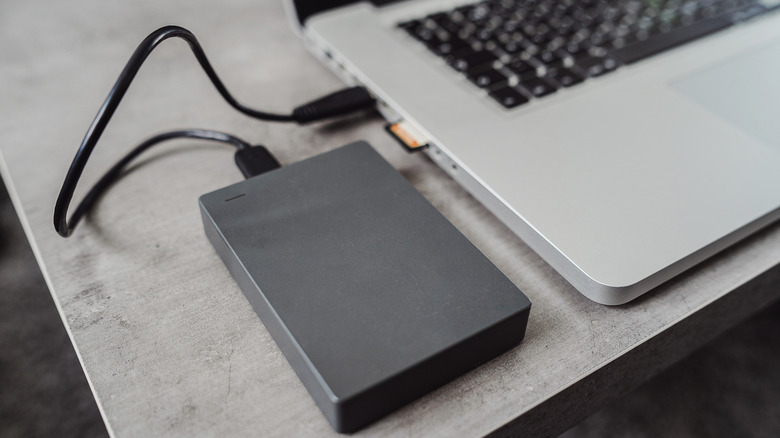
Backing up is always the important first step, even before transferring files to a new laptop. On a Windows PC, you can use Windows Backup by searching for it in the Start menu. You’ll see a list of what can be backed up to OneDrive and when you last did. While convenient, its major roadblock is that free Microsoft accounts only comes with 5GB of cloud storage. You can subscribe for more if you like; another option is making a local backup to a portable HDD or SSD. While you can copy files to the drive manually, EaseUS Todo Backup’s free version is a good choice for automating this. Since Windows Backup covers settings like account details and personalization features, a combination backup is smart.
For a MacBook, use Apple’s Time Machine. The built-in macOS backup tool can back up everything onto a USB drive so you can recover it on another computer. Visit System Settings > General > Time Machine > Add Backup Disk, then select the storage device you have connected (ideally with at least twice the storage of your MacBook) and follow the instructions. You can also use iCloud to back up some kinds of data under System Settings > [Your Name] > iCloud > Saved to iCloud. Apple offers only 5GB of free storage, but you can subscribe for more.
Third-party backup software and cloud services can also work. As a supplement to the full backup, double-check important apps, like enabling sync in your browser so you don’t lose your bookmarks. Also check the ports on your laptop to make sure you don’t leave any accessories behind, like small USB dongles or SD cards.
Before you move on, sign out of all accounts and de-authorize software licenses for tools like the Adobe suite. Some licenses can only be used on a certain number of computers, so you don’t want to have a phantom machine wasting one of your spots. If you’re not sure whether your license can be moved to a new computer by signing into your account, copy the license or product key so you can contact the provider.
Do a proper wipe of your laptop

You’re now ready to wipe the machine. While a basic factory reset is the simplest option, data you remove from a computer is still technically recoverable. Thankfully, modern versions of Windows and macOS have built-in reset tools that de-authorize your accounts, wipe the machine, reset everything and make what you had on the drive unrecoverable. Third-party software is also available if you want to make sure the drive is totally clean.
The process for wiping a Windows laptop varies by version. For Windows 11, go to Start > Settings > System > Recovery > Reset PC. Choose Remove everything, then select Cloud download or Local reinstall depending on how you want to reinstall the OS. When presented with the Additional settings page, choose Change settings and enable Clean data to securely overwrite the drive.
On Windows 10, go to Settings > Update & security > Recovery and click Get started under Reset this PC; the process is similar to Windows 11 from there. For Windows 8.1, this is under Settings > Change PC settings > Update and recovery > Recovery; click Get started under Remove everything and reinstall Windows. For Windows 7, you’ll need to use bootable media, access the manufacturer’s recovery partition or run a third-party tool to erase everything on the drive.
For a Mac running macOS Monterey or later, open System Settings > General > Transfer or Reset > Erase All Contents and Settings. You’ll have to enter your computer password as well as your Apple ID password to sign out of that. Confirm the erasure, then the computer will sign you out of iCloud, wipe and restart.
For older Intel-based Macs, you need to first sign out of iCloud manually to remove Activation Lock; you’ll find this under System Settings > [Your Name] > Sign Out or System Preferences > Apple ID > Overview > Sign Out depending on your macOS version. After that, go into Recovery Mode (hold Command + R after a restart), select Disk Utility > Continue > Erase, and choose APFS (assuming your Mac has an SSD). Finally, pick Erase Volume Group or Erase. Once it’s done, if someone else will use the computer in the future, quit Disk Utility and choose Reinstall macOS to install a fresh copy.
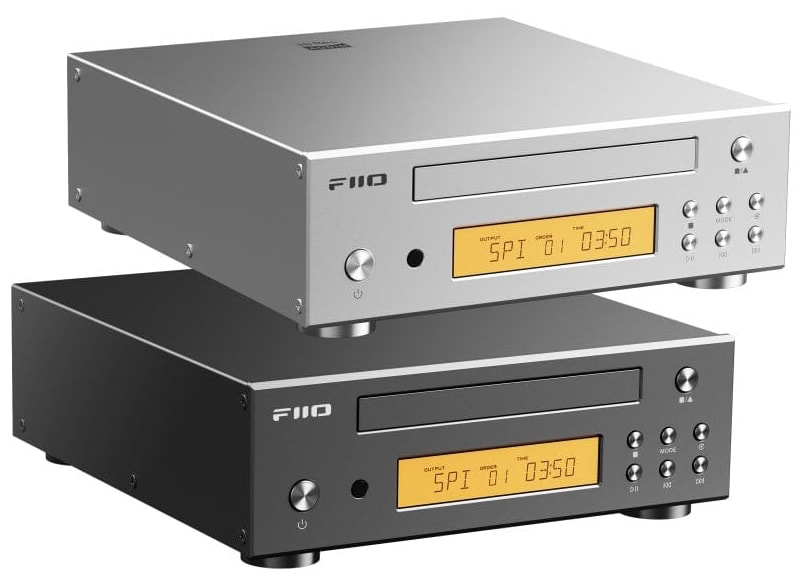
CD players are back. Back again. Tell a friend — preferably the one who dumped an entire collection at Goodwill because Spotify was supposedly the future forever.
The timing of FiiO’s new DP11 could hardly be better. Our recent look at RIAA data found U.S. CD unit volume up 45.7% to 17.5 million during the first half of 2026, while wholesale revenue jumped 58.6% to $171.1 million. Streaming still dominates music consumption, but the little silver disc is behaving rather poorly for a format that was pronounced dead years ago.
FiiO has already leaned hard into the revival with portable models including the DM13 and DM15 R2R. The DP11 takes a different approach: it is a compact desktop CD transport and player designed to sit in a proper hi-fi system.
Related Reading:
What Makes the DP11 Different?
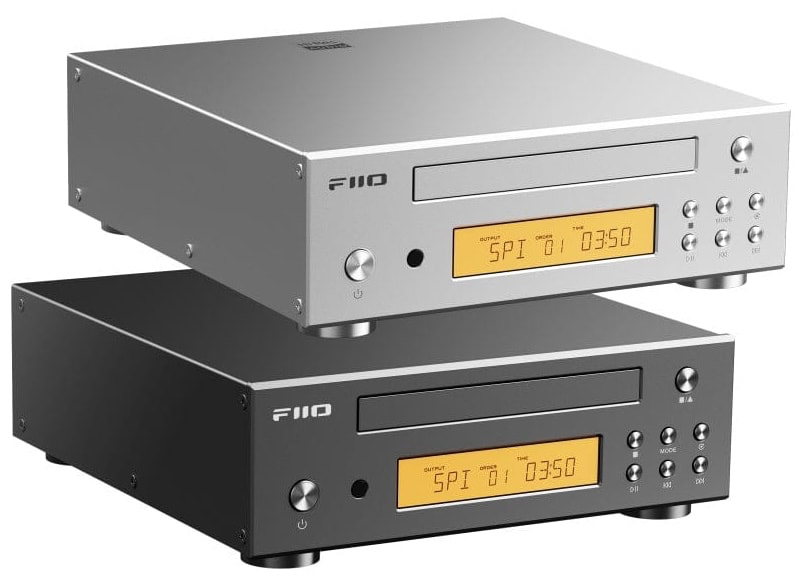
Currently listed at $169.99 through HiFiGo, the DP11 is unusually well equipped for the money. FiiO uses a custom desktop CD mechanism with optimized servo control and a support structure designed to reduce mechanical noise during playback.
The rear panel is the real story. AES, coaxial and optical digital outputs let the DP11 feed an external DAC, while an internal Cirrus Logic CS43198 DAC and stereo RCA output mean you do not actually need one. USB can also turn the DP11 into a digital interface for a computer, phone or tablet, while CDs can be ripped directly to USB storage in lossless WAV format.
Power can come from the internal AC supply or an external 12V DC supply, giving tweakers an obvious path toward an aftermarket linear power supply. Nobody required FiiO to make a $170 CD player this flexible, but here we are.

FiiO DP11 Specifications
- Type: Desktop CD player / digital transport
- Mechanism: Custom tray-loading CD drive
- DAC: Cirrus Logic CS43198
- Digital Outputs: AES, coaxial, optical
- Analog Output: Stereo RCA
- USB: Digital interface and CD ripping
- CD Ripping: Lossless WAV to USB storage
- Display: 3.71-inch LCD
- Power: Internal AC or 12V/2A DC
- Remote Control: Included
- Dimensions: 213 x 230 x 67 mm
- Weight: 1.8 kg / 4 lbs
- Finishes: Black or silver
The Bottom Line
The DP11 is not an everything box. There is no headphone output, SACD playback, Bluetooth or network streaming, so anyone wanting a Discman, streamer and headphone amplifier rolled into one should keep walking.
That focus is also part of the appeal. The $299 Shanling CR60 also rips CDs and functions as a compact transport, but requires an external DAC. The $199 Shanling EC Play adds Bluetooth 6.0, LDAC and headphone outputs, but is designed primarily as a portable player.
For listeners with shelves full of CDs and an existing amplifier or DAC, the DP11 offers an unusually complete set of connections for very little money. Considering what has happened to CD sales in 2026, FiiO may have arrived at exactly the right moment.
The CD player is back. Again. Please try to act surprised.
Where to buy:
Related Reading:

John Ternus and iPhone Duo designers reveal how ordinary paper notebooks were a key inspiration for the new foldable iPhone Duo.
Even as Apple is celebrating the arrival of the iPhone 18 Pro in stores, even its own executives are looking ahead to when the iPhone Duo comes out. CEO John Ternus, hardware executive Molly Anderson and software executive Steve Lemay have been talking to GQ magazine about having started from scratch to build the foldable.
“Steve [Jobs] talked about the intersection of technology and liberal arts,” says Ternus, “and I think iPhone Duo is a perfect example of that.”
According to Anderson, vice president of industrial design, reaching that goal meant starting with specific aims that were derived from paper notebooks.
“Everyone knows what a notebook feels like in the pocket and what it feels like to carry around,” says Anderson. “So that was a big part of the inspiration: ‘How do you get to something that gives you space but also feels compact?’”
GQ claims that the iPhone Duo’s proportions are actually based on the A-series paper system used internationally. A4 is the international nearest equivalent to US Letter size, for instance.
If the iPhone Duo’s proportions were based on that series, they’re closest to A5, which is half the size of A4. Even that isn’t an exact match, but it’s near.
Apple and most people who’ve tried the iPhone Duo out instead tend to describe it as passport-sized when closed. But of course this is a phone that is meant to be opened out, and Anderson says Apple focused intensely on how it feels to use it open.

Apple’s Steve Lemay (left) and Molly Anderson, during the iPhone Duo launch – image credit: Apple.
“We really obsessed about how it feels when you open it — it’s incredibly smooth,” she says. “The hinge is defined by a custom variable torque profile, so it’s easy to open, and then it’s actually biased so that it holds itself open and lays flat.”
Anderson says the hardware design started, at least in part, with the aim of emulating the convenience of paper notebooks, and making something new. Steve Lemay, vice president of human interface design, says that at the same time, its software grew out of all that had come before.
“You’ll see a lot of learnings from iPad in here, learnings from even Macintosh, and learnings from the existing phones,” he says. “It’s sort of the greatest hits of those products together.”
“We didn’t want it to feel like you’re starting a different operating system when you unfold it,” he continued. “And you’re never searching for the button you were just looking at.”
Pre-orders for the iPhone Duo begin on October 16, 2026. The iPhone 18 Pro is now available both online and also in Apple Stores.
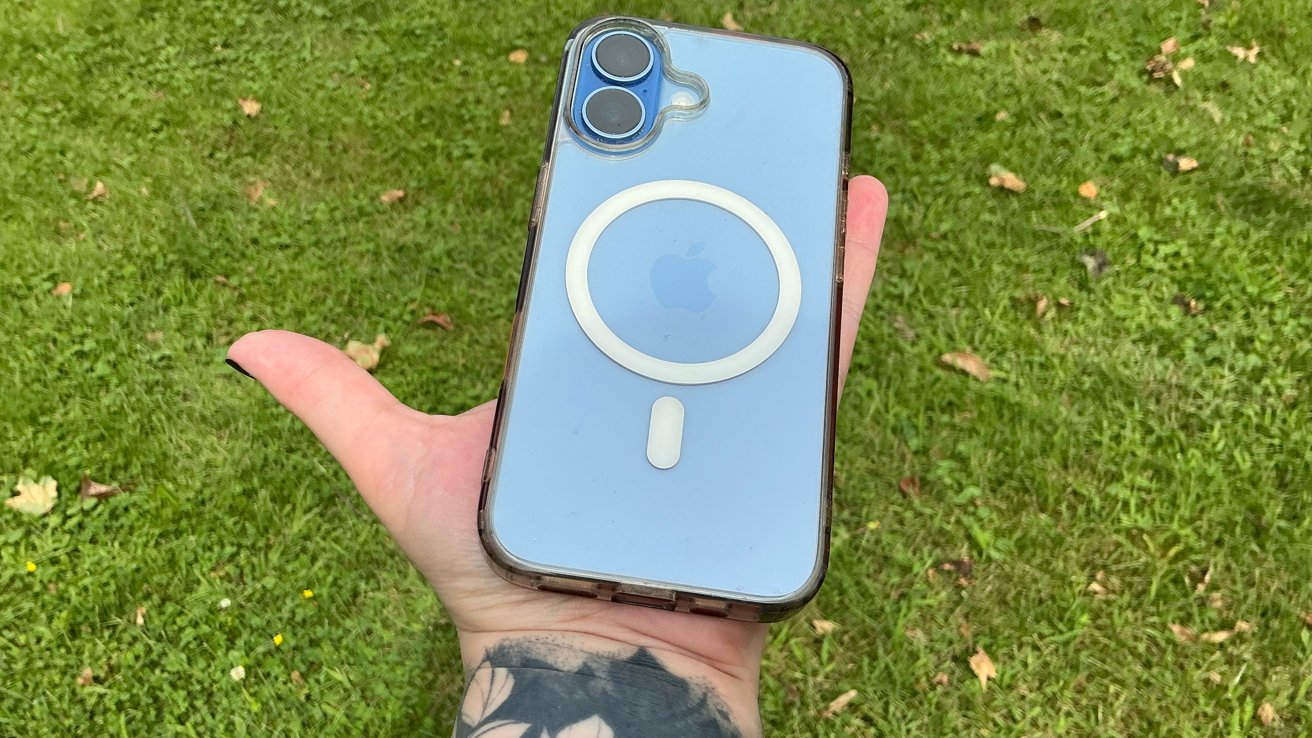
Police sought a man in an iPhone theft at a casino, and a man is accused of stealing iPads from a company that had just fired him,, all in this week’s Apple Crime Blotter.
The latest in an occasional AppleInsider series on the world of Apple-related crime.
Man in Best Buy line has iPhone stolen
A man waiting in line for nearly 40 hours at a West Hollywood Best Buy for a new Pokemon card release had his iPhone 17 Plus stolen, although he later tracked it and got it back.
According to WeHo Online, the man got in line on the afternoon of Monday the 14th for the release of Pokemon’s 30th anniversary trading cards, and was still in line on the 16th. At 7 a.m., it was reported to police that the iPhone had been stolen.
The man gave police permission to track the device, and police determined that the thief had dropped it. The man got his iPhone back and declined to press charges.
Man sought for theft of iPhone from casino
Carson City Sheriff’s Office in Nevada is looking for a man who they say stole an iPhone from a customer at the Nugget Casino.
2 News reports the theft took place August 17, and the alleged thief was “last seen wearing a purple sweatshirt, gray sweatpants, purple-and-black Nike shoes and a white headband.”
Man accused of stealing 30 iPads from company that fired him
A 43-year-old man from Hialeah, Fla., has been arrested for stealing 30 iPads, valued at $12,000, from a business that had fired him earlier that day.
According to NBC Miami, police say the theft happened on September 4, when an employee recognized the man as he was entering the warehouse. Even though the man was wearing a mask, the owner of the business was also able to recognize him on surveillance video.
The report said the man had been fired for not showing up for work the previous two days. It was later discovered he had pawned some of the iPads shortly after the theft.
iPhone left in Porsche helps catch a scammer
An elderly Connecticut woman had nearly $28,000 stolen in an identity theft scam, although an iPhone left in a Porsche led to the scammer’s arrest.
CT Post explains a scammer told the 80-year-old woman her Social Security number had been compromised, using a fake “Apple Security” alert. The man on the phone told her that she would need to pay $27,975, in cash left in a shoebox, to get a new Social Security number.
A witness provided a license plate number of a Porsche used in the scam. An iPhone left in the car was traced back to the man who was later arrested.
AirPods signal leads police to stolen car in New Jersey
Police in Englewood, N.J., arrested a man after they followed the signal from a pair of AirPods to track a stolen car.
According to News 12, police eventually found the man carrying the AirPods, after which he “made several disparaging comments and threatened one of the officers.”
He was hit with several charges, including burglary, theft, receiving stolen property, terroristic threats, resisting arrest and possession of burglary tools.
Man put on Walmart vest to steal Apple Watches, police say
A 42-year-old man walked into a Walmart store in Sarasota, Fla., put on a Walmart vest in order to impersonate a store employee, in an attempt to steal from the store.
That didn’t work, as he got out only with the vest. However, he later used that vest in a different Walmart to steal three Apple Watches, police said.
WWSB reports police caught up with him entering his vehicle, which they searched, turning up the watches and a gun. He was charged with grand theft, a felon in possession of a firearm, and burglary of an occupied structure.
Verbal disturbance report leads to arrest for thefts of iPad Pro and AirPods
A 19-year-old North Carolina man has been charged with multiple felonies after he allegedly broke into the victim’s vehicle and took an iPad Pro, AirPods, a wallet, a purse, and medication.
According to Fox Carolina, police pinged the AirPods to the man’s residence. After a verbal altercation between the man and the victim, the sheriff’s office arrived, recovered the items, and arrested the man.
Police said evidence from the man’s phone “supports the allegations of theft.” He was hit with charges of felony breaking and entering a motor vehicle, felony larceny, and felony possession of stolen goods/property.
Man arrested for AirTag stalking, threats
Police in Ohio arrested a man on charges that he used an AirTag to stalk a woman.
TiffinOhio.net writes the woman told police that the man had been following her and placed the device on her car, in addition to making threats.
The man was charged with menacing by stalking, a first-degree misdemeanor.
Man arrested in Georgia for iPhone counterfeiting
A man in Georgia, the country, was arrested for a rather crude form of iPhone counterfeiting. Police say he made a plastic object meant to resemble an iPhone and attempted to pawn it at a Tbilisi pawn shop.
According to Georgia Today, police determined that the man was part of a conspiracy that had pawned “six imitation mobile phone devices at different pawnshops, causing significant financial damage to the companies.”
He was charged with repeated fraud, attempted fraud, and the production and use of forged documents, the Interior Ministry told the outlet.

Man City vs Sunderland LIVE highlights and Enzo Maresca reaction as Blues win eight-goal thriller

Semis: Market Has Completely Misunderstood The Potential AI Slowdown

Open-source Memecoin launchpad adds 1,373 lines of solidity in latest development release




-

 Fashion2 days ago
Weekend Open Thread: Talbots – Corporette.com
-
 NewsBeat2 days ago
Trump says US has reached an agreement to take permanent control of Greenland’s security
-

 Crypto World2 days ago
Circle launches Arc Studio AI agent for building onchain apps
-

 Crypto World6 days ago
Revolut Attackers Warn of Ongoing Daily Customer Data Leaks
-

 Crypto World6 days ago
Kraken Lets xStocks Holders Earn Yield Through DeFi
-

 Crypto World5 days ago
Robinhood engineers charged over $50K crypto scheme
-

 Crypto World5 days ago
What Is the Status of the U.S.-Iran Peace Talks? Here's What Both Sides Are Saying
-

 Crypto World4 days ago
US Charges Robinhood Engineers Over Crypto Listing Trades
-

 Crypto World2 days ago
Bitcoin price breaks channel as RSI climbs to 63
-

 Crypto World6 days ago
Elon Musk Drops a Bombshell: Grok 5 Could Be the AGI Breakthrough
-
 Crypto World7 days ago
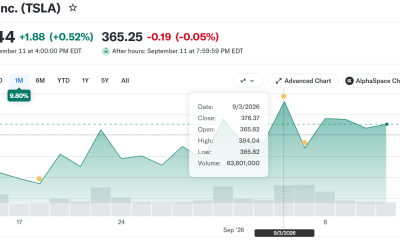
New Tesla Roadster Uses SpaceX Tech. Will It Impact the Stock Price?
-
 NewsBeat6 days ago
‘Sick conspiracy’: Trump says only guardrails AI needs is ‘a strong and smart (High IQ!) president’ in all-caps rant
-

 Crypto World5 days ago
NVIDIA Analysis: Attempted Rising Wedge Breakout Amid Pressure on the AI Sector
-
Business6 days ago
SK Hynix ADRs Fall More Than 6% as Memory Rally Breaks on Fears of Slower AI Spending
-

 Tech5 days ago
Webb’s IC 348 Mosaic Includes Two-Jupiter Dwarfs, Twin Jets, and a Nursery Still Making Worlds
-

 Crypto World6 days ago
3 Token Unlocks to Watch in the Third Week of September 2026
-
Crypto World6 days ago
Can Circle’s Arc Repeat Robinhood Chain’s Meme Coin Boom?
-

 Crypto World6 days ago
DOJ Seeks to Seize $61M in Iran Oil Funds From Binance Accounts It Vouched For
-

 Crypto World7 days ago
AI Safety Burden Falls on Chief Executives as Trump Prioritizes China Race
-
 NewsBeat2 days ago
US was ‘on brink of war’ with China over false AI report of nukes moving in Middle East
You must be logged in to post a comment Login