Fixed wireless has a practical advantage: it can usually be self-installed. Instead of waiting for a new cable or fiber line on the property and a technician visiting your home, you can often set up the provider’s gateway yourself and find a spot where it receives a good signal.
Plan terms can be attractive too, but they depend on the provider rather than the underlying technology. For example, T-Mobile’s current Rely plan includes unlimited data, has no yearly contract and carries no early termination fee. Those aren’t universal features of 5G home internet, but are good examples of why it pays to compare the complete plan rather than speed alone.
Also, availability can make the decision for you. A provider needs the right wired infrastructure to serve your address with fiber, cable or DSL, while fixed wireless depends on whether the carrier has enough coverage and network capacity at your location. Having 5G service on your phone at home doesn’t guarantee that 5G home internet will be offered at your address.
A useful place to start is the FCC National Broadband Map. Entering an address shows which providers report offering service there, whether they use fiber, cable, DSL or fixed wireless, and their maximum advertised download and upload speeds. The FCC notes that the map shows reported availability and advertised speeds, not actual network performance or affordability.
Advertisement
From there, compare the plans you can actually buy. Check expected download and upload speeds, latency, the full monthly price, equipment or installation charges, data limits and what happens when any promotional pricing ends. For fixed wireless, a trial period is especially useful because the quality of the cellular connection can vary from one address to another.
If competitively priced fiber reaches your home, that’s generally the best mix of affordability, performance and speed. But if your wired alternatives are slow, expensive or inconvenient to install, a good fixed-wireless connection can be superior to choosing a physical cable simply because it’s wired.
TEMPEST attacks are often the most effective way to break air-gapped security: rather than directly accessing a computer, the attacker records the system’s unintended radio emissions and uses them to reconstruct its internal operations. This kind of attack was much more effective in the days of noisy, high-voltage CRT displays, and has gradually become less effective as electronics migrate to quieter, less powerful components. A group of researchers, however, has found that even modern electronics can become effective TEMPEST transmitters when irradiated with an RF signal.
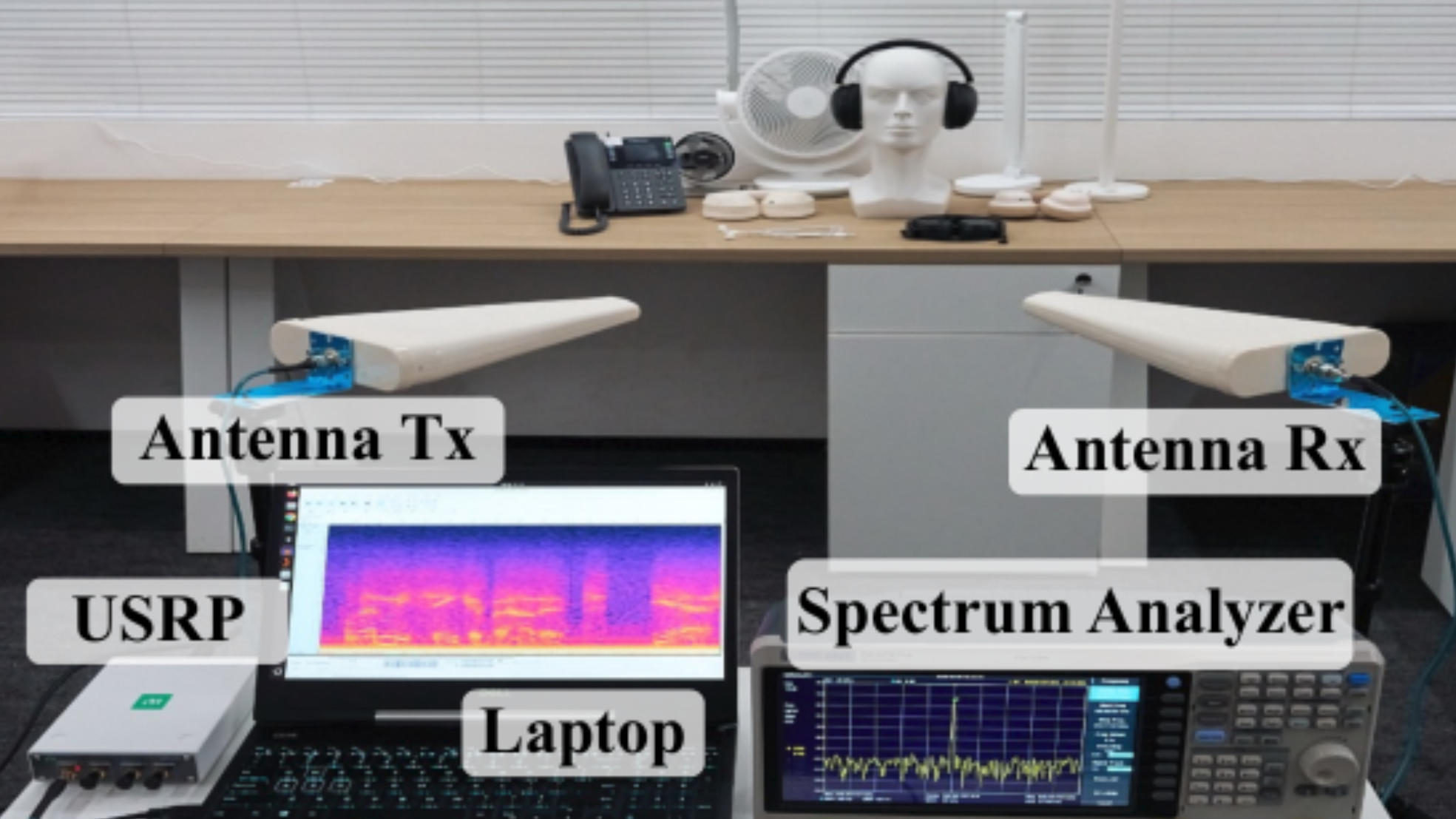
The RF a device emits depends on the unintentional antennas in its internal structure. These are difficult to eliminate, and it’s usually not worth the effort; they’re usually small enough that they only effectively radiate at much higher frequencies than the electronics carry. The researchers’ technique, called InjectEave, radiated these electronics with a radio frequency tuned to their internal antennas, injecting that frequency into the circuit. Nonlinear electronic components, such as amplifiers, then mix the injected frequency with the internal signal, creating RF sidebands. This mixed signal then radiates out of the device and can be picked up and demodulated to recover the device’s internal signal.
In principle, almost any semiconductor device will perform mixing to some extent; in testing, the researchers had success with an amplifier, analog-to-digital converter, power converter, and switching MOSFETs, but detected no significant emissions without an injected signal. For a portable setup, the researchers used a USRP B210 SDR for transmission and a spectrum analyzer to demodulate the received signal.
This was able to recover audio from wired headphones, wireless headphones, and a wireless landline, and detect the state of a smart lamp and a smart fan. All of this worked over short distances, even through walls, and with a power amplifier, the range increased to 30 meters. Even with multiple devices present, they could focus on one by tuning the injection frequency to resonate with its internal antennas. Perhaps most impressive (or concerning) was a demonstration with the VoIP phone: the researchers were able to listen in on the person speaking, clone that person’s voice, synthesize new speech in that voice, and remotely inject it onto the phone call, altering the call in real time.
Advertisement
If the history of these attacks is any guide, it won’t be too long before we see an open-source implementation of this technique; we’ve already seen a few approaches to traditional TEMPEST. This kind of unintended nonlinear mixing can also be used to find bugs or electronics.
There are very few Black Sabbath albums that have not been repackaged, remastered, expanded or reissued enough times to fill an entire shelf.
Black Sabbath and Paranoid are different.
Rhino High Fidelity has released the band’s first two albums as premium reel-to-reel editions, putting two of heavy metal’s foundational recordings onto 15 ips, half-track, quarter-inch tape. Each album is limited to just 500 copies worldwide and sells for $299.98 exclusively through Rhino.
The timing also carries considerably more weight following the death of Ozzy Osbourne on July 22, 2025, at age 76. Just 17 days earlier, Osbourne had returned to Villa Park in Birmingham for Back to the Beginning, where he reunited with Tony Iommi, Geezer Butler and Bill Ward for his final performance with the original Black Sabbath lineup.
Advertisement
More than 55 years after these albums appeared, they remain the clearest explanation of why Ozzy mattered.
Two Albums That Changed Heavy Music
Black Sabbath arrived in February 1970 and reached No. 8 in the UK and No. 23 on the Billboard 200. Its ominous title track, “The Wizard” and “N.I.B.” introduced a combination of Tony Iommi’s enormous guitar riffs, Geezer Butler’s bass and lyrics, Bill Ward’s drumming and Ozzy’s unmistakable vocals that helped establish the vocabulary of heavy metal.
Paranoid followed only seven months later and became even bigger, topping the UK album chart and reaching No. 12 in the United States. “War Pigs,” “Paranoid,” “Iron Man” and “Electric Funeral” would influence generations of metal, doom, hard rock and alternative bands that followed.
Ozzy was only one quarter of that equation, and Black Sabbath’s importance cannot be separated from Iommi, Butler or Ward. What Ozzy supplied was a voice that sounded vulnerable, haunted and threatening without trying to compete with the sheer weight of the band behind him.
His career after Sabbath only widened the audience. Osbourne was inducted into the Rock & Roll Hall of Fame with Black Sabbath in 2006 and again as a solo artist in 2024, while Ozzfest helped bring successive generations of metal bands to mainstream audiences.
Advertisement
Before the television shows, costumes and Prince of Darkness mythology, however, there were these records.
What Makes These Reel-to-Reel Editions Different?
Rhino is being unusually specific about the production chain, which is important when an album costs almost $300.
Advertisement. Scroll to continue reading.
The new editions are duplicated in real time from 1:1 copies of the U.S. analog master tapes. Rhino is not claiming that the commercial tapes are being run directly from the original master reels, and audiophile buyers should recognize the distinction.
Advertisement
Black Sabbath and Paranoid Reel-to-Reel Specifications
Price: $299.98 each
Limited Edition: 500 copies per title
Format: 1/4-inch half-track reel-to-reel
Speed: 15 ips
Equalization: IEC
Tape: RTM LPR90
Reel: 10.5-inch metal
Duplication: Real time
Source: 1:1 copies of the U.S. analog master tapes
Those specifications also mean these are not tapes for every vintage open-reel deck. Buyers need a machine capable of 15 ips half-track playback using IEC equalization.
And yes, that reduces the potential audience rather dramatically.
But this is not a format competing with Spotify, CDs or even vinyl. It is aimed at serious tape enthusiasts who already own the hardware and want access to major catalog recordings in a format that has once again become commercially relevant.
The U.S. Version of Black Sabbath
Because Rhino is working from the U.S. analog source, the self-titled album follows the North American configuration.
That means “Wicked World” appears instead of “Evil Woman,” matching the original Warner Bros. U.S. edition. The track sequence also retains the familiar suite titles including “Wasp,” “Bassically” and “A Bit of Finger.” Rhino’s earlier High Fidelity vinyl edition used the same U.S. track configuration.
Advertisement
Rhino Keeps Expanding Reel to Reel
The Black Sabbath releases are part of a much larger push from Rhino High Fidelity, which has been steadily turning major Warner catalog titles into premium prerecorded tapes.
Recent releases include Joni Mitchell’s Blue in July and Jethro Tull’s Aqualung in August, while the series has also included albums from Crosby, Stills & Nash, Van Morrison, Fleetwood Mac, ZZ Top, Curtis Mayfield, the Grateful Dead, The Stooges, Yes and T. Rex.
We have already seen Rhino use the same recordings across multiple audiophile formats. Black Sabbath received a Rhino High Fidelity AAA vinyl edition in 2024, followed by Paranoid in 2025. Both were cut from original stereo master tapes by Kevin Gray and pressed at Optimal.
That makes the new tapes more than another colored-vinyl variation. Rhino is offering a genuinely different playback format for listeners equipped to use it.
Advertisement
Reel-to-reel is obviously not about to repeat vinyl’s mainstream revival. The machines are expensive, prerecorded titles remain scarce and operating one requires slightly more commitment than yelling at Alexa from the kitchen.
But labels releasing Black Sabbath, Joni Mitchell, Jethro Tull and Fleetwood Mac suggest this is no longer merely a format for collectors hunting 50-year-old tapes on eBay.
Advertisement. Scroll to continue reading.
The Bottom Line
Spending $299.98 on a single album that requires specialized hardware is difficult to describe as sensible.
Advertisement
It also doesn’t need to be.
The appeal of these Black Sabbath editions is straightforward: Rhino has taken two recordings that helped define heavy metal and produced them as real-time duplicated 15 ips tapes from documented analog sources, with only 500 copies of each available.
More importantly, these are the records that introduced Ozzy Osbourne to the world.
His career eventually became much larger than Black Sabbath, but the voice on “Black Sabbath,” “N.I.B.,” “War Pigs,” “Paranoid” and “Iron Man” remains the foundation of that legacy.
Advertisement
For listeners with the right tape deck and $600 burning a hole in their pocket, Rhino has chosen two albums where the extravagant format almost makes sense.
At TechCrunch Disrupt 2026, getting ahead means more than sitting in on great sessions. It means meeting the people you need to know, seeing what’s coming before it hits the mainstream, and getting practical insights you can put to work.
TechCrunch Disrupt 2026 brings 10,000+ founders, investors, operators, and tech leaders together for three days of ideas, connections, and opportunities across the startup ecosystem.
With 250+ speakers covering 200+ sessions across six industry stages, roundtables, and breakouts, you’ll get practical insight into the forces changing how companies are built, funded, and scaled, from AI and robotics to fintech, infrastructure, and the future of work. But the value isn’t just onstage.
Advertisement
Make the connections. Meet potential investors, clients, partners, hires, and collaborators through networking, including AI-powered matchmaking, ad hoc meetings, and the Deal Flow Cafe if you’re an investor or founder.
Image Credits:Slava Blazer Photography
Stay ahead of the market. Hear how leaders are approaching the biggest strategic questions around AI, competitive advantage, fundraising, talent, go-to-market, and scaling.
See what’s next before it becomes obvious. Explore 300+ startups and breakthroughs in the Expo Hall, watch the intense pitch competition called Startup Battlefield 200, and discover emerging technologies across all sessions.
Leave with something you can use. From fundraising strategies to GTM tactics and insights on building defensible companies in the AI era, Disrupt is built around actionable ideas, not just big conversations.
Six days. Then prices go up.
The people you need to meet, the ideas you need to hear, and the opportunities you don’t want to miss will all be in San Francisco this October.
A new proposal this week from the European Commission, if enacted, would set some of the tightest restrictions yet on technology products, from social media to games to AI chatbots.
The EU Kids Act would follow, and in some ways surpass, similar measures that have been imposed in Australia, the UK, China and India, and would require tech companies such as Meta, Google, YouTube and Roblox to change the way they do business. But first, the legislation will need to be vetted, debated and voted on.
Its pillars include a social media ban for kids under 13, age verification for online accounts and requirements for tech companies to provide proof that their online services are safely designed. The proposal is the formal version of what’s been discussed for months and is a result of mounting public pressure for governments to get a handle on easily accessible technologies that have been shown across research and in court judgments to cause harm to children, such as internet addiction and vulnerability to contact from predators.
“Our Kids Act is reversing the burden of proof — it is for platforms to show they are safe by design,” European Commission President Ursula von der Leyen said in a statement Thursday. “And we put parents back in the driving seat, giving them the tools to help their children navigate a safer online world.”
Advertisement
Megan Jenkins, an analyst at Assembly Research who studies AI and online safety, said the Kids Act “goes further than other legislation proposed so far, and represents a big shift from the blanket social media bans we’ve seen in countries such as Australia.”
Jenkins said the biggest change from some of those laws is creating a burden of proof for tech companies to demonstrate that their products are safe, which would be the first law of its kind. “If tech companies can’t prove this, they would be unable to provide services to minors,” she said.
What’s in the EU Kids Act
Discussion of what would and wouldn’t be in the Kids Act began days earlier when drafts of the proposal were leaked. Ultimately, what ended up in the Kids Act is broader than what was expected — in addition to a tiered age system for when teens can access social media, it would require companies that make online games, AI chatbots or companions, and social networks to prove that they’re safe and free from features like infinite scrolling that could be considered manipulative or addictive to children.
The biggest component is the social media ban for those under 13 years of age. For teens under 15, parents could create a mini account accessible through their own account on age-appropriate social media or video-sharing platforms. Screen time would be limited to an hour per day. Teens aged 16 to 18 could create anonymous accounts without parental consent.
Advertisement
Two other major pillars of the proposal are aimed at tech companies. They would be required to include no addictive design features and would need to provide easy-to-use parental controls, recommendation algorithms that are safe for kids and no options for minors to livestream. They would also be required to verify ages for new accounts or anyone logging in to an existing account.
The last part of the proposal covers enforcement: The EU would speed up the time it takes to investigate violations, with the goal of concluding them within 90 days. Companies with 45 million or more active users would need to submit a compliance plan for any new services or features and face a review of up to 30 days. New features, services or functionalities that don’t meet a “positive opinion” from the European Commission would not be allowed.
The age verification ‘sticking point’
Even if the EU proposal is passed without too many changes, enforcing it will be a challenge. It would likely face legal challenges from some of the world’s biggest tech companies and, as countries such as Australia have found, it’s hard to impose constraints that teens can’t find ways to get around.
“These restrictions are also not likely to be successful, as seen with other age verification and social media bans that have been consistently circumvented by tech-savvy kids,” said David Inserra, a fellow for free expression and technology at the Cato Institute.
Advertisement
Inserra added that the age verification technologies themselves pose privacy issues, “creating massive amounts of sensitive identification data that will be subject to hacks and data breaches” for teens as well as adults.
Jenkins agreed that age verification has remained a “bit of a sticking point” for online safety regulation due to privacy concerns, but said she believes the Kids Act is a positive step in moving away from blanket social media bans for kids.
Omar Gallaga has covered technology, digital culture and other topics for outlets including CNET, NPR, WIRED, Texas Monthly, MSNBC, Consumer Reports, The Washington Post, the Los Angeles Times, The Atlantic and the Austin American-Statesman, where he was a longtime tech reporter, editor and podcaster. He lives in the Texas Hill Country.
See full bio
“Turns out, Silicon Valley isn’t especially altruistic,” writes the nonprofit education news site The 74. They’re reading a new book promising “the inside story of how Big Tech catalyzed, co-opted, and ultimately came to capture computer science and AI education in America”. Written by
New York Times business reporter Natasha Singer, Coding Kids: Big Tech’s Battle to Remake Public Schools tells “the story of the nonprofit Code.org and its charismatic, Harvard-educated leader, Hadi Partovi,” according to their review:
Thirteen years ago, Partovi… delivered a worrying message: Kids who didn’t learn to write code would be left behind. And the long-term success of the United States economy depended on training these students to fill a million open tech jobs…. Fast-forward to 2026, and now we’re dealing with AI, and tech is reading from a similar playbook.
Asked by The74’s Greg Toppo, “Does this moment seem different to you?”, Singer replies, “This moment is different, but also similar.
“We are in a moment in society where a lot of people have increased distrust of these huge tech companies, and we see a wave of parents pushing back against tech in schools. But we also see waves of people pushing back against Flock cameras, against data centers, that there’s this feeling that tech has taken so much, and that people feel like they have lost control — that tech is being enacted on them… And parents are worried about the effects of unfettered tech access and kids’ compulsive use of social media and phones, and so there’s a different climate.
And yet there seems to be a disconnect in some ways with AI because you see that Microsoft and OpenAI and Anthropic and Google are all competing to get their AI tools into schools, and you see school districts across the country say “We’ve partnered with OpenAI.” “We are a ChatGPT Pioneer School,” or “We’ve partnered with Microsoft, and we’re going to use 10,000 licenses of CoPilot.” It’s amazing to me. We have had these cycles of tech in schools where there are all these promises about the latest tech, laptops, learning apps, massive open online courses, virtual reality, big data’s going to revolutionize schools and like democratize access to education for kids and get them these great career skills, and we keep having these cycles. My concern is that we don’t learn anything.
Advertisement
One of the reasons I wrote this book is because it feels like we have collective amnesia. Now we’re in the sixth or eighth cycle of this — and shouldn’t we be asking questions about the push for AI in schools, based on what we’ve learned about the push for all the other things that came before?
Two Slashdot posts are cited in the book, both submitted by long-time Slashdot reader theodp (Slashdot UID #442,580), who even gets a shout-out in the book’s “Acknowledgements” section (along with consumer advocate Ralph Nader).
Ironically, one member of Amazon’s “Vine” program received a free copy of the book in exchange for a review — and apparently misunderstood its topic, writing that it made coding “feel approachable and even fun… [T]his is exactly the kind of book that could help a child become interested in technology without feeling overwhelmed by it. I particularly liked the way it encourages kids to be curious, experiment, and solve problems on their own. I would definitely recommend Coding Kids to parents, grandparents, or teachers looking for a good introduction to coding…”
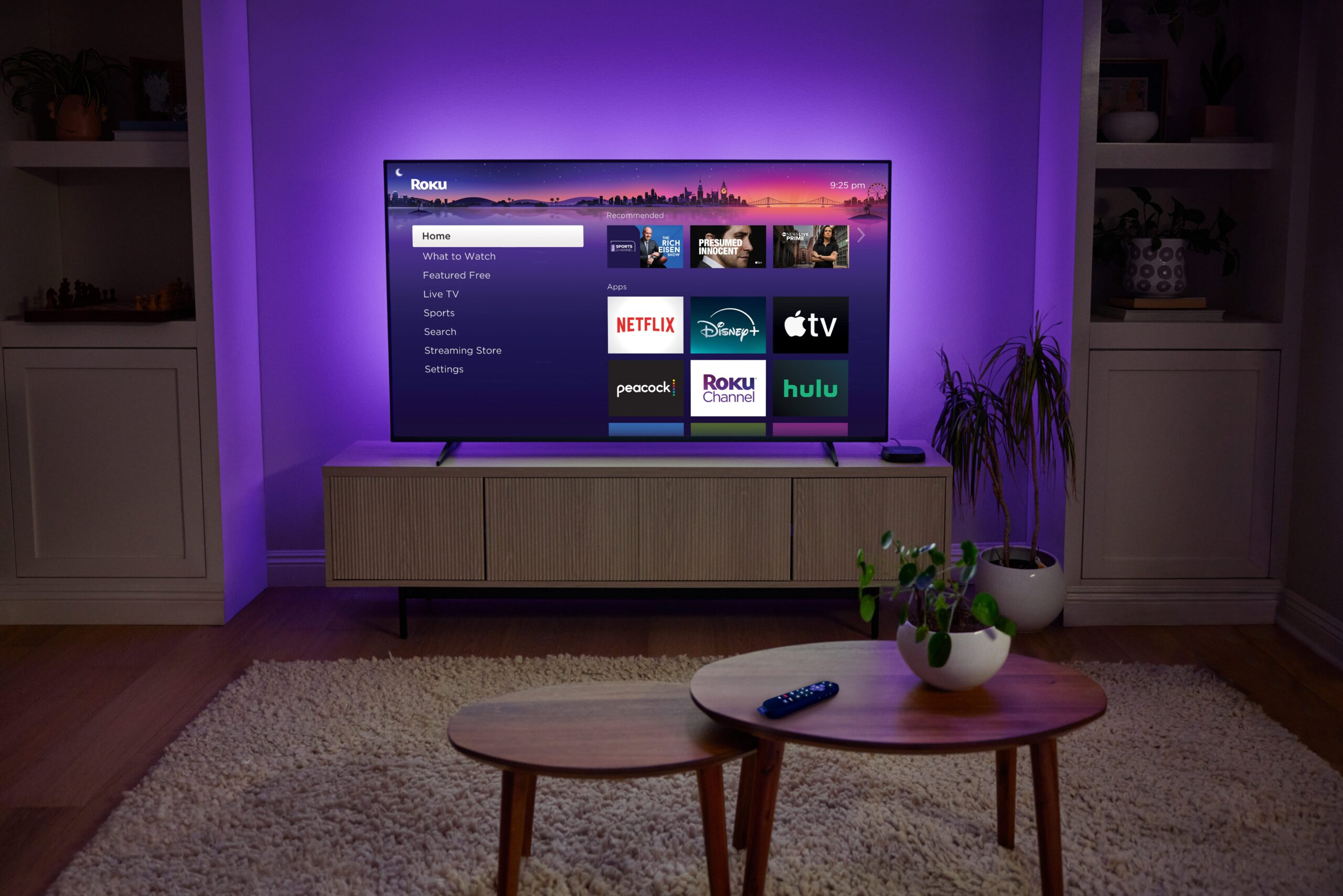
Roku is giving its users a chance to try experimental apps before they become part of the wider platform, with a new programme called Roku Labs. Unlike more closed beta schemes, the programme is available to any Roku owner directly from the home screen.
Roku Labs launches with four apps in development. Backdrops Studio lets you customise your Roku background with your own art and images, while Roku Immerse offers another way to create custom screensavers. There’s also Roku Weather, a dedicated weather app, and Roku Stocks, which does exactly what you’d expect by bringing stock tracking to the platform.
The idea isn’t just to let users poke around with unfinished software. Roku says feedback from people using these apps will help shape how they’re developed in the future, so what starts as an experiment could eventually become a regular part of the Roku experience.
Roku also has a few other changes in the pipeline. Over the coming months, it plans to roll out its updated home screen layout to users in Mexico and Brazil. Voice controls are also getting a weather-focused addition, letting users ask Roku for a forecast, while an updated search experience will explain why certain content appears in a particular order.
Advertisement
And if tinkering with apps isn’t enough, Roku is opening up some of the software behind its hardware, too. The company is open-sourcing Roku LT OS, the operating system used to power its remotes and smart home products.
Advertisement
The development kit will be available for free, with Roku also planning a video training series to help people get started and build their own projects.
For now, Roku Labs is the more immediately useful part of the announcement. There’s no waiting for a special invitation or signing up for a developer programme; if you own a Roku device, you can access the experimental apps from a Roku Labs tile on the home screen and have a look at what’s coming next.
Some sad news to start this week off — after 52 years in business, Sherline has announced they are winding down their manufacturing operations. By the end of October they estimate they’ll have produced their last tool, and although they will no longer be making new products, they plan on supporting their existing customers for as long as possible. Although from the sound of the press release, that may mean simply keeping the website up and selling through their inventory of spare parts.
The company offered a range of American-made miniature lathes and mills, and while their manual machines may have been better known in our community, they did eventually branch out into CNC. The press release doesn’t go into a lot of detail about the chain of events that led up to this decision, but it does mention the challenges of modern manufacturing and the lingering aftereffects of the COVID pandemic.
At first blush, it might seem strange that the company would falter just as desktop CNCs appear to finally be gaining momentum, but of course that doesn’t change their ability to compete with overseas manufacturing in terms of price.
Of course, keeping competitive is only a concern when you actually have competitors in the first place. That’s the situation that NASA and Boeing may find themselves in should SpaceX decide to retire the Crew Dragon after 2030. While the International Space Station will (probably) be out of the equation by that point, the US space agency will still need the capability to fly humans to… somewhere, and that means there will be lucrative government contracts up for grabs.
The chances of any other American company developing and launching a human-rated spacecraft between now and the end of the decade are pretty much zero, which means Boeing will have to pick up the slack with their Starliner capsule. Or at least, try to, as Starliner hasn’t exactly had the best track record so far. Although by the 2030s SpaceX plans to have transitioned most, if not all, of its operations to Starship, one does wonder if a big enough check from Uncle Sam could change its mind.
Advertisement
While the market for putting humans into orbit might be shrinking, there’s no shortage of new ways to move stuff around here on terra firma. IEEE Spectrum has the details on a rather unique electric vehicle from startup Revoy that’s designed to sit between a traditional diesel semitruck and its cargo trailer. This essentially turns the combined rig into a hybrid, with the EV module capable of pushing the load for up to 400 kilometers (250 miles). Though it might seem rather low-tech, this approach offers a major advantage in that fleets won’t need to replace their existing vehicles to take advantage of the efficiency gains promised by electrification — with the company claiming that it can cut a truck’s total fuel consumption by up to 85%.
If the day has been going a little too smoothly for your liking and you need something to be frustrated about, here’s something to agonize over. Reality Check shows you images and tasks you with determining if they’re AI-generated or not. As the timer ticks down, you’ll be furiously searching the background for malformed bits of text or extra fingers, but even that trick won’t necessarily save you in this era of increasingly capable image models.
Finally, while AI is getting very good at fooling grandmothers on Facebook, we can take some comfort in the knowledge that it’s finding the business world far more difficult to dominate. Drew Magary recently wrote up the experience of visiting a store “managed” by an AI model for SFGATE, and it sounds like things are going just as poorly as you’d imagine.
Given agency to pick the items it wanted to sell in the store, the computer stocked the shelves with bric-a-brac that has no obvious overarching theme, and although there’s a human staffer behind the counter, purchases apparently need to be negotiated with the AI via voice chat. The store is burning through its initial investment money with no profit in sight, made all the worse by the fact that one of the line items on the budget is the token cost to run the AI that’s mismanaging the whole thing in the first place.
It’s an entertaining read, and a refreshing splash of cold water on the general AI hype that seems so prevalent these days. But its impact as a condemnation of machine learning in business is undermined a bit when the bottom of every page on SFGATE reminds readers that they are producing content with the assistance of generative AI. C’est la vie.
Advertisement
See something interesting that you think would be a good fit for our weekly Links column? Drop us a line, we’d love to hear about it.
Apple has hidden tiny “hello” signs inside its retail stores, giving customers something to hunt for and a reason to try out the new iPhone 18 Pro’s cameras.
The signs feature Apple’s iconic cursive “hello” script. And they’re small for a reason: Apple has tucked them into spots that make them natural targets for the iPhone 18 Pro’s telephoto camera.
Apple’s new iPhone 18 Pro and iPhone 18 Pro Max both offer up to 8x optical-quality zoom through the 48MP Fusion Telephoto camera. These cute little signs are as much a demo as they are a decoration.
And, as MacRumorspoints out, their tiny size confers a third benefit: a launch-day Easter egg perfect for sharing on social media.
Advertisement
Heading to X, and likely any other social media platform, shows customers worldwide snagging shots of it.
The little “hello” sign is a clever way of demonstrating a feature without simply putting a spec sheet in front of a customer. Placing them deliberately out of reach encourages customers to use the camera to get a closer look.
“In April this year, we saw Andy Nguyen turning the PS5 into a Linux-powered gaming PC,”
writes the blog It’s FOSS.
It ran Steam games and emulators using the PS5’s on-board hardware. But this week Andy announced he’s “stopping all my work on PS5 Linux” and “stepping away from the PS5 scene.”
stopping work on porting the project to the PS5 Pro, which would’ve shipped sometime in 2027.
Andy Nguyen: After pouring my heart and months of my life into it, including plans to finish PS5 Pro support and release in 2027, it’s all down the sink.
The scene used to be a group of highly talented researchers, but now it is just a bunch of noobs using LLMs and writing hacks they don’t even understand. Slop kiddies found the only hypervisor bug left, which I had also found a while ago, and decided to report to Sony. I asked them to at least wait for GTA 6 to come out so that people would have the opportunity to legally purchase the game and also enjoy Linux. They agreed to wait, but not a day passed and they decided to waste it instead.
Advertisement
Or, as It’s FOSS tells it:
Running Linux on a PlayStation console is possible because the PS5 Linux project was able to find a way past the hypervisor using exploits Sony had already patched, covering firmware 3.00 through 7.61. ..
[The bug’s discoverer writes it was] found with what he calls his “trusty ai clanker machine” and no help from anyone else. He had even agreed to Andy’s request to not disclose the findings. Unexpectedly, a third person, still unnamed, found the same bug using AI a few hours later. Anticipating that there would be more people finding the same bug, [he] decided to post the flaw on HackerOne.
The project’s GitHub page and all the related repositories are still there. Nothing has been archived as of today, and if you wanted to, you could start contributing to the PS5 Linux project by taking over any pending work or cooking up new improvements… The PS5 Pro support Andy was building never reached the repository, so you would have to start from scratch… While Andy’s departure is a blow to the plan for supporting newer PS5 firmware and the PS5 Pro, other contributors have shown that they can deliver work on the loader without him, and I am hopeful more will follow.
If you switch between two iPhones regularly, you’re going to love this new feature.
Benjamin Fanjoy/Getty Images
If you use two iPhones, you no longer need to run separate carrier accounts for each of them, thanks to a new iOS 27 feature: iPhone Handoff.
Mentioned briefly at WWDC and in more detail during Apple’s Surprise and Shine event on September 9, iPhone Handoff lets you use the same phone number across two iPhones; in typical Apple fashion, the feature is so easy it’s almost invisible. Once you set it up, all you have to do is unlock the iPhone you want to use, and you’re ready to go.
Handoff lets you take and make calls and messages on both phones using the same number, add payment cards on one device to work on both, and interact seamlessly with most apps and iCloud. There are some limitations; for example, your carrier must support iPhone Handoff, it does not switch your paired Apple Watch between devices, and some wallet items like IDs and passes won’t work, but most features work seamlessly. In this article, you’ll learn how to set up iPhone Handoff, how to use it and which carriers support it.
Advertisement
Setting up iPhone Handoff
You can set iPhone Handoff up on any two devices running iOS 27 or later. Both must be on the same Wi-Fi network and signed into the same Apple Account for iCloud, FaceTime and iMessage. One phone will be the primary phone, and one will be your secondary phone. The primary device holds the main eSIM and manages carrier settings, but you can also use each phone’s eSIM, so long as both are from supporting carriers.
While we expect that more will do so, only T-Mobile in the US and Telekom in Germany have confirmed support so far, with T-Mobile charging an additional $5 monthly fee. Here’s how to set it up on your iPhones.
Advertisement
Place your two iPhones next to each other and unlock one.
Navigate to Settings > Cellular, and tap Set Up Cellular/Add eSIM, or iPhone Handoff if a number is already set up on the device.
Choose Use Number on This iPhoneand Another, tap Continue and follow the on-screen prompts to assign one device as your main iPhone.
It is worth noting that once it’s time to replace one iPhone with another, you must transfer the eSIM to the new device. If you want to disable Handoff completely, Apple says you’ll need to contact your carrier.
Why and how to use iPhone Handoff
Apple has designed iPhone Handoff to be as easy to use as picking up your iPhone and unlocking it, which is literally all you need to do. A small notification will appear in your Dynamic Island just under the Wi-Fi indicator to let you know your device is activated for iPhone Handoff.
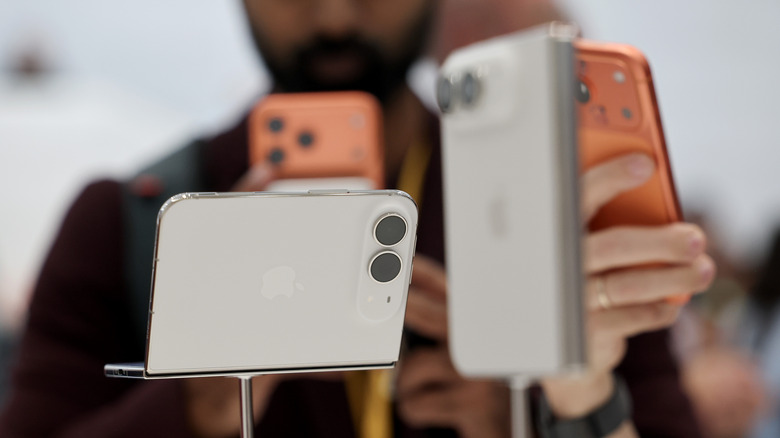
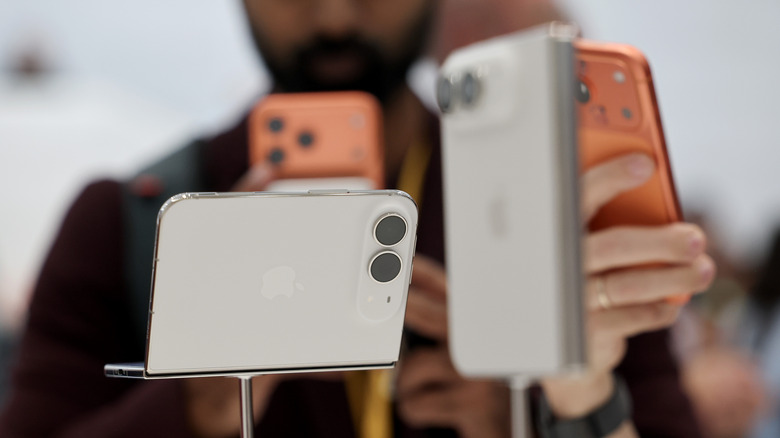
While it’s nice to have, iPhone Handoff is also a niche feature. However, you might find it useful as you migrate between an old and new iPhone, to easily carry an older and less valuable device when you travel, or to use a more portable or cheaper iPhone alongside a $2,000 iPhone Duo. Professionals using different devices for work and personal life may also find use for the feature.






















































You must be logged in to post a comment Login