Connect with us

Tech

Reviving TEMPEST Attacks With An Injected Signal

Published

on

TEMPEST attacks are often the most effective way to break air-gapped security: rather than directly accessing a computer, the attacker records the system’s unintended radio emissions and uses them to reconstruct its internal operations. This kind of attack was much more effective in the days of noisy, high-voltage CRT displays, and has gradually become less effective as electronics migrate to quieter, less powerful components. A group of researchers, however, has found that even modern electronics can become effective TEMPEST transmitters when irradiated with an RF signal.

The RF a device emits depends on the unintentional antennas in its internal structure. These are difficult to eliminate, and it’s usually not worth the effort; they’re usually small enough that they only effectively radiate at much higher frequencies than the electronics carry. The researchers’ technique, called InjectEave, radiated these electronics with a radio frequency tuned to their internal antennas, injecting that frequency into the circuit. Nonlinear electronic components, such as amplifiers, then mix the injected frequency with the internal signal, creating RF sidebands. This mixed signal then radiates out of the device and can be picked up and demodulated to recover the device’s internal signal.

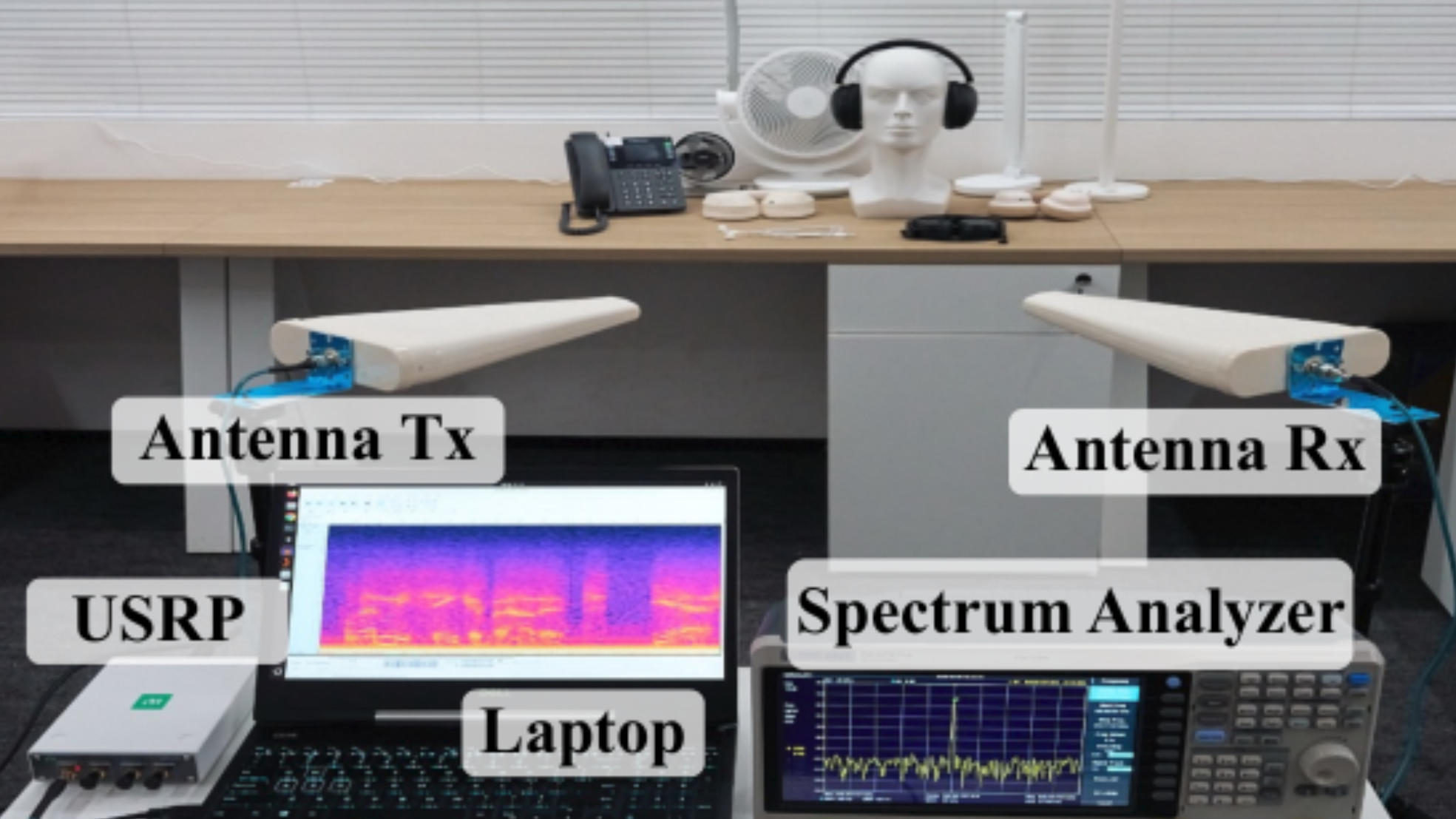
In principle, almost any semiconductor device will perform mixing to some extent; in testing, the researchers had success with an amplifier, analog-to-digital converter, power converter, and switching MOSFETs, but detected no significant emissions without an injected signal. For a portable setup, the researchers used a USRP B210 SDR for transmission and a spectrum analyzer to demodulate the received signal.

This was able to recover audio from wired headphones, wireless headphones, and a wireless landline, and detect the state of a smart lamp and a smart fan. All of this worked over short distances, even through walls, and with a power amplifier, the range increased to 30 meters. Even with multiple devices present, they could focus on one by tuning the injection frequency to resonate with its internal antennas. Perhaps most impressive (or concerning) was a demonstration with the VoIP phone: the researchers were able to listen in on the person speaking, clone that person’s voice, synthesize new speech in that voice, and remotely inject it onto the phone call, altering the call in real time.

Advertisement

If the history of these attacks is any guide, it won’t be too long before we see an open-source implementation of this technique; we’ve already seen a few approaches to traditional TEMPEST. This kind of unintended nonlinear mixing can also be used to find bugs or electronics.

Source link

Advertisement
Continue Reading
Advertisement
Click to comment

You must be logged in to post a comment Login

Leave a Reply

Tech

This startup believes smaller, modular data centers can solve AI’s infrastructure bottleneck

Published

on

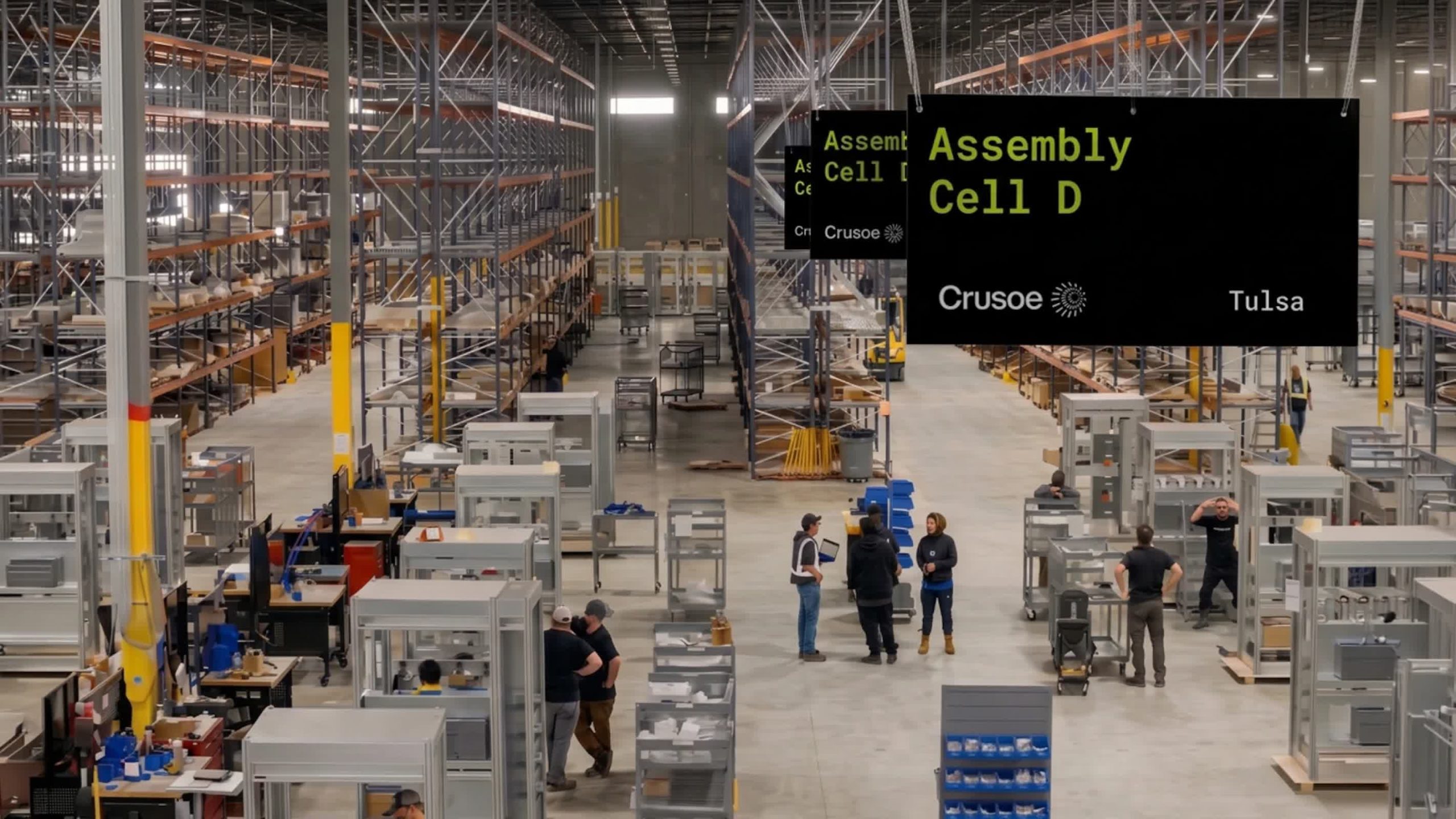
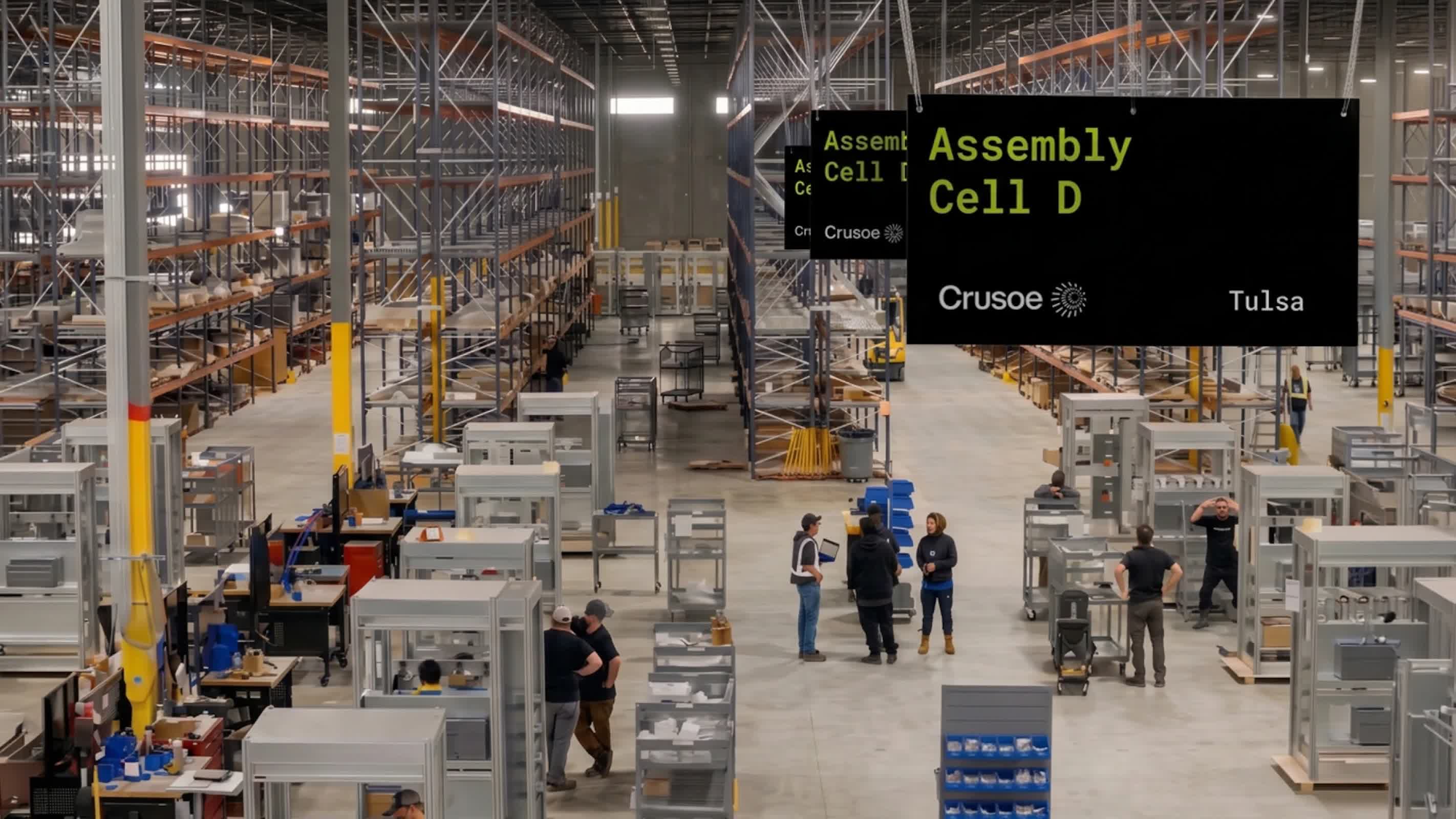
In context: Crusoe, the AI infrastructure company behind a major data-center campus in Abilene, Texas, has raised $3.9 billion and is expanding into smaller, factory-built facilities aimed at handling AI inference workloads. It is counting on those modular sites to add computing capacity more quickly than traditional projects, which can be held up by shortages of power, labor and construction resources. The move broadens Crusoe’s business beyond massive data-center campuses and gives it another way to serve AI customers.

The funding round values Crusoe at about $30.9 billion after the investment, Chief Executive Chase Lochmiller said. Atreides Management, Valor Equity Partners, and Mubadala Investment co-led the round. Other investors include Founders Fund, TPG, and several sovereign wealth funds, including the Qatar Investment Authority.

Crusoe is known for building large-scale AI computing infrastructure, including the Abilene campus developed for Oracle, which rents computing capacity to OpenAI. The company now sees an opportunity for smaller installations that it can produce in its own facilities, ship by truck, and set up in areas with available electricity.

The units, called Spark, are intended mainly for inference. Training leading models can require massive clusters with hundreds of thousands of chips. Inference does not always require that scale, Lochmiller said.

Advertisement

“You don’t actually need an Abilene to do that,” he told The Wall Street Journal. Running inference at that scale, he added, “can be a bit of overkill.”

The shift reflects a growing divide in AI infrastructure. Large campuses remain important for model training, where developers need vast numbers of Nvidia GPUs, high-bandwidth networking, and large power supplies. But inference can be spread across smaller facilities, particularly as companies look for ways to add computing capacity without waiting years for design, permitting, and construction.

Crusoe’s approach is to build Spark facilities in advance, then move them to places where power is available. That could reduce the need for large construction crews and shorten the time required to bring new AI capacity online. Access to electricity and labor has become a central issue for data-center developers nationwide.

Crusoe has a manufacturing facility outside Denver that Lochmiller said could eventually produce as much as one gigawatt of Spark capacity each year. The company already operates Spark units in Reno, Nevada, using power from solar panels and former electric-vehicle batteries.

Advertisement

“We’re going to put them everywhere,” Lochmiller said.

The company is also pursuing larger developments. Crusoe initially developed eight buildings in Abilene for Oracle. It had expected to expand the campus with Oracle and OpenAI, but those companies later signed deals with other developers. Crusoe instead leased additional Abilene buildings to Microsoft.

The campus has about 2.1 gigawatts of planned power capacity, according to Lochmiller. That includes a 900-megawatt gas plant planned to supply Microsoft’s portion of the development.

Crusoe is also working with Google on a project in Armstrong County, Texas, according to people familiar with the development. It has two other projects underway in Texas and one in Missouri. Lochmiller said the company has more than six gigawatts of data-center capacity under contract.

Advertisement

Founded in 2018, Crusoe began by placing computing equipment near oil and gas sites to use excess energy. It initially served cryptocurrency miners before shifting toward AI infrastructure as demand grew for computing powered by Nvidia GPUs.

The company differs from many newer AI cloud providers because it operates across several parts of the market. It develops and leases data centers, rents GPU capacity and runs models for customers through a managed-inference business.

“We sell data centers, GPUs and tokens,” Lochmiller said.

Lochmiller said the managed-inference business grew from almost no revenue at the start of 2026 to an annualized revenue run rate of more than $100 million by the summer. Perplexity is among Crusoe’s cloud customers, he said.

Advertisement

The strategy has prompted some debate within Crusoe’s board, according to people familiar with the discussions. Some directors have argued that the company should narrow its focus. Lochmiller has maintained that operating across the stack gives Crusoe a clearer view of customer demand and helps it build infrastructure for changing workloads.

Source link

Advertisement
Continue Reading

Tech

Protect your iPhone Duo & iPhone 18 Pro lineup with ESR’s cases

Published

on

The iPhone Duo is Apple’s first smartphone that starts at over $2,000, and the iPhone 18 Pro lineup commands a premium price as well. Give them the protection they need with ESR’s latest cases.

It’s time to order your next iPhone, Apple Watch, and set of AirPods, but don’t forget to get some accessories that’ll keep them safe. ESR has the accessories you’ll need — an iPhone Duo case that’ll arrive ahead of your pre-order, plus a new Apple Watch band and AirPods magnetic case.

Get ESR accessories for new iPhones

For the latest lineup, Atelier Vegan Leather is what’s front and center. The material is soft, resistant to stains, and made from an organic silicone leather material.

Advertisement

Here’s what you can get from ESR for your new iPhone, Apple Watch, and AirPods.

ESR Atelier Vegan Leather Magnetic Case with Flex Stand

Whether you get the iPhone Duo, iPhone 18 Pro, or iPhone 18 Pro Max, ESR has an Atelier Vegan Leather Magnetic Case that’s perfect for your new device.

The iPhone Duo is Apple’s first foldable iPhone that needs a case that moves with it. The edge-to-edge protection, luxurious materials, and elegant design complement the high-end iPhone, while the high-end material looks and feels great.

ESR’s focus on the Atelier Vegan Leather Magnetic Case was on “beauty that lasts.” The premium iPhone case uses vegan leather that is easy to maintain and clean so it looks pristine even as it ages. Don’t worry about having to baby the leather material. Just use your device as you normally would, and the anti-stain coating will keep things looking pristine. Even the TPU material has a stain-resistant treatment.

Advertisement
Person sitting at a table holding an iPhone Duo with a finger strap, next to a tray with dessert and a glass of blue drink garnished with lemon, outdoor cafe setting

ESR Atelier Vegan Leather Magnetic Case – Image source: ESR

The iPhone Duo version features a 180-degree rotating Flex Stand made from a zinc alloy that protects the camera plateau when not in use. It has a precision hinge structure that enables fluid opening and closing while locking at specific angles. Testing shows that the hinge can endure 3,000 open and close tests.

The rotating stand is designed in such a way that it can adapt to your every need. Use it as a grip for your finger, a stand in portrait or landscape, with the iPhone Duo open or closed.

The rotating Flex Stand is just as versatile as the iPhone Duo and works when you need it and snaps into place when you don’t. When not used as a grip, it is also a great stand that can keep your iPhone Duo standing in any orientation.

Advertisement

The case also covers the iPhone Duo hinge so it is protected from damage when dropped thanks to magnetic hinge protection. Whether opened or closed, your foldable iPhone will be safe from drops, scrapes, and spills.

ESR’s Atelier Vegan Leather Magnetic Case with Flex Stand for iPhone Duo has a MagSafe magnet to maintain compatibility with MagSafe accessories. It offers 1,400g of magnetic strength that provides plenty of grip to whatever you might attach, like a MagSafe wallet or battery pack.

Pick up your iPhone Duo Atelier Magnetic Case with Flex Stand today for just $59.99 from ESR. It is available in deep burgundy, misty blue, light gray, and black.

Person in a beige trench coat walking outside a stone building, carrying a laptop sleeve and a tablet, with an iPhone 18 Pro in a pink case held on top of the devices

ESR’s iPhone 18 Pro and iPhone 18 Pro Max case fits in with any style. Image source: ESR

Advertisement

The ESR Atelier Vegan Leather Magnetic Case with Flex Stand for iPhone 18 Pro and iPhone 18 Pro Max also has a refined look. It’s built with the same stain-resistant vegan leather and has a built-in stand.

The included Flex Stand can open from 15 degrees to 69 degrees to keep your iPhone propped up when in use. When closed, the metal ring surrounds the camera plateau to protect the area.

Just like with iPhone Duo, the Atelier Vegan Leather Magnetic Case with Flex Stand is easy to grip and carry. That Flex Stand works well as a grip when holding the iPhone or as a stand in both portrait and landscape orientation.

The case surrounds the iPhone while still remaining compatible with MagSafe and has a Camera Control surface. It offers 3x military-grade protection that can survive drops of up to 12 feet.

Advertisement

The ESR Atelier Vegan Leather Magnetic Case with Flex Stand for iPhone 18 Pro or iPhone 18 Pro Max is $45.99 on ESR’s website or on sale for $41.39 on Amazon. It is also available in deep burgundy, misty blue, light gray, or black.

ESR UltraFit Armorite® Pro Screen Protector

Don’t stop protecting your iPhone at the case level, your display is important too. The ESR UltraFit Armorite® Pro Screen Protector can keep all of your iPhone displays safe.

ESR’s screen protectors offer 2x scratch resistance performance and up to 25% reduction in scratch visibility on any that do occur. They also achieve just 2.3% light reflection and 94% optical transmittance so the content is clear and bright without an annoying glare.

The screen protector is also rated to provide up to 10x the impact absorption versus without.

Advertisement
iPhone Duo with orange camera plate and black engraved back panel, standing upright beside ESR UltraFit Armorite Pro screen protector, set on dark rocky ground with dramatic golden lighting

ESR UltraFit Armorite® Pro Screen Protector – Image source: ESR

Like with any ESR screen protector, they are easy to install with the included UltraFit tray. Just lay the iPhone flat and pull the tab and the screen protector installs with zero bubbles.

The iPhone Duo has two displays, and one of them folds in half, but that doesn’t stop ESR’s UltraFit Armorite® Pro screen protector. It’s an extra layer of protection for your very expensive purchase.

Get the ESR UltraFit Armorite® Pro Screen Protector for iPhone 18 Pro, iPhone 18 Pro Max, or iPhone Duo for $35.99 on ESR’s website in a pack of 3 or $29.99 for two. The screen protector for any of those three new iPhones can be found on Amazon for $29.99 for a pack of two.

Advertisement

ESR Cyber FlickLock™ Magnetic Case for AirPods

The ESR Cyber FlickLock™ Magnetic Case is secured twice over thanks to reverse-polarized magnets repelling each other to keep the case forced closed. When you press the button open, the magnets shift to a polarity that helps push the mechanism open.

If you’ve ever dropped an AirPods case of any kind, you know that your AirPods are about to go flying across the room. The ESR Cyber FlickLock™ case prevents that from happening while offering a mechanism that can be opened one-handed.

Beyond not letting the case slam open on impact, the Cyber FlickLock™ Magnetic Case protects your AirPods Charging Case. It is made from a durable combination of TPU and PC with extra protection from Air Guard corners.

Person wearing a blue outdoor jacket and shoulder strap with ESR Cyber FlockLock Magnetic Case for AirPods clipped to a front loop, against a clear sky background

ESR Cyber FlickLock Magnetic Case – Image source: ESR

Advertisement

The case is also MagSafe compatible with a 260g magnetic force that’s 136% stronger than the magnets in the AirPods case. Simply place the Cyber FlickLock™ Magnetic Case on a MagSafe charger and it will attach with ease and charge without worry.

Apple has revealed the new AirPods 5. Whether you’ve purchased a new set of those, or already have AirPods 4, AirPods Pro 3, AirPods Pro 2, or the original AirPods Pro, ESR has you covered.

The ESR Cyber FlickLock™ Magnetic Case for AirPods 5 or AirPods 4 are $21.99 on ESR’s website. The case can also be found on Amazon for $20.99. Available colors include deep burgundy, army green, black, blue, purple, and titanium.

ESR Equinox Apple Watch Band

ESR’s Equinox Apple Watch Band has a pin-and-fold lock that ensures an easy on-and-off experience. It is designed to be easily fastened or removed with one hand, which means it is even easier to remove for daily charging.

Advertisement
Person on a blue tennis court holding a racket and tennis ball, wearing a white shirt and a sporty Apple Watch with a blue band on their wrist

ESR’s Apple Watch band looks great whoever you wear it. Image source: ESR

The band is made from a skin-friendly HNBR material with ventilation cutouts. It’s an ultra-comfortable band that looks great and feels good whether you’re at the gym or in the office.

The all-day comfort ensures that even the Apple Watch Ultra doesn’t feel like a drag. The extra ventilation means you won’t be dealing with excess sweat or skin irritation during intense workouts.

Whether you’re picking up Apple Watch Series 12, Apple Watch Ultra 4, or have an older model, ESR’s Equinox Watch Band is a great addition to your band collection. It has a low-profile locking mechanism and is made from materials that ensure all-day comfort.

Advertisement

Get the ESR Equinox Watch Band for Apple Watch for $33.99 on ESR’s website. It is also available on Amazon for $33.99. The available colors include navy blue, black, and starlight.

Source link

Advertisement
Continue Reading

Tech

The Blockbuster Summer That Wasn’t: Four 2026 Movies That Missed the Mark

Published

on

The weather was hot. These movies were not.

In a season dominated by Odysseus and a certain friendly neighborhood insect-guy, several films landed loud, only to promptly fade away, and for good reason. What’s especially disappointing is the extent to which some very talented people and celebrated franchises have apparently lost their way over the past few months. With their home entertainment releases now firmly in hand, let’s take a look back at what went wrong and determine whether their discs at least got it right.

Supergirl

While I’m not disagreeing with those who fault Supergirl for insufficiently adhering to the Tom King/Bilquis Evely Woman of Tomorrow limited comics series upon which it’s based, I will counter that any film adaptation needs to stand on its own, without requiring knowledge of or even familiarity with the source material. And this movie, well….

supergirl-4k-ultra-hd

The first clue is right there on the front. (My copy even has a fancy prismatic slipcover.) As with last year’s SupermanSupergirl lacks the confidence to focus on its central hero, instead unnecessarily shoehorning in Jason Momoa as Lobo, who, by the way, did not appear in this comic book storyline. Such Hail Mary plays seldom work (remember when The Flash squeezed in two and a half Batmen… and Supergirl?) and also do a disservice to the star, in this case the talented young Milly Alcock. Even the wonderful director Craig Gillespie (I, Tonya) can only do so much under the increasingly heavy hand of DC Studios co-chairman and CEO James Gunn. (For the record, I still very much want Gunn to succeed.)

Perhaps its most unfortunate shortcoming is that it introduces a very different Kara Zor-El, who spends the bulk of the movie either drunk, wildly obnoxious, or both. I guess we’re supposed to feel sorry for her, or maybe think she’s cool and rebellious, but she’s mostly just annoying.

Advertisement

Bearing the obvious mark of James Gunn as Supergirl does, there’s a lot to look at, with elaborate sets and flashy action delivered crisply and with a precise, distinctive color palette. There’s likewise plenty to hear, with a bombastic combination of pop tunes and explosive 360-degree mayhem, punchy surrounds, and more than ample low end. The bonus content on the single disc is highlighted by one deleted scene, one extended scene, and a multipart “making of.” The many additional topic-specific featurettes come off as kind of sad when we see how so much work added up to so little.

Movie Details

  • STUDIO: Warner
  • FORMAT: Ultra HD 4K Blu-ray (September 8, 2026)
  • THEATRICAL RELEASE YEAR: 2026
  • ASPECT RATIO: 2.39:1
  • HDR FORMATS: Dolby Vision, HDR10
  • AUDIO FORMAT: Dolby Atmos with TrueHD 7.1 core
  • LENGTH: 108 mins.
  • MPAA RATING: PG-13
  • DIRECTOR: Craig Gillespie
  • STARRING: Milly Alcock, Eve Ridley, Matthias Schoenaerts, Jason Momoa, David Krumholtz, David Corenswet

Our Ratings

★★★★★★★★★★ Movie

★★★★★★★★★★ Picture

★★★★★★★★★★ Sound

★★★★★★★★★★ Extras

Advertisement

Where to Buy:


Star Wars: The Mandalorian and Grogu

The first thing my wife and I ever had in common was our deep fondness for Star Wars, back when it was three movies and nothing else. Time passed, Lucas sold to Disney, and we found ourselves eagerly watching every weekly episode of D+’s The Mandalorian, usually on the day it went live. That, of course, means we also witnessed the decline in the show’s quality, not technically, certainly, but in its increasingly obvious shortage of compelling plotlines.

Advertisement. Scroll to continue reading.
mandalorian-grogu-4k-ultra-hd

Which brings us to The Mandalorian and Grogu, wherein hunter Mando’s latest bounty leads the New Republic to the trail of one of its most wanted. The deal doesn’t go exactly as planned, yoda-yoda-yoda, Mando kicks ass, little Grogu does something cute, and then it’s over. While it looked enormously cinematic in the theater and sounded tremendously thrilling in all its powerfully immersive glory, movies have a weight and sense of urgency that are both lacking here.

Are the high production values of the TV show working against the movie? The big screen presentation is a clean, grain free digital affair, just like a typical episode. Colors are strong, the high dynamic range is well implemented, and the use of IMAX certified high resolution cameras for the major set pieces adds a bit of visual oomph to the proceedings. Both the 4K and included HD Blu-ray carry director commentary (say what you like, but Jon Favreau is a very serious and articulate filmmaker), while the Blu-ray adds a more substantial assortment of featurettes than I was expecting.

Movie Details

  • STUDIO: Disney/Sony
  • FORMAT: Ultra HD 4K Blu-ray (August 25, 2026)
  • THEATRICAL RELEASE YEAR: 2026
  • ASPECT RATIO: 2.39:1/1.78:1
  • HDR FORMATS: Dolby Vision, HDR10
  • AUDIO FORMAT: Dolby Atmos with TrueHD 7.1 core
  • LENGTH: 132 mins.
  • MPAA RATING: PG-13
  • DIRECTOR: Jon Favreau
  • STARRING: Pedro Pascal, Sigourney Weaver, Jeremy Allen White, Martin Scorsese, Brendan Wayne, Lateef Crowder

Our Ratings

★★★★★★★★★★ Movie

★★★★★★★★★★ Picture

Advertisement

★★★★★★★★★★ Sound

★★★★★★★★★★ Extras

Where to Buy:


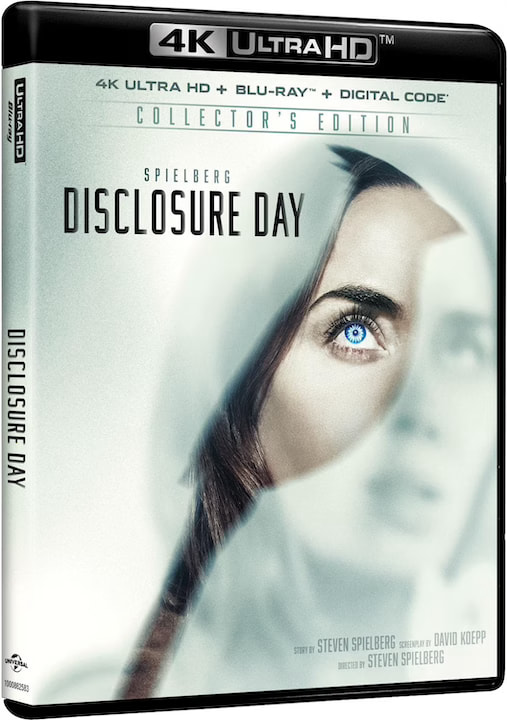
Disclosure Day

A spiritual sequel to Steven Spielberg’s earlier, far better films about mankind’s contact with extraterrestrials (Close Encounters of the Third KindE.T.), Disclosure Day treads little new ground and, in 2026, is actually quite corny. Another shadowy government conspiracy seeks to suppress the truth about aliens here on Earth, intrigue and chases ensue, but the agents on the case are ridiculously inept so that the movie can continue to movie. The characters run the gamut from merely uninteresting to laughably clichéd, although Emily Blunt, at least, is locked in and very watchable. Then, of course, there’s the disclosure of the title, with the truth being revealed to the entire world despite tedious debate about the ramifications. The movie runs almost two and a half talky hours, but there’s virtually no exploration of the consequences.

disclosure-day-4k-ultra-hd

This is Spielberg, so it was shot primarily on film by Janusz Kamiński, and it is absolutely gorgeous and razor sharp, strikingly so when we see the bad guys’ giant surveillance screens packed with tiny text. The magical alien technology also affords ample opportunity for the filmmakers to flaunt their mastery of light. Gary Rydstrom delivers an aggressive Atmos mix with effortless extension into all channels and plenty of bass, making this one of the best sounding discs I’ve heard all year. We’re then given a competent hour-long documentary that explores the many facets of production, plus a separate four-minute segment about Spielberg’s creative reunion with out-of-retirement composer John Williams.

Movie Details

  • STUDIO: Universal Pictures Home Entertainment
  • FORMAT: Ultra HD 4K Blu-ray (August 25, 2026)
  • THEATRICAL RELEASE YEAR: 2026
  • ASPECT RATIO: 2.39:1
  • HDR FORMATS: Dolby Vision, HDR10
  • AUDIO FORMAT: Dolby Atmos with TrueHD 7.1 core
  • LENGTH: 146 mins.
  • MPAA RATING: PG-13
  • DIRECTOR: Steven Spielberg
  • STARRING: Emily Blunt, Josh O’Connor, Colin Firth, Eve Hewson, Colman Domingo, Wyatt Russell

Our Ratings

★★★★★★★★★★ Movie

★★★★★★★★★★ Picture

Advertisement

★★★★★★★★★★ Sound

★★★★★★★★★★ Extras

Advertisement. Scroll to continue reading.

Where to Buy:


The Breadwinner

Nate Bargatze is perennially laugh out loud funny, such that I’ve been known to pull up a quick clip (“I do my own laundry!”) when I’m having a bad day. But standup is its own animal, and there’s no guarantee that style of comedy will translate to a feature film. For some reason, Nate thought the world needed a thinly veiled remake of Mr. Mom. He becomes a stay at home parent when his wife hits it big on Shark Tank, but he’s playing a dad so utterly lacking in common sense that he would surely die from forgetting to breathe. This is not the stage persona we’ve come to know and love. Instead, we get a string of unfunny jokes, many of which were written by him. Ultimately, The Breadwinner aims low but mostly fires blanks.

Advertisement
breadwinner-blu-ray

This is a fairly mundane, mid budget production with just a bit of CGI, so I’ll simply report that there are no major issues with the 1080p presentation. Detail is respectable, and compression artifacting is negligible. Audio wise, most of the activity is up front and always legible, with the expected rear channel cues helping to fill in busier scenes. Director Eric Appel bravely sits for a commentary. It’s fine, but this was a missed opportunity for Nate to join him and riff, perhaps earning back some audience goodwill. The featurettes are skippable, although the bloopers, alternate gags, and half dozen brief deleted scenes might be good for a smirk.

Movie Details

  • STUDIO: Sony
  • FORMAT: Blu-ray (August 25, 2026)
  • THEATRICAL RELEASE YEAR: 2026
  • ASPECT RATIO: 2.39:1
  • HDR FORMATS: N/A
  • AUDIO FORMAT: DTS-HD Master Audio 5.1
  • LENGTH: 99 mins.
  • MPAA RATING: PG
  • DIRECTOR: Eric Appel
  • STARRING: Nate Bargatze, Mandy Moore, Colin Jost, Zach Cherry, Will Forte, Kumail Nanjiani

Our Ratings

★★★★★★★★★★ Movie

★★★★★★★★★★ Picture

★★★★★★★★★★ Sound

★★★★★★★★★★ Extras

Where to Buy:

Advertisement

Source link

Continue Reading

Tech

AI Firms Knew Chatbots Were an ‘Existential Threat’ to Journalists, Court Docs Show

Published

on

AI companies used vast troves of published text to train their large language models, and executives at those firms were aware that doing so constituted a theft of copyrighted materials, according to comments cited by news publishers in a court filing that was unredacted this week.

The brief was initially filed earlier this month in a court proceeding that brings together several related copyright infringement cases against ChatGPT maker OpenAI and its partner Microsoft, including lawsuits brought by The New York Times and by Ziff Davis, which owns CNET.

Microsoft’s director of applied science, Brent Hecht, called it “an astonishing theft of unprecedented proportions” and maybe the “largest theft of labor in human history,” according to the publishers’ filing. The full exhibits showing the context of the quotes in the filing remain under seal.

AI Atlas

The comments cited by publishers appear to undercut the argument by AI companies that the use of copyrighted material was legally protected as fair use. Under this legal doctrine, use of copyrighted material is protected depending on how it’s used, the nature of the work, how much of it was used and the effect of the use on the market for that work. 

Microsoft CEO Satya Nadella said under oath that conversations with chatbots gave information “right there on the website on the AI platform versus needing to go to the underlying source,” like the website of a publisher that reported the information, according to the filing. Similarly, an OpenAI executive wrote that publishers faced an “existential threat” from products like the company’s chatbot.

Advertisement

The publishers’ brief also describes steps AI developers took to evade paywalls, like that for The New York Times. It describes how an OpenAI employee told the company’s president, Greg Brockman, about “a hack to get around nytimes paywall,” to which Brockman replied, “ah nice.” 

At the same time, the filing says Nadella testified that anything behind a paywall “should be licensed by anyone who wants to use it” for AI development and that if he had been aware OpenAI had trained on paywalled content, he would have required OpenAI to retrain its models. 

In a statement provided to CNET, a Microsoft spokesperson said that Hecht’s comments “reflect one employee’s perspectives” and that the company’s position is in its court filings, which “explain why these transformative uses are consistent with copyright law and why Copilot is not a substitute for publishers’ journalism.”

Nadella’s comments addressed changes in how people consume information and are “perfectly consistent” with the company’s legal position, the spokesperson said. “Those observations should not be confused with conclusions about copyright questions before the Court, which Microsoft addresses in its filings.”

Advertisement

In its own brief in the case, Microsoft said the use of published content to train LLMs was significantly transformative. “Copyright law does not permit rightsholders to block transformative technologies like LLMs; it encourages such uses on the expectation that rightsholders will adapt and the public will be better off for it,” the company argued.

Representatives for OpenAI and Ziff Davis did not immediately respond to requests for comment. 

LLMs are trained on as much published content as developers can get their hands on, and the litigation over copyright — including related cases from book authors — could have a significant impact on both AI companies and media outlets. Publishers argue AI companies should have to pay to license the content they use, while the tech companies say doing so is unnecessary and burdensome to the development of more capable AI. The Trump administration weighed in on the case earlier this month with a statement arguing a licensing requirement would impede American AI development in a race with China. 

OpenAI and Microsoft employees were also aware that their chatbots’ ability to find, copy, summarize and sometimes regurgitate content from publishers was keeping readers from visiting the sites of news organizations, the publishers argue. 

Advertisement

“Defendants’ own experts acknowledge that grounded LLMs exploit their sources rather than promote them like search uses that have been deemed fair use,” the publishers’ filing states.

Source link

Advertisement
Continue Reading

Tech

Inside the new iPhone 18 Pro

Published

on

A short video teardown of the new iPhone 18 Pro reveals no great surprises, but does show how Apple managed to cool the processor and slim down the Dynamic Island.

Back in September 2025, teardowns of the iPhone 17 Pro revealed Apple’s then-new vapor chamber cooling system. Now the REWA Technology YouTube channel has taken apart the new iPhone 18 Pro and shown just which components have changed.

There are details Apple hasn’t discussed, such as new materials and alterations to cables. More significant changes concern the A20 Pro processor and the vapor chamber.

The teardown shows what Apple’s Kaiann Drance, Vice President of iPhone Marketing has said about the new redesign. The A20 Pro processor has been moved so that it is in direct contact with the vapor cooling system, which itself is now larger.

Advertisement

Apple has also made claims about the iPhone 18 Pro’s. battery and, as Joanna Stern’s testing shows, it is true that there is a slight improvement. This new teardown of the model with a physical SIM card, says that the battery is around 1.7% larger than in the iPhone 17 Pro.

As seen in hands-on testing, the iPhone 18 Pro’s Dynamic Island has been reduced. “Apple really made an effort to narrow down the Dynamic Island,” says the new video. “The infrared camera cutout has been moved to the screen corner.”

Repairability

The teardown is focused on describing the steps required to do this, with just occasional notes about the differences in the design. It’s concerned chiefly with how those changes have affected the repairability of the phone.

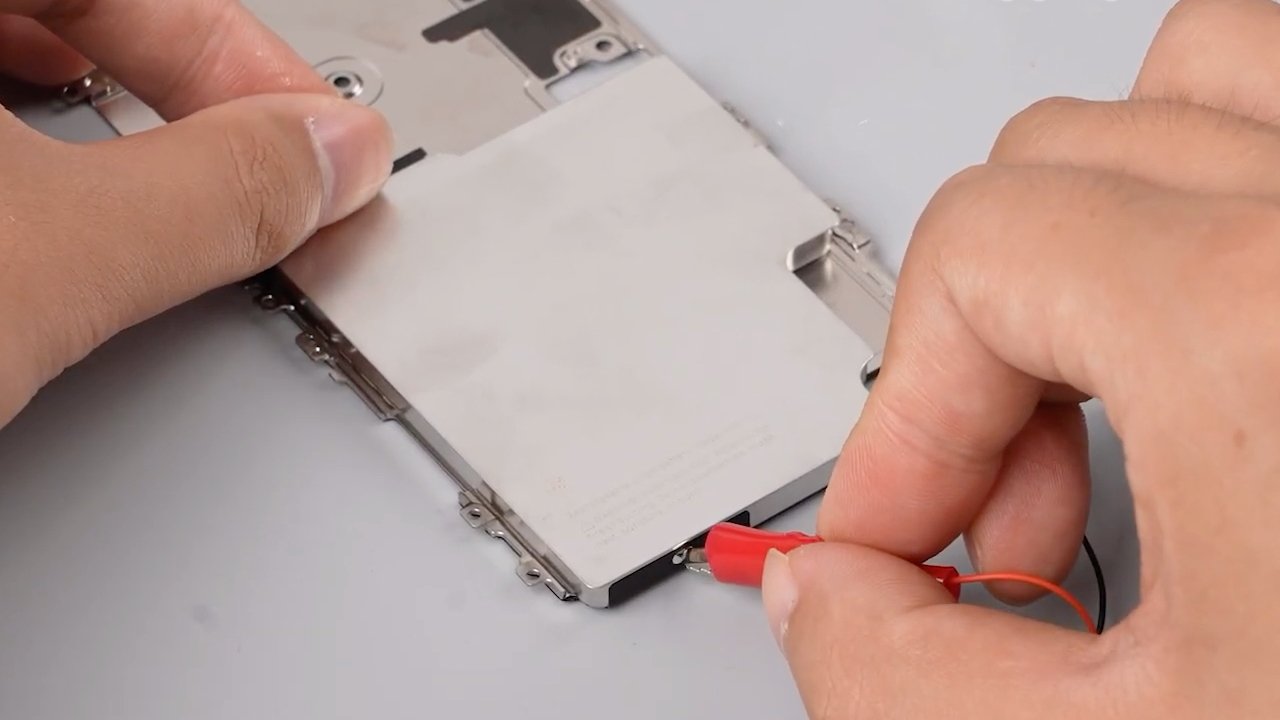
Hands repairing a smartphone, using a small red testing probe near the phone's internal components and metal shielding on a light-colored work surface

Testing the battery – image credit: REWA Technology.

Advertisement

While there will doubtlessly be more detailed teardowns shortly, this one claims that there are immediate signs of it being harder to repair. Specifically, the move of the infrared camera is claimed to present “a new challenge for aftermarket display manufacturers.”

The first iPhone 18 Pro pre-orders are now arriving in buyers’ hands. It and the iPhone 18 Pro Max are also now available in Apple Stores.

Source link

Advertisement
Continue Reading

Tech

Best deals on Apple Watch Series 12, AirPods 5, iPhone 18 Pro

Published

on

Apple’s latest releases are already on sale, with markdowns on the new Apple Watch Series 12, AirPods 5, and incentives across the iPhone 18 Pro lineup.

Apple’s newest products are hitting store shelves, and we’ve rounded up the best deals on the new hardware.

AirPods 5 on sale now

You can pick up a pair of AirPods 5 for $124.99 at Amazon today, a $5 discount on the new earbuds.

Get AirPods 5 deal

Advertisement

While not a huge markdown, it does save you a few bucks if you’re planning on grabbing a pair for yourself or as a gift. Want to learn more about the latest release? Check out our hands-on AirPods 5 review and stay on top of price drops in our AirPods Price Guide.

Apple Watch Series 12 markdowns

The new Apple Watch Series 12 starts at $399, but Amazon is knocking up to $20 off select GPS + Cellular models.

Save up to $20 on Apple Watch Series 12

The steepest discounts are available on the 46mm Natural Titanium case option with a Navy Blue Sport Band and the 42mm Natural Milanese Loop style that are $20 off.

Advertisement
  • 42mm Natural Titanium Case with Natural Milanese Loop, GPS + Cellular: $729 ($20 off)
  • 46mm Radiant Gold Titanium Case with Burgundy Sport Band M/L, GPS + Cellular: $729 ($20 off)
  • 46mm Natural Titanium Case with Navy Blue Sport Band M/L, GPS + Cellular: $729 ($20 off)

You can also compare prices on even more styles in our Apple Watch Series 12 Price Guide.

iPhone 18 Pro and Pro Max up to $1,200 off

Deals on Apple’s iPhone 18 Pro and Pro Max are in effect now, with wireless carriers offering up to $1,200 off via bill credits.

You can jump straight to the offers below or in our iPhone 18 Pro Price Guide:

Preorder deals still available on Mac mini, Mac Studio

The 2026 Mac mini and Mac Studio are also available for preorder (and up to $50 off), with the desktops releasing on September 22.

Here’s a rundown of the best preorder deals:

Advertisement

Source link

Continue Reading

Tech

Black Sabbath and Paranoid Return on 15 IPS Reel-to-Reel as Ozzy Osbourne’s Legacy Endures

Published

on

There are very few Black Sabbath albums that have not been repackaged, remastered, expanded or reissued enough times to fill an entire shelf.

Black Sabbath and Paranoid are different.

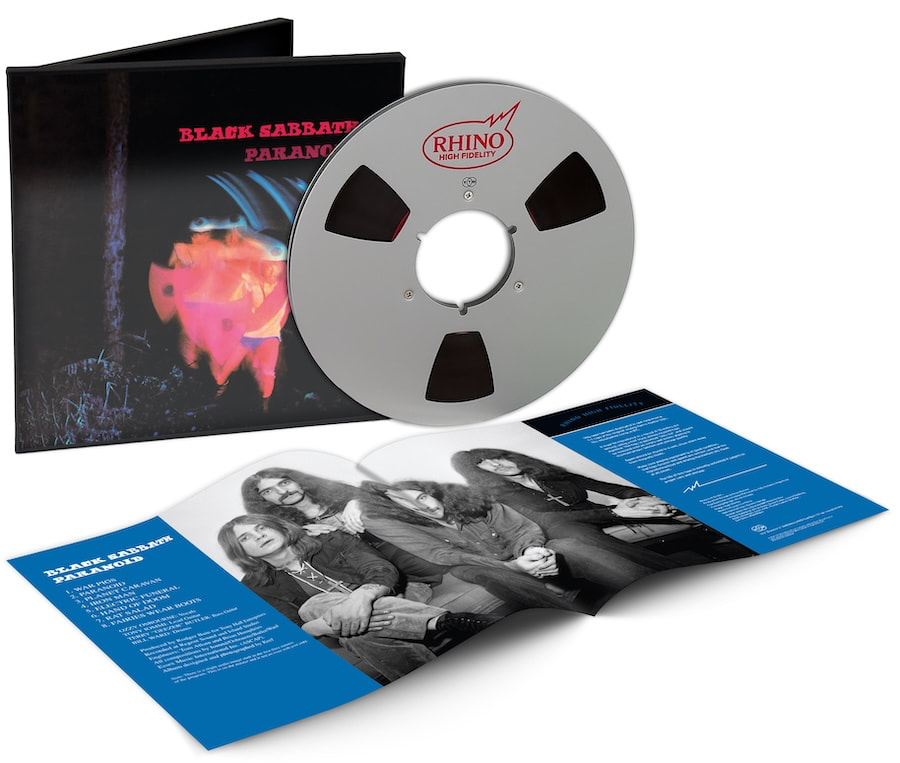
Rhino High Fidelity has released the band’s first two albums as premium reel-to-reel editions, putting two of heavy metal’s foundational recordings onto 15 ips, half-track, quarter-inch tape. Each album is limited to just 500 copies worldwide and sells for $299.98 exclusively through Rhino.

The timing also carries considerably more weight following the death of Ozzy Osbourne on July 22, 2025, at age 76. Just 17 days earlier, Osbourne had returned to Villa Park in Birmingham for Back to the Beginning, where he reunited with Tony Iommi, Geezer Butler and Bill Ward for his final performance with the original Black Sabbath lineup.

Advertisement

More than 55 years after these albums appeared, they remain the clearest explanation of why Ozzy mattered.

Two Albums That Changed Heavy Music

black-sabbath-reel-tape

Black Sabbath arrived in February 1970 and reached No. 8 in the UK and No. 23 on the Billboard 200. Its ominous title track, “The Wizard” and “N.I.B.” introduced a combination of Tony Iommi’s enormous guitar riffs, Geezer Butler’s bass and lyrics, Bill Ward’s drumming and Ozzy’s unmistakable vocals that helped establish the vocabulary of heavy metal.

Paranoid followed only seven months later and became even bigger, topping the UK album chart and reaching No. 12 in the United States. “War Pigs,” “Paranoid,” “Iron Man” and “Electric Funeral” would influence generations of metal, doom, hard rock and alternative bands that followed.

black-sabbath-paranoid-reel-tape

Ozzy was only one quarter of that equation, and Black Sabbath’s importance cannot be separated from Iommi, Butler or Ward. What Ozzy supplied was a voice that sounded vulnerable, haunted and threatening without trying to compete with the sheer weight of the band behind him.

His career after Sabbath only widened the audience. Osbourne was inducted into the Rock & Roll Hall of Fame with Black Sabbath in 2006 and again as a solo artist in 2024, while Ozzfest helped bring successive generations of metal bands to mainstream audiences.

Advertisement

Before the television shows, costumes and Prince of Darkness mythology, however, there were these records.

What Makes These Reel-to-Reel Editions Different?

Rhino is being unusually specific about the production chain, which is important when an album costs almost $300.

Advertisement. Scroll to continue reading.

The new editions are duplicated in real time from 1:1 copies of the U.S. analog master tapes. Rhino is not claiming that the commercial tapes are being run directly from the original master reels, and audiophile buyers should recognize the distinction.

Advertisement

Black Sabbath and Paranoid Reel-to-Reel Specifications

  • Price: $299.98 each
  • Limited Edition: 500 copies per title
  • Format: 1/4-inch half-track reel-to-reel
  • Speed: 15 ips
  • Equalization: IEC
  • Tape: RTM LPR90
  • Reel: 10.5-inch metal
  • Duplication: Real time
  • Source: 1:1 copies of the U.S. analog master tapes
  • Availability: Exclusive to Rhino.com

Those specifications also mean these are not tapes for every vintage open-reel deck. Buyers need a machine capable of 15 ips half-track playback using IEC equalization.

And yes, that reduces the potential audience rather dramatically.

But this is not a format competing with Spotify, CDs or even vinyl. It is aimed at serious tape enthusiasts who already own the hardware and want access to major catalog recordings in a format that has once again become commercially relevant.

The U.S. Version of Black Sabbath

Because Rhino is working from the U.S. analog source, the self-titled album follows the North American configuration.

That means “Wicked World” appears instead of “Evil Woman,” matching the original Warner Bros. U.S. edition. The track sequence also retains the familiar suite titles including “Wasp,” “Bassically” and “A Bit of Finger.” Rhino’s earlier High Fidelity vinyl edition used the same U.S. track configuration.

Advertisement

Rhino Keeps Expanding Reel to Reel

The Black Sabbath releases are part of a much larger push from Rhino High Fidelity, which has been steadily turning major Warner catalog titles into premium prerecorded tapes.

Recent releases include Joni Mitchell’s Blue in July and Jethro Tull’s Aqualung in August, while the series has also included albums from Crosby, Stills & Nash, Van Morrison, Fleetwood Mac, ZZ Top, Curtis Mayfield, the Grateful Dead, The Stooges, Yes and T. Rex.

We have already seen Rhino use the same recordings across multiple audiophile formats. Black Sabbath received a Rhino High Fidelity AAA vinyl edition in 2024, followed by Paranoid in 2025. Both were cut from original stereo master tapes by Kevin Gray and pressed at Optimal.

That makes the new tapes more than another colored-vinyl variation. Rhino is offering a genuinely different playback format for listeners equipped to use it.

Advertisement

Reel-to-reel is obviously not about to repeat vinyl’s mainstream revival. The machines are expensive, prerecorded titles remain scarce and operating one requires slightly more commitment than yelling at Alexa from the kitchen.

But labels releasing Black Sabbath, Joni Mitchell, Jethro Tull and Fleetwood Mac suggest this is no longer merely a format for collectors hunting 50-year-old tapes on eBay.

Advertisement. Scroll to continue reading.

The Bottom Line

Spending $299.98 on a single album that requires specialized hardware is difficult to describe as sensible.

Advertisement

It also doesn’t need to be.

The appeal of these Black Sabbath editions is straightforward: Rhino has taken two recordings that helped define heavy metal and produced them as real-time duplicated 15 ips tapes from documented analog sources, with only 500 copies of each available.

More importantly, these are the records that introduced Ozzy Osbourne to the world.

His career eventually became much larger than Black Sabbath, but the voice on “Black Sabbath,” “N.I.B.,” “War Pigs,” “Paranoid” and “Iron Man” remains the foundation of that legacy.

Advertisement

For listeners with the right tape deck and $600 burning a hole in their pocket, Rhino has chosen two albums where the extravagant format almost makes sense.

Where to buy: store.rhino.com

Source link

Advertisement
Continue Reading

Tech

6 days left to get ahead at Disrupt 2026

Published

on

Your window to save up to $200 is closing fast. Current ticket pricing ends Sept. 25 at 11:59 p.m. PT. After that, prices go up.

At TechCrunch Disrupt 2026, getting ahead means more than sitting in on great sessions. It means meeting the people you need to know, seeing what’s coming before it hits the mainstream, and getting practical insights you can put to work.

Register now to get up to $200 in ticket savings to one of the most anticipated tech conferences of the year. Save 30% more when you bring four or more with you.

TechCrunch Disrupt 2026 6 days left

Get the edge at Disrupt

TechCrunch Disrupt 2026 brings 10,000+ founders, investors, operators, and tech leaders together for three days of ideas, connections, and opportunities across the startup ecosystem.

With 250+ speakers covering 200+ sessions across six industry stages, roundtables, and breakouts, you’ll get practical insight into the forces changing how companies are built, funded, and scaled, from AI and robotics to fintech, infrastructure, and the future of work. But the value isn’t just onstage.

Advertisement

Make the connections. Meet potential investors, clients, partners, hires, and collaborators through networking, including AI-powered matchmaking, ad hoc meetings, and the Deal Flow Cafe if you’re an investor or founder.

TechCrunch Disrupt 2024 Braindate meeting with investor
Image Credits:Slava Blazer Photography

Stay ahead of the market. Hear how leaders are approaching the biggest strategic questions around AI, competitive advantage, fundraising, talent, go-to-market, and scaling.

See what’s next before it becomes obvious. Explore 300+ startups and breakthroughs in the Expo Hall, watch the intense pitch competition called Startup Battlefield 200, and discover emerging technologies across all sessions.

Leave with something you can use. From fundraising strategies to GTM tactics and insights on building defensible companies in the AI era, Disrupt is built around actionable ideas, not just big conversations.

Six days. Then prices go up.

The people you need to meet, the ideas you need to hear, and the opportunities you don’t want to miss will all be in San Francisco this October.

Advertisement

Join 10,000+ founders, VCs, and tech operators on October 13–15 at San Francisco. Get your ticket by Sept. 25 at 11:59 p.m. PT and save up to $200 before prices rise. Save an additional 30% on group passes of four or more.

TechCrunch Disrupt Builders Stage
Image Credits:Slava Blazer Photography / Flickr (opens in a new window)

When you purchase through links in our articles, we may earn a small commission. This doesn’t affect our editorial independence.

Source link

Continue Reading

Tech

Sweeping EU Child Safety Proposal Would Transform Social Media, Online Gaming and AI Chatbots

Published

on

A new proposal this week from the European Commission, if enacted, would set some of the tightest restrictions yet on technology products, from social media to games to AI chatbots.

The EU Kids Act would follow, and in some ways surpass, similar measures that have been imposed in Australia, the UK, China and India, and would require tech companies such as Meta, Google, YouTube and Roblox to change the way they do business. But first, the legislation will need to be vetted, debated and voted on.

Its pillars include a social media ban for kids under 13, age verification for online accounts and requirements for tech companies to provide proof that their online services are safely designed. The proposal is the formal version of what’s been discussed for months and is a result of mounting public pressure for governments to get a handle on easily accessible technologies that have been shown across research and in court judgments to cause harm to children, such as internet addiction and vulnerability to contact from predators.

“Our Kids Act is reversing the burden of proof — it is for platforms to show they are safe by design,” European Commission President Ursula von der Leyen said in a statement Thursday. “And we put parents back in the driving seat, giving them the tools to help their children navigate a safer online world.”

Advertisement

Megan Jenkins, an analyst at Assembly Research who studies AI and online safety, said the Kids Act “goes further than other legislation proposed so far, and represents a big shift from the blanket social media bans we’ve seen in countries such as Australia.”

Jenkins said the biggest change from some of those laws is creating a burden of proof for tech companies to demonstrate that their products are safe, which would be the first law of its kind. “If tech companies can’t prove this, they would be unable to provide services to minors,” she said.

What’s in the EU Kids Act

Discussion of what would and wouldn’t be in the Kids Act began days earlier when drafts of the proposal were leaked. Ultimately, what ended up in the Kids Act is broader than what was expected — in addition to a tiered age system for when teens can access social media, it would require companies that make online games, AI chatbots or companions, and social networks to prove that they’re safe and free from features like infinite scrolling that could be considered manipulative or addictive to children.

The biggest component is the social media ban for those under 13 years of age. For teens under 15, parents could create a mini account accessible through their own account on age-appropriate social media or video-sharing platforms. Screen time would be limited to an hour per day. Teens aged 16 to 18 could create anonymous accounts without parental consent.

Advertisement

Two other major pillars of the proposal are aimed at tech companies. They would be required to include no addictive design features and would need to provide easy-to-use parental controls, recommendation algorithms that are safe for kids and no options for minors to livestream. They would also be required to verify ages for new accounts or anyone logging in to an existing account.

The last part of the proposal covers enforcement: The EU would speed up the time it takes to investigate violations, with the goal of concluding them within 90 days. Companies with 45 million or more active users would need to submit a compliance plan for any new services or features and face a review of up to 30 days. New features, services or functionalities that don’t meet a “positive opinion” from the European Commission would not be allowed.

The age verification ‘sticking point’

Even if the EU proposal is passed without too many changes, enforcing it will be a challenge. It would likely face legal challenges from some of the world’s biggest tech companies and, as countries such as Australia have found, it’s hard to impose constraints that teens can’t find ways to get around.

“These restrictions are also not likely to be successful, as seen with other age verification and social media bans that have been consistently circumvented by tech-savvy kids,” said David Inserra, a fellow for free expression and technology at the Cato Institute.

Advertisement

Inserra added that the age verification technologies themselves pose privacy issues, “creating massive amounts of sensitive identification data that will be subject to hacks and data breaches” for teens as well as adults.

Jenkins agreed that age verification has remained a “bit of a sticking point” for online safety regulation due to privacy concerns, but said she believes the Kids Act is a positive step in moving away from blanket social media bans for kids.

Source link

Continue Reading

Tech

Journalist Calls Out 'Collective Amnesia' of Schools' Romance With Big Tech Over AI

Published

on

“Turns out, Silicon Valley isn’t especially altruistic,” writes the nonprofit education news site The 74. They’re reading a new book promising “the inside story of how Big Tech catalyzed, co-opted, and ultimately came to capture computer science and AI education in America”. Written by
New York Times business reporter Natasha Singer, Coding Kids: Big Tech’s Battle to Remake Public Schools tells “the story of the nonprofit Code.org and its charismatic, Harvard-educated leader, Hadi Partovi,” according to their review:

Thirteen years ago, Partovi… delivered a worrying message: Kids who didn’t learn to write code would be left behind. And the long-term success of the United States economy depended on training these students to fill a million open tech jobs…. Fast-forward to 2026, and now we’re dealing with AI, and tech is reading from a similar playbook.
Asked by The74’s Greg Toppo, “Does this moment seem different to you?”, Singer replies, “This moment is different, but also similar.

“We are in a moment in society where a lot of people have increased distrust of these huge tech companies, and we see a wave of parents pushing back against tech in schools. But we also see waves of people pushing back against Flock cameras, against data centers, that there’s this feeling that tech has taken so much, and that people feel like they have lost control — that tech is being enacted on them… And parents are worried about the effects of unfettered tech access and kids’ compulsive use of social media and phones, and so there’s a different climate.

And yet there seems to be a disconnect in some ways with AI because you see that Microsoft and OpenAI and Anthropic and Google are all competing to get their AI tools into schools, and you see school districts across the country say “We’ve partnered with OpenAI.” “We are a ChatGPT Pioneer School,” or “We’ve partnered with Microsoft, and we’re going to use 10,000 licenses of CoPilot.” It’s amazing to me. We have had these cycles of tech in schools where there are all these promises about the latest tech, laptops, learning apps, massive open online courses, virtual reality, big data’s going to revolutionize schools and like democratize access to education for kids and get them these great career skills, and we keep having these cycles. My concern is that we don’t learn anything.

Advertisement

One of the reasons I wrote this book is because it feels like we have collective amnesia. Now we’re in the sixth or eighth cycle of this — and shouldn’t we be asking questions about the push for AI in schools, based on what we’ve learned about the push for all the other things that came before?

Two Slashdot posts are cited in the book, both submitted by long-time Slashdot reader theodp (Slashdot UID #442,580), who even gets a shout-out in the book’s “Acknowledgements” section (along with consumer advocate Ralph Nader).

Ironically, one member of Amazon’s “Vine” program received a free copy of the book in exchange for a review — and apparently misunderstood its topic, writing that it made coding “feel approachable and even fun… [T]his is exactly the kind of book that could help a child become interested in technology without feeling overwhelmed by it. I particularly liked the way it encourages kids to be curious, experiment, and solve problems on their own. I would definitely recommend Coding Kids to parents, grandparents, or teachers looking for a good introduction to coding…”

Read more of this story at Slashdot.

Advertisement

Source link

Continue Reading

Trending

Copyright © 2025