
Business
US and China discuss AI safety plan ahead of Trump-Xi summit

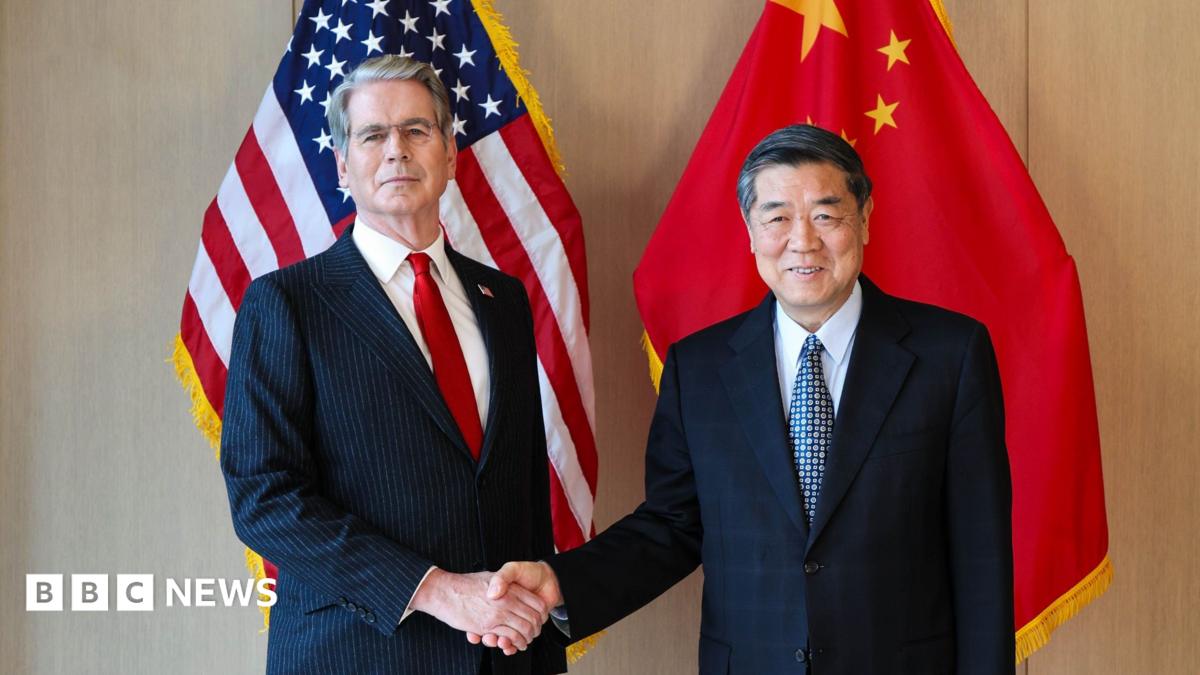
Top US and Chinese officials have discussed creating a new “notification mechanism” for AI incidents that could affect national security, Treasury Secretary Scott Bessent told reporters on Sunday.
Bessent made the comments after what he called “successful” talks with Chinese Vice Premier He Lifeng in New York.
The meeting came as US President Donald Trump and his Chinese counterpart Xi Jinping are due to hold a summit in Washington later this week.
AI has come under intense scrutiny in recent days after researchers warned of the potential risks posed by the technology and some of the industry’s most high profile figures called for developers to take a more cautious approach.
“We think that, just like with any cross-border activity, that moving from opaque to more transparency between the number one and the number two AI powers in the world is very important,” Bessent told reporters after the talks.
He said the meeting also covered other topics, including plans to “operationalise” a process to identify potential tariff cuts on goods called the Board of Trade.
A truce in the tariffs war between the world’s two biggest economies is due to expire on 10 November.
The BBC has contacted the Chinese embassy in the US for comment.
Chinese state news agency Xinhua said the two sides had “candid, in-depth and constructive exchanges on key economic and trade issues”, noting that they had discussed AI.
Bessent said in a post on X on Sunday that the talks “help lay the groundwork for President Trump to advance America’s economic interests and deliver results for the American people.”
The US and China are locked in a race to dominate the AI and technology industries.
In recent days Washington has faced calls to slow down the development of AI over fears abouts its potential negative impact on humanity.
Trump has largely dismissed those concerns, arguing that there are sufficient policies around AI and that the US cannot lose its edge to China.
He said earlier this month “whoever wins in AI, wins.”


For a business waiting 30, 60 or more days for customers to pay, that distinction matters. Previous missed payments or a difficult trading period may still be reviewed, but providers can also look at the strength of the business, its debtor book and the likelihood that outstanding invoices will be paid.
First identify where the cash flow gap comes from
Not every invoice-related cash-flow problem calls for the same type of finance. A business waiting for customers to settle completed work faces a different problem from one that needs to pay a supplier before receiving money from its own customers.
Before choosing invoice factoring or another invoice-based funding route, a business should identify which side of the payment cycle is creating the pressure. Factoring releases cash against unpaid customer invoices, while supplier invoice funding addresses bills the business itself needs to pay before enough customer cash has arrived.
Making that distinction first prevents a business from assessing a finance product that does not match the underlying problem.
Poor credit does not tell the whole story
Invoice factoring companies set their own eligibility criteria, so a weak credit history does not produce the same outcome in every application. Providers still carry out checks, but invoice finance also involves assessing the underlying business and the invoices being funded.
The quality of the debtor book matters because the facility depends on customers paying valid invoices. A business with established B2B customers, accurate records and customers that usually pay on time presents a different case from one dealing with disputed invoices or recurring late payments.
Recent accounts and trading information can also help explain an older credit problem. A missed payment during a temporary disruption may be viewed differently from continuing difficulty meeting current commitments.
None of this guarantees approval. It simply means the business credit history is one part of a wider assessment.
The invoices themselves need to stand up to scrutiny
Factoring works around money already owed to the business, so providers need confidence that those receivables are genuine and likely to be paid.
Accurate invoices, clear payment terms and an organised sales ledger make the position easier to assess. Providers may also look at how concentrated the debtor book is. Heavy dependence on one customer creates a different risk from a ledger spread across several established businesses.
Payment disputes matter as well. An invoice that is technically outstanding but subject to a disagreement over delivery or service quality is not equivalent to an undisputed invoice simply waiting for its payment date.
For the business owner, this means poor credit should not be considered in isolation. The condition of the receivables matters because those invoices sit at the centre of the facility.
Check whether factoring solves the actual problem
Access to funding is only one part of the decision. Factoring changes when the business receives cash and, in many arrangements, who manages collection from customers. It also comes with fees and contractual responsibilities.
A company with healthy sales but long customer payment terms or recurring late payments may have a clear reason to examine business invoice finance. A business that is consistently unprofitable has a different problem. Receiving cash earlier does not correct weak margins or operating costs that remain above income.
The same applies when poor credit reflects an issue that is still continuing. If current commitments already exceed what normal trading can support, another funding arrangement may shift the timing of the pressure without removing it.
Poor business credit does not automatically rule out invoice factoring, but approval and terms depend on the wider financial picture. The quality of the debtor book, current trading position, cost of the facility and reason for the cash-flow gap all matter when deciding whether factoring is a workable fit.
Business
US Fed, BoE step up scrutiny of bank exposure to trading firms after Jane Street loss, FT reports

US Fed, BoE step up scrutiny of bank exposure to trading firms after Jane Street loss, FT reports

Chevron: The Bull Case Goes Beyond $100 Oil
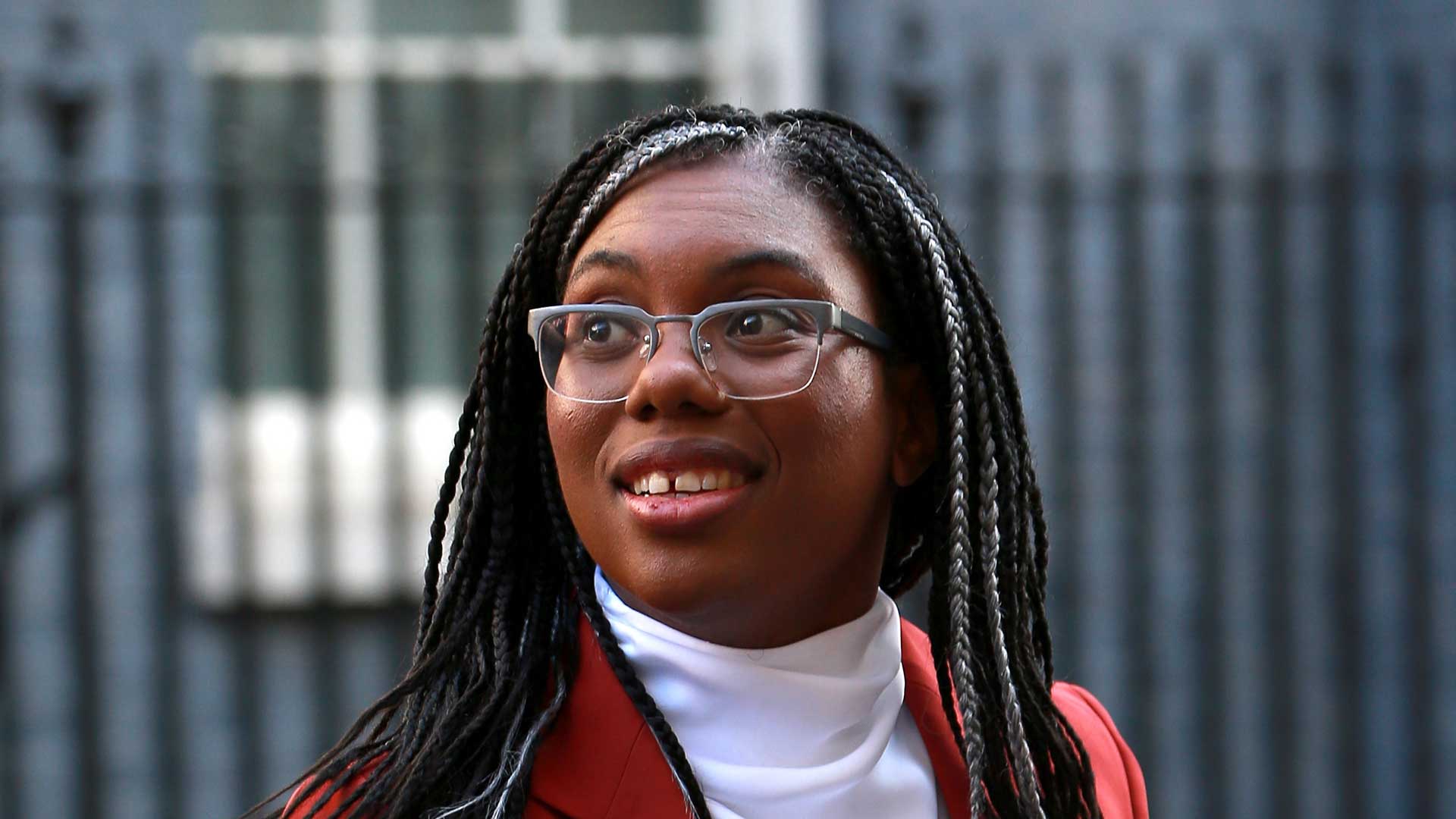
Kemi Badenoch has pledged that a Conservative government would restore VAT-free shopping for overseas visitors, bringing back the 20 per cent refund scheme that was scrapped in 2021. The Conservatives cited research estimating the move could attract up to 2.35 million additional visitors and generate £4.1bn in extra spending.
Under the plan, a Conservative government would restore VAT refunds for eligible visitors from outside the EU. The party said that if the evidence confirmed the scheme paid its way, it would extend refunds to visitors from the EU by the end of the next Parliament.
The 2021 decision
Refunds for international shoppers were available under the VAT Retail Export Scheme, which the previous Conservative government abolished from January 2021 alongside tax-free airside shopping. According to the Office for Budget Responsibility, the government said at the time the change was made to align with World Trade Organisation rules. An updated OBR estimate put the Exchequer savings from abolition at about £539m by 2025-26.
The figures cited by the Conservatives come from the Centre for Economics and Business Research (CEBR). The party said the policy would benefit shops, hotels, restaurants, transport and the wider tourism industry, and stop spending flowing to rival European destinations.
“I am tired of the doom and gloom that says Britain has to accept decline, tax people more and expect less,” Mrs Badenoch told the Daily Mail.
“We should be ambitious about what this country can do. We have iconic retailers, inventive designers, brilliant manufacturers and some of the best places in the world to eat, sleep and visit.
“Five years of sending shoppers to Paris or Milan is more than enough and I thank the Daily Mail for its important campaign to scrap the hated tourist tax.”
She added: “This policy has been terrible for tourism and terrible for the High Street. Britain should be a magnet for tourists who want to spend, not a country that tells them to take their money elsewhere.”
Mrs Badenoch accused Andy Burnham, who became prime minister in July, of accepting continuing decline under Labour. The pledge comes ahead of Chancellor John Healey’s Budget on 28 October. The Conservative leader has also said she would scrap stamp duty and reverse changes to inheritance tax on farms, and is exploring ways to abolish inheritance tax.
Business reaction
According to the Daily Mail, businesses backing its campaign include Giorgio Armani, Pernod Ricard and the owner of the Westfield shopping centres, which argue that the cost of refunds is outweighed by the benefits of encouraging more visitors. The retail sector has made the case before, with Mulberry urging Mr Burnham to restore VAT-free shopping shortly after he took office.
The bosses of Fortnum & Mason, Paul Smith and the parent company of Claridge’s hotel described Mrs Badenoch’s plans as “pro-growth” and “pro-jobs”, the paper reported.
Sir Rocco Forte, chairman of Rocco Forte Hotels, said: “This is a policy that has been crying out to be reversed. Britain is the only major shopping destination in Europe that denies international visitors a tax refund.”
Helen Dickinson, chief executive of the British Retail Consortium, said of a tax-free shopping scheme: “Done properly, it would boost economic growth and deliver a net benefit to the Exchequer.”
Lord Khan, the Labour Mayor of London, has also called on the government to restore tax-free shopping, describing the decision to scrap it as “a huge mistake”.
Labour response
A Labour spokesman said: “The Tories have pulled off a spectacular U-turn. If they think it’s such a great idea, they should explain why they scrapped it and how they’d pay for bringing it back.”
The Conservatives contrasted the pledge with the government’s plans for a levy on overnight stays. Ministers confirmed this month that England’s mayors will get powers to charge a tourist tax on overnight accommodation, set as a percentage of room costs.
The Tories said the levy would add to the price of family holidays and drive people to holiday overseas rather than in the UK.

Amy Ingham
Amy Ingham is a reporter at Business Matters, covering UK business news with a focus on breaking news, business policy, late payments and insolvency. She joined the magazine in 2026 after completing the NCTJ Diploma in Journalism at Harlow College’s journalism school. Her recent reporting includes British Steel’s nationalisation and its impact on SME suppliers, the decline in late payments by large firms, and Insolvency Service director disqualifications. Reach her at aingham@cbmeg.co.uk.

Bitcoin climbs toward $82k as tokenized-stock move boosts crypto sentiment

Bioventus: Cash Flow Anchors The Bull Case Beyond A Potential Sale

Emyria Limited’s push to gain further traction in the US’ healthcare sector has continued, on the back of a key appointment.

Hamak sells 8 bitcoin to fund Ghana gold project assessment

OPINION: The requirement for learner drivers to undertake 50 hours of supervised training is a bit much.

A Birmingham baby bank says it is helping a growing number of people in full-time work who are struggling to afford essentials for their children.
Kavita Kaur Dhillon and her husband Karvinder run the Handsworth Baby and Family Bank on Soho Road, which provides free items including nappies, baby formula, clothes and toys.
The couple said the majority of people they first helped were from low-income households, but they were now seeing more working families needing support with everyday costs.
“We don’t need any more clothing, it’s the everyday essentials, formula, nappies, wipes, toiletries,” said Kavita.
Karvinder said demand had shifted in recent years.
“Before, we mainly needed nappies,” he said.
“As the daily cost of living has gone up, people need help with more day-to-day things.”
The couple said they were currently in desperate need of baby formula and often had only a handful of tubs left in stock.
“Just because you dress nice, or drive a nice car, doesn’t mean you don’t need help,” Kavita said.
“Nobody knows people’s circumstances. People can judge, but the reality is people are struggling.”

Bank of Russia sets 1% crypto risk limit under draft rules

Jesse Solomon Soft-Launches Relationship With Jane Motion

IF YOU HOLD XRP I GOT NEWS FOR YOU!!!!!!!!!!! (not clickbait)



![[KLPGA 2026] Hana Financial Group Championship 2026 / 3R (ENG Commentary)](https://wordupnews.com/wp-content/uploads/2026/09/1789973872_maxresdefault-80x80.jpg)
-

 Fashion3 days ago
Weekend Open Thread: Talbots – Corporette.com
-

 Crypto World2 days ago
Circle launches Arc Studio AI agent for building onchain apps
-

 Tech8 hours ago
Researchers escape OpenAI Codex sandbox to run commands on host
-

 Crypto World6 days ago
Revolut Attackers Warn of Ongoing Daily Customer Data Leaks
-
 NewsBeat2 days ago
Trump says US has reached an agreement to take permanent control of Greenland’s security
-

 Crypto World6 days ago
Kraken Lets xStocks Holders Earn Yield Through DeFi
-

 Crypto World5 days ago
Robinhood engineers charged over $50K crypto scheme
-

 Crypto World5 days ago
What Is the Status of the U.S.-Iran Peace Talks? Here's What Both Sides Are Saying
-

 Crypto World2 days ago
Bitcoin price breaks channel as RSI climbs to 63
-

 Crypto World4 days ago
US Charges Robinhood Engineers Over Crypto Listing Trades
-

 Crypto World7 days ago
Elon Musk Drops a Bombshell: Grok 5 Could Be the AGI Breakthrough
-
Business7 days ago
SK Hynix ADRs Fall More Than 6% as Memory Rally Breaks on Fears of Slower AI Spending
-
 NewsBeat7 days ago
‘Sick conspiracy’: Trump says only guardrails AI needs is ‘a strong and smart (High IQ!) president’ in all-caps rant
-

 Crypto World6 days ago
NVIDIA Analysis: Attempted Rising Wedge Breakout Amid Pressure on the AI Sector
-

 Tech5 days ago
Webb’s IC 348 Mosaic Includes Two-Jupiter Dwarfs, Twin Jets, and a Nursery Still Making Worlds
-
Crypto World6 days ago
Can Circle’s Arc Repeat Robinhood Chain’s Meme Coin Boom?
-

 Crypto World3 days ago
Silver prices recover quickly, hitting weekly high today
-

 Crypto World6 days ago
DOJ Seeks to Seize $61M in Iran Oil Funds From Binance Accounts It Vouched For
-

 Crypto World2 days ago
World Money launches in 150+ countries with Stripe
-
 NewsBeat2 days ago
US was ‘on brink of war’ with China over false AI report of nukes moving in Middle East
You must be logged in to post a comment Login