

Politics
The House Opinion Article | There is a sensible way to restore Parliament

(Alamy)
4 min read
There are lessons abroad and in history about how to get this right.
When William Blathwayt, the irascible Whig politician who founded the War Office, was rebuilding his Gloucestershire country seat in the 1690s, he became so exasperated with the stream of financial demands from his builders that he finally erupted, “these people want stirring up soundly and not to be overfed with money!”
This volatile prescription could also be applied to the faceless squadron of consultants who have concocted, at its worst, a £39bn, 61-year timescale for the restoration of the Palace of Westminster.
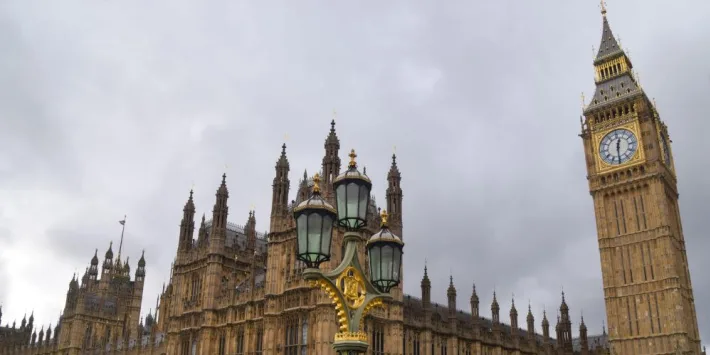
Policy Exchange has long campaigned for beauty to once again become a defining feature in our built environment, and if there is any single British building that symbolises how an enlightened state can directly procure it on a gargantuan scale, it is the Houses of Parliament.
And yet, not even an icon this venerable can justify the profligate excess currently associated with its refurbishment. Even the best-case scenario of £15.6bn over 24 years is fiscally, electorally and ethically unconscionable. So what is the solution? I humbly propose five.
First, the current project must be scrapped and replaced with one that maintains a practical, economic and forensic focus on delivering the three ‘R’s (Repairing, Rewiring and Restoring) to prevent the three ‘F’s (Flooding, Fire and Falling). Anything further to this core ambition of making the building fabric safe and stable should be shelved.
This means no to a net zero revamp, no to full wheelchair accessibility (offices, amenities and public areas will do), no to carving sacrilegious ramps into Westminster Hall and no to turning a Victorian building into a modern one. Were the Blobular bureaucrats handling the current project let loose on the Leaning Tower of Pisa, they would invariably attempt to straighten it.
And no to the extreme architectural hubris evident in current visualisations. It beggars belief that this needs to be said, but every design intervention must be sympathetic to the aesthetic principles of a Gothic palace and not a Qatari golf resort.
Secondly, to help finance the project, authorities should consider opening the top of the Elizabeth Tower to paying tourists. There would inevitably be logistical challenges, but the French state earns around £87m annually from Eiffel Tower visitors, and similar revenues from iconic Big Ben would greatly help offset costs.
Thirdly, demolish Westminster’s QEII Conference Centre – an incongruous carcass of 1970s ASBO-Brutalism – and replace it with a contextually sympathetic building that can accommodate both decanted Commons and Lords chambers before being converted back into a conference centre after Parliament’s restoration.
Fourthly, learn from the ongoing restoration of similar parliamentary buildings inspired by Westminster: Canada’s. Comparisons of this nature are difficult, but despite being of a similar size, style and age to our own, Ottawa’s Parliament Hill is currently being refurbished for just £2.7bn. We should learn how.
And finally, we should also learn from an even closer precedent: Notre Dame de Paris. The fire that ravaged it in 2019 offered a grim portent to a crumbling Westminster, but its heroic five-year reconstruction has arguably been the defining and most successful restoration project of our age.
Though a smaller (£650m) and arguably less complex undertaking, political leadership was central to its success. This came in the form of the military general requisitioned to lead the project and plough through the onerous trenches of French bureaucracy. And also in the very personal leadership of President Macron himself, who bravely staked his political credibility on the project’s successful completion.
Both strategies are the minimum leadership template we must employ here. A British prime minister needs to assume Westminster’s restoration as his or her personal mantle and pledge, with senior expert external support, to complete at least the bulk of the post-decant works within the life of a Parliament.
After the devastating 1992 fire at Windsor Castle, government agencies were excluded from its reconstruction in favour of private contractors, and the late Duke of Edinburgh took personal charge of the project. The result? The restored castle reopened in 1997, six months ahead of schedule and costing just over half its expected £60m budget.
A streamlined brief, private sector efficiency and strong political leadership are key to ensuring that Westminster can reap Windsor’s rewards.
Ike Ijeh is Head of Housing, Architecture & Urban Space at Policy Exchange

The post Andrew, Epstein and our feckless elites appeared first on spiked.

On 25 February, the European Legal Support Center (ELSC) is launching a publicly searchable database.
Otherwise known as ‘Britain’s Index of Repression,’ it catalogues instances where UK institutions and craven bodies have used the law. More specifically, it shows how Israel-adjacent groups are using legal means to stifle Palestine solidarity.
Unsurprisingly, a quick search for UK Lawyers for Israel brings back 128 results. It seems that what the Canary has known all along is becoming public knowledge.
The nefarious lobbyists at UK Lawyers for Israel have and remain to be actively involved in repressing British civil liberties. Only, they’re batting for the wrong team — by which we mean a hostile, foreign state.
In their own words, plucked from their website, the UK Lawyers for Israel, describes it’s remit as follows:
We use the law to counter attempts to undermine, attack and delegitimise Israel, Israeli organisations, Israelis, and supporters of Israel.
‘Unregulated law firm’
ELSC have long advocated for those facing persecution for expressing solidarity with Palestinians, arguing that legal interventions by Israel-aligned lobby groups have led to:
institutional action against Palestine solidarity in schools, workplaces, universities and beyond.
The database is a work in progress and it is possible that there have been other depraved interventions that aren’t yet in the database. The items that are searchable, as the ELSC points out, is just what they are able to verify at present — suggesting that pro-Israel interventions are possible much higher.
Their post in full reads:
This is why ELSC, alongside the Public Interest Law Centre, filed a formal complaint with the Solicitors Regulation Authority (SRA) against the Director of UK Lawyers for Israel.
Our complaint sets out serious breaches of professional standards, including the use of Strategic Lawsuits Against Public Participation (SLAPPs) designed to intimidate and silence Palestine Solidarity.
We further call on the SRA to investigate whether UK Lawyers for Israel is operating as an unregulated law firm and to bring it under formal regulatory oversight.
Lawfare must not be used to silence Palestine solidarity.
Stating that the new index represents the legal centre’s ‘push back’ on repression on behalf of a genocidal state, they added that:
Anti-Palestinian repression in Britain is not accidental. It is structural and systemic.
Our new report shows how repression works to depoliticise solidarity, forcing the movement onto the defensive, draining resources, and fracturing collective power.
The goal is bigger still: to erase Palestinian history and struggle from public consciousness.
Referring to the report being released on the 25th, they finished:
We will expose the architecture of repression, from universities to workplaces, cultural institutions to public space.
We are making this resource public so the movement can understand it, challenge it, and make it undeniable.
The ELSC will livestream the launch and invites those who want a first look to register their interest on their website.
Repression at Kings College London
The Canary wrote earlier this month about a mass walkout at Kings College London (KCL), protesting Usama Ghanem’s indefinite suspension. Ghanem is an Egyptian student at KCL who has had his student visa revoked. To make matters worse, he now faces deportation to Egypt, putting his life at risk.
We wrote:
Organisers say Usama’s case is part of a broader crackdown targeting pro-Palestine staff and students, including disciplinary action and intimidation. At KCL, more than twenty students – primarily students of colour – have faced disciplinary procedures linked to Palestine activism. However, far-right and Zionist groups have repeatedly targeted demonstrators on campus.
A KCL staff member talked about the broader context of Usama’s suspension. They noted that the college:
“escalated disciplinary action against pro-Palestine students, closed down hard-won fora on divestment and the reconstruction of Gaza’s education system, rejected all divestment demands, and unilaterally introduced new protest restrictions.
At the same time, it has failed to challenge Zionist and fascist groups like Stop the Hate and Betar, allowing them to intimidate and assault staff and students with impunity.”
Eyes open
British society is no longer blind to the fact that our freedom of speech faces institutional attack. Those same institutions answer to Keir Starmer who, as we’ve reported before, has chosen Israel at every turn.
Even the far-right have long expresses concerns that free speech is being curtailed. But no to call out blatant attacks on universal civil liberty and the unspoken institutional veto against anyone opposing the murder of innocent men, women and children in Gaza.
As British citizens, we need to ask ourselves ‘why are some people more outraged about limits on hateful speech than about our ability to object to mass murder’?
Once the ELSC releases its Index of Repression, those in power are no longer able to deny this reality. The layers of secrecy keeping people misinformed and beguiled by political trickery have been stripped back.
Feature image via Barold/the Canary
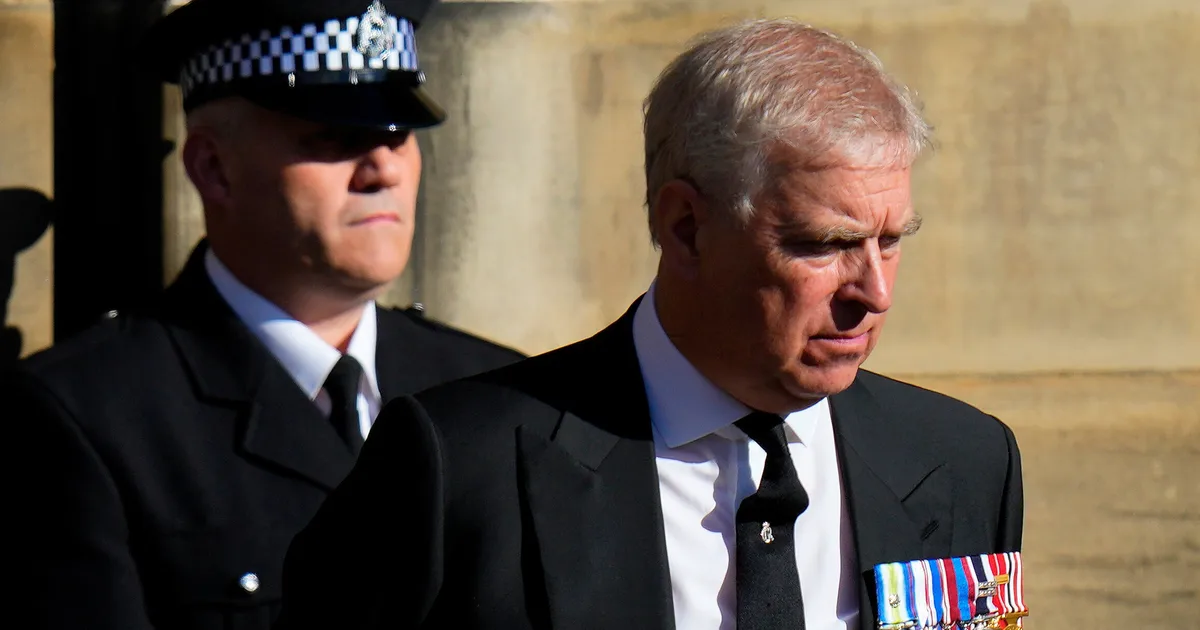
Calls for Andrew Mountbatten-Windsor to be removed from the line of succession are growing following the former prince’s arrest.
The former Duke of York was held in custody for 11 hours on Thursday, on his 66th birthday, before being released under investigation.
Andrew has always denied any allegations of wrongdoing.
He was detained on suspicion of misconduct in public office while his homes in were searched by police.
It’s understood that the search in his Norfolk home on the Sandringham estate has concluded while officers continued to look through his Royal Lodge home in Windsor, Berkshire, on Friday.
The shocking turn of events comes after three million documents related to the dead paedophile Jeffrey Epstein were released by the US Department of Justice.
Several UK forces have since started to look into various claims, including the possibility that Andrew sent confidential information to Epstein in his capacity as Britain’s trade envoy.
The documents suggest the former prince may have forwarded government reports from his visits to Vietnam, Singapore and China to the disgraced financier.
Thames Valley Police also said in February that it was assessing a separate allegation that a second woman was sent to the UK by Epstein for a sexual encounter with Andrew in 2010.
The woman, who is not British, was in her 20s at the time.
Yesterday’s arrest was not in relation to allegations of any sexual offences.
Andrew stepped down from his royal duties in 2019 after a car crash Newsnight interview about his friendship with Epstein.
When further allegations about their association emerged in October, King Charles stripped Andrew of his titles – including his status as prince.
However, Andrew remains eighth in line to the throne, behind Prince William and his children, and Prince Harry and his children.
Legislation via an act of parliament would be needed to remove him from the line of succession, and MPs would have to debate the topic.
These latest claims, alongside the arrest, have triggered calls for more extreme action.
A YouGov poll has found 82% of the public think Andrew should be removed, while 6% disagreed and 12% said they were not sure.
Lib Dem leader Ed Davey said the monarchy must work to make sure Andrew can “never become king”.
He said: “The most important thing right now is that the police be allowed to get on with their job, acting without fear or favour.
“But clearly this is an issue that parliament is going to have to consider when the time is right, naturally the Monarchy will want to make sure he can never become King.”
Meanwhile the Green Party leader Zack Polanski has called for a full statutory inquiry.
“I think its pretty awful, I think there are lots of questions to be asked,” he said. “We obviously need to wait for the legal process to make its way, but I would say we really need a full statutory inquiry.”
He argued that “when necessary” people should be “removed” from their positions – adding that he did not believe Britain should have a monarchy.
Meanwhile, shortly before Andrew’s arrest, prime minister Keir Starmer told BBC Breakfast that “nobody is above the law” when asked about the allegations against the former prince.
The King already appeared to distance the royal family from his disgraced brother on Thursday in a statement.
He wrote: “I have learned with the deepest concern the news about Andrew Mountbatten-Windsor and suspicion of misconduct in public office.
“What now follows is the full, fair and proper process by which this issue is investigated in the appropriate manner and by the appropriate authorities. In this, as I have said before, they have our full and wholehearted support and co-operation.
“Let me state clearly: the law must take its course.
“As this process continues, it would not be right for me to comment further on this matter. Meanwhile, my family and I will continue in our duty and service to you all.”
In a statement on Thursday evening, the police said: “Thames Valley Police is able to provide an update in relation to an investigation into the offence of misconduct in public office.
“On Thursday we arrested a man in his sixties from Norfolk on suspicion of misconduct in public office.
“The arrested man has now been released under investigation.
“We can also confirm that our searches in Norfolk have now concluded.”

For decades, victims have been suffering the consequences of degrading behaviour.
Revenge porn, deep fakes and more recently, images produced by X’s AI bot Grok, have put people onto a public stage in an incredibly vulnerable way that they did not ask for.
The rise in misogyny, in a world where many boys today think that feminism has gone far enough, coupled with developments in AI that enable people to remove a person’s clothes or to generate tailored porn, is terrifying.
It’s clear that we need new strict guardrails in place, which is what the government is attempting to do.
Keir Starmer announced this week that tech companies must remove “revenge porn” and deepfake nudes within a 48-hour window or their whole platform could be blocked and they could be fined millions.
This is welcome news. For years, victims have pleaded for these images and videos to come down, begging the police, the website owners and anyone who will listen to remove content that they did not consent to sharing, and then fighting for justice against their perpetrators.
These pleas have often fallen on deaf ears with victims feeling totally powerless against the internet, which never forgets you.
“This is not a ‘job done’ solution; we need to go further”
Action, not words, is what we need to see here. The huge positive here is that the government is shifting the shame by putting pressure on tech giants and companies to act and to protect victims over profits.
It is good to see that this is finally being taken seriously and that it is not just targeting social media sites, but a range of tech platforms.
But the most important thing is that they follow up with something robust enough to make change happen at a systems level.
It’s hard to know if the regulator Ofcom has the level of resources to manage the massive rise in generated content and all the new platforms and apps appearing.
They have a mammoth task ahead of them to be able to capture and control every single piece of content that lands. This is not a ‘job done’ solution; we need to go further and stop this content from being created and shared at all.
48 hours makes a good headline – but it is a huge amount of time for victims to suffer. It takes just seconds to screenshot and share an image.
How long would Keir Starmer want a compromising video or nude photo of himself online? I suspect 48 seconds would be too long.
Tech companies have put profit before harm since their inception, and it’s been the survivors and campaigners who’ve been pushing for years for accountability. In many ways, it’s about time we got proactive.
But what’s crucial is that we don’t accept this as a radical solution.
We should see this as an initial stepping stone, because I think we can all agree that victims deserve more than this.

Entries in the comments…
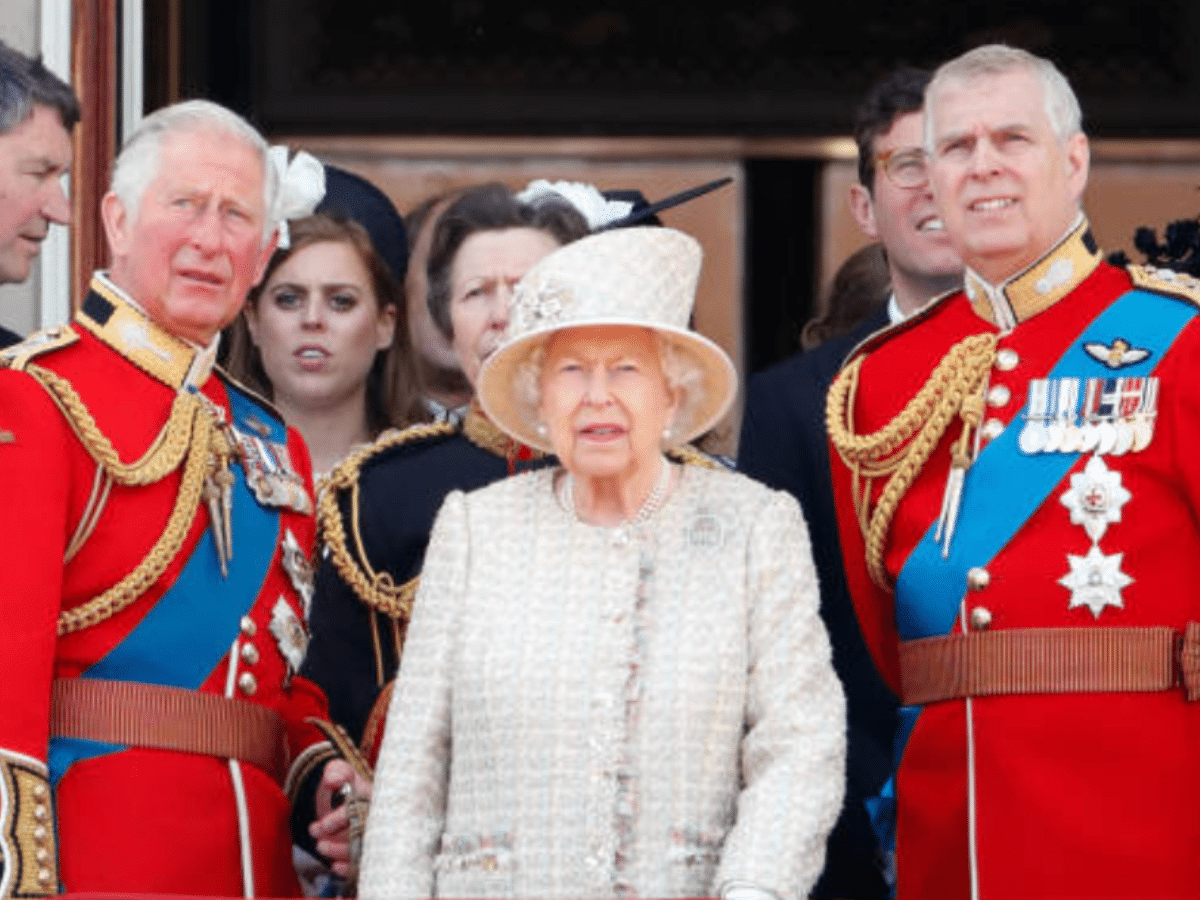
Andrew Mountbatten-Windsor’s arrest following the revelations in the Epstein files is invariably a gigantic embarrassment for the parasitic royal family. And, calls are growing for answers over the royal family’s support of Andrew over the years.
Historian Tessa Dunlop slammed the Royal Family’s choice to refrain from offering any apology to the British public in the Mirror. Dunlop pointed out that the privileged family could have paid attention to the disgraced prince’s apparent abuse of power.
Confronting Andrew’s ‘weaponised‘ use of his Royal privilege to shut down the allegations towards him, she exposed the lack of humility and accountability being shown by his silver-spoon family.
A point which was similarly made on Question Time to Fiona Bruce. No surprises, Bruce attempted to deflect the point:
Lady with purple scarf, “We watched the Queen, bless her, we did adore her”
“But she tried to bail Andrew out and pay off the Epstein trafficked victim, Virginia Giuffre”
“I think it’s all been way to slow”
“They royal family are trying to do the minimum”
“And plaster over… pic.twitter.com/3sFIZPOudi
— Farrukh (@implausibleblog) February 20, 2026
Epstein files show we must ‘hold powerful men to account’
In an opinion piece for the Mirror, Dunlop welcomed the ‘unprecedented move’ to arrest the former prince. She reminded us once again of the sex-pest’s relationship with paedophile Jeffrey Epstein and the victims who will be paying close attention. However, highlighting the shameful response by the Royal’s to continually use their privilege to protect the former prince, she underscored the message sent to victims everywhere that elites are not held to the same legal standards as everybody else.
So while reports confirm that in an unprecedented move, the former prince was arrested this morning on suspicion of misconduct in a public office, let’s not fool ourselves that Andrew is no longer royal. It was precisely because of his privileged position the former Prince was ‘anointed’ trade envoy in the first place – a sop to the late Queen from the Blair Administration in 2001 after a difficult royal decade.
Challenging the royals to show the same courage as the victims of powerful men, Dunlop added:
For far too long Andrew has been able to weaponise his royal privilege to push back against his accuser and to protect himself from legal scrutiny. Today he remains in police custody on potential charges of misconduct in a public office, but so many questions remain unanswered.
We still don’t know where the money came from that paid off Virginia Giuffre in 2022, when she accused Andrew of sexual assault under New York’s Child Victim’s Act, or how much the royal family knew about Andrew’s activities with Epstein more broadly. The latter’s female accusers have done so much to move this story forward and hold powerful men to account, surely it is time that our royal family also stepped up to the plate?
She concluded:
The late Queen protected her son Andrew, the institution of monarchy batted away questions concerning the Duke of York’s alleged misconduct since 2011 and Buckingham Palace was the address from which Andrew platformed his lies on the BBC in 2019.
Beyond what happens to their ‘ex-royal’ brother, surely the least the Royal Family can do is apologise for consistently turning a blind eye to former Duke of York’s extensive abuse of power.
Sympathy for powerful men
Narinder Kaur’s post on X highlights that there is no shortage of examples of influential figures expressing sympathy for powerful men facing allegations. They often focus more on the personal discomfort or “tragedy” of the accused than on the seriousness of the claims.
What many of these reactions tend to share is a striking disregard for victims. There has been a consistent failure, whether deliberate or not, to centre the experiences and suffering of those who may have been harmed through this shady web of the elite.
Trump on Prince Andrew’s arrest –
“I think it’s a shame… very sad… bad for the royal family.”
Not a word about the victims. Not a word about accountability. pic.twitter.com/h8xmWj3Ttd
— Narinder Kaur (@narindertweets) February 19, 2026
Psychotherapist Lucy Beresford argued on Sky News that seeing a powerful man face the full force of the law – just like any ordinary citizen – can have a profoundly positive impact on victims everywhere. It reinforces the idea that justice applies equally, regardless of status or privilege:
‘Powerful moment, almost a sense of karma that you could see someone who had so much power, has now been treated like the rest of us.’
Psychotherapist @LucyBeresford talks to @MattBarbet & @LeahBoleto about how Epstein’s victims might be feeling. pic.twitter.com/THOl7eAEeP
— Sky News (@SkyNews) February 20, 2026
Empathy for harm caused, not for the ‘fall from grace’
Dunlop’s intervention strengthens the point that victims will once again suffer as a result of the royal family’s continued avoidance tactics. In turn, they refuse to fully address the allegations against Andrew, and those against his close pal, convicted paedophile Epstein. As a result, victims are left feeling diminished and abandoned by justice.
We wrote yesterday:
Mountbatten-Windsor is currently in police custody amid searches of multiple properties as part of the criminal inquiry. The Epstein files have raised serious concerns about the scale of this sinister web of elitist men. This has prompted widespread demands for full transparency and accountability for sexual abuse against women and girls.
However, this pattern underscores how far more precedence is given to economic interests and institutional power over justice for victims and accountability for abusive men.
Undoubtedly, the Royal Family feel discomfort around this issue. But that discomfort pales in comparison to the serious trauma experienced by victims of sexual abuse. Shamefully, the monarchy deepens that trauma by showing palpable disinterest in the harm powerful men cause.
Another reminder that they will never be on our side.
For more on the Epstein Files, please read:
Featured image via the Canary

Now that we’re into the second month of 2026, have you found that your hopeful ’new year, new me’ energy has started to wane a little? Same.
In fact, I’ll be honest, there are often days where I struggle to get out of bed at all. I’m not quite depressed, I don’t think, but I do feel warmer and safer there.
Apparently, my ‘bed rotting’ habit is not uncommon at this time of year.
Dr Ritz Birah, a psychologist and sleep expert at Panda London, suggests many of us tend to languish a little more than usual in February.
“Mid-February is one of the busiest periods in my clinic. The initial motivation of the New Year has worn off, the days are still short, and many people arrive feeling flat, depleted and quietly ashamed that they ‘just want to stay in bed’,” she says.
“With constant rain, heavy grey skies and weeks of low light, it’s no surprise that the temptation to bed rot feels stronger than ever.”
The term ‘bed rotting’ typically refers to spending extended time in bed while awake, resting without a clear agenda. It might involve lying under the duvet, daydreaming, reading, listening to music or simply being still.
Crucially, it’s not about sleeping all day, nor is it inherently about avoidance or depression (though those can overlap).
At its healthiest, bed rotting is a form of deliberate rest, a pause from external demands and constant stimulation.
Bed rotting can actually be good for you, if done properly
Dr Birah notes that in a culture that glorifies productivity and early-year momentum, spending extra time in bed can be framed as “indulgent or lazy”.
“But psychologically speaking, that couldn’t be further from the truth,” she adds.
“In fact, when done intentionally and healthily, bed rotting at this time of year can be restorative, protective and surprisingly beneficial for both mental health and sleep.”
Wanting to rest while it is cold, grey and wet outside is your nervous system’s response to the environment around you, she suggests.
“Importantly, this desire to slow down can actually be part of a natural seasonal recalibration,” she adds.
“Just as nature appears dormant before new growth, humans often need a quieter phase to restore. We are, in many ways, regaining energy ready for spring.”
This makes perfect sense.
Of course, it can be harmful, too. We know that lying in bed, endlessly scrolling on our phones isn’t healthy. You’re not restoring your nervous system from an endless stream of bad news and sensory input, you’re just adding to it from a comfier spot.
So, if you’re going to bed rot, there are some things to keep in mind.
How to bed rot in a healthy way
If you’re looking to enjoy some bed-based rest, Dr Birah recommends the following tips:
Set gentle boundaries: Decide in advance how long you’ll rest (for example, an hour) so it feels intentional rather than endless.
Ditch or limit the phone: If possible, keep your phone out of reach or set a timer. Choose low-stimulation alternatives like books, podcasts or music.
Make it cosy, not chaotic: Fresh bedding, soft lighting and warmth help signal safety and relaxation to the nervous system.
Stay lightly connected to the day: Open the curtains for natural light and get up at a consistent time to protect your circadian rhythm, even if it’s grey outside.
Check in with yourself: Ask yourself if you feel more restored afterwards. If not, adjust. Rest should replenish, not drain.
Balance rest with gentle movement: A short walk in daylight, even in drizzle, or a light stretch later in the day can complement bed-rotting and support better sleep at night.
Help and support:
- Mind, open Monday to Friday, 9am-6pm on 0300 123 3393.
- Samaritans offers a listening service which is open 24 hours a day, on 116 123 (UK and ROI – this number is FREE to call and will not appear on your phone bill).
- CALM (the Campaign Against Living Miserably) offer a helpline open 5pm-midnight, 365 days a year, on 0800 58 58 58, and a webchat service.
- The Mix is a free support service for people under 25. Call 0808 808 4994 or email help@themix.org.uk
- Rethink Mental Illness offers practical help through its advice line which can be reached on 0808 801 0525 (Monday to Friday 10am-4pm). More info can be found on rethink.org.

Green leader Zack Polanski is being heavily criticised over an interview with LBC’s Iain Dale. Polanski was asked if Zionism – the explicitly colonialist ideology of the settler-state of Israel – was racist. He insisted that at its origin, it was not racist. Rather, he argued, it was Benjamin Netanyahu’s version of Zionism which was.
This is flat wrong. But it’s also a teachable moment. Polanski’s critics were very frank about why. As Saul Staniforth pointed out:
It {Zionism] was always racist:
Iain Dale asks @ZackPolanski, do you think zionism is racist?
Zack says the idea of zionism initially was to make sure there was a peaceful place for the Jewish people, but the version of zionism under Netanyahu is definitely racist. No. It was always racist (1/4) pic.twitter.com/V0z2OeEq3w
— Saul Staniforth (@SaulStaniforth) February 18, 2026
Polanski faces opposition
He wasn’t alone in saying Polanski was incorrect. As author Shanice McBean argued, Zionism is “inherently racist” and a form of ethnic supremacy:
Zack is wrong on this. The idea of a Jewish majority state – which necessarily requires removing competing ethnic groups – is inherently racist in practice. You can empathise & contextualise Holocaust survivors becomimg attached to the idea of Israel without denying this reality. https://t.co/HE83B5xRcx
— Shanice 😈 🇵🇸 🏳️⚧️ (@Shanice_OM) February 19, 2026
McBean said:
We also need to get better at separating the idea of a practice, or an ideology, or a structure being racist from the deliberately individualising, personalising, and moralising accusation of being “a racist”.
Adding:
It doesn’t follow that everyone who participates in a racist structure, or society, or ideology is “a racist”. We are all part of a racist global political economy, for example, where Black and brown people are hyper exploited. Doesn’t make every Westerner “a racist”.
Your Party MP Zarah Sultana also commented on Zionism, thought she did not directly address Polanski. Sultana, never one to mince words about imperialism, urged people to “speak plainly”:
Zionism is racism, and it has been since its foundation.
She called for a single democratic Palestinian state:
After witnessing Israel’s genocide against Palestinians, the least we can do is speak plainly: Zionism is racism, and it has been since its foundation.
We must be proudly anti-Zionist.
That means fighting for a single democratic Palestinian state from the river to the sea, with…
— Zarah Sultana MP (@zarahsultana) February 19, 2026
There is no ‘liberal’ Zionism
Lawyer Francis Awaritefe weighed in too. He urged Polanski to read more deeply about the founding principles of the Zionist movement:
Zack Polanski has either not read deeply about the history of Zionism — or he’s being a disingenuous liberal Zionist.
Zionism is — and has always been a racist, genocidal endeavour. https://t.co/Vz1rmxM0kA pic.twitter.com/JznXeXnceR
— Francis Awaritefe (@FrancisAwartefe) February 20, 2026
Rashid Khalidi’s seminal The Hundred Years’ War on Palestine is available free here, for anyone – including Polanski – who may wish to brush up.
And another X user said the idea that Zionism only became racist recently – under Netanyahu – missed basic but very important facts about the dispossession and ethnic cleansing of Palestinians from their land over long decades:
13,000 Palestinians were killed in 1948 alone as Zionists went on a gleeful murder-rape rampage across Palestinian cities and villages, over 500 of which were destroyed. 750,000 Palestinians were expelled, their homes literally stolen. But sure under Netanyahu it all got bad https://t.co/jia2Mwk1J1
— Nate Bear (@NateB_Panic) February 19, 2026
Zionism has always been an ethno-supremacist ideology
His comments have left people asking serious questions. Polanski is a left-wing party leader in a time of genocide. On many occasions, he has moved people with the vision he’s offering. And on the whole he has appeared reasonably solid on Palestine.
But his comments on LBC let him down and they need to be clarified. Liberal Zionism – which is the position he appeared to be expressing on LBC – is still Zionism. And it’s a misnomer. One cannot be a ‘liberal’ ethno-nationalist. It may be that Polanski is trying to keep both the old centrist base of the Green Party and its newer socialist members on side.
But this is a point of principle.
The core problem of Zionism is not that it has somehow lately been captured by Israeli fascists. The problem is not Netanyahu or any other individual. The problem is that from its very inception Zionism was a racist and settler colonial program. The natural end point of such a project is genocide. As we are seeing before our eyes.
We must have the courage and knowledge to confront that truth head-on. And we expect anybody who wants to be a leader on the left to do the same.
Featured image via X
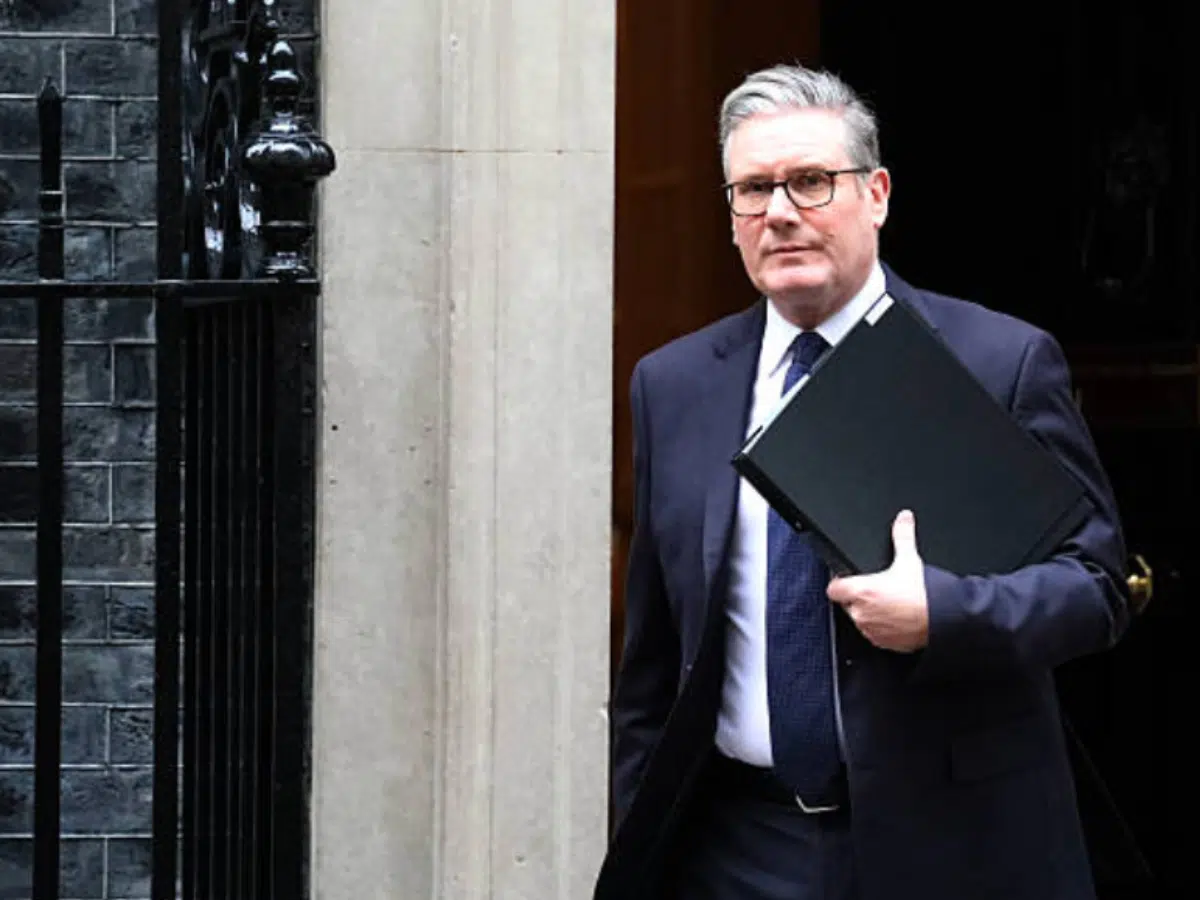
The scandal of Keir Starmer’s closest supporters spying inconvenient journalists rolls on – and the ‘mainstream’ media are finally paying attention.
The ‘Labour Together’ sabotage outfit undermined Labour’s general election campaign, brought down Jeremy Corbyn, and conned members into choosing Starmer to replace him. But it was also using undeclared donations to spy on journalists that threatened to expose its actions.
Starmer and his former chief of staff
The Canary first revealed months ago that Labour Together had paid investigators to spy on and intimidate author Paul Holden and former Mandela minister Andrew Feinstein. It was ignored by the ‘MSM’. But in February 2026 the group’s spying on two Murdoch journalists was exposed – and suddenly the corporate media took notice.
Labour Together was run by Starmer’s now-former chief of staff Morgan McSweeney then, when McSweeney moved into Starmer’s office, by Josh Simons. Simons is now a Starmer front-bencher – and reacted to the ‘news’ of the spying by saying he was “surprised” and “furious”. Unsurprisingly, his reaction was dishonest nonsense – he had personally participated in the smear campaign on the back of the spying by APCO, a company run by the wife of another disgraced Starmeroid.
The Guardian reported that despite being apparently “surprised” and “furious,” Simon:
had been personally involved in naming them to British intelligence officials and falsely linking them to pro-Russian propaganda.
Simon’s spokesperson told the Guardian the claims weren’t true. But, this time even the Guardian bothered to keep investigating, having seen emails written by SImon himself.
Labour Together shady work
A key plank of Labour Together’s attempt to nobble the journalists exposing it was to link them to establishment bugbear Russia. And, of course, Simons was personally involved in writing to British intelligence services falsely linking both the Murdoch hacks and – especially – Paul Holden to Russia. Holden was in the process of writing his landmark book The Fraud, which subsequently exposed Labour Together’s and Starmer’s dishonesty and dark tactics.
In January 2024, Simons received a 58-page report from APCO after paying the company £36,000 to spy on journalists. He then approached spy agency officials to accuse the journalists of a “coordinated effort to discredit” Labour Together” to undermine Starmer, and Holden of living with a woman with “suspected links to Russian intelligence”.
Every word that has been written about Labour Together has since been shown to be true.
The group’s contract with APCO promised the payment for:
a body of evidence that could be packaged up for use in the media in order to create narratives that would proactively undermine any future attacks on Labour Together.
Labour Together has also been shown to have been monitoring the Canary, which it had tried and failed to destroy – and Skwawkbox, which at the time was a separate site.
Starmer’s connections to such underhand tactics run deep. A firm run by his Israeli spy has also been exposed paying journalists to publish pro-Starmer content.
Read the Canary’s serialisation of Holden’s book here.
Featured image via the Canary
(Alamy)
4 min read
Fifty per cent of voters are worried about maternity care — a figure that only gets worse once people see facts on the state of care, rising to 59 per cent.
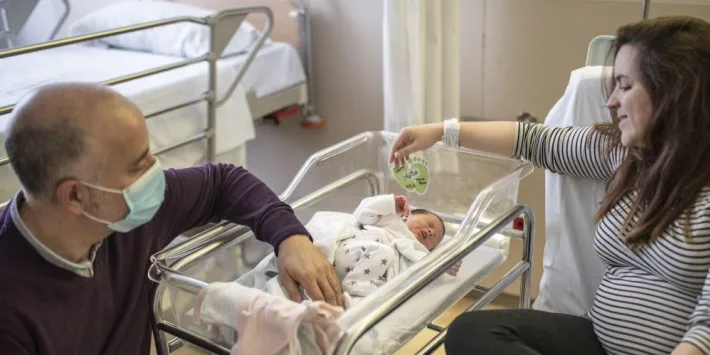
In new polling on the public mood around the NHS, published by the Prosperity Institute, maternity care was an issue of specific focus. The particular importance of the issue is obvious, given how significantly a couple’s or a mother’s experience of birth can touch their lives.
It is concerning then that a full half of the public are now, by instinct, worried about the state of NHS maternity care. Yet it is no surprise, given the sheer number of headlines about NHS trusts failing in this area. Back in September, the government announced that 14 NHS trusts in England were having their maternity services examined as part of a rapid review.
Behind the decision to review these trusts lie stories such as the death of nine babies at Gloucestershire Hospitals NHS Trust between 2020-23 due to “missed opportunities”.
Such stories — as well as high-profile outliers, such as the Lucy Letby scandal — undoubtedly stick in the minds of current and prospective parents and are arguably an underappreciated factor in our declining birth rates, as people avoid or delay having children due to concerns about care.
Anxiety around childbirth is understandable, but it is damning that this anxiety is only reinforced and not assuaged by reality. The initial 50 per cent of worried voters rises to 59 per cent when pollsters share the facts of care.
What kind of facts could have this effect? There are plenty to choose from.
For instance, out of 131 NHS maternity units inspected by the Care Quality Commission between August 2022-24, not one was rated ‘outstanding’; 47 per cent were ‘requires ‘improvement’, and 18 per cent ‘inadequate’.
Another example: over the last decade, in 21st-century Britain, maternal mortality rates have increased by 20 per cent.
There is a surprising divide between the generations in attitudes to maternity care. Among 25 to 34 year olds — the group currently making most use of maternity services — 68 per cent think NHS maternity services are going well or very well. This contrasts with just 38 per cent of 45-54 year olds and 25 per cent of 65+ year olds.
One might imagine that older groups would have a better view of care, basing their views on memories of when they had their own children roughly 20-40 years ago, at a time before the decline in care that has marked the last decade and a half.
Younger women, by contrast, are those most exposed to current dysfunction and so should, one imagines, have a worse view of services. But older voters remain exposed to the system via younger relatives and can track the decline in standards. The young, however, have never known anything different.
Defenders of the health service may cite marked improvements for infants, such as rates of stillbirths, neonatal mortality, and perinatal mortality, all of which are significantly better than during the 1990s. However, these areas have plateaued since the 2010s despite peer nations continuing to improve, and there is a pervasive sense that although things may have improved for children, they have gotten worse for mothers. Older voters seem to have noticed this. This suggestion that more exposure leads to lower opinions of care is also borne out in the fact that 48 per cent of men think NHS care is going well, compared to just 37 per cent of women.
What do voters think needs to be done? A common trend across Prosperity’s new polling is that voters are rejecting the idea that the solution to NHS failures is simply more funding. 46 per cent instead blame poor management, with only 24 per cent blaming funding and only 9 per cent blaming staff.
Serious problems have bred serious concerns, and it seems that the public is willing to countenance serious solutions.
Rhys Laverty is Editorial and Research Director at the Prosperity Institute

Bolton man arrested in fraud investigation by Yorkshire police

Dell Technologies Q4 Earnings Preview: Sustaining Growth With AI Momentum (NYSE:DELL)
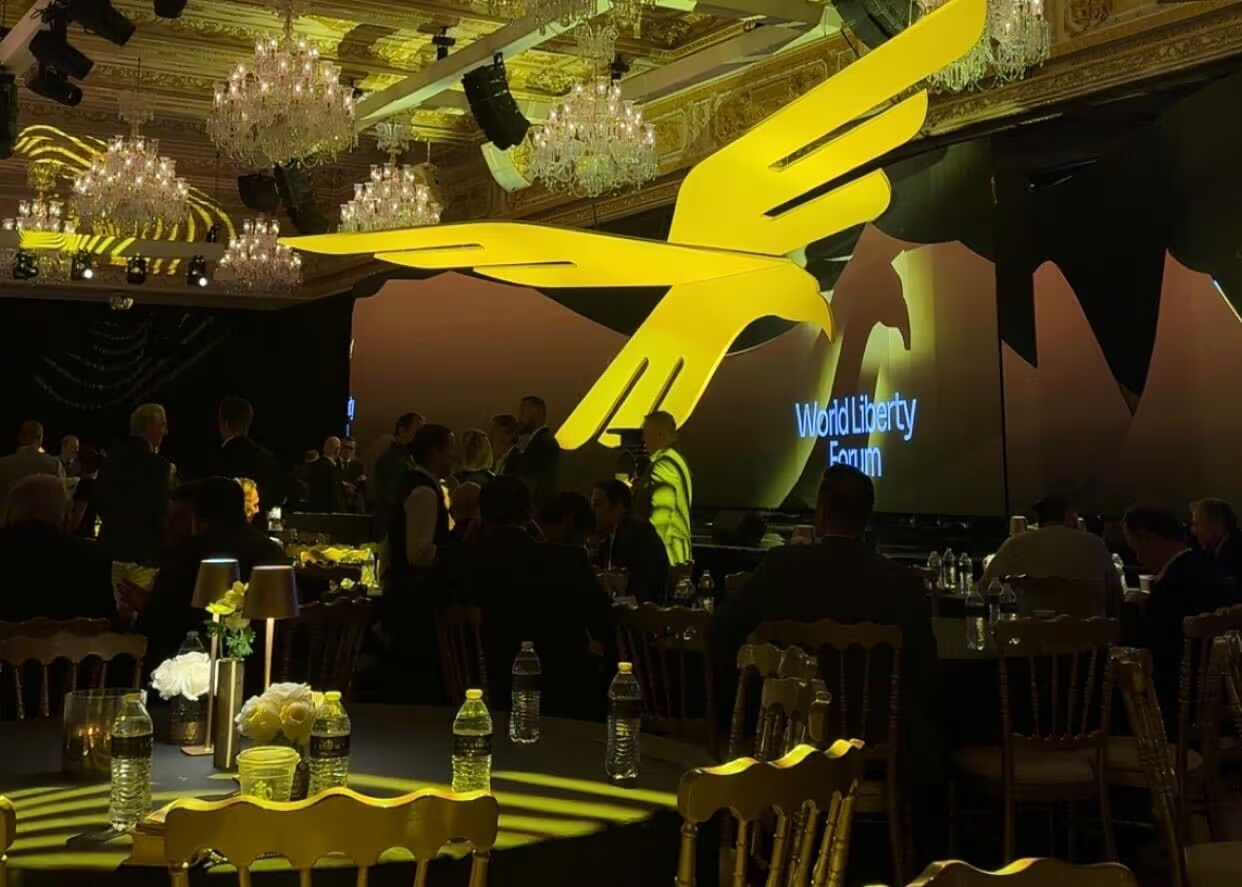
Inside Trump’s surreal Mar-a-Lago crypto summit


-

 Video4 days ago
Bitcoin: We’re Entering The Most Dangerous Phase
-

 Tech6 days ago
Luxman Enters Its Second Century with the D-100 SACD Player and L-100 Integrated Amplifier
-

 Crypto World3 days ago
Can XRP Price Successfully Register a 33% Breakout Past $2?
-

 Sports3 days ago
GB's semi-final hopes hang by thread after loss to Switzerland
-

 Video13 hours ago
XRP News: XRP Just Entered a New Phase (Almost Nobody Noticed)
-
 Tech3 days ago
The Music Industry Enters Its Less-Is-More Era
-

 Business3 days ago
Infosys Limited (INFY) Discusses Tech Transitions and the Unique Aspects of the AI Era Transcript
-

 Video3 days ago
Financial Statement Analysis | Complete Chapter Revision in 10 Minutes | Class 12 Board exam 2026
-

 Entertainment2 days ago
Kunal Nayyar’s Secret Acts Of Kindness Sparks Online Discussion
-

 Tech2 days ago
Retro Rover: LT6502 Laptop Packs 8-Bit Power On The Go
-

 Crypto World7 days ago
Bhutan’s Bitcoin sales enter third straight week with $6.7M BTC offload
-
 Sports1 day ago
Clearing the boundary, crossing into history: J&K end 67-year wait, enter maiden Ranji Trophy final | Cricket News
-

 Entertainment2 days ago
Dolores Catania Blasts Rob Rausch For Turning On ‘Housewives’ On ‘Traitors’
-

 Business2 days ago
Tesla avoids California suspension after ending ‘autopilot’ marketing
-
 NewsBeat5 days ago
The strange Cambridgeshire cemetery that forbade church rectors from entering
-

 Crypto World2 days ago
WLFI Crypto Surges Toward $0.12 as Whale Buys $2.75M Before Trump-Linked Forum
-
 NewsBeat5 days ago
Man dies after entering floodwater during police pursuit
-

 Crypto World17 hours ago
83% of Altcoins Enter Bear Trend as Liquidity Crunch Tightens Grip on Crypto Market
-

 NewsBeat6 days ago
UK construction company enters administration, records show
-

 Crypto World7 days ago
BlackRock Enters DeFi Via UniSwap, Bitcoin Stages Modest Recovery