Politics
The House Opinion Article | There is a sensible way to restore Parliament


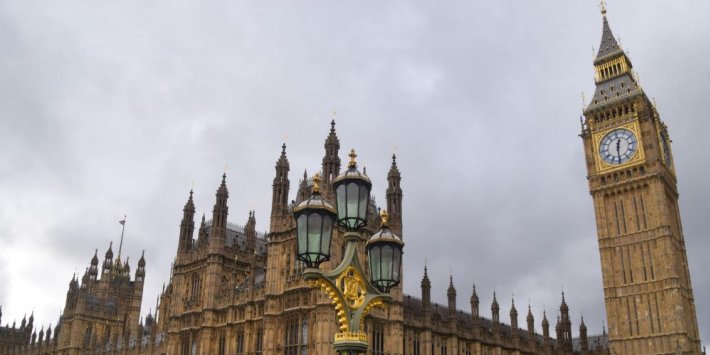
(Alamy)
4 min read
There are lessons abroad and in history about how to get this right.
When William Blathwayt, the irascible Whig politician who founded the War Office, was rebuilding his Gloucestershire country seat in the 1690s, he became so exasperated with the stream of financial demands from his builders that he finally erupted, “these people want stirring up soundly and not to be overfed with money!”
This volatile prescription could also be applied to the faceless squadron of consultants who have concocted, at its worst, a £39bn, 61-year timescale for the restoration of the Palace of Westminster.
Policy Exchange has long campaigned for beauty to once again become a defining feature in our built environment, and if there is any single British building that symbolises how an enlightened state can directly procure it on a gargantuan scale, it is the Houses of Parliament.
And yet, not even an icon this venerable can justify the profligate excess currently associated with its refurbishment. Even the best-case scenario of £15.6bn over 24 years is fiscally, electorally and ethically unconscionable. So what is the solution? I humbly propose five.
First, the current project must be scrapped and replaced with one that maintains a practical, economic and forensic focus on delivering the three ‘R’s (Repairing, Rewiring and Restoring) to prevent the three ‘F’s (Flooding, Fire and Falling). Anything further to this core ambition of making the building fabric safe and stable should be shelved.
This means no to a net zero revamp, no to full wheelchair accessibility (offices, amenities and public areas will do), no to carving sacrilegious ramps into Westminster Hall and no to turning a Victorian building into a modern one. Were the Blobular bureaucrats handling the current project let loose on the Leaning Tower of Pisa, they would invariably attempt to straighten it.
And no to the extreme architectural hubris evident in current visualisations. It beggars belief that this needs to be said, but every design intervention must be sympathetic to the aesthetic principles of a Gothic palace and not a Qatari golf resort.
Secondly, to help finance the project, authorities should consider opening the top of the Elizabeth Tower to paying tourists. There would inevitably be logistical challenges, but the French state earns around £87m annually from Eiffel Tower visitors, and similar revenues from iconic Big Ben would greatly help offset costs.
Thirdly, demolish Westminster’s QEII Conference Centre – an incongruous carcass of 1970s ASBO-Brutalism – and replace it with a contextually sympathetic building that can accommodate both decanted Commons and Lords chambers before being converted back into a conference centre after Parliament’s restoration.
Fourthly, learn from the ongoing restoration of similar parliamentary buildings inspired by Westminster: Canada’s. Comparisons of this nature are difficult, but despite being of a similar size, style and age to our own, Ottawa’s Parliament Hill is currently being refurbished for just £2.7bn. We should learn how.
And finally, we should also learn from an even closer precedent: Notre Dame de Paris. The fire that ravaged it in 2019 offered a grim portent to a crumbling Westminster, but its heroic five-year reconstruction has arguably been the defining and most successful restoration project of our age.
Though a smaller (£650m) and arguably less complex undertaking, political leadership was central to its success. This came in the form of the military general requisitioned to lead the project and plough through the onerous trenches of French bureaucracy. And also in the very personal leadership of President Macron himself, who bravely staked his political credibility on the project’s successful completion.
Both strategies are the minimum leadership template we must employ here. A British prime minister needs to assume Westminster’s restoration as his or her personal mantle and pledge, with senior expert external support, to complete at least the bulk of the post-decant works within the life of a Parliament.
After the devastating 1992 fire at Windsor Castle, government agencies were excluded from its reconstruction in favour of private contractors, and the late Duke of Edinburgh took personal charge of the project. The result? The restored castle reopened in 1997, six months ahead of schedule and costing just over half its expected £60m budget.
A streamlined brief, private sector efficiency and strong political leadership are key to ensuring that Westminster can reap Windsor’s rewards.
Ike Ijeh is Head of Housing, Architecture & Urban Space at Policy Exchange
