Connect with us

Tech

Beats 360 Puts Swappable Cushions and a New Acoustic System on a $350 Over-Ear Pair

Published

on

Beats 360 Over-Ear Headphones Reveal
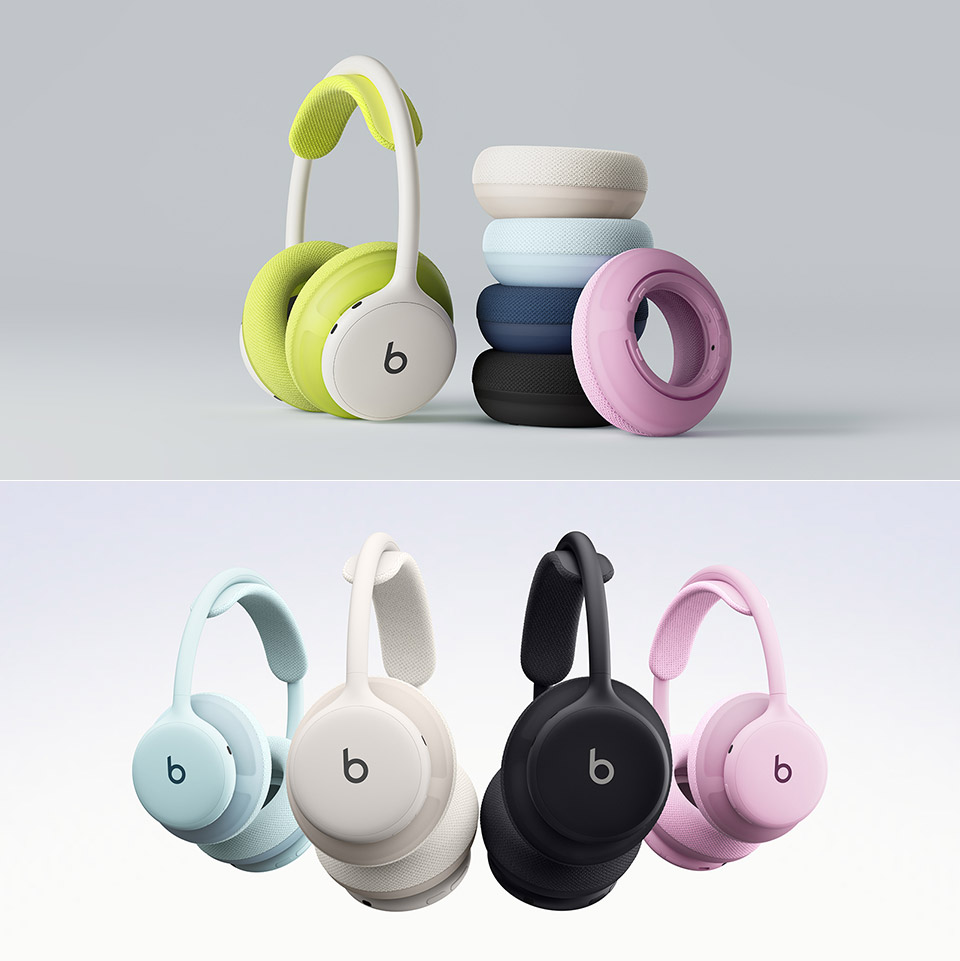
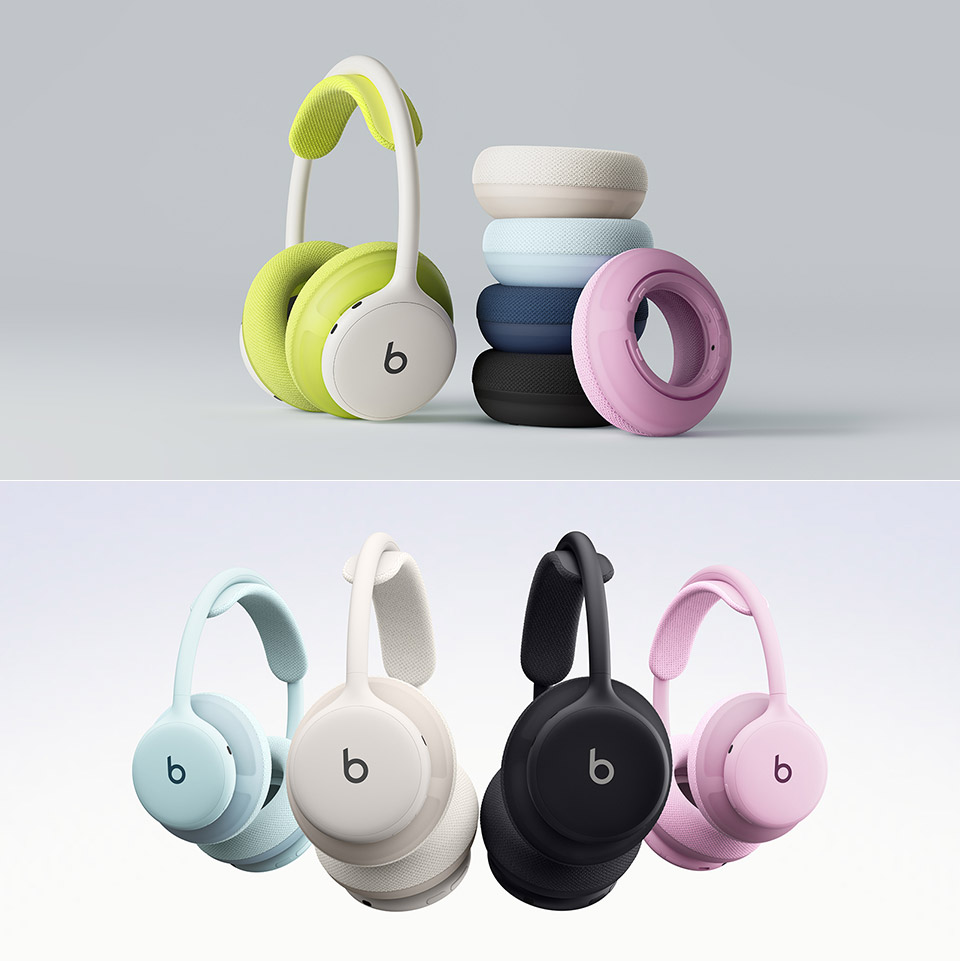
Beats finally put a price and a ship date on the over-ear headphone it has been teasing for months. Beats 360 costs $349.99, with preorders open today from Apple, Amazon, and other retailers in more than 100 countries, and units arriving in stores Thursday, September 24. Four core colors ship first: Black, Cloud, Pink, and Sky. Each pair arrives with matching Performance Knit ear and headband cushions, plus a woven ripstop case that lets the cups twist flat for travel even though the headband itself does not fold.


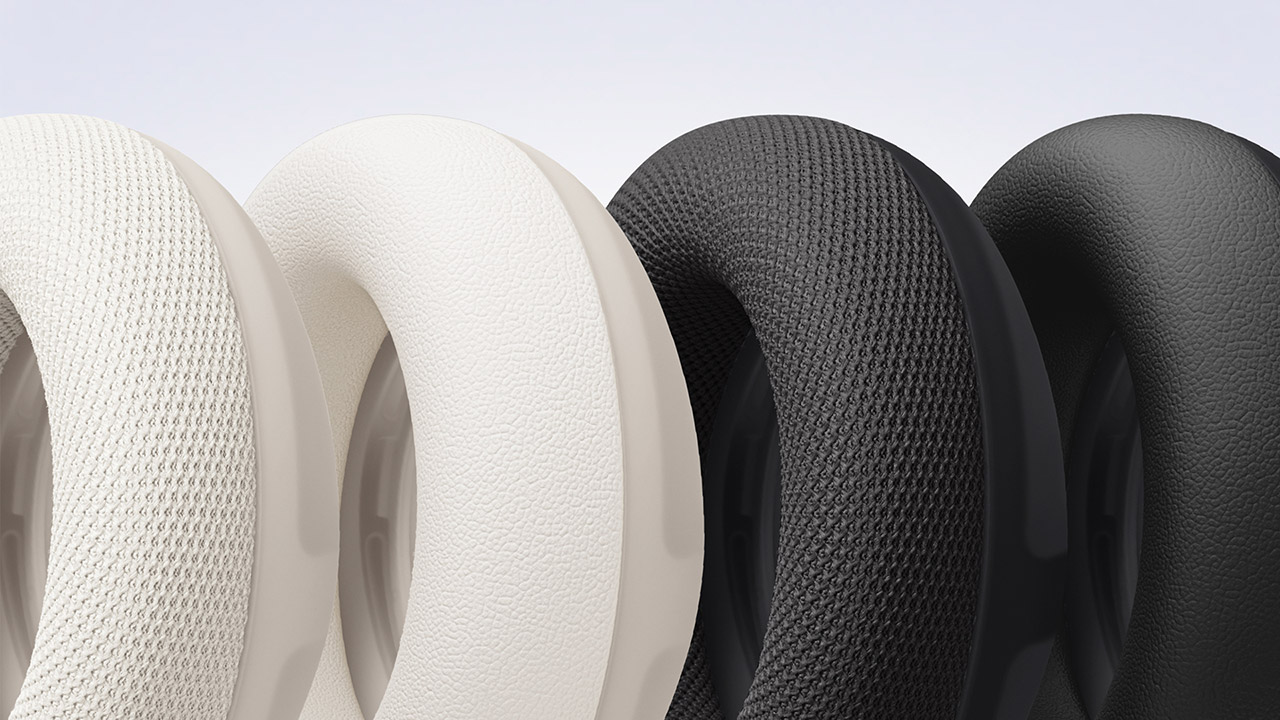
Cushion kits are essentially the entire purpose of the name. The ear pads twist off in about 2 seconds, and the headband pad snaps off, allowing you to simply change colors and materials on the same pair without purchasing a new one. The Performance Knit kits are available in all four initial colors, as well as Navy and Volt. They’re comprised of breathable memory foam covered in diamond weave, which has 36 micro threads per strand. In contrast, UltraPlush kits employ engineered leather over the same foam in Black and Cloud, giving them a feel similar to Studio Pro. The sensors can detect the type of pad you’re using and adjust the sound and noise cancelation to keep the seal intact. Extra kits are generally $49.99, but there is a launch special in the US, UK, Canada, Australia, France, China, and South Korea that reduces the price to just $9.99 for a limited time, allowing you to mix and match to create well over 200 distinct color combinations.


Beats 360 — Over-Ear Headphones with Interchangeable Cushions, Sweat & Water Resistance and Noise…
  • Beats 360 has interchangeable cushion options for both earcups and headband, so you can have a fresh set ready post-workout or a new color just to…
  • Active Noise Cancellation (ANC) blocks out unwanted noise to help you focus, after adapting to your environment and unique fit — with up to 1.75x…
  • The bespoke, high-fidelity acoustic platform delivers powerful bass and pinpoint precision across the tonal range with ultra-low distortion for the…


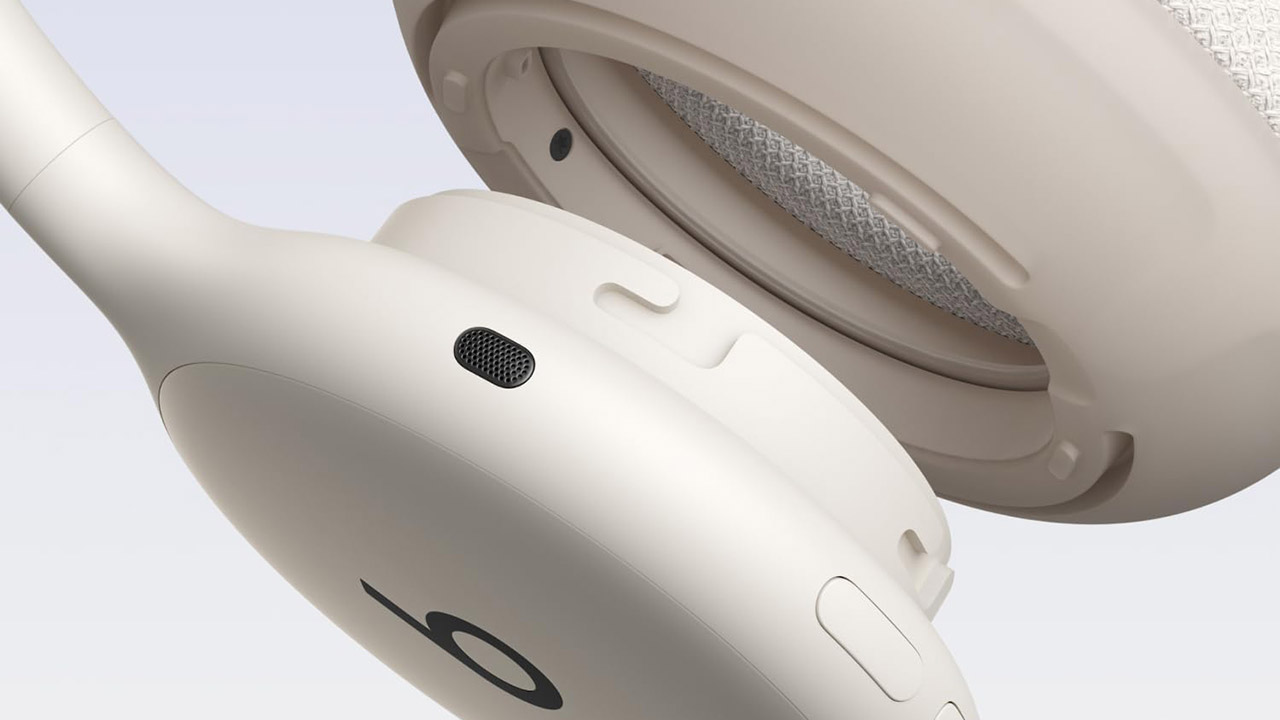
Each ear cup has its own battery, antenna, and CPU, and there is a single power line that runs through the headband, but it charges both sides simultaneously via a single USB-C port on the left cup. Because of this configuration, engineers were able to place more mass in the pads and less in the band, allowing a 294.5 gram pair to sit closer to Studio Pro in terms of comfort, but being slightly heavier. Telescoping stainless steel arms and rotating cups make it easier to get a good fit. Beat has incorporated additional IPX4 sweat and rain resistance to these, which is aided by an acoustic firewall behind the drivers and a sealed rear chamber. They’ve also managed to incorporate a significant amount of recycled materials into the design, with 80 percent of the interior and cup pieces made of recycled plastic, while the magnets are made of recycled rare earth metal.


The sound originates from new 40mm speakers with two neodymium ring magnets and a three-layer diaphragm arrangement. Beats claims that the output has increased by 12 dB compared to Studio Pro while maintaining low distortion levels throughout the frequency spectrum. After you’ve turned off ANC and Transparency, Adaptive EQ will constantly modify the sound to fit your head. There are nine MEMS microphones in the frame, eight of which input into Beats’ noise cancelation system, which they claim is at least 1.75 times more effective than Studio Pro. Three microphones are dedicated to speech pickup, two of which are shared, with beamforming designed to improve call quality.

Advertisement


On Apple devices, you can also enjoy tailored Spatial Audio with dynamic head tracking via the motion sensors in the left cup for Dolby Atmos. A listening mode button on the left cup cycles through ANC, Transparency, and Adaptive EQ, while volume and play/pause controls are located on the right cup. You can also have hands-free Siri on an iPhone, which is pretty standard fare. Unfortunately, wear detection and auto pause did not make the cut, and there is no 3.5mm connector or USB-C analog audio.

Beats 360 Over-Ear Headphones Reveal
Even with Active Noise Cancelation and Spatial Audio switched on, or if you set Adaptive EQ on and turn those modes off, battery life is a decent 32 hours, and 5 minutes on the plug will get you an hour of audio. It’s all powered by a custom 4th generation Beats chip and sophisticated Class 1 Bluetooth 5.3, which quickly couples your headphones with an iPhone or an Android device. You also receive a slew of Apple-specific features, such as one-tap setup, seamless device switching, Audio Sharing, which works with other AirPods or Beats, and Find My, which allows you to keep track of where you last had them if you can’t remember.

Beats 360 Over-Ear Headphones Reveal
Android users get Fast Pair, which allows you to quickly connect with a new device, Audio Switch, which allows you to switch between them, and Find Hub, which is useful for keeping track of your audio gear. Oh, and Beats Studio Pro is still available at a new price of $299.99, putting Beats 360 ahead of it as your best chance for a completely customized flagship sound that is sweat rated for high-intensity workouts rather than a replacement. The new Beats 360 has a flashy debut, with Kendall Jenner appearing in the promotional video, shifting headphones between outfits like she’d change shoes for an evening workout. If you’re already a member of that scene, the $10 kit accessory is definitely a good place to start.

Source link

Advertisement
Continue Reading
Click to comment

You must be logged in to post a comment Login

Leave a Reply

Tech

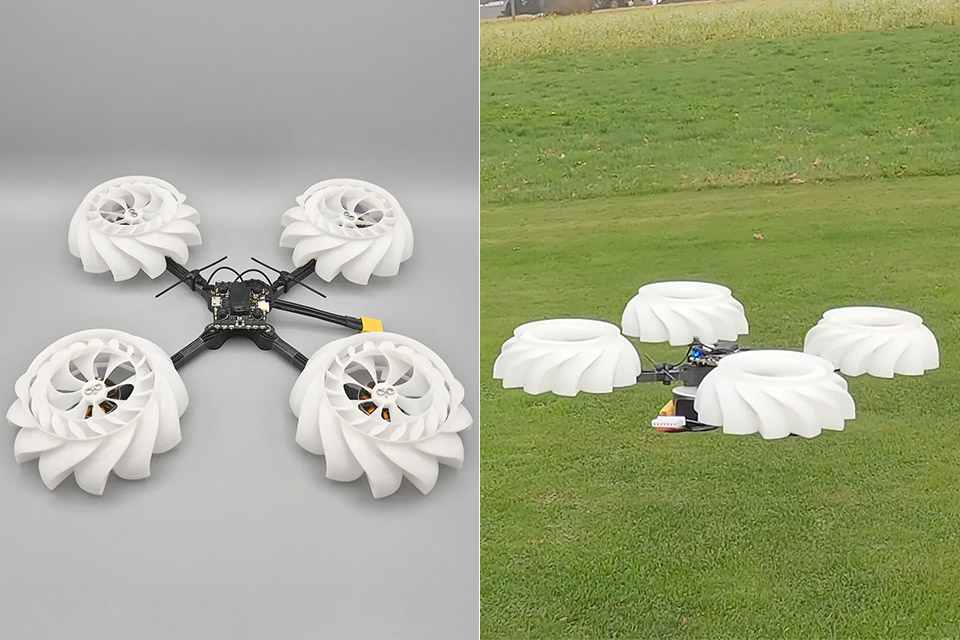
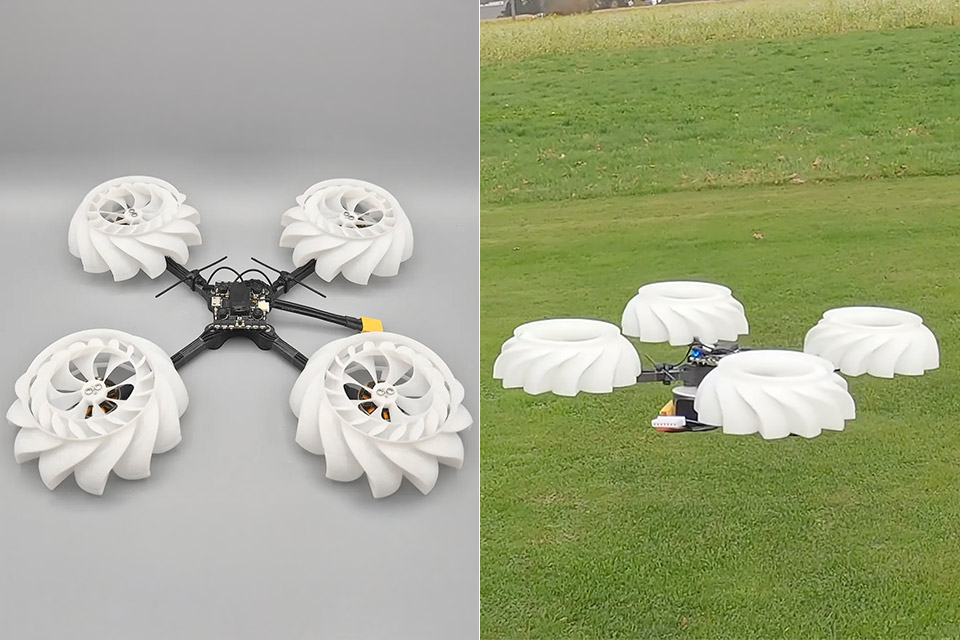
QUADMOVR Flies a Carbon Quadcopter Drone on Four Printed Radial Impellers

Published

on

QUADMOVR Carbon Quadcopter Drone Radial Impeller Design
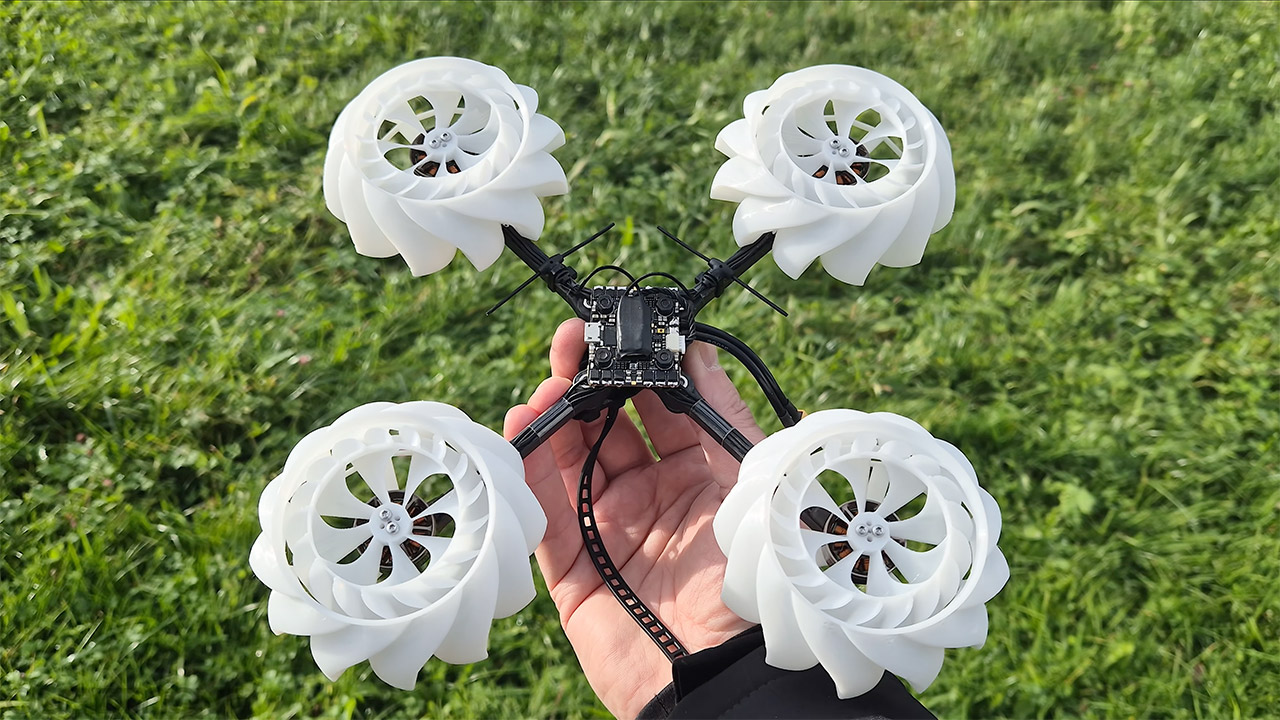
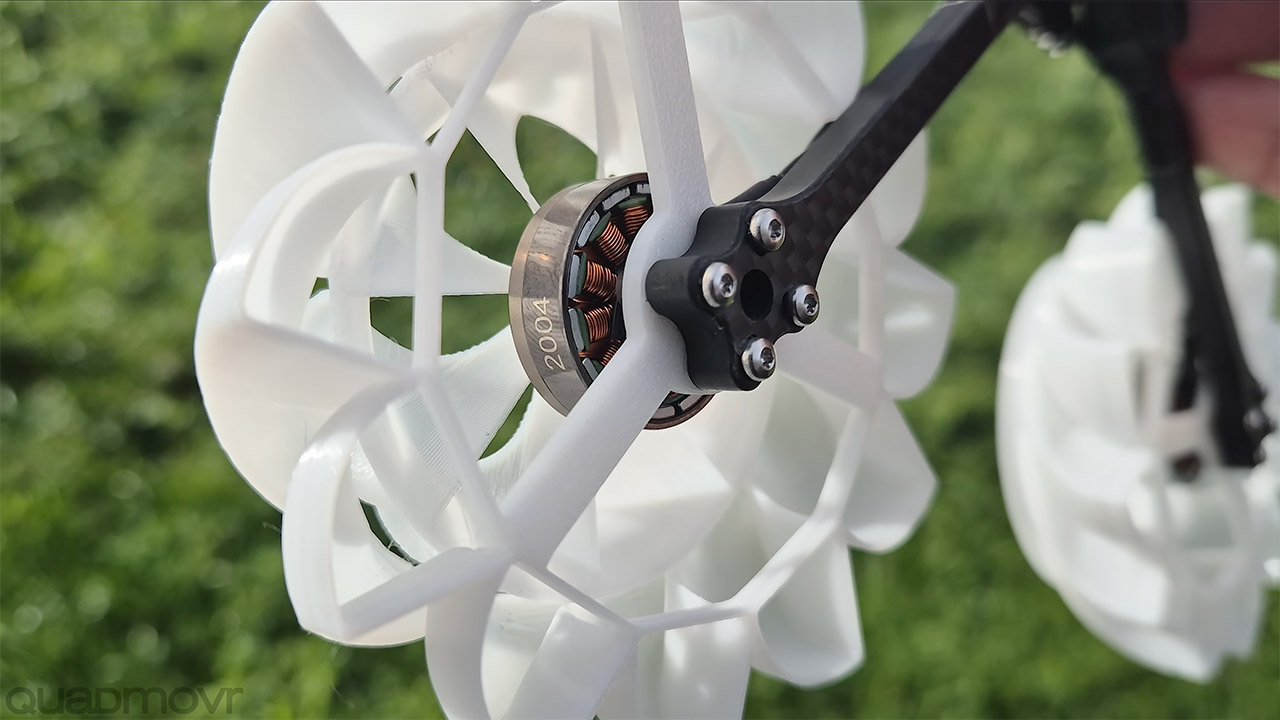
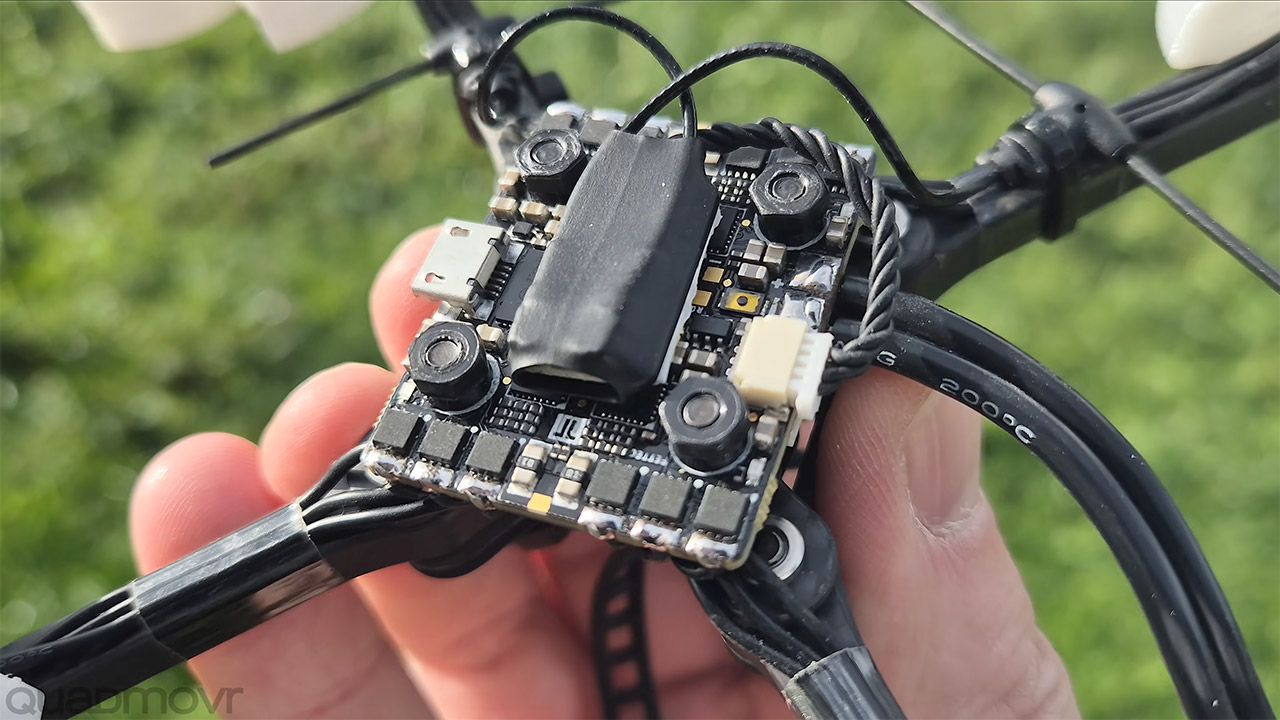
QUADMOVR is no stranger to designing, printing, and flying self-built quads, and their latest experiment swaps every propeller for a 3D printed centrifugal wheel that lives inside its own vaned case. Each unit starts as a 60 mm PETG impeller that bolts to a standard T-mount motor with two M2 screws. A matching 90 mm housing, 28 mm tall, sandwiches between the motor and the carbon arm so the spinning wheel sits inside a 0.3 mm gap. Air enters through the open center on top. Curved vanes fling it outward the way a shop blower does. Fixed vanes in the case then turn that radial blast downward, which is how four of these assemblies lift a plain movr200cp2 X frame.


Files appeared on MakerWorld in May as a modified version of Baba’s 2024 “drone radial Impeller Propeller,” a project he had previously worked on, but with some extra bits added to get them to fit properly with NewBeeDrone FLOW 2004 motors – particularly when it comes to mounting, stiffness, and cable routing. The video credits acknowledge Felix Niessen, the original designer of the impeller. If you plan to print them, use PETG, 0.16 mm layers, five walls, and no infill, and leave them just as they come out of the printer, with no extra balancing or cleaning required. Although the tolerances are rather precise, you may need to do some little sanding before they round neatly, and printing the two plates takes approximately 7 hours.

Sale


SKYROVER X1 Drone with Camera Combo with Screen Controller, 4K/60fps Video, 8K Photo, 360° Obstacle…
  • Cinematic 4K/60fps HDR Video & 48MP Photos: Captures smooth 4K/60fps HDR video and detailed 48 MP photos with a 1/1.32″ CMOS sensor and f…
  • 5.5″ HD Touchscreen Remote — See Every Detail, Even in Direct Sunlight: 700-nit brightness and 60Hz display delivers crystal-clear live view…
  • Under 249g & Travel Ready: Under 249g and easy to pack, the drone with camera for adults is built for grab-and-go flying without adding bulk to your…

QUADMOVR Carbon Quadcopter Drone Radial Impeller Design
It’s the same airframe, flight controller, and battery pack, with only two different rotors and the same Fettec 35 A AIO and 6S 550 mAh pack. But with the printed impellers, the quad weights 189 grams without the battery. When you swap in some high-quality three-blade props, the weight reduces to 141 grams. Each impeller weighs 15.7 grams, compared to 2.9 grams for a standard prop. Putting all that extra mass and surface area through the air, as well as the extra turn the air must make to get to the prop, all cost you hover time, but as the flight footage shows, the quad can still climb, translate, and perform the same acrobatic moves as before, despite not having GPS or self-leveling. A side-by-side comparison with a quad using standard props demonstrates the difference in efficiency. Some people have even described the propellers as having a “jet-like” noise, while being quieter than a pair of open blades.

QUADMOVR Carbon Quadcopter Drone Radial Impeller Design
In terms of safety, one of the practical advantages of these printed impellers is that the housing wraps around the working parts to protect them, much like the protective rings on early toy quads. Although none of this is a finished product yet, as QUADMOVR even labels it experimental, Baba stated in his original listing that the motor height, wheel-to-duct alignment, and KV all need to be relatively close for this to fly successfully. Some pilots who tried an older 60 mm version discovered it would simply sit there shaking if anything was wrong, while at least one person tested the 60 mm version on a heavier 5-inch quad and witnessed pieces break under strain.

QUADMOVR Carbon Quadcopter Drone Radial Impeller Design
The print files for this project are freely accessible under a Creative Commons non-commercial license, so if you have a competent FDM machine and a T-mount 2004, you can try it. Of course, ordinary three-blade props still prevail in terms of weight, inertia, and how little energy is wasted while rotating air twice. These printable impellers demonstrate that you can create a real FPV quad with a printed centrifugal wheel in a vaned shroud that can stay in the air long enough to fly in the same way as QUADMOVR flies everything else.
[Source]

Advertisement

Source link

Continue Reading

Tech

Barbara Mazzolai Is Cultivating Sustainability Robotics

Published

on

Throughout her career, roboticist Barbara Mazzolai has turned to nature for inspiration. Now she wants to ensure the technology she builds gives back to the environment, too.

After starting her career as a biologist, a chance opportunity saw Mazzolai switch streams to engineering and become an early pioneer of bioinspired robotics. Building on her knowledge of biology’s ability to solve a diverse set of problems, she has developed robots based on octopuses, plant roots, and even seeds. “I’ve always been fascinated by living organisms, [and] by the extraordinary variety of solutions in nature, selected by the evolutionary process,” she says.

Barbara Mazzolai

Employer:

Advertisement

Italian Institute of Technology

Occupation:

Associate director for robotics; director of the Bioinspired Soft Robotics Laboratory

Education:

Advertisement

Master’s degree in biology, University of Pisa; master’s degree in eco-management and audit schemes, Scuola Superiore Sant’Anna; Ph.D. in microsystems engineering, University of Rome Tor Vergata

But Mazzolai, now the associate director for robotics at the Italian Institute of Technology, in Genoa, also believes engineering needs to reckon with its own impact on the natural world. That’s why she is advocating for a new field of research she calls “sustainability robotics.”

In a manifesto published in Nature Machine Intelligence in July, she and her collaborators outline a vision for a new approach to designing robots that’s meant to improve the relationship between nature, humanity, and technology.

“We need to reduce the footprint of our technology,” she says. “It’s really about thinking in a different way to open new possibilities for robotics [and] for society.” In this new mode of thinking, Mazzolai considers sustainability a core component of the design.

Advertisement

A child of nature

Mazzolai traces her fascination with the living world back to her childhood growing up on Italy’s Tuscan coast, close to the port city Livorno. Her father was a public-health inspector and a professional mycologist, and the family spent a lot of time exploring forests and learning about the local fungi and plants.

After toying with the prospect of pursuing art, her other major passion, Mazzolai ultimately decided to enroll at the University of Pisa in 1987 to study biology. She was particularly drawn to marine biology, but shortly before graduating with a master’s degree in 1995, she secured a research position at the Italian National Research Council’s Institute of Biophysics studying the cycles of heavy metals like mercury through both living and nonliving parts of the environment.

This involved collecting and analyzing samples from water, soil, vegetables, and even humans to understand the impact these metals have on health and the environment. She balanced this work with studying environmental management at the Scuola Superiore Sant’Anna, in Pisa, graduating with a master’s degree in 1998.

During that time, however, she learned that the university was recruiting biologists to help design new devices for environmental monitoring. She applied for and got the job in 1999 and began working as a research assistant under renowned bioroboticist Paolo Dario, first developing sensors and then robots meant to monitor air, water, and soil.

Advertisement

Even before entering a doctoral program, Mazzolai was promoted to assistant professor in 2004 and shortly afterward made her first foray into bioinspired robotics. In collaboration with colleagues at Sant’Anna, she helped design a soft robot inspired by the octopus. “We proposed it as a paradigm for launching this idea of soft robotics: demonstrating that [robots] can be soft, but at the same time apply strong force to the environment, like the animal does,” she says.

Back to school

In 2007 Mazzolai enrolled in a Ph.D. in microsystems engineering at Tor Vergata University of Rome, which she balanced with her role at Sant’Anna. She was already relying heavily on microfabrication techniques to develop sensors for her robots, and she was keen to push that part of the field forward.

While robots frequently feature sensors designed for perception, such as tactile or proprioceptive sensors, these systems typically focus on understanding the robot’s position in its environment, she says. “But there are few robots that integrate physical or chemical sensors to really understand the environment they move in,” she adds.

“I’ve always been fascinated by living organisms, [and] by the extraordinary variety of solutions in nature.”

Advertisement

Mazzolai was appointed as a team leader at the Center for Micro-BioRobotics of the Italian Institute of Technology in 2009, where she continued her work on the emerging field of bioinspired robotics. Two years later, she completed her Ph.D. and was promoted to director of the center.

Planting the seeds

Around this time Mazzolai says she became interested in using plants as a model for new kinds of robots, expanding bioinspiration beyond just animals. In particular, she was captivated by the ability of roots to efficiently explore the underground environment, and she imagined machines with the same deftness could have applications in both environmental modeling and precision agriculture.

photo of silver metallic coil wrapped around a green plant vine While many bioinspired robots mimic animals, plants also serve as a muse for Mazzolai. This tendril-like bot can coil around other structures like a vine. Italian Institute of Technology

When she first proposed the idea, colleagues were somewhat skeptical of robots based on seemingly static organisms. But in reality, she says, plants move nonstop through a process known as indeterminate growth. “They really grow for their entire life,” she says. “They adapt their morphology, their behavior to the external environment; they repair, they sense, they communicate.”

Trying to mimic a system that operates on such different principles to conventional robotics required some serious thinking, however. Mazzolai says that working in bioinspired robotics sometimes requires you to have “two separate brains”—one of a biologist and one of an engineer.

Advertisement

The process often involves deep study of the target organism to learn the underlying principles that shape how it operates before trying to engineer a robot capable of mimicking them. “It’s not a copy of natural organisms,” says Mazzolai, because a living organism is both difficult to replicate and has different goals.

In the case of plant roots, what makes them so efficient at exploring the soil is that they reduce friction by growing only at the very fine tip of the structure, while the thicker base of the root remains static. This significantly reduces the amount of energy required to push through the earth compared to that of a more conventional drill, which must push the entire structure from above.

To realize this principle in a robot, her team developed a miniaturized 3D printer that sits at the machine’s tip and feeds thermoplastic filament through a heated nozzle to build a snakelike body behind it. This allows the robot to push through the soil efficiently. The tip also contains sensors that allow it to avoid obstacles and detect nearby nutrients or water.

Making robotics sustainable

After spending so much of her career borrowing from nature, Mazzolai is now eager to return the favor. Many modern technologies, including plastics and car batteries, have been developed with little thought about how they will affect the environment at the end of their life cycles, she says.

Advertisement

She wants to ensure that robotics doesn’t follow the same path. This is the inspiration for what she and collaborators now call sustainability robotics. The approach has three central pillars: ensuring that robots have minimal impact on the environment; that they’re available to people from across the world and all socioeconomic backgrounds; and that they’re “symbiotic,” providing benefits to both humans and nature.

More concretely, Mazzolai would like to incorporate the concept of a life cycle into the design of robots, so that at the end of their useful life these machines can be reused, recycled, or even biodegraded.

While that might sound ambitious, she’s confident that all the ingredients to make it a reality are in place. And it’s a vision that she is certain will inspire future roboticists. “There are younger people who want to really work in this field because this is the future, their future,” she says. Facing the threat of ongoing environmental damage, “they want to develop something that can help.”

From Your Site Articles

Advertisement

Related Articles Around the Web

Source link

Continue Reading

Tech

Pentagon Investigators Say Overreliance on Palantir AI Contributed to US Strike That Killed 123 Iranian Children

Published

on

Two U.S. missiles hit an elementary school in Iran, killing over 150 people including 123 children on the first day of the Iran War. But Gizmodo notes that a new Bloomberg investigation cites U.S. officials involved in an unreleased internal Pentagon review who blame “a cascade of preventable failures that included an overreliance on an AI tool built by Palantir.”

According to the officials who spoke to Bloomberg, some personnel inside U.S. Central Command leaned too hard on the AI inside the Maven Smart System, an AI-powered data integration and targeting platform developed by Palantir to accelerate intelligence analysis and decision-making. The Defense Department has reportedly made the software tool a cornerstone of military operations over the past year… Officials said some users expected Maven to flag stale records or contradictions in the intelligence assembled for potential targets, though it is not clear why they thought the system would do that. The Minab [elementary school] site, which was cataloged as an Islamic Revolutionary Guard Corps facility due to outdated data, was fed into Maven with other candidates and came out as a recommended day-one target. Target-list work that once took hours was condensed into minutes.

A Palantir spokesperson told Bloomberg the company “is not responsible for the underlying data nor identifying intelligence deficiencies” and that there is no evidence its software was at fault. Two people familiar with Palantir’s Pentagon contracts said the government keeps primary responsibility for the quality of the information that’s fed into Maven. After the strike, Palantir added features that “re-review underlying intelligence to identify factors that would disqualify a target and flag inconsistencies and inaccuracies that human review may have missed,” a person familiar with the work said. That new functionality is said to have already caught some anomalies…

More than 1,000 Iranian targets were hit in the first 24 hours, and according to Bloomberg’s sources, that pace compressed the time available for additional confirmations. Staffing on civilian harm mitigation teams across the U.S. Department of Defense had also fallen by roughly 90% over recent years, shrinking to fewer than 20 people overall. The U.S. Central Command’s group shrank from 10 people to one. No member of those teams reviewed the Minab site before the missiles were up in the air.

Advertisement

A separate inquiry by the United Nations’ Independent International Fact-Finding Mission on Iran this week reached the conclusion that there were reasonable grounds to believe the United States committed the war crime of launching an indiscriminate attack.

Read more of this story at Slashdot.

Source link

Advertisement
Continue Reading

Tech

Full Pages From a Slim Bar, Courtesy of the ETIKEZ D90E Inkless Travel Printer

Published

on

ETIKEZ D90E Inkless Travel Printer Thermal
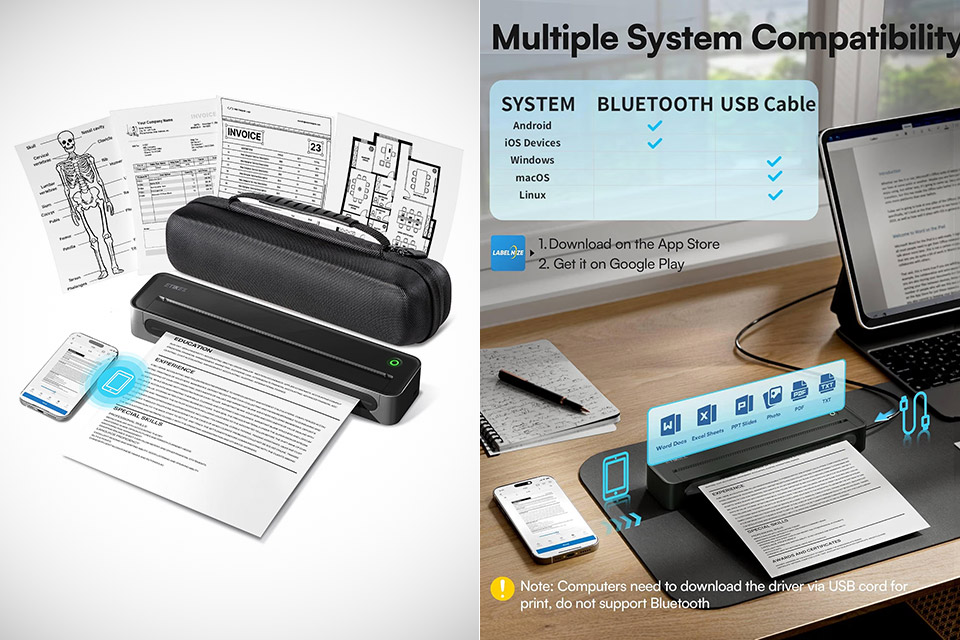
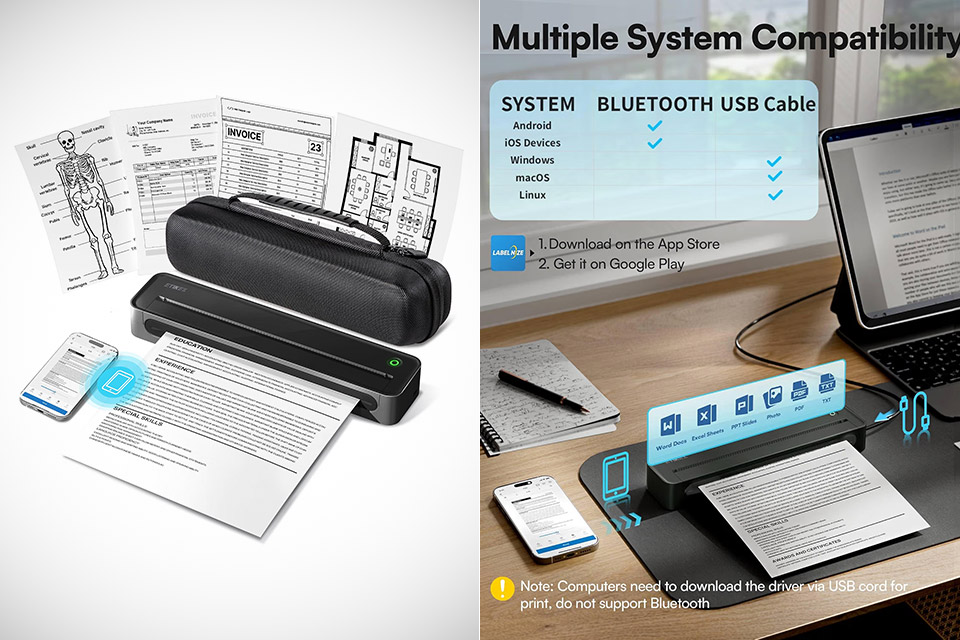
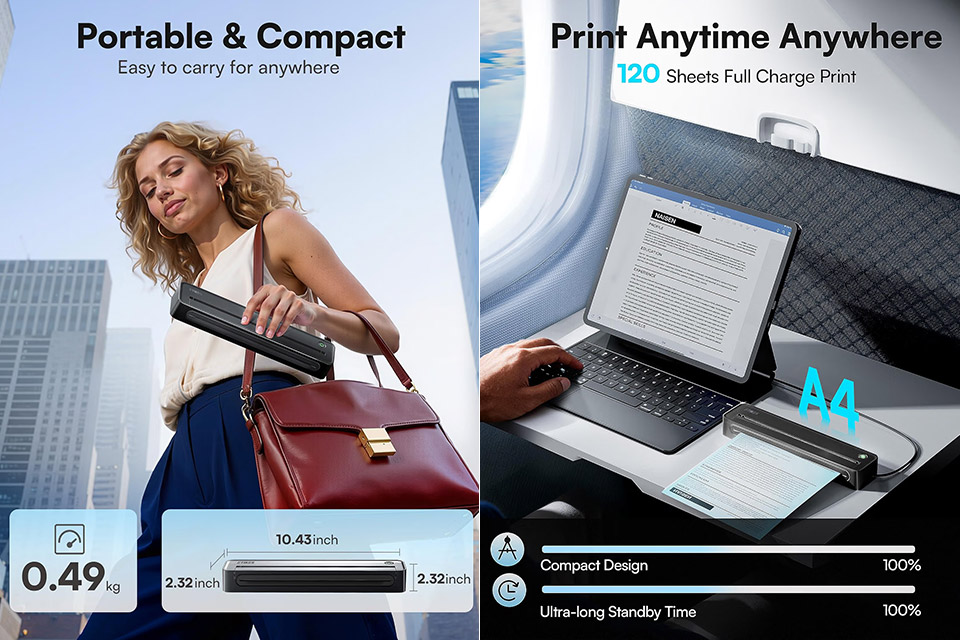
Most compact printers still trap you on receipt rolls or force a desk machine into a suitcase. ETIKEZ sized the D90E, priced at $64.59 (was $80), like a thick ruler that spans a letter page: about 10.4 inches wide, 2.3 inches deep, and 1.3 inches tall, so a sheet of 8.5 by 11 thermal paper feeds straight through a body that slides into a backpack or briefcase. Listings put the printer itself near a pound, and the kit adds a soft travel case plus a short stack of starter sheets. Heat does the work. No cartridges, toner, or ribbons sit in the bag, and the only consumable is coated thermal paper made for this machine. Ordinary copy paper will not print.


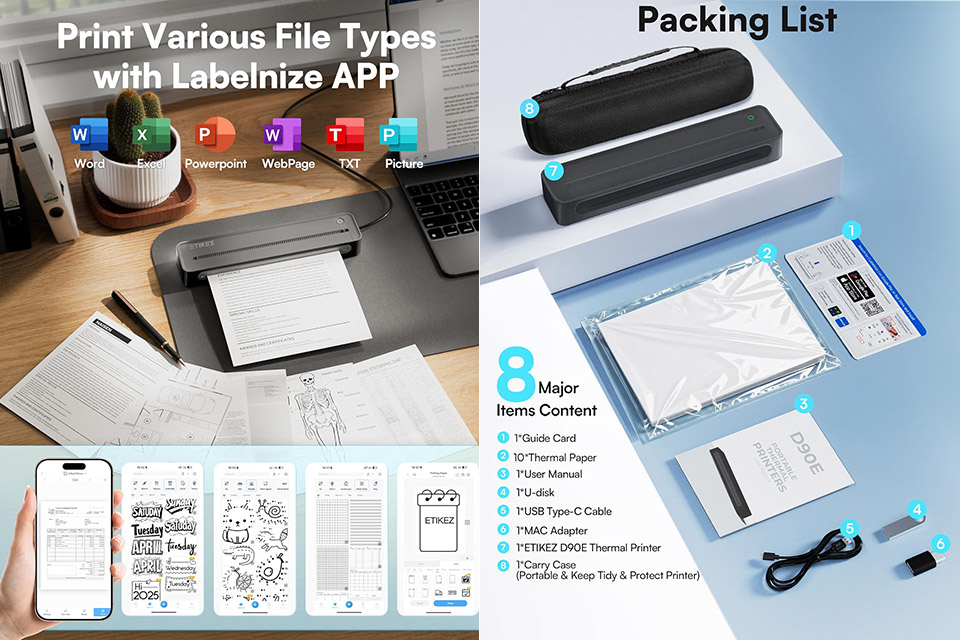
Heat sensitive stock is about the only thing that truly limits you. You can feed US letter sheets sold for the D90E, or matching A4 packs in other markets, and the 203 dpi thermal head lays down black text fine enough for contracts, notes, invoices, receipts, and even handing out class presentations, which reviews applaud. Photos and fine details, on the other hand, appear slightly softer than those produced by a laser printer, which is to be expected at this resolution and pricing. Some kits will also accept fanfold packs, continuous rolls, and temporary tattoo transfer sheets. When you tear the sheet, it just offers you a clean finish. You still buy the paper in 100-sheet packs, but you don’t have to worry about running out of ink.

Sale


ETIKEZ D90E Inkless Portable Thermal Printer with Case – 8.5″ x 11″, Black
  • Portable Wireless Printer – The ETIKEZ D90E is an inkless printer and portable printer that uses advanced thermal technology, requiring no ink, toner…
  • Bluetooth & USB Connectivity – Connect this D90E portable printer to iPhones or Android via Bluetooth. This wireless printer also works with PC over…
  • Multiple Printing and Format – The wireless portable printer supports 8.5″ x 11″ US Letter thermal paper (B0GD61HPDC, B0GD5JFC2Q). It meets all your…

ETIKEZ D90E Inkless Travel Printer Thermal
You can connect phones to it via Bluetooth using the free Labelnize software on iOS 13 and later, Android, and iPad, or for Windows and Mac, use a USB connection and a driver from the Labelnize website or the included USB stick. If you own a Chromebook, you’re out of luck. To pair it, press and hold the power button for a few seconds until a steady light appears, then connect and send over a pdf or one of the app’s templates. It comes with a USB-C cable, which you can just plug into any old 5 volt 2 amp brick you have laying around the home. As for how long it lasts, claims range from roughly 50 minutes of continuous use to over a hundred pages on a larger battery, so consider a single charge as a work session rather than a week of printing. When it emits a solid green light, you know everything is in order; blue indicates that Bluetooth is operational, and any red light indicates that something has gone wrong, such as an open cover, empty tray, or low battery.

ETIKEZ D90E Inkless Travel Printer Thermal
Students, teachers, notaries, truckers, and anyone who signs papers away from a copier are the obvious audience. A hotel room, a campus library table, a cab of a truck, or a kitchen counter can produce a readable letter-size page without hunting a business center. Getting it set up from the box to the first print is really simple, as long as you load the coated side exactly as the instructions instructs and ensure the sheet is square in the slot. Automatic feed so it pulls the page out for you, and a fast touch on the power button to bring it back in, and if you run a lot of prints in a row, there’s an overheat safeguard that just pauses the head and waits for it to cool down before resuming.


A4 Thermal Paper for Portable Printers(8.27×11.69In, 100 Sheets), BPA-Free
Advertisement
  • A4 Size Thermal Paper:** Each thermal printing paper measures 8.27 inches by 11.7 inches, providing ample space for printing various types of…
  • Portable Printer Compatibility:** Thermal paper 8.27 x 11.7 only suitable for letter paper thermal printer not for traditional inkjet or laser…
  • Dry Quickly:** Dry quickly thermal printer paper 8.27 x 11.7 delivers fade-resistant and smudge-proof printing results, ensuring clean long-lasting…

Source link

Continue Reading

Tech

'Coyote vs. Acme' Outgrosses All But 3 WB Movies This Year, Heads To Profit

Published

on

The movie Coyote vs. Acme earned more than Warner Bros.’ $30 million tax write-off in just two weeks. And last week the movie officially earned more than its production budget of $70 million. But today the movie passed the $100 million mark. “You asked for it, we delivered, and you showed up!” distributor Ketchum Entertainment posted on social media (adding “Thank you to the fans for making this a massive hit!”)

With a break-even number of $120 million, the movie “will probably make up any theatrical deficit (should there be any) with its impending releases on video on demand and streaming,” writes ScreenRant. Almost three years after the completed film was initially shelved for a $30 million write-off, its
cumulative domestic box office has apparently even beat Warner Bros. dinosaur movie The End of Oak Street:

In addition to officially joining the chart of the Top 30 movies of the year so far at the domestic box office, by surpassing The End of Oak Street, Coyote vs. Acme has outgrossed five of the eight movies that Warner Bros. has put out in domestic theaters this year…. [It’s just $17.6 million behind Supergirl, and within $30 million of Mortal Kombat II and Wuthering Heights.] Their anticipated sci-fi sequel Dune: Part Three also seems guaranteed to land higher than 2026’s Coyote vs. Acme on the chart (2021’s Dune earned $108.9 million in domestic theaters, while Dune: Part Two earned $282.1 million).

With its a small marketing budget of just $10 million, the movie seems to be relying on
oddball marketing stunts like their AMA on Reddit’s r/movies. And commemorating the spirit of the movie, Crayon-maker Crayola even released a special “Coyote Secret Plan” web page for children to print and color — and partnered with the film’s stars for a video on the importance of creativity:

Advertisement

Lana Condor: Crayola is all about encouraging kids and grown-ups to turn imagination into action.

Will Forte: Which is exactly what Coyote does in Coyote versus Acme. He sees a problem and thinks, “Could this be solved with a rocket, a catapult, or a suspiciously affordable mail order anvil?”

Lana Condor: Usually no.

Will Forte: Usually very no.

Advertisement

Read more of this story at Slashdot.

Source link

Advertisement
Continue Reading

Tech

Sega nearly killed Sonic before the movies revived the franchise

Published

on

Through the looking glass: Sonic the Hedgehog has been the face of Sega for well over three decades. In the early 90s, Sonic squared off with Mario for 16-bit console supremacy – and some say he got the better of the bout. But it hasn’t always been sunshine and rainbows for the furry blue hedgehog. Indeed, at one point in the not too distant past, Sega almost did away with their iconic mascot.

During a recent interview at the Tokyo Game Show, Sonic boss Takashi Iizuka recalled both the good and bad times. “During the worst times, I was told by the higher-ups that we should cancel the entire franchise. I had to fight within the organization to keep the franchise as long as possible.”

A key turning point in the fight to keep Sonic alive came in 2020 with the first live-action movie. If you recall, the first trailer sent the Internet into a tailspin. Viewers were horrified by Sonic’s normal-sized eyes, white fur hands, and a mouth full of human-looking teeth. Fortunately, the film’s director listened to the criticism and total redesigned the character ahead of launch.

Advertisement

The gamble paid off. Sonic the Hedgehog ended up grossing $320 million at the box office and paved the way for multiple sequels. More importantly, it proved to Sega that the demand for Sonic was alive and well.

The tale highlights just how unstable the entertainment industry can be, and how one project has the potential to make or break a franchise and change the trajectory of history. To date, the Sonic franchise has sold over 1.5 billion copies worldwide.

Imagine how Nintendo’s timeline might have looked had the company abandoned Mario following the release of the 1993 live action film. Had the 2020 Sonic film flopped, it’s very possible that Nintendo might have thought twice about releasing The Super Mario Bros. Movie in 2023. That animated flick raked in $1.36 billion at the box office.

And who knows how many awesome games and characters we have missed out on because an executive prematurely pulled the plug on a budding franchise. Perhaps in an alternate, parallel timeline, folks are enjoying movies and games we never will.

Advertisement

Source link

Continue Reading

Tech

I’ve Been Waiting for a Coffee Maker With No Plastic in the Brew Path. Caraway Just Delivered

Published

on

Over the last two or so years, I’ve been slowly swapping out the plastic in my kitchen for better alternatives to avoid as many microplastics as possible. I use glass Pyrex for storage, bamboo utensils for cooking, a wooden cutting board for all of my slicing and dicing, glass dishes and reusable, stainless steel water bottles. But there was still one thing I knew for a fact contained plastic: my coffee maker

Although I haven’t removed every single piece of plastic from my kitchen, I was extra cognizant of my coffee maker because every time it’s used, boiling water goes over the plastic and into the coffee. No, I don’t put my morning beverages under a microscope, but I feel like there’s a good chance that microplastics are leached during this process. And it seemed unavoidable, because every single drip coffee maker I’ve used has had plastic either in the basket where the coffee grounds are placed or on the carafe lid.

So when I learned that Caraway was entering the appliance scene with a drip coffee machine that has absolutely no plastic in the brew path, I had a sneaking feeling that it would end up being my favorite coffee machine ever. Two weeks into having it in my kitchen, I can say I was right. 

Testing the Best Blenders for 2026 | CNET Best List

Trying out Caraway’s new coffee maker

I was already familiar with Caraway through the brand’s ceramic-coated cookware, so I wasn’t surprised to find an exceptionally sharp-looking appliance when I opened the box. Aesthetically pleasing kitchenware is what the brand is known for after all. The design, the color, the quality of the build — all of it made a great first impression. Even the removable cord is thoughtfully designed, but I had to make sure it functioned as well as it looked.

The brew basket is stainless steel, and it comes with a reusable stainless steel coffee filter, too. The glass coffee carafe holds up to 10 cups, and although there’s silicone around the lid, the part that comes into contact with your hot coffee is stainless steel. All of those pieces are dishwasher safe.  

Advertisement
A clay-colored coffee pot
The coffee only comes into contact with stainless steel.Corin Cesaric-Epple/CNET

There is only one knob on the coffee maker, which helps it keep its sleek look. It controls the brew, clean and start/stop options. After the coffee is finished brewing, it stays warm in the carafe for up to an hour and a half.

A knob on a coffee maker
You can twist the knob for brew or clean and push it for start or stop.Corin Cesaric-Epple/CNET

No plastic, no rogue grounds 

After using it multiple times, it has consistently made great coffee with no grounds in it, so the reusable coffee filter was a success, too. 

Although it’s simple in design, there are nice details throughout, such as a matte finish, a tall, glass carafe and the blue light that illuminates when you pour water into the reservoir.

If you like to schedule your coffee ahead of time, though, you won’t be able to do so with this appliance. There are no extra buttons for scheduling or digital screens, which is partly why this appliance looks so chic. 

a person holding a coffee brew basket
After the coffee is finished brewing, the stainless steel filter can be rinsed out and reused next time.Corin Cesaric-Epple/CNET

I’m loving this coffee machine for many reasons, but the biggest one is that it solves a problem I’ve been focused on for a while. As we continue to learn more about microplastics and their potential impact on our health, I’m becoming more cautious about how often my food and drinks come into contact with plastic. 

Before this launch, if I wanted to avoid plastic when making coffee, a pour-over was the main option I saw. Caraway’s new coffee maker not only keeps plastic out of the brew path but also offers the convenience of a drip coffee maker — and looks great doing so.

The Caraway Coffee Maker is now available for $495 in cream, stone, midnight and clay colors.

Advertisement

Source link

Advertisement
Continue Reading

Tech

Beelink’s SER8 mini PC with 32GB RAM gets a $160 discount

Published

on

You don’t need a bulky tower to get serious desktop performance. The Beelink SER8 min PC squeezes an eight-core Ryzen 7 processor, 32GB of DDR5 RAM and fast PCIe 4.0 storage into a chassis measuring just 5.3 x 5.3 x 1.8 inches.

• Best for: Anyone who wants a powerful desktop PC for productivity or creative work but would rather have a compact machine that takes up very little desk space.

• The deal: The Beelink SER8 with 32GB RAM and a 512GB SSD is $769 (was $929) at Best Buy. It’s also on sale for $769 at Amazon.

• Why it matters: This is the lowest price we’ve seen for this configuration. You get an eight-core Ryzen 7 8745HS processor with 16 threads and Radeon 780M integrated graphics, alongside plenty of upgrade potential and support for three external displays.

Advertisement

Why we recommend it

The Ryzen 7 8745HS CPU delivers boost speeds up to 4.9GHz, giving the SER8 enough processing power to handle most tasks. There’s plenty of scope for upgrading with two memory slots and support for up to 256GB of DDR5 RAM and up to 8TB of SSD storage.

In his four-star review, our expert Mark said it was “a classy small system ideal for those needing processing power (or even AI)” and that “Beelink makes some excellent mini PCs, and the SER8 is another in a long line of high-quality products from that brand. The enclosure’s engineering delivers styling and refinement that even Apple would admire.”

Advertisement

Price context & historical value

The reduction from $929 to $769 saves you $160, equivalent to around 17% off the regular price. This configuration for the SER8 is the same price right now on Amazon, and is the cheapest it’s ever been there.

For alternative options look at our roundups of the best mini PCs and this week’s best mini PC deals.

Should you buy it?

Buy the Beelink SER8 mini PC if…

Advertisement

You want solid performance without taking up a lot of desk space. The Ryzen 7 8745HS, Radeon 780M graphics and 32GB DDR5 RAM make it suitable for demanding tasks. You can replace the memory and add considerably more internal storage if required.

Skip the Beelink SER8 mini PC if…

You need a dedicated graphics card for demanding 3D workloads. The Radeon 780M is capable integrated graphics, but it isn’t a substitute for a powerful discrete GPU.

Source link

Advertisement
Continue Reading

Tech

Stolen passwords are exposing America’s water providers to hackers

Published

on

New security research has found that well over a thousand U.S. water and wastewater providers are exposed to hacks due to malware that’s capable of stealing their employees’ passwords and active logged-in sessions.

The findings by cybersecurity defense firm SpyCloud underscore how water providers and other critical infrastructure can be compromised with relative ease amidst a wave of hacks targeting the water supplies of dozens of communities across the United States.

While password-stealing malware is not new, the research highlights how stolen passwords offer hackers an easy route to break into an organization’s network without using AI tools.

SpyCloud said it built a database of more than 66,000 public-facing systems that are registered with the U.S. Environmental Protection Agency, amounting to 10,000 organizations. The company found password-stealing malware had swiped passwords and credentials from 1,787 organizations, or nearly two in 10 providers they checked. The firm noted at least 250 organizations had credentials exposed that appeared to allow access to their operational networks and remote-access systems, which control the physical pumps and water flows.

Advertisement

The analysis covered an unnamed metering tech provider, which had a device on its network that was infected with password-stealing malware. The malware stole reams of credentials, including passwords for 167 U.S. utility companies that rely on the metering tech provider.

SpyCloud Chief Investigations Officer Jason Lancaster said in the post that this single breach handed criminals the keys to access “a hundred otherwise unrelated organizations.”

Password-stealing malware, also known as infostealers, allows hackers to steal a person’s stored passwords as well as the session tokens that are used to keep them logged in. These session tokens can allow a hacker to log in as if they were the legitimate user, and can often bypass multi-factor authentication systems. Hackers regularly trade stolen credentials in order to obtain passwords or session tokens for accessing specific organizations.

This research comes weeks after a spate of hacks targeting water providers around the United States, which the U.S. government has privately tied to Iran-backed hackers. SpyCloud said it found no evidence that those Iran-linked hacks relied on stolen passwords. In those cases, the signs point to security weaknesses, such as manufacturer-set default passwords, in the mechanical switches and physical controllers used by critical infrastructure, SpyCloud said, echoing earlier findings from U.S. cybersecurity agency CISA. 

Advertisement

Rather, the researchers note that stolen passwords are a major source of access to “whoever wants to buy or find it,” in parallel to the known security risks with critical infrastructure tech. Lancaster said that the water-sector “has to hold both stories at once.”

When you purchase through links in our articles, we may earn a small commission. This doesn’t affect our editorial independence.

Source link

Advertisement
Continue Reading

Tech

Anthropic releases Opus 5.5 with lower prices and Fable-level performance

Published

on

Anthropic’s newest model, Opus 5.5, was released on Tuesday, setting a new state-of-the-art in coding and knowledge work performance, according to the company. Notably, the company says, the release outpaces the larger Fable model in many benchmarks, and succeeded in a number of informal tasks that Fable failed to complete.

The new model is also significantly cheaper than its predecessor. Output tokens will be charged at $20 per million tokens for Opus 5.5, compared to $25 for the previous model. Other metrics have similar price drops. The model is also faster to run, reflecting an overall drop in the compute required to serve it.

The new version also makes significant changes to how Opus communicates, with the Opus 5.5 less likely to use jargon and more likely to put important information at the start of its messages.

The launch comes just two months after the release of Opus 5 on July 24th. According to the announcement, Sonnet 5.5 and Haiku 5.5 will be released “in the coming weeks,” with similar performance improvements.

Advertisement

Anthropic says that Opus 5.5 is comparable to Mythos in its biology and cybersecurity capabilities, so its release is subject to the same safeguards as the company’s Fable model. Those safeguards limit how much the models can be used to discover exploits in compiled programs or developing recognizable biological weapons, among other tasks.

Opus 5.5 is Anthropic’s first model release since CEO Dario Amodei embraced calls to pace the frontier, deliberately slowing down progress on AI capabilities to match the rate of progress on alignment.

“I have become convinced that fully addressing the risks requires even more prudence,” Amodei wrote in a post earlier this month, “not just investing in risk prevention, but pacing the rate of capabilities advancement so that risk prevention has time to keep up.”

Opus 5.5’s safety training was broadly similar to its predecessors, with alignment testing and pre-release evaluation by outside organizations like METR and Frontier Design. But Anthropic emphasized that more advanced training and evaluation systems were already being prepared for future models, including improved security and monitoring systems.

Advertisement

“As AI becomes more capable, public policy should play a larger role in making sure the systems people rely on are safe. That capacity takes time to build, and we’ve started to put the infrastructure in place to support it,” the blog post reads. “We expect to share more details on these efforts soon.”

When you purchase through links in our articles, we may earn a small commission. This doesn’t affect our editorial independence.

Source link

Advertisement
Continue Reading

Trending

Copyright © 2025