
Politics
Tactical Voting May Block Nigel Farage’s UK PM Bid

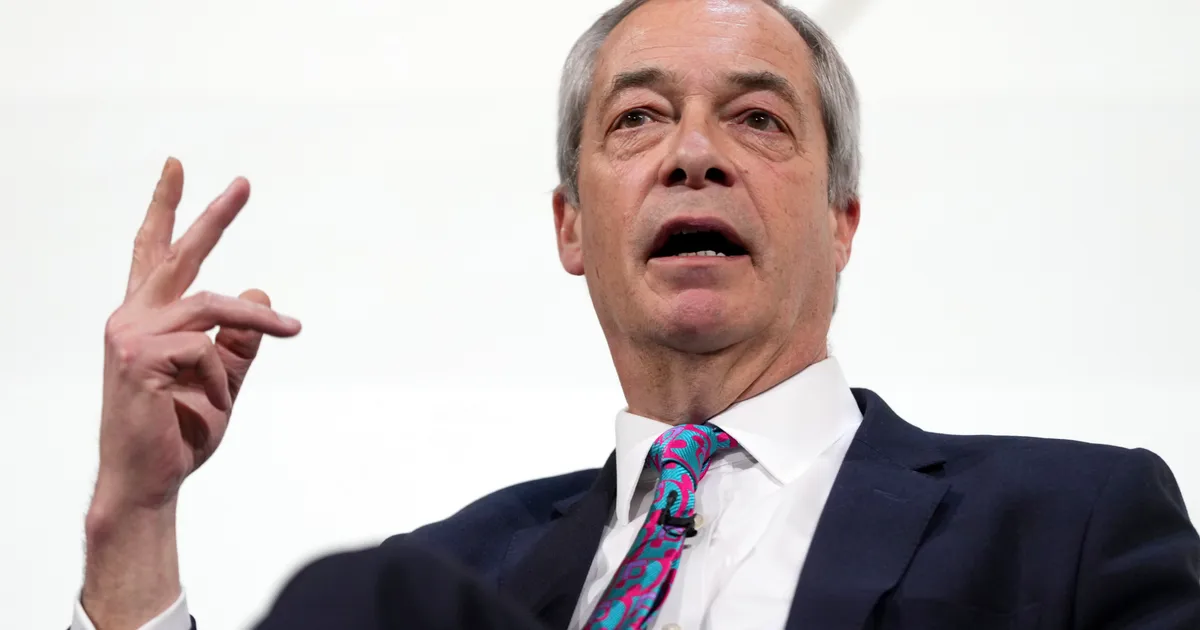
Tactical voting is set to block Nigel Farage’s path to 10 Downing Street at the next general election.
A new poll has found that voters are increasingly likely to support other parties to stop Reform UK winning.
Labour are set to be the main beneficiaries of this trend, boosting Andy Burnham’s chances of remaining prime minister.
The findings also provide further proof that Burnham has completely turned around Labour’s fortunes since he replaced Keir Starmer as PM in July.
The poll of more than 6,000 voters, which was conducted by YouGov, found that in a seat with only a Labour or Reform candidate, 41% would back Burnham’s party, with only 26% backing Farage’s.
That is a dramatic shift from last February, when 35% said they would vote Labour and 31% said they would back Reform.
In a seat with only a Tory and Reform candidate, 35% would now vote Conservative, compared to just 20% would vote for Reform.
The poll also found that around two-thirds of Lib Dem and Green voters said they would vote tactically for Labour to keep Reform out, as did 18% of Tories.
Around half of Labour and Lib Dem supporters would also vote Conservative to stop Reform, as did 26% of Greens.
YouGov said the study “shows that willingness to back Reform against Labour, the Tories or Lib Dems has declined markedly” in the past year.
“The change in prime minister appears to have heralded a greater willingness to vote for Labour in tactical voting scenarios among Green, Lib Dem and Conservative voters,” the pollster added.
Meanwhile, the poll also suggests that support for the Greens is also on the slide.
Support for Zack Polanski’s party fell in head-to-head contests with all of the other main parties.
The YouGov findings back up a separate study by the More in Common think-tank, which also showed Reform suffering due to tactical voting.
It found that left-wing voters are far more likely to vote tactically than those on the right.
Listen to Commons People, the podcast that makes politics easy. Every week, Kevin Schofield and Kate Nicholson unpack the week’s biggest stories to keep you informed. Join us for straightforward analysis of what’s going on at Westminster.


Margrét Einarsdóttir unpacks the result of the recent referendum in Iceland that saw the public narrowly vote against reopening accession talks with the European Union.
Iceland first decided to apply for EU membership in 2009, following the 2008 financial crisis which hit the country particularly hard. Negotiations were suspended in 2013 following the election of a new right-wing government, but the application was never formally withdrawn, leaving Iceland an applicant country since 2010.
A referendum on whether to reopen accession negotiations was held on 29 August this year. The result reflected a deeply divided country: 47.2% voted in favour, while 52.8% voted against. The divide was also geographical. In the capital area, around 56% voted yes, while the no vote was particularly strong in rural areas (60%-63%).
The result was a significant shift from the picture painted by a June opinion poll, where 52% of those who had made up their minds said they intended to vote yes. The most striking change appears to have taken place among the youngest voters, aged 18–29. In June, 63% said they intended to vote yes; by the final Gallup poll in August, that figure had fallen to around 40%.
The ‘No’ campaign appears to have played an important role in this shift. It ran a vigorous campaign aimed particularly at younger voters, making extensive use of social media advertising. This may well have been what ultimately tipped the balance.
I suspect that the average Icelandic ‘No’ voter was less than enthusiastic about the messages of congratulations that followed the referendum from, among others, the MAGA movement, Nigel Farage and Marine Le Pen.
After all, Icelanders were not voting against close and continuing cooperation with the European Union. Iceland is already part of the European Economic Area (EEA), which gives us access to the EU single market. It is considered our most important international agreement and there is widespread satisfaction with it. Iceland is also part of the Schengen area.
So what explains the no vote?
My sense is that, for most of those who voted no, the EEA Agreement is simply enough. It provides Iceland with much of what it needs from its relationship with the European Union, while remaining outside the EU’s Common Agricultural Policy and Common Fisheries Policy. These are two particularly sensitive areas for Iceland. For most Icelanders, therefore, the choice was not between Europe and isolation. It was about whether the existing arrangement – close economic integration with the EU while remaining outside the Union itself – is preferable to full membership.
The deteriorating international situation prompted the government to hold the referendum somewhat earlier than originally planned. Trump’s ambitions regarding Greenland were poorly received in Iceland, while the prospect of a trade war is particularly troubling for a small, open economy that depends heavily on free international trade. Icelanders are also increasingly concerned about Russia’s aggression towards European countries and the continuing war in Ukraine.
Against this backdrop, it is striking how little security and defence featured in the debate ahead of the referendum. Supporters of a ‘Yes’ vote argued that closer cooperation with the EU on security and defence could provide an additional pillar of security. Yet this argument gained little traction.
Iceland has never been occupied by a hostile power and, although recent international developments have undoubtedly caused unease, there appears to be a widespread belief that the present geopolitical situation is temporary rather than a lasting change in the international order. Many Icelanders continue to assume that the current political situation in the United States will eventually pass and that Iceland’s bilateral defence agreement with the US, alongside its NATO membership, provides the security the country needs.
The strongest opponents of reopening the accession negotiations also played down the security dimension. Instead, the debate came to focus on claims that EU membership could ultimately result in young Icelanders being conscripted into a future ‘European army’. Despite repeated interventions by experts pointing out that the EU has no common army, the claim proved surprisingly resilient during the referendum campaign.
The referendum could easily have gone either way. The government could have done more to prepare the ground for a vote on such a complex matter, which might in turn have produced a more informed and substantive public debate.
The ‘No’ campaign was more direct and effective and seems to have been better resourced. Many of Iceland’s fishing quota holders, some of whom command considerable financial resources, are staunch opponents of EU membership.
The ‘No’ campaign also placed considerable emphasis on Icelandic independence and sovereignty, arguing that Icelanders were better placed to make decisions about their country’s future than the bureaucracy in Brussels. There were prominent claims that EU membership would give the Union control over Iceland’s natural resources and enable it to impose a subsea electricity interconnector between Iceland and continental Europe against Iceland’s wishes. In the final days of the campaign, highly visible advertisements made such claims explicitly, while attempts by academics and other experts to correct them struggled to cut through an increasingly heated debate.
By this point, supporters of a ‘Yes’ vote were increasingly talking about misinformation and ‘fake news’, with some asking whether Iceland was experiencing its own version of Brexit. It is important, however, not to overstate this comparison. The most strident claims came from a relatively small group and were by no means representative of the majority of those who ultimately voted No. As noted above, many – probably most – No voters remain strong supporters of the EEA Agreement and favour close and constructive relations with the EU.
The intensity of the campaign was palpable. Most strikingly, Iceland’s Foreign Minister, Þorgerður Katrín Gunnarsdóttir, received death threats and required extensive security protection – something highly unusual in Icelandic politics. I cannot recall another political issue creating such a deep division within Icelandic society, and I fear that the divisions exposed by the campaign may take considerable time to heal.
The government immediately made clear that it would respect the result and that there would be no resumption of EU accession negotiations during the current parliamentary term. The application for membership itself, however, has not been withdrawn, meaning that Iceland formally retains its status as a candidate country.
At the same time, discussion of the possibility of Canada developing a closer relationship with the EU has prompted some debate in Iceland about whether the country might pursue deeper cooperation with the Union in areas such as security and defence. Whether the EU would have an appetite for such an arrangement with a small, unarmed island state in the middle of the North Atlantic – one that has just politely declined the opportunity to resume negotiations on joining the Union – remains to be seen.
By Dr. Margrét Einarsdóttir, Professor at Reykjavik University and Chair of the Board of RU Institute of International and European Law.

If there’s one thing writing health articles has taught me, it’s to take my exercise routine seriously.
Being physically active is linked to about two to four added years of life as a “conservative” estimate (some research puts it closer to seven years).
Strength training, meanwhile, is key for better ageing, fall prevention, and even lowering dementia risk.
But if you want to make a good thing even better for your brain, a simple step – that is, heading outside – could help.
Why might exercising outside be better for our brains?
We already know that working out can make us mentally sharper, in both the short and long term.
But according to a 2023 paper, when it comes to how well movement improves our cognitive function, “the environment in which the exercise is performed may be just as important as the exercise itself”.
Researchers conducted electroencephalography (brain activity) scans on 30 participants before and after a 15-minute walk.
These scans were conducted while participants completed “the oddball task”, which asks people to signal (through e.g. hitting a button) when an unexpected item shows up in an otherwise homogeneous pattern.
For instance, say 10% of circles flashed irregularly onto a screen are green, while the others are red; people would then be tested on how quickly and accurately they react to that surprise green circle’s appearance
Half of the participants took their walk outside, while the other 50% strolled indoors.
After comparing the brain changes following each group’s stroll, the study authors found that those who’d headed outdoors scored better on the oddball tasks than they had before their walk.
And the outdoor walkers seemed to have an “increase in the amplitude of the P300, an event-related neural response commonly associated with attention and working memory”, a response not seen among indoor walkers.
“In conclusion, we demonstrate that a brief walk outside results in a greater increase in cognitive function than a short walk inside,” the paper reads.
“Indeed, in a world where many people ‘hit the gym’ before or after work or on their lunch break, our results suggest that these people would be better served by simply ‘getting outside’.”
In general, exposure to nature is good for our health
The brain scan study was relatively small, and the researchers themselves noted that exercise’s brain benefits are often believed to kick in after 20 minutes, not 15. But other, bigger studies have found that exposure to nature seems to be great news for our health.
A review of studies found that time spent in nature can help to improve everything from cognitive function to brain activity, blood pressure, mental health, physical activity, and sleep (phew).
Add that to the fact that sunlight-derived vitamin D is key in the colder, darker months, and it looks like I’m going to have to get back to my lunchtime park power walks…

 lead image


4 min read
If the UK slashed its defence spending, despite the growing threat Russia poses to our national security, the public would rightly be appalled, and ministers would be pressed to explain their decision.
Yet there is another danger to our way of life – one our intelligence services warn could result in food shortages, increased terrorism and further pandemics – where funding is quietly disappearing. It is time that decision was given the same scrutiny.
Earlier this year, a bombshell intelligence assessment laid bare how the destruction of nature and the feared collapse of essential ecosystems including rainforests, coral reefs and mangroves “threaten UK national security and prosperity”.
One stark sentence reads: “It is unlikely the UK would be able to maintain food security if ecosystem collapse drives geopolitical competition for food,” noting we depend on imports to feed our people.
Retired General Richard Nugee, giving evidence to the Environmental Audit Committee that I chair, called it “seminal” to see the potential consequences of the nature and climate crises in a national security risk assessment – and said he would expect a government strategy to deal with the threats.
I welcome the fact that the government produced this report, and acknowledged these dangers, but it now demands action.
However, the former minister for nature Mary Creagh admitted the government is not preparing for these threats “at the speed or intensity that I would wish” – and was unable to say when that would change. In fact, the UK is going backwards at the very moment it should step forward, because the 40 per cent cut to our international development budget is withdrawing money to protect and restore nature when it is needed most.
Funding to save the crucial Congo Basin rainforest, the world’s second largest, has been cut by 79 per cent. That is an astonishing decision at any time, but ministers must explain how it can be justified when the intelligence report highlights the Congo as “critical for UK national security” and at risk of collapse.
The future of the £500m Blue Planet Fund, inspired by Sir David Attenborough’s Blue Planet series to protect the world’s oceans as vital to the planet’s future stability, is also in doubt.
For years, the UK has recognised the danger of biodiversity loss by ringfencing around one-third of its international climate finance for nature – but that ringfence has gone, as climate aid has been cut by at least 30 per cent.
I am delighted by the announcement that the UK will invest £400m in the Tropical Forests Forever Facility (TFFF), which will conserve rainforests across the globe. However, the UK’s investment still pales in comparison to the billions of pounds of cuts to international climate and nature finance.
My committee urged the government to explain how the daunting challenges posed by the national security assessment can be met without this funding, but did not receive a satisfactory answer.
Within weeks, nations will gather at the COP17 biodiversity conference in Armenia, a critical staging post towards the UN target to mobilise $200bn a year in public and private funding for nature by 2030 – when ministers will be asked, “What are you doing to help achieve that?” How will they answer that question convincingly?
I welcome the taskforce the government has set up, allowing security and military experts to advise what actions the UK must take – but that advice is unlikely to include dramatic cuts to programmes to prevent ecosystem collapse.
In evidence to my committee, an expert from the Chatham House policy institute argued climate breakdown is destroying the foundations for the world’s security in a way unseen since the dawn of the nuclear era 80 years ago.
It is a wake-up call the new government under Andy Burnham must confront with the same urgency and resolve it would muster if this was a military threat.
The King showed he understands what is at stake in his address to the United States Congress earlier this year, when he urged nations to “address the collapse of critical systems” that “provide the foundation for our prosperity and our national security”. Our new Prime Minister must heed the King’s call.
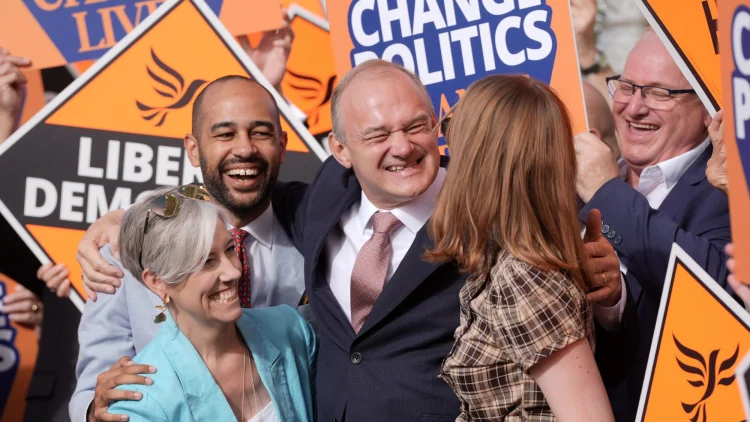
Lib Dem leader Ed Davey with party president Josh Babarinde and deputy leader Daisy Cooper at the party conference in Brighton (Alamy)
11 min read
Questions about the Liberal Democrats’ strategy, message and identity dominated the party’s conference in Brighton.
As Lib Dem parliamentarians and activists arrived on the south coast at the weekend, they were encouraged to write on a board why they support the party.
“I want to live in a country where every voice and every vote matters.” “Fairness and equality of opportunity.” “I didn’t want to stand by and see our country overtaken by malign actors.” “Honesty, decency, integrity and progressivism.” “Because it doesn’t need to be this shit.”
The range of answers reflected a growing debate within the Lib Dems that was the biggest talking point in Brighton: what, and who, are they for?
The question was putting pressure on leader Ed Davey in the weeks, even months, leading up to the weekend.
On the eve of conference, South Cotswolds MP Roz Savage said publicly what many Lib Dems had been complaining about in private: that their party is “struggling for relevance”. In an essay shared exclusively with PoliticsHome, Savage argued that liberals must “rediscover” their “insurgent spirit”, rather than being “the polite custodians of a system that leaves people feeling powerless”.
Indeed, as Lib Dem direction comes under growing scrutiny, senior party figures told PoliticsHome they had noticed more media attention than they would normally expect at this stage of a Parliament.
Davey has made no secret of his desire to see the Liberal Democrats enter government after the next general election, telling The House in a recent interview that he would be “the most experienced leader” in the event of a hung parliament.
Faced with criticism, he has pointed to the party’s electoral gains at local level as evidence of success. “We’re winning where it matters: at the ballot box,” he declared in Brighton.
Having won a record 72 MPs in the 2024 general election, the Lib Dems transformed their presence in Westminster. However, in recent months, multiple party figures have expressed frustration with what they describe as failure to capitalise on this success and stagnant polling, and fear that the Lib Dems are failing to cut through in a fragmented political climate.
Speaking to PoliticsHome at conference, one MP blamed “growing pains”: a Lib Dem central operation that had taken time to catch up with the size of the parliamentary party.
Another MP described this year’s conference as “edgier” than previous years, adding that restlessness with Davey’s leadership was leading to conversations about possible successors: “This one feels edgier about the leadership… The three who would go for it are Lisa Smart, Daisy Cooper and Max Wilkinson. Whether they’d do any better, I don’t know.”
Cooper, the party’s deputy leader, is generally seen as the most obvious potential successor to Davey. She was once widely seen as the natural heir, although that assumption has faded somewhat over the past two years as 2024-intake MPs like Wilkinson, Calum Miller and Josh Babarinde have risen through the ranks.
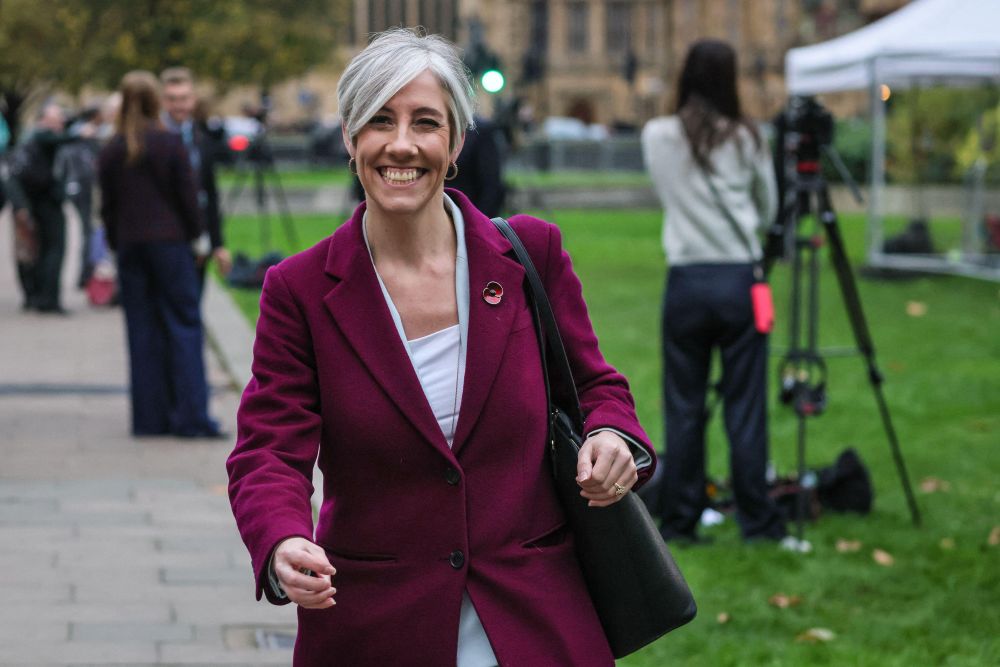
Babarinde has recently taken on the presidency of the Liberal Democrats for a three-year term, and the expectation among colleagues is that he will see that role through before considering a leadership bid – following a path similar to that taken by former leader Tim Farron.
Smart, who is a close ally of Davey, is seen as a potential continuity candidate, while Miller and Wilkinson are widely viewed as highly competent spokespeople for the party. However, MPs worry that if a leadership change were to happen now, any potential successor would struggle to achieve the same name recognition with the public that Davey has earned through years of campaigning and media stunts.
Furthermore, while there was chat about Davey’s successor in Brighton, few party figures believe a change in leadership anytime soon is a serious possibility.
While some Lib Dem MPs privately acknowledge frustrations with the party’s progress since the election, many remain relatively comfortable when looking at polling in their own constituencies, which are largely based in former-Conservative voting parts of southern England. An MRP poll carried out by Electoral Calculus in June this year shows the Lib Dems holding steady with 72 seats.
“It’s just not that deep,” one Lib Dem MP joked, arguing that some of the Lib Dem MPs most critical of Davey also “do not have an alternative” to offer.
there is an absence of underlying understanding publicly as to what the party’s purpose is
For now, the party is attempting to project unity and purpose rather than succession politics. Victoria Collins, the MP for Harrow West, described the mood of conference as one of preparation for government.
“The general tone is that we are ambitious, we are going for government, whatever that looks like, and we’re preparing for it,” she said.
That said, while Davey’s position is still regarded as secure, he is undoubtedly under pressure to clarify the party’s message beyond the so-called “blue wall” seats won at the last election.
In his conference speech on Tuesday, he made a moral case for the Lib Dems, telling the party that it is in a fight for the country’s future against the modern-day far right.
At a panel organised by the Social Liberal Forum (SLF), the SLF chair John Shreeve argued that the Liberal Democrats had become effective campaigners in areas where they already possessed capacity, but struggled to expand that model elsewhere.
“The conclusion that we reach is that there is an absence of underlying understanding publicly as to what the party’s purpose is,” he said.
“So, are we the best administrators? Well, that’s not going to exactly put us in power. It’s the scale of our delivery which is inadequate. We’re very good at delivering where we have the capacity to do so, but we are very poor at being able to stimulate and lead and inspire.”
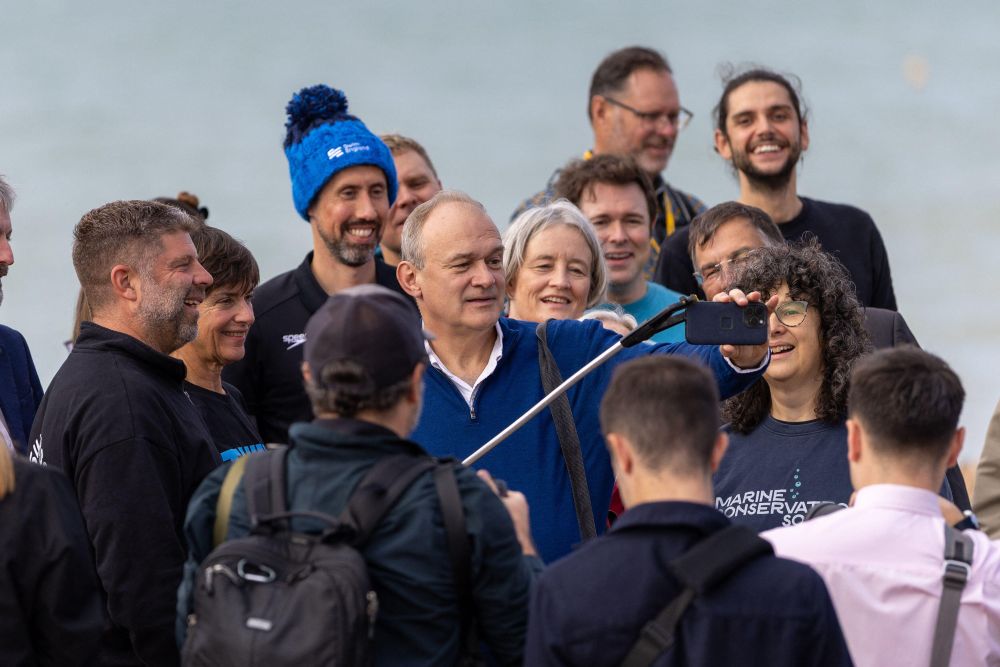
Graham Neale, chair of the Green Liberals, agreed.
“We end up, unfortunately, being sort of just populist bureaucrats,” he said at the panel event.
“‘We can get more for your council tax than this group can, or we would spend it better than that group can…’ We just end up competing to see who can be the best bureaucrats. We’ve really got a series of disconnected ideas here.”
He accused the party of being “timid” on environmental policy, taxation, and its international stance, especially around Gaza.
“We didn’t reap any benefit from our international stance in the way that the Green Party did in Southwark and other places in London.”
Other urban Lib Dems continue to feel that the party remains disproportionately focused on former Conservative territory rather than trying to make progress in some of England’s biggest cities.
Northern Lib Dems in particular are dissatisfied that the party has not done enough to address what they see as a north-south imbalance. One Manchester councillor told PoliticsHome that they had recently invited Davey to an event in the city, but that the leader declined to attend: “He doesn’t care about Manchester.”
The acknowledgement that the lack of cut-through was an issue was probably the most significant first step
Other groups have gripes with the party’s approach. Young Liberals chair Will Tennison argued that the party’s focus on the European Union was misplaced when it comes to winning over younger voters.
“They’re bored of it,” he said. “It went on too long. We’re ready to move on… The job market almost always comes out on top.”
Tennison, who sits on the party’s federal board, said the party is “aware that the messaging is not up to scratch”.
“I don’t think they’ve come up with a solution to how to fix it, but I do think it’s really good that we’ve seen an increase in the number of people at HQ that are working in the digital space. So we’ve got more social media admins, we’ve got more people doing influencer stuff. Politics isn’t won on the BBC News anymore, and in the not too distant future, it might very well be won on TikTok.”
One MP said that the party’s problem lies less in the core policies themselves – fixing the social care system, repairing the UK’s relationship with Europe and electoral reform – but more in the communication of how they would actually directly improve people’s lives.
Earlier this year, PoliticsHome reported on a “strategy rethink” inside the party, amid frustration from some MPs about the lack of progress since the general election in breaking into new ground.
The party has responded to criticisms by overhauling its communications operation, including the appointment of James Holt as political director. Holt previously served as the Liberal Democrats’ director of communications more than 10 years ago, and has returned to the UK in the last few months after working for Prince Harry and Meghan in the US.
“The acknowledgement that the lack of cut-through was an issue was probably the most significant first step,” one MP said.
“Now we’ve got people in place who should be able to help communicate and structure our vision. They won’t be able to do it overnight, but a year ago, there wasn’t even anyone working on it.”
The party has also hired content creators, reflecting a recognition that political communication is increasingly taking place away from traditional media.
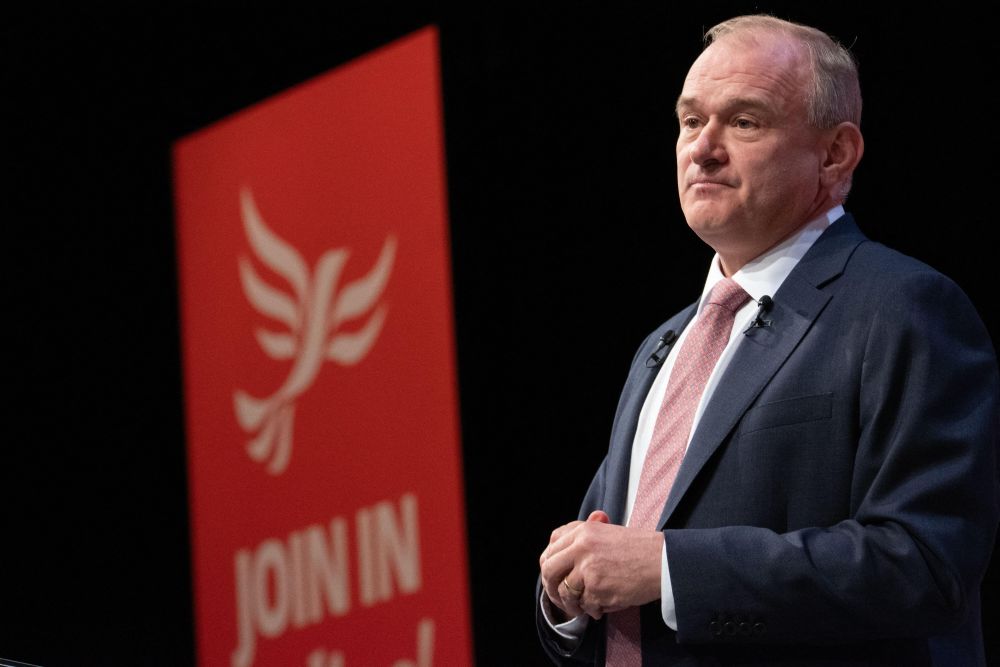
There is also a new effort to develop the intellectual infrastructure behind the party.
The Britain Project, a new think tank aiming to “convene and catalyse liberal thinking”, was launched at the conference. Davey welcomed its arrival, arguing that liberalism had lacked a dedicated Westminster think tank for too long.
“There’s been a gap in the market. There hasn’t been a liberal think tank for a long time,” he said.
“You look around Westminster and Whitehall, and there are lots of think tanks there that are supplying ideas for Labour, ideas for the Conservatives, ideas that they try to promote so that they can get policies for government. The fact that we haven’t had a think tank focused on liberalism, sharing our values, has been a real gap.”
But Davey also insisted that the organisation should not simply become a policy arm of the party.
“While we share those values, we need you to come up with ideas that I occasionally disagree with, because we need you to challenge not just me, but challenge the whole party.
“When you do come up with ideas – whether we agree with them or not – the fact that we can add them to our debate, that they can challenge us, challenge the party, is a really good thing, because that challenge, as we know, as liberals, makes those ideas better.”
If you are as close to power as we may be, you need to be serious about it
The think tank’s policy director, Lib Dem peer Lord Leunig, went further, saying his ambition was to become unpopular within his own party if that was what was required to improve its policymaking.
“My ambition is to be the least popular person in our party,” he said.
“But to be a good minister you actually have to have policies that work, and I can tell you that our party, just like all other parties… can be guilty of ‘convenientism’ – believing that what can be convenient is true – and I tell you that is not always the case.”
He later added: “We are not soft people. This is serious stuff. Because you know what? If you are as close to power as we may be, you need to be serious about it.”
Davey has hinted at a willingness to work with Labour. He has refused to completely rule out a coalition with the Conservatives, but suggested that a coalition with the Tory party in its current form under the leadership of Kemi Badenoch would be highly unlikely. One senior Lib Dem told PoliticsHome the party would never consider joining a government that wanted to leave the European Convention on Human Rights.
The MP suggested that, if coalition negotiations did eventually arise, the party should publicly identify three issues on which it would refuse to compromise: energy policy, Europe and electoral reform.
The Lib Dems feel confident that they will be a significant player come the next general election – whether it happens at the expected time or if Burnham calls an election early.
However, their own activists and MPs are still embroiled in debates about what the party’s broader purpose should be, who it should speak to, and how it can translate a collection of familiar liberal causes into a proposition that voters across the country can understand.
The SLF panellists were asked to sum up what the Lib Dems were for in just a few words. Chris Bowers, coordinator of the Yorkists group, was the only panellist to offer an answer, which placed the Lib Dems in contrast with the other political parties on the ballot box.
“We’re better than this.”

I’ve always loved singing. It’s safe to say I was a very shy child, but being in a choir as a teenager really helped me out of my shell; so much so that I found myself doing a music degree at university.
Most of all, though, I’ve always found singing therapeutic. So, when I found out that singing helps to relax your vagus nerve – the system that regulates your heart rate, breathing, and digestion – everything suddenly began to make sense.
The only problem is that I don’t personally feel I can start singing in the middle of a busy street or office when I feel my stress levels creeping up.
Sure, there’s yoga and I could do breathing exercises, but I find it difficult to stay consistent with them. And there’s nothing like the threat of another task to add to your stress!
Luckily, there could be another way around these barriers. Historically used for epilepsy treatment, vagus nerve stimulation has become increasingly popular over the last few years because you can now buy devices that do all the hard work for you.
As a shopping writer, I come across a load of health fads, so I’m usually pretty sceptical when I hear of a new device claiming to be a ‘fix-all’ for your health issues.
But considering what I knew about singing, when I heard about Neurosym, a non-invasive medical device that claims to benefit your health in a whole load of ways, I was intrigued to say the least.
Over 60 clinical studies into Neurosym have shown that its vagus nerve stimulation can see up to a 35% reduction in anxiety, 48% reduction in fatigue, 31% improvement in sleep quality, 32% increase in memory recall, and 78% decrease in inflammation – all of which I could use a helping hand with.
Shaped like a remote control, the device connects to your ear using an earpiece, which sends electrical impulses through your ear to your brain, and then helps to relax your parasympathetic nervous system.
Considering 75-90% of human diseases are linked to stress, being able to properly unwind is crucial for our wellbeing.
However, Mental Health UK’s 2026 Burnout Report finds that 91% of adults in the UK have experienced high levels of stress in the last year, leading to sleeplessness and anxiety.
Considering the benefits seen from Neurosym’s clinical studies, and the fact it’s easy to use, it seems like the kind of thing anyone could benefit from.
Unlike other vagus nerve stimulators, Neurosym doesn’t require a subscription or app to use – it’s just one upfront cost of £599, which can be paid in chunks.
The battery lasts for weeks, and you can easily take it with you wherever you go thanks to it being small and light. All you have to do to feel the stimulation is increase it to your desired frequency, and pop the earpiece in.
Although you can feel a slight tingle in your ear, Neurosym is otherwise completely non-invasive, and one of the best things about it is you can use it while doing other things, so there’s one less thing to find time for in your daily routine.
Neurosym claims that you can see the effects in as little as five days of 30-60 minutes of use per day. And if you’re wondering whether you need it – the brand has a five minute quiz on its website to check your eligibility.
The company is also currently researching whether its therapy could positively impact athletic performance, muscle recovery, weight management, and substance dependency, among other issues.
Reviewers say it’s helped them stay focused and boosts energy
The device’s reviews suggest there are many reasons why you might benefit from vagus nerve stimulation.
One customer, Lucy, said she saw a reduction in her digestion problems within a few days of using the device (some research does suggest vagus nerve stimulation can improve digestive symptoms).
Meanwhile, Hogan said the device helps him focus when he’s tired: “It levels me out helps me out a lot with being able to collect my thoughts. I also have better ability to focus, and when I do use this device on a daily basis, I find myself feeling much better in general.”
Other reviewers claimed Neurosym has helped their anxiety, boosted energy, and improved how they approach stressful situations.
With over one in five adults in the UK out of work due to sickness, and most adults citing extreme stress, anything that can result in a 35% reduction in anxious thoughts and 78% reduction in inflammation can surely only be a good thing – particularly when you can see results so quickly.


Not only do we not have a cure for dementia yet, but we don’t even have a single test that can diagnose it outright.
So, why does 2026’s huge World Alzheimer Report, co-authored by Alzheimer’s Disease International (ADI) and health writer Paul Gallagher, suggest that “Alzheimer’s disease is no longer universally described as untreatable” by researchers?
This “mood” among scientists, the paper added, is “infectious”.
Indeed, Professor Colin Masters, a neuroscientist whose research contributed to the amyloid hypothesis of dementia, told ADI: “Alzheimer’s disease is going gangbusters at the moment.
“The feeling of optimism has never been so strong. We’ve moved from a great nihilistic, pessimistic era five years ago towards an era of extreme optimism”.
Why do some researchers no longer see dementia as untreatable?
There’s not one single breakthrough that’s left the scientific community so encouraged. We still don’t have a cure for dementia, for instance.
But finding one “feels like a more palpable prospect than ever before”, the report reads, because of multiple changes in research, medication, and approaches.
1) New drugs have been shown to slow dementia
In just the past five years, multiple drugs, like lecanemab and donanemab, have been shown to slow dementia.
That is not a complete “cure”, but they “marked an important scientific milestone, providing the first evidence that therapies targeting amyloid pathology can slow clinical decline by about 30%”.
Amyloid plaques are sticky clusters of proteins in the brain that have long been linked to dementia development.
Not all experts agree these drugs are as effective as hoped. But the arrival of these medications to multiple countries “was a huge moment because it showed you could change the course of the disease”, said Professor Cath Mummery, director of the UK’s Dementia Trials Network.
“They show consistent, significant change. So, for me, the breakthrough is that the amyloid hypothesis, which we’ve been chasing for decades, was confirmed at least in part… That’s the foundation. It’s the first brick, and there’s an awful lot to build on.”
2) Dementia research is booming
The paper notes that as of the time of writing, 158 potential dementia therapies were being trialled in 192 trials worldwide.
This is part of “an era of unprecedented activity,” the report stated. The number of possible medications under review right now is up 40% from the last decade.
In 2026 alone, we can expect results from eight Phase III trials that test drugs and other therapies on people.
3) Scientists are looking at new ways to diagnose dementia
As of yet, we haven’t found a one-and-done test that can unambiguously tell doctors whether someone has dementia.
And as the report argues, even the best treatments mean little if the majority of people living with dementia are never identified in the first place.
But at this year’s Alzheimer’s Association International Conference, announcements “centred on making Alzheimer’s diagnosis earlier and more accessible”, including through potential blood tests.
Additionally, “blood-based assays, advanced neuroimaging, and genetic profiling are also making it possible to identify Alzheimer’s pathology years before cognitive symptoms fully manifest,” the report continued.
Meanwhile, studies like the TRAILBLAZER-ALZ 3 research are working out whether very early intervention makes dementia treatment more effective.
4) We’re learning more about how to prevent dementia through lifestyle choices
The report also said research is expanding from primarily observational studies to participation in large interventional and prevention-focused clinical trials.
This comes after a standing commission from The Lancet which found that up to 45% of dementia risk could be down to “potentially modifiable” lifestyle factors.
One initiative, for instance, aims to give at-risk older people lifestyle interventions, like controlling their blood pressure and optimising their diets, to see whether this helps to slash dementia incidence.
5) Trials are trying out new uses for old, approved medications
More than a third of drugs currently “in the pipeline” for possible dementia-related applications are existing, repurposed medications.
One example is atomoxetine, an ADHD drug, which showed mixed results in a trial that sought to find out whether it could slow cognitive impairment.
If drugs like these are found effective, their current status as an approved medication could make clearing them for other conditions go a little faster.
6) Experts are learning to attack dementia from multiple angles at once
“As with diseases such as cancer, it is increasingly thought that the most effective approach to Alzheimer’s may involve multiple therapies working together against different aspects of the disease,” the report said.
So it’s a good thing the research community is looking at combined treatments, like pairing a tau vaccine with an anti-amyloid medication.
Overall, the paper said: “Dementia is being recast not as a gradual decline towards an inevitable loss of cognition, but as a continuum that might be interrupted or slowed, enabling many more years with a good quality of life.”
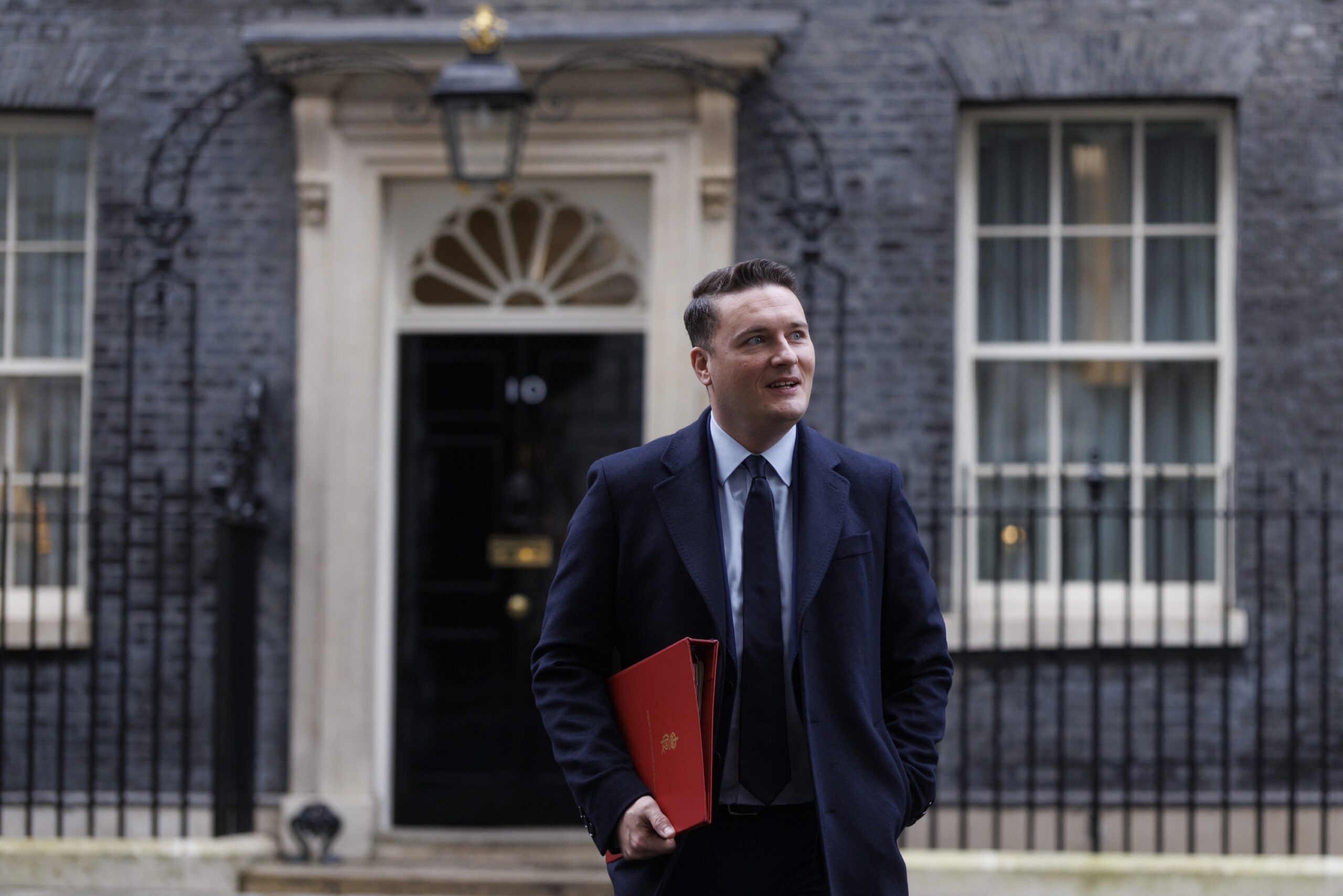
Wes Streeting has said the government’s deal to hand sovereignty of the Chagos Islands to Mauritius is not good enough unless it wins the backing of the United States.
Streeting, who sat in the cabinet that signed off on the agreement, said he stood by the decision but acknowledged that the United States had withdrawn its support for the deal.
The defence secretary, speaking to Sky News on Wednesday morning, said: “I was a member of the cabinet that agreed the deal with the government of Mauritius, and I stand by the decision that was taken, I’m not going to try to absolve myself of it now.
“But at the same time, the principle we followed all the way through is that it needs to have the support of the Americans. So objectively, in the absence of support from the Americans, is this deal good enough? No. It needs to have the support of the Americans.”
He said talks would continue until all three governments were aligned. “We will work together to get to a point where both the governments of Mauritius and the UK, but also the Americans, can sign up to this – because Diego Garcia is extremely important to the Americans as well as to us and our collective security.
“So the objective here is to safeguard that base and its capability, not just now, but for the long term, because it’s that important to us.”
Under the deal, first agreed during Keir Starmer’s tenure as prime minister in 2025, Britain would cede sovereignty of the Chagos Islands to Mauritius while retaining control of the Diego Garcia military base – jointly run with the US – under a 99-year lease.
Since the deal was confirmed, ministers have consistently argued that the arrangement was designed to secure the base’s long-term future.
But the support of the United States, a crucial component of the arrangement, has proved difficult to secure. US president Donald Trump initially backed the agreement has now reversed course.
Trump was asked about the deal during his first face-to-face meeting with Andy Burnham on Tuesday. Speaking in the margins of the UN General Assembly, Trump described the deal as “terrible” and said the UK was “going to be looking” at it.
Streeting has now confirmed that the UK government will review the deal.
He told BBC Breakfast: “What President Trump said yesterday wasn’t new but I think it does provide absolute clarity that his position on this Chagos deal as currently drafted is not changing.
“So we have to do more work with our American allies, with President Trump and his administration, to get the deal to a place where he can support it.”
The comments come after Labour MP Dan Carden told Politics.co.uk that the Chagos deal was “disastrous”.
He said: “I’m still amazed that so few Labour MPs have had anything to say about it. I just say to any of them, go meet one of your constituents, try and explain the Chagos deal to them, and see how it goes down.
“For me, that’s what politics is – to see whether people understand what you’re doing and why you’re there.”
Carden, the former chair of the influential Blue Labour group, added: “We need to look at how we actually give the territories a stake in parliament and a stake in government.
“So I hope Andy is capable of doing that, and I have some hope that he will look at the disastrous Chagos deal and drop it, and look to do something different – because he’s got the ability and the capacity to do that.”
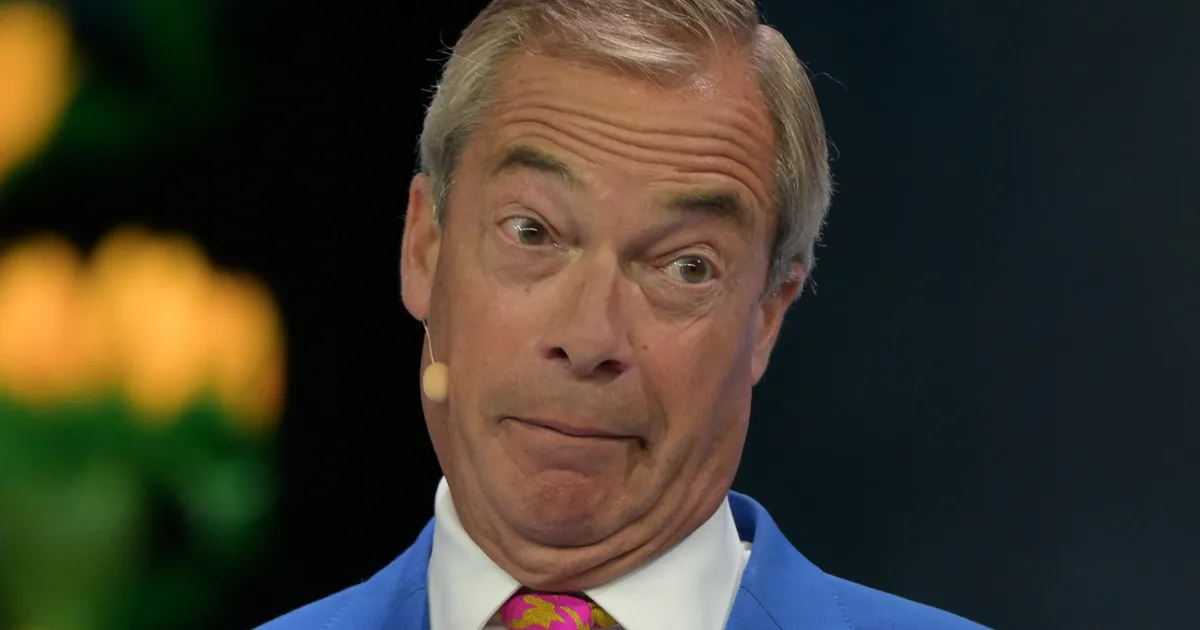
Reform UK has fallen to third place behind Labour and the Tories in a major blow for Nigel Farage.
A poll by the More in Common think-tank showed support for Reform has dropped to 22%, its joint-lowest in 18 months.
That puts the party a point behind the Conservatives, who are on 23%, and 3 points behind Labour on 26%.
The Lib Dems are on 11%, according to the poll, with the Greens on 8% and Restore Britain on 6%.
The findings pile more pressure on Farage to turn around Reform’s fortunes after a miserable few months for the party.
Parliament’s standards commissioner is still investigating Farage’s failure to declare a £5 million gift from crypto-billionaire Christopher Harborne shortly before he became an MP in 2024.
The Metropolitan Police have also launched an investigation into claims in a Channel 4 undercover sting that senior Reform officials tried to solicit an illegal donation from a foreign donor.
In a further blow for the Reform leader, the More in Common poll also showed how unpopular he is compared to Andy Burnham.
While the PM’s net approval rating is plus 10, Farage is on minus 27, equal with Green leader Zack Polanski.
Listen to Commons People, the podcast that makes politics easy. Every week, Kevin Schofield and Kate Nicholson unpack the week’s biggest stories to keep you informed. Join us for straightforward analysis of what’s going on at Westminster.
A poll can tell us a great deal about public opinion. It can also tell us a great deal about the person paying for it. When polling makes the news, the first question should not be what it says, but who commissioned it.
Earlier this month we saw just how easily that rule bends. Three polls commissioned for Reform UK ran on the front pages of the Times and the Telegraph, and readers of neither paper were told who was behind them. The British Polling Council, which set the rule, says it was clearly broken.
We have since seen how the bending of the rules goes beyond one firm and one party. In one example in 2023 the Liberal Democrats had Savanta ask voters who was to blame for the state of the country, with six answers on offer: three Conservative prime ministers, the Conservative Party, the pandemic or the war in Ukraine. The results were briefed to the Observer although Savanta did not publish the tables confirming the client, the sample and the full wording until they were asked this month.
Nobody disputes the arithmetic. What was withheld, in each case, was vital information the reader needs to judge it.
Polling reaches the public with an authority other forms of communication – political or otherwise – lack. A poll is read as the voice of the public. That authority is why polling wins coverage and why the rules around it exist. A poll built to make a case, and published with its client hidden, puts an organisation’s – be it a political party, trade association, or business – argument in the public’s mouth.
The public deserves better because, at its best, polling can set the news agenda and inform public opinion in a timescale that few other forms of communication can. Its value is in its independence. Once that independence is compromised by hiding the workings behind it, it can become misleading.
Every such case teaches the public that something presented as a measure of their opinion can also be a vehicle for someone else’s argument. Once that distinction disappears, trust in the measurement goes along with it. The Reuters Institute’s 2026 Digital News Report puts trust in news in Britain at 30%, down five points in a year, while AI and industrial-scale disinformation have made it harder for the public to discern truth from fiction. A democracy runs on trust, and trust in Britain is already teetering under immense strain. It cannot afford to lose one of the few instruments that still earns it.
Polling belongs in the same conversation as lobbying, donations, and the revolving door between business and politics because while, when done ethically, each can positively contribute to society, they can also exert political influence while obscuring who is doing the influencing.
In July, the Ethics and Integrity Commission recommended a register of all lobbying activity, on the principle that influence should be visible to the people who will bear the brunt of its effects. Polling should be held to the same principle.
Transparency leaves every party free to make its case. A poll hiding its client is political advocacy with the workings concealed, and if polling is to keep the authority it has borrowed from the public, the public must be allowed to see who is doing the borrowing.

Research Ireland funding creates eight spin-outs, report shows

Don’t Invest in Crypto THE WRONG WAY – 3 TIPS! | Ankur Warikoo #shorts

More than 500 Afghans resettled in North Yorkshire




-

 Fashion5 days ago
Weekend Open Thread: Talbots – Corporette.com
-

 Tech3 days ago
Researchers escape OpenAI Codex sandbox to run commands on host
-

 Crypto World5 days ago
Circle launches Arc Studio AI agent for building onchain apps
-
 NewsBeat5 days ago
Trump says US has reached an agreement to take permanent control of Greenland’s security
-

 Crypto World3 days ago
Who Needs CLARITY Anyway? ARB Could See 70X Increase: Hodler’s Digest
-

 Crypto World5 days ago
Trading Bitcoin on Robinhood? Why 2% Spread Has Traders Worried
-

 Crypto World6 days ago
Mortgage and refinance interest rates today, Thursday, September 17, 2026
-

 Crypto World5 days ago
Bitcoin price breaks channel as RSI climbs to 63
-

 Crypto World7 days ago
US Charges Robinhood Engineers Over Crypto Listing Trades
-

 Tech2 days ago
Google’s $899 Googlebook is a bet that you’ll buy a new laptop for Gemini
-

 Business3 days ago
Analog Devices (ADI) Bets $1.35 Billion on Chips that Let Machines Think for Themselves
-

 Crypto World4 days ago
World Money launches in 150+ countries with Stripe
-

 Crypto World3 days ago
Coinbase, Robinhood, Circle Seen as Tokenized-Stock Winners
-

 Crypto World5 days ago
Silver prices recover quickly, hitting weekly high today
-

 Tech6 days ago
GPT-6 Astra Reached the Nether in Minecraft, Lost Its Stash to a Creeper, and Farmed Potatoes for Hours
-

 Crypto World15 hours ago
Goldman Sachs and Deutsche Bank Agree: The S&P 500 Rally Isn't Over
-

 Tech4 days ago
Trump suggests rebranding AI with a new name, says he’s also creating an AI Force
-
 NewsBeat5 days ago
US was ‘on brink of war’ with China over false AI report of nukes moving in Middle East
-
 Crypto World2 days ago
Bitcoin price holds above $81K as key catalysts line up
-

 Entertainment7 days ago
Grey’s Anatomy Showrunner Teases Changes After Cast Exits
You must be logged in to post a comment Login