Connect with us

Tech & AI

Home Hub, iPhone 18 Pro cameras, Meta VR

Published

on

Leaks point to a busy October for Apple with a new Apple TV, HomePod mini, and Home Hub launching in tandem with the iPhone Duo. Here are the latest rumors and more on the AppleInsider Podcast.

The iPhone 18 Pro Max camera system is Apple’s best yet, but the gains are small year-over-year. The more interesting comparison will be when your hosts can get their hands on iPhone Duo to see exactly how that camera performs.

Leaks show that Apple is set to release an updated Apple TV 4K, a HomePod mini with Siri AI, and the long-awaited Home Hub tablet in October. A separate rumor places the announcement of these products on October 13.

Your hosts also discuss how Apple is covered when its competitors announce new products, like Meta VR Glasses. There is also a lot of talk around AI agents getting mascot-like characters even as Apple continues to push Siri.

Advertisement

BONUS: Subscribe via Patreon or Apple Podcasts to hear AppleInsider+, the extended edition. This time, your hosts discuss Apple Watch Ultra 4 and the upgraded Apple Health experience.

More AppleInsider podcasts

Tune in to our Smart Home Insider podcast covering the latest news, products, apps, and everything HomeKit related. Subscribe in Apple Podcasts, Overcast, or just search for HomeKit Insider wherever you get your podcasts.

Podcast artwork from Basic Apple Guy. Download the free wallpaper pack here.

Those interested in sponsoring the show can reach out to us at: [email protected].

Subscribe to AppleInsider on:

Keep up with everything Apple in the weekly AppleInsider Podcast. Just say, “Hey, Siri,” to your HomePod mini and ask for these podcasts, and our latest HomeKit Insider episode too. If you want an ad-free main AppleInsider Podcast experience, you can support the AppleInsider podcast by subscribing for $5 per month through Apple’s Podcasts app, or via Patreon if you prefer any other podcast player.

Advertisement

Source link

Advertisement
Continue Reading
Click to comment

You must be logged in to post a comment Login

Leave a Reply

Tech & AI

Mystery AMD Chip “Gainsborough” Fuels Steam Deck 2 Speculation — But Don’t Get Too Excited Yet

Published

on

More than four years after Valve upended the portable gaming market with the original Steam Deck, hardware sleuths believe they may have spotted the first real clue about its long-awaited successor. A newly leaked AMD chip codename, “Gainsborough,” has surfaced in driver files, reigniting speculation that Valve’s next handheld is finally taking shape. But industry watchers are urging caution before anyone declares the Steam Deck 2 imminent.

The codename was discovered by hardware leaker Moore’s Law is Dead and the Chinese outlet IT Home, who found references to the previously unknown chip buried in recent AMD driver updates. The name immediately caught the attention of Steam Deck followers familiar with AMD’s naming conventions: the original Steam Deck’s processor was dubbed “Aerith,” after a character from Final Fantasy VII, while the Steam Deck OLED’s chip carried the codename “Sephiroth.” Gainsborough happens to be Aerith’s surname in the game — a thematic breadcrumb that’s hard to ignore.

Beyond the name, there are technical signals suggesting this could be a serious piece of silicon. Gainsborough appears to be a semi-custom chip, meaning it’s being built for a specific client rather than for general retail sale, and it’s reportedly being manufactured on TSMC’s newer N3P process — a more advanced and efficient node than what powers current Steam Deck hardware. Import and export records reviewed by IT Home also indicate AMD has already begun shipping test equipment for the chip, implying a potential customer is actively validating it for use in an upcoming device.

Advertisement

Those same records point to a physical package measuring 25mm by 25mm — a detail that takes on extra significance alongside a separate leak from Gotou_3rd, who claims AMD’s next generation of handheld chips, the Ryzen Z3 and Z3 Extreme, will share that exact footprint. A leaked fragment of what appears to be an AMD slide deck suggests the Z3 is targeting a 15-watt power envelope, matching the thermal budget of both the original Steam Deck and the Steam Deck OLED.

On the surface, the pieces seem to fit neatly together. Valve has said repeatedly that it won’t build a Steam Deck 2 until AMD delivers a “generational leap” in performance and efficiency, and a next-generation, more efficient chip built for a 15-watt handheld sounds like exactly what the company has been waiting for.

Yet there are reasons for skepticism. For one, a semi-custom chip doesn’t always end up in the device it was originally designed for. The original Steam Deck’s own processor is widely rumored to have started life intended for a Magic Leap headset before being shopped around to other manufacturers — including, according to some reports, a canceled Microsoft tablet — long before Valve adopted it. There’s no guarantee history won’t repeat itself with Gainsborough.

Complicating matters further, the Final Fantasy-inspired codenames aren’t even Valve’s own. They’re AMD’s internal shorthand, chosen without much enthusiasm from Valve’s own design team, according to people familiar with the project. When Microsoft and Asus selected an AMD chip for the base-model Xbox Ally, for instance, they were actually using a variant of the “Aerith” chip, despite it bearing no obvious connection to Valve’s hardware lineage.

Advertisement

Size comparisons also raise questions. While 25mm by 25mm sounds compact, it’s actually larger than the Steam Deck’s original “Aerith” chip, which measured 19mm by 19mm before a later redesign shrank it further by stripping out unused components. A bigger chip could simply reflect a different kind of efficiency trade-off, or it might indicate the silicon is destined for a different category of device entirely.

Perhaps most tellingly, Valve itself has offered little clarity. As recently as last month, the company reportedly indicated it was still working out “how and when” to proceed with a Steam Deck 2 — hardly the language of a company on the verge of a product launch.

For now, Gainsborough remains an intriguing data point rather than confirmation. The handheld gaming community has learned to treat chip leaks with cautious optimism, and this one, despite its tantalizing name, still leaves plenty of unanswered questions about what device it’s actually destined for — and when, if ever, Steam Deck fans will get their sequel.

Sources:
Advertisement
Continue Reading

Tech & AI

Excellent hardware badly hampered by too-small SSD

Published

on

The M6 Mac mini has a faster chip and is solid hardware, but that $899 hurts and there is just not enough storage at that entry price for Apple Intelligence and all of your apps.

I have loved the Mac mini since day one, more than 20 years ago. There has been one in my house consistently since the first G4 model, generally attached to a television, or used as a server, and so forth.

Oddly, the 2026 M6 Mac mini is not the cheapest Mac overall. The MacBook Neo has something to say about that, but that’s just not as convenient for my own workflows.

This time around, for the second time, the Apple Silicon Mac mini skipped a generation, and in 2026, the Mac mini is the first to use the new M6 chip. This is good and bad, but more on that in a bit.

Advertisement

Our review covers the base M6 model. It is the version most buyers will choose, and there’s a lot to say about that, what you really must add, and what Apple seems to have in mind for the model when $1000 or more of upgrades are added.

M6 Mac mini review: Design

The M6 Mac mini keeps the compact shape from the M4. It’s a spec-bump update through and through.

That means you get the usual current-gen design, which means that smaller square with rounded corners. It’s two inches tall, including the circular foot that also provides ventilation to the unit. The Wi-Fi antenna remains on the base of the unit, for better and worse.

The outside still looks the same as the previous one, including the black Apple logo on the top, as well as the pair of USB-C ports, the headphone jack, and the power indicator at the front.

Advertisement
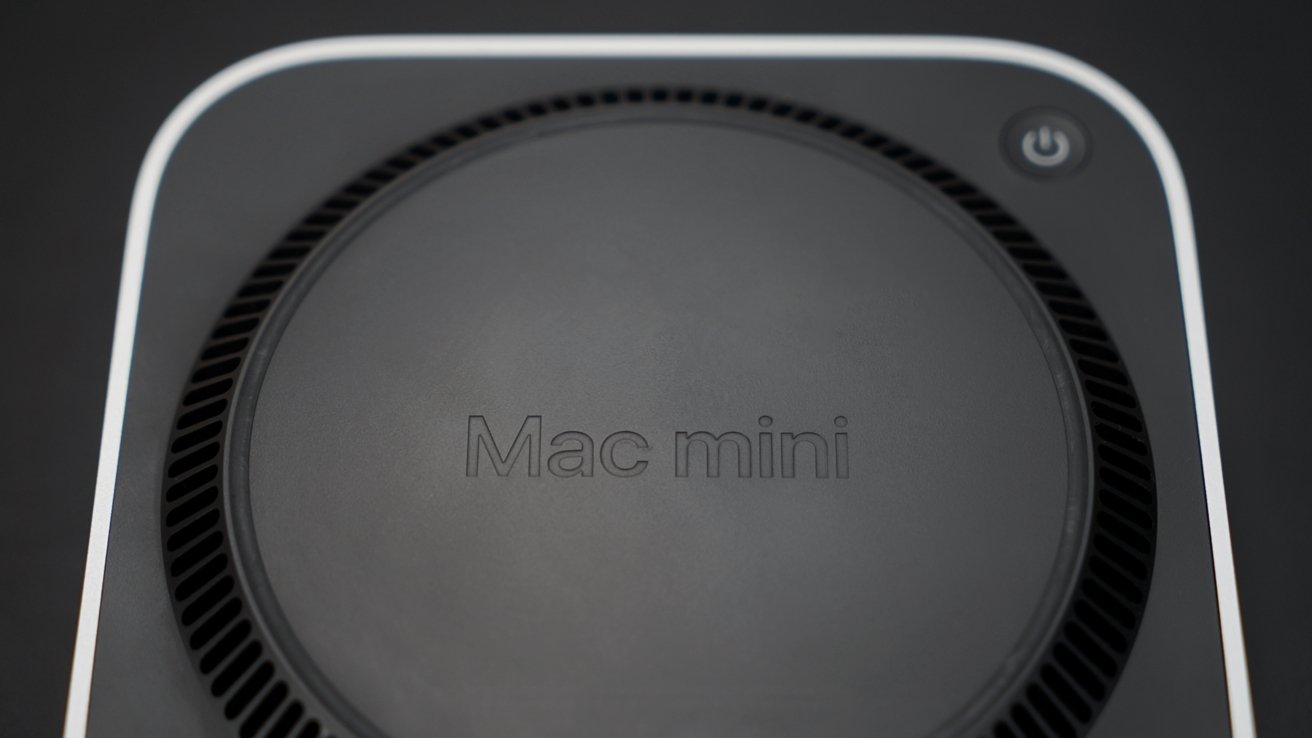
Top view of a Mac mini computer, showing the circular vented base with Mac mini text in the center and a small power button symbol near the edge

M6 Mac mini review: A very familiar base

Around the back is an unchanged mix of ports, again without the immediately visible power button. Once again, it’s under the back corner of the casing, which caused a stir last time for being a little harder to reach than in previous Mac minis. It was a mistake then, and it’s still a mistake now.

That said, if you’re the kind of person who puts the Mac to sleep at the end of the working day and doesn’t really shut down the Mac mini itself, you may only need to care about the button on a rare occasion.

Really, the only pain point here is that power button. And even then, for most users, it will only be an issue when they actually need to press it.

Advertisement

M6 Mac mini review: The M6 chip and the call of AI

The headline change, and the only real change of note here, is the M6 chip. It is Apple’s first 2-nanometer processor in a desktop Mac.

The CPU has 12 cores in three types. This consists of two super, four performance, and six efficiency cores.

According to Apple, the M6 has a 40% faster CPU than the M4. A lot of this is due to the super cores, which adds two cores to the count versus the M4 version.

The GPU is also more core-heavy than before, with 12 instead of ten cores. The core improvements as well as the quantity stand to give the M6 a big leap in terms of graphical performance.

Advertisement
Wooden cabinet shelf holding a small silver desktop computer and large black over-ear headphones on a stand, above slatted cabinet doors in a warmly lit room

M6 Mac mini review: A more unusual placement of the compact computer.

That said, the bigger draw here will be in artificial intelligence processing, as the M6 has been practically made for those tasks.

For a start, there’s the Neural Engine, which is now a dual 16-core version. That means there are 32 cores instead of 16 cores in previous editions.

Furthermore, each of those 12 GPU cores have Neural Accelerators, which again help with AI-related task processing. It will help your Photos work from a practical standpoint, or any other “neural” tasking.

Advertisement

Apple says that it has four-times faster AI compute capability than the M4. In LM Studio, it can even hit 4.8 times speeds, Apple adds. We never saw that for the base model, but it is faster.

This is all fine and good, but in practice, how much it actually varies depends on your workloads. It is faster than M4 and M5 Pro Mac minis in some workloads, but in other AI workloads, the M5 Pro core count comes ahead.

It isn’t quite the AI monster that the Mac Studio has become, it’s still a device that’s more than capable of chewing away at queries. Still, though. The Mac mini is better used as an inexpensive workstation with Cloud AI compute instead of on-device, especially with the reviewed $899 model.

The base model as reviewed here has 16GB of unified memory. There are options for upgrades to 24GB and 32GB, if you can afford the upgrade costs.

Advertisement

Memory bandwidth is also a real gain this year. The base 16GB runs at 153GB/s, which is up from the 120GB/s of the M4.

The 24GB and 32GB tiers reach 170GB/s.

Horizontal bar chart titled Geekbench Single-Core Benchmarks comparing Mac minis: M6 scores 4,068, slightly outperforming M4 at 3,277, with values plotted along a 0— 4,500 scale

M6 Mac mini review: Single-core results

In terms of computing grunt, the M6 Mac mini can push out 4,034 on the single-core test of Geekbench 7. It’s an improvement of about 23% on the 3,277 of the M4 Mac mini, thanks to the use of a super core.

Advertisement

Likewise, turning to multi-core, the per-core improvement is mixed with the extra cores to give the M6 a score of 22,594. Against the M4 Mac mini’s score of 15,337, that’s a 47% improvement.

Horizontal bar chart titled Geekbench Multi-Core Benchmarks comparing Mac mini models, showing M6 Mac mini significantly faster at 22,062 points versus M4 Mac mini at 15,337 points

M6 Mac mini review: Multi-core results

Shifting to graphics, and the Metal test is similarly a big generational gain for the M6 over the M4. At 91,087, the M6 is scoring 68% higher than its predecessor.

Horizontal bar chart titled Geekbench Metal Benchmarks comparing Mac mini models; M6 scores 86,954 and M4 scores 54,186, showing the M6 Mac mini significantly outperforming the M4

M6 Mac mini review: Metal results

Advertisement

There’s certainly a performance improvement here. It’s even to make even M4 Mac mini owners consider a move up.

M6 Mac mini review: Connectivity and Displays

Connectivity mostly carries over from the M4. The port layout is unchanged front and back, and that’s perfectly fine.

There is HDMI and three Thunderbolt 4 ports, which can run at up to 40Gb/s. They’re not the Thunderbolt 5 you’d get from the M5 Pro, but it’s only a problem if you need that much bandwidth.

They accompany the two USB-C ports at the front, which run at 10Gb/s. Likewise, they could’ve been Thunderbolt 5, like the M5 Pro, but there has to be some advantage to upgrading.

Advertisement

The Ethernet connection is a quiet improvement here. The gigabit connection has been switched for 2.5Gb Ethernet, which builds in a little network infrastructure future-proofing.

Small silver desktop computer on a tiled surface, rear view showing power connector, Ethernet port, HDMI port, and three Thunderbolt or USB-C style ports in a row

M6 Mac mini review: Rear ports

You can always pay the $100 to get the 10Gb upgrade, but there’s less of a need to do that for right now. And, that creeps you even closer to the M5 Pro Mini, or the Mac Studio.

On the wireless side, the N1 chip brings Wi-Fi 7 to the party, as well as Bluetooth 6 and Thread. For most, this is still future-proofing. Wi-Fi 7 networks have not yet proliferated, as they can still be very expensive.

Advertisement

The M6 Mac mini can drive up to three external displays, using a combination of Thunderbolt connections and HDMI. It can now support two external displays over a single Thunderbolt port, too.

Support includes variable refresh rates, HDR, and multi-channel audio. Those Thunderbolt 4 connections can support native DisplayPort 1.4 speeds.

The triple screen layout can consist of a pair of 6K 60Hz screens or two 4K 165Hz screens, as well as either a 5K 60Hz monitor over Thunderbolt or 4K 60Hz over HDMI.

If you go for two screens, the maximum limits include one 8K 60Hz screen or 5K 120Hz, or 4K 240Hz, as well as a second 5K or 4K HDMI display.

Advertisement

M6 Mac mini review: Pricing

RAM and SSD industry pricing has hit the Mac mini hard. The base M6 starts at $899.

This is $300 above the M4 model’s launch price, and $500 more than what you could buy the older model through MicroCenter for, at this time in 2025. Though, to be fair, we are currently existing in a memory crisis, and so everything electronic is now very expensive.

The memory itself starts at 16GB. An upgrade to 24GB costs another $200. Going to 32GB is a $400 premium over the base model.

Storage starts at that meager and already discussed 256GB, with upgrades ranging from $200 for 512GB to $500 more for 1TB. If you want 2TB, that’s $1000 more than the base unit.

Advertisement

This pricing ladder isn’t great. The 256GB capacity reviewed here is hampered a bit by slower drive transfer speeds too, with it hitting about 3150 megabytes per second read and write.

The 512GB model, adding that $200, boosts this to about 6300 megabytes per second read and write speeds. This 512GB is really what we consider the bare minimum for the 2026 Mac mini, since Apple Intelligence is no longer optional, and the 20GB or so models will install regardless of your setting.

And, it’s not slotted storage, like the M4 Mac mini was, eliminating that option. For budgetary reasons, we do recommend external SSD or hard drive storage

All said, Apple’s pricing could’ve been a lot worse. It’s painful for those on tight budgets, but upgrades have always done that, even without memory market shenanigans.

Advertisement

The M6 Mac mini is not as good a processing bargain as the Mac Studio is, but it’s also about half the price with some well-selected upgrades at purchase.

As always, consider your workflows. The M6 edges out the M5 family in single-core use. It’s hard to recommend the $899 Mac mini M6 configuration with the storage the way it is.

M6 Mac mini review: A pint-sized powerhouse, at a price

The M6 Mac mini is a familiar box with a faster heart. It’s the continuing pattern for Mac upgrades, where Apple makes the engine faster, while keeping everything else almost exactly the same.

It remains an impressive piece of engineering, with a lot of power, in a small space, sipping power the whole while. Price increases aside, that’s still very much the case here.

Advertisement

The gains are all inside, and they are real. The CPU, GPU, and AI performance are all welcome jumps, especially for those with Mac Studio dreams but a Mac mini budget.

The video support and faster 2.5Gb Ethernet too good to have.

Minimal desktop setup with large monitor showing a forest scene, compact keyboard, mouse, small computer, wireless headphones on a stand, and glass cylinder, all against a white brick wall

M6 Mac mini review: Continuing to take up a small amount of desk space.

The catch is that SSD at entry-level and that higher price. At $899, the base model costs $300 more than before, and that’s hard to escape.

Advertisement

For first-time buyers, the M6 Mac mini remains an easy recommendation, assuming more SSD space is bought at purchase, if they want something beefy and don’t want a MacBook Neo. Upgraders from the M4 should weigh the AI gains against how much is in their wallets.

M6 Mac mini Pros

  • Large CPU, GPU, and AI performance gains
  • Dual Neural Engine suits local AI work
  • Wi-Fi 7, Bluetooth 6, and 2.5Gb Ethernet

M6 Mac mini Cons

  • Costs $300 more than the M4’s launch price
  • No Thunderbolt 5, unlike the Pro model
  • Profoundly tight 256GB base storage, which is the biggest problem

Rating: 3.5 out of 5

With Apple Intelligence, 256GB for a Mac mini is just too small. And, on top of that, that configuration is half the speed of the 512GB version.

I do think that the $1099 model with more storage is the better option. That version is a 4 out of 5.

The RAM and Flash commodity pricing is a real problem for the Mac mini. That price increase cannot be ignored. The math on this is enormously different if the 512GB version was $899.

But it isn’t. As such, the entry-level M6 Mac mini will be fine for a first desktop, or an adjunct to an iPhone-primary device, because that 256GB storage just cannot be ignored. Most of this target market has mostly single-core loads, and will be perfectly fine with a MacBook Neo, upgraded, for less money.

Advertisement

While it’s not my main computer, I’m keeping my M4 Mac mini for what it’s being used for. There’s just too much of a price premium not to.

As far as my main computer goes. after I sold my M1 Ultra Mac Studio, after much hemming and hawing, I picked the M5 Max Mac Studio instead of a M6 Mac mini with about $1200 in upgrades to get it where I wanted. It was just too close in pricing, with the M5 Max winning the day.

We’ll see what happens with Mac mini after the rumored quick jump to M7 in about a year.

Where to buy the M6 Mac mini

Apple’s M6 Mac mini has a starting retail price of $899, but Amazon is already offering a discount on the standard configuration at the time of this review. The $20 markdown brings the price of the M6/16GB/256GB spec down to $879.99.

Advertisement

You can compare prices across every configuration in our Mac mini Price Guide, with deals available on numerous models, including storage upgraded ones that we recommend.

Source link

Advertisement
Continue Reading

Tech & AI

Missile Test Sinks US Navy Warship Off The Scottish Coast

Published

on


If you’re a military enthusiast, you’ve probably kept up with the latest news regarding missile testing conducted by the United States military. If so, then you might have heard that the USS Klakring is now at the bottom of the Atlantic Ocean. This decommissioned U.S. Navy frigate was sunk during a live-fire exercise in the North Atlantic on September 25, 2026.

This missile test was part of Exercise Atlantic Thunder 2026, a joint training event between the U.S. and the U.K., led by the U.S. 6th Fleet. The USS Paul Ignatius attacked the Oliver Hazard Perry-class Klakring with an anti-surface variant of the SM-6 missile. The USS Massachusetts submarine followed up with an attack of its own, using an Mk 48 Advanced Capability torpedo. The Navy says that torpedo delivered the final blow that ultimately sank the Klakring.

Advertisement

Atlantic Thunder also gave the Royal Navy a chance to conduct live-fire testing with two of its new anti-ship weapons. The HMS Portland fired a Naval Strike Missile at the former U.S. warship, while a Royal Navy Wildcat helicopter launched Sea Venom missiles. American and British P-8 maritime patrol aircraft, along with U.S. Air Force F-15E Strike Eagles participated in the exercise as well. Before the sinking, U.S. Navy personnel placed sensors on the Klakring to collect data about the damage caused by the various strikes, which can later be used to improve future evaluations of how ships respond to attacks.

Advertisement

How the Navy utilizes decommissioned warships

The USS Klakring had nearly 30 years of service behind it before it was sunk during Exercise Atlantic Thunder. The frigate entered service in 1983 and was named after Rear Admiral Thomas B. Klakring, a World War II submarine commander who received three Navy Crosses. During its career, the ship took part in counter-drug operations, multinational exercises, and overseas deployments in the Caribbean, Pacific, and Mediterranean. Its final deployment came in 2012 and it was decommissioned in 2013.

The Navy’s use of the Klakring is part of a larger effort to use decommissioned ships for fleet and weapons training. The Navy’s 2026 shipbuilding plan names 10 retired ships for use in future sinking exercises, or SINKEXs, during events like Atlantic Thunder and Valiant Shield. These exercises allow the military to evaluate weapon effectiveness and ship survivability, while also practicing new tactics and weapons combinations.

One example of this type of training took place during RIMPAC 2026. In July, American and allied forces used two decommissioned ships as targets during the massive multinational naval exercise held near Hawaii. The ships were sunk during SINKEXs, giving military forces a chance to practice attacking ships with live weapons. Forces from several countries took part in these exercises, providing an opportunity to practice and improve coordination with international allies.

Advertisement


Source link

Continue Reading

Tech & AI

Trump’s Push to Rebrand AI as “Super Intelligence” Sparks Domain-Buying Frenzy in Slovenia

Published

on

A linguistic quirk of the global internet has turned into an unlikely economic footnote to Donald Trump’s campaign to rename artificial intelligence. Since the US president declared that “AI” should henceforth be known as “SI” — short for “super intelligence” — Slovenia’s national web registry has recorded an extraordinary surge in demand for its country-code domain suffix, .si, the same two letters Trump wants attached to the future of computing.

According to Register.si, the body that administers Slovenia’s internet domains, roughly 44,000 .si web addresses were registered in September, compared with fewer than 2,000 in August — an increase north of 2,100%. Spokeswoman Klara Herman called the spike “unprecedented” relative to the previous twelve months of activity, noting that on a single day, 30 September, 11,000 new domains were registered.

The timing lines up almost exactly with Trump’s remarks. Speaking to the United Nations General Assembly in New York on 11 September, the president argued that the word “artificial” undersells the technology. “The use of the word artificial makes it sound fake,” he told delegates. “It’s not fake, it’s actually amazing. But we have to be careful… welcome to the new world of super intelligence.”

What might have been dismissed as a rhetorical flourish has since hardened into policy. This week Trump signed an executive order directing US government departments and agencies to adopt the terms “SI” and “Super Intelligence” in official correspondence, websites and reports, effectively retiring “AI” from the federal government’s vocabulary. The signing came at what the White House billed as “an extraordinary gathering” of technology executives, part of a broader push the administration describes as building “America’s Golden Age” of innovation.

Advertisement

The order did not escape scrutiny for other reasons: eagle-eyed observers online noted that “United States” had been misspelled beneath Trump’s signature on the official document, prompting a wave of mockery even as the substance of the rebrand drew attention of its own.

For Slovenia, the linguistic coincidence has translated into a very literal digital land grab. Herman said she remained “cautious” about crediting Trump’s comments with the entirety of the surge, but acknowledged the September numbers stood out “very clearly” against the rest of the year’s data. Industry watchers point to a familiar pattern: speculative domain buyers rushing to secure short, memorable web addresses before their perceived value rises, in the hope of reselling them later at a premium.

That kind of bet has paid off spectacularly before. In 1997, domain investor Rick Schwartz — nicknamed “The Domain King” — bought men.com for $15,000 and sold it seven years later for $1.32 million. With “SI” now carrying presidential weight as shorthand for one of the most consequential technologies of the era, it is easy to see why buyers might be scrambling to lock in .si addresses on the chance that the abbreviation becomes as commercially valuable as “AI” itself.

Whether Trump’s attempted rebrand actually catches on in everyday usage — among technologists, journalists or the public — remains to be seen. Renaming a technology that has already saturated global culture under a single acronym is no small task, and “AI” has become deeply embedded in product names, academic literature, stock tickers and regulatory frameworks worldwide. Replacing it wholesale, even with the backing of an executive order, would require buy-in far beyond the US federal government.

Advertisement

Still, the episode offers a striking illustration of how quickly political rhetoric can ripple into unexpected corners of the global economy. A president’s preference for one acronym over another, delivered in a UN speech, has been enough to send Slovenian domain registrars into overdrive — a reminder that in the internet age, even a two-letter abbreviation can become a commodity.

Sources:
Continue Reading

Tech & AI

The Game Boy Test Lab Provides A Cartridge-Sized Diagnostic Lab

Published

on

Most of the time when you see a repair video of a Game Boy it’ll be demonstrated with a cartridge inserted and booting up into the game, but does this actually mean that the system is truely fully functional? There can still be more intermittent faults, dodgy buttons, or even something like a defective link port — all of which can be much harder to detect than firing up a copy of Tetris. This is where the GB Test Lab cartridge by [Marcel Pflug] of the Game Boy Museum comes into play.

With the freely available ROM put on an EverDrive or similar flash cartridge, you can test a whole range of functions of the original Game Boy (DMG-01), most of them autonomously and some with some user input.

This is similar to the test cartridge that Nintendo themselves used in the form of the DMG-AGING-01, which validated the basic functionality of the handheld. Since then a myriad of test cartridges have been created by the homebrew community, but not all try to test quite literally everything possible. In the case of the GB Test Lab this includes the typical like CPU, RAM, interrupts, etc., but also key bounce time, intermittent connectivity and playing a game of Pong between two GBs connected by link cable as well as using the GB Printer.

Advertisement

Results are saved per GB and persisted if the flash cartridge has battery backup or similar. Overall it seems quite comprehensive and something that’s worth giving a shot if you’re the kind of person who owns one or more GBs. Perhaps the neatest part of this ROM is that it also contains a built-in reference for all the components and other useful details, including how to interpret results and symptoms.

Source link

Advertisement
Continue Reading

Tech & AI

iPhone Duo’s inner display has an easily replaceable top layer

Published

on

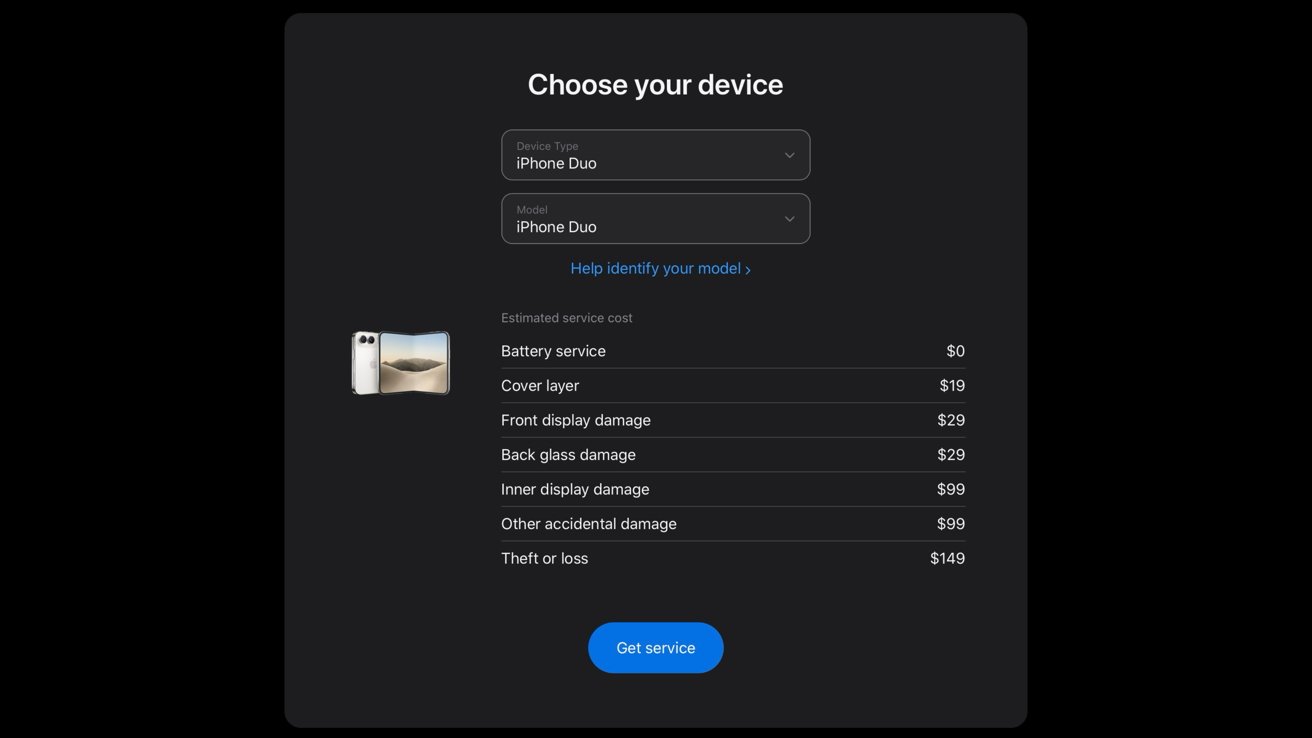
AppleCare coverage for the iPhone Duo will mean inexpensive repairs for Apple’s first foldable, including $99 full inner display replacement or $19 “cover layer” swaps.

Apple’s iPhone Duo may be the most complex and expensive iPhone to date, but thankfully it appears to be inexpensive to repair. At least, that will be the case if you have AppleCare.

According to Apple’s service and repair website, first discovered by Quinn Nelson of SnazzyLabs, the iPhone Duo has a swappable cover layer that will cost just $19 with active AppleCare coverage. Of course, this will mean going to an Authorized Apple Service Provider to get it done.

Other AppleCare repair costs include $29 for front display or back glass repairs and a $99 inner display repair. Accidental damage repair is also $99 and theft or loss replacement is $149.

Advertisement

An interview with Apple’s VP of hardware engineering Kate Bergeron, shared by 9to5Mac, reveals that Apple’s intention with the removable cover layer is an option for user replacement after wearing in the existing layer. She said that Apple engineered the cover layer to wear in for as long as possible before a user might need to replace it.

Don’t try this at home, for now

Since we’re talking AppleCare, that means that the layer likely isn’t meant to be “user” replaceable, though we won’t know how easy it is to get off or put a new one back on until testing can be done. There is a small chance that Apple’s self-service website will provide users a path to purchasing their own display cover layer.

Apple repair service webpage showing iPhone Duo selection dropdowns, small phone photo, and a list of repair costs including battery, cover, display, glass, accidental damage, theft, plus Get service button

AppleCare coverage for iPhone Duo will be much cheaper than paying for repairs without it

If it is easily peeled off, there is also an opportunity for third-party alternative outer layers. I could imagine different textures for Apple Pencil, privacy layers, or glossy covers that are more durable overall.

Advertisement

Obviously, Apple has engineered iPhone Duo and its hinge mechanism to account for the exact thickness and material of its first-party cover layer. Knowing Apple, this isn’t some kind of simple screen protector-like surface and isn’t intended for novice user replacement or third-party alternatives.

Going without one likely isn’t an option either.

Whatever the case, wait to let the YouTubers with too much time and money to break a few iPhone Duos before trying any of this yourself. Chances are that any alternative cover layer could potentially damage the iPhone Duo and even invalidate the warranty and AppleCare.

iPhone Duo goes up for pre-order on October 16 and ships on October 23. It starts at $1,999 with 256GB of storage.

Advertisement

Source link

Advertisement
Continue Reading

Tech & AI

Traditional PD Wasn’t Enough. So I Used TikTok to Create an Engaging Alternative.

Published

on

The new school year is underway, and like educators across the country, I have been engaging in my annual dose of professional development (PD) sessions.

Unfortunately, over the years, I’ve found that traditional PD can sometimes feel repetitive, with facilitators covering reviews and strategies teachers have already mastered, and approaches to curricular analysis that often leave much be desired. While well-intentioned, these workshops can miss the mark when they focus too much on compliance rather than creating opportunities for teachers to innovate, develop and refine engaging strategies for today’s classrooms.

Having led and designed PD sessions myself, I know how challenging it is to create experiences that resonate with everyone. But teachers, much like the students we support, crave transformative learning experiences grounded in active inquiry, collaboration and respect for our classroom expertise. When traditional workshops fall short of that standard, educators naturally look elsewhere for inspiration and community. 

When I first applied to become a National Board Certified Teacher (NBCT), the process felt so much more transformative, not because of what we did, but because it was intentionally designed around teacher personal and professional growth as opposed to compliance. Colleagues in my NBCT cohort not only made me reflect deeply on my personal pedagogy, but also encouraged me to tinker and inquire about how to improve it. 

Advertisement

Last September, during a routine webinar, my colleagues and I found ourselves scrolling TikTok on our phones, seeking relatable teacher perspectives, quick classroom hacks and insights from fellow educators.

Unlikely as it may seem, online platforms like Spotify, Substack and TikTok are becoming vibrant spaces for meaningful, bite-sized PD. So much so that this new phenomenon has inspired me to investigate exactly how social media can help teachers connect theory to real classroom practice.

The Generation Gap in Professional Development

Evi Wusk, assistant professor of secondary education at Nebraska Wesleyan University, acknowledges the phenomenon of virtual microlearning among preservice teachers in her recent EdSurge article “What TikTok Is Teaching Future Teachers (That We Aren’t).” In her work with preservice teachers, Wusk notes that more and more, instead of having to wait until they get into the classroom to learn some of the job’s hardest lessons, many preservice students are exposed to teacher personalities and lived experiences on TikTok; they even come to her graduate classes enthusiastically citing brilliant teaching “hacks” they’ve seen on their phone. 

Virtual communities like the Science of Reading Classroom have been essential to my professional growth — and to helping my colleagues and students. When I was chosen to coach 30 teachers across my district in implementing a new literacy curriculum, I set out to learn as much theory as I could to help teachers understand why the work we were about to engage in went beyond a simple textbook change, but involved a change of their entire pedagogical approach. 

Advertisement

First, I enrolled in a graduate reading specialist program that unfortunately did nothing more than promote outdated practices. When that pursuit fell flat, I started listening to educator podcasts such as “Melissa & Lori Love Literacy” while reading blogs by real teachers and theorists alike on Substack. 

Eventually, I found the Goyen Foundation, where a cohort of literacy fellows is chosen each year to deepen and share our understanding of learning science. We often ended the final minutes of each invigorating meeting commiserating over how alone we felt in our schools, and wishing our own communities fostered this kind of collaboration and inquiry that this virtual one did. 

In these spaces, through the use of technology, I found like-minded, curious and passionate educators who have taken it upon themselves to improve the state of literacy in the 21st century. These virtual spaces reignited a fire and passion to improve my own practice, which has become increasingly important for me to maintain as a teacher navigating critical changes in the field today. 

At one point, it occurred to me that no matter how much knowledge I wanted to pursue, and how much life got in the way, I always ended up bingeing viral teacher humor videos. If this was the viral loop I was stuck in, other teachers were too. So why not bring evidence-based practices and meet teachers where they are?  

Advertisement

When I couldn’t find that content readily enough, I decided to create it.

Charting a New Pathway for Professional Learning

Many times before, I have seen teachers who are curious but also have to run out the door right after the bell rings to go to a second job, take care of a family member or drive the kids to soccer practice. It is for those teachers that I started to funnel everything I learned about the science of reading into bite-sized PD opportunities on TikTok, because even in the day-to-day grind, almost all of us find ourselves in a dopamine-infused scroll a few times each day. 

When I set up my TikTok channel, Science of Reading Snaps, my goal was to create bite-sized professional development that explicitly connects theory to practice. And that isn’t just a buzzword either; when I say practice, I mean that I actually film myself using the skills, strategies or theory in my own classroom with real students. 

Along the way, I have had to sharpen my skills in intentionally connecting the work I do in the classroom to the knowledge I seek out in online communities. For example, I have always included the classic turn-and-talk in my day-to-day teacher toolbox. But only after diving into reading science and talking with colleagues online about the importance of oracy did I realize that verbal reasoning and oral language skills are absolutely key to students building comprehension from early literacy through postgraduate content. 

Advertisement

While none of my content is viral, it does make an impact. Over the past year, I have racked up over 100,000 views across 50 videos on TikTok.

What surprised me more than the number of views were the conversations educators had in the comments. I think it’s in our nature as educators to keep building knowledge, and I was thrilled to see that people found value in my content and engaged in a discussion about it. 

For many of my videos, I get the familiar comments like “Love this” or “I’ll be doing this regularly.” What I didn’t quite expect was for the comment section to evolve into its own micro-professional learning community. In the comments on my recent morphology matrix video, one teacher shared how they called this strategy “Meet the Relatives,” while another asked what the difference was between a base word and a root word.  

From my classroom to theirs and back again, teachers asked questions, shared resources and offered their own knowledge. 

Advertisement

Teaching is often an undervalued vocation, but seeing colleagues engage with my content this way was not only validating, but also deeply humbling. Knowing my colleagues in the trenches valued and appreciated my work meant a great deal, because this job isn’t one we can do alone. 

Being the Change, One Video at a Time

As teachers, we spend time talking with administrators, asking questions, sharing examples from our own classrooms and discussing new ideas we want to try. The more excited we are about the content we’re learning through these micro-PDs, the more likely the leadership team will see the changes needed. 

Change is hard, but I do feel the most important trait an educator can have is a love of learning new concepts and tactics. I am fortunate enough to have the capacity to read, persevere and inquire independently in order to improve myself and my practice — a skill I work to pass on to my students every day, and to teachers through the content I create. I’m also fortunate that technology has become a tool and helpful alternative that teachers can point to for inspiration and motivation to improve their teaching methods and enhance the curriculum.

The internet, social media and the devices in our hands have made it possible to expand our reach and have also allowed me to expand mine through a love and passion for the science of reading.

Advertisement

Source link

Continue Reading

Tech & AI

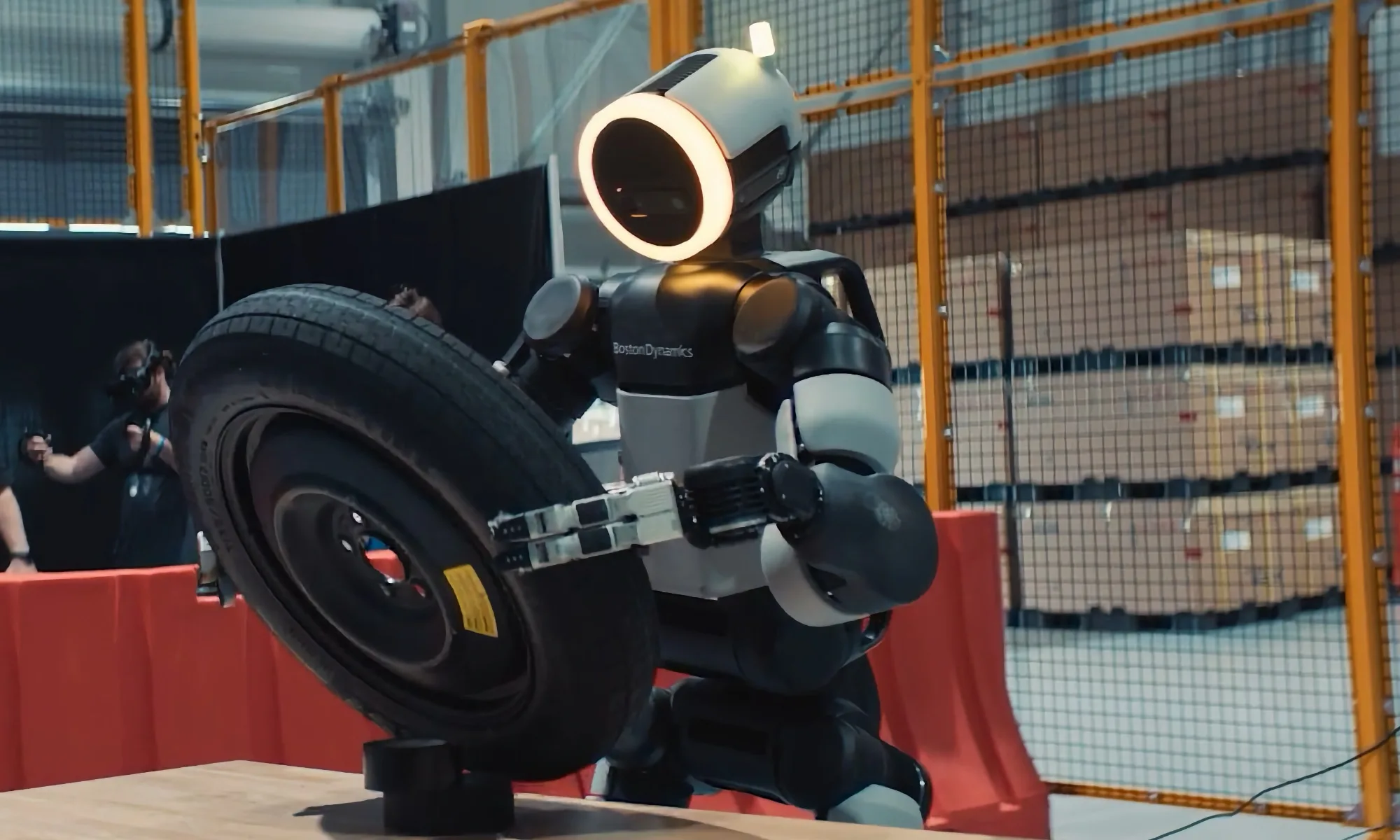
Boston Dynamics’ Atlas is done doing backflips and is finally ready to clock in

Published

on

Boston Dynamics’ Atlas has been the internet’s favorite robot for years, pulling off backflips at CES and entertaining fans at the FIFA World Cup. But party tricks don’t pay the bills. Now, Boston Dynamics and Hyundai Motor Group want Atlas to trade the stage for the factory floor.

How did Atlas go from show-off to coworker?

AI has changed how Atlas picks up new skills. Rather than coding every movement, Boston Dynamics now trains the robot much like a new hire. Atlas runs on two separate systems. One keeps it steady on its feet and lets it reach for objects, while the other helps it understand the world and carry out multi-step instructions.

Like AI chatbots, Atlas improves with more data, but that data hasn’t been collected yet. Right now, it is practicing automotive tasks at the Robotics MetaPlant Application Center before heading into actual factories. Car plants have tough safety and reliability rules, making them a solid proving ground.

Advertisement

Where will we see Atlas working?

This version of Atlas is designed for heavy-duty industrial work. It can haul seriously heavy loads and handle scorching, unforgiving workplaces, which makes it a good fit for manufacturing, food and beverage, and semiconductor plants. So, don’t expect it to fold your laundry just yet.

Hyundai’s backing is what makes the numbers work. Hyundai Motor Group is building a new US factory with the capacity to churn out 30,000 robots every year, and it plans to put 25,000 Atlas units to work. According to Boston Dynamics, the partnership has already brought costs down by 60 to 80 percent between the prototype and the first production run.

Are robot coworkers finally becoming a reality?

For years, humanoid robots felt like something out of a sci-fi movie. Now, with a dedicated factory, thousands of units planned, and a market projected to reach $200 billion by 2035, they suddenly feel very real.

Boston Dynamics isn’t new to this game either. Its Spot robot already works for more than 500 customers in 46 countries. If Atlas can follow in its footsteps, the robot we once watched doing backflips might soon be lifting boxes next to factory workers.

Related Coverage:

Advertisement

Source link

Continue Reading

Tech & AI

Japan eyes $140bn AI data centre push with Dell and JERA, FT reports

Published

on

Japan’s biggest power generator is teaming up with Dell to build AI data centres across the country. The push could cost as much as $140bn, the Financial Times reported.

JERA, Dell and UK developer RHAELM signed a non-binding agreement on Thursday, JERA said. Private equity firm Apollo will help fund the work as RHAELM’s financing partner.

The first project sits next to JERA’s gas-fired power station in Chiba, east of Tokyo. It will draw about 400 megawatts and cost more than $15bn, or ¥2.3tn, across all phases.

Operations are due to start around 2028. The FT said the site would be among Asia’s largest outside China.

Advertisement

Skipping the grid queue

The plan’s selling point is speed. The data centre will take power straight from JERA’s plant, rather than wait years for a grid connection.

“We can deliver a 400MW facility years ahead of a conventional grid-connected timeline,” said Bradd Lewis, RHAELM’s chief executive.

Each firm has a set role. JERA brings the land and power, Dell supplies ready-built racks of servers, and RHAELM runs the build.

JERA says it generates about a third of Japan’s electricity.

“JERA is uniquely positioned to power Japan’s AI ambitions,” said Yukio Kani, its global chief executive.

The partners want to copy the model at other JERA sites. The aim is several gigawatts of AI capacity across Japan in the 2030s.

Advertisement

A crowded field

JERA has not put its own figure on that wider rollout. The $140bn estimate comes from the FT’s reporting.

Others are piling in too. In June, Blackstone said it planned $30bn for Japan AI data centres over the next few years.

Japan’s digital minister has warned the country could become an “AI colony” if it falls behind.

Advertisement

Source link

Continue Reading

Tech & AI

CDC Opens Up COVID Vaccine Procurement Without Explanation

Published

on

from the transparent-as-a-brick-wall dept

Among the many promises that RFK Jr. offered in his confirmation hearings, promises that he has gone about breaking in spectacular fashion, one was a promise of “radical transparency”. His approach, in his own words, was laid out directly to Congress.

My approach to administration HHS will be transparency. If members of this committee or other members of Congress want information, the doors are open. I’ve spent many years litigating against HHS and its sub-agencies, NIH, CDC, FDA on FOIA issues trying to get information that we the taxpayers paid for and oftentimes getting back redacted copies after a year or two years of litigation. That should not be the case and if Congress asked me for information, you will get it immediately.

In the most recent news involving Kennedy-style fuckery, the CDC was mysteriously prohibiting the procurement of seasonal COVID vaccines through the Vaccine for Children program, designed so that states can get these shots at no cost for children who lack insurance, who are on Medicaid, and for Indigenous children. Why? Nobody seemed to be able to answer that question.

The CDC made some vague claims that the months-long delay was due to the need to finalize the procurement process (bullshit), or perhaps the need to have an outside expert consult on the final procurement process (bullshit). How do I know those statements were bullshit? Well, this is a statement from HHS to Ars Technica made on Wednesday, September 23rd, after media outlets began reporting on the shots being delayed:

The Department of Health and Human Services (HHS) told Ars on Wednesday that “CDC has not yet finalized procurement decisions” for the shots. The department’s statement further suggested Trump officials were questioning whether children should receive them. “HHS and CDC are committed to responsible stewardship of taxpayer resources and to ensuring that vaccines purchased through federally funded programs are appropriate for the populations those programs serve,” the department said.

Then, on that very same day, mere hours later, the Washington Post reported that procurement of the shots was now open and states could order the shots.

Advertisement

However, The Washington Post reported late Wednesday that ordering was opening. An unnamed source told the Post that part of the reason the vaccine ordering was held up was a delay in finalizing the CDC’s clinical guidance, which is written for health care professionals and public health officials. The guidance reportedly needed to be reviewed by an external expert.

According to further reporting, this explanation was also bullshit.

The Post also reported that CDC career officials had previously finished preparations for making the vaccines available. All Trump officials needed to do was essentially push a button to open ordering, sources said. Further, a spokesperson for the Minnesota Department of Health suggested to the Post that CDC leadership was behind the hold, saying the state had been told “that CDC leadership approval is needed before distribution of the vaccine can begin.”

In a response to Ars on Thursday, HHS again did not respond to questions about what caused the delay or how it was resolved. The department did, however, confirm that ordering for COVID-19 vaccines is now open.

So let’s call this what it is: Kennedy got caught with his hand in the cookie jar and reversed course once he’d been found out. And let’s also note that if any of this is supposed to be “radical transparency”, then I must be working off of a different dictionary than Kennedy and HHS.

None of this is transparent. There is no actual explanation on offer here for why the shots were delayed. And I have no doubt that if it had somehow gone unnoticed, the COVID shots never would have been made available at all. Kennedy, after all, has claimed that the COVID vaccine has killed lots and lots of people, and maimed others.

Advertisement

So we have another promise made to Congress broken. That same Congress should be demanding answers, at a minimum.

Filed Under: anti-vaxxers, cdc, covid, covid vaccines, hhs, rfk jr., transparency, vaccines

Source link

Advertisement
Continue Reading

Trending

Copyright © 2025