Apple is reportedly preparing its first Apple TV 4K hardware refresh in years, and the upgrade could address two everyday annoyances: having to speak into the Siri Remote to control the device and struggling to find the remote between sofa cushions.
According to Bloomberg’s Mark Gurman, Apple has tested two additions for the next Apple TV 4K: built-in microphones for hands-free Siri commands and a redesigned Siri Remote with a built-in speaker. The features are part of Apple’s broader smart home push, which is expected to be unveiled on October 13 alongside the new HomeView smart display and an updated HomePod mini.
The changes could make Apple TV more convenient to use, particularly for people who rely on voice commands or frequently misplace their remotes. However, Apple has reportedly tested the features, and it has not yet confirmed which will make it into the final product.
Built-in microphones could bring hands-free Siri to Apple TV
Currently, users need to speak into the Siri Remote or use a paired HomePod to interact with Siri on Apple TV. Built-in microphones would let users issue voice commands directly to the set-top box without picking up another device.
Advertisement
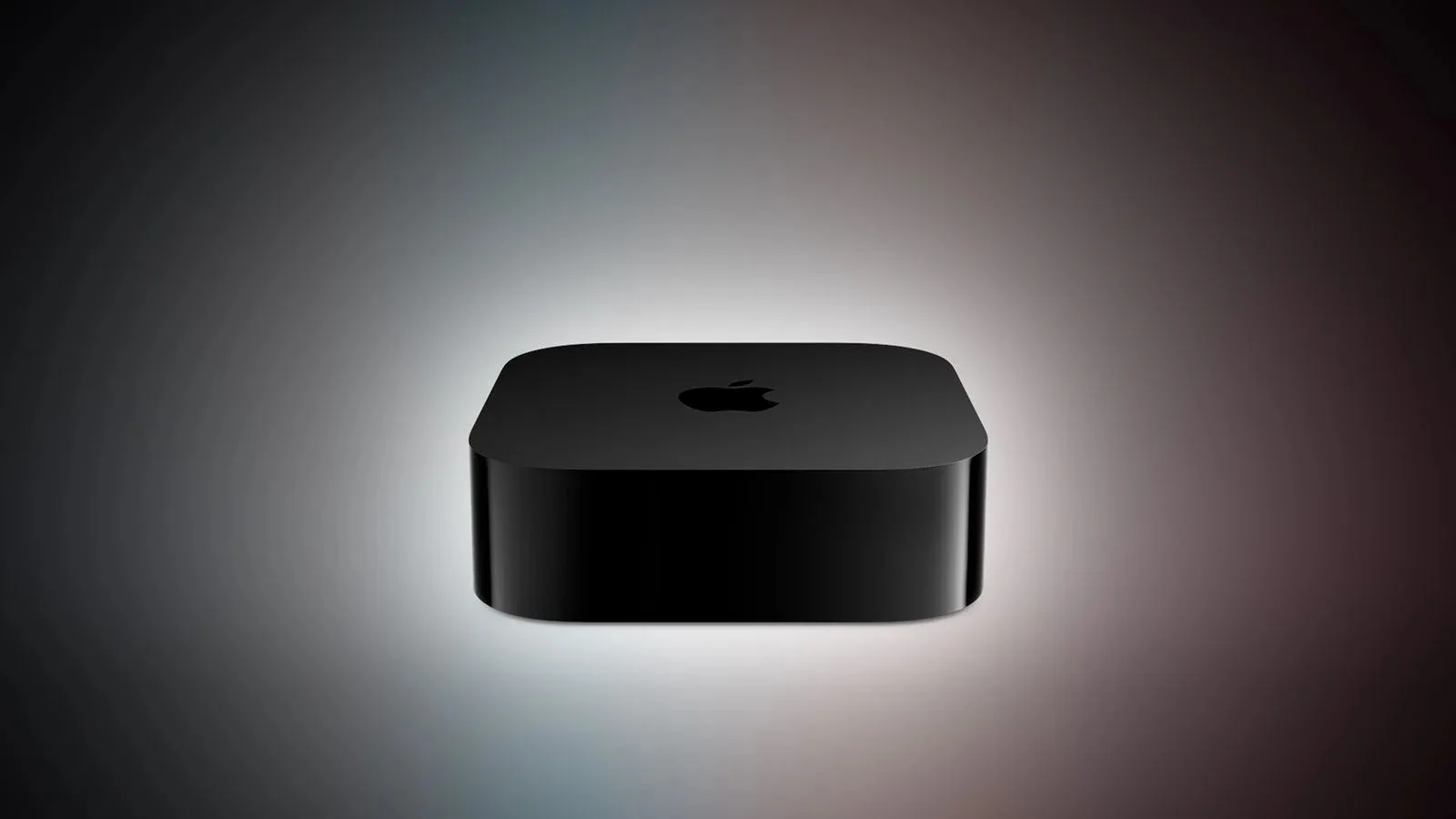
Leaked image of Apple TV 4K (4th generation)MacRumors
That could make everyday tasks, such as searching for a film, opening an app, or controlling playback, feel more natural. It would also bring Apple TV closer to the hands-free voice experiences already available through smart speakers and displays.
The feature fits into Apple’s wider effort to make its devices work together as a connected home system. Bloomberg reports that the next Apple TV will use a standard A19 chip, which would provide the hardware foundation for the updated experience and Apple’s newer Siri capabilities.
A speaker in the Siri Remote could make it easier to find
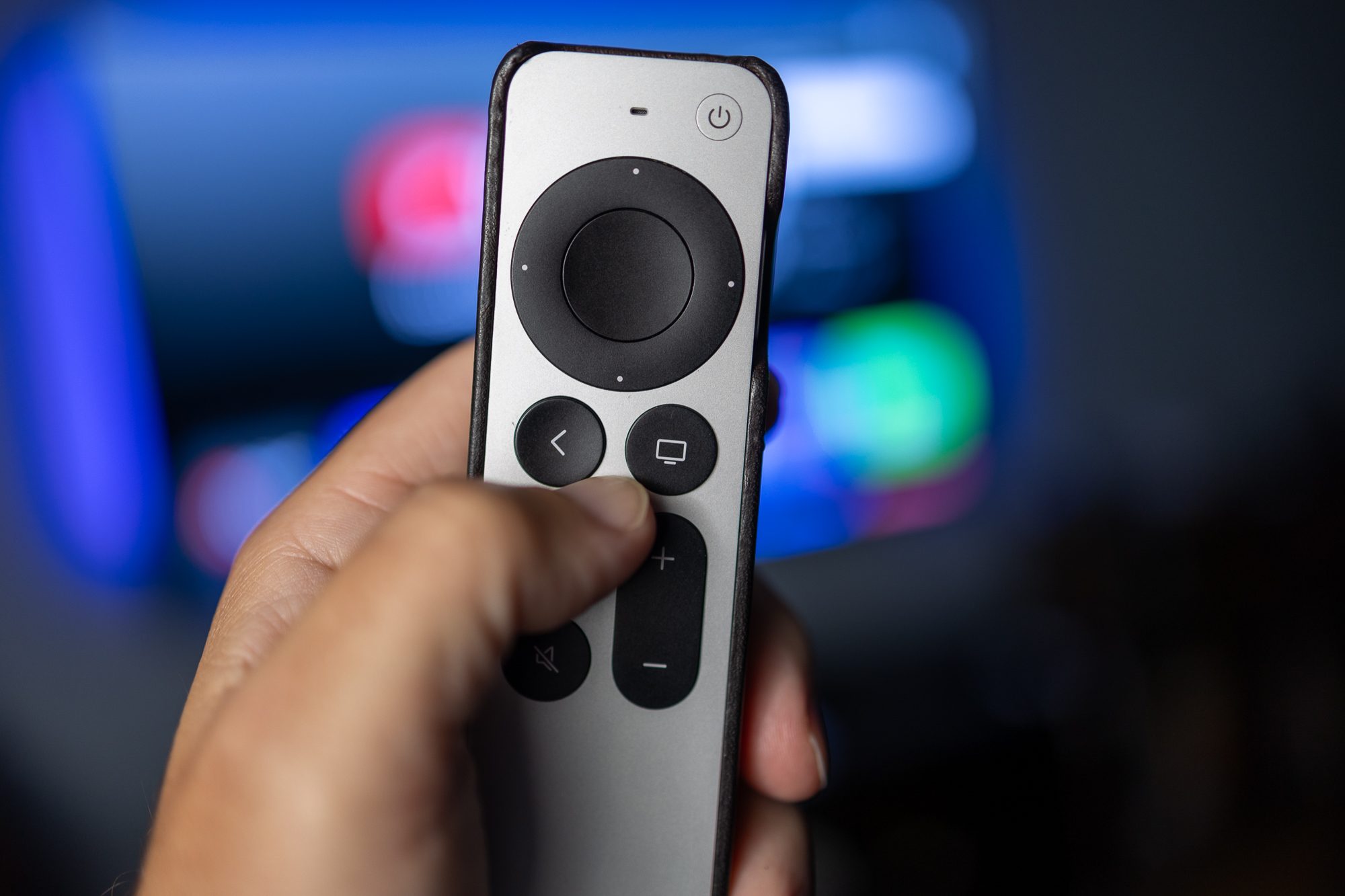
The second reported upgrade is a Siri Remote with a built-in speaker. The current remote has a basic Find feature, but adding a speaker could make it easier to locate when it disappears into couch cushions or gets left somewhere in the room.
Hold down the button that looks like a TV (or computer monitor) to open Control Center on Apple TV.Phil Nickinson / Digital Trends
Together, the two features would tackle small but familiar frustrations rather than radically changing how Apple TV works. For existing users, that could make the upgrade more appealing even if the overall set-top box design remains familiar.
According to 9to5Mac, Apple is expected to announce the new Apple TV 4K on October 13, with the device reaching stores on October 30. The updated HomePod mini is expected to arrive on the same date, while the HomeView smart display is reportedly scheduled for mid-November.
Apple has yet to confirm the new Apple TV’s final features, pricing, or availability. For now, anyone considering an upgrade may want to wait for the announcement before buying the existing model.
Samsung’s Galaxy S27 Pro and Galaxy S27 Ultra are shaping up to look quite different from the current generation, but the changes underneath may not be nearly as dramatic. Camera processing is reportedly being tweaked for warmer, more natural-looking photos, while certification filings point to a much-needed battery bump.
A fresh leak, however, points to an upgrade that could matter a lot more to people with sensitive eyes. Tipster WalleGalaxy claims Samsung will introduce DC dimming support on the Galaxy S27 Pro and Ultra, potentially moving away from the PWM-only approach it has relied on for years. The current Galaxy S26 series still uses PWM at around 480Hz and offers no DC-like flicker reduction option.
The S27 Pro | S27 Ultra displays support DC dimming, which helps reduce eye strain.
Samsung is collaborating with various safety firms to understand how to lessen eye strain problems experienced in earlier models.
PWM, or Pulse Width Modulation, controls brightness by rapidly switching OLED pixels on and off. Lower brightness simply means the pixels spend more time switched off during each cycle. Most people never consciously see the flicker, but some users can experience headaches, eye strain, or nausea, particularly at lower brightness levels.
There is a reason Samsung and plenty of other manufacturers have stuck with it, though. PWM allows OLED pixels to operate at a more stable current, which helps maintain accurate colors, consistent grayscale, and panel uniformity as brightness drops.
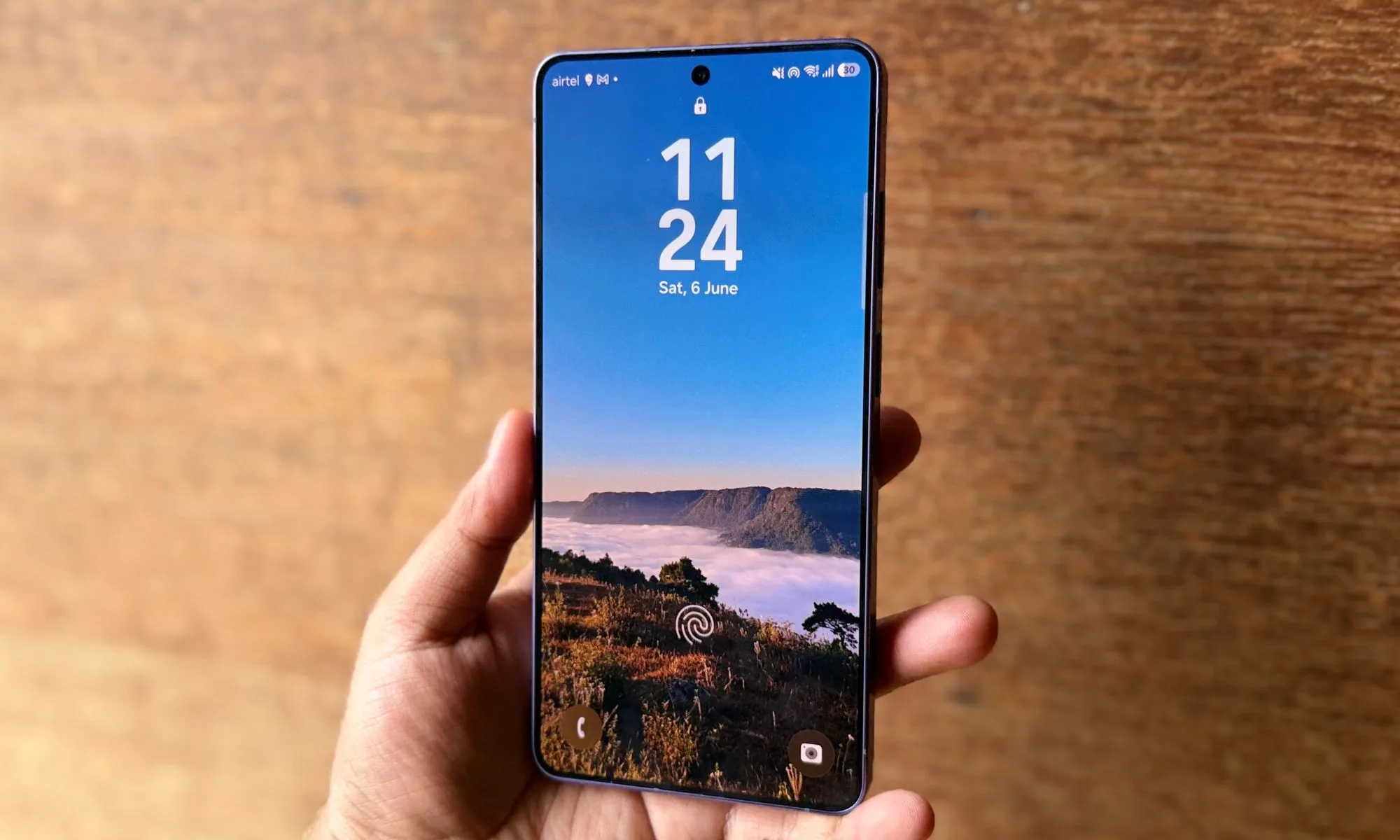
Nadeem Sarwar / Digital Trends
DC dimming solves one problem but brings another
DC dimming, on the other hand, controls brightness by lowering the current flowing through the pixels instead of rapidly cycling them on and off. Flicker is dramatically reduced, which can make the display easier on the eyes for people sensitive to PWM.
The downside is that DC dimming can affect image quality at very low brightness. Previous implementations have shown changes in grayscale and darker colors, while full DC dimming can also make panel uniformity harder to control. Samsung, however, does not necessarily have to choose one approach over the other. It could fall back on PWM at extremely low brightness and use a hybrid system instead. The company has already taken a similar approach with the Galaxy S24 FE, so it would not be surprising if the Galaxy S27 Pro and Ultra follow the same route rather than relying on DC dimming alone.
The Apple smart home device that the company is expected to announce on Tuesday is called HomeView and will ship to consumers in November, according to a report Sunday by Bloomberg’s Mark Gurman.
The device, which will feature a display and be powered by an A18 chip, will act as a Siri command center for an Apple-powered smart home, Gurman reported. The HomeView will come in two versions: a countertop model with a metal speaker base and a wall-mounted version with a flat, square base.
Apple didn’t immediately respond to a request for comment.
For more than a year, Apple has been rumored to be readying a Siri-focused smart display hub for the home, sometimes referred to as a HomePad, though we don’t know for sure that’ll be the name. This display would focus heavily on Siri AI and compete with products like Amazon’s Echo Show and the Google Nest Hub line by acting as a HomeKit hub.
Advertisement
Alongside the HomeView, Apple is expected to unveil a new Apple TV set-top box powered by an A19 chip and an updated HomePod mini with an S10 chip that extends voice control, music playback and other functionality throughout the household, Gurman reported.
Apple is expected to unveil the devices at its massive “Welcome Home” smart home event happening on Tuesday. Invitations went out on Thursday with a distinctive rainbow-colored Apple logo.
HomeView is expected to ship in the middle of November, Gurman wrote.
Steven Musil is a senior news editor at CNET News. He’s been hooked on tech since learning BASIC in the late ’70s. When not cleaning up after his daughter and son, Steven can be found pedaling around the San Francisco Bay Area. Before joining CNET in 2000, Steven spent 10 years at various Bay Area newspapers and had a brief stint at MacWeek.
See full bio
It’s spending billions on businesses that could turn financial services into its next growth engine
Grabhas spent roughly US$2.5 billion (S$3.2 billion) on acquisitions so far this year. Strip out its expansion into Taiwan, and most of that money is going toward one thing: financial services, particularly lending.
Until recently, Grab was largely building its financial services business from the ground up.
That is changing. This year, it has spent hundreds of millions of dollars buying businesses that already have customers and lending operations, with Atome accounting for the biggest bet so far.
Here’s a look at Grab’s acquisitions, how much it has spent, and what it’s trying to build with those deals.
But the first major deal came a month later, and it was in financial services.
Feb: Stash (US$425 million)
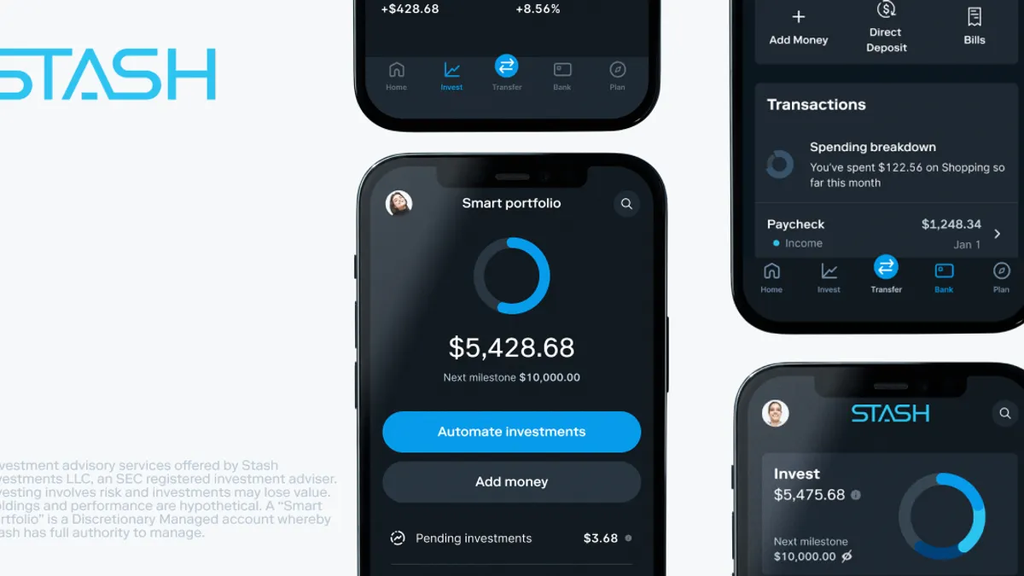
Image Credit: Stash
Grab announced in Feb that it would acquire US-based investing app Stash at an enterprise value of US$425 million (S$543 million).
The deal gives Grab access to a digital investing platform with more than US$5 billion in assets under management and over one million paying subscribers. Stash is also expected to generate more than US$60 million in adjusted EBITDA in 2028.
Grab will initially acquire 50.1% of Stash, with the remaining stake to be paid for at fair market value over the following three years.
This one was different from the Stash deal. Rather than expanding Grab’s financial services business, it was a geographic expansion: Taiwan would become Grab’s ninth market and its first outside Southeast Asia.
The Taiwan business generated about US$1.8 billion in gross merchandise value in 2025 and was profitable on an adjusted EBITDA basis. Grab plans to migrate foodpanda’s users, merchants and delivery partners onto its platform, with the full migration targeted for early 2027.
Atome operates across Singapore, Malaysia, the Philippines, Indonesia and Thailand, offering Buy Now, Pay Later loans, consumer cash loans, BNPL cards and other digital lending products. It has 25 million cumulative transacted users and a gross loan portfolio of about US$1 billion.
Advertisement
The remaining 40% will be acquired roughly two years after the first transaction closes. Unlike the initial 60%, that portion does not have a fixed price: its valuation will depend on Atome’s revenue and adjusted EBITDA, subject to a floor of US$2 billion and a cap of US$4.5 billion.
That makes Atome by far the biggest financial services bet in Grab’s 2026 acquisition spree—and the deal that most clearly shows where Grab is putting its money.
The bet on lending
The common thread between Stash and Atome is that Grab is not simply buying another app or adding another product to its super app.
It is buying established financial businesses with existing customers, products and lending infrastructure—giving it a faster route to scale its financial services operations than building everything in-house.
Advertisement
But why now?
Image Credit: Grab
The strategy comes as Grab’s financial services business begins to outpace its more established mobility and delivery businesses.
Part of the sharp increase in Grab’s loan book came from Superbank, an Indonesian digital bank that Grab began consolidating in Jun after increasing its stake to more than 50%. Grab had been an investor in Superbank since 2022, and the bank had more than six million customers by April 2026.
Grab’s gross loan portfolio reached US$2.3 billion at the end of Q2, up 197% from US$781 million a year earlier. Superbank contributed US$761 million of loan receivables to the portfolio, although Grab said the loan book would still have doubled year-on-year even without its contribution.
Advertisement
The business is not profitable yet, however.
Financial Services recorded an adjusted EBITDA loss of US$15 million in Q2, although that was an improvement from the US$26 million loss a year earlier. Grab attributed the improvement to higher contributions from its lending businesses and Superbank.
The company is betting that more scale will change that equation.
With Atome included, Grab expects its Financial Services segment to reach US$500 million in adjusted EBITDA and a gross loan portfolio of more than US$6 billion by 2028.
Advertisement
At the same time, Grab’s core business has finally started generating meaningful cash.
That gives Grab room to spend on acquisitions while continuing to return money to shareholders.
Becoming the “everything” app
Grab has spent over a decade trying to become the “everything app” of Southeast Asia—the one platform a person opens for a ride, a meal, a parcel, and, eventually, their money.
Advertisement
Ride-hailing may have been the entry point, but financial services are increasingly becoming a bigger part of that strategy. Grab already has payments, digital banking and lending products. With Stash and Atome, it is adding investing and a much larger consumer lending business to that stack.
But the bigger question is whether Grab can turn that scale into sustainable profits.
The company now has a much larger lending operation, millions of additional financial services customers and a broader range of products. But it also has greater exposure to credit losses as it lends to more consumers across the region.
That makes the next few years particularly important. Grab has the cash to keep making acquisitions, but its US$2.5 billion spending spree will ultimately have to show up in the numbers—especially if financial services is to become the profit engine management expects it to be by 2028.
Advertisement
Read other articles we’ve written on Singaporean businesses here.
Apple’s smart home plans could involve yet another partner, with security company ADT potentially joining the roster alongside LG and Schneider Electric.
ADT has been linked to Apple’s smart home plans
Since early October, the rumor mill has been rife with claims that Apple will be using companies like LG and Schneider to help its smart home revival effort. However, job listings indicate that there could be a third company that will lend a hand to Apple. Job listings for ADT have appeared across the United States since July, calling out for a “Low Voltage Technician,” reportsMacRumors. While some have been hired for the positions, it seems they haven’t been given much information about their actual responsibilities. Continue Reading on AppleInsider | Discuss on our Forums
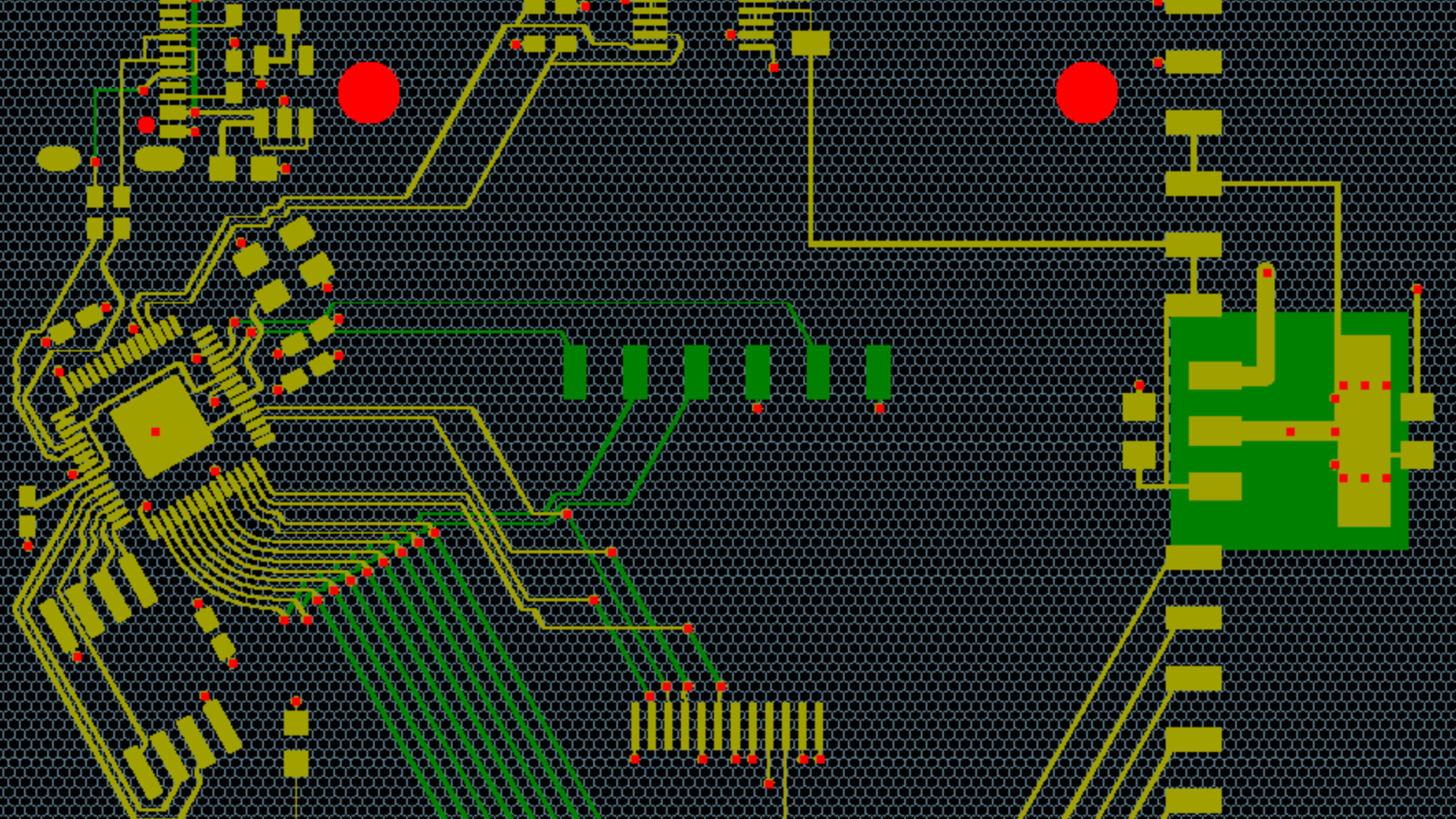
Despite the recent leaps forward in other forms of computer-driven design, the reliability of PCB autorouters remains questionable; on the positive side, though, the lack of massive training data makes them plausible for a determined programmer to implement. For anyone contemplating this undertaking, [James Bowman] recommends a slightly unusual choice: use a hexagonal layout grid.
[James] built his own autorouter in his CuFlow PCB layout program. It takes a fairly straightforward approach: it represents the board as a grid of cells, and uses Lee’s algorithm to find the shortest routes between connected cells. The program initially used a square grid, but a hexagonal grid had a few advantages: in particular, each cell has six equidistant neighbors, rather than four (or eight, if you accept diagonal neighbors at a different distance), which allows denser routing. Because a hexagon more closely approximates a circle than a square, the same minimum-distance rules allow smaller cells, allowing the autorouter to pack more traces into the same space.
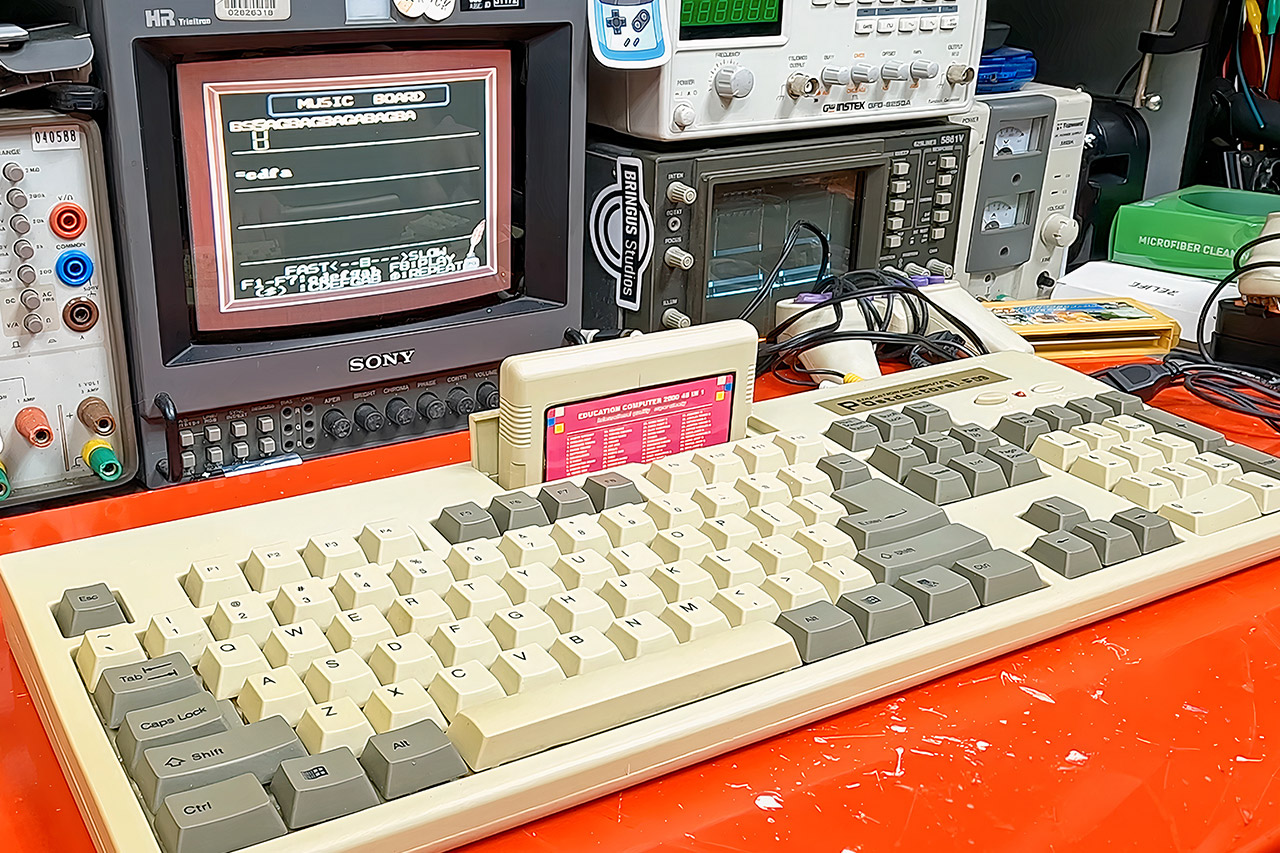
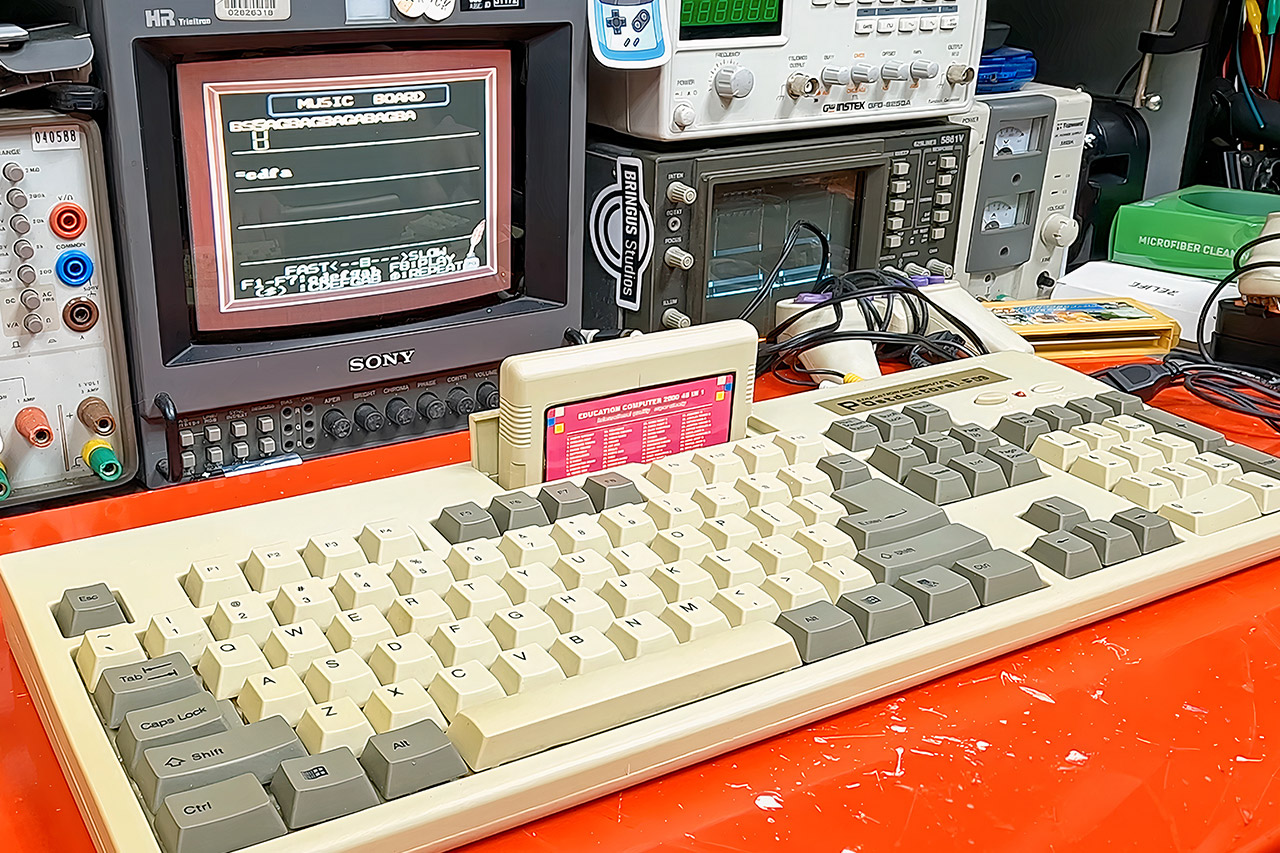
James Channel recently got hold of a small box that promised the latest Windows system, complete with a keyboard, mouse, and enough software to turn any living room into a home office. What arrived instead was a Famiclone, one of the countless unauthorized copies of Nintendo’s original Family Computer that flooded markets across Asia and beyond during the late 1980s and 1990s. These machines used a single chip to recreate the hardware that once powered Super Mario Bros., and manufacturers kept producing them long after the patents expired because they were cheap to build and easy to sell to families who could not afford a real computer.
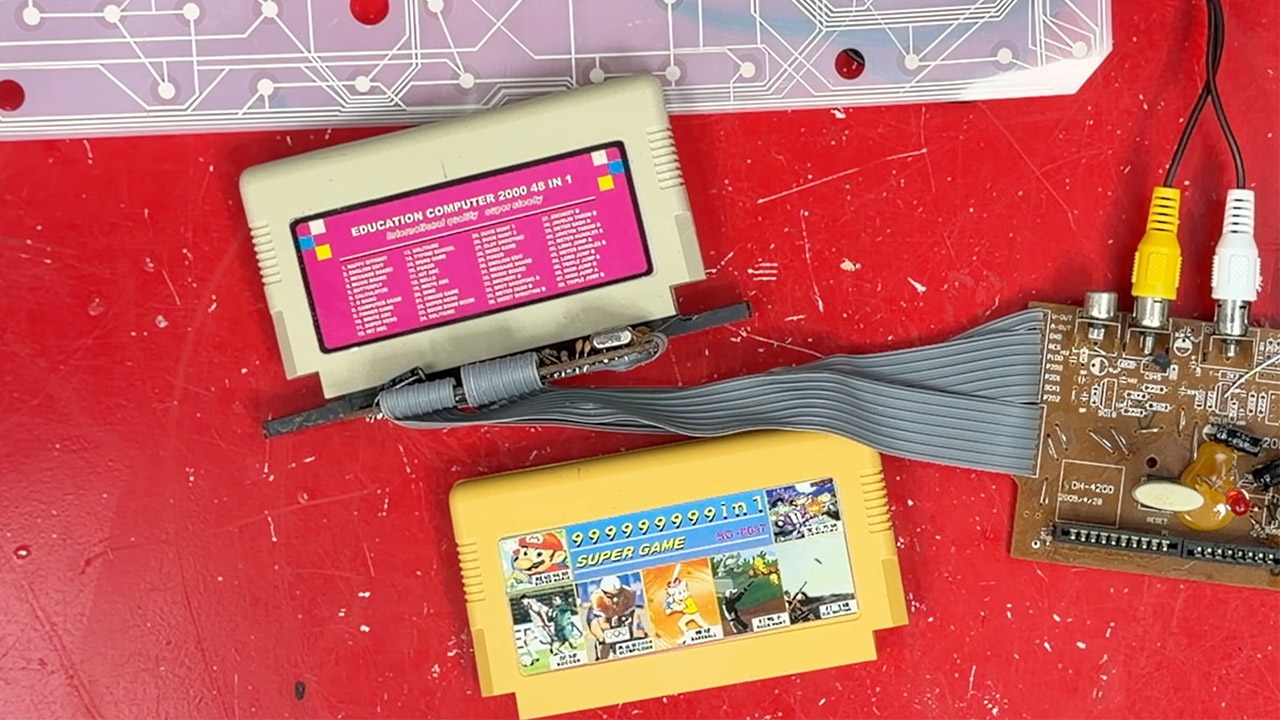
The packaging for this particular machine really pushed Windows, as the box art was a mishmash of screens that looked like classic desktop software if you squinted hard enough, and the text advertising all sorts of features, like a light gun and multitasking, sounded a little suspect. The unit was housed in a plastic shell the size of a decent thick paperback, and if it had been a little more substantial, it might have had a chance, along with two joystick ports that appeared to have been lifted directly from a Commodore 64, some audio and video cables, a power adapter with a load of Japanese text on it, and a pair of cartridges. One of them was this 148-in-1 educational computer label, oh right, and the other boasted an outrageous number of games, which showed out to be approximately 140 with more than a few duplicates. A completely legitimate Indonesian version of a comparable cartridge appeared as well, however it was connected incorrectly and loaded with local language lessons.
Slim Design, players get powerful gaming technology packed inside a sleek and compact console design.
825GB of storage, keep your favorite games raeady and waiting for you to jump in and play
Ultra-High Speed SSD, maximize yoru play sessions with near instant load times for installed PS5 games
The keyboard, however, was a completely different story, since it was the worst piece of equipment he’d ever seen from the era. The keys were somewhat crooked, and the space bar was misspelled; come on, how hard is it to get that right? The membrane underneath seemed as if it would crack at the least provocation, so they had to go ahead and stick the Windows keys on there, but they didn’t work. Out of all of this, the mouse, a classic ball type with a star-shaped roller thingy inside, was a bit of a joke, as the ball kept falling out and the x-axis refused to register until I had to use super glue and a blowtorch to keep everything together. What about the controller that came with the set? Well, the cables were really thin, and everything felt stupidly loose in my palm. Apparently, the gun-shaped peripheral that came with the package was thrown in the dumpster by Australian customs because it looked suspiciously like an airgun, go figure.
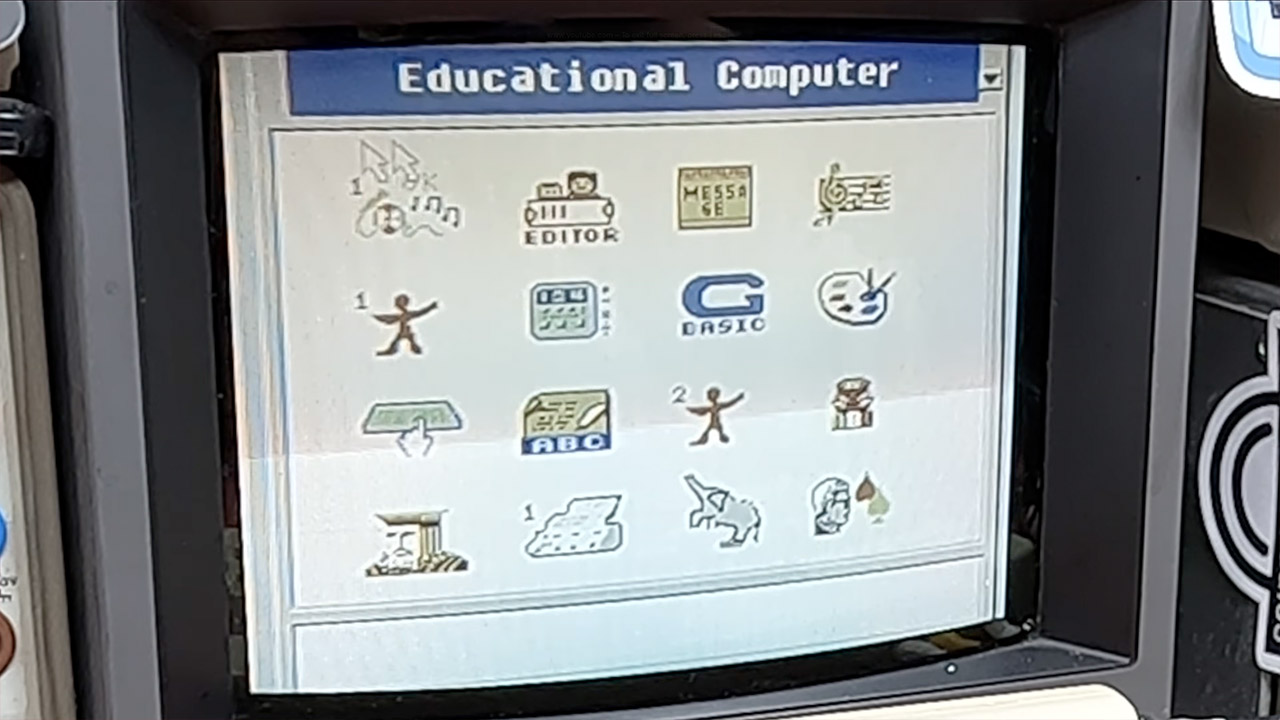
The cartridges themselves were jam-packed with a combination of borrowed NES games and simple educational programs for children. GBasic appeared, and it looked strangely like Nintendo’s old Family Basic cartridge, allowing users to enter in small little programs that vanished as soon as you switched it off. Minesweeper and Solitaire ran in a style that recalled Windows 3.1, complete with a chording system that allowed you to click on cells and acquire additional tiles by pressing two mouse buttons at the same time. The typing lessons were also a bit of a joke, with fingers moving along the keyboard at about 30 characters per minute, and the other titles included a basic calculator, a music player that sounded like it had been tuned by a novice, a painter that only responded to keyboard input, and an English-Indonesian dictionary, because all you really need is the ability to look up Bahasa in the middle of a game.
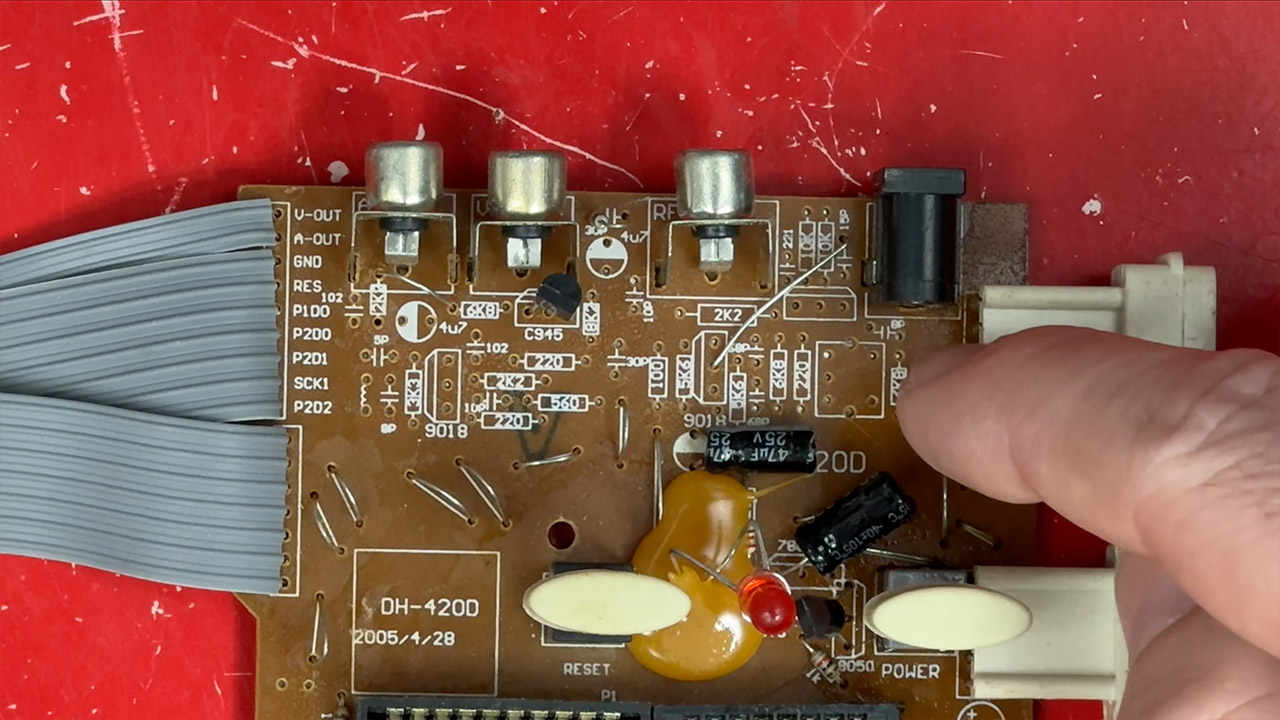
Opening the case revealed how little money was actually invested in this build. There was a tiny little voltage regulator simply chillin’ by the power input, and one solitary transistor attempting to handle the visual amplification, albeit it was probably straining a little, considering that many other components had been left off the board to save money. The RF connector no longer modulated the signal; instead, it was bridged over, allowing audio to pass through without modification. Then there was a separate chip, some DH420D, that accepted keyboard pushes and converted them into the signals that a Famicom expects, all thanks to Sujia, a Chinese manufacturer that also branded a slew of generic boards. Some wires’ insulation had even melted in areas due to their proximity to the shell. To make matters worse, the power switch contacts were so blocked with grime that you had to give them a thorough cleaning and lubricant just to get the device to turn on properly.
Software-wise, it was a bit of a mess, since the restricted memory would load up and then freeze on you, forcing you to reset it and wiping out all of your work in the process. You could miraculously get some NES games to operate after unplugging the knackered old mouse. To be honest, the keyboard controls were somewhat of a joke for platformers. The educational portions of the software served as basic drills, but the music was out of sync, and the frame rate would plummet when things got too difficult. These machines were marketed to households where proper computers were out of reach due to their high cost, therefore they were an acceptable way to gain experience with technology that cost a fraction of the price of a real PC. Even though they don’t quite live up to what the box promised, collectors continue to seek them out because of the unusual combination of a full keyboard, a working mouse, and cartridge-based lessons, which is a fairly uncommon find among Famiclones, even if the end result isn’t exactly smooth.
Record labels spent the better part of two decades convincing consumers that owning music was increasingly unnecessary. Now that vinyl and CDs are enjoying a genuine resurgence, the same industry seems determined to find out just how much collectors are willing to spend on albums they probably already own.
Apparently, $300 is no longer out of the question.
On October 9, Rhino High Fidelity released a limited reel-to-reel edition of Joni Mitchell’s Court and Spark for $299.98. Only 350 copies were offered worldwide, and by Saturday morning, Rhino’s website was already showing the title as sold out. That’s an impressive turnaround for an album that requires playback equipment most consumers have never seen outside a recording studio.
On the very same day, Verve announced a $124.98 One Step vinyl edition of Diana Krall’s The Look of Love, celebrating the album’s 25th anniversary. The November 20 release joins a growing collection of premium audiophile records that now cost more than many people spend on music in an entire year.
Advertisement
Both releases are aimed at serious collectors, but they raise a larger question. Is the physical media revival encouraging record labels to produce genuinely better editions, or have they discovered that scarcity, elaborate packaging, and audiophile marketing can make almost any price seem reasonable?
Related Reading:
Physical Music Is Growing and the Labels Have Noticed
The numbers explain why record companies are investing so heavily in physical formats.
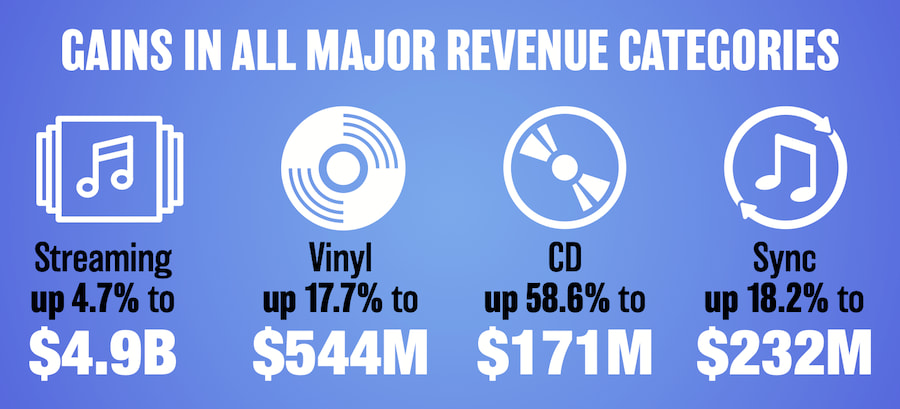
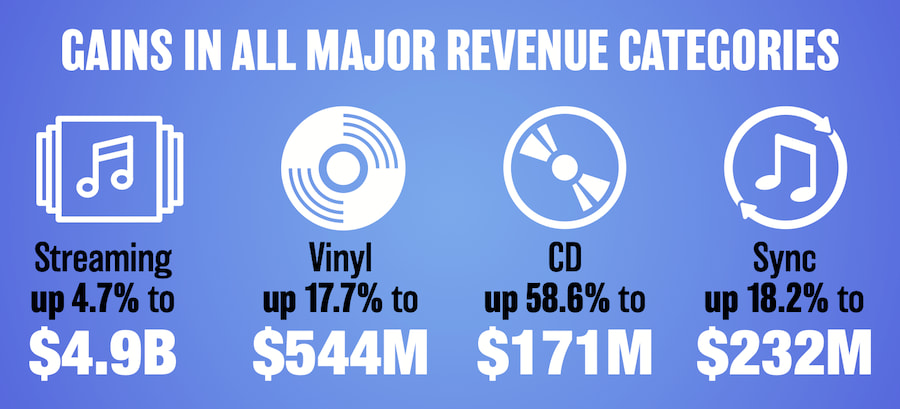
According to the Recording Industry Association of America (RIAA), U.S. physical music revenue increased 25.9% during the first half of 2026, reaching $731.5 million. Vinyl revenue climbed 17.7% to $543.8 million, while CD revenue surged 58.6% to $171.1 million.
2026 mid-year music industry revenue in the U.S.
As we examined in our recent report on the CD resurgence, the rebound is not limited to aging audiophiles rediscovering their turntables. Younger consumers, collectors, and music fans who grew up with streaming are also buying physical releases.
Advertisement
Streaming still dominates the recorded music business, accounting for approximately 82% of U.S. revenue during the first half of 2026. Physical music is not threatening that position, but it has become a valuable complementary market built around ownership, better packaging, and the desire to support artists.
Record labels have figured out something rather important: consumers who already have access to virtually everything are increasingly willing to pay for something they can actually keep.
The danger is assuming that willingness has no financial limit.
Advertisement. Scroll to continue reading.
Advertisement
Rhino Sells 350 Copies of Joni Mitchell’s Court and Spark Almost Overnight
Rhino deserves some credit here.
Its new Court and Spark reel-to-reel edition is not simply another colored pressing with a numbered sticker and a promise that this time the music will sound even more magical.
The company has created a legitimate specialty product with a manufacturing process that is considerably more demanding than pressing another batch of records.
The tape was duplicated in real time from a 1:1 copy of the original stereo master. It uses quarter-inch RTM LPR90 tape stock, runs at 15 inches per second in half-track stereo, follows the IEC equalization standard, and comes on a 10.5-inch metal reel.
Advertisement
Those details are important. Real-time tape duplication is labor-intensive, the materials are expensive, and production cannot be scaled as easily as conventional vinyl manufacturing. This also isn’t a copy of the actual original master tape; Rhino specifies that the duplication source is a first-generation 1:1 copy.
The result should appeal to an extremely small audience with the hardware, technical knowledge, and financial resources to appreciate what Rhino is offering. A properly configured 15 ips half-track reel-to-reel machine isn’t something you casually pick up at Target alongside laundry detergent.
But Rhino understood its customers.
Limiting the edition to 350 copies worldwide created genuine scarcity, and the fact that the company’s online store listed it as sold out by the following morning suggests that the demand was very real. For a $300 analog release in 2026, that is a remarkable achievement.
Advertisement
The clever part is that Rhino hasn’t made this the only serious way to experience the album.
Collectors with suitable tape machines can spend $300 on the new reel-to-reel edition, while listeners who simply want a superb analog presentation of Mitchell’s 1974 masterpiece have a considerably more affordable option.
Advertisement
Advertisement. Scroll to continue reading.
Rhino hasn’t proven that $300 tapes are the future of physical music. It has demonstrated that a carefully chosen title, credible production methods, and genuinely limited availability can create a successful niche product.
Mazel tov. Now try finding a properly serviced reel to reel tape machine without disregarding your mortgage and private school bills.
Diana Krall’s $125 One Step Vinyl Raises a Different Question
Diana Krall’s The Look of Love is certainly worthy of a premium reissue.
Advertisement
Released in 2001, The Look of Love found Diana Krall working with producer Tommy LiPuma, legendary arranger Claus Ogerman, and the London Symphony Orchestra. Al Schmitt handled the recording and earned a Grammy for his efforts. Not a bad collection of talent for an album that would become one of Krall’s biggest commercial successes.
And the results speak for themselves. Krall’s smoky vocals, understated piano playing, and Ogerman’s lush orchestral arrangements make this the kind of recording that can sound wonderful on a modest system but really comes alive when the equipment is up to the task. Whether it’s worth spending $125 to hear it on yet another vinyl pressing is an entirely different question.
Verve’s new edition uses the One Step manufacturing process, which eliminates intermediate metal-plating generations between the lacquer and the finished stamper. The objective is to reduce potential losses introduced during manufacturing and preserve more information from the lacquer cut.
That approach can produce excellent results, but it also raises manufacturing costs because fewer pressings can be produced from each lacquer before additional cutting and plating work becomes necessary.
Advertisement
The new two-LP edition will be individually numbered and packaged in a gatefold tip-on jacket with a specially designed slipcase.
All perfectly reasonable.
The $124.98 asking price, however, deserves more scrutiny.
The $125 One Step vinyl contains only the original ten-track album.
Advertisement
Advertisement. Scroll to continue reading.
In other words, collectors paying more than six times the price of the deluxe CD receive the premium pressing and packaging, but none of the additional music.
Apparently, the bonus tracks didn’t qualify for first-class seating.
There is also the issue of transparency.
Advertisement
Verve’s announcement and current product listing explain the advantages of One Step manufacturing, but do not identify the mastering engineer, specify the source used for the new lacquer cut, or confirm whether the mastering chain is entirely analog.
That information should be available before someone commits $125.
A One Step pressing can be produced from an analog source or a digital source. The manufacturing process alone does not establish which was used, nor does it guarantee that the finished record will sound better than a well-mastered conventional pressing.
This is not a criticism of how the new Krall edition sounds. Nobody should make that judgment without listening to it.
Advertisement
But the burden should be on the label to explain exactly what collectors are getting for their money.
When Does Premium Become Excessive?
We’ve covered enough audiophile reissues in 2026 to know that expensive doesn’t automatically mean better, and affordable doesn’t mean compromised.
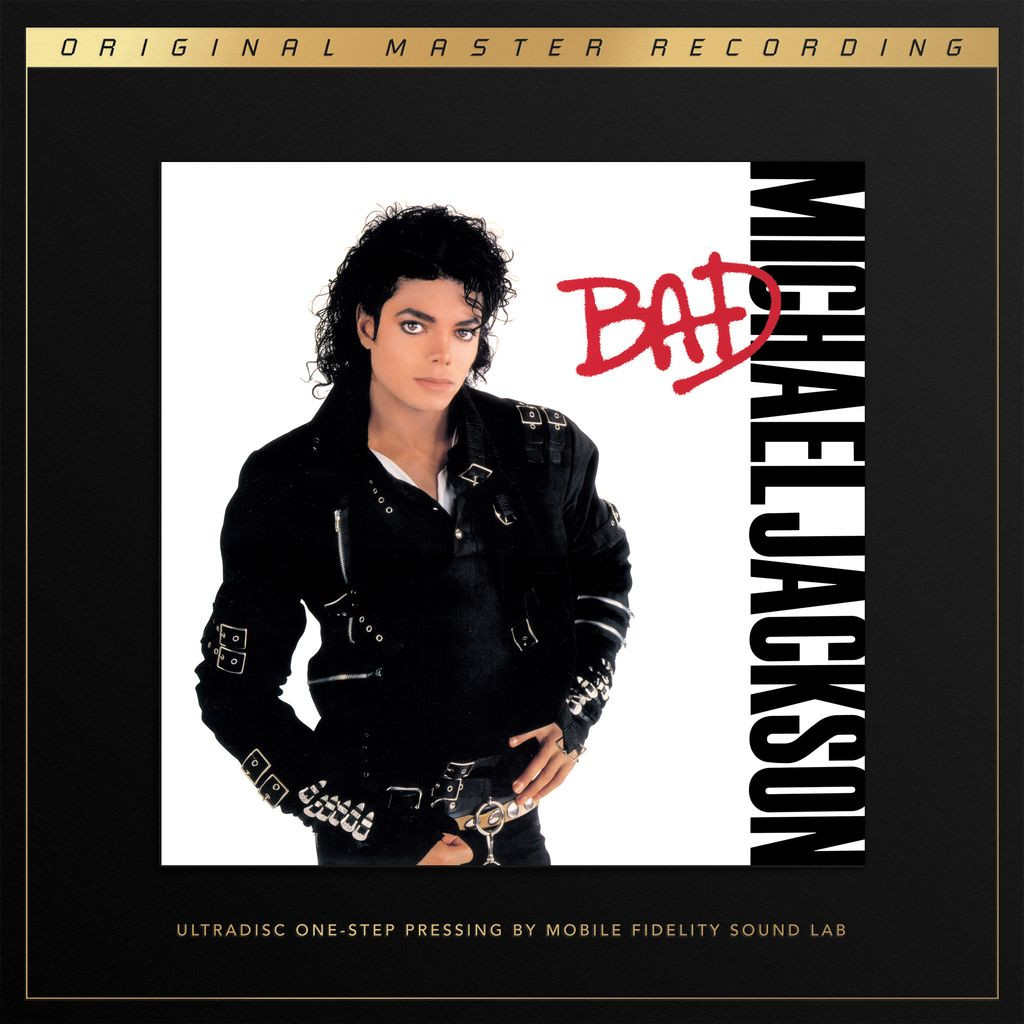
Mobile Fidelity’s upcoming Michael Jackson BAD UltraDisc One Step edition also costs $125, but MoFi identifies its source as the album’s original Mitsubishi X-80 16-bit/48kHz digital master, along with the mastering engineer, cutting chain, and pressing facility.
More recently, we examined Beck’s $110 Ride Lonesome One Step release, which uses 24-bit/96kHz digital files transferred from analog masters. That information gives buyers an opportunity to decide whether the production approach and price make sense to them.
Digital mastering isn’t inherently inferior. An expensive record doesn’t become fraudulent because a computer appeared somewhere in its production history. What matters is the quality of the source, the mastering decisions, the pressing, and whether the label has been forthcoming about the process.
Advertisement
Advertisement. Scroll to continue reading.
Our reviews have also demonstrated that excellent audiophile vinyl doesn’t require a three-figure investment.
Mark Smotroff recently praised Verve’s Acoustic Sounds reissue of Stan Getz and Luiz Bonfá’s Jazz Samba Encore!, a beautifully manufactured all-analog release available for less than $40. He reached a similarly positive conclusion about John Coltrane’s Africa/Brass, another Acoustic Sounds pressing that makes an important recording accessible without requiring collectors to sacrifice their grocery budget.
These are the kinds of releases that have helped establish credibility for the modern audiophile reissue market.
Advertisement
The labels invest in quality mastering, reputable pressing plants, and attractive packaging, while keeping prices within reach of listeners who care more about the music than the resale value of a numbered box.
Nobody is suggesting that a meticulously produced $300 reel-to-reel tape should cost the same as a standard LP. Nor is a $125 One Step pressing automatically a rip-off.
But increasingly expensive collector editions shouldn’t become the default measure of how seriously someone takes music.
The industry also needs to remember that its fastest-growing major physical format in the first half of 2026 was the compact disc, which offers a much more affordable entry point for consumers who want permanent ownership.
Advertisement
There is a message in that statistic, assuming the labels are willing to hear it over the sound of cash registers.
The Bottom Line
Rhino deserves congratulations for selling out its $300 Court and Spark reel-to-reel edition so quickly. The company identified a small audience, produced something technically distinctive, and created enough demand to exhaust a limited run of just 350 copies. It also offers an excellent $40 vinyl alternative for those of us not currently shopping for another tape machine.
Verve’s $125 The Look of Love One Step edition may turn out to be spectacular. The album certainly deserves first-rate treatment, and the company has a strong record of producing outstanding audiophile releases. But buyers should expect more technical transparency when the premium pressing costs several times as much as an existing version of the same recording.
Physical media is thriving because listeners value ownership, permanence, and a closer connection to music. Labels should be encouraged to preserve important recordings, restore overlooked albums, and invest in better manufacturing rather than treating their catalogs as disposable streaming inventory.
Advertisement
What they shouldn’t do is confuse that loyalty with an unlimited willingness to pay.
Advertisement. Scroll to continue reading.
There’s room in the market for a $20 CD, a superb $40 LP, and even a meticulously produced $300 reel-to-reel tape. Not every format needs to appeal to everyone, and collectors should be free to spend their money however they please.
But if record labels turn the physical media revival into an increasingly expensive competition over numbered editions, extravagant packaging, and questionable value, they risk pricing the next generation of music buyers out of the hobby entirely.
Advertisement
Which would be quite an accomplishment.
After spending twenty years convincing consumers that they didn’t need to own music, the industry may now discover that people still want to own it.
They just might not want to sell their second favourite child to prove it.
You’ve probably heard of Mars Pathfinder, the NASA lander and its Sojourner rover that took up residence on Mars in 1997. At first, all was well, but after a few days, the lander suffered a series of total system resets. A watchdog timer detected a problem and forced reboots. [Vivek Bhageria’s] recent post looks into what happened and the eventual solution.
The root cause was priority inversion. This happens when a lower-priority task holds a resource needed by a higher-priority task and prevents the higher-priority task from executing. In this case, the operating system was VxWorks, but this can happen on any kind of priority scheduling system.
The simplified version is that there were two tasks that each used the same mutex to avoid stepping on each other. The highest priority was a data distribution task. The lowest priority task dealt with meteorology data processing. There was also a medium-priority task that handled bus maintenance.
The failure would occur when the low-priority task had the mutex and lost its time slot before releasing it. The high-priority task would then find it couldn’t take the mutex. However, the low-priority task didn’t get control again because of the medium-priority tasks waiting to run.
Advertisement
In effect, the high-priority task was now waiting on something that couldn’t become available until the lowest-priority task was able to run. That’s priority inversion.
Sadly, engineers noticed this happening occasionally during testing but, as we are often prone to do, they chalked it up to glitches. As one of our old bosses used to say: “If you don’t know why it happened, then you don’t know that it won’t happen again.”
VxWorks, of course, understands that this might happen and, luckily, there was enough capability on the spacecraft to turn priority inheritance on for the mutex in question. This allows the low-priority task to get a boost because a higher-priority task is waiting on it.
You can read more about the details in the post. We also covered this a decade ago with our own analysis.
Album and playlist pages in YouTube Music now open with cover art that fills the upper third of the screen for some users.
The change surfaced through several Reddit posts from users who received the new layout, though it looks like a server-side A/B test rather than an app update anyone can download.
A server-side switch lets Google enable the design for a small slice of accounts and gauge the response, a rollout method the company regularly uses before pushing interface changes across its wider user base.
On album pages, a full-width backdrop built from the cover replaces the old boxed-in header and follows the same treatment YouTube Music already gives to artist landing pages, which have used large header imagery for some time.
Advertisement
Beneath the album synopsis, the action bar now splits into two halves, with circular shortcuts for offline downloads and library saves on the left and a larger Play button sitting on the right.
Advertisement
The split layout groups the most common actions together and gives playback a clear visual priority, an approach rival services such as Spotify have long taken with their own prominent Play controls.
Playlist pages receive the same artwork-first approach, with the composite cover built from multiple album thumbnails now stretching across the top of the display in place of the smaller framed version.
Advertisement
Below that header, a comments button joins the download and library shortcuts on the left of the split action row, while the large Play button again anchors the right-hand side.
A dedicated shuffle button now takes the spot the overflow menu previously occupied, and Google has moved that menu to the top of the header, where it sits clear of the main playback controls.
The playlist and album changes follow earlier YouTube Music experiments with a split-screen Now Playing layout and expanded full-screen album art, which together point to a broader redesign taking shape in stages.
Advertisement
Advertisement
Google has not confirmed when the new album and playlist layouts will reach every user of the streaming service, and the design remains limited to a small group of accounts while the server-side test continues.
The Wisconsin gubernatorial race was one of the most closely watched Democratic primaries in the country this year, pitting a democratic socialist, state Rep. Francesca Hong, against Milwaukee Democrat David Crowley, who received the endorsement of the state’s sitting Democratic governor, Tony Evers.
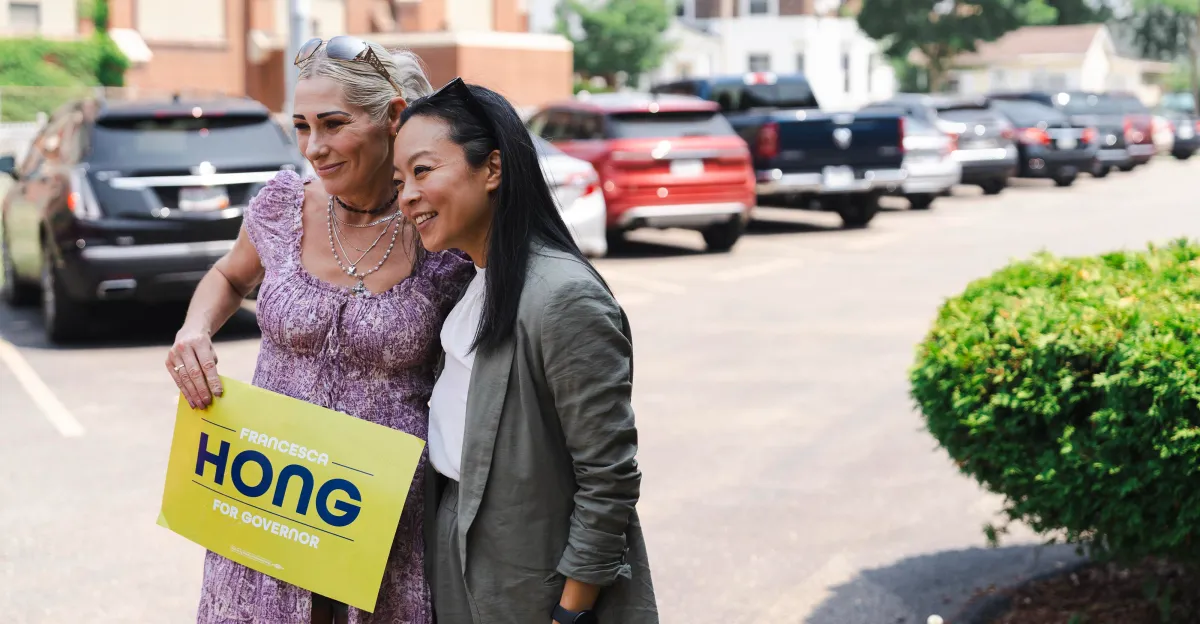
Hong lost the race, setting up Crowley to face Republican Rep. Tom Tiffany in the general election this fall. But she’s already back on the campaign trail, this time trying to help Democrats win a trifecta in the state: the governor’s race and both legislative chambers.
Unifying the state’s voters to achieve that won’t be easy, though. Hong spoke with America, Actually host Astead Herndon about her own loss, Evers’s role in it, and whether or not the voters who felt so passionate about her own campaign would find enough to love in Crowley’s campaign — in particular on the increasingly important issue of data centers.
Astead and Hong also talked about what Wisconsin means for the Democrats nationally, and what lessons the party should take from her race, including her loss.
Advertisement
“I said this, and I will continue to say it — the person who is most electable is the person who ended up getting the most votes, and that was Crowley this time around,” Hong said. “But I think there’s a disservice when you have the most powerful Democrat in the state choosing to ignore a lot of voters and people who were inspired and energized and coming out to participate in politics for the first time through our campaign. I think it was shortsighted to use electability almost as a fear tactic.”
Below is an excerpt of Astead’s conversation with Hong, edited for length and clarity. There’s much more in the full show, so listen to America, Actually wherever you get your podcasts or watch it on Vox’s YouTube channel.
Part of the reason we wanted to come here was because we saw you were getting back on the campaign trail, and specifically around that idea of energizing Wisconsin toward a trifecta.
Now, just tell me the difference in terms of the importance of Democrats winning it all — not only the governor’s mansion, but both houses of the state legislature — versus just the governor’s mansion. How does that change the possibilities of what the party could do?
Advertisement
For the last 16 years, a Republican majority in the state legislature has meant that passing the types of policies that we know can drastically improve the lives of everyday folks here in Wisconsin stalled. And we have a historic opportunity to flip the assembly and the state Senate and hold the governor’s mansion and the entire executive branch to a Democratic majority, meaning the opportunity to pass the policies that the majority of our state supports — things like increasing minimum wage, things like legalizing marijuana, codifying abortion.
We also need to repeal Act 10 [which dramatically restricted collective bargaining rights for public-sector employees]. Wisconsin is where workers’ rights, things like unemployment insurance, Social Security were born, and we moved backwards with the Republican majority. That’s all on the table with the Democratic trifecta.
It also, though, raises the political standard of what Democrats would have to do to achieve that, and some of it goes through these more rural communities.
Why do we think the party has fallen behind in more rural communities, and what could be done to reverse that?
Advertisement
I think it’s important to look at what’s happened in the rural communities when we’ve seen manufacturing jobs leave the state, when we’ve seen fewer and fewer supports for our small farmers.
And so much of this — what connects it — is actually the growth of massive wealth and corporate control and corporate greed, and more people feeling the impacts of that. There’s an opportunity right now to say, ‘Hey, Republicans have been in the legislature, they’ve been in power, and things have not improved for you or your community … Now’s the opportunity to make sure that we’re actually able to see our shared Wisconsin values of working hard and taking care of our kids be reflected back in Madison through laws.’
So much of your campaign was focused on data centers, stopping data centers. Should I think of that as a rural issue?
I think the issue around data centers is an everyone issue. It’s a democracy issue. It’s people wanting to feel like there are folks who care about what happens to communities, and that they have control and an actual say in what happens in their communities.
Advertisement
To that point, is it a mistake for David Crowley, the Democratic nominee, to have not gone as far as you did and say, “We won’t be building more data centers for a period of time”?
He’s fighting for communities and community control when it comes to data centers.
But it’s not a moratorium.
But it’s not a moratorium. It isn’t, but he’s also committed to 100 percent renewable energy, clean energy to power data centers.
Advertisement
And achieving that is going to be incredibly difficult, and it is going to be the developers having to pay their own way, and these are things that he’s committed to that we know can slow down the growth and development of data centers.
Have you had time to reflect on your primary loss? If you had to diagnose, why do you think you lost?
I’m still doing a lot of reflection. But I think that I want to continue to look forward. And what I’ve learned from our election is that it’s so important to continue to stay grounded in becoming accessible to people. I think that as an organizer and an elected official, it’s my responsibility to continue to go to the people and remain very in touch with what’s going on on the ground.
I have a couple more questions about the nature of the loss. Evers’s endorsement changed that race, so much so that your opponent David Crowley was able even to win in some smaller communities, like places where you were pitching yourself as the voice of more rural communities.
Advertisement
Does that disprove any of this thesis around, say, data centers? If that was the top priority for Wisconsin voters, wouldn’t you be the nominee?
I think it wasn’t all rural communities. It wasn’t all suburban communities. We saw certain demographics but also ZIP codes where we outperformed David significantly.
And I think that where the governor’s endorsement played a bigger role was areas where he was also more popular.
Did it surprise you when Evers endorsed Crowley?
Advertisement
I was disappointed because I was getting a lot of feedback from folks who hadn’t committed to any candidate yet that this felt like the governor was putting his thumb on the scale.
I wanted to ask about electability, because it seemed as if Evers’s endorsement was about a fear that maybe you couldn’t win in November.
So much of the primary concern was around the DSA label, even campaigning with folks like Hasan Piker. In retrospect, was any of that a mistake?
We knew going in that we would have to encourage new voters to come out, folks who typically do not come out for primaries, quote-unquote low-propensity voters. And we knew that we would have to campaign in places where folks weren’t expecting to see a gubernatorial candidate. And those included Twitch streams.
Advertisement
Those also included going to dive bars and bowling alleys and making sure that we were accessible and shaping our policies based on what the people were telling us they wanted to see happen and also what they wanted to see out of their governor. I think electability… I said this, and I will continue to say it — the person who is most electable is the person who ended up getting the most votes, and that was Crowley this time around.
But I think there’s a disservice when you have the most powerful Democrat in the state choosing to ignore a lot of voters and people who were inspired and energized and coming out to participate in politics for the first time through our campaign.
I think it was shortsighted to use electability almost as a fear tactic, when Democrats need to be inspiring and project a vision where everyone can see themselves in it as everyday working-class folks.
When you’ve got a party that has struggled with elitism to then cave to an establishment narrative … being more afraid of labels when I’m hearing from people on the ground that they’re interested in solutions and solving problems, maybe somebody who knows the hustle of the service industry and running restaurants and has worked across the aisle to pass bipartisan legislation. There are ways that we can maneuver around labels and what the loudest narrative might be.
Advertisement
I wish our governor hadn’t fed into that.
To be fair, to your point, the establishment label doesn’t fully fit even someone like Crowley, who comes from a working-class background. But am I hearing that you think Evers’s move made your life in the general election more difficult?
Is it harder to re-inspire if young people who are invested in the Hong campaign think that the establishment squashed them out?
We still had over 300,000 votes. We lost by fewer than 4,000 votes. I had more votes than Evers did during his primary. That’s not squashing our voices.
Advertisement
We’re still here, and it’s so important that people find avenues to continue to exercise their voice and their new organizing power. And I’m definitely going to continue to work to make sure that we get results and that we win the trifecta, and that’s the most important thing we should be focusing on right now.
I hear why a trifecta matters in the state context, particularly the state policy.
If I’m someone, though, who’s not in Wisconsin, who’s just worried about Donald Trump running amok in Washington, why should I care if Democrats win the governor’s mansion and the state legislature? Does that matter for folks outside of the state?
Because we will start to see that when you feel government actually working and you see change happening in your lives, these are then voters who are going to continue to come out and vote for Democrats.
Advertisement
We’re a pivotal state when it comes to the federal elections as well. We’re actually in a swing district right now.
We have an opportunity, through Wisconsin, to actually start improving the brand for Democrats. And if we do that here, this trickles out to the rest of the country.
The premise being that delivering creates a connection for Democrats that is helpful in the presidential election, and it’s helpful in all these other ways too.
Yeah. We’re not going to be fighting every single midterm and presidential for our lives based on what’s happening in just one state.
Advertisement
But I think if we can start showing durable power for Democrats in a state like ours because of the policies that we’re prioritizing, and you have more folks coming out to vote for Democrats, that’s good for the health of democracy.
















































You must be logged in to post a comment Login