







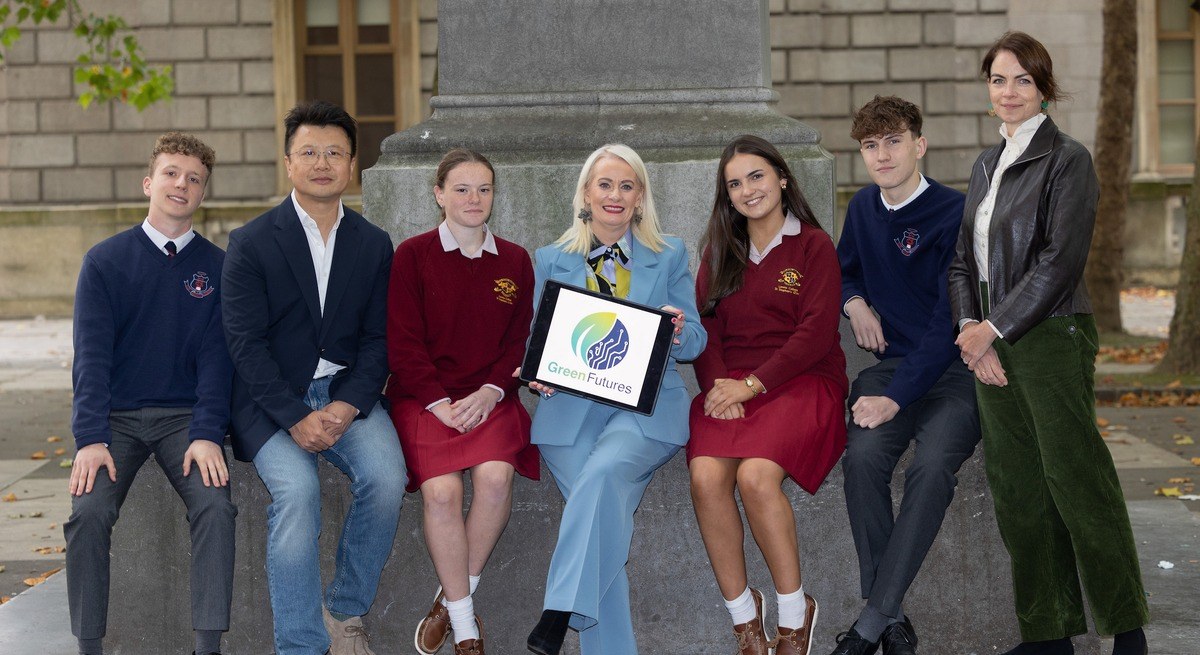

The programme will apply to transition year students and aims to prepare young people for a more sustainable future.
The Research Ireland Adapt Centre, in partnership with UNESCO and supported by Huawei Ireland, has launched a new programme designed to give secondary school students in transition year an education in AI and the climate.
According to the programme organisers, it is the first time that AI and climate literacy have been linked in a focused educational programme. The free, four-lesson initiative will explore how science education can prepare young people for a future increasingly shaped by artificial intelligence, climate change and rapid technological transformation.
Using classroom resources, real-world case studies and interactive activities, participating students will examine climate change through data; artificial intelligence, ethics and climate solutions; sustainable systems spanning energy, nature, food and cities; and climate justice, future thinking and green innovation.
The aim is to give students the ability to think critically about the topics at hand. In time, they will be able to conceptualise better questions, evaluate evidence and consider how technology can be developed and used responsibly, according to the organisers.
Ireland and Europe’s future
GreenFutures is one of the five pilot initiatives selected under the Digital Futures for a Smart Europe project, which was implemented by UNESCO and funded by Huawei Technologies.
The project was launched across Europe and aims to assess the current state of digital and green innovation ecosystems in five countries and evaluate the feasibility of a future regional initiative.
Commenting on the initiative, Huawei Ireland CEO Calvin Lan said: “Technology has a vital role to play in supporting sustainable development, but it is equally important that future generations understand both its potential and its responsibilities.
“Through our partnership with Adapt and UNESCO, GreenFutures will help students develop the knowledge and confidence to engage with climate action, digital transformation and responsible AI in meaningful and practical ways.”
The director of the Adapt Centre at Trinity College Dublin, Prof John Kelleher, added: “Artificial intelligence and climate change will be two of the defining forces shaping the lives and careers of today’s young people.
“Digital skills and climate literacy can no longer be treated as separate conversations and GreenFutures responds to that by bringing them together in a way that encourages students to question new technologies, understand their impact and think creatively about how they can contribute to a more sustainable future.
“As researchers we have a responsibility to bring these questions beyond the universities and into classrooms, giving young people an opportunity to engage with them as they begin to make choices about their own futures.”
Google recently announced it would be committing $5m to advance Ireland’s climate research and AI-powered weather forecasting abilities.
The funding, which comes from Google’s philanthropic arm Google.org, will go towards a new four-year research initiative combining satellite imagery and real-time local observations from a new network of weather stations based in schools across the country.
Don’t miss out on the knowledge you need to succeed. Sign up for the Daily Brief, Silicon Republic’s digest of need-to-know sci-tech news.
















































You must be logged in to post a comment Login