
Tech & AI
PHP warns it plans to release 2 emergency patches imminently



Website admins, brace yourselves. Fixes for what are believed to be uncommonly severe vulnerabilities are scheduled to drop in a little more than 12 hours for PHP, a programming language that powers websites and Web applications everywhere.
PHP maintainers said Monday that they planned to release patches for two vulnerabilities, both with severity ratings of 9.2 out of a possible 10.
Waiting for PHP2Shell
“All PHP users are encouraged to prepare now so they can upgrade as soon as the release is available,” the advisory stated. “We reserve the right to release earlier should details of either vulnerability become public, or should evidence of active exploitation appear in the wild.”

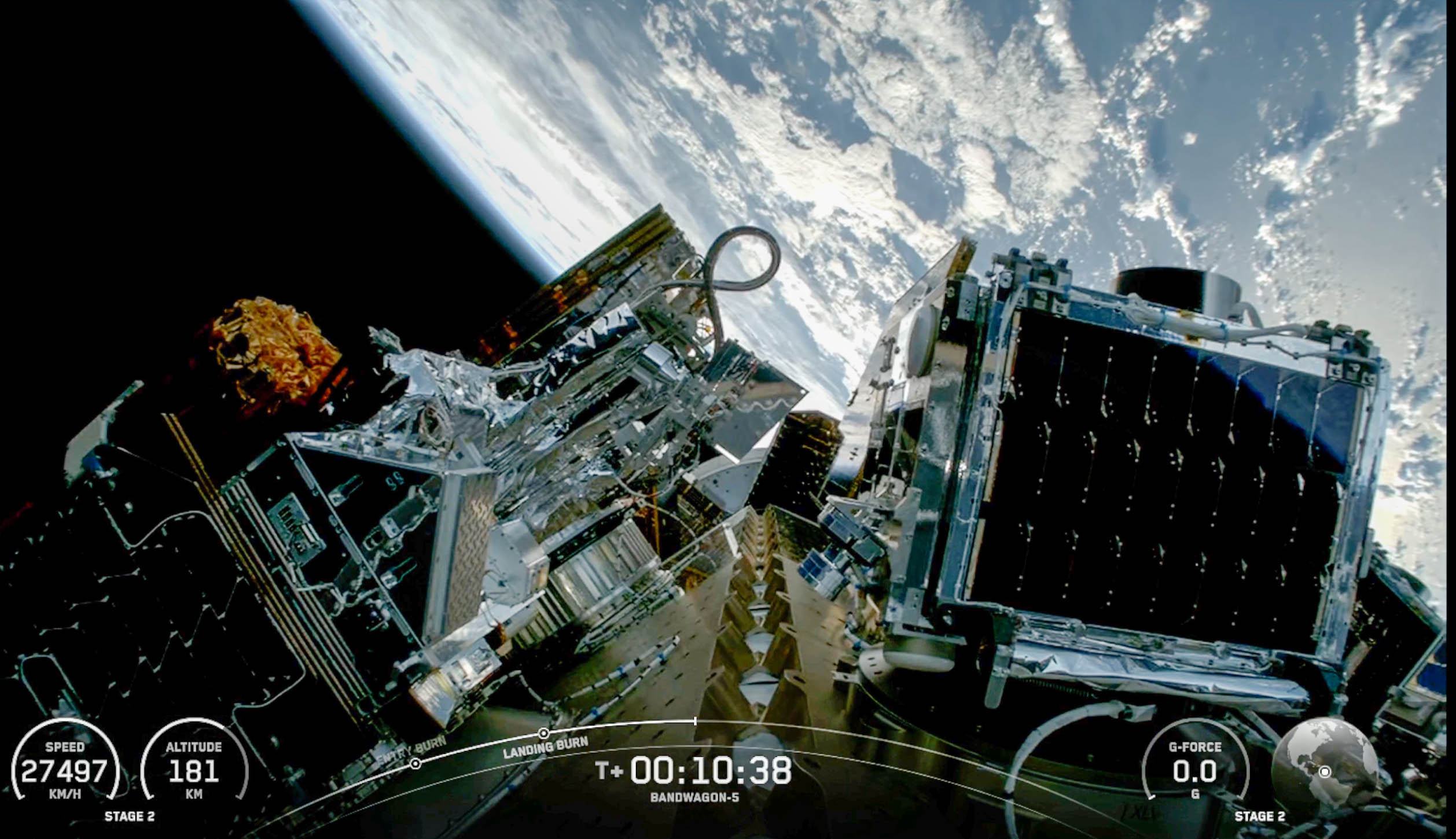
Portal Space Systems has reached Earth orbit for the second time this year, successfully launching the startup’s first free-flying spacecraft, Starburst-1, aboard a SpaceX Falcon 9 rocket.
Portal’s Starburst-1 lifted off Tuesday at 7:04 a.m. EDT from Space Launch Complex 40 at Cape Canaveral Space Force Station. The spacecraft separated from SpaceX’s Falcon 9 on the Bandwagon-5 rideshare mission about 57 minutes later.
Within hours of deployment, the Bothell, Wash.-based company reported that the desk-sized craft had established ground communications, stabilized itself, and successfully deployed its solar array to become power positive.
It marks the second significant milestone for Portal this year, following the March debut of Mini-Nova — a tissue-box-sized technology demonstration payload that flew on a SpaceX Falcon 9 mission to test critical control and power systems in orbit.
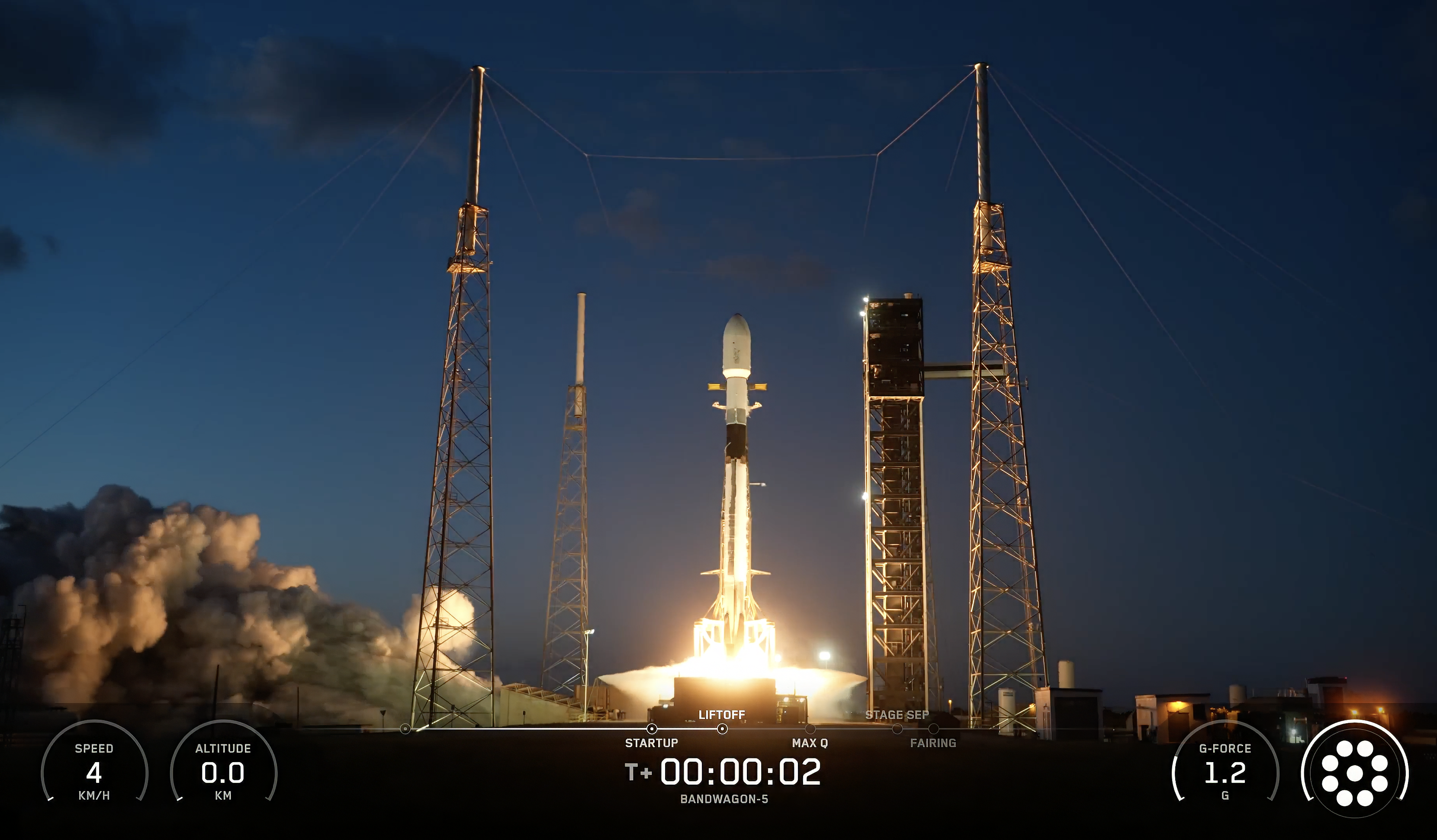
Portal self-funded Starburst-1 to accelerate its flight timeline and prove out hardware for prospective customers, achieving orbit in less than a year since introducing the Starburst vehicle concept in November 2025.
Co-founder and CEO Jeff Thornburg emphasized that urgency is baked into the startup’s operational philosophy, noting that customers require spacecraft that can shift rapidly in orbit.
“Speed can’t just be part of the product. It has to be part of the company building it,” Thornburg said in a statement. “Our customers need spacecraft that move quickly in orbit and a company that moves with the same urgency to get them there. We put our own capital behind Starburst-1 because proving hardware in flight is how we earn their confidence.”
Thornburg shared video of the launch and deployment of Starburst-1 on LinkedIn.
Starburst is an ESPA-class spacecraft designed to execute rapid maneuvers within a specific orbital regime, giving commercial and defense operators greater operational flexibility. The vehicle shares the majority of its core systems and manufacturing processes with Supernova, Portal’s larger upcoming spacecraft built for rapid travel across different orbital regimes, with flight data from Starburst-1 directly informing both platforms.

Starburst-1 is carrying experimental technologies from three partner companies to test in orbit:
- Zenno Astronautics’ Supertorquer: A superconducting magnetic attitude-control system designed to orient the spacecraft using Earth’s magnetic field — conserving onboard propellant — while testing whether its magnetic field can shield sensitive electronics from radiation.
- TRL11’s Fovea M1: A specialized camera system providing live video of Starburst-1 and its surroundings, including visual confirmation of the solar array deployment.
- Atomic-6’s Space Armor: Protective tiles engineered to shield the spacecraft from high-speed orbital debris without creating additional secondary debris.
@media (max-width: 600px) {
aside.callout { float:none !important; max-width:100% !important; margin-left:0 !important; margin-right:0 !important; }
aside.callout .callout-img { display:none !important; }
}
Since emerging from stealth in 2024, Portal has raised $75 million in funding — including a $50 million round in April — from investors including Geodesic Capital, Mach33, Booz Allen Ventures, AlleyCorp, and FUSE, alongside receiving critical SBIR and STRATFI support from the U.S. military.
GeekWire got an inside look at Portal’s 8,000-square-foot Bothell development and testing lab earlier this year. To prepare for future demand — including a dedicated 2028 Falcon 9 mission known as Motus Via Sol that will carry multiple Starburst spacecraft and the first Supernova — Portal has been expanding its footprint.
The company is in the process of transitioning its satellite manufacturing operations into a new 65,000-square-foot facility in Bothell, which is slated to be fully operational by next year and capable of producing up to 16 Starburst and 12 Supernova spacecraft annually.

Elon Musk says a merger between Tesla and SpaceX is under active consideration, with special committees at both companies evaluating a deal that could combine businesses valued at roughly $3.5 trillion. “Do I think it would be a good idea? Yes,” Musk said during a call with financial analysts over the quarterly business results of SpaceX on Tuesday. The BBC reports: While Musk noted the certainty of such a merger should not be assumed, and it would need shareholders’ support, he said special committees within both companies have been formed to examine the move. “The special committees have not reached agreement on terms of any transaction and there’s no guarantee that they will,” Musk added. “But I do think there is a lot of merit to merging and a lot to be gained.”
[…] The company, which builds space rockets and Starlink internet satellites, is now expanding into offering cloud compute capacity for other tech companies, like Anthropic and Google. That line of business has become the most profitable part of SpaceX, bringing in $7.5bn according to the latest quarterly results (PDF). Starlink also tallied revenue of $5.2bn. SpaceX as a whole, however, is not profitable and has lost $1.1bn so far this year.
[…] Musk said on Tuesday a full merger between the two companies would make sense for the work each is doing around chips, artificial intelligence, software and more. He described himself as a “conflicted party” as the chief executive of Tesla and of SpaceX. Even commenting on the possibility of a merger between the two companies, Musk compared to “tap dancing through a minefield.” He added a merger would ultimately be decided by shareholders. At least 50% of Tesla’s shareholders would need to approve the merger, which Musk described as “quite a high hurdle to achieve.”


Read more of this story at Slashdot.
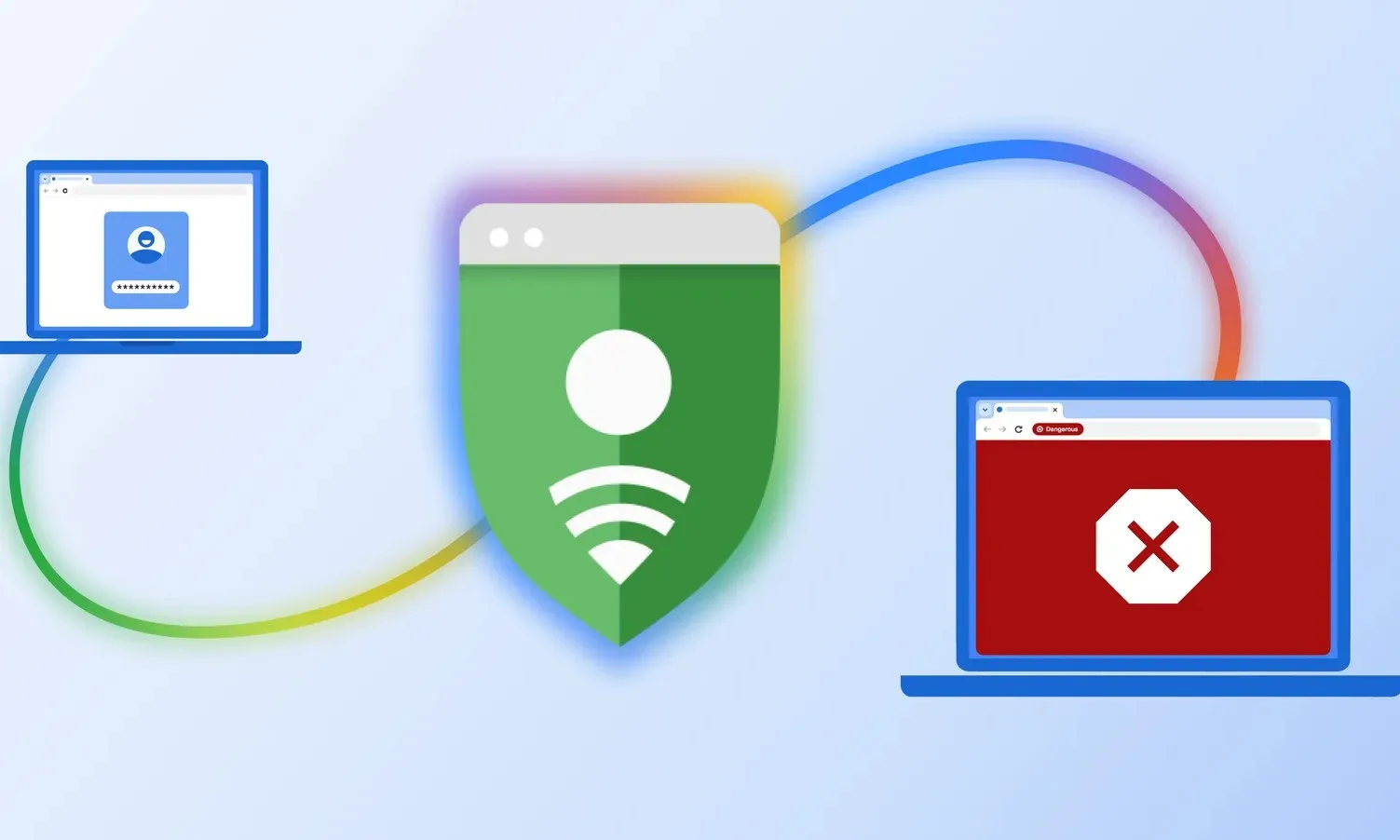
Anyone who has used Google Chrome has probably seen the red warning screen when they click a suspicious link or try to visit a potentially dangerous website. Google is now beefing up this warning system by adding a new layer that will flag websites that seem fishy, even when Safe Browsing does not have enough confidence to classify them as outright dangerous.
The new Suspicious sites category is being added to Chrome’s Enhanced Protection mode and will sit below the existing Dangerous sites classification. Google says these are pages that show deceptive patterns commonly associated with malicious websites, but where Safe Browsing has a lower-confidence verdict.

Chrome will warn you before it is completely sure
Instead of immediately showing the familiar full-page red screen, Chrome will show a different warning when it suspects something is wrong but doesn’t have enough evidence to call the website dangerous. Google is using different colors, icons, text, and formatting for these alerts, making the two warnings easier to tell apart. Known malicious websites will continue getting the existing red screen.

The extra warning could help older users or people unfamiliar with the tricks used in phishing and other online scams. These days, scammers often use AI to make very convincing copies of e-commerce or support websites, so an early warning could be quite useful in deterring a user from putting in sensitive information like logins, passwords, or financial information on these websites.
Gemini is helping Chrome catch more scams
Google is also upgrading the system behind Enhanced Protection. Chrome is moving from its earlier on-device Gemini model to a more powerful server-side version that can examine the brand a page claims to represent, its apparent intent, and how likely it is to be a scam. Safe Browsing combines that information with domain reputation and other security signals before reaching a verdict.
Chrome is also adding protection against ClickFix scams, which trick people into copying and running malicious commands. If Chrome detects a suspicious copied command, Safe Browsing can analyze it and show another warning if it is considered dangerous.
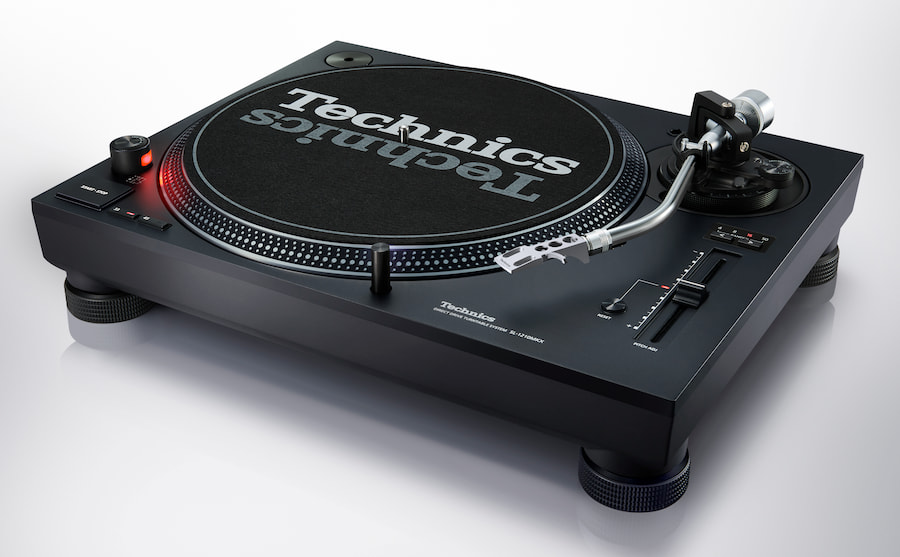
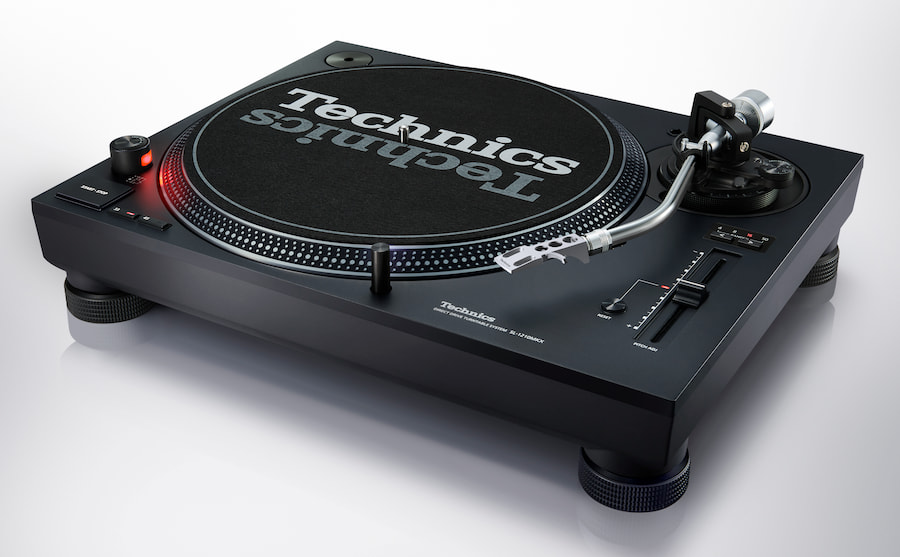
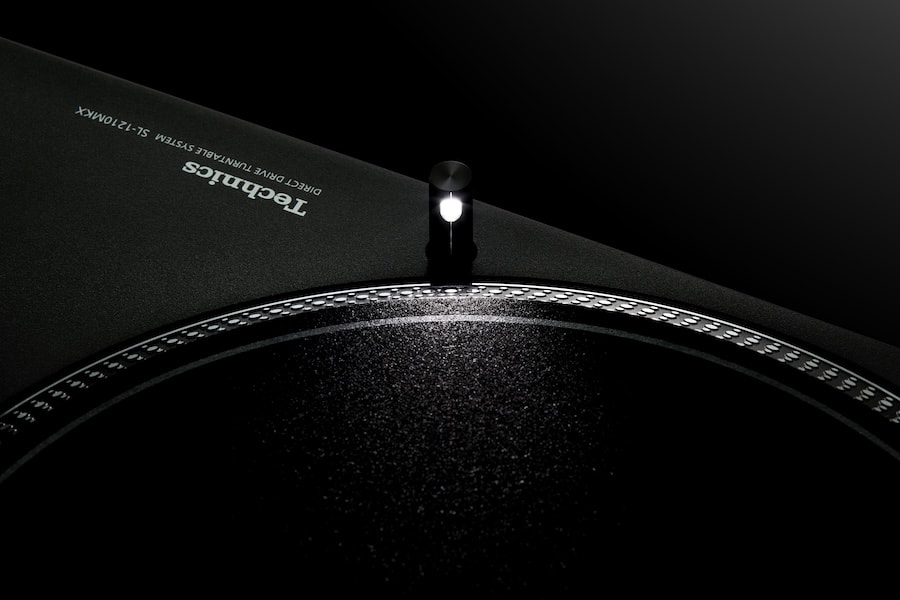
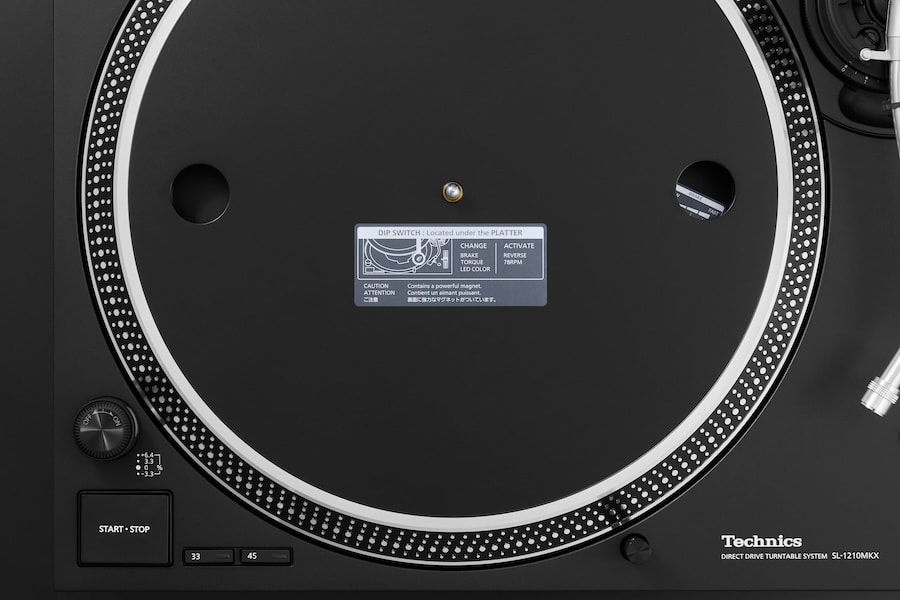
Technics has introduced the SL-1210MKX, a new flagship professional direct-drive DJ turntable that builds on the legendary SL-1200 series with a heavier chassis, revised isolation system, expanded pitch control, and several practical refinements developed with input from working DJs and sound engineers. Priced at $1,899.99, the new model sits above the existing SL-1210MK7 and is designed for professional clubs, touring, and live performances.
We’ve covered more than a few SL-1200 variations over the years, including the recent 55th Anniversary Edition with its seven color options and gold accents, along with the Aimé Leon Dore collaboration. Both demonstrated that Technics knows how to keep collectors and design enthusiasts interested, even when the underlying engineering remains largely unchanged.
The SL-1210MKX takes a different approach. Rather than dressing up the existing platform, Technics has focused on improving precision, stability, and the physical interaction between DJs and their equipment. It’s a sensible direction for a turntable family that has influenced professional music playback since 1972.
Related Reading:
Improved Isolation Without Sacrificing Control
The SL-1210MKX introduces a significantly heavier, balanced chassis designed to resist external vibration more effectively than the existing MK7 platform. Technics has also developed new isolation feet intended to reduce unwanted mechanical energy reaching the turntable.
This is particularly important in clubs and live performance environments, where vibration can travel through stages, floors, and DJ booths. Excessive vibration can interfere with cartridge tracking and create acoustic feedback, problems that aren’t easily solved by simply adjusting the volume.
However, isolation is only part of the equation. Scratch DJs and turntablists need a deck that remains stable when they’re physically manipulating a record, so the suspension can’t be excessively compliant or unpredictable.
Technics says the new arrangement addresses both requirements, although it hasn’t disclosed the additional chassis weight or published comparative isolation measurements. Those numbers would help establish precisely how much improvement the MKX delivers over its predecessor.
More Precise Pitch Control and Greater Creative Freedom
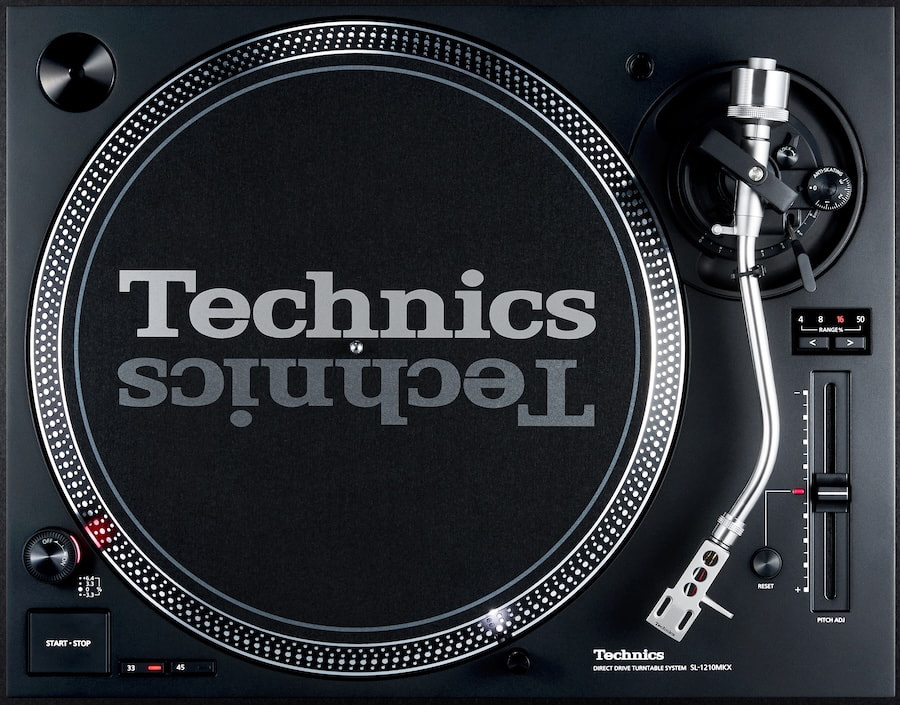
One of the most useful additions is a dedicated ±4% pitch adjustment range, introduced for the first time in the SL-1200 series. The narrower adjustment range offers finer control when matching tracks with similar tempos, allowing DJs to make smaller corrections during transitions.
At the opposite extreme, the MKX introduces a ±50% pitch range, giving turntablists considerably greater flexibility for experimental mixing and manipulating playback speed. The existing MK7 offers ±8% and ±16% ranges, so the new model provides options for both more precise and more dramatic adjustments.
Technics has also redesigned the reset switch for quieter operation, taking inspiration from earlier SL-1200 models. That might seem like a relatively minor refinement, but tactile consistency matters when equipment is being operated quickly in a dark booth.
The familiar coreless direct-drive motor remains, with adjustable start-up torque and brake speed. Reverse playback and 78 rpm support also carry over from the MK7, reinforcing the point that Technics has retained a proven foundation rather than replacing it unnecessarily.
Classic SL-1200 Styling Without the Gold Treatment
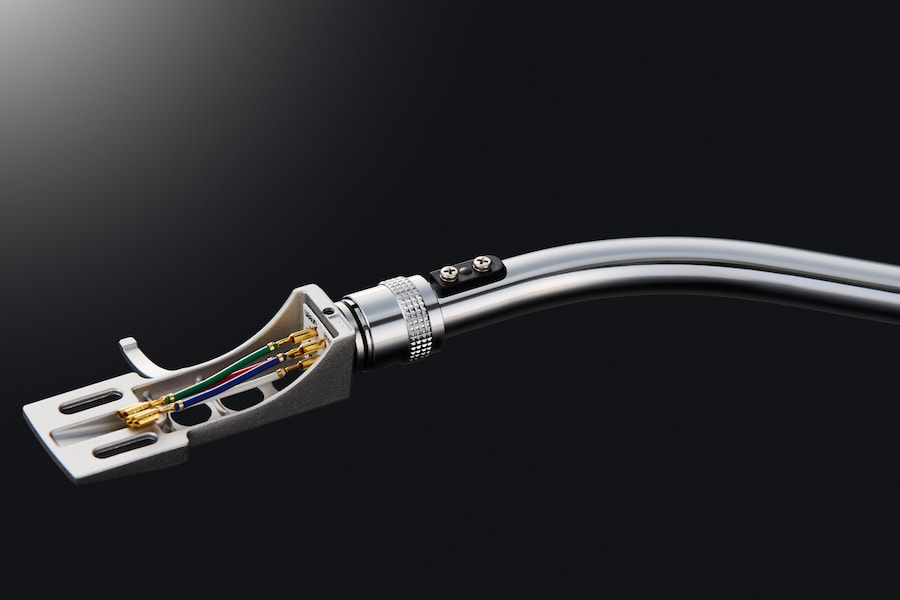
Visually, the SL-1210MKX pays tribute to the SL-1200MK2, the 1979 model that helped establish the series as a professional DJ standard. Its black cabinet and polished silver tonearm create a familiar appearance that should appeal to longtime Technics owners.
The layout reflects decades of refinement, with controls positioned where experienced DJs expect to find them. Familiarity is an advantage in professional environments, particularly when performers move between different clubs and equipment installations.
Technics says the X designation stands for Extreme and Expert, which is a little enthusiastic for a company that usually lets its engineering do the talking. Fortunately, there are no commemorative gold-plated accessories or designer slipmats required to justify the asking price.
Specifications Compared
| SL-1210MKX | SL-1210MK7 | |
| MSRP | $1,899 | $1,299 |
| Dimensions (HxWxD) | 169 x 453 353 mm | 169 x 453 353 mm |
| Weight | 11.9kg | 9.6kg |
| Type | Direct Drive | Direct Drive |
| Turntable Platter | Aluminium diecast Diameter:332 mm Weight:Approx. 1.8 kg (Including slipmat and slipsheet) |
Aluminium diecast Diameter:332 mm Weight:Approx. 1.8 kg (Including slipmat and slipsheet) |
| Turntable Speed | 33-1/3 rpm, 45rpm (with switch 78 rpm) | 33-1/3, 45 rpm (with switch 78 rpm) |
| Variable range pitch | ±4%, ±8%, ±16%, and ±50% | ±8 %, ±16 % |
| Starting torque | 0.18 N・m (1.8 kgf・cm) | 0.18 N・m / 1.8 kg・cm |
| Build-up characteristics | 0.7 s from standstill to 33-1/3 rpm | 0.7 s from standstill to 33-1/3 rpm |
| Braking system | Electronic brake | Electronic brake |
| Cartridge Weight | 5.6 – 12.0 g (without auxiliary weigh)14.3 – 20.7 g (including the head shell) | 5.6 – 12.0 g (without auxiliary weigh)14.3 – 20.7 g (including the head shell) |
| Tone arm height adjustment range | 0-6 mm | 0-6 mm |
| stylus pressure adjustment range | 0-4 g (Direct Reading) | 0-4 g (Direct Reading) |
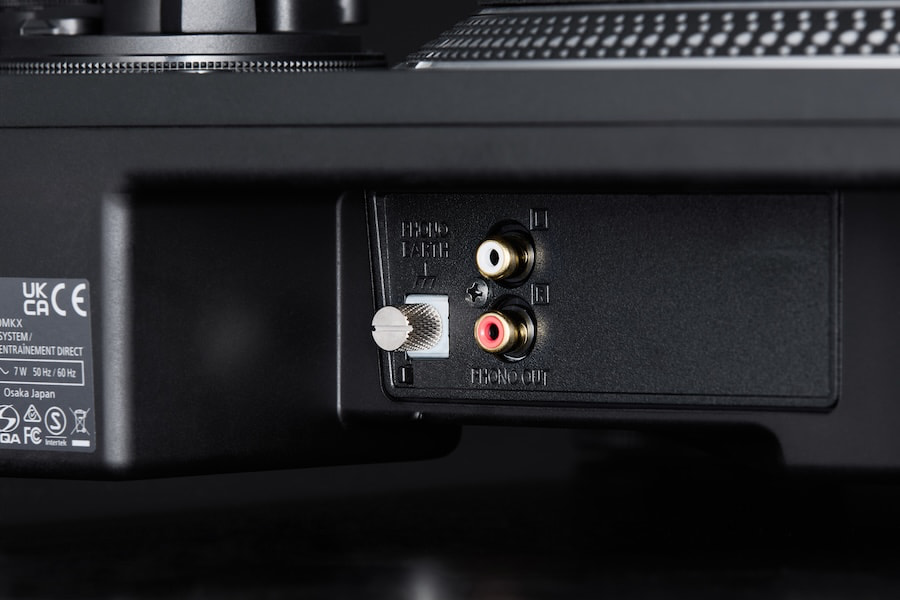
| Audio Output | PHONO (Pin Jack) EARTH terminal (larger) |
PHONO (Pin Jack) EARTH TERMINAL |
| Anti-glare stylus light | Yes | – |
| Dust Cover | Yes | Yes |
Who Is the SL-1210MKX For?
The MKX is aimed primarily at professional vinyl DJs, particularly those who perform regularly in clubs, at festivals, or on tour. The improvements should also interest permanent nightclub installations, rental companies, and professional backline providers who prioritize consistent operation and equipment durability.
However, two alternatives are worth considering before spending nearly $1,900.
Technics SL-1200MK7 ($1,299.99): The current MK7 remains an excellent choice for DJs who want the established Technics platform without paying for the new refinements. It shares the familiar control layout and coreless motor architecture, making the $600 price difference an important consideration. For home practice and less demanding environments, the MK7 may offer everything most users need.
Pioneer DJ PLX-CRSS12 ($1,599): Pioneer’s hybrid approach combines conventional analog vinyl playback with digital vinyl system control, including tonearm-free DVS operation using its MAGVEL CLAMP. Compatibility with Serato DJ Pro and rekordbox makes it particularly attractive to performers who combine physical records with digital music libraries. It costs approximately $301 less than the Technics, although the two models emphasize different performance priorities.
Home audiophiles who don’t need professional pitch manipulation or scratch-oriented controls should consider the Technics SL-1200GR2 instead. That model incorporates more sophisticated drive-control and power-supply engineering intended specifically for high-fidelity playback.
The Bottom Line
The SL-1210MKX is an interesting development because Technics has resisted the temptation to reinvent a product that already works exceptionally well. Instead, the company has concentrated on refinements that professional DJs are likely to notice during everyday use, particularly when accuracy, physical control, and long-term reliability matter more than appearance.
The price premium over the MK7 is substantial, and it’s too early to determine whether the improvements justify upgrading an existing deck. For clubs replacing older equipment or professionals who earn their living behind a pair of turntables, however, the MKX makes a more convincing argument than another cosmetic special edition.
Technics has spent more than five decades establishing the SL-1200 as a professional standard. The MKX doesn’t need to rewrite that history. It needs to demonstrate that careful engineering still matters.
Pricing & Availability
The Technics SL-1210MKX will make its public debut on October 21, 2026, at Amsterdam Dance Event, with additional appearances planned for the Paris Audio Video Show and Poland Audio Video Show.
The first units are expected to be available by January 2027 at select Technics retailers for $1,899 in the U.S. or £1299 and €1499 across Europe.
For more information: Technics

For generations, schools have rewarded the correct answer, the polished essay and other finished products of learning. Now that artificial intelligence (AI) can effortlessly write the papers and produce the results that used to come only from high achievers, what does “high achievement” mean? And which student behaviors should be rewarded?
As someone who became a high achiever after years of low academic effort, my own school experiences remind me that it’s critical to consider how AI is affecting the full range of students in our classrooms — not only those who are struggling.
Throughout my first two years of high school, I was what I like to call an “academic minimalist.” I wasn’t trying to fail, but I also wasn’t chasing academic greatness either. I often thought, Why exhaust myself earning a 95 when the diplomas don’t come with a footnote explaining that I passed algebra with enthusiasm? I went to class, did enough to pass and went home. I did not build my identity around earning all A’s or being the student whose hand shot up first. School was something I needed to get through.
Then, during my junior year, something shifted. I sat in one of my English courses, with a teacher named Mr. Poska. He saw that I had a secret love for reading and writing, and I began to slowly blossom as a scholar in his class. He then suggested that I challenge myself and recommended I take his Advanced Placement (AP) English course, The Faustian Bargain in Literature. Intrigued, I enrolled.
The class centered on the Faustian legend, the centuries-old story of a person who bargains away something essential in exchange for knowledge, immortality, beauty, power or desire. For the first time during my high school career, I felt a sense of intrinsic motivation and internal desire to immerse myself and to push myself, which eventually spilled over into my other classes senior year.
We traced the legend across literature, researched its evolution and analyzed how different writers reinvented the same questions about ambition, temptation and consequence. I had to read closely, do substantial research, make connections between texts and defend interpretations that did not come packaged with one correct answer.
After taking this class, I fell in love with researching and discovering that a text could hold multiple meanings. For the first time, academic achievement wasn’t just something measured by my report card. Being a scholar became part of how I understood myself. Somewhere along the way, I transformed from “academic minimalist” into “high achiever.”
Once I entered college, I fell even more in love with learning when I decided to major in English and psychology. I continued on to earn a master’s degree in education, followed a decade later by a second master’s degree in leadership. By then, I strove for A’s in my classes, and a 4.0 GPA became a goal I had to hit. Being a high-achieving scholar became part of my identity.
A New Perspective
As AI transforms education, I find myself looking at my students and seeing reflections of my former self, particularly those who have built their identities around being high-achieving scholars.
Over my 13 years in education, I have come to recognize these students in my classes immediately. They want the 90, then ask what they can do to make it to a 95. They want extra credit when they already have an A. They revise and research beyond what I assigned.
For years, schools have rewarded these behaviors. We’ve told students that becoming strong writers, researchers, critical thinkers and independent learners would distinguish them. Then, we handed them technology that can produce a polished essay, summarize a 100-page reading, generate research questions, reorganize notes and offer a sophisticated analysis before they have finished typing the prompt.
That creates a strange existential question for a teenager whose confidence has been built around academic competence: If AI can do the one thing I am good at faster and more accurately than I can, what exactly am I good at and why am I even doing it?
When AI can effortlessly write the essays and synthesize the texts that once defined academic worth, the traditional definitions and metrics of high achievement begin to fracture, and these students begin to feel displaced.
AI forces educators to move beyond transactional grading and redefine authentic scholarship around human curiosity rather than automated perfection. As this technology continues to evolve and be a part of our classrooms, we have to work to discover how to cultivate genuine resilience and keep academic excellence at the forefront.
When Confidence Is Outsourced
I have started noticing traits among some of my academically stronger students that concern me more than an obvious AI-generated essay — hesitation, lack of self-trust, low confidence and apathy.
One student offers an insightful interpretation and then wants to check AI to make sure it is “right.” Another student has an original idea but trusts the polished version generated by AI more than their own language. Students who once approached assignments independently increasingly want technological confirmation before trusting their thinking. Students who used to respond first to complex questions now just shrug when I ask them a question and jump straight to AI for an answer.
As an educator, I find the irony unfolding painful to watch. Students who have spent years becoming capable begin outsourcing their thinking because they care more about being correct.
Students themselves seem to recognize some of this tension. In an August 2026 survey of U.S. teens by Common Sense Media, 70% reported using AI for schoolwork. Among teens who use AI, 38% said its availability leads them to generate fewer ideas of their own, while 39% said they feel they miss out on learning when they use AI to complete assignments.
This complicates the conversation about AI and achievement, shifting the focus away from struggling students to high-achieving scholars. It introduces a vital new narrative: A student does not have to be struggling academically to become cognitively dependent on technology, as efficiency and polished outputs quietly erode the productive struggle essential to true mastery.
In fact, perfectionism may create its own vulnerability. Research examining educational identity, achievement and perfectionism among adolescents found complicated reciprocal relationships between these factors, including potentially harmful connections between externally driven perfectionism and educational commitment. For high-achieving students whose academic identities are closely tied to measures of performance and achievement, AI may create an additional layer of pressure by producing seemingly flawless work in seconds.
As AI increasingly performs tasks that once required intellectual curiosity, persistence and independent thinking, students may begin questioning the value of their own academic contributions and the skills they have worked so hard to develop, potentially undermining the confidence and intellectual independence that have shaped their identities as high-achieving scholars. This leaves us, as educators, with an important question: When students no longer see their own intellectual efforts as essential to academic success, what happens to the motivation and scholarly identity that once drove them to excel?
For a student accustomed to producing excellent work, AI offers something seductive — fewer mistakes. But learning has never required perfection. Learning requires enough confidence to get it wrong before getting it right.
Honoring the Wrong Things
This brings me to an uncomfortable possibility: Perhaps AI is not only disrupting student achievement, but exposing how narrowly schools have defined it.
For generations, we have rewarded the polished essay, correct answer, immaculate notes, high GPA and completed product. AI is exceptionally good at producing products. So if the product is all we measure, AI will inevitably make it harder to identify human achievement.
In my previous EdSurge opinion piece, ‘Protecting Student Cognition in the Age of AI,’ I argued that educators need to preserve productive struggle because the thinking behind an assignment matters as much as the finished product. That becomes even more important for high-achieving students.
Instead of asking “How good is this essay?” I increasingly want to know: How did you arrive here? Show me the question that started your research. Show me your first claim and explain why you abandoned it. Tell me which source changed your thinking. Defend your conclusion when I challenge it. Explain where AI contributed and where you rejected its recommendation. Let me see you change your mind.
Those things are much harder to automate because they reveal intellectual ownership, the very thing we should be protecting.
Redefining High Achievement
This does not mean high-achieving students should avoid AI. They will enter colleges and workplaces where understanding how to use AI will itself be an important skill. Digital Promise’s AI literacy framework emphasizes not simply using AI, but understanding and evaluating it, with human judgment remaining central.
That gives schools an opportunity to expand rather than erase what high achievement means. Maybe tomorrow’s high-achieving scholar is not the student who produces the most flawless essay. Maybe it is the student who can produce an original argument, interrogate an AI-generated one, identify what both missed and explain why their final judgment is their own.
Maybe achievement should be measured through curiosity, intellectual resilience, ethical judgment, creativity, revision, self-advocacy and the confidence to say, “AI suggested this, but I disagree because ….”
School leaders also have a responsibility here. If teachers are independently deciding what AI use counts as learning, cheating or excellence, students are navigating a moving target that will look different in each classroom. Schools and districts need shared language about what human achievement looks like when AI is present and what evidence shows students still own their learning.
I want to encourage educators to consider whether, in this new age of AI, we should continue to reward polished, “perfect” products over original thinking and productive struggle. If we do nothing, we risk sending the message that efficiency and accuracy matter more than the human process of learning.
Today’s ‘Faustian Bargain’
I often think back to the Faustian Bargain in Literature class all those years ago, and it feels almost too fitting to remember that course now. AI has come to offer students an extraordinary bargain: speed, polish, information and accurate answers with less struggle. But education has to make sure students understand what should never be part of the exchange.
When I entered that AP English classroom in high school, I did not become a scholar because every paper I produced was perfect. I can assure you they weren’t. I became one because I discovered that I loved the process of thinking deeply enough to have something of my own to say.
Our high-achieving students deserve the opportunity to make that discovery too, and to keep the part of their identity that makes coming to school and striving for better worth it.
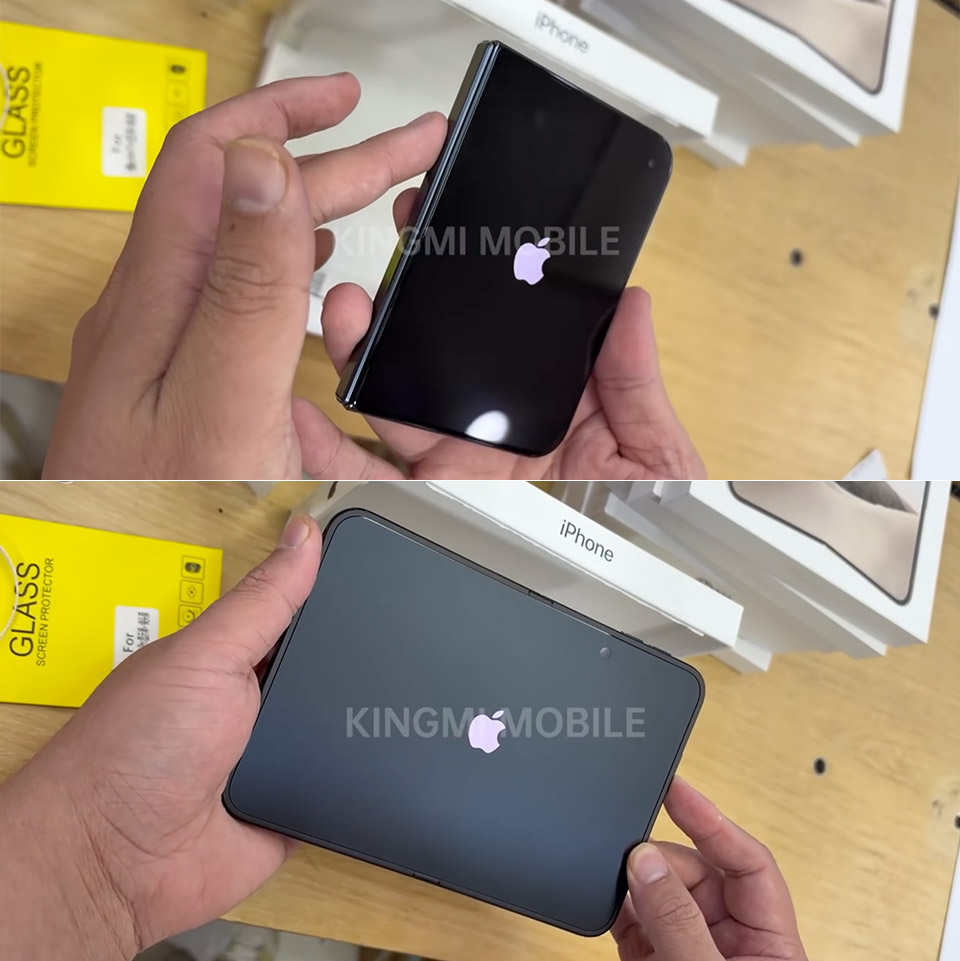
Apple’s first foldable, the iPhone Duo, has begun leaving boxes in private hands days before its Friday store arrival. A tech leaker channel called Kingmi Mobile uploaded two short clips on October 20, one of them focused on a 1TB Night Sky unit. Both run about two minutes and show the device coming out already open rather than folded shut. Packaging looks like any recent iPhone box aside from the extra length needed to hold the screen flat, and the units themselves carry Chinese text that suggests they left factories ahead of most retail stock.
The footage allows you to see the 7.6-inch inner display and its matte nano-texture finish in all their glory. Light hits the screen very evenly, and the fold line is only visible if you hold the phone at an acute angle. Hands open and close the titanium frame a few times, then power the unit on while the 5.4-inch outer screen acts as a live viewfinder for the dual rear cameras. Both Night Sky and Star White finishes appear across the clips, matching the only two colors Apple offers.
Sale

Samsung Galaxy Z Fold8 Unlocked Android Smartphone, 256GB Graphite | All-New Shape, Content-Native Ratio…
- CREATED FOR YOUR CONTENT: Any way you turn it, the new Galaxy Z Fold8 gives you a fuller viewing experience. Designed with your content in mind, this…
- WORLD’S LIGHTEST FOLD¹: Galaxy Z Fold8 is the newest foldable phone for content on the go. Unfolded, it fits movies and books for an immersive…
- THE BRIGHTEST DISPLAY ON A GALAXY PHONE: Our brightest smartphone display² provides you with a comfortable view, whether you’re inside or outside…
Media members who handled the Duo after the September announcement already described the hinge as stiff yet smooth and the crease as nearly invisible under normal viewing. We are now getting our first actual look at a finished unit being unpacked; comprehensive reviews should be available within the next day or two (when the NDA expires).
If you pre-ordered online through Apple’s website, you might have to wait until January 25 to get your hands on it. Why? Online orders placed through Apple’s site currently list January 25 arrival dates in many regions, and store staff have been told to warn customers that walk-in stock on October 23 will likely be scarce. In Japan, South Korea, and the UAE the company has limited availability to customers with a pickup reservation. Pre-orders were capped at two units per person after demand ran high and some resellers began listing devices well above the $1,999 starting price for the 256GB model.
The dual-battery tech is touted to last up to 31 hours on the inner screen and 44 hours on the outer screen, and the A20 Pro chip inside is the same as the one that powers the iPhone 18 Pro. When closed, the phone is roughly the width of a smaller iPhone, but when opened, you’ll see a 7.6-inch panel with a thickness of 5.2 mm. Whether or not the early factory units we’re seeing match the production quality that actual buyers receive on launch day remains to be seen, but so far clips confirm the phone ships flat, the matte finish does a great job of hiding the crease, and if you’re looking to get your hands on one, you’ll have to wait a while longer, as supply is expected to be tight for a few weeks after launch.
[Source]
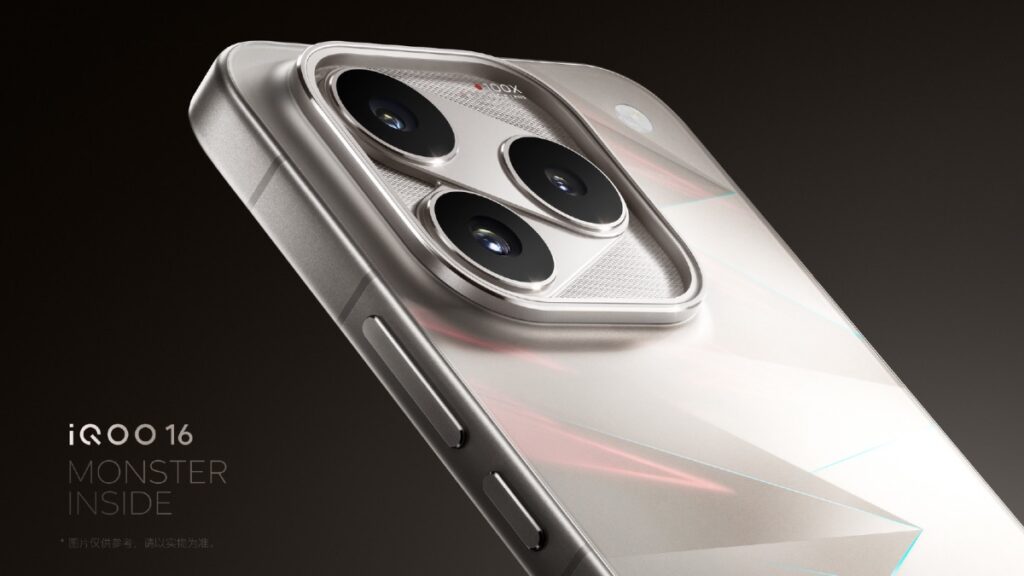
iQOO is set to launch its next-generation flagship smartphone, the iQOO 16, in India. iQOO confirmed the phone’s upcoming launch at India Mobile Congress (IMC) 2026 but has not announced a release date. However, some details about the phone’s expected specifications have surfaced.
iQOO 16 Expected Specifications and Features
The upcoming iQOO 16 could bring a major performance upgrade with the Qualcomm Snapdragon 8 Elite Extreme Gen 6 chipset. The iQOO 16 could be one of the first smartphones in India to feature this processor. The phone could also offer 12GB of RAM and 256GB of internal storage. On the software side, the iQOO 16 is expected to run OriginOS 7, based on Android 17. It would be the first iQOO smartphone to ship with this software out of the box.
The iQOO 16 could feature a 6.85-inch AMOLED screen with a 1440 × 3168 resolution. This 2K panel is also expected to support a 165Hz refresh rate. The high refresh rate could make supported games, scrolling, and on-screen animations appear smoother. Leaks also point to a refreshed design for the upcoming smartphone. The rear panel could feature a bluish-grey textured finish with diagonal lines crossing each other. The iQOO 16 could feature a redesigned camera island that distinguishes it from the iQOO 15.

The new smartphone will feature a triple-lens rear camera module with 50-megapixel sensors. This configuration can comprise a primary camera, an ultra-wide-angle camera, and a periscope telephoto camera. The primary camera would take regular photos, while the ultra-wide-angle camera would capture broader shots. The periscope camera could enable zoomed shots. The iQOO 16 may come with a 32-megapixel selfie camera with a punch hole.
Battery capacity could be one of the iQOO 16’s biggest highlights. The iQOO 16 packs an 8,400mAh battery. The 8,400mAh battery provides more power than many top-end smartphones. Even with a huge battery, it will still support 100W fast charging. Fast charging will reduce charging time.
India Launch Date and Expected Price
iQOO has confirmed that the iQOO 16 will launch in India soon. The company’s India CEO, Nipun Marya, shared this update at the India Mobile Congress (IMC) 2026. He said the upcoming flagship is coming “soon,” but did not reveal an exact launch date. The company can place the product in the ultra-premium category. In contrast, iQOO launched the iQOO 15 in India in 2025 for Rs 72,999. The new model could cost even more, although iQOO has not revealed its official price yet.
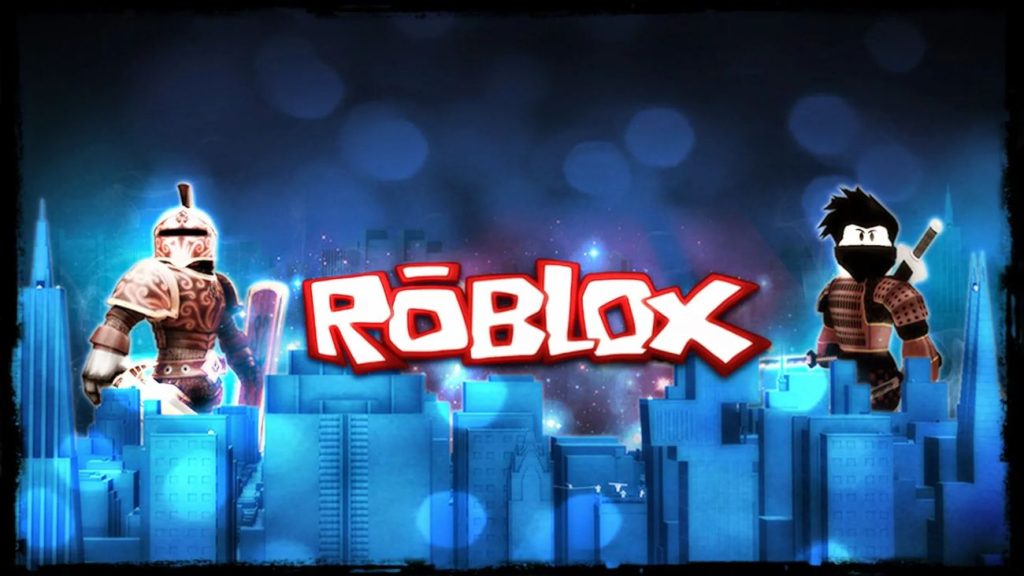
India’s growing gaming market could offer new opportunities for Roblox and its creator community. The gaming and development platform held its ‘UNBOX ROBLOX’ event in New Delhi this week and displayed its latest announcements from RDC 2026, games, and updates. Roblox announced an Economic Impact Report evaluating the prospects of India’s creator community.
Roblox Sees Strong Growth Potential in India
Roblox and its developer community have strong potential in India’s emerging gaming market. India has more than 500 million gamers, which makes it the nation with the second-highest gaming population in the world. According to Roblox’s Economic Impact Report, video game industry revenue in India is expected to rise from Rs 6,300 crore in 2025 to Rs 9,200 crore by 2028. The report estimates annual growth of 13%, which is higher than the global rate of 5.1%.
Roblox has also seen an increase in users in India. Roblox’s daily active users in India grew at a compound annual growth rate of 76% from 2020 to 2025. On prospects in India, Sunil Rao, Managing Director of Roblox India and South Asia, believes Indian creators and studio players can achieve a lot through Roblox. He said the next major Roblox hit could come from India, highlighting the potential for local talent to reach a wider audience.
Roblox Opens New Opportunities for Indian Creators

Roblox is helping Indian creators explore game development as a source of income and career growth. According to its Economic Impact Report, more than 250 Indian creators qualified to receive payouts in 2025. Total payouts to creators grew at an annual rate of 72%, highlighting the platform’s financial opportunities. Creators don’t always need prior game development experience to get started. In the report, 94% of surveyed Indian creators said they could build games with minimal prior experience. Roblox also allows them to reach players worldwide. On average, international users account for 52% of daily active users on Indian creators’ games and 55% of their revenue.
Several Indian creators have already built businesses through the platform. Bengaluru-based Small World Games developed Death Ball and Racket Rivals, which have received more than 1.6 billion and 560 million visits, respectively. Meanwhile, Meta Fashion has built a digital fashion business selling virtual items. The report also found that 91% of surveyed Indian creators said their Roblox-related work helped them secure external job offers, freelance projects, or business opportunities.
Roblox’s Contribution to India’s Creator Economy
However, Roblox’s influence extends beyond games in India. Many designers, fashion creators, and other professionals use Roblox’s resources to learn new skills. In particular, almost 91% of the surveyed creators from India said that Roblox’s tools and resources helped them learn something new. Moreover, many people started creating thanks to the Roblox community and YouTube video tutorials. Roblox also attracts users through entertainment and social networking. In particular, the report found that 88% of surveyed Indian users visit Roblox on mobile devices. About 93% enjoy spending time with their friends and community.
Developing such a creator ecosystem can also help the Indian economy. According to the report, Roblox creators’ activities contributed about Rs 123.9 crore to India’s GDP from 2020 to 2025. Such activities also created about 510 jobs equivalent on an annual basis in 2025. As the Indian gaming industry grows, Roblox can create new opportunities.
That little orange button can do a lot more than start your next workout.
If you’re serious about running, hiking, weightlifting or other high-energy activities, the Apple Watch Ultra 4 is easy to recommend. At $800, it is a commitment — but that’s surprisingly reasonable compared to other fitness and adventure watches, and the benefits over a regular Apple Watch aren’t trivial. It’s bigger, tougher and lasts up to 50 hours on a charge, whereas a Series 12 has to be topped up every day. Combined with its satellite features and GPS accuracy, it might legitimately save your life on a wilderness trek.
An Ultra difference that Apple tends to downplay these days is the action button. It’s an orange button next to the speaker grille, used as a quick shortcut for commands that other Watch owners have to tap through menus or complications to reach. It can also activate the watch’s emergency siren, which helps attract attention if you’re lost or injured. It’s such an obvious, low-cost feature that it’s almost insulting that it’s not on Series devices, too.
There’s a broad range of commands you can assign to the button. You can only assign one at a time, but if you know what you’re doing, it can be immensely useful for anything that’s a daily habit. All the more so if you take advantage of the automation upgrades in watchOS 27 and iOS 27.
The action button arsenal on your wrist
If you hold down the action button briefly, you’ll see the Quick Switch menu appear. This lets you swap the button’s single-tap function on the fly, which can be vital for some activities, particularly outdoor navigation. You’ll see what we mean in a moment.
The most straightforward options are Flashlight, Voice Memo, Translate and Recognize Music. With these, you just hit the button once to start the function and again to stop it. As a side note, Recognize Music should be nearly instant on an Ultra 4, thanks to Apple’s new Audio Intelligence capabilities, which also support automatic Shazam detection.
Slightly more complex are Workout, Stopwatch and Dive. With Stopwatch, pressing the button once starts timing, and pressing it again marks a lap. Press the action and side buttons simultaneously to pause. With Dive, a regular press begins your aquatic adventures, while pressing action and side simultaneously launches an app-specific secondary function.
Similarly, Workout will either open the Workout app or immediately launch into a particular activity. You can change this by going to Settings > Action Button. Mid-session, tapping the button performs a secondary function, such as marking a segment. To pause, press action and side together.
Special attention is due to the two navigation options, Waypoint and Backtrack. The first drops waypoints visible in the Compass app and the Waypoint watchface, although some waypoints are added automatically, such as your parked car and the last available cell signal. Backtrack is also linked to the Compass app, but tapping once starts recording a precise route you can retrace later. Hitting the action and side buttons simultaneously flips between the Record and Retrace modes.
The showstoppers: Accessibility and Shortcuts
For some users, assigning the button to Accessibility might be unavoidable. This lets you trigger things like AssistiveTouch, VoiceOver and even control nearby devices. There may be a reason to use this if you’re fully able-bodied, too, so check it out.
Arguably, though, the single most powerful action is Shortcut. This is configured like Accessibility, but lets you trigger any automation you’ve built in the iPhone’s Shortcuts app. Given that these automations can stretch across multiple platforms and even control smart home accessories, there’s virtually unlimited potential. A single tap might, for example, turn on your lights, adjust your thermostat and even start playing local news on your HomePod.
The Shortcuts app can be unwieldy at times. Thankfully, a big change in iOS 27 on iPhones with Apple Intelligence is the ability to build shortcuts simply by describing what you want them to do. This greatly simplifies the process, although it’s important to double-check the results. You don’t want an “I’m driving home” routine to accidentally send an ETA to your mother-in-law instead of your partner.
It all depends on the wind.
Do home wind turbines actually work? The answer is a very reserved “yes.” With solar energy cruising into record territory, small-scale wind power for residential use tends to get lost in the sun (poor pun intended).There are several caveats, though wind power is not an altogether losing proposition. It really depends on the need and the scale of use. They even make compact turbines for powering RVs, so it also depends on your definition of “home.”
It’s important to note that a 1 kW turbine is a “peak” power measure, not necessarily what you’ll get out of it. The more useful number to look at is annual or monthly energy production, measured in kilowatt-hours. In a carefully chosen position, a 1 kW turbine could feasibly produce 200 kWh per month, or about 2,400 kWh per year. That works out to under a quarter of the average US household’s annual energy consumption.
None of this is to say that wind turbines are weak power producers — it just depends on the wind. If you live in an area with annual wind speeds averaging 14+ mph, this is something worth looking into. If not, or if windy days are sparse or even average, maybe not so much. A 1 kW system is feasible, but it’s best to look at it in terms of supplemental power for an already efficient home.
Placement determines whether it works
A wind turbine for a home practically requires a high average wind speed that’s consistent month-to-month. Homes with lots of trees, surrounded by other homes, behind hills or with large sheds need not apply. Not only do these obstacles block wind, but they also create turbulence, which reduces output and speeds up wear and tear on the turbine. The Department of Energy’s small wind guidance recommends placing the bottom of the rotor at least 30 feet above any obstacle within 300 horizontal feet of the tower.
That recommendation alone tells you all you need to know about placing a wind turbine in a suburban neighborhood. It’ll make for some interesting conversations at the neighbor’s house, and little more. Worse, most local zoning rules limit structures to around 35 feet, and wind turbines often require much more in order to clear nearby trees and rooftops. A rooftop installation option sounds great on paper, but it can transmit vibration and noise directly into your rooftop, a lovely side effect while trying to catch some Zs before work.
If you’re sold on wind power, look beyond your region’s wind map, check local zoning and utility rules and conduct a thorough assessment of your site’s obstacles and average wind direction. It’s also a good idea to get an installer to estimate overall production before spending your hard-earned dough.
A whole-house turbine needs much more capacity
If your home is a small, economical little cabin or a permanently parked RV, a 1kW wind turbine is certainly an option. However, it’s not enough to power a typical US home. The average household uses about 10,500 kWh of electricity per year (around 850 kWh per month), and a residential turbine in the 5 kW to 15 kW range is necessary to put a dent in that power consumption.
Cost is another reason to proceed with a bit of caution. It’ll run the average consumer between $20,000 and $50,000 to toss up a wind turbine. Installing solar panels with the same energy production in mind is roughly $2,500 to $3,500, and that’s before incentives are calculated in.
A grid-connected system typically requires an inverter as well and can offset some utility use when the wind is blowing. Off-grid systems will require batteries and a charge controller to store power. For the majority of suburban dwellers, improving insulation and tossing in some ground- or roof-mounted solar panels will provide more dependable, solid results. If you want to go the wind route, it makes the most sense in open, rural areas that have verified average wind speeds and a place to put your tower.

Portal Space Systems reaches orbit for the second time this year with Starburst-1 launch
Tesla-SpaceX Merger Being Considered

UK Banks Restricting Crypto Transfers: Complaints Rise


-

 Fashion4 days ago
Weekend Open Thread: Kut from the Kloth
-
 Entertainment5 days ago
Anna Faris Says Chuck Lorre’s ‘Mom’ Remarks Still Hurt
-

 Tech & AI4 days ago
Double Fine’s First Post-Xbox Title, First-Person Soulslikes And Other New Indie Games Worth Checking Out
-

 Tech & AI7 days ago
MCP for agent-to-agent comms may be the riskiest protocol you’ve never heard of
-

 Sports7 days ago
New report highlights growing pains
-
Tech & AI6 days ago
Porsche Just Revealed The Mission S, And It’s So Much More Than Just A New Concept Car
-
 Crypto7 days ago
Kalshi CEO says state-led oversight of U.S. prediction markets would push them out
-

 Entertainment5 days ago
Jake Bauers’ Wife Reacts to NLCS MVP Win After Viral Comments
-
 Tech & AI5 days ago
Daily Deal: The 2026 Complete Godot Stack Development Bundle
-
 Entertainment6 days ago
‘RHONY’ Carole Radziwill Exposes Truth About Ghislaine Maxwell
-
 Tech & AI4 days ago
Hackers breach Microsoft 365 tenants via ConnectWise supply-chain attack
-

 Business & Hustles6 days ago
LARRY KUDLOW: Don’t count the GOP out yet
-
 Tech & AI4 days ago
Replit is no longer working with Anthropic, CEO says
-
 Sports7 days ago
Shai Hope scripts history, surpasses Chris Gayle in major T20I milestone for West Indies | Cricket News
-

 Tech & AI7 days ago
Why Do So Many Teachers Crash in October?
-
 Tech & AI7 days ago
Deezer Will Let Listeners Completely Filter Out AI Music
-

 Fashion6 days ago
Coffee Break: Gilded Peony Blazer
-
 Tech & AI4 days ago
NeodraDynamics Neo1 Rises Thirteen Feet High to Carry Half Ton Loads at Work
-
 Entertainment3 days ago
Britney Spears Praises Janet Jackson In Heartfelt Message
-
 Business & Hustles4 days ago
25 Videos You Can Film This Week
You must be logged in to post a comment Login