

This story appeared in Today, Explained, a daily newsletter that helps you understand the most compelling news and stories of the day. Subscribe here.
Tech & AI
Instacart reportedly discussed selling itself with DoorDash and Uber


Instacart might sell itself to a larger competitor, according to multiple news reports
The Information reported Friday that the grocery delivery company has hired an investment bank to help it evaluate its options, and that it’s held acquisition talks with DoorDash. And Bloomberg reported that the company has also talked to Uber — although Uber reportedly walked away from those discussions.
Instacart currently has a market cap of more than $13 billion, and its stock price is up 25% for the year to date. The company could see this as a good time to sell at a desirable price, before the grocery delivery market gets more competitive — but Bloomberg noted that these are early discussions that might not result in a sale.
TechCrunch has reached out to Instacart for comment. The reports of a potential sale caused the company’s share price to spike more than 9.2% on Friday, while Uber and DoorDash stock declined.
Continue Reading
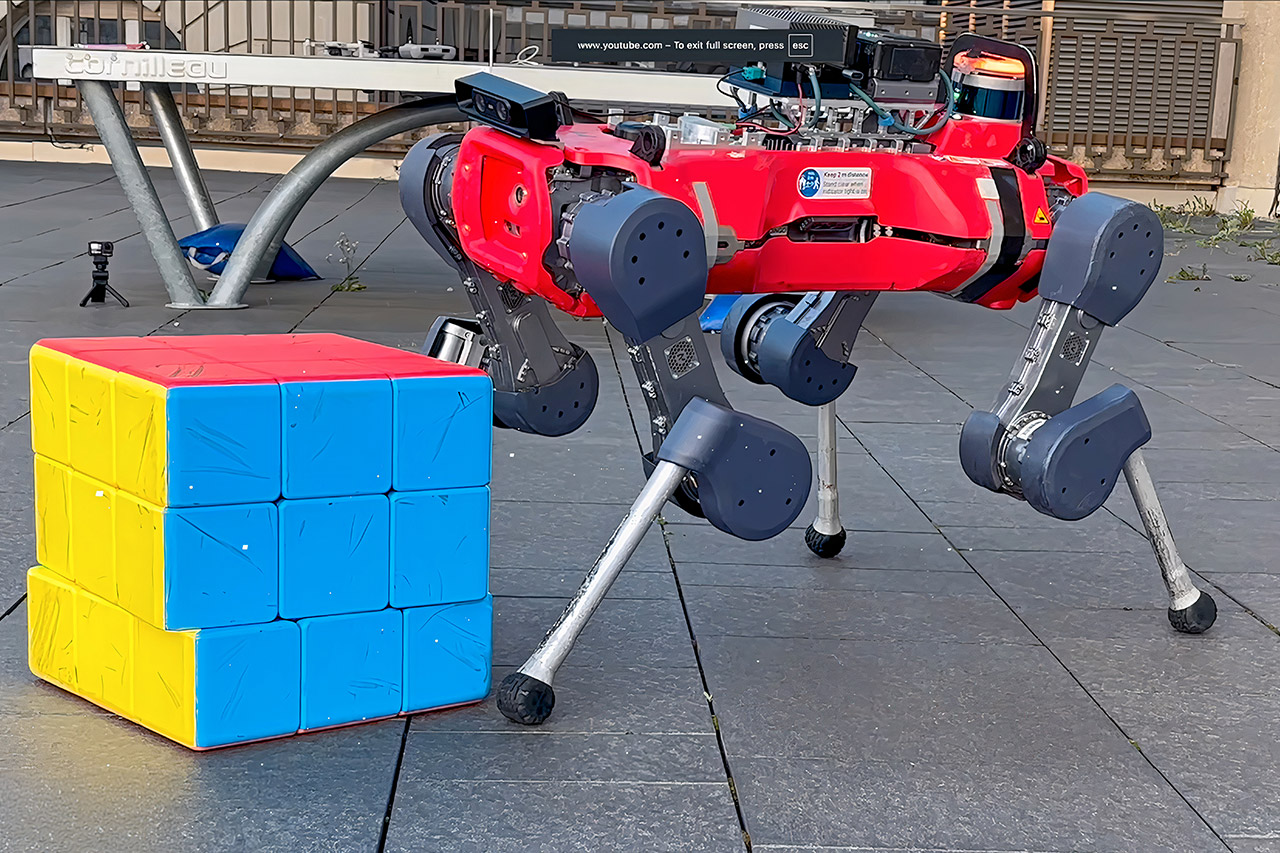
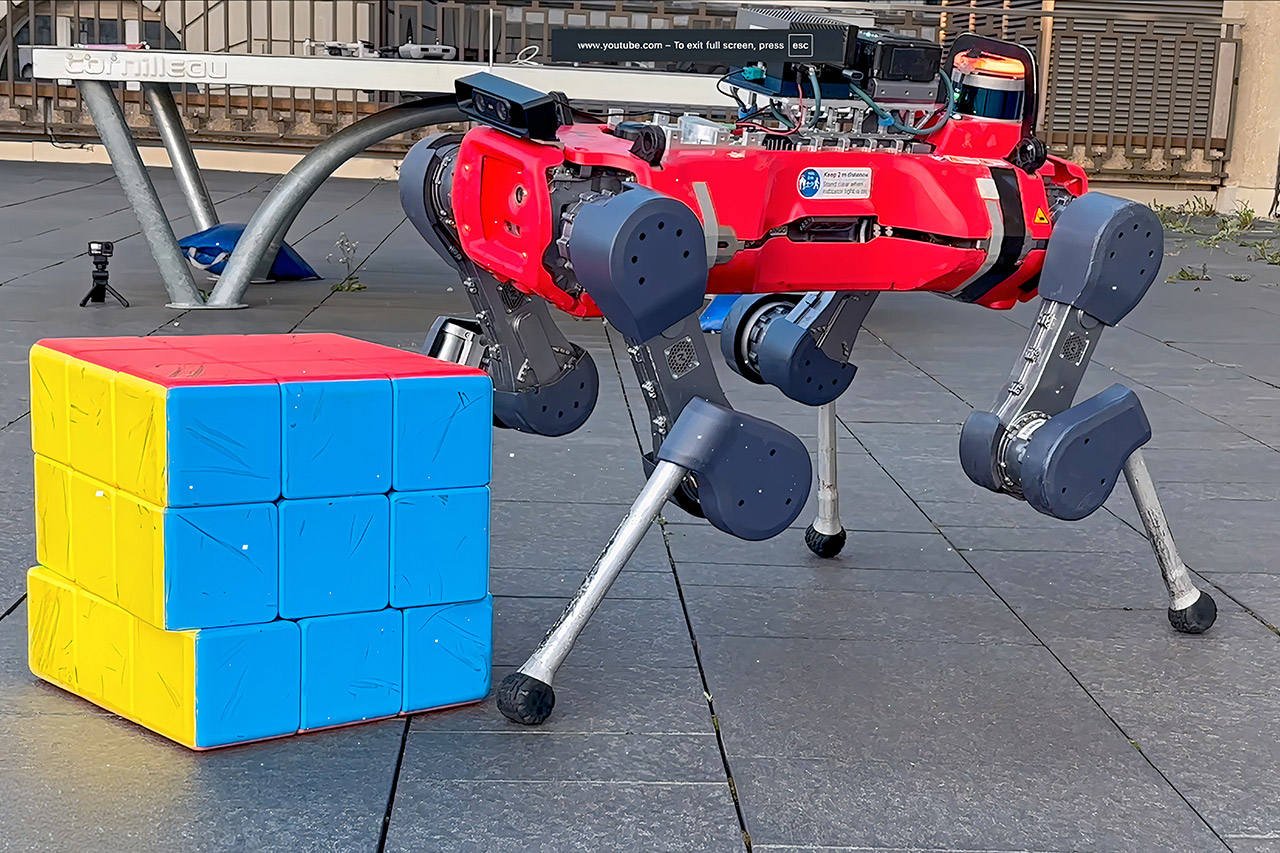
Researchers from ETH Zurich’s Robotic Systems Lab have shown that a standard four-legged inspection robot can fully solve a giant Rubik’s Cube on its own, relying entirely on its feet for every contact with the puzzle. The machine, an ANYmal-D, first walks around the freestanding cube and tips it onto different faces so its onboard depth camera can build a complete picture of the colors. Once it has that map, a planner turns a conventional cube solution into a short list of robot actions, and the machine carries them out without further help from people.
The cube is so heavy that flipping it over and rotating one layer is a completely different ballgame. A single slip-up, such as accidently twisting a layer while tipping, would entirely disrupt the sequence, thus the robot must maintain all of the layers locked in place while reorienting the cube, then consciously release them when it needs to turn a face. To tip the cube 90 degrees forward or backward, simply grasp an edge with one front foot and roll the entire thing onto a new face. To rotate a layer, the right foot firmly plants on the bottom half to keep the cube stable, while the left foot gently pulls the top half through a crisp quarter turn. To turn the layer the opposite direction, simply reverse the motion and repeat.

Unitree Go2 Robot Dog Quadruped Robotics for Adults Embodied AI (Go2 X) Built for Developers
- 【Next-Generation Robotic Companion: Meet the Unitree Go2 Robotic Dog】 The Unitree Go2 X is a powerful and intelligent quadruped robot designed for…
- 【Intelligent Navigation with 3D LiDAR & Obstacle Avoidance】 Featuring ultra-wide 3D LiDAR with 360°x96° perception, the Go2 X detects obstacles…
- 【High-Definition Vision & Seamless App Integration】 A front HD camera streams 1280×720 video to the app. Control the robot, view real-time data…
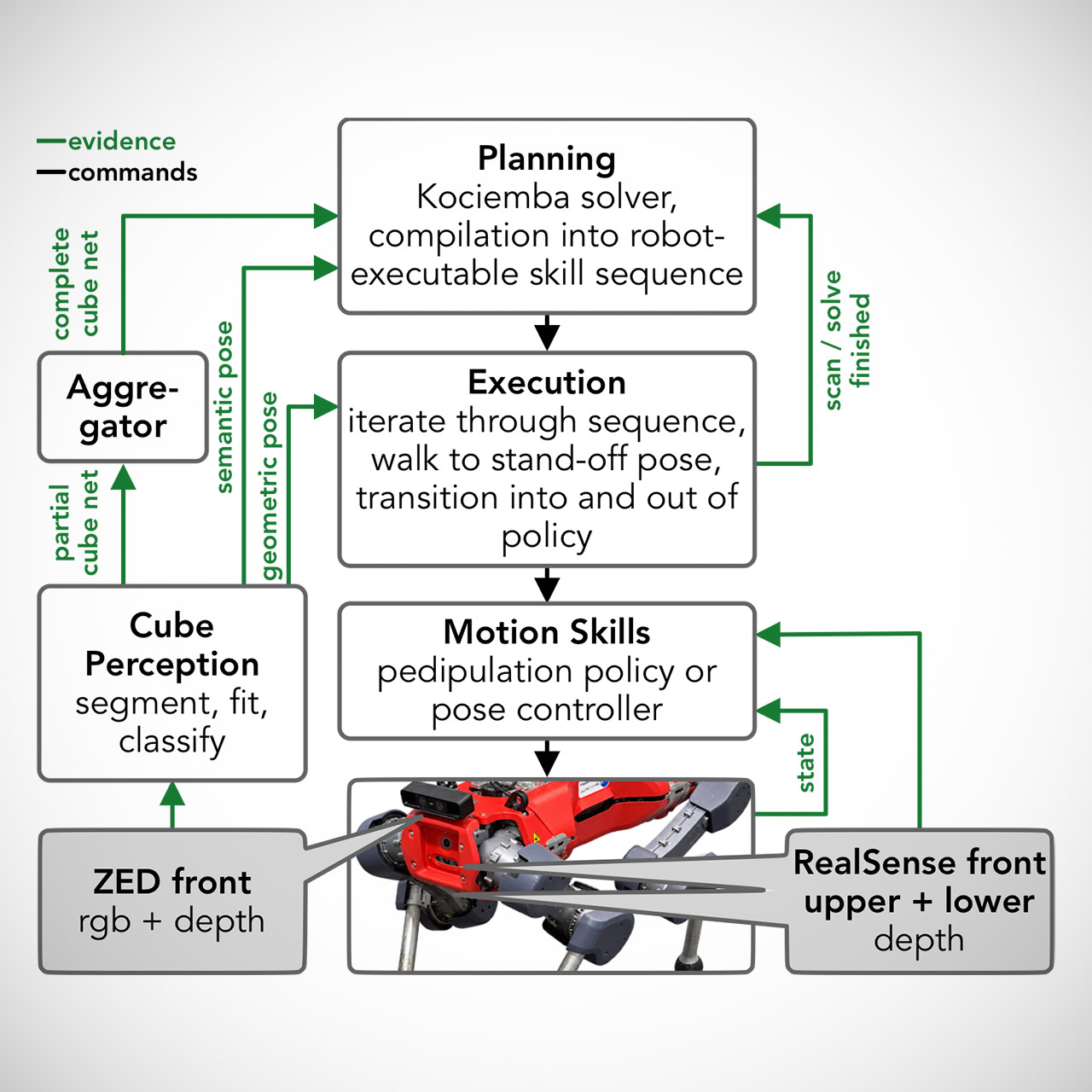
Initially, all of these motions were learned in a virtual setting. A teacher policy that could see every joint and contact point had to practice these abilities for several hours, earning prizes for landing its feet in exactly the right location, shifting the layers cleanly, and keeping its body straight.

The policies were then simplified and made into student controllers that run on the real robot, relying just on the depth images from the two front cameras and the robot’s joint readings. The resulting controls can tolerate minor differences in the cube’s position relative to the robot, recover if it slips or is bumped by an outside force, and continue working on low-friction surfaces, cobblestones, and even mossy surfaces.
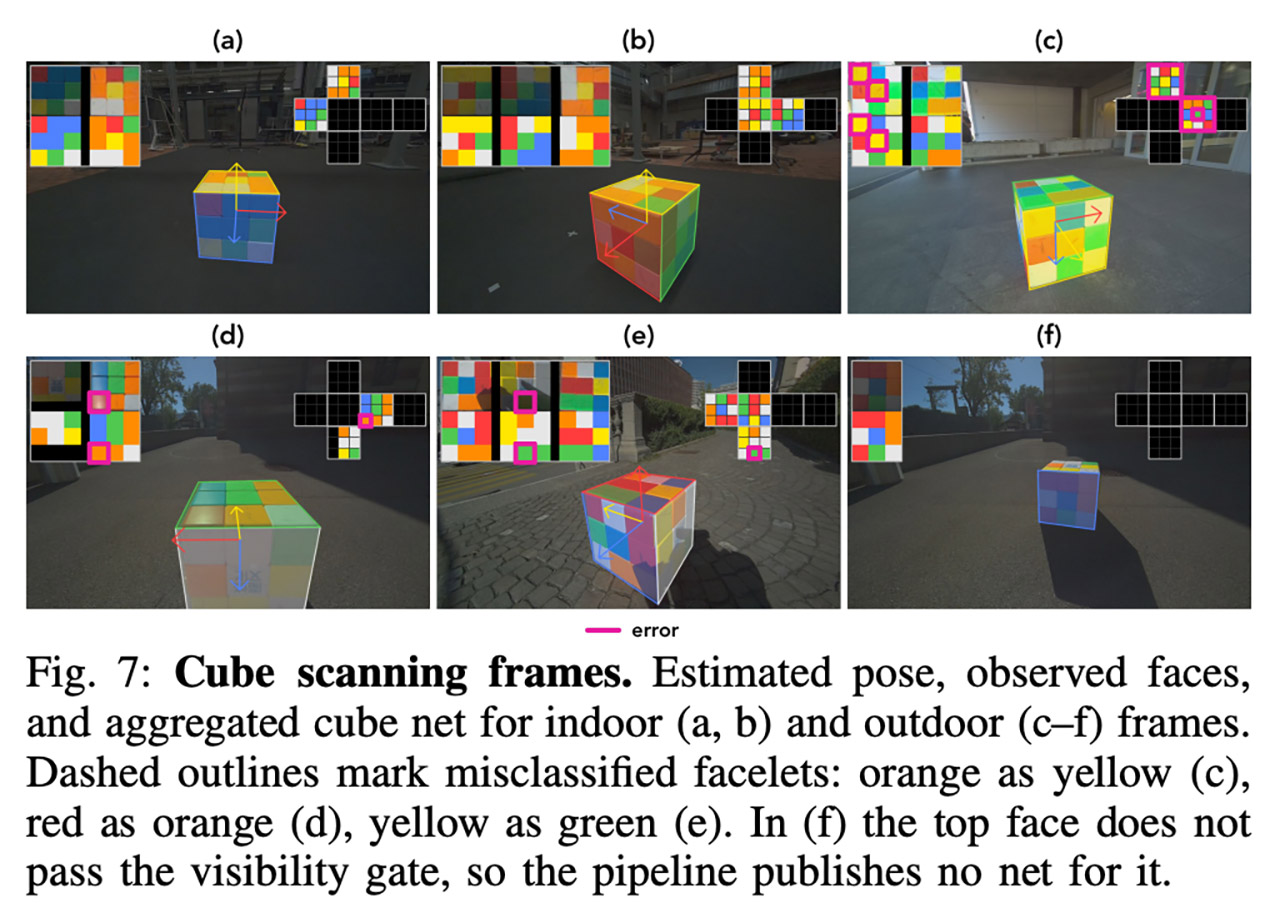
On the hardware side, the entire procedure consists of about 30 separate actions and lasts approximately 8-9 minutes. The team tested the autonomous system three times, and the robot solved the cube each time. The perception system adjusts the cube’s pose between each part of the sequence, allowing the robot to step into the correct starting position.

While the sequence is being executed, the learnt policy runs constantly and makes modest tweaks as it goes to rectify faults. The beauty of this is that the robot’s feet can also be the only tools that touch the cube, so this video shows how a machine designed for inspection can be taught to do a long chain of accurate, coordinated interactions without the need for any extra arms or grippers.
You won’t need expensive equipment or invest much time.
Your car key fob suddenly needs several presses to unlock the door. Your AirTag stops responding when you try to locate it. Before blaming either gadget, it’s worth checking the battery inside. One common type is the CR2032, a 3V lithium coin cell also used in Samsung’s SmartTag2 and some smart home sensors. Depending on the device and how often it’s used, one can last way over a year.
A multimeter can help you check the battery’s voltage, and it’s a good addition to your toolbox if you don’t already own one. There are cheaper ways to check, too, but don’t mistake a voltage reading for a complete picture of battery health.
How to test a CR2032 battery with a multimeter
Begin by checking the battery itself. If you spot crusty residue, rust-colored patches, swelling or leakage, skip the test and replace it. Have a look at the device’s contacts too, since corrosion there can cause trouble even with a good battery.
Remove the CR2032 and set your digital multimeter to DC voltage (V with a solid line over a dashed line). Plug the black lead into COM and the red lead into the V or VΩ port. If your meter doesn’t automatically select a range, set it above 3V, typically 20V.
Hold the battery by its edges over a nonconductive surface. Touch the red probe to the broad face marked with a plus sign (+) and the black probe to the center of the smaller negative face underneath. Keep the probe tips from touching each other or bridging the battery’s terminals. A negative reading simply means you’ve reversed the probes.
A fresh CR2032 typically reads around 3V, while a reading closer to 2.5V is a good reason to bring in a replacement. But don’t give that 3V reading too much credit though. A multimeter draws almost no current, so a battery might look fine on the display but struggle when your key fob or tracker actually needs power. There’s no single pass-or-fail reading for every device. If it keeps acting up, try a fresh CR2032 unit before assuming the device is faulty.
No multimeter? Here’s how to check your AirTag or key fob battery
A dedicated coin-cell tester is another option. Some cost around $10, although certain models only measure voltage rather than how the battery performs under load. Basic multimeters can cost less than $20 and are good for checking other batteries or troubleshooting low-voltage electronics. Still, buying either just to diagnose one suspect $3 battery is a harder sell.
There’s also the LED trick, assuming you have one lying around. A small red or yellow LED is a better choice than a blue or white one because it generally needs less voltage to light up. Touch its longer leg to the CR2032’s positive side and the shorter leg to the negative side. If it lights up, the battery can supply some current. That’s about all it proves. The LED won’t tell you how much life is left, and one that stays dark doesn’t necessarily mean the battery is dead.
AirTag owners can check Find My before opening anything. Select Items inside the app and tap your AirTag. If it says “Low Battery,” or shows a depleted battery icon, skip the testing and replace the CR2032. Some CR2032 batteries have bitterant coatings that may prevent proper contact, even when they’re brand new. Apple recommends packaging marked “Compatible with Apple AirTag” when replacing an AirTag battery, and says an AirTag’s battery lasts more than a year, while Samsung rates the SmartTag2 for up to 500 days in normal mode.
After removing a CR2032, keep it out of children’s reach and tape its terminals before taking them to a battery collection facility. If one is swallowed, seek emergency medical care immediately, as serious internal injuries can occur in as little as two hours.

Are we living through “Black October”? Maybe, according to cybersecurity experts who are raising the alarm about AI’s increasingly sophisticated and far-reaching hacking abilities.
This week alone has seen a string of alarming incidents where AI uncovered previously unknown security flaws deep in the infrastructure of the internet. The most concerning involves something called PHP — a programming language that, according to The Atlantic, is used by “as much as 70 percent of websites.” Cybersecurity researchers used AI to locate a major security breach in the technology.
It’s the kind of thing that, when it’s working, is practically invisible. When it stops, though, you really notice it: Government websites in the UK and Europe briefly went down earlier this week after the PHP vulnerability was discovered, as did some sites in the Wikipedia family, the Internet Archive, and many others.
The outages weren’t actually the result of a hack, but rather preventative action as web engineers took sites down to fix the vulnerability before it was exploited. But not every PHP-like issue will necessarily be uncovered before it can be exploited by someone using AI tools less ethically, and older websites relying on PHP might go unpatched.
The problem doesn’t stop there, either: Concern is also rising around AI cybersecurity risks to ubiquitous conveniences like online banking. As Axios reported on Thursday, banks are detecting more and more “unauthorized third-party AI agents” operating inside of their systems.
Those agents are mostly unauthorized by the banks, Axios explains — the holders of the bank account might have given them permission — but it still creates a security risk that executives described as “horrifying,” in part because banks can’t necessarily tell if an agent doesn’t have permission.
It’s a lot to take in, all of it moving extremely quickly, and it’s hard to tell what any of us can do about it as AI labs continue to forge ahead with ever more competent AI models and agents. Luckily, my colleague Adam Clark Estes has some simple recommendations to shore up your own cybersecurity.
How do I respond right now?
One problem with hackers — even those that happen to be AI agents — is that they can be unpredictable. You won’t know to, say, lock down your Quest Diagnostics records before a breach happens. But whenever you find yourself wondering if your data is safe, that’s a good time to double check that you’ve at least covered your bases.
The National Cybersecurity Alliance, a nonprofit dedicated to the safe use of technology, maintains a list of basic online safety practices that everyone should follow. In no particular order, here’s what to pay attention to now:
- Keep your guard up. AI makes it difficult to know the difference between humans and robots. It’s a fact of life in the year 2026. So be extra careful to avoid engaging in potential phishing scams. Don’t reply to unknown texts, and do due diligence on texts or emails that look like they’re from people you know but just seem off. Don’t click weird links. Don’t give out personal info over the phone, even if it sounds like it’s someone you know. They might be scammers using AI to clone a loved one’s voice.
- Update your software. Yes, it’s annoying to pause your phone or computer use for a few minutes to update your software, but this is one of the best ways to get rid of vulnerabilities. Companies like Apple and Google employ huge teams of security experts to spot these in their software and fix them with software updates. Do the updates.
- Use a password manager or, even better, passkeys. Each of your online accounts should have a unique password that’s at least 16 characters. Yes, it’s impossible to remember that many passwords, so you should also use a password manager like 1Password or the app built into your iPhone or Android device.
- Turn on multifactor authentication. Just in case you don’t already do it, make sure you use multifactor or two-step authentication for all your accounts, including email and social media. It can be annoying to type in a code or check your email while logging in, but hackers, including AI agents, will have a much harder time getting into your accounts if you take this step.
Taking all these measures is not a one-time affair. You have to be vigilant in keeping yourself safe online. Security experts have a term for this that’s almost too specific: cyber hygiene. Like brushing your teeth or taking a shower, take good care of your online life, and do it often.
➨ Is it still possible to ban gerrymandering? The current US Supreme Court is very, very hostile to getting politics out of congressional map-making. But if Democrats win back power, that doesn’t mean they shouldn’t try. My colleague Ian Millhiser gamed out how they could do it in a way that survives the Court — as well as some approaches that almost certainly wouldn’t fly. But, he writes, the real trick will be finding a solution that functions the way Congress wants it to and can’t be exploited by mapmakers.
- Did you know…that the disease multiple sclerosis is misdiagnosed with surprising frequency? As many as 15 percent of diagnoses could be false positives — including that of Christina Applegate, who found out this week that she does not have MS despite a 2021 diagnosis.
- Today’s trivia: Which noble gas is radioactive and has the chemical symbol Rn? (You can find this and other brain puzzles in Vox’s daily crossword. Look for the answer in Monday’s edition.)
- Yesterday’s trivia: We asked what the plural was for multiple Toyota hybrids. That would be Prii, which Toyota officially confirmed in 2011 after holding a vote.
It’s true that money makes the world go around, but it’s oil that lubricates it. We use oil for just about every sort of industry today, from construction to pharmaceuticals, home appliances to travel, and everything in between. There simply is no one-size fits all oil type for all of this stuff despite it all coming from the same source, which is why you can’t use petroleum jelly in place of motor oil. That’d be like comparing a poodle to a grizzly bear because they’re both caniforms.
But that doesn’t apply to every type of oil. Sure, some of them are obviously extremely different, but then you have two with apparently similar functions on paper, like gear oil and hydraulic oil. They’re both lubricants and noncompressible fluids, so they’re interchangeable, right? Not at all, and the reason why is additives and chemical composition.
When you’re creating something for a specific purpose, you want to emphasize traits that are favorable for that purpose. If you know your oil needs to function in high-pressure environments, you use additives that work well for that. If you need to lubricate fast-moving gears, you want something different. The viscosities, protective qualities, tolerances, and operating temperatures of each fluid are vastly different from one another.
Think of it this way: No mechanic would ever recommend pouring brake fluid — no matter what type it is — into a manual transmission or gear oil into your brake system. But why, exactly? It’s because these fluids were designed to move and react to pressure in different ways. What are those ways though, and what’ll happen if you mess them up? Let’s discuss.
The function of gear oil
Gear oil goes by several different names depending on how it’s used, its viscosity, additives, and so on. You have manual transmission fluid (MTF), differential oil (simply diff oil), hypoid gear oil, synchromesh oil, helical, worm, bevel — all common names for specific types of gears or gearboxes. Put simply, different gears have different needs. Some of them build up a lot of friction and heat like hypoid gears, which is why it has its own unique hypoid gear oil typically used in differentials. Others spin really quickly, like those found in manual transmissions.
In general, gear oil is designed to act as a barrier between each set of teeth so that the metal itself isn’t in contact. Metal-on-metal friction creates wear and heat. Moreover, the fluid pulls that heat away from the working area, so it too gets hot, which is why transmission coolers are a thing. However, the gears in a manual transmission are generating a ton of sliding friction, so you need a fluid that’s sticky. Likewise, those gears place tremendous pressure upon the fluid itself. That leads us back to additives — different pressure ratings for gear oil have different designations, and thus different additives to fulfill those purposes.
All that is a long-winded way of saying that gear oil is an umbrella term, the same as hydraulic oil, and the two don’t mix — literally and figuratively. Hydraulic oil lacks the fundamental properties that gear oil possesses, and vice versa. Using hydraulic oil in a gearbox will break teeth faster than chomping down on a lump of granite.
How hydraulic oil differs
The purpose of hydraulic oil is to act as a power transfer medium. You fill a hydraulic line with this fluid, apply pressure, and the incompressible fluid will transfer that pressure from Point A to B. There are numerous benefits to using a fluid as opposed to a solid arm — fluids are flexible, so you don’t need complicated joints; they’re cheap and easily produced, and there are lots of different types that specialize in different applications. Pro-tip: A motor oil substitute isn’t one of those applications.
That said, hydraulic oil’s main benefit is its incompressibility, but it also serves numerous other functions such as lubrication, heat transfer, anti-corrosion and oxidation, and so on. Much like gear oil, it’s about minimizing friction and protecting the working surfaces. However, hydraulic oil operates in a high-speed, high-pressure environment. It’s got a wide operating temperature range, it’s far less viscous than gear oil, and it’s extremely good at transferring energy.
Functionally speaking, gear oil in hydraulic lines is basically what would happen if you put in hydraulic oil that was incredibly thick and offered little of its secondary or tertiary benefits. So what happens if you use hydraulic oil that’s too viscous? You risk damaging the equipment because the pressure isn’t enough to move the fluid as efficiently, so you end up with sluggish performance and horrible lubrication.
It’s like a bicycle gearbox. If you try and pedal in first gear down a hill, your legs won’t be able to keep up — that’s hydraulic fluid in a transmission. If you try and take off uphill in top gear, that’s like using gear oil in hydraulic lines.

An experimental vaccine offers new hope to patients with melanoma, one of the most aggressive forms of skin cancer. The pharmaceutical companies Merck and Moderna released the results of a Phase 3 clinical trial that evaluated the efficacy of a personalized mRNA-based vaccine that, when combined with immunotherapy, reduced the risk of disease recurrence or death by 42 percent compared to treatment with the immunotherapy drug alone.
Georgina Long, medical director of the Australian Melanoma Institute and the study’s principal investigator, said in a statement that these results are “transformative” and “have the potential to make a foundational shift in how we treat patients with earlier-stage melanoma.”
The trial, known as INTerpath-001, included 1,137 people with high-risk melanoma who had undergone surgery to completely remove their tumors. The participants were divided into two groups. Those in the first group received only Pembrolizumab, a drug that helps the immune system detect and fight cancer cells, while those in the second group were treated with the same drug in combination with the mRNA vaccine, called Intismeran Autogene.
After monitoring the participants for an average of 24.6 months, the researchers determined that addition of the vaccine reduced the risk of cancer recurrence or death by 42 percent compared to Pembrolizumab alone.
The results also showed that the experimental treatment reduced the risk of the disease spreading to other parts of the body by 38 percent. At the end of the follow-up period, 82.2 percent of patients who received both treatments remained recurrence-free, compared with 70 percent of those who received Pembrolizumab alone.
“The results of the INTerpath-001 study represent a major breakthrough in the treatment of melanoma and, in particular, in the development of personalized medicine,” Eva Muñoz Couselo—who leads a melanoma research group at the Vall d’Hebron Institute of Oncology, in Barcelona and who was not involved in the study—told SMC Spain. “For the first time, a Phase III trial has demonstrated that an individualized therapeutic vaccine, designed on the basis of the molecular characteristics of each patient’s tumor, can significantly improve the outcomes of conventional immunotherapy.”
The laboratories explained that the vaccine was developed from a tumor sample taken from each patient, which was used to identify specific mutations that would create distinct proteins the immune system could learn to recognize in order to attack cancer cells. The scientists selected up to three of these molecular signatures per patient.


Researchers remotely disabled a vulnerable updater in the abandoned Time4Popcorn app, a fork of the Popcorn Time BitTorrent client, closing a security flaw that could have allowed attackers to execute malicious code with elevated privileges on millions of computers.
The vulnerability, tracked as CVE-2026-30612, affects Windows and macOS updaters that contacted the app’s abandoned domain (popcorntimeupd.xyz) over unencrypted HTTP and accepted executables without verifying digital signatures.
Anyone controlling the update domain could manipulate HTTP traffic and execute code as SYSTEM on Windows and as root on macOS.
The Popcorn Time app featured a Netflix-style interface that integrated BitTorrent downloads, allowing users to consume illegal content right directly inside the app.
The project was abandoned for legal reasons but later relaunched as a legitimate content-streaming app. However, forks such as Time4Popcorn emerged under the Popcorn Time name, quickly attracting millions of users.
Researchers at Eye Security discovered the security risk after registering the popcorntimeupd.xyz domain and observed up to 3 million Windows and 350,000 macOS client connections to Time4Popcorn.

Source: Eye Security
Connections came from residential ISPs and corporate, government, and military networks. However, none of the users appeared to be actively using the app, suggesting it had been installed and forgotten.
“If we were able to send an update, we could potentially get code execution on millions of systems,” Eye Securit notes, adding that “the impact would be severe if this were to fall into the wrong hands.”
Following this discovery, the researchers registered 14 more domains associated with the service.
Securing the systems
Between November 2025 and March 2026, Eye used the vulnerable update mechanism to deliver remediation code that stopped and disabled the updater.
Their payload collected no host data or telemetry, and deleted no files on the users’ computers, keeping their actions within a fully legal context.
Eye explains that it had to modify its payload during testing to evade antivirus products that flagged it for disabling a service.
After deploying the remediation, Eye recorded 2 million update downloads, and by March 1 this year, requests to its update domain dropped by 98%.
Following the successful completion of the remediation operation, domain ownership was passed to the non-profit security organization The Shadowserver Foundation.
Despite this success, the researchers warned that the risk is not fully eliminated for users of the app.
First, Android users remain exposed as installing an update would require user interaction, and researchers could not disable the updater remotely for the mobile platform.
Second, the Time4Popcorn app uses a severely outdated Chrome engine from 2014, with no sandbox protections, which could be exploited in attacks.
The best course of action would be for users to remove the software entirely from their systems.

Overall prevention scores can hide what happens after initial access. Once attackers are using valid credentials, prevention drops sharply.
The Blue Report 2026 measures defenses technique by technique across 338 million simulations run in customer production environments.

Spending $1,999 on a foldable and then squinting at a crammed web page isn’t something that anyone wants.
Apple’s Safari team said Friday it is exploring a way for websites to use more of the iPhone Duo’s outer display. Right now, a column of Safari controls swallows a chunk of the screen.

Why does Safari feel so cramped on the outer screen?
The answer is simple: Safari controls sit on the right, and web pages can’t draw behind them. Apple moved them there to save vertical space, but it costs width.
That leaves pages about 382 CSS pixels wide in portrait, for anyone well-versed in the units web designers use. Safari tints the leftover strip to match the web page, but that looks like wasted space to me.
You might wonder why Apple doesn’t let pages stretch underneath. Developers can technically do it with a setting called viewport-fit=cover, which makes a page fill the whole screen.
The problem, however, is what WebKit’s Jen Simmons points out: many sites don’t leave safe margins on every edge. As a result, a button or headline could vanish under the controls.

What is Apple asking for, and what can you do today?
Instead of flipping that switch, Apple wants something sturdier and simpler for developers. For now, it is asking for ideas and promising to keep us posted. I appreciate the honesty, but there’s no official date or timeline yet.
Until then, I’d read long pages on the inner screen, where scrolling feels better.
The silver lining, however, is how the browser treats PDFs. Open a PDF in Safari and fold the phone partway (like a paperback), and you’ll see two pages at once. The interface switches back to one when the phone lies flat or closes.
RELATED COVERAGE:
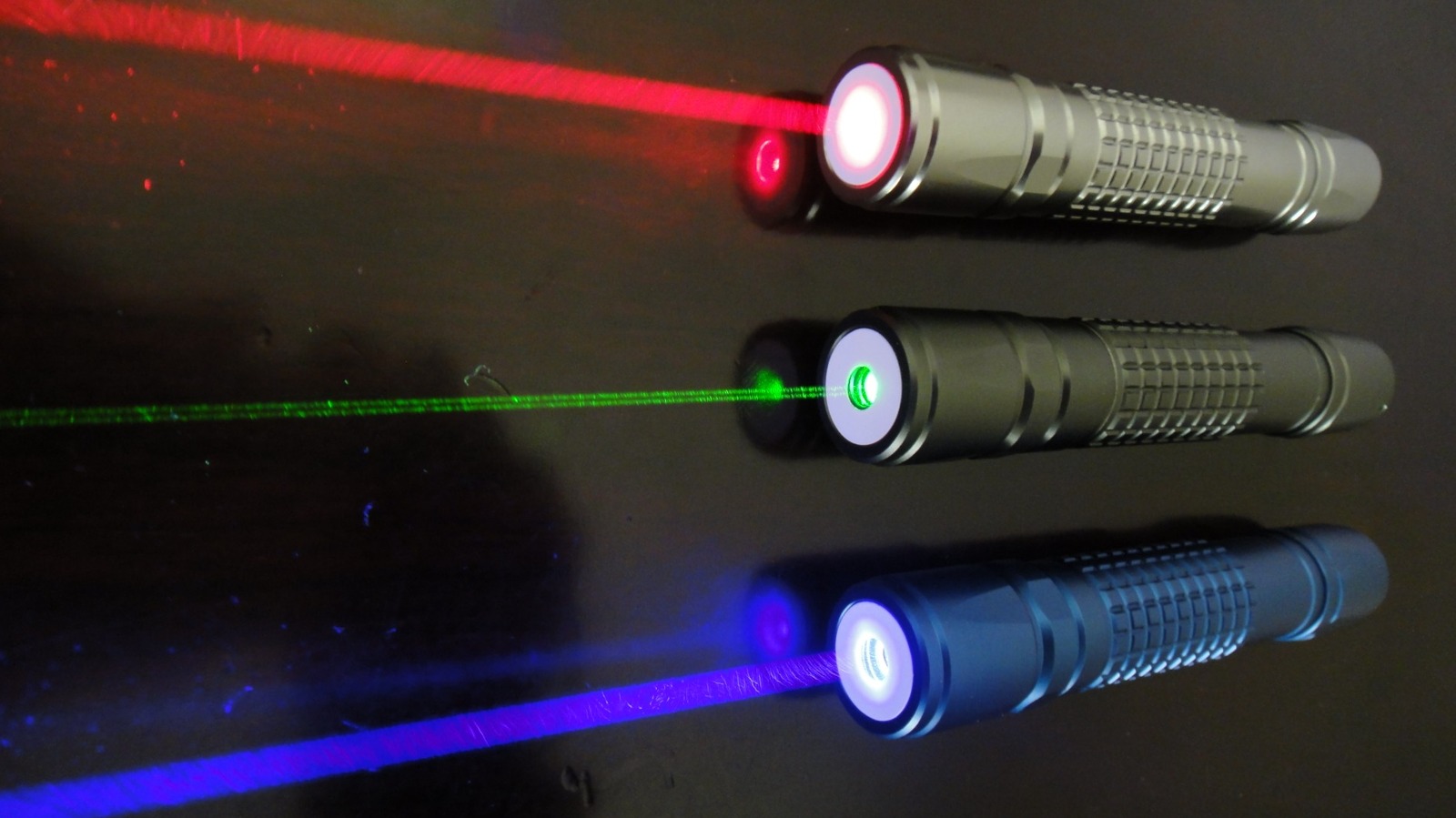
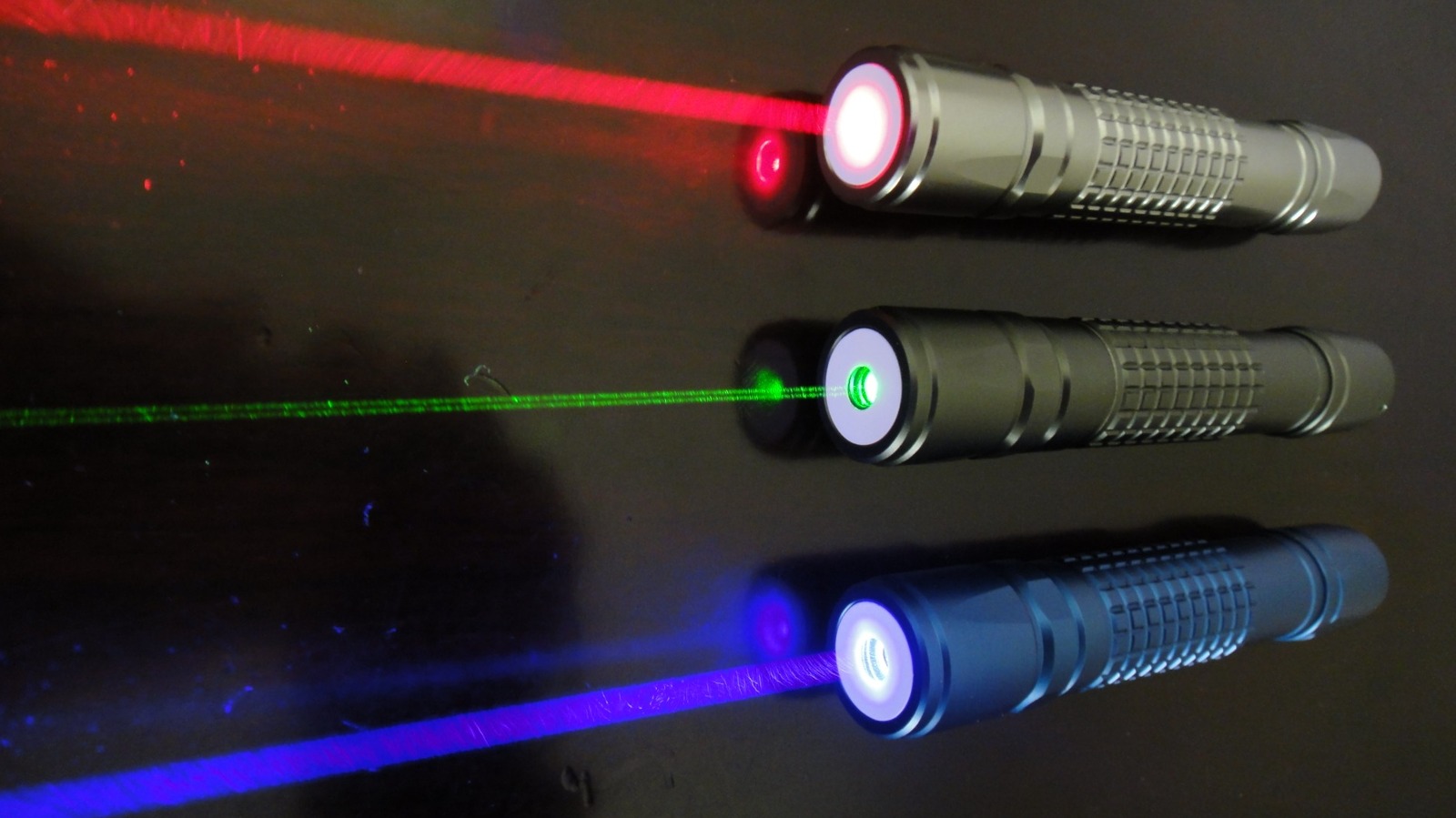
The term lasers is actually an acronym that stands for Light Amplification by Stimulated Emission of Radiation. The use of lasers has certainly grown since the technology arose in the 1960s, with lasers now commonly found in everything from consumer electronics like Blu-ray players and cat toys to military weapons. Lasers have different power capabilities, apertures, and wavelengths. In a vacuum, a laser pointer’s beam is technically infinite, regardless of its power. However, its aperture and wavelength will influence its divergence, which is the measurement of how fast a beam expands over distance.
For example, a 0.005 W laser pointer would produce a light spot measuring 8 miles in diameter on the Moon’s surface, assuming there was no interference from clouds. Meanwhile, a 500,000 W military laser would produce a 1.5-mile diameter light spot in this setting. While it might seem that the military laser, which is 100 million times more powerful than the laser pointer, should expand across a larger diameter, the reason the less-powerful laser spreads across a larger diameter is because it has a much smaller aperture. Military and more powerful lasers are generally designed with larger apertures to concentrate light and create a more focused beam.
Outside of hypothetical scenarios, a laser’s distance traveled depends on atmospheric conditions and interference. An average laser pointer might be able to extend to around one mile with little atmospheric influence, though that distance could be expanded significantly to over six miles, depending on which type of device it is. The fact that lasers can travel such far distances is why it is a felony to point them at airplanes, as it can incapacitate pilots.
Lasers can also pose a threat at certain distances
Because laser pointers can be hazardous, research into the technology has found that there is a certain distance at which they should be operated to stay safe. The lowest-power lasers that use less than 1 mW of energy have the potential to injure a person’s eyes at between 23 and 46 feet. They remain visible and potentially dangerous as far as 9,759 feet, when planes enter the conversation. While they can’t burn a person’s skin, they’re powerful enough to warrant warning stickers.
Higher-power lasers are significantly more dangerous. For example, a 5 W green laser can harm a person’s eyes up to 820 feet away. It can burn the skin at 54.3 feet and can potentially start a fire as far away as 36.2 feet. Because the human eye is more sensitive to green light, a green laser pointer is more dangerous further away than a red laser pointer, and some types of strong green lasers can also damage certain kinds of cameras.
It might seem counterintuitive that a more powerful laser becomes harmful at a greater distance. However, that is because divergence affects a laser’s distance in that a small divergence ensures a more powerful beam at a greater distance, while a larger one does the opposite; essentially, the tighter the beam, the more dangerous it is the further it travels. Power is the most important aspect of a laser pointer’s beam when determining potential hazards. Increasing the power increases the danger, though the affected distance is proportional to the square root of the total power increase.

Revival Rugs is turning 9 this month, and evidently, the birthday girl is feeling generous. The rug retailer is taking 20 percent off everything sitewide (exclusions may apply, as always). But don’t dillydally—the party ends Sunday, October 25.
Sure, Black Friday is around the corner, and there will be deals aplenty. But will they be sitewide and stackable? Revival’s 20 percent stacks, meaning it also applies to marked-down and clearance items. Will the rug you’ve been eyeing for months still be available in November? Are you willing to risk it? I wouldn’t.
Why We Love Revival Rugs
Revival is a retailer we love here at WIRED, mainly because of its lovely selection of hand-knotted and handwoven wool rugs at reasonable prices. The company imports rugs from Turkey, Morocco, and India, and also works with its own supplier in Oakland, California. Revival also offers a variety of washable rugs, à la Ruggable (which, by the way, is having its own October Hosting Sale). Not every Revival rug is machine washable, but many are easy to maintain with spot cleaning and a low-suction vacuum.
WIRED reviewer Nena Farrell has the Bronto Hand-Tufted Rug in her toddler’s bedroom, and they are both fans. Farrell appreciates how soft it is and how it makes the room feel playful without looking tacky. Meanwhile, her son is mostly here for the giant dinosaur, which, honestly, is fair. WIRED operations coordinator Molly Higgins has the Garland Washable Area Rug in her living room, where its Turkish-inspired folk-art pattern adds plenty of color and disguises everyday stains. WIRED commerce director Cooper Fleishman just bought a vibrant marmalade wool rug for his new office from the Birthday Sale; sadly, it’s sold out, but this tonal design is a close cousin.
As with any sale, there are a few exclusions. Swatches and gift cards aren’t included, and be sure to read the terms and conditions for more information.


Padua’s Palazzo Moroni hosted the reveal of the Michelotto Gruppo 4 Tributo on October 10, 2026, fifty years after the Ferrari 308 received its Group 4 homologation. AC Motorsport, started by Padua entrepreneur Francesco Calzavara following his years at Michelotto, promoted the effort while Michelotto Group carried out the design, development, and construction.
Giuliano Michelotto established his workshop in 1969 and worked on almost 700 competition cars, winning an astounding 1,495 races, including 44 world championships. Ferrari later approached Michelotto’s business to acquire the Pininfarina-designed 308 GTB for Group 4 rallying. This essentially involved grafting on tubular frame sections, some seriously advanced composite bodywork, and a seriously tweaked 2 valve V8, and the results were nothing short of stunning: a 1981 Tour de France Automobile win with Jean-Claude Andruet and a close second place at the 1982 Tour de Corse, Ferrari’s only ever top level World Rally Championship podium finish.
Sale

LEGO Technic Ferrari FXX K Toy Car – Building Toy for Girls & Boys, Ages 10+ – Cool Birthday Gift for…
- LEGO FERRARI MODEL CAR KIT – Builders ages 10+ can create the legendary Technic Ferrari FXX K with authentic details and working mechanical features
- AUTHENTIC RACE CAR DETAILS – This supercar building set features working butterfly doors, opening hood, and an engine cover that reveals the…
- CAR MODEL KIT – Young engineers explore real automotive concepts with this educational learning toy as they build the working differential and watch…


Under the hood is a transversal 3.4-liter naturally aspirated 90-degree V8, producing 380 horsepower at 8,250 rpm and 363 Nm of torque on 98 RON fuel. The aluminum block and heads, four camshafts driving two valves per cylinder (which provides more torque on mixed surfaces than a four valve system), and electronic injection all add up to a very powerful package. The power is sent to the rear wheels via a five-speed manual with a gated shifter, dog-ring engagement, and an impressive eight different gear ratios to choose from, so whether you’re tackling tight roads or quicker circuits, you can get the car set up to fit.


The tubular frame is comprised of elliptical tubes that hold composite body panels and an integrated roll bar. This all adds up to a relatively light 950 kilos (with fluids but no gasoline), giving you a power-to-weight ratio of around 2.5 kilograms per horsepower. That’s rather similar to the original 308 footprint, however it should be noted that this is a two-seater berlinetta.


So, how is the ride? The car comes with double wishbones machined from solid, adjustable dampers, and stabilizer bars, which allow you to configure the entire chassis to your liking. Four piston calipers clamp down on the front and rear ventilated disks (which measure 345 and 328 millimeters, respectively), and the brake balance may be adjusted from the cockpit. You’ll be seated on eighteen-inch wheels with Pirelli P Zero Trofeo RS tires.
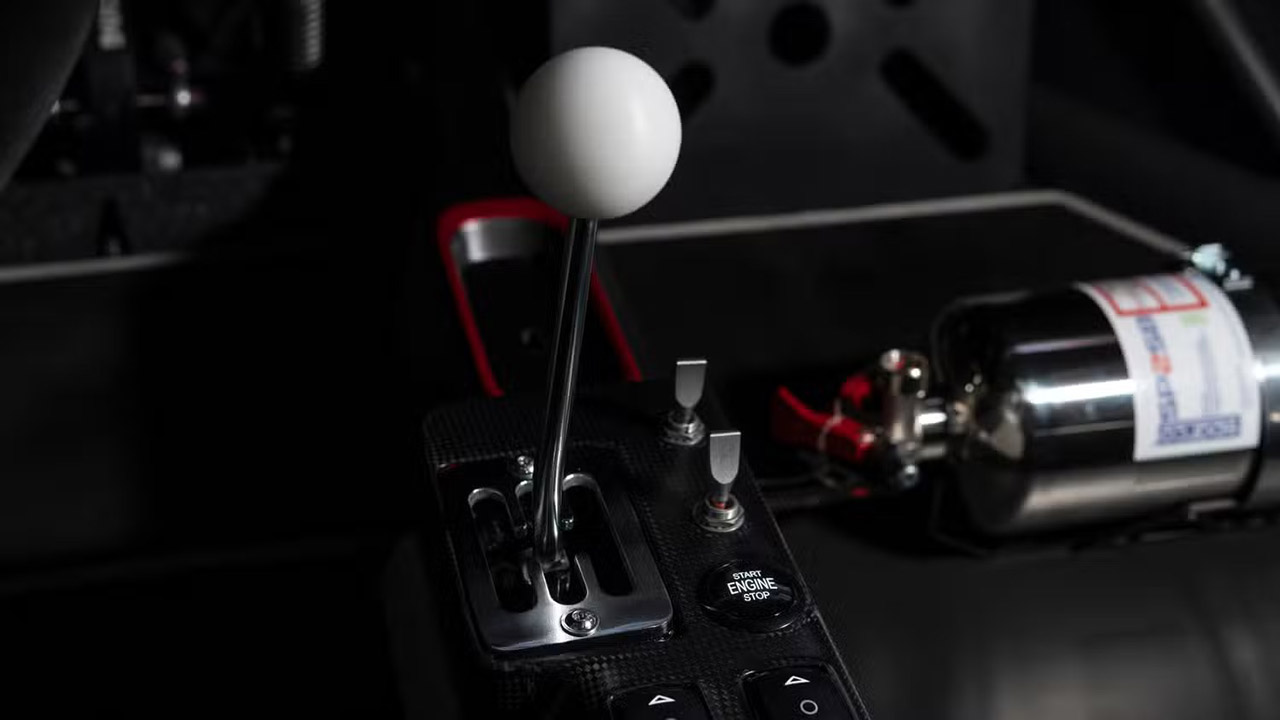

The composite bodywork is based on the classic wedge shape, but with a much more modern twist. You get a low nose, pop-up headlights, various vents and gills on the hood and fenders, flared arches, a seriously enormous rear clamshell, four circular taillights, and, of course, dual exhausts. On the inside? To keep things basic, you get composite-shell seats wrapped in Alcantara, a three-spoke wheel, and a gated shifter, all linked with a digital display and a plethora of physical switches.


Michelotto expects to build fewer than fifty of them, primarily in Padua, and hopes to confirm the final number by the end of 2027. What about price? They’re keeping that under wraps for now, but comparable restomod projects would suggest it’ll cost at least 450,000 euros. As for road registration (street legality), that is still up in the air, but the car clearly continues the work of the workshop that first took the 308 and transformed it into a true rally winner.
[Source]

Tech & AI48 minutes ago
ETH Zurich ANYmal Robot Solves Giant Rubik’s Cube Using Only Its Feet

Crypto53 minutes ago
IRS Targets 120-Day Tax Disclosure Process: Forbes

Tech & AI2 hours ago
Instacart reportedly discussed selling itself with DoorDash and Uber


-

 Fashion7 days ago
Weekend Open Thread: Kut from the Kloth
-

 Tech & AI7 days ago
Replit is no longer working with Anthropic, CEO says
-

 Entertainment6 days ago
Britney Spears Praises Janet Jackson In Heartfelt Message
-

 Tech & AI6 days ago
Turning A Wi-Fi Adapter Into An SDR
-

 Tech & AI5 days ago
Seattle ag-tech startup Carbon Robotics reduces workforce, citing economic conditions
-

 Tech & AI7 days ago
Intel Nova Lake processors could ditch three-digit names for Core Ultra 4000 branding
-

 Fashion17 hours ago
Weekend Open Thread: Anine Bing
-

 Tech & AI6 days ago
Amazon’s new Bee AI devices have a bystander problem, says former AWS security engineer
-

 Tech & AI7 days ago
T+A Solitaire T Pro Adds Dolby Atmos and aptX Lossless But Is It Worth the Premium?
-

 Entertainment6 days ago
David Pollack Reveals ‘Stunning’ Update About Wife’s Brain Cancer
-

 Tech & AI7 days ago
AI nudify apps targeted in App Review Guidelines update
-

 Tech & AI7 days ago
How to watch Fiji vs Cook Islands for FREE: Live stream RLWC 2026
-

 Fashion5 days ago
What I Reach For Every Fall
-

 Tech & AI5 days ago
Amazon challenges Nvidia’s software advantage with new tool for its own AI chips
-

 Fashion7 days ago
Hailey Bieber Brings Ballet Style to Adanola
-

 Fashion4 days ago
Tuesday’s Workwear Report: Margeaux Blazer in Four-Season Stretch
-

 Crypto7 days ago
KOSPI erases an entire year’s worth of South Korean GDP
-

 Tech & AI6 days ago
There’s more to headphones than music. Doctors say they can reduce health troubles post-surgery
-

 Tech & AI6 days ago
List of 6 semiconductor chips designed by Malaysia
-

 Fashion6 days ago
Amazon Sundays: Color, in Small Doses
You must be logged in to post a comment Login