
Crypto
XRP Ledger Lending Sits One Validator Vote From Its Countdown, With a December 9 Vault Launch in Sight

XRP Ledger lending is closer to going live than at any point so far, but reports from November 27 show it is not there yet. The Ripple-backed LendingProtocol amendment has 28 of the network’s 35 trusted validators behind it. It needs one more vote to start the clock that decides whether it becomes part of the ledger permanently.
What the vote count actually means
XRPL amendments have to hold more than 80% validator support for two consecutive weeks before they activate on mainnet. With 35 trusted validators, that works out to at least 29 votes, or about 82.9%. LendingProtocol’s 28 votes put it at exactly 80%, just under the line. One source describes it as “28 of 35 votes required,” which muddles the arithmetic. The more precise reading is that 28 votes are in hand and 29 are needed to begin the two-week period.
Momentum has been steady. On October 19, the lending amendment had 19 votes. By November 23 it had 24, and by November 27 it had 28. If support drops below the threshold during the countdown, the process restarts, so the first vote is not the last hurdle.
Why December 9 is not a lending launch date
Much of the excitement centers on December 9, but that date belongs to a companion amendment. SingleAssetVault already has 29 votes and entered its two-week approval period on November 25. If support holds, it is projected to activate around 19:38 UTC on December 9.
Vaults and loans are separate pieces. Once SingleAssetVault is live, users should be able to deposit assets and receive vault shares. Brokers still cannot originate loans until LendingProtocol passes its own countdown. A third amendment, LendingProtocolV1_1, also has 28 votes. It adjusts vault accounting and withdrawal arrangements and would introduce closed-ended vaults. Anyone reading “December 9” as the day XRP Ledger lending starts is getting ahead of the process.
The market XRP Ledger lending could tap
The design lets holders deposit XRP, Ripple’s RLUSD stablecoin or other eligible assets into single-asset vaults. Borrowers would then draw on those pools through fixed-term, fixed-rate loans, and depositors would earn interest. One report adds that these loans work without on-chain collateral.
The addressable base is sizable but concentrated. DefiLlama data cited on November 27 put stablecoins on the XRP Ledger at $837.04 million. RLUSD made up about 89.39% of that, or roughly $748.2 million. By contrast, decentralized finance applications on the network held only $30.68 million in total value locked, about 3.7% of the stablecoin supply. Much of the ledger’s stablecoin value is therefore idle, and native lending is one way to put it to work.
What to watch next
Three things matter in the coming weeks: whether the 29th vote for LendingProtocol arrives, whether every amendment keeps its support through the full two-week window, and how quickly lenders and borrowers use the tools once they switch on. The sources describe community enthusiasm, but none offers evidence yet of actual demand. For now, XRP Ledger lending is a well-supported proposal with one concrete obstacle left: a single validator vote.
Explore more on this topic with Vexel Search.
WordUp Morning
Ten stories, both sides of each, in five minutes. Free, every weekday at 7am, plus a Saturday weekend edition.
We'll email you a link to confirm. Unsubscribe any time.


Brazil’s main stock exchange is pressing ahead with the Open BRL stablecoin, a real-backed digital token that B3 and six of the country’s biggest financial institutions now aim to launch in the first quarter of 2027. The timeline is later than the exchange first signaled. When B3 disclosed its stablecoin ambitions in December 2025, it was aiming for 2026.
Who is behind the Open BRL stablecoin
According to a report by the Brazilian outlet Valor Econômico, the participating firms are Bradesco, BTG Pactual, Itaú Unibanco, Safra, Santander and XP. Banco B3, the exchange’s banking subsidiary, will issue the token. Each unit is to be backed by one Brazilian real held on deposit, and holders will be able to redeem tokens for the underlying currency. B3 will run the technology at first.
The partner firms are expected to fund development and fold the token into their own digital asset projects, though none has disclosed how much it is committing.
A shared settlement asset for rival banks
The pitch is as much about competition as technology. Luiz Masagão, B3’s vice president of products, said talks began about three months ago, as banks weighed the difficulty of moving money between competitors using stablecoins that each of them issues independently. Individual institutions can still issue their own tokens for internal use. Open BRL is meant to be a neutral, common asset for transfers between them.
A management committee representing the participants will set governance, technical standards, operating procedures and pricing. Membership will not be limited to the founding group. “Our goal is for this initiative to be open to the entire Brazilian financial market,” Masagão said, adding that the partners could eventually spin the infrastructure out into an independent company.
What happened to B3RL?
The announcement leaves a question unanswered. As recently as July, B3 was reportedly preparing a stablecoin called B3RL, to be backed by reais and secured by government bonds, with infrastructure testing and bank integration planned for August and September. It is unclear whether the Open BRL stablecoin replaces that project or will run alongside it. Cointelegraph said it asked B3 for clarification but had no reply when it published.
Tokenized stocks are the bigger prize
The token is tied to a broader plan to bring traditional securities onto blockchain networks. B3 intends to launch tokenized shares in early 2027, initially on the same order book as ordinary equities. Humberto Costa, a B3 executive overseeing digital asset products, reportedly said in October that the platform would keep its two-business-day settlement cycle at first rather than offer instant settlement. He also said B3RL would not settle tokenized shares at launch, and that round-the-clock trading would need changes to Brazil’s regulatory framework.
Regulators are working on that. Brazil’s Securities and Exchange Commission has a dedicated working group on tokenization and presented its progress at an industry meeting in October.
Why a real-backed token matters in Brazil
Context from crypto.news helps explain the motivation. Stablecoins made up roughly 80% of Brazil’s reported crypto trading in 2025, and Tether’s USDT accounted for 88.7% of reported stablecoin trading from 2019 to 2025. A bank-backed token denominated in reais would give Brazilian institutions a domestic alternative to dollar-linked coins.
Much still depends on execution. The delay shows how complicated coordinating a large exchange and several competing banks can be, and the Open BRL stablecoin’s relationship to B3RL, the regulatory changes needed for faster trading and the partners’ funding commitments are all still unresolved.
Explore more on this topic with Vexel Search.
File photo: Bovespa, São Paulo city downtown.jpg by Wilfredor, CC BY-SA 4.0, via Wikimedia Commons.
WordUp Morning
Ten stories, both sides of each, in five minutes. Free, every weekday at 7am, plus a Saturday weekend edition.
We'll email you a link to confirm. Unsubscribe any time.
Crypto
ASEAN+3 Launches Digital Payments Working Group, With Ministers to Review Progress in May 2027

China, Japan, South Korea and the Association of Southeast Asian Nations have agreed to create a digital payments working group, a step toward making cross-border payments easier and bringing regulation of digital assets into closer alignment across the region.
The decision came in a joint statement on November 26, following a two-day meeting in Kyoto, Japan. It formally establishes the AMRO Cross-Border Digital Payments Program, run by the ASEAN+3 Macroeconomic Research Office, along with a dedicated group to carry the work forward. The bloc covers the 11 ASEAN member countries plus the three northeast Asian economies.
Why a digital payments working group now
The Kyoto outcome builds on an earlier meeting of ASEAN+3 finance ministers and central bank governors in Samarkand, Uzbekistan, in May. There, officials identified digital payments as a new area of regional financial cooperation. They told their deputies to set up arrangements for continued talks on payment connectivity and “regulatory approaches to stablecoin.”
That May statement also set out a cautious tone. Officials said technological developments, tokenization included, should stay consistent with international regulatory standards. They also asked that the effects on monetary sovereignty, financial stability and cross-border capital flows be taken into account.
What the research will cover
AMRO will start with retail payment connectivity. According to a consultancy notice published on November 18, it will map existing links between countries and the obstacles to expanding them. The scope includes international remittances, tourism-related payments, cross-border e-commerce, and payments between individuals and businesses.
The assessment will also compare national regulations, consumer protection requirements, technical infrastructure and the commercial arrangements that govern payment service providers. In other words, the work targets the practical frictions behind payment systems that were built mainly for domestic use.
Some of the groundwork is already in place. Several ASEAN+3 economies have linked domestic payment systems so that travelers can pay abroad through their usual mobile banking apps and local currencies. In a May publication, AMRO economists Dong He and Runchana Pongsaparn said retail payment connectivity had advanced considerably, especially through QR code payments and instant payment systems.
Stablecoins and the wider financial backdrop
A summary of the announcement also notes that Japan and South Korea are developing stablecoin infrastructure for overseas payments. It says the group introduced emergency financing under its $240 billion currency swap framework. The sources available do not detail how those pieces connect to the new program, so the link between the stablecoin work and the working group’s remit remains to be spelled out.
It is also unclear how far coordination will go. The announcement speaks of coordinating regulatory approaches rather than harmonizing rules, and it frames the early work as research. Whether that leads to shared standards, interoperable systems or simply a better shared understanding of differences will depend on what the research finds.
The next checkpoint is already set. Finance ministers are due to review the outcomes of the Kyoto meeting in Nagoya in May 2027, which will be the first opportunity to see how far the digital payments working group has progressed.
Explore more on this topic with Vexel Search.
WordUp Morning
Ten stories, both sides of each, in five minutes. Free, every weekday at 7am, plus a Saturday weekend edition.
We'll email you a link to confirm. Unsubscribe any time.
The Binance withdrawal suspension is over. On Thursday, the exchange announced that its recovery work is finished and that customers can again move funds on nearly every supported network, almost a month after the largest crypto exchange hack on record.
“Our withdrawal recovery work is completed and the withdrawal suspension from the security incident has been fully lifted,” Binance said in a post on X. A handful of networks remain paused, which the company described as routine maintenance or planned upgrades unrelated to the breach. It said those pauses affect a very small share of normal withdrawal traffic.
How the reopening unfolded
Binance confirmed the breach on Oct. 29 and froze outgoing transfers, though deposits stayed open. Withdrawals began returning on Nov. 1, starting with Bitcoin and a first batch of assets across 15 networks, including Ether and the USDT and USDC stablecoins on Ethereum. The exchange said it ranked assets by recent customer demand and ran security checks on each asset and network pair before switching it back on. By Nov. 14 it had reopened another 87 networks, including Cardano, Litecoin and Avalanche. Thursday’s announcement came 25 days after the first withdrawals resumed.
The first day was the stress test. Between 06:00 and 15:30 UTC on Nov. 1, customers withdrew $4.65 billion while $1.01 billion came in, a net outflow of $3.64 billion in under ten hours. One outlet reported a net figure of $4.7 billion, but the exchange’s own breakdown points to the gross withdrawal number being roughly that size, not the net. Binance said volumes eased after the initial spike.
Who paid for the hack
The key detail for customers is that Binance, not users, took the loss. The exchange said it committed more than $6.34 billion of company money, drawn from its corporate treasury, part of its Secure Asset Fund for Users (SAFU), and the portion of its futures insurance fund above what its risk framework requires. It bought replacement tokens on the market and through over-the-counter desks. It has promised to rebuild SAFU to about $1 billion and published a reserve snapshot covering 198 tokens, with a cryptographic proof so users can verify the holdings.
Covering customers is not the same as getting the money back. Reporting on how the attackers got in differs in emphasis: Binance’s early findings pointed to a compromised DevOps engineer’s laptop that gave access to a service container used to submit unauthorized withdrawals, and one report described a fake job interview as the entry route. The two accounts are not necessarily in conflict, but the sources do not spell out how they fit together.
The money trail is still moving
U.S. authorities have blamed North Korean hackers, which Pyongyang denies. Estimates of what has been locked down vary by source and by definition. Figures cited range from more than $2.7 billion frozen to about $2.85 billion frozen remotely by token issuers. The Justice Department says the U.S. has helped freeze, seize or return more than $2.9 billion, and it has moved to forfeit more than $1.1 billion in USDC frozen by Circle. Blockchain tracker Onchain Lens puts the hackers’ remaining unfrozen holdings at about $1.9 billion, and said wallets tied to the theft moved another $35.52 million in Ether on Thursday.
Researchers say the laundering has accelerated. Chainalysis and Elliptic estimate more than $600 million has passed through THORChain, though Elliptic cautions that figure may double-count funds that moved more than once. Elliptic also says $342 million has gone through a coinjoin service, which pools coins from many users to obscure their origins. The FBI published the attacker’s wallet addresses on Oct. 31 and asked service providers, including THORChain’s network operators, to block them. TRM Labs’ Ari Redbord called singling out those operators “pretty extraordinary.”
THORChain co-founder Chad Barraford said 98% of activity on the network is people seeking “individual financial freedom and liberty.” The protocol says it does not censor transactions or run know-your-customer checks.
For Binance, the end of the Binance withdrawal suspension closes the operational chapter of the crisis. The enforcement chapter is likely to run far longer. Redbord warned that laundering could take months or years, and that cashing out even a fraction would be a windfall for North Korea, since the haul equals roughly a sixth of the country’s estimated gross domestic product. Elliptic notes the launderers will still need over-the-counter brokers to turn coins into cash, which is where investigators may focus next.
- Binance Fully Lifts Withdrawal Suspension a Month After $6.3 Billion Hack (Bitcoin Magazine)
- Binance Fully Lifts Withdrawal Suspension Four Weeks After $6.4B Hack (Decrypt)
- Binance fully reopens withdrawals nearly a month after its $6.3B hack (thenextweb.com)
- Binance lifts withdrawal suspension after $6.34B hack (crypto.news)
Explore more on this topic with Vexel Search.
File photo: 5 years birthday Binance cake in Paris – 2022-07-08.jpg by Bretwa, CC BY-SA 4.0, via Wikimedia Commons.
WordUp Morning
Ten stories, both sides of each, in five minutes. Free, every weekday at 7am, plus a Saturday weekend edition.
We'll email you a link to confirm. Unsubscribe any time.

A spot bitcoin ETF has begun trading in Switzerland, with the SIX Swiss Exchange listing the Bitcoin Fund ETF under the ticker BBIT on November 26. The fund opened with 350 BTC, worth more than $20 million at prevailing prices, and charges an annual expense ratio of 0.19%.
BIT Asset Management sponsors and manages the product, and Pernet von Ballmoos acts as fund issuer. BIT describes BBIT as Europe’s only currently active spot bitcoin ETF. That is the company’s own characterization, and it needs context, since bitcoin-backed products have been available in Europe for years. The distinction lies in the legal wrapper rather than in access to bitcoin itself.
What makes this spot bitcoin ETF different
Physically backed bitcoin exchange-traded products have traded on SIX since 2019, but many European versions are structured as debt securities. BBIT is a unit in a collective investment fund under Swiss law. Its bitcoin is legally separated from the assets of the investment manager, the fund management company and the custodian, which matters if one of those parties runs into financial trouble.
AMINA Bank holds the coins in cold storage under Swiss regulatory oversight. Investors can buy exposure through ordinary bank and brokerage accounts without managing wallets or private keys. Eligible investors can also subscribe by handing over bitcoin directly in exchange for fund shares.
Trading details and pricing
The fund trades in Swiss francs and US dollars under ISIN CH1593447597, with Flow Traders appointed as market maker and providing buy and sell quotes during exchange hours. BBIT is passively managed and aims to track bitcoin’s price after operating costs. Its net asset value is calculated using the SIX Bitcoin Reference Rate.
The numbers in the fund’s paperwork are a little untidy. November 26 was the first trading session, but the documentation lists November 19 as the establishment date, with an initial issue price of $10 per unit and a subsequent listing price of $9.26. The Swiss franc line opened at CHF 8 and rose about 0.6% to CHF 8.05 in the first hour. One day of trading says little about demand, and the 350 BTC starting pool is modest next to the large spot products in other markets.
Regulatory path and what comes next
FINMA, the Swiss financial regulator, approved the product on October 20. It granted an exception to the usual diversification requirements, allowing the fund to hold only bitcoin within Switzerland’s collective investment framework. The fund is classified as an alternative investment fund carrying particular risks, a reminder that a regulated wrapper does not remove bitcoin’s price volatility. Market data shown alongside the sources’ coverage put bitcoin down on the day, trading around $58,700 to $60,400 depending on the time of the quote.
The launch may not stay a lone product for long. According to the reporting, FINMA has confirmed that other fund providers have submitted or announced applications for their own bitcoin ETFs. If those are approved, BBIT’s first-mover position, and its claim to be Europe’s only active spot bitcoin ETF, could face competition on fees, liquidity and custody arrangements.
For now, the debut shows that Swiss regulators will let a bitcoin-only fund operate inside the country’s established fund-law system. The next test is whether investors put meaningful money into it beyond the initial 350 BTC.
Explore more on this topic with Vexel Search.
File photo: Swiss Stock Exchange – panoramio.jpg by Rene Nueesch, CC BY 3.0, via Wikimedia Commons.
WordUp Morning
Ten stories, both sides of each, in five minutes. Free, every weekday at 7am, plus a Saturday weekend edition.
We'll email you a link to confirm. Unsubscribe any time.
Crypto
Zodia Custody Data Breach Exposed Client and Staff Contacts, but No Unauthorized Transactions Found
A Zodia Custody data breach has exposed the names and email addresses of a small number of clients and employees at the crypto custody firm backed by Standard Chartered. The company says its investigation has so far found no unauthorized transactions. The incident lands just over a month after the bank signed agreements to take the business in-house.
What Zodia says happened
According to a statement from CEO Richard Clark, which was also emailed to Reuters, Zodia detected attempts to probe its platform on Monday, Nov. 23. As a precaution, it took its business-to-business API offline. The service was restored once extra security measures were in place.
The next day, the company’s monitoring showed that an unauthorized party had gained access to some information. That information consisted of publicly available organization details, plus business contact names and email addresses belonging to a small number of clients and employees. Zodia has said its probe has found no unauthorized transactions to date. The company has not publicly said how many people were affected, who was behind the intrusion, or how the party got in.
Why the timing matters for Standard Chartered
The Zodia Custody data breach arrives at a delicate moment. On Oct. 21, Standard Chartered announced definitive agreements to acquire the business. One report describes this as the bank’s regulated operating entities, while another describes it as full ownership through a subsidiary. The plan is to fold the crypto custody operation into the bank’s Securities Services arm. The bank reportedly began weighing that move in April, and in September it launched spot Bitcoin and Ether trading for institutional clients in the United Arab Emirates.
Markets did not appear rattled. Standard Chartered shares were reported trading 2.6% higher in London on Thursday. Neither Standard Chartered nor Zodia had responded to Cointelegraph’s request for comment when it published.
The limits of the exposure
The data involved is contact information rather than account credentials or asset holdings, and Zodia says no funds have moved without authorization. That distinction matters for an institutional custodian. Zodia was founded in 2020 in a partnership between Standard Chartered and Northern Trust, and it serves financial institutions, asset managers and hedge funds. Its backers include SBI Holdings, National Australia Bank and Emirates NBD.
The firm’s published custody policy describes a segregated model, with each client’s assets held in separate wallets. Core storage keeps cryptographic keys offline, and withdrawals need multiple independent approvals and authentication checks. Zodia also offers a separate multi-party computation option, which spreads the information needed to authorize transactions across several secure environments. The sources do not say these systems were involved in the incident, and the company’s account points to the API and contact data rather than custody infrastructure.
What to watch next
Even without stolen funds, exposed names and business emails can feed phishing and impersonation attempts, which are a familiar risk for firms handling large institutional balances. Clients will likely want to know how the unauthorized party reached the data and whether the API was the entry point. They will also want to know whether the company’s findings hold as the investigation continues. Zodia says that, so far, no transactions were affected. Further disclosures from Zodia or Standard Chartered should clarify the scope of the incident as the acquisition moves forward.
Explore more on this topic with Vexel Search.
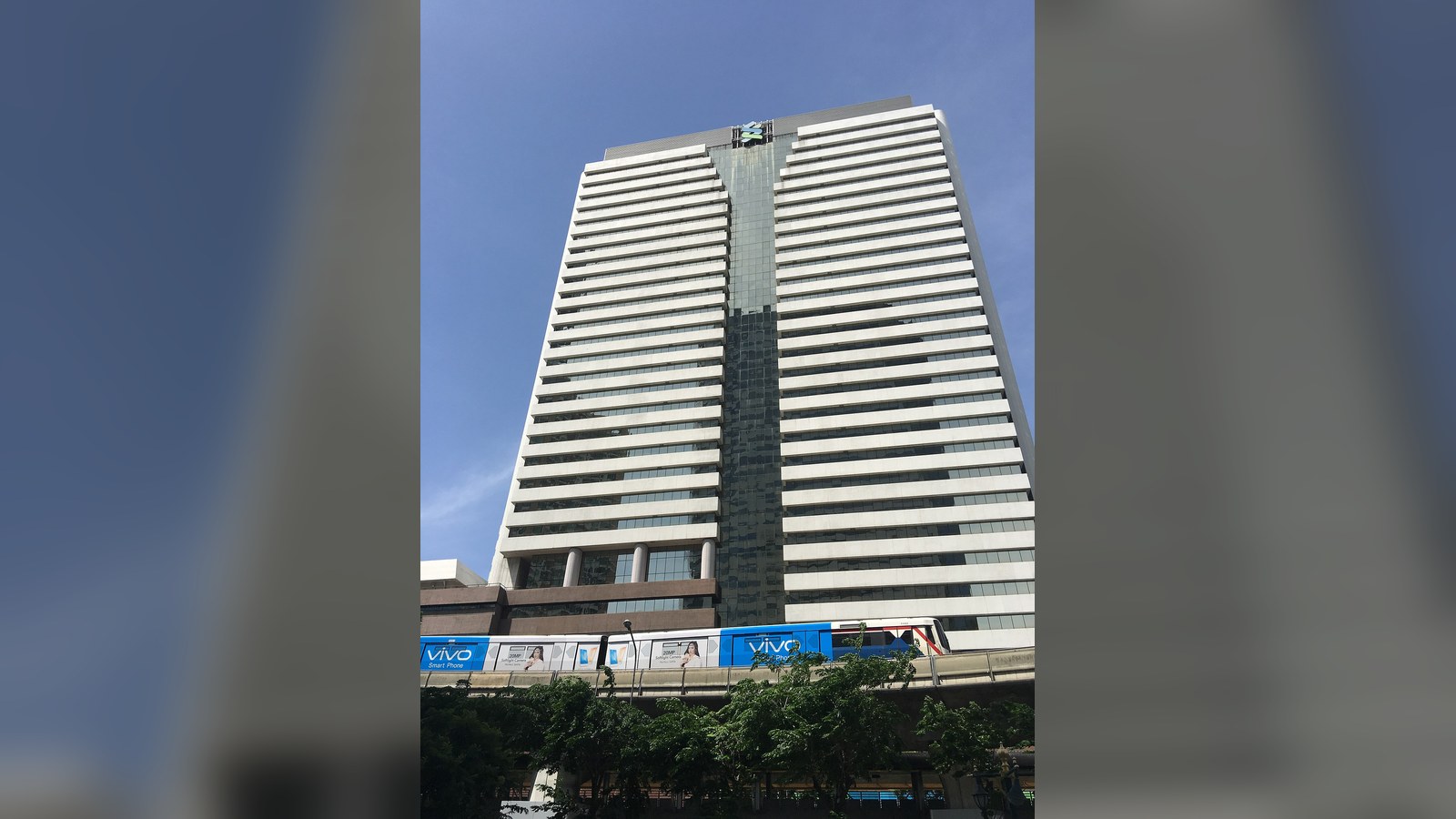
File photo: Standard Chartered (Bangkok).jpg by Thanapas.som, CC BY-SA 4.0, via Wikimedia Commons.
WordUp Morning
Ten stories, both sides of each, in five minutes. Free, every weekday at 7am, plus a Saturday weekend edition.
We'll email you a link to confirm. Unsubscribe any time.
Crypto
Spain Can Freeze Crypto Accounts for 5 Business Days Without a Court Order From January 25, 2027

Spain’s financial intelligence unit will soon be able to freeze crypto accounts for up to five business days without asking a judge first. The power comes from Royal Decree-Law 44/2026, dated November 24 and published in the Official State Gazette the next day. It is scheduled to take effect on January 25, 2027, subject to validation by parliament.
The decree adds a new Article 46 bis to Spain’s anti-money-laundering law. It lets the unit, known as Sepblac, intervene when it sees indications of money laundering or terrorist financing. The power is not limited to crypto. It also covers bank and payment accounts.
How the new power to freeze crypto accounts works
The decree sets two separate ceilings. Accounts and business relationships can be restricted for up to five business days. Individual transactions already in progress can be held or blocked for up to ten business days. Both are maximums, not automatic detention periods, and Sepblac must lift a restriction sooner if it is no longer needed.
There are also two routes to a transaction hold. If the suspicion arises from a report filed under Article 19 of the anti-money-laundering law, Sepblac has three business days from notification to issue a suspension order. If it spots the problem through its own analysis, it must act as soon as possible. If the analysis confirms the suspicion, the unit can pass the information to the authorities who decide what happens next.
A shift from foreign requests to Sepblac’s own judgment
The change is mainly about who can start the process. Under the earlier Article 48 bis, Sepblac could suspend an ongoing transaction only at the request of a financial intelligence unit in another EU country. That suspension could last up to a month before a court had to step in. The decree removes that provision and folds foreign requests into the new article. Sepblac can now act on its own findings, and police and foreign units can still ask it to act.
Investigators argue that speed is the point. Crypto can cross platforms and borders long before a traditional inquiry produces results, and a freeze that arrives after the money has gone does little good. Chainalysis estimates that global on-chain money laundering grew from about $10 billion in 2020 to more than $82 billion in 2025. That is a worldwide figure, not a Spanish one, but it shows the scale of the problem authorities say they face.
Where the courts and account holders stand
Judges are not cut out of the process. They are brought in later. When the deadline arrives, the suspension must end unless a court confirms or extends it on a request from public prosecutors. Appeals against that judicial decision follow Spain’s criminal procedure rules.
Critics are likely to focus on two gaps. First, Article 46 bis shields Sepblac, its staff and institutions that comply with its orders from liability, provided the suspension follows the law. Second, the reporting on the decree says it sets out no detailed mechanism to compensate customers for losses caused by a lawful freeze. Five business days may be tolerable for a long-term holder. For a trading firm or a business settling payments in crypto, it could be far more disruptive. A freeze also does not mean confiscation, and it does not establish that anyone has committed a crime.
Limits for self-custody and the EU context
The practical reach depends on how assets are held. Exchanges and regulated custodians control access to customer funds, so they can block withdrawals when ordered. Bitcoin in a self-custodied wallet is different, because no central administrator can disable an ordinary address. The decree does not create a way to do so.
The measure partially implements an EU anti-money-laundering directive that requires member states to give their financial intelligence units comparable powers. It also lands as regulated firms in Spain build out crypto services under the EU’s MiCA licensing regime, which means more users will hold digital assets with institutions that can be ordered to restrict them. Whether parliament validates the decree unchanged before January 25 is the next point to watch.
Explore more on this topic with Vexel Search.
WordUp Morning
Ten stories, both sides of each, in five minutes. Free, every weekday at 7am, plus a Saturday weekend edition.
We'll email you a link to confirm. Unsubscribe any time.

France’s Senate has voted down a proposal that would have required taxpayers to declare self-custody wallets worth €100,000 or more, ending, for now, one of the most closely watched crypto tax ideas in the 2027 budget. The vote came on Nov. 24 during debate on the first part of the finance bill.
Two identical amendments were rejected. One, numbered I-2447, was tabled by Sens. Pascal Savoldelli and Pierre Barros of the Communist-led CRCE-K group. The other, I-2992, came from Sen. Anne-Sophie Romagny and seven colleagues. Both would have obliged individuals and eligible legal entities to report wallets they control directly, outside any crypto service provider, if the total value reached €100,000 on Dec. 31 of the tax year. Romagny’s version added fines of up to €10,000 for failing to comply. The government opposed both.
https://www.youtube.com/watch?v=videoseries
Why backers wanted to see inside self-custody wallets
The argument was one of parity. French taxpayers must already declare accounts held on foreign crypto platforms, much as they do foreign bank accounts. Assets held in self-custody wallets, with no intermediary involved, carry no such duty. The CRCE-K amendment called them “the digital equivalent of the undeclared safe,” saying tax officials cannot see them, verify gains on them, or trace them in an inheritance or when a holder leaves the country.
Romagny’s amendment leaned on a numerical gap drawn from a National Assembly inquiry into the taxation of the wealthy. It said crypto holders in France realized €3.5 billion in gains in 2021, while only €400 million in digital assets was declared to the tax administration that year.
Government and committee push back
David Amiel, the minister for public action and accounts, argued that the EU’s DAC8 directive already places reporting duties on crypto firms. He said he was “more circumspect” about a “purely declarative” obligation that would do little to help investigators following crypto used for money laundering or tax fraud. The Senate finance committee also opposed the measures. Rapporteur general Christine Lavarde recommended rejecting all three crypto amendments, though she noted the wallet idea echoed a recommendation in a Senate information report filed in June and left the question of the threshold to the government.
Two other CRCE-K proposals fell in the same session. One would have ended tax deferral on swaps into electronic money tokens under the EU’s MiCA rules, making a conversion from bitcoin into a regulated stablecoin a taxable event. The other would have pulled crypto into France’s exit tax on unrealized gains for people moving their tax residence abroad, counting all holdings toward the €800,000 threshold, including coins in self-custody or held outside France.
A security question sits behind the privacy debate
Opponents in the crypto community have framed the issue as one of safety as much as privacy. Decrypt reported that holders warned a register of large wallets could expose them to risk in a country that has seen a wave of crypto kidnappings. Bitcoin Magazine noted that in August, bitcoiners were warned of so-called wrench attacks after France’s tax authority confirmed a data breach affecting hundreds of thousands of people. Those concerns give weight to the argument that a state list of high-value holders could become a target.
Nor is the broader reporting trend reversing. DAC8 reporting on crypto platforms began on Jan. 1, 2026, and Bull Bitcoin has filed a legal challenge seeking to annul France’s DAC8 rules over privacy concerns. The National Assembly is due to debate approval of the OECD’s Crypto-Asset Reporting Framework, which shares crypto tax data between countries, on Dec. 7.
The fight over the wallet rule may not be finished
The idea has already had a bumpy path. The National Assembly approved the same wallet rule on Nov. 3, but it fell away the next day when deputies rejected the entire revenue section of the budget. The Senate is still working through the 2027 budget and is due to vote on the full bill on Dec. 9, after which a joint committee of both chambers will take it up. With the Assembly previously backing the measure and the Senate now rejecting it, supporters may still try to revive it, though the government’s stance suggests an uphill climb.
Explore more on this topic with Vexel Search.
File photo: Bibliotheque (Palais du Senat), RP-F-F09582.jpg by Rijksmuseum, CC0, via Wikimedia Commons.
WordUp Morning
Ten stories, both sides of each, in five minutes. Free, every weekday at 7am, plus a Saturday weekend edition.
We'll email you a link to confirm. Unsubscribe any time.
CleanSpark bitcoin sales could soon exceed the amount the company mines each quarter, its finance chief said, as the Nasdaq-listed miner tries to shrink balance-sheet risk after a $987.1 million net loss for the fiscal year ended Sept. 30. The remarks, made on the company’s Nov. 24 earnings call, point to a shift in how one of the industry’s best-known public miners treats the bitcoin it holds.
President and CFO Gary Vecchiarelli described selling “a small amount of bitcoin in excess of the quarterly production” as “one way of de-risking.” He also stressed that the company will be “very reactionary to markets,” and said any proceeds would be used to avoid issuing new shares or taking on additional debt. He added that CleanSpark already aims to sell virtually all the bitcoin it mines to cover operating costs, and that it has sold some since September to build cash for acquisitions it expects to make soon.
What the CleanSpark bitcoin sales already look like
The pivot is not entirely hypothetical. Cointelegraph’s tally of monthly updates shows CleanSpark mined 1,708 BTC in the September quarter but sold or delivered 2,102 BTC, the first time since at least 2024 that it ended a quarter with less bitcoin than it started with. The 394 BTC gap is roughly 23% of quarterly output, according to crypto.news.
Not all of that moved through exchanges. In September, only 2 BTC were sold on spot markets, while another 700 BTC were delivered through the exercise of call options. The company’s annual report shows 1,532 bitcoin sold during the year and a further 6,068 used to settle derivatives. At the end of September CleanSpark held 13,530 BTC, though 3,475 of those were pledged as collateral or booked as receivables tied to derivatives, so not all of the stack is freely available. Vecchiarelli called the holdings “a liquid source of non-dilutive capital” and said it is reasonable to expect acquisitions and project development to be funded by selling or borrowing against them.
Where the $987 million loss came from
The loss compares with net income of about $364 million a year earlier. Revenue fell 25% to $576.5 million, the loss worked out to $3.74 per basic share, and adjusted EBITDA was a loss of $304.2 million. Management said about two-thirds of the swing came from noncash mark-to-market effects. Bitcoin ended the fiscal year near $83,600, down from roughly $114,000, producing a $281.6 million fair-value loss on the company’s coins against a $425.6 million gain the year before. A further $177.1 million in impairment charges was mostly tied to converting the Sandersville, Georgia, site into a data center.
The fourth quarter looked far better on paper. CleanSpark reported net income of $9.8 million, or 4 cents a share, helped by a $305.6 million bitcoin gain, even though quarterly revenue fell 46% to $120.9 million. Analysts had been expecting a loss.
A smaller, more efficient fleet and an AI pivot
Production for the year was 7,253 BTC, down 8%. CleanSpark trimmed about 25,000 machines in the September quarter, leaving roughly 200,000 running. That lifted efficiency to 14.8 joules per terahash from 15.8, which Vecchiarelli said should help the company stay profitable if conditions worsen ahead of the 2028 halving. Average hashrate fell to 36.0 EH/s, and he said the company will keep mining “as long as it’s profitable.”
The company now describes itself as an “energy native data center developer.” Its 20-year, $6.6 billion lease at Sandersville is backed by $2.276 billion of 7.875% notes due 2031, and the first data hall is on track for the fourth quarter of 2027. Texas is moving more slowly. Exclusivity periods at the Sealy and Brazoria sites, which offer up to 885 MW, lapsed without a lease, which CEO Matt Schultz blamed on an evolving regulatory landscape that has lengthened project timelines.
Market pressure adds urgency
The timing is awkward. Bitcoin has slipped below $60,000 and is down about 24% in November, and at a price near $57,700 the company’s 13,530 BTC would be worth roughly $780 million, well below the $1.1 billion it was worth at the end of September. CleanSpark shares hit a 52-week low of $4.43 on Wednesday before recovering to around $4.85. Needham, H.C. Wainwright and Cantor Fitzgerald all cut price targets while keeping buy-equivalent ratings.
CleanSpark is not alone. Bitdeer sold all 281 bitcoin it mined last week, and American Bitcoin lined up a $150 million credit line backed by its holdings. For investors, the open question is whether CleanSpark bitcoin sales stay “small,” as management says, or become a larger drawdown if prices keep falling and the AI buildout needs cash.
Explore more on this topic with Vexel Search.
WordUp Morning
Ten stories, both sides of each, in five minutes. Free, every weekday at 7am, plus a Saturday weekend edition.
We'll email you a link to confirm. Unsubscribe any time.

The Nvidia settlement announced this week would put a $290 million price tag on one of the longest-running shareholder disputes in the chipmaker’s history. According to a court filing made Tuesday, Nvidia has agreed to pay that sum to resolve a class action dating to 2018, in which investors accused the company of obscuring how much of its gaming revenue came from cryptocurrency miners. The deal still needs a judge’s approval.
What the Nvidia settlement covers
The proposed deal would cover people who bought or otherwise acquired Nvidia common stock between Aug. 10, 2017 and Nov. 15, 2018 and suffered qualifying losses. The case began with a fund affiliated with a US ironworkers’ union. Swedish asset manager Öhman Fonder and Dutch pension fund PGB were later appointed lead plaintiffs.
The plaintiffs’ core claim concerns how Nvidia described demand for its GeForce graphics cards during the 2017–2018 crypto boom. Miners bought the chips in large numbers to mint digital coins, and those sales were recorded as gaming revenue. Investors argued that this blurred a key fact: a meaningful slice of that revenue depended on a volatile, speculative market. An analysis commissioned by the plaintiffs estimated that Nvidia understated its crypto-related GPU sales by $1.1 billion between May 2017 and July 2018.
The stock drop at the heart of the case
The plaintiffs point to November 2018 as the moment the problem surfaced. Nvidia cut its quarterly revenue forecast as mining demand weakened, and according to the plaintiffs, its shares fell 28.5% over the next two trading sessions. That loss is the basis for the damages investors have sought.
Nvidia has disputed the allegations. Its position, as described in the reporting, is that it could not reliably measure how much of its gaming revenue was driven by cryptocurrency mining. The sources do not indicate that the company has conceded wrongdoing, and nothing in this case has established that it acted unlawfully.
A long road through the courts
The path to this Nvidia settlement was far from straight. The case was dismissed in 2021, but a federal appeals court revived the claims in 2023 against both the company and CEO Jensen Huang. In December 2024, the US Supreme Court dismissed its review of the case without ruling on the merits, which left the revived claims in place. The case was certified as a class action in March 2026, and a settlement followed within months.
How the money stacks up
The plaintiffs’ attorneys say the $290 million represents about 14% of the total damages investors claimed. That implies claimed losses on the order of $2 billion, though the sources do not state that figure directly. The attorneys also intend to seek up to 21.4% of the settlement fund in legal fees, which would come to roughly $62 million if the full amount were granted. A hearing on preliminary approval is set for Feb. 4, 2027.
What about the Huang “turmoil”?
The framing around this story has linked the deal to turmoil involving Huang. The source material reviewed here does not support that. Huang appears only as a named defendant whose inclusion in the claims was revived in 2023. Nothing in the reporting describes a leadership crisis at Nvidia, so readers should treat any such connection as unverified until better evidence emerges.
For now, the Nvidia settlement is a legal and financial milestone rather than a verdict. Approval is not guaranteed, the fee request could be adjusted, and the February hearing is the next date to watch. Affected investors should look for official notices explaining how to file claims if the deal moves forward.
Explore more on this topic with Vexel Search.
File photo: NVIDIA Headquarters.jpg by Coolcaesar, CC BY-SA 4.0, via Wikimedia Commons.
WordUp Morning
Ten stories, both sides of each, in five minutes. Free, every weekday at 7am, plus a Saturday weekend edition.
We'll email you a link to confirm. Unsubscribe any time.

Nearly two years after Tether bought its way into Juventus FC’s ownership structure, the numbers look rough for anyone measuring success by share price alone. Juventus stock has dropped more than 30% since the stablecoin issuer’s initial purchase, even as Tether has kept buying, quietly building one of the more unusual positions in world football finance.
On paper, this looks like a bad bet. But a closer look at the mechanics of the Tether investment suggests the crypto company may be playing a longer, more patient game than a simple stock chart implies.
How the Tether investment started
Tether first moved into Juventus in February 2025, acquiring an 8.2% stake in Italy’s most decorated football club. The stablecoin issuer, which backs the world’s largest dollar-pegged token, has since expanded its position to more than 11% of total shares and roughly 7% of voting rights. That makes Tether the second-largest shareholder behind Exor, the Agnelli family’s holding company that has controlled Juventus for decades.“`

Tether reportedly pushed Exor to sell its controlling stake outright, essentially offering to take the club fully private under crypto ownership. Exor unanimously rejected the overture, leaving Tether as a large but subordinate shareholder in a club whose stock has been sliding ever since the Tether investment began.
A board seat despite the losses
Where Tether has clearly gained ground is in governance. The company nominated two candidates for Juventus’s board, and one, Francesco Garino, was accepted as an independent director. Tether has promoted Garino as “a true Juventino DOC for 50 years,” framing his appointment as a natural fit for a lifelong fan of the club.
The reality is more tangled. In comments to Italian broadcaster La7, Garino described himself bluntly as “Tether’s trusted man” and acknowledged a five-decade personal relationship with Giancarlo Devasini, Tether co-owner and chief financial officer of sister company Bitfinex. That connection has raised questions in Italian media about how independent Juventus’s newest “independent director” really is, and about how much influence Tether now wields inside the boardroom despite holding a minority stake.
Why a falling stock might actually help Tether
Here is where the Tether investment gets counterintuitive. A declining share price doesn’t necessarily hurt a minority shareholder angling for more control — it can be useful. As Juventus stock keeps sinking, Tether gains a stronger platform to criticize Exor’s stewardship of the club and press its case for greater influence or an eventual buyout on more favorable terms.
That dynamic resembles a slow war of attrition rather than a traditional investment thesis. Tether doesn’t appear to need Juventus’s stock to rise in the near term; it needs leverage, visibility, and eventually either Exor’s exit or a renegotiated ownership structure. A persistently weak share price, uncomfortable as it may be for other investors, strengthens the argument that current management isn’t delivering value — an argument Tether, as a vocal minority shareholder, is well positioned to make.
On the pitch, Juventus’s form has done little to help the stock either. The club currently sits seventh in Serie A, outside the qualification places for Europe’s top club competitions, with just three wins, one draw and a loss so far this season. Poor sporting results and a falling share price tend to reinforce each other, adding more fuel to any narrative about Exor’s management shortcomings.
What it means for crypto’s push into traditional assets
The Juventus situation is also a window into how crypto firms are using their massive profits to buy influence in legacy industries. Tether, which has built enormous reserves backing its stablecoin, has increasingly diversified into equities, commodities, and now European football. The Juventus stake shows that financial returns aren’t always the immediate goal — boardroom access, brand association, and long-term strategic positioning can matter just as much.
For now, the Tether investment remains a paradox: a financial loss by traditional metrics, but arguably a strategic foothold inside one of football’s most storied institutions. Whether that foothold eventually translates into greater control — or simply more friction with Exor — will likely shape the next chapter of Juventus’s ownership story as closely as anything that happens on the field.
Explore more on this topic with Vexel Search.
WordUp Morning
Ten stories, both sides of each, in five minutes. Free, every weekday at 7am, plus a Saturday weekend edition.
We'll email you a link to confirm. Unsubscribe any time.

XRP Ledger Lending Sits One Validator Vote From Its Countdown, With a December 9 Vault Launch in Sight

Nvidia chip shipments to 4 Southeast Asian countries halted as 90-day license clock ticks

Cairo Fuel Tanker Fire Kills 31 as Driver, 21, Is Held While Investigators Examine Crash

Saracens’ Venter Brands Premiership Rugby ‘Autocratic’ Over £5,000 Media Fine

Crypto.com Teams Up With Insilico Terminal to Give Traders Free Pro-Level Tools

Southampton’s Eckert Spared Ban as FA Suspends Six-Week Sentence Over Spygate
XRP Ledger Lending Sits One Validator Vote From Its Countdown, With a December 9 Vault Launch in Sight
Nvidia chip shipments to 4 Southeast Asian countries halted as 90-day license clock ticks

Qatar Grand Prix practice: Antonelli tops both sessions as Mercedes stay clear
-
Crime3 days ago
Pennsylvania Child Abuse Case Widens: Four Now Charged After 5-Year-Old Found Locked Behind Boarded Door
-

 Tech & AI4 days ago
Jensen Huang reinstated as Nvidia CEO: Trump says he ‘convinced’ the board, and the stock jumps 34%
-

 Tech & AI4 days ago
Trump Again Urges Nvidia to Rehire Jensen Huang as Board Says No and Shares Sit Roughly 50% Off Their High
-
Fashion3 days ago
Fashion Month 2026: Why Nepo Babies Now Own the Runway Instead of Hiding From It
-
Tech & AI3 days ago
Meta’s Muse Wonder Puts It Back in AI’s Top Tier, Claiming Parity With GPT-6 and Claude
-

 Entertainment6 days ago
Hell’s Kitchen reboot: 10 celebrities, 100 diners a night and live vote-offs on ITV in 2027
-
Business & Hustles3 days ago
Business News Mix-Up: Why a Thai Horror Film Review Replaced Today’s Money Headlines
-
Crypto3 days ago
Scammers Exploit $86M Ledger Hack With Fake Firmware Update in New Crypto Wallet Scam
-

 Entertainment7 days ago
Owen Cooper Fronts Beatles In My Life Video as Apple Corps Pushes Liverpool Revival
-

 Sports6 days ago
Harry Kane ankle injury: Bayern star out for months, with England’s Norway tie on 27 March in doubt
-

 Crime6 days ago
Denmark Expels Russian Attaché Within 7 Days Over Alleged Assassination Plot Against Rapper
-

 Crime6 days ago
Three French police officers sentenced to five years each over racist beating of Michel Zecler
-

 Tech & AI6 days ago
Trump Threatens “Tremendous Tax” on AI Data Centres Overseas, but Offers No Details
-

 Business & Hustles7 days ago
EasyJet takeover: Profits Expected to Drop 80% to £130m Before £5.7bn Apollo Deal
-

 Entertainment6 days ago
Helen Fraser dies aged 84: Bad Girls’ ‘Bodybag’ appeared in more than 90 episodes
-

 Gaming6 days ago
GTA 6 Bowling Alley Safe Code Is 0300: Here’s Where the Game Hides It
-

 Crime5 days ago
Jaylen Harrell in hospital as Tampa police investigate alleged assault on rideshare driver before crash
-

 Crime6 days ago
El Chapo Isidro arrest: FBI top-10 fugitive held in Sinaloa raid after $5m bounty
-

 Tech & AI6 days ago
CAA’s Bryan Lourd Presses Congress to Pass the NO FAKES Act Before Year’s End
-

 Tech & AI6 days ago
Riemann Hypothesis Proof Claimed With Claude: 17 Million Lines of Code, a $1 Million Prize and No Verdict Yet
You must be logged in to post a comment Login