





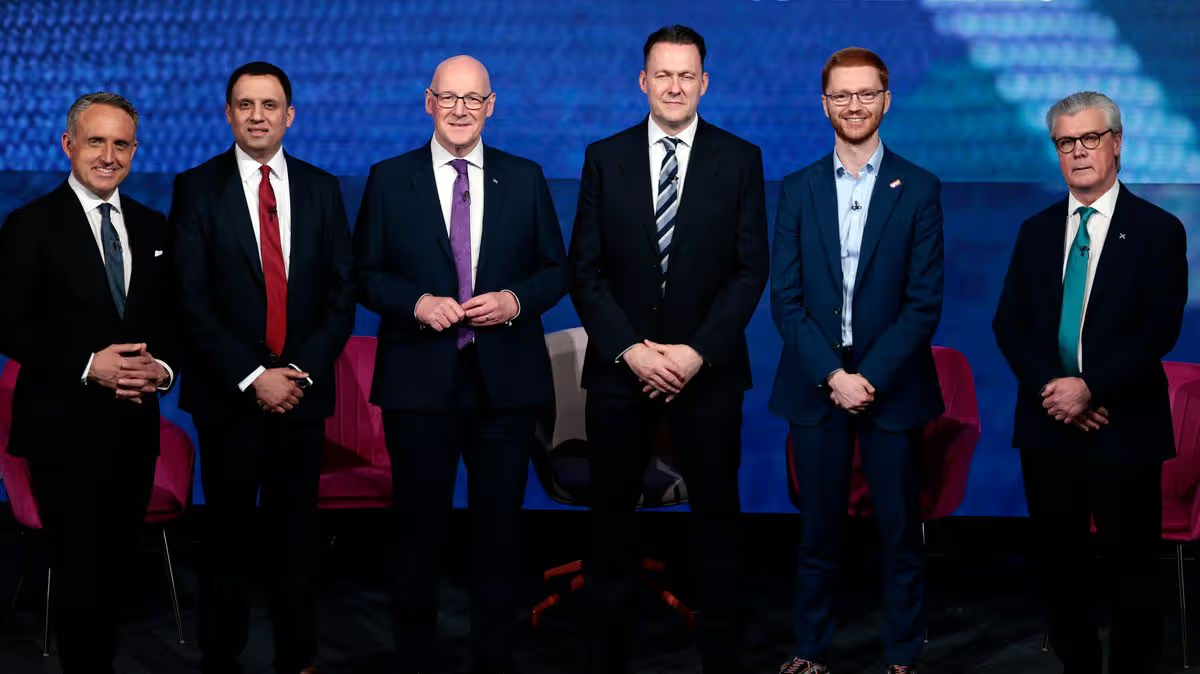
Leaders of the Scottish National Party, Scottish Labour, Scottish Conservatives, Scottish Greens, Scottish Liberal Democrats and Reform UK Scotland will take part in Debate Night on the BBC.
The leaders of Scotland’s main political parties will take part in the first TV election debate of the campaign on Sunday.
Leaders of the Scottish National Party, Scottish Labour, Scottish Conservatives, Scottish Greens, Scottish Liberal Democrats and Reform UK Scotland will take part in Debate Night on the BBC. They will be asked questions by a live studio audience, with issues such as the cost-of-living, energy crisis and the NHS likely to come up.
Scottish Labour leader Anas Sarwar has made calls for SNP leader and First Minister John Swinney to apologise at the start of the televised debate for the Scottish Government’s handling of the NHS. Mr Sarwar said: “Our NHS is not safe with John Swinney and the SNP. They have now broken Scotland’s NHS treatment law 918,594 times, leaving patients waiting in pain because they failed to run the NHS properly.
“Tonight on television, right at start of the debate, John Swinney should apologise to every single patient who has suffered because the SNP could not get the basics right. My first priority as First Minister will be to cut waiting lists and put our NHS first so it is there when you need it.
“That means using all available capacity to get patients treated faster, breaking down barriers between health boards, and making sure funding follows the patient so the NHS focuses on getting people care on time.
“After two decades of broken promises, our NHS cannot survive another SNP government. On May 7, vote Scottish Labour on both votes for the change Scotland needs.”
However, polls are showing that the SNP are looking likely to stay in office, with the first YouGov MRP survey of the election season suggesting they are set to win 67 seats. The poll projects that Reform UK are on course to win 20 MSPs with Labour estimated to win no constituency seats at all, picking up just 15 seats from the regional lists.
The Greens are projected to win 11 seats and the Lib Dems are set to win nine, showing gains between them. The poll suggests the Conservatives could be looking at a sixth place finish and are projected to win just seven seats.
SNP candidate for Rutherglen Clare Haughey responded to Mr Sarwar’s comments, saying: “Of course there are challenges, just as there are across these islands, but the fact is John Swinney has a plan for our NHS and it’s working.
“While Anas Sarwar talks our NHS down, under our plan operations are up, waiting lists continue to fall, we have more GPs per head than England and our GP walk-in centres are springing up across Scotland.
“Labour-run England is paying doctors £20 per person to divert people away from their NHS and faces yet another NHS strike – not a single day has been lost to strikes in Scotland’s NHS thanks to the SNP in government.
“Only the SNP can be trusted with Scotland’s NHS – that’s exactly what you get from John Swinney’s strong leadership and that’s what’s on the ballot on 7th May.”
The debate will be moderated by Stephen Jardine who wrote in the Scotsman on Saturday that the debate may be dictated around which lines will end up being popular on social media.
He said: “Often they have spent days preparing, trying out attack lines, testing defensive positions and thinking about how they can cut through and make an impression. Nowadays another factor is also in play. Increasingly, political debates are less about the whole show and more about what ends up being a short clip on social media.”
Get more Daily Record exclusives by signing up for free to Google’s preferred sources. Click HERE.












































You must be logged in to post a comment Login