Can Meze’s $799 STRADA closed-back headphones stand out in a segment that eats its own? That is the real question. The $500 to $1,000 headphone market in 2026 is not polite competition. It is a knife fight with good lighting. Grado, Focal, Denon, HiFiMAN, Dan Clark Audio, Beyerdynamic, Audeze, and Sennheiser are all circling the same buyers, the same review cycles, and the same limited attention span. Nobody is short on options. Everyone claims “balanced.” We know that not to be true.
Balanced has become shorthand for “inoffensive.” Safe. Smoothed over. Tuned to offend no one and excite even fewer. In this price bracket, you are not just competing on frequency response. You are competing on durability, comfort, brand loyalty, and whether someone already owns two other pairs that do roughly the same thing. That is where the STRADA enters the room.
The harder question is this: can a brand outsmart itself? Does the market actually need another $800 headphone from Meze when the company already has a strong sub-$1,000 lineup that includes the underrated 105 AER, crowd pleasing 99 Classics Second Generation, 105 Silva, and the excellent 109 Pro?
The reality is that each of those sub-$1,000 Meze models comes with its own pros and cons, but the market has generally responded well to them. The 109 Pro are the strongest of the bunch. They strike a rare balance between openness, tonal coherence, and comfort that makes them very easy to recommend.
The 99 Classics 2nd generation are not just a cosmetic refresh of the original that launched Meze into the mainstream. They are better in almost every meaningful way: tighter low end, improved balance and clarity, refined build, and still extremely easy to drive. They remain one of the most accessible entry points into the brand and continue to make sense for those who are considering a pair of wired high-end headphones for the first time.
Advertisement
Meze Audio has also proven beyond any doubt that it knows how to build reference-caliber headphones. The LIRIC II, Empyrean II, and ELITE are not accidents. I spend more time listening to the Empyrean II than most of my loudspeakers. Why? It is simply more enjoyable, more immersive, and less complicated. And I am not convinced I have even reached the ceiling of what it can do in the right chain.
So where does the STRADA fit? Closed-back headphones almost always trade some openness and spatial air for isolation and control. They can deliver greater density and impact down low, but that often comes at the expense of natural space and a more effortless presentation.
Did Meze strike gold with the STRADA, or are we looking at silver and a stuffed animal on the flight home?
What You Actually Get in the Box with the Meze STRADA
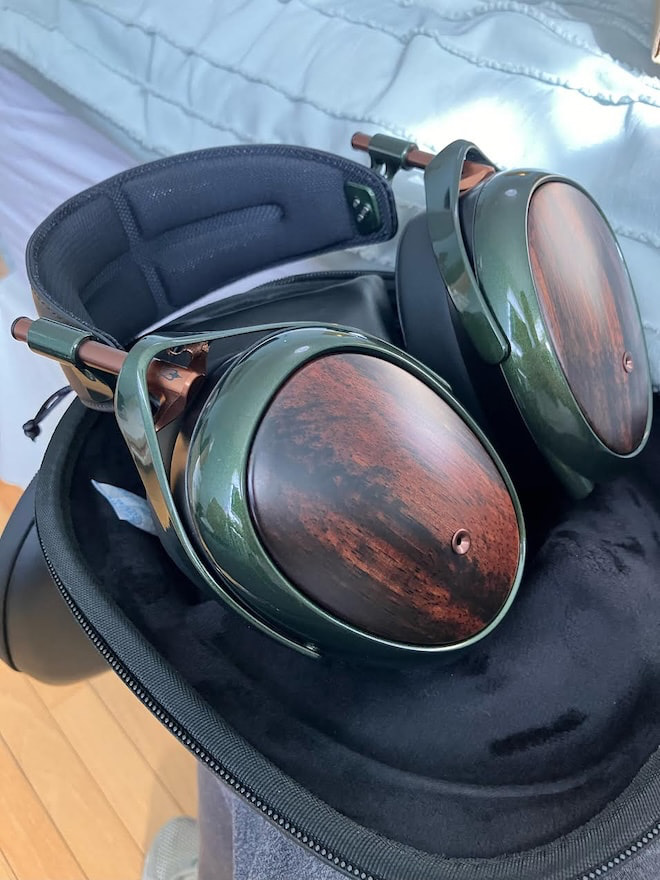
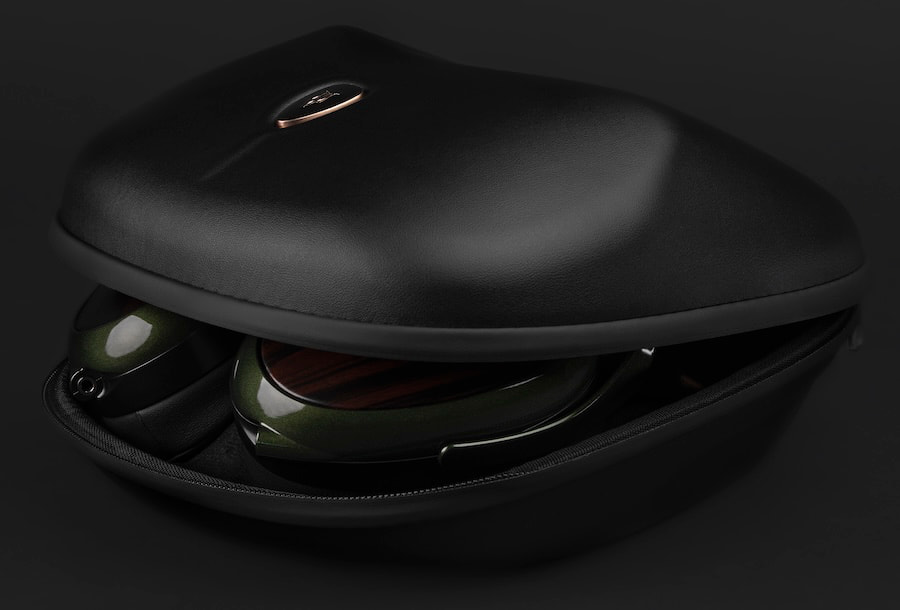
Meze keeps the package practical. The STRADA arrives in a hard EVA carrying case with a soft velvet lining that actually protects the finish instead of just looking good in photos. Inside, you get a separate PU leather pouch for the cables, which keeps things organized and avoids the usual tangle.
Advertisement
Two 1.8 meter dual-twisted Kevlar-wrapped OFC cables are included: one terminating in 3.5 mm and another in 4.4 mm balanced. A gold-plated 3.5 mm to 6.3 mm adapter rounds it out for desktop use.
Premium Build and Green with Envy?
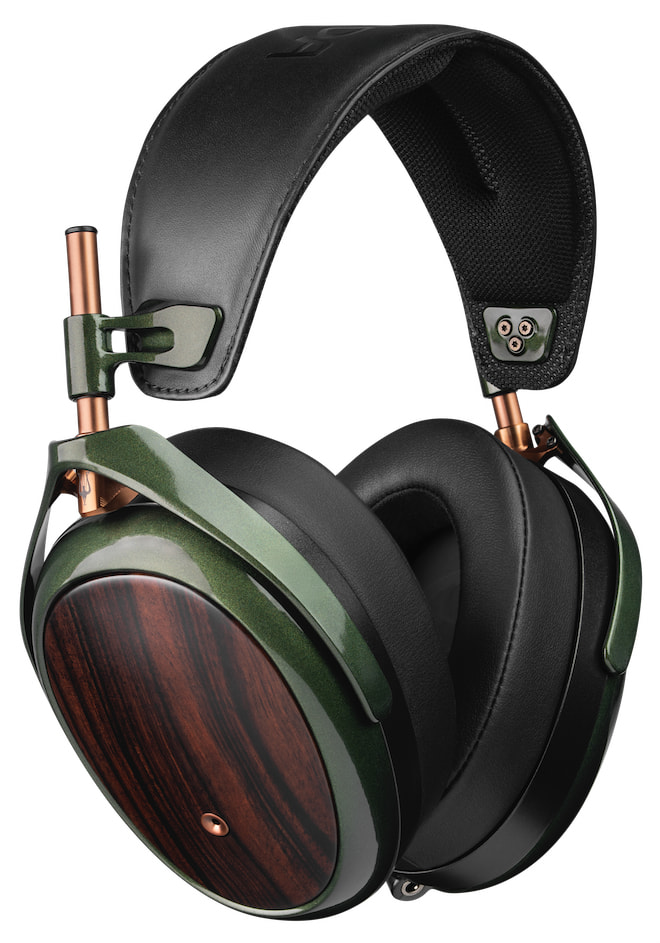
From a build standpoint, Meze stayed consistent with its design language but adapted it for a closed-back dynamic platform. The STRADA borrows the core structural thinking of the LIRIC, but instead of planar magnetic loading, this chassis is optimized around a dynamic driver. The focus is on low mass, rigidity, and comfort over long sessions which are likely to be key selling points for potential buyers.
Advertisement. Scroll to continue reading.
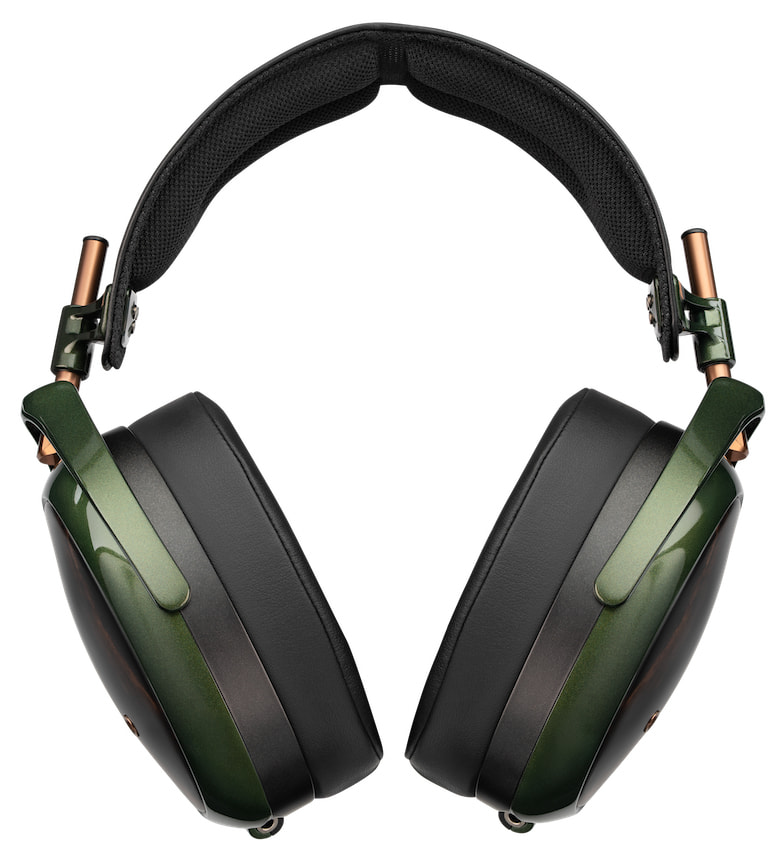
At roughly 330 grams, the STRADA sits toward the lighter end of the closed-back category, and that matters in practice. The magnesium frame keeps the structure rigid without adding unnecessary weight, and the distribution of that weight across the top of my head was very effective.
I have a larger than average head and very little tolerance for excessive clamping force. The STRADA avoids that trap. The pressure is firm enough to maintain a proper seal, which closed-backs absolutely require, but it never crosses into that vise-like squeeze that ruins longer sessions.
Advertisement
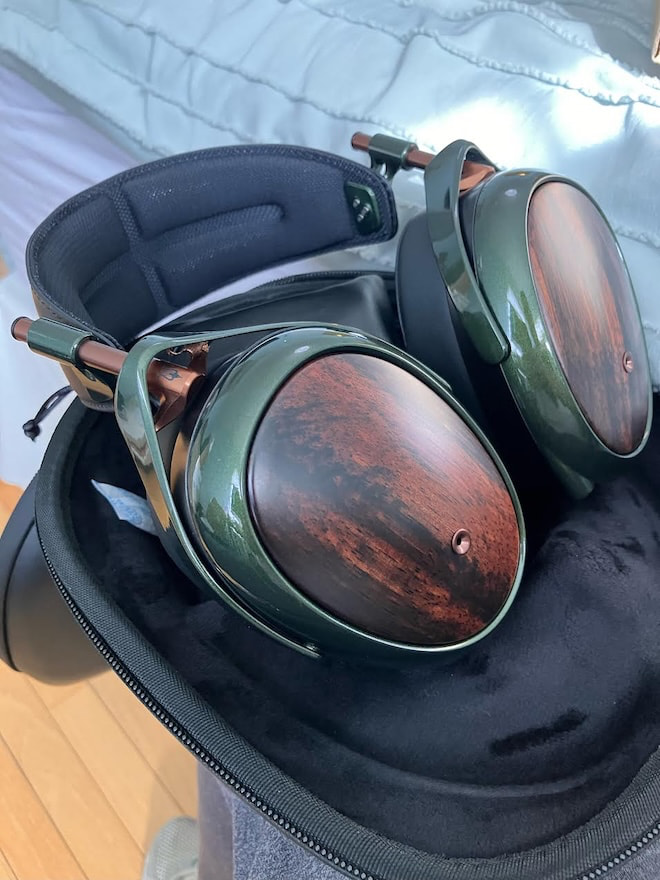
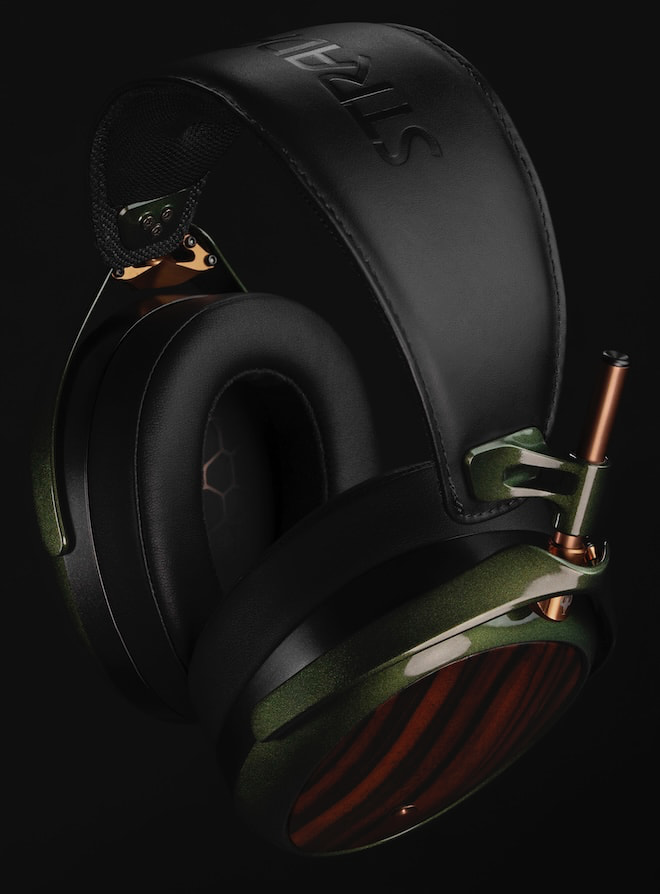
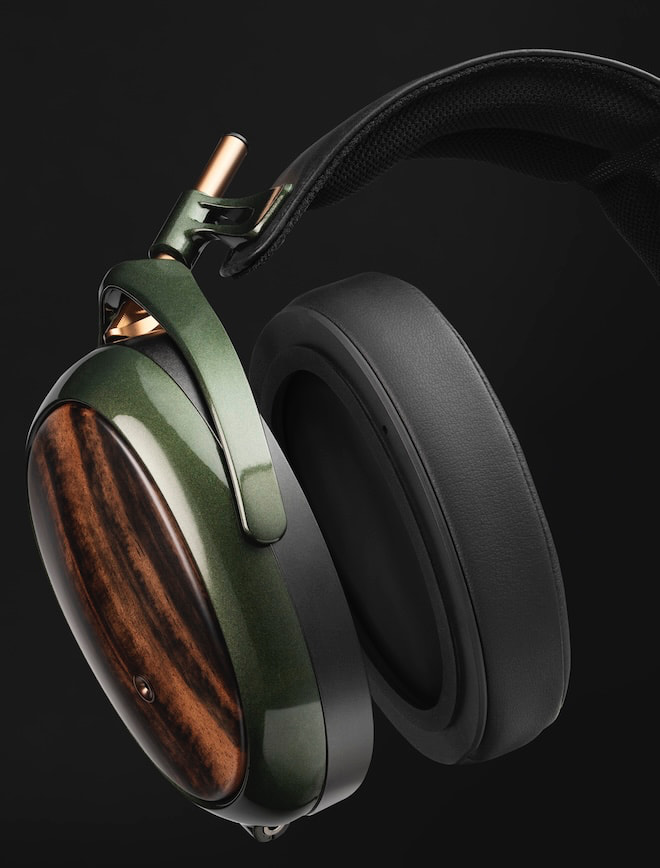
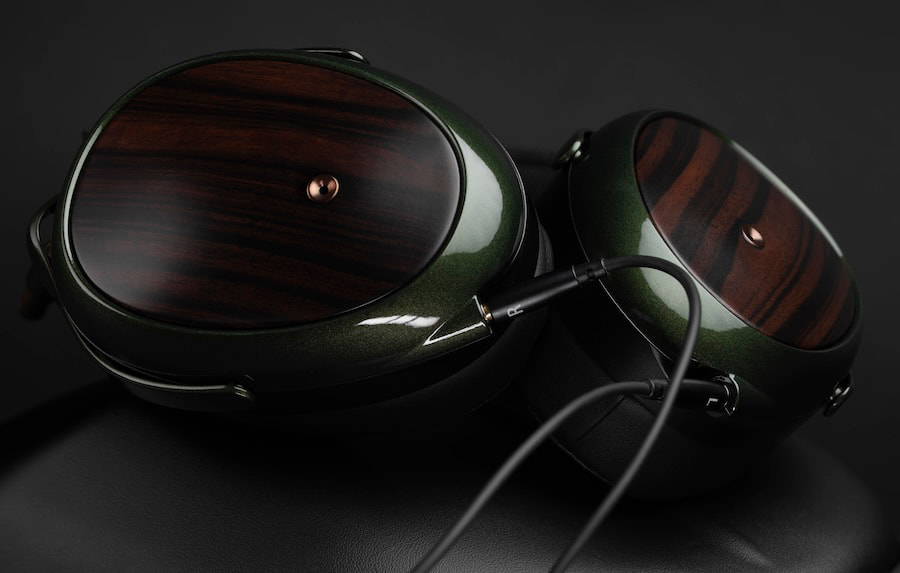
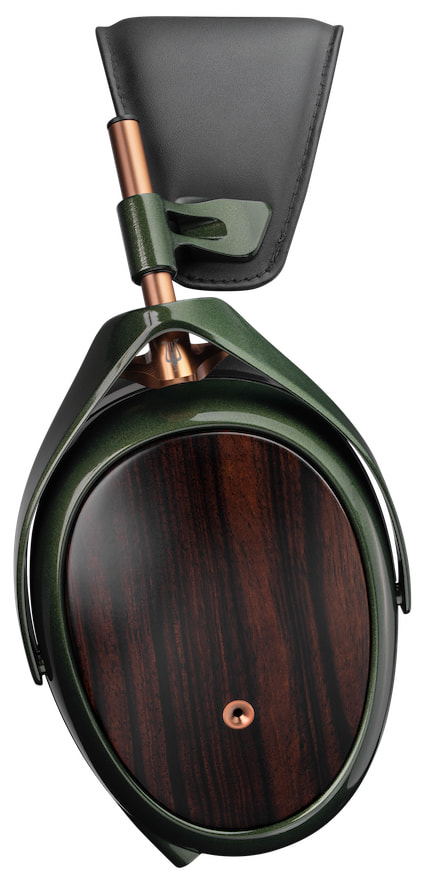
The deep green finish has divided opinion, and not quietly. It’s a saturated, metallic tone that leans closer to vintage performance car than conventional hi-fi aesthetic. I wasn’t convinced at first glance. In product photos it felt aggressive. In person, under normal light, it reads more controlled and far more refined. The finish has depth, and the execution is clean. Whether someone likes the color is subjective. Whether it’s well done is not. It is.
The ear pads attach magnetically. Simple idea, but it works. They line up the same way every time, and that matters with a closed-back. If the seal is off, the bass changes. Here, the seal is consistent without cranking up the clamping force. Isolation is strong for a passive closed-back. It blocks more outside noise than the 99 Classics 2nd Generation, and that difference shows up in normal use. HVAC hum fades into the background. Street noise softens. It’s not noise cancelling magic, but it’s enough to stay focused while listening.
I wore them during the Men’s Olympic Ice Hockey Gold Medal Game, streaming through Peacock on my iPad Pro using a dongle DAC. Between the seal and the volume headroom, I was fully locked in. I could barely hear the shouting from the rest of my family demanding to know whether I was having some kind of episode after Jack Hughes buried the golden goal. I wasn’t. I was celebrating properly. The STRADA let me stay in the moment without cranking the volume into dangerous territory. That’s the point.
The ear pads use soft PU leather on the outer contact surface, which helps maintain a consistent seal which is important for bass response and isolation. Inside, the Alcantara lining does a good job of keeping things from getting overly warm during longer sessions. They don’t turn into sweat traps after an hour, which is not always a given with closed-back designs and a situation that has turned me off from a number of high-end designs.
The Macassar ebony cups look expensive and they should for the $799 asking price. The finish and grain are very much in line with Meze’s house aesthetic; polished, tactile, and clearly meant to signal that this is not an entry-level afterthought. It is a dense, stable wood and makes sense for a closed back design, but let’s not pretend this is rustic minimalism. This is deliberate styling.
Advertisement
Each pair has slightly different grain, which gives them some individuality without screaming for attention. It feels well made and intentional, not decorative for the sake of it. Do I like the look as much as the 109 Pro? Not quite. That one clicked immediately. This feels more like an acquired taste.
Overall, the STRADA is built to a high standard, but the fit is not identical to what long-time Meze owners might expect. The suspension and headband system are different from the floating designs used on models like the 109 Pro or Empyrean II. Those tend to settle onto your head and disappear. The STRADA doesn’t quite do that. It feels more structured. More fixed.
The gimbals and adjustment rods also feel different. They’re solid, but the range adjustment is smooth rather than notched. I would have preferred small detents to make it easier to return to the exact same setting every time. As it stands, getting both sides perfectly matched takes a bit more attention than it should.
Technically, the STRADA runs a 50 mm dynamic driver rated from 5 Hz to 30 kHz, with distortion listed at under 0.1 percent at 1 kHz. On paper, that tells you two things: there’s plenty of bandwidth, and Meze is trying to keep things clean at normal listening levels.
This is the same basic dynamic platform first used in the 109 Pro, but it’s been adjusted for a closed-back enclosure. That’s not a small detail. Closed designs deal with internal pressure, reflections, and damping in ways open-backs don’t. You can’t just drop the same driver into a sealed cup and call it a day. It has to be tuned differently.
Advertisement
Advertisement. Scroll to continue reading.
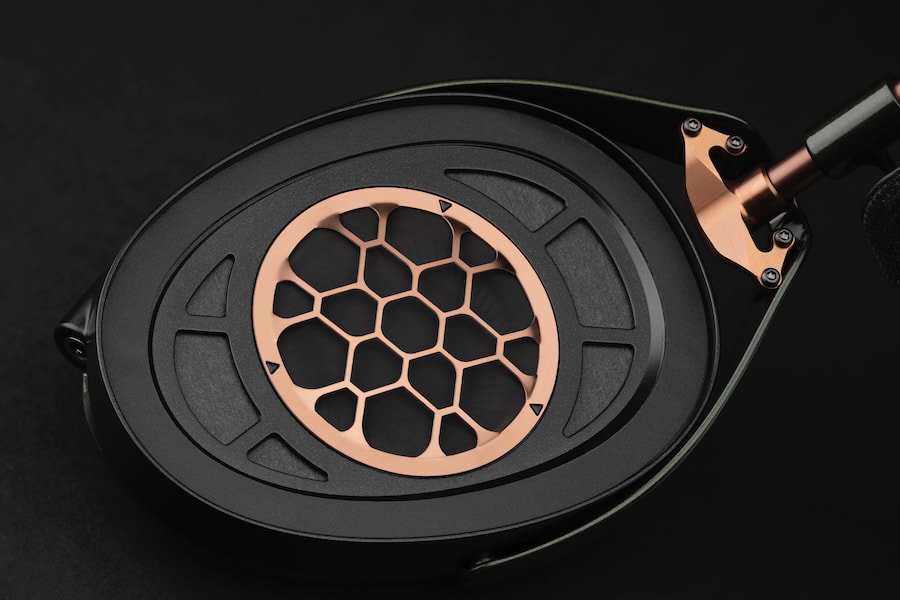
The diaphragm is a carbon fiber reinforced cellulose composite, designed to stay light but controlled when the music gets demanding. Around it sits a polymer ring with a thin beryllium coating applied through a vapor process to increase stiffness and improve how quickly the driver starts and stops. The surface grooves help manage resonance, and the copper-zinc stabilizer ring works to damp small vibrations before they smear detail.
At 40 ohms and 111 dB sensitivity, the STRADA is easy to drive. You don’t need a desktop amp the size of a shoebox to make it work. A good dongle DAC, portable player, or modest desktop setup will get it to proper listening levels without running out of headroom.
Listening
I rotated the STRADA through a fairly typical mix of sources: my iMac and a MacBook Air at the desk, an iPad Pro for casual listening, and a range of DACs and amplifiers including units from Topping, FiiO, the Apos x Community Gremlin, and a Schiit Magni from Schiit Audio. I also spent time with a few dongle DACs with an iPhone 14 because that’s how a lot of people will actually use a 40 ohm, 111 dB headphone.
In other words, the STRADA had every opportunity to show what it could do — or to miss an empty net with less than ten minutes left in the third period.
Advertisement
Right off the bat, the iFi GO blu Air that worked well with the 99 Classics 2nd Gen and Beyerdynamic DT 770 PRO X wasn’t the best match here. Even running balanced, with 262mW into 32 ohms on tap, the STRADA felt slightly underfed. The sub bass lacked grip. Notes had weight, but not the kind of control that keeps things from spilling over the edge.
That matters because the STRADA has real low-end presence. The bass is full and carries impact well into the upper bass. This is not a polite, neutral closed-back. It pushes air. And when the amplifier doesn’t have enough authority, that energy can blur instead of punch.
With better amplification, the bass tightens and the overall presentation settles down. The midrange and treble benefit from that control as well. This is one of those headphones where system matching counts more than usual. If you’re looking for strong bass impact with definition, the STRADA can deliver it. But you need the right partner on the other end of the cable.
Switching over to the iFi GO bar Kensei was a different story. With 477 mW available from the 4.4 mm balanced output, the STRADA woke up. The bass tightened, the sub bass gained shape, and the upper bass stopped bleeding into the lower mids.
Advertisement
Cue up Daft Punk, deadmau5, Kraftwerk, Brian Eno, Aphex Twin, or The Orb, and the difference was obvious. The low end stopped coloring outside the lines. It stayed full, but it was more disciplined. Kick drums had impact without smearing. Synth bass lines hit hard and then got out of the way.
If you live on electronic music, there’s a lot to like here. The STRADA can move air. With the right power behind it, the bass is deep, defined, quick, and punchy. Without it, things get a little loose. This is not a set-it-and-forget-it headphone. Feed it properly and it rewards you.
So far, so good. Then I moved into the midrange and things got more complicated.
Hit the One in the Middle
Instruments and male vocals came through clean and detailed, but they sat a touch behind the bass. Not buried. Not three steps back into the drum kit starting a studio argument. Just slightly set back. Enough to notice.
Advertisement. Scroll to continue reading.
Advertisement
I listen to a lot of piano, bass guitar, acoustic guitar, and male vocals; Nick Cave, Sam Cooke, Jason Isbell, John Prine, Elvis Presley, David Bowie, and David Byrne — so that region matters to me. When the vocal center image shifts even slightly, I hear it.
I started rotating through my solid state desktop gear from Topping, FiiO, and Schiit Audio to see how much of it was source dependent. The more linear, slightly more forward presentation from the Topping and Schiit gear helped push the midrange forward a bit. It didn’t completely change the tuning, but it narrowed the gap between bass and vocal presence.
The warmer FiiO setup, though, with its thicker midband, smoothed everything out a little too much. It was like ordering medium smoked meat at Lester’s in Montreal and getting the fatty cut. Satisfying at first, but after a while, everything starts to taste the same. Too much weight, not enough edge definition.
The STRADA doesn’t need more warmth in the mids. It needs more texture, presence, and a sharper edge.
Advertisement
Illumination with a Candle or Floodlight?
Strings, upper piano registers, and female vocals fared a bit better, but I’d still describe the STRADA as slightly recessed through the core midrange. Piano didn’t quite have the weight or sustain I expect without a small EQ nudge. Notes were clean, but they didn’t bloom or hang in the air the way they can on a more linear tuning. Strings, too, lost a bit of bite. The leading edge was softened, and without adjustment, they didn’t always sound as natural as they should.
Female vocals, as the response climbed into the upper mids and lower treble, had more presence than the male vocals. Amy Winehouse, Ella Fitzgerald, Björk, Tori Amos, Nina Simone, and Brandi Carlile all had more immediacy and projection. There was more pep in their step compared to the men.
That same region is also where I began to notice some treble peaks. Not constant glare, but moments where energy jumped forward. Push the volume with a hot or poorly mastered track and the STRADA will let you know. I wouldn’t call it bright overall, but there is more energy and detail in the extreme upper mids and lower treble than in the center midrange. It’s a tuning choice. And yes, it’s fixable with EQ. How much you choose to correct it, or whether you feel compelled to, depends on your tolerance and your music library.
Soundstage is good for a closed-back. Not cavernous. Not claustrophobic either. There’s some depth and a bit of vertical space, but it doesn’t approach the openness of the 109 Pro or Empyrean II. That’s the tradeoff with a sealed design. You gain isolation, you give up some air.
Imaging is solid, just not laser etched. Instruments are placed clearly enough, but nothing hangs in space with surgical precision. You’re not getting that razor sharp, walk around it kind of presentation. It’s more cohesive than pinpoint.
Advertisement
Stereo separation is respectable. Left and right channels are distinct, and layering holds together, especially with well recorded material. For a closed-back at this price, it performs about where it should. Competent. Controlled. Not class leading in spatial tricks, but not a weakness either.
The Bottom Line
The STRADA gets a lot right. Build quality is excellent. Comfort is good once you dial in the fit. Isolation is strong for a passive closed-back. The bass is the headline feature; deep, impactful, and capable of real authority when properly amplified.
The midrange is clean and detailed but sits slightly behind the low end. It’s not hollow, just not as forward as some listeners might prefer. The treble is not etched or aggressively bright in the way some older Beyerdynamic models could be and to be fair, their newer releases have improved in that regard — but there are noticeable peaks. Poor recordings and high volume will expose them.
Advertisement. Scroll to continue reading.
Advertisement
Overall, the STRADA is resolving and engaging, but it benefits from careful system matching and, in my case, some light EQ. Once you sort that out, it becomes a very enjoyable closed-back option.
That said, I still prefer the 109 Pro for its cohesiveness, openness, and more natural balance. The STRADA is a strong entry in Meze’s lineup, but it doesn’t unseat my favorites. It’s a very good headphone that rewards attention — especially on the amplification and tuning side.
Pros:
Strong, impactful bass with good depth when properly amplified
Clean, detailed overall presentation
Solid passive isolation for a closed-back design
Excellent build quality with premium materials
Easy to drive on paper and works well with portable and desktop gear
Cons:
Midrange sits slightly behind the bass and upper mids
Noticeable treble peaks with certain recordings or higher volume
Benefits from careful amp pairing and often some EQ
Headband adjustment system lacks notches and takes dialing in
AI is revolutionizing the cybersecurity landscape. From accelerating threat detection to enabling real-time automated responses, artificial intelligence is reshaping how organizations defend against increasingly sophisticated attacks.But with these advancements come new and complex risks—AI systems themselves can be exploited, manipulated, or biased, creating fresh vulnerabilities.
In this session, we’ll explore how AI is being applied in real-world cybersecurity scenarios—from anomaly detection and behavioral analytics to predictive threat modeling. We’ll also confront the challenges that come with it, including adversarial AI, data bias, and the ethical dilemmas of autonomous decision-making.
Looking ahead, we’ll examine the future of intelligent cyber defense and what it takes to stay ahead of evolving threats. Join us to learn how to harness AI responsibly and effectively—balancing innovation with security, and automation with accountability.
Temporal co-founders Samar Abbas and Maxim Fateev have been tackling the same distributed systems problem since their days at Amazon, Microsoft, and Uber. But the AI boom has put the problem “on steroids” as agents move to production, according to Abbas — and investors have taken notice.
Temporal last week announced a $300 million Series D round led by Andreessen Horowitz, pushing its valuation to $5 billion — up from $2.5 billion in October.
Temporal’s revenue increased more than 380% year-over-year, reflecting demand for infrastructure services from companies using AI agents that are taking on more responsibilities.
“There is a massive platform shift happening,” Abbas told GeekWire. “And there is a whole layer of infrastructure being developed right now.”
Temporal’s pitch is something it calls “durable execution,” a new category Abbas says is about giving developers a simpler programming model for long-running, distributed workflows. Instead of wiring together queues, databases, retry mechanisms, and timers to handle failures, engineers write their logic as normal code and Temporal makes it durable behind the scenes.
Advertisement
Abbas and Fateev launched Temporal in 2019, after they helped build an open-source orchestration engine called Cadence during their time at Uber. The tool was used by companies including HashiCorp, LinkedIn, Airbnb, Coinbase, and others.
“Both of us have been obsessed about this problem space,” Abbas said, describing Temporal as “literally the fourth or fifth time we are building a similar system.”
During the cloud era, Abbas said, Temporal became a “reliability backbone” for developers building mission-critical applications. Now, as AI models get smarter and agents hit production, the company is seeing huge scale.
“We are kind of becoming the core piece of infrastructure which is powering the AI agentic wave,” Abbas said.
Advertisement
Temporal’s customer base ranges from OpenAI, which uses the platform for image generation, to Replit, which uses Temporal to orchestrate coding agents over extended sessions.
“As long-running agents become a primary driver of enterprise value, the execution layer beneath them becomes indispensable,” investors with Andreessen Horowitz wrote in a blog post. “Temporal wasn’t built in reaction to generative AI; it was built to make complex systems durable. But the agentic era has made that need undeniable.”
Asked about a potential AI bubble and broader hype, Abbas pointed to customers like Abridge in healthcare, where doctors can focus on patients instead of note-taking. He also noted transformation across legal workflows, coding agents, customer support, and research.
“There is real value being delivered to real users,” he said.
Advertisement
He envisions a future where “every human on the planet can be called a software developer” and the cost of building software keeps falling, driving demand for a reliable execution backbone.
Temporal is built as a remote-first company, with around 375 employees and 62 of them in the Seattle area. Abbas and Fateev have been based in the region for decades, and many early employees are here as well.
Abbas, who was previously CTO (he swapped roles with Fateev in 2024) said the software infrastructure expertise in Seattle is a good match for trends that Temporal is riding. “Seattle has the right ingredients of talent,” he said. “We’ll be doubling down and growing in the Seattle area.”
As for advice to other founders riding the AI wave, Abbas said it’s about getting clarity on how you deliver value and avoiding all other distractions. “Just know who your users are — are they able to drive value from the product you are building?” He said Temporal is laser-focused on that strategy — and it seems to be working.
According to AdWeek, the price for a 30-second commercial during Super Bowl LX has soared to $8 million, after NBC opened in the summer by offering spots for $7 million. As AdWeek notes, “due to demand, the company has already reached its cap for the number of spots that were available for advertisers to buy during the upfront season.”
$8 million for 30 seconds sometimes means turning a niche product into a national phenomena. The 30 seconds purchased by Ring went the other way. If you want to see how $8 million can be used to promote mass surveillance enabled by consumer products, here you go:
Sure, it looks pretty innocuous. And what could be better than turning Ring and Flock Safety’s network of cameras into a digital proxy for posting “LOST DOG” signs all over the neighborhood? Well, as it turns out, pretty much everyone saw how problematic this offering was, especially considering what’s already known about Ring, Flock Safety, and both companies’ rather cavalier attitude towards privacy and other aspects of the Fourth Amendment.
Advertisement
To begin with, the “Search Party” feature that allows people to access recordings and images captured by other people’s cameras is already on, which likely comes as a surprise to owners of these devices. Here’s what The Verge’s Jennifer Tuohy discovered last October, shortly after Ring announced its partnership with Flock Safety — a company best known for allowing cops to hunt down people seeking abortions and/or allowing federal officers to perform nationwide searches for whoever they might be looking for (which, of course, would be anyone looking kinda like an immigrant).
[I]t turns out that Search Party is enabled by default. In an email to customers this week, Siminoff wrote that the feature is rolling out to Ring outdoor cameras in November and noted, “You can always turn off Search Party.”
I checked my cameras this morning, and they were all automatically set to enable Search Party. And I’m not alone; Ring users on Reddit have also reported that their cameras have been enabled for Search Party.
This under-reported “feature” was exposed by Ring’s Super Bowl ad, which resulted in enough backlash that Flock Safety no longer has a Ring to wear. Back to Jennifer Tuohy and The Verge:
In a statement published on Ring’s blog and provided to The Verge ahead of publication, the company said: “Following a comprehensive review, we determined the planned Flock Safety integration would require significantly more time and resources than anticipated. We therefore made the joint decision to cancel the integration and continue with our current partners … The integration never launched, so no Ring customer videos were ever sent to Flock Safety.”
While that last sentence may be true, it appears sharing was on by default when it came to Ring’s own cameras. That Flock Safety never got a chance to participate is good to know, but “Search Party” has apparently been active since its implementation last year, even if it was limited to Ring devices.
Advertisement
And while Ring claims the Search Party feature can’t be used to search for “human biometrics,” that’s hardly comforting when it appears Ring definitely wants to add more of this kind of thing to its existing cameras.
On top of this, the company recently launched a new facial recognition feature, Familiar Faces. Combined with Search Party, the technological leap to using neighborhood cameras to search for people through a mass-surveillance network suddenly seems very small.
Ring insists this is not another mass surveillance tool, but rather something that attempts to recognize who’s at any user’s door when sending alerts, in order to differentiate friends and family members from strangers who might be within camera range. Again, there’s some utility to this offering, but the tech lends itself to surveillance abuses, especially when law enforcement may only be a subpoena away from accessing images and recordings captured by privately-owned devices.
Finally, the statement given by Ring only states that this won’t be happening right now, which is a wise choice considering its unpopularity at the moment. But that doesn’t mean Ring and Flock won’t seek to consummate this marriage of surveillance tech, albeit in a more private fashion that doesn’t involve alarming hundreds of millions of sports viewers simultaneously.
In today’s world, where more and more lives are online, social proof is very important. Things like likes, shares, reviews, and follower counts show what people think about something. These signs help people feel trust and want to join in. But, many do not read these numbers in the right way. Some feel short-term jumps matter most, but they miss seeing steady growth that can last. To get the best out of this, marketers need a clear plan for checking, giving credit, and trying out new ideas.
Social Proof Metrics
Social proof is not only about numbers that look good. It shows how people see your trust and fame. But the kind of feedback you get is not always the same. Likes and comments of how many followers you have have all given useful clues. Still, you have to look at the whole story to make the best choices.
Conversion rate: Tracks if social proof makes people do things we want, like signing up, downloading, or buying.
Retention metrics: Shows if the first interest turns into regular use or keeps people coming back over time.
Sentiment analysis: It looks as if the social proof shows good or bad feelings from people.
By looking at these numbers, marketers can see the difference between quick jumps in activity and real engagement. Stormlikes help them know what their audience truly cares about.
Attribution Challenges in Social Proof
One of the biggest challenges when using social proof is knowing where to give credit. Many campaigns can give a short burst of attention, but it’s very important to find out if these jumps in attention last over time. A lot of problems with tracking happen when people just look at simple numbers and do not link them to bigger business goals.
Last-click bias: Looking only at the last thing people do can make the effect of a social proof tactic appear bigger than it really is.
Channel overlap: Organic and paid campaigns often cross over, and this can make it hard to tell the effects apart.
Short-term spikes: A boost that happens for a short time, like from paid follower services or viral posts, may not show true growth in the long run.
Marketers need strong analytics systems to know which actions really help people buy and come back again, not just make the numbers look high.
Experimental Approaches to Measure Authentic Uplift
Testing is important when you want to see if your social proof ideas work. The only way to know the real effect of social proof on people is to do controlled experiments. This helps marketers find out what works and make choices using facts and data.
A/B testing: Compare content that has social proof and content that does not. This helps you see the differences in how people behave.
Time-based experiments: Add social proof slowly over time. Watch for short-term changes and also keep an eye on the bigger trends.
Geo or segment tests: Use social proof in certain groups or places. This lets you see the effect on people in one area or segment.
When you use these experiment ideas along with clear KPIs, you can tell the difference between short-term buzz and real growth.
KPIs to Track for True Social Proof
To make social proof work, marketers have to use both numbers and stories as key points. Do not look at just one simple sign, because that can give the wrong idea.
Advertisement
Quality of engagement: Not every like means the same thing. Comments, shares, and mentions show more interest.
Follower growth rate: A steady increase in followers can say more than a quick jump.
Referral traffic: Shows if people come from social proof to take useful actions on your important pages.
Customer value over time (CLV): Links social proof campaigns to results that matter for your business in the long run.
Influencer amplification: Find out if popular supporters really help their followers trust the brand.
These numbers show how social proof works. Marketers can use this to make their campaigns better and get results that last.
Ethical Considerations for Practices
It is important to think about ethics when you try out ways to use social proof. If you use numbers that are not real, or if you show fake likes and shares, people will not trust your brand. Here are the best things you can do:
Transparency: Clearly tell people about any paid work or testing.
Gradual scaling: Try things out on a small scale to stop fake excitement.
Complementary strategy: Use social proof with top content and true messaging.
Ethical testing helps keep growth safe and steady. It makes sure your work fits with what people expect and trust.
Social proof can help your brand, but you cannot judge its effect just by looking at surface numbers. A platform like Stormlikes may help when you test things, but only if you use it in the right way and measure the results well. Knowing how the data behind social proof works helps marketers come up with plans that keep people engaged for a long time and make your brand look good. If you understand what driving action is, you will do better in the long run.
Watch ITVX when outside the UK with NordVPN (exclusive free gift)
Airs Monday, 23 February
The Love Island All Stars season 3 finale airs on Monday, 23rd February so expect more twists before we find out if frontrunners Sean Stone & Lucinda Strafford will be crowned champions. But did you know that some viewers can watch Love Island for free with this streaming hack…
Here’s the hack: In the UK, all episodes of Love Island All Stars season 3 are available on ITVX. And guess what, it’s a totally free service.
Yep, you could binge the entire latest season of the dating show, including Saturday’s final episode of 2026, without paying a thing!
Outside the UK? If you’re away from Britain: use a strong VPN to access your free ITVX stream from anywhere.
Advertisement
How to watch the Love Island All Stars final for free
Set your VPN back to your usual UK location and you’ll find that you can sign up to ITVX.
It’s clearly a popular workaround for accessing Love Island All Stars without paying. If you fancy trying out the (frankly awesome) NordVPN, we’ve got a great free gift for your below…
Advertisement
How to watch from abroad (free gift)
NordVPN is our best VPN (we actually have our own in-house expert, Mike, who tests VPNs 24/7 and he rates NordVPN top for price, features, security, etc).
We also find Nord works best for streaming – allowing you to access your domestic streaming services when abroad.
You can sign up in minutes and start watching Love Island All Stars free…
Advertisement
Quick start: Using a VPN to watch Love Island All Stars final free
Once you’ve signed up with your VPN:
1. Open the NordVPN app.
2. Connect to a server based in the UK (London, etc).
Advertisement
3. Fire up ITVX. If that doesn’t work, try it in Google Chrome’s Incognito mode and you should be off to the races.
4. Watch the Love Island 2026 All-Stars final on streaming at no cost.
In conclusion
It’s been a rollercoaster season of Love Island All Stars and with the bumper 95-minute final episode fast approaching on Monday, February 23, the drama shows no signs of slowing down.
Advertisement
After plenty of romance, dumping and the chaos of ‘Hurricane Belle’, but with plenty of couples still left in the villa, there’s more heartbreak to come before all is said and done. And UK audiences are loving it, with this season already amassing over 53 millionstreams on ITVX.
US audiences can watch on Peacock, of course, but Brits away from home willing to use a VPN can still stream the entire season completely free with a good VPN.
If you’re awaiting the chaotic conclusion of the final installment of Love Island All Stars season 3, this might be the smartest – and cheapest – way to do it.
Advertisement
You may also be interested in…
We test and review VPN services in the context of legal recreational uses. For example: 1. Accessing a service from another country (subject to the terms and conditions of that service). 2. Protecting your online security and strengthening your online privacy when abroad. We do not support or condone the illegal or malicious use of VPN services. Consuming pirated content that is paid-for is neither endorsed nor approved by Future Publishing.
Despite AI’s progress in building complex software, the ubiquitous PDF remains something of a grand challenge — a format Adobe developed in the early 1990s to preserve the precise visual appearance of documents. PDFs consist of character codes, coordinates, and rendering instructions rather than logically ordered text, and even state-of-the-art models asked to extract information from them will summarize instead, confuse footnotes with body text, or outright hallucinate contents, The Verge writes.
Companies like Reducto are now tackling the problem by segmenting pages into components — headers, tables, charts — before routing each to specialized parsing models, an approach borrowed from computer vision techniques used in self-driving vehicles. Researchers at Hugging Face recently found roughly 1.3 billion PDFs sitting in Common Crawl alone, and the Allen Institute for AI has noted that PDFs could provide trillions of novel, high-quality training tokens from government reports, textbooks, and academic papers — the kind of data AI developers are increasingly desperate for.
Some Mac users are discovering they can’t use their external drives with macOS Tahoe 26.3 and it seems Apple knows something’s wrong. Let us know what works for you, and what doesn’t.
An external drive connected to a Mac.
Apple released the update to macOS Tahoe 26.3 on February 11, with the update adding more machine learning performance for M5 users as well as other smaller changes. It seems that one undocumented alteration may have caused problems for some users. A number of users have taken to online support forums and social media to try and get help with an external drive issue in macOS Tahoe 26.3. Affected users are finding that external drives are not mounting properly, despite previously working fine. Continue Reading on AppleInsider | Discuss on our Forums
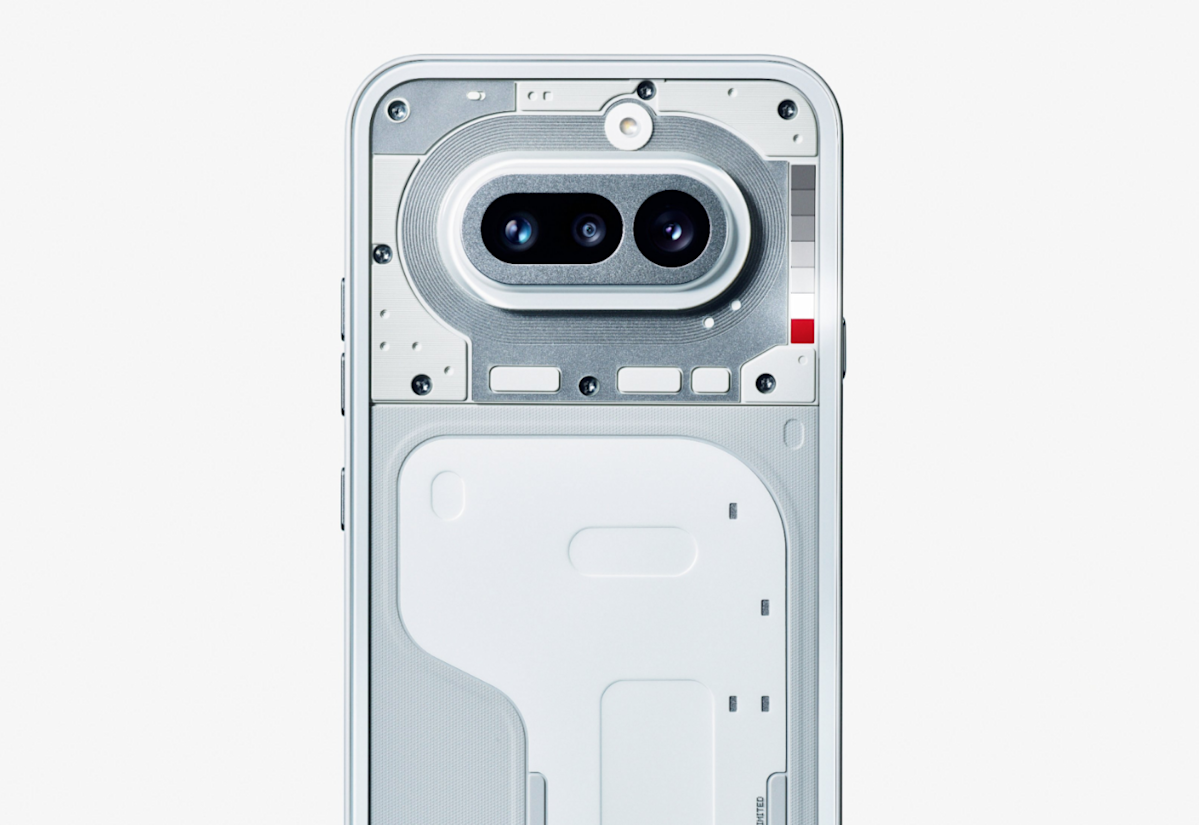
Nothing has been slow-dripping news about the upcoming Phone 4a for a few days now, with a promise to reveal the handset on March 5. However, the company jumped the gun a bit and just posted an . It looks pretty nifty, even if we don’t have any real-deal specs just yet.
The image shows the handset from behind, displaying the company’s trademark transparent design. The picture also features the redesigned Glyph Bar, . This is a light-based notification system that features individually controlled mini-LEDs that light up in various ways to notify the user of missed calls and stuff like that. You can spot it next to the camera bump.
That’s about all we know right now, though there are plenty of industry rumors. It’s been reported that the Nothing Phone 4a will feature a and that the reveal will be accompanied by a Pro model with a more powerful camera. The Nothing Phone 3a was also launched alongside the 3a Pro.
We loved the 3a and 3a Pro, “an easy recommendation.” Let’s hope this carries through for the 4a. Also, you didn’t miss a release of the actual Nothing Phone 4. The company likes to release the a-series handsets . Past as prologue, we’ll likely see that one in early summer.
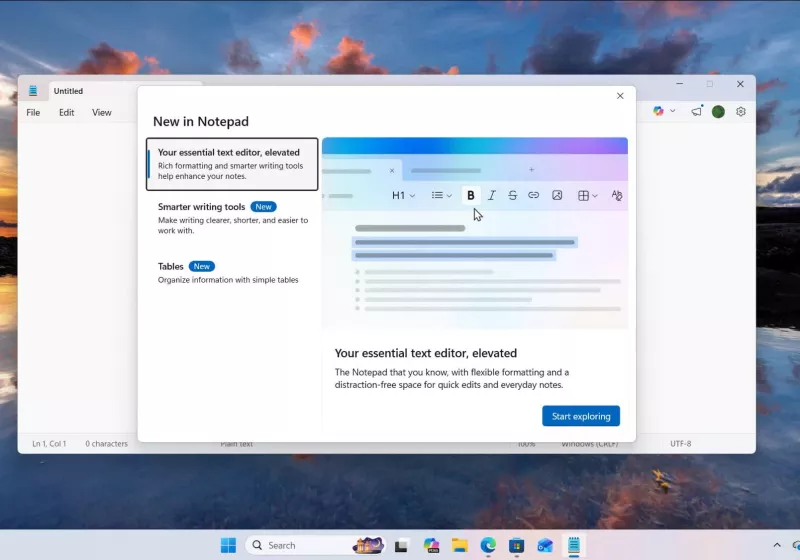
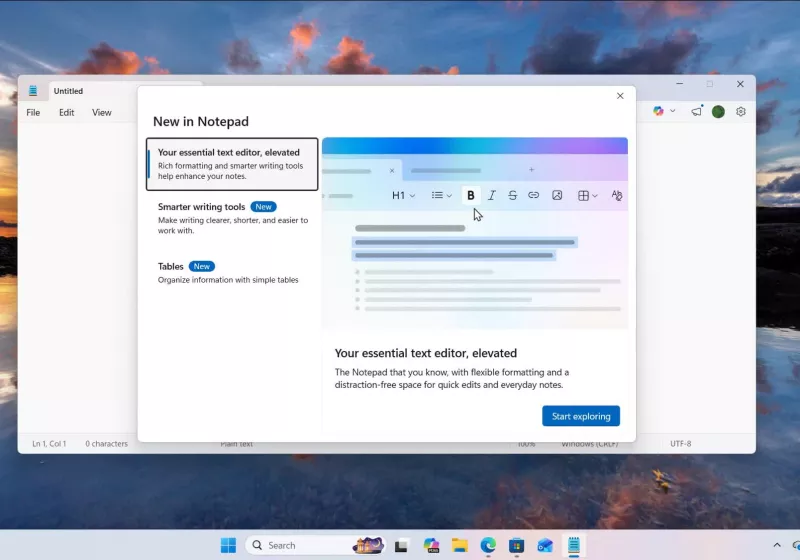
Microsoft is reportedly working on yet another “advanced” Notepad feature that has little to do with basic text editing. According to unnamed sources cited by Windows Latest, the application will soon support inserting images into text-based documents. Read Entire Article Source link
I watch a fair few films, though recently I haven’t been going to the cinema as much. That’s more to do with the quality of films available (if there’s anything that will kill cinema, it will be the dearth of quality).
That doesn’t mean I watch more films at home per se, as if I’ve gone in the opposite direction and sided with home releases, but if I do miss out on a cinema release, I’m not as fussed about waiting for the home release.
I missed out on watching Predator: Badlands, which I wanted to see in the cinema, but after a couple of weeks it became increasingly hard to find it at a nearby cinema. I ended up waiting for that to hit Disney+.
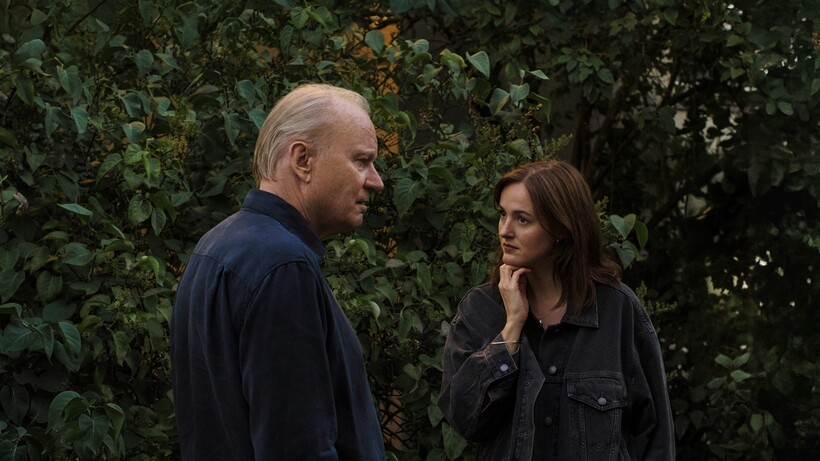
But this week, while opening the MUBI app for the first time in a while, I saw that it had Joachim Trier’s Sentimental Value on it. I’d added The Worst Person in the World on the service a while ago and hadn’t got round to watching it yet. So, I thought I’d watch that as a primer since I’d not seen a Trier film before, then watch Sentimental Value afterwards.
Advertisement
Sentimental Value is opening in UK cinemas this week, but I found it rare to be able to see a film on streaming before cinemas. A sign of the changing times? Possibly, but I don’t think it’s a good one.
I did not have a great experience watching Sentimental Value at home. And it’s all my own fault.
Advertisement
Too many distractions
My experience watching The Worst Person in the World should have been a clue.
The amount of times I stopped the film, either to have a look at something on another screen, or looking away from the screen to eat dinner – I was in distraction mode. I still enjoyed the film but I hadn’t noticed my own behaviour at the time – it was just the case of watching a film at home, like everyone else. The film fits into my schedule, not the other way around.
Advertisement
Sentimental Value felt different, at least in my head. “It’s a new release, I should pay more attention to what’s happening”, I thought. I need to find a dedicated time – not be interrupted, focus on what’s happening etc.
The first time I watched it, I got through an hour before I stopped because it was late and I was tired. Silly me.
Advertisement
I reconvened the next night. But it didn’t feel right starting in the middle of the film. What if I missed some important detail, a reference, a cinematic sleight of hand that’s repaid in the second, and obviously more emotional half of the film?
Advertisement
I should start again.
I get through even less this time. “I forgot, there’s the Short Skate events going on at the Winter Olympics. That’s live, I can’t miss that. Real Madrid are playing Benfica, I should watch some of that as well. Can’t miss out on live events when I can always come back to this film”.
Off I close the MUBI app. I’ll come to this film later. The next day, in the afternoon at the office. I’m testing a TV, I think to myself, I’ll give Sentimental Value a look on this Philips OLED910. I restart the film, get drawn into the story – lunch is over, back to work.
I restart it again in the evening. Noticed aspects I hadn’t paid attention to the first time. Stop and start the film because I’m getting notifications from my phone through my smartwatch. I’m too connected. I get through the film – it’s really good by way – but the experience could have been much better. And that is on me.
Advertisement
Advertisement
The reason why we need cinemas
Image Credit (Trusted Reviews)
Sure, I could turn this into a prayer for why we need cinemas, but this scattershot, stop-and-start experience I had watching Sentimental Value affected my, well, first multiple viewings.
Being able to sit in the dark, in a sort of silence, with no distractions or interruptions, would have made for a better experience. Perhaps I wouldn’t have understood everything about the film on the first watch, I wouldn’t have been able to restart or rewind, but I think it would have stuck in my mind more.
I would have wanted to revisit the film, maybe in cinemas, but it wouldn’t have been spotlit in the way it was. It would have had my undivided attention, and I would have been more invested in its story, characters and emotions.
Ultimately, I still was, but the clutter in my mind from all the devices I have by my side affected the viewing experience. Just because I can look at my phone or laptop and have a conversation with a friend about investments (it’s a thing I’m doing) doesn’t mean I should.
Advertisement
It’s an obvious thought – there’s nothing new here – but this is probably the first time I’ve watched a film at home before it’s been released in cinemas, and the flip-around is not something I enjoyed.
Advertisement
I will likely go to the cinemas and catch Sentimental Value – to give the attention it deserves. While streaming offers convenience, with a good-quality TV and sound system, it’s a decent approximation of a cinema experience, but it can’t beat it in my mind, for no other reason than we’re all slaves to our devices and to what’s happening elsewhere.
Sometimes, it’s better just to be disconnected from the outside world, and that’s an experience cinema offers better than any other medium.