Tech
Meze Audio STRADA Review: Closed-Back Contender or an EQ Dependent Gamble?

Can Meze’s $799 STRADA closed-back headphones stand out in a segment that eats its own? That is the real question. The $500 to $1,000 headphone market in 2026 is not polite competition. It is a knife fight with good lighting. Grado, Focal, Denon, HiFiMAN, Dan Clark Audio, Beyerdynamic, Audeze, and Sennheiser are all circling the same buyers, the same review cycles, and the same limited attention span. Nobody is short on options. Everyone claims “balanced.” We know that not to be true.
Balanced has become shorthand for “inoffensive.” Safe. Smoothed over. Tuned to offend no one and excite even fewer. In this price bracket, you are not just competing on frequency response. You are competing on durability, comfort, brand loyalty, and whether someone already owns two other pairs that do roughly the same thing. That is where the STRADA enters the room.

The harder question is this: can a brand outsmart itself? Does the market actually need another $800 headphone from Meze when the company already has a strong sub-$1,000 lineup that includes the underrated 105 AER, crowd pleasing 99 Classics Second Generation, 105 Silva, and the excellent 109 Pro?
The reality is that each of those sub-$1,000 Meze models comes with its own pros and cons, but the market has generally responded well to them. The 109 Pro are the strongest of the bunch. They strike a rare balance between openness, tonal coherence, and comfort that makes them very easy to recommend.
The 99 Classics 2nd generation are not just a cosmetic refresh of the original that launched Meze into the mainstream. They are better in almost every meaningful way: tighter low end, improved balance and clarity, refined build, and still extremely easy to drive. They remain one of the most accessible entry points into the brand and continue to make sense for those who are considering a pair of wired high-end headphones for the first time.
Meze Audio has also proven beyond any doubt that it knows how to build reference-caliber headphones. The LIRIC II, Empyrean II, and ELITE are not accidents. I spend more time listening to the Empyrean II than most of my loudspeakers. Why? It is simply more enjoyable, more immersive, and less complicated. And I am not convinced I have even reached the ceiling of what it can do in the right chain.
So where does the STRADA fit? Closed-back headphones almost always trade some openness and spatial air for isolation and control. They can deliver greater density and impact down low, but that often comes at the expense of natural space and a more effortless presentation.
Did Meze strike gold with the STRADA, or are we looking at silver and a stuffed animal on the flight home?
What You Actually Get in the Box with the Meze STRADA
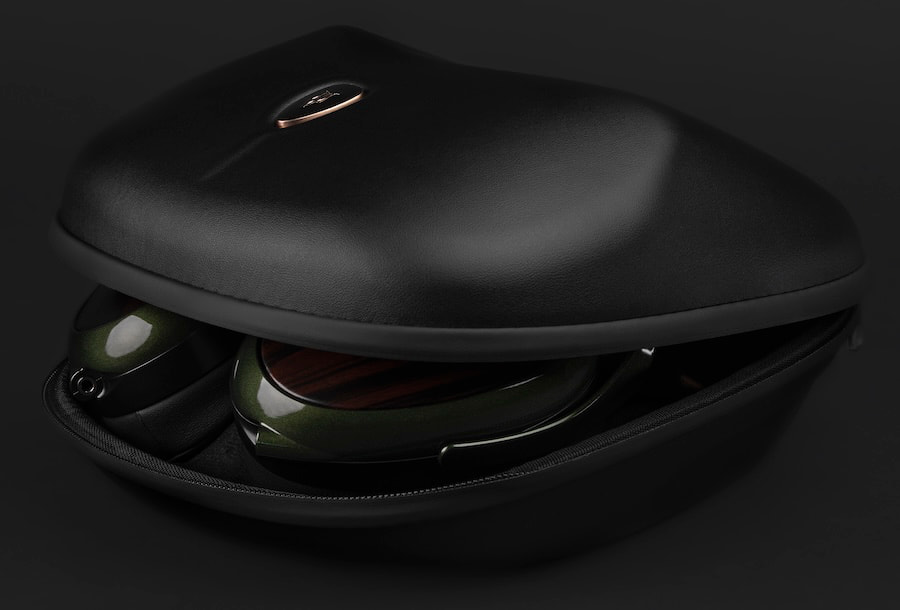
Meze keeps the package practical. The STRADA arrives in a hard EVA carrying case with a soft velvet lining that actually protects the finish instead of just looking good in photos. Inside, you get a separate PU leather pouch for the cables, which keeps things organized and avoids the usual tangle.
Two 1.8 meter dual-twisted Kevlar-wrapped OFC cables are included: one terminating in 3.5 mm and another in 4.4 mm balanced. A gold-plated 3.5 mm to 6.3 mm adapter rounds it out for desktop use.
Premium Build and Green with Envy?

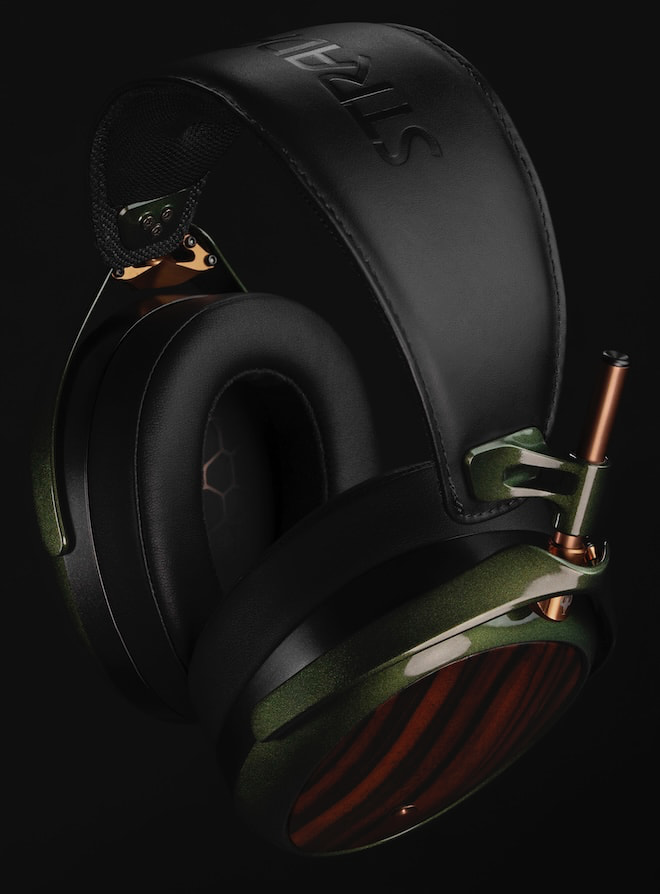
From a build standpoint, Meze stayed consistent with its design language but adapted it for a closed-back dynamic platform. The STRADA borrows the core structural thinking of the LIRIC, but instead of planar magnetic loading, this chassis is optimized around a dynamic driver. The focus is on low mass, rigidity, and comfort over long sessions which are likely to be key selling points for potential buyers.
At roughly 330 grams, the STRADA sits toward the lighter end of the closed-back category, and that matters in practice. The magnesium frame keeps the structure rigid without adding unnecessary weight, and the distribution of that weight across the top of my head was very effective.
I have a larger than average head and very little tolerance for excessive clamping force. The STRADA avoids that trap. The pressure is firm enough to maintain a proper seal, which closed-backs absolutely require, but it never crosses into that vise-like squeeze that ruins longer sessions.
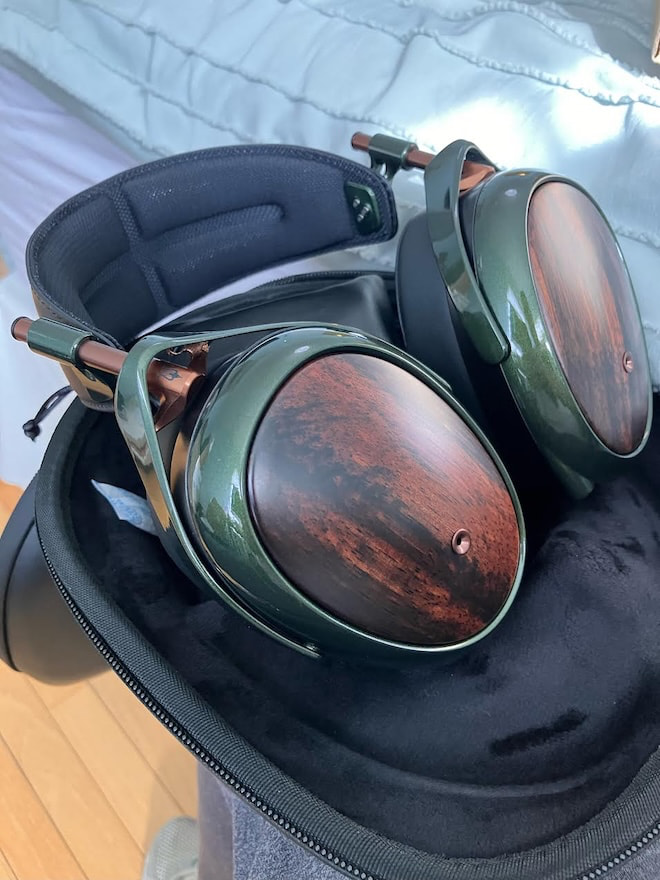
The deep green finish has divided opinion, and not quietly. It’s a saturated, metallic tone that leans closer to vintage performance car than conventional hi-fi aesthetic. I wasn’t convinced at first glance. In product photos it felt aggressive. In person, under normal light, it reads more controlled and far more refined. The finish has depth, and the execution is clean. Whether someone likes the color is subjective. Whether it’s well done is not. It is.

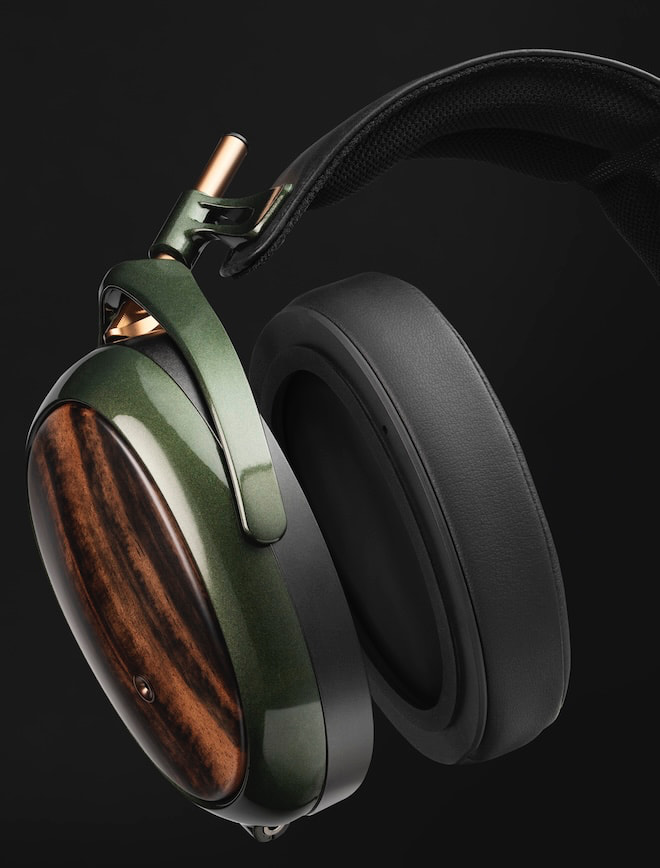
The ear pads attach magnetically. Simple idea, but it works. They line up the same way every time, and that matters with a closed-back. If the seal is off, the bass changes. Here, the seal is consistent without cranking up the clamping force. Isolation is strong for a passive closed-back. It blocks more outside noise than the 99 Classics 2nd Generation, and that difference shows up in normal use. HVAC hum fades into the background. Street noise softens. It’s not noise cancelling magic, but it’s enough to stay focused while listening.
I wore them during the Men’s Olympic Ice Hockey Gold Medal Game, streaming through Peacock on my iPad Pro using a dongle DAC. Between the seal and the volume headroom, I was fully locked in. I could barely hear the shouting from the rest of my family demanding to know whether I was having some kind of episode after Jack Hughes buried the golden goal. I wasn’t. I was celebrating properly. The STRADA let me stay in the moment without cranking the volume into dangerous territory. That’s the point.
The ear pads use soft PU leather on the outer contact surface, which helps maintain a consistent seal which is important for bass response and isolation. Inside, the Alcantara lining does a good job of keeping things from getting overly warm during longer sessions. They don’t turn into sweat traps after an hour, which is not always a given with closed-back designs and a situation that has turned me off from a number of high-end designs.
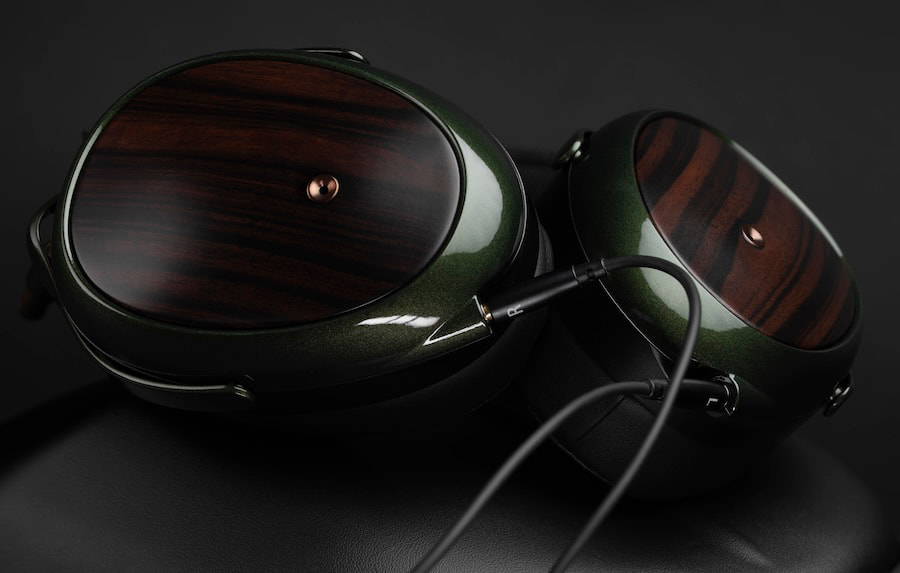

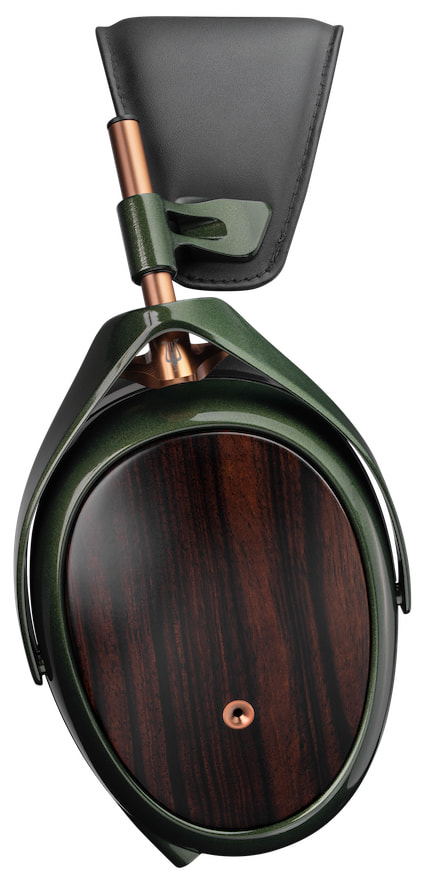
The Macassar ebony cups look expensive and they should for the $799 asking price. The finish and grain are very much in line with Meze’s house aesthetic; polished, tactile, and clearly meant to signal that this is not an entry-level afterthought. It is a dense, stable wood and makes sense for a closed back design, but let’s not pretend this is rustic minimalism. This is deliberate styling.
Each pair has slightly different grain, which gives them some individuality without screaming for attention. It feels well made and intentional, not decorative for the sake of it. Do I like the look as much as the 109 Pro? Not quite. That one clicked immediately. This feels more like an acquired taste.
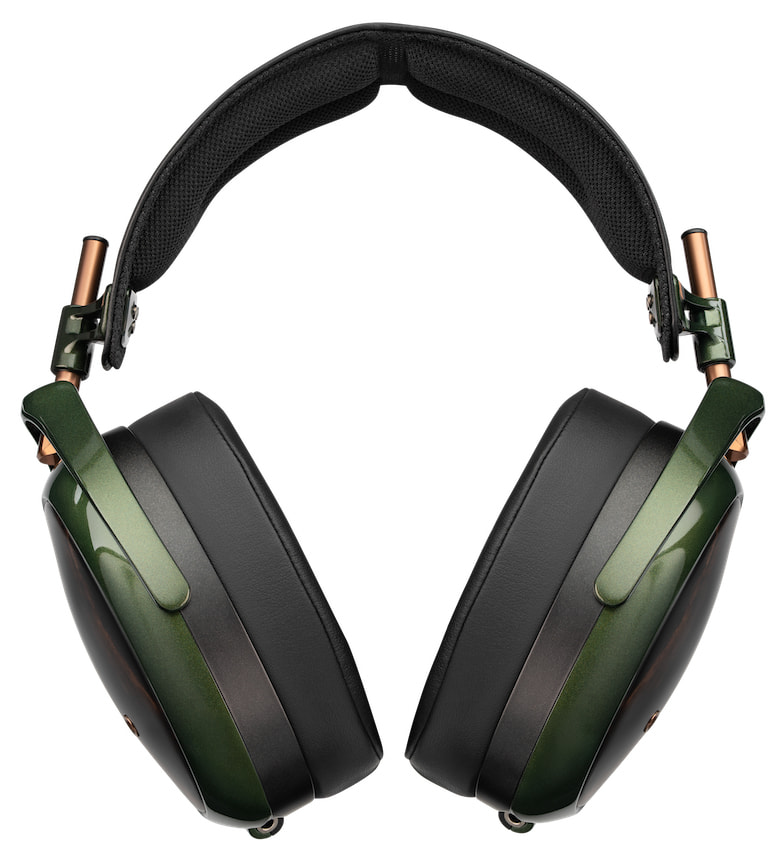
Overall, the STRADA is built to a high standard, but the fit is not identical to what long-time Meze owners might expect. The suspension and headband system are different from the floating designs used on models like the 109 Pro or Empyrean II. Those tend to settle onto your head and disappear. The STRADA doesn’t quite do that. It feels more structured. More fixed.

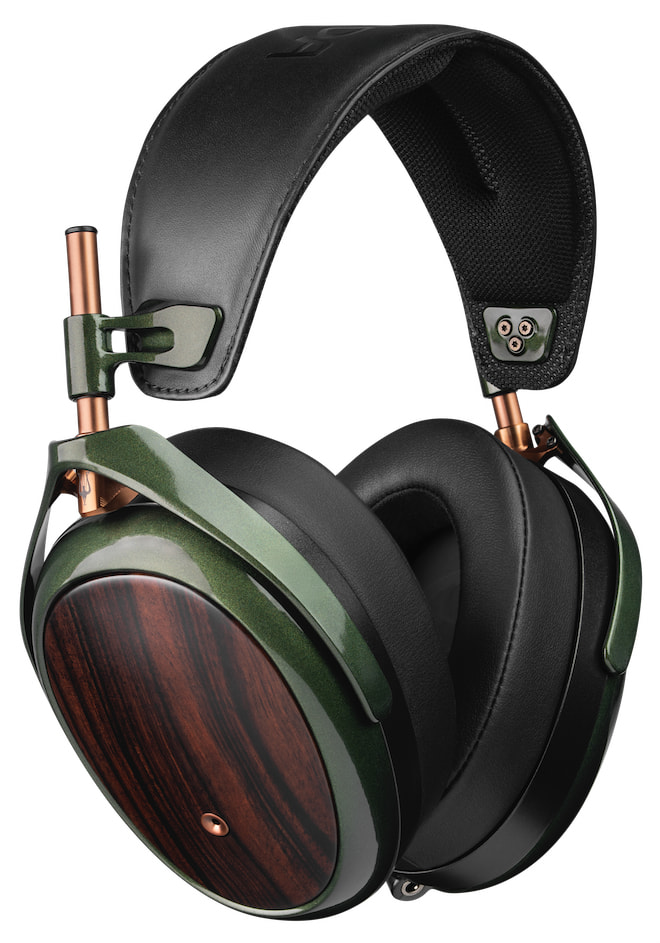
The gimbals and adjustment rods also feel different. They’re solid, but the range adjustment is smooth rather than notched. I would have preferred small detents to make it easier to return to the exact same setting every time. As it stands, getting both sides perfectly matched takes a bit more attention than it should.
Technically, the STRADA runs a 50 mm dynamic driver rated from 5 Hz to 30 kHz, with distortion listed at under 0.1 percent at 1 kHz. On paper, that tells you two things: there’s plenty of bandwidth, and Meze is trying to keep things clean at normal listening levels.
This is the same basic dynamic platform first used in the 109 Pro, but it’s been adjusted for a closed-back enclosure. That’s not a small detail. Closed designs deal with internal pressure, reflections, and damping in ways open-backs don’t. You can’t just drop the same driver into a sealed cup and call it a day. It has to be tuned differently.
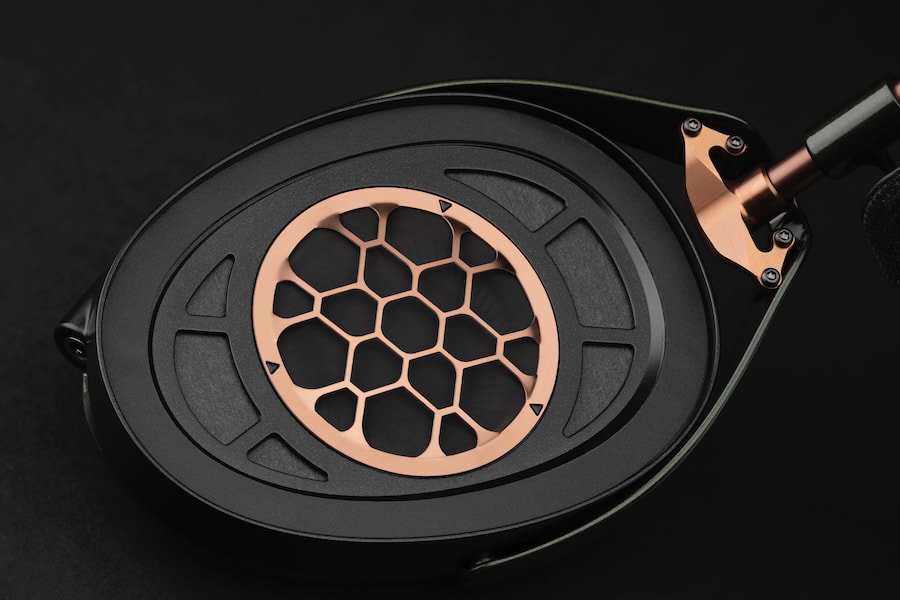
The diaphragm is a carbon fiber reinforced cellulose composite, designed to stay light but controlled when the music gets demanding. Around it sits a polymer ring with a thin beryllium coating applied through a vapor process to increase stiffness and improve how quickly the driver starts and stops. The surface grooves help manage resonance, and the copper-zinc stabilizer ring works to damp small vibrations before they smear detail.
At 40 ohms and 111 dB sensitivity, the STRADA is easy to drive. You don’t need a desktop amp the size of a shoebox to make it work. A good dongle DAC, portable player, or modest desktop setup will get it to proper listening levels without running out of headroom.
Listening

I rotated the STRADA through a fairly typical mix of sources: my iMac and a MacBook Air at the desk, an iPad Pro for casual listening, and a range of DACs and amplifiers including units from Topping, FiiO, the Apos x Community Gremlin, and a Schiit Magni from Schiit Audio. I also spent time with a few dongle DACs with an iPhone 14 because that’s how a lot of people will actually use a 40 ohm, 111 dB headphone.
In other words, the STRADA had every opportunity to show what it could do — or to miss an empty net with less than ten minutes left in the third period.
Right off the bat, the iFi GO blu Air that worked well with the 99 Classics 2nd Gen and Beyerdynamic DT 770 PRO X wasn’t the best match here. Even running balanced, with 262mW into 32 ohms on tap, the STRADA felt slightly underfed. The sub bass lacked grip. Notes had weight, but not the kind of control that keeps things from spilling over the edge.
That matters because the STRADA has real low-end presence. The bass is full and carries impact well into the upper bass. This is not a polite, neutral closed-back. It pushes air. And when the amplifier doesn’t have enough authority, that energy can blur instead of punch.
With better amplification, the bass tightens and the overall presentation settles down. The midrange and treble benefit from that control as well. This is one of those headphones where system matching counts more than usual. If you’re looking for strong bass impact with definition, the STRADA can deliver it. But you need the right partner on the other end of the cable.
Switching over to the iFi GO bar Kensei was a different story. With 477 mW available from the 4.4 mm balanced output, the STRADA woke up. The bass tightened, the sub bass gained shape, and the upper bass stopped bleeding into the lower mids.
Cue up Daft Punk, deadmau5, Kraftwerk, Brian Eno, Aphex Twin, or The Orb, and the difference was obvious. The low end stopped coloring outside the lines. It stayed full, but it was more disciplined. Kick drums had impact without smearing. Synth bass lines hit hard and then got out of the way.
If you live on electronic music, there’s a lot to like here. The STRADA can move air. With the right power behind it, the bass is deep, defined, quick, and punchy. Without it, things get a little loose. This is not a set-it-and-forget-it headphone. Feed it properly and it rewards you.
So far, so good. Then I moved into the midrange and things got more complicated.

Hit the One in the Middle
Instruments and male vocals came through clean and detailed, but they sat a touch behind the bass. Not buried. Not three steps back into the drum kit starting a studio argument. Just slightly set back. Enough to notice.
I listen to a lot of piano, bass guitar, acoustic guitar, and male vocals; Nick Cave, Sam Cooke, Jason Isbell, John Prine, Elvis Presley, David Bowie, and David Byrne — so that region matters to me. When the vocal center image shifts even slightly, I hear it.
I started rotating through my solid state desktop gear from Topping, FiiO, and Schiit Audio to see how much of it was source dependent. The more linear, slightly more forward presentation from the Topping and Schiit gear helped push the midrange forward a bit. It didn’t completely change the tuning, but it narrowed the gap between bass and vocal presence.
The warmer FiiO setup, though, with its thicker midband, smoothed everything out a little too much. It was like ordering medium smoked meat at Lester’s in Montreal and getting the fatty cut. Satisfying at first, but after a while, everything starts to taste the same. Too much weight, not enough edge definition.
The STRADA doesn’t need more warmth in the mids. It needs more texture, presence, and a sharper edge.

Illumination with a Candle or Floodlight?
Strings, upper piano registers, and female vocals fared a bit better, but I’d still describe the STRADA as slightly recessed through the core midrange. Piano didn’t quite have the weight or sustain I expect without a small EQ nudge. Notes were clean, but they didn’t bloom or hang in the air the way they can on a more linear tuning. Strings, too, lost a bit of bite. The leading edge was softened, and without adjustment, they didn’t always sound as natural as they should.
Female vocals, as the response climbed into the upper mids and lower treble, had more presence than the male vocals. Amy Winehouse, Ella Fitzgerald, Björk, Tori Amos, Nina Simone, and Brandi Carlile all had more immediacy and projection. There was more pep in their step compared to the men.
That same region is also where I began to notice some treble peaks. Not constant glare, but moments where energy jumped forward. Push the volume with a hot or poorly mastered track and the STRADA will let you know. I wouldn’t call it bright overall, but there is more energy and detail in the extreme upper mids and lower treble than in the center midrange. It’s a tuning choice. And yes, it’s fixable with EQ. How much you choose to correct it, or whether you feel compelled to, depends on your tolerance and your music library.
Soundstage is good for a closed-back. Not cavernous. Not claustrophobic either. There’s some depth and a bit of vertical space, but it doesn’t approach the openness of the 109 Pro or Empyrean II. That’s the tradeoff with a sealed design. You gain isolation, you give up some air.
Imaging is solid, just not laser etched. Instruments are placed clearly enough, but nothing hangs in space with surgical precision. You’re not getting that razor sharp, walk around it kind of presentation. It’s more cohesive than pinpoint.
Stereo separation is respectable. Left and right channels are distinct, and layering holds together, especially with well recorded material. For a closed-back at this price, it performs about where it should. Competent. Controlled. Not class leading in spatial tricks, but not a weakness either.


The Bottom Line
The STRADA gets a lot right. Build quality is excellent. Comfort is good once you dial in the fit. Isolation is strong for a passive closed-back. The bass is the headline feature; deep, impactful, and capable of real authority when properly amplified.
The midrange is clean and detailed but sits slightly behind the low end. It’s not hollow, just not as forward as some listeners might prefer. The treble is not etched or aggressively bright in the way some older Beyerdynamic models could be and to be fair, their newer releases have improved in that regard — but there are noticeable peaks. Poor recordings and high volume will expose them.
Overall, the STRADA is resolving and engaging, but it benefits from careful system matching and, in my case, some light EQ. Once you sort that out, it becomes a very enjoyable closed-back option.
That said, I still prefer the 109 Pro for its cohesiveness, openness, and more natural balance. The STRADA is a strong entry in Meze’s lineup, but it doesn’t unseat my favorites. It’s a very good headphone that rewards attention — especially on the amplification and tuning side.
Pros:
- Strong, impactful bass with good depth when properly amplified
- Clean, detailed overall presentation
- Solid passive isolation for a closed-back design
- Excellent build quality with premium materials
- Easy to drive on paper and works well with portable and desktop gear
Cons:
- Midrange sits slightly behind the bass and upper mids
- Noticeable treble peaks with certain recordings or higher volume
- Benefits from careful amp pairing and often some EQ
- Headband adjustment system lacks notches and takes dialing in
- Not as cohesive or spacious as the 109 Pro