Connect with us
DAPA Banner

NewsBeat

‘I visited Andrew’s Pizza Express and raging locals have DEBUNKED one claim’

Published

on

Daily Mirror

The Mirror’s Julia Banim visited the Woking branch of Pizza Express, best known as the alibi of Andrew Mountbatten Windsor. And while the birthday parties are indeed continuing, it’s unlikely the former prince will be welcomed back for a slice anytime soon

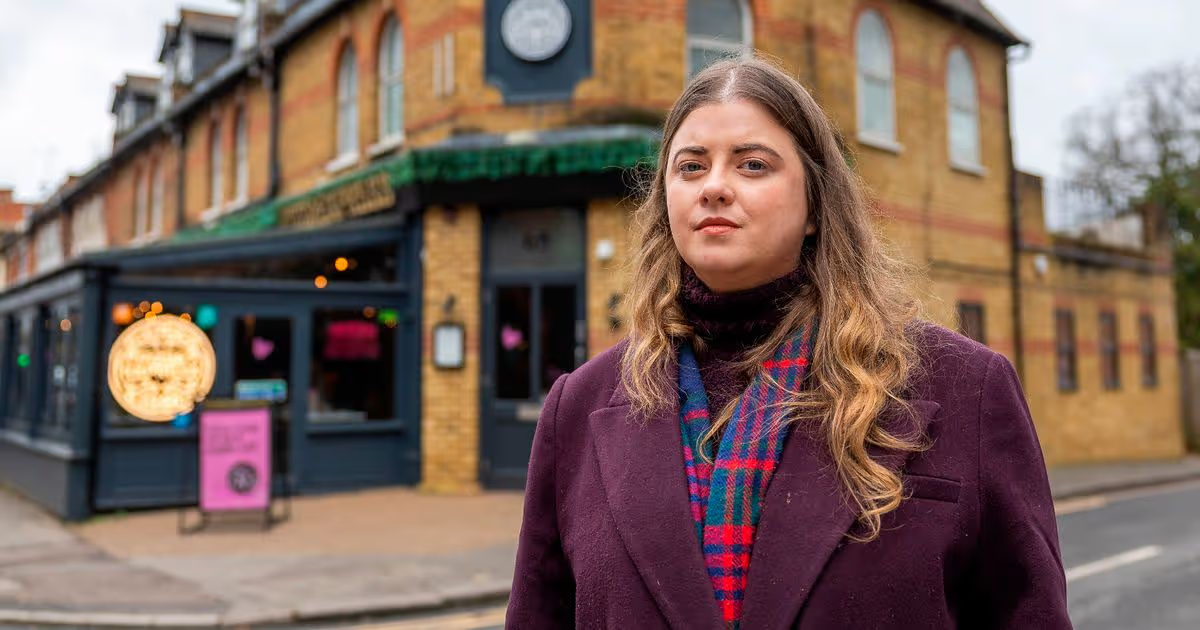
Mirror reporter Julia Banim visits Pizza Express in Woking

The whole nation watched in awe as the King’s brother was arrested last week, but one humble British town was rocked by Andrew Mountbatten Windsor’s fall from grace long before he was hurled into custody.

From the outside, this chain restaurant on an ordinary street looks like any other branch of Pizza Express. But this is The Pizza Express. The one that launched a thousand memes after unexpectedly providing an alibi for the former prince.

Advertisement

I am, of course, at Pizza Express Woking, the infamous venue of a birthday party allegedly attended by Princess Beatrice on March 10, 2001. Andrew says he took his eldest daughter to the bash, the same day Jeffrey Epstein victim Virginia Giuffe claimed she first met and had sex with the then-duke.

The late whistleblower alleged they danced together at London’s Tramp nightclub before having sex at Ghislaine Maxwell’s mews house, but Andrew insists he was at the pizza parlour with his daughter. He has vehemently and consistently denied any wrongdoing in connection with paedophile Epstein.

Andrew, 66, notoriously brought up this humdrum location during his 2019 ‘car crash’ interview with Newsnight’s Emily Maitlis, who pressed him on how he could remember such a mundane event from so long ago. With a slight smug smile, Andrew, then known as Prince Andrew, replied, “Because going to Pizza Express in Woking is an unusual thing for me to do, a very unusual thing to do.” One source claims Beatrice has “absolutely no recall whatsoever” of that specific birthday party in northwest Surrey, or of her dad picking her up.

Ensure our latest headlines always appear at the top of your Google Search by making us a Preferred Source. Click here to activate or add us as your Preferred Source in your Google search settings.

This turned out to be one of the most memorable parts of the ex-prince’s toe-curling interview, which continues to linger in the public consciousness. Behind the scenes, it’s been reported that Beatrice was ‘blindsided’ by Andrew’s decision to use her as an alibi, with reports that the furious princess had a heated discussion with him after the interview.

Now, following Andrew’s recent arrest and release, on suspicion of the unrelated offence of misconduct in public office, so-called diners have flooded the branch’s Google reviews page with jokey reflections of their visit. Referencing Andrew’s recent brush with the law, one reviewer deadpans, “Not really a review, but was just wondering, do you deliver to prison? Asking for a friend who loves your establishment. Thanks.”

Advertisement

With a note to Andrew’s apparent medical condition, which allegedly prevents him from sweating, another quipped, “I’ve never been, but my friend Andrew absolutely loves this establishment. Profuse sweating is an issue for him, but thanks to your world-class air conditioning, he didn’t sweat at all.”

As the former prince grapples with the ongoing police probe, I went for dinner at the infamous branch to see how staff are faring – and if locals ever believed the royal who claimed he couldn’t sweat…

For me, a visit to Pizza Express is nothing unusual. But a visit to the Woking branch most certainly is. It’s shortly after 6 pm on a slightly blustery Sunday evening that I arrive at the venue, and the air rings with clinking cutlery and upbeat pop music. The place is bustling, and it’s clear the restaurant’s reputation hasn’t suffered for being so closely tied to the most shocking royal scandal in living memory.

Advertisement

I’m left wondering whether this odd connection has actually been good for business. After all, is there a better-known branch anywhere on the British Isles? They do say any publicity is good publicity, and for local woman Karen Weir, the spotlight that the drama has shone on the town has been a welcome one. Karen told the Mirror: “I’ve lived in Woking a long time and it’s good to see Woking mentioned! But it doesn’t really bother me. I don’t see it as a negative.”

Not all locals are all too sure, however. After spending a few hours in the town centre, I become used to the familiar eye roll at the very mention of Andrew’s name, and the frustration that attention isn’t being paid to more pressing matters, such as rows of forlorn shuttered shops not far from that distinctive blue welcome to Woking sign.

For others in the area, the very notion that the Queen’s son was at Pizza Express on the night in question is nothing short of ridiculous. Pouring scorn on this narrative, Barbara was even more blunt, telling the Mirror: “I’m not embarrassed by it because I don’t believe it. I just don’t know why he’d do that, it’s ridiculous, because if he’d have been in there, Woking’s the sort of place where everyone knows what everyone’s doing. If he’d been in there, it would have been swamped. And people would have known about it straight away. There’s no way. There’s no way that man was in there that night. Absolutely no way.”

Advertisement

Over at Pizza Express, staff are busy but friendly, and quickly clean me up a cosy corner table. Admittedly, I do feel a little conspicuous. I’m the only solo diner amid a sea of family tables, many with young children. But if staff have been briefed on how to deal with curious members of the public, then there’s no sign of it as they politely take my order. The very picture of serene professionalism, despite the gossipy questions they’ve surely had to deal with from friends and family.

Perhaps, like other locals, they’ve learned to deal with the spot’s notoriety with a typically British dry sense of humour. I catch one woman’s eye as we’re taking photographs outside, and we immediately share a knowing smirk. Those in the area are no strangers to reporters milling around this very average-looking street. Finding humour in the ridiculousness of the saga, Craig, who is originally from Zimbabwe, told us: “Everyone around just thinks it’s a bit of a joke. They’re just keeping with the banter and making lighthearted jokes about it.”

Another local woman, Emma, sums up the mixed bag of feelings in the area well, telling us: “I think it’s a lie for one thing. It’s kind of a funny association, because why pick here? I don’t think it’s tarnished the town in any way. It’s just infamously put us on the map, and if you’ve looked at the reviews from Pizza Express after it, they were all hilarious, saying, ‘yep, it’s a good place for an alibi’, things like that! So it’s kind of, you know, British self-deprecating humour came through. But I would rather he didn’t associate with the town. What’s come out and what he’s allegedly done.”

As I pour myself a solitary Diet Coke, a Happy Birthday chorus erupts from one of the packed tables, a strange echo from Princess Beatrice’s friend’s apparent bash all those years ago. It’s the first of multiple Happy Birthdays this evening. This is a spacious branch, with ambient lighting that gives it a relaxed, slightly upmarket feel.

It’s well situated, right in the heart of Woking, and it’s easy to see why this might be a popular choice for gatherings. The food is also good. Pizza Express has long been a high street favourite of mine, long before it hit the headlines, and the Funghi di Bosco, Romano style, of course, is well-cooked and piping hot. I also can’t resist the light, refreshing lemon-and-raspberry cheesecake with the gelato.

As the night wears on, the families are joined by couples, old and young, some collecting boxes to take home with them. There’s certainly no signs of this being a slightly macabre royal landmark, up there with the Tower of London or the burial vaults of St George’s Chapel.

I’m enjoying my meal so much that it’s easy to forget the troubling reasons that have brought me here this chilly evening. Indeed, it’s other, more positive aspects of Woking life are celebrated here, including a framed quote from iconic singer-songwriter and Woking native Paul Weller, which reads, “I’d like to think I’ve left something in the world. Without in any way trying to be morbid, but life is very short, and I’d like to think I’d leave some body of work that would inspire other musicians long after I’ve gone”.

There’s also a quote from Weller’s band, The Jam, “Better stop dreaming of the quiet life, ‘cos it’s the one we’ll never know.” This quote feel eerily poignant given last week’s extraordinary developments for the fallen prince, who was pictured leaving the police station after 11 hours of custody slumped in the back of a Range Rover, looking particularly shell-shocked.

Advertisement

It’s clear that there’s a certain plucky pride to Woking, the setting of HG Wells’ War of the Worlds, and a hugely influential hub of Mod culture. More than just a handy London commuter town, this spirited town and its residents have plenty to say about that 2001 visit from a largely unwelcome out-of-towner. While it may rankle and bemuse locals in equal measure, it appears as though the unsavoury Pizza Express Andrew connection is here to stay.

Do you have a story to share? Email me at julia.banim@reachplc.com

READ MORE: ‘I worked for Queen Elizabeth – Andrew Mountbatten-Windsor moment made my skin crawl’

Source link

Advertisement
Continue Reading
Click to comment

You must be logged in to post a comment Login

Leave a Reply

NewsBeat

Billingham Asda broken into as police hunt for duo

Published

on

Billingham Asda broken into as police hunt for duo

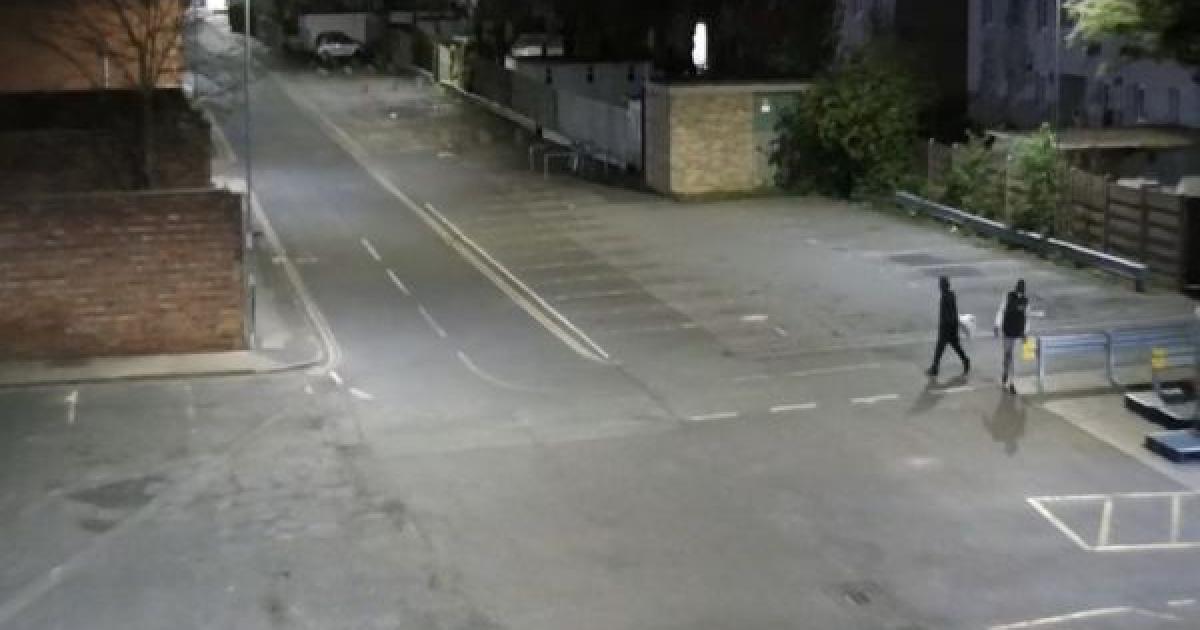
The incident happened at the supermarket on the Causeway, in Billingham town centre, around 2.25am this morning (April 11). 

Two men in dark clothing were caught on CCTV forcing entry before leaving with a large quantity of goods, including alcohol and scratch cards. 

Police launched a search but the suspects had fled the scene. 

Advertisement

Cleveland Police say one of the men was wearing a grey tracksuit with a black gilet and a black face covering, and was carrying a duffle bag. 

The second man was wearing all-black clothing.

Enquiries are ongoing and officers are urging anyone who may have captured the two men on doorbell or dash cam footage to get in touch on 101, quoting reference number 067408.

Advertisement

Source link

Continue Reading

NewsBeat

Still in shock, Beirut tries to heal after deadly Israeli attacks

Published

on

Still in shock, Beirut tries to heal after deadly Israeli attacks

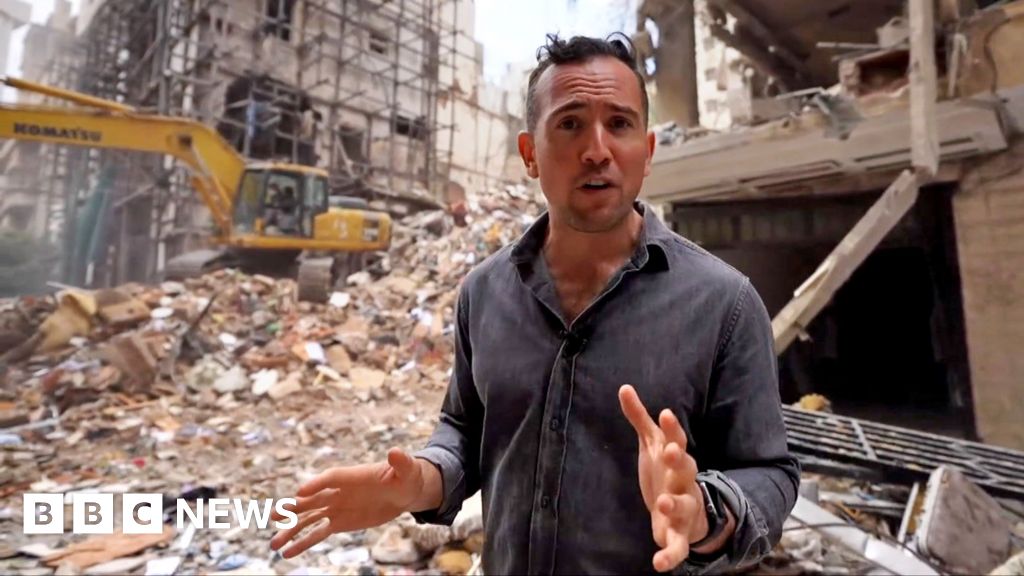
Lebanon experienced one of the deadliest days in its recent history, as widespread Israeli air strikes brought horror and destruction to the country on Wednesday, just hours after a ceasefire was announced in Iran.

The attacks, that came in the middle of the day without warning, killed more than 300 people, a third of them women, children and the elderly, according to the Lebanese health ministry. Some of the attacks hit busy, densely populated neighbourhoods, places that had not been targeted before and where people felt they were safe.

Israel said it carried out more than 100 air strikes in just 10 minutes on what it described as targets linked to the Iranian-backed group Hezbollah.

BBC Middle East correspondent Hugo Bachega has spoken to residents in Beirut, a city that is still in shock.

Advertisement

Source link

Continue Reading

NewsBeat

I observed how tradition survived harsh Sovietisation and rapid transformation

Published

on

I observed how tradition survived harsh Sovietisation and rapid transformation

When Soviet president and Communist party secretary Mikhail Gorbachev introduced the policies of perestroika (reconstruction) and glasnost (openness) in the mid-1980s, it marked the beginning of cautious reforms of the Soviet Union. Georgia, or the Georgian Soviet Socialist Republic, to give it its full name at the time, was on the periphery of the union.

Far from Moscow, it lay hidden on the other side of the Caucasus mountain range on the edge of the Black Sea. As a doctoral candidate in linguistics on a research grant to Tbilisi University, I spent one year living there, between 1987 and 1988. I was conducting research on the Georgian language.

Travel at the time was very difficult, and could only happen via Moscow. I did not return to Sweden for the duration of my stay. In the recent publication, We Witnessed the Soviet Break-Up: Five Scandinavian Researchers on the Final Years of the USSR, Seen From the Caucasus, I detail how this gave me a front-row seat from which to observe the speed at which society was shifting – and how language was key to that transformation. I also observed how old cultural traditions had endured despite decades of Communist propaganda and harsh Sovietisation.

The 1987 May Day parade.
Karina Vamling, Author provided (no reuse)

Rapid transformation

The May Day parade was long one of the key moments in the Soviet calender. I witnessed the last time it was held in central Tbilisi, in 1987. People were carrying red flags. Banners declaiming “Glory to the Communist party” and “Glory to our multinational Soviet Fatherland” were draped on the main buildings.

Advertisement

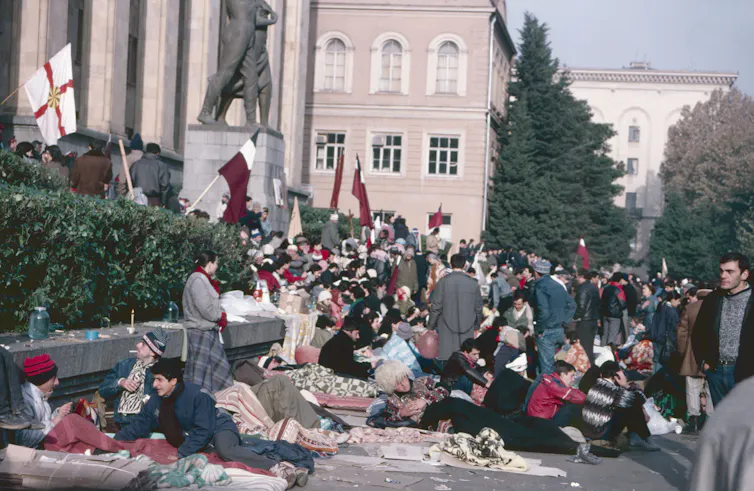
Next year, however, the national movement across the republic was pushing for a free Georgia. In November 1988, many took part in a hunger strike in front of the Georgian parliament against changes in the constitution that would reduce the rights of the Georgian republic. Protesters wanted what they termed the “Russification of Georgia” to come to an end.

Georgian society was multiethnic and multilingual, counting Russians and Georgians alongside Armenians, Azerbaijanis, Abkhaz, Ossetians, Greeks and many others. Georgian was the main language within the Georgian education system as well as in broadcasting and the press and, technically, according to Article 6 of the Constitution of Soviet Georgia recognised as the republic’s official language. However, during the Soviet period, Russian speakers could easily live and work in Georgia without knowing Georgian: Russian was the lingua franca for inter-ethnic communication within the republic and the Soviet Union at large.

People engaged in a hunger strike lie on a pavement outside a parliamentary buidling.
The hunger strikes of 1988.
Karina Vamling, Author provided (no reuse)

As a non-Indo-European language, Georgian boasts its own script and a written history that dates back to the 5th century AD. It is a cornerstone of the Georgian identity. Within the wider push for greater political freedom, Georgians now fought for the implementation of the constitutional status of Georgian. This included increased demands for knowledge of Georgian in workplaces and administration, while also investing in teaching Georgian as a second language.

Efforts were made to develop Georgian terminology in technology, science and other fields where Russian had been dominant. Citizens who had little or no knowledge of Georgian were under pressure to learn.

Enduring traditions

Despite decades of Sovietization, social and family life remained underpinned by old patriarchal traditions.

Advertisement

During my time in the country, I was welcomed with more openness and engagement, and less suspicion, than during the three years I had spent in Moscow. I experienced the extent to which hospitality was an ancient Georgian virtue. “A guest is a gift from God,” local people would say.

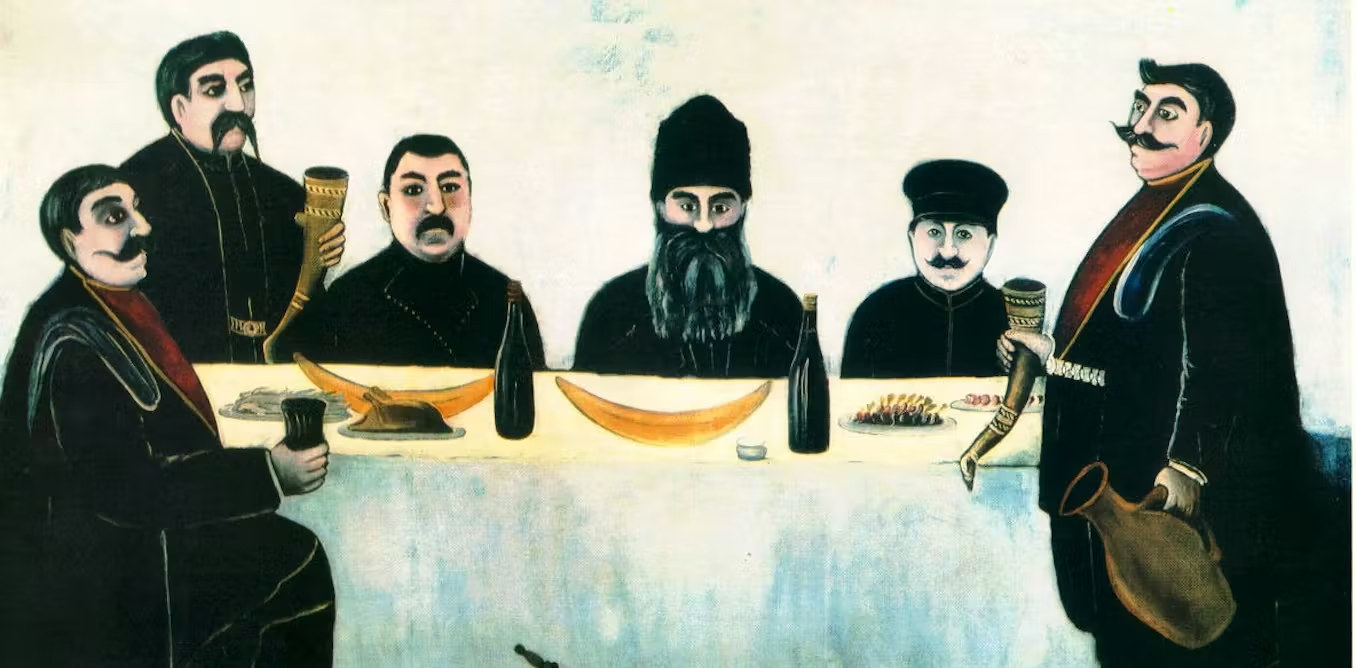
Georgians were proud of their cuisine and ancient wine production. When a guest entered a home, the dinner table would quickly transform into a feast, what is know as a “supra”. This came with its own specific structure and rules. The man of the house would assume the role of toastmaster (tamada), and the wife and female members of the family would prepare and serve the food. They would be called in from the kitchen for a toast in honour of the women. In some traditional families, the men would sit at one end of the table, and the women and children at the other.

These traditions were discernible across the different cultural communities within Georgia. Tensions at the time were growing between Tbilisi and the central Soviet authorities in Moscow, and within Georgia itself, with minorities in the autonomous entities of Abkhazia and South Ossetia.

Advertisement

In the summer of 1989, the first violent Abkhaz-Georgian clashes took place. I was on a day trip, travelling from Sokhumi, the capital of the Autonomous Republic of Abkhazia, to a wedding in a small town called Zugdidi in the Megrelia region when violence broke out. Unable to return to Sokhumi as planned, I ended up spending one week with a family on the outskirts of the town.

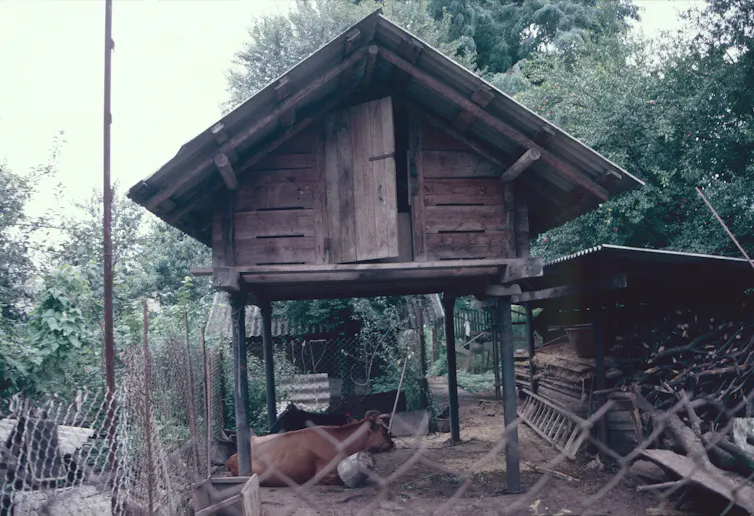
Being there was like stepping back in time. The household was run by a young woman called Tsira, who, as a widow, dressed all in black. According to tradition, she would remain in black for the rest of her life. Her eldest son, who was 12-13 years old at the time, appeared to be seen as the man of the house.

A wooden hut in a forested countryside.
A journey back in time. Tsira’s yard in Zugdidi.
Karina Vamling, Author provided (no reuse)

Tsira’s neighbours came round and my friends from Sokhumi sat with them, discussing the conflict in Megrelian, the local language. Tsira prepared food, chicken and maize porridge over an open fire in a small wooden hut in the yard. Smoked cheese hung from the ceiling.

At one point, we visited the cemetery. Tsira sat on a stone bench by a black marble bust of her husband while relatives and guests sat around the grave. The women brought out Soviet champagne and food. I observed how toasting and eating bread dipped in wine were important in a ritual of honour and remembrance.

These religious practices showed how, within the official atheism of Soviet society, Georgian Orthodox traditions persisted – as they still do today. Another such religious practice common in Georgia during Soviet times was to hold a commemorative supra 40 days after a person had passed away. During this period, the men were not supposed to shave. The 40 days are considered the time it takes for the soul to reach heaven and God.

Advertisement

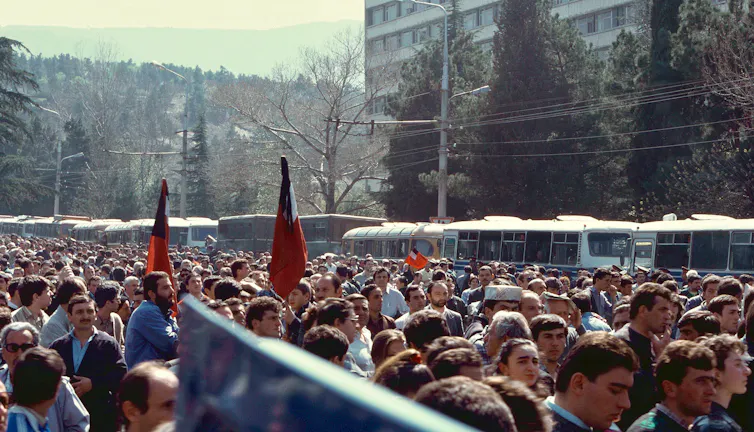
In 1990, I heard the crowd shouting “occupiers, occupiers” in front of the general staff of the Caucasian Military District in Tbilisi. The newly adopted Soviet law, dubbed the “law of non-secession” made the idea that the Soviet Union might break up feel a utopian dream. And yet it did, merely a year later. Georgia declared independence from the Soviet Union on April 9 1991 and the split was finalised on December 26 with the dissolution of the USSR.

Protestors in a street in the 1990s.
Protests in 1990.
Karina Vamling, Author provided (no reuse)

In the intervening decades, the ethnopolitical conflicts that were fomenting during this early post-Soviet period have only deepened, not least following the Russo-Georgian war of 2008. Today, they remain largely unresolved and the situation in Georgia, highly volatile.

The Georgian language, however, has reclaimed the media, education and the streets. Russian has been replaced by English among the young generation of Georgians who do not carry this Soviet heritage.

Source link

Advertisement
Continue Reading

NewsBeat

PSNI issue traffic warning due to planned parade in Lisburn city centre

Published

on

Belfast Live

It is expected to finish at approximately 11pm

The PSNI has issued traffic and travel advice for those travelling through Lisburn city centre on Saturday evening.

Advertisement

Road users and members of the public are advised of potential traffic disruption until 11pm on April 11 due to a planned parade.

A PSNI spokesperson said: “The outward parade is expected to leave at 6.45pm from Rathvarna Drive and will then take the following route: Ballymacash Road, Prince William Road, Ballymacash Road, Antrim Road, Antrim Street, Bow Street, Market Square (with a short stop) and Railway Street/Wallace Avenue.

READ MORE: Northern Ireland weather outlook for the weekend aheadREAD MORE: Ambulance service warns protesters not to ‘impede’ emergency vehicles during NI fuel demonstrations

“The return parade is expected to leave Wallace Avenue at 8pm and will take the following route: Railway Street, Market Square, Smithfield, Market Place, Chapel Hill, Longstone Roundabout, Chapel Hill, Bow Street, Market Square, Railway Street and Wallace Avenue.

Advertisement

“It is expected to finish at approximately 11pm. Police officers will be present to manage traffic and public safety throughout the parade.

“To avoid potential delays, please seek an alternative route for your journey where possible during these times.”

For all the latest news, visit the Belfast Live homepage here and sign up to our daily newsletter here.

Source link

Advertisement
Continue Reading

NewsBeat

Sunderland shop refused alcohol license as owner absent from hearing

Published

on

Sunderland shop refused alcohol license as owner absent from hearing

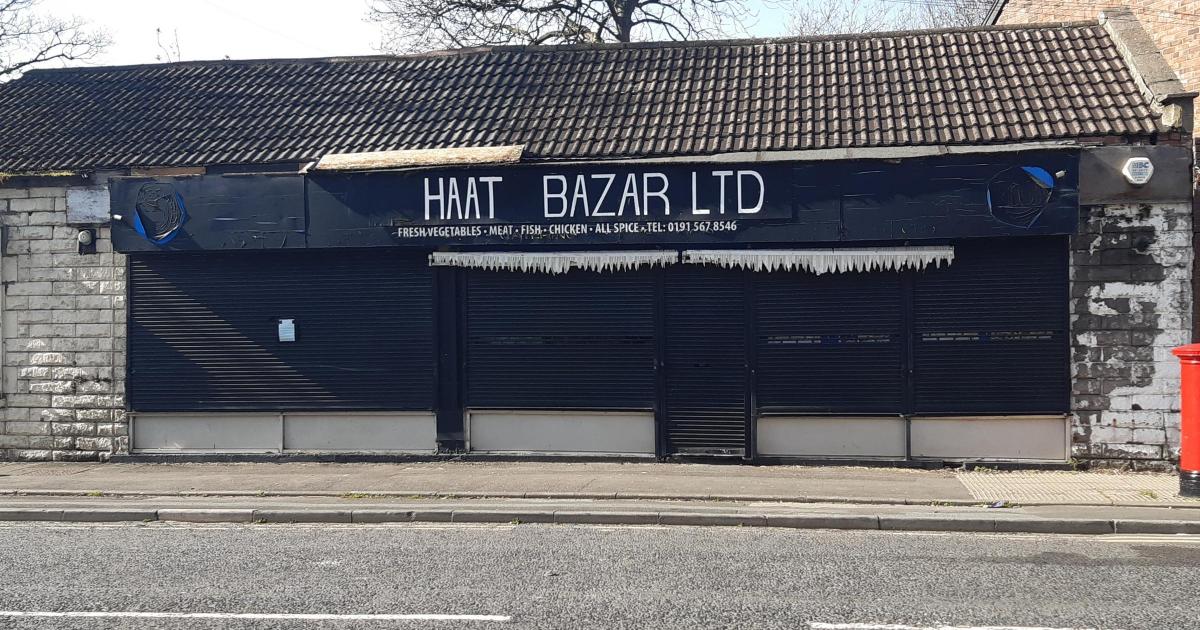
Sunderland City Council’s licensing sub-committee met on Thursday to discuss the application for 2 Eden Terrace, a property previously used as food store Haat Bazar Ltd.

Applicant Lojan Ramesh wanted permission for a planned new convenience store at the site to be able to sell booze between 8am-11pm.

Information from the applicant in council reports said “alcohol is not the intended focus of the business” and that alcohol sales would have a “limited impact on the area.”

Advertisement

The application went before the council’s licensing sub-committee on April 9 after dozens of public objections were submitted, raising concerns about antisocial behaviour near the site, parking, littering and fly-tipping.

Initial proposals sought permission to sell alcohol for longer hours, but this was altered to 8am-11pm, seven days a week, following talks with Northumbria Police and the council.

Thursday’s City Hall meeting to decide the application was attended by Barnes ward councillors Antony Mullen and Fiona Tobin.

As there was no representation from the applicant, the licensing sub-committee were told they had several options in the circumstances.

Advertisement

These included either refusing the application, adjourning a decision, or only hearing evidence from council licensing officers and objectors before making a decision. 

A legal adviser for the committee said there were concerns about the third option in terms of conducting a “fair hearing”, and it was noted that the refusal option would allow the applicant the right of appeal, or the chance to resubmit the application.

A committee report also noted the matter had been adjourned before at a separate meeting earlier this year, with a decision “postponed” because the applicant was unable to attend due to “ill health.”

Following deliberations, the licensing sub-committee agreed to refuse the application “on the basis of the absence of the applicant”.

Advertisement

Councillor Michael Hartnack, presenting the committee’s decision, said this was “a consequence of their failure to attend or give reasons for their failure to attend but also to give the opportunity to present their application at some point in the future”.

It was noted that if the applicant wanted to reapply for the alcohol licence, the licensing process would start again and public objections would need to be resubmitted.

Source link

Advertisement
Continue Reading

NewsBeat

The best places to live in Cambridgeshire outside Cambridge as voted by you

Published

on

Cambridgeshire Live

Here are the three best places to live outside Cambridge

Cambridge was recently named as one of the best places to live in the UK by the Sunday Times. While Cambridge is a beautiful city to live in thanks to its many restaurants on offer and independent shops to explore, there are plenty of other areas in the county that could battle for the title of best place to live.

Advertisement

Whether you are looking for a smaller city to call home or a village surrounded by the countryside, Cambridgeshire has options for whatever you need. Outside Cambridge, there are so many places to see with cafés to relax in, outdoor spots to enjoy, great schools for kids, and activities to get involved in.

CambridgeshireLive asked our readers to share where they think is the best place to live in the county aside from Cambridge. These three places came out on top as the best places to live outside Cambridge.

3. St Ives

Unlike its coastal counterpart, St Ives in Cambridgeshire is not next to the sea but many people still love living there. People who live in the town or are just visiting love the historic centre and the beautiful views of the River Great Ouse you can enjoy.

St Ives also has an impressive range of restaurants including the Teller’s Table and the Whisky Café with a new Sushi and Salad location coming in June. If you want to live in St Ives, the average house price in the area is £319,989, according to Rightmove.

Advertisement

2. Ely

In second place is the city of Ely. The city is steeped in as much history as Cambridge, as the foundations of the area date back to 673. It was once the home of Oliver Cromwell between 1636 to 1646 after he inherited St Mary’s vicarage.

Ely has plenty of things to see and do such as taking a trip to the market, where you can find a range of fresh produce and homemade gifts, and visiting the historic Ely Cathedral. Rightmove says houses in the city cost an average of £382,047.

1. Waterbeach

In the top spot is a village not too far away from Cambridge. Waterbeach is an easy 30-minute drive or nine-minute train ride away from the city, offering people a quieter place to live while still being close to the action in Cambridge.

The village has a few different pubs including the Bridge, which is known for its riverside views and Sunday roasts, and Boswell Bakery where you can pick up a range of pastries and rolls. Properties in Waterbeach are slightly more expensive at an average cost of £451,447.

Advertisement

Source link

Continue Reading

NewsBeat

Suspect named as man fights for his life following Range Rover crash

Published

on

Manchester Evening News

A man has appeared in court charged with causing serious injury by dangerous driving and driving whilst disqualified

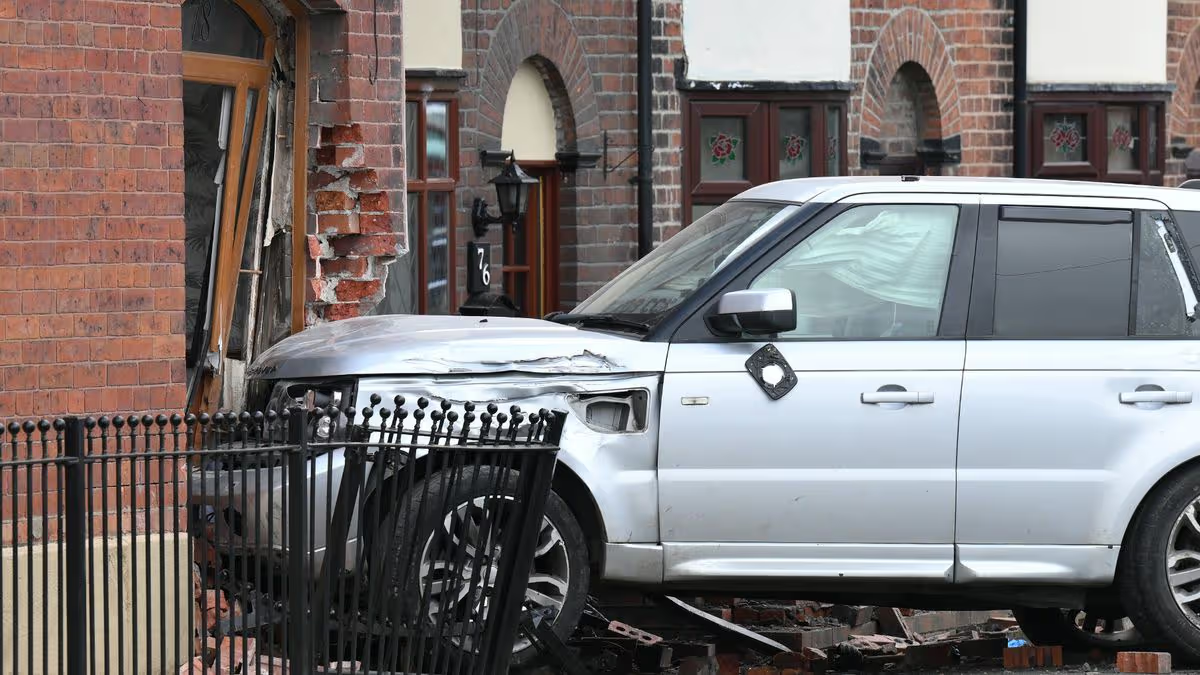
A man has been charged following a Range Rover crash. The incident happened on Market Street in Stoneclough at around 4.50am on March 28.

Advertisement

A Range Rover hit a man, before ploughing into a house, police said. The pedestrian, a 47-year-old man, was rushed to hospital from the scene with ‘severe injuries’. He remains in a critical condition.

Get MEN Premium now for just £1 HERE – or get involved in our WhatsApp group by clicking HERE. And don’t miss out on our brilliant selection of newsletters HERE.

Nicholas Partington, 42, of Barrett Court, Bury, has since been charged with causing serious injury by dangerous driving; and driving whilst disqualified, a Greater Manchester Police spokesperson said in an update issued today (April 11).

He appeared at Manchester and Magistrates’ Court on April 10. He has been remanded into custody to appear in court again later this year.

Advertisement

Source link

Continue Reading

NewsBeat

Sierra Leone women defy norms as rickshaw drivers

Published

on

Sierra Leone women defy norms as rickshaw drivers

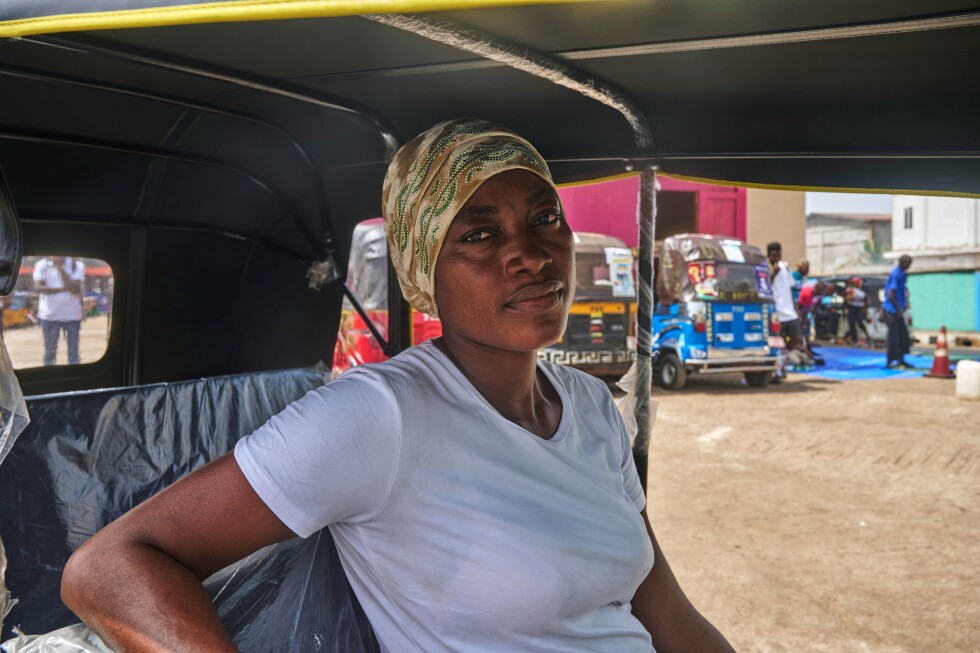
FREETOWN, Sierra Leone (AP) — As the late afternoon sun settles over Freetown’s main transit park, Hawa Mansaray pulls up her motorized three-wheeled vehicle and steps away for a break and to pray.

Mansaray is one of a small but growing number of women entering a male-dominated commercial transport sector in Sierra Leone’s capital, Freetown. The auto-rickshaws, known locally as kekeh, are an essential means of transport and until recently were almost exclusively driven by men.

“I have done different jobs since I came to Freetown but kekeh has done more for me,” said the 27-year-old single mother of one.

The rickshaws have become increasingly popular in Sierra Leone, filling the gaps in a strained public transport system as the West African country struggles to recover from its 1991-2002 civil war.

Advertisement

Freetown’s population has grown to more than 1.5 million, according to city estimates — roughly three times the size it was when much of its infrastructure was planned and built. Public transport systems have struggled to keep up, creating demand for commercial motorcycles and auto-rickshaws.

Although the rickshaws are usually rickety, run at minimal speed, and are considered less safe due to the maximum exposure that comes with how they’re built, commuters still prefer them because they’re easily accessible and offer maximum ventilation and relative comfort.

As more people turn to the rickshaws to earn a living, it’s also become a symbol of what women are capable of.

In the city, however, women are still “seen as people not adequate to do certain types of jobs,” said Marfoh Mariama Samai, a women’s rights advocate with Plan International Sierra Leone.

Advertisement

“So when a young woman ventures into a certain type of job, they are stigmatized,” she says of the female drivers.

A ticket to financial independence for many

Sierra Leone has one of the lowest levels of access to and availability of financial services in Africa, making it harder for groups such as women and rural residents to recover from economic shocks.

As a result, many women are confined to petty trading that offers little stability and makes them rely heavily on their husbands, said Samai.

“When the man gives you the money, he makes all the decisions,” she said of the patriarchal norms still in place in parts of Sierra Leone. “More young women should be encouraged to get into the transport sector.”

Advertisement

Mansaray knows the challenges of financial dependence firsthand. Originally from Kailahun District, where Sierra Leone’s civil war began, she was born at the height of the conflict, and had to drop out of school at the primary level.

As an adult, she turned to running small businesses to make ends meet for herself and her baby, after separating from her husband.

Learning to drive rickshaws for a living was initially not in her plans, but she took interest in it and paid to be trained after seeing women like her excelling in the business.

Mansaray now works under a company that requires her to make daily returns of 350 leones ($14), earning an average daily wage of 175 leones ($7), enough to cater to her family and considered high income for many in the country.

“I will advise my fellow women who aren’t employed to come into the game,” she adds.

Alimatu Kamara, another female rickshaw driver, can relate to Mansaray’s experience. She had been unemployed for years before deciding to venture into the business.

Advertisement

It’s been a great ride ever since, Kamara said, but added that a major challenge for her remains aggressive behavior from male riders, a common complaint among female drivers alongside safety concerns at night.

“Some women can panic,” she said. “It takes mind and determination to continue.”

Despite the difficulties, she plans to expand and purchase more rickshaws.

“We can’t just sit, waiting for office jobs. With jobs like kekeh, you can even make more money,” Kamara said.

Advertisement

‘Whatever men can do, women can do better’

The Sierra Leone Kekeh Riders Union has more than 1,000 registered members in western Freetown, but only about 20 are women, a number the union’s district chairman, Mustapha Thoronka, said has improved.

Thoronka said he supports efforts to train and assist female drivers, including advocating for loans for them.

“Whatever men can do, women can do better,” Thoronka said, hoping that through the business “they can support themselves and their families without relying on men.”

Thoronka is urging the government to provide more support, noting that it’s capital intensive, making it more difficult for women to get involved.

Advertisement

Mariama Barrie, a commuter, said she prefers female drivers.

“They are more careful than the men,” she said. For her, the growing presence of women in the kekeh sector sends a message particularly “to women who sit and wait to be spoon fed.”

“If you know how to ride, take kekeh … rather than sitting and waiting for handouts,” she said.

——

Advertisement

For more on Africa and development: https://apnews.com/hub/africa-pulse

The Associated Press receives financial support for global health and development coverage in Africa from the Gates Foundation. The AP is solely responsible for all content. Find AP’s standards for working with philanthropies, a list of supporters and funded coverage areas at AP.org.

Advertisement

Source link

Continue Reading

NewsBeat

Saturday Kitchen’s Matt Tebbutt suffers painful injury just moments before going live

Published

on

Daily Mirror

Saturday Kitchen was back on screens for another episode but, before the show went live, host Matt Tebbutt suffered an unfortunate accident.

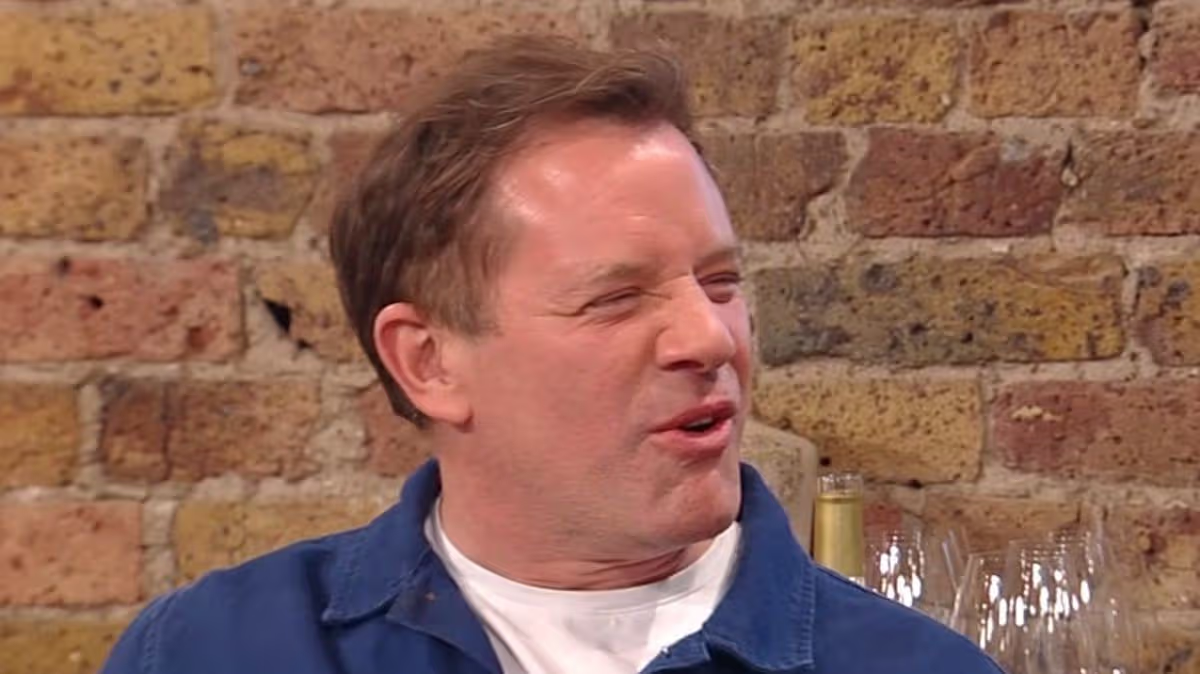
Matt Tebbutt has revealed he suffered a painful injury just moments before he appeared on Saturday Kitchen.

The beloved BBC show returned to screens on Saturday morning (April 11) with Matt back at the helm. Joining Matt on the programme were chefs John Chantarasak, Niklas Ekstedt and Thomasina Miers.

Advertisement

Chart-topping singer Jack Savoretti also made an appearance – in which viewers had to vote on whether he would have his version of food heaven or food hell. Drinks expert Helen McGinn was on hand too, to discuss some booze.

However, just minutes in and Matt revealed things took a worrying turn moments before the show went live, after he suffered a painful injury.

Talking to Helen, Matt revealed: “So I burnt my lips in rehearsal. Does it look like I’ve got fillers?” Helen replied: “It doesn’t look bad at the moment,” to which Matt shared: “I’ve got a blister there. It only hurts when I talk.”

Advertisement

Helen then said: “It’s going to hurt later.” Matt quipped: “Shall I not talk?” Giggling, Helen added: “I don’t know if you can get away with that!” Trying not to move his sore lips, Matt said: “Tell us about the wine,” as Helen laughed and replied: “I’ll give you a straw later.”

Matt quipped back: “I’ll dribble it all out, like you’ve been at the dentist.” Touching his sore lip Matt continued: “That’s what I feel like.”

It comes after Matt returned to Saturday Kitchen last month after spending some time in Australia. Earlier in March, audiences saw The One Show’s Alex Jones take the presenter’s chair as she was accompanied by Mike Reid, Adejoké Bakare, Bryn Williams and special guest Phil Wang.

Advertisement

While Matt appeared on the programme the previous week, the BBC star confirmed it was a pre-recorded episode as he posted updates from Australia with his Instagram followers.

Nevertheless, the 52-year-old presenter was back in charge once more in March as he paused to commend Alex for stepping in.

He remarked: “Before we go on with our usual nonsense, we should say how well Alex did last week. Well done, Alex Jones.”

Advertisement

Saturday Kitchen airs every Saturday at 10am on BBC One.

Source link

Continue Reading

NewsBeat

York Open Studios returns next week – what you need to know

Published

on

York Open Studios returns next week - what you need to know

Around 150 artists across York will open their doors to the public across the weekends of April 18-19 and April 25-26.

The annual not-for-profit event offers a chance to meet the artists, learn about their creative processes and purchase artwork. It involves artists living within a 10-mile radius of York.

Maps for the artists taking part in Open Studios can be found in libraries, shops and galleries across York in the weeks before the event.

Twenty-seven artists will be taking part in the event for the first time, including photographer Marcus Chapman, upcycle jewellers The Spoonery and painter Prachi Bhatnagar.

Advertisement

Marcus Chapman who will take part in this year’s York Open Studios (Image: York Open Studios)

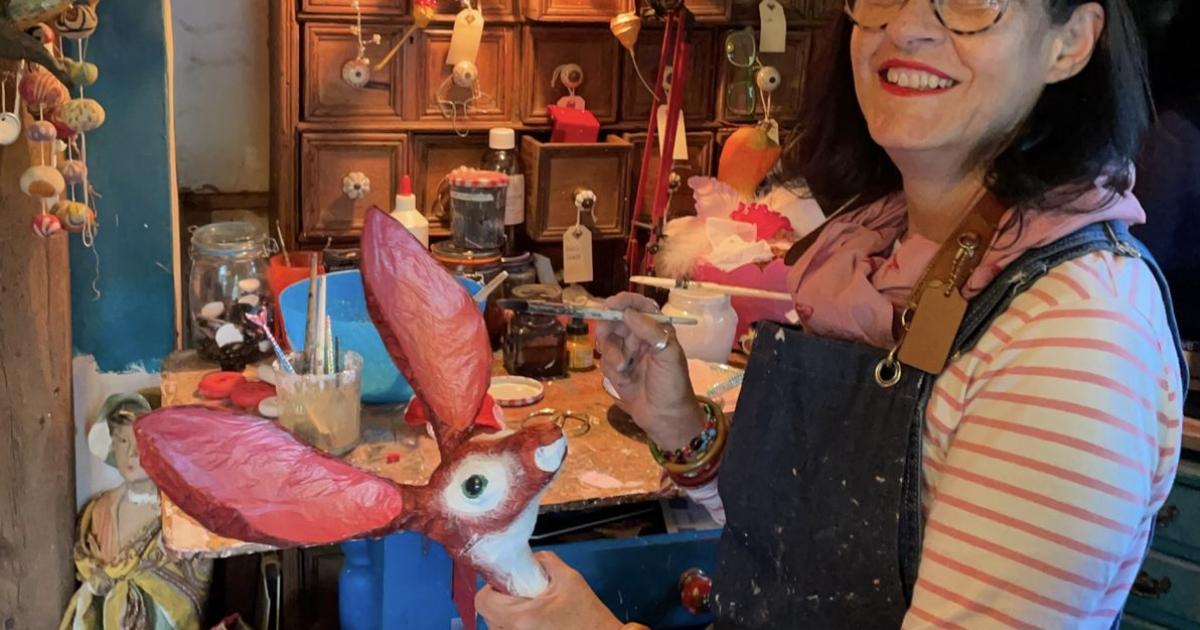
Michelle Hughes who will take part in this year’s York Open Studios (Image: Tom Jackson)

Other artists have regularly appeared at past Open Studios events, such as wire and paper sculptor Joanna Coupland, linocut printmaker Michelle Hughes and textile artist Jacqueline James.

Charmian Ottaway, York Open Studios’ committee member and a contemporary designer jeweller, said the event is a “unique chance to see the city with pops of creativity along the way”.

“As an artist myself, I just love to show visitors how I work and also hear what they might be looking for,” Charmian said.

“As artists, we are all very proud of what we produce and hearing visitors’ responses and find potential buyers can be really uplifting especially if you often work alone and don’t directly meet your buyers.”

Advertisement

As The Press reported, this year’s Open Studios will not feature one of York’s best-known living artists, Mark Hearld, was said he was not selected for the 2026 event.

Mark Hearld who will not be taking part in this year’s York Open Studios (Image: Newsquest)

Mark, whose home in The Mount has been a popular venue at previous Open Studios, said he understood he was not selected because the description of his work, “Collages inspired by nature”, was too brief.

But Mark said the description perfectly described his work.

He added that in the past other leading York artists had faced an identical situation and it was time for the selection process to change.

Advertisement

Mark also said artists not selected for Open Studios risked being banned from future events if they showed work in their homes during the same weekends, which he felt was too punitive.

“I am pro Open Studios; I like the spirit of it, but I am very, very frustrated,” he said.

Christine Storrs, chairperson of York Open Studios, said the organisation was open to feedback and suggestions. However, she confirmed there was a risk to non-selected artists staging their own event during the York Open Studios weekends.

She added that the event had taken the “difficult decision this year to cap the number of artists taking part to 150”, which followed “feedback in recent years from visitors and participating artists that the event was becoming too big”.

Advertisement

“More than 650 artists have taken part over the years, and it would not be practical for our volunteer committee to administer an event on such a scale – nor would this be enjoyable for our visitors to navigate,” Christine said.

For more information about York Open Studios, visit yorkopenstudios.co.uk

Source link

Advertisement
Continue Reading

Trending

Copyright © 2025