
Business
Inside Miami’s Allison Island: High-security sanctuaries for elite families


Douglas Elliman Exclusive Group co-founder Devin Kay takes Fox News Digital inside a multi-million dollar Allison Island home in the same tight-knit neighborhood where Google’s Sergey Brin moved to.
Behind the towering mahogany gates of Miami Beach’s Allison Island, the Wall Street South movement is showing its most permanent face yet. It’s not just about the zero-percent state income tax or the deep-water docks; it’s about the “Caution: Children at Play” signs lining the streets.
While legacy metros struggle with urban decay and rising crime, this private sanctuary is being transformed into a high-security nursery for the next generation of American industry. Here, crisp modern architecture is juxtaposed with baby floats and pool safety nets, proving that for the nation’s elite, the Florida move is no longer a seasonal trend — it’s a multi-generational commitment to safety and sanity.
“Florida, for better or for worse, has kind of been the beneficiary of issues that have happened in other parts of the country, and we just continue to flourish down here,” Douglas Elliman Exclusive Group co-founder Devin Kay told Fox News Digital. “I think the market is incredibly strong… The demand and the pace that we’re seeing down here, I don’t think is something that’s going to go away anytime soon.”
“So for anybody that has been looking to relocate here or is thinking about relocating here,” he added, “I think that when you ultimately weigh the pros and the cons, they will quickly realize that South Florida is just the place that everyone seems to want to be.”
Allison Island’s newest neighbor is Google co-founder and billionaire Sergey Brin, who paid $51 million for LVMH CEO Michael Burke and his wife, Brigitte Burke’s modernist, palatial abode in a reported off-market deal. Just a few weeks later, rapper Lil Wayne sold his mansion on the island for $33 million.

Miami real estate brokers are seeing an influx of wealthy Californians looking for high-end homes due to the proposed “billionaire tax” in California. (Getty Images)
With fewer than 50 single-family homes, the conversation among relocating elites has shifted from, “Can we move?” to, “How fast can we get there?” For the CEOs arriving from New York, California and Washington, architecture is the hook, but the financial and political climate is the closer.
“It always starts out with the real estate first, so the client is drawn towards the architecture of the property, the style, the location, if it’s on the water,” Kay noted, “but then I think it quickly shifts more towards the financial part of the decision. And with the people that we’ve been dealing with that are relocating here from New York and now California, I think it’s become both an emotional and strategic decision for them because they’re ultimately realizing that they’re not only able to upgrade their lifestyle, but they’re also making a very smart financial decision.”
The Corcoran Group’s Mick Duchon gives Fox News Digital a tour of a $21.95 million unit at the Four Seasons residences in Surfside, where ex-Starbucks CEO Howard Schultz just bought the penthouse.
Kay brought Fox News Digital inside an Allison Island home with an estimated value of around $20 million. It was a modern monolith with an emphasis on expansive, open-concept living space — highbrow art stood out against the warm, light oak floors, and floor-to-ceiling windows in the primary room met sunshine, swaying palms and panoramic views of the Miami skyline.
While the property checked every luxury amenity box, what felt more impactful were the signs of everyday family life. In addition to the flamingo floats and pool safety net, baby items could be found on the kitchen counter and a high chair was ready for use. It was a clear indication that parents and their young children are not just passing through on vacation, but are permanently planting their flags in a sanctuary of safety and freedom that they intend to call home for decades to come.
“Most of the people who we are now dealing with that are part of this ultra-high-net-worth class. I think the first thing that they’re looking for is really safety and security, especially in today’s climate,” Kay said. “I don’t think that safety and security is really optional anymore, it’s really become a priority for these people.”

Google co-founder Sergey Brin’s Allison Island home is seen center-right with the gray roof. (Getty Images)
“With what’s going on in New York and California and Chicago and other major metropolitan cities, I think that the ultra-high-net-worth class that is very worried about privacy and security and ultimately want their families to feel safe, they feel that, here in Miami Beach, they’re able to achieve that,” he continued. “We’ve really had an inventory problem here in South Florida since the days of COVID. So when buyers see the opportunity to acquire something like this, they don’t even hesitate. They’re not thinking in terms of months or even years, they’re thinking in terms of decades at this point.”
“The amount of people that are moving and relocating here on a more full-time basis far exceeds the number of properties that we actually have to sell to these people. So, the level of transactions and the volume and the price growth that we have seen over the last few years is something that I don’t think any of us could have predicted.”
Fox News Digital gets a tour of Indian Creek Village from the Corcoran Group’s Julian Johnston, who shows why the world’s wealthiest are choosing to move into the ultra-exclusive neighborhood.
Though Indian Creek offers isolation, Allison Island offers something rarer in the ultra-luxury world: a neighborhood. Kay notes that the influx of names like Brin isn’t just a real estate play, but a cultural one.
“It’s become more of a full-time shift, so the families that have now relocated here… the reason that they’re doing so, again, is because of the location, the privacy aspect, the security of being behind a guard gate, the scarcity of having waterfront land here in Miami Beach, which they’re not making any more of,” Kay explained. “But I think what really makes Allison Island unique is the fact that it has a real sense of community.”
That community provides a level of freedom that has vanished from other major American cities.
GET FOX BUSINESS ON THE GO BY CLICKING HERE
“They don’t have to worry about the unknown or the unexpected. Their kids can go walk or bike ride or do things, and they don’t need to sit there and worry about them,” Kay said. “But at the same time, they know that they are upgrading their lifestyle while still making a very smart financial decision at the end of the day.”
This is Part 3 of a Fox News Digital series on the “Billionaire Bunker” circuit. Stay tuned for our next stop in Coconut Grove, where the wealth migration is hitting a new gear.


AMD: Cooling My Rating, Not My Conviction
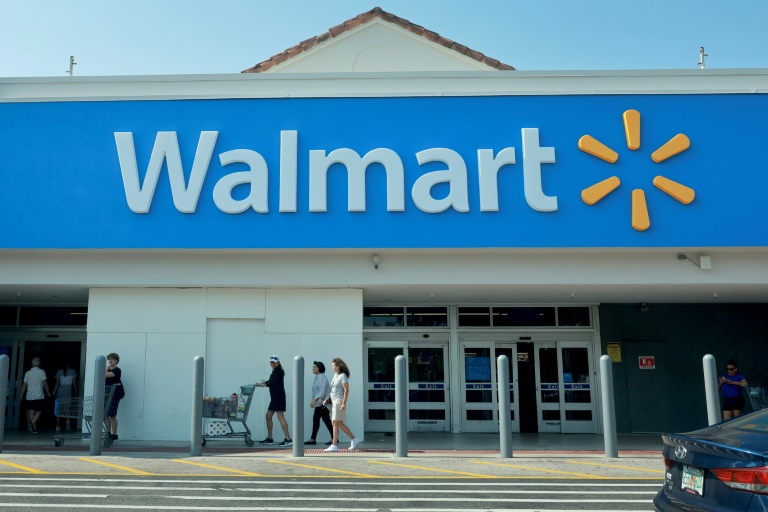
NEW YORK — Major retailers including Walmart, Dollar General and Costco are scaling back or rethinking self-checkout systems as surging theft rates, customer complaints and proposed legislation in multiple states force a broader industry shift back toward staffed registers. The move reflects growing frustration with “shrink” — industry term for inventory losses — that studies show can increase by up to 65 percent at self-service kiosks compared with traditional checkouts.
Dollar General took the most dramatic step in 2024, removing self-checkout entirely from its more than 12,000 stores nationwide to combat theft and improve customer experience. Walmart has eliminated self-checkout lanes in select high-shrink locations, including a South Philadelphia Supercenter, while planning remodels at hundreds of stores that prioritize hybrid or fully staffed options. Costco has introduced staff-assisted scanning in lines but stopped short of full removal.
The changes come as lawmakers in states including California, Connecticut, Massachusetts, New York, Ohio, Rhode Island and Washington consider bills that would limit self-checkout usage. Proposals range from requiring minimum staff-to-kiosk ratios and item caps — often 10 or 15 items — to mandating a balance between self-service and employee-operated lanes. None have passed yet, but the legislative momentum signals rising political pressure on retailers to address retail theft.
A 2026 Capital One Shopping Research study found that while 86 percent of consumers use self-checkout, more than 36 million Americans admit to stealing from the kiosks. Theft at self-checkout can be unintentional — missed scans or bagging errors — or deliberate. Either way, it contributes to billions in annual losses that retailers ultimately pass on to consumers through higher prices.
Walmart has cited customer feedback and a desire for more personalized service in its decisions to reduce self-checkout. The world’s largest retailer continues experimenting with automation but appears to be striking a balance after years of aggressive rollout. Remodels at more than 650 stores and plans for new locations emphasize improved checkout experiences. Similar trends appear at Target and other chains testing limits or hybrid models.
Retail experts point to several factors driving the shift. Self-checkout promised labor savings and faster lines but delivered unintended consequences. Theft has risen sharply in recent years, fueled by organized retail crime and opportunistic shoplifting. Technology limitations, such as imperfect item recognition, compound the problem. Customer frustration with malfunctioning kiosks or long bagging times has also grown.
Costco’s approach differs slightly. The membership warehouse club has rolled out staff members who scan entire carts before customers reach payment terminals, combining speed with oversight. While not eliminating self-checkout entirely, the system reduces opportunities for error or theft. Other retailers are exploring AI-powered scan-and-go technologies, such as those tested by Sam’s Club, to maintain convenience while adding security layers.
Proposed state laws reflect public and political concern over retail theft’s impact on communities and businesses. Bills aim to curb losses that force store closures or price increases, particularly in urban areas hit hardest by organized crime. Retail trade groups argue that overly restrictive rules could hurt efficiency and raise operating costs, potentially leading to fewer jobs or higher prices. A balanced approach focusing on technology improvements and enforcement may prove more effective.
The self-checkout boom began years ago as retailers sought to cut labor costs amid rising wages and post-pandemic staffing challenges. Early adoption brought convenience for shoppers and efficiency gains. Over time, however, data showed higher shrink rates and mixed customer satisfaction. Pandemic-era shifts accelerated installation, but the technology’s limitations became more apparent as theft surged.
Industry analysts expect more hybrid models going forward. Full removal like Dollar General’s may remain rare among larger chains, but reductions and technological upgrades will likely become standard. AI monitoring, better item recognition and integrated security cameras could mitigate risks while preserving convenience. Retailers must balance cost savings with loss prevention and customer experience.
For shoppers, the changes mean potentially longer lines but greater accuracy and security. Many consumers appreciate the human interaction at staffed registers, especially for complex transactions or when seeking assistance. Others prefer the speed of self-checkout for small purchases. Retailers are experimenting with tiered systems — self-checkout for quick trips and full service for larger hauls.
The shift also highlights broader retail challenges. E-commerce competition, inflation and changing consumer habits continue pressuring brick-and-mortar stores. Theft, whether organized or opportunistic, erodes margins and affects store viability in certain markets. Addressing it requires a combination of technology, staffing, legislation and community efforts.
As Walmart, Dollar General, Costco and others adjust strategies, the industry watches closely. Success in reducing shrink while maintaining customer satisfaction could set new standards for checkout experiences. Failure might accelerate calls for stricter regulations or further rollbacks. The coming months will reveal how effectively major retailers navigate this complex landscape.
For now, shoppers should expect evolving checkout options at their local stores. Checking apps or asking associates about available lanes can help avoid frustration. As retailers rethink self-checkout, the goal remains providing safe, efficient and pleasant shopping experiences in an era of heightened challenges.
Business
Stress in private credit could spark ’psychological contagion,’ Fed’s Barr tells Bloomberg News
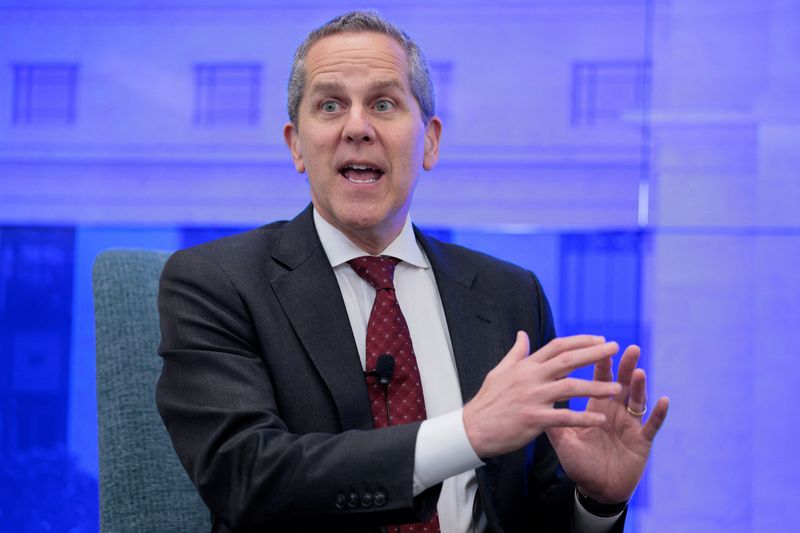

Stress in private credit could spark ’psychological contagion,’ Fed’s Barr tells Bloomberg News

Universal Logistic Holdings Is Surviving By Underinvesting, But Needs A Quick Turn

Earnings call transcript: Redwood Trust beats EPS in Q1 2026, stock mixed
Earnings call transcript: Tenable Holdings Inc. Q1 2026 beats expectations, stock rises
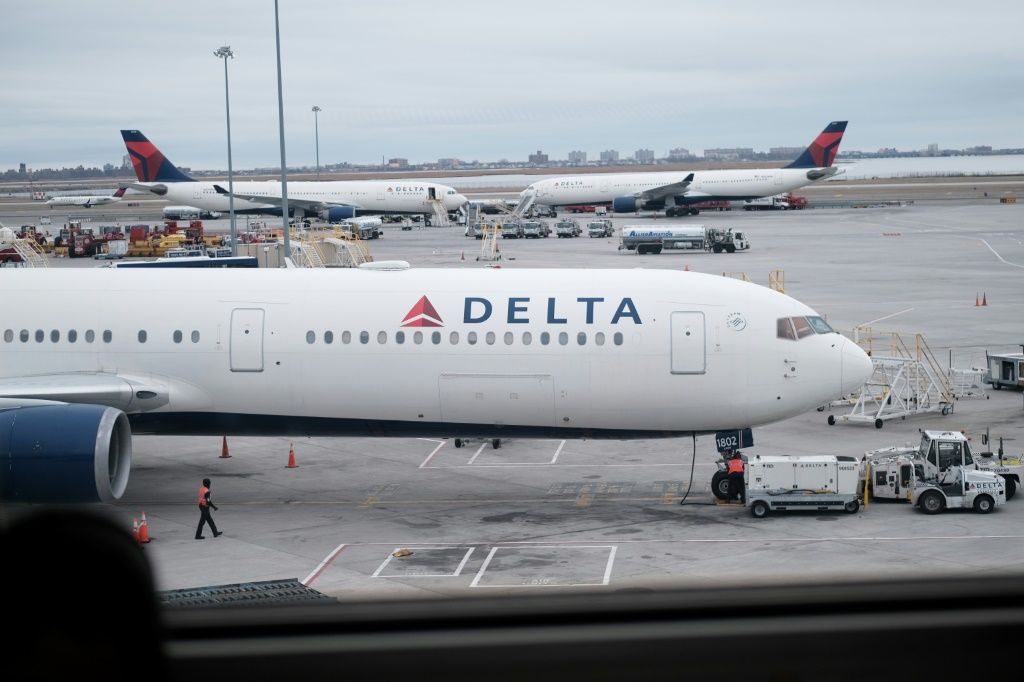
NEW YORK — A Delta Air Lines flight was delayed and a female passenger arrested after she allegedly refused repeated requests to end a phone call before takeoff, sparking a confrontation captured on video that quickly went viral and highlighted ongoing tensions over in-flight etiquette and crew authority. The incident, which unfolded at a major U.S. airport on Saturday, May 2, 2026, underscores persistent challenges airlines face in enforcing federal regulations prohibiting cellphone use during critical phases of flight.
Video footage widely shared on social media shows fellow passengers pleading with the woman to be considerate as flight attendants and the captain intervened. “Ma’am, please hang up the phone — we can’t take off until you do,” one crew member is heard saying in the clip. The woman reportedly continued her conversation, leading to escalating frustration among passengers and crew. Law enforcement was eventually called, resulting in her removal and arrest for interfering with a flight crew.
Delta Air Lines confirmed the delay but declined to release the flight number or exact airport, citing privacy and ongoing investigation. A spokesperson said the airline takes safety protocols seriously and works with authorities when passengers fail to comply with federal aviation regulations. The Federal Aviation Administration prohibits the use of cellular devices during taxi, takeoff and landing to avoid potential interference with aircraft systems, though modern planes are designed with shielding. The rule is also intended to ensure passengers pay attention to safety briefings.
Passengers on board described the situation as tense but ultimately resolved without physical altercation. One traveler, who recorded part of the exchange, posted the video with the caption “When one person ruins it for everyone.” Comments flooded in supporting the crew’s actions while others criticized the woman for prioritizing her call over collective safety and convenience. The delay reportedly lasted more than an hour as authorities processed the arrest and the plane was prepared for departure.
Aviation safety experts note that such incidents, while rare, highlight the importance of clear communication and de-escalation training for flight crews. The FAA and airlines have ramped up efforts in recent years to address unruly passenger behavior, particularly post-pandemic when travel stress has contributed to more confrontations. Federal law allows for fines and criminal charges when passengers interfere with crew members performing their duties.
This latest event comes amid broader discussions about technology use on planes. Many carriers have relaxed Wi-Fi policies and allow calls via internet-based apps in some cases, but traditional cellular calls remain restricted during critical phases. The woman’s refusal reportedly continued despite announcements and direct instructions, prompting the captain to return to the gate.
Delta passengers affected by the delay received compensation in the form of travel vouchers or meal credits, standard procedure for controllable disruptions. The airline expressed regret for the inconvenience while emphasizing safety as the top priority. No injuries were reported, and the flight eventually departed without further issues.
Social media reaction was swift and polarized. Hashtags related to the incident trended as users debated personal rights versus public responsibility. Some defended the woman, suggesting possible underlying reasons such as an emergency call, while the majority sided with the crew and fellow passengers frustrated by the selfish behavior. Viral videos often amplify these moments, turning routine travel disruptions into national conversations about civility.
Aviation analysts say enforcement of phone rules has become more challenging with smartphones’ ubiquity. While most passengers comply, a small minority test boundaries, leading to delays that cost airlines thousands of dollars in operational expenses and frustrate hundreds of travelers. Carriers continue investing in crew training and passenger education campaigns to minimize such occurrences.
The arrested woman’s identity has not been publicly released pending formal charges. Legal experts say she could face misdemeanor or felony counts depending on jurisdiction and the level of interference. Similar cases in recent years have resulted in fines, banned flying lists and court-mandated anger management. The incident serves as a reminder that airline crews have broad authority to maintain order.
Delta’s response aligns with industry standards. Major carriers have zero-tolerance policies for disruptive behavior, especially anything jeopardizing safety protocols. The FAA tracks unruly passenger reports, with numbers declining from pandemic peaks but still elevated compared to pre-2020 levels. Education and consistent enforcement remain key strategies.
Fellow passengers in the video expressed relief once the situation was resolved. One woman visible in the footage told reporters afterward that the majority supported the crew and just wanted to reach their destination. The event highlights how small acts of noncompliance can ripple through an entire flight, affecting schedules and tempers.
As air travel rebounds strongly in 2026, airlines face the dual challenge of accommodating more passengers while maintaining high standards of safety and service. Incidents like this one, though isolated, fuel calls for clearer policies and better passenger awareness. Delta and peers continue refining communication tools, including pre-boarding announcements and in-app reminders about electronic device rules.
The viral video has sparked broader conversations online about entitlement in shared spaces. Commenters range from empathy for stressed travelers to strong condemnation of rule-breaking. Aviation bloggers and frequent flyers urge passengers to remember that crew instructions exist for everyone’s safety, not convenience. The woman’s actions, regardless of intent, disrupted hundreds and led to legal consequences.
Industry groups like Airlines for America emphasize training and de-escalation. Crew members are taught to handle difficult situations professionally while prioritizing safety. In this case, the decision to involve law enforcement was likely made after multiple failed attempts at voluntary compliance. The captain’s authority to remove disruptive passengers is well-established in federal regulations.
For the traveling public, the takeaway is simple: Follow crew instructions promptly. A few minutes on a phone call is rarely worth delaying a flight or facing arrest. As summer travel season approaches, airlines will continue reminding passengers of these basic courtesies to ensure smooth operations.
Delta has not commented further on the specific passenger or charges, focusing instead on the safe completion of the flight. The incident, while unfortunate, reinforces the shared responsibility that makes modern air travel possible. Passengers, crews and regulators all play roles in maintaining order and safety at 30,000 feet.
Business
Berkshire Operating Profits Rose 18% in First Quarter. The Company Bought Back $235 Million of Stock.
Berkshire Operating Profits Rose 18% in First Quarter. The Company Bought Back $235 Million of Stock.
Asian finance leaders pledge action on market volatility risks


Rida Morwa is a former investment and commercial Banker, with over 35 years of experience. He has been advising individual and institutional clients on high-yield investment strategies since 1991. Rida Morwa leads the Investing Group High Dividend Opportunities where he teams up with some of Seeking Alpha’s top income investing analysts. The service focuses on sustainable income through a variety of high yield investments with a targeted safe +9% yield. Features include: model portfolio with buy/sell alerts, preferred and baby bond portfolios for more conservative investors, vibrant and active chat with access to the service’s leaders, dividend and portfolio trackers, and regular market updates. The service philosophy focuses on community, education, and the belief that nobody should invest alone. Learn More.
Analyst’s Disclosure: I/we have a beneficial long position in the shares of AGNC either through stock ownership, options, or other derivatives. I wrote this article myself, and it expresses my own opinions. I am not receiving compensation for it (other than from Seeking Alpha). I have no business relationship with any company whose stock is mentioned in this article.
Beyond Saving, Philip Mause, and Hidden Opportunities, all are supporting contributors for High Dividend Opportunities. Any recommendation posted in this article is not indefinite. We closely monitor all of our positions. We issue Buy and Sell alerts on our recommendations, which are exclusive to our members.
Seeking Alpha’s Disclosure: Past performance is no guarantee of future results. No recommendation or advice is being given as to whether any investment is suitable for a particular investor. Any views or opinions expressed above may not reflect those of Seeking Alpha as a whole. Seeking Alpha is not a licensed securities dealer, broker or US investment adviser or investment bank. Our analysts are third party authors that include both professional investors and individual investors who may not be licensed or certified by any institute or regulatory body.

THE GREAT XRP RESET CONFIRMED!!!!??? (XRP/BANK FLOODGATES OPENING)

Empty department store could become bar and restaurant under new plans

AMD: Cooling My Rating, Not My Conviction

Manchester United reach agreement with Casemiro over contract clause amid transfer speculation

US brings back mandatory military draft registration

Steven Gerrard disagrees with Gary Neville over ‘shock’ Chelsea and Arsenal claim | Football


-

 Tech6 days ago
Register Renaming | Hackaday
-

 Politics6 days ago
Drax board avoid their own AGM, accused of greenwashing & environmental racism
-

 Tech6 days ago
Why Blue Badges Disappeared From Toyota Hybrids
-

 Tech6 days ago
Images of Samsung’s rumored smart glasses have leaked
-
 Tech2 days ago
Trump’s 25% EU auto tariff breaches Turnberry Agreement that also covers semiconductors and digital trade
-

 Fashion5 days ago
Kylie Jenner’s KHY Enters a New Era with ‘Born in LA’
-

 Business5 days ago
Most Commercial Energy Audits Miss the Real Losses
-

 Crypto World5 days ago
CFTC’s AI will review U.S. crypto registration applications, chairman tells CoinDesk
-

 Business6 days ago
(VIDEO) Charlize Theron Climbs Times Square Billboard to Promote New Netflix Thriller ‘Apex’
-

 Business4 days ago
Barclay Brothers Avoid Bankruptcy: HSBC Drops High Court Petitions After IVA Deal
-
 Sports2 days ago
Paul Scholes issues Marcus Rashford reality check as agreement emerges over Man United star
-
 Business4 days ago
Tesla Officially Registers Elon Musk’s Stock: What Investors Need to Know
-
 Entertainment6 days ago
Alicia Keys Calls Out Music Industry ‘Boys Club’
-

 Tech5 days ago
Get Ready for More Brain-Scanning Consumer Gadgets
-

 Tech7 days ago
Dyson Vacuums And The Curse Of Cooked Capacitors
-
 Crypto World5 days ago
Robinhood Phishing Scam Exploits Gmail Dot Feature to Bypass Security
-

 Entertainment6 days ago
Sister Wives: Janelle Posts New Scary Warning
-

 Crypto World5 days ago
Gmail Dot Trick Underpins Robinhood Phishing, Sending Real-Looking Emails
-

 Business7 days ago
AI-Driven App Creation at Your Fingertips
-

 Business3 days ago
Two Powerball Tickets Split $143 Million Jackpot in Indiana and Kansas
You must be logged in to post a comment Login