Anthropic adds Remote Control synchronization layer on top of local CLI sessions
You can access your work remotely, but it’s different from regular web sessions
It’s available to Claude Pro/Max subscribers, but there are some limitations
Anthropic has announced a new AI tool to help developers control Claude Code from smartphones, tablets and browsers, giving them more control over their work from more places.
Launched in January 2026, Claude Code has already proven popular in the developer community, but it’s also gaining traction among non-technical users by democratizing access to coding for more users.
Even though it was limited to desktop apps, terminal CLI and IDE integrations, it was still installed 29 million times in VS Code alone – and Anthropic hopes Remote Control will broaden its reach even further.
Claude Code Remote Control feature
Remote Control is currently available as a research preview for Claude Pro and Claude Max subscribers – not for Team or Enterprise plans. “API keys are not supported” either, the company wrote in an announcement.
It serves as a synchronization layer between a local CLI session and the Claude mobile or web interface, so in theory, Remote Control is the underlying tech rather than the tool users will interact with. “The web and mobile interfaces are just a window into that local session.”
Anthropic stressed that the session continues locally on the user’s machine, rather than in the cloud, but Remote Control gives them access from anywhere.
Advertisement
“Remote Control executes on your machine,” Anthropic wrote, “so your local MCP servers, tools, and project configuration stay available.” On the flip side, Claude Code on the web relies on Anthropic’s cloud infrastructure.
Sign up to the TechRadar Pro newsletter to get all the top news, opinion, features and guidance your business needs to succeed!
Being that Remote Control is in research preview, it’s still showing signs of being an early, first-generation or pre-production tool. The Claude-maker acknowledged three key limitations: users can only run one remote session at a time; terminal must stay open; and if a machine is unable to reach a network for more than “roughly 10 minutes,” the session will time out.
Solar panels on a Seattle house. (GeekWire Photo / Lisa Stiffler)
The pitch for rooftop solar has never been easier to make: energy costs are up, the strain on the electrical grid is real, and the sun shines for free. But the math has gotten harder, as federal tax credits evaporate and utility incentives dry up.
Enter loanTERRA, a Seattle startup that thinks transparent financing and vetted installers can keep the solar dream alive for everyday homeowners.
Bill Paulen, CEO and founder of loanTERRA, brings decades of experience in finance, including stints at major banks and as president and CEO of multiple Washington credit unions.
In those roles, he saw that solar loans were a natural fit for nonprofit, member-owned credit unions and community banks looking to diversify their loans and fend off competition from fintechs. He was also troubled by the dominance of national solar lenders that relied on undisclosed dealer fees, quietly driving up costs for consumers.
Paulen created loanTERRA to partner with credit unions and community banks, providing their customers with an easy-to-deploy loan agreement while the financial institutions supply the capital. The banks pay loanTERRA for each signed solar deal and fees for servicing the loan.
Advertisement
Bill Paulen, CEO and founder of loanTERRA. (LinkedIn Photo)
The startup recently launched its platform, which also provides connections to reputable solar panel and hardware manufacturers and installers to ensure the project is designed to be the right size, properly installed and works as planned.
Paulen signed his first lending partner, based in Wyoming and has raised funding from an angel investor.
He’s hopeful that the residential solar sector will keep moving ahead despite the loss of federal tax support. The Republican’s One Big Beautiful Bill spiked tax credits of 30% for the cost of home solar systems at the end of 2025, instead of the planned end date of 2032.
Homeowners can still indirectly benefit from a tax break provided to solar installers through 2027. It requires consumers to sign a lease with an installer or developer to use the solar system on their home, or they enter a power purchase agreement in which a developer sells the electricity to the homeowner at a fixed rate that’s lower than what’s charged by the local utility.
Paulen, however, said the economics are better for residential customers if they’re able to buy the solar systems outright.
Advertisement
LoanTERRA’s interest rates are typically higher than those offered by companies that include dealers fees of thousands of dollars in their sales agreements, but the startup’s loans are for smaller amounts. Paulen served on the working group that created Washington’s Solar Consumer Protection Act, crafting language requiring those fees to be disclosed.
Even with the more challenging economics, solar photovoltaics remain the cheapest, quickest way to deploy clean energy, and there’s a move to add batteries to the mix, which allows a system to provide power around the clock. A recent poll found that a majority of Americans surveyed support solar power, regardless of their political leanings.
Paulen said loanTERRA benefits multiple interests that he’s eager to serve. That includes customer-focused credit unions, solar companies, consumers looking to shrink their climate impacts and benefit from off-grid power, and a warming planet.
Advertisement
“We are bringing clean energy online. We are reducing fossil fuel burn,” he said. “In my entire career, this is the only time where a … strongly held personal belief or interest has aligned with a business opportunity and that’s made it so much easier to do this work.”
It’s a blustery January day outside Lakehurst, New Jersey. The East Coast of North America is experiencing its worst weather in decades, and all civilian aircraft have been grounded the past four days, from Florida to Maine. For the past two days, that order has included military aircraft, including those certified “all weather” – with one notable exception. A few miles offshore, rocking and bucking in the gales, a U.S. Navy airship braves the storm. Sleet pelts the plexiglass windscreen and ice sloughs off the gasbag in great sheets as the storm rages on, and churning airscrews keep the airship on station.
If you know history you might be a bit confused: the rigid airship USS Arkon was lost off the coast of New Jersey, but in April, not January. Before jumping into the comments with your corrections, note the story I’ve begun is set not in 1933, but in 1957, a full generation later.
The airship caught in the storm is no experimental Zeppelin, but an N-class blimp, the workhorse of the cold-war fleet. Yes, there was a cold war fleet of airships; we’ll get to why further on. The most important distinction is that unlike the last flight of the Arkon, this story doesn’t end in tragedy, but in triumph. Tasked to demonstrate their readiness, five blimps from Lakehurst’s Airship Airborne Early-Warning Squadron 1 remained on station with no gaps in coverage for the ten days from January 15th to 24th. The blimps were able to swap places, watch-on-watch, and provide continuous coverage, in spite of weather conditions that included 60 knot winds and grounded literally every other aircraft in existence at that time.
Rigid? Count (Zeppelin) Me Out
Airships come in multiple types: rigid, non-rigid, and semi-rigid. Most people — my past self included — assume that the rigid type is more advanced. Unlike rigid airships, which are stabilized by an aluminum skeleton (or a wooden one, in the case of the Schütte-Lanz ships of the Great War), a blimp’s shape is maintained by gas pressure alone. Just a balloon with motors, if we’re being uncharitable. This limits the maximum speed, as the aerodynamic pressure of moving through the atmosphere increases with the square of the airspeed, and must always be lower than the internal pressure of the gas bag. You can’t even pressurize the gas bag much to compensate, because then the density of the lift gas gets too high to actually, well, lift.
Advertisement
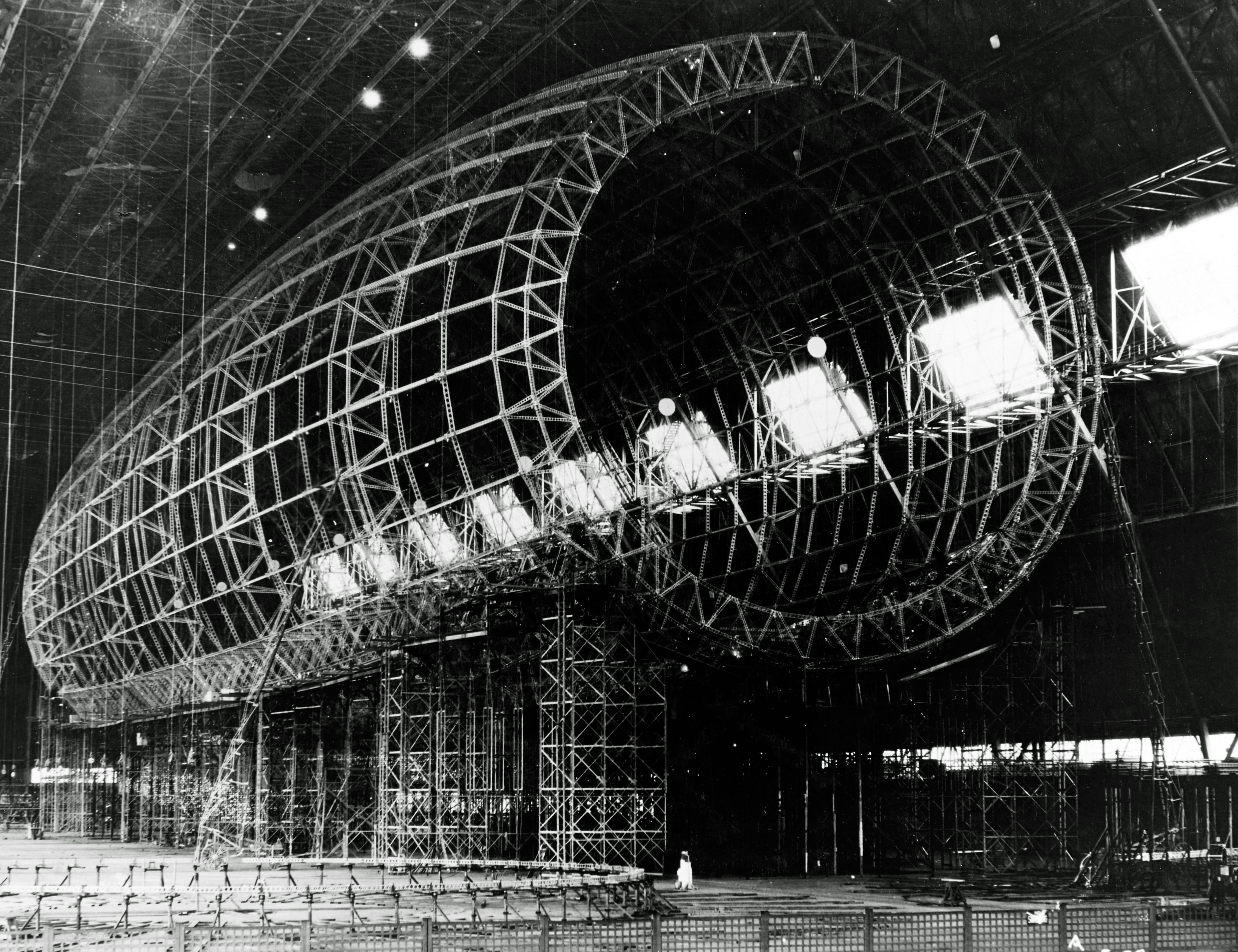
Putting a skeleton inside your airship– like this one in USS Arkon– seems like such a good idea, but history suggests otherwise. Image: US Navy
Put a skeleton in there, and your airship can be much, much larger. It can go much faster. It can become a flying aircraft carrier, like the ill-fated USS Arkon, and its ill-fated sister ship, USS Macon. The U.S. Navy has only ever fielded five rigid airships; only one survived long enough to be decommissioned. It is with no disrespect to the brave men and women who served– and lost their lives– aboard those silver giants that we dismiss them from our narrative here. They were a worthy experiment, but a failed one. By contrast, the U.S. Navy fielded 166 blimps in the Second World War, and only a handful were lost, mostly during ground handling, and one to enemy action.
So, how was an N-class blimp, also known as a ZPG-2, in the designation system of the day, or SZ-1A after 1962, able to ride out a storm much worse than the one that sank its rigid-framed predecessors? It’s probably precisely because it lacked that rigid frame. The non-rigid envelope of the blimps could bend, buckle, twist, and alter their shape in response to strains that would break the keel of a Zeppelin. Non-rigid airships can quite literally flex on their rigid cousins when it comes to airworthiness.
The flexing skin of a blimp turns the entire gas-bag into one giant de-icing boot to boot, keeping yet another weather hazard at bay. Icing is a great danger to aircraft: when conditions are just wrong, like during the January storm described above, it’s easy for the weight of ice to build up and bring down any aircraft without an effective de-icing system. De-icing boots are one such system: rubber membranes, typically on the leading edge of the wing and tail surfaces of an airplane, that are inflated to flake off ice. On airplanes, they’re addons, but it’s a built-in bonus to flying a blimp.
Of course another key advantage of non-rigid airships is that they’re just plain cheaper. Being smaller, they require less crew, less ground crew, and smaller hangers, but a small rigid would have the same advantage. More importantly, especially during wartime, is that a Zeppelin requires everything you’d use to build the equivalent blimp, plus all the Duraluminum (or other material) going into its rigid frame. Logistically speaking, blimps were a no-brainer if the US wanted to field a lot of airships, and at one point they certainly did.
This hangar was designed for two Zeppelins, but fit a lot more blimps during the war. Image: US Navy
But Why?
Unlike a certain (in)famous penguin, the US Navy knew exactly what it was doing when it ordered the N-class airships after World War Two. As stated, they had over a hundred blimps in service during that conflict, and racked up more Lighter-Than-Air (LTA) flight time than any other organization has before or since: 550,000 hours split over 55,900 sorties in both the Atlantic and Pacific theaters. While the institutional knowledge is long gone, it’s safe to say that in those days nobody knew airships like the U.S. Navy knew airships.
The one ship escorted by blimp was torpedoed by U-boat. That’s a pretty good record. Image: US Navy
The vast majority of the wartime fleet — some 135 examples — were of the K-class. These ships were designed with a specific mission in mind: antisubmarine warfare. Blimps vs subs wasn’t a new idea; the Americans had worked with the Royal Navy’s u-boat hunting blimps in the First World War. Though the Royal Navy gave up on the idea after the conflict, interest remained on the other side of the Atlantic, and history shows the Yanks were right to persist with it. Of roughly 89,000 ships in blimp-escorted convoys, only one, the tanker Persephone, was sunk, ironically off the coast of New Jersey, not terribly far from the Lakehurst home of LTA.
The sub-hunting blimps were perhaps making it up as they went along. On paper, though, the airship is ideal for the role: without needing to burn fuel to stay airborne, it can have absurdly long loiter times. Its low speed is of no issue when shadowing convoys that have to move at the speed of the slowest merchant vessel– even the HX series “fast convoys” didn’t exceed 13 knots (24 km/h). Blimps of the K-class could cruise at 50 kn (92 km/h), and dash at up to 68 kn (125 km/h), which proved more than sufficient to keep up.
Advertisement
When the class was designed in 1937, its ability to cruise low and slow was ideal for hunting submarines with the Mk.I eyeball, but by the time the K-class was fielded in numbers in 1942, they were also equipped with first-generation radar, magnetic detection coils, and even primitive sonoboys after 1943. The class proved flexible and continued to be upgraded with the latest equipment until the last “K-ship” was retired from active duty in 1959.
Mocked up in yellow, the sonoboys and bombs are easy to spot on this surviving gondola at the National Museum of Naval Aviation. Image: “Blimp” by Pedro Vera, CC-BY-2.0
At 251 ft 8 in (76.73 m) long, with a gas-bag diameter of 57 ft 10 in (17.63 m), the K-ships could lift a crew of 9 in relative comfort, with fuel to feed their twin Pratt & Whitney R-1340 radials for 38 hours of normal operation. Idling the engines and making use of air currents could extend that number by quite a lot compared to cruising steadily, of course. As stated above, in wartime the K-ships carried magnetic detectors, sonobouys and radars for U-boat detection, along with four depth bombs and a .50 cal machine gun for weapons.
If four bombs doesn’t sound like much, well, that’s probably why no U-boats were recorded killed by Navy airships. On the other hand, the main mission of the blimps was to protect convoys, not to sink subs. “Damaged and driven off” was good enough, especially when the blimp could track the wounded u-boat from above and direct other assets like destroyers to make the kill, as often happened. There was a larger M-class designed during the war that was half again the size of the K-ships and could thus carry eight depth charges, but only four were built before the conflict ended.
While it had perhaps not the most dignified post-war career, Puritan’s control car survives at the New England Air Museum. Image: Akron Beacon Journal, via The Lighter than Air Society.
Post-war, one K-ship by the name Puritan was sold back to Goodyear and equipped with 1,820 incandescent light bulbs to serve as a floating ad ticker, which perhaps shows the versatility of the design. Alas, ad revenues did not cover the cost of keeping the 425,000 ft³ (12,035 m³) envelope filled with precious helium. Civilian blimps since have been of more modest size.
The LTAs that Aren’t
Speaking of precious helium, in order to conserve that lift gas, the Navy actually operated their blimps as Lighter-Than-Air craft as little as they possibly could, both during and after the war. An annoying thing about airships is that they get lighter the longer they fly as they run down their gas tanks. It is possible to run an engine on a hydrocarbon gas with a density similar to air, like the “blau gas” used by the Graf Zeppelin in the 1920s, but this has one major drawback: it’s a major logistical headache to require a special fuel for a relatively small number of units. Though there was one prototype with a blau gas style fuel in the 30s, the US Navy put logistics first. For the war and several years afterwards, everything that the Navy flew would burn AvGas, at least until the jet age made things annoyingly complicated for quartermasters.
Landings– like this one on CVE-120–were a lot easier when you weren’t fighting the full lift potential of that big gas bag. Image: US Navy
Without special fuel, the issue of excess lift can be mitigated by condensing water from the exhaust, but that doesn’t quite balance out, so the problem still remains on long flights. Eventually one must either vent helium to reduce lift, which is wasteful, or take on ballast to make up for lost mass, which can disrupt operations. The alternative the US Navy preferred was to fly “heavy”.
Yeah, it turns out hybrid airships– craft that combine lift gas with aerodynamic lift–aren’t a new idea. You might not think of the teardrop-shaped gas bag of a classic blimp as an airfoil, but with a little airspeed just a modest nose-up attitude– what a pilot would call ‘angle of attack’–the blimp can get considerable dynamic lift. By accepting the tradeoff of requiring a takeoff run, the blimps could get into the air with enough dynamic lift to account for the expected fuel burn, and come back to base with only so much lift capacity that could be cancelled out by trimming the ship downwards.
Advertisement
The Cold War Era
Even in death, they served. This K-ship proved that 5 miles was too close to 5 kT in the Plumbob-Stokes test. Photo courtesy of National Nuclear Security Administration / Nevada Field Office
After the war, most of the K-ships were crated-up and decommissioned, and their air and ground crews were amongst the first to be demobilized. “Most” does not mean “all”, and once the thrill of peace turned into the uneasy truce of the Cold War, Uncle Sam was glad to have those airships. The Soviets had submarines, too, after all.
Rather than continue with building more of the M-class, the decision was made to update the existing stocks and produce improved K-class ships for the immediate post-war period. The wartime ships that were not decommissioned were updated with better electronics and a 20% larger gas bag, getting the designation ZPK2 and then a further upgrade to ZPK3 standard. Fifteen new K ships were built by Goodyear after the war and delivered starting in 1953 under the designation ZPK-4. The last revision of that design, ZPK-5, was built with an inverted “Y” tail instead of the standard cruciform to allow for greater nose-up attitude during the ‘heavy’ takeoffs mentioned above. Twelve ZPK-5s were built by Goodyear and delivered from 1955.
While the K-class was being modernized with better sensors and weapons, the US Navy’s LTA program recognized that it could not simply coast on legacy wartime engineering.They therefore commissioned Goodyear for a clean-sheet design that would be another 50% larger than even the four M-ships, which were kept in service until 1956. These new airships would become the N-class whose all-weather adventures this article opened with.
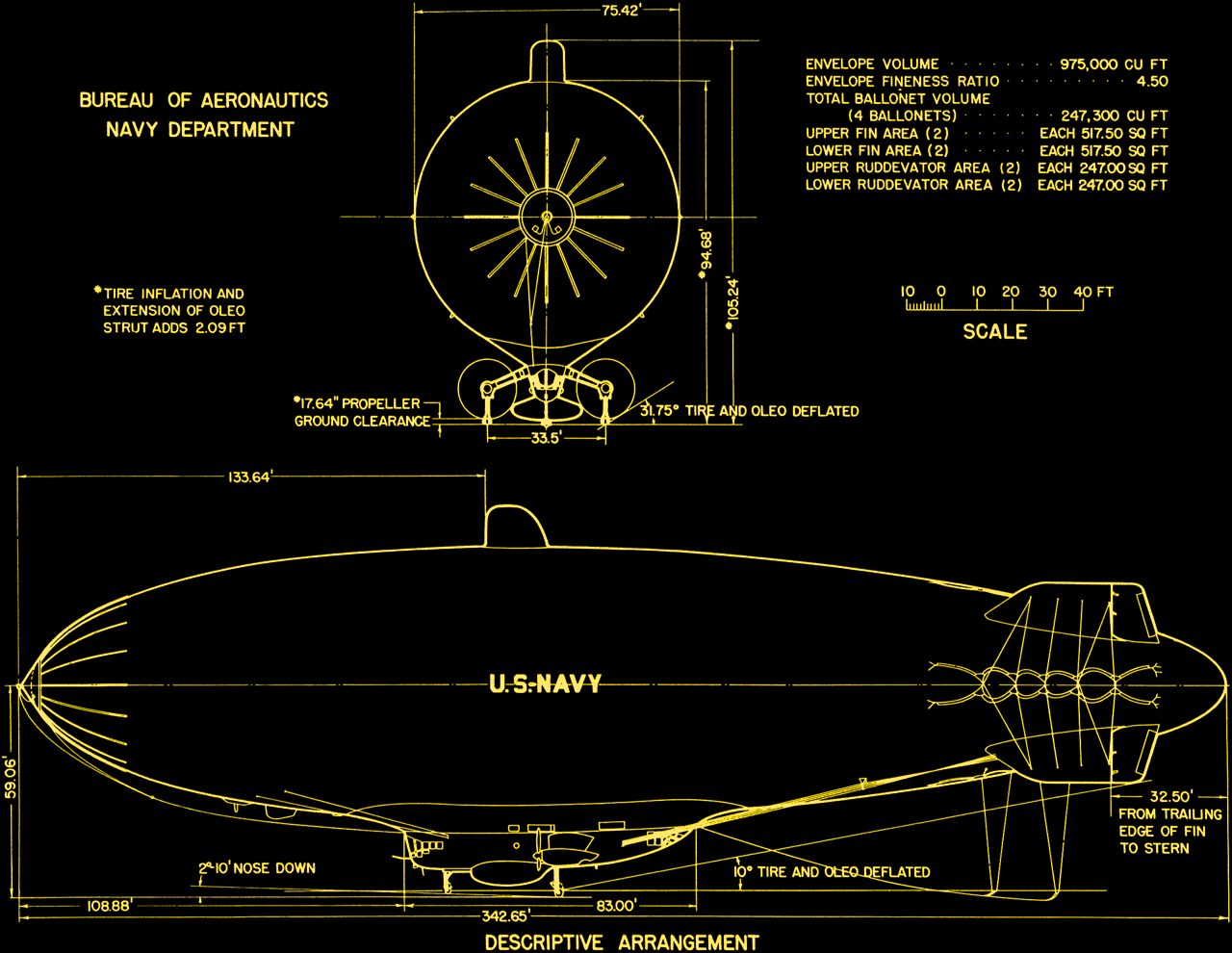
Diagram of a ZPG-2W N-class blimp. The antisubmarine ZPG-2 lacked the height-finding radar on top of the gas bag, but had the same dimensions otherwise. Image: US Navy
While the ZPG-2W whose triumph we described above were built to serve the airborne early warning role, most– twelve out of seventeen–of the “Nan ships”, as the class was called, were initially designed as bigger, badder sub-killers in case war broke out with the Soviets.
They had better down-looking radars– the AN-20, the best available at the time–much improved sonobouys, more sensitive magnetic anomaly sensors, and homing torpedoes. In war games against US and allied diesel-electric subs, like the GUPPY class, they proved very effective indeed, as did the improved K-ships. Against the new, nuclear-powered USS Nautilus, they were much less successful, but so were fixed-wing and helicopter assets. Doctrine that relied on spotting subs while recharging at snorkel or on surface was ill-suited to deal with a ship that could run submerged for months.
Improving on the control arrangement of the ZPK-5s, the Nan ships were built with an X-shaped tail to allow for even greater pitch angles during takeoff without tailstrikes. The ruddervators on the X-tail could also be controlled by one pilot, compared to earlier blimps which needed separate operators for elevator and rudder. The largest difference in design was perhaps the buried engines: unlike previous Navy blimps, which used radial engines hung from the gondola, the ZPG-2 Nan ships kept their two 800 HP Wright Cyclones indoors. This was supposed to allow for maintenance during flight, and it allowed the engines to be coupled together via a clutch, allowing single-engine cruising. As the air-early-warning blimps proved in 1957, these were all-weather craft.
Advertisement
The Anti-Submarine Warfare (ASW) squadrons gave a similar demonstration in 1960 with “Operation Whole Gale” during which the Nan ships provided 24/7 coverage for two full months, again in the teeth of winter’s worst weather. In spite of their best efforts to make use of wind and storms, no submarine got past the blimps during the operation.
ZPG-2 “Snow Bird”, departing NAS South Weymouth, Mass. on its record-setting flight in March 1957. Image: US Navy
The post-war record of the US Navy’s blimps is full of such impressive moments. The service was very much looking to prove itself, and so jumped at opportunities to demonstrate the blimps’ capabilities. Arctic expeditions? A Nan-ship proved its worth on 24-hour patrols between Churchill, Manitoba and Resolute, Baffin Island– the last airship to cross the Arctic Circle. Another stunt in 1957 set a record for unrefueled flight: a circumnavigation of the Atlantic basin from Massachusetts to Portugual, North Africa, and finally ending in Florida that took 264 hours and spanned 9,448 nautical miles (17,500 km). Guinness will tell you that Graf Zepplin’s 71-hour 6,384.5 km trip from Fedrickshaven to Lakehurst holds the record for airship flight, but that’s seriously out-of-date. For a rigid, sure, that’s the record, but for any LTA? Blimps win. Blimps actually win all the airship records save for speed and size, and none of those records stand from the “golden age” of the 1930s.
Takeways
That’s maybe the lesson here. Blimps win. I consider myself something of an aviation geek, and have multiple books on airships. All of them tell the same story: blimps were a sideshow, Zeppelins were the pinnacle of airship engineering, and it all ended with the Hindenburg. That’s the story everyone knows, just like everyone knows that airships are useless in any kind of bad weather.
What everyone knows is wrong. The problem with the story we all know is that it ends 24 years early, and leaves out more flights than it includes. Add in those 24 extra years of innovation, and the blimps come off looking a lot better in comparison.
The last flight of a US Navy dirigible with a US Navy crew was in August 1961. The ZPG-2 Nan ships were followed by a larger ZPG-3: bigger again, with a larger, more capable AN-70 radar hiding in the gasbag, the ZPG-3 was the largest blimp ever fielded. Its capability didn’t matter– there was no money for blimps. Imagine a line of Admirals standing before the US Congress, hats in hand, and one asks for money for nuclear-powered submarines to smite the enemies of Uncle Sam with Intercontinental Ballistic Missiles wielding atomic fire, and the next man in line wants money for blimps. Airships seemed positively old-fashioned in comparison, and money was tight. The blimps were cut.
Advertisement
A giant ZPG-3W sits at its mooring mast, while a ZPG-2W takes off and a K-ship hovers in the background. Only two ZPG-3s were ever built. Image: US Navy
Yes, they provided an all-weather ASW and AEW capability nothing else could match… but other assets, ships and airplanes and helicopters, could do 90% of the job without requiring the expensive, dedicated infrastructure the blimps did. Airships were cut from the U.S. Navy the same year as seaplanes and the Regulus cruise missile program. You might say they’re the only things ever destroyed by the Polaris missile subs, but that’s arguably a good thing.
All the hot venture capital money is being sucked up by the AI bubble right now, and even if it wasn’t, the trendy thing in aviation is electric vertical takeoff and landing. That doesn’t mean there isn’t an airship renaissance just around the corner– there is always an airship renaissance just around the corner. That it never results in anything but prototypes is irrelevant. LTA is just too enticing a technology to ever give up. If we ever are to get that renaissance to bear fruit, though, we’re going to have to have better stories.
If you’re focused on the Hindenburg going down in flames, or the Akron and Macon breaking up over water, airships seem like a bad bet. If you remember the Nan ships bouncing and wiggling their way through January snowstorms when everyone else was grounded, then LTA starts to sound more reasonable.
It’s the classic awkward icebreaker: If you could invite anyone, dead or alive, to a dinner party, who would it be? Aristotle? Ailias is a company based in Surrey, UK, which promises to make that hypothetical a reality. It can reanimate historical and current legends with 3D hologram avatars that are fully conversational, knowledgeable, and can be delivered to you in a box.
The technology isn’t bespoke. Many companies provide life-size hologram displays for events and parties, everything from floating 3D displays of Santa’s sleigh or 3D Holo-Trucks. The physicist Dennis Gabor even won a Nobel Prize in 1971 for his work that led to holography, even though a life-size Elon Musk isn’t probably the result that he (or anyone) had in mind.
What sets Ailias apart is the company’s playful focus on history and education, which the company describes as “ultra character creation.” The company focuses on animating dead notable personalities into real-feeling conversational holograms, designed for interaction rather than spectacle. Ailias’ holograms can juggle, do squats, or even breakdance, making your party, exhibition or just about any event an extra special occasion.
Man in the Box
Video: Dulcie Godfrey
Advertisement
Ailias offers pricing on request, with costs varying depending on whether clients opt for rental, purchase, or whether you’re seeking bespoke characters and activation. When I visited the offices, director Adrian Broadway noted that a minimum week’s rental would run into the thousands of pounds, which includes software subscription costs, delivery, and installation.
Ailias’ current roster has over 70 characters that could be staged in their bespoke boxes, including Henry VIII, Beethoven, Julius Caesar, and a suspiciously sexy Cleopatra. That these are mostly historical figures is no coincidence—Broadway describes these boxes as great for educational settings or museum exhibitions, but admits it also has to do with copyright restrictions on characters as well.
In the United Kingdom, the use of someone’s identity for commercial purposes is treated as a trademark. (In the United States, the right to publicity is protected in some form in most states.) That is to say, if Ailias used a well-known or living celebrity, that would likely land the company in court. But a long-dead historical figure like Henry VIII is unlikely to cause trouble.
In this instance, Ailias had cleared the copyright concerns for the 7-foot-tall AI Albert Einstein, so after hitting the Start Chat button, I talked to Einstein about a wide range of topics, everything from science, music, to his thoughts on Elon Musk. He had a pleasant, soft German accent, and I was impressed at the response speed. Ailias notes that it takes under two seconds for each avatar to respond, which feels about right.
Advertisement
Photograph: Dulcie Godfrey
For an educational hologram, I often found myself answering more questions than I was asking. There were times Einstein felt like a large, animated ChatGPT conversation but with a German accent. This is to be expected, as Ailias relies on open source AI and third-party generative video to create the conversations. But there’s no sense of verisimilitude anyway, since Einstein wasn’t really 7 feet tall. I took the opportunity to ask, like an 11-year-old boy would, “Who would win in a fight, you or Isaac Newton?”
It held up as any AI language model would, deflecting back to its area of expertise by settling on a sensible, “It would be more of a fight of ideas.” In the aim of being at least semi-professional, that’s as far as I went. But I’d imagine the language model would do fine with most things a preteen could throw at it.
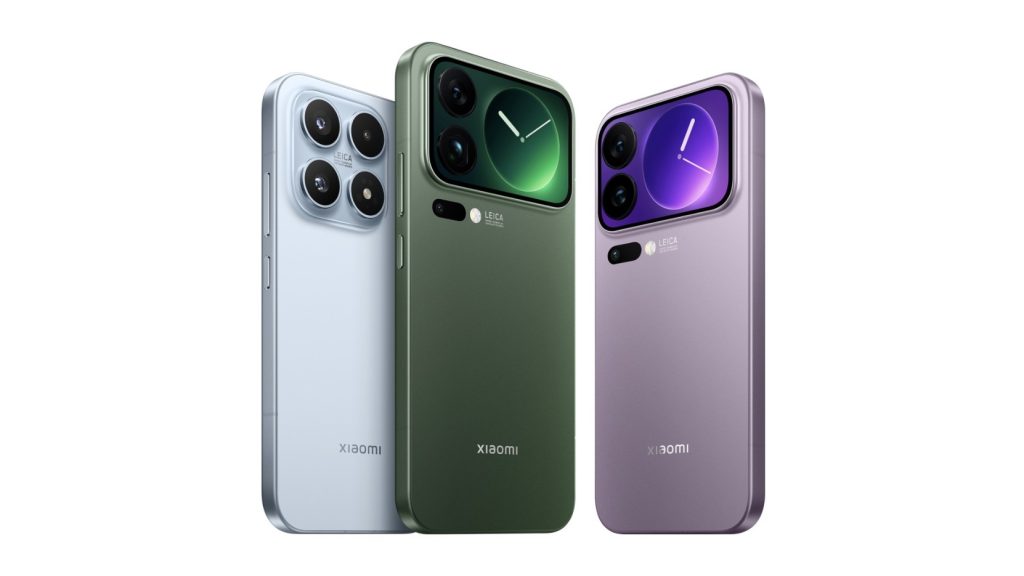
Xiaomi has officially confirmed that the Xiaomi 17 series will launch on February 28, 2026, at the Mobile World Congress (MWC) in Barcelona. The Chinese smartphone maker will debut the devices in India on the same day as the global unveiling. The company will begin the event at 2 PM Barcelona time (6:30 PM IST) and will likely livestream it for viewers worldwide. Alongside the new smartphones, Xiaomi will also introduce the Xiaomi Pad 8 in India.
A key highlight of the Xiaomi 17 lineup is its upgraded camera partnership with Leica. The companies have shifted from simple collaboration to a strategic co-creation approach. In practical terms, Leica is now more involved in camera design and tuning. Moreover, the goal is to offer users a more refined photography experience with improved lighting, natural colors, and professional-level output.
Xiaomi 17 Ultra
The Xiaomi 17 Ultra will be the star of the show. That’s because it’ll come with a massive 6.9-inch AMOLED display with 1.5K resolution, a 120Hz refresh rate, and a brightness of up to 3500 nits. In terms of performance, the Snapdragon 8 Elite Gen 5 chipset will be the beating heart, with variants up to 16GB of RAM and 1TB of internal storage.
Additionally, it includes a 200MP periscope sensor to deliver high-quality zoom shots. The phone also houses a 6800mAh battery with 90W fast charging. The company uses leather and matte finishes in the design, taking inspiration from classic Leica cameras.
Xiaomi 17 & Pad 8
The Xiaomi 17 will debut alongside the Ultra version at the same event. It features a 6.3-inch AMOLED display and a 50MP triple-camera setup on the back. The phone is powered by the Snapdragon 8 Elite Gen 5 processor and features a 7000mAh battery.
Alongside the smartphones, Xiaomi is expected to introduce the Xiaomi Pad 8 in India. The tablet comes with an 11.2-inch 3.2K LCD screen supporting a 144Hz refresh rate. Furthermore, it runs on the Snapdragon 8 Elite processor and offers up to 16GB RAM. For photography and video calls, it features a 50MP rear camera and a 32MP selfie camera. The device features a 9200mAh battery.
Advertisement
Expected Price
The company has not revealed India-specific pricing so far. In global markets, Xiaomi plans to launch the Xiaomi 17 Ultra at around €1,499 and the regular Xiaomi 17 at about €999. Pricing in India may change depending on local taxes and import costs.
Spotify is rolling out a new feature that’s meant to make transitions in between tracks even smoother. If you’ll recall, the streaming service released the ability to create customized transitions within playlists in August last year. It gave people a way to create uninterrupted progressions and eliminate awkward silences between songs. Now, Premium users will be able to make sure the songs in their playlists flow seamlessly even further by reordering tracks based on their keys and BPM or beats per minute.
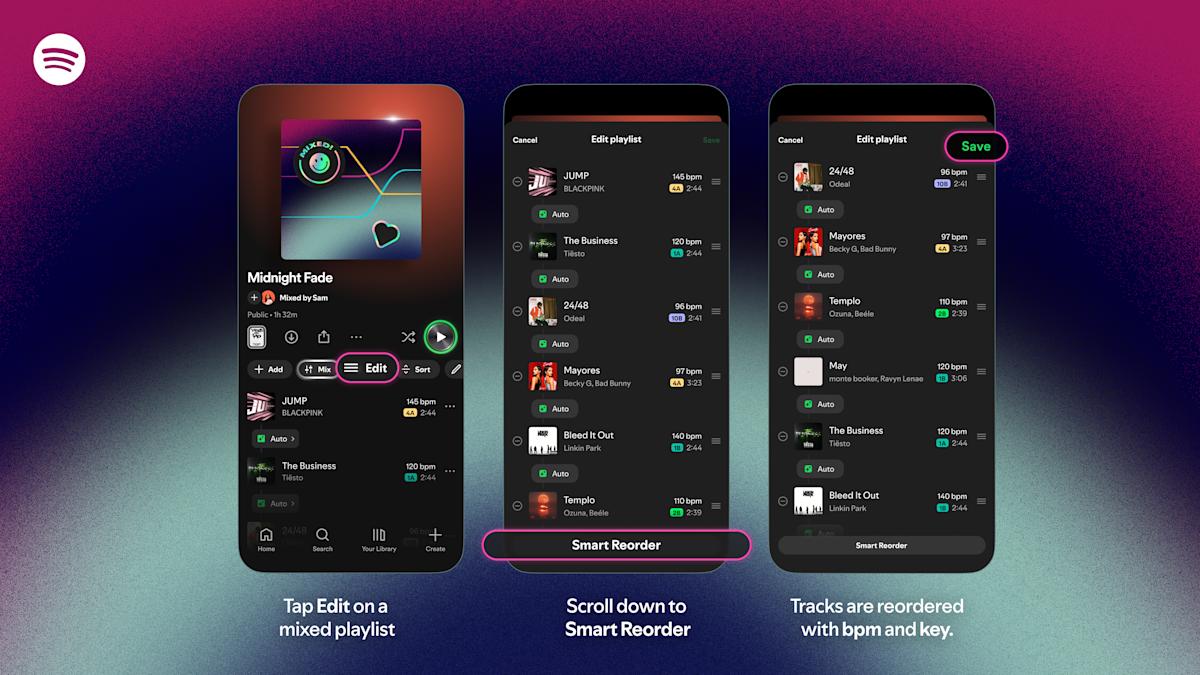
The new feature can rearrange playlists with one tap. All paying users have to do is tap Mix on one of their playlists and then tap the Edit button. From there, they can scroll down to find the Smart Reorder option. Tapping Smart Reorder will automatically rearrange songs according to their keys and BPM without users having to do anything else. They just have to click Save so that the change to their playlist takes effect.
Spotify says users have streamed over 220 hours of their mixed playlists since it introduced custom transitions last year. It also listed some of the most popular ones on the platform, including The Weeknd’s Wake Me Up transitioning into After Hours and Flo Rida’s Low into Rihann’s S&M.
The disconnect between AI enthusiasm and practical implementation has never been more apparent. While 90% of UK business leaders report using AI regularly, only 16% have successfully integrated it into their CRM systems[1]—the very platforms that power their customer relationships and revenue generation.
This gap represents both a challenge and an opportunity for mid-market businesses in 2026. As artificial intelligence moves from experimental to essential, organisations that master CRM integration will gain significant competitive advantages in sales efficiency, customer engagement, and revenue growth.
John Cheney
Advertisement
The current state of AI adoption
Recent research into AI usage within UK B2B organisations reveals a market in transition. The data shows that business leaders aren’t AI-averse; rather, quite the opposite. The vast majority are already using AI tools in various capacities, from content generation to data analysis. However, when it comes to embedding AI into core business systems like CRM, adoption rates drop dramatically.
This 74% point gap between general AI usage and CRM integration tells an important story. It suggests that while businesses understand AI’s potential, they’re struggling with the practical challenges of implementation, particularly within mission-critical systems.
The good news? This is about to change. According to the research, 59% of sales and marketing leaders[2] plan to significantly increase their AI adoption over the next year, with CRM systems a primary focus area.
Advertisement
Why CRM has lagged behind
Several factors explain why CRM systems have been slower to embrace AI than other business functions.
Legacy infrastructure challenges remain a significant barrier. Many mid-market companies run CRM platforms that weren’t designed with AI in mind, making integration complex and costly.
Data quality concerns also play a role. AI is only as good as the data it learns from, and CRM databases often contain inconsistent, incomplete, or outdated information. Leaders worry about amplifying existing data problems through AI-powered automation.
Lack of internal expertise creates hesitation. Sales and marketing teams understand their processes, but may lack the technical knowledge to evaluate AI tools or implement them effectively. Without clear guidance, it’s easier to maintain the status quo.
Fear of disruption shouldn’t be underestimated. CRM systems are business-critical, and any changes risk impacting revenue generation. This makes leaders understandably cautious about major system overhauls.
The productivity paradox
Here’s what makes the AI-CRM gap particularly costly: early adopters are already seeing substantial benefits. The report shows that companies using multiple AI features within their CRM report productivity gains approaching “substantial impact” levels, particularly in reporting, analytics, and operational efficiency.
Advertisement
Those using just a single AI tool see far more modest improvements, suggesting that AI’s real value emerges when integrated comprehensively across workflows rather than deployed piecemeal.
This creates a widening performance gap. While some organisations leverage AI to automate administrative tasks, surface strategic insights, and accelerate sales cycles, others remain mired in manual data entry, inconsistent record-keeping, and time-consuming research tasks.
What effective AI-CRM integration looks like
The most successful implementations focus on addressing specific pain points rather than pursuing AI for its own sake:
Advertisement
Automated administrative work eliminates the busywork that prevents sales teams from selling. Meeting transcription, note-taking, and CRM updates can happen automatically, freeing hours of productive time each week.
Intelligent guidance systems help sales teams make better decisions. By analysing opportunity data, communication history, and past successes, AI can recommend next steps, suggest relevant case studies, and identify the strategies most likely to advance each deal.
Proactive data hygiene addresses one of CRM’s biggest challenges. Rather than relying on manual updates, AI agents can prompt teams to fill gaps, correct inconsistencies, and maintain accurate records based on meeting outcomes and email exchanges.
Enhanced prospect research transforms preparation time. Instead of manually gathering background information, identifying key contacts, and tracking company news, AI agents can compile comprehensive prospect profiles automatically, even scoring leads against ideal customer criteria.
Getting AI-CRM integration right in 2026
Organisations should start by identifying the specific tasks consuming the most time without generating proportional value.
The research makes clear that successful AI adoption requires more than just technology; it demands thoughtful integration, aligned processes, and proper training. Organisations should start by identifying the specific tasks consuming the most time without generating proportional value. These high-volume, low-complexity activities are ideal candidates for AI automation.
Next, ensure your data foundation is solid. AI amplifies what already exists, so addressing data quality issues before implementation prevents compounding problems later. Invest in training and change management. The best AI tools still require human judgment and oversight. Teams need to understand not just how to use new features, but when to trust AI recommendations and when to override them.
Finally, measure impact rigorously. Track time savings, data accuracy improvements, and revenue metrics to demonstrate ROI and identify areas for refinement.
Sign up to the TechRadar Pro newsletter to get all the top news, opinion, features and guidance your business needs to succeed!
Advertisement
The 2026 opportunity
The AI-CRM divide won’t remain static. As the technology matures and integration becomes simpler, the competitive advantage will shift from those who adopt AI first to those who deploy it most effectively.
Instead of “Should we use AI in our CRM?” The conversation needs to evolve to “Which specific workflow inefficiencies can AI solve?” and “How do we build the organisational muscle to continuously adapt as AI capabilities expand?”
The early movers in AI-CRM integration are already discovering something crucial: the technology itself is only half the equation. The real transformation comes from rethinking sales processes, redefining team roles, and fostering a culture where human expertise is amplified by intelligent automation rather than replaced by it.
Advertisement
For mid-market businesses, 2026 presents a rare window. The tools are mature enough to deliver real value, but adoption is still limited enough that competitive differentiation is achievable. Those who move decisively, not recklessly, but with clear strategy and proper preparation, will find themselves selling smarter, closing faster, and building stronger customer relationships while their competitors are still debating whether to begin.
The AI-CRM gap will close. The only question is which side of it your business will be on when it does.
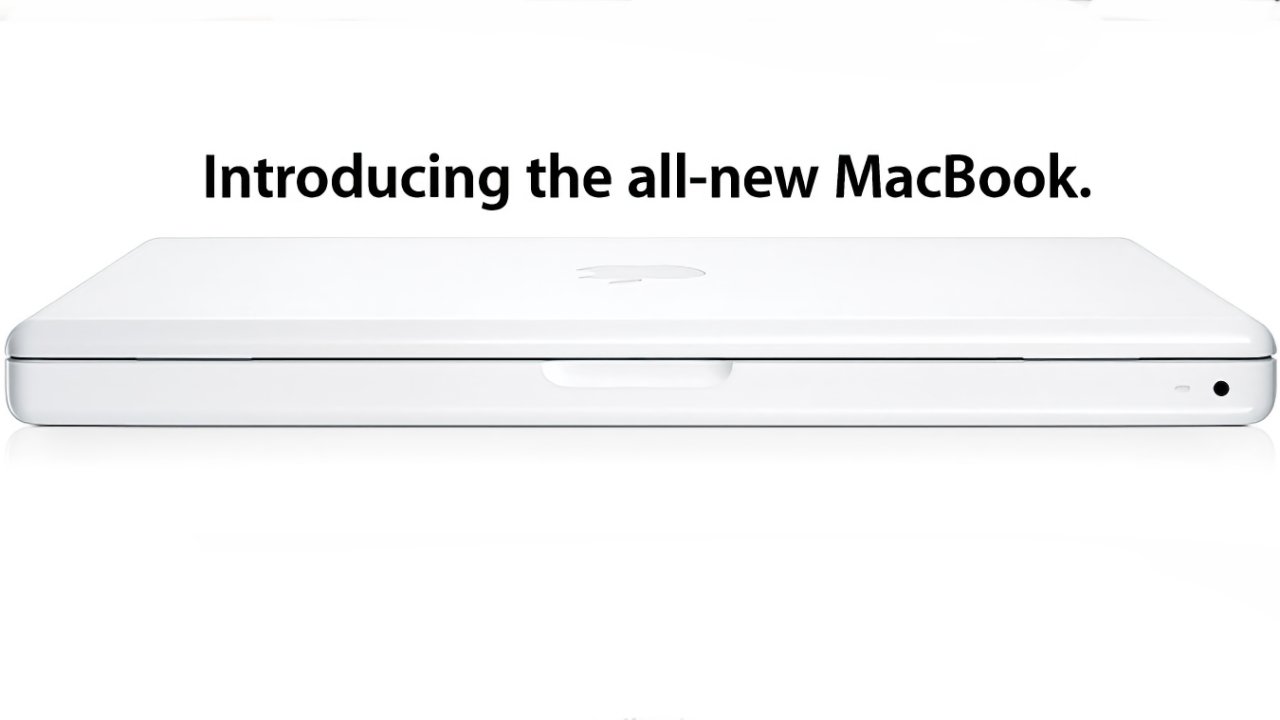
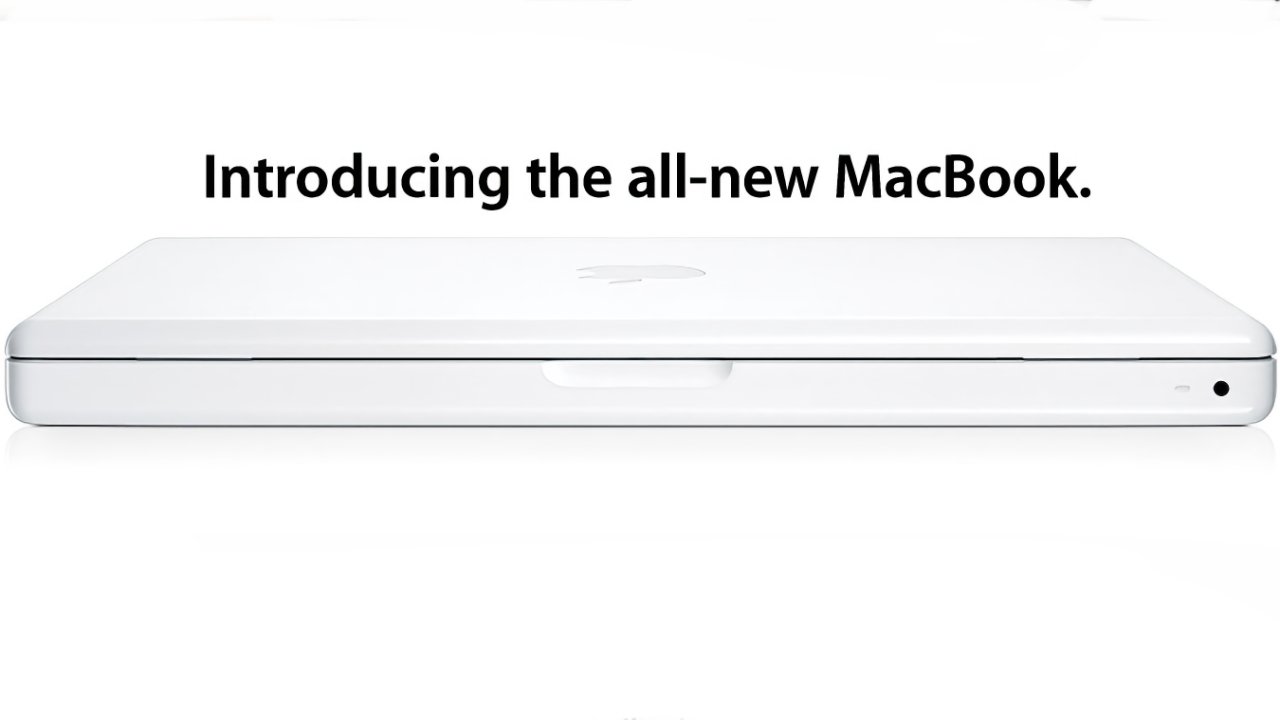
Apple’s expected less-expensive MacBook is one of the company’s worst-kept secrets, but if it’s priced right, it could become a huge hit — just as certain previous MacBooks did.
The original MacBook from 2006 — image credit: Apple
This anticipated new MacBook is expected to be significant because it will use an iPhone processor instead of the Mac‘s now usual M-series ones. It is that lower-cost processor that means Apple may be able to compete with Chromebooks. That’s key now, and it was important when Apple would release a MacBook range in 2015. But back in 2006 with the follow up to the iBook, the MacBook, the budget-priced and low specification Chromebook was five years away. Continue Reading on AppleInsider | Discuss on our Forums
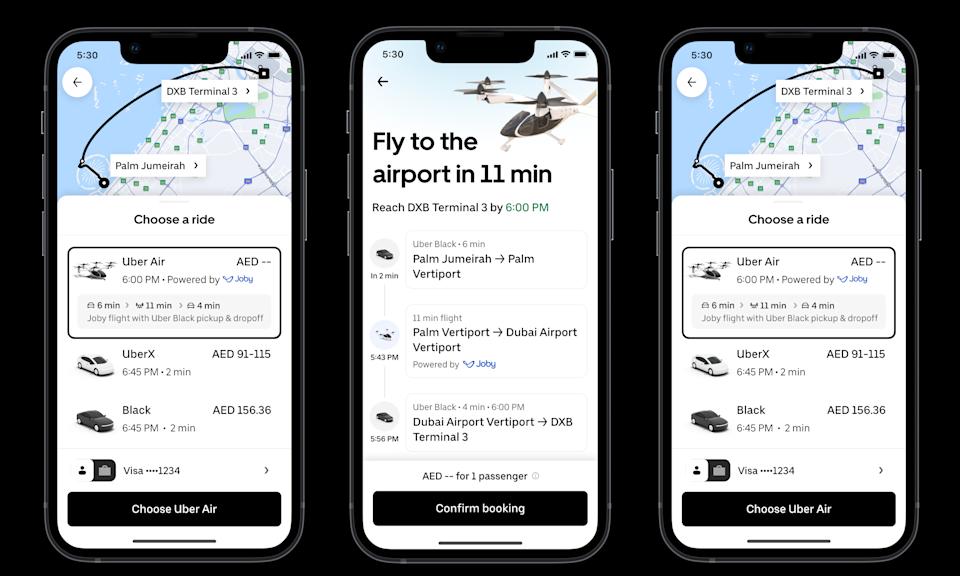
Uber is one step closer to going airborne. On Wednesday, the company previewed its air taxi booking service ahead of an expected launch in Dubai later this year. The inaugural Uber Air program will let travelers book Joby Aviation’s electric air taxis through a familiar process in the Uber app.
The experience of booking an air taxi will be much like reserving a four-wheeled Uber. In the app, after entering your destination, Uber Air will appear as an option for eligible routes. The Uber app will book a flight and an Uber Black to pick you up and drop you off at a Joby “vertiport.”
The process of booking a flying taxi will be instantly familiar. (Uber)
Joby’s air taxis, built exclusively for city travel, can accommodate up to four passengers and luggage. (Uber says size and weight guidelines will be announced closer to launch.) The interior is about the size of an SUV and has “comfortable seating” with panoramic windows. They can travel up to 200 mph and have a range of up to 100 miles. Four battery packs and a triple-redundant flight computer are onboard for safety purposes.
The air taxis aren’t (yet) autonomous and will each have a human pilot onboard. That would at least suggest high prices. After all, pilots aren’t nearly as cheap as Uber’s legion of independent-contractor drivers. But the company insists its air taxi rides will somehow be around as expensive as an Uber Black trip.
Advertisement
Joby’s air taxis have “panoramic” windows with a view of the city below. (Joby)
Dubai is only the beginning of the companies’ plans. The US-based Joby says it’s in the final stage of FAA type certification and hopes to launch service in New York and Los Angeles. Globally, it’s targeting the UK and Japan as well.
As for how realistic a US launch is anytime soon, well, that’s up for debate. On one hand, President Trump signed executive orders last year that would create a pilot program to test such aircraft. But safety and cost considerations may require a grounding of expectations.
The aircraft requires a human pilot, at least in these early stages. (Joby)
In November, Robert Ditchey, a Los Angeles-based aviation expert and test pilot, toldNBC News that he didn’t think air taxi service “was ever going to happen” in American cities. “They’re dangerous,” he warned. “We have had helicopters fail and crash on top of buildings in Los Angeles. We’ve had helicopters fail at takeoff and landing in airports. They’re dangerous not from a fire point of view but in terms of landing on top of people and buildings.” In addition, he warned that air taxis can’t be developed in sufficient numbers to make them economically viable “unless they are subsidized by a government.”
Uber and Joby have partnered since 2019. In 2021, Joby bought the Uber Elevate ride-hailing division, which essentially integrated the companies’ services. Last year, Joby acquired Blade Air Mobility’s passenger business, which could open the door to eventually electrifying Blade’s routes.
Advertisement
The video below shows one of Joby’s air taxis taking a test flight in Dubai.
Apple’s forthcoming touch-screen MacBook Pro models — the company’s first-ever laptops to support touch input — will feature the iPhone’s Dynamic Island at the center top of their OLED displays and a new interface that dynamically adjusts between touch and point-and-click controls, according to a Bloomberg report citing people familiar with the plans.
The 14-inch and 16-inch models, code-named K114 and K116, are slated for release toward the end of 2026 and won’t be part of Apple’s product announcements in the first week of March. The redesigned interface brings up a contextual menu surrounding a user’s finger when they touch a button or control, and enlarges menu bar items when tapped, adapting the available controls based on whether the input is touch or click.
Apple does not plan to position the machines as iPad replacements or describe them as touch-first; the physical design retains the full keyboard and large trackpad of the current MacBook Pro. Last year’s Liquid Glass redesign in macOS Tahoe, which added more padding around icons and touch-optimized sliders in the control center, was partly groundwork for this shift.
Bloomberg says a new Sonos app refresh is in the works
A key feature is extra iOS compatibility
Anyone else getting déjà vu?
The Sonos calendar may well have skipped 2025 in terms of that ‘two new product releases annually’ promise, although the company did release a new amplifier at the start of the year – and apparently 2026 will be a much busier year for the brand. So shall we see what shiny new gifts Sonos Clause (sorry) has wrapped up for us in his sack? It’s… an app overhaul. Another one.
According to Bloomberg, the company is planning to rework and refresh its app offering in the next few months, with an early version apparently already working internally. It’s unclear if that means the Sonos app is merely working, or really workable for the many customers still disgruntled over the last update. Apparently, the changes will be optional, and slowly integrated into the app rather than presented as one big push. (Lesson learned there, it seems.)
So what could actually change? Apparently you’ll now be able to control your Sonos device from the iPhone lock screen, using Apple’s recent developments in the area. It’s all to do with Apple’s Live Activities (the interactive, real-time notifications that appear on the iPhone Lock Screen and in the Dynamic Island) which would certainly be a welcome upgrade for iPhone owners.
That presumably won’t be the only change, as it’s something the Android app already offers, but it’s the only one we’ve heard about so far. A company cannot drip-release features if there’s only one, though, so we’ll likely hear about more nearer the time.
Keeping fans ‘appy
The word combination of ‘Sonos’ and ‘app’ may give users conniptions given that a bungled May 2024 app change which was only really fixed in 2025 is now what fans think about when they hear those words used together.
The then-new app had laggy volume controls, missing features from the older app, and a more confusing design that took users too long to get their heads around. While it’s mostly fixed now, a brief skim of the Sonos subreddit still yields post after post of complaints about the app and its bugs.
Advertisement
As a baseline, Sonos’ new new app really needs to not to present these issues, or it could signal the end of trust in the brand: fool me once, and all that. The affections of plenty of Sonos fans are on the line, and if the company is planning a gangbusters product launch slate this year, it’s going to need some ardent cheerleaders to help it along — especially with the growing slate of WiiM products hitting the market…
Sign up for breaking news, reviews, opinion, top tech deals, and more.
And of course, you can also follow TechRadar on YouTube and TikTok for news, reviews, unboxings in video form, and get regular updates from us on WhatsApp too.