




Connect with us

Business

Bitcoin Miners Position for Volatile Report

Published

on

UiPath

MARA Holdings Inc.’s stock advanced modestly on February 24, 2026, closing at $8.05 after gaining 2.22%, as investors positioned cautiously ahead of the Bitcoin mining company’s fourth-quarter and full-year 2025 earnings report scheduled for February 26, amid ongoing sector challenges and a broader crypto market rebound.

MARA Holdings, Inc
MARA Holdings, Inc

The shares, trading on NASDAQ under ticker MARA, traded in a range of $7.59 to $8.17 during the session with volume of approximately 37 million shares—below recent averages but still elevated. The stock has declined sharply year-to-date in 2026, down roughly 14-15% from early January levels, and remains well below its 52-week high of $23.45 reached in 2025. The pullback reflects pressure from Bitcoin price volatility, rising energy costs, increased competition, and a shift in investor sentiment toward profitability amid a maturing digital asset industry.

MARA Holdings, formerly Marathon Digital Holdings, operates large-scale Bitcoin mining facilities powered by sustainable energy sources, including hydro and nuclear, across North America. The company has emphasized energy efficiency and strategic Bitcoin accumulation, holding significant reserves to benefit from price appreciation while generating revenue from mining rewards and sales.

The February 24 gain followed a multi-day stabilization around $7.50-$8.00, with analysts attributing the modest uptick to pre-earnings repositioning and a slight Bitcoin recovery. Trading volume reached about $290 million, ranking the stock 424th in activity for the day, indicating selective interest rather than broad enthusiasm.

The upcoming earnings release, set for after market close on February 26 with a conference call at 5:00 p.m. ET, represents a pivotal moment. The Zacks consensus estimate calls for a net loss of $0.23 per share—wider than the year-ago profit of $1.24—while projecting revenue of approximately $223.9 million to $224 million, up 4.4% year-over-year. Expectations center on mining output, energy costs, Bitcoin holdings, and any updates on expansion or diversification efforts.

Advertisement

MARA has pursued a dual strategy of efficient Bitcoin mining and strategic asset retention, with recent quarters showing resilience despite industry headwinds. The company has highlighted low power costs through long-term contracts and investments in sustainable infrastructure. However, analysts note challenges from halving events reducing block rewards, higher competition, and potential dilution from capital raises.

The firm has also explored adjacent opportunities, including partnerships and infrastructure development to support broader digital energy applications. A February 20 announcement scheduled the earnings call, with results to be detailed in a shareholder letter on the investor relations site prior to the webcast.

Wall Street views remain mixed but lean toward Hold to Moderate Buy. Consensus among covering analysts sets average 12-month price targets around $19.27—implying significant upside of over 130% from current levels—though targets vary widely reflecting the stock’s high beta of 5.56 and sensitivity to Bitcoin movements. Some firms highlight MARA’s scale and energy advantages as positives for long-term recovery, while others caution on near-term profitability and execution risks.

Broader sector dynamics influence sentiment. Bitcoin mining stocks have faced volatility in 2026 following 2025’s crypto rally, with concerns over energy prices, regulatory scrutiny, and the transition to post-halving economics. MARA’s debt-to-equity ratio of 0.63 and current ratio above 2.0 provide some balance sheet stability, but the stock trades below its 50-day ($9.46) and 200-day ($13.66) moving averages, signaling technical weakness.

Advertisement

Upcoming catalysts include the February 26 report, where management will likely address guidance for 2026, Bitcoin production trends, cost controls, and any progress on non-mining initiatives. Positive surprises on revenue, margins, or Bitcoin holdings could spark a rebound; wider-than-expected losses or cautious outlook might extend downside.

MARA Holdings continues to navigate a transitional phase in the digital asset sector. Its focus on sustainable operations and large-scale mining positions it to benefit from any sustained Bitcoin rally or increased institutional adoption. However, proving consistent profitability amid cyclical pressures will be key to regaining investor confidence.

As earnings approach, the stock’s trajectory hinges on execution and macro crypto trends. With shares at levels well below recent peaks, some see opportunity in the volatility, while others await clearer signs of stabilization in the mining landscape.

Advertisement
Continue Reading
Click to comment

Leave a Reply

Your email address will not be published. Required fields are marked *

Business

Coupang (CPNG) Stock Dips to $18.59 Ahead of Q4 2025 Earnings, Analysts Eye Regulatory Risks

Published

on

Coupang

Coupang Inc.’s shares traded near $18.59 on February 24, 2026, down modestly amid investor caution over potential regulatory scrutiny in Korea and the United States, as well as costs from its Taiwan expansion, with the e-commerce giant set to report fourth-quarter 2025 results on February 26.

Coupang
Coupang

As of February 24, 2026, Coupang (NYSE: CPNG) closed at $18.59, up 0.05% on the day after fluctuating in a range of $17.66 to $18.74 with volume of approximately 26.1 million shares. The stock has declined about 5-6% over the past week and remains well below 2025 highs near $34, reflecting a year-to-date pullback in 2026. Market capitalization hovers around $33-34 billion.

The recent pressure stems from broader concerns in the Korean internet sector and U.S. political dynamics. On February 24, shares slipped as investors weighed whether Coupang could become a bargaining chip in potential trade talks, following interim CEO Harold Rogers’ closed-door deposition before the U.S. House Judiciary Committee on February 23. Regulatory investigations tied to a November 2025 data breach have also weighed on sentiment, contributing to share weakness.

Coupang is scheduled to release Q4 2025 earnings after market close on February 26, with a conference call at 5:30 p.m. ET. The Zacks consensus estimates revenue of $9.14 billion—up 14.78% year-over-year—while projecting EPS of $0.02, down 50% from the year-ago quarter. The earnings mark has declined slightly in recent weeks, signaling caution around profitability pressures from international growth and the data breach fallout.

The company has expanded aggressively into Taiwan, with costs contributing to margin compression in recent periods. Analysts note that while revenue growth remains solid—driven by core South Korean operations, Rocket Delivery, and e-commerce momentum—profitability faces headwinds from these investments. Q3 2025 results showed EPS of $0.05 on $9.3 billion in revenue, beating expectations, but Q4 guidance and commentary will be key to assessing the Taiwan trajectory.

Advertisement

On the analyst front, views are mixed. UBS lowered its price target to $25 from $35 on February 19, 2026, while maintaining a Buy rating, citing regulatory scrutiny as a drag. Bernstein initiated coverage on February 5 with an Underperform rating and $17 target, reflecting caution in the Korean internet space. Consensus among 11 analysts leans Hold to Moderate Buy, with average 12-month price targets around $27.70—implying about 49% upside from current levels. High targets reach $40, low ends around $17.

Coupang’s core business benefits from strong market position in South Korea, with high customer loyalty through fast delivery and membership perks. The company continues investing in logistics, private-label products, and international markets to diversify beyond domestic reliance. Recent small-business initiatives, such as helping Pennsylvania companies expand globally via Coupang, highlight efforts to strengthen ecosystem ties.

Risks include competitive intensity from local and global players, potential trade policy impacts, and execution on profitability amid expansion costs. The data breach investigations add uncertainty, though management has emphasized containment and customer protection.

The February 26 earnings release will provide critical updates on revenue trends, margin progress, Taiwan performance, and 2026 guidance. Positive surprises on subscriber growth or cost controls could spark a rebound; signs of prolonged pressure might extend downside.

Advertisement

Coupang remains a key player in Asian e-commerce, with its logistics network and customer-centric model offering long-term potential. As the company navigates regulatory and expansion challenges, investor focus will center on proving sustainable profitability in 2026.

Continue Reading

Business

Sports village and hundreds of homes planned for Preston development

Published

on

Business Live

Backers aim to create ‘high-quality’ hub for ‘local grassroots sport’

Longridge Town FC ground

Longridge Town FC’s ground(Image: Levitt Bernstein, via Preston City Council planning portal)

More than 200 homes and a raft of new and upgraded sports facilities could be created on the outskirts of Preston as part of a major residential and leisure development.

Advertisement

The proposed Longridge Sports Village scheme would provide a “high-quality” hub for “local grassroots sport”, according to the organisations behind it.

Provision for football, gymnastics, padel and informal runs would sit alongside up to 220 new dwellings, all which would fall into the discounted ‘affordable homes’ category. More than 40 of the proposed properties are flats designed specifically for older people.

A 12-hectare site to the north west of the town has been earmarked for the project, adjacent to Longridge Town Football Club and Longridge Cricket Club.

Plans for the site – bounded by Inglewhite Road and Chipping Lane – first emerged last year when a public consultation was carried out into an initial blueprint.

Advertisement

Now, Longridge-based Steel Work Construction and Preston social housing provider Community Gateway Association have submitted an outline proposal to Preston City Council, seeking planning permission for the project – which they say will plug “a recognised deficit in local sports provision”.

Their joint application sets out the specifics of the sporting plans, which include the creation of a seven-a-side 3G football pitch to serve the needs of Longridge Town’s junior club and the 300 players that make up its 20 teams. The facility would, it is claimed, put an end to the weather-related cancellations that beset the junior fixtures during winter – and would also be used by the senior team for training.

The existing grass pitch for the first team would be retained, with the clubhouse extended and improvements made for spectators.

Elsewhere, four covered padel courts are planned – for which there was “strong local support” expressed in last year’s public consultation, the application states.

Advertisement

Meanwhile a permanent, purpose-built base is proposed for Longridge Gymnastics Club, which is currently forced to operate from rented facilities four miles out of town in Ribbleton.

A 1.5km “recreational running and walking route” also forms part of the plans – a facility that would be “integrated into the site’s network of green spaces for the benefit of the whole community”.

The plot sits in the open countryside, making it a location that would not usually be deemed suitable for significant development. However, the planning statement accompanying the sports village proposal stresses that it is not a “remote, isolated landscape”.

It adds that the surrounding area has become “an established focus for the town’s recent residential growth”, with planning permissions granted for new housing along Halfpenny Lane, Inglewhite Road, and Chipping Lane – making the sports village site “a logical and sustainable extension of the built-up area, rather than an intrusion into undeveloped countryside”.

Advertisement

Meanwhile, an odour assessment undertaken on behalf of the applicants concluded there was only a “slight and not significant” risk of smells from the nearby pig farming operation at Belmont Farm affecting future residents and leisure users.

The proximity of the piggery was highlighted by the city council last year when it considered – and decided against – requiring an environmental impact assessment as part of the planning application for the sports village.

The assessment found that the southernmost parts of the site would be most affected by odours – and so that zone will not be used for residential development.
Advertisement
Continue Reading

Business

River Point Farms adds to onion portfolio

Published

on

River Point Farms adds to onion portfolio

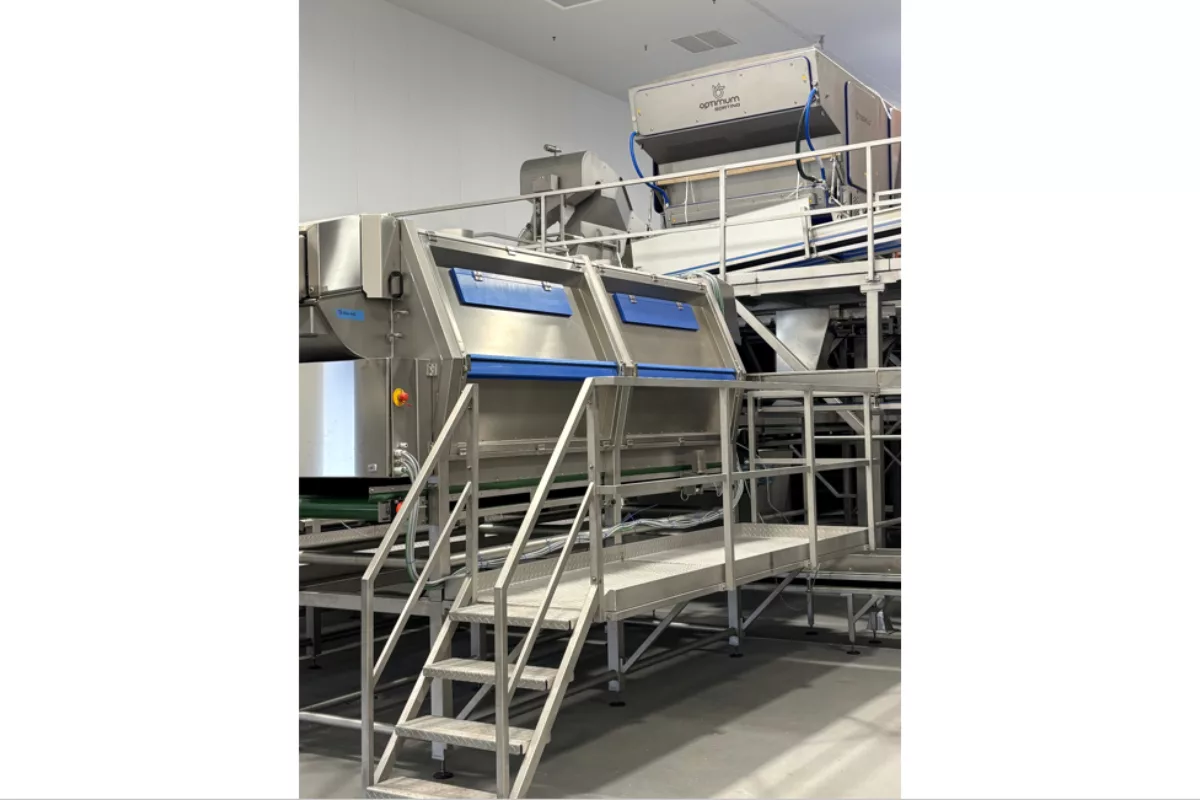
Individually quick-frozen line joins company’s fresh pack and fresh-cut offerings. 

Continue Reading

Business

Co-founders launch espresso soda startup

Published

on

Co-founders launch espresso soda startup

Esspo is formulated with 120 mg of caffeine, 240 mg of L-Theanine. 

Continue Reading

Business

CleanSpark (CLSK) Stock Surges 5.4% to $10.35 on AI Pivot Momentum, Despite Q1 2026 Loss Widening

Published

on

CleanSpark Inc

CleanSpark Inc.’s stock rallied 5.4% to close at $10.35 on February 24, 2026, rebounding from recent pressure as investors focused on the company’s strategic shift toward high-performance computing (HPC) and AI infrastructure, even after reporting a wider-than-expected net loss in fiscal first-quarter 2026 results released earlier in February.

CleanSpark Inc
CleanSpark Inc

As of February 24, 2026, CleanSpark (NASDAQ: CLSK) traded in a session range of $9.59 to $10.60 with volume exceeding 25.9 million shares, reflecting heightened activity amid the recovery. Pre-market trading on February 25 pushed shares higher to around $10.56-$10.63, suggesting continued interest. The shares have shown volatility year-to-date in 2026 but remain elevated from 2025 lows, with a 52-week range spanning lower levels to recent peaks near $23 in prior periods. Market capitalization hovers around $2.5 billion to $3 billion, depending on intraday moves.

The February 24 gain came despite a challenging Q1 fiscal 2026 earnings report on February 5, 2026 (for the quarter ended December 31, 2025). CleanSpark posted revenue of $181.2 million, up 11.6% year-over-year but missing analyst estimates of around $194 million. The company reported a net loss of $378.7 million—significantly wider than prior periods—and an EPS of -$1.35, far below consensus forecasts of $0.09 to $0.26. Gross margins contracted to 47% from 57% year-over-year, reflecting higher operational costs during the transition.

Management attributed the miss to reduced Bitcoin mining contributions amid price volatility and investments in HPC infrastructure. However, executives emphasized progress in securing AI data center leases, with the first expected soon. The pivot positions CleanSpark to capitalize on surging demand for compute power, leveraging its sustainable energy model and existing facilities.

Analysts maintain a cautiously optimistic view. Consensus among 12-14 firms rates CLSK a Moderate Buy to Strong Buy, with average 12-month price targets around $19.19 to $20.60—implying 85-100% upside from the February 24 close. Sanford C. Bernstein raised its target to $24 from $20 in late 2025, maintaining an Outperform rating. Other updates include Chardan Capital lowering to $16 from $30 in early February 2026 while keeping a Buy, and Keefe, Bruyette & Woods reducing to $14 from $18 but staying Outperform. Wall Street Zen shifted to Sell in November 2025, citing execution risks.

Advertisement

The company continues expanding its fleet, with operational updates highlighting increased hashrate and energy efficiency. January 2026 metrics showed progress toward targets, though Bitcoin exposure remains a volatility driver. CleanSpark’s focus on low-cost, sustainable power differentiates it in the competitive mining and HPC landscape.

Upcoming catalysts include the next earnings report for fiscal Q2 2026, estimated around May 7, 2026. Analysts project an EPS of around -$0.25 to -$0.38 and revenue near $164 million. Investors will scrutinize HPC lease announcements, margin trends, cost controls, and guidance revisions amid the AI infrastructure boom.

CleanSpark navigates a transitional phase, balancing legacy Bitcoin mining with emerging HPC opportunities. While Q1 results highlighted profitability challenges during the shift, the AI pivot and analyst upside targets support optimism for recovery. With shares rebounding and trading at levels offering substantial potential if execution improves, CleanSpark remains a high-beta play in the digital asset and compute sector.

Advertisement
Continue Reading

Business

Opinion: Gas up for energy insurance role

Published

on

Opinion: Gas up for energy insurance role

OPINION: The flexibility of gas cements its value as a transitional energy source.

Continue Reading

Business

Greer signals tariffs may rise to 15% or higher for some countries

Published

on

Greer signals tariffs may rise to 15% or higher for some countries

U.S. Trade Representative Jamieson Greer signaled tariffs could rise for some countries early Wednesday, telling FOX Business they may increase to 15% or higher as President Trump continues his push for economic leverage.

“Even right now, we have the 10% tariff, it’ll go up to 15 for some, and then it may go higher for others,” Greer said on “Mornings with Maria.”

Advertisement

“I think it will be in line with the types of tariffs we’ve been seeing. We want to have continuity in this program,” he added.

TRUMP ANNOUNCES ‘FINAL’ 25% TARIFF ON COUNTRIES DOING BUSINESS WITH IRAN REGIME

Jamieson Greer

U.S. Trade Representative Jamieson Greer speaks during an Economic Club of New York luncheon in New York on Sept. 30, 2025. (Victor J. Blue/Bloomberg via Getty Images)

The comments come as U.S. trading partners, including the European Union, have sought clarity on how the administration plans to implement its revised tariff strategy following a recent Supreme Court setback.

Greer said the administration is preparing to launch a series of investigations under existing trade authorities in the coming days and weeks, including Section 301 probes targeting what he described as unfair trading practices.

Advertisement

HOW SHOULD BUSINESSES APPROACH TARIFF REFUNDS?

Then-U.S. President-elect Donald Trump smiling during a Turning Point USA event in Phoenix, Arizona.

Then-President-elect Donald Trump smiles during Turning Point USA’s AmericaFest on Dec. 22, 2024 in Phoenix, Ariz. The president has vowed to work around the Supreme Court’s recent tariff ruling to continue implementing his global economic strategy. (Rebecca Noble/Getty Images)

“These include things like people who use forced labor in their supply chains,” Greer explained, adding that the U.S. would also examine countries accused of building industrial excess capacity and flooding American markets.

Under the process, the Office of the U.S. Trade Representative would issue a Federal Register notice, open a public comment period, and hold hearings, giving countries an opportunity to address those concerns before additional tariffs are imposed, he noted.

“We think that the deals that we’ve made with these folks actually tend to address, at least in part, some of the practices I’m talking about,” he said.

Advertisement

GET FOX BUSINESS ON THE GO BY CLICKING HERE

“With Indonesia, for example, we will run an investigation. We’ll look at industrial excess capacity. We’ll look at what they’re doing in fishing and that kind of thing, and we’ll run that investigation, and then we’ll bump it up against what they’ve agreed to do and what we think the problem is. Then, we make a determination on what kind of tariff should apply,” he said.

“We expect to have continuity in what we’re doing,” he said. 

Advertisement
Continue Reading

Business

Netflix (NFLX) Stock Hits Record High Near $1,050 as Subscriber Growth Accelerates

Published

on

Netflix said it was appealing against the decision

Netflix Inc.’s stock reached a new all-time high in late February 2026, closing at $1,048.72 on February 24 after gaining 1.82%, as the streaming giant posted blockbuster fourth-quarter and full-year 2025 results that showcased accelerating paid subscriber additions, explosive growth in its advertising-supported tier, and sustained profitability improvements.

Netflix said it was appealing against the decision
Netflix
AFP

As of February 24, 2026, Netflix (NASDAQ: NFLX) traded in a session range of $1,030.15 to $1,055.40 with volume of approximately 4.2 million shares. The shares have surged more than 65% year-to-date in 2026 following a strong 2025 close, pushing market capitalization above $450 billion for the first time. The 52-week range spans $610.20 to $1,055.40, reflecting investor confidence in Netflix’s transition to a mature, high-margin business.

The rally followed Netflix’s fourth-quarter earnings report released January 21, 2026, which delivered multiple records. The company added 18.9 million paid net subscribers in Q4—the largest quarterly gain in its history—bringing total paid memberships to 301.6 million, up 16% year-over-year. Full-year 2025 net additions reached a record 51.4 million, surpassing prior guidance and marking the strongest growth since the streaming wars began.

Revenue climbed 15.7% year-over-year to $10.25 billion in Q4, beating analyst expectations of $10.13 billion. Full-year revenue hit $39.00 billion, up 15%. Operating margin expanded to 29% in Q4 from 22% the prior year, with operating income reaching $2.97 billion. Net income rose to $2.48 billion, or $5.73 per diluted share, compared with $1.48 billion and $3.33 per share in Q4 2024.

The advertising tier drove outsized gains, with ad-supported memberships growing more than 65% sequentially in Q4 and representing a significant portion of new sign-ups in launch markets. Netflix reported that ad revenue more than doubled year-over-year in Q4, with average revenue per user in the ad tier approaching levels seen in the standard plan in some regions. Management guided for continued rapid ad-tier expansion in 2026, with plans to roll out the tier in additional countries and enhance targeting through improved data and partnerships.

Advertisement

CEO Ted Sarandos and co-CEO Greg Peters emphasized the success of password-sharing restrictions, now implemented in nearly every market, which contributed to both subscriber adds and revenue growth. The company also highlighted strong content performance, with hits like “Squid Game” Season 2, “Stranger Things” final season, and live events—including NFL games and WWE Raw—driving engagement. Live programming, including the upcoming Jake Paul-Mike Tyson boxing match rescheduled to early 2026, is expected to further boost viewership.

Netflix provided optimistic 2026 guidance, projecting revenue growth of 14-15% and operating margin expansion to 29-30%. The company anticipates another year of significant paid net subscriber additions, though at a moderated pace compared with 2025’s record. Free cash flow is forecast to exceed $8 billion in 2026, up from $6.9 billion in 2025, supporting continued content investment and potential share repurchases or dividends.

Wall Street responded enthusiastically. Consensus among 35-40 analysts rates NFLX a Moderate Buy to Buy, with average 12-month price targets around $1,100 to $1,150—implying 5-10% upside from current levels. High targets reach $1,300 from firms like Wedbush and Morgan Stanley, citing the advertising business’s long runway and global market penetration potential. Some analysts noted Netflix’s valuation at roughly 35 times forward earnings appears reasonable given margin expansion and cash flow strength.

Challenges include intensifying competition from Disney+, Amazon Prime Video, and emerging players, as well as content cost pressures and potential saturation in mature markets. International growth remains a focus, with Latin America, Asia-Pacific, and Europe, Middle East and Africa showing robust additions. Password-sharing crackdowns continue to yield benefits but face occasional pushback.

Advertisement

The next major update arrives with first-quarter 2026 earnings, expected in late April. Investors will watch subscriber trends, ad-tier penetration, content slate performance, and any refinements to full-year guidance.

Netflix has evolved from a DVD-by-mail pioneer into the dominant global streaming service, with a differentiated strategy blending originals, licensed content, live events, gaming, and advertising. Record subscriber gains, margin expansion, and a maturing ad business position it for continued outperformance in 2026, even as the streaming landscape grows more competitive. With shares at fresh highs, Netflix remains a bellwether for digital media and a core holding for growth-oriented investors.

Continue Reading

Business

DUG will fight Shell US court bill

Published

on

DUG will fight Shell US court bill

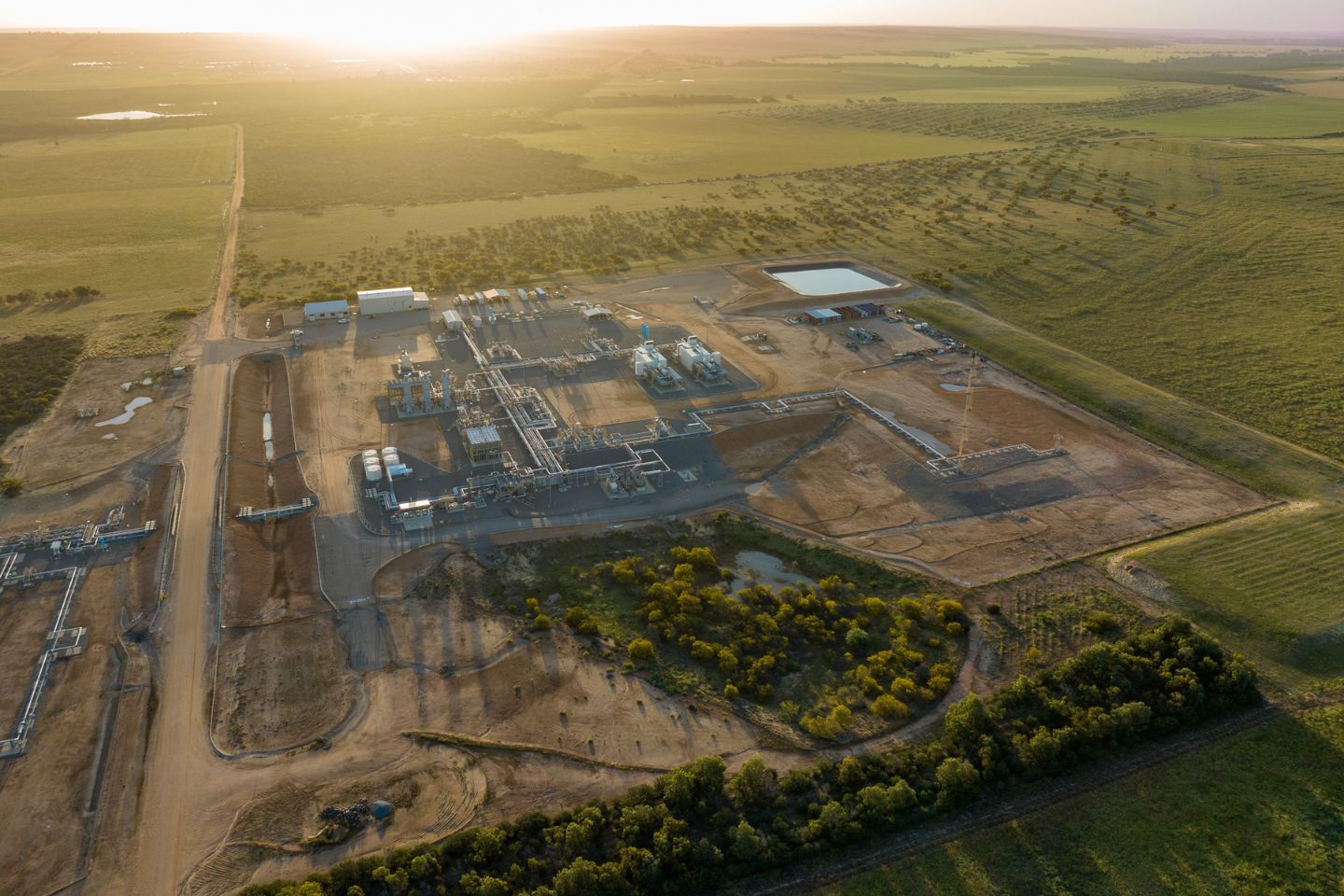
WA high-performance computing company DUG will fight a hefty legal bill lobbed at it by a Texas court, after it was found to have breached a supplier contract with a Shell subsidiary.

Continue Reading

Business

The Bank of Thailand unexpectedly lowers its key interest rate by 25 basis points to 1.00%

Published

on

The Bank of Thailand unexpectedly lowers its key interest rate by 25 basis points to 1.00%

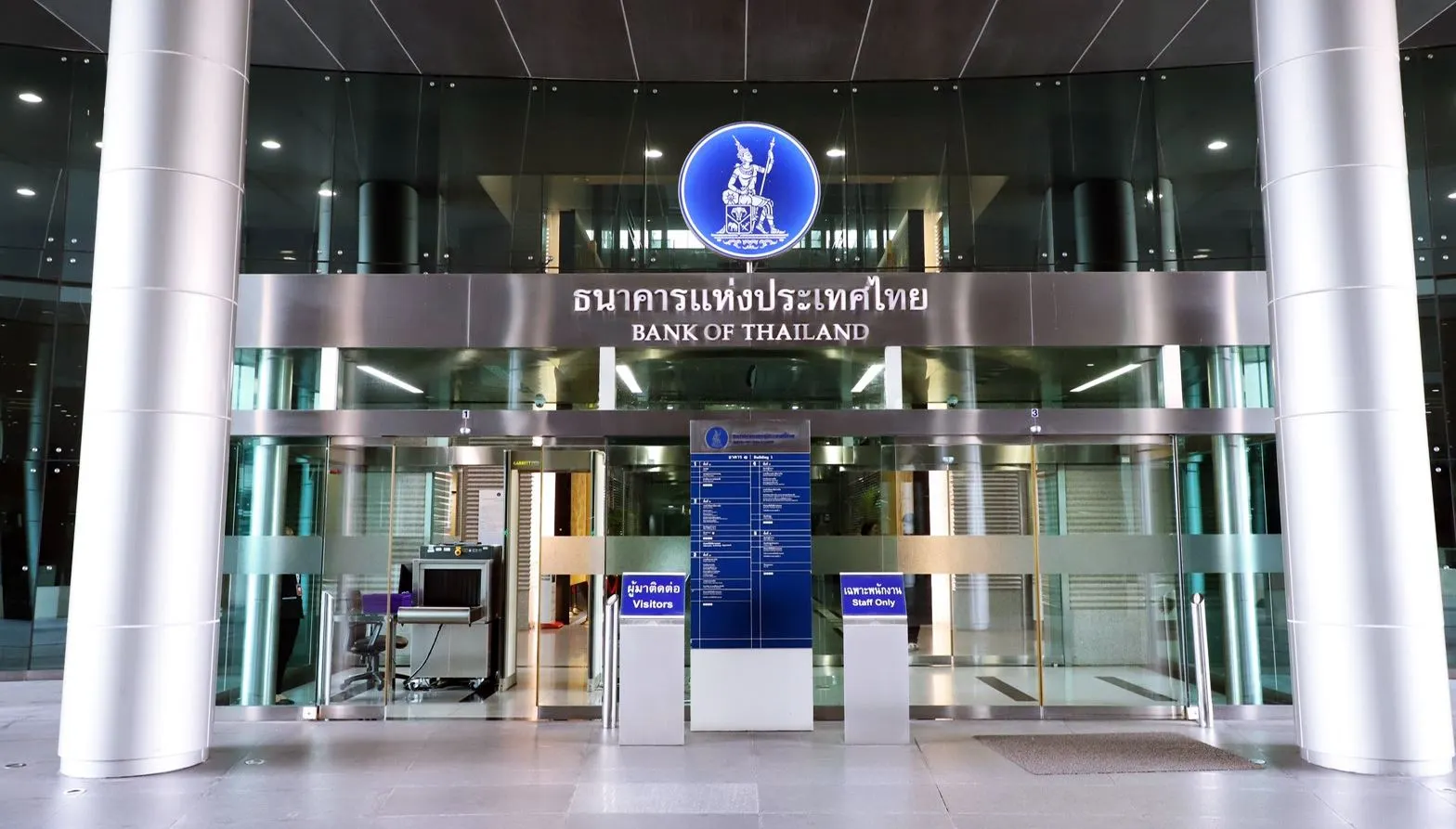
The Bank of Thailand’s Monetary Policy Committee unexpectedly lowered its key interest rate by 25 basis points to 1.00% during its first review of 2026.

The decision comes as a surprise to analysts who had widely anticipated no change in the rate. The move aims to support economic growth amid global uncertainties and sluggish domestic demand.

Key Points

  • The Monetary Policy Committee voted 4 to 2 to reduce the one-day repurchase rate to 1.00%.
  • The move caught the market by surprise, as only six of 27 economists surveyed by Reuters had predicted a rate cut.
  • This reduction marks the sixth rate cut since October 2024, bringing the total reduction over that period to 150 basis points.
  • The central bank cited the need to mitigate risks from a strong baht and global trade uncertainties, particularly regarding US trade policy.
  • Despite the rate cut, the Bank of Thailand raised its 2026 GDP growth projection to 1.9%, up from a previous estimate of 1.5%, following a stronger-than-expected economic performance in the fourth quarter of the prior year.

The Bank of Thailand’s Monetary Policy Committee (MPC) unexpectedly voted 4 to 2 to cut the one-day repurchase rate by 25 basis points to 1.00% during its first review of 2026. This move caught the majority of economists by surprise, as most had predicted no change following stronger-than-expected economic performance in late 2025.

This decision aims to support economic recovery, alleviate the debt burden for SMEs and households, and anchor inflation expectations amid heightened downside risks. While the economy showed stronger-than-expected momentum in late 2025, the committee anticipates that future growth will remain below potential due to structural impediments, necessitating a more accommodative policy stance to counter a strengthening currency and slowing private consumption.

Key Factors

  • Economic growth is projected to stay below potential in 2026 and 2027, constrained by intensified competition and structural issues that limit the value added by exports and investment.

  • Headline inflation risks have increased on the downside due to falling energy prices and weak demand-side pressures, with a return to the target range now delayed until the second half of 2027.
  • The Thai baht has appreciated against the U.S. dollar, leading to concerns regarding exchange rate misalignment and its negative impact on exporter competitiveness.
  • Overall credit continues to contract as financial institutions maintain a cautious lending stance, particularly toward SMEs and high-risk borrowers.
  • Two dissenting members voted to maintain the rate at 1.25%, arguing that existing policy transmission is still ongoing and that preserving limited monetary policy space is critical.
  • The MPC emphasized that monetary policy alone cannot resolve structural growth problems and called for integrated policies to improve national productivity and competitiveness.

Primary Macroeconomic Factors

The decision was driven by the need to buffer the Thai economy against specific external and domestic challenges:

  • US Tariff Uncertainty: The central bank cited concerns regarding the unpredictable nature of US trade tariffs and the potential impact they could have on the Thai economy.
  • Strengthening Currency: The “strengthening baht” was identified as a key challenge that the rate cut seeks to address, as a strong currency can impact export competitiveness.
  • External Risks: The move serves as a proactive measure to protect the economy against broader external risks that may threaten stability.

Economic Stimulation and Support

Beyond immediate risks, the rate cut was part of a broader strategy to support the national economy:

  • Sparking Growth: The reduction is intended to “spark” Southeast Asia’s second-largest economy, which has seen authorities trying to stimulate momentum through a series of cuts.
  • Continued Monetary Support: This was the sixth rate cut since October 2024 (totaling a 150-basis-point reduction), indicating an ongoing effort to provide a supportive monetary environment despite recent improvements in the economy.

Context of the “Unexpected” Decision

The move was considered unexpected by the majority of economists (21 out of 27 polled by Reuters) because several positive indicators suggested no change was necessary:

  • Stronger-than-expected GDP growth in the fourth quarter of the previous year.
  • An optimistic outlook from the central bank, which raised its 2026 GDP growth projection from 1.5% to 1.9%.
  • An improving political outlook within the country.

Although the domestic growth outlook was improving, the MPC focused on defensive measures to counter currency strength and global trade uncertainties, such as US tariffs, to ensure sustained economic stability. While domestic indicators showed signs of recovery, the MPC remained cautious, prioritizing strategies to mitigate risks associated with external pressures. These included addressing potential volatility from fluctuating exchange rates and navigating the challenges posed by shifting global trade policies. By maintaining a balanced approach, the committee aimed to safeguard long-term economic resilience and foster a stable growth environment.

Advertisement
Continue Reading

Trending

Copyright © 2025