
Connect with us

Tech

Qobuz Connect Lands on Cambridge Audio StreamMagic Gen 2 and Gen 3 in Upgrade for Legacy Product Owners

Published

on

In an era where “new model” usually means “time to replace the old one,” Cambridge Audio just did something refreshingly unglamorous and important. The company has rolled out Qobuz Connect to its legacy StreamMagic Gen 2 and Gen 3 platforms, extending modern streaming control to products that have been sitting in racks and on shelves for years.

That means owners of the StreamMagic 6 V2, CXN, CXR, Azur 851N, CXN V2, and Edge NQ can now control playback directly from the Qobuz app via an OTA update; no new hardware, no forced upgrade cycle. Qobuz still works through the StreamMagic app as before, but Connect adds a more direct, native control path that many subscribers prefer.

It’s good to see a brand remember that its customer base didn’t magically appear in the last 24 months. Supporting Gen 2 and Gen 3 after rolling out Qobuz Connect to Gen 4 isn’t flashy, but it sends a clear message: what you bought still matters. Your streamer didn’t just age out because a new box showed up with a higher number on it.

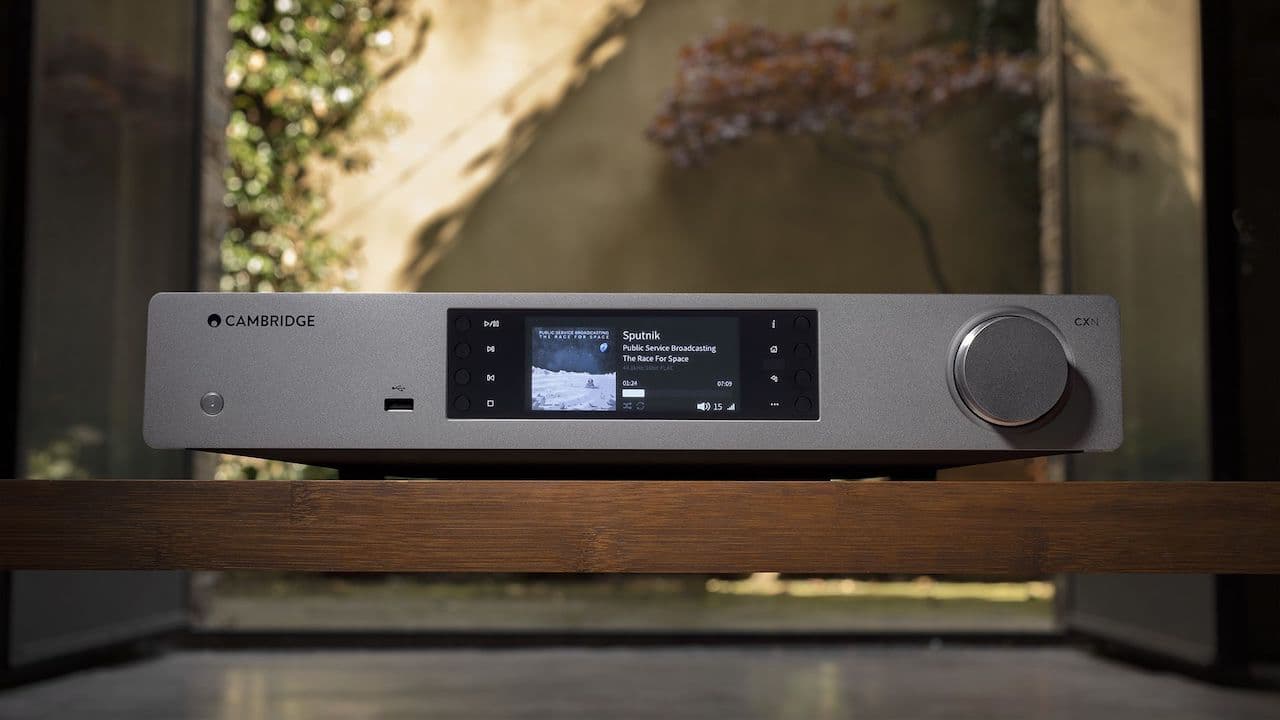
Cambridge Audio CXN V2 Network Audio Streamer
Cambridge Audio CXN V2 Music Streamer

It also proves something else; customers aren’t shouting into the void. The questions, feature requests, and yes, the complaints that show up on Instagram, Facebook, Audiogon, and the forums? They do get seen. Sometimes they even lead to action. That kind of accountability shouldn’t be rare in the hi-fi category, but too often it is.

Advertisement

There are plenty of alternatives out there. Some cost less. Some arguably do more. In a crowded field, long-term support isn’t just goodwill on the part of the manufacturer but smart business strategy. It’s also hard not to wonder whether Cambridge’s recent decision to appoint Fidelity Imports as its new U.S. distributor played a role here. Distribution shifts aren’t just about logistics and dealer networks, they’re about market responsiveness. If you’re trying to rebuild momentum and reinforce trust in a crowded category, showing existing owners that their gear still has a future is a smart place to start.

This update follows Cambridge’s recent additions of Spotify Lossless, Amazon Music, and QPlay to the StreamMagic platform. Rather than introducing new hardware, the company has continued expanding service support across existing models.

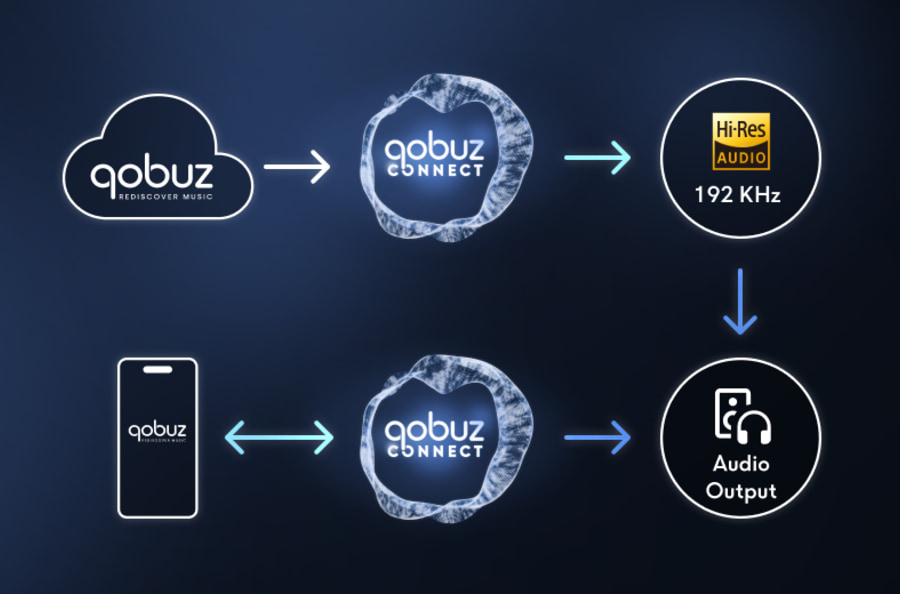
qobuz-connect-diagram

What Is Qobuz Connect and Why Should Cambridge Audio Owners Care?

Qobuz Connect lets subscribers stream directly from the Qobuz app to compatible devices over Wi-Fi or Ethernet, turning the app into the primary control interface. Your Cambridge streamer (or other supported hardware) becomes the playback endpoint, while your phone or tablet functions as the remote. The result is native control with full lossless and high-resolution streaming up to 24-bit/192 kHz. So no Bluetooth, no compressed handoffs, and no need to route playback through a secondary app.

Launched on May 15, 2025, Qobuz Connect has expanded quickly. In less than a year, support has grown to more than 100 hardware partners, covering A/V receivers, network streamers, powered speakers, and integrated amplifiers. That broader compatibility keeps control centralized inside the Qobuz app while giving subscribers more flexibility across systems and brands.

Advertisement

The Bottom Line

The biggest winner here is the existing Cambridge Audio owner. Adding Qobuz Connect to StreamMagic Gen 2 and Gen 3 extends the useful life of hardware that, in many cases, is still performing at a very high level. It removes friction, adds native app control, and keeps those products aligned with how people actually stream music in 2026. No new box required. No forced upgrade cycle.

In 2026, StreamMagic isn’t just a control app, it’s Cambridge’s full streaming ecosystem. It supports major services including Qobuz, TIDAL, Spotify (including Lossless where available), Amazon Music, QPlay, AirPlay 2, Chromecast built-in, Roon Ready integration, and local UPnP playback.

With Qobuz Connect now folded into that framework across multiple generations, Cambridge has strengthened the platform’s long-term relevance. In a crowded streaming market where alternatives are plentiful and often cheaper, sustained software support is what separates a product you replace from one you keep.

Advertisement. Scroll to continue reading.
Advertisement

Source link

Continue Reading
Click to comment

Leave a Reply

Your email address will not be published. Required fields are marked *

Tech

Sam Altman calls space data centers ridiculous as Musk and Bezos push orbital computing ambitions forward

Published

on


  • Sam Altman describes current proposals for orbiting data centers as entirely unrealistic for this decade
  • Modern AI chips cannot survive space radiation, making orbital data centers currently unfeasible
  • Radiation-hardened semiconductor nodes lag behind advanced fabrication processes required for AI workloads

Sam Altman has publicly dismissed proposals to place large-scale data centers in orbit, describing the idea as unrealistic under current technological and economic conditions.

The OpenAI chief executive argued space-based computing infrastructure will not operate at a meaningful scale within this decade.

Source link

Advertisement
Continue Reading

Tech

Nagra Compact Becomes the Brand’s Most Affordable Network Player with Hi-Res Support

Published

on

There has never been a “casual” way into Nagra. The Swiss manufacturer’s components are engineered like laboratory instruments and priced accordingly, which has historically placed the brand well beyond the reach of anyone not prepared to treat audio as a long term capital investment. Even so called entry level and mid-tier offerings such as the Compact Phono and PREAMP II-S demand serious financial commitment.

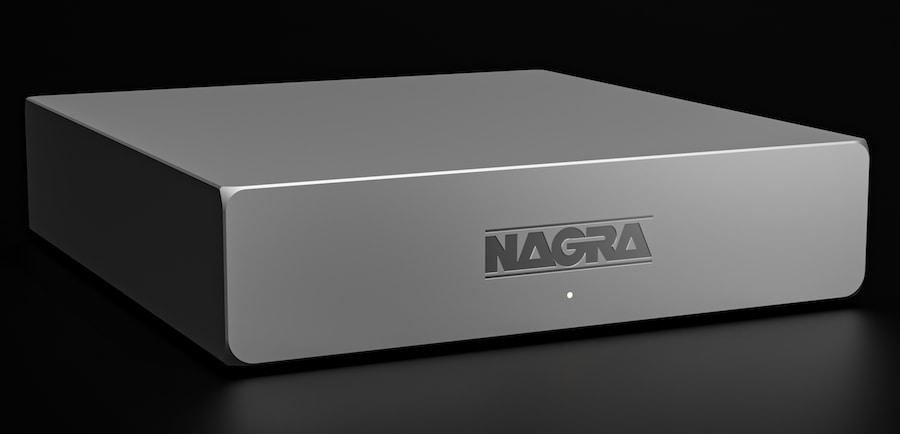
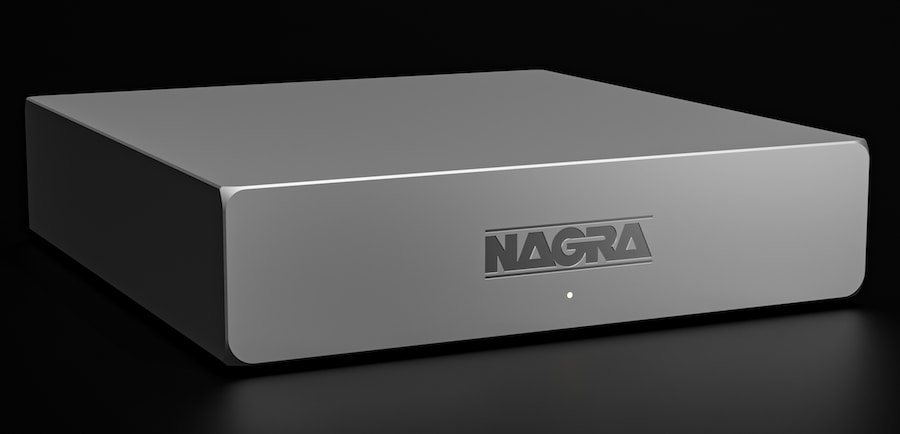
With the $7,500 Compact Player, Audio Technology Switzerland SA is addressing a long standing reality: for many listeners, Nagra has been admired from a distance. This model appears designed to narrow that gap without diluting the formula.

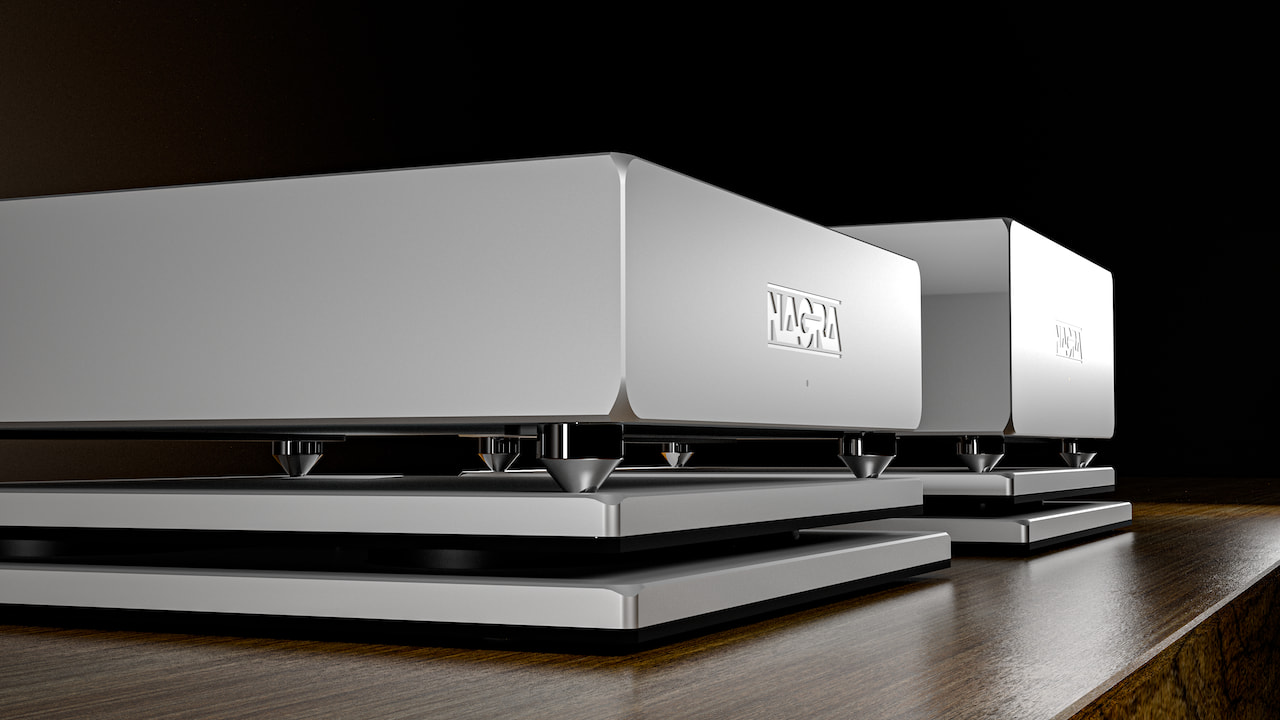
nagra-compact-player-angle-left
Nagra Compact Player

It is also important not to confuse it with the Compact Streamer. That unit relies on an external DAC, while the Compact Player is a complete digital front-end with its own internal conversion stage and analog output section. In practical terms, this makes it a far more self contained solution for systems that are not already built around a separate Nagra DAC.

What the Compact range does not yet include is a dedicated Compact preamplifier or power amplifier. Whether those arrive later remains to be seen. For now, the direction seems clear: these components function as a gateway. They allow owners to introduce a more attainable slice of Nagra into an existing system rather than requiring a full top to bottom commitment from day one.

Advertisement

But make no mistake, should a complete Nagra Compact Series emerge, the final system price is likely to be in the $25,000 to $30,000 range and that’s before adding loudspeakers, cables, and a turntable or CD player.

The Compact Player, however, is not positioned as a compromise piece. It is a deliberate entry point into the ecosystem, and from personal experience, Nagra components tend to reward those who keep things in the family; which is unlikely to make your accountant very happy.

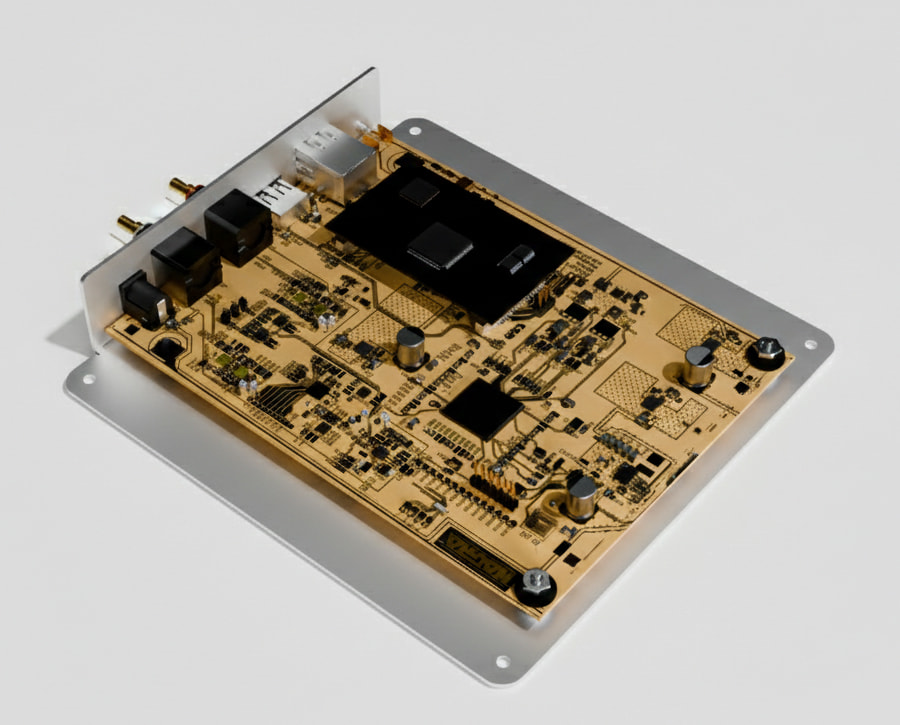
nagra-compact-player-pcb
Nagra Compact Player (internal)

Lower Barrier to Entry, Full Swiss Engineering Inside

The Nagra Compact Player is a fully integrated network player and DAC built around the company’s established engineering priorities rather than feature chasing. It combines a modern streaming platform with a dedicated D/A conversion stage and a true dual mono analog output section, with separate circuitry for each channel to improve separation and reduce crosstalk.

The digital architecture centers on a high performance DAC followed by a carefully implemented analog stage. Nagra has paid close attention to clock design, power supply regulation, and PCB layout to keep jitter and noise low and preserve signal integrity through the entire conversion path. This is not unusual for the brand, but it matters in a product designed to serve as a primary source.

Advertisement

Format support is comprehensive. The Compact Player handles PCM up to 384 kHz 32 bit and DSD256, whether streaming from supported services or playing locally stored files via UPnP DLNA or USB storage. Measured performance includes a noise floor of -140 dB A weighted and a 14 ohm output impedance, which makes it easy to integrate with a wide range of preamplifiers and integrated amplifiers. It can also be connected directly to a power amplifier or active loudspeakers if system design calls for it.

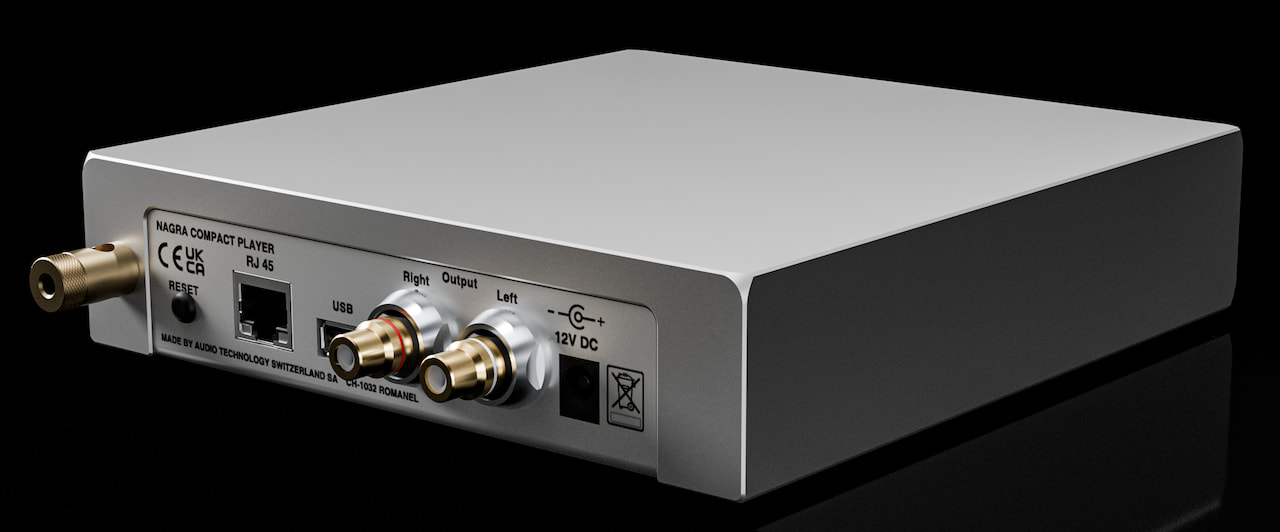
nagra-compact-player-rear-angle
Nagra Compact Player (rear)

Control is handled through the free mConnect app, available for iOS and Android phones and tablets. The app manages local file playback, network streaming, and firmware updates, keeping day to day operation centralized in a single interface.

Streaming support is comprehensive and current. The Compact Player supports Qobuz Connect, TIDAL Connect, and Spotify Connect for direct in app control, along with AirPlay 2 for Apple devices. It is both Roon Ready and Roon Tested, integrates with Audirvana, and provides access to thousands of internet radio stations via vTuner. Local music libraries can be accessed over UPnP DLNA or through attached USB storage.

Advertisement. Scroll to continue reading.
Advertisement

It connects to your network via Ethernet and can also access music stored on a USB hard drive or memory stick. Analog output is via standard RCA connectors, so it will work with most preamplifiers and integrated amplifiers without any special requirements.

Power draw is modest. It runs on an external 12V DC supply and consumes about 10 watts, which is low enough for continuous operation without concern. That figure can rise slightly if a USB hard drive is attached, but not in a way that materially affects ownership.

Physically, it lives up to its name. Measuring 185 x 166 x 41 mm (7.2 x 6.5 x 1.6 inches) and weighing 1.9 kg (4.1 lbs), it is compact enough to fit easily on a standard shelf or rack without demanding extra space.

The chassis is CNC machined from solid aluminum, providing the rigidity and mechanical stability expected at this level. It is compact by Nagra standards, which makes it easier to integrate into real world systems without sacrificing build quality.

Advertisement

For those who want to take it further, the optional Compact PSU offers improved regulation and current delivery. Nagra also supports additional mechanical isolation and vibration control accessories aimed at refining resolution and spatial precision.

nagra-compact-player-psu-vfs
Nagra Compact Player with optional PSU and VFS (vibration free base)

The Bottom Line

The Compact Player is for listeners who want an integrated network player and DAC built to Nagra’s standards, but who may not be ready to commit to a full reference stack. It makes the most sense for existing Nagra owners, or for serious two channel listeners looking to anchor a high performance system with a compact, all in one digital front end.

That said, context matters. Below $1,000, brands like WiiM, Bluesound, Eversolo, and Cambridge Audio offer network players and DACs with extensive feature sets and strong measured performance at a fraction of the cost. On the other end, companies such as Aurender and Innuos sit closer to this price tier with more elaborate server based solutions.

The Compact Player does not try to win on price or feature count. It competes on execution, integration, and long term system building within the Nagra ecosystem. For buyers who value that approach and are comfortable with the investment, it is a deliberate and logical entry point.

Advertisement

For more information: nagraaudio.com

Source link

Continue Reading

Tech

Big Shock: Samsung’s Galaxy S26 Ultra Camera Updates Have a Ton of AI

Published

on

Samsung’s Galaxy S26 Ultra is here, packing a wealth of upgrades from the design to its fancy new Privacy Display, which aims to keep people from spying on whatever shady things you’re up to on your commute. But the Ultra range has always been where Samsung has unleashed its latest, greatest camera technology, so let’s take a closer look at what’s new for the photographers among you. 

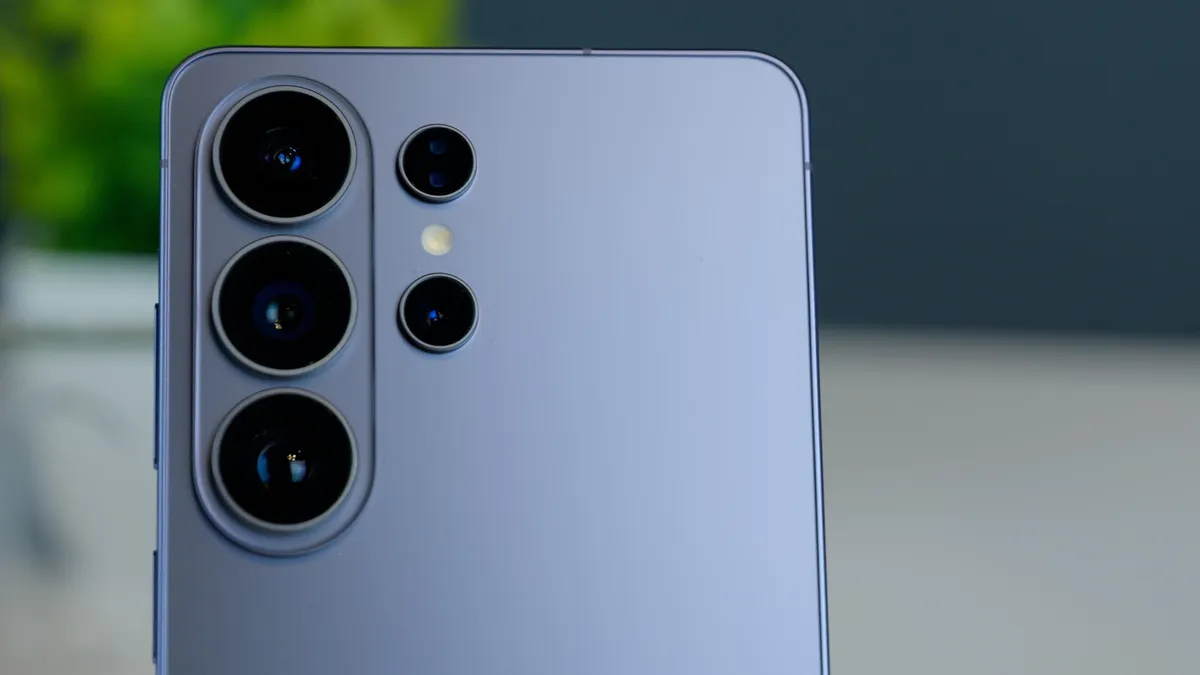
In terms of hardware, not a lot has changed. The main camera has a 200-megapixel resolution, a 50-megapixel ultrawide-angle camera, and 10-megapixel 3x telephoto and 50-megapixel 5x telephoto cameras. Those specs are the same as the previous S25 Ultra, so those of you hoping for a wild overhaul of the cameras to keep pace with Xiaomi’s upcoming 17 Ultra may be disappointed. 

Advertisement
Prakhar holding the iPhone 17 Pro Max and Galaxy S26 Ultra.

The bigger aperture in the main lens and 5x tele camera should help the Galaxy S26 Ultra capture better nightitme photos and videos.

Prakhar Khanna/CNET

But there have been some tweaks. The main and ultrawide cameras now have wider apertures, which should help capture more light and be especially useful in low-light situations. In fact, Samsung especially highlighted the improved performance of night mode imagery for both stills and video, with the night video mode employing more advanced software processing for noise reduction and improved colors. 

Speaking of video, it’ll still shoot in 8K and supports Log codecs with built-in LUTs (which is what cinema pros call filters, essentially), which should make the phones more appealing to serious video creators. To show the phone means business, Samsung took a leaf out of Apple’s playbook and filmed and livestreamed its San Francisco launch event using the S26 Ultra.

Advertisement
screenshot-2026-02-25-at-19-12-55.png

Samsung filmed its event using Galaxy S26 Ultras.

Samsung/Screenshot by CNET

There’s also a feature called Horizon Lock, which aims to keep the horizon level while shooting video, no matter how you twist and turn your phone. This kind of stabilization exists in action cameras already, and it can be helpful for filming intense action, like if you’re running to keep up as you’re filming your friend skateboarding. 

But because it’s 2026 and AI is the word on every tech company’s lips, many of the major updates come in the form of generative AI. It’s built deep into the camera experience, allowing you to use natural language prompts to edit images, including compositing one element of an image onto another, or even changing the outfit someone in your image is wearing. 

Advertisement

During its Unpacked event, Samsung demoed the features, showing how its AI tools can take a picture of a dog and place it in the arms of a girl in another image. The company also showed how the phone can instantly change a woman’s outfit from a simple shirt to a cosy sweater, and then to a more grungy skater aesthetic.

screenshot-2026-02-25-at-19-14-43.png

There’s a lot of AI baked into the photography experience on the S26 Ultra.

Samsung/Screenshot by CNET

To be fair, the images looked photo-realistic — at least as far as I could see on the YouTube livestream — though how these tools actually work in everyday use remains to be seen until we spend some time with them. The bigger question is whether you actually need them. I won’t answer that for you, but I will say that I’m disappointed that Samsung is following the trend of using AI gimmicks as the main upgrades for its cameras rather than focusing on taking better pictures in the real world. 

Advertisement

I’ll reserve judgment until I’ve had some time to take images around my beautiful home city of Edinburgh, Scotland. There, I’ll focus on finding out how well the phone can capture photographs I’d want to share with family and friends, not just how easily I can put on a fake sweater. 

Source link

Advertisement
Continue Reading

Tech

Tecno just unveiled a ridiculously thin modular smartphone concept design

Published

on

Tecno just unveiled a rather intriguing at MWC 2026. The standout feature here is likely the size. Most modular smartphone concepts start bulky and only get bulkier once attaching accessories. Tecno’s base smartphone is just 4.9mm thin, which is significantly thinner than a pencil .

Of course, the size increases with each attached module. However, snapping on the power bank module makes the thickness comparable to a standard modern smartphone. Another key feature here is how these various modular components stick together. Tecno has developed new interconnection technology that uses both magnets and pin connectors. This should make it easy to both attach and remove components.

The company says this phone has been designed to grow with the user through hardware expansion. To that end, Tecno has developed 10 modules. There are various camera lenses and something that looks like a dedicated gaming controller.

People holding phones.

Tecno

While the magnets are for attaching, the pin connectors assist with power delivery. Data transmission between the phone and the modules is handled wirelessly, with the ability to switch between Wi-Fi, Bluetooth and mmWave depending on where the user is located.

Advertisement

There are two colorways for both the phone and the ecosystem of accessories. There’s a silver-aluminum edition and a nifty-looking grey version. This doesn’t matter to actual consumers because, well, it’s just a concept design. It does look like the company’s magnetic attachment technology could make it to some actual products down the line.

Tecno has always been a company that marched to the beat of its own drummer. It has developed a , a model with a and a foldable with a .

The industry hasn’t quite embraced modular smartphones just yet, even though there have been some nifty concept designs. Google’s goes back more than a decade, and the same can be said of that never saw the light of day.

There have been some modular phones released to the real world, but they weren’t nearly as ambitious as Tecno’s concept. LG launched a semi-modular phone , but it . Moto has also released a , but they didn’t set the world on fire.

Advertisement

Source link

Continue Reading

Tech

Why A Good Phone Case Matters More Now Than Ever Before

Published

on


We may receive a commission on purchases made from links.

When the first iPhone launched, it cost $500. This was considered very expensive for a cell phone, regardless of its smarts. Former Microsoft CEO Steve Ballmer infamously laughed at the price and expected it to fail, and few predictions have aged with less grace. Today, the iPhone 17 starts at $800 for the base model, while the 17 Pro Max can hit $2,000. On the Android front, Samsung’s new Galaxy Z TriFold retails for an eye-watering $2,900. At least it includes a charger in the box! What most phones do not include, though, is a case. And cases are more essential than ever for smartphone owners.

Devices like the TriFold are more delicate thanks to their folding designs, but even regular, slab-style phones like the iPhone 17 Pro break. Ironically, the more expensive your phone is, the more likely it is to be made out of delicate materials like glass. Companies like Corning, which provides Gorilla Glass to Apple, Samsung, and other manufacturers, can only do so much to overcome the reality of physics. And then there are the massive camera humps on flagship phones, which a good case will also protect.

Advertisement

Even with insurance or a care plan, breaking a phone may still lead to costly repairs, replacements that take a while to arrive, and data you can’t recover. In that light, a quality smartphone case is a small investment to avoid such headaches. But there are yet more benefits to using a case that you may not have considered.

Advertisement

The unsung benefits of smartphone cases

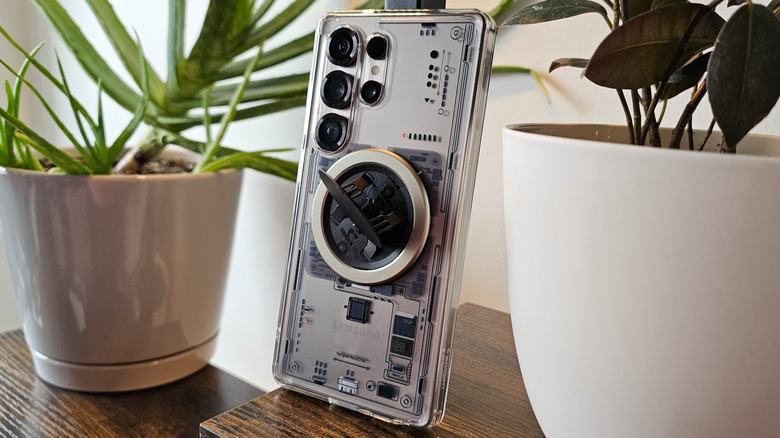
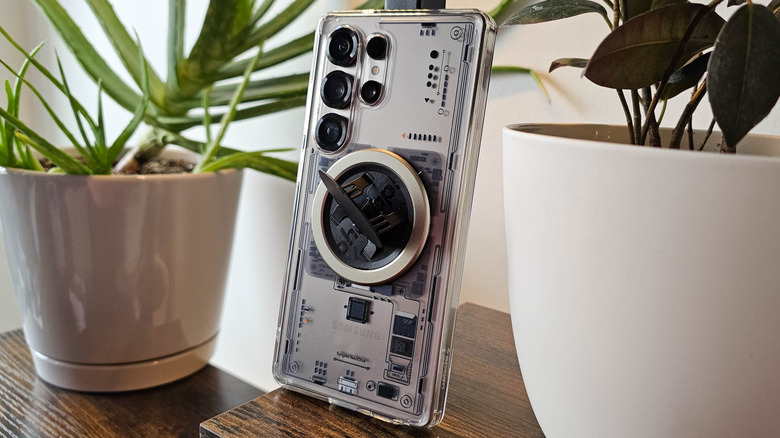
There are more benefits to using a case than protection alone, especially in 2026. If your smartphone does not have a MagSafe-style magnet ring on the back, you’re missing out on the most innovative accessory ecosystem in recent memory. Once you add a magnetic case and get a few accessories, it’s tough to beat the satisfying click that accompanies an instant connection to charging banks, tripods, and car smartphone mounts, not to mention what may be the best alternative to a Popsocket.

Cases can also improve the ergonomic experience of using a smartphone. Glass and metal may look pretty, but they’re not very comfortable to hold. Cases like the Speck Presidio 2 Grip fix this by having ridges and anti-slip materials that are easy to hold. Moreover, with nary a scintilla of bezel left around modern smartphone displays, those with large hands may find their nude smartphone constantly registering unwanted inputs from their palm. Cases put a bit of extra distance between a user’s hand and the touchscreen.

With that said, smartphone designers put a lot of work into crafting products that stand out, and going caseless is a valid decision. As long as you’re willing to bear the risks and have the means to get a new phone in the event yours breaks, go for it! Just be sure to back up your data first. But if you’re in the market for a great case, check out our ranking of major smartphone case brands.

Advertisement

Expensive phones mean expensive repairs and replacements

According to a 2023 YouGov poll, 68% of smartphone users use a case. Some use them as a form of protection, others as a form of expression, and many, both. By 2024, the market for protective smartphone covers had grown to $21.51 billion, according to Grand View Research, a massive figure when you consider that the vast majority of phone cases retail for less than $50. 

With phone costs continuing to rise and new designs making them more prone to damage, a case can be the difference between a costly mistake and business as usual. With that said, it’s hard to know how much to pay for a good case, or what makes a case good in the first place. After all, some popular cases cost just a few bucks, while others can cost close to $100. Not all cases are made equal: Some are merely aesthetic and offer very little protection against drops and scrapes, while others provide varying degrees of protection depending on design and materials.

A cheap case might not protect your device, but some expensive ones won’t, either. In general, the best protection will come from a case that uses high-quality, shock-absorbent materials such as TPU or has a two-layer design. The latter will be similar to a bike helmet, with a rigid exterior and a more malleable interior. No matter the case you choose, check that your buttons remain easy to press, your charging port can still accommodate your USB-C cable, and that the phone can still offload heat from its chassis. If you use wireless charging, also check that it works through the case.

Advertisement


Source link

Advertisement
Continue Reading

Tech

Trinity’s maritime monitoring Sea-Scan team wins Defence Innovation Challenge

Published

on

The Sea-Scan research team from Trinity College Dublin has been awarded the Defence Innovation Challenge top prize, for its AI-enhanced real-time vessel detection system.

Given the growing threats to subsea communications and energy infrastructure, the need for continuous, reliable monitoring of Ireland’s maritime environment has come to the fore in recent years. This was reflected in the winning project at today’s announcement.

This morning (25 February), Irish Minister for Further and Higher Education, Research, Innovation and Science James Lawless, TD and Minister for Defence Helen McEntee, TD announced more than €1.8m in prize phase funding under the co-funded Research Ireland – Defence Innovation Challenge, with Trinity College Dublin-based project Sea-Scan winning the top award.

The Sea-Scan research team is working on a next-generation maritime situational awareness project to strengthen Ireland’s naval security. The Mash – Mobile Adaptable Shelter – team, led by Dr Daniel McCrum and Dr Kevin Roche from University College Dublin and Defence Forces liaison Captain Dave McKenna, was awarded runner-up funding.

Advertisement

Ireland’s ability to monitor maritime activity, including the detection of so-called “dark” vessels, has been much in the headlines in recent year, with fears over our ability to adequately protect the subsea cables that are the backbone of our international communications.

Sea-Scan will develop an AI-enhanced real-time vessel detection system to support early warning and improved situational awareness, while it also offers potential applications in environmental monitoring. The Sea-Scan team is led by Prof Marco Ruffini and Dr John Kennedy from Trinity College Dublin and Defence Forces liaison Commander Cathal Power. The prize funding was awarded under the Maritime Situational Awareness Challenge.

“Challenge-based research funding encourages researchers to work directly with those most affected by the problems they seek to address,” said Dr Diarmuid O’Brien, CEO of Research Ireland. “The teams being funded today have developed their solutions through close collaboration with Defence Forces personnel. The Sea-Scan team are developing a high-quality solution to a complex problem that will deliver a transformational capability for the Irish Defence Forces.”

“Maintaining strong awareness of activity in Ireland’s maritime domain is essential, particularly given the country’s role as an island nation and a key Atlantic gateway for digital connectivity,” said Ruffini.

Advertisement

“As subsea communications and energy infrastructure continue to grow in strategic importance, so too does the need for continuous, reliable monitoring of the surrounding maritime environment.”

Ruffini says the Sea-Scan team has demonstrated the potential to detect and characterise vessel activity using existing subsea fibre infrastructure, “showcasing a robust sensing capability embedded within operational communications assets and enabling effective vessel monitoring and subsea infrastructure protection”.

“The prize‑winning projects demonstrate how cutting‑edge research can deliver practical, real‑world solutions that strengthen national security while driving technological innovation,” said Lawless.

“Innovation is critical to ensuring our Defence Forces have the tools they need to operate effectively in an increasingly complex environment,” said McEntee. “This investment reflects our commitment to modernising defence capabilities and embracing innovative solutions for the future.”

Advertisement

Don’t miss out on the knowledge you need to succeed. Sign up for the Daily Brief, Silicon Republic’s digest of need-to-know sci-tech news.

Source link

Advertisement
Continue Reading

Tech

An accountant won a big jackpot on Kalshi by betting against DOGE

Published

on

When Alan Cole saw Elon Musk fans eagerly bidding up a contract on the prediction market Kalshi that the Department of Government Efficiency (DOGE) could effectively reduce federal spending in a year, he knew he had to take the bet, according to a story about Cole’s winnings in the Wall Street Journal.

If Cole, an international tax accountant, knew anything in life it was this: federal spending couldn’t be quickly whacked, he told the WSJ. Even if DOGE nixed some federal contracts and laid off workers (which it did), plenty of remaining obligations and the skyrocketing federal debt would remain.

So, he wagered his entire life savings — over $342,000 — to take the counter bet that the U.S. federal budget wouldn’t insta-shrink. He slowly amassed 3% of a Kalshi prediction market that had grown to $12 million (making a few hedging bets along the way), he told the WSJ.

When the government released the 2025 year-end spending report on February 20, showing increases compared to 2024, Cole walked away with $470,300 and a handsome $128,000 profit.

Advertisement

Source link

Continue Reading

Tech

SambaNova bags $350m, unveils deals with Intel, SoftBank

Published

on

Japan’s SoftBank will be the first to deploy the new SN50 chips, while Intel is partnering with SambaNova to roll out its Intel-powered AI cloud.

Intel-backed Nvidia rival SambaNova has raised $350m in a Series E round led by Vista Equity Partners and Cambium Capital, with strong participation from Intel Capital.

Reuters was first to report the planned raise earlier this month. While details of the investment were not disclosed at the time, sources had told the publication that Intel Capital’s contribution would be around $100m, with potential commitments of up to $150m.

Other participants in the round included Gulf Development, Assam Ventures, Battery Ventures, Atlantic Bridge, GV and BlackRock.

Advertisement

According to SambaNova, proceeds from the raise will be used to expand the production of the company’s newly introduced SN50 chip – touted to deliver “the best tokens per watt” – as well as to scale ‘SambaCloud’ and deepen enterprise software integrations.

SoftBank will be the first to deploy SN50 within its AI data centres in Japan, powering inference services for sovereign and enterprise customers across the Asia-Pacific.

Intel has close ties with the 2017-founded SambaNova, with CEO Lip-Bu Tan serving as chairperson on SambaNova’s board. Alongside the raise, the two companies have also jointly announced a multi-year collaboration to deliver cost-efficient AI inference solutions for AI companies, model providers, enterprises and governments worldwide.

As part of the collaboration, Intel is making a strategic investment in SambaNova to accelerate the rollout of an Intel-powered AI cloud.

Advertisement

“AI is no longer a contest to build the biggest model,” said Rodrigo Liang, co‑founder and CEO of SambaNova.

“With the SN50 and our deep collaboration with Intel, the real race is about who can light up entire data centres with AI agents that answer instantly, never stall, and do it at a cost that turns AI from an experiment into the most profitable engine in the cloud.”

The company positions itself as a rising competitor looking to take some of Nvidia’s gigantic share in the AI chips market. Liang, who previously worked as an executive at cloud provider Oracle, said in 2024 that Nvidia had “lost some of its sheen” and that “rivals are biting at its heels”.

Kevork Kechichian, the executive vice-president and general manager for Intel’s data centre group, said: “Customers are asking for more choice and more efficient ways to scale AI.

Advertisement

“By combining Intel’s leadership in compute, networking and memory with SambaNova’s full-stack AI systems and inference cloud platform, we are delivering a compelling option for organisations looking for GPU alternatives to deploy advanced AI at scale.”

Other companies are also looking for alternatives to Nvidia. Meta yesterday (24 February) said that it would buy billions of dollars’ worth of AMD’s chips to develop AI tech and power new data centres. The deal could see Meta taking a stake of up to 10pc in AMD.

Earlier this month, Cerebras Systems, which also positions itself as a rival to Nvidia, raised $1bn in a Series H round led by Tiger Global with participation from AMD. In January, Cerebras and its early backer OpenAI announced a partnership to deploy 750MW of Cerebras’s wafer-scale systems to make OpenAI’s chatbots faster.

Positron, another Nvidia competitor that offers energy-efficient AI chips for inference, raised $230m from Arm Holdings and the Qatar Investment Authority in recent weeks, taking its valuation above $1bn.

Advertisement

Don’t miss out on the knowledge you need to succeed. Sign up for the Daily Brief, Silicon Republic’s digest of need-to-know sci-tech news.

Source link

Advertisement
Continue Reading

Tech

Wearable startup CUDIS launches a new health ring line with an AI-fueled ‘coach’

Published

on

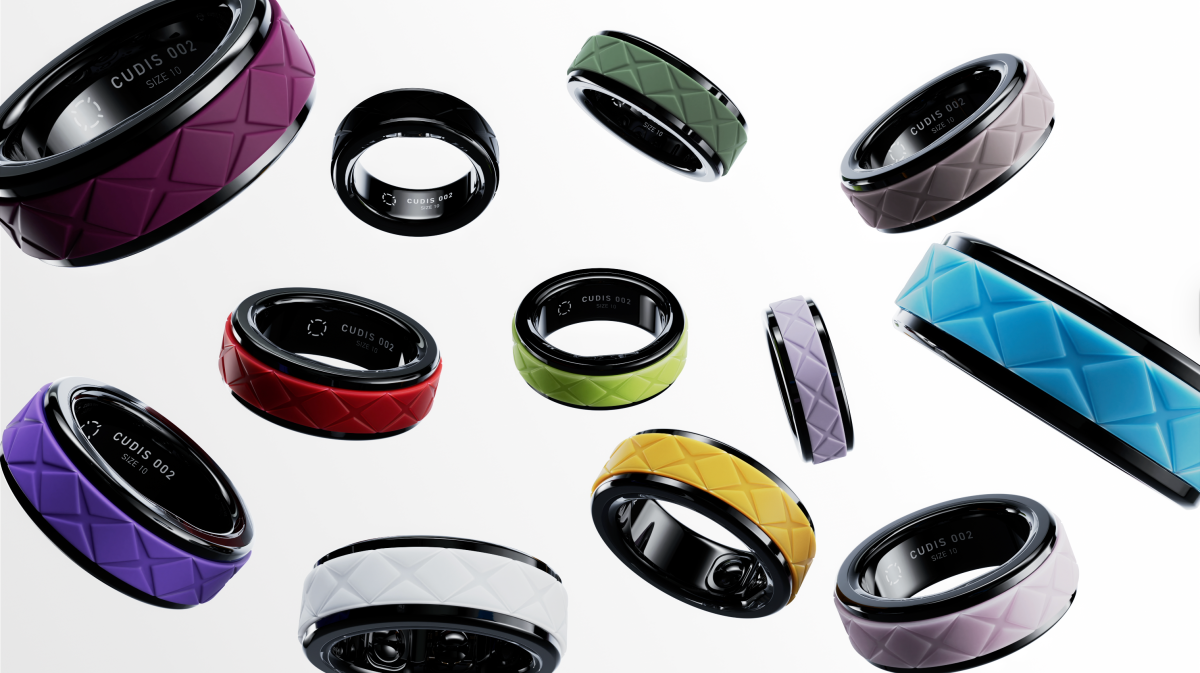
Wearables startup CUDIS is launching its newest series of health rings this week. The updated ring comes equipped with a number of features, including an AI “agent coach” designed to keep users on track to attain their fitness goals.

CUDIS says it differentiates itself from other wearables by not just delivering health metrics but also incentivizing healthy behavior through a points system. Users garner digital “health points” for healthy behaviors — things like daily sleep, 10,000 steps every day, sports activities, and conversations with the ring’s AI coach — which can then be redeemed through an integrated marketplace for discounts on health supplements and other products.

The ring’s AI Agent Coach, meanwhile, is designed to leverage generative AI to aid with healthy programs for exercise and daily health. The company says that its agent generates tailored programs including “daily tasks, recovery protocols, supplement recommendations, and direct referrals to licensed medical professionals.”

The ring also tracks a host of body metrics and daily behaviors, such as sleep quality, stress management, movement, and recovery. This helps them see how these metrics affect their Pace of Aging (PoA), showing whether their body is aging faster or slower than their chronological age, the company explains.

Advertisement

CUDIS CEO and co-founder Edison Chen told TechCrunch that since his company’s first wearable was launched in 2024, the company has sold over 30,000 units across its first two models. The app’s user base has also grown to 250,000 users across 103 countries, he added.

“Our strongest markets so far have been North America, Europe, and Asia,” Chen said. “What we’re good at is pattern recognition for healthy people trying to optimize,” Chen told TechCrunch.

“The AI spots when you’re trending in the wrong direction, such as chronic poor sleep, declining HRV, elevated resting heart rate, and either suggests lifestyle changes or connects you to a professional. The control is in the escalation pathway to the right care access,” he said.

Techcrunch event

Advertisement

Boston, MA
|
June 9, 2026

The company claims that it keeps user data encrypted and secure via the Solana blockchain. It has previously been described as a “web3 AI wellness company.” (TechCrunch was not able to test the smart ring directly to verify its security claims.)

Advertisement

CUDIS announced $5 million of seed funding in 2024. The round was led by Draper Associates and included a number of other investors, including a number of blockchain-associated investor groups like Skybridge, DraperDragon, Monke Ventures, and Foresight Ventures, among others. The company also plans to launch a Kickstarter soon.

Source link

Continue Reading

Tech

OpenClaw Users Are Allegedly Bypassing Anti-Bot Systems

Published

on

In San Francisco, it feels like OpenClaw is everywhere. Even, potentially, some places it’s not designed to be. According to posts on social media, people appear to be using the viral AI tool to scrape websites and access information, even when those sites have taken explicit anti-bot measures.

One of the ways they are allegedly doing this is through an open source tool called Scrapling, which is designed to bypass anti-bot systems like Cloudflare Turnstile. While Scrapling, which was built with Python, works with multiple types of AI agents, OpenClaw users appear to be particularly fond of the software. On Monday, viral posts promoting Scrapling as a tool for OpenClaw users started to spread on X. Since its release, Scrapling has been downloaded over 200,000 times.

“No bot detection. No selector maintenance. No Cloudflare nightmares,” reads one viral post this week about the open source tool. “OpenClaw tells Scrapling what to extract. Scrapling handles the stealth.”

Cloudflare is not enthused. The company already blocked previous versions of Scrapling, since users of the open source software kept trying to get around anti-scraping protections. This week, the company was working on a patch for Scrapling’s most recent iteration. “We make changes, and then they make changes,” says Dane Knecht, chief technology officer at Cloudflare. He says the company’s trove of website data and its ability to track trends has given it the upper hand.

Advertisement

“We already had a signal that they’re starting to get a higher ability to get around us,” says Knecht. “The team of security operations engineers had already been working on a new set of mediations.”

Large language models were trained on the corpus of the internet—and the process involved a lot of scraping. In some sense, Scrapling users are following in the footsteps of the original model builders, but on a more individualized scale.

Over the past few years, website owners have attempted to put up additional anti-bot protections, either to block software like Scrapling or to find a way to make money off of the bots trying to access their sites. In turn, Cloudflare has been working overtime to keep blocking increasingly powerful bots attempting to get around these protections.

In July 2024, Cloudflare started to offer its customers additional tools that block AI crawlers, unless the bots pay for access. In less than the span of a year, the company claims to have blocked 416 billion unsolicited scraping attempts.

Advertisement

“I Didn’t Know What I was Getting Into”

As Scrapling gained traction in recent days, crypto enthusiasts capitalized on the attention by launching a $Scrapling memecoin. Karim Shoair, who claims to be the sole developer of Scrapling, posted about the memecoin on X (those posts have since been deleted). After the price skyrocketed for around five hours, $Scrapling quickly fell off a cliff as users sold off their stakes. “Bunch of fucking scammers,” reads one comment on the Pump.Fun site that hosts the coin.

“I didn’t know what I was getting into when people made that coin and I endorsed it,” says Shoair, in a direct message with WIRED. “But once I knew, I didn’t want any association with it and the money I withdrew before will go to charity, I won’t benefit from it in anyway. Or maybe just leave it to be wasted.”

In the fallout of this event, the unofficial GitHub Projects Community account, which has over 300,000 followers on X, deleted its posts from this week highlighting Scrapling’s open source software, and appeared to distance itself from the project. “We do not support, promote, or engage in crypto assets, token offerings, trading activity, or crypto-based fundraising,” it said in a post late Monday night.

Putting the crypto forays aside, most software leaders continue to see agents and autonomous AI tools as the future of the web. Even Knecht from Cloudflare, whose work includes blocking bots from nonconsensual scraping, wants to build toward a world where humans and agents benefit from online data and the wishes of website owners are respected. “I see a path forward for an internet that is both friendly to agents and humans,” he says.

Advertisement

This is an edition of Will Knight’s AI Lab newsletter. Read previous newsletters here.

Source link

Continue Reading

Trending

Copyright © 2025