Tech
Qobuz Connect Lands on Cambridge Audio StreamMagic Gen 2 and Gen 3 in Upgrade for Legacy Product Owners

In an era where “new model” usually means “time to replace the old one,” Cambridge Audio just did something refreshingly unglamorous and important. The company has rolled out Qobuz Connect to its legacy StreamMagic Gen 2 and Gen 3 platforms, extending modern streaming control to products that have been sitting in racks and on shelves for years.
That means owners of the StreamMagic 6 V2, CXN, CXR, Azur 851N, CXN V2, and Edge NQ can now control playback directly from the Qobuz app via an OTA update; no new hardware, no forced upgrade cycle. Qobuz still works through the StreamMagic app as before, but Connect adds a more direct, native control path that many subscribers prefer.
It’s good to see a brand remember that its customer base didn’t magically appear in the last 24 months. Supporting Gen 2 and Gen 3 after rolling out Qobuz Connect to Gen 4 isn’t flashy, but it sends a clear message: what you bought still matters. Your streamer didn’t just age out because a new box showed up with a higher number on it.


It also proves something else; customers aren’t shouting into the void. The questions, feature requests, and yes, the complaints that show up on Instagram, Facebook, Audiogon, and the forums? They do get seen. Sometimes they even lead to action. That kind of accountability shouldn’t be rare in the hi-fi category, but too often it is.
There are plenty of alternatives out there. Some cost less. Some arguably do more. In a crowded field, long-term support isn’t just goodwill on the part of the manufacturer but smart business strategy. It’s also hard not to wonder whether Cambridge’s recent decision to appoint Fidelity Imports as its new U.S. distributor played a role here. Distribution shifts aren’t just about logistics and dealer networks, they’re about market responsiveness. If you’re trying to rebuild momentum and reinforce trust in a crowded category, showing existing owners that their gear still has a future is a smart place to start.
This update follows Cambridge’s recent additions of Spotify Lossless, Amazon Music, and QPlay to the StreamMagic platform. Rather than introducing new hardware, the company has continued expanding service support across existing models.

What Is Qobuz Connect and Why Should Cambridge Audio Owners Care?
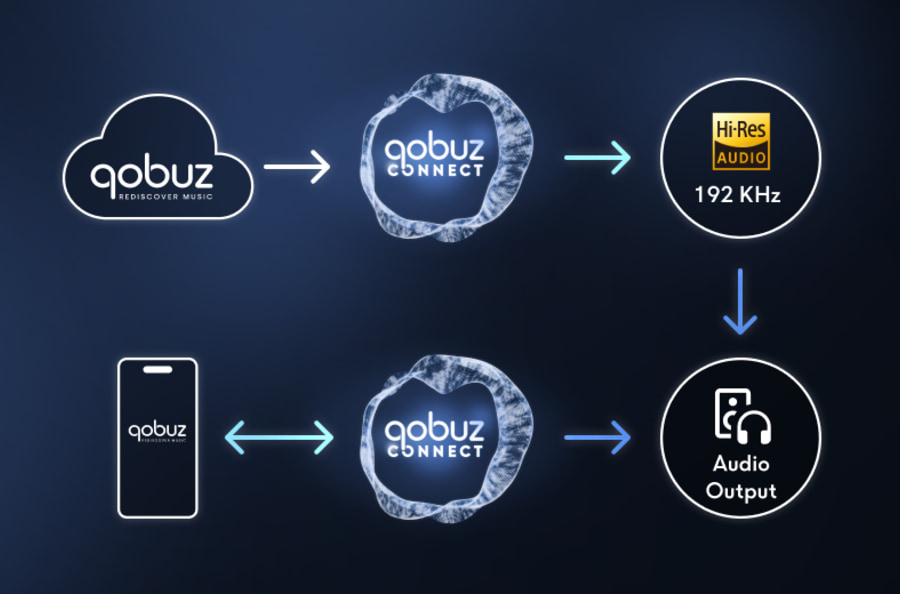
Qobuz Connect lets subscribers stream directly from the Qobuz app to compatible devices over Wi-Fi or Ethernet, turning the app into the primary control interface. Your Cambridge streamer (or other supported hardware) becomes the playback endpoint, while your phone or tablet functions as the remote. The result is native control with full lossless and high-resolution streaming up to 24-bit/192 kHz. So no Bluetooth, no compressed handoffs, and no need to route playback through a secondary app.
Launched on May 15, 2025, Qobuz Connect has expanded quickly. In less than a year, support has grown to more than 100 hardware partners, covering A/V receivers, network streamers, powered speakers, and integrated amplifiers. That broader compatibility keeps control centralized inside the Qobuz app while giving subscribers more flexibility across systems and brands.
The Bottom Line
The biggest winner here is the existing Cambridge Audio owner. Adding Qobuz Connect to StreamMagic Gen 2 and Gen 3 extends the useful life of hardware that, in many cases, is still performing at a very high level. It removes friction, adds native app control, and keeps those products aligned with how people actually stream music in 2026. No new box required. No forced upgrade cycle.
In 2026, StreamMagic isn’t just a control app, it’s Cambridge’s full streaming ecosystem. It supports major services including Qobuz, TIDAL, Spotify (including Lossless where available), Amazon Music, QPlay, AirPlay 2, Chromecast built-in, Roon Ready integration, and local UPnP playback.
With Qobuz Connect now folded into that framework across multiple generations, Cambridge has strengthened the platform’s long-term relevance. In a crowded streaming market where alternatives are plentiful and often cheaper, sustained software support is what separates a product you replace from one you keep.