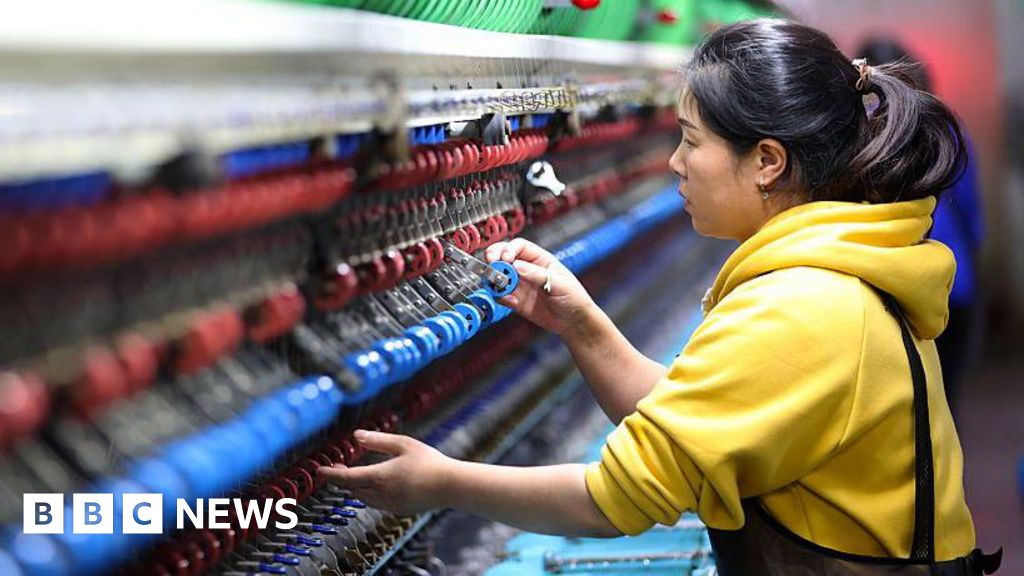
Southeast Asia’s venture ecosystem closed 2025 with US$5.4 billion raised across 461 deals, according to the Southeast Asia Startup Funding Report: Full Year 2025. This marked a slight decline compared to the previous year, reflecting a more cautious investment environment.
Key takeaways
Southeast Asia’s venture funding reached US$5.4 billion in 2025, but deal count hit a six-year low, exposing a market driven by a few megadeals rather than broad investor confidence.
Singapore captured 91% of all regional capital, cementing its position as the undisputed funding hub while Indonesia, Vietnam, and the Philippines continued to lose ground.
The market has stabilised rather than recovered, with tighter valuations, selective late-stage bets, and a persistent exit bottleneck keeping a full rebound out of reach heading into 2026.
Despite the drop, the region continued to demonstrate resilience, with fintech, e-commerce, and healthtech leading the way in attracting investor interest. Notable deals included several late-stage funding rounds and the emergence of new unicorns, signaling sustained growth potential in the ecosystem.
The annual deal count ranked among the lowest in more than six years, and the headline figure was rescued largely by a handful of outsized late-stage transactions rather than any broad-based revival.
A Year That Broke in Two
The first half was historically weak. Equity investment dropped 20.7% year-on-year to US$1.85 billion across 229 transactions, both figures representing six-year lows.
The second half reversed course sharply, delivering US$3.51 billion as late-stage deal flow more than doubled from 10 transactions to 24. Even so, analysts cautioned that the rebound was narrow.
Advertisement
“There is confidence returning to the market, but it is a quieter, more thoughtful kind,” said Minette Navarrete, President and Managing Partner of Kickstart Ventures.
“It creates the conditions for a more resilient and sustainable next growth cycle, rather than a premature rebound driven by excess risk-taking.”
Singapore Commands 91% of Regional Capital
Singapore tightened its dominance, accounting for over 60% of the regional deal count and 91% of the total capital deployed.
Three transactions alone defined much of the year: Princeton Digital Group closed a US$1.3 billion Series C, Digital Edge raised US$640 million, and Airwallex secured US$330 million in a Series G round.
Outside Singapore, the picture darkened. Indonesia remained flat after a prolonged slowdown. Vietnam, Malaysia, and the Philippines all saw deal volumes weaken in the second half. The Philippines drew just US$120 million for the full year, trailing most regional peers.
Advertisement
Sectors in Shift
Fintech led by deal count with 111 transactions worth US$1.3 billion, but delivered one of its weakest annual results in six years. Healthtech rebounded strongly with 35 deals totalling US$393 million, lifted by UltraGreen.ai’s US$188 million funding round.
The surgical imaging company was later listed on the Singapore Exchange, raising over US$400 million. Green tech held steady as the second most active sector, while e-commerce continued to lose ground.
Four New Unicorns
The region minted four new unicorns in 2025, up sharply from one in 2024. Notable additions included Malaysian group Ashita, Singapore-based payments firm Thunes, digital asset bank Sygnum, and UltraGreen.ai. Southeast Asia now counts 58 unicorn-status companies.
The Exit Problem
Despite the uptick, structural headwinds remain. Exit activity slowed, with only 57 acquisitions recorded and 15 tech IPOs completed for the year. Edgar Hardless, CEO of Singtel Innov8, said the lack of exits was the single biggest drag on investor confidence. “High valuations in the past few years have made it harder for startups to find local acquirers,” he said, adding that he expects caution to persist into the first half of 2026.
The report concludes that Southeast Asia’s venture market has found a functional floor rather than a launchpad. Capital deployment is more disciplined, valuations are tighter, and founders face higher bars on efficiency and governance.
Banco Bradesco S.A.’s American depositary receipts have traded in a tight range around $4.11 in late February 2026, closing at $4.11 on February 24 after a 0.98% gain, as the Brazilian lender builds on robust 2025 profitability and a multi-year transformation plan that has lifted return on equity and efficiency metrics.
Banco Bradesco
As of February 24, 2026, Banco Bradesco (NYSE: BBD) traded in a session range of $4.045 to $4.155 with volume of approximately 27.8 million shares. The shares have fluctuated modestly in recent days, closing February 23 at $4.07 after a 2.86% decline, reflecting typical volatility in emerging market financials. Year-to-date in 2026, the stock shows gains following a strong 2025 close, with a 52-week range from approximately $1.93 to $4.28 and market capitalization around $21-22 billion.
The performance follows Bradesco’s fiscal 2025 fourth-quarter and full-year results released February 5, 2026. The bank reported recurring net income of R$6.5 billion ($1.2 billion) for Q4, up 20.6% year-over-year, and full-year recurring net income of R$24.7 billion, a 26.1% increase. Return on average equity reached 15.2% in the quarter, surpassing the bank’s cost of capital for the first time under its five-year transformation plan launched in 2024. The plan has driven credit portfolio expansion of 11%, insurance results growth of 16.1%, and an efficiency ratio improvement toward 50%.
Revenue for Q4 2025 stood at approximately $6.85 billion (R$36.1 billion in local terms), beating estimates by about 6.37%, while EPS of $0.114 met or narrowly missed some forecasts. Net interest income after provisions and fee income contributed strongly, with management emphasizing disciplined risk controls and digital channel expansion that reduced cost-to-serve metrics significantly.
On the earnings call February 6, executives highlighted the transformation’s success in normalizing profitability after prior credit challenges. The bank reaffirmed 2026 guidance for mid-to-high single-digit loan growth (planning point near 9.5%), net interest income after provisions in the R$42-48 billion range, fee income growth of 3-5%, operating expense increases of 6-8%, and insurance/pension growth of 6-8%. The guidance reflects cautious optimism amid Brazil’s economic backdrop, with CET1 targeted near 11% and interest-on-equity payouts exceeding R$15 billion.
Advertisement
Bradesco has pursued shareholder returns aggressively. The board approved a new buyback program and maintained monthly interest-on-equity payments, with recent declarations including R$3 billion interim payouts completed in January 2026. A fully digital shareholders’ meeting is set for March 2026 to address capital and governance matters.
Analysts view the results positively, with consensus leaning toward Buy or Hold. Average 12-month price targets hover around $4.00-$4.50, implying limited near-term upside from current levels but recognition of undervaluation relative to peers like Itaú Unibanco. Seeking Alpha commentary in February 2026 described Bradesco’s re-rating case as “still alive,” citing controlled risk, growing profitability, and potential for further multiple expansion as transformation benefits accrue.
The bank continues digital investments, including enhanced platforms and partnerships in tech and health sectors, to capture affluent and SME clients while optimizing its physical footprint. Operating expenses grew 8.5% in 2025 in line with expectations, supported by footprint rationalization.
Challenges include macro risks in Brazil—interest rates, inflation, and potential slowdowns—along with competition in retail and digital banking. Guidance appears conservative compared to some investor expectations, contributing to post-earnings share price pressure in early February.
Advertisement
The next earnings report, for Q1 2026, is expected around late April or early May 2026. Investors will monitor loan portfolio execution, margin trends, and any refinements to full-year guidance amid evolving economic conditions.
Banco Bradesco, one of Brazil’s largest private banks, maintains a strong franchise through its retail network, insurance operations, and digital advancements. Record profitability, elevated ROE, and disciplined capital management position it well for sustained performance in 2026, even as guidance signals measured expansion. With shares trading at attractive multiples and transformation gains materializing, Bradesco remains a key play on Brazil’s financial recovery and banking sector resilience.
Discord users have made themselves heard as the company has announced that it will postpone the implementation of its global age checks.
These will be implemented sometime in the second half of 2026.
Discord Delays Age Verification Checks
In a blog post shared on Discord’s website, Discord Chief Technology Officer and co-founder Stanislav Vishnevskiy addressed the planned age verification process.
“Let me be upfront: we knew this rollout was going to be controversial. Any time you introduce something that touches identity and verification, people are going to have strong feelings. Rightfully so,” Vishnevskiy said in the blog post. “In hindsight, we should have provided more detail about our intentions and how the process works.”
Advertisement
“The way this landed, many of you walked away thinking we’re requiring face scans and ID uploads from everyone just to use Discord,” he added. “That’s not what’s happening, but the fact that so many people believe it tells us we failed at our most basic job: clearly explaining what we’re doing and why. That’s on us.”
According to Gizmodo, Discord previously announced that it was planning to set all new and existing accounts to “teen-by-default” settings.
What this means is that any user looking to access age-restricted content and features must need to prove that they are adults.
Vishnevskiy Clarifies Age Checks
Vishnevskiy emphasized in the blog post that Discord does not want to change the experience for majority of the users. He also stressed that a user’s age group is private, and other users cannot see it.
Advertisement
“Over 90% of users will never need to verify their age to continue using Discord exactly as they do today,” he said.
The Discord co-founder also explained that for users who will find themselves needing to prove their age, these users will get different options on how to go about it. He assured that none of these options will require users to provide their identity.
“And if you choose not to verify, here’s exactly what happens: you keep your account, your servers, your friends list, your DMs, and voice chat,” Vishnevskiy explained. “The only thing that changes is you won’t be able to access age-restricted content or change certain default safety settings designed to protect teens.”
Mumbai: Expenditure through credit cards moderated in January from a December festival-ledhigh, central bank data showed, although the metric still climbed more than 8% from a high January 2025 base to indicate normalization of the growth rate that had breached into teens earlier.
In January, Indians spent Rs 1.99 lakh crore through credit lines offered by their banks, down from Rs 2.05 lakh crore in the previous month, but higher than the Rs 1.82 lakh crore they had spent last January.
“Credit card spending growth moderated in January, marking a natural cooldown after the festive surge,” said Sweta Padhi, analyst, IDBI Capital. “Industrywide growth has slowed from the midteen levels seen last year, with the festive spike reverting to the 8% range and yet to see a meaningful revival.”
The number of active cards rose to 116.6 million, while net new additions slowed to 868,000, compared with more than 900,000 in December 2025. The slower pace of additions reflects tighter underwriting standards and regulatory discipline. Large private banks, however, remained the key contributors to incremental card additions.
Advertisement
Live Events
RATHER CIRCUMSPECT “The broader deceleration in card additions reflects tighter underwriting norms and regulatory caution around unsecured lending,” Padhi said. “While near-term momentum appears steady rather than weakening, we expect growth to remain calibrated, with issuers focusing on portfolio quality, activation levels and fee-based income rather than aggressive expansion.” Among individual issuers, HDFC Bank added 310,000 cards, while ICICI Bank added 122,000. SBI Cards added 92,226 cards and Axis Bank added 87,912. Kotak Mahindra Bank, which has been gradually reviving its credit card business, added 35,968 cards. IndusInd Bank, however, continued to see a rundown in its card base, with total net cards declining by more than 100,000. “Our credit card business is currently stalled and we are cautious, as system-wide risks remain elevated,” Rajiv Anand, MD & CEO, IndusInd Bank, told ET in a recent interview.
“We have recently hired a new head of credit cards to re-evaluate the portfolio from both customer and product perspectives. We intend to reignite the business once our systems and processes are fully stabilised. Once we get things right, we will grow that business again.”
Transaction volumes remained flat sequentially but recorded a robust 25% YoY growth, indicating resilient usage trends despite moderation in overall spends. While private sector banks continue to dominate market share and remain relatively risk-averse, public-sector banks (PSBs) are gradually expanding their share of credit card spending. This growth has been driven by higher usage among existing cardholders, strong festive demand and deeper penetration into salaried customer segments. The share of PSBs in credit card spending increased 4.5 percentage points year-on-year to 22.2% in December 2025, according to RBI data, largely led by major lenders.
TKO Group Holdings, Inc. (TKO) Q4 2025 Earnings Call February 25, 2026 5:00 PM EST
Company Participants
Seth Zaslow – Senior VP & Head of Investor Relations Ariel Emanuel – Executive Chair & CEO Mark Shapiro – COO, President & Director Andrew Schleimer – Chief Financial Officer Nick Khan
Conference Call Participants
Advertisement
Brandon Ross – LightShed Partners, LLC Stephen Laszczyk – Goldman Sachs Group, Inc., Research Division Benjamin Swinburne – Morgan Stanley, Research Division David Karnovsky – JPMorgan Chase & Co, Research Division Peter Supino – Wolfe Research, LLC Ryan Gravett – UBS Investment Bank, Research Division
Presentation
Operator
Advertisement
Good afternoon. Thank you for attending the TKO Fourth Quarter and Full Year 2025 Earnings Call. My name is Cameron, and I’ll be your moderator for today. [Operator Instructions] And I would now like to pass the conference over to your host, Seth Zaslow, Head of Investor Relations. Please proceed.
Seth Zaslow Senior VP & Head of Investor Relations
Good afternoon, and welcome to TKO’s Fourth Quarter and Full Year 2025 Earnings Call. A short while ago, we issued a press release, which you can view on our Investor Relations website. A recording of this call will also be available via our website for at least 30 days. After prepared remarks from Ari Emanuel, TKO’s Executive Chair and Chief Executive Officer; Mark Shapiro, TKO’s President and Chief Operating Officer; and Andrew Schleimer, TKO’s Chief Financial Officer, will open the call for questions.
Advertisement
Mark and Andrew will be handling the Q&A. The purpose of this call is to provide you with information regarding our fourth quarter and full year 2025 performance. I want to remind everyone that the information discussed will include forward-looking statements and/or projections that involve risks, uncertainties and assumptions. Please see our filings with the Securities and Exchange Commission for further detail.
Snap Inc.’s stock has stabilized around $5 in late February 2026, closing at $4.97 on February 24 after a 0.81% gain, as the social media company benefits from record Snapchat+ subscribers and improved profitability in its latest quarter, though persistent declines in daily active users and competitive ad pressures weigh on sentiment.
Snap Inc
As of February 24, 2026, Snap (NYSE: SNAP) traded in a session range of $4.91 to $5.05 with volume of approximately 30 million shares. The shares have fallen sharply from 2025 highs near $10.59, down roughly 52% over the past year and trading near the lower end of their 52-week range from $4.65 to $10.59. Market capitalization hovers around $8.3 billion to $8.4 billion, reflecting a valuation at about 1.5 times trailing sales—levels some analysts view as undervalued given growth in subscriptions and margins.
The recent trading reflects digestion of Snap’s fourth-quarter and full-year 2025 financial results released February 4, 2026. Revenue reached $1.716 billion in Q4, up 10% year-over-year, while full-year revenue hit $5.931 billion, an 11% increase from 2024. Gross margin expanded to 59% in Q4, up 4 percentage points sequentially and 2 points year-over-year, driven by higher-margin subscription revenue and ad efficiency gains. The company posted positive net income of $45 million in Q4, compared to $9 million the prior year, and adjusted EBITDA rose to $358 million from $276 million.
A key highlight was Snapchat+ surpassing 25 million paid subscribers, up significantly from prior periods, with subscription revenue contributing to a $1 billion annualized run rate in direct revenue. Management emphasized the subscription model’s structurally higher margins, targeting gross margins above 60% in 2026. Free cash flow turned positive, and the company highlighted AI-driven ad improvements and AR features as growth drivers.
Despite the positives, challenges persist. Daily active users have shown softness in some regions amid competition from TikTok and Meta platforms. Advertising revenue, still the core business, grew more modestly at 5% in Q4 to $1.48 billion. Insider selling, including a large block from the chief technology officer earlier in February, added to downward pressure, with shares dipping to all-time lows around $4.65 mid-month before stabilizing.
Advertisement
Analysts remain divided. Consensus leans toward Hold, with average 12-month price targets around $7-$8—implying 40-60% upside from current levels—though some firms have slashed targets amid advertiser competition and hiring concerns. Bullish views cite the subscription ramp, margin expansion, and potential for AR hardware like Specs in 2026 as catalysts for recovery. Optimistic commentary suggests the stock could soar 200% from depressed levels if AI ads and global expansion accelerate, while critics question whether subscriptions can offset core ad weakness long-term.
The company filed its 10-K annual report on February 5, 2026, providing detailed disclosures on operations, risks, and strategy. No major new announcements emerged in the following weeks, with focus shifting to execution on 2026 guidance and preparations for the next earnings report, expected in late April for Q1 2026.
Snap continues investing in AI and augmented reality, integrating generative features into Snapchat and exploring consumer hardware opportunities. The subscription business offers diversification from volatile ad markets, with higher retention and predictability. Yet the stock’s trajectory remains tied to proving user engagement recovery and sustained profitability in a competitive social media landscape.
As February ends, Snap navigates a pivotal moment. Record subscriber milestones and margin improvements provide a foundation for optimism, while near-term headwinds from ad competition and macro uncertainty keep shares volatile. Investors eyeing the low valuation see potential for a rebound if execution on AI and subscriptions continues, positioning Snap as a high-risk, high-reward play in digital media.