

Crypto World
Chat-Based P2P Crypto Exchange Development: Build an In-Chat Exchange

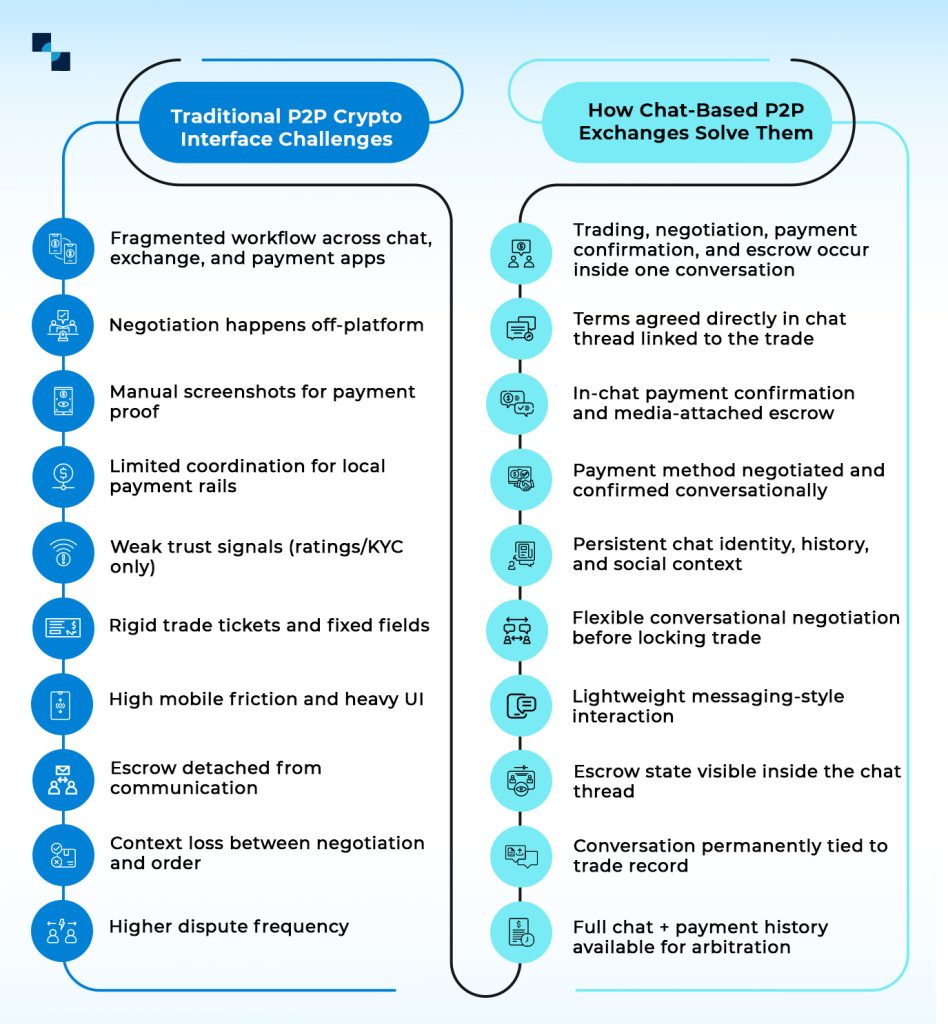
Over the past few years, a significant yet unnoticed shift has been occurring in peer-to-peer cryptocurrency trading, where discovery, negotiation, escrow, and settlement are leaving traditional exchange interfaces and entering messaging environments. Large volumes of OTC crypto trades today originate in Telegram groups, WhatsApp communities, and private chat networks where buyers and sellers coordinate directly and finalize payments off-platform. The crypto exchange software interface, in many instances, has effectively been replaced by conversation, mainly in mobile-first markets where users trust messaging applications more than financial dashboards. They negotiate prices in chat, confirm payment with screenshots, and rely on social reputation rather than order-book transparency. As a result, P2P crypto trading has naturally converged toward chat-centric workflows where everything happens on a conversational thread.
Recognizing the pattern, several platforms have begun formalizing chat-based crypto exchange software models rather than forcing users back into conventional UIs.
| Platform | Interface Type | Best Jurisdiction | Key Tech Feature |
|---|---|---|---|
| Vexl | Standalone App | Europe / Global | Social graph (Nostr-based) |
| Telegram @wallet | Native Bot | UAE / CIS / SE Asia | Direct Telegram integration |
| Noones | Chat-centric Web/App | Nigeria / Global South | 300+ payment methods |
| Peach Bitcoin | Swipe/Chat Hybrid | Europe / LatAm | No-KYC / privacy-first |
Users prefer to discuss terms, verify counterparties, and coordinate payment within chat before committing funds. Instead of separating messaging and trading into different systems, chat-based P2P crypto exchange software embeds escrow, wallets, and payment confirmation directly into conversational flows.
For enterprises and crypto exchanges targeting high-growth regions such as South Asia, Africa, and Latin America, this model aligns closely with real user behavior. It reduces friction, supports diverse local payment rails, and mirrors how informal crypto trading already occurs at scale.
What Is Chat-Based P2P Crypto Exchange Development?
Chat-based P2P crypto exchange development refers to designing peer-to-peer trading systems where the conversational triggers drive and control trade objects linked to escrow, wallet, and settlement infrastructure.
Instead of listing offers and executing trades through marketplace-style trade forms, users initiate, confirm payment, and release escrow within an integrated chat environment linked to wallet and settlement infrastructure. In this model, messaging doesn’t remain an auxiliary feature but is the transaction layer itself. Each trade exists as a persistent conversation thread that contains counterparties, agreed terms, payment proof, and escrow state. The exchange backend orchestrates wallets, escrow locking, and dispute resolution while the user experience remains interaction-first and chat-native only.
Core Features of Chat-Based P2P Crypto Exchanges
1. Conversation-linked trade threads
Each trade must be anchored to a chat thread and stored as a persistent object containing counterparties, agreed terms, timestamps, and state transitions. This implementation ensures the inseparability of negotiation context and execution data.
2. Integrated crypto escrow within chat
Escrow lock, confirmation, timeout, and release actions must be triggered directly from the conversation interface while being enforced by smart contracts or custodial wallet logic in the backend.
3. Payment rail negotiation and mapping
This chat-based crypto exchange software module must support dynamic selection of regional payment methods (UPI, Pix, mobile money, bank transfer) within the chat. It must also bind the chosen rail to the trade state for verification and audit.
4. Embedded payment proof with hash linkage
Payment receipts, transaction IDs, or media confirmations shared in chat must be cryptographically or database-linked to the escrowed trade record to prevent substitution or post-dispute alteration.
5. Counterparty identity and reputation context
User profiles must expose trade history, completion ratios, dispute records, and social linkage signals during negotiation to enable well-informed decisions before escrow commitment.
6. Conversation-native dispute invocation
Either party should be able to escalate directly from the trade thread, allowing moderators or automated systems to evaluate the full sequence of messages, payment evidence, and escrow events without reconstruction.
7. Mobile-native messaging UX
The conversational crypto exchange software interface must prioritize lightweight message exchange, quick action buttons, and asynchronous confirmations to maintain usability on low-bandwidth devices and emerging-market mobile environments.
Technical Architecture of a Chat-Based P2P Exchange Development
In a chat-based crypto exchange architecture, conversational events trigger and update backend trade states while settlement infrastructure manages escrow, wallets, and dispute workflows.
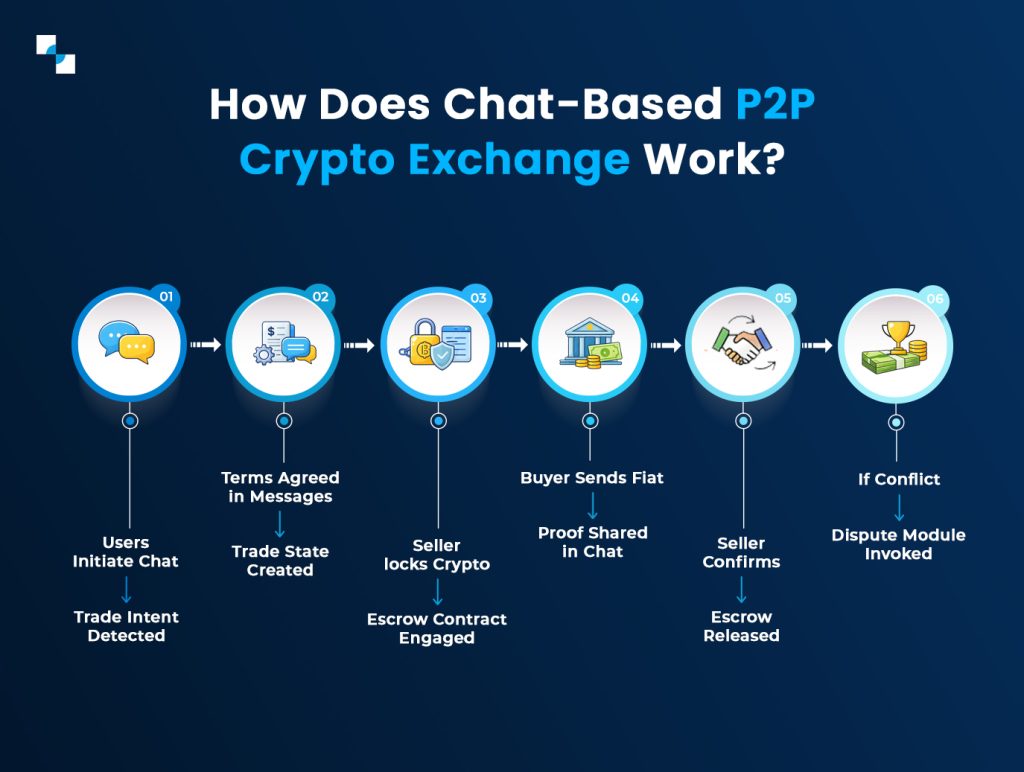
- Chat Interface Layer: It represents the messaging UI (app, web, or bot) where users negotiate, confirm payment, and trigger escrow actions.
- Trade State Engine: The system converts conversation events into structured trade states (initiated, terms agreed, escrow locked, payment pending, released, disputed).
- Escrow and Wallet Layer: This layer includes smart contracts or custodial wallets that lock, hold, and release crypto assets based on trade state transitions.
- Payment Coordination Layer: This level manages the selection of fiat payment methods, proof attachment, and confirmation signals associated with the trade thread.
- Identity and Reputation Services: Persistent counterparty profiles, trade history, and trust signals are accessible within conversations.
- Dispute and Arbitration Module: These moderation tools consistently access full chat, payment, and escrow context for resolution.
- Notification and Event System: This layer facilitates real-time updates for escrow status, payment confirmation, counterparty actions, and deadlines.
Where to Launch Chat-Based P2P Crypto Exchange Software
.
| Jurisdiction | Dominant Payment Integration | Why It’s Relevant for Chat-P2P | Regulatory Body | Licensing Difficulty |
|---|---|---|---|---|
| India | UPI / IMPS | The world’s largest informal WhatsApp/Telegram P2P market. Users expect “Chat-to-Pay” workflows. | FIU (Financial Intelligence Unit) | High (Strict AML/Tax) |
| Brazil | Pix / WhatsApp Pay | Brazil is the global “alpha” for WhatsApp Pay. Pix makes instant chat-settlement frictionless. | Central Bank of Brazil | Moderate |
| Nigeria | Mobile Money / OPay | High mobile-first population. Messenger apps bypass the need for expensive web infrastructure. | SEC Nigeria | Moderate-High |
| El Salvador | Lightning Network | Ideal for “micro-chats” where users send small amounts of BTC/Satoshis over a chat bubble. | CNAD (Digital Assets) | Low |
| UAE (Dubai) | Wio / Local Banks | Focuses on “Social Wealth”—chatting about trades and executing them in a “Superapp” environment. | VARA | High (Costly) |
| European Union | SEPA Instant | Relevant for “Social Investing” apps (Gen Z). Must be MiCA-compliant to operate cross-border. | MiCA (ESMA) | Very High |
Deployment Models for Chat-Based P2P Exchange Development
In-chat or chat-based crypto exchanges can be deployed through different messaging ownership models depending on regulatory exposure, user acquisition strategy, and infrastructure control. The choice of deployment model directly impacts custody design, compliance scope, scalability, and user trust assumptions.
1. Standalone Chat-Native P2P Exchange Development
In custom chat-based P2P crypto exchange development, enterprises create a proprietary application where the messaging system, trading logic, escrow, and wallets are fully owned and operated by the exchange.
Characteristics
- Custom-built chat protocol and trade-state engine
- Direct integration with custodial or smart-contract escrow
- Native wallet and payment rail orchestration
- Platform-controlled identity and reputation graph
When is this P2P exchange development model suitable?
- Regulated or semi-regulated jurisdictions
- For exchanges seeking full custody and compliance control
- Multi-asset or multi-chain expansion plans
- Institutional or high-volume P2P environments
Advantages of Chat-Native P2P Crypto Exchange Development
- Complete control over trade lifecycle and escrow logic
- Independent compliance and KYC framework
- No dependency on external messaging policies
- Stronger monetization and data ownership
Constraints
- Higher development and infrastructure costs are associated with building a complete chat-based P2P exchange app from the ground up.
- Messaging UX must compete with existing apps. This adds an extensive amount of effort to crypto exchange development, while they just reinvent the wheel.
- The chat-driven crypto exchange is required to find its own buyers and sellers, create initial liquidity, build network effects, and grow communities independently. No built-in audience for them
2. Messaging-Platform Integrated P2P Crypto Exchange Software(Telegram / Superapp Bots)
This is one of the most popular ways in which chat-based crypto exchanges are implemented. The exchange backend operates independently while the user interface is delivered through an existing messaging platform such as Telegram or a regional superapp.
Kraken recently picked up on this strategy and announced its collaboration with ICE chat:
“This integration opens a direct line into core institutional workflows, enabling traders to engage with our OTC desk’s expertise and execution in the digital asset class through a familiar interface.”
“Head of Kraken Institutional Gurpreet Oberoi
Characteristics
- A bot or mini-app acts as a conversational interface.
- The external platform handles messaging transport.
- Escrow and wallets are managed off-platform.
- Identity is partially inherited from a messaging account.
When is this chat-based cryptocurrency exchange development model suitable?
- High chat-native user populations
- OTC-heavy or informal trading regions
- Rapid go-to-market requirements
- Community-driven P2P ecosystems
Advantages
- Offers immediate access to existing user networks
- Familiar UX reduces onboarding friction.
- Viral distribution happens through chats and groups.
- Lower frontend development overhead
Constraints
- Dependency on platform APIs and policies
- Limited control over the identity layer
- Compliance boundaries are tied to platform rules.
- Messaging provider risk (blocking, restrictions)
3. Hybrid Chat-Linked P2P Crypto Exchange Software Development
In this model, conversation occurs in external messaging environments, while escrow, wallets, and trade state are managed in a separate exchange system linked through deep links or session binding.
Characteristics
- Negotiation in external chat (Telegram, WhatsApp, etc.)
- Trade instantiated via link or session handoff
- Escrow and settlement executed in the backend
- Conversation reference stored with the trade record
When is this chat-based P2P crypto exchange development model successful?
- Markets where OTC negotiation already occurs off-platform
- Exchanges transitioning from marketplace P2P to chat-based
- Compliance-sensitive jurisdictions
- Cross-platform user bases
Advantages
- Preserves existing user chat behavior
- Lower messaging infrastructure burden
- Clear separation between communication and custody
- Easier regulatory positioning
Constraints
- Context fragmentation risk
- This model requires reliable chat-to-trade linking.
- Less immersive conversational UX
- Dispute’s evidence may be split across chat and cryptocurrency exchange software systems.
Revenue Models and Build Cost for Chat-Based P2P Crypto Exchange Development
| Revenue Model | How It Works in Chat-P2P Context | Who Pays | Implementation Notes |
|---|---|---|---|
| Escrow transaction fee | A small percentage is charged when crypto is released from escrow after a successful trade | Typically buyer or both parties | Deducted automatically from escrowed asset at release |
| Offer a visibility boost | Sellers pay to prioritize their trade offers or profiles in discovery chats or listings | Sellers/merchants | Ranking algorithm or sponsored placement flag |
| Merchant / pro trader accounts | High-volume traders pay a subscription or reduced-fee tier for higher limits and tools | Professional traders | Tiered fee engine and volume tracking required |
| Payment rail markup | Spread added when facilitating specific fiat rails (e.g., local transfer aggregation) | Buyer or seller | Requires payment processor or liquidity partner integration |
| Spread facilitation | Chat-based P2P crypto exchange software platform intermediates pricing between counterparties and retains the spread | Both parties indirectly | Needs an internal pricing engine or liquidity sourcing |
| Dispute resolution fee | Charged when arbitration is invoked, and the platform mediates settlement | Disputing party or loser | Triggered on dispute workflow initiation |
| Withdrawal/custody fee | Fee for moving crypto out of platform wallets post-trade | User withdrawing | Standard wallet fee policy |
| Liquidity seeding incentives | P2P crypto exchange software platform shares fees with early merchants, providing consistent liquidity | Platform revenue share | Smart contract or backend rebate accounting |
| FX/stablecoin conversion margin | Margin on crypto-to-crypto or fiat-equivalent conversions inside chat trade | Converting user | Requires internal swap or routing logic |
Typical chat-based P2P crypto exchange development cost: Chat-based P2P crypto exchange software development generally ranges from $50K-$250K+, depending on custody model, messaging ownership, payment rail integrations, and compliance scope.
Estimated build timelines: 8-24 weeks, depending on messaging model (standalone or Telegram-integrated), custody design, and payment rail integrations.
Security and Compliance Considerations For Chat-Based P2P Crypto Exchange Development
Chat-native P2P trading introduces distinct fraud, identity, and payment risks because negotiation, trust formation, and settlement coordination occur conversationally. In-chat exchanges must implement controls that bind chat activity to verifiable trade and payment states while meeting jurisdictional AML and custody obligations.
Key Security Risks In Chat-Based P2P Crypto Exchange Software Include
- Impersonation and account takeover: Attackers mimic known traders or compromise messaging identities to redirect payments or escrow release.
- Off-rail payment fraud: Counterparties claim payment via manipulated receipts, reversible transfers, or third-party senders.
- Escrow manipulation attempts: Social engineering can trigger premature release or cancellation outside a valid trade state.
- Reputation gaming: Collusive trades or low-value cycles may be maintained to inflate trust metrics before large fraud attempts.
- Conversation tampering or deletion: Fraudsters may attempt to alter or remove chat evidence prior to dispute review.
Enable Crypto Trading Inside Conversations With Chat-Based P2P Exchange Development
Required Platform Controls To Mitigate Chat-Based Crypto Exchange Development Risks
- Trade-bound identity verification: A cryptocurrency exchange development company must create a workflow that binds each trade to authenticated user sessions and device fingerprints before escrow actions.
- Payment proof validation workflows: The chat-based P2P cryptocurrency exchange software must require structured receipt capture (ID, amount, timestamp) and cross-check against the expected rail format.
- Escrow action gating: The in-chat cryptocurrency exchange development must also allow release/cancel only from valid state transitions with counterparty confirmation or timeout logic.
- Immutable conversation logging: The cryptocurrency exchange must store message hashes or append-only records linked to trade objects to preserve evidence integrity.
- Reputation anomaly detection: AI-powered security can typically be implemented during crypto exchange development to flag abnormal trade patterns, circular trading, or sudden volume spikes in trust scoring.
Compliance and Regulatory Considerations For Chat-Based P2P Crypto Exchange Development
- AML/KYC scope alignment: The jurisdiction determines whether both parties, merchants, or only custodial wallet holders require KYC. Those building chat-based P2P crypto exchange software can implement a flexible KYC/AML module along with a geofencing mechanism.
- Custody classification: The licensing and safeguarding obligations depend on whether you’re choosing a smart-contract escrow or a custodial wallet.
- Payment rail monitoring: Regional rails (UPI, Pix, mobile money) may require transaction reporting or merchant registration as required by the local laws.
- Dispute and record retention: Chat-based P2P crypto exchange software requires integrations to store chat, payment, and escrow logs for mandated periods to satisfy audit or regulatory requests.
- Sanctions and counterparty screening: A centralized P2P crypto exchange software must screen wallet addresses and user identities before enabling escrow participation.
Final Word
P2P crypto exchange software development has been increasingly shaped by conversational behavior rather than marketplace navigation. As OTC activity continues to originate in messaging environments, exchanges that bring escrow, wallet, and payment directly into chat workflows will align more closely with how users already trade in mobile-first regions.
For builders and emerging exchanges, chat-based P2P crypto exchange development architecture is the most pressing structural shift. They can collaborate with their P2P cryptocurrency exchange development company to build such innovative models after carefully evaluating messaging ownership, custody model, and jurisdictional exposure for deployment choices, monetization design, and compliance scope
Platforms that successfully unify conversational interaction with verifiable escrow execution and regulatory controls can reduce friction while maintaining auditability and dispute integrity. This combination is what enables chat-native crypto exchange software to scale beyond informal OTC channels into structured, compliant trading infrastructure.
Antier delivers chat-based P2P crypto exchange software development tailored to regional payments and compliance needs. Share your requirements today!
Frequently Asked Questions
01. What is chat-based P2P crypto exchange development?
Chat-based P2P crypto exchange development involves creating trading systems where conversations drive and manage trade processes, integrating escrow, wallets, and settlement directly into chat interactions.
02. Why are users shifting to chat-based platforms for cryptocurrency trading?
Users prefer chat-based platforms because they allow for direct negotiation, payment verification, and coordination within messaging apps, which aligns with their trust in these environments over traditional exchange interfaces.
03. What are some key features of chat-centric P2P crypto exchange platforms?
Key features include integration with messaging apps, support for diverse payment methods, and the ability to conduct trades without separating messaging from trading, enhancing user experience and reducing friction.

Editor’s note: Nvidia’s latest earnings release highlights a booming AI infrastructure cycle, with the company topping expectations and guiding $78 billion for Q1 FY2027. The data centre segment led growth while margins remained robust as hyperscale customers expand their AI deployments. This preview frames a broader trend: AI-ready data centres are becoming the core engine of digital transformation, and Nvidia sits at the center of that wave.
Key points
- NVIDIA (NASDAQ: NVDA) guides Q1 FY2027 revenue midpoint of US$78 billion, above consensus.
- Q4 revenue reached US$68.13 billion, with data centre revenue at US$62.3 billion.
- Data centre revenue accounts for about 91% of total revenue, with gaming softer due to supply constraints.
- Networking revenue surged 263% YoY to US$11 billion; inventory/capacity commitments total US$95.2 billion.
- Hyper-scaler AI infrastructure spending projected at US$650 billion for 2026, driven by Microsoft, Amazon, Google and Meta.
Why this matters
The results reinforce that the AI infrastructure cycle is accelerating, not slowing. Strong data centre demand, high gross margins at 75.2%, and large-scale capacity commitments suggest durable momentum as AI workloads drive broader data-centre re-architecture. The report notes that China data centre revenue could add upside if export restrictions ease.
What to watch next
- Any changes to export restrictions affecting China data centre revenue and potential upside to guidance.
- Trends in data centre demand and Nvidia’s inventory/capacity commitments amid hyperscaler spending.
- Gaming segment performance and supply constraints ahead of Q1.
- Progress of AI infrastructure investments by Microsoft, Amazon, Google, and Meta.
Disclosure: The content below is a press release provided by the company/PR representative. It is published for informational purposes.
Nvidia earnings underscore accelerating AI infrastructure boom
Abu Dhabi, UAE – February 26, 2026: Nvidia has once again delivered a standout set of earnings, beating expectations across the board and, crucially, surpassing its own forward guidance. The company guided Q1 FY2027 revenue to a midpoint of US$78 billion, comfortably ahead of the US$72.78 billion analysts had forecast. Notably, this guidance assumes zero data centre revenue from China, meaning any easing of export restrictions would represent pure upside not currently priced in.
Quarterly revenue reached US$68.13 billion, ahead of consensus expectations of approximately US$65.9 billion. Data centre revenue surged to a record US$62.3 billion, exceeding the US$60.4 billion forecast, while adjusted earnings per share came in at US$1.62 versus expectations of US$1.53. Profit for the quarter totalled US$43 billion — a figure that exceeds Nvidia’s entire annual revenue as recently as 2023. For a company of this scale to sustain such rapid expansion underscores the structural strength of demand.
Gross margins of 75.2% also came in ahead of forecasts, helping to dispel concerns about profitability as the Blackwell platform continues to ramp up. The results send a clear message that the AI infrastructure buildout is not slowing — it is accelerating. Despite recurring scepticism each quarter, Nvidia continues to demonstrate the durability of this cycle.
Spending commitments from Microsoft, Amazon, Google and Meta — collectively projected at US$650 billion for AI infrastructure in 2026 — highlight the scale of investment driving this trend. Nvidia sits firmly at the centre of that wave. Networking revenue alone surged 263% year-on-year to a record US$11 billion, reflecting that the AI transformation extends beyond chips to the full-scale re-architecture of data centres.
The company has secured US$95.2 billion in inventory and capacity commitments, nearly double the level from a year ago, ensuring it can meet demand from hyperscalers operating at unprecedented scale. Gaming was the only softer segment, with supply constraints expected into Q1, but with data centre revenue now accounting for 91% of total revenue, it is no longer the primary growth driver.
Since the emergence of ChatGPT, Nvidia’s data centre revenue has grown nearly thirteenfold. As the AI race intensifies and big tech spending remains at historic highs, Nvidia continues to position itself as the essential enabler of the AI ecosystem — reinforcing why it is widely regarded as the engine powering this technological shift.
About eToro
eToro is the trading and investing platform that empowers you to invest, share and learn. We were founded in 2007 with the vision of a world where everyone can trade and invest in a simple and transparent way. Today we have 40 million registered users from 75 countries. We believe there is power in shared knowledge and that we can become more successful by investing together. So we’ve created a collaborative investment community designed to provide you with the tools you need to grow your knowledge and wealth. On eToro, you can hold a range of traditional and innovative assets and choose how you invest: trade directly, invest in a portfolio, or copy other investors. You can visit our media centre here for our latest news.
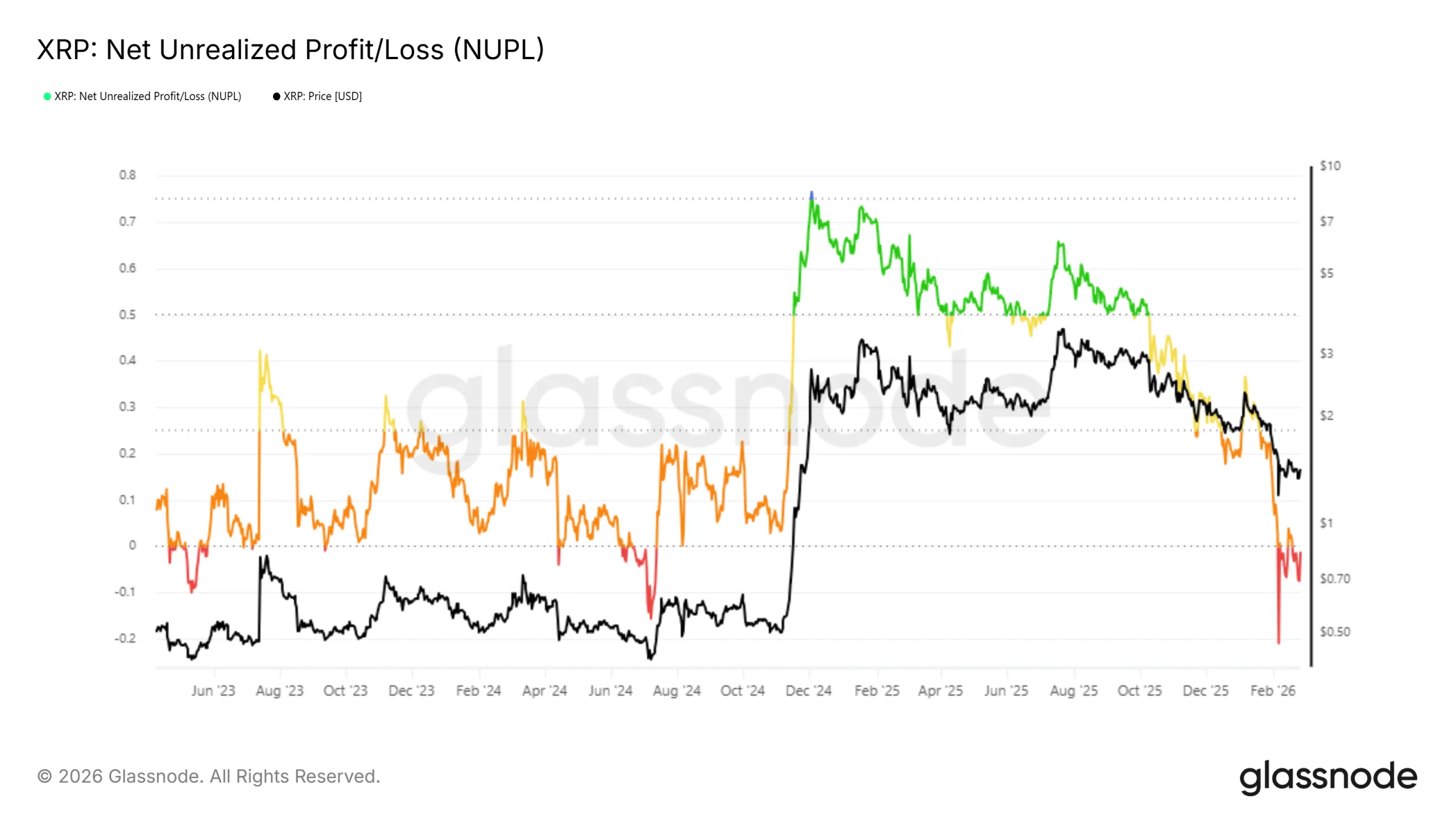
XRP price has struggled to mount a decisive recovery in recent weeks, yet it continues to defend a critical support level. The altcoin has avoided a deeper breakdown despite repeated tests of lower price zones. This resilience suggests underlying accumulation.
Investor sentiment initially leaned cautiously. However, from spot markets to derivatives, traders appear to be preparing for a potential rebound.
XRP Is Not Too Deep Underwater
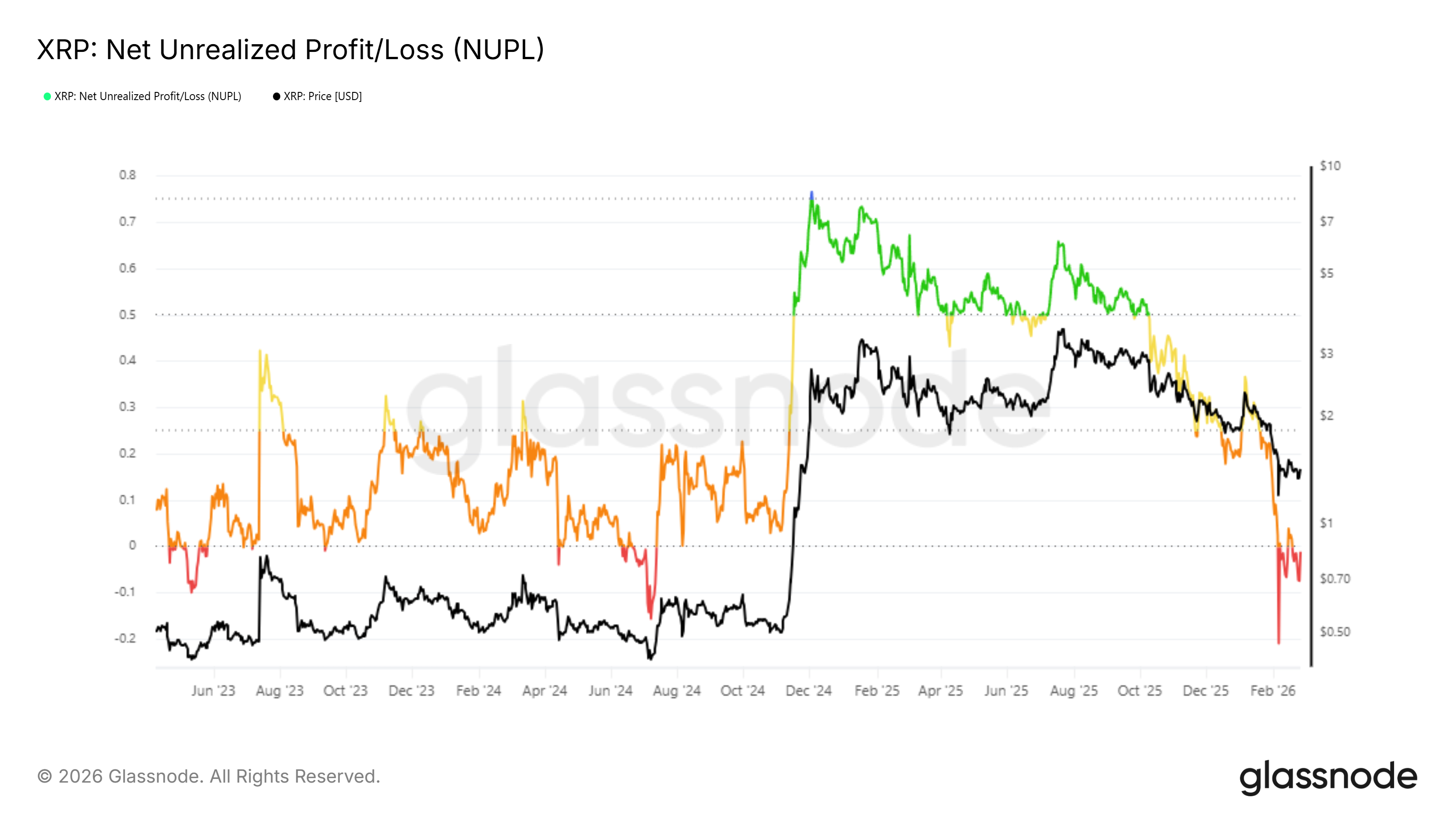
Net Unrealized Profit and Loss, or NUPL, indicates XRP is in a capitulation phase but not deeply so. The metric is currently hovering around the zero line. This position reflects that losses among holders are declining, nearing neutral conditions rather than extreme loss realization.
Historically, XRP has remained in the capitulation zone for extended periods, sometimes lasting up to a month. These phases often precede rebounds once selling pressure exhausts. The current stretch is nearing the one-month mark, suggesting a potential inflection point may be approaching.
Want more token insights like this? Sign up for Editor Harsh Notariya’s Daily Crypto Newsletter here.
How Are XRP Traders and Holders Reacting?
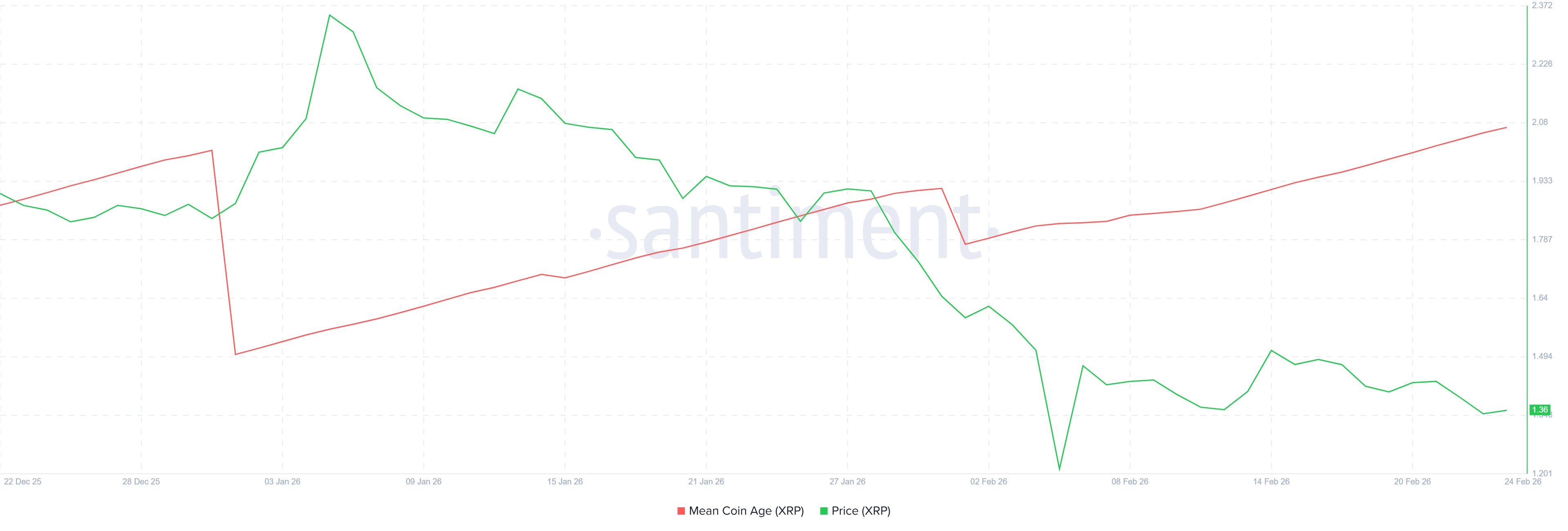
Mean Coin Age, or MCA, offers additional insight into holder behavior. Ahead of a potential bounce, XRP long-term holders appear to favor accumulation over distribution. Rising MCA values typically indicate coins are aging in wallets rather than being spent or sold.
Aside from a minor dip, XRP long-term holders have maintained a constructive stance. Continued accumulation reduces circulating supply pressure. Sustained conviction among these investors often supports structural price recovery over time.
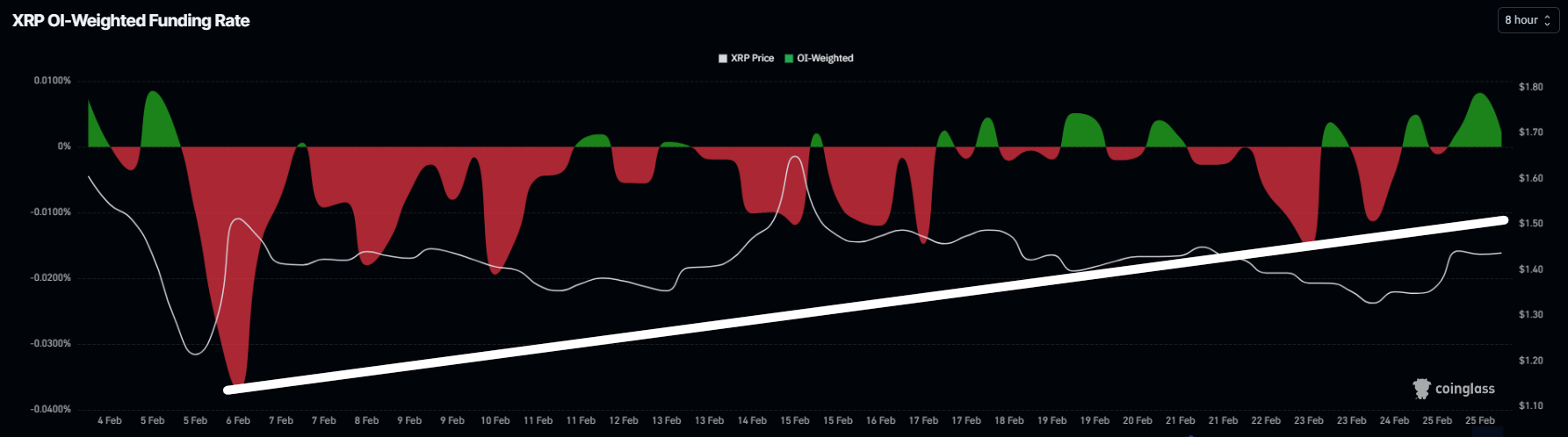
Derivatives market data mirrors developments in spot trading. XRP Funding rates have shifted meaningfully over the past three weeks. Previously deeply negative readings have transitioned to modestly positive territory.
A positive funding rate reflects the dominance of long positions over short positions. This dynamic signals improving trader confidence. Increased long exposure can generate upward pressure as demand strengthens through leveraged positioning.
XRP Price Holds Above Support Floor
XRP is trading at $1.43 at the time of writing, hovering near the 38.2% Fibonacci retracement level. The 23.6% retracement, often viewed as a bear market support floor, remains intact. Sustained trading above this threshold reinforces structural stability.
Holding above the bear market support floor suggests limited immediate bearish pressure. If improving sentiment persists, XRP could challenge the $1.53 resistance level. A successful breakout may push the token toward $1.62. Flipping the 61.8% Fibonacci level into support would confirm a recovery phase.
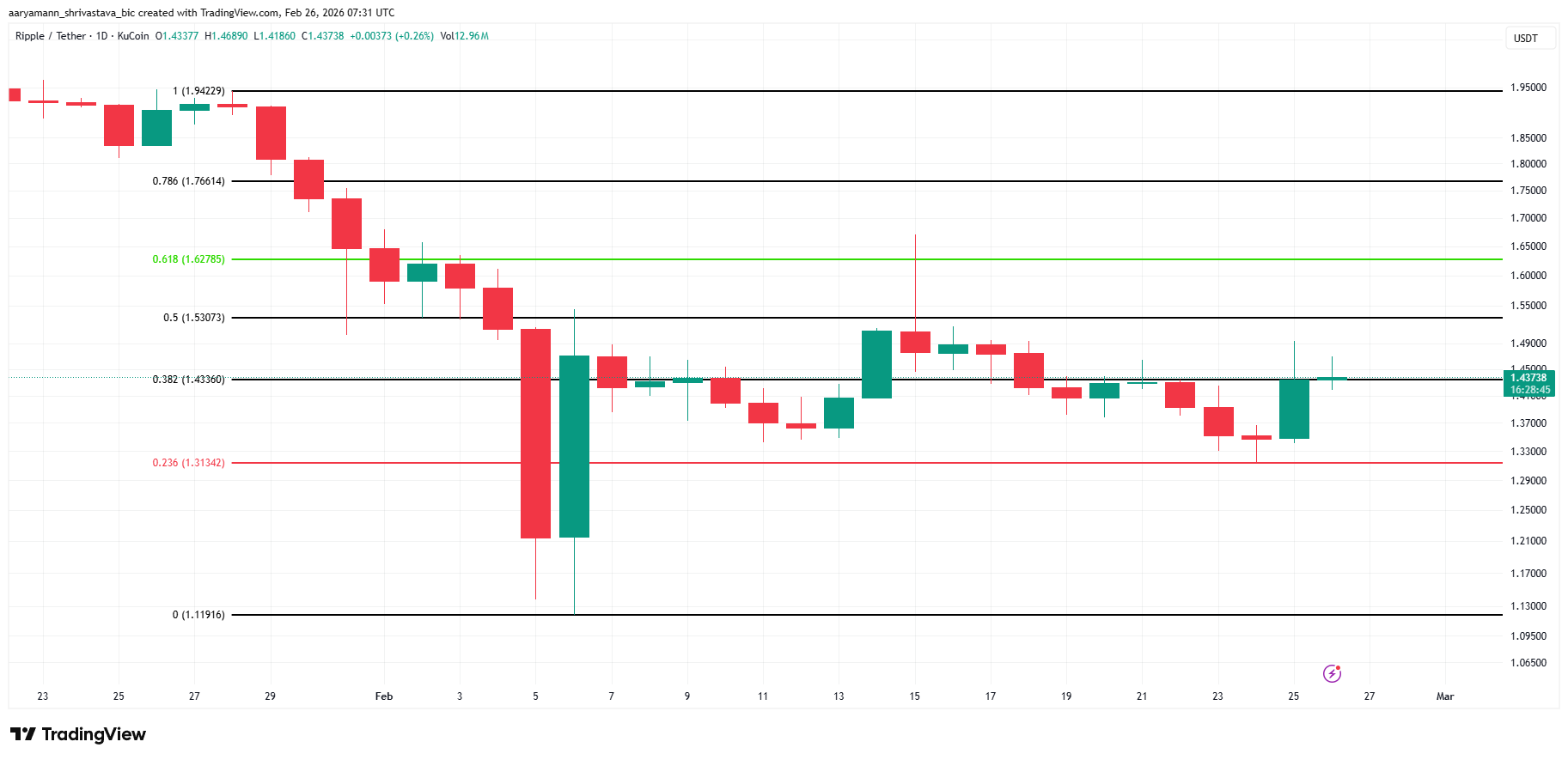
Conversely, weaker macro conditions could delay upside progress. Failure to clear $1.53 may extend consolidation. Continued range-bound trading would invalidate the short-term bullish thesis. Without stronger demand, XRP may remain subdued until broader crypto market momentum improves.
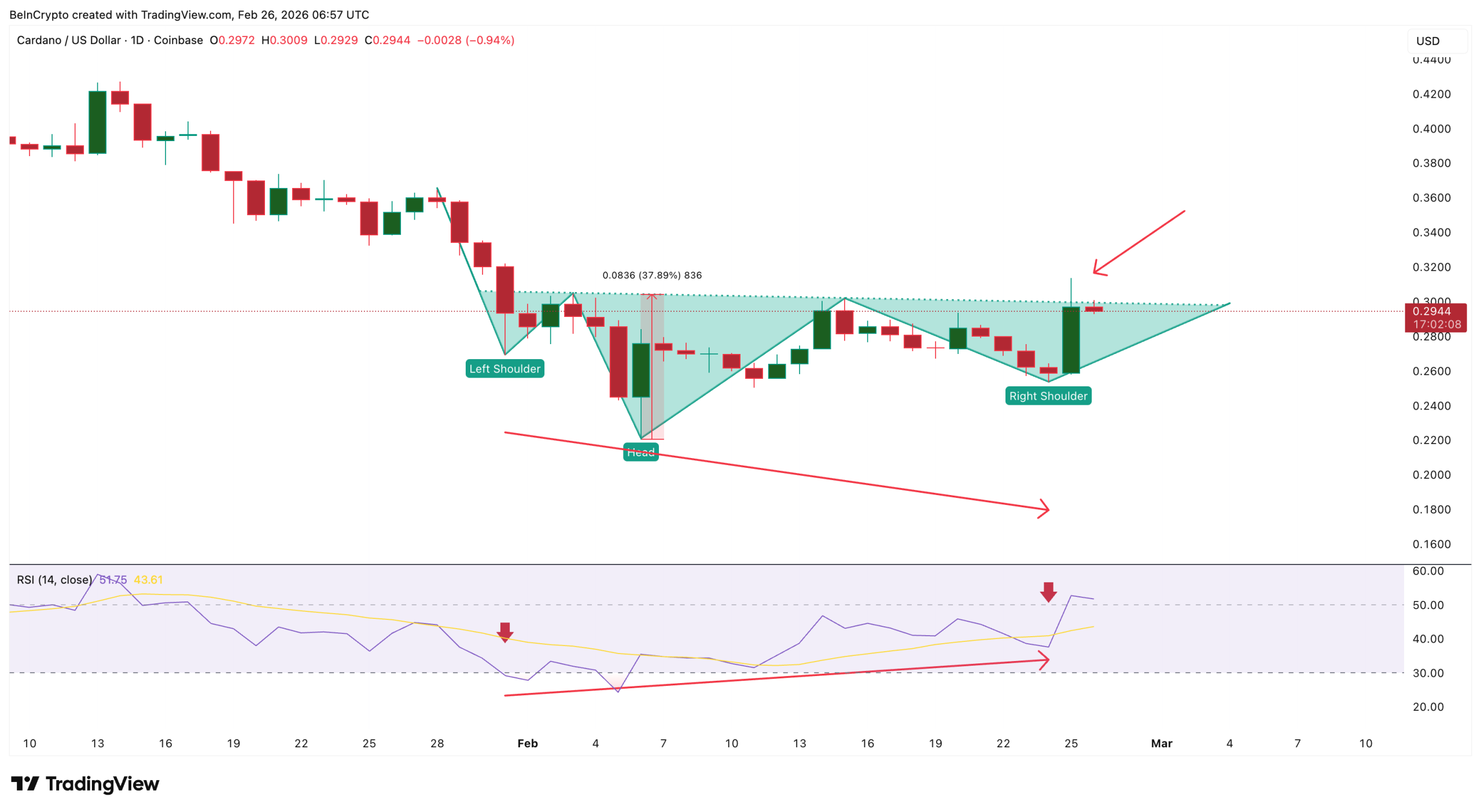
The Cardano price is still up nearly 12% over the past 24 hours, holding near $0.29 after rebounding from its recent lows. On the surface, this looks like the start of a larger recovery. The price even attempted a breakout that projected a roughly 38% rally toward $0.41. But that breakout has failed so far.
The rejection was not sudden. It happened despite massive whale buying worth about $340 million. The real story is deeper. Multiple hidden forces, including conflicting whale activity and liquidation risk, quietly blocked the rally.
Bullish Divergence And Breakout Setup Initially Pointed To A 38% Rally
The recovery setup began forming weeks earlier. Between January 31 and February 24, the Cardano price formed a lower low. This means the price dropped to a new bottom compared to the previous swing. Normally, that signals weakness. But at the same time, the Relative Strength Index (RSI) formed a higher low.
RSI is a momentum indicator that measures buying and selling strength. When RSI rises while price falls, it creates a bullish divergence, a reversal cue. This usually signals that selling pressure is weakening, even as the price continues to decline.
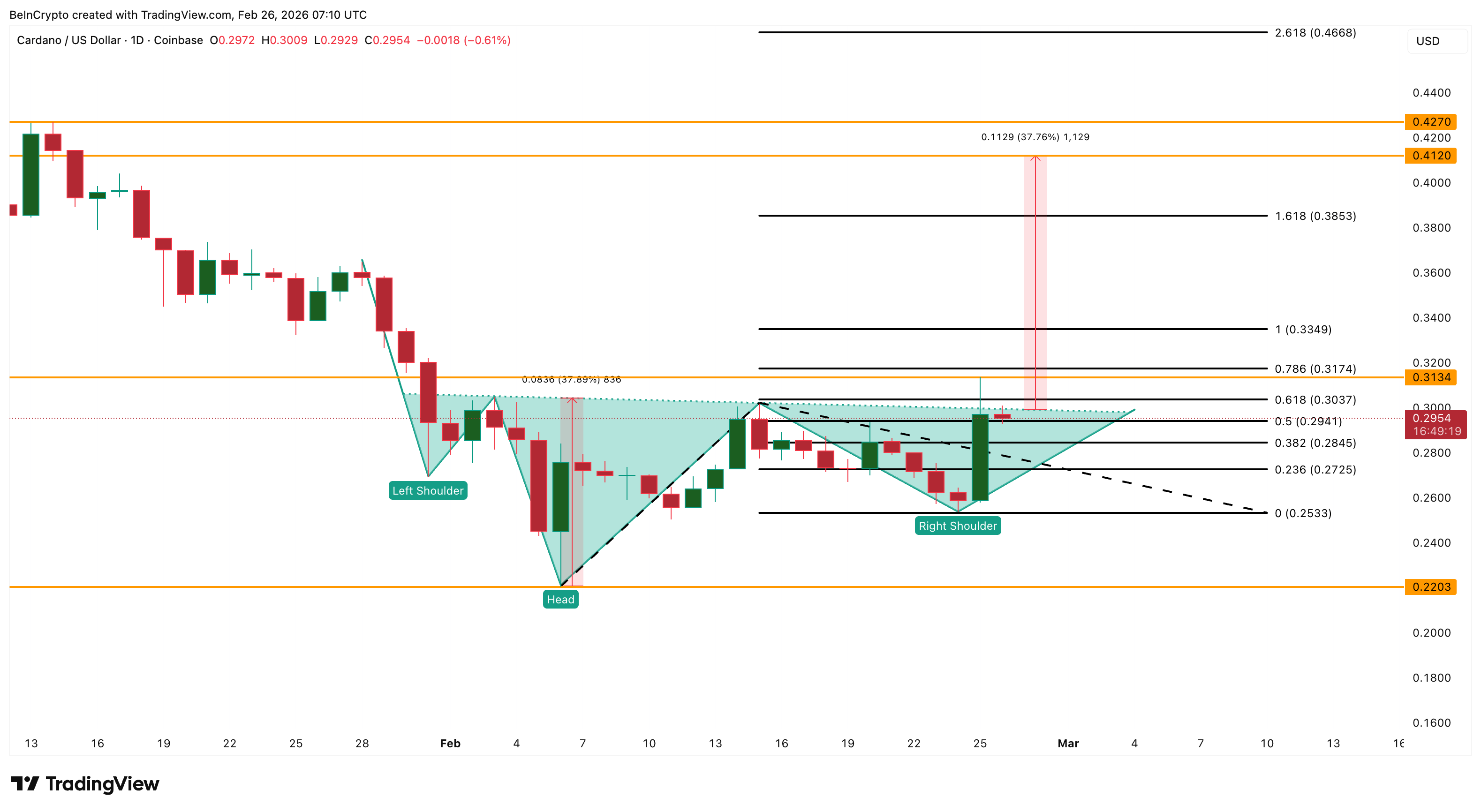
This exact pattern appeared within an inverse head-and-shoulders structure, a classic bullish reversal pattern. When Cardano approached the neckline level on February 25, it appeared ready to break out. The projected upside from this pattern was about 38%.
Want more token insights like this? Sign up for Editor Harsh Notariya’s Daily Crypto Newsletter here.
But instead of breaking cleanly, Cardano formed a long upper wick and fell back. This long wick shows sellers entered aggressively and absorbed the buying pressure before the breakout could be confirmed. At this point, the breakout failed.
The failed breakout did not happen without warning. Right after the rejection on February 25, another dangerous signal appeared on the chart — a hidden bearish divergence.
Between January 21 and February 25, the Cardano price formed a lower high. This means the recent peak was still weaker than the previous rally peak. But during the same period, the Relative Strength Index (RSI) formed a much higher high.
This is called a hidden bearish divergence. It happens when momentum rises faster than price, but price still fails to break key resistance. This usually signals that the rally is running out of strength and that sellers are preparing to regain control.
The timing makes this signal even more important. The divergence as Cardano printed the long upper wick on February 25 and failed to break above $0.31.
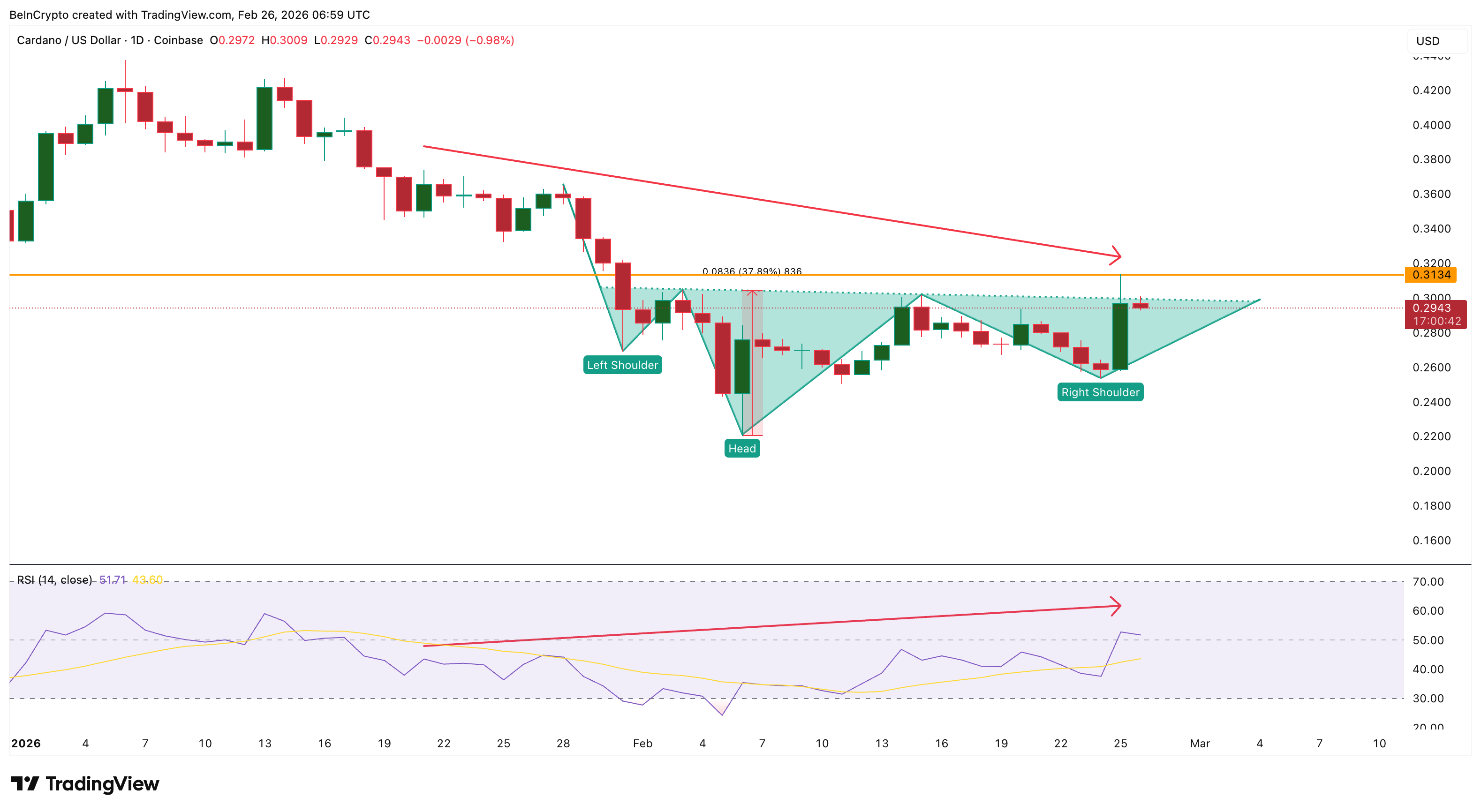
This confirms that the breakout rejection was not just random profit-taking. It was a structural rejection backed by weakening price strength beneath rising momentum. Hidden bearish divergences often lead to pullbacks. That pullback now appears to have already started, with Cardano slipping back below its breakout level.
This creates a risky situation. The bullish breakout structure is still technically alive, but only if the pullback remains limited. A deeper decline would confirm that sellers have fully regained control.
$340 Million Whale Buying Happened — But Larger Whales Quietly Sold Much More
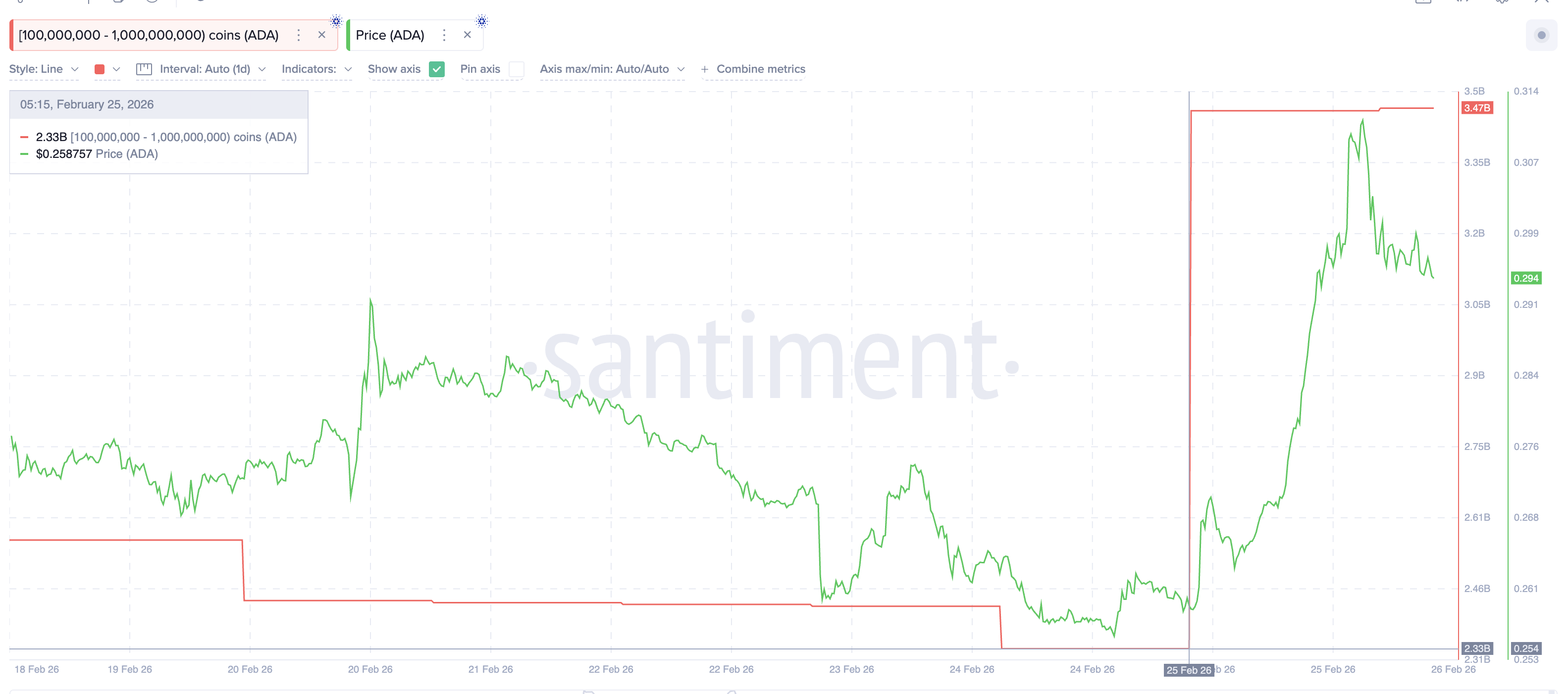
At first glance, whale data looked extremely bullish. Wallets holding between 100 million and 1 billion ADA increased their holdings from 2.33 billion ADA to 3.47 billion ADA. This means they bought 1.14 billion ADA, worth about $340 million. This is the buying activity most traders possibly saw.
But this was only part of the picture. Other whale groups were selling heavily at the same time. The largest whales, holding over 1 billion ADA, reduced their holdings from 2.89 billion to 1.88 billion ADA. This equals 1.01 billion ADA sold, worth about $297 million.
Mid-size whales holding 10 million to 100 million ADA sold 70 million ADA, worth about $21 million. Smaller whales holding 1 million to 10 million ADA sold 3.41 billion ADA, worth about $1.0 billion.
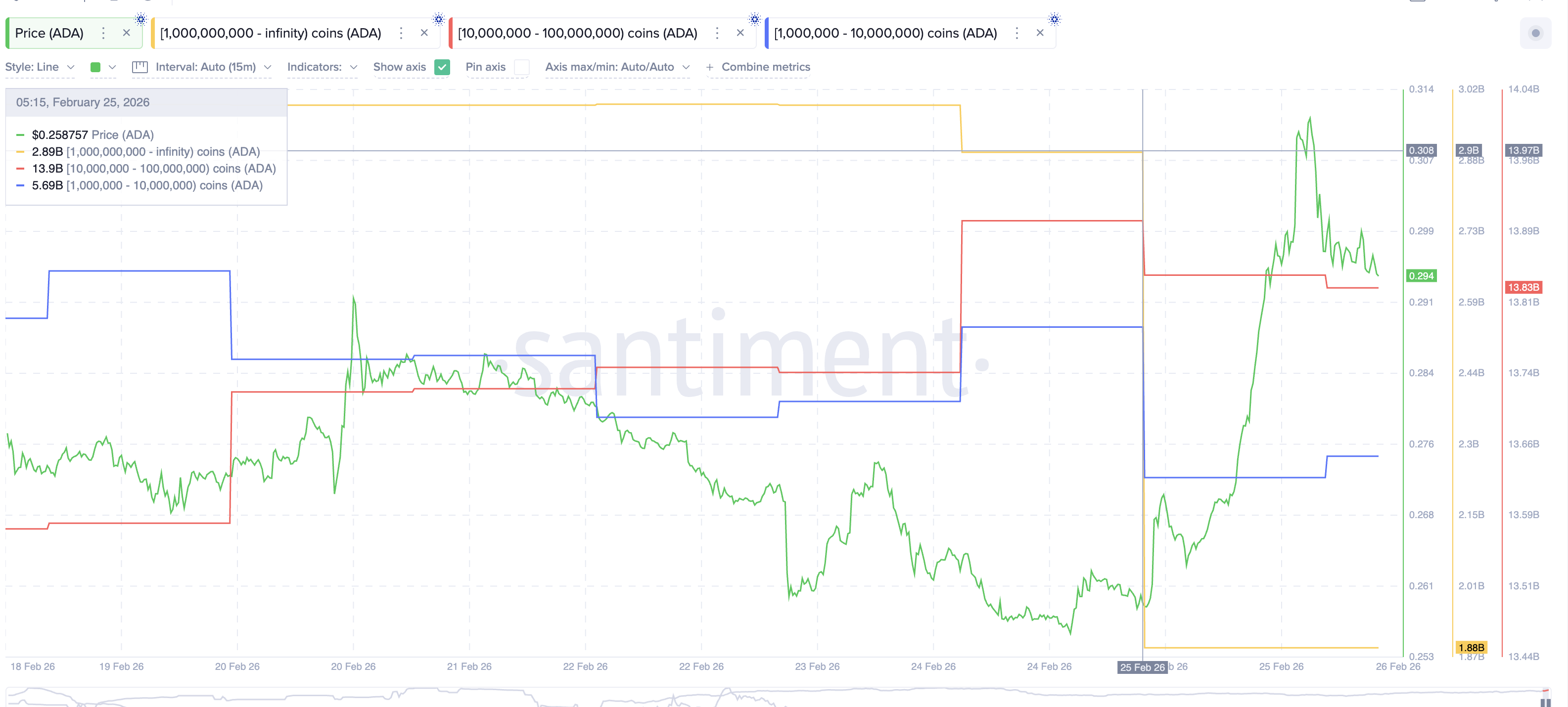
In total, selling reached about $1.32 billion. Compare this to the $340 million bought. That creates a net whale selling imbalance of roughly $980 million.
This explains the failure, including the long upper wick. The visible whale buying created optimism, but the larger, hidden whale selling completely overwhelmed it. This silent distribution blocked the breakout.
Derivatives Traders Took The Bait — Now Liquidation Risk Is Rising
Derivatives traders reacted exactly as expected. They saw a breakout forming, so they opened long positions expecting the rally to continue.
Liquidation data, on Binance alone, shows $11.40 million in long liquidations sitting below current price levels, while short liquidations are only $5.67 million. This means bullish traders are far more exposed to downside risk.
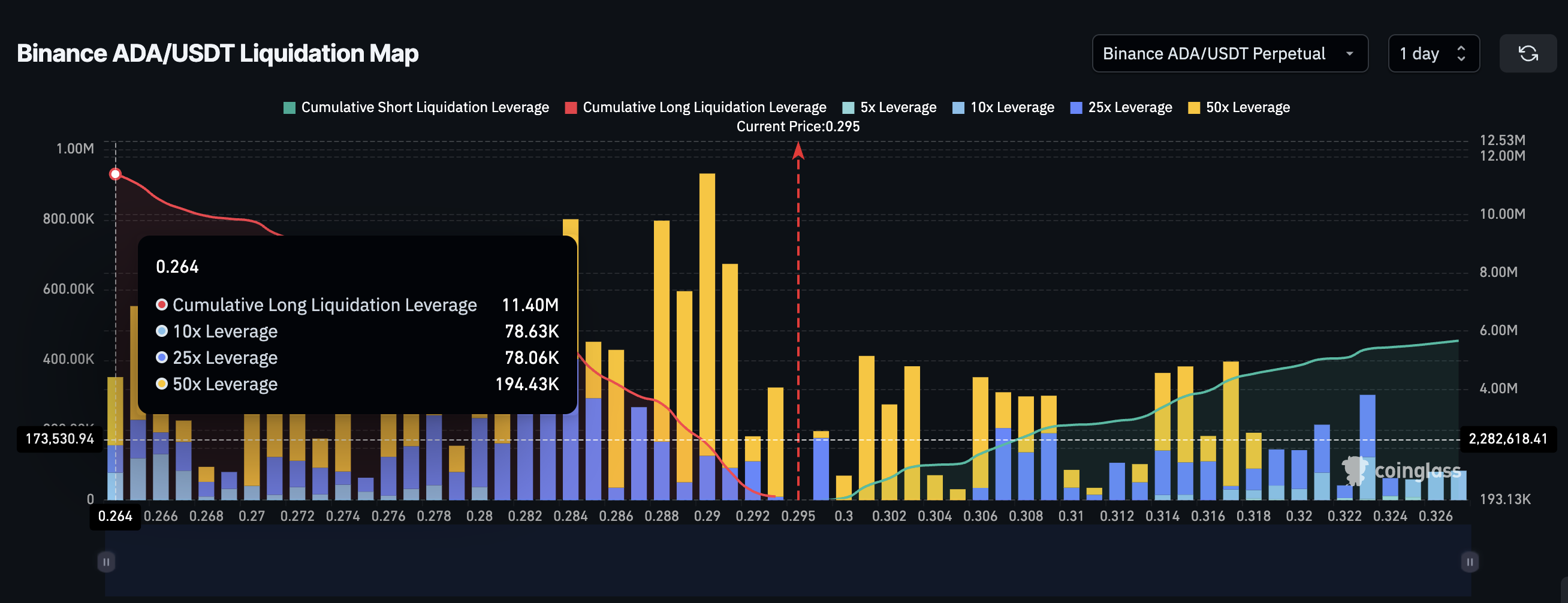
If the Cardano price falls, long positions will be forced to close. This creates a long squeeze. A long squeeze happens when falling prices force bullish traders to exit, and their forced selling pushes the price even lower. This is how failed breakouts often accelerate into deeper corrections.
Cardano Price Now Faces A Critical Breakdown Risk Toward $0.22
The ADA price structure now sits at a critical point. For the bullish breakout to remain valid, Cardano must reclaim and hold above $0.30. This would restart the path toward the $0.41 target.
But downside risks are growing. If Cardano falls below $0.27, the pullback strengthens. If it falls below $0.25, the bullish structure becomes invalid. This level is especially dangerous because it aligns with heavy, long liquidation exposure.
A break below $0.25 could trigger cascading liquidations, which could likely push the price toward $0.22, the full pattern breakdown possibility.
Right now, Cardano’s failed breakout (at press time) is not just a technical rejection. It is the result of nearly $1 billion in hidden whale selling. This imbalance is quietly turning into a high-probability breakout into a trap, and until buying fully outweighs selling, the recovery remains wishful.

Crypto Professionals Under Attack: How Fake Meeting Links Are Targeting the Digital Asset Industry
The cryptocurrency and Web3 ecosystem has always attracted innovation, opportunity and unfortunately increasingly sophisticated scams.
In recent months, a growing number of professionals working in digital assets, trading, venture capital and blockchain development have reported highly convincing social engineering attempts designed to compromise their devices and gain access to sensitive accounts.
Unlike traditional phishing emails filled with obvious mistakes, these new attacks are carefully constructed, patient and highly personalized.
They don’t look like scams.
They look like business opportunities.
The New Entry Point: Professional Meetings
One of the most concerning trends involves fake investor meetings arranged through legitimate platforms such as LinkedIn, Telegram or email introductions.
The approach often begins professionally:
-
a private investor or founder requests a meeting;
-
conversations appear structured and credible;
-
investment topics sound realistic;
-
scheduling tools such as Calendly are used to reinforce legitimacy.
Everything feels normal.
Until the meeting link arrives.
Instead of a standard Zoom or Google Meet invitation, victims receive a link disguised as a meeting room but hosted on a non-official domain designed to imitate legitimate services.
At first glance, the link may appear authentic.
In reality, it can lead to a fake login page or a malicious download designed to compromise the user’s device.
Why Crypto Professionals Are Being Targeted
Digital asset professionals represent an attractive target for attackers.
Many founders, traders and advisors operate:
Gaining access to a single compromised browser session can expose far more than a traditional account breach.
Attackers are not necessarily looking for passwords.
They are looking for active sessions.
Once malware is executed, certain tools can extract stored browser cookies, authentication tokens and locally saved data.
This allows attackers to bypass passwords entirely.
In some reported cases, compromised devices enabled access to email accounts, messaging apps and crypto wallets without victims realizing what happened until assets had already been moved.
Social Engineering Over Technical Hacking
The most dangerous aspect of these attacks is psychological rather than technical.
Scammers often invest significant time building trust.
They may:
-
speak fluent English;
-
present realistic professional backgrounds;
-
introduce additional “consultants” into meetings;
-
discuss portfolio management or partnership opportunities.
The goal is simple.
Lower defenses.
When security concerns are raised, a common warning sign appears.
Instead of accommodating reasonable requests such as using an official meeting platform or a different link, attackers may insist on joining through their specific invitation.
Pressure replaces flexibility.
That is often the moment professionals realize something is wrong.
The Fake Software Trap
Some fraudulent meeting links redirect users toward downloading software disguised as:
In reality, these downloads may contain infostealer malware or remote access tools.
Even experienced professionals have fallen victim to this method because everything leading up to the moment appeared legitimate.
Once executed, malicious software may search for:
The consequences can be immediate.
The Second Scam: “Recovery Experts”
Unfortunately, the risks do not end after an incident.
A second wave of scammers often targets victims who publicly report losses online.
These individuals claim they can recover stolen funds or trace blockchain transactions for a fee.
In most cases, they are simply another scam.
Blockchain transactions are generally irreversible.
Promises of guaranteed recovery should always be treated with extreme skepticism.
How to Protect Yourself
Simple habits dramatically reduce risk.
Professionals should consider the following precautions:
Only join meetings through official domains.
Platforms such as Zoom or Google Meet use verified domains. If a link looks unusual, verify before joining.
Avoid downloading software to attend a meeting.
Legitimate conferencing platforms rarely require additional downloads beyond official applications.
Use your own meeting rooms when possible.
If uncertainty exists, offer to host the meeting yourself.
Separate crypto activity from daily browsing.
Dedicated devices or browser profiles for wallet access can reduce exposure.
Enable strong account protection.
Two-factor authentication and hardware security keys significantly improve account safety.
Awareness Is the Strongest Defense
Social engineering attacks continue to evolve alongside the growth of the digital asset industry.
Many professionals assume technical expertise alone protects them.
In reality, most successful compromises begin with trust rather than code.
Recently, our editorial team encountered a similar attempt involving a professional meeting setup that appeared entirely legitimate until a suspicious meeting link was introduced at the last moment.
Fortunately, the situation was identified before any interaction occurred.
Others may not be as lucky.
As conferences, partnerships and investment conversations increase across the Web3 ecosystem, remaining cautious without becoming paranoid is essential.
Opportunities exist everywhere in crypto.
So do traps.
Taking a few extra seconds to verify a meeting invitation may ultimately protect far more than a calendar slot.
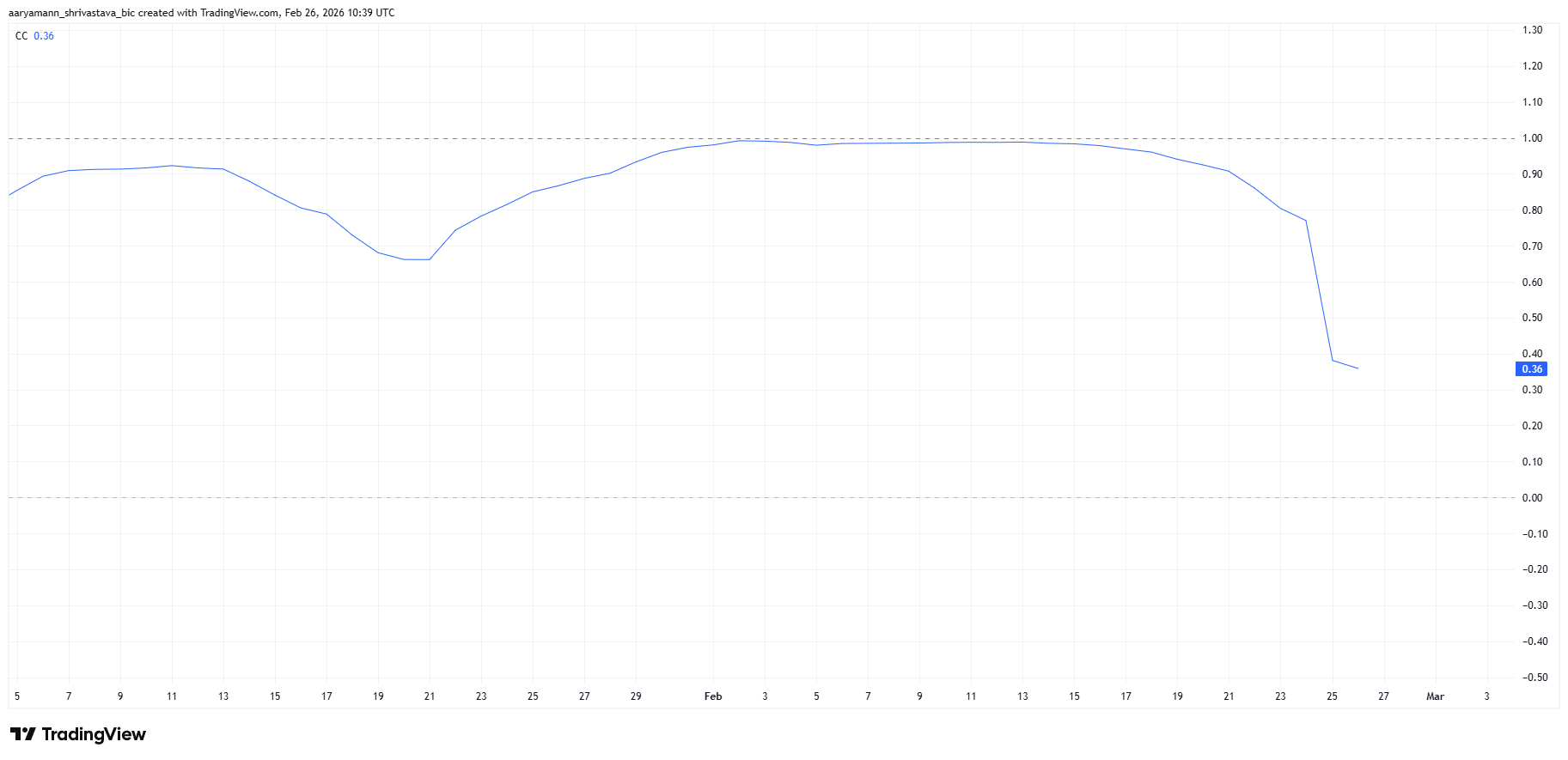
Polkadot price surged nearly 30% in the past 24 hours, erasing almost a month of losses. The sharp rally surprised traders who expected Bitcoin to lead the move.
However, this time the crypto king played a limited role in DOT’s breakout. While Bitcoin remains a benchmark asset, Polkadot appears to be decoupling from its direct influence.
Polkadot Finds Investors’ Support
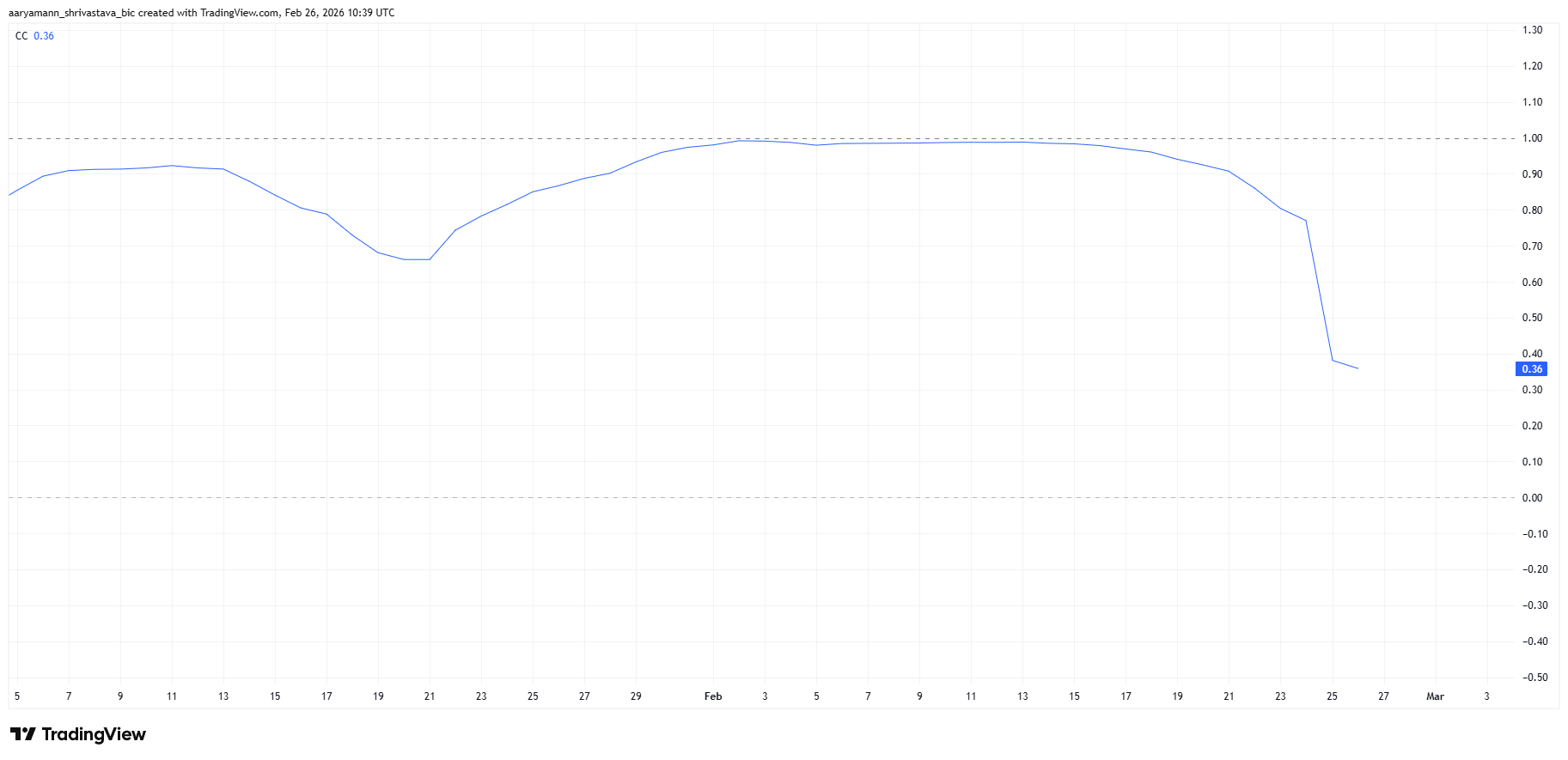
Polkadot’s correlation with Bitcoin has declined in recent weeks. The metric currently stands at 0.36, signaling a weaker relationship between the two assets. Lower correlation suggests DOT is increasingly driven by internal factors rather than broader BTC price swings.
Decoupling can benefit altcoins during periods of Bitcoin consolidation. Reduced dependence allows Polkadot to respond to its own liquidity and demand trends. This structural shift indicates that DOT may be charting an independent recovery path.
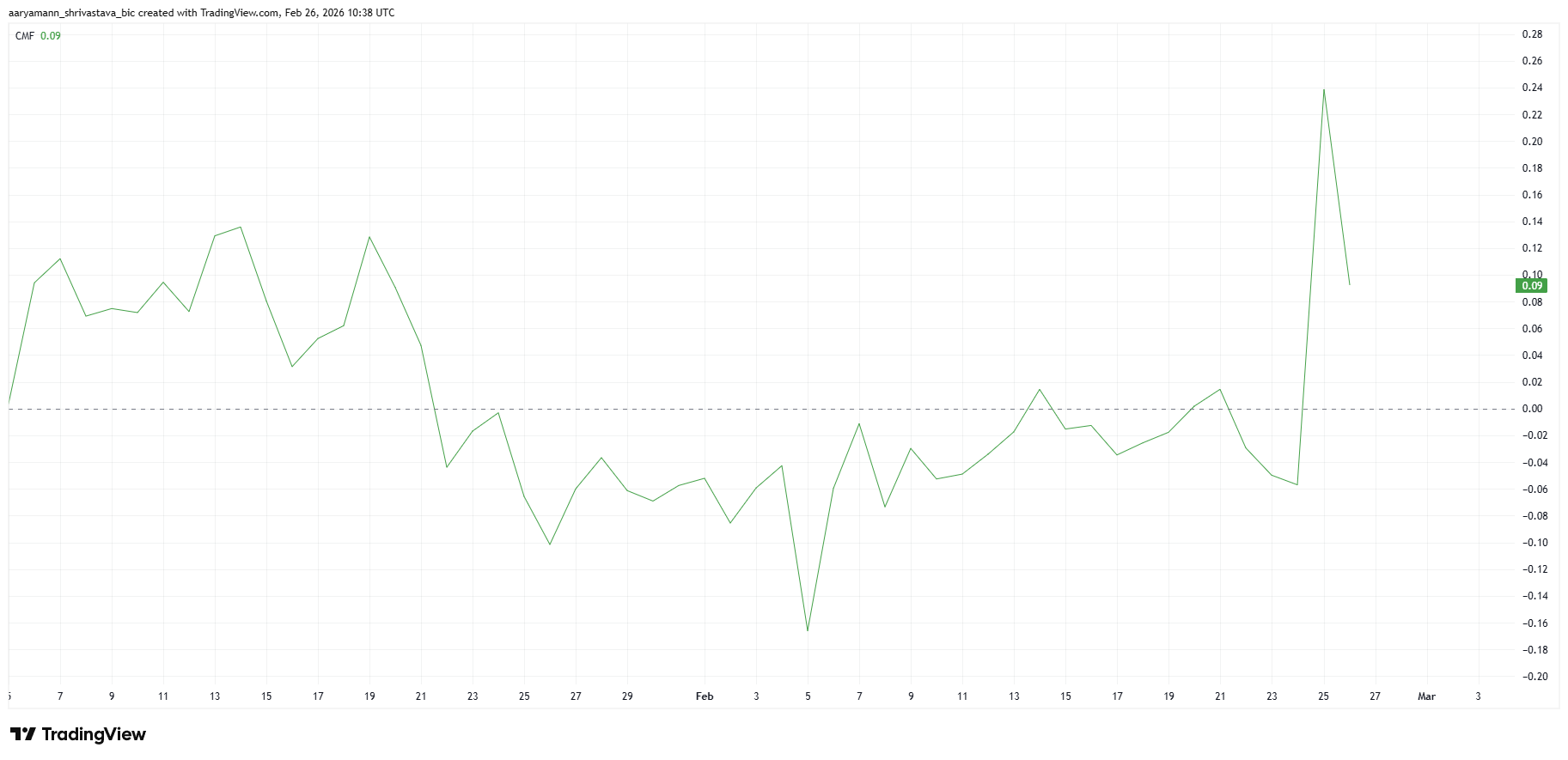
The Chaikin Money Flow indicator supports this interpretation. CMF recorded a sharp uptick during the rally, confirming strong capital inflows into Polkadot. Rising CMF values typically reflect increased buying pressure from larger market participants.
Strong inflows suggest that large holders may have contributed to the price spike. CMF often captures institutional or whale-driven accumulation patterns. Sustained positive readings would reinforce the case for continued upside momentum in DOT price action.
DOT Price Has a Ceiling For Now
Polkadot price is trading at $1.60 at the time of writing after a near 30% rally. The altcoin briefly tested the $1.70 level but failed to secure $1.64 as confirmed support. This hesitation highlights emerging resistance near current highs.
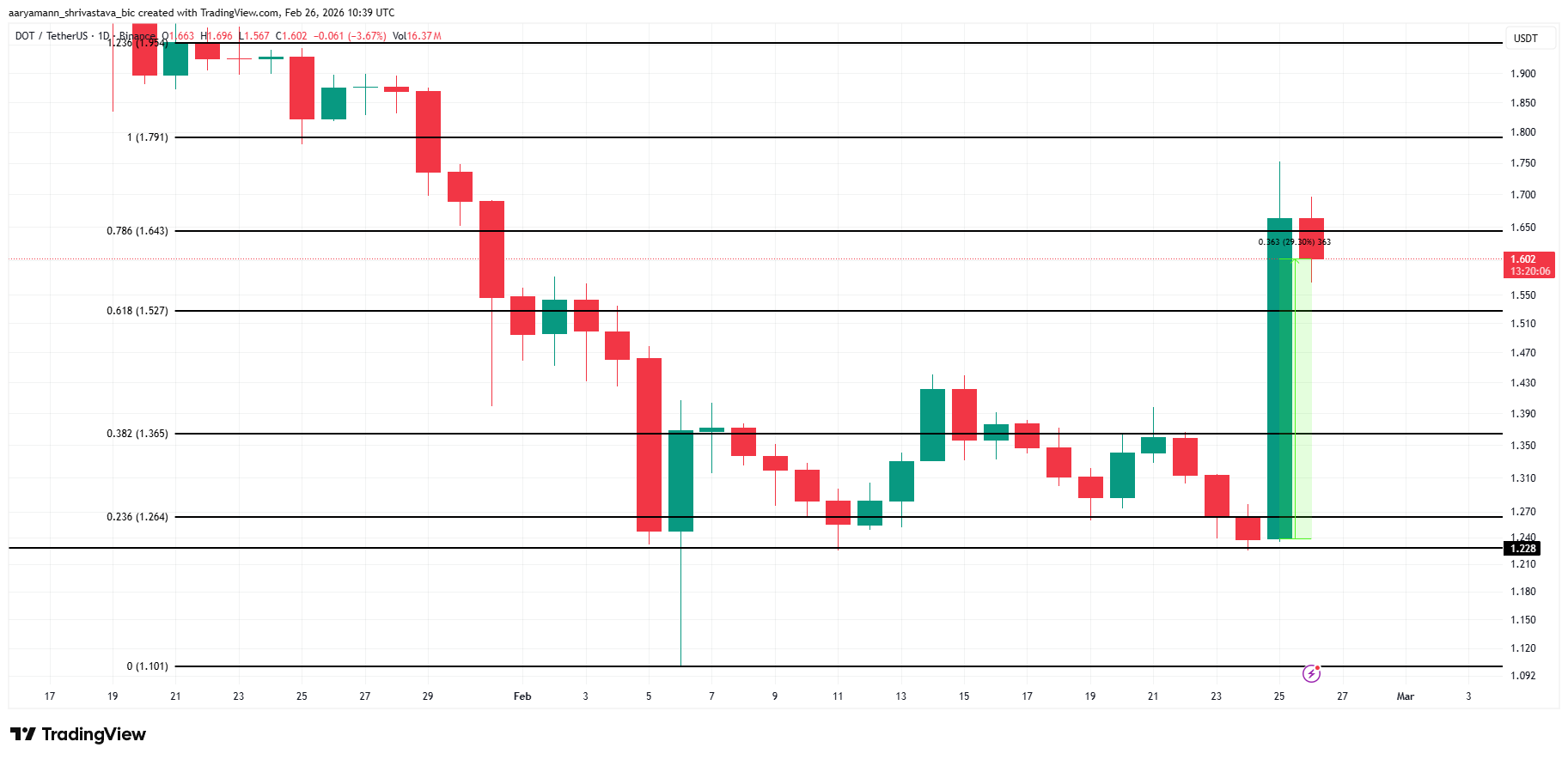
The liquidation heatmap reveals a significant cluster of short positions near $1.70. Approximately $1.30 million in short liquidations are concentrated at this level. A decisive breakout could trigger total short liquidations worth $3.04 million. Such forced buying may accelerate price gains.
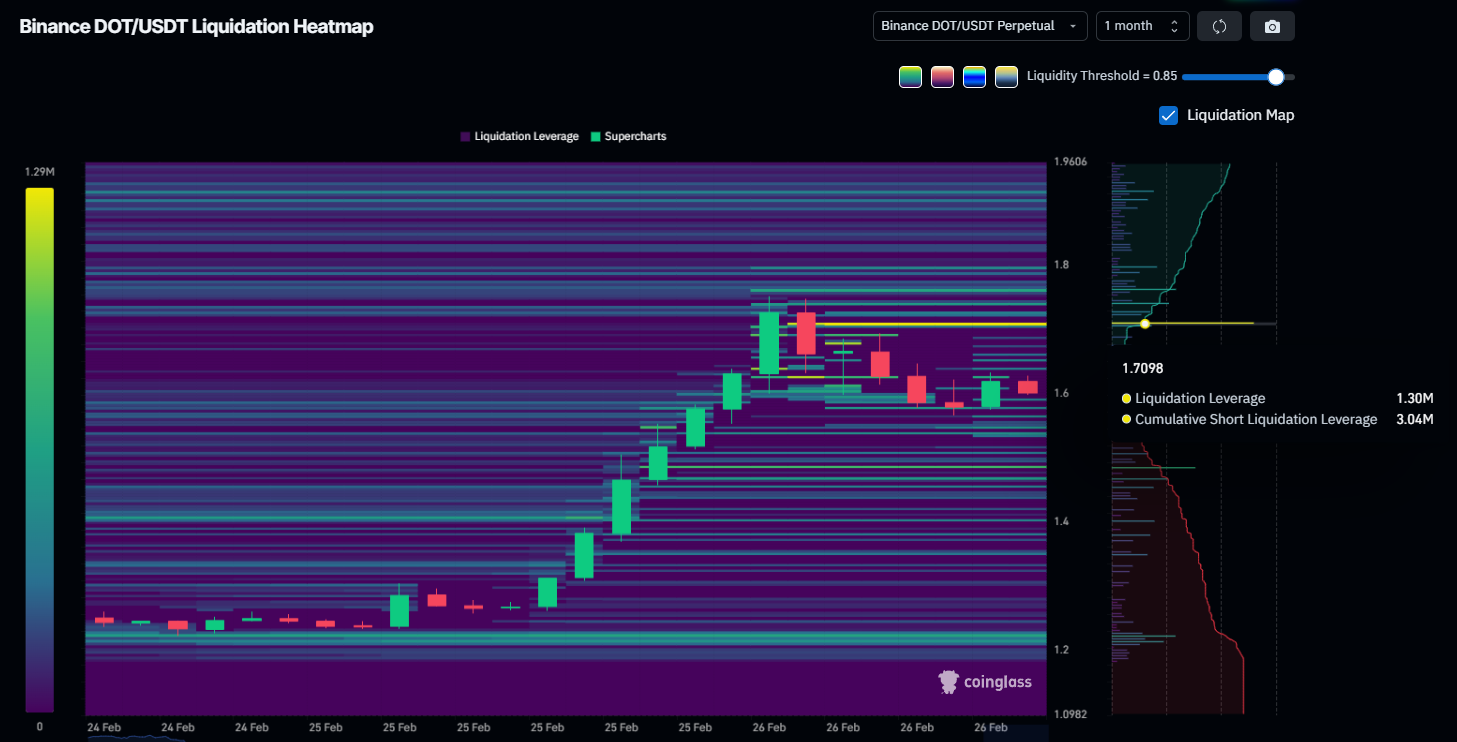
If bullish momentum persists, DOT could extend toward $1.79 in the near term. However, upside depends on sustained capital inflows. Should buying pressure fade, DOT may retest the $1.52 support, aligned with the 61.8% Fibonacci level. Losing that bull market support floor would invalidate the short-term bullish thesis.
Ethereum price is trying to steady itself after a rough February, but the bigger question is whether this bounce has enough strength to push through the $2,500 ceiling.
Summary
- Ethereum has bounced above $2,000 after a sharp February drop but remains in a broader downtrend and well below the key $2,500 resistance.
- Funding rates on Binance have turned positive, easing short-term downside pressure, though high volatility suggests a bigger move is coming.
- To reclaim $2,500, ETH must hold $2,000 support and break above $2,200 with strong momentum
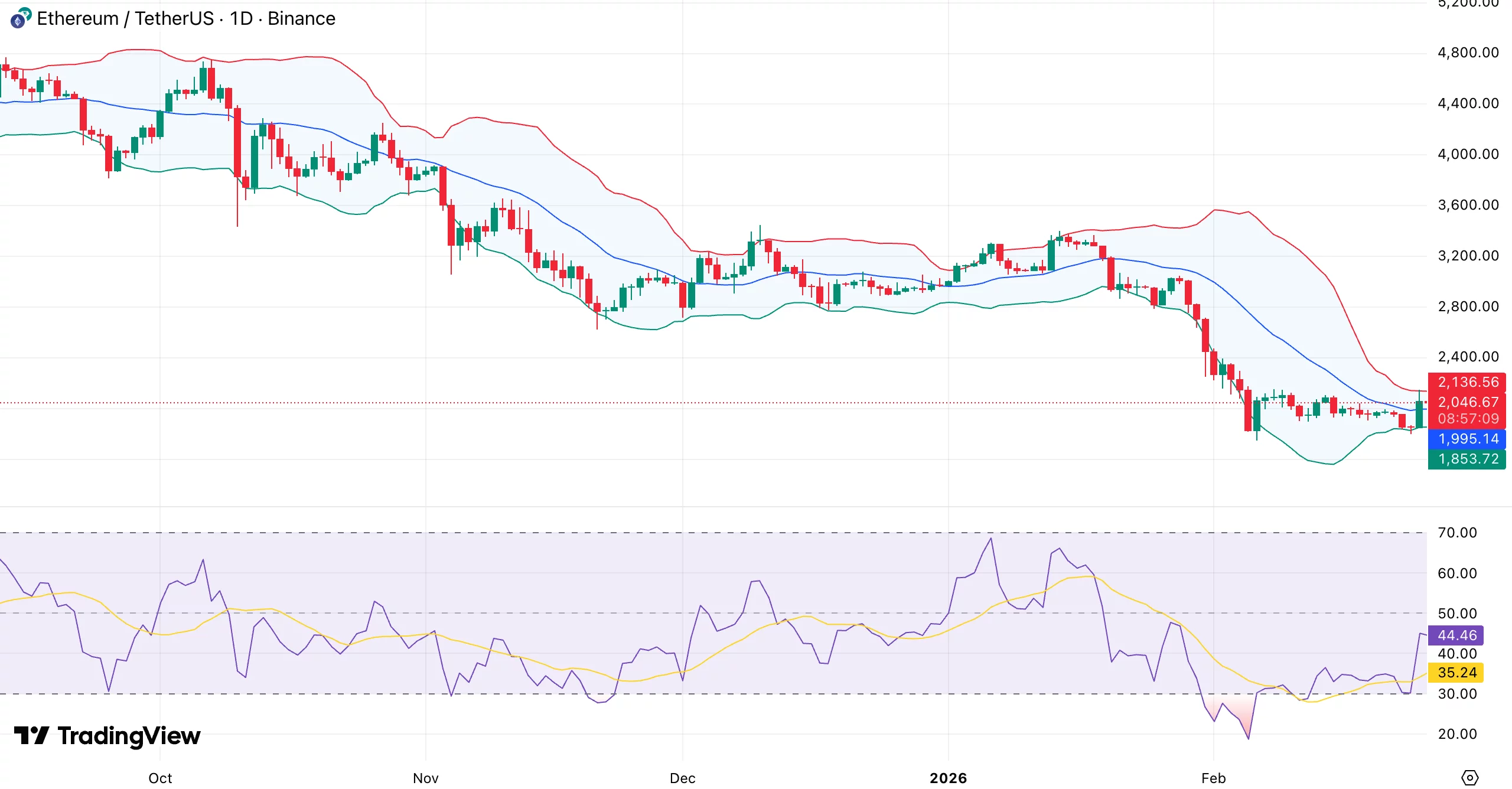
At press time, ETH was trading near $2,050, up about 3% over the past 24 hours. The move extends a week-long rebound of roughly 9%. Even so, the token is still down 30% over the past month and sits nearly 58% below its August 2025 peak of $4,946.
February started with Ethereum (ETH) trading between $2,200 and $2,400 before sellers took control mid-month. The slide accelerated around Feb. 24–25, when the price dipped toward $1,800. Since then, buyers have stepped back in, lifting the price back above the $2,000 mark.
Volatility spikes to highest level since March 2025
Derivative data shows a notable shift in positioning. According to a Feb. 26 analysis by CryptoQuant analyst PelinayPA, funding rates had remained positive for an extended period earlier this year, indicating that long traders were paying shorts.
Despite that optimism, the price failed to build a consistent rally. More recently, when short positions grew and the price faced pressure, funding went sharply negative.
Binance, which has the biggest share of global derivatives liquidity, often sets the tone during liquidation waves. The short- to mid-term trajectory of Ethereum is often affected by changes in Binance funding.
Funding has now flipped back to positive. This indicates that there is less immediate downside pressure now that many short positions have been cleared. Positive funding, however, does not prove a long-term recovery. The market could experience a long squeeze if it rises too quickly.
In a separate report, analyst Arab Chain revealed that Ethereum’s 30-day realized volatility on Binance has climbed to roughly 0.97, its highest level since March 2025.
Such high volatility often precedes a significant directional move, but if buying and selling pressure is evenly distributed, it can also occur during a prolonged period of sideways trading.
Ethereum price technical analysis
From a chart perspective, ETH is still in a clear daily downtrend, marked by lower highs and lower lows. Price recently bounced after touching the lower Bollinger Band near the $1,850–$1,900 zone. It now trades around $2,050, below key resistance areas.
Immediate support sits near $2,000, followed by the recent low between $1,850 and $1,900. On the upside, supply is clustered around $2,130–$2,150, then $2,300–$2,350.
Because it corresponds with a previous breakdown area and has psychological weight, the $2,500 level continues to be the primary structural barrier.
Momentum is improving but not yet decisive. Following a recovery from oversold conditions, the relative strength index is close to 44.
A sustained move above 50 would strengthen the case for a shift in momentum. Bollinger Bands are starting to narrow after widening during the selloff, suggesting a possible attempt at a breakout.
For Ethereum to recover $2,500, it must clear the $2,200 area with substantial volume and maintain above $2,000 to form a higher low. The current move might turn out to be a relief bounce inside a bigger downward structure if there is no follow-through.


- Dogecoin price hovers near $0.10 amid fresh rejection above this level.
- Open interest has dropped below $1 billion.
- DOGE could drop to $0.08 if weakness intensifies.
Dogecoin’s latest price rally has hit a snag, with the meme coin slipping back under the key $0.10 threshold amid fading momentum in the meme coin sector.
On Thursday, February 26, 2026, DOGE hovered around $0.1004, clinging to modest daily gains after a volatile week that saw it dip as low as $0.0914 the previous day.
This retreat highlights persistent challenges for the meme-themed cryptocurrencies, once buoyed by celebrity endorsements but now grappling with broader market headwinds and technical barriers.
DOGE price retested highs above $0.10
Dogecoin briefly surged past $0.10 on Wednesday, fueled by a sharp rebound for Bitcoin and top altcoins.
Traders eyed momentum above the psychological level as a potential springboard for renewed interest, especially after DOGE touched $0.11 on February 25 before retreating.
However, the uptick proved short-lived, with selling pressure mounting as the token failed to sustain gains, retreating amid thinner trading volumes and scepticism over long-term catalysts.
A unique angle here is the role of retail investor fatigue.
On-chain metrics show smaller holders distributing positions after the spike, wary of the slide seen following Dogecoin price rallying to its peak in 2025.
CoinGlass data shows that open interest in Dogecoin futures has dropped to under $1 billion.
The dip has been progressive since the peak of over $5 billion in September 2025.
This shift highlights how community-driven hype, Dogecoin’s hallmark, is waning as macro factors overshadow viral buzz.
Dogecoin price analysis
Dogecoin is trading near $0.098 as of writing on Thursday, preserving about 4% of the advance from the prior session.
The slight dip from intraday highs aligns with the rejection at the upper boundary of a falling channel.
Dogecoin has also traded lower amid falling 50-day and 100-day SMAs.
Bulls, therefore, face the $0.10 and the SMA barriers as immediate resistance levels.

The daily MACD has climbed following a signal line rebound earlier in the week, pointing to budding bullish energy.
Buyers are also unwavering as RSI lingers near the 50 mark, hinting at neutral sentiment.
This means fresh gains could follow if buyers retake control.
Yet, a close below $0.10 could revive selling, targeting the February lows of $0.08 and exposing deeper corrections.
From a distinctive perspective, Dogecoin’s stall mirrors a “meme exhaustion pattern” seen in past cycles.
After quick pops, prices have often quickly pared gains.
With year-to-date declines persisting and Bitcoin’s surge also stalling, DOGE bulls need a decisive breakout to shift momentum.


The era of speculative mania is transitioning into the era of the automated on-chain economy, according to Animoca Brands co-founder Yat Siu.
In an interview with Korea Times, Siu declared this week that AI agents and blockchain will work in tandem behind the scenes while we get on with our lives, positing fascinating and ubiquitous use cases for blockchain that few talk about.
Siu argued that the convergence of artificial intelligence and blockchain infrastructure has reached a tipping point. The friction of gas fees, private keys, and complex bridging is about to disappear behind a layer of autonomous software.
The implication is that we will soon all be using AI and blockchain without knowing it.
Key Takeaways
- AI as the New Power User: Yat Siu posits that AI agents will replace humans as the primary on-chain executors, managing transactions and wallet security autonomously.
- The End of Complexity: By abstracting away seed phrases and gas fees, AI Agents remove the technical barriers currently preventing mainstream adoption.
- 2026 Inflection Point: Animoca forecasts a ‘Year of Utility’ where valuation models shift from speculation to functional usage within the Open Metaverse.
Yat Siu Believes This Year is Vital
Siu’s thesis is blunt: the speculative cycle is losing steam in favor of infrastructure that actually works.
While the market has fixated on price action, builders have been quietly integrating AI to handle the heavy lifting. Siu suggests that cryptocurrency/blockchain is a “natural foundation” for AI agents, as these autonomous digital entities require a permissionless, borderless medium of exchange.
Ultimately, Siu’s argument is that legacy banking is too slow and gated for AI; blockchain is the only rail fast enough for machine commerce.
“Tokenize or die” has been a rallying cry for Animoca, and the firm believes that businesses failing to adopt these Web3 standards will face the same obsolescence as pre-internet retailers.
Discover: The next crypto to explode
Agents Are Solving the UX Nightmare: Yat Siu
For years, blockchain usability has been the industry’s Achilles’ heel. Users are expected to manage alphanumeric strings, approve complex smart contracts, and understand gas topology. Siu argues that human users should never have to touch these layers.
In his vision, AI Agents act as the intermediaries. A user expresses an intent (“buy this asset” or “enter this game”), and the agent executes the necessary chain of transactions.
There are massive risks ahead, however. Recently, an AI crypto agent made a six-figure error that the market ironically rewarded, demonstrating that while the tech is nascent, the autonomy is real and needs careful guardrails.
In spite of the risks, AI integration with blockchain is critical for maintaining a scalable and useful abstraction layer. If digital property rights are to scale to billions of users, the management of those rights must be automated.
Animoca’s portfolio, which spans over 600 Web3 investments, including its own property, the metaverse game The Sandbox, is positioning itself for this automated future where digital assets are the cogs actively turning the wheels of the financial infrastructure.
Why is 2026 Pivotal to Onboarding The Next Billion Users?
Why is 2026 the specific target for this breakout? The timeline correlates with maturing infrastructure and potential regulatory clarity.
Siu has pointed to the potential progression of legislation like the U.S. CLARITY Act as a trigger for mass corporate tokenization. Institutional capital requires legal certainty, and autonomous agents require robust, finality-focused blockchains.
This infrastructure is visibly growing on chain. Ethereum developers are currently locking in upgrades like FOCIL to secure the consensus layer for higher throughput. These technical improvements are the bedrock required to support millions of AI agents transacting simultaneously without clogging the network.
If the regulatory landscape in the U.S. and Asia, particularly with Japan’s crypto master plan and Hong Kong’s Web3 push, aligns with this technical maturity, 2026 becomes a plausible window for mass utility.
Animoca’s potential plans for a public listing in Hong Kong or the Middle East further underscore their confidence in this timeline.
The question is no longer whether AI agents can navigate the blockchain. The technology exists. The question is whether the regulatory and liquidity layers can stabilize fast enough to support them by 2026.
Discover: The best meme coins on Solana
The post Animoca’s Yat Siu Says AI Agents Will Make 2026 the ‘Year of Utility’ appeared first on Cryptonews.
Uniswap price targets $4.55 prior breakdown level as traders position ahead of a governance vote that could expand fee burns and boost protocol revenue.
Summary
- UNI is holding $3.80 support after an 18% weekly rebound.
- A governance proposal could raise annual revenue to $61M through expanded fee burns.
- A breakout above $4.20 could open room toward the $4.55–$4.60 zone.
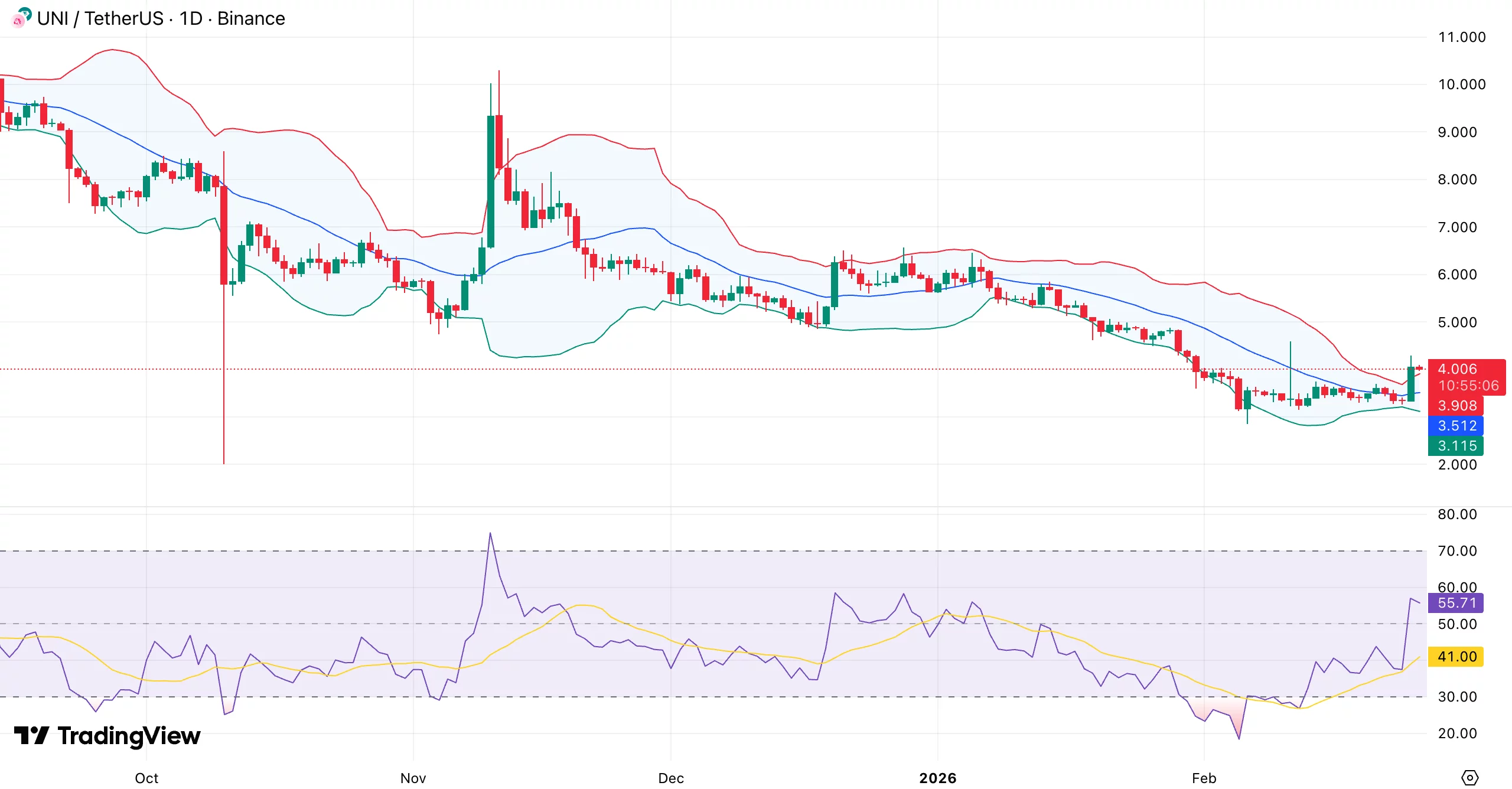
Uniswap (UNI) traded at $4.02 at press time, up about 10% in the past 24 hours. The token is trading near the top of its weekly range between $3.29 and $4.12.
UNI has gained 18% over the past week, showing a firm bounce from recent lows, though it is still 15% lower over the past month.
Spot trading volume jumped to $554 million, up 119% in one day. CoinGlass data shows futures volume climbing nearly 80% to $640.5 million, while open interest rose 15.2% to $285.6 million.
When both volume and open interest rise together, it usually means new positions are being opened rather than just shorts closing.
Fee switch expansion adds direct value to UNI
Uniswap governance is advancing a proposal to widen its fee switch system. It follows the 2025 UNIfication rollout, which began charging protocol fees on Ethereum and introduced UNI token burns.
Under the new proposal, protocol fees would also be applied across eight additional Layer 2 networks, including Arbitrum, Base, and Optimism. The plan would automate fee collection and send the proceeds back to Ethereum mainnet, where they would be used to buy and burn UNI tokens.
If approved, the expansion could lift annualized protocol revenue to about $61 million, up from $34 million. Part of swap fees would shift from liquidity providers to the treasury, directly linking trading activity to token supply reduction.
That dynamic tends to attract long-term holders because it means usage will translate into measurable value capture. Voting is split into two phases, with the first already live and the second scheduled between Feb. 27 and March 1.
Technical outlook: $4.60 in play if breakout holds
UNI has built a clear base around $3.70–$3.80. Price has held that zone multiple times, and recent candles show buyers stepping in on dips. With Bollinger Bands tightening, the market may be gearing up for a sharp move.
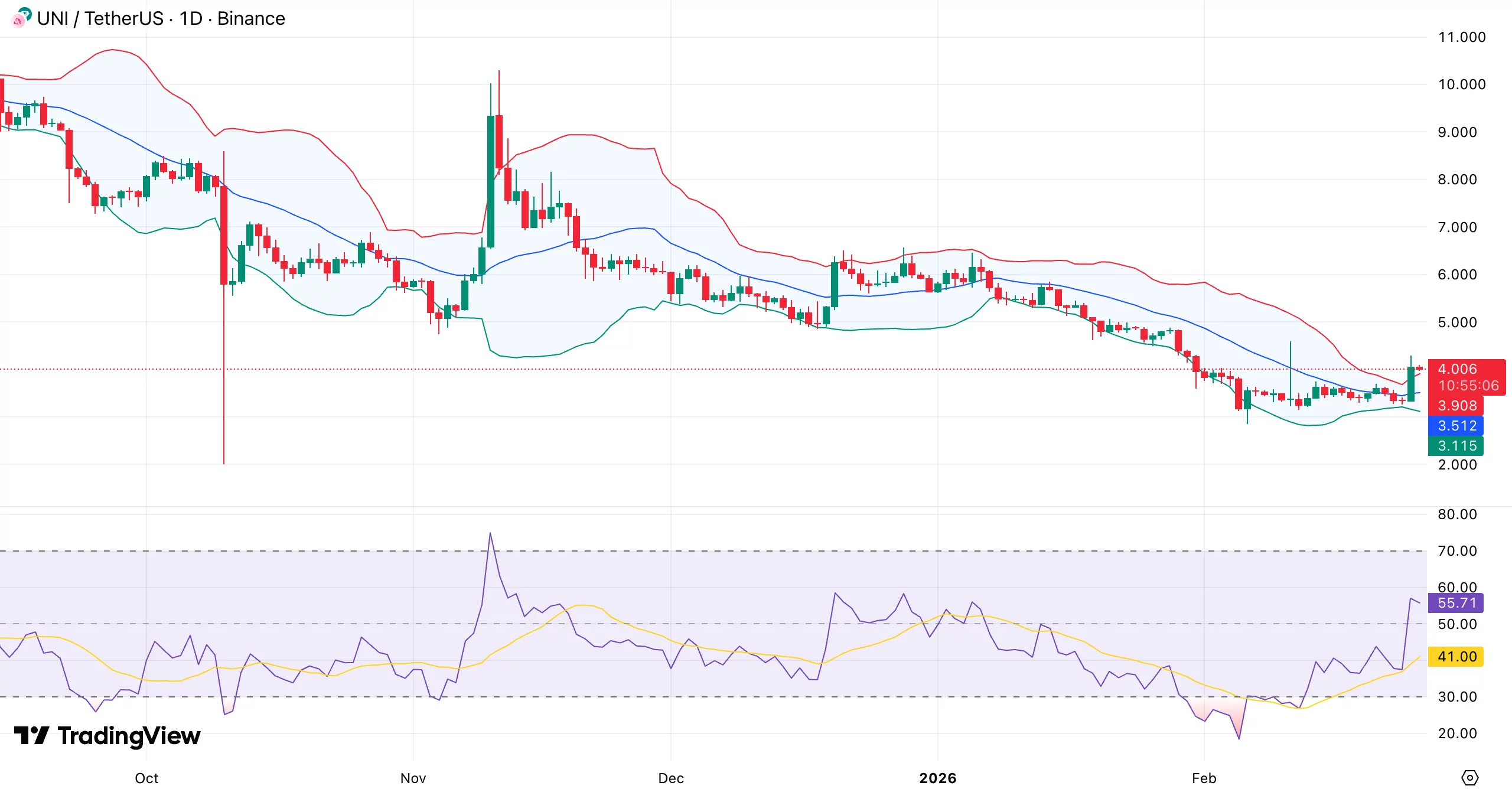
Momentum has improved, with relative strength index pushing back above the midline. Price is also testing a descending trendline from December highs and pressing against short-term moving averages.
Volatility had tightened during consolidation, and the recent expansion in volume suggests the market is preparing for a larger move. A 20% advance from the $3.80 floor projects a target near $4.55–$4.60, an area that lines up with prior breakdown levels and moving average resistance.
A firm break above $4.20 would strengthen the case for that move. If the price slips below $3.70, the recovery attempt would weaken, opening the door to a return toward $3.30.
Over the past five years, enterprises have invested aggressively in AI pilots, generative tools, and automation platforms. Yet most organizations remain trapped in experimentation mode. AI dashboards exist. Chatbots are deployed. Predictive models operate separately across teams, but enterprise-wide financial impact remains limited. The issue is not technological maturity; it is strategic orchestration. Scaling AI requires governance architecture, value engineering discipline, capital alignment, and executive-level integration. This is where a specialized AI strategy consulting Company creates transformational leverage. Through structured AI strategy and consulting services, enterprises convert fragmented innovation into measurable performance, building an AI-native operating model that drives durable competitive advantage.
The Hard Truth: AI Adoption Is Not AI Transformation
We work with enterprises that proudly report “AI adoption.” But adoption is not transformation. Most organizations face:
- Disconnected AI initiatives across departments
- Undefined ROI accountability
- No centralized governance framework
- Underdeveloped AI roadmap sequencing
- Weak alignment with corporate strategy
The result? Incremental gains instead of exponential impact. An effective enterprise AI strategy does not deploy AI tools. It redesigns the enterprise around intelligence. That requires structured AI strategy consulting for enterprises, not experimentation.
What Enterprise AI Strategy Actually Means
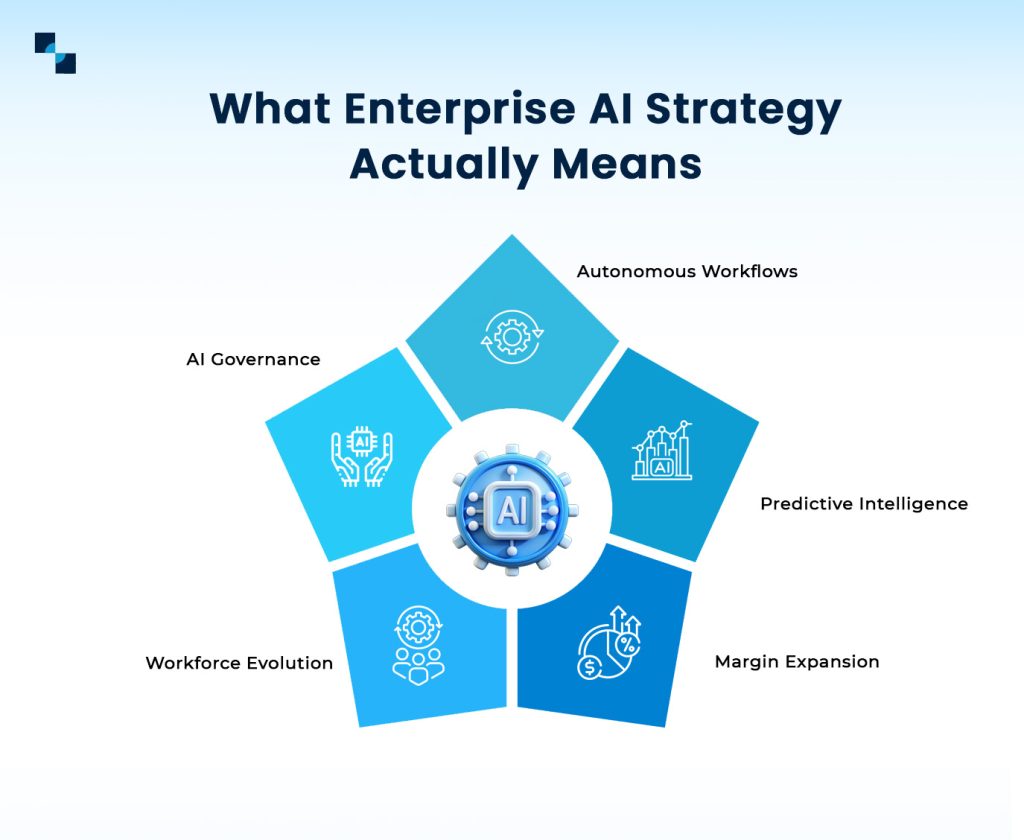
An enterprise AI strategy is a capital allocation decision. It determines where intelligence will generate the highest economic return across the organization. It defines how AI investments translate into measurable growth, efficiency, and long-term competitive advantage.
- Where AI will drive margin expansion
- How predictive intelligence will compress decision cycles
- Which workflows will become autonomous
- How governance will mitigate regulatory exposure
- How workforce capability will evolve
AI cannot sit in innovation labs. It must shape financial planning, operational architecture, and strategic differentiation. This is the mandate of the high-level AI Strategic Advisory.
The Role of a Leading AI Strategy Consulting Company
As a top-tier AI strategy consulting Company, our approach is not technology-first. It is value-first. We engage across five strategic pillars:
1. Enterprise AI Maturity & Readiness Diagnostics
Before scaling, we assess:
- Data infrastructure robustness
- Model lifecycle governance maturity
- Security & compliance architecture
- Executive AI fluency
- Operational integration readiness
Without clear maturity and strategic alignment, scaling AI initiatives only amplifies inefficiencies.
2. Strategic AI Use Case Engineering
Not every AI initiative deserves capital. We prioritize use cases based on:
- EBITDA impact potential
- Strategic defensibility
- Competitive moat creation
- Implementation scalability
- Time-to-value acceleration
This precision separates high-performing enterprises from reactive adopters.
3. Structured AI Roadmap Development
A disciplined AI roadmap development Company sequences AI initiatives across a phased transformation:
Phase I: Value Capture
Automation, predictive analytics, cost compression.
Phase II: Strategic Differentiation
AI-driven product innovation, customer intelligence, and dynamic pricing.
Phase III: AI-Native Enterprise
Autonomous systems, real-time decision intelligence, predictive capital allocation.
Sequencing protects capital efficiency while maximizing compounded returns.
AI Strategy and Consulting Services: Beyond Implementation
Premium AI strategy and consulting services go far beyond deploying tools or building models. They align artificial intelligence with enterprise vision, financial performance, and long-term competitive positioning. Instead of focusing only on technical execution, they design the strategic, operational, and governance architecture required to scale AI responsibly and profitably. Premium AI strategy and consulting services integrate:
- Strategic advisory
- Governance architecture
- Financial modeling
- Operational redesign
- Continuous optimization
Most AI vendors deploy tools. We engineer transformation.
AI Value Engineering: The Discipline That Changes Everything
AI investment without value engineering is speculation. Our AI value engineering services are built around a rigorous AI value engineering framework that ensures:
- Every initiative maps to financial KPIs
- ROI is forecasted before deployment
- Workflow redesign unlocks AI leverage
- Performance dashboards track measurable gains
Through AI strategy and value engineering services, we help enterprises quantify:
- Revenue uplift
- Margin expansion
- Cost reduction
- Risk mitigation
- Productivity improvement
This is how AI becomes an earnings multiplier.
AI Business Strategy Services: Embedding Intelligence into Enterprise Growth
AI Business Strategy Services ensure that artificial intelligence is not treated as an operational add-on, but as a core driver of enterprise growth and competitive positioning. Instead of limiting AI to efficiency gains, these services integrate intelligence directly into high-impact strategic decisions.
This includes embedding AI into:
- Market expansion and competitive positioning strategies
- Customer lifetime value prediction and personalization models
- Supply chain resilience and demand forecasting frameworks
- Capital allocation and scenario simulation planning
- Enterprise-wide risk forecasting and mitigation systems
AI should not simply optimize existing workflows. It should challenge assumptions, unlock new revenue models, and shape the future direction of the organization.
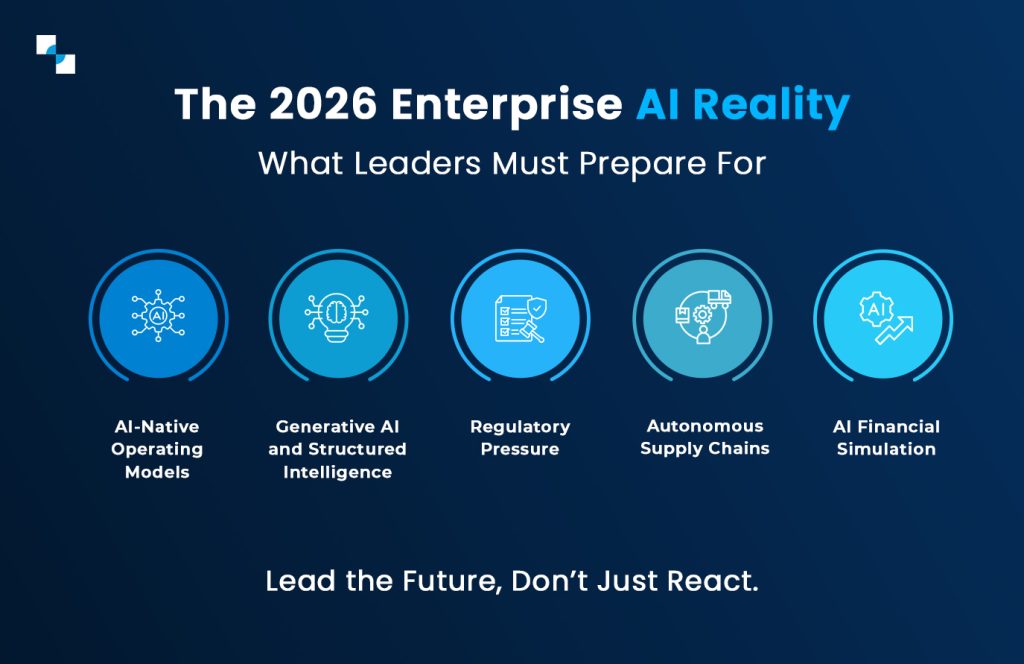
The 2026 Enterprise AI Reality: What Leaders Must Prepare For
AI transformation is accelerating. We see five dominant trends shaping global enterprises:
- AI-Native Operating Models
Organizations redesign workflows so that AI initiates decisions autonomously.
- Generative AI and Structured Intelligence
Enterprises are combining LLM capabilities with proprietary data ecosystems to create strategic decision engines.
- Regulatory Pressure Intensification
AI governance is becoming a board-level oversight priority.
- Autonomous Supply Chain Orchestration
Predictive systems manage procurement dynamically.
- AI-Driven Financial Simulation
Capital allocation is influenced by real-time scenario modeling.
A forward-looking AI Strategic Advisory partner ensures your enterprise is not reacting but leading.
Governance: The Competitive Signal Investors Watch
Scaling AI without governance creates:
- Regulatory exposure
- Ethical risk
- Brand vulnerability
- Investor skepticism
Advanced AI Consulting Services embed:
- Transparent model governance
- Ethical AI standards
- Compliance-by-design architecture
- Continuous audit mechanisms
Governance maturity is becoming a market differentiator.
AI Business Value Optimization: Driving Executive Accountability
Today’s C-suite no longer views AI as an innovation experiment; it is a performance mandate. Leadership teams increasingly demand clear financial transparency and measurable outcomes from every AI investment. They expect:
- Clearly quantified AI-driven ROI
- Direct margin impact attribution
- Risk-adjusted performance forecasting
- Measurable workforce productivity gains
Structured AI business value optimization transforms artificial intelligence into a board-level performance engine. It embeds AI metrics into financial reporting, strategic planning, and capital allocation decisions; shifting the conversation from technology spending to measurable enterprise performance and sustainable value creation.
Solving Enterprise-Level Challenges Through AI Strategy Consulting for Enterprises
Enterprise leaders do not struggle with ambition; they struggle with clarity, alignment, and execution discipline. That is where structured AI strategy consulting for enterprises becomes decisive.
We consistently address board-level concerns such as:
“Our AI investments lack measurable impact.”
We deploy structured AI value engineering services that connect every AI initiative directly to financial reporting, EBITDA contribution, and capital efficiency metrics.
“AI initiatives are fragmented across departments.”
We architect centralized enterprise AI strategy governance models that unify data, models, and accountability under a single transformation framework.
“We don’t know which AI initiatives deserve priority.”
Through disciplined sequencing led by an expert AI roadmap development Company, we identify high-leverage opportunities and phase investments for maximum compounded return.
“Regulatory uncertainty is increasing our exposure.”
We embed compliance-by-design architecture through advanced AI Strategic Advisory, ensuring governance maturity scales alongside innovation.
“We lack senior AI leadership internally.”
We provide executive-level AI strategy consulting for enterprises, equipping leadership teams with the frameworks, metrics, and oversight necessary to drive enterprise-wide transformation.
This is not technical assistance. This is enterprise reinvention through structured intelligence.
Why Strategic Timing Determines Market Leadership
AI advantage compounds over time. It behaves like a strategic flywheel; the earlier it is structured correctly, the faster it accelerates. When disciplined AI strategy and consulting services are deployed early:
- Data ecosystems mature faster and become proprietary assets
- Intelligence layers deepen with every operational cycle
- Decision velocity increases across the enterprise
- Competitive defensibility strengthens through accumulated insight
Organizations that delay structured AI transformation face widening capability gaps. Delay creates a structural disadvantage. Acceleration builds category leadership.
What Differentiates Elite AI Strategy Consulting Companies
Not all AI advisory firms operate at the same strategic depth. As AI implementation becomes increasingly accessible and technology tools commoditize, the true differentiator lies in strategic architecture, financial rigor, and enterprise-level execution capability. When evaluating a premium AI strategy consulting Company, enterprises should assess whether the firm brings:
- Advanced financial engineering capability – The ability to model AI investments against EBITDA impact, capital efficiency, and long-term value creation rather than surface-level ROI projections.
- Deep governance architecture expertise – Experience embedding compliance, ethical AI standards, model transparency, and regulatory safeguards into system design from day one.
- Cross-industry transformation depth – Proven experience scaling AI across diverse sectors, understanding both operational complexity and industry-specific regulatory environments.
- Structured and repeatable AI roadmap development frameworks – A disciplined methodology for sequencing AI initiatives to maximize compounding returns while minimizing disruption.
- Demonstrable AI business value optimization outcomes – Clear evidence of measurable financial impact, not just successful deployments.
AI implementation is increasingly standardized. Strategic AI transformation built on governance, economics, and long-term competitive positioning remains rare.
The Bigger Picture
Enterprise AI transformation is not achieved through isolated pilots or experimental deployments. It requires structured orchestration across governance, capital allocation, operational design, and measurable value realization. A specialized AI strategy consulting Company provides this architecture.
Through disciplined AI strategy and consulting services, advanced AI value engineering services, and integrated AI Business Strategy Services, organizations convert AI from technological capability into strategic dominance. The next competitive era will not reward experimentation; it will reward execution at scale.
Organizations that adopt a structured AI strategy today will secure tomorrow’s market leadership. As a premier AI strategy consulting Company, Antier designs enterprise-wide AI frameworks that align intelligence with financial and operational outcomes. Our expertise ensures AI initiatives are not just deployed, but systematically converted into measurable business impact and lasting competitive advantage.
Frequently Asked Questions
01. What is the main challenge organizations face in AI adoption?
The main challenge is not technological maturity but strategic orchestration, leading to disconnected AI initiatives, undefined ROI accountability, and a lack of centralized governance.
02. How does an effective enterprise AI strategy differ from simply deploying AI tools?
An effective enterprise AI strategy redesigns the organization around intelligence, focusing on capital allocation and measurable growth rather than just implementing AI tools.
03. What role does a specialized AI strategy consulting company play in AI transformation?
A specialized AI strategy consulting company helps enterprises convert fragmented innovation into measurable performance by providing structured consulting services that align AI initiatives with corporate strategy.

Nvidia Earnings Signal Accelerating AI Infrastructure Boom

605 Small Boat Migrants Arrive in One Day

Cody Rhodes makes huge WWE botch on live television


-

 Video7 days ago
XRP News: XRP Just Entered a New Phase (Almost Nobody Noticed)
-

 Politics4 days ago
Baftas 2026: Awards Nominations, Presenters And Performers
-

 Fashion6 days ago
Weekend Open Thread: Boden – Corporette.com
-

 Sports3 days ago
Women’s college basketball rankings: Iowa reenters top 10, Auriemma makes history
-

 Politics3 days ago
Nick Reiner Enters Plea In Deaths Of Parents Rob And Michele
-

 Business2 days ago
True Citrus debuts functional drink mix collection
-

 Crypto World2 days ago
XRP price enters “dead zone” as Binance leverage hits lows
-

 Business4 days ago
Mattel’s American Girl brand turns 40, dolls enter a new era
-

 Business4 days ago
Law enforcement kills armed man seeking to enter Trump’s Mar-a-Lago resort, officials say
-

 Tech2 days ago
Unsurprisingly, Apple's board gets what it wants in 2026 shareholder meeting
-

 NewsBeat16 hours ago
Cuba says its forces have killed four on US-registered speedboat | World News
-
 NewsBeat18 hours ago
Manchester Central Mosque issues statement as it imposes new measures ‘with immediate effect’ after armed men enter
-
 NewsBeat3 days ago
‘Hourly’ method from gastroenterologist ‘helps reduce air travel bloating’
-

 Tech4 days ago
Anthropic-Backed Group Enters NY-12 AI PAC Fight
-

 NewsBeat4 days ago
Armed man killed after entering secure perimeter of Mar-a-Lago, Secret Service says
-

 Politics4 days ago
Maine has a long track record of electing moderates. Enter Graham Platner.
-
 NewsBeat2 days ago
Police latest as search for missing woman enters day nine
-

 Business12 hours ago
Discord Pushes Implementation of Global Age Checks to Second Half of 2026
-

 Crypto World2 days ago
Entering new markets without increasing payment costs
-
 Sports3 days ago
2026 NFL mock draft: WRs fly off the board in first round entering combine week