

Politics
This week proved wokeness ain’t dead yet


Rather than being dead, or in the process of dying, wokery remains very much alive. In fact, the corrosive politics of identity is in rude health.
We saw this in evidence this week with the news that the authorities refused to detain the Nottingham triple killer Valdo Calocane because they were fearful of the ‘over-representation of young black men’ in custody. We saw it in the pious and hysterical response to the Tourette’s activist who uttered the n-word at the BAFTAs. The politics of identity were openly weaponised by the Greens at the Gorton and Denton by-election, who in releasing a campaign video in Urdu, both stoked and helped to entrench sectarian divisions in this country. And it arrived with the news that rather than being a fading presence, the rule of diversity, equity and inclusion (DEI) in the workplace is a more imposing behemoth than ever.
According to a report by the Policy Exchange think tank, the human-resources industry – that chief purveyor of DEI doctrine – now costs businesses an estimated £10 billion a year, having swelled its numbers in the UK by over 80 per cent between 2011 and 2023. Arguing that measures such as diversity-hiring targets ‘reduce productivity’ and ‘create division’, Policy Exchange calls for the government to repeal the ‘positive action’ provisions in the Equality Act, which permit programmes aimed exclusively at minority groups.
The fact that DEI still wields such power in Britain, abetted and enforced by state legislation, goes against the accepted narrative. Ever since the beginning of last year, when Donald Trump opened his new presidency with an assault on DEI measures in government, many have felt confident to declare that woke is over. Yet headline after headline continues to remind us that this is not the case.
Woke is not dying because the society that spawned it has not changed sufficiently. Hyperliberalism was the fruit of a culture in which vaunting one’s compassionate politics towards the downtrodden was a surefire means to achieve higher status, a society which valorised the plight of minorities, feelings and victimhood.
Showing empathy for victims, speaking on behalf of them, or aspiring to be a victim oneself: this remains a core virtue. Whether you are seeking to ally yourself with ethnic minorities, the colonised, the Global South, women, trans people, the disabled, or the neurodiverse, the currency of victimhood is just as valuable as ever. This fundamental ethos of Western culture has scarcely changed since the 1990s, the decade when people started to notice the new prestige attached to victimhood.
Victimhood has never gone out of fashion because it’s so personally advantageous. To be a victim or to cosplay as one allows one the luxury of self-righteousness. The outrage goblins crying racism over the BAFTAs incident are little different to the guests on Kilroy back in the 1990s who used to holler: ‘How would you like it if you were raped?’ Having fortified oneself with bullet-proof sanctimoniousness, victimhood status grants the possessor the liberty to behave in whatever fashion they please, no matter how awful or unpleasant that might be.
To be a victim gives the holder of this position permission to forever talk about themselves with melodramatic self-pity. To be a victim is to be in touch with one’s feelings, to be governed by feelings and to seek to legislate through feelings – to oppose ‘hate’ and ‘hurt’, ‘fascists’ and ‘racists’. To be a victim is to be on the right side of the cosmic battle between good and evil.
That’s why DEI programmes remain, and elite ‘anti-racism’ has never been more sinister. Wokery is not going away, because being the victim allows you to get away with so much.
The fury of the London diaspora
The interminable debate as to whether London has become a hellhole may not be to everyone’s interest. But it does matter, because London is one of the most important cities in the world, and because it has undoubtedly changed in recent decades.
Whether you think the place has improved or deteriorated often depends on your politics. Those who retain a sunny perspective on its fortunes tend to be more progressive, and live in its affluent, unchanged and mostly white enclaves. Those who are inclined to see it as having become a crime-ridden and Balkanised basket case tend to lean to the right and tend to live outside of it.
This polarity broadly holds true. Yet the quarrel over London’s decline is often less one between the capital and the periphery, between left and right, and more between resentful ex-Londoners and current London residents.
The rancour directed at London these days doesn’t so much come from Yorkshire or Newcastle, from places that have never cared much for the capital anyway. It emanates from places such as Kent and Essex, from those adjacent places inhabited by millions of those who have departed the capital in the past two decades, many having upped and left owing to the now exorbitant price of living there. Their resentment at having felt pushed out of their hometown is aggravated by the huge number of outsiders who now live where they once did – either wealthy incomers from the provinces, financial types from the global elite or the unprecedented number of migrants.
To understand why they are sometimes given to exaggerate London’s downfall, or are liable to be rosy-eyed about its recent past, you have to understand where this resentment is coming from. They believe their home has been taken from them. That’s what rankles.
Why the far left is turning to violence
The brutal killing of a far-right activist in Lyon by far-left street-fighters earlier this month has sent France into a period of grim introspection. Many are now asking the question: why are ‘anti-fascists’, who purport to be the good guys, so fond of violence?
One French eco-feminist politician has an explanation. She blames the killing on a culture of ‘virility’ within the left. Writing in Libération at the weekend, Sandrine Rousseau of the French Greens called upon her country’s left to recognise and condemn the ‘white masculinity’ systemic in French politics, exhorting the left to become more feminised as a counterpose.
Blaming masculinity for a political murder is a predictably trite response for our times. But there’s a more obvious diagnosis. The far left today loves violence because those with righteousness on their side think anything is permissible, if it’s done for the right reason.
Patrick West is a columnist for spiked and author of Get Over Yourself: Nietzsche For Our Times (Societas, 2017). Contact him on X at @patrickxwest.


This article contains major spoilers for the Bridgerton season four finale.
After debuting four brand new episodes of Bridgerton earlier this week, Netflix had a surprise in store for fans with an unexpected post-credits sequence.
Those patient viewers who watched the latest season finale all the way to the end were treated to one last scene depicting the wedding between Luke Thompson and Yerin Ha’s characters, Benedict and Sophie, after their love story dominated the period drama’s latest run.
In the sequence, Benedict and Sophie’s low-key wedding day saw them surrounded by their families, both biological and chosen.
“To watch the classes comingle like that, it felt so representative of the journey that these two have been on, and it really felt like the perfect mingling of fantasy and reality,” showrunner Jess Brownell told Tudum.
But eagle-eyed viewers may also have spotted a subtle detail in Benedict’s wedding outfit that nodded to his love story.

“I wear a little pin in my necktie, and it has a tiny kite painted on it,” Luke explained, referring to a scene earlier in the season that saw his and Yerin’s characters bonding.
He enthused: “It’s an amazing costume design, in terms of their story, because it feels like it really sums them up in a way.”

While Bridgerton is now over for another year, fans can at least breathe a sigh of relief that the show has been commissioned for at least two more seasons, with Jess previously claiming she wanted to adapt all eight instalments in Julia Quinn’s Bridgerton book series.
There’s still no confirmation over which Bridgerton sibling will be the focus of season five – expected to premiere in 2028 – but signs in the finale point to either Claudia Jessie’s Eloise or Hannah Dodd’s Francesca.
All four seasons of Bridgerton are now streaming on Netflix.
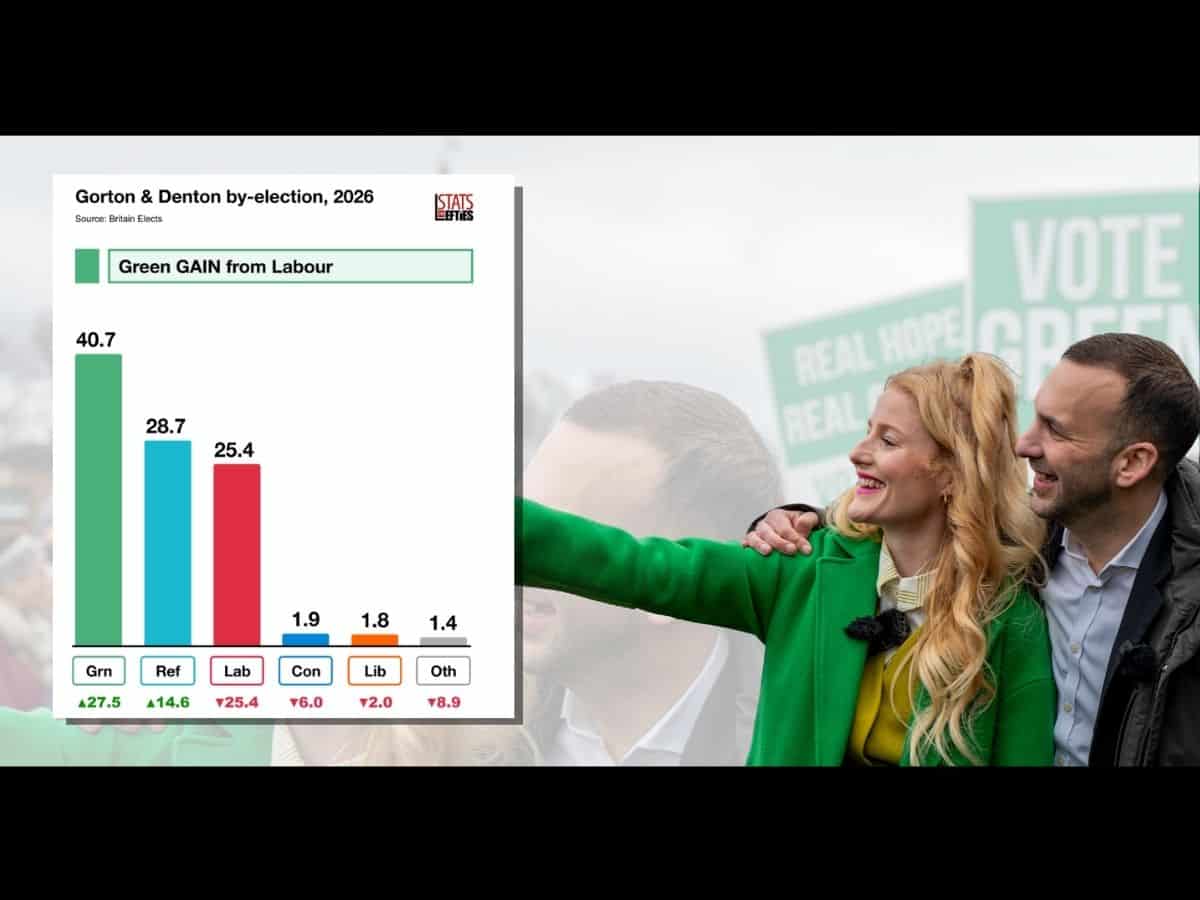
It’s no secret that we here at the Canary believed the Green Party could win in Gorton & Denton:
Labour are upset because the Greens are addressing issues actual issues that matter to voters in Gorton & Denton
Via @willem_moore_uk https://t.co/z36llAujh1
— Canary (@TheCanaryUK) February 25, 2026
While we thought they’d do well, however, we didn’t anticipate quite how well:
🚨 BREAKING: The Green Party has won the Gorton and Denton by-election from Labour
🟢 GRN: 14,980 (+10,170)
➡️ REF: 10,578 (+5,436)
🔴 LAB: 9,364 (-9,191)
🔵 CON: 706 (-2,182)
🔶 LD: 653 (-746)Changes w/ 2024
— Politics UK (@PolitlcsUK) February 27, 2026
It’s like Labour and Reform weren’t even trying.
Victorious
The above results show the number of voters in comparison to the 2024 general; the following shows the percentile change. As you can see, this is an absolutely disastrous result for Labour in what should be a stronghold:
🚨 IN FULL: The results of the Gorton and Denton by-election
🟢 Green: 14,980 (+10,170 / +211.4%)
➡️ Reform UK: 10,578 (+5,436 / +105.7%)
🔴 Labour: 9,364 (-9,191 / -49.5%)
🔵 Conservatives: 706 (-2,182 / -75.6%)
🔶 Liberal Democrats: 653 (-746 / -53.3%)
🐷 Monster Raving Loony…— Politics UK (@PolitlcsUK) February 27, 2026
40%! It wasn’t even close, completely out performed the polls. This is despite the vile smear campaigns from Reform and Labour. https://t.co/K0t8sF2FDS
— Curtis Daly (@CurtisDaly_) February 27, 2026
While ‘Gorton and Denton’ has only existed since 2024, it’s comprised of parts of constituencies which have voted Labour for decades, including Manchester Gorton, Manchester Withington, and Denton and Reddish.
Keir Starmer has ended a streak which lasted for around half a century.
Labour kept saying they were the only party which could beat Reform, but they didn’t even beat them to second place.
Labour spent the election claiming the Greens weren’t in the race.
They claimed it was Labour versus Reform.
They said that’s what their data said.
They lied. They lied through their teeth.
Never, ever, ever, ever trust what Labour say again. https://t.co/LyvkV5XWcb
— Owen Jones (@owenjonesjourno) February 27, 2026
Labour have a new problem now too.
The seal has popped.
They can cry ‘only we can win‘ as much as they like, but people know that isn’t true now, and for many that was the last reason they had to vote Labour.
Excuses
The establishment said the Green Party couldn’t win, and look what happened.
We told you what’s possible, meanwhile, and we’ll continue to do so.
Congratulations to Hannah Spencer MP and to all those who believed that something better can come.
Oh, and be ready to hold your nerve moving forwards:
Expect the press attacks on the Greens to increase by 1,000%.
— Canary (@TheCanaryUK) February 27, 2026
Featured image via Barold

Starmer on the brink as hard-Left Greens smash Labour in by-election – with Reform pushing them into third, sparking panic among MPs
“Keir Starmer was plunged deeper into crisis today after a disastrous by-election saw Labour routed by the Greens in one of its safest seats – and pushed into third place behind Reform. No10 is facing a fresh onslaught from the PM’s critics and massive pressure to lurch further Left following the worst possible result in Gorton & Denton. The Greens had never won a Parliamentary by-election – or a seat in the North – but Hannah Spencer romped home with a 4,400 majority. Jubilant leader Zack Polanski said it showed his party is on track to get 100 MPs at the general election. Despite flooding the area with ministers and 1,000 activists, Labour did not even have the consolation of second place with its candidate trailing in behind Reform’s Matt Goodwin. Nigel Farage complained of ‘cheating’ and Muslim ‘sectarianism’ after reports of so-called ‘family voting’ from independent observers – an illegal practice where people are escorted to polling booths. Downing Street is hoping Sir Keir can front up the catastrophic outcome by appearing in front of cameras later. Allies insisted he will survive at least until local elections in May, because rebels ‘don’t have anyone’ in a position to challenge. But there are already furious recriminations going on, after the premier blocked popular Manchester mayor Andy Burnham from being the candidate amid fears he would be a leadership rival in the Commons. Backbencher Karl Turner said it was the ‘worst result we could have expected’, insisting Mr Burnham would have won and calling for a more ‘socialist’ Labour. Brian Leishman said Sir Keir should ‘do the right thing… and go’.” – Daily Mail
- Farage: By-election was ‘a victory for sectarian voting and cheating’ – Daily Telegraph
- Pressure mounts on desperate Keir as Greens win by-election in ‘worst result ever’ with Labour slumping to third – The Sun
- Greens Sweep To Historic Victory In Gorton And Denton By-Election – PoliticsHome
- Labour calls on officials to examine ‘very concerning’ reports of illegal voting in crucial Gorton and Denton by-election – The Independent
- Sir John Curtice says Tories have hit a new low with ‘worst ever’ result – GBNews
Comment:
- This Green win should strike fear into the heart of the Right – Annabel Denham, Daily Telegraph
- Gorton & Denton shows there’s no safe seats left for Keir Starmer – Patrick Maguire, The Times
- Green leader’s communism-on-ketamine policies would destroy UK – but here’s why I’m glad they won Gorton by-election – Julia Hartley-Brewer, The Sun
- Electoral fraud may have won the Greens a by-election, and it’s just the start – Paul Goodman, Daily Telegraph
> Today:
Mystery as Mandelson messages go missing
“The lobbying company founded by Lord Mandelson discovered during an internal investigation that a “significant” tranche of his business emails was missing. Global Counsel conducted an internal audit of Mandelson’s company emails after the government agreed this month to release tens of thousands of messages relating to his time as the British ambassador to the US. The company was concerned about what would be published about its own business interests under the mass disclosure, and conducted the audit as part of a due diligence process. The investigation was still going on when the company went into administration last week but an initial report said that significant numbers of emails were missing from Mandelson’s account. The company does not know how the emails came to be missing. The emails that have been kept include a series of exchanges with senior officials and ministers in government, relating directly to Mandelson’s appointment as ambassador. They are said to include messages to David Lammy, then the foreign secretary, and Morgan McSweeney, then Sir Keir Starmer’s chief of staff. The overall cache of emails, which dates back nearly a decade, includes 1.4 million messages. Mandelson did not respond to requests for comment but it is known that he stopped being able to access his Global Counsel email address in February 2025, when he formally took up his role as ambassador.” – The Times
- No 10 cannot block release of Mandelson documents, officials say – ITV News
- ‘No veto’ for Starmer over release of Mandelson files in Epstein scandal, says intelligence watchdog – The Standard
- Mandelson faces EU inquiry into Brussels trade role over Epstein links – The Guardian
- Mandelson could lose EU pension in Epstein investigation – Daily Telegraph
- How Lindsay Hoyle’s lavish trip to the Caribbean led to Lord Mandelson ‘flight risk’ arrest – The Standard
Comment:
Assisted dying bill on brink of collapse after Lords ‘sabotage’
“The assisted dying bill is on the verge of collapse, forcing campaigners to hatch a plot to revive it. The Terminally Ill Adults Bill is stalled in the House of Lords and widely expected not to become law. Dame Esther Rantzen, a high-profile supporter of the plan, accused the Lords on Thursday of “blatant sabotage” to try to collapse the bill. Now The Telegraph can reveal that, if the law collapses before the summer, around 50 pro-assisted-dying MPs will attempt to force it into law by all putting their names forward for private member’s bills… Putting forward dozens of private member’s bills on the same topic will increase the chances that one on assisted dying will be chosen in the ballot and MPs will be forced to debate it again. If they succeed and a bill on assisted dying is passed identical to the one that went through the Commons last year, MPs will be able to use the Parliament Act to circumvent the House of Lords and ensure it becomes law. In a historic vote last year, MPs voted to allow terminally ill adults with less than six months to live to seek medical assistance to end their lives. Legalising assisted dying in England and Wales has been one of the most controversial issues of this Parliament, with emotive debates from MPs on both sides in the House of Commons. The legislation has since become stuck in the House of Lords, after peers tabled more than a thousand amendments to the bill. There are just six weeks left to pass the legislation and mounting anger among MPs who voted to legalise assisted dying.” – Daily Telegraph
- Controversial assisted dying legislation set to fail as peers accused of delaying tactics – The Sun
- Esther Rantzen blames ‘religious lobbyists’ as assisted dying bill falters – The Times
- Assisted Dying bill almost certain to fail due to lack of debate time – LBC News
- Why have efforts to bring in assisted dying law been thwarted? – The Guardian
Comment:
- The assisted suicide bill was doomed by its supporters’ arrogance – Toby Young, Daily Telegraph
- The defective assisted dying bill deserved to be put out of its misery – The Times View
News in brief:
- Is the Tory Boy dying out? – Becky Paton, The Critic
- Met’s Lindsay Hoyle blunder makes it unfit to investigate Mandelson – Dominic Adler, UnHerd
- Andy Burnham could have won Gorton and Denton – Neal Lawson, The New Statesman
- When did Ofcom become the world’s morality police? – Andrew Tettenborn, CapX
- Green by-election triumph is a sign of things to come – James Heale, The Spectator


7 min read
A security check on a fleet of new electric buses in Oslo late last year uncovered features that caused international alarm.
The 300 Yutong buses were sending data back to its manufacturers in China. The company insisted this flow was necessary to “optimise” their performance.
But Norway’s transport authorities moved to prevent access to data being sent to China. They also said they had mitigated any possibility of a ‘kill switch’ that could be activated by the manufacturer crippling the fleet from afar.
The incident brought into sharp relief the challenges the Chinese-dominated market in electric vehicles are posing western policymakers – made all the more acute with the advent of self-driving cars.
China dominates the global EV market, with its home-grown company BYD overtaking Tesla as the world’s largest electric carmaker last year. Amid reports that Chinese self-driving taxis could be trialled in the UK as soon as this year, MPs and peers from across the political spectrum are urging caution.
The BBC reported in December that Uber and Lyft had unveiled partnerships with Chinese tech giant Baidu to pilot these taxis in London, which Transport Secretary Heidi Alexander called a “vote of confidence in our plans for self-driving vehicles”.
But Alex Sobel, Labour MP for Leeds Central and Headingley, tells The House he is worried these partnerships – and others with Chinese firms – could open the door to major data vulnerabilities. Under Chinese law, companies operating within its national borders are required to hand over any data requested by the authorities in Beijing.
“I am concerned that people’s personal information potentially can be shared with the Chinese state and used for a variety of purposes, if you are particularly concerned for certain communities – for instance, from Hong Kong, from Tibet, Uyghurs, or Chinese who have a dissenting view from the Chinese government,” Sobel says.
Chinese activists defying their government don’t only face persecution at home. Beijing conducts an extensive campaign of transnational repression against dissidents and critics – such as posting bounties against high-profile Hong Kong democracy campaigners who fled to safety in the West.
“Transnational repression is becoming increasingly sophisticated,” Sobel says. “And I’m not just saying that about China or other countries as well, but other countries don’t have as much reach and penetration to the UK as China.”
Sobel adds that while he believes there should be a kill switch in any AI-powered devices as a failsafe mechanism, such switches should be in control of the country’s government in which the technology is operating.
“If the Chinese state decided, for whatever reason, they want to act in a hostile way towards the UK and kill all of these off at a point in time when there’s a deep penetration in the UK, obviously that would have a massive effect.”
North Durham Labour MP Luke Akehurst is another with concerns. He posed a written question to the Transport Secretary in January, asking her to assess the risk “that electric buses operating in the UK could be remotely rendered inoperable via their internet-connected systems by hostile state actors”.
Dr Alessandro Arduino, an affiliate lecturer at King’s College London, tells The House that robo-taxis and other self-driving vehicles offer a “revealing case study” in how new technology can sit on a fine line between fresh innovation and national security dangers.
He notes that these cars generate reams of data as they drive – from location information to citizen movement and urban layout. “Such data is invaluable not only for training artificial intelligence systems but also for forecasting and strategic analysis,” he says. “China’s own policy framework is explicit in treating data and AI as matters of state sovereignty and national security, and I do believe that context matters.”
Such a dramatic threat as a kill switch would not be the first order concern, he adds, saying that the most urgent consideration is whether operating companies can keep their data secure from malicious actors.
A Transport for London (TfL) spokesperson says: “Safety is our top priority, and we are interested in learning more about technologies that could potentially help deliver safety benefits for all road users.
“TfL recognises the challenge of legislating in response to changes in automated vehicle technology in a timely manner to ensure benefits are delivered and risks are mitigated.”
It is not the first time the use of Chinese tech in Britain’s infrastructure has faced fierce opposition over national security fears. In 2020, the government halted the use of Huawei equipment in Britain’s 5G network and ordered that existing tech be removed by the end of 2027.
But it comes at a time when Downing Street is seeking a reset in relations with China after a frosty few years. In January, the controversial Chinese new ‘mega-embassy’ in London was granted planning permission – despite repeated concerns over its proximity to crucial fibre-optic cables and potential for heightened espionage.
Keir Starmer has also now become the first British prime minister to visit Beijing in eight years, travelling along with a cohort of business leaders in a drive to reap the vaunted benefits of dealing with the world’s second-largest economy.
The Prime Minister’s visit saw the announcement of plans to allow British citizens visa-free travel to China and the lifting of sanctions on MPs who had blasted Beijing’s repression of Uyghur Muslims.
Former Conservative leader Iain Duncan Smith MP, a persistent China ‘hawk’, says he would like to see a pilot of self-driving taxis in the UK blocked if it uses Chinese technology. “They all basically data-harvest those who use them. It goes all the way down the line.”
Chinese companies such as Baidu have also long been criticised for their role in online censorship in the country, where the government maintains fiercely tight control over the information space.
Sam Goodman of China Strategic Risks Institute tells The House: “Given the integral role Baidu plays in internet censorship in China, and its legal requirement to share users’ data with China’s Ministry of State Security, it is hard to see how it can be trusted with the data security and personal safety of the British public.”
As AI technology, including that used in self-driving vehicles, continues to advance at breakneck pace, governments across the world have been left scrambling to find a policy answer on how best to regulate the sector and mitigate its risks without suffocating innovation.
Professor James Davenport of the University of Bath tells The House that lawmakers face grappling with both the novelty and broad range of AI technologies as they figure out effective regulation. “For example,” he explains, “the EU AI Act will impose the same requirements on self-driving taxis as on chatbots offering psychiatric advice. The alternative would be an enormous mass of detailed legislation and incredible turf wars.”
Liberal Democrat MP Wera Hobhouse, who was refused entry to Hong Kong last year, says the proposed pilot “fits a worrying pattern of the government growing far too cosy with Beijing”. Hobhouse is among the voices who believe the pilot should not go ahead until the government can categorically prove there would be no risk posed to national security or public safety.
She tells The House: “From approving a Chinese super-embassy in London to pushing ahead with closer economic ties despite repeated security warnings, the government are sending the wrong signal: that trade is being prioritised over security, human rights and the safety of those who have fled repression to build new lives in the UK.”
A government spokesperson tells The House: “Safety is central to our plans for automated-vehicle pilots. All proposed deployments will be subjected to rigorous safety and cyber-security assessments.”
Baidu did not respond to a request for comment. It has previously denied allegations of links to the Chinese state and military. An Uber spokesperson said: “No matter which country an AV partner is from, we only work with them if they can both meet Uber’s own high standards and fully comply with all applicable laws on safety, security, and privacy.” Lyft did not reply to requests for comment.

Brit Awards organisers have announced plans to honour Ozzy Osbourne’s legacy at this year’s ceremony.
On Thursday evening, it was revealed that the awards show will end with a star-studded musical tribute to the Prince Of Darkness, who died in July at the age of 76.
As well as Ozzy posthumously receiving the Lifetime Achievement Award on Saturday night, the show will also conclude with a rendition of his track No More Tears, curated by his wife Sharon Osbourne.
Robbie Williams will lend his voice to the performance, which will also feature several musicians who worked with Ozzy over the years, including Adam Wakeman, Robert Trujillo, Tommy Clufetos and Zakk Wylde.

Ozzy and Sharon previously hosted the Brit Awards back in 2008, alongside their two youngest children, Kelly and Jack Osbourne.
Brit Awards committee chair Stacey Tang said: “Ozzy Osbourne has been a mighty force in modern music. Possessing an unmistakable voice and unique presence, he reshaped the sound and spirit of rock, inspiring generations of artists who followed.
“This Lifetime Achievement Award recognises a remarkable legacy built on originality and enduring influence, that continues to connect with fans worldwide.”
This year’s Brits will also feature performances from British stars like Harry Styles, Raye, Olivia Dean and Wolf Alice, as well as international talent including Rosalía, Alex Warren and Sombr.
Ejae, Audrey Nuna and Rei Ami – better known as the singing voices of KPop Demon Hunters’ Huntr/x – have also pre-recorded a performance as part of the night’s proceedings, with Mark Ronson set to perform a medley to celebrate his Outstanding Contribution win.
Olivia Dean and Lola Young are going into this year’s Brits with the most nominations, with Jacob Alon already unveiled as the latest recipient of the Critics’ Choice Award and PinkPantheress making pop history with her Producer Of The Year win.
Noel Gallagher is also set to be honoured with the Songwriter Of The Year title in a controversial move given he’s not actually released any new music in the last 12 months.
The 2026 Brit Awards will air live on Saturday 28 February at 8.15pm on ITV1.
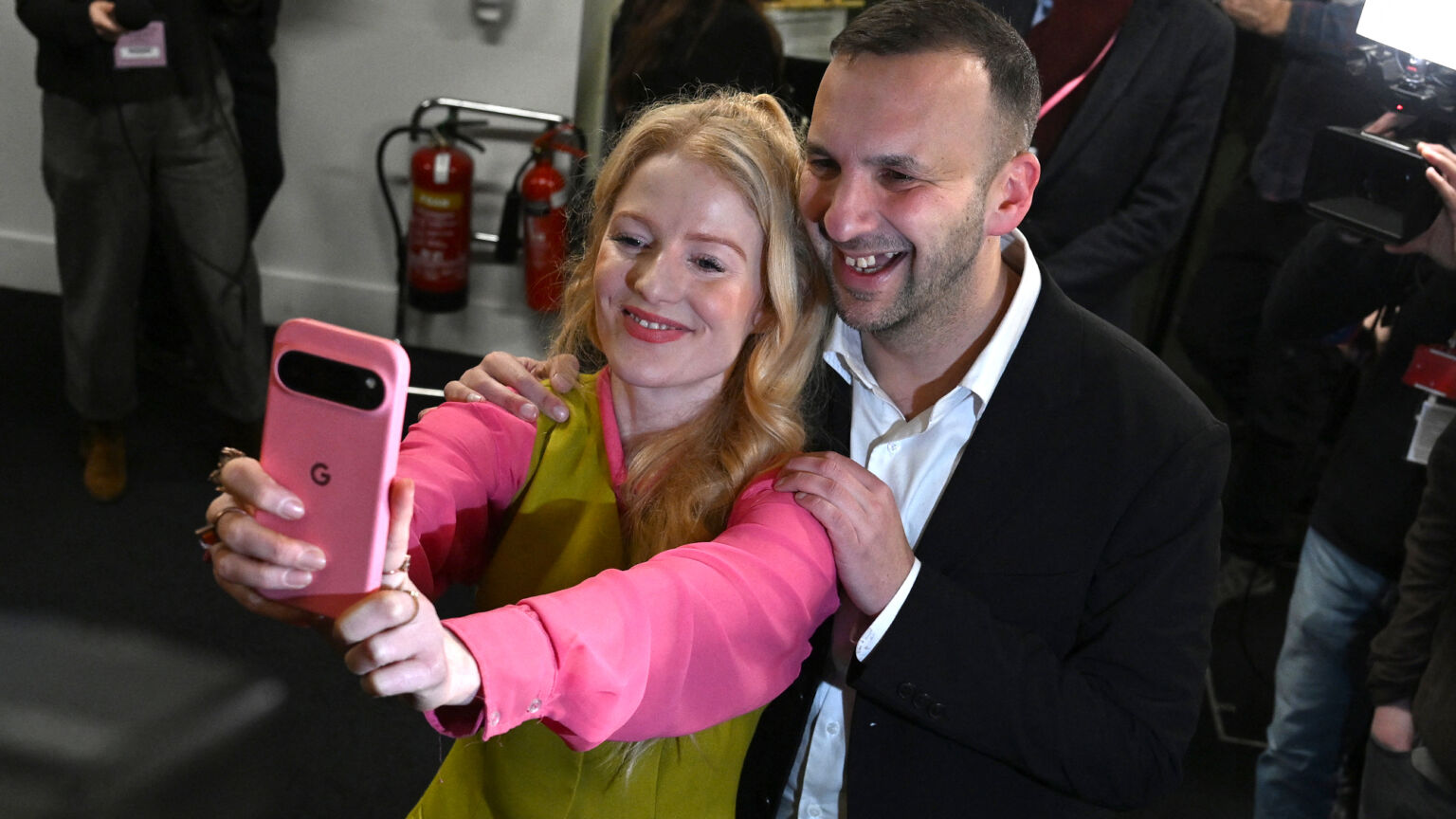
So the race everyone said was too close to call wasn’t so close after all. The Green Party’s Hannah Spencer has won the Gorton and Denton by-election with 14,980 votes, nearly 41 per cent of all those cast in the Greater Manchester seat. Meanwhile, Reform UK has pushed a flailing Labour Party into third place, taking 10,578 votes to Labour’s 9,364. That noise you can hear in the background is blood vessels bursting in Downing Street.
This was Labour’s race to lose, and it has done so spectacularly. Keir Starmer’s reverse-midas touch has proven even more formidable than anyone dared think. This race began with the prime minister blocking popular Manchester mayor Andy Burnham from standing, to avoid giving his rival a place in Westminster, leaving Manchester councillor Angeliki Stogia holding the bag. It has finished with a 26.4 per cent swing from Labour to Greens. The Zack Polanski clown car is now officially the go-to vehicle for disaffected ‘progressive’ revolt.
If Labour can be humiliated here, it can be humiliated anywhere. At the General Election just 19 months ago, Labour won more than 50 per cent of the vote in the constituency. Gorton and Denton was its 38th safest seat. It had held it for generations. Now it has become a neat demonstration of this Labour Party’s ability to haemorrhage votes in all directions. Graduates and Muslims seem to have broken to the Greens, while white working-class voters plumped more for Reform. Once-coveted voter blocs are abandoning Starmer left and right. The Labour coalition has disintegrated.
This is a stunning win for the Greens. No one can take that away from them. But the manner in which they won bodes ill not just for Labour, but for our fractious nation, too. Spencer effectively rode Britain’s crisis of integration to victory – campaigning on Gaza, TikToking in Urdu and leaning into the Islamic sectarianism that has metastasised since October 7. It proved a potent combination in the inner-city wards, where as much as 40 per cent of residents are Muslim. Rather than appeal to voters on the basis of shared interests and a shared civic identity, the Greens didn’t even assume their voters spoke the same language. The Muslim Vote group endorsed them. George ‘Gaza’ Galloway stood down his Workers Party to give the Greens a clear run. In the future, we can expect more and more elections to come down to this depressing demographic headcount.
The Green Party has been shameless in ginning up anti-Israel grievances, even before Polanski hypnotised the membership. At the last election, 20 of its candidates were exposed in the press over their pondscum Israelophobia. One of them praised a ‘pro-Palestine’ march that disrupted a Holocaust remembrance march… at Auschwitz. Naturally, he was also the party’s diversity coordinator. Mothin Ali, the Greens’ new co-deputy leader, fond of chanting ‘Allahu Akbar’, posted a video on 8 October 2023, the day after Hamas’s pogrom in southern Israel, saying ‘Palestinians have the right to resist occupying forces’. The Greens are now Britain’s preeminent Islamo-left party, the party of choice for those who think Labour isn’t Jew-baity enough.
But in this the Greens are only screaming out loud what was previously whispered. Labour has long practised this kind of pork-barrel identity politics, quietly pushing leaflets through doors appealing to minority voters off the back of faraway conflicts and intra-ethnic tensions. (The Tories’ hands haven’t been totally clean on this front, either.) Now Labour has been bitten by its own divisive, multicultural politicking – first by the ‘Gaza independents’ in 2024, now by the Polanski-ites.
For all the talk of Reform UK creating ‘division’, candidate Matt Goodwin’s mildly controversial comments about Britishness pale into insignificance when set against the Greens’ unabashed grievance politics. While everyone knew Reform’s best hopes lay in the white working-class Denton end of the seat, Goodwin ran on putting all of Gorton and Denton first, telling me in an interview for spiked last week he could peel off at least some voters in the more multiracial, inner-city Gorton. While this campaign has proven to be a tough lesson in expectation management, Reform’s second-place finish still puts down a significant marker, in a place that should never really have been in play for it. (Reform-friendly Denton makes up just a third of the seat.) Still, in my brief time there I detected something of an enthusiasm gap, between Reform-curious voters tempted to give Goodwin a go and Reform-deranged voters desperate to keep the supposed ‘far right’ out.
Gorton and Denton is hardly a typical constituency – an L-shaped seat, created in 2024, linking wildly different groups and areas together. But in its way, the campaign has been a grim little microcosm of Balkanised Britain. Demographics pitted against one another. A fractious, multiparty politics to fit our fraying, multicultural age. We desperately need to put the pieces back together again.
Tom Slater is editor of spiked. Follow him on X: @Tom_Slater_.
Pink has dismissed claims that she and her husband Carey Hart have split for a second time.
On Thursday night, People magazine claimed that the couple had called it quits after 20 years of marriage.
Responding in a video shared to her Instagram, the Get The Party Started singer said: “I was just alerted to the fact that I’m separating from my husband. I didn’t know! Thank you, People magazine. Thank you, Us Weekly. Thank you for letting me know.
“I was wondering, would you also like to tell our children? My 14-year-old and nine-year-old are also unaware. Or, do you want to talk about some real news?”
She continued: “Do you want to talk about the Epstein files? Do you want to talk about systemic racism? Or misogyny in sports? Or how classy the women’s hockey team is? Or how eight of the 12 medals won in the Olympics this year for the US were won by women?
“Or do you maybe want to talk about the fact that I got nominated the first year I was eligible for the Rock And Roll motherfucking Hall Of Fame? Do you want to talk about my accomplishments? Or do you only want to talk about my supposed demise?”
She finally branded the reports “fake news” (conceding that she “fucking hates that term”), before concluding: “I love you all. Go with God. And trash news, you can do better.”
Pink captioned her post: “Like I always say, if you don’t hear it from me, don’t believe the hype. Stay tuned though! Who knows what could happen next!?!”
The Grammy-winning singer-songwriter has been married to motocross racer Carey Hart since 2006, with whom she shares a son and daughter, Willow and Jameson.
In 2008, the two announced their separation, which inspired much of the material on Pink’s fifth album Funhouse including the number one single So What, before eventually reconciling.

We hope you love the products we recommend! All of them were independently selected by our editors. Just so you know, HuffPost UK may collect a share of sales or other compensation from the links on this page if you decide to shop from them. Oh, and FYI – prices are accurate and items in stock as of time of publication.
It’s been a long, grey, wet old winter, but thankfully it’s nearly over.
The sun has already started to peek out from behind the clouds in a meaningful way, which suddenly makes me feel like I’ve actually never had any problems in my entire life.
It’s the perfect time for a joyful spring refresh in your home. So, whether you’re in the mood to drag your bedroom into the new season after what feels like years of grim darkness, or you just want to brighten things up in your safe haven, here are some of the very best boudoir buys to bring the joy back.
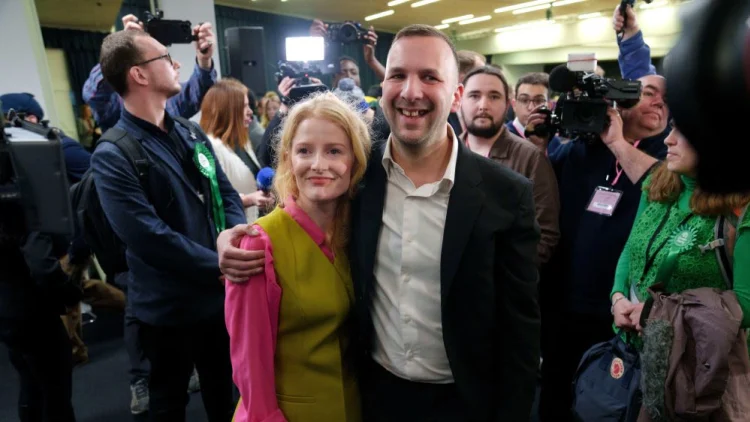
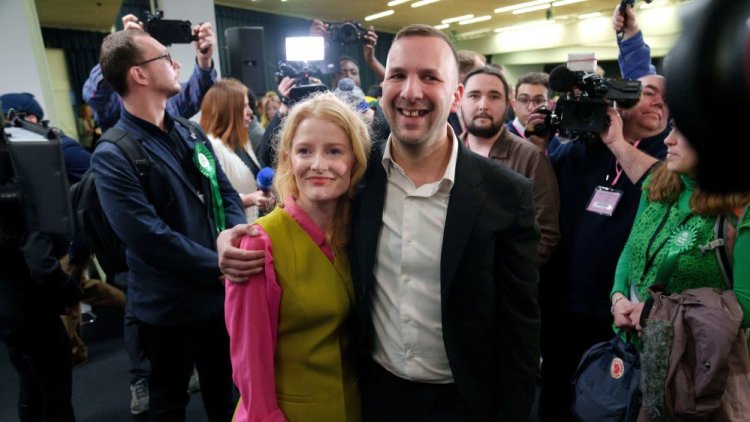
Zack Polanski’s party achieved a seismic victory in Gorton and Denton (Alamy)
3 min read
The Green Party has achieved a seismic victory in the Gorton and Denton by-election, with the Labour Party pushed into third place.
Green Party candidate Hannah Spencer received 14,980 votes, equivalent to 40 per cent of the vote.
Reform UK’s Matt Goodwin came second, receiving 10,578 votes (28 per cent), while Labour’s Angeliki Stogia received just 9,364 votes (25 per cent).
The result is a major blow to Keir Starmer, with Labour having held the Greater Manchester seat for more than a century and returned a 13,000 majority just 18 months ago in the 2024 general election, winning 50 per cent of the vote.
The Prime Minister’s leadership is likely to come under renewed pressure as a result.
It could also be a sign of things to come for the government in May when elections are held in Wales, Scotland and at councils across England.
For the Greens, it is a stunning outcome, with Zack Polanski’s party growing its vote share in Gorton and Denton by nearly 28 per cent.
The contest was triggered when Andrew Gwynne resigned as Labour MP for Gorton and Denton in January on health grounds.
Speaking in the early hours of Friday morning, the Green Party’s Spencer said: “There is an appetite here for change, and there are people across this constituency and much further beyond who are rejecting the old political parties and who are coming together to fight for something better, but who are doing it positively and in a really hopeful way.”
Spencer, who is a plumber and leads the Greens on Trafford Council, said the results “have shown that we don’t have to accept being turned against each other. We can demand better without hating each other”.
The result, the Greens’ first by-election victory, means that the party now has five MPs in Westminster.
It also further demonstrates the threat posed to Labour’s left flank by Polanski’s party. The Greens have surged in national opinion polls since the London Assembly Mayor became leader in September.
Polanski said that the result showed that “voting Green is the way to defeat Reform”.
“If we see a swing like this at the next general election, there will be a tidal wave of new Green MPs,” he added.
While Greater Manchester Mayor Andy Burnham had hoped to stand for Labour in the seat and return to Westminster as an MP, he was blocked from running by senior Labour figures.
Despite the move, PoliticsHome reported earlier this month that Labour was relying on the mayor to help hold the seat.
Politics
Mike Salem: Parliament passes complex new laws – leaving councils with the burden of implementing them locally

Mike Salem is a UK Country Associate for the Consumer Choice Center (CCC), focusing on economy, technology, and lifestyle.
Running up to the local elections, many candidates will promise to tackle local issues, while incumbents highlight their ability to maintain services despite rising demand and shrinking budgets. But an often overlooked problem lies deeper: the fundamental disconnect between local and national governments.
When Westminster legislates, it considers political priorities, manifesto pledges, and often Whitehall-centric perspectives. Take the Tobacco and Vapes Bill, currently in its Report Stage in the Lords. The Bill aims to ban cigarette (as well as a nicotine alternative, heated tobacco) sales to anyone born from 2009 and place heavy restrictions on vaping and other nicotine alternatives, such as flavours of vapes and nicotine pouches. While the intention may be public health, the real-world consequences on local authorities are significant.
Existing UK tobacco policy already makes smoking extremely expensive. A legal pack of cigarettes costs on average £16.60, compared with around £6.60 in much of Europe, a £10 difference. This is largely due to the UK’s tobacco duty “escalator,” which rises each year by inflation (RPI) plus an extra percentage point. Tobacco duty accounts for roughly 80 per cent of a pack’s retail price.
Bans like the 10-pack restriction under the European Tobacco Product Directive in 2016 pushed consumers to buy 20-packs instead. The unintended consequence? Illegal cigarette sales skyrocketed. Enforcement bodies and trading standards report that most UK residents live within minutes of illicit tobacco sources. Between 2021 and 2024, legal cigarette sales fell by 45.5 per cent, increasing pressure on locally funded Trading Standards services.
The proposed generational ban will only add to this burden, extending enforcement responsibilities to adults who previously could purchase legally.
The disposable vape ban, which came into effect on June 1st last year, provides a similar example. Many retailers continued selling existing stock at discounted rates rather than discarding it. Some were unaware of the ban entirely. The definition of “reusable” vapes was circumvented, allowing stronger battery devices to be sold at disposable prices, ironically creating more environmental harm than before.
Trading Standards officers have had to navigate this complex new regime, spending valuable time training staff and interpreting the legislation. Further restrictions on vape flavours, display, packaging, promotion, and other nicotine products such as heated tobacco and nicotine pouches will add more enforcement responsibilities, all without corresponding increases in local resources.
These examples illustrate how central government legislation puts immense pressure on local authorities. High streets are dying because legal options become expensive, illegal markets flourish, and small businesses struggle to survive. When illegal markets thrive, it also leads to increased criminal activities, with more dangerous streets which will now require more policy, and the cycle of financial doom multiplies. Business rates, set by central government, have been rising, yet councils only retain 50 per cent of the revenue in England, despite being its collectors. Local councils end up enforcing policies and collecting taxes while bearing the operational costs.
As you consider your vote in the forthcoming local elections, think about which councillors will stand up for your community and advocate for local authority interests in the face of overwhelming central legislation. Central government may legislate extensively, but it is local councils that bear the consequences. Ensuring they are equipped and supported is essential for healthy high streets, functional enforcement services, and practical local governance.
A prospective councillor who might promise you more from Westminster will end up hurting your pockets.
How to change State Pension from four-weekly to weekly payments

At Close of Business podcast February 27 2026

MARA Bitcoin miner posts $1.7B quarterly loss as BTC slumps


-

 Politics5 days ago
Baftas 2026: Awards Nominations, Presenters And Performers
-

 Fashion7 days ago
Weekend Open Thread: Boden – Corporette.com
-

 Sports4 days ago
Women’s college basketball rankings: Iowa reenters top 10, Auriemma makes history
-

 Politics4 days ago
Nick Reiner Enters Plea In Deaths Of Parents Rob And Michele
-

 Business3 days ago
True Citrus debuts functional drink mix collection
-

 Politics9 hours ago
ITV enters Gaza with IDF amid ongoing genocide
-

 Crypto World3 days ago
XRP price enters “dead zone” as Binance leverage hits lows
-

 Business5 days ago
Mattel’s American Girl brand turns 40, dolls enter a new era
-

 Business5 days ago
Law enforcement kills armed man seeking to enter Trump’s Mar-a-Lago resort, officials say
-

 Tech3 days ago
Unsurprisingly, Apple's board gets what it wants in 2026 shareholder meeting
-
 NewsBeat1 day ago
Manchester Central Mosque issues statement as it imposes new measures ‘with immediate effect’ after armed men enter
-

 NewsBeat1 day ago
Cuba says its forces have killed four on US-registered speedboat | World News
-
 NewsBeat4 days ago
‘Hourly’ method from gastroenterologist ‘helps reduce air travel bloating’
-

 Tech5 days ago
Anthropic-Backed Group Enters NY-12 AI PAC Fight
-

 NewsBeat5 days ago
Armed man killed after entering secure perimeter of Mar-a-Lago, Secret Service says
-

 Politics5 days ago
Maine has a long track record of electing moderates. Enter Graham Platner.
-
 NewsBeat2 days ago
Police latest as search for missing woman enters day nine
-

 Business1 day ago
Discord Pushes Implementation of Global Age Checks to Second Half of 2026
-

 Crypto World2 days ago
Entering new markets without increasing payment costs
-

 Business13 hours ago
Only 4% of women globally reside in countries that offer almost complete legal equality