

Politics
Why the Gorton * Denton By-Election Result Matters

Some by-elections are remembered for decades – think Oxford 1938 – Orpington 1962, Glasgow Hillhead 1981 – and others fade into obscurity almost as soon as the result is declared.
Watching Labour representatives on the media this morning try to dismiss this as a normal result and just a case of mid-term blues has been part hilarious and part tragic. They just don’t get it. The political sands are shifting.
One by-election doesn’t necessarily signify a major change, but this one does have some major consequences. It may not signal anything new, but it does reflect some existing trends, and those are trends that Labour would be well to think about quite deeply. The trouble is, the prime minister shows no sign of doing so. His interview with Sam Coates on Sky News was the same old Airport. He just trotted out the same old lines. It seemed that he was angry with voters for failing to recognise his own brilliance. Not a good look. It was just like PMQs. He failed to engage with any question asked of him and instead just trotted out the same, tired, pre-prepared mantras which anyone watching can see through. Labour MPs will have watched this interview from behind their sofas.
So why is the result of this by-election important, and why may future electoral historians look back on it as a by-election of some consequence? Firstly, as Ben Riley-Smith has pointed out, this is the first by-election modern history where neither the Labour Party nor the Conservative Party has featured in the top two. It is further evidence that not only two party politics is at an end, but we are entering a period where we have to factor in five parties, or six in Wales and Scotland. This fact will be further reenforced in May’s elections. And if Your Party were to ever get its act together, we could be looking at six or seven party politics. This is a political game-changer, if only because it renders traditional political polling and constituency predictions almost irrelevant in our first past the post electoral system.
The Greens had never polled above ten per cent in any UK by- election. In Gorton and Denton they scored more than 40 per cent. There are several factors that explain this. They ran a superb campaign, they managed to tap into sectarian politics in a way that Labour, and to an extent, the LibDems have done in some areas in the past. The video they did in Urdu was shameful, but hugely effective. When Zack Polanski was running for the leadership of The Greens he told me he wanted to be the populist left wing equivalent of Nigel Farage, and that has dominated his strategy since he was elected in September. And boy has it worked. Just as Reform and Nigel Farage proved to the nemesis of the Conservative Party, Polanski and the Greens may well emulate that role and do the same for Labour.
Another factor in the Green victory was their candidate Hannah Spencer. Bright, breezy, human, real, she was a dream candidate for a by-election. She batted off all attacks as if she were made of Teflon and proved to made of stern stuff. Labour’s candidate, Angeliki Stogia, was not a bad candidate, but she was always on a hiding to nothing. She exuded optimism and displayed a good sense of humour, and wasn’t hidden away from the media like most Labour by-election candidates usually are. She didn’t put a drag on the Labour campaign – that was the role of the national party. Labour tried to make it a Labour versus Reform fight, but failed. It never was.
Reform’s candidate Matthew Goodwin, or “Matt” as he now likes to bill himself, was a perfect example of how a candidate can put a drag on a campaign. I remember being bemused by his selection, given he has never knowingly smiled on camera or given any sign of having a sense of humour. He is the political equivalent of a Vulcan. Dr Spock would have voted for him, but he proved alien to the ordinary folk of Gorton & Denton. In short, he failed to connect.
This is the second by-election in a row where Reform have flattered to deceive. In Caerphilly, they expected to win and then came a poor second to Plaid Cymru. In Gorton & Denton, in what was billed as too close to call, they polled twelve points behind Labour. Admittedly their 28.7 per cent vote share was 15 points up on the general election, but it does add fuel to the theory that they have a ceiling of 30 per cent in an average constituency.
Both the Conservatives and the Liberal Democrats lost their deposits, scoring only 1.9 and 1.8 per cent respectively. Each party decided to sit this one out, so they were never likely to do very well, but even so, it’s an embarrassing performance, especially for the Conservatives, given it was their worst by-election performance in history. The LibDems have sometimes done well in by-elections in seats like this but they seem to have made a decision to cede the protest vote part of the electorate to Reform and the Greens. This may prove to be a strategic mistake in the long term.
Perhaps the biggest mistake that Labour made was blocking Andy Burnham from standing. I doubt very much whether he would have retained the seat, despite his undoubted popularity, but if he had fought it and lost, that would have stopped his leadership ambitions in their tracks. Keir Starmer, even in defeat, would have had a silver lining. As it stands, all he faces is the May elections, after which he faces the prospect of political oblivion and/or a leadership challenge.

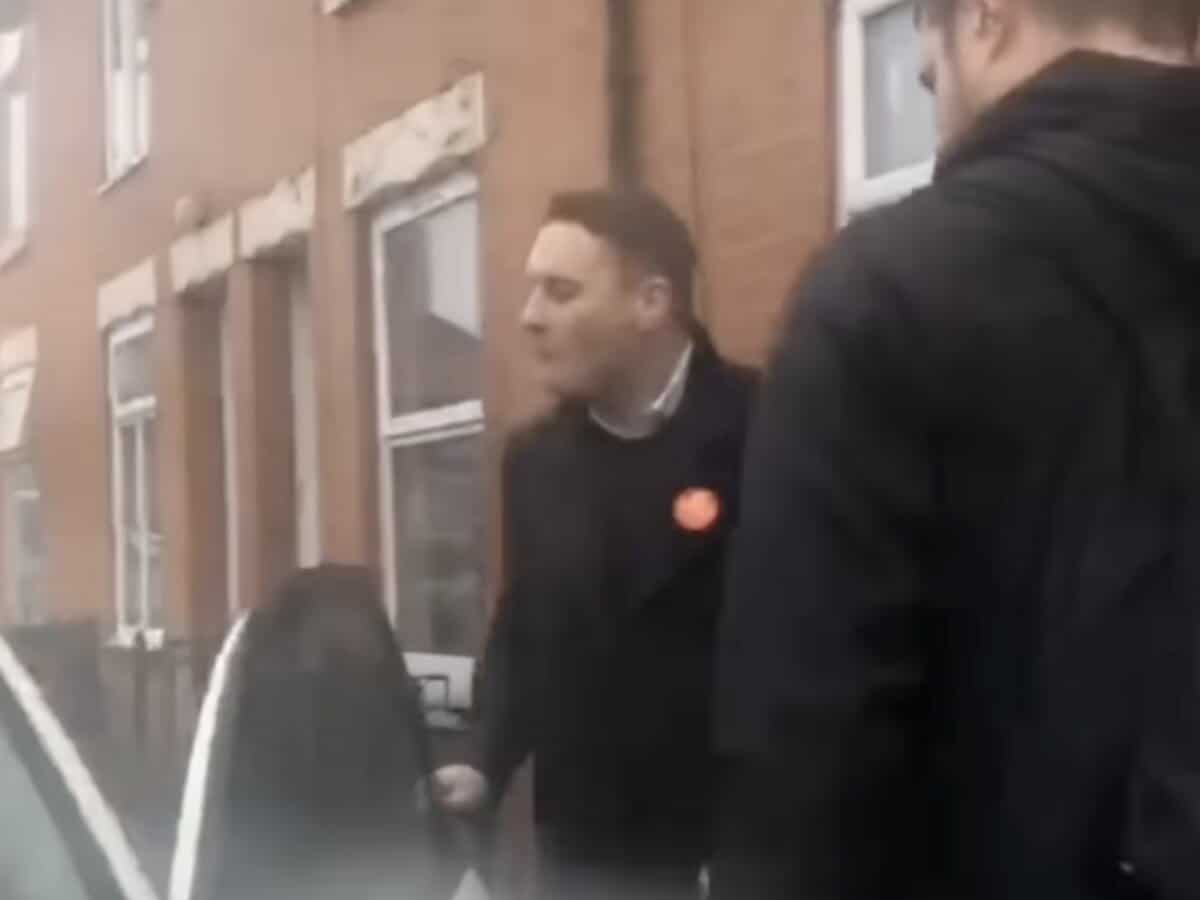
A Canary journalist spotted Wes Streeting bundling five people into a four-seater Fiat 500 – clearly breaking the law:
The Canary spotted the car in Gorton and Denton on Thursday, 26 February. Streeting pulled the passenger seat forward to allow three other people into the back seats. He then got into the passenger seat. Another person got into the driver’s seat.
Of course, we had to check the registration plate to confirm, but the car is a 2016 Fiat 500 POP. It has 3 doors, and four (small!) seats.
And four seats equals four seatbelts. Which means one passenger was not wearing a seatbelt, and therefore broke the law.
UK law states:
You must wear a seat belt if one is fitted in the seat you’re using – there are only a few exceptions.
You’re also only allowed one person in each seat fitted with a seat belt.
You can be fined up to £500 if you do not wear a seat belt when you’re supposed to.
Wes Streeting also got into that car, knowing the passengers were breaking the law.
Road fatalities
In recent years, there has been a huge increase in the number of road fatalities due to people not wearing seatbelts.
The most recent figures from the Department for Transport show that 40% of back seat passengers killed in car crashes were not wearing their seat belts.
In 2023, 1,766 people died in the UK, and many more received serious, life-changing injuries which could have been prevented by wearing a seat belt.
Amid ever-increasing pressure on the NHS, and with Streeting as the Secretary of State for Health and Social Care, there seems to be an ever-so-slight mismatch between messaging and action.
Simply getting into an overfilled car without enough seatbelts shows that Streeting thinks he is above the rules.
Featured image via the Canary
Members get access to Guido Whispers every Friday. For all the latest gossip swirling around Westminster and beyond, join us today by clicking here to get 50% off your membership. Get tomorrow’s news, today…
!function(n){if(!window.cnx){window.cnx={},window.cnx.cmd=[];var t=n.createElement(‘iframe’);t.display=’none’,t.onload=function(){var n=t.contentWindow.document,c=n.createElement(‘script’);c.src=”//cd.connatix.com/connatix.player.js”,c.setAttribute(‘async’,’1′),c.setAttribute(‘type’,’text/javascript’),n.body.appendChild(c)},n.head.appendChild(t)}}(document);(new Image()).src=”https://capi.connatix.com/tr/si?token=8b034f64-513c-4987-b16f-42d6008f7feb”;cnx.cmd.push(function(){cnx({“playerId”:”8b034f64-513c-4987-b16f-42d6008f7feb”,”mediaId”:”8ada6b79-325c-4aef-9b1d-9f05b4b23378″}).render(“69a1bef8e4b022e3a55846dc”);});
On 3 March 2026, the “worm moon” – a name given to the full moon in March – will rise.
And due to an event called a total lunar eclipse, this year, it’s set to look deep red from some parts of the Earth.
What is a total lunar eclipse?
This can only happen during a full moon. It occurs when the Earth gets into a position right in between the moon and the sun, making the surface of the moon look dimmer.
When the moon moves into the inner part of the Earth’s shadow (its umbra) in a total lunar eclipse, the Earth’s atmosphere filters the light from the sun to the moon.
Why will March’s “blood moon” be red?
During a total lunar eclipse, the light on the moon has to pass through our atmosphere.
Because shorter waves of light, like blue and purple tones, scatter faster than their longer-length cousins, red and orange, the moon can look reddish or orange during the event.
“It’s as if all the world’s sunrises and sunsets are projected onto the Moon,” NASA said.
This is sometimes called a blood moon, thanks to the colour.
The more dust in our atmosphere, the redder the moon is likely to look.
When will the “blood moon” happen?
It’s set to happen on 3 March, 2026. And while the time the moon actually spends in the Earth’s umbra is just under an hour, Space.com said that “the show goes on for much longer than that”.
The eclipse will “peak” at 11:33am GMT. At this point, the moon will move closest to the centre of the Earth’s shadow, as part of the “eclipse maximum”.
Where can I see the March blood moon?
Sadly, it won’t be visible from the UK or Ireland – nor will it be seen from Africa or Europe.
But views from North America, the Pacific area, Australia, and parts of East Asia are expected to be particularly stunning.
Why is the March moon called the “worm moon”?
Per Royal Museums Greenwich, the name comes from Native Americans, who coined the term because of “the worm trails that would appear in the newly thawed ground” in March.
Other names include the death moon, crust moon, sap moon, and chaste moon.
And, of course, this month, it counts as a “blood moon” too.
Related…


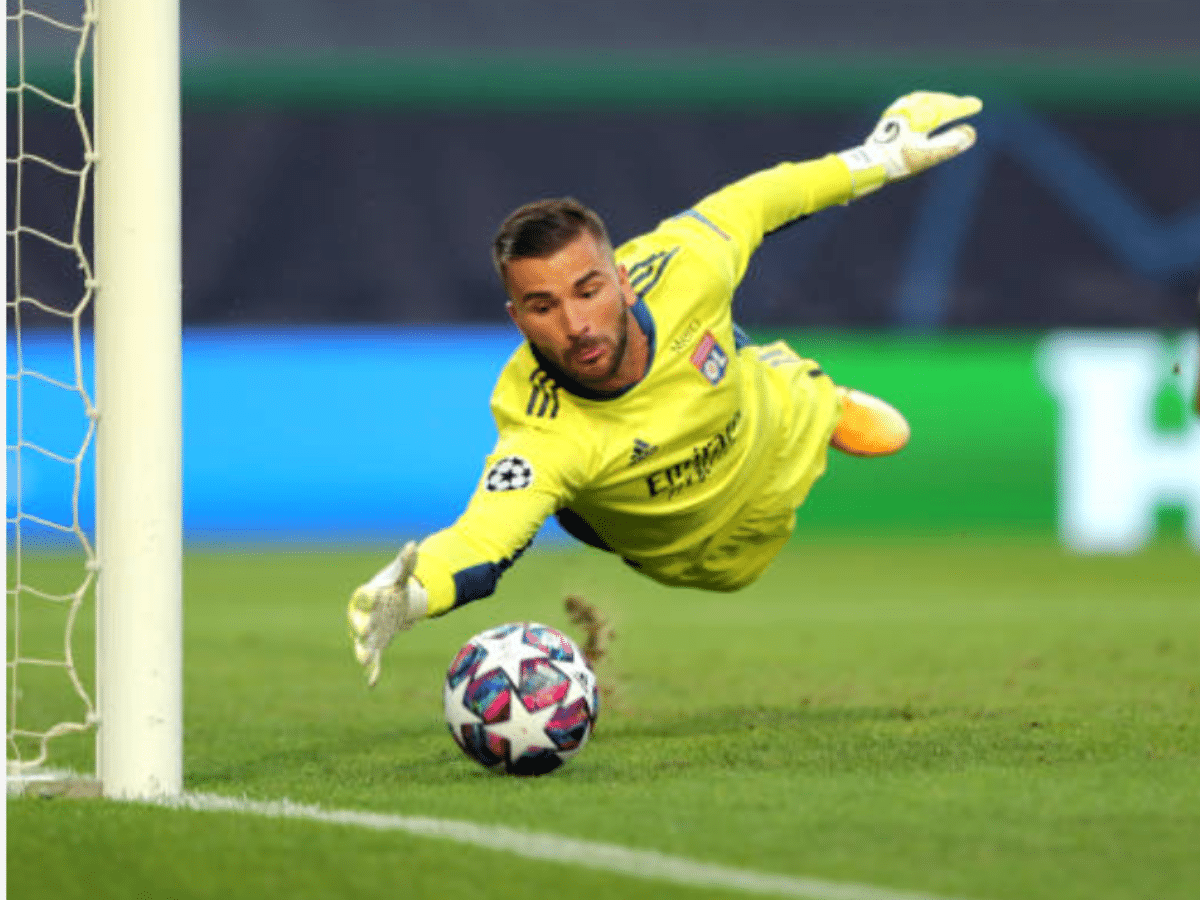
A French League match between Nantes and Le Havre showed a human moment. In the 74th minute, Nantes goalkeeper, Portuguese Anthony Lopes, fell to the ground, clutching his hamstring, in what at first glance appeared to be a routine injury requiring medical attention. Play was halted for several minutes as the medical staff rushed to the veteran goalkeeper.
But behind this pause, another story was being written.
French League shamed
The French League has regulations prohibiting the suspension of matches for religious reasons, unlike some European competitions that allow a short break at sunset to enable fasting players to break their fast.
In England, for example, the Premier League has adopted a mechanism allowing referees to grant a minute of rest at sunset during Ramadan. In France, however, the situation is different.
As Lopez fell to the ground, the Muslim players on the pitch found those precious moments they had been waiting for. They quickly headed to the touchline, ate dates, and drank water, in a quiet scene tinged with gratitude.
There was no official announcement, no special refereeing decision, just a brief window of opportunity created by the goalkeeper.
After the moment passed, Lopez got up. He showed no signs of injury and didn’t ask to be substituted. He returned to his position under the crossbar, as if nothing had happened.
Solidarity beyond words
Such details might not be recorded in goal reports, but they are etched in the players’ memories.
Lopez’s action – whether spontaneous or deliberate – carried a clear message of solidarity: in football, there is more to it than just competition.
The match ended with Nantes winning 2-0, bringing their points tally to 17. But the most important statistic wasn’t in the standings, but in the 74th minute… when the match was paused, and some players quietly broke their fast.
Between law and spirit
This incident highlights an ongoing debate within French football regarding how to handle fasting players during Ramadan, at a time when other competitions are moving towards flexible solutions that respect the legal framework while also acknowledging religious sensitivities.
Amidst this debate, Lopez’s gesture offered a simple example of humanity: a non-Muslim player giving his teammates a moment they needed, without speeches or slogans.
Sometimes, solidarity doesn’t require an official statement; it’s enough for a goalkeeper to fall, and others to rise up and break their fast.
Featured image via the Canary
The post Valdo Calocane, the BAFTAs and the poison of wokeness appeared first on spiked.
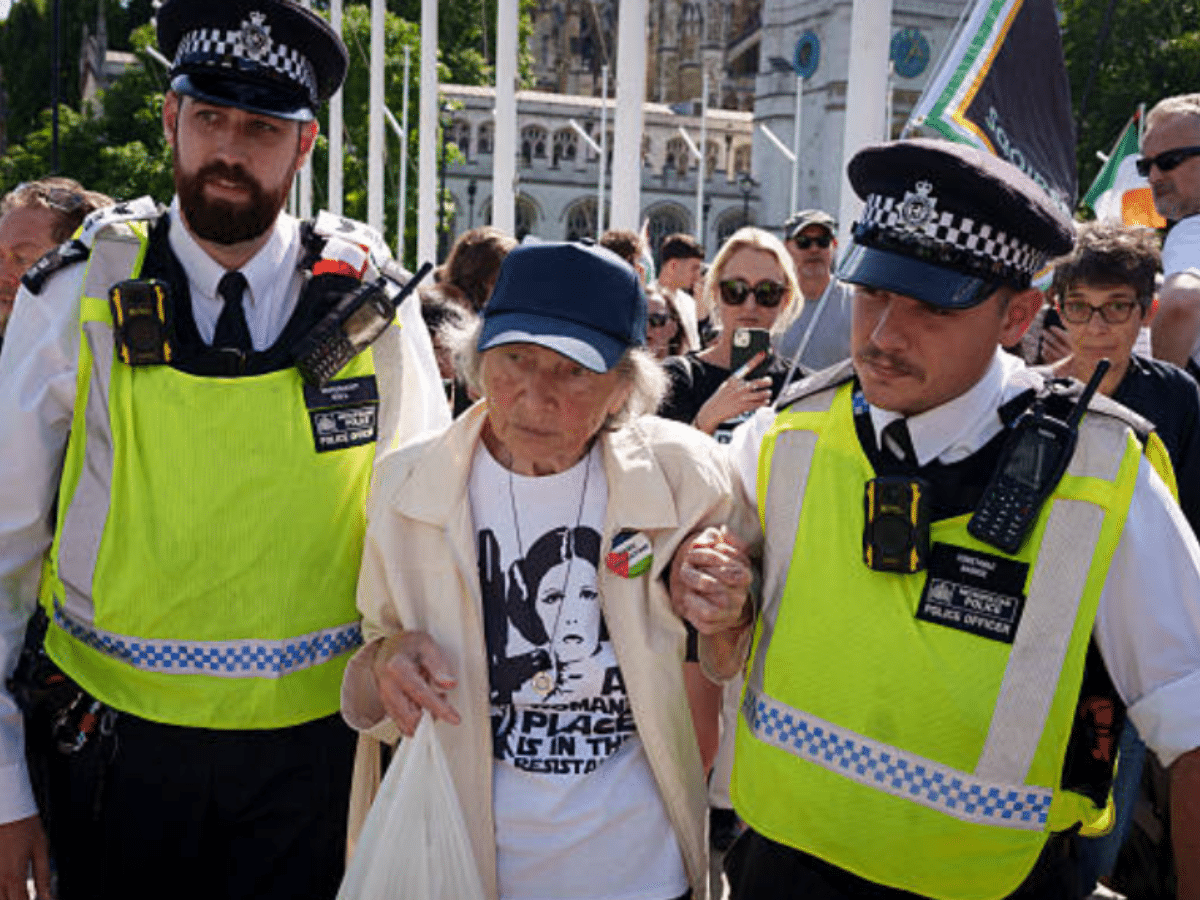
Analysts have documented over 900 cases of UK institutions and pro-Israel groups targeting supporters of Palestine with different types of repression.
The European Legal Support Center (ELSC) and research group Forensic Architecture have put together an Index of Repression. Upon launching this public database, the ELSC said:
For too long, anti-Palestinian repression has been dismissed as incidental, exceptional, and justified. On 25 February, we confirm what the movement has long known: this repression is multi-sited, institutionalised and systematic, unfolding across varied stages.
This, it insisted, is a “coordinated system” seeking to undermine public criticism of Israel’s settler-colonial crimes and genocide in Gaza. And the Index of Repression has documented:
964 verified incidents of repression targeting Palestine solidarity documented across Britain (January 2019 – August 2025)
Those responsible, the Guardian said, were:
police (220 incidents), educational institutions (192), pro-Israel advocacy groups (141), and journalists and other media actors (141).
‘Strategic targeting to dismantle solidarity’ with people living under Israeli occupation
The UK’s crackdown includes smears, sanctions, and other repercussions for speaking out. And it:
focuses deliberately on sectors fundamental to shaping public discourse and holding public trust: Education; Activism and Protest; Workplace; and Culture.
It is a “strategic targeting across sectors” that:
aims to dismantle solidarity at every stage, from the formation of political consciousness in universities and schools, to its expression in culture, to its organisation in public spaces.
The cancel culture on behalf of a genocidal foreign state has targeted educators and those they teach in particular. As the Guardian summarised:
Students, academics and teachers (336 incidents) appeared most frequently on the index as targets of repression, followed by activists and organisers (229). The report says they are often targeted in different ways, with artists and cultural workers often having events cancelled (71 incidents).
The paper added that techniques included:
smears, disinformation, harassment, doxing (having private or identifying information published online), visa cancellations, financial blacklisting, loss of employment and arrest
Large-scale Western repression in service of Israel’s genocide
The UK has faced significant criticism domestically and internationally for its unlawful proscription of non-violent direct-action group Palestine Action. The government has already spent hundreds of thousands of pounds on its highly controversial ban. But it is still fighting the courts to keep it in place.
The ELSC’s Tara Mariwany clarified that it was “not our role” to discuss or determine whether allegations against targets were true or not, emphasising:
It’s simply our role to document it and to show that it doesn’t matter if you wear a watermelon sticker on your shirt, that might give rise to the allegation of antisemitism…
It’s simply about showing the scale of it and that should give enough of a cause to question the allegation itself and question the smearing itself.
The project is not a standalone piece of work either. Instead, as the ELSC explained:
It builds on Germany’s Index of Repression, which we have launched in May 2025, and is both a continuation of this work and an expansion into a broader transnational effort to document and expose repression across Europe. The forthcoming Index of Repression for the Netherlands – alongside other country reports – marks the next phase of this sustained, cross-border project.
Featured image via the Canary
Politics
Politics Home | Keir Starmer Says Greens Won By-Election Off Back Of George Galloway Endorsement

(Alamy)
5 min read
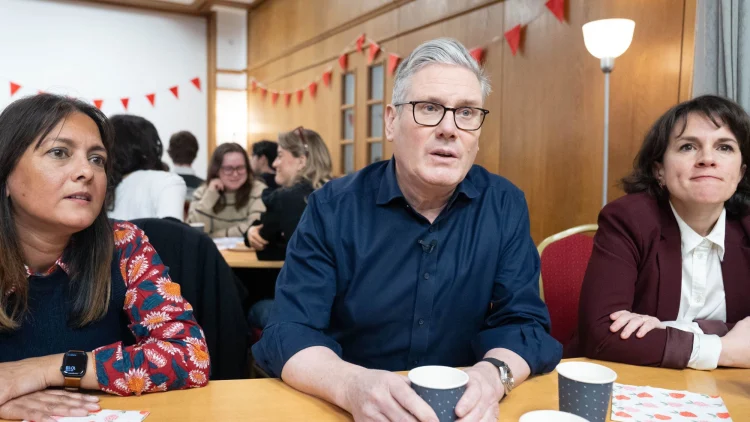
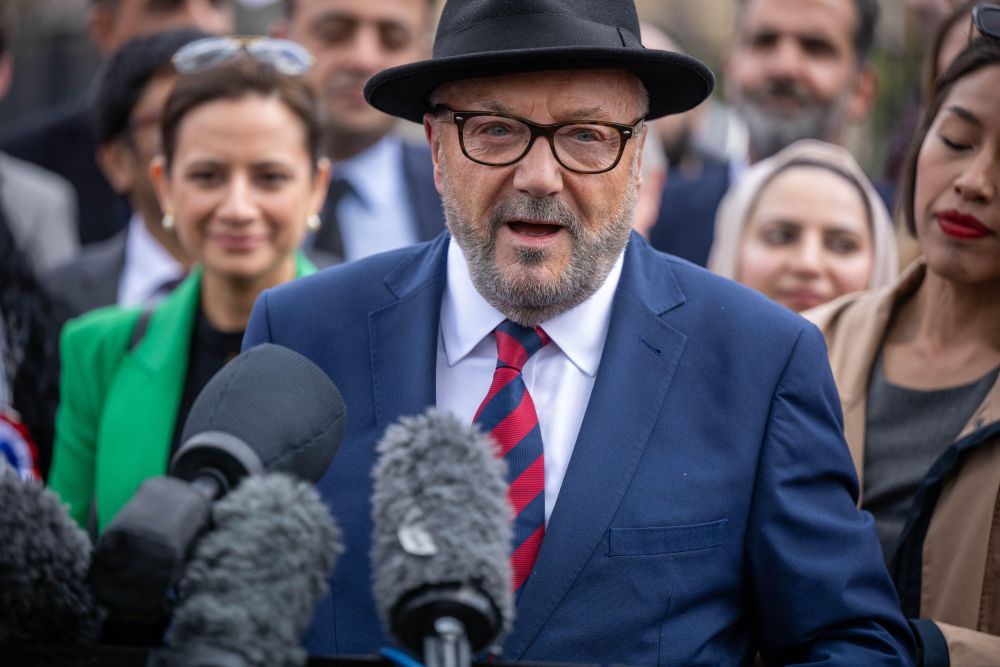
Keir Starmer has accused the Green Party of embracing “sectarian” politics and claimed that its historic victory in the Gorton and Denton by-election was driven by support from George Galloway.
The Prime Minister said Zack Polanski’s party was no longer comprised of “harmless environmentalists” in a letter to all Labour MPs following their defeat in Greater Manchester.
Labour is reeling after finishing third in a constituency it had controlled for over 100 years and where it won with an absolute majority at the 2024 general election.
Green candidate Hannah Spencer won with 40 per cent of the vote, in the clearest sign yet of the threat posed to Labour’s left flank by Polanski’s “eco-populist” left-wing party.
Reform UK candidate, former academic Matt Goodwin, came second.
In a letter to Labour MPs on Friday, seen by PoliticsHome, the PM said: “We’ve seen the true colours of Zack Polanski’s Greens in this campaign. The Greens were able to capitalise on an endorsement from George Galloway to win over enough voters to push them over the line.
“Their willingness to welcome Galloway’s divisive, sectarian politics is a sign that the Greens are not the harmless environmentalists they pretend to be, and their position on legalising all drugs shows how unstable this electoral coalition is. It cannot survive a general election campaign.”
Galloway, a former MP for Labour and the Respect parties, is a controversial figure in British politics, accused of running divisive campaigns in areas with significant Muslim populations.
His Workers Party of Britain decided not to stand a candidate in Gorton and Denton.
In his letter, Starmer said he would continue to “warn of the risk the Greens pose” to the country, including “extreme policies like legalising all drugs and pulling out of NATO”.
He also sought to assure Labour backbenchers that Polanki’s party would not be able to replicate its by-election success on Thursday at a nationwide general election.
“The Greens may have won here, but they simply do not have the resources, the activist base or the local knowledge to replicate this victory across the country. We’ve seen that before.
“We’ve seen it with the Lib Dems, who have often won mid-term by-elections against both the Conservatives and Labour, but never been able to come close to winning nationally. We’ve seen it with George Galloway, who won two mid-term by-elections but held neither of those seats in a general election.”
Some Labour MPs have privately expressed concern that the lettercould further alienate progressive voters who supported the Greens on Thursday, with one calling it “appalling”.
One Labour backbencher complained to PoliticsHome: “That letter is what the Greens will use to raise the money. Slow clap.”
Additional reporting by Zoe Crowther
Here is the letter in full:
Dear Colleagues,
The result in Gorton and Denton is deeply disappointing.
Instead of a Labour MP who can be a local champion delivering for Gorton and Denton alongside a Labour Government and a Labour mayor, the people of Gorton and Denton now have a representative who is more interested in dividing people than uniting them. We have to learn lessons from that, and we will.
I know this is a tough result for our movement but I still want to thank you for everything you did to support our brilliant candidate Angeliki Stogia. She did a fantastic job and Gorton and Denton deserved to have her as their MP.
We’ve seen the true colours of Zack Polanski’s Greens in this campaign. The Greens were able to capitalise on an endorsement from George Galloway to win over enough voters to push them over the line. Their willingness to welcome Galloway’s divisive, sectarian politics is a sign that the Greens are not the harmless environmentalists they pretend to be, and their position on legalising all drugs shows how unstable this electoral coalition is. It cannot survive a general election campaign.
It hurts, but this is the kind of result that we have often seen parties of government face. In by-elections people can make their voice heard without risking a change of government. I get it: people are rightly impatient to see the change they voted for.
It’s my job to make sure that happens. And I’m working day in, day out to see it through.
Over the coming months, people will feel the benefit of the long-term decisions this government is taking. Look at the good economic news we’ve had in the past week: inflation and borrowing coming down, retail sales and business confidence rising, energy bills falling. And look at the policies that are going to make a difference in people’s lives in the coming months: the landmark Employment Rights Act, money off energy bills, the cruel two-child limit scrapped, more free breakfast clubs opening, Pride in Place funding coming through, NHS waiting lists continuing to fall. It will show what we’ve been saying from the outset of this year: the country is turning a corner. These are all Labour policies, putting Labour values into action – policies no other party would or could deliver.
The Greens may have won here, but they simply do not have the resources, the activist base or the local knowledge to replicate this victory across the country. We’ve seen that before. We’ve seen it with the Lib Dems, who have often won mid-term by-elections against both the Conservatives and Labour, but never been able to come close to winning nationally. We’ve seen it with George Galloway, who won two mid-term by elections but held neither of those seats in a general election.
We will continue to warn of the risk the Greens pose: the risk of extreme policies like legalising all drugs and pulling out of NATO that most voters strongly reject, and the risk of splitting the progressive vote so that Reform come through the middle.
The next election is too important to let that happen. It’s a fight we can win, and we’re going to win it.
Best,
Keir
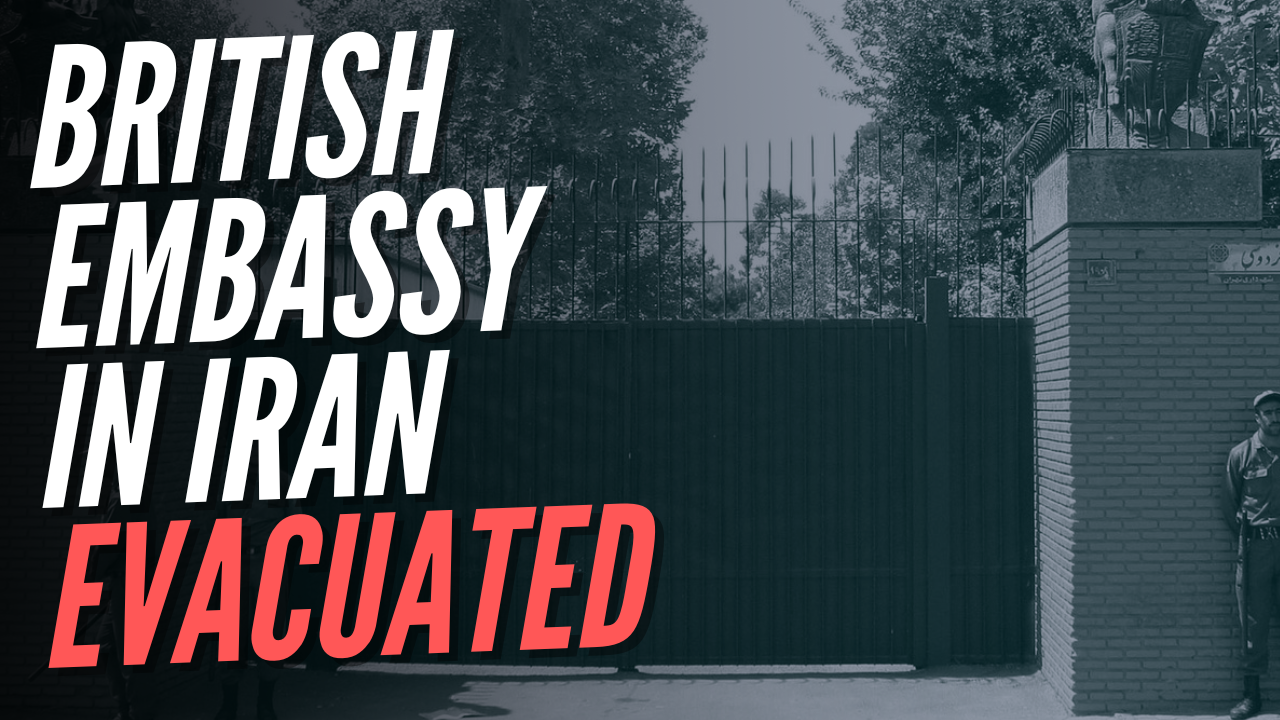
The Foreign Office has said this afternoon: “Due to the ongoing security situation, we have taken the precautionary measure to temporarily withdraw UK staff from Iran. Our embassy continues to operate remotely.” Tensions ramping up…

Sir Richard Dearlove, the former head of MI6, is back doing what he does best – smearing left-wing leaders.
After his baseless attacks on Jeremy Corbyn, he’s now set his sights on Zack Polanski.
Dearlove described Polanski’s view of geopolitics as “verging on the absurd, this man is really dangerous” and a potential far-left alliance involving parties like Your Party and the Greens as “a very dangerous prospect for the UK’s national security.”
He also mocked Polanski’s suggestion of military alliances with other countries, particularly the idea of partnering with Global South nations like Mexico and Brazil.
He also was surprised that the Greens’ campaign in Gorton and Denton could “attract attention”. Additionally, he was surprised that it was designed to capture the muslim vote.”
Deja vu
Reactions on social media to Dearlove was one of deja vu!
Dearlove used similar words to describe Corbyn in November 2019, just a month before the December 2019 General Election, which led to a Tory victory with Boris Johnson as the PM.
Dealove previously wrote in the Daily Mail that
Corbyn as Prime Minister, together with his current advisers, could be a present danger to our country.
Do not even think of taking the risk of handing this politician the keys to No 10.
The soft-spoken, apparently gentle old man who is promising voters the world may not be quite as he now wishes to present himself.
John Smith said: “That old chestnut… Been there, done that.”
That old chestnut…Been there done that.
— John Smith (son of Harry Leslie Smith) (@Harryslaststand) February 26, 2026
Others had similar feelings.
They always wheel out this old chud lol https://t.co/9U0ILNKewX
— Dr Iain Darcy 🍉 🇮🇪 💚 (@doctoriaindarcy) February 27, 2026
They’re going to give him the full Corbyn treatment if he wins this by-election https://t.co/yakoHk1erb
— Manic Kieth Preachers KC (@wrb91) February 26, 2026
The establishment are out in force already. This is exactly the same shit these arseholes pulled on Jeremy Corbyn. https://t.co/onVPzyTqj7
— Bevan Boy 💚 (@mac123_m) February 27, 2026
If anyone is a threat, it is Dearlove
Craig Murray criticised the former intelligence head, as a man with the blood of millions on his hands.
The lies he told about Iraqi WMDs will not be easily forgotten.
This is the man responsible for the lies on Iraqi WMD, with the blood of millions on his hands. https://t.co/Ls2RUgEWl5
— Craig Murray (@CraigMurrayOrg) February 26, 2026
Matt Kennard called Dearlove a “clown” who, as head of MI6, helped get Putin elected in 2000 at Russia’s bidding, played a key role in the illegal Iraq invasion, then cashed out at oil company Kosmos Energy.
Kennard documented this at Declassified UK. He revealed how Dearlove and fellow spy chiefs profited from the very threats they promoted while in office.
As head of MI6, this clown mobilised the UK state to get Putin elected in 2000 election – at behest of Russian intelligence
He then played key role in illegal invasion of Iraq
After “service”, he cashed out at oil company Kosmos Energy
Join the Greens: https://t.co/LiEX2al4Jb https://t.co/owF3nrZGf9
— Matt Kennard (@kennardmatt) February 26, 2026
Tony Greenstein noted that the same intelligence service employed Salman Abedi, who was sent to Libya to fight with jihadists before bombing the Manchester Arena. He said NATO is “not our friend” but “a cause of war.” In addition, he called the US the main threat to freedom with its posturing against Canada and Greenland.
this is the same intelligence service that employed Salman Abedi and sent him to Libya to fight with Jihadists. He came back and planted a bomb at the Manchester Arena.
NATO is not our friend – it is a cause of war. The United States is the main threat to our freedom with its… https://t.co/u5Ltj9xN2o
— Tony Greenstein tonygreenstein.com (@TonyGreenstein) February 27, 2026
Chris Nieham has previously written in Counterfire about Dearlove.
The former head of M16 was a close associate of Blair and Alistair Campbell during the Iraq War and was one of two security service heads responsible for the ‘dodgy dossier’ which was used as the main justification for the Iraq War, the biggest disaster in British foreign policy for fifty years or more.
The dossier was heavily criticised in the Chilcot report and is widely believed to have been the worst mistake made by the UK intelligence community in the post-1945 era.
Featured image via the Canary
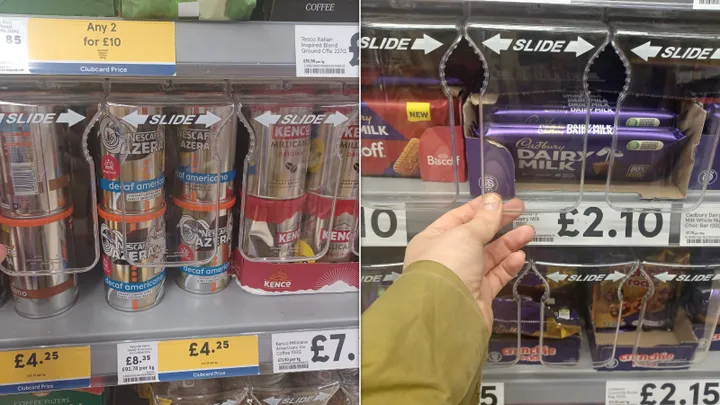
Recently, UK shoppers noticed some plastic security boxes surrounding chocolate bars in their local supermarkets.
Sainsbury’s has said these anti-theft measures are being applied to “products which are regularly targeted” by thieves. Tesco has covered some of its chocolate products with a sliding plastic shield, which makes the bars harder to slip out.
This is true in my local Tesco, where a £2.10 Dairy Milk is kept behind a transparent barrier.
Why is chocolate being kept in security boxes in supermarkets?
The Association of Convenience Stores has suggested that chocolate is one of a few higher-value supermarket items targeted by thieves, and that chocolate theft is on the rise.
The organisation told Talking Retail that this could be part of a “wider, more organised criminality”.
Speaking to the BBC, the owner of Malcom’s convenience stores, Paul Cheema, said that he thinks some of the treats are being taken “to order”.
And Cambridgeshire police told the publication, “Chocolate is one of a number of high-value items thieves often target, along with products such as alcohol, meat and coffee.”

Why is chocolate so expensive?
The term “high-value” might seem a little extreme for a £2.10 bar.
But the cost of some chocolate really does seem to have gone up, both through actual price and “shrinkflation” (getting less of the product for the same amount of, or even more, money).
Last year, HuffPost UK spoke to Mark Owen, chief chocolatier at Pembrokeshire-based chocolate factory Wickedly Welsh Chocolate, about the rising cost of cocoa.
The chocolate expert said, “Cocoa prices shot up in 2024 to record highs after three poor harvests in a row for cocoa producers in the Ivory Coast and Ghana – the world’s two largest cocoa-producing nations”.
Higher costs had a knock-on effect through 2025.
Recently, though, the Ivory Coast has followed Ghana in planning to cut cocoa prices due to “unsold bags of cocoa beans piling up both inland and at the country’s ports”, Reuters reports.
Only time will tell how that affects us.
HuffPost UK has reached out to Tesco about their use of sliding shields on chocolate bars.
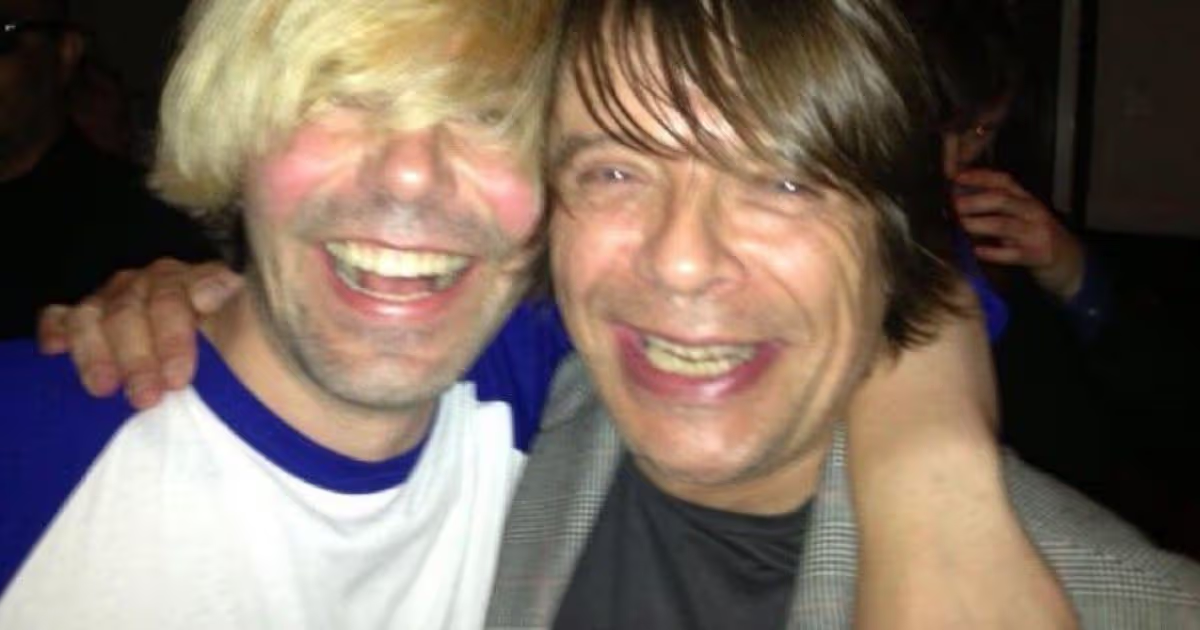
Stone Roses star Mani to be honoured by music legend at BRIT Awards

US Stocks: CoreWeave shares slump 15% as doubling capital expenditure sparks margin concerns

Barclays explores blockchain platform for payments: Bloomberg


-

 Politics5 days ago
Baftas 2026: Awards Nominations, Presenters And Performers
-

 Fashion7 days ago
Weekend Open Thread: Boden – Corporette.com
-

 Sports4 days ago
Women’s college basketball rankings: Iowa reenters top 10, Auriemma makes history
-

 Politics4 days ago
Nick Reiner Enters Plea In Deaths Of Parents Rob And Michele
-

 Business3 days ago
True Citrus debuts functional drink mix collection
-

 Politics17 hours ago
ITV enters Gaza with IDF amid ongoing genocide
-

 Crypto World3 days ago
XRP price enters “dead zone” as Binance leverage hits lows
-

 Business5 days ago
Mattel’s American Girl brand turns 40, dolls enter a new era
-

 Business5 days ago
Law enforcement kills armed man seeking to enter Trump’s Mar-a-Lago resort, officials say
-
 NewsBeat2 days ago
Manchester Central Mosque issues statement as it imposes new measures ‘with immediate effect’ after armed men enter
-

 NewsBeat2 days ago
Cuba says its forces have killed four on US-registered speedboat | World News
-

 Tech3 days ago
Unsurprisingly, Apple's board gets what it wants in 2026 shareholder meeting
-
 NewsBeat4 days ago
‘Hourly’ method from gastroenterologist ‘helps reduce air travel bloating’
-

 Tech5 days ago
Anthropic-Backed Group Enters NY-12 AI PAC Fight
-

 NewsBeat5 days ago
Armed man killed after entering secure perimeter of Mar-a-Lago, Secret Service says
-

 Politics5 days ago
Maine has a long track record of electing moderates. Enter Graham Platner.
-

 Business2 days ago
Discord Pushes Implementation of Global Age Checks to Second Half of 2026
-
 NewsBeat3 days ago
Police latest as search for missing woman enters day nine
-
 Sports4 days ago
2026 NFL mock draft: WRs fly off the board in first round entering combine week
-

 Crypto World3 days ago
Entering new markets without increasing payment costs