Connect with us

Tech

Anthropic vs. The Pentagon: what enterprises should do

Published

on

The relationship between one of Silicon Valley’s most lucrative and powerful AI model makers, Anthropic, and the U.S. government reached a breaking point on Friday, February 27, 2026.

President Donald J. Trump and the White House posted on social media ordering all federal agencies to immediately cease using technology from Anthropic, the maker of the powerful Claude family of AI models, after reportedly months of renegotiating a less than two-year-old contract. Following the President’s lead, Secretary of War Pete Hegseth said he was directing the Department of War to designate Anthropic a “Supply-Chain Risk to National Security,” a blacklisting traditionally reserved for foreign adversaries like Huawei or Kaspersky Lab.

The move effectively terminates Anthropic’s $200 million military contract and sets a hard six-month deadline for the Department of War to scrub Claude from its systems.

But Anthropic’s business has been booming lately, with its Claude Code service alone taking off into a $2.5+ billion ARR division less than a year after launch, and it just announced a $30 billion Series G at $380 billion valuation earlier this month and has, more or less singlehandedly spurred massive stock dives in the SaaS sector by releasing plugins and skills for specific enterprise and verticalized industry functions including HR, design, engineering, operations, financial analysis, investment banking, equity research, private equity, and wealth management.

Advertisement

Ironically, SaaS companies across industries and sectors such as Salesforce, Spotify, Novo Nordisk, Thompson Reuters and more are reporting some of the biggest benefits in productivity and performance thanks to Anthropic’s top benchmark-scoring, highly capable and effective Claude AI models. It’s not a stretch to say Anthropic is among the most successful AI labs in the U.S. and globally.

So why is it now being considered a “Supply-Chain Risk to National Security?”

Why is the Pentagon designating Anthropic a ‘Supply-Chain Risk to National Security’ and why now?

The rupture stems from a fundamental dispute over “all lawful use.” The Pentagon demanded unrestricted access to Claude for any mission deemed legal, while Anthropic CEO Dario Amodei refused to budge on two specific “red lines”: the use of its models for mass surveillance of American citizens and fully autonomous lethal weaponry.

Hegseth characterized the refusal as “arrogance and betrayal,” while Amodei maintained that such guardrails are essential to prevent “unintended escalation or mission failure.”

Advertisement

The fallout is immediate; the Department of War has ordered all contractors and partners to stop conducting commercial activity with Anthropic effectively at once, though the Pentagon itself has a 180-day window to transition to “more patriotic” providers.

The vacuum left by Anthropic is already being filled by its primary rivals. OpenAI CEO Sam Altman just announced a deal with the Pentagon that includes two similar sounding “safety principles,” though whether they are the same type of contractual language is still not clear. Earlier in the day, OpenAI announced a staggering $110 billion investment round led by Amazon, Nvidia, and SoftBank.

Elon Musk’s xAI has also reportedly signed a deal to allow its Grok model to be used in highly classified systems, having agreed to the “all lawful use” standard that Anthropic rejected, but is said to rate poorly among government and military workers already using it.

Meanwhile, Anthropic has stated its intention to fight the designation in court and has encouraged its commercial customers to continue usage of its products and services with the exception of military work.

Advertisement

What it means for enterprises: the interoperability imperative

For enterprise technical decision-makers, the “Anthropic Ban” is a clarion call that transcends the specific politics of the Trump administration. Regardless of whether you agree with Anthropic’s ethical stance (as I do) or the Pentagon’s position, the core takeaway is the same: model interoperability is more important than ever.

If your entire agentic workflow or customer-facing stack is hard-coded to a single provider’s API, you aren’t going to be nimble or flexible enough to meet the demands of a marketplace where some potential customers, such as the U.S. military or government, want you to use or avoid specific models as conditions of your contracts with them.

The most prudent move right now isn’t necessarily to hit the “delete” button on Claude—which remains a best-in-class model for coding and nuanced reasoning—but to ensure you have a “warm standby.”

This means utilizing orchestration layers and standardized prompting formats that allow you to toggle between Claude, GPT-4o, and Gemini 1.5 Pro without massive performance degradation. If you can’t switch providers in a 24-hour sprint, your supply chain is brittle.

Advertisement

Diversify your AI supply

While the U.S. giants scramble for the Pentagon’s favor, the market is fragmenting in ways that offer surprising hedges.

Google Gemini saw its stock spike following the news, and OpenAI’s massive new cash infusion from Amazon (formerly a staunch Anthropic ally) signals a consolidation of power.

However, don’t overlook the “open” and international alternatives. U.S. firms like Airbnb have already made waves by pivoting to lower cost, Chinese open-source models like Alibaba’s Qwen for certain customer service functions, citing cost and flexibility.

While Chinese models carry their own set of arguably greater geopolitical risks, for some enterprises, they serve as a viable hedge against the current volatility of the U.S. domestic market.

Advertisement

More realistically for most, the move toward in-house hosting via domestic brews like OpenAI’s GPT-OSS series, IBM’s Granite, Meta’s Llama, Arcee’s Trinity models, AI2’s Olmo, Liquid AI’s smaller LFM2 models, or other high-performing open-source weights is the ultimate insurance policy. Third-party benchmarking tools like Artificial Analysis and Pinchbench can help enterprises decide which models meet their cost and performance criteria in the tasks and workloads they are being deployed.

By running models locally or in a private cloud and fine-tuning them on your proprietary data, you insulate your business from the “Terms of Service” wars and federal blacklists.

Even if a secondary model is slightly inferior in benchmark performance, having it ready to scale up prevents a total blackout if your primary provider is suddenly “besieged” by government reprisal. It’s just good business: you need to diversify your supply.

The new due diligence

As an enterprise leader, your due diligence checklist has just expanded thanks to a volatile federal vs. private sector fight.

Advertisement

The takeaway is clear: if you plan to maintain business with federal agencies, you must be able to certify to them that your products aren’t built on any single prohibited model provider — however sudden that designation may come down.

Ultimately, this is a lesson in strategic redundancy. The AI era was supposed to be about the democratization of intelligence, but it’s currently looking like a classic battle over defense procurement and executive power.

Secure your backup and diversified suppliers, build for portability, and don’t let your “agents” become collateral damage in the war between the government and any specific company.

Whether you’re motivated by ideological support for Anthropic or cold-blooded bottom-line protection, the path forward is the same: diversify, decouple, and be ready to swap in and out fast.

Advertisement

Model interoperability just became the new enterprise “must-have.”

Source link

Continue Reading
Click to comment

Leave a Reply

Your email address will not be published. Required fields are marked *

Tech

The Xiaomi 17 Ultra has the specs to be the best smartphone camera

Published

on

Xiaomi has officially unveiled the Xiaomi 17 Ultra, and on paper, it has one of the most ambitious camera systems we’ve seen on a smartphone to date.

Built under an expanded co-creation partnership with Leica, the new flagship combines a 1-inch main sensor with a 200MP telephoto lens with mechanical zoom and advanced cinema-grade video tools. Xiaomi is positioning it as its most serious photography phone yet.

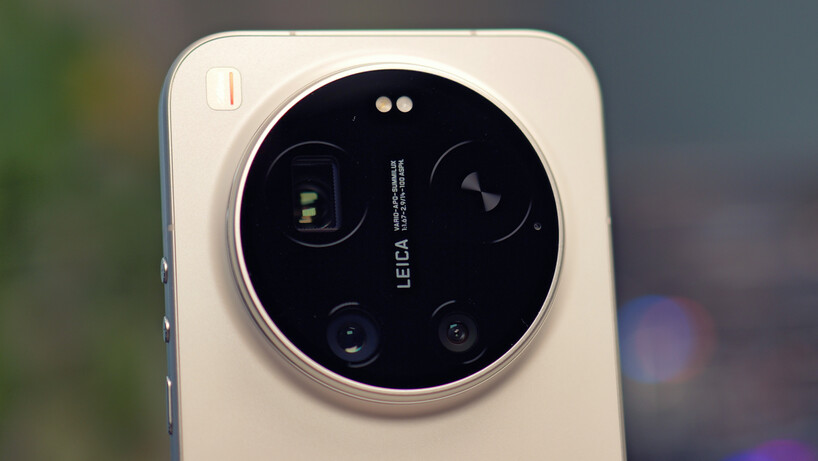
At the heart of the setup is a 50MP Leica 1-inch “Ultra Dynamic” main camera using the new Light Fusion 1050L sensor with LOFIC HDR technology. It is designed to boost dynamic range and improve colour accuracy in high-contrast scenes.

Xiaomi 17 Ultra rear camerasXiaomi 17 Ultra rear cameras
Image Credit (Trusted Reviews)

Advertisement

Xiaomi pairs that with a 200MP Leica telephoto camera. This camera offers a 75–100mm mechanical optical zoom range and up to 400mm (17.2x) optical-level zoom without heavy in-sensor cropping.

Advertisement

The optics themselves lean heavily into Leica’s influence. Xiaomi uses a 1G+6P hybrid lens design with multi-layer coatings to reduce ghosting and colour fringing. Meanwhile, the telephoto module includes Leica’s first APO optical lens in the company’s flagship line-up.

Video gets a notable upgrade too. The 17 Ultra can shoot 8K at 30fps, as well as 4K at 120fps with Dolby Vision. It also supports 4K 120fps Log recording with ACES colour encoding. This gives creators far more room to grade footage in post.

Despite the large sensors and 6000mAh battery, Xiaomi says this is its thinnest and lightest Ultra model yet, measuring 8.29mm thick. It features a flat 6.9-inch HyperRGB OLED display with 2K-level clarity. There is a 1–120Hz LTPO refresh rate and up to 3500 nits peak brightness.

Powering everything is Qualcomm’s Snapdragon 8 Elite Gen 5, paired with up to 16GB RAM and 1TB storage. A 3D Dual-Channel IceLoop cooling system keeps performance stable during extended shooting sessions. Meanwhile, 90W wired and 50W wireless charging aim to minimise downtime.

Advertisement
Xiaomi 17 Ultra camera kitXiaomi 17 Ultra camera kit
Image Credit (Trusted Reviews)

Advertisement

Xiaomi is also introducing upgraded Photography Kits, including a Pro version with a built-in 2000mAh battery and Leica-inspired grip.

If Xiaomi’s previous Ultra models were about pushing boundaries, the 17 Ultra looks more focused: bigger sensors, smarter optics, and tools designed for people who actually care about colour science and long-range detail. Whether it lives up to that promise will depend on real-world testing, but the spec sheet alone makes a strong case.

Source link

Advertisement
Continue Reading

Tech

A premium 4K projector under $1,000 is the kind of deal home theater fans wait for

Published

on

Projectors usually fall into one of two buckets: cheap models that look underwhelming the second you turn them on, or premium ones that feel great until you see the price. This deal lands in a very appealing middle ground. The XGIMI HORIZON Ultra is down to $998.98 for a limited time, which is a big drop from $1,699.99. That’s a 41% discount on a projector that’s clearly aimed at people who want a real living-room upgrade, not a toy for occasional use.

What you’re getting

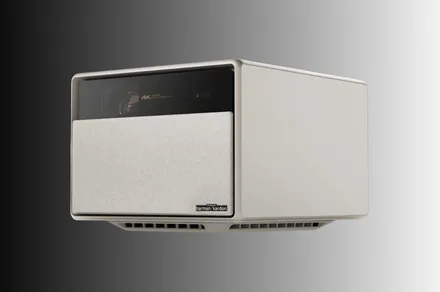
The HORIZON Ultra is a 4K projector with Dolby Vision, 2300 ISO lumens, and dual light technology that combines LED and laser light sources. XGIMI also lists 3840 x 2160 resolution, built-in Bluetooth, and a set of smart image features like auto focus, auto obstacle avoidance, and auto screen alignment.

This isn’t a barebones projector where you’re expected to do all the work yourself. XGIMI says it uses its Intelligent Screen Adaption 3.0 system to adjust screen correction, handle wall color, and make setup smoother. That matters because the difference between “I use this all the time” and “this was a fun idea” often comes down to how annoying setup is.

It also includes 2 x 12W Harman Kardon speakers, plus Wi-Fi and Bluetooth, which makes it easier to use as an all-in-one entertainment device instead of immediately needing to add more stuff to your cart just to make things happen.

Advertisement

Why it’s worth it

This deal works because the HORIZON Ultra checks the boxes people actually care about. It’s bright enough to be practical, it supports premium HDR-friendly viewing with Dolby Vision, and it has the kind of built-in intelligence that makes everyday use feel easier instead of fiddly. That is exactly what you want if this projector is going in a living room, media room, or shared space where people want to press play, not troubleshoot.

The 2300 ISO lumens spec is the part that helps this feel more serious than the flood of bargain projectors online. It gives you more flexibility for rooms that aren’t perfectly dark, which is important in the real world, where not everyone is building a blacked-out theater cave. And the 200-inch image potential is the kind of thing that reminds you why projectors are fun in the first place: this can create a much bigger-feeling setup than most TVs, especially for movies and sports.

The bottom line

At $998.98, the XGIMI HORIZON Ultra feels like the sweet spot version of a premium projector buy. You’re getting 4K, Dolby Vision, strong brightness, smart setup features, and built-in speakers in a package that now costs hundreds less than usual. If you’ve been waiting for a home theater upgrade that feels substantial without going fully overboard, this is a very easy deal to like

Advertisement

Source link

Continue Reading

Tech

Leica’s Leitzphone by Xiaomi has a huge 1-inch camera sensor and a stylish new design

Published

on

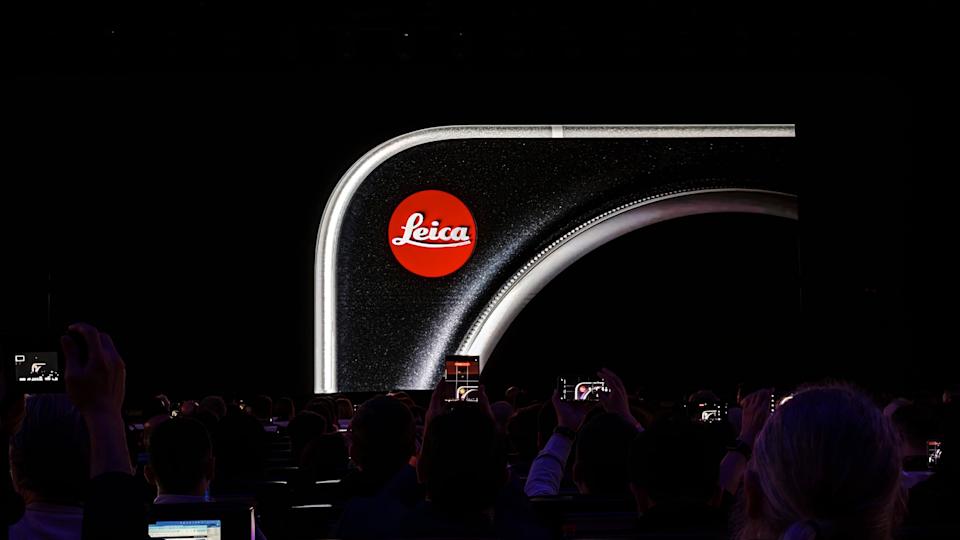
Alongside a global launch for Xiaomi’s 17 Ultra (read about that right here), the company announced a further deepening of its relationship with Leica. The CEO of Leica, Mattias Harsch, took to the stage to announce a new Leitzphone, which appears to be an even deeper collaboration than 17 Ultra by Leica, which is a different phone. Confused? That’s fair.

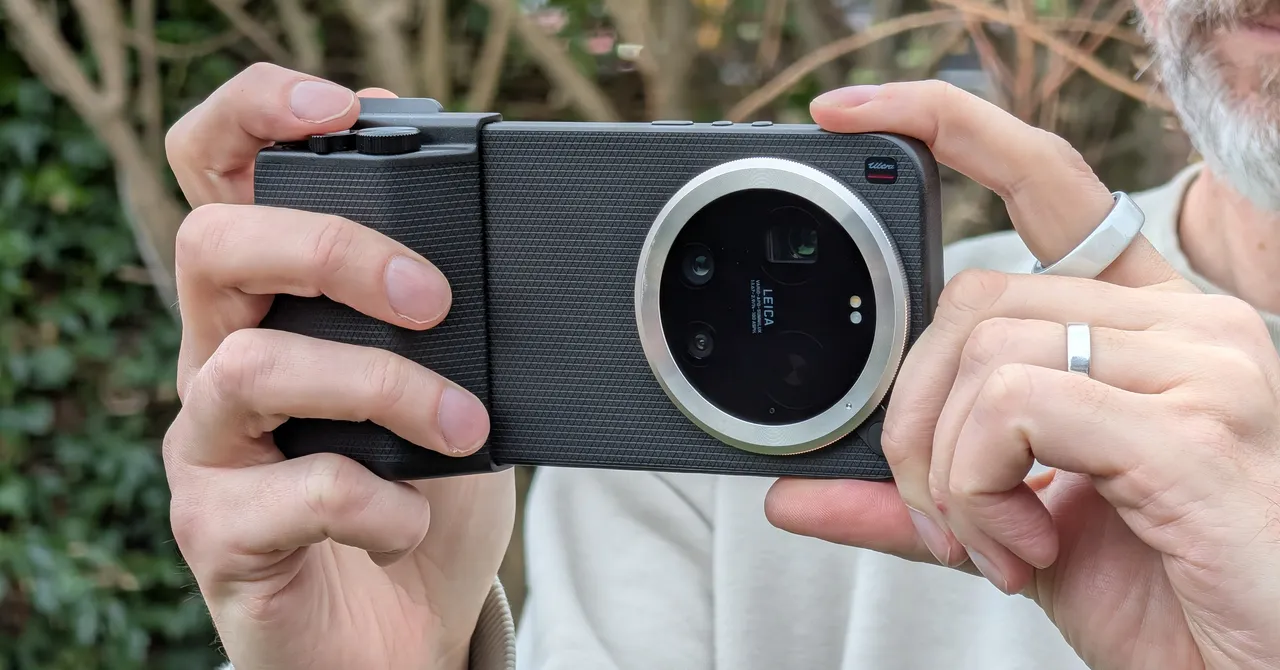
Design-wise, Leica has shifted back to a single tone body color, which looks more “Leica” to this camera dilettante’s eyes. And if you’re thinking you’ve heard of the Leitzphone before, you probably have: it was a series of phones made by Sharp that launched in Japan in 2021. They all had a 1-inch camera sensor and yes, as does Xiaomi’s first Leitzphone. It also gets a customizable ring to control camera settings.

The camera interface is also designed by Leica. with the aim of being as intuitive as possible, with a new Essential mode within the camera app for stripping away all those modes and labels, showcasing whatever you’re looking to shoot.

Leica Leitzphone

Image by Mat Smith for Engadget

The regular Xiaomi 17 Ultra and Leica edition have a Snapdragon 8 Elite Gen 5 chip and a 6.9-inch 120Hz display that can reach up to 3,500 nits of peak brightness. While cameras are the focus, it’s a flagship device by pretty much any metric — and the Leitzphone seems to have a very similar specsheet. We’ll be taking a closer look at what’s different when we get to test it out very soon.

Advertisement

After years of collaboration (and cute little badges), this may be the first pure “Leica phone” manufactured by Xiaomi but sold directly by both companies. It’s priced at €1,999 (roughly $2,362), but it’s not known yet whether this phone will launch in the US.

This is a developing story…

Source link

Advertisement
Continue Reading

Tech

Xiaomi 17 Ultra hands-on: Incredible cameras, but maybe hard to get

Published

on

China’s biggest phone makers continue to relentlessly forge ahead with high-spec phones that you may never see in the US. With the Xiaomi 17 Ultra this year, the company has continued its pattern from previous iterations by focusing on powerful camera sensors, huge batteries and… being selective about global availability.

Xiaomi’s 17 series is launching across multiple European territories months after its Asia debut, but at the time of writing, no word yet on US availability. Another logistical point of interest? When we last checked out Xiaomi’s devices, it was the 15 series, and the company has decided to skip 16 and leap straight to 17, conveniently matching Apple’s latest number.

Storied camera brand Leica has been involved with Xiaomi’s phones for a few years and its newest flagship doesn’t disappoint in that regard, because this is another Xiaomi device dedicated to photography.

Advertisement
Xiaomi 17 Ultra hands-on at MWC 2026
Image by Mat Smith for Engadget

The 17 Ultra has a huge 1-inch 50-megapixel main camera sensor with a f/1.67 lens, and a telephoto setup with a 200MP 1/1.4-inch sensor and going up to 4.3x optical zoom. Xiaomi claims it’s capable of up to 17x “optical-level zoom,” but quality doesn’t measure up to, say, the Oppo Find X9, with its dedicated telescopic lens add-on. There’s also a 50MP ultrawide camera to round things out.

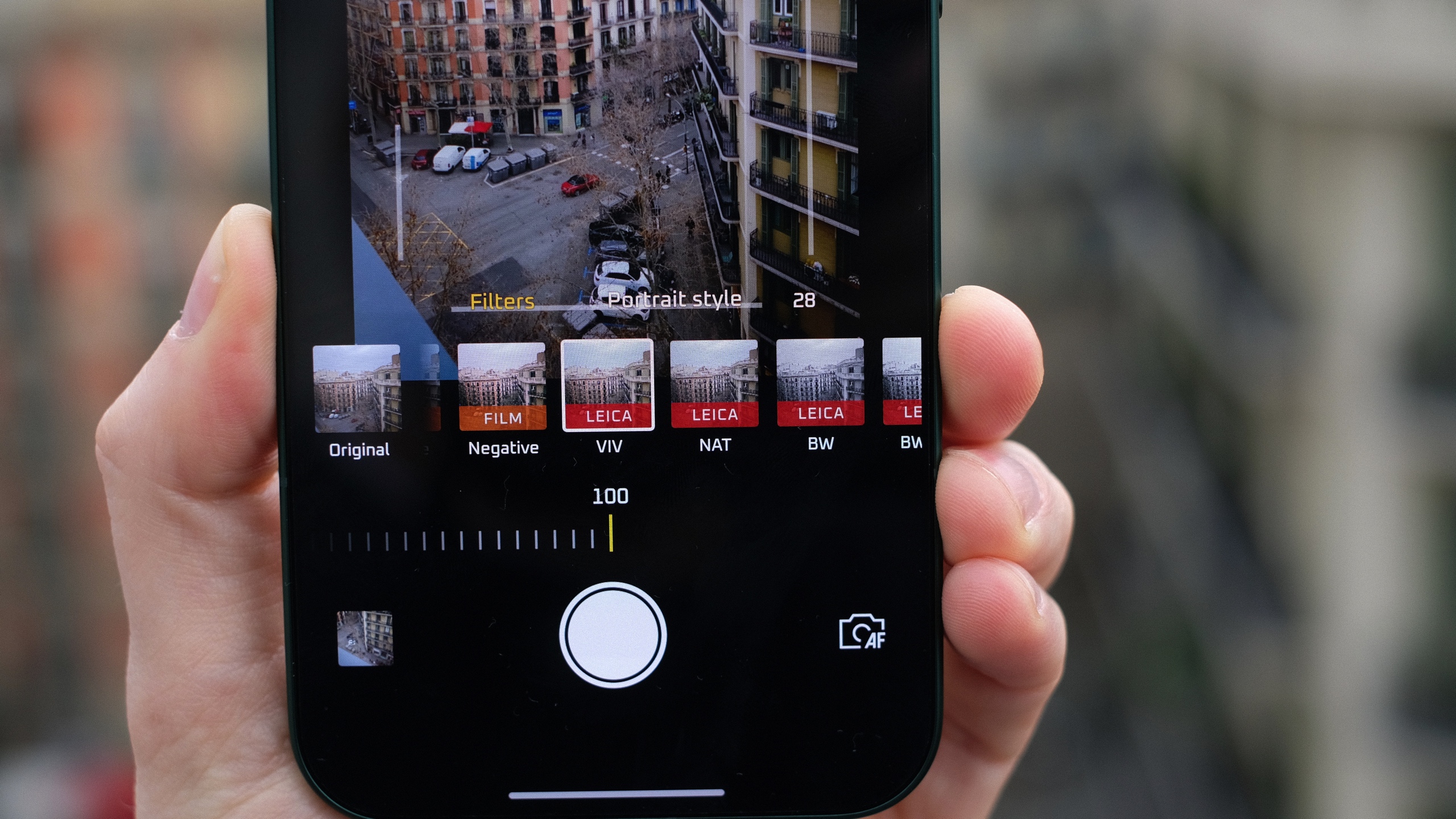
The main camera is very impressive, delivering plenty of detail and performing incredibly well in low light, seemingly before any computational photography kicks in. A new Light Fusion 1050L sensor features LOFIC HDR technology, delivering stronger control over highlights and more detail in darker areas of your shots. I've been impressed by the balanced color tone and contrast, without having to edit or add one of the (many) Leica camera filters.

If anything, the slightly heavy-handed algorithms can sometimes ruin parts of a shot. For instance, by scrambling lettering or capturing blurry, AI-mutated faces where computational photography takes a swing (and a miss) at people in the distance.

Xiaomi 17 Ultra hands-on photo samples
Mat Smith for Engadget

The telephoto camera alone is also technically interesting in a few ways. It offers continual optical zoom across the 75-100mm range without in-sensor cropping. This means the lenses physically move to deliver lossless zoom across a range of distances, without jarring leaps between camera sensors and crops. This doesn’t run across the full gamut, but it does roughly cover the 3-4x optical zoom range, which is often used in portrait photography.

The APO (apochromatic) lens design on the telephoto is more immediately useful and effective. An APO lens significantly reduces chromatic aberration by focusing three wavelengths of light (red, green and blue) onto the same focal plane. This lens design means it can correct color fringing and improve image sharpness.

Xiaomi 17 Ultra hands-on photo samples
At full optical zoom, this light fitting at Soho Theatre Walthamstow doesn't bloom or fringe to the extent that most smartphone zooms suffer from.
Mat Smith for Engadget

At higher zoom levels, fringing and lighting bloom often hamper telephoto photos on smartphones, and Xiaomi’s solution has some appeal. I noticed less fringing than on other zoom-capable Android phones from Samsung, Oppo and Google. It also supports macro photography, but is hindered this time by a minimum focal distance of 30cm (11.8 inches). Most smartphone cameras’ macro modes let you get much closer.

The 17 Ultra can capture up to 8K video (at 30 fps), 4K Dolby Vision up to 120 fps, and 4K 120 fps Log video, ensuring you can make the most of that huge 1-inch sensor in video, too. That said, it seems to struggle with stabilization at times, while its low-light performance doesn’t match its prowess in still photography, lagging behind flagship phones from Apple, Google and Samsung.

Advertisement

There's also a special Leica edition of the 17 Ultra, which is largely the same, specification-wise, but with a manual zoom ring around the camera unit. It's a cool gimmick, but felt oddly loose on a few devices I've handled. 

Xiaomi made a few design changes to its Ultra line this year, with a new, entirely flat display, and flattened edges that look like a certain family of devices. In fairness, it’s not the only company using imitation as flattery. There’s also IP68 protection against dust and water.

While cameras may be the highlight, this is a flagship device by any specification metric. With a 6.9-inch display, this expansive OLED display has variable refresh rates (1-120Hz) and peaks at 3,500 nits of brightness.

At that size, the Xiaomi 17 Ultra is in the territory of devices like the iPhone 17 Pro Max and S26 Ultra. A phone this size isn’t for everyone, but it is the thinnest Ultra phone from Xiaomi to date, with a profile measuring 8.29mm. Xiaomi has also reduced the camera unit’s diameter and raised it on the device, making it easier to use and helping keep fingers out of your shots.

Advertisement
Xiaomi 17 Ultra hands-on at MWC 2026
Image by Mat Smith for Engadget

Also, I’d be remiss if I didn’t mention the huge 6,000mAh silicon-carbon battery, with support for Xiaomi’s 90W HyperCharge (if you have the right charger) and 50W wireless HyperCharge (which also requires Xiaomi’s own dock) speeds. Other phone makers: Please put a battery this huge in your flagship.

At MWC 2026, the company announced the global launch and rollout of the device across Europe, including the UK where the Ultra will start priced at £1,299 (roughly $1,750). We're still waiting to confirm US availability and pricing.

While the specs are powerful, “launching” a flagship device that’s already been in the wild for a few months — even if elsewhere in the world — reduces the spectacle.

This article originally appeared on Engadget at https://www.engadget.com/mobile/smartphones/xiaomi-17-ultra-global-launch-hands-on-leica-camera-143006810.html?src=rss

Source link

Advertisement
Continue Reading

Tech

AI Assistant Uses ESP32 | Hackaday

Published

on

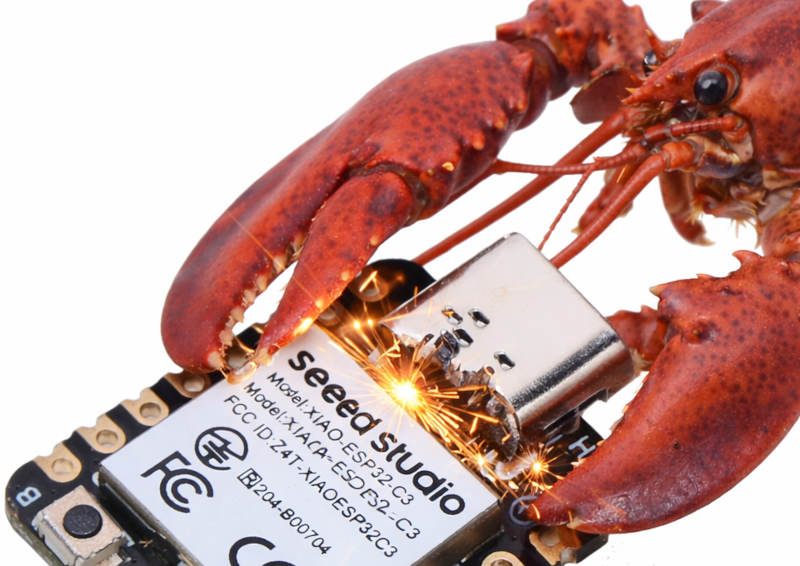
Having an AI assistant is all the rage these days, but AI assistants usually don’t know about your automation setups and may have difficulty dealing with tasks asynchronously. Enter zclaw. It gives you the option to have a personal assistant on an ESP32 backed by Anthropic, OpenAI, or OpenRouter. The whole thing fits in 888KB, and while it doesn’t host the LLM, it does add key capabilities to monitor and control devices connected to the ESP32.

You communicate with the assistant via telegram. You can say things like “Remember the garage sensor is on GPIO 4.” Then later you might say: “In 20 minutes, check the garage sensor and if it is high, set GPIO 5 low.” It has an RTOS for scheduling tasks and is aware of the timezone and common periods. Memory persists across reboots, and you can pick different personas.

Some of the use cases mentioned in the manual show how having something that can precisely schedule, control, or monitor devices might pay off. Ideas like bringing up a lab setup, scheduling plant watering, and more would be difficult to do with just a stock chatbot.

Advertisement

The AI can also introspect. For example, you could create a few tasks on a schedule and then ask the device to “show me my schedules.”  You can also create up to 8 tools with a name, description, and action. This lets you describe something like “power_down_bench” and then tell zclaw to execute it on demand or even on a schedule. Overall, an interesting and well-documented setup.

We’ve seen many projects like this, and each has its own charm. And its own personality.

Advertisement

Source link

Continue Reading

Tech

Nvidia pulls Resident Evil Requiem Game Ready driver over fan control issues

Published

on


After Nvidia launched the February 2026 Game Ready and Studio Driver, which includes optimizations for Resident Evil Requiem and the Marathon server slam, users complained that some fans on RTX GPUs would not turn on, raising the risk of overheating. Some noted that their cards began ignoring custom fan protocols…
Read Entire Article
Source link

Continue Reading

Tech

Review: Xiaomi 17 Ultra and Leitzphone Pack Leica Magic Into a Flagship Phone

Published

on

A big screen, powerful camera system, and top-notch performance can eat right into your battery life, but Xiaomi has managed to pack a 6,000-mAh battery into the 17 Ultra (up from 5,410 mAh last year). The jump gives it serious stamina, and this phone can go a couple of days between charges.

I wish Xiaomi had found a way to include Qi2, as magnetic wireless charging is the one thing I missed in switching from the Pixel 10 Pro XL (though you can sort of add it with the photography kit case). The 17 Ultra does support wireless charging at an impressively fast 50-watt rate, but the camera module makes it awkward to use with some wireless chargers. Wired charging goes up to 90 watts with the right adapter (not included).

Software used to be the big caveat, but I didn’t find much to complain about with the 17 Ultra. Xiaomi’s HyperOS apes iOS in places, and I still don’t like the unlabeled quick-settings icons, but it’s mostly perfectly fine. The Leica interface, with minimalist app icons and photography widgets, is much nicer than the slightly cartoonish HyperOS, but it’s very easy to customize. I don’t think bloatware has any place on a flagship phone, so I’m always annoyed to see apps like Facebook and TikTok preinstalled.

There’s plenty of AI onboard, if you care, and you can use Google’s Gemini or Xiaomi’s HyperAI for all sorts of photo and video editing, transcription, translation, summarization, and more. It’s not quite as slick and elegant as Google’s Pixel, but you can broadly achieve all the same results.

Advertisement

For folks who can get their hands on the global model more easily, it’s a near-flawless flagship contender that will satisfy anyone craving a big, powerful, photography-first phone.

Source link

Continue Reading

Tech

3D Print This MRI Safe Torque Wrench If You’re Rich

Published

on

MRI machines come with a variety of safety warnings. Perhaps most importantly, you have to be very careful not to take ferrous metal objects anywhere near them, since strong magnetic fields can send them flying, causing damage and injuries. To that end, you might find yourself in need of magnetically-safe tools when working on such machines. [Sam Schmitz] recently whipped up a nifty example of an MRI-safe torque wrench himself.

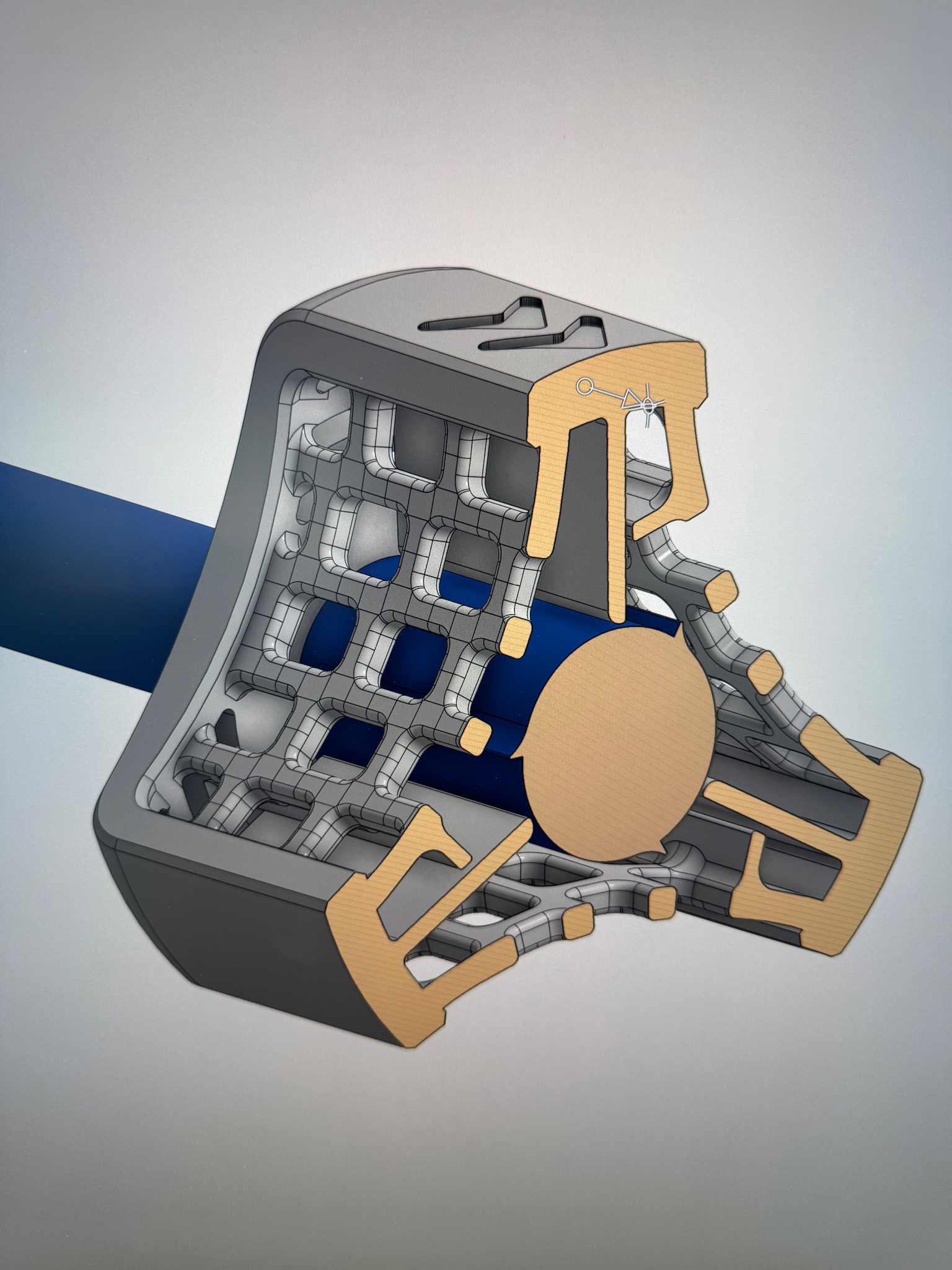
The torque wrench mechanism, which operates in one direction only.

It’s a 3D printed design which can be produced on a Formlabs Fuse 1+ as a single piece in nylon using a selective laser sintering process. The torque wrench works in a deceptively simple manner. As the handle is rotated, a flap  mates with the flat side of a fin on the shaft. This allows the shaft to turn. However, apply more than 0.6 Nm of torque, and the fin will eventually give in, snapping over the lip and stopping any further rotation that would over-tighten the fastener. [Sam] suggests these printed torque wrenches largely come out to the correct torque spec when printed, and can survive a thousand cycles or more while remaining in a usable spec.

The wrench does have one drawback though—it is apparently painfully loud to use. When the handle snaps past the detent, the “click” is quite piercing. [Sam] has measured the sound at up to 125 dB. Not exactly the best when it comes to ear safety!

If you work on MRI machines regularly, you already have the tooling to do your job. However, it’s neat to see that such a specialized tool can be easily and reliably 3D printed… with the slight drawback that you need a $60,000 SLS printer to do it. SLS isn’t readily available at the DIY level just yet, but it is slowly getting there. We’re waiting with bated breath.

Advertisement

Source link

Continue Reading

Tech

APT37 hackers use new malware to breach air-gapped networks

Published

on

APT37 hackers use new malware to breach air-gapped networks

North Korean hackers are deploying newly uncovered tools to move data between internet-connected and air-gapped systems, spread via removable drives, and conduct covert surveillance.

The malicious campaign has been named Ruby Jumper and is attributed to the state-backed group APT37, also known as ScarCruft, Ricochet Chollima, and InkySquid.

Air-gapped computers are disconnected from external networks, especially the public internet. Physical isolation is achieved at the hardware level by removing all connectivity (Wi-Fi, Bluetooth, Ethernet), while logical segregation relies on various software-defined controls, like VLANs and firewalls.

Wiz

In a physical air-gap environment, typical in critical infrastructure, military, and research sectors, data transfer is done through removable storage drives.

Researchers at cloud security company Zscaler analyzed the malware employed in APT37’s Ruby Jumper campaign and identified a toolkit of five malicious tools: RESTLEAF, SNAKEDROPPER, THUMBSBD, VIRUSTASK, and FOOTWINE.

Advertisement

Bridging the air gap

The infection chain begins when the victim opens a malicious Windows shortcut file (LNK), which deploys a PowerShell script that extracts payloads embedded in the LNK file. To divert attention, the script also launches a decoy document.

Although the researchers did not specify any victims, they note that the document is an Arabic translation of a North Korean newspaper article about the Palestine-Israel conflict.

The PowerShell script loads the first malware component, called RESTLEAF, an implant that communicates with APT37’s command-and-control (C2) infrastructure using Zoho WorkDrive.

RESTLEAF fetches encrypted shellcode from the C2 to download the next-stage payload, a Ruby-based loader named SNAKEDROPPER.

Advertisement

The attack continues with installing the Ruby 3.3.0 runtime environment – complete with the interpreter, standard libraries, and gem infrastructure – disguised as a legitimate USB-related utility named usbspeed.exe.

“SNAKEDROPPER is primed for execution by replacing the RubyGems default file operating_system.rb with a maliciously modified version that is automatically loaded when the Ruby interpreter starts,” via a scheduled task (rubyupdatecheck) that executes every five minutes, the researchers say.

The THUMBSBD backdoor is downloaded as a Ruby file named ascii.rb, as well as the VIRUSTASK malware as the bundler_index_client.rb file.

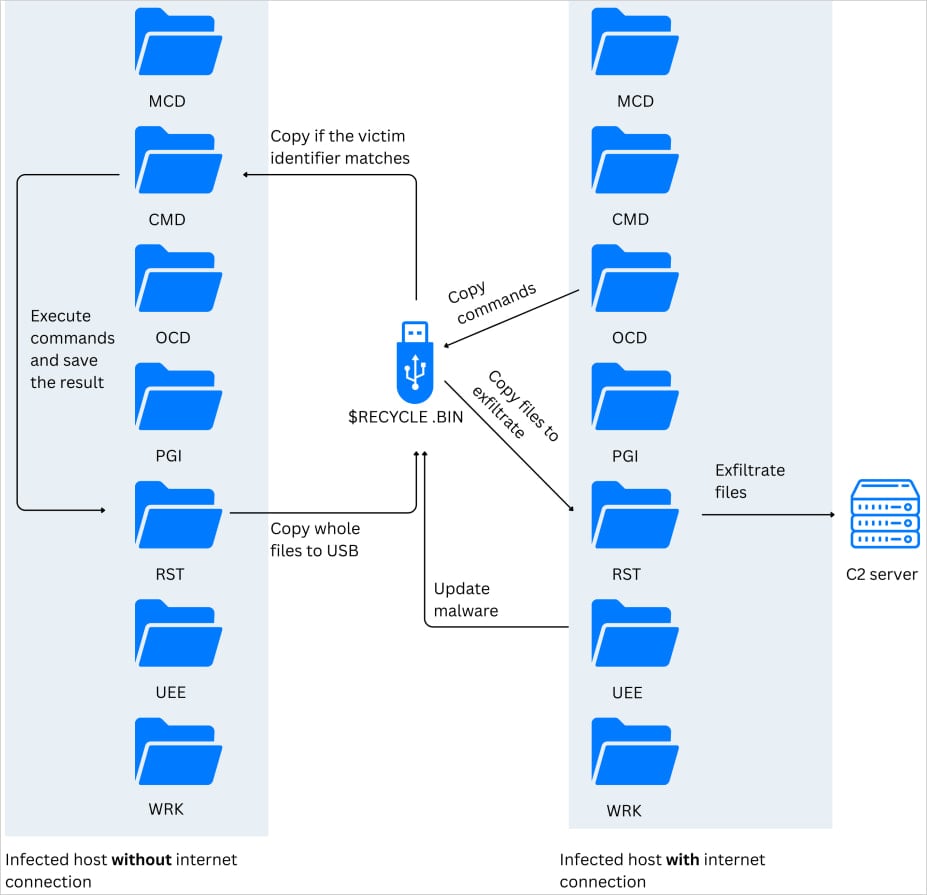
The role of THUMBSBD is to collect system information, stage command files, and prepare data for exfiltration. Its most crucial function is to create hidden directories on detected USB drives and copy files to them.

Advertisement

According to the researchers, the malware turns removable storage devices “into a bidirectional covert C2 relay.” This allows the threat actor to deliver commands to air-gapped systems as well as extract data from them.

ThumbSBD execution flow
Source: Zscaler

“By leveraging removable media as an intermediary transport layer, the malware bridges otherwise air-gapped network segments,” Zscaler researchers say.

VIRUSTASK’s role is to spread the infection to new air-gapped machines, weaponizing removable drives by hiding legitimate files and replacing them with malicious shortcuts that execute the embedded Ruby interpreter when opened.

The module will only trigger an infection process if the inserted removable media has at least 2GB of free space.

Overview of the attack chain
Overview of the Ruby Jumper attack chain
Source: Zscaler

Zscaler reports that THUMBSBD also delivers FOOTWINE, a Windows spyware backdoor disguised as an Android package file (APK) that supports keylogging, screenshot capture, audio and video recording, file manipulation, registry access, and remote shell commands.

Another piece of malware also observed in the APT37’s RubyJumper campaign is BLUELIGHT, a full-fledged backdoor previously associated with the North Korean threat group.

Advertisement

Zscaler has high confidence attributing the RubyJumper campaign to APT37 based on several indicators, including the use of the BLUELIGHT malware, initial vector relying on LNK files, two-stage shellcode delivery technique, and C2 infrastructure typically observed in attacks from this actor.

The researchers also note that the decoy document indicates that the target of the RubyJumper activity is interested in North Korean media narratives, which aligns with the victim profile of this threat group.

Modern IT infrastructure moves faster than manual workflows can handle.

In this new Tines guide, learn how your team can reduce hidden manual delays, improve reliability through automated response, and build and scale intelligent workflows on top of tools you already use.

Source link

Advertisement
Continue Reading

Tech

Amazon’s new Fire TV interface includes a redesigned mobile app

Published

on

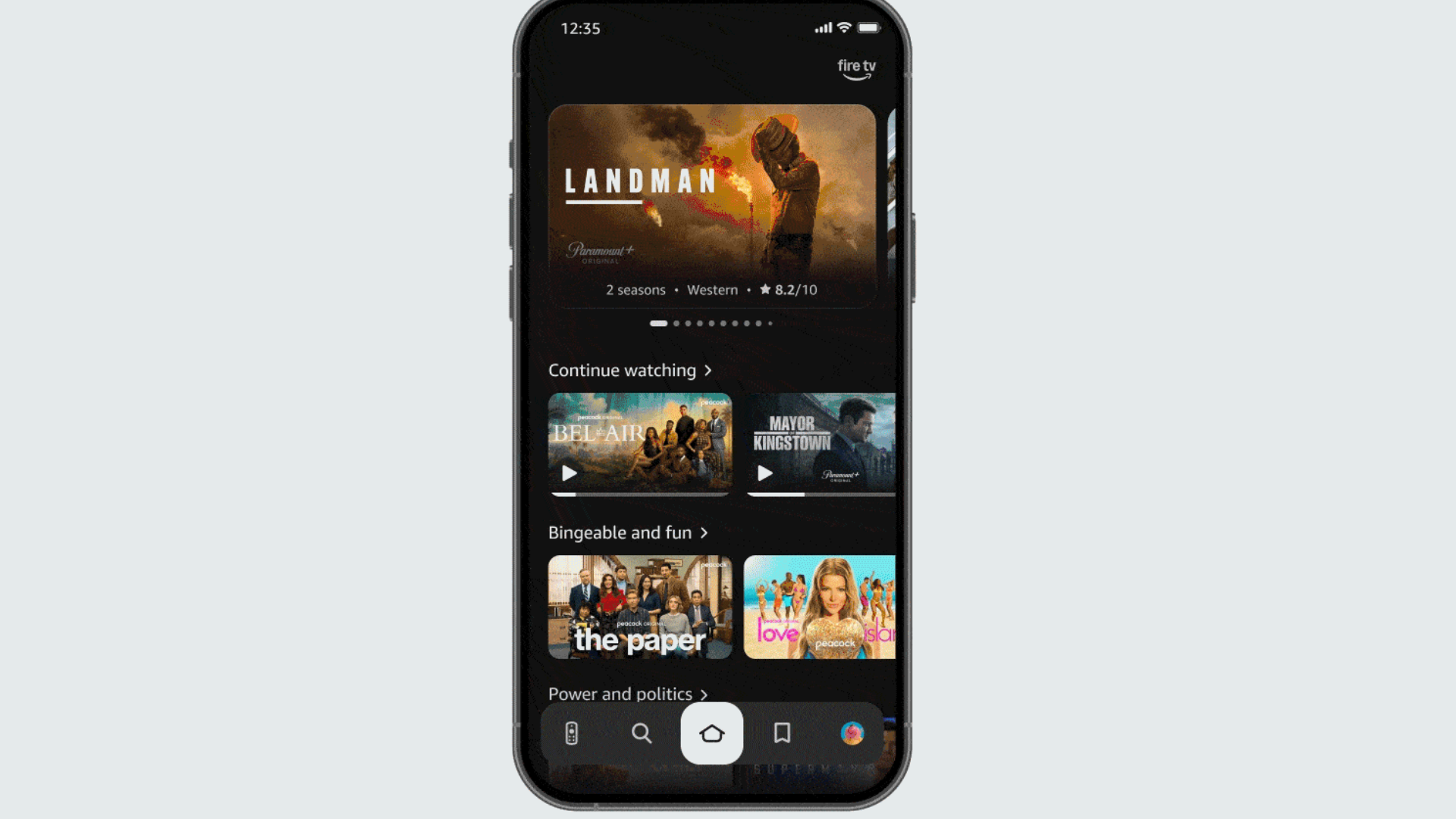
Amazon is rolling out a massive, redesigned Fire TV experience, and the star of the show for many users is a transformed Fire TV mobile app.

This isn’t just a minor tweak; the update effectively turns your smartphone into a genuine second screen, making the entire process of discovering, managing, and launching content onto your TV significantly easier and faster.

The refreshed mobile application now sports a look and feel that aligns with the updated Fire TV interface. Gone are the days of clunky navigation; the app offers streamlined browsing for a quicker path to movies, TV shows, live sports, and other content. 

This means less time wasted scrolling and more time enjoying your favourite entertainment. Users can now manage their watchlists, initiate playback on their TV, and even save recommendations from friends while they are away from home. Talk about convenience.

Advertisement

With this new version, your phone evolves from a simple remote into a powerful companion device designed to drastically cut down on searching.

Advertisement

In a smart move, the app is fully integrated with Alexa+, Amazon’s new generative AI-powered assistant that is available in certain regions. This integration promises personalised recommendations that are actually useful and smarter overall navigation, essentially acting as a personal content curator in your pocket.

The new mobile app marks a strategic move Amazon made to position Fire TV as a truly connected ecosystem. Pairing the revamped Fire TV interface with this significantly more capable mobile app, Amazon is ensuring that the largest screen in your home works in perfect harmony with the one you carry around everywhere. 

Advertisement

This makes finding and watching content less of a chore and more of a fluid experience.

The rollout of this redesigned app has started in the UK, Germany, France, Italy, Spain, Japan, and India. Amazon has confirmed that availability will be expanding to more countries globally in the coming weeks, so users worldwide can look forward to getting their hands on this elevated Fire TV experience soon. 

Source link

Advertisement
Continue Reading

Trending

Copyright © 2025