Connect with us

NewsBeat

Iran has been attacked by US and Israel when peace was within reach

Published

on

Iran has been attacked by US and Israel when peace was within reach

US and Iranian negotiators met in Geneva earlier this week in what mediators described as the most serious and constructive talks in years. Oman’s foreign minister, Badr Albusaidi, spoke publicly of “unprecedented openness,” signalling that both sides were exploring creative formulations rather than repeating entrenched positions. Discussions showed flexibility on nuclear limits and sanctions relief, and mediators indicated that a principles agreement could have been reached within days, with detailed verification mechanisms to follow within months.

These were not hollow gestures. Real diplomatic capital was being spent. Iranian officials floated proposals designed to meet US political realities – including potential access to energy sectors and economic cooperation. These were gestures calibrated to allow Donald Trump to present any deal as tougher and more advantageous than the 2015 agreement he withdrew the US from in May 2018. Tehran appeared to understand the optics Washington required, even if contentious issues such as ballistic missiles and regional proxy networks remained outside the immediate framework. Then, in the middle of these talks, the bridge was shattered.

Sensing how close the negotiations were — and how imminent military escalation had become — Oman’s foreign minister, Badr Albusaidi, made an emergency dash to Washington in a last-ditch effort to preserve the diplomatic track.

In an unusually public move for a mediator, he appeared on CBS to outline just how far the talks had progressed. He described a deal that would eliminate Iranian stockpiles of highly enriched uranium, down-blend existing material inside Iran, and allow full verification by the International Atomic Energy Agency (IAEA) — with the possibility of US inspectors participating alongside them. Iran, he suggested, would enrich only for civilian purposes. A principles agreement, he indicated, could be signed within days. It was a remarkable disclosure — effectively revealing the contours of a near-breakthrough in an attempt to prevent imminent war.

Advertisement

But rather than allowing diplomacy to conclude, the US and Israel have launched coordinated strikes across Iran. Explosions were reported in Tehran and other cities. Trump announced “major combat operations,”, framing them as necessary to eliminate nuclear and missile threats while urging Iranians to seize the moment and overthrow their leadership. Iran responded with missile and drone attacks targeting US bases and allied states across the region.

What is most striking is not merely that diplomacy failed, but that it failed amid visible progress. Mediators were openly discussing a viable framework; both sides had demonstrated flexibility – a pathway to constrain nuclear escalation appeared tangible. Choosing military escalation at that moment undermines the premise that negotiation is a genuine alternative to war. It signals that even active diplomacy offers no guarantee of restraint. Peace was not naïve. It was plausible.

Iran’s approach in Geneva was strategic, not submissive. Proposals involving economic incentives – including energy cooperation – were not unilateral concessions but calculated compromises designed to structure a politically survivable agreement in Washington. The core objective was clear: constrain Iran’s nuclear programme through enforceable limits and intrusive verification, thereby addressing the very proliferation risks that sanctions and threats of force were meant to prevent.

Talks had moved beyond rhetorical posturing toward concrete proposals. For the first time in years, there was credible movement toward stabilising the nuclear issue. By attacking during that negotiation window, Washington and its allies have not only derailed a diplomatic opening but have cast doubt on the durability of American commitments to negotiated solutions. The message to Tehran – and to other adversaries weighing diplomacy – is stark: even when talks appear to work, they can be overtaken by force.

Advertisement

Iran is not Iraq or Libya

Advocates of escalation often invoke Iraq in 2003 or Libya in 2011 as precedents for rapid regime collapse under pressure. Those analogies are misleading. Iraq and Libya were highly personalised systems, overly dependent on narrow patronage networks and individual rulers. Remove the centre, and the structure imploded.

Iran is structurally different. It is not a dynastic dictatorship but an ideologically entrenched state with layered institutions, doctrinal legitimacy and a deeply embedded security apparatus, including the Islamic Revolutionary Guard Corps. Its authority is intertwined with religious, political and strategic narratives cultivated over decades. It has endured sanctions, regional isolation and sustained external pressure without fracturing.

Even a previous US-Israeli campaign in 2025 that lasted 12 days failed to eliminate Tehran’s retaliatory capacity. Far from collapsing, the state absorbed pressure and responded. Hitting such a system with maximum force does not guarantee implosion; it may instead consolidate internal cohesion and reinforce narratives of external aggression that the leadership has long leveraged.


À lire aussi :
The US and Israel’s attack may have left Iran stronger

Advertisement

The mirage of regime change

Rhetoric surrounding the strikes has already shifted from tactical objectives to the language of regime change. US and Israeli leaders framed military action not solely as neutralising missile or nuclear capabilities, but as an opportunity for Iranians to overthrow their government. That calculus – regime change by force – is historically fraught with risk.

An incoming missile crashes into the sea off the port of Haifa in Israel as Iran retaliates.
AP Photo/Leo Correa

The Iraq invasion should be a cautionary tale. The US spent more than a decade cultivating multiple Iraqi opposition groups – yet dismantling the centralised state apparatus still produced chaos, insurgency and fragmentation. The vacuum gave rise to extremist organisations such as IS, drawing the US into years of renewed conflict.

Approaching Iran with similar assumptions ignores both its institutional resilience and the complexity of regional geopolitics. Sectarian divisions, entrenched alliances and proxy networks mean that destabilisation in Tehran would not remain contained. It could rapidly spill across borders and harden into prolonged confrontation.

A region wired for escalation

Iran has invested heavily in asymmetric capabilities precisely to deter and complicate external intervention. Its missile, drone and naval systems are embedded along the Strait of Hormuz — a chokepoint for global energy — and linked into a network of regional allies and militias.

Advertisement

In the current escalation, Tehran has already launched retaliatory missile and drone strikes against US military bases and allied territories in the Gulf, hitting locations in Iraq, Bahrain, the United Arab Emirates (including Abu Dhabi), Kuwait and Qatar in direct response to US and Israeli strikes on Iran’s cities, including Tehran, Qom and Isfahan. Explosions have been reported in Bahrain and the UAE, with at least one confirmed fatality in Abu Dhabi, and several bases housing US personnel have been struck or targeted, underscoring how the conflict has already spread beyond Iran’s borders

A full-scale regional war is now more likely than it was a week ago. Miscalculation could draw multiple states into conflict, inflame sectarian fault lines and disrupt global energy markets. What might have remained a contained nuclear dispute now risks expanding into a wider geopolitical confrontation.

What about Trump’s promise of no more forever wars?

Trump built his political brand opposing “endless wars” and criticising the Iraq invasion. “America First” promised strategic restraint, hard bargaining and an aversion to open-ended intervention. Escalating militarily at the very moment diplomacy was advancing sits uneasily with that doctrine and revives questions about the true objectives of US strategy in the Middle East.
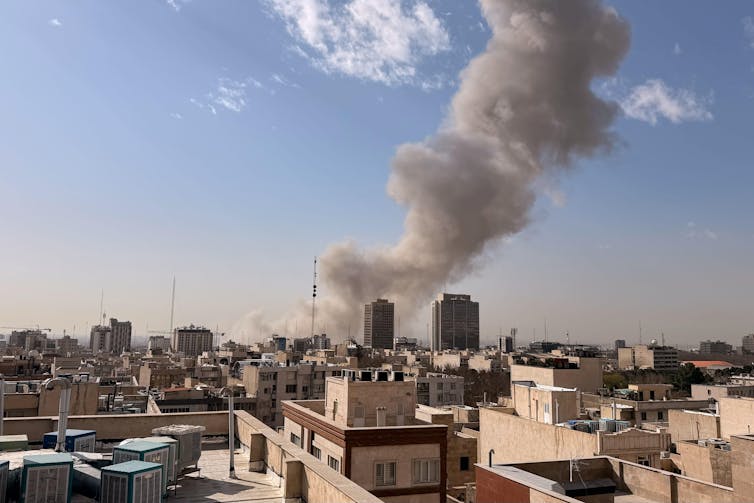
Tehran skyline as missiles strike, February 28 2026.
Tehran and other Iranian cities have come under heavy bombardment from Israel and the US.
AP Photo

If a workable nuclear framework was genuinely emerging, abandoning it in favour of escalation invites a deeper question: does sustained tension serve certain strategic preferences more comfortably than durable peace?

Trump’s Mar-a-Lago address announcing the strikes carried unmistakable echoes of George W. Bush before the 2003 invasion of Iraq. Military action was framed as reluctant yet necessary – a pre-emptive move to eliminate gathering threats and secure peace through strength. The rhetoric of patience exhausted and danger confronted before it fully materialises closely mirrors the language Bush used to justify the march into Baghdad.

Advertisement

The parallel extends beyond tone. Bush cast the Iraq war as liberation as well as disarmament, promising Iraqis freedom from dictatorship. Trump similarly urged Iranians to reclaim their country, implicitly linking force to regime change. In Iraq, that fusion of shock and salvation produced not swift democratic renewal but prolonged instability. The assumption that military force can reorder political systems from the outside has already been tested – and its costs remain visible.

The central challenge now facing the US is not simply Iran’s military capability. It is credibility. Abandoning negotiations mid-course signals that diplomacy can be overridden by force even when progress is visible. That perception will resonate far beyond Tehran.

Peace was never guaranteed. It was limited and imperfect, focused primarily on nuclear constraints rather than human rights or regional proxy networks. But it was plausible – and closer than many assumed. Breaking the bridge while building it does more than halt a single agreement – it risks convincing both sides that negotiation itself is futile.

In that world, trust erodes, deterrence hardens and aggression – not agreement – becomes the default language of international power. What we are witnessing is yet another clear indication that the rules-based order has been consigned to the history books.

Advertisement

Source link

Continue Reading
Click to comment

Leave a Reply

Your email address will not be published. Required fields are marked *

NewsBeat

Erling Haaland out of Leeds clash with injury in huge blow for Man City

Published

on

Erling Haaland out of Leeds clash with injury in huge blow for Man City

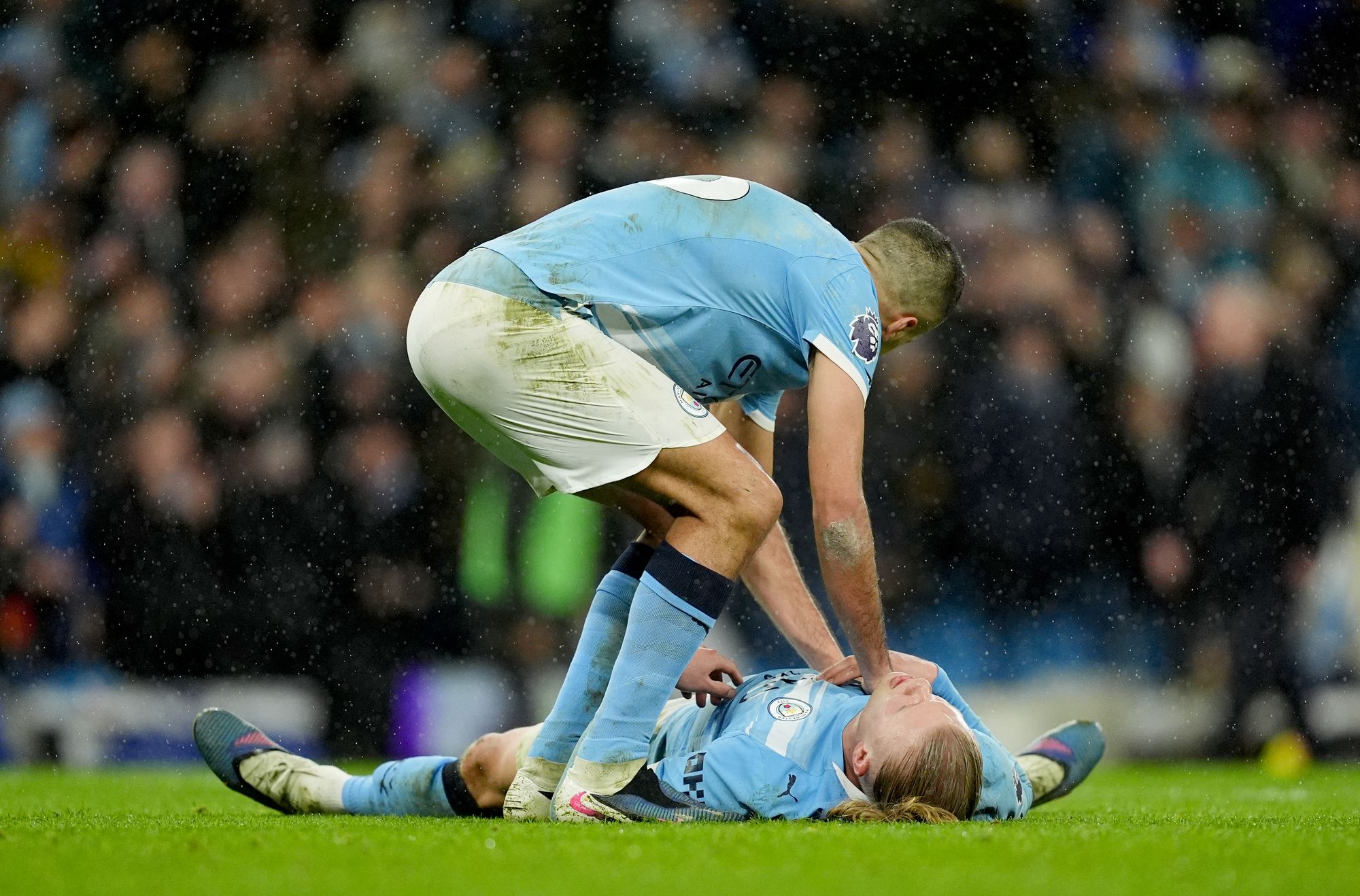
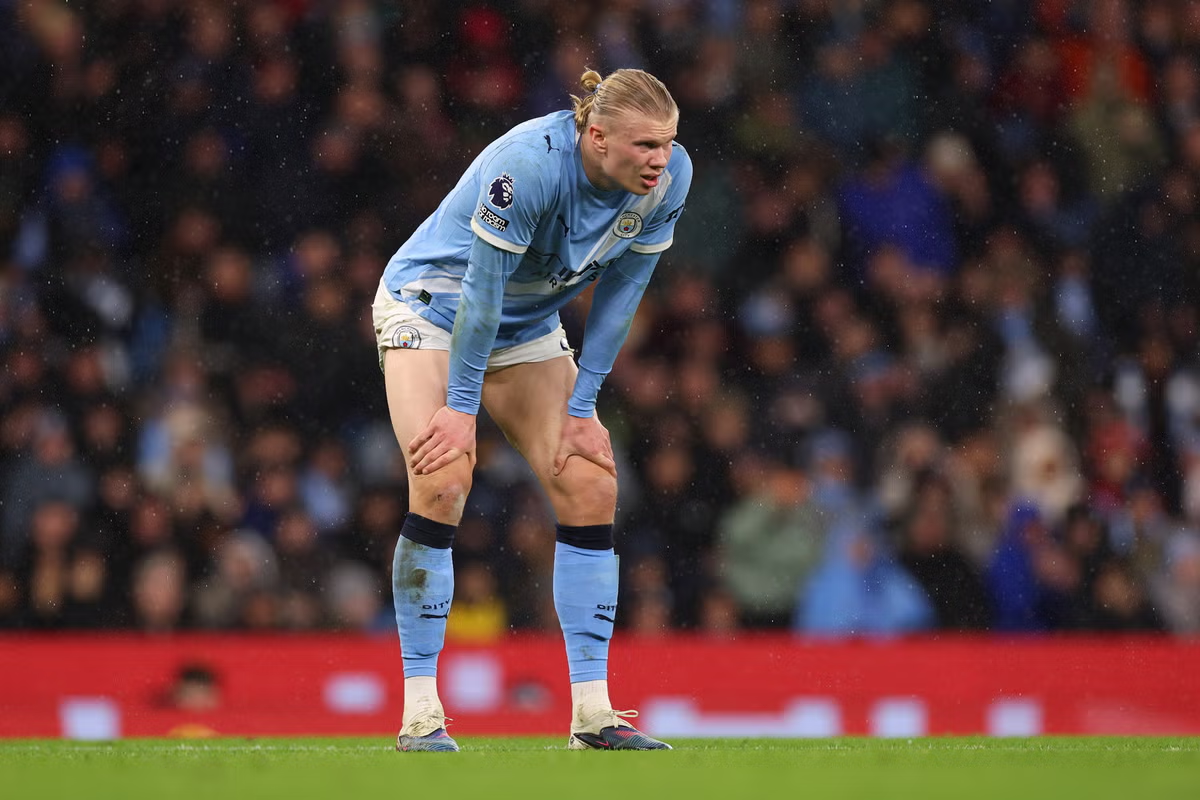
Erling Haaland has not been named in the Manchester City side to take on Leeds United in their crunch Premier League clash this evening, with reports suggesting the Norwegian superstar is dealing with a knee injury.

Haaland didn’t travel to Elland Road with the Man City squad, after suffering an injury in training ahead of the trip.

Norwegian pundit Jan Aage Fjortoft revealed on Viaplay Football that the 25-year-old striker’s issue is only minor and he is expected to return for City’s game with Nottingham Forest on Wednesday night.

Erling Haaland is out of Man City’s clash with Leeds

Advertisement
Erling Haaland is out of Man City’s clash with Leeds (Martin Rickett/PA Wire)

City can ill afford any slip-ups in the Premier League title race as they try to hunt down Arsenal, trailing the Gunners by five points heading into the weekend, albeit with a game in hand.

Pep Guardiola’s side have been in superb form domestically in recent week, winning four and drawing one of their last five league games since a 2-0 defeat in the Manchester derby in mid-January.

Haaland’s absence will be a blow however, with Omar Marmoush set to lead the line against Leeds – and the likes of Antoine Semenyo and Rayan Cherki as the other attacking forces in the starting XI.

The Norwegian has scored just two goals in his last six Premier League games but still tops the divisions’ goalscoring charts with 22 goals this season.

Advertisement

Source link

Continue Reading

NewsBeat

Tyrrells axes iconic crisp flavour after 23 years on store shelves

Published

on

Tyrrells axes iconic crisp flavour after 23 years on store shelves
Some fans have called this line their ‘favourite’ veggie alternative (Picture: Getty Images/Maskot)

Snack giant Tyrrells has announced it will axe its vegetable crisps range, pulling the once-iconic savoury treat from stores.

Parent company KP Snacks confirmed that, following a ‘sustained decline in demand and the loss of key export volumes’, it has taken the decision to close its factory in Uttoxeter, Staffordshire, where Tyrrells vegetable crisps are produced.

KP Snacks acquired the hand-cooked crisp brand Tyrrells from The Hershey Company back in 2018, marking a new chapter for the premium snack label.

However, amid ongoing market pressures, Tyrrells has been forced to scale back one of its most recognisable lines.

Advertisement

First hitting stores in 2003, the brand’s vegetable crisps feature a range of hand-cooked, gluten-free, and vegan-friendly root vegetable mixes seasoned primarily with sea salt. One of the most popular bags includes a mix of parsnip, beetroot, and carrot flavours.

For some, they’ve become a cupboard staple. But it looks like now the hunt will officially be on to find the best alternative option.

Chips on hand at home in summer
Will you miss the Tyrrells vegetable crisps? (Picture: Getty Images)

Tyrrells was first launched by Herefordshire potato farmer William Chase in 2002.

Known for both its taste and quality ingredients, Tyrrells carved a spot for itself in the market and quickly started racking up accolades.

In fact, the crisp brand regularly cleans up at the Great Taste Awards, the world’s largest, most respected food accreditation scheme – organised by the Guild of Fine Food.

Advertisement

With over 69 gold awards, Tyrrells has bagged more wins than any other premium crisp brand.

And unsurprisingly, everyone’s favourite summer snack, the signature Sea Salt & Cider Vinegar crisps, has won eight gold medals over 14 years.

Following the news, a spokesperson from Tyrrells made sure to stress that there are no planned changes to its other potato crisp ranges, assuring customers that the existing lines are ‘not affected and continue to perform strongly’.

However, that does little to ease the nerves of the workers currently stationed at the factory in Uttoxeter.

Advertisement

Hey, foodies! Add us as a Preferred Source

At Metro Food, we’re here to bring you all the latest foodie news, delicious recipes, restaurant reviews, and cooking tips. As a loyal reader and a part of our vibrant community, we want to make sure you never miss our articles when searching for stories

Click here and tick Metro.co.uk to ensure you see stories from us first in Google Search.

From the latest Walkers flavours to the secret McDonald’s menu, Metro Food has it all

What’s your favourite ‘posh’ crisp brand?

The company has stated: ‘While no final decisions have been made, we appreciate this is an uncertain time for our colleagues at Uttoxeter and we are supporting them throughout the consultation process. 

‘Should the proposal progress, we will explore any ways to reduce or avoid redundancies where possible.’

Social media users online have hypothesised that one of the reasons demand for the vegetable crisp line may have dwindled is due to the hefty price tag.

Advertisement

‘I love them but they’re too pricey’

Everyone has a favourite vegetable crisp, mine has personally always been beetroot.

However, with more and more alternative options popping up on store shelves, Tyrrell’s premium cost may have officially pushed people away.

At £2.75 for a 125g bag, Tyrrells sits at the top end of the vegetable crisp market.

In comparison, an 100g bag of Marks & Spencer’s own brand of Vegetable Crisps, made up of a similar beetroot, parsnip, and sweet potato mix, is only £1.85.

Advertisement

Or there’s the Tesco Finest Root Vegetable with Sea Salt crisps, an 125g bag of those will set you back £2.40 – every little helps!

Different coloured potato chips
Tyrrells first launched its vegetable crisps range in 2003 (Credits: Getty Images)

Following the announcement, fans flooded social media with their thoughts and suggestions. And as it turns out, this particular line of snacks really gets people heated.

But while some people focused on the contents of the bag, with one user on Reddit sharing: ‘I wish they would just do a bag of beetroot crisps, I stopped buying the veg crisps because they were 90% parsnips and I found them too hard for my liking,’ others explained that they’d been put off by the price.

One customer wrote: ‘I absolutely love the vegetable crisps but they keep getting more expensive and seem to be increasingly full of beetroot and grease instead of the parsnip crisps that I actually want.

‘The supermarket ones are cheaper and the same quality so I don’t feel like it’s a huge loss really. It feels planned if anything.’

Advertisement

Another added: ‘They want three quid for a bag and are surprised that demand is decreasing…?’

With there still strong interest in the company’s other lines, it’s a shame that we’re having to say goodbye to the beloved beetroot crisp.

Time to try M&S’s alternative.

Advertisement

Source link

Advertisement
Continue Reading

NewsBeat

The Deathly Dark Tours opens new shop in Grape Lane, York

Published

on

The Deathly Dark Tours opens new shop in Grape Lane, York

After six years of guiding tourists across the city’s cobbled, murky streets, York’s Deathly Dark Tours has acquired its first shop in Grape Lane.

The new building, which opened to the public earlier this month, serves as a ticket office for the tour company and stocks its spooky artefacts.


Recommended reading:


Its guides Dr Dorian Deathly, Dafydd, Daria, Dalton and Dante celebrated the shop opening by inviting the public for a free tour.

Advertisement

The company provides visitors and residents of York with three specialist tours.

These include The Spookologist’s Guide to Haunted York, which tours the city streets in search of paranormal activity on Tuesday, Wednesday, Friday and Saturday evenings, starting from 7pm.

Speaking about this, the company explained: “This features a blend of local history, infamous supernatural sightings and a sprinkling of paranormal science.

“Think poltergeists, orbs, funnel ghosts, residual and intelligent hauntings.”

Advertisement

After “six incredible years of business”, the company said it was ready to open the doors to its first brick and mortar building (Image: Newsquest)

The tour is for those aged 13 and above, but children over 10 can join tour – Murder & Mayhem – which runs at 3pm on Tuesdays through to Saturdays.

The true crime journey visits the sights, sounds, but thankfully not the smells of York in years gone by.

It features a huge dollop of history, which can be listened to on headphones provided.

A little later in the evening, The Deathly Dark Tour begins.

Advertisement

From 8pm each night, guides will delve into the spooky hauntings of the city’s past, sprinkling each tour in dark humour and theatrical performances.

The new shop will bring these together, with tourists getting a preview of the tour’s content when booking tickets.

Speaking about this, a spokesperson for the company said in a statement on social media: “We’re thrilled to announce that The Deathly Dark Tour Company now has a physical residence in York!

“As we celebrate six incredible years of business, we’re proud to launch our brand-new ticket office – where you can come, book your tour, check in and discover some dark treasures.”

Advertisement

The tour shop’s opening hours are: Monday (3pm till 8.30pm); Wednesday (3pm till 8.30pm); Friday (3pm till 8.30pm); Saturday (12pm till 8.30pm); Sunday (6.30pm till 8.30pm).

Source link

Advertisement
Continue Reading

NewsBeat

Fire at luxury Dubai hotel on The Palm following Iran ‘missile attack’ on UAE

Published

on

Manchester Evening News

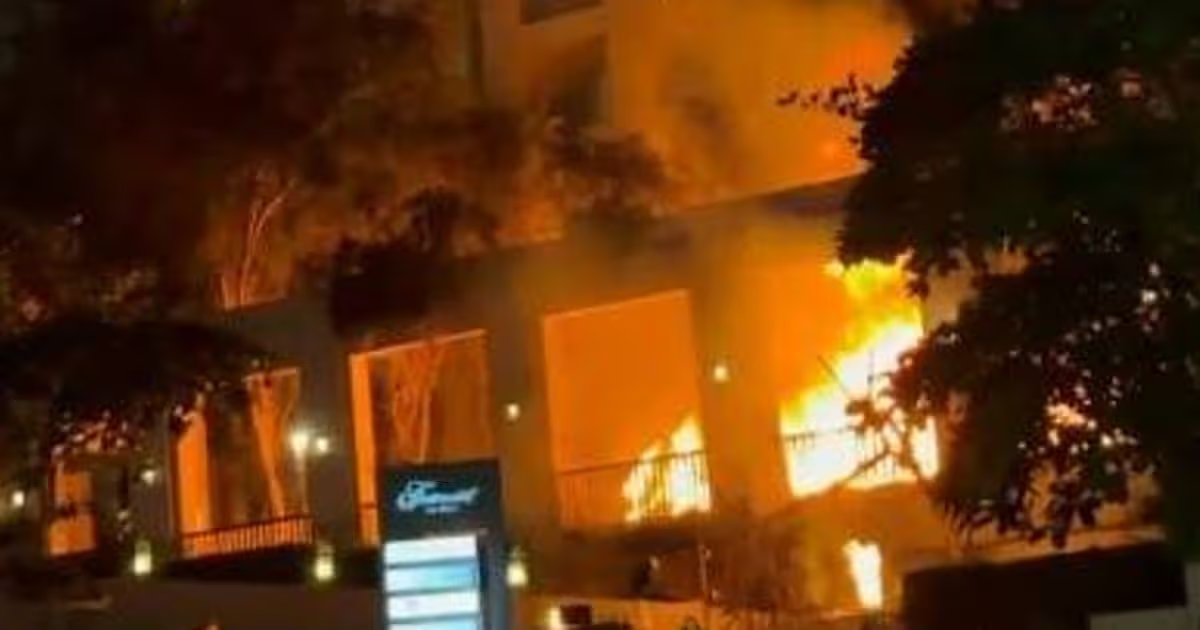
Images reportedly taken from the scene show The Fairmont Hotel on The Palm on fire this afternoon

A hotel on The Palm in Dubai is reportedly on fire after an alleged missile attack.

Images reportedly taken from the scene show The Fairmont Hotel in Dubai on fire this afternoon, the Mirror reports.

According to Sky News, Dubai’s media office has said emergency services responded to an ‘incident’ in a building in the Palm Jumeirah area. No more details have been provided.

Advertisement

The flames come after Donald Trump stated that the US had launched ‘major combat operations’ in Iran overnight.

US and Israeli forces attacked Iran on Saturday morning in what the two countries described as a “pre-emptive” strike against a Tehran government intent on developing nuclear weapons.

Click here to prioritise Manchester news in Google from the MEN

Israel’s defence minister, Israel Katz, said the strikes were being carried out “to remove threats”, while witnesses in Tehran reported hearing explosions. There have been “dozens” of strikes across Iran.

Advertisement

The attack prompted retaliation from Iran, with missiles reported to have targeted Israel and countries across the Middle East.

People ran for cover earlier today in Dubai as a loud bang was heard near the Marina. In Abu Dhabi, the capital of the United Arab Emirates, a death was reported after debris fell on a residential area.

Britain was not involved in the strikes on Iran, and the government has advised UK nationals in some parts of the Middle East to “shelter in place”.

Making a statement to the press on Saturday afternoon, Sir Keir said British aircraft in the region were “in the sky” as part of “co-ordinated regional defensive operations to protect our people, our interests and our allies”.

In a joint statement with the leaders of France and Germany, Sir Keir condemned Iran’s retaliation “in the strongest terms”.

The three leaders said: “Iran must refrain from indiscriminate military strikes. We urge the Iranian leadership to seek a negotiated solution. Ultimately, the Iranian people must be allowed to determine their future.”

Sir Keir’s statement comes after he chaired a meeting of the Government’s emergency Cobra committee before speaking to allies including France’s President Emmanuel Macron and German Chancellor Friedrich Merz.

Advertisement

Saturday’s attack follows mounting tension in the region, with the US deploying a fleet of warships and aircraft to pressure Tehran.

Talks between the US and Iran regarding Tehran’s nuclear programme ended on Thursday without agreement.

On Saturday, Israeli authorities said the strikes – dubbed Operation Roaring Lion by Israel and Operation Epic Fury by the US – were intended to “thoroughly degrade the Iranian terrorist regime and to remove existential threats to Israel”.

Advertisement

In a video posted on his Truth Social platform, US President Donald Trump said the attacks were “a noble mission”.

He said Iran had “attempted to rebuild their nuclear programme and to continue developing long-range missiles that can now threaten our very good friends and allies in Europe, our troops stationed overseas and could soon reach the American homeland”.

Source link

Advertisement
Continue Reading

NewsBeat

Emma Raducanu copies Roger Federer contract clause as Brit in line for another big payday

Published

on

Wales Online
Emma Raducanu copies Roger Federer contract clause as Brit in line for another big payday | Wales Online

Advertisement
reach logo

At Reach and across our entities we and our partners use information collected through cookies and other identifiers from your device to improve experience on our site, analyse how it is used and to show personalised advertising. You can opt out of the sale or sharing of your data, at any time clicking the “Do Not Sell or Share my Data” button at the bottom of the webpage. Please note that your preferences are browser specific. Use of our website and any of our services represents your acceptance of the use of cookies and consent to the practices described in our Privacy Notice and Terms and Conditions.

Source link

Continue Reading

NewsBeat

Flights cancelled and routes suspended after US and Israel launch strikes on Iran

Published

on

Flights cancelled and routes suspended after US and Israel launch strikes on Iran

Passengers have been plunged into travel chaos after the cancellation of flights between Western Europe and the Middle East after the US and Israel launched strikes on Iran.

The “major combat operation” confirmed by Donald Trump on Saturday morning has had a major impact on flights in the region, as Iran and Iraq’s airspaces were closed due to the escalating action.

With missiles being launched from Israel against Iran, and retaliatory strikes from Iran, flights that would normally cross those countries are being forced to divert.

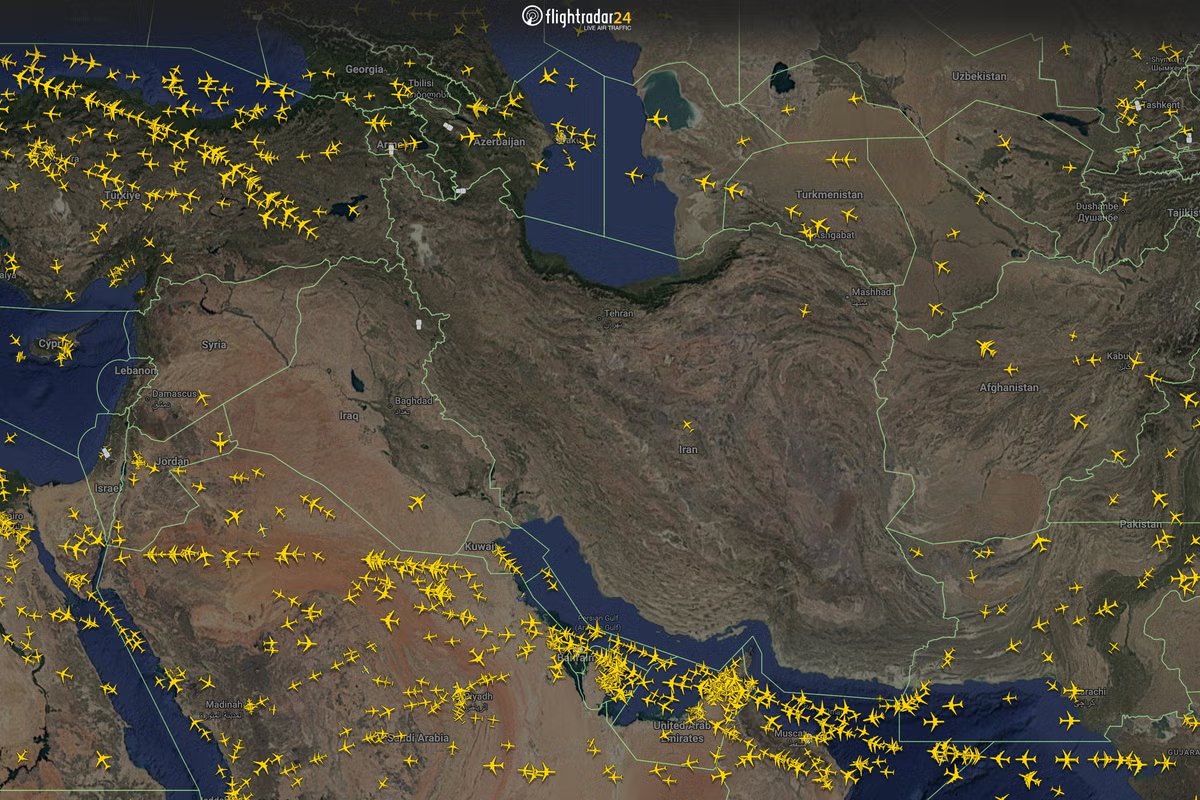
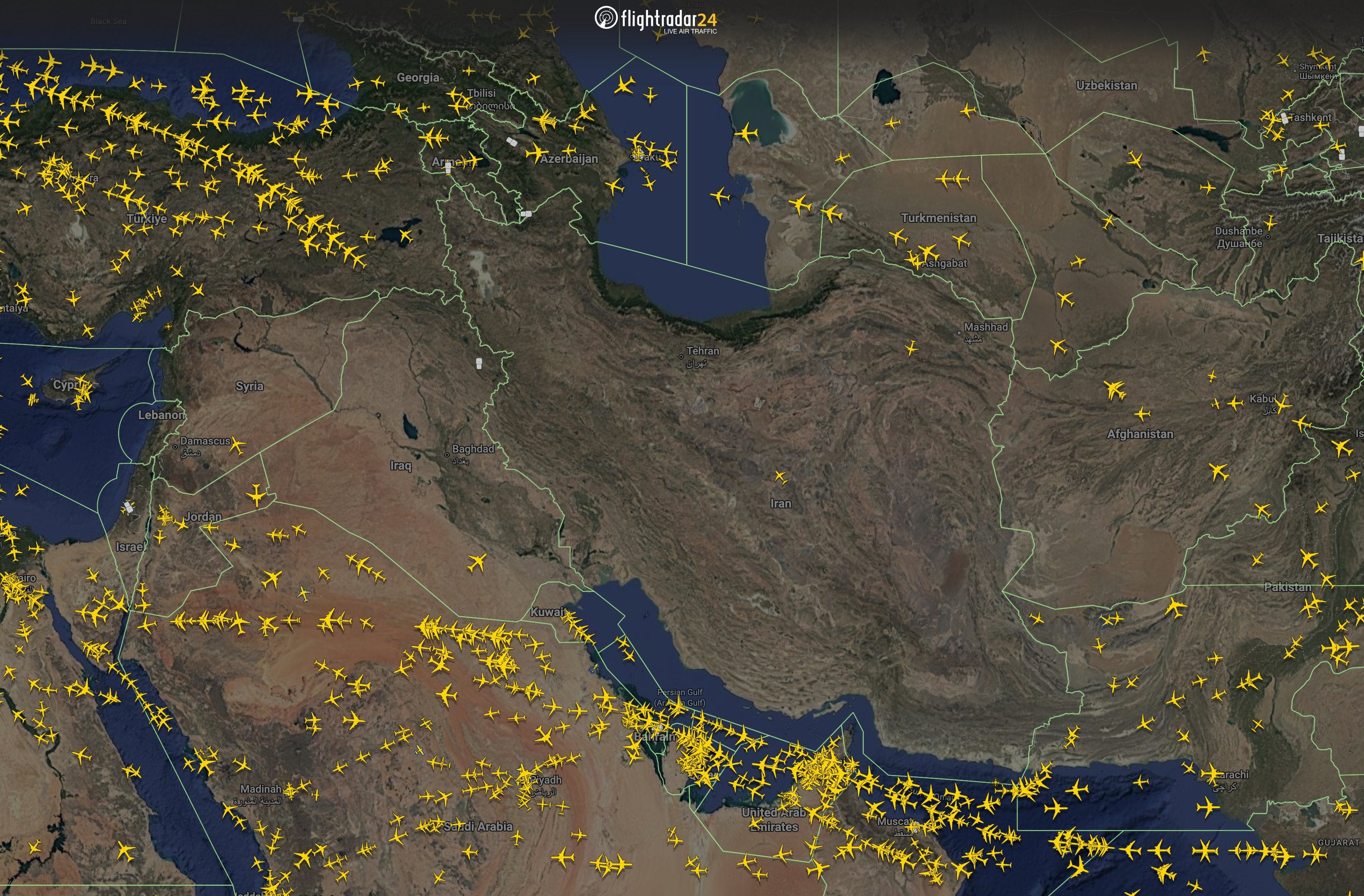
A video from the flight tracking service Flightradar24 shows the overnight stream of aircraft from the Gulf crossing northeast Iraq. But from around 6 am GMT, the pattern ends with aircraft instead flying west over Saudi Arabia.

Advertisement

Dubai International Airport, the biggest global hub, has suspended flights. On a typical day, around a quarter of a million passengers fly in and out of “DXB”.

The main airline, Emirates, said: “Due to multiple regional airspace closures, Emirates has temporarily suspended operations to and from Dubai.

“We apologise to customers affected by disruptions for any inconvenience caused, and we are assisting them with rebooking, refunds, or alternative travel arrangements. The safety and security of our passengers and crew remain our highest priority.”

Other airlines are affected. British Airways passenger Mike Boreham was aboard flight BA108, preparing to depart from Dubai to Heathrow, when the captain announced airspace had closed.

Advertisement

“We were all boarded,” he told The Independent. “The flight is completely full. About 10 minutes after the ‘boarding complete’ announcement we were told airspace is closed.”

After the closure was announced, many flights heading for Dubai returned to their starting points, including Emirates from Dublin, Turkish Airlines to Istanbul and LOT to Warsaw – which was also the landing place for the Emirates inbound flight from Seattle.

Abu Dhabi airport has closed until at least 2pm on Sunday. The home airline, Etihad, said: “All flights scheduled to depart Abu Dhabi are suspended until 2pm UAE time [10am GMT] on Sunday 1 March.

“Flights scheduled to arrive into Abu Dhabi before 2pm UAE time on Sunday 1 March will be cancelled. Services scheduled to arrive after this time are expected to operate, subject to operational conditions.

Advertisement

“Flights already en route to Abu Dhabi are returning to their origin airports where required.

“Affected guests are being contacted directly and are being supported with rebooking options and hotel accommodation where necessary.

“Guests connecting via Abu Dhabi should note that if their onward sector has been cancelled, they will not be permitted to board at their departure airport.”

Qatar Airways has suspended all flights to and from its hub in Doha, with flights from Birmingham, Edinburgh, Manchester, Dublin and Heathrow all returning to their starting points.

Advertisement

British Airways has cancelled all its Saturday flights linking London Heathrow with Amman, Abu Dhabi, Dubai and Doha. In addition, flights linking London with Bahrain and Tel Aviv are grounded until 3 March.

BA passengers due to travel between London Heathrow and Abu Dhabi, Amman, Bahrain, Doha, Dubai or Tel Aviv in the coming days have the option to change their flights for free.

Virgin Atlantic has cancelled its London Heathrow-Dubai flight on Saturday and the return flight on Sunday, as well as tomorrow’s link between Heathrow and Riyadh.

Iranian and Israeli airspace has been closed

Advertisement
Iranian and Israeli airspace has been closed (Flightradar)

A Virgin Atlantic spokesperson told The Independent: “Due to the escalation of conflict in the Middle East, we have made the decision to temporarily avoid the airspace of Iraq, resulting in some pre-planned rerouting of our flights.

“The safety and security of our customers and people is always our top priority and we apologise for any inconvenience caused.

Dubai International Airport is the world’s busiest aviation hub, with dozens of flights each day to and from the UK.

Wizz Air has suspended all flights to and from Israel, Dubai, Abu Dhabi and Amman with immediate effect until 7 March as a result of the strikes.

Advertisement

A spokesperson for the Hungarian budget airline said: “The airline is closely monitoring developments and remains in ongoing contact with local and international authorities, aviation safety agencies, security authorities, and relevant governmental bodies.

“We acknowledge the disruption this may cause and appreciate the understanding of our customers. Passengers with affected bookings will be contacted directly with information regarding their options.”

The US and Israel have carried out a series of strikes on Iran (AP)

The US and Israel have carried out a series of strikes on Iran (AP) (AP)

Many airlines have grounded operations to and from Tel Aviv, including Delta, United, Air France, KLM, Aegean and FlyDubai.

Advertisement

Until around 6am GMT on Saturday, some planes were flying over Iran, mainly on north-south routes serving Dubai and other hubs. Such flights have now ended. The extended flight paths and inevitable air traffic control congestion will cause disruption until the airspace reopens.

The Foreign Office has updated its travel advice to warn against all travel to Israel and Palestine.

In a statement on its website, it said: “Due to the threat posed by escalation in the region, we recommend against all travel to Israel and Palestine.

“On 28 February 2026, the US and Israel commenced joint military action in Iran, Israeli airspace has now closed.”

Advertisement

British nationals in the region are urged to take “sensible precautions”, including following advice from regional authorities, staying away from military facilities and ensuring travel documents are up to date.

Source link

Continue Reading

NewsBeat

Foreign Office warns over travel to Middle East as flights cancelled

Published

on

Foreign Office warns over travel to Middle East as flights cancelled

The announcements follow US-Israeli strikes on Iran in the early hours of Saturday morning and the subsequent retaliatory attacks on American bases in surrounding countries.

It comes as major airlines have cancelled flights to the region over the coming days.

In a statement on its website, the FCDO said: “Due to the threat posed by escalation in the region, we recommend against all travel to Israel and Palestine.

Advertisement

“On February 28, 2026, the US and Israel commenced joint military action in Iran, Israeli airspace has now closed.”

British nationals in the region are urged to take “sensible precautions”, including following advice from regional authorities, staying away from military facilities and ensuring travel documents are up to date.

The updated advice on the FCDO website also warned British nationals in Bahrain, the United Arab Emirates, Qatar and Kuwait to immediately find shelter in place.

“Remain indoors in a secure location, avoid all travel and follow instructions from the local authorities,” the update read.

Advertisement

Meanwhile, major airlines are suspending flights to the region pending further developments, and UK airports are advising passengers to keep in touch with their airlines for updates.

A London Heathrow statement said: “Due to the ongoing situation in the Middle East and resulting airspace closures in the region, a small number of flights at Heathrow have been cancelled or delayed.

“Passengers are advised to check with their airlines for the latest information on their flight.”

Flight-tracking websites have shown several flights that took off from British airports on Saturday have returned to their point of origin while a British Airways flight from Heathrow to Doha returned to London overnight just three hours after departure.

Advertisement

The airline said flights to Tel Aviv and Bahrain will be suspended until next week, and flights to Amman will be cancelled on Saturday.

“We are closely monitoring the situation and have taken the operational decision to cancel our flights to Tel Aviv and Bahrain up to and including 03 March and have cancelled today’s service to Amman,” a spokesperson for the airline said.

“Safety is always our top priority, and we’re contacting our customers to advise them of their travel options.”

Qatar Airways confirmed the temporary suspension of its flights to and from its capital Doha due to the closure of Qatari airspace.

Advertisement

“The airline is working closely with government stakeholders and the relevant authorities to support impacted passengers and will resume operations when the airspace re-opens,” the airline said in a statement published on X.

“Once usual operations resume, we anticipate delays to our flight schedule.”

Virgin Atlantic is also suspending its service from London Heathrow to Dubai on Saturday and Sunday, and between London Heathrow and Riyadh on Sunday.

A Virgin Atlantic spokesperson said: “Due to the escalation of conflict in the Middle East, we have made the decision to temporarily avoid the airspace of Iraq, resulting in some pre-planned rerouting of our flights.

Advertisement

“As a precautionary measure, we have also taken the decision to cancel the VS400 on Saturday, February 26 and the VS401 on Sunday, March 1 between London Heathrow and Dubai as well as the VS242 and VS243 between London Heathrow and Riyadh on Sunday, March 1.

“The safety and security of our customers and people is always our top priority and we apologise for any inconvenience caused.

“We are contacting affected customers regarding their travel arrangements.”

Gatwick Airport warned passengers that disruption is expected to Qatar and Emirates services on Saturday.

Advertisement

A spokesperson for the airport said on Saturday: “Due to the ongoing situation in the Middle East, airspace restrictions have been introduced in parts of the region.

“As a result, some flights to and from London Gatwick may experience delays or cancellations.

“Passengers are advised to check with their airline for the latest information on flights.

“This is a fast-moving situation, and we are expecting disruption to our Qatar and Emirates flights, but I understand at this moment they have not been formally cancelled.”

Advertisement

11809301Wizz Air has also confirmed flights from London Luton to Tel Aviv, and from Tel Aviv to London Luton, are being suspended until and including March 7.

“The airline is closely monitoring developments and remains in ongoing contact with local and international authorities, aviation safety agencies, security authorities, and relevant governmental bodies,” a spokesperson for the airline said.

“Operational decisions will continue to be reviewed, and the flight schedule may be adjusted as the situation evolves.”

Advertisement

Source link

Continue Reading

NewsBeat

FIFA responds after Donald Trump triggers conflict in Iran ahead of World Cup

Published

on

Daily Mirror

The FIFA general secretary Mattias Grafstrom has said they will ‘monitor developments’ after the United States – co-hosts of the 2026 World Cup – launched military action against Iran

FIFA will ‘monitor developments’ in Iran in the wake of military action being launched against them by the United States, their secretary general has said.

Advertisement

The President of the United States, Donald Trump, announced that “major combat operations” were underway after launching missile strikes on Iran alongside Israel on Saturday morning.

Iran have qualified for the World Cup, which will be held across America, Canada and Mexico this summer. The Middle Eastern nation have been drawn in Group G with Belgium, New Zealand and Egypt – but the situation will be monitored in the wake of the US strikes.

READ MORE: Pep Guardiola calls for Champions League rule change after Man City draw Real Madrid AGAINREAD MORE: PSG ‘lodge request’ immediately after Chelsea Champions League draw as agreement reached

“I read the news [about Iran] this morning the same way you did,” said Mattias Grafstrom, who was at the International Football Association Board’s annual general meeting in Cardiff, Wales on Saturday, via ESPN. “We had a meeting today and it is premature to comment in detail, but we will monitor developments around all issues around the world.

Advertisement

“We had the finals draw in Washington in which all teams participated, and our focus is on a safe World Cup with all the teams participating.

“We will continue to communicate as we always do with three [host] governments as we always do in any case. Everybody will be safe.”

Iran are scheduled to play two of their group games in Los Angeles, with the third taking place in Seattle.

Advertisement

All flights into and out of Dubai Airport have been suspended amid the fallout from US strikes on Iran, leaving players participating in the Dubai Tennis Championship stranded.

It was confirmed that all flight operations at Dubai International (DXB) and Dubai World Central – Al Maktoum International (DWC) had been halted after the city was hit by an explosion on Saturday.

Join our new WhatsApp community and receive your daily dose of Mirror Football content. We also treat our community members to special offers, promotions, and adverts from us and our partners. If you don’t like our community, you can check out any time you like. If you’re curious, you can read our Privacy Notice.

Sky Sports discounted Premier League and EFL package

Advertisement
This article contains affiliate links, we will receive a commission on any sales we generate from it. Learn more
Content Image

£49

£35

Sky

Get the deal here

Sky has slashed the price of its Essential TV and Sky Sports bundle for the 2025/26 season, saving £336 and offering more than 1,400 live matches across the Premier League, EFL and more.

Sky shows at least 215 live Premier League games each season, an increase of up to 100, plus Formula 1, darts, golf and more.

Advertisement

Source link

Continue Reading

NewsBeat

Man in court after alleged stabbing in Trinity Lane, York

Published

on

Man in court after alleged stabbing in Trinity Lane, York

Jordan Ellerby, 30, of Healey Grove in York, was presented at York Magistrate’s Court on Saturday (February 28).

The charges relate to an incident which took place at a home in Trinity Lane, off Micklegate, in which a man in his 40s was hospitalised with serious wounds that were “consistent with a stabbing”.

The man remains in critical condition in hospital.

Advertisement

Ellerby made no indication of pleas during the brief court hearing.

He stood beside a dock officer and spoke only to confirm his name and address.

Ellerby was represented by Charlotte Hague and will be remanded in custody to appear at York Crown Court on Monday, April 13.

Advertisement

Source link

Continue Reading

NewsBeat

‘I’m a doctor and there are three things I always do when flying’

Published

on

Daily Mirror

Dr Rema Malik urged people to follow her tips to help protect yourself

A vascular surgeon has issued a stark warning urging travellers to safeguard their health when flying. Dr Rema Malik revealed that millions of people remain oblivious to the pressures and demands flying imposes on our bodies.

She explained that air travel hits us with a ‘three-hit combo’ which puts us at risk of blood clots. The NHS warns that: “Deep vein thrombosis (DVT) is a blood clot in a vein, usually in the leg.” It adds that DVT can be ‘dangerous’.

It develops when a semi-solid, gel-like mass of blood cells (platelets) and proteins (fibrin) forms to halt bleeding from damaged vessels. Dr Malik said: “Whilst you are stressing about packing gifts and catching connections, your body is fighting a different battle inside that pressurised tube.

Advertisement

“As a vascular surgeon, I don’t worry about the turbulence outside the plane. I worry about the “turbulence” happening inside your veins. When the cabin door closes, you enter a three-hit combo environment perfectly designed to create a blood clot (DVT):

Content cannot be displayed without consent

1 – Sitting/stagnation

Prolonged sitting shuts down your “Second Heart” (your calf muscles). Without movement, blood stops pumping up and starts pooling down.

2 Air sludge factor

Advertisement

Cabin air is drier than the Sahara Desert. This rapidly dehydrates you, making your blood physically thicker and sludgier. Thick blood clots faster.

3 The “pressure” (Dilation)

Lower cabin pressure causes your veins to expand (dilate). This stretches the valves, making them less efficient at fighting gravity. This is not about comfort. It’s about safety.

READ MORE: ‘I’m a cancer doctor – these are 10 things I do to live longer’READ MORE: Gut health doctor’s three rules to stop acid reflux and heartburn

Advertisement

Symptoms

Symptoms of DVT (deep vein thrombosis) in the leg are:

  • throbbing pain in 1 leg (rarely both legs), usually in the calf or thigh, when walking or standing up
  • swelling in 1 leg (rarely both legs)
  • warm skin around the painful area
  • red or darkened skin around the painful area – this may be harder to see on brown or black skin
  • swollen veins that are hard or sore when you touch them

These symptoms can also happen in your arm or tummy if that’s where the blood clot is. People are urged to seek immediate medical help if they think they have DVT.

What can you do about it?

Thankfully, Dr Malik offers three recommendations to help safeguard you against DVT whilst flying. She said: “The truth is that you wouldn’t drive a car without oil.

“Don’t fly a body without circulation. Whether you are 25 or 65, here is your “In-Flight” Vascular Protocol.

Advertisement

“Wear the armourCompression socks (15-20 mmHg) are non-negotiable. They mechanically force blood flow and prevent swelling. Put them on before you leave the house.

“The “8-Ounce” Rule. Drink 8oz of water for every hour you are in the air. Coffee and wine don’t count (they dehydrate you further).

“The Pump Check: Every 30 minutes, do 30 ankle pumps. Pretend you are pressing a gas pedal. This manually fires the calf muscle to clear stagnant blood.

Ensure our latest headlines always appear at the top of your Google Search by making us a Preferred Source. Click here to activate or add us as your Preferred Source in your Google search settings.

Advertisement

Source link

Continue Reading

Trending

Copyright © 2025