
Business
Ahead of Market: 10 key factors that will drive stock market action on Monday


In a volatile trading session, the broader Nifty fell 317.90 points, or 1.25%, to close at 25,178.65. The 30-share Sensex tumbled 961.42 points, or 1.17%, to settle at 81,287.19.
Meanwhile, the volatility gauge India VIX ended at 13.70, up 4.89% from the last closing.
Here’s how analysts read the market pulse:
Rupak De, Senior Technical Analyst at LKP Securities, said the index has declined sharply after remaining below its key short-term moving average for three consecutive sessions. It has also slipped beneath the 200-day moving average (DMA), signalling that the prevailing weakness could persist for some time.“The RSI indicator has turned sharply bearish. In the short term, the index may continue to face selling pressure, with rallies likely to be sold into. Immediate support is placed at 25,000 and 24,750, while resistance is seen at 25,370,” De said.

US markets
Frontline indices on Wall Street ended lower on Friday. The Dow Jones Industrial Average fell 521.28 points, or 1%, to close at 48,977.90. The Nasdaq Composite declined 210 points, or 1%, to settle at 22,668.20. Meanwhile, the S&P 500 also finished in the red, though with a relatively milder loss of 0.43
European Markets
European markets also reflected a cautious tone. Spain’s IBEX 35 and France’s CAC 40 declined by as much as 0.73%. Germany’s DAX ended largely flat, while the pan-European Stoxx 600 rose 0.6% and the UK’s FTSE 100 added 0.1%.
Tech View
Nilesh Jain, Vice President and Head of Technical and Derivative Research at Centrum Finverse, said the Nifty has slipped below its crucial 200-day moving average (DMA) placed at 25,350, which is now expected to act as an immediate resistance zone. The index continues to form lower highs and lower lows on the daily chart, indicating a weakening trend, he noted.
“Momentum indicators remain cautious, with the MACD signalling a sell crossover and the RSI gradually trending lower. Meanwhile, India VIX has risen 5% to around 13.50, and any further spike in volatility could intensify downside risks. The key psychological support is now seen at the 25,000 level. The broader technical structure suggests continued weakness, with pullbacks likely to encounter selling pressure,” Jain added.
Most active stocks in terms of turnover
Tejas Networks (Rs 551 crore), Redington (Rs 275), Cholamandalam Financial Holdings (Rs 262 crore), Netweb Technologies (Rs 240 crore), HDFC Bank (Rs 214 crore), State Bank of India (Rs 213 crore) and Bharti Airtel (Rs 182 crore) were among the most active stocks on BSE in value terms. Higher activity in a counter in value terms can help identify the counters with highest trading turnovers in the day.
Most active stocks in volume terms
SpiceJet (Traded shares: 7.17 crore), Vishal Mega Mart (Traded shares: 1.34 crore), Tejas Networks (Traded shares: 1.32 crore), Redington (Traded shares: 99.63 lakh), Ola Electric (Traded shares: 63.35 lakh), Suzlon Energy (Traded shares: 62.71 lakh) and and Steel Authority of India (SAIL, Traded shares: 53.35 lakh) were among the most actively traded stocks in volume terms on BSE.
Stocks showing buying interest
Xtglobal Infotech, Tejas Networks, Shares of Sarda Energy & Minerals, VL E-Governance & IT Solutions, Avadh Sugar & Energy, Foseco India and Foseco India were among the stocks that witnessed strong buying interest from market participants.
52 Week high
On the market breadth front, 100 stocks touched their 52-week highs, while 340 stocks fell to their 52-week lows.
Among those scaling fresh 52-week highs were Aeroflex Industries, Bank of India, Bharat Forge, Cummins India, Data Patterns (India), Eicher Motors and Federal Bank.
Stocks are seeing selling pressure
Among the largecap names were Adani Enterprises, Maruti Suzuki and Bharti Airtel. Other stocks which witnessed significant selling pressure were Fusion Finance, Vishal Mega Mart, Home First Finance, Angel One, R M Drip and Sprinklers Systems, Mahalaxmi Fabric Mills and Apex Frozen Foods.
Sentiment meter favours bears
Heavyweights like ICICI Bank, HDFC Bank and Bharti Airtel dragged the markets with breadth, staying negative in the overall markets. Out of the 4,369 stocks that traded on the BSE on February 27, Friday, 1,574 stocks witnessed advances, 2,633 saw declines while 162 stocks remained unchanged.
(Disclaimer: Recommendations, suggestions, views and opinions given by the experts are their own. These do not represent the views of Economic Times)



Dollar rebounds as Middle East tensions reignite, Hormuz closed

Xenon Pharma’s azetukalner shows 53% seizure reduction in trial


Oil prices rebound 7% as Strait of Hormuz is closed again
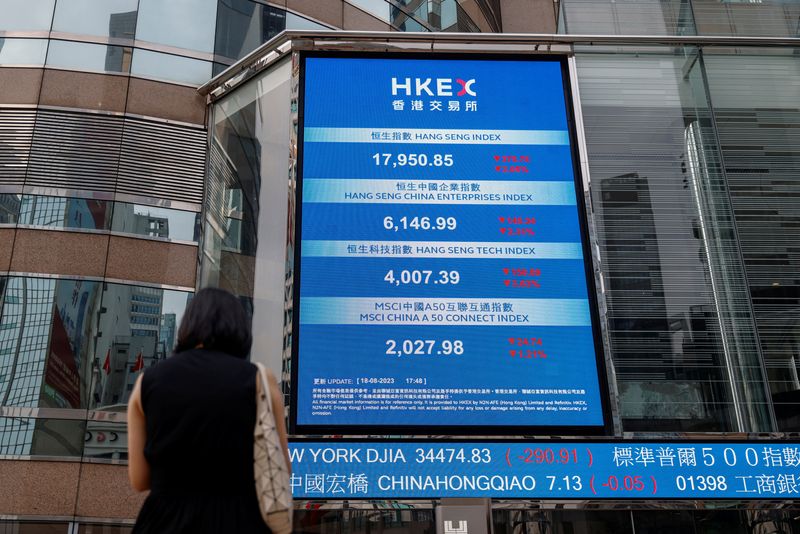

Oil jumps and stock futures slip as Iran tensions unsettle markets
President Donald Trump sits down with FOX Business’ Maria Bartiromo to discuss escalating Middle East tensions, his warning to Iran on nuclear weapons and why he believes gas prices will drop ahead of the midterms.
High gas prices continue to squeeze small businesses across the U.S., but cutting one costly habit could help owners save significantly.
New data from Ford Pro, the commercial vehicle division of Ford Motor Company, shows that unnecessary idling — leaving a car running while parked — can cost fleet operators thousands of dollars each year, cutting directly into margins at a time when fuel prices remain high.
According to the U.S. Department of Energy, the average fleet vehicle idles between one and two hours per day, burning up to two gallons of fuel daily per vehicle. With gas prices rising, those costs can add up quickly.
As of Sunday, the national average price for unleaded gas stood at $4.04, up from $3.88 just a month ago, according to AAA.
BESSENT WARNS GAS STATIONS THAT TREASURY DEPT WILL KEEP THEM ‘HONEST’ AFTER SPIKE IN PRICES

Ford Motor Co. F-150 pickup trucks are displayed at a car dealership in Orland Park, Illinois, on Sept. 27, 2019. (Daniel Acker/Bloomberg via Getty Images / Getty Images)
“You can burn up one to two gallons of gas just doing that,” Matt Krukin, who leads software and digital growth for Ford Pro, told FOX Business. “So if that happens per day… that’s $8 a day that’s idling.”
For businesses operating multiple vehicles, the impact can be substantial. A 20-vehicle fleet idling for two hours a day could waste more than $160 in fuel every day, according to Ford Pro.
Excessive idling is particularly common in North America, where about 29% of fleet vehicles idle unnecessarily, compared to just 10% in Europe, Krukin noted.
To help address the issue, Ford Pro is investing in software and data-driven tools.
FORD SEEKS TRUMP ALUMINUM TARIFF RELIEF AFTER FIRES AT MAJOR US FACTORY, REPORT SAYS
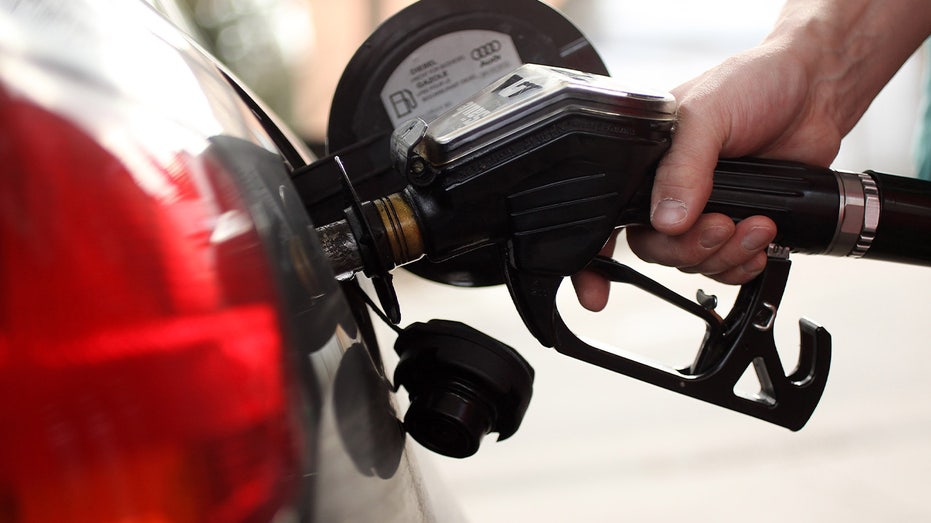
A person pumps gas into a car. (Sean Gallup/Getty Images / Getty Images)
Its newly launched artificial intelligence (AI) assistant allows fleet managers to monitor vehicle behavior in real time, identify inefficiencies and coach drivers to adopt more fuel-efficient habits.
Ford Pro says customers using these tools have seen measurable improvements, including a 52% reduction in idling.
While reducing idling is one of the simplest ways to cut costs, other driving behaviors — such as aggressive acceleration, rapid braking, and speeding — can also increase fuel consumption and wear on vehicles, according to Krukin.
The system can even limit acceleration, while in-cab alerts provide real-time feedback.
FORD BUILDS ONE-OF-A-KIND EXPLORER FOR POPE LEO XIV
Cars are seen driving on the highway. (Jonas Walzberg/picture alliance via Getty Images / Getty Images)
“It’s like the fleet manager’s right next to them to coach them along the way,” Krukin said.
Users have also seen a 25% drop in speeding, a 16% decrease in hard braking and an 11% reduction in harsh acceleration, according to Ford Pro.
GET FOX BUSINESS ON THE GO BY CLICKING HERE
“We’re not just recommending solutions for the heck of it,” Krukin said. “… At the end of the day, it’s really about bringing it all together, so that these fleets actually get a pleasurable experience with the tools and technology coming together.”


BOJ’s hawkish hints keep rate hike on the cards


Eli Lilly in advanced talks to acquire Kelonia Therapeutics for over $2 billion, WSJ says
Business
World Bank Highlights AI Boom as a Bright Spot Amid Slowing Growth in East Asia and the Pacific

Growth across East Asia and the Pacific is losing momentum this year, weighed down by an energy shock, rising trade barriers, and persistent domestic vulnerabilities, but a surge in artificial intelligence-related trade and investment is offering a rare point of optimism, according to the World Bank’s latest regional economic report.
Key takeaways
- AI-related exports and investment surged across East Asia and the Pacific in 2025, with Malaysia, Thailand, and Viet Nam leading the way.
- Regional growth is forecast to slow to 4.2% in 2026, pressured by the Middle East energy shock, trade barriers, and weak domestic demand.
- Closing gaps in connectivity and skills is essential for the region to fully capture the productivity benefits of AI.
Regional growth is projected to slow to 4.2% in 2026, down from 5.0% in 2025, as the energy shock stemming from the Middle East conflict compounds the adverse impact of elevated trade barriers, global policy uncertainty, and domestic economic difficulties.
China, the region’s largest economy, is expected to decelerate from 5.0% growth in 2025 to 4.2% in 2026 and 4.3% in 2027, as weak domestic demand and property sector challenges persist and the global slowdown weighs on exports. The rest of the region is forecast to slow to 4.1% in 2026 before rebounding to 5.0% in 2027 as geopolitical tensions ease.
Against that difficult backdrop, the World Bank’s East Asia and Pacific Economic Update: Industrial Policy in the Digital Age identifies AI as a meaningful bright spot. The report highlights surging AI-related exports and investment in 2025, particularly in Malaysia, Thailand, and Viet Nam, as a notable positive development for the region.
Yet the Bank cautions that the full benefits of AI remain out of reach for much of the region. Adoption is constrained by gaps in connectivity and skills, with only 13 to 17% of multinational subsidiaries in China and Thailand currently using AI, roughly one third of the proportion seen in industrialised countries.
The report also examines how rising energy costs could deepen hardship for ordinary households. A sustained 50% increase in fuel prices could result in a 3 to 4% loss in income for households across the region, with the poor and small and medium enterprises identified as the most vulnerable.
On a longer-term strategy, the update argues that industrial policy, if carefully designed, can help unlock productivity gains. Targeted support for specific industries in the Republic of Korea, Malaysia, and, more recently, Viet Nam proved effective in part because those countries had strengthened their economic foundations, including infrastructure, education, and regulatory institutions, and had liberalised trade and investment. The Bank warns that similar efforts elsewhere have delivered weaker results where those foundations remain fragile.
World Bank Vice President for East Asia and the Pacific Carlos Felipe Jaramillo noted that while the region continues to outperform much of the world, sustaining growth will require confronting structural challenges and seizing the opportunities of the digital age to increase productivity and create more jobs.
World Bank Group Director of Research Aaditya Mattoo cautioned that present difficulties could increase economic distress and inhibit productivity growth, adding that measured support for people and firms could preserve jobs today while reviving stalled structural reforms could unleash growth tomorrow.
Other People are Reading

Two US officials supporting local authorities die in car accident in Mexico
Sidus Space prices $58.5 million stock offering at $4.35/share

Eating Out?! * #shorts #eatingout #subs #money

Gary Neville says Mikel Arteta was ‘hampered enormously’ by two Arsenal stars in Man City defeat | Football

Dollar rebounds as Middle East tensions reignite, Hormuz closed


-

 Crypto World6 days ago
The SEC Conditionalises DeFi Platforms to Be Avoided for Broker Registration
-

 Fashion2 days ago
Weekend Open Thread: Theodora Dress
-

 Crypto World6 days ago
SEC Signals Exemption for Crypto Interfaces From Broker Registration
-

 News Videos5 days ago
Secure crypto trading starts with an FIU-registered
-

 Sports3 days ago
NWFL Suspends Two Players Over Post-Match Clash in Ado-Ekiti
-

 Crypto World6 days ago
SEC Proposes Certain Crypto Interfaces Don’t Need to Register as Brokers
-

 NewsBeat6 days ago
Trump and Pope Leo: Behind their disagreement over Iran war
-

 Business8 hours ago
Powerball Result April 18, 2026: No Jackpot Winner in Powerball Draw: $75 Million Rolls Over
-

 Politics2 days ago
Palestine barred from entering Canada for FIFA Congress
-

 Crypto World2 days ago
Russia Pushes Bill to Criminalize Unregistered Crypto Services
-

 Sports7 days ago
NWFL opens Pathway for new Clubs ahead of 2026 Season
-
 Business3 days ago
Creo Medical agree sale of its manufacturing operation
-
 Entertainment6 days ago
Brand New Day’ Footage Reveals the Devastating Impact of ‘Now Way Home’
-

 Politics13 hours ago
Zack Polanski demands ‘council homes not luxury flats for foreign investors’
-

 Crypto World7 days ago
Trump whales load up ahead of Mar-a-Lago luncheon.
-
Business7 days ago
Kering slides after Morgan Stanley downgrade, Gucci woes loom
-

 Tech7 days ago
Google adds E2E encryption to Gmail for iOS and Android enterprise users
-

 Tech7 days ago
Apple glasses won’t go brand shopping like Meta did with Ray-Ban and Oakley
-
Entertainment7 days ago
How Euphoria Season 3 Premiere Paid Tribute to Eric Dane After Death
-
 Entertainment6 days ago
Karol G’s ‘Ultra Raunchy’ Coachella Set Gave ‘Satanic Vibes’
You must be logged in to post a comment Login