
Entertainment
Why Bridgerton Cut Francesca’s Pregnancy, Miscarriage After Gender Swap

Bridgerton has made some surprising book changes over the years — including cutting Francesca’s pregnancy and miscarriage from the story.
During season 4, which concluded on Thursday, February 26, Francesca (Hannah Dodd) mourned husband John’s (Victor Alli) death while briefly assuming she was pregnant. Francesca was forced to undergo an exam, which is when she found out she wasn’t expecting a baby.
The revelation was a departure from Julia Quinn‘s When He Was Wicked where Francesca miscarried weeks after John’s death.
“Ultimately, I think John’s death and the funeral are already in so many ways such a departure from the tone of the show,” showrunner Jess Brownell told Swooon. “I think episode 7 has hints of lightness, but it is a much darker version of Bridgerton in a way that I think is really interesting, and especially in the way we get to watch the family come together.”

Bridgerton concluded season 4 by killing off a major character. Warning: Spoilers ahead for Bridgerton season 4 part 2 During part 2, which aired on Thursday, February 26, Francesca’s (Hannah Dodd) husband, John (Victor Alli), died in his sleep. The pivotal moment changed the trajectory for the rest of the season as Francesca mourned her […]
Brownell referred to the miscarriage as “too morbid” to add, saying, “We’re still very interested in honoring the fertility story line. It’s something we tried to honor this season, and we will continue honoring in her future season.”
She continued: “But yeah, the miscarriage just felt like, for the screen, a bit too far. I think it would be difficult for Fran to come back from all that.”

Hannah Dodd as Francesca Bridgerton and Victor Alli as John Stirling. Liam Daniel/Netflix
Quinn, meanwhile, also weighed in on the evolution from her original idea.
“I think [Francesca’s] emotions are the same. I have experienced pregnancy loss. I had three failed pregnancies between my two children,” she told the outlet. “And so I wrote her character very deeply from my own experiences. And I think changing up sort of how her loss happened really doesn’t affect her grief with that.”
Quinn praised how Bridgerton navigated John’s death. “Almost five years ago, I lost my dad and my sister to a drunk driver, so that is obviously a very sudden thing, just like Francesca,” she noted. “I thought they handled it really well, especially the sense of bewilderment. Because I think when you do lose somebody suddenly, there’s a surreal aspect to it.”
Elsewhere in her interview, Brownell explained why the show moved up John’s death after introducing him earlier on screen, to which she replied, “I think that the main motivation behind that was to allow us ample time to grieve John. Wherever Francesca’s season falls, we always felt like, to have John’s death happen within her season, it was going to feel too rushed for her to deal with the grief.”
She concluded: “I think for Benedict and especially for Violet, the loss of John reminds them that we all are only here for a short period of time and love is the most important thing we can pursue.”
Bridgerton is currently streaming on Netflix.

Continue Reading
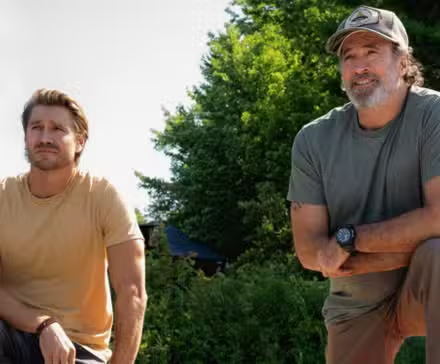
Season 7 of Virgin River premiered early last March, but another returning small town series is about to bring a new season on April 20, 2026. Sullivan’s Crossing Season 4 returns following global popularity on the streaming platform. Based on the novels by Robyn Carr (a.k.a. the same writer behind Virgin River), the small-town tale isn’t too far off from its predecessor. Sullivan’s Crossing follows a strong-willed career woman who receives the biggest upset of her professional life. Both ashamed and stupefied, she impulsively escapes the city and heads to Sullivan’s Crossing, hoping to find some peace in nature. What was supposed to be a couple of days ends up becoming a life-changing move. Whether you’re a former resident or just passing through, everyone is welcome at Sullivan’s Crossing.
What Is ‘Sullivan’s Crossing’ About?
Sullivan’s Crossing follows Maggie Sullivan (Morgan Kohan), a celebrated neurosurgeon in Boston whose life is turned upside down after a medical scandal, leaving her momentarily unemployed. Choosing to get away from her hospital peers and forced to lie low, Maggie retreats to Sullivan’s Crossing, a fictional rural campground in Nova Scotia run by her estranged father, Harry “Sully” Sullivan (Scott Patterson). The last time Maggie was there was 15 years ago, and it wasn’t a pleasant experience. And yet, despite having all the money in the world thanks to her wealthy stepfather, Walter Lancaster (Peter Outerbridge), Maggie finds herself drawn back to her beat-up, childhood home — even if she now feels like a stranger there.

‘Sullivan’s Crossing’ Star Says Fans “Deserve To Know the Truth” About His Shocking Season 4 Exit
“I was not intending to make any statement but…”
Thankfully, the townsfolk of Sullivan’s Crossing are all excited about Maggie’s return. Also in the show are Frank (Tom Jackson) and Edna (Andrea Mendard) Cranebear, who oversee the campground’s Shed and took care of Maggie as a child. There’s also Sydney Shandon (Lindura), Maggie’s childhood friend who once lived in New York. And, of course, there’s Cal Jones (Chad Michael Murray), the mysterious handyman who’s always helping her father with errands. As she spends more time in the small town, Maggie’s life begins to change in this rustic campground.
‘Sullivan’s Crossing’ Doesn’t Over-Romanticize the “Simple” Life
Sullivan’s Crossing sounds like the typical “city girl seeks peace in the country” kind of story — and that premise isn’t entirely false. Unlike her fast-paced profession, Maggie is forced to slow down and question what happiness really means to her. In Maggie’s defense, she initially returns to Sullivan’s Cross with neither a plan nor any real intention of staying. Her homecoming is meant to be a temporary retreat while her attorney handles the scandal. However, as she slowly rebuilds broken relationships and forms new ones, Maggie starts to realize that there may be more to life than becoming a top neurosurgeon.
However, that doesn’t mean life is always peachy in the countryside. The lake view might be majestic, and the people may be nicer, but Sullivan’s Crossing doesn’t over-romanticize East Coast rural life. Just as Maggie finds comfort along the coast, living in a rural area also means facing challenges — like sustaining the local businesses, dealing with harassing tourists, and coping with limited medical care. If Maggie chooses to build a new life in Sullivan’s Crossing, it means giving up the career she’s worked toward her entire life. It also means leaving behind the conveniences and opportunities that only bigger cities can offer.
Chad Michael Murray Plays the Perfect Love Interest in ‘Sullivan’s Crossing’

Family drama and career crises aside, one of the highlights — arguably the biggest — in Sullivan’s Crossing is the blossoming relationship between Maggie and Cal. Like Maggie, the show’s main love interest isn’t one-dimensional. When he first introduces himself to her, despite his outgoing and extroverted nature, he keeps much of himself hidden. At first, it seems as though Cal is playing into the familiar trope of the mysterious, small-town charmer who takes a liking to a girl from the big city — a trope that, in itself, feels like a cliché.
Except Cal isn’t that kind of person. As the series shows, it becomes clear that he’s far from simple. Like Maggie, he carries a wealth of lived experiences, and Sullivan’s Crossing becomes a place of refuge for him — a home away from home where he begins to rediscover himself. Burdened with his own personal baggage, Cal learns to heal, just as Maggie gradually does within the campground. But there’s no such thing as a smooth-sailing relationship. As the fate of Sullivan’s Crossing peaks and dips over time, so too does the nature of Maggie and Cal’s relationship — for better or for worse.

- Release Date
-
March 19, 2023
- Network
-
CTV
- Directors
-
Chris Grismer, April Mullen, Jonathan Wright, Martin Wood
- Writers
-
Robyn Carr
Entertainment
“RuPaul's Drag Race All Stars 8” winner Jimbo evacuated from airplane amid bomb scare: 'Everyone thought we were dying' (exclusive)
:max_bytes(150000):strip_icc():format(jpeg)/United-Airlines-jimbo-041926-ef9ac8d9d0464dd8931a857016c4b9a2.jpg)
A United flight from Chicago to New York was diverted to Pittsburgh as passengers suspected a bomb was on board: “We all start bracing, I start praying,” Jimbo says.
Entertainment
Sabrina Carpenter, Justin Bieber, and Karol G Turn Coachella 2026 Into a Legendary Weekends
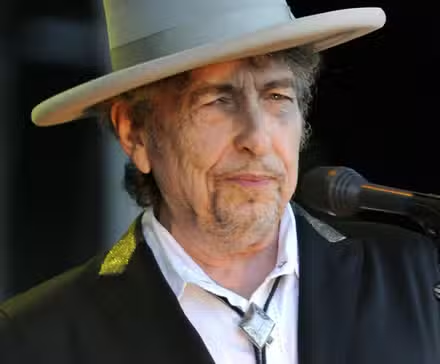
Coachella Valley Music and Arts Festival 2026 kicked off last weekend with headliners Sabrina Carpenter, Justin Bieber and Karol G leading the way. The first weekend sparked huge online buzz thanks to standout performances from Sombr, Moby, Sexyy Red, Addison Rae, and so many other amazing performers. Weekend 2 has arrived, bringing even bigger crowds, more energy, and another round of unforgettable sets. Coachella began in 1999 and has easily become one of the biggest and most recognized music festivals in the world, and it somehow continues to get larger every single year.
Addison Rae surprised fans by bringing out pop singer Olivia Rodrigo, who performed her newest single, “drop dead,” live for the very first time. The track appears on Olivia’s upcoming third album, ‘you seem sad for a girl so in love,’ marked the song’s debut performance since its April 17 release. Sombr also brought out surprise guests for both weekends. During weekend 1, Sombr brought out rock legend Billy Corgan, frontman of The Smashing Pumpkins, to perform a rendition of “1979.” Sombr didn’t stop there. Weekend 2 saw Sombr bring rock icon Billy Idol and guitarist Steve Stevens onto the stage to perform “Eyes Without a Face.” With Karol G still set to perform her final set for weekend 2, she’s already made history as the first Latina headliner in Coachella history. She made sure not to disappoint, delivering non-stop choreography from beginning to end. The crowd went wild during weekend 1 with Karol G bringing out guest Becky G to perform “MAMII.” This year’s festival has not disappointed. From the performers to the special guests, this year’s festival has delivered in every way. One of the biggest talks continues to be about the key differences and surprises from Sabrina Carpenter and Justin Bieber’s sets.
Sabrina Carpenter and Justin Bieber Stole Coachella Weekend One With Major Surprise Moments
Anticipation was at an all-time high with Sabrina Carpenter being the first headliner taking the stage on Friday, April 10. Sabrina’s set began with a black-and-white film noir-inspired intro that highlighted her acting skills before transitioning into a glamorous storyline centered around heading to Hollywood and making it big as a showgirl. She opened the show with her latest single, “House Tour” from her No.1 album ‘Man’s Best Friend’ which perfectly describes the entire stage production that felt like a full tour through Sabrina’s world. She delivered hit after hit, even titling her set “Sabrinawood,” giving us hits like “Taste,” “Busy Woman,” “Please Please Please.” Sabrina ended her set with an unforgettable performance of “Tears” that saw Sabrina being lifted in the air with water spraying all around closing out the show in such a showgirl way. While Weekend 1 did not include any musical guest appearances, the crowd still got plenty of surprises through appearances by Susan Sarandon, Will Ferrell, Sam Elliott, her former Girl Meets World co-star Corey Fogelmanis, and a voice-over from Samuel L. Jackson.
Who’s Your Perfect Classic Rock Band?
It’s no secret that Saturday was packed with even more anticipation for Justin Bieber’s headlining set. Reports of the festival’s longest merch lines only added to the hype, and it came as no surprise considering how eager fans and fellow artists were to see Bieber return to the Coachella stage. While Sabrina gave us theatrics while Justin took a completely different approach. Justin’s set felt more personal, intimate, and almost as if it were a one-on-one experience with the crowd just vibing through eras of his music. His walk down memory lane via a laptop and YouTube included his classic hits like “Baby,” “Beauty and a Beat,” “Never Say Never,” making the crowd go absolutely crazy for the nostalgia of Biebermania. Justin also brought out Tems, Wizkid, Dijon and The Kid LAROI to perform their hit song “Stay.”

62 Years Ago, Bob Dylan Wrote a Protest Song That Made an Accused Murderer Furious
The man behind bars was accused of a racially motivated manslaughter.
Sabrina Carpenter and Justin Bieber Raise the Bar at Coachella 2026
Weekend 2 brought a different energy for both headliners, with new surprises and even bigger moments. Ahead of Sabrina Carpenter’s second performance, fans noticed extra time had been added to her setlist, making it clear that something major was coming to close out her final Coachella appearance. Continuing with the cinematic theme of the first weekend, this time fans saw the return of Sam Elliott and Corey Fogelmanis but this time they were joined by Geena Davis and Terry Crews. Without a shadow of a doubt, the biggest moment of the night happened when Sabrina brought out the Queen of Pop, Madonna. The duo performed some of Madonna’s biggest hits of all time, like “Vogue” and “Like a Prayer” while also giving fans a surprise preview of a brand-new unreleased track expected to appear on Madonna’s upcoming album ‘Confessions II’. Meanwhile, Justin’s weekend 2 saw fresh surprises, like Billie Eilish being brought on stage for one of the night’s most talked-about moments as he continued his tradition of serenading Billie with “One Less Lonely Girl.” Justin also performed “Snooze(Remix)” with SZA. Fans also were treated to Big Sean and Sexyy Red joining the stage with Justin. Both artists brought completely different styles to the Coachella stage, yet each delivered performances that felt unforgettable. These performances fans will be talking about for years to come, while setting the bar incredibly high for future Coachella headliners after the standout performances seen throughout Coachella 2026.
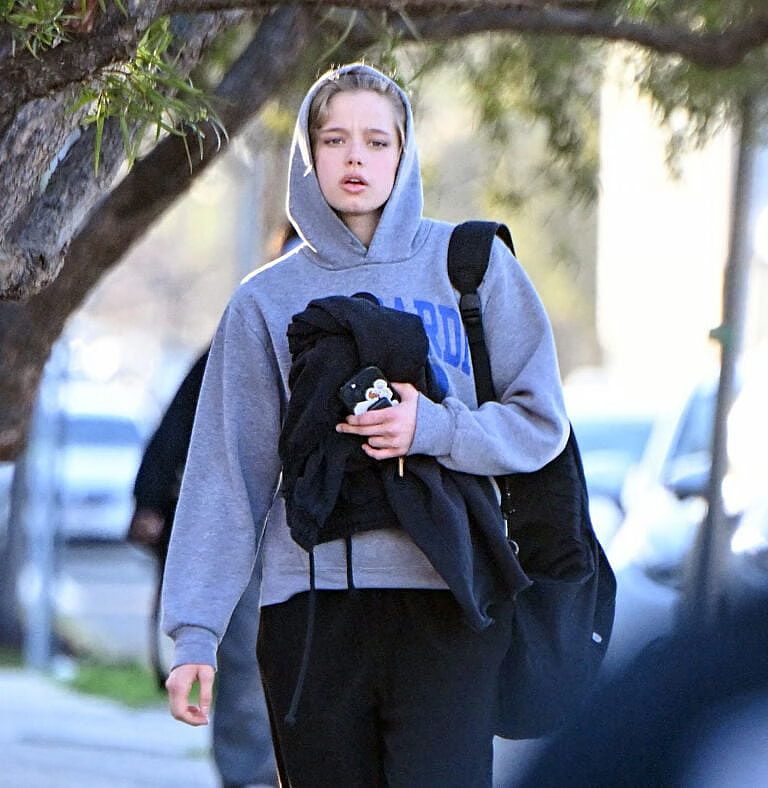
Brad Pitt and Angelina Jolie‘s daughter, Shiloh Jolie, is reportedly working hard to create her own identity away from the shadows of her famous parents.
K-pop fans recently got a fun surprise when the dancer made an appearance in singer Dayoung’s “What’s a Girl to Do” music video with a standout performance.
Though raised in the spotlight, Shiloh Jolie has been quietly building her own path in the dance industry, setting the stage for a career defined by talent rather than fame.
Brad Pitt And Angelina Jolie’s Daughter Shiloh Is Staying Grounded As She Pursues A Dance Career
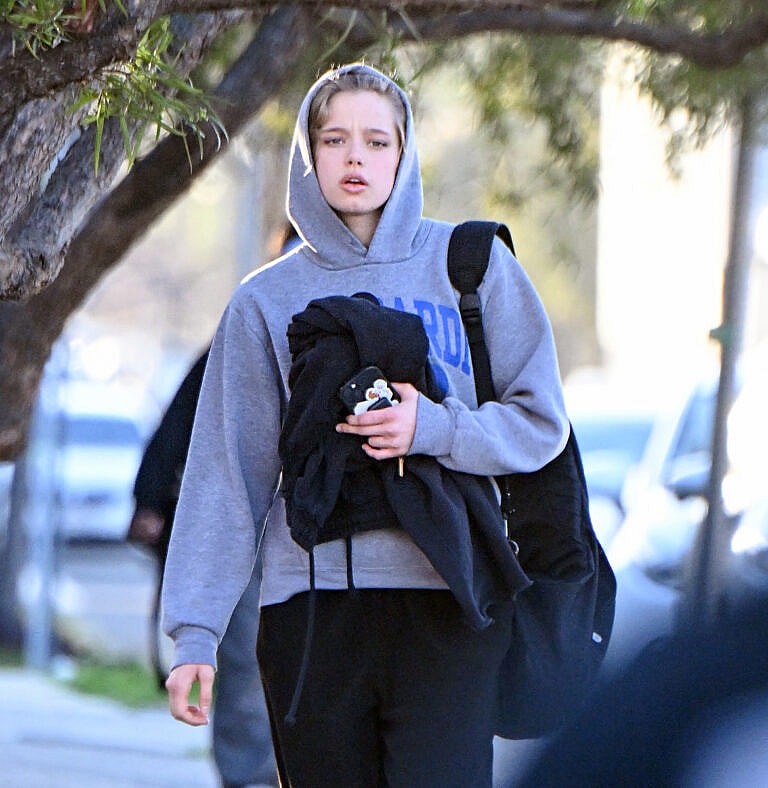
K-pop fans were thrilled when rising artist Dayoung dropped the music video for her new track “What’s a Girl to Do” on April 7, but much of the attention quickly shifted to one unexpected appearance: Shiloh Jolie.
In one of the video’s most talked-about moments, the 19-year-old, credited simply as “Shi,” is seen performing in a dim club setting wearing a lace brown top and loose denim, later switching to a red cropped sweater and shorts as she joins a street choreography sequence in downtown Los Angeles.
Her performance, marked by confident and fluid movement, drew praise online, with many noting her resemblance to her mother, Angelina.
According to Star Magazine, a rep for the K-Pop singer confirmed that Shiloh was selected through an open audition process and was not identified as a celebrity child at the time of hiring. Meaning she didn’t get the gig by being a nepo baby.
A source who spoke to the publication emphasized that the production team was unaware of her family background, with the representative adding that she was selected purely for her dancing.
“Shiloh is a fiercely independent person, and she’s always been determined to prove herself in her own right,” the source added.
Shiloh Jolie Described As ‘Hardworking And Talented’
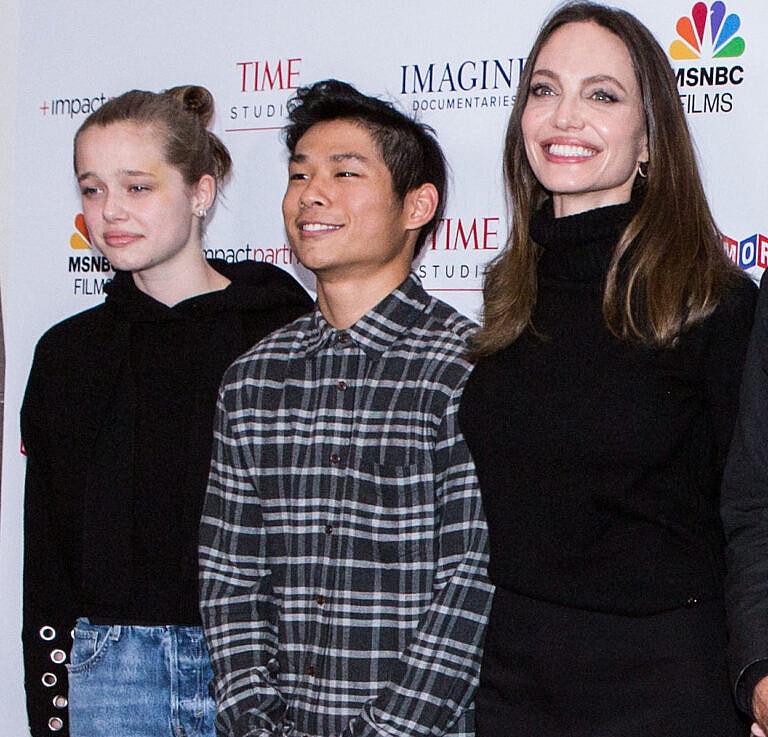
Despite growing up in the public eye, Shiloh has reportedly made a conscious effort to avoid leaning on her family name for visibility.
“Everyone who knows Shiloh says she’s very hardworking and talented,” the source noted, adding “that she’s also very unassuming and modest.”
Her passion for dance has been visible for years. She previously appeared in choreography clips circulating online from studios in Los Angeles, including a 2022 performance at Millennium Dance Complex, where she danced to Doja Cat’s “Vegas.”
She later surfaced in additional collaborative studio videos within the dance community, gradually gaining recognition among fans of choreography culture.
She also surfaced in later collaborative dance content shared within the choreography community, gradually building recognition among fans of studio dance culture.
People familiar with her training say she gravitates toward group choreography rather than solo spotlight, preferring the energy and collaboration of ensemble work.
Friends describe her as someone who values creativity and connection within her dance circles over attention or celebrity status.
Angelina Jolie And Brad Pitt Support Shiloh’s Private, Independent Path
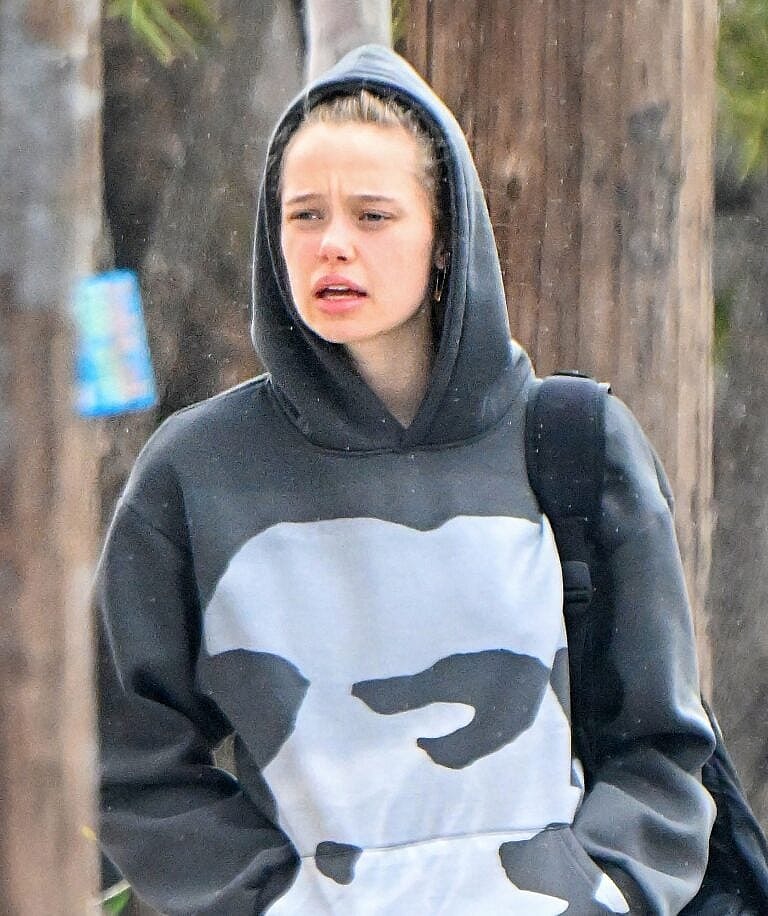
Meanwhile, Shilloh’s parents have both spoken in different ways about encouraging their children to live privately and independently.
Angelina has previously said that her children tend to stay away from the celebrity lifestyle and prefer more personal, grounded pursuits, noting that Shiloh in particular values her privacy.
Pitt has also acknowledged her passion for dance in past comments, expressing admiration for her dedication while joking that he’s not sure where she got her talent from, as he’s “Mr. Two-Left-Feet.”
Over the years, reports have noted Shiloh splitting her time between family life, close friends, travel, and continued dance training.
Those close to Angelina say she has mixed emotions watching her children grow more independent, but remains supportive and proud of the paths they are carving out for themselves.
Shiloh Jolie Steps Into Her Own With Growing Design Dance Career
Shiloh, who officially stopped using her father’s surname after turning 18 in 2024, has been steadily building a quiet reputation in dance and choreography circles over the past few years.
By 2025, the usually private young dancer began earning behind-the-scenes credits, including work as a choreographer for a performance showcased at a dinner event tied to the launch of Isabel Marant’s Net-A-Porter capsule collection.
Reports at the time noted that she was credited under the name “Shi Jolie” in the event materials.
Why The Dancer Dropped Her Famous Dad’s Name
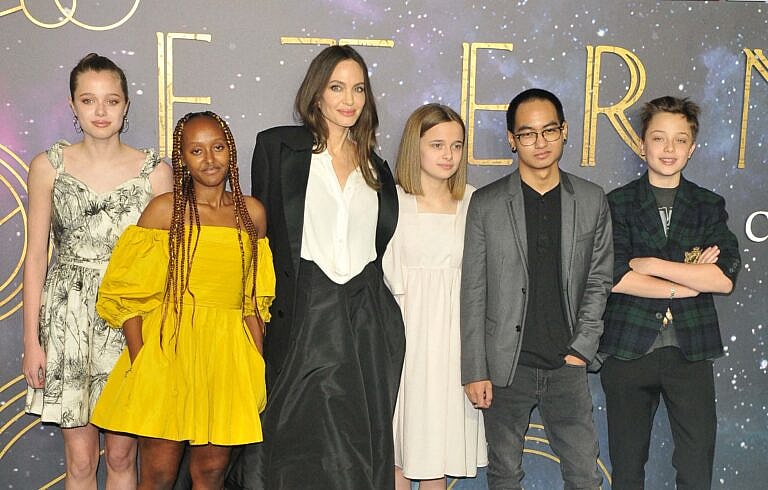
Shiloh shocked many when she made the bold and legal move to drop her father, Pitt’s last name, after turning 18. According to legal documents, the dancer stated that she now wishes to be known as “Shiloh Jolie” rather than “Shiloh Jolie-Pitt.”
Her lawyer, Levine, later shed light on the reason behind Shiloh’s decision, noting that it was sparked by “painful events.”
“The media should be more careful in their reporting,” Peter Levine told People Magazine, adding, “especially when covering a young adult who has made an independent and significant decision following painful events, and is merely following legal process.”
The “painful events” in question likely include the dancer and her siblings being prevented from testifying in the custody battle between Pitt and their mother, Angelina.
“The name change goes back to the custody battle, and Shiloh’s belief that her rights as a victim were violated,” a source told the Daily Mail. “Shiloh believed she had the right, as a victim of crime, to testify — and was prevented from doing so.”
As for Pitt, he is said to have been left devastated by his daughter’s decision to drop his name.
Entertainment
Louis Tomlinson unfollows Zayn Malik after reports they allegedly got into fistfight while shooting docuseries
:max_bytes(150000):strip_icc():format(jpeg)/Zayn-Malik-Louis-Tomlinson-041926-6c9100d2e95a455a903046354f68307f.jpg)
Their much-anticipated onscreen reunion may not happen after all.

Police have confirmed that a Utah mother who owned and operated a successful med spa was killed by her estranged husband on Friday, April 17, in an apparent murder-suicide that unfolded just one day after she formally filed for a divorce.
Lindha Paola Zerpa Lara is being mourned in Salt Lake City, where she was considered an active member of the local Venezuelan community, KSL reported.
The successful entrepreneur, 43, and trained esthetician owned and operated her own med spa, which she opened in 2022 after immigrating to the U.S. eight years ago. She was also the founder and CEO of the beauty and spa brand Pao Glow Beauty.
Paola was identified by her family, who spoke to KSL.
According to court documents discovered by the station, Paola legally filed a petition for divorce on Thursday, April 16.
Police have not released the names of the two people, claiming additional family members still need to be notified.
Investigators did, however, reveal blunt force trauma likely killed the female victim. The male then died by suicide.
Cops conducting a welfare check on Paola found both bodies just after 7:15 p.m. at her residence in Herriman.
Family friends Patricia Quinonez and Fabian Rapalino told KSL Paola’s mother has been working with police to determine what happened.
“She was always a bright light for her mom,” Quinonez said. “A person that was always trying to do the best for their community, the Venezuelan community.”
They told the station Paola and her estranged husband appeared to have a civil relationship and maintained separate residences. Both shared custody of their 10-year-old child, they added, noting the child was nowhere near the murder-suicide when it happened.
“Grandma started getting concerned that she was not getting any phone calls or text messages,” Quinonez explained. In time, friends called the police to check in on her.
Paola, the friends said, was a co-founder of We All Must Shine, a support organization for people going through cancer.
The med spa she opened actually burned down two months ago, and she was documenting the rebuilding process on social media.


Her friends said they hope Paola’s story inspires other women who are in crisis.
“Start talking about it,” Rapalino urged. “To your friends, to your families. Don’t be quiet. Seek assistance.”
If you or someone you know is in emotional distress or considering suicide, call the National Suicide Prevention Lifeline at 1-800-273-TALK (8255).
There’s never a dull moment with Charles Barkley on the desk.
During the Saturday, April 18 playoff edition of “Inside the NBA” talk show, Barkley, 63, chimed in on the obscure story involving rapper Ice Spice’s recent altercation with a fan in a McDonald’s restaurant.
“I hear they got some slappy happy meals over there,” Barkley said during the show — which is sponsored by the fast food restaurant. “You see Ice Spice got slapped at McDonald’s? What you doing at McDonald’s in the middle of the night Ice Spice? Come on, stop that. Get it to go.”
The off-the-cuff comment came while fellow analyst Ernie Johnson was finishing up an ad read for McDonald’s.

Rapper Ice Spice has addressed her now-viral confrontation with a woman inside a McDonald’s restaurant in Los Angeles. “This wouldn’t happen at Wendy’s,” Ice Spice, 26, wrote via X on Friday, April 17, alongside security footage from the alleged incident. The rap star overlaid her 2023 song “Deli” over CCTV footage of the then-unidentified patron […]
“Presented by McDonald’s. How about that, presented by McDonald’s Chuck,” Ernie Johnson said, before Barkey’s rant.
Johnson tried to wrap up the show, but Barkley wasn’t quite done talking about McDonald’s.
“I love McDonald’s,” Barkley said. “Fish fillet is the greatest sandwich ever. Just dip it in that little barbecue sauce. Eat half, double dip.”
From there, Barkley seemed to be just getting started.
“They got a slappy happy meal over there,” he continued later in the show. “Let Ice Spice eat in peace! … She should have slapped her in the face with a Big Mac. You walk up on me, everything’s on the table.”
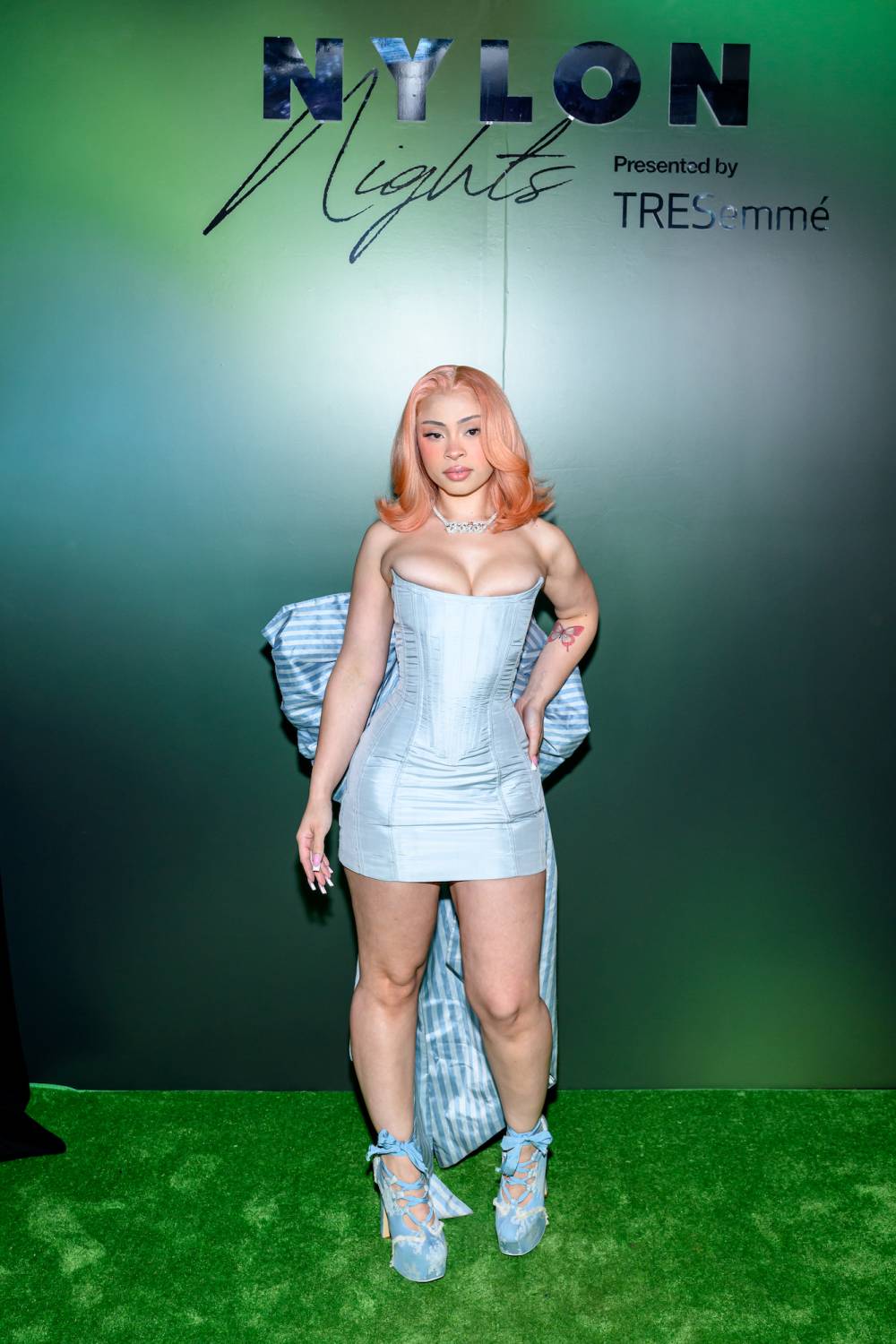
At that point, the show’s producers got in on the fun, showing the security cam footage from the Ice Spice incident at the restaurant.
“Oh, come on, Spice. Leave that woman alone,” Barkley said as the clip played.
The incident occurred on Wednesday, April 15, when Ice Spice, 26, and her friend were approached by a fan while eating at a McDonald’s.
The incident escalated into a full fight after the fan slapped Ice Spice, and the rapper retaliated. When the fan ran outside of the restaurant, Ice Spice followed, continuing the brawl.
Security camera footage from the incident quickly went viral on social media.
“This wouldn’t happen at Wendy’s,” Ice Spice wrote via X on Friday, April 17, alongside the security footage from the alleged incident.
For whatever it’s worth, the rapper has a partnership with Wendy’s.
“The unprovoked attack on my client has been reported to the LAPD and we will be pursuing any and all avenues to hold the perpetrators responsible for their actions, including criminally and civilly,” the singer’s lawyer Bradford Cohen told Page Six in a statement. “We are also exploring holding the location responsible for their lack of appropriate security.”

In the quiet hours of early Sunday morning in Shreveport, Louisiana, the day started off as ordinary day quickly turned into something the community would never forget. Authorities say a tragic series of events unfolded across multiple homes. Now, families are shattered and an entire city is searching for answers as details slowly continue to emerge.
RELATED: 71-Year-Old Babysitter Faces Murder Charges After 3-Year-Old Is Fatally Shot On Easter Sunday
Domestic Shooting In Shreveport Kills Eight Children
According to the Shreveport Police Department, eight children — some of them teens — died in the shooting. Additionally, victims ranging in age from just 1 to around 14 years old. Ten people were struck by gunfire in total, and police confirmed the suspected shooter is also dead following an officer-involved response. Officials described the incident as “domestic in nature,” adding that at least some of those killed are believed to be the suspect’s own relatives. Furthermore, the identities of the victims and the suspect have not yet been released.
Shooting Spanned Multiple Homes Before Suspect Was Killed By Police
Shreveport Police spokesperson Chris Bordelon said the violence unfolded across multiple locations. And, two homes on the same block and another residence in a separate part of the neighborhood were included. Officers first responded just after 6 a.m. ET, where they discovered victims at one of the scenes. The suspect reportedly fled and carjacked a vehicle nearby. However, they were later tracked down by law enforcement before being killed after officers discharged their weapons during the pursuit. Authorities have not yet released the suspect’s name, pending official notifications.
Local and state leaders say the impact of the tragedy is being felt far beyond the immediate scenes. Shreveport Mayor Tom Arceneaux called the situation “maybe the worst tragic situation we’ve ever had in Shreveport,” while emphasizing that multiple victims remain hospitalized as the investigation continues. Louisiana Attorney General Liz Murrill has confirmed that several agencies are now involved in the case, and Louisiana State Police are reviewing the officer-involved shooting that resulted in the suspect’s death.
Officials Focus On Answers & Support After Shreveport Tragedy
As the city processes the devastating loss, officials say the focus remains on supporting the families and uncovering exactly what led to the violence. Shreveport Police Chief Wayne Smith said investigators are working through every piece of evidence from each scene. Louisiana Governor Jeff Landry and other officials are expressing condolences, while the White House is being briefed and monitoring the situation as the investigation unfolds.
RELATED: Former Virginia Lt. Gov. Justin Fairfax Fatally Shoots Wife Before Taking His Own Life While Children Were Home
What Do You Think Roomies?
One Instagram user @cscain1 said, “Mind you, this beautiful lady is 63.❤️😍”
This Instagram user @queen_kaylou commented, “Okayyy looking like a Fanta commercial“
And, Instagram user @bmoretia added, “Not a strand outta place in that French roll. 🔥🔥🔥 She’s exactly who she thinks she is.“
Meanwhile, Instagram user @thatseuro shared, “I know that’s right 🔥🔥🔥😂😂😂”
While Instagram user @juss.thrasher wrote, “She got more swag than the background dancers 🔥😂”
Finally, Instagram user @nunoocorey joked, “🙌 Kamala Harris killing it 😂”
Vanessa Williams Isn’t The Only One—Bernice Burgos Stuns At 46
RELATED: Too Cute! Tamera Mowry’s Daughter Ariah Puts Her On To Tyla’s Viral ‘Chanel Dance Challenge’ (WATCH)
What Do You Think Roomies?
A picture-perfect spring evening in Queens, New York quickly took a tragic turn when a gunshot hit 15-year-old Jaden Pierre. Authorities say cameras reportedly captured the incident at Roy Wilkins Park in St. Albans on April 16 shortly after a large group of kids attacked Pierre, before he was hit with a single shot.
RELATED: Prayers Up! 1-Year-Old Reportedly Dies After 14-Year-Old Crashes While Driving Under The Influence
Police Launch Investigation Following Deadly Shooting At New York Playground
Per ABC News, residents said about 300 teenagers swarmed Roy Wilkins Park in St. Albans for a planned water balloon fight on April 16. During the chaos, several kids allegedly attacked Jaden Pierre before an individual fired a single shot at him around 6 p.m. local time. Pierre was ended up suffering a gunshot wound to the chest on the basketball court. First responders rushed him to Jamaica Hospital in critical condition, but he later died from his injuries. According to amNewYork, Jaden’s family plans to hold a vigil for him at the park on Monday, April 20. Attorney General Letitia James, Donovan Richards, and Jumaane Williams are reportedly set to attend the event.
Authorities Continue To Search For The Suspect
Police put up posters as they search for the alleged gunman, who still remains on the loose. They also released photos of the person wanted in connection to the shooting. The images show the suspect with short dreadlocks, wearing a light gray printed tracksuit and a black backpack. Investigators still don’t know the motive, but reports suggest possible gang ties. Officials are offering a $3,500 reward for any information that leads to an arrest.
Jaden’s Family & New York Officials React To His Tragic Passing
Following his tragic passing, Jaden’s uncle reacted to the news. He said Jaden was a good kid who lived a regular life. “He was just a regular kid,” Jaden’s uncle said. When asked if his nephew wanted to play professionally when he grew up, he smiled and added, “He was short.”
New York Attorney General Letitia James also shared a statement on X (formerly Twitter) about Jaden’s passing. She called the incident “a senseless act of gun violence.”
“My heart is heavy tonight after we lost a 15-year-old to a senseless act of gun violence,” James continued, “I’m praying for his family, loved ones, and community. I will continue to work tirelessly every day to end gun violence in New York.”
RELATED: Prayers Up! Louisiana Mass Shooting Reportedly Leaves Eight Children Dead & Two Individuals Injured (VIDEO)
What Do You Think Roomies?

Crypto World20 seconds ago
Aave Faces Crisis: rsETH Exploit Drains $250M as TVL Plunges $7B and AAVE Token Falls 15%
Sports2 minutes ago
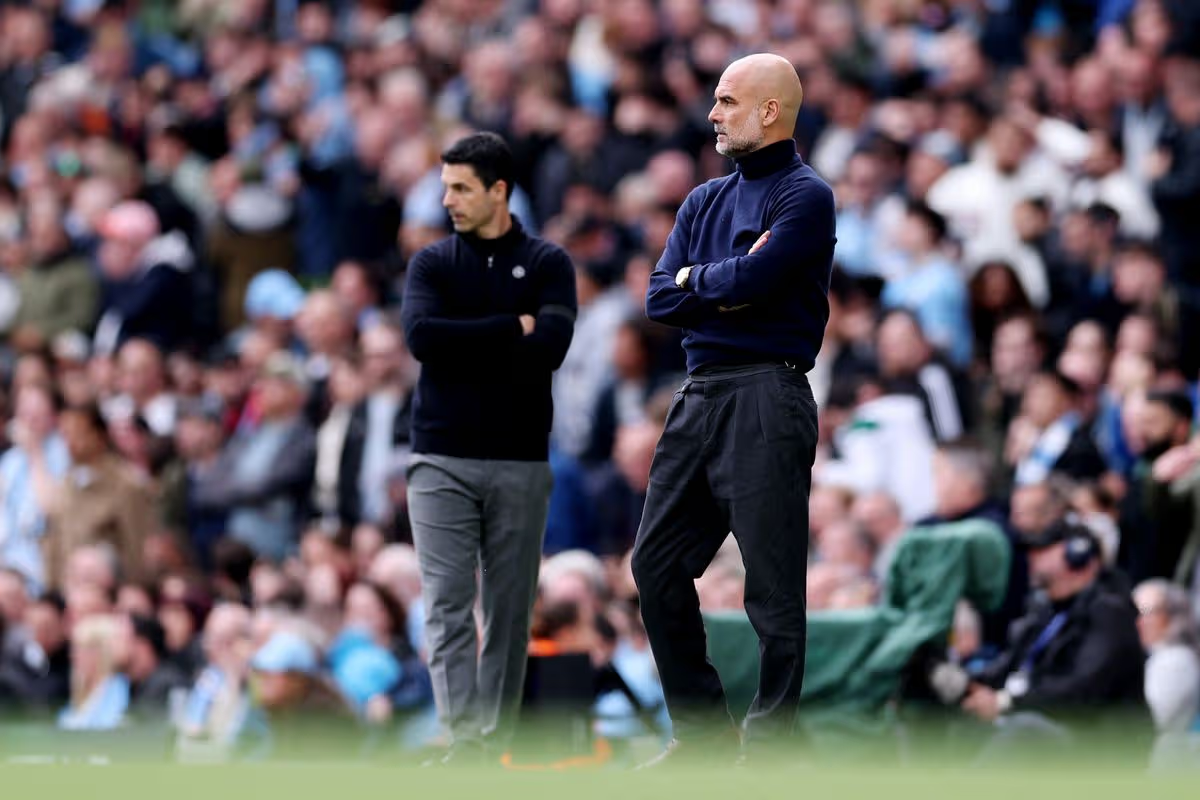
Pep Guardiola concerned by fresh Man City injury after Arsenal win

Tech3 minutes ago
Audma’s ELISA Technology Enables Speaker Like Soundstage from Any Headphones: AXPONA 2026


-

 Crypto World6 days ago
The SEC Conditionalises DeFi Platforms to Be Avoided for Broker Registration
-

 Fashion2 days ago
Weekend Open Thread: Theodora Dress
-

 Crypto World6 days ago
SEC Signals Exemption for Crypto Interfaces From Broker Registration
-

 NewsBeat6 days ago
Trump and Pope Leo: Behind their disagreement over Iran war
-

 News Videos5 days ago
Secure crypto trading starts with an FIU-registered
-

 Sports3 days ago
NWFL Suspends Two Players Over Post-Match Clash in Ado-Ekiti
-

 Crypto World6 days ago
SEC Proposes Certain Crypto Interfaces Don’t Need to Register as Brokers
-

 Business10 hours ago
Powerball Result April 18, 2026: No Jackpot Winner in Powerball Draw: $75 Million Rolls Over
-

 Politics2 days ago
Palestine barred from entering Canada for FIFA Congress
-

 Crypto World2 days ago
Russia Pushes Bill to Criminalize Unregistered Crypto Services
-

 Sports7 days ago
NWFL opens Pathway for new Clubs ahead of 2026 Season
-
 Business3 days ago
Creo Medical agree sale of its manufacturing operation
-
 Entertainment6 days ago
Brand New Day’ Footage Reveals the Devastating Impact of ‘Now Way Home’
-

 Politics14 hours ago
Zack Polanski demands ‘council homes not luxury flats for foreign investors’
-

 Crypto World7 days ago
Trump whales load up ahead of Mar-a-Lago luncheon.
-
Business7 days ago
Kering slides after Morgan Stanley downgrade, Gucci woes loom
-

 Tech7 days ago
Google adds E2E encryption to Gmail for iOS and Android enterprise users
-

 Tech7 days ago
Apple glasses won’t go brand shopping like Meta did with Ray-Ban and Oakley
-
Entertainment7 days ago
How Euphoria Season 3 Premiere Paid Tribute to Eric Dane After Death
-
 Entertainment6 days ago
Karol G’s ‘Ultra Raunchy’ Coachella Set Gave ‘Satanic Vibes’
You must be logged in to post a comment Login