

Business
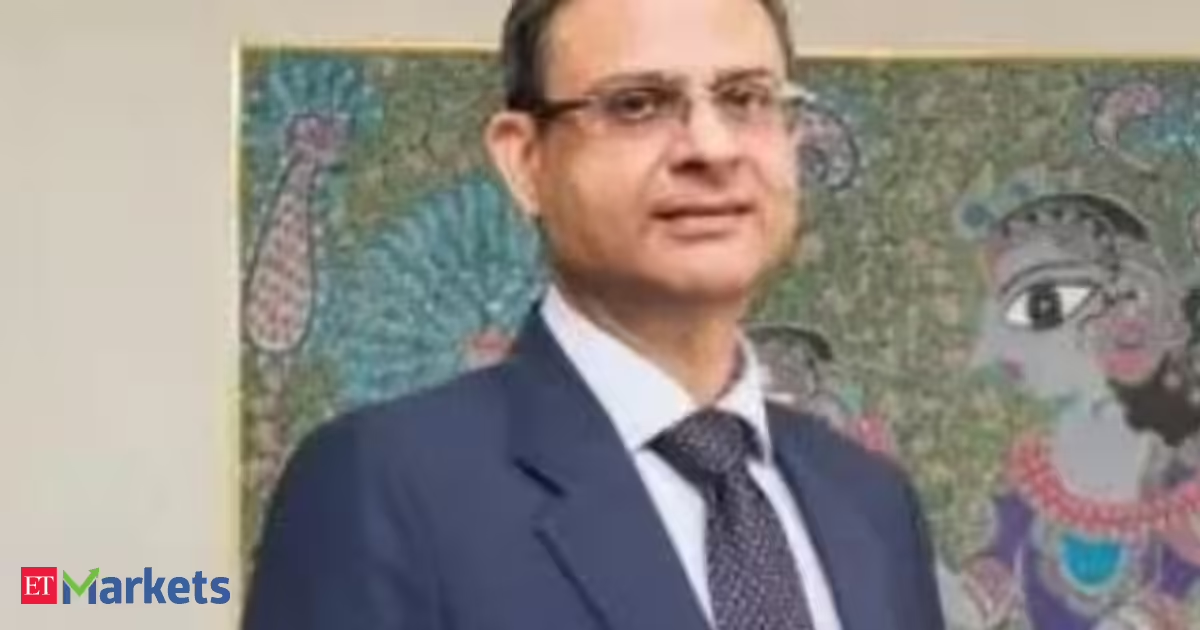
We expect policy rate to be at current level or lower for a long time: Sanjay Malhotra, Governor, RBI

Given the change in tariff assumptions and the latest inflation and GDP data, have you revised your growth and inflation outlook?
In the recent MPC (monetary policy committee) statement, we mentioned that in view of the forthcoming revision in the base year and methodology, we will be giving the full-year projections of growth and inflation in the next policy. We have not yet finalised numbers for the next year. We are still analysing the impact of the changes. Our analysis will also account for the impact of changes in tariffs.
In the last two policies you have maintained that India is in the Goldilocks phase, but given the nature of economic cycles, how long do you expect it to last?
Broadly, over the years, macroeconomic fundamentals of our country have improved-from what used to be a sub-6% growth in the 80s and 90s, to more than 6% in the first decade of this century, and 6.6% in the last decade, and now about 7.3% during FY24-FY26, as per the new series. The momentum of growth is actually accelerating. Similarly, if you look at inflation, it used to be very high in the 80s and 90s. In the nine years preceding inflation targeting, the average headline inflation was 6.9%. In the subsequent nine years, however, it was 4.9%. If you look at recent trends, it is even lower. Health of corporates, banks, governments, private sector are all much better. That gives me confidence that in the short, medium, and long run, our macroeconomic fundamentals will continue to remain healthy and robust.
What could be the downside risks?
The downside risks are geopolitical tensions, geoeconomic uncertainties, and climate-related events. A large part of our population still relies on a monsoon-dependent agrarian economy. And then, technology disruptions.
Experts are interpreting MPC as ending the easing cycle. Is this as good as it gets for borrowers?
We expect the policy rate to be around this level or lower for a long time, barring any shocks.

Currently, inflation is looking benign. We have been in this stage for some time. So, 3-3.5% is the underlying inflation number, as per the old series, if you subtract precious metals. Going forward too, the underlying inflation is expected to remain low.
Now, what are the risks? It will depend on growth-inflation dynamics as they play out. We are still living in very uncertain times. We will assess it meeting by meeting based on incoming data.
While growth numbers are good, foreign and private investments are not as strong. What explains this?
The Indian economy continues to be very resilient. The GDP growth rate for the first half of this financial year was 7.6%, which is also the estimate for the full year, in terms of the new series. The strong growth rate is not only on the consumption side, which grew by 7.8%, but also on the fixed-investment side that expanded by 7.1%. On the supply side, manufacturing and services both have contributed. These numbers suggest that growth is broad-based.
Investment has picked up, including private investment. Gross foreign direct investment (FDI) has been robust. Last year it grew about 13%, and this year as well, growth of gross FDI is good. It is only net FDI which has not been growing as much, not because gross FDI is not increasing, but because repatriations and overseas direct investments have increased in the last two years. This is organic and healthy.
Our macroeconomic fundamentals are robust. There are investment opportunities abroad; therefore, increase in overseas direct investments is to be expected. The repatriations also tend to occur as per investment cycles.
Would you say the same for foreign institutional investors (FIIs)? Is India being hurt by the anti-AI trade?
FIIs have relatively shorter investment horizons. Relative valuations in our country were higher to some extent, though there has been some correction. Moreover, investments moved towards countries with AI opportunities. It has nothing to do with our macroeconomic fundamentals. India too is investing in all five layers of AI-energy, chips, infrastructure, LLMs and applications-and AI adoption is also rising. India will certainly be part of this AI story as evident from the AI summit held recently.
The weighted average call rate (WACR) is below the policy rate. Why?
Generally, the effort is to have the WACR closely aligned to the policy rate. Transmission to call rates have been strong. It is possible, at times, that the WACR may not align exactly with the policy rate. With large surplus liquidity in the system, it has recently moved below the policy rate, but it continues to remain within the corridor.
Forex reserves have touched an all-time high. To what extent can they cover external liabilities?
Our macroeconomic fundamentals remain strong. The external sector is robust. Going forward, the current account remains very manageable. Our forex reserves can cover current account deficits over decades. Several FTAs have been signed and some are in the pipeline. That will help the current account and also the capital account by bringing investments into India. Over $250 billion of investment pledges have been made during the AI summit. Earlier, $67.5 billion was committed by tech giants. The government has liberalised the insurance sector to allow 100% FDI.
Currency in circulation has crossed ₹40lakh crore despite a surge in UPI transactions. With the idea of digitisation, shouldn’t it come down over a period of time. What explains this?
We should look at it not in absolute terms but as a percentage of GDP, which is about 11-11.5%, slightly lower than earlier. As an economy grows, demand for cash too will increase. At the same time, due to increasing usage of digital payments including UPI, cash as a percentage of GDP has decreased. These trends play out gradually over the long term.
UPI volumes are rising but the budgetary allocation is ₹2,000 crore. How will the model be sustained?
We are committed to providing UPI and other payment services to the public. Some of them like UPI are free to the users, because they are for public good. I do not think funds will be a constraint in its proliferation and usage.
After a period of depreciation, do you expect the rupee to remain steady at current levels?
The level of the rupee is determined by demand and supply of foreign exchange. As per historical trends, the rupee has generally strengthened in the last quarter of a financial year. I would also like to emphasise that we do not target any levels. We only aim to curb any excessive volatility either way.
Recurring payments on international platforms using credit cards have become complicated. Is this being addressed?
There is a constant endeavour to make cross-border payments more accessible. We are linking UPI with fast payment systems of other countries.
On mis-selling of products, who determines suitability? Will there be coordination with the IRDAI?
The responsibility of determining suitability rests with the banks. We have a robust grievance redressal mechanism-first within banks, then the internal ombudsman, and then the RBI ombudsman. This is sufficient to address any interpretational issue.
RBI penalties are considered too low to dissuade non-compliance. Any plan to increase them?
The emphasis is not so much on penalising banks, but to improve compliance and risk culture. Over the years, performance has improved, though there is scope for improvement. Our objective is to build a strong, resilient banking system. Monetary penalties are only one of the tools. We also use discussions, moral persuasion, directions, etc.
Are recurring branch-level frauds a concern?
There is no systemic risk. Besides, we already have a robust regulatory and supervisory system. If there is any fraud, necessary corrective, deterrent and penal action is taken.
In the last circular, the RBI said the Tata Sons application for surrendering its upper-layer NBFC classification is under consideration and the deadline has passed. Where do we stand?
The matter is under examination.
Will there be a revised list for upper-layer NBFCs?
We do it every year. We will continue with the process.
Is concentration of investments among a few large business groups a concern?
India needs all its economic constituents to contribute. Larger entities may be able to contribute more. From the banking perspective, we have large exposure limits. Banks also have sectoral exposure limits. We use macro-prudential tools where needed. There is no systemic risk.
How is AI going to transform banking? What are the risks it can pose to banks?
Banks are already using it in some way, largely in KYC/AML (know your customer/anti-money laundering), fraud detection, customer support, and credit appraisals, etc. While there are benefits of AI adoption, there are risks as well.
Banks are already investing in cyber security to address the risks. They will have to keep up their vigil on improving cyber security. We have been continuously emphasising on this.
What is the frontier of innovation in the regulatory sandbox?
We are working on easing KYC for NRI (non-resident Indian) customers, improving AML, KYC, retail CBDC (Central Bank Digital Currency), etc. We also interact regularly with fintechs to understand the evolving landscape.
In order to expand the credit-GDP ratio, do we need more banks?
There is certainly scope for higher credit penetration and it requires a very diverse set of financial institutions. We have a very good financial intermediation system. Currently, we have a mix of banks and NBFCs (non-bank finance companies). We have about 2,000 banks-rural, urban, cooperative, commercial-and over 9,000 NBFCs. We also have other market-based instruments such as corporate bonds, etc., to meet credit needs.
At the same time, we continue to grant licences. We are open to more banks in the system. We have granted in-principle approval for one small finance bank to convert to a universal bank and one payments bank to become a small finance bank.
The Insolvency and Bankruptcy Code (IBC) was once viewed as a panacea for banks’ bad loan problems. A decade later, that belief is fading because of delays. How can it be resolved to improve recovery?
IBC is a major structural reform. It has improved recoveries and credit culture. Improvements have been made and will continue. Lenders must initiate action early and be proactively involved in the resolution process to maximise value.
Is governance in PSU banks a concern?
No. The regulatory and supervisory frameworks are robust. Regulations are largely similar for public and private sector banks.
Does India need bigger banks? Will scaling come from the public or private sector?
We are ownership-neutral. Scaling up can happen across any sector-public or private.
Has there been any change in stance on allowing higher stakes in banks?
No. There is no change in our stance. Higher shareholding is allowed but must be reduced within 15 years. Foreign banks can even have higher shareholding up to 100%. Voting rights, however, are capped at 26%. Recent investments reflect strong fundamentals of the banks and belief in the long-term growth of the country.
Deposit growth is lagging credit growth. Is this a risk to the economy?
Banks have the ability to create deposits. Once a loan is given leading to creation of credit, it simultaneously creates an equivalent amount of deposit.
Growth rate in deposits is lower than credit growth rate because of the larger deposit base of about ₹250 lakh crore vis-a-vis credit of about ₹205 lakh crore, but in absolute terms, both deposit and credit have grown by about ₹25 lakh crore in the last one year. It is not a matter of concern.
Do you support calls for equal tax treatment of banks and mutual funds?
Taxation is in the domain of the government. Diversification of investments is a healthy trend. While views may differ on relative tax treatment, in many jurisdictions, capital gains on fixed-income instruments are taxed at rates higher than those applicable to equities.
Should better-rated NBFCs be allowed to raise deposits directly for better transmission of policy rates?
Fundamentally, they are very different from banks. We do not see a case for allowing NBFCs to access deposits like banks do. We also do not encourage NBFCs to have public deposits. The regulatory treatment is different for them. They do not have deposit insurance or access to central bank liquidity facilities.
Having said that, if I understood you correctly, your question is more about lowering the cost of borrowing. In this context, we have already permitted co-lending, for banks and NBFCs to get together so that they can leverage their individual strengths to lower credit costs for borrowers at the last mile. Banks have access to low-cost deposits and NBFCs have the last mile reach.
Are there any proposals pending before you for an NBFC to convert into a bank?
We don’t have any applications from NBFCs.
Why are NBFCs not too enthusiastic about becoming banks?
The reason is that to a large extent an NBFC can do what a bank can undertake-which is financial intermediation activities-except raising demand deposits as they can raise funds through other means. On the other hand, banks are more tightly regulated than NBFCs. That could be one reason.
In your first year, you undertook several sweeping reforms and haven’t hesitated to take bold measures. Can we expect this momentum to continue?
We need to continuously improve; there is always scope for improvement. I tell my colleagues that we have to strive for perfection. While we have taken a number of measures, it is a journey, there is room for more improvement.
Is there any area of concern that is occupying the mind right now?
As someone has famously said, and I will quote, “The job of the central bank is to worry.” We have to continuously be alert to all those risks, whether it is geopolitics, climate, technology, cyber security.
You’ve completed one year as RBI governor, what is the unfinished agenda?
It is a continuous effort to strengthen the banking system, promote ease of doing business, improve financial inclusion and enhance customer centricity. At the same time, maintaining financial and price stability continues to be the guiding principle. Other areas which we are working on include increasing the safety and security of payment systems and enhancing convenience in forex management.


Japan faces growth risks, slower BOJ rate hikes from Iran conflict

China encourages dollar buying to slow surging yuan


US officials skeptical of regime change in Tehran after Khamenei killing, say sources
RadNet earnings beat by $0.02, revenue topped estimates

In January, Thailand’s economy grew due to increased domestic and external demand, especially in tourism and private consumption. However, construction contracted, while inflation varied. Key issues include U.S. trade policy and tourism recovery.
Key Highlights 📊
- Overall Expansion: The Thai economy grew compared to December, supported by stronger domestic and external demand.
- External Demand:
- Merchandise exports (excluding gold) increased, especially electronics.
- Exports of gems, jewelry, and petroleum products rose temporarily due to firm-specific factors.
- Tourism improved with higher foreign arrivals and receipts.
- Domestic Demand:
- Private consumption and investment strengthened.
- Vehicle sales surged, driven by accelerated purchases ahead of the EV 3.0 scheme deadline and extended registration.
- Government Spending: Expanded but slowed, mainly due to reduced capital expenditure after earlier front-loading.
- Supply-Side Conditions:
- Services slightly contracted, mainly from a decline in construction activity.
- Tourism and trade-related services continued to expand.
- Manufacturing production remained broadly stable.
- Inflation & Stability
- Headline Inflation: Turned more negative, driven by lower raw food and energy prices.
- Core Inflation: Stayed positive and stable, reflecting higher vehicle prices (excise tax adjustments) but offset by promotional discounts in personal care.
- Current Account: Recorded a surplus, supported by net services, income, and transfers, despite a trade deficit from higher imports.
Thailand’s economy in January saw growth fueled by increased exports, particularly in electronics, gems, and jewelry, as well as improved tourism and domestic demand. Vehicle sales surged due to accelerated purchases before the EV 3.0 scheme’s expiration. However, government spending slowed due to previous capital expenditure front-loading, causing a decline in construction and a slight moderation in services, while manufacturing production remained stable.
Source : https://www.bot.or.th/en/news-and-media/news/news-20260227.html
Other People are Reading

How Greg Abel’s First Letter to Berkshire Shareholders Differs From Warren Buffett’s
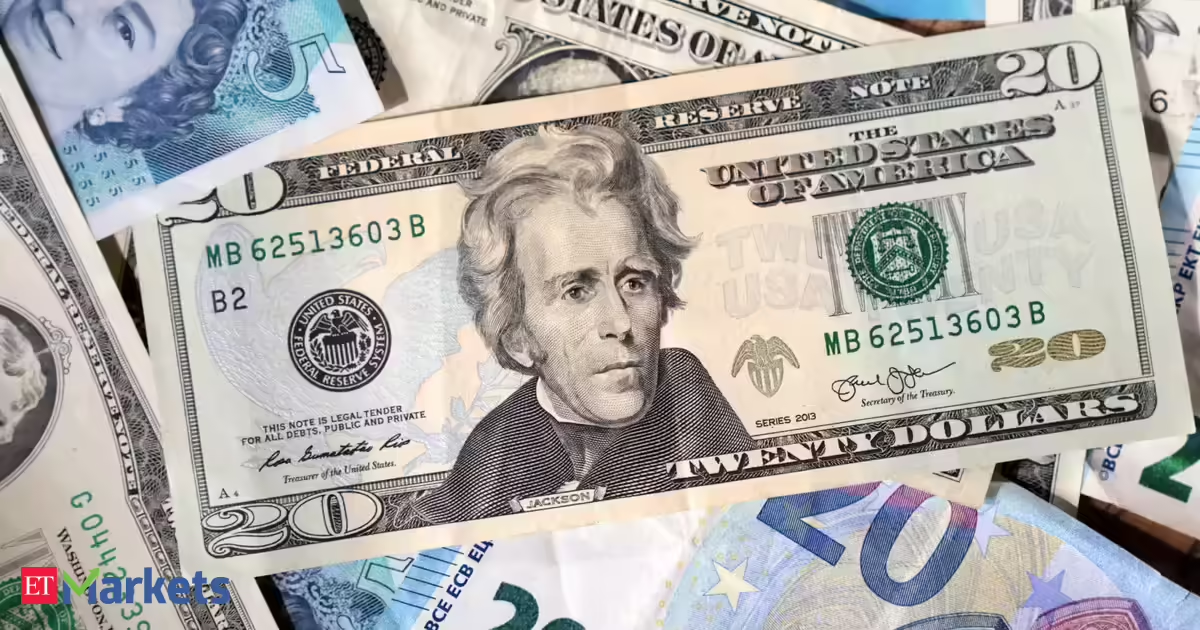
The franc climbed about 0.2% to 0.7674 per dollar and shot 0.6% higher to its strongest level since 2015 on the euro at 0.9030 in the early hours of the Asia session.
The euro fell 0.3% to $1.1781 and the yen initially rose but was held back by Japan’s big oil imports, and last traded a fraction weaker at 156.32 to the dollar.
Sterling and the Australian dollar slid by more than 0.5% and China’s yuan fell about 0.2% in offshore trade, since China is an energy importer and the main buyer of Iranian oil.
“You don’t know how long this is going to last, how high oil is going to go, how long the Strait of Hormuz is going to be closed,” said BNZ strategist Jason Wong in Wellington.
“The initial reaction is mild risk off, and you’ve just got to take each day as it comes.”
The Israeli military said its air force killed Khamenei and his death, at 86, was confirmed by Iranian state media, setting off a high-stakes succession race. Attacks extended into Sunday and Iran has hit back, with the Iranian Revolutionary Guard saying it had struck three U.S. and British oil tankers, while blasts were reported over Dubai and Doha.
Oil prices are markets’ initial top focus and leapt around 9% in early Monday trade on the disruption to seaborne trade.
Currencies of exporters such as Canada and Norway were steady in Asia’s early morning.
The risk-sensitive Australian dollar fell 0.7% to $0.7065, though traders thought the more durable pressure would probably fall on energy importers.
“The euro is in a difficult spot,” said Wells Fargo analysts in a note.
“Europe’s natural gas storage refill season is about to begin and the EU is heading into it with record-low gas in storage, implying it will need to buy a large chunk of energy right as prices potentially shoot higher.”
Israeli military spokesperson Lieutenant Colonel Nadav Shoshani said many targets remained, but deploying ground forces was not under consideration. U.S. President Donald Trump told the Daily Mail the campaign could run for a month.
“We figured it will be four weeks or so. It’s always been about a four-week process,” he said.
At least 150 tankers including crude oil and liquefied natural gas vessels dropped anchor in open Gulf waters beyond the Strait of Hormuz and dozens more were stationary on the other side of the chokepoint, shipping data showed on Sunday.
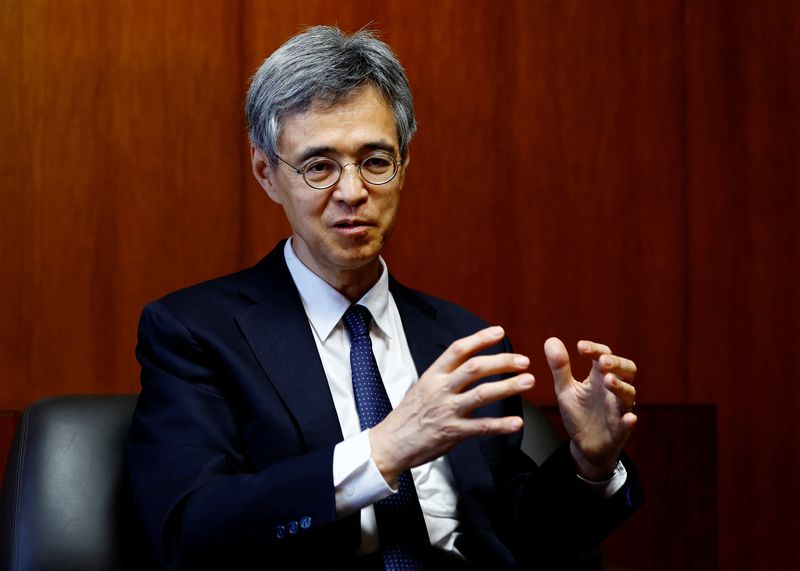

Bank of Japan deputy governor says rate hikes likely to continue

The Organization of Petroleum Exporting Countries, in a Sunday meeting planned before the war began, said it would increase production by 206,000 barrels per day in April, which was more than analysts had been expecting. The countries boosting output include Saudi Arabia, Russia, Iraq, the United Arab Emirates, Kuwait, Kazakhstan, Algeria and Oman.
Attacks throughout the region, including on two vessels traveling through the Strait of Hormuz, the narrow mouth of the Persian Gulf, could restrict countries’ ability to export oil to the rest of the world. That would will likely result in higher prices for crude oil and gasoline, according to energy experts.
Roughly 15 million barrels of crude oil per day – about 20% of the world’s oil – are shipped through the Strait of Hormuz, making it the world’s most critical oil chokepoint, according to Rystad Energy. Tankers traveling through the strait, which is bordered in the north by Iran, carry oil and gas from Saudi Arabia, Kuwait, Iraq, Qatar, Bahrain, the UAE and Iran.
Iran had temporarily shut down parts of the strait in mid-February for what it said was a military drill. Further disruptions to that shipping channel could lead to lower supply and higher prices for oil.
“Roughly one-fifth of global oil supply passes through the Strait of Hormuz, a vital artery for world trade, meaning markets are more concerned with whether barrels can move than with spare capacity on paper,” said Jorge Leon, Rystad’s senior vice president and head of geopolitical analysis, in an email. “If flows through the Gulf are constrained, additional production will provide limited immediate relief, making access to export routes far more important than headline output targets.”
Iran exports roughly 1.6 million barrels of oil a day, mostly to China, which may need to look elsewhere for supply if Iran’s exports are disrupted, another factor that could increase energy prices. Energy experts believe oil prices could shoot higher when barrels begin trading late Sunday. Analysts at Rystad anticipate the price of a barrel of Brent crude, the international standard, could increase by $20 when trading opens.
A barrel of Brent crude closed at a seven-month high of $72.87 on Friday.


OpenAI clinches $840 billion valuation with mega funding from Amazon, Nvidia, SoftBank

BRIT Awards 2026 review – Inside electric Co-op Live Manchester debut

Japan faces growth risks, slower BOJ rate hikes from Iran conflict

Bitcoin Outperforms Equities as Asia Markets Reel From Iran Strikes

Smart energy pays enters the US market, targeting scalable financial infrastructure

Why Israel is blocking foreign journalists from entering

Bitcoin: We’re Entering The Most Dangerous Phase

BITCOIN JUST FAILED: This is Coming Next (Warning)!! – Bitcoin News Today, Ethereum & Altcoins
![XRP Holders Becoming "FILTHY RICH" Is VERY REAL.. Many People Are About To Get Sidelined! [MUST SEE]](https://wordupnews.com/wp-content/uploads/2026/03/1772419855_maxresdefault-80x80.jpg)
XRP Holders Becoming “FILTHY RICH” Is VERY REAL.. Many People Are About To Get Sidelined! [MUST SEE]

Elon Musk’s Vision for X as a Financial Super App
-

 Sports6 days ago
Women’s college basketball rankings: Iowa reenters top 10, Auriemma makes history
-

 Fashion2 days ago
Weekend Open Thread: Iris Top
-

 Politics6 days ago
Nick Reiner Enters Plea In Deaths Of Parents Rob And Michele
-

 Business5 days ago
True Citrus debuts functional drink mix collection
-

 Politics3 days ago
ITV enters Gaza with IDF amid ongoing genocide
-

 Tech23 hours ago
Unihertz’s Titan 2 Elite Arrives Just as Physical Keyboards Refuse to Fade Away
-
Sports2 days ago
The Vikings Need a Duck
-

 Crypto World6 days ago
XRP price enters “dead zone” as Binance leverage hits lows
-

 Tech5 days ago
Unsurprisingly, Apple's board gets what it wants in 2026 shareholder meeting
-
 NewsBeat1 day ago
Dubai flights cancelled as Brit told airspace closed ’10 minutes after boarding’
-

 NewsBeat4 days ago
Cuba says its forces have killed four on US-registered speedboat | World News
-
 NewsBeat2 days ago
The empty pub on busy Cambridge road that has been boarded up for years
-
 NewsBeat4 days ago
Manchester Central Mosque issues statement as it imposes new measures ‘with immediate effect’ after armed men enter
-

 NewsBeat12 hours ago
‘Significant’ damage to boarded-up Horden house after fire
-
 NewsBeat7 days ago
‘Hourly’ method from gastroenterologist ‘helps reduce air travel bloating’
-

 NewsBeat1 day ago
Abusive parents will now be treated like sex offenders and placed on a ‘child cruelty register’ | News UK
-
 NewsBeat5 days ago
Police latest as search for missing woman enters day nine
-

 Business4 days ago
Discord Pushes Implementation of Global Age Checks to Second Half of 2026
-
 Sports7 days ago
2026 NFL mock draft: WRs fly off the board in first round entering combine week
-

 Business3 days ago
Only 4% of women globally reside in countries that offer almost complete legal equality