MWC 2026 officially gets underway on March 2 and will continue through March 5, but the announcements are already pouring in ahead of its start. We can always count on the annual tech event to bring tons of new phones, laptops and tablets, and we’re expecting to see some robots and other gadgets too — plus plenty of AI news, of course. In addition to the announcements, MWC is our chance to get hands-on time with some of the most interesting new devices, like the Xiaomi 17 Ultra and Honor’s Robot Phone.
Engadget’s Mat Smith is on the ground in Barcelona, and we’ll be updating this story as the week goes on to keep you in the loop on everything that caught our attention. Keep checking back here for the latest MWC news.
Lenovo
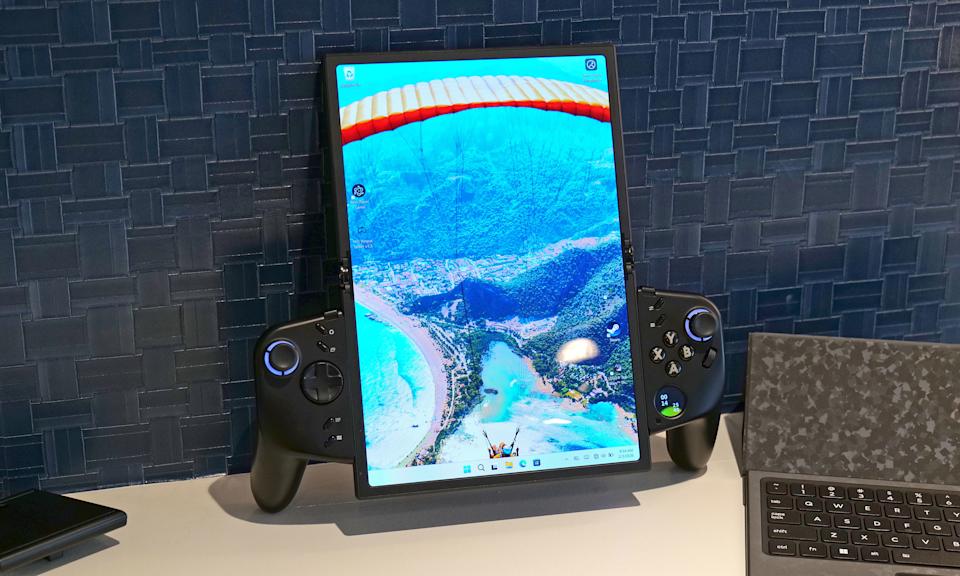
How silly does this look when its flexible display is fully extended in portrait mode? (Sam Rutherford for Engadget)
Lenovo pulled up to MWC with a bunch of new products and concepts, but if there’s one thing everyone’s going to be talking about, it’s the Legion Go Fold. (Check out Sam Rutherford’s coverage of the Legion Go Fold here). In short, the Legion Go Fold is a concept foldable gaming handheld with a flexible display that can unfurl to a massive 11.6 inches. Or, it can be folded in half to become a 7.7-inch display. It has detachable controllers, and there are multiple mounting points along the tablet so you can switch things up between landscape and portrait mode. The left and right gamepads can also be combined into one controller with an accessory, and the display can be propped up kickstand-style with the folio cover.
You think we’re done here? We’re not. The Legion Go Fold can go laptop mode too, with a strip of pogo pins where a wireless keyboard can be connected. Its right gamepad can serve as a mouse, thanks to the inclusion of a little scroll wheel and a hidden sensor. That gamepad also features a tiny circular OLED display below the buttons, which can both show widgets such as the time and be used as a touchpad.
Advertisement
It is a concept, though, so don’t get your hopes up too much about this one going into production. And if it does ever become a real, buyable product, it’ll no doubt be expensive.
The Lenovo Modular AI PC concept is an ambitious mashup between a traditional clamshell and a dual-screen notebook with hot swappable ports. (Sam Rutherford for Engadget)
Lenovo also announced its Modular AI PC concept — a laptop with two displays and a detachable keyboard. As Sam Rutherford, who got a chance to check it out in person, explained, “This allows you to move its keyboard and secondary display around at will, so the system can better adjust to its environment or workload.” Perhaps even more exciting is that it has hot swappable ports. Lenovo demonstrated it with USB-C, USB-A and HDMI connectors, but said others could be possible too.
Still, while everything looked pretty polished in the demo, Lenovo says this one will remain a concept.
The Lenovo Yoga 9i 2-in-1 Aura Edition Gen 11 (Lenovo)
It hasn’t all been concepts at MWC. Lenovo also refreshed some of its existing tablet and laptop lineups for 2026. The company introduced the Yoga 9i 2-in-1 Aura Edition Gen 11 (with the new Canvas Mode configuration), starting at $1,949, and the new 15.3-inch Yoga Pro 7a, which starts at $2,099. It’s updated its more affordable IdeaPad Slim 5i Ultra laptop ($799) as well. All of those new laptops come with Copilot+ features. For students, Lenovo is launching the 13-inch Idea Tab Pro Gen 2, starting at $419, with its Quira AI assistant and AI tools. You can find all the specs and release dates for those here.
Advertisement
Honor
The Robot Phone. (Image by Mat Smith for Engadget)
Honor teased its Robot Phone this past fall and we just finally got a proper look at it at MWC. And it’s pretty freakin’ cute. The phone is equipped with a camera that’s mounted on a highly mobile 4-degrees-of-freedom gimbal, which tucks away into a compartment on the back when it’s not in use (making for a pretty beefy camera bump). In a demo at MWC, the camera, which behaves like a little robot head, bobbed along to music and showed off some of its gesture skills, like cocking its “head” and nodding in agreement.
Honor didn’t reveal too much spec-wise, but the company says the primary camera uses a 200-megapixel sensor. The gimbal will offer three-axis stabilization, which will be coupled with camera modes such as Super Steady Video and AI Object Tracking. The Robot Phone isn’t quite ready for release at the moment, but the company says it will launch later this year.
Be sure to check out Mat Smith’s writeup on the Robot Phone for a more in-depth look.
Honor’s humanoid robot. (Image by Mat Smith for Engadget) (Image by Mat Smith)
It’s not a humanoid robot reveal without some backflips and a choreographed dance performance. Honor introduced its robot at MWC with all the spectacle we’ve come to expect (though the bot didn’t do any talking). It’s simply called the Honor Robot, and the company has plans for it to be used in both industrial and domestic settings.
Advertisement
Honor Magic V6 (Honor)
The Robot Phone isn’t the only phone Honor showed off at MWC. The company also announced its Magic V6 smartphone, which it says is the thinnest phone in its category, measuring 8.75mm folded and 4.0mm open in the white colorway. The other three colors — black, gold and red — are slightly thicker, at 9mm folded and 4.1mm open.
Not too much has changed from the V5, though, which only came out in August 2025. It does however have the Snapdragon 8 Elite Gen 5, with 16GB RAM and 512 GB storage. As for the cameras, there are two 50-megapixel lenses and a 64-megapixel telephoto, plus a 20-megapixel f/2.2 selfie lens on the cover and internal display.
The international version of the Magic V6 will have a 6660mAh battery with 25 percent silicon content, while the version sold only in China will boast a battery with a rated capacity of more than 7000mAh and 32 percent silicon content. Honor hasn’t yet shared details about pricing and availability.
Honor MagicPad (Honor)
Ahead of MWC, Honor also announced what it claims is the thinnest Android tablet in the world: the 4.8mm thick MagicPad 4. We’re expecting to hear more about this at Honor’s press conference on Sunday, but so far we know it features a 12.3-inch 165Hz OLED display and weighs just 450g. It comes with up to 16GB of RAM and 512GB of storage, and is powered by Qualcomm’s Snapdragon 8 Gen 5 chipset. The thinness doesn’t count the camera bump, Honor notes. The MagicPad 4 has 13MP rear and 9MP front cameras. It also boasts spatial audio, with eight speakers.
Advertisement
Just as the display is slightly smaller than the previous MagicPad, the MagicPad 4 has a smaller battery at 10100 mAh. It comes with a 66W fast charger. The MagicPad 4 will run Honor’s MagicOS 10. We don’t yet know how much it will cost, but we’ll update this after Honor’s press conference (where we’re also expecting to see the company’s robot) with any new details.
Xiaomi x Leica
Mat Smith for Engadget
Xiaomi kicked off MWC this year by announcing the global launch of its 17 Ultra smartphone, which debuted first in China back in December. It’s unclear if the phone will ever come to the US, but it’s now rolling out in Europe. Xiaomi teamed up again with Leica to make a photography-focused smartphone, and the 17 Ultra sports a 1-inch 50-megapixel camera sensor with a f/1.67 lens, a telephoto setup with a 200MP 1/1.4-inch sensor, and a 50MP ultrawide camera. There’s also a manual zoom ring around the camera.
Check out our hands on for our first impressions of what it’s like shooting with the Xiaomi 17 Ultra. And there’s more to it than just the camera. The 17 Ultra has a 6.9-inch OLED 120 Hz display that peaks at 3,500 nits of brightness, and a 6000mAh silicon-carbon battery. The Xiaomi 17 Ultra starts at £1,299 (roughly $1,750).
Leica also announced a new phone made in partnership with Xiaomi at MWC. It looks a whole lot like Xiaomi’s 17 Ultra, but isn’t the 17 Ultra, exactly.
Advertisement
Leica Leitzphone by Xiaomi hands-on at MWC 2026 (Image by Mat Smith for Engadget)
Like the 17 Ultra, Leica’s Leitzphone by Xiaomi has a 1-inch camera sensor and physical controls for zoom and other settings, using a mechanical ring around the camera unit. It features a Leica-designed intuitive camera interface with the option to show just the essentials when you’re shooting, hiding all the modes and labels. There’s a monochrome shooting mode and Leica filters.
The Leica branding is splashed all over it in design and wallpapers, but it’s otherwise pretty similar to the 17 Ultra, with the same specs. Like the 17 Ultra, it has a Snapdragon 8 Elite Gen 5 chip and a 6.9-inch 120Hz display. This one’s priced at €1,999 (roughly $2,362).
The Xiaomi Pad 8 Pro (Xiaomi)
In addition to the 17 Ultra, Xiaomi announced two new tablets at MWC this year: the Xiaomi Pad 8 and Xiaomi Pad 8 Pro. There’s nothing revolutionary here, but they’re lightweight and thin, with both being 5.75mm thick and weighing 485g, and have a 9200mAh battery. The Pro model is powered by a Snapdragon 8 Elite chip, while the regular Pad 8 uses the Snapdragon 8s Gen 4 chipset.
Xiaomi also unveiled a new 5000mAh powerbank, the UltraThin Magnetic Power Bank 5000 15W. The 6mm thick power bank comes in three colors with an aluminum alloy shell: orange, silver and charcoal gray. Along with that, the company introduced the Xiaomi Tag, its own take on the Bluetooth item tracker. The Xiaomi Tag has a built-in hanging loop so it can be attached directly to a keyring, and the company says it will work with both Apple Find My and Google’s Find Hub for Android.
Advertisement
Tecno
Tecno
We can always expect to see some wild phone concepts at MWC, and this year we’re starting with one from Tecno. The company unveiled a modular concept smartphone design that can be as thin as 4.9mm in its base configuration. There’d be 10 modules to choose from based on the announcement, including various camera lenses, a gaming attachment and a power bank, relying on magnets to keep it all together — or Modular Magnetic Interconnection Technology, as Tecno is calling it.
On November 16, 2021, Matthew Ziburis sat in his car in a residential neighborhood in the Bay Area stalking an “enemy,” as he put it. A veteran of both the US Army and Marine Corps, Ziburis had previously served in Iraq. But on this mission, he was working at the behest of China’s government. The targets that autumn day were American citizens: Arthur Liu and his teenage daughter, Alysa.
Arthur’s personal story was an exemplar of the American Dream. As a university student, he took part in the 1989 pro-democracy movement in China. After the crackdown at Tiananmen Square that year, he fled to the United States, settling in California. Arthur poured a small fortune and an equal amount of energy into molding Alysa into a figure skating phenom. As a national champion at age 13, she bantered along with Jimmy Fallon on The Tonight Show, and was at the time on track to represent America at the Winter Olympics the following year in Beijing.
Ziburis was surveilling the Liu home when he called Arthur, falsely claiming that he was a member of the US Olympic Committee who needed to discuss upcoming travel to Beijing, Arthur says. Ziburis was adamant that Arthur fax him copies of his and his daughter’s passports as part of a travel “preparedness check,” Liu tells WIRED. This struck Arthur as odd. In his many years dealing with sports bodies, he had never fielded such a request. Alysa’s agent did not respond to a request for comment.
Ziburis’ surveillance of Arthur and Alysa Liu that November day five years ago was just one episode in a bizarre saga that spanned from California to Beijing, touched New York City mayors and members of the US Congress, and has seen two people plead guilty and two more awaiting trial.
Advertisement
Unbeknownst to Ziburis, as he sat outside Aurthur and Alysa’s Northern California home, he too was being watched.
Ziburis had allegedly been dispatched to Northern California by Frank Liu, a self-styled fixer in the Chinese community from Long Island, New York, who was in turn receiving orders from a person in China named Qiang Sun. According to US authorities, Sun was working at the behest of the Chinese government. A concerned private investigator who once worked for Frank Liu had alerted the FBI to Frank’s escapades and was assisting authorities. Law enforcement was already on to Ziburis by the time he arrived. Anthony Ricco, Ziburis’ lawyer, did not respond to requests for comment.
Officers watched as Ziburis surveyed Arthur’s home and visited his law office. The heavy-set man sulking around Arthur’s office also caught the attention of a neighbor, who approached Ziburis and asked him if he needed help, Arthur says. Apparently concerned, the FBI called Arthur to warn him that Ziburis was heading to his home. By then, in part because of the harassment, Arthur and Alysa were boarding a plane to fly out of California. “It was like a movie,” Arthur says.
Alysa’s showing in Beijing in 2022 was disappointing. Burned out, she retired from the sport. Then in February, after returning to the ice after a two year hiatus, Alysa became the first US women’s figure skater to win Olympic gold since 2002—intentionally without her father by her side.
Advertisement
Despite her much-publicized complicated relationship with Arthur, Alysa’s success—punctuated by her signature pierced smile, racoon-tail dye job, and palpable joy for her sport—has reignited interest in the long-running case of transnational repression against her and her father. Human rights advocates and researchers have documented in recent years the lengths Beijing has taken to suppress critical voices, even those residing abroad or whose perceived transgressions date back decades.
It happens in every emerging industry: founders and investors push toward a common goal, until the money starts to roll in and that shared vision begins to diverge.
Cracks are emerging in the fusion power world, which I saw firsthand at The Economist’s Fusion Fest in London last week. It didn’t dampen the overall buoyant mood, lifted by fusion startups’ fundraising haul of $1.6 billion in the last 12 months. But people had differing opinions on two key questions: When should fusion startups go public? And are side businesses a distraction?
Going public was at the top of everyone’s minds. In the last four months, TAE Technologies and General Fusion have announced plans to merge with publicly traded companies. Both stand to receive hundreds of millions of dollars to keep their R&D efforts alive, and investors, some of whom have kept the faith for 20 years, finally see an opportunity to cash out.
Not everyone is in agreement. Most of those who I spoke to were worried these companies were going public far too early and that they hadn’t achieved key milestones that many view as vital in judging the progress of a fusion company.
Advertisement
First, a recap: TAE announced its merger with Trump Media & Technology Group in December. Though the deal isn’t yet completed, the fusion side of the business has already received $200 million of a potential $300 million in cash from the deal, giving it some runway to continue planning its power plant. (The remainder will reportedly land in its bank account once it files the S-4 form with the U.S. Securities and Exchange Commission.)
General Fusion said in January that it would go public via a reverse merger with a special purpose acquisition company. The deal could net the company $335 million and value the combined entity at $1 billion.
Both companies could use the cash.
Techcrunch event
Advertisement
San Francisco, CA | October 13-15, 2026
Before the merger announcement, General Fusion was struggling to raise funds, and around this time last year it laid off 25% of its staff as CEO Greg Twinney posted a public letter pleading for investment. It received a brief reprieve in August when investors threw it a $22 million lifeline, but that sort of money doesn’t last long in the fusion world, where equipment, experiments, and employees don’t come cheap.
Advertisement
TAE’s position wasn’t quite as dire, but it still required some funds. Pre-merger, the company raised nearly $2 billion, which sounds like a lot, but keep in mind the company is nearly 30 years old. What’s more, its valuation pre-merger was $2 billion, according to PitchBook. Investors were breaking even at best.
Neither company has hit scientific breakeven, a key milestone that shows a reactor design has power plant potential. Many observers doubt they’ll hit that mark before other privately held startups do. One executive told me, if they were in those shoes, they’re not sure how they would fill time on quarterly earnings calls if the companies didn’t hit scientific breakeven soon.
If TAE or General Fusion doesn’t deliver results, several people feared the public markets would sour on the entire fusion industry.
Now, not all may be lost. TAE has already started marketing other products, including power electronics and radiation therapy for cancer. That could give the company some near-term revenue to placate shareholders. General Fusion, though, hasn’t revealed any such plans.
Advertisement
And therein lies another divide: fusion companies remain split on whether they should pursue revenue now or wait until they have a working power plant.
Some companies are embracing the opportunity to make money along the way. Not a bad strategy! Fusion is a long game, so why not improve your odds? Both Commonwealth Fusion Systems and Tokamak Energy have said they’ll be selling magnets. TAE and Shine Technologies are both in nuclear medicine.
Other startups are worried that side hustles could become a distraction. Inertia Enterprises, for example, told me that they’re laser-focused on their power plant. That jibes with what another investor told me months ago: — they were worried that fusion startups could get distracted by profitable, but tangential businesses and fall off the lead.
There wasn’t consensus on the right time to go public either. I heard a few proposed milestones. Some believe startups should first reach that scientific breakeven milestone, in which a fusion reaction generates more energy than it needs to ignite. No startup has achieved that yet. The other possibilities are facility breakeven — when the reactor makes more energy than the entire site needs to operate — and commercial viability — when a reactor makes enough electrons to sell a meaningful amount to the grid.
Advertisement
We may have an answer to that question sooner than later. Commonwealth Fusion Systems expects it will hit scientific breakeven sometime next year, and some think the company might use that as an opportunity to go public.
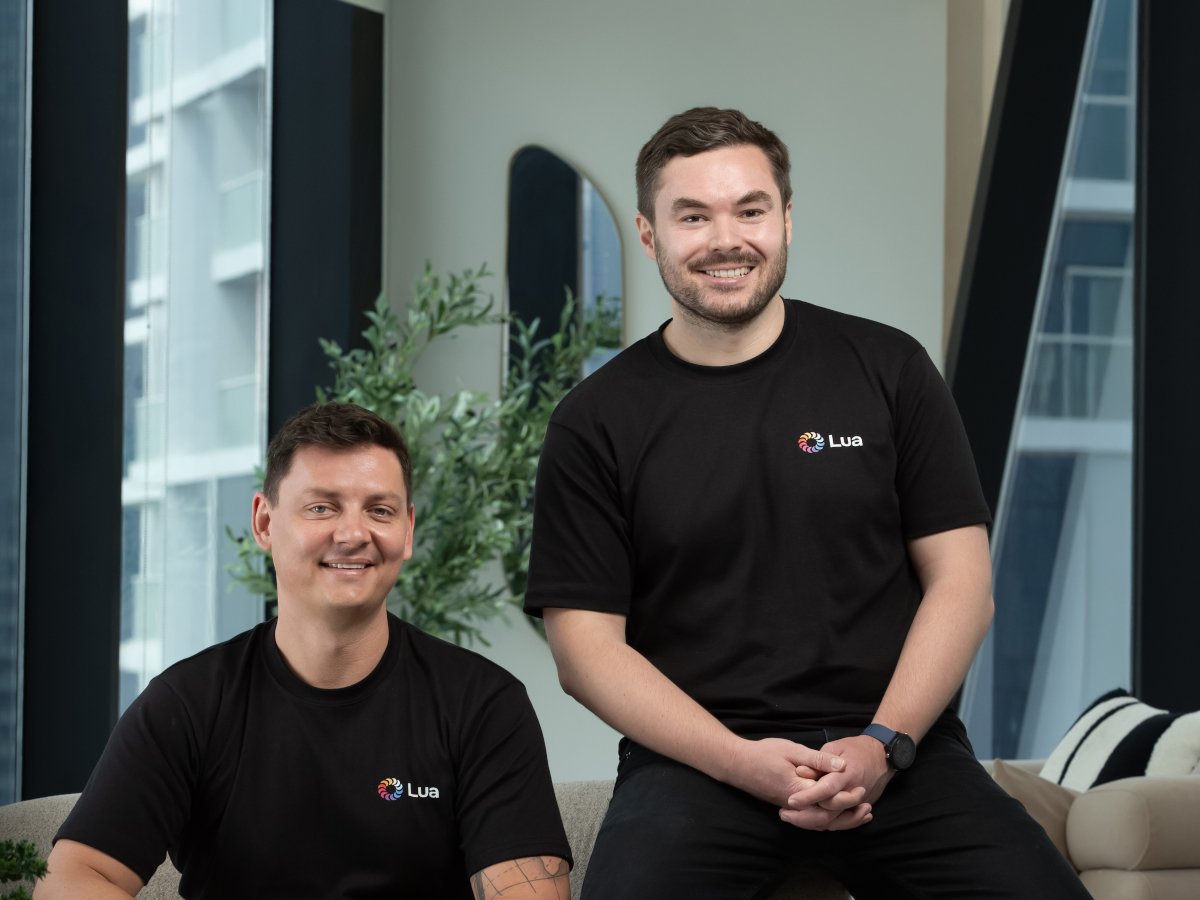
Lua can ‘build AI agents that solve real problems’ through collaboration with people, regardless of a team or organisation’s technical depth or skill.
Irish co-founded and London-based agentic workforce AI start-up Lua raised $5.8m in funding last week (16 April) in a round led by Norrsken22.
Lua offers customers the opportunity to “build AI agents that solve real problems” through collaboration with people, it claims, regardless of a team or organisation’s technical depth or skill.
The company said it will use the new funding to continue to build out its developer community and the ‘Lua Implementation Network’, which it said is a growing community of independent partners deploying Lua agentic workforces in their own markets around the world.
Advertisement
Other investors included Flourish Ventures, 20VC, P1 Ventures, Phosphor Capital and Y Combinator, along with angels such as Henri Stern, the CEO of Privy; Kaz Nejatian, the CEO of Opendoor; and Med Benmansour, the CEO of Nuitee.
“The companies that will win over the next few years are the ones that build their agent workforce with the same intentionality they bring to their human workforce,” said CEO and co-founder Lorcan O’Cathain.
“Most businesses are either blocked by technical complexity or locked into rigid tools that don’t reflect how their teams actually work.
“Lua is built on the opposite principle: teams own their agents, own their outcomes and build compounding efficiency over time.”
Advertisement
The platform is described as offering “an opinionated, full-stack agent” that is suitable for both technical and non-technical users, to run inside existing systems while “coordinating handoffs between agents and humans”.
In a LinkedIn post regarding the funding announcement, Lua said the number of agents on its platform had grown by 10 times during Q1.
Lua was founded in 2024 by O’Cathain and Stefan Kruger, who is the company’s CTO. The company said it “ has been global since day one, deployed across emerging markets in Africa and Asia alongside customers in the US and Europe”.
The founders of Lua “fundamentally understand how agent and human workforces need to collaborate to get work done”, said Lexi Novitske, a general partner at Norrsken22.
Advertisement
Lua proposes solution for customers in healthcare, financial services, retail, manufacturing and real estate. The integration of AI into the workforce and workplace is a topical issue for a variety of reasons.
Don’t miss out on the knowledge you need to succeed. Sign up for the Daily Brief, Silicon Republic’s digest of need-to-know sci-tech news.
Microsoft has released out-of-band (OOB) updates to fix issues affecting Windows Server systems after installing the April 2026 security updates.
As Microsoft confirmed last week, some admins may experience failures when installing the KB5082063 security update on Windows Server 2025 devices.
Additionally, this month’s Patch Tuesday cumulative updates are causing some Windows servers with domain controller roles to enter a restart loop due to crashes of the Local Security Authority Subsystem Service (LSASS).
Microsoft also warned that this issue may also occur when setting up new domain controllers (or even on existing ones) if the server processes authentication requests very early during startup.
To address these two known issues, Microsoft has released emergency updates for the following affected Windows Server versions:
Advertisement
“The Windows Server 2025 OOB update (KB5091157) addresses both the installation failure issue and the domain controller restart issue,” Microsoft explained. “OOB updates released for other supported Windows Server versions address only the domain controller restart issue.”
On Wednesday, Microsoft also warned admins that some Windows Server 2025 devices will boot into BitLocker recovery and prompt users to enter a BitLocker key after installing the KB5082063 Windows security update.
Additionally, last week, it finally addressed a bug that has been plaguing Windows servers since September 2024, causing devices running Windows Server 2019 and Windows Server 2022 to upgrade to Windows Server 2025 “unexpectedly.”
Since the start of the year, Microsoft has also released emergency updates to resolve a Bluetooth device visibility bug and patch security vulnerabilities in the Routing and Remote Access Service (RRAS) management tool that affect hotpatch-enabled Windows 11 Enterprise devices.
AI chained four zero-days into one exploit that bypassed both renderer and OS sandboxes. A wave of new exploits is coming.
At the Autonomous Validation Summit (May 12 & 14), see how autonomous, context-rich validation finds what’s exploitable, proves controls hold, and closes the remediation loop.
Welcome back to TechCrunch Mobility, your hub for the future of transportation and now, more than ever, how AI is playing a part. To get this in your inbox, sign up here for free — just click TechCrunch Mobility!
A few weeks ago, I wrote about how Uber seemed to be everywhere, all at once in the emerging autonomous vehicle technology sector. The Financial Times has now put a number on it. The FT calculated that Uber has committed more than $10 billion to buying autonomous vehicles and taking equity stakes in the companies developing the tech, according to public records and discussions with folks behind the scenes. About $2.5 billion of that is in direct investments, with the remaining $7.5 billion to be spent on buying robotaxis over the next few years, the outlet reported.
We’ve reported on Uber’s numerous investments and deals with autonomous vehicle companies across drones, robotaxis, and freight. Some of its investments include WeRide, Lucid and Nuro, Rivian, and Wayve.
This rather large number (and particularly that $7.5 billion) got me thinking about another transformative era in Uber’s history and how it has visited these asset-heavy shores before. Uber might have started with a plan to be asset light, but for a brief period it did quite the opposite.
Advertisement
Uber went on a moonshot spree between 2015 and 2018. It launched electric air taxi developer Uber Elevate and the in-house autonomous vehicle unit Uber ATG, which would be boosted by its acquisition of Otto in 2016. It also snapped up micromobility startup Jump in 2018.
And then in 2020, Uber pulled the asset-heavy rip cord, ostensibly leaving all of those moonshots behind. Uber sold Uber ATG to Aurora, Jump to Lime, and Elevate to Joby Aviation. But it didn’t completely divest; it kept equity stakes in all of them.
Uber is now entering into a new and different asset-heavy era. It’s not plunking down millions, or even billions, to develop the technology in-house, although I’m sure folks there would be quick to pipe up that there is always R&D happening over at Uber. Instead, it appears to be focused on owning (or perhaps leasing) the physical assets.
Techcrunch event
Advertisement
San Francisco, CA | October 13-15, 2026
That could mean interesting line items on Uber’s balance sheet in the future.
Advertisement
Owning fleets of robotaxis built by other companies might not have been the original vision of Uber, or its former CEO Travis Kalanick, who has said the company made a mistake when it abandoned its AV development program. But this new approach could still get it to the same end point.
A little bird
Image Credits:Bryce Durbin
Earlier this month, I interviewed Eclipse partner Jiten Behl about the venture firm’s new $1.3 billion fund and where that money might be headed. The firm, as I wrote, intends to incubate more startups (e.g., it was behind the Rivian spinout Also). Behl wouldn’t give me details, only stating, “We’re definitely working on a couple of really cool ideas.” He also said Eclipse is particularly interested in startups that work across enterprises.
Thanks to one little bird and some document diving by senior reporter Sean O’Kane, it looks like a seed round announcement is imminent for a San Francisco-based startup working on an autonomous hauler that I’ve been told doesn’t have a driver cab. This sounds similar to what Einride has built, but since we haven’t seen it, we’ll have to wait.
The company’s roster isn’t big, but it is chock-full of Silicon Valley tech elite, including a founder who was at Uber ATG, Pronto, and Waabi. Stay tuned for more.
Slate is back with more capital as it prepares to put its first affordable pickup trucks into production by the end of 2026.
The electric vehicle startup, which got its start with backing from Jeff Bezos, raised another $650 million in a Series C funding round led by TWG Global. Keep your eye on TWG. This is the firm run by Guggenheim Partners chief executive (and Los Angeles Dodgers owner) Mark Walter and investor Thomas Tull.
Slate has raised about $1.4 billion to date, and its previous investors include General Catalyst, Jeff Bezos’ family office, VC firm Slauson & Co., and former Amazon executive Diego Piacentini, as TechCrunch first reported last year.
Other deals that got my attention …
Glydways, a San Francisco-based startup developing personal autonomous pods designed to operate on dedicated 2-meter-wide lanes in cities, raised $170 million in a Series C funding round co-led by Suzuki Motor Corporation, ACS Group, and Khosla Ventures. Existing investors Mitsui Chemicals and Gates Frontier and new investor Obayashi Corporation also participated. But wait, there’s more.
Advertisement
GM and Ford are reportedly talking to the Pentagon about whether the auto industry can help the military revamp its procurement program and find cheaper, faster ways to buy vehicles, munitions, or other hardware, the New York Times reported, citing anonymous sources.
Loop, a San Francisco-based startup, raised $95 million in a Series C funding round led by Valor Equity Partners and the Valor Atreides AI Fund, and includes investments from 8VC, Founders Fund, Index Ventures, and J.P. Morgan’s late-stage fund, Growth Equity Partners.
Monarch Tractor, the startup developing electric, autonomous tractors, has moved on to (ahem) a different pasture. The startup’s assets have been acquired by Caterpillar after struggling to pivot to a software services business.
Uber is increasing its stake in Delivery Hero by 4.5%, the Financial Times reported. Uber agreed to buy about 270 million euros in shares from Prosus, the Dutch investment group and Delivery Hero’s largest shareholder.
Advertisement
Notable reads and other tidbits
Image Credits:Bryce Durbin
Doug Field, the high-profile executive who shaped Ford’s electric vehicle and technology strategies over the past five years, is leaving. Notably, Ford is shaking up the organization as well, creating a “product creation and industrialization” team to be led by COO Kumar Galhotra. Any guesses where Field is headed next? Perhaps he’ll return to Silicon Valley.
Lightship, the all-electric RV startup, is expanding its Colorado-based factory by another 44,000 square feet, which will allow it to quadruple its manufacturing capacity.
Rivian and battery recycling and materials startup Redwood Materials partnered years ago. We’re now seeing the fruits of that relationship. Redwood is installing battery energy storage at Rivian’s factory in Illinois. The catch? Redwood is using 100 second-life Rivian battery packs, which will provide 10 megawatt-hours (MWh) of dispatchable energy to reduce cost and grid load during peak demand periods.
Tesla created a new self-driving app that makes it easier for owners to subscribe to its Full Self-Driving software and see statistics on how — and how often — they use it. This may not be huge news, but it did catch my eye because of the gamified qualities of these new stats.
Waymo, as per usual, has a few news items this week. The Alphabet-owned company started testing its autonomous vehicles on public roads in London. It also removed its waitlist in Miami and Orlando to scale its robotaxi services in the two cities.
Advertisement
One more thing …
This newsletter isn’t my only project that is leaning more heavily into robotics. My podcast, the Autonocast, is too, as the worlds of autonomous vehicles, AI, and robotics mash together. Check out this interview with Foxglove founder Adrian MacNeil, who previously worked at Cruise.
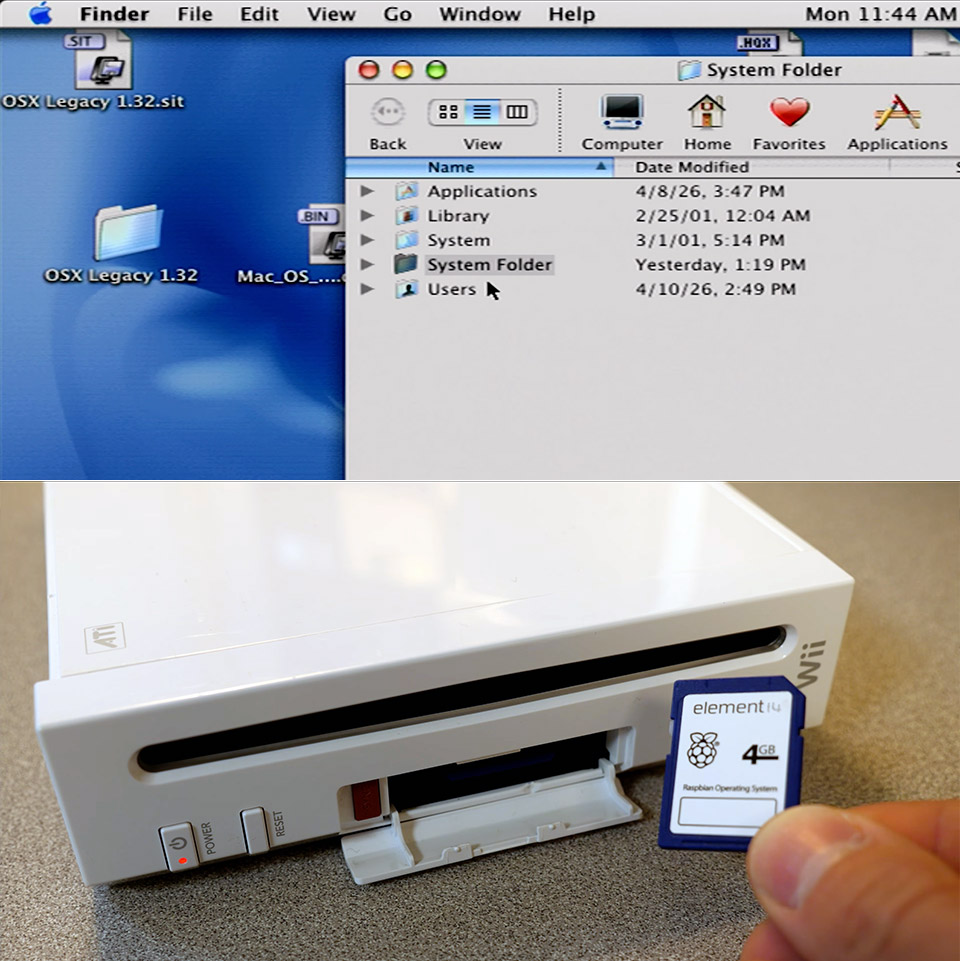
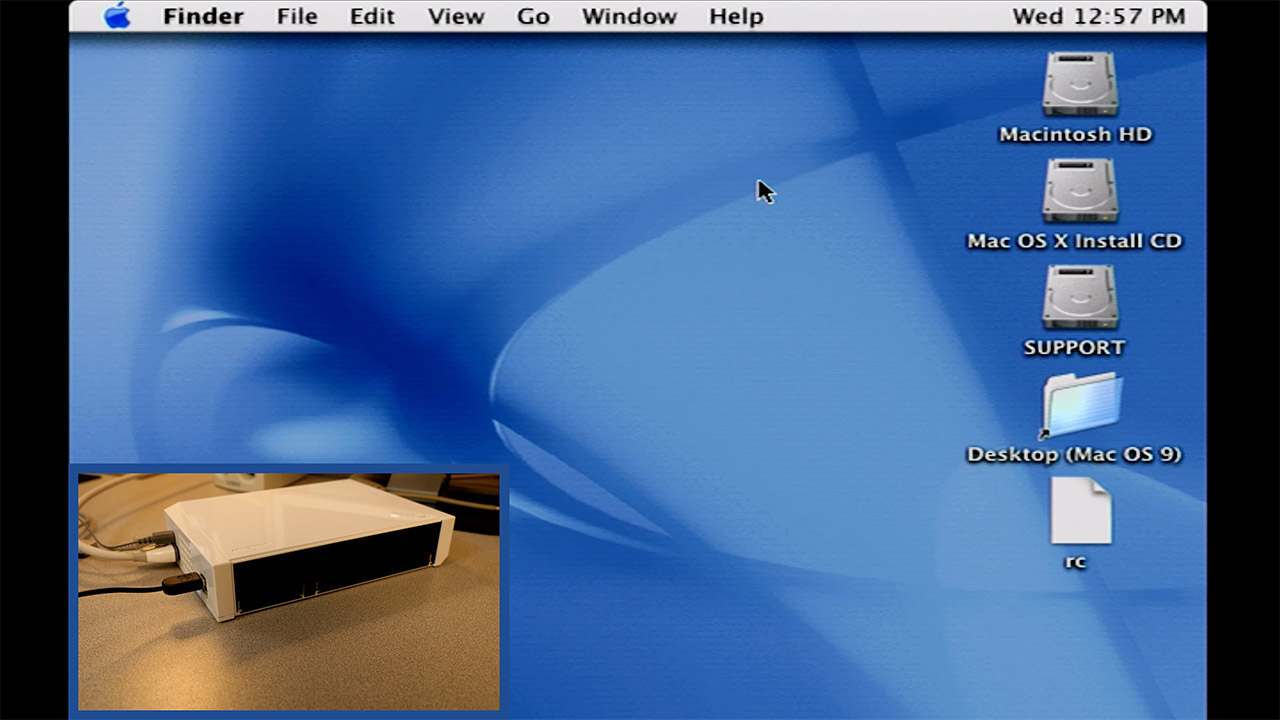
Programmers have managed to cram the original Mac OS X onto a Nintendo Wii from 2006, a piece of hardware that is nearly 20 years old. Bryan Keller, the brains behind this, spent a year and a half developing tools to make it happen through a project called wiiMac. The result lets the Wii boot into Mac OS X 10.0 Cheetah and handle basic tasks even if the experience moves slowly on such limited hardware.
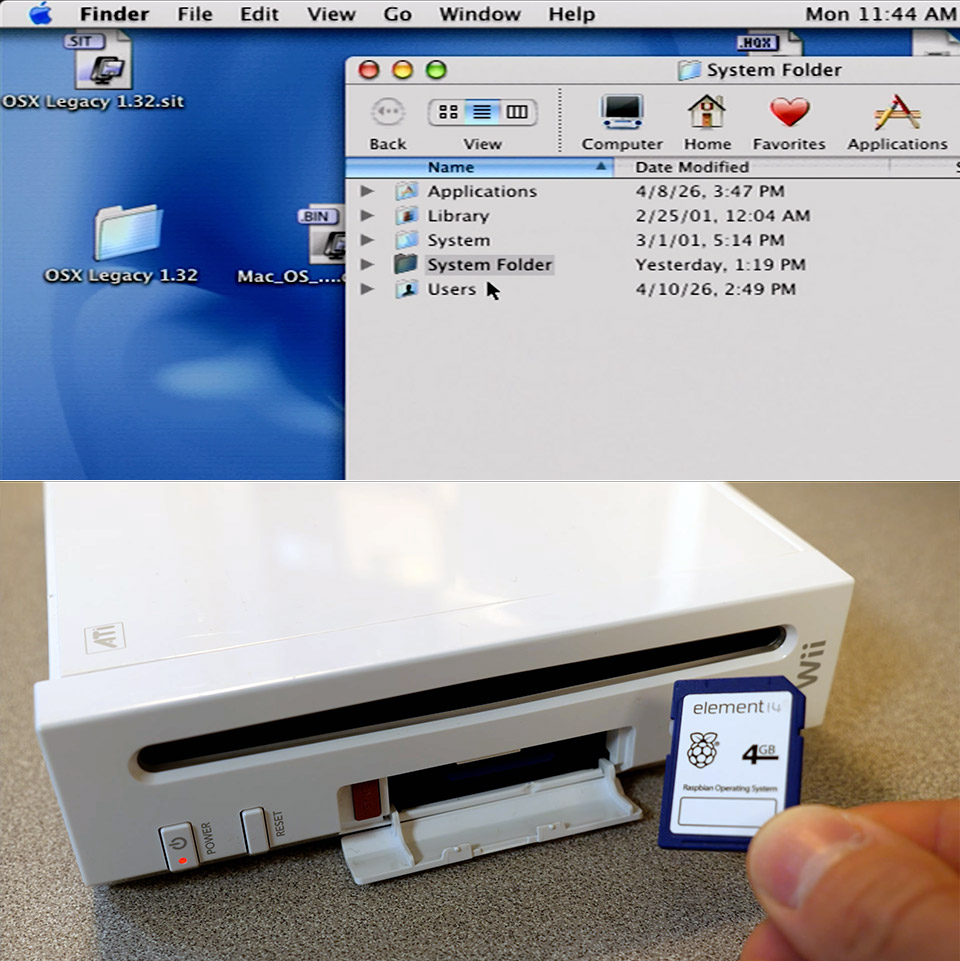
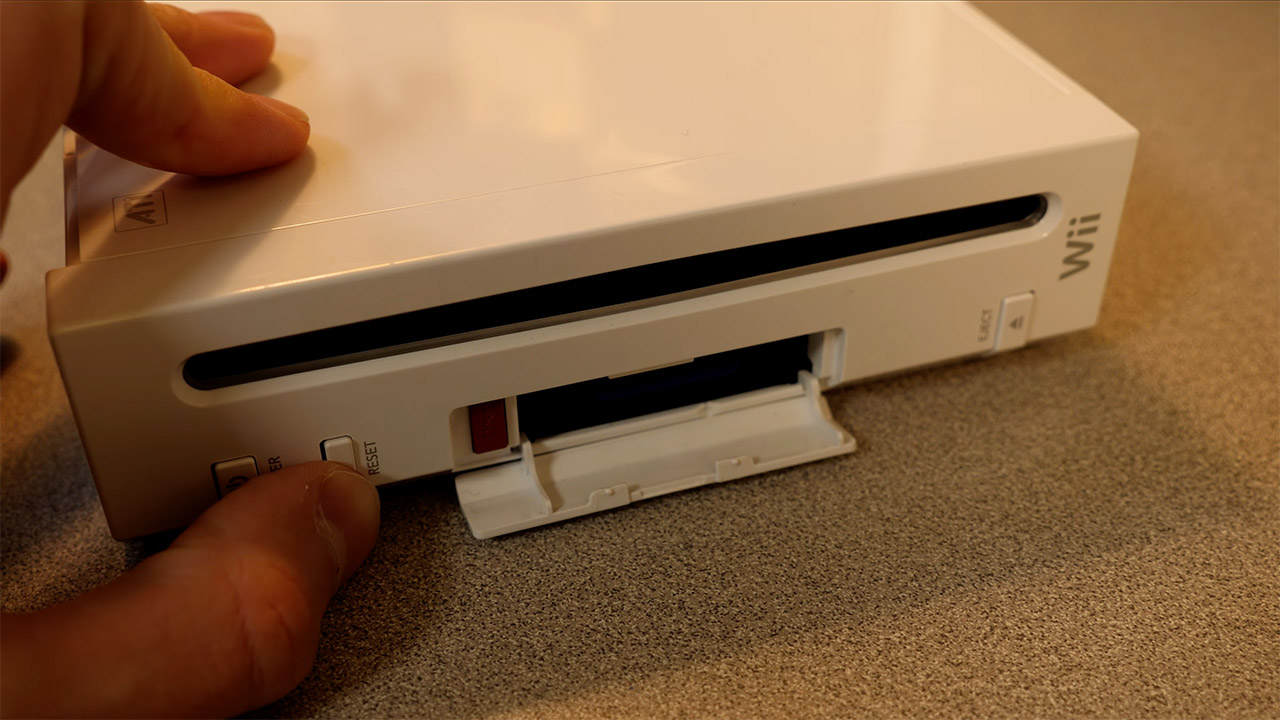
To begin, owners must ensure that their Wii is functioning properly. The SD card slot is required, and the Wii must be running a soft mod with BootMii installed as the second thing to boot, or via an IOS. Unfortunately, the Wii Mini is out of the running because it lacks the essential slot. To get everything up and running, two SD cards are required: one for the BootMii files and the wiiMac bootloader, and the second for the Mac OS X system, which has to be at least 4GB in size.
HELLO, MACBOOK NEO — Ready for whatever your day brings, MacBook Neo flies through everyday tasks and apps. Choose from four stunning colors in a…
THE MOST COLORFUL MACBOOK LINEUP EVER — Choose from Silver, Blush, Citrus, or Indigo — each with a color-coordinated keyboard to complete the…
POWER FOR EVERYDAY TASKS — Ready the moment you open it, MacBook Neo with the A18 Pro chip delivers the performance and AI capabilities you need to…
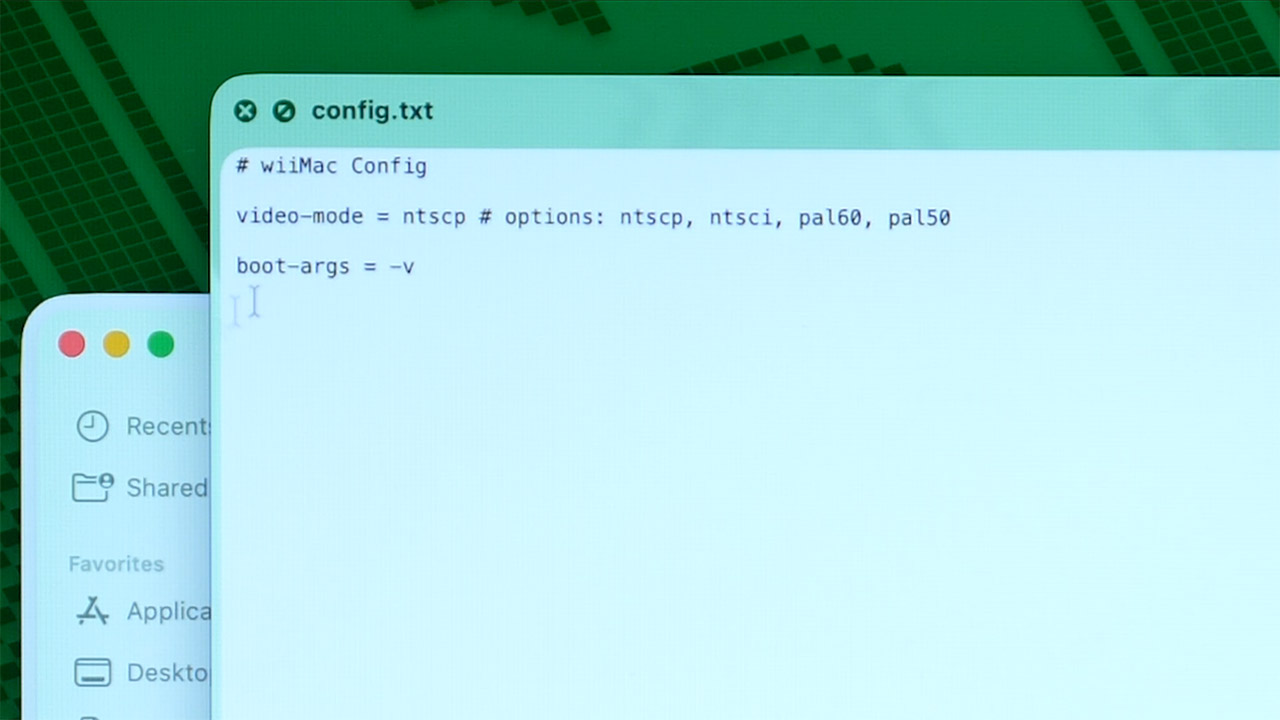
To configure the cards, you will need a spare computer running macOS or Linux. The first card receives a copy of the most recent wiiMac files directly to the root folder, along with the BootMii files, which are almost certainly already present, and there must be a text file inside the wiiMac folder that allows you to select the appropriate video mode for your region, such as NTSC or PAL.
The second card must be partitioned into three smaller and smaller sections: a 64MB FAT32 section labeled Support, a 1GB HFS+ section labeled Install, and a larger HFS+ section labeled Macintosh HD that takes up the remainder of the space, as the commands for doing so will differ slightly depending on the computer you’re using, but the goal is the same. The Install partition is then loaded with a full copy of the Mac OS X 10.0 Cheetah installer, as you’ll need an original disk image to transfer it from, which you can achieve via a block level transfer. Meanwhile, the Support partition receives a folder named wiiMac, which contains a specially patched kernel file as well as a slew of unique drivers designed specifically for Wii hardware.
Once the cards are ready, you can transfer them to the Wii. Insert the BootMii card and restart the Wii, which should bring you to the BootMii interface. From there, simply load the wiiMac bootloader and quickly switch the first card for the second, which contains all of the Mac OS X partitions. The bootloader takes over and launches the installer; at this point, you’ll need a simple USB keyboard and mouse plugged directly into the Wii ports, as connecting them via a hub is likely to cause issues. The installer next walks you through selecting the Macintosh HD partition as the location for the system files, and that’s all.
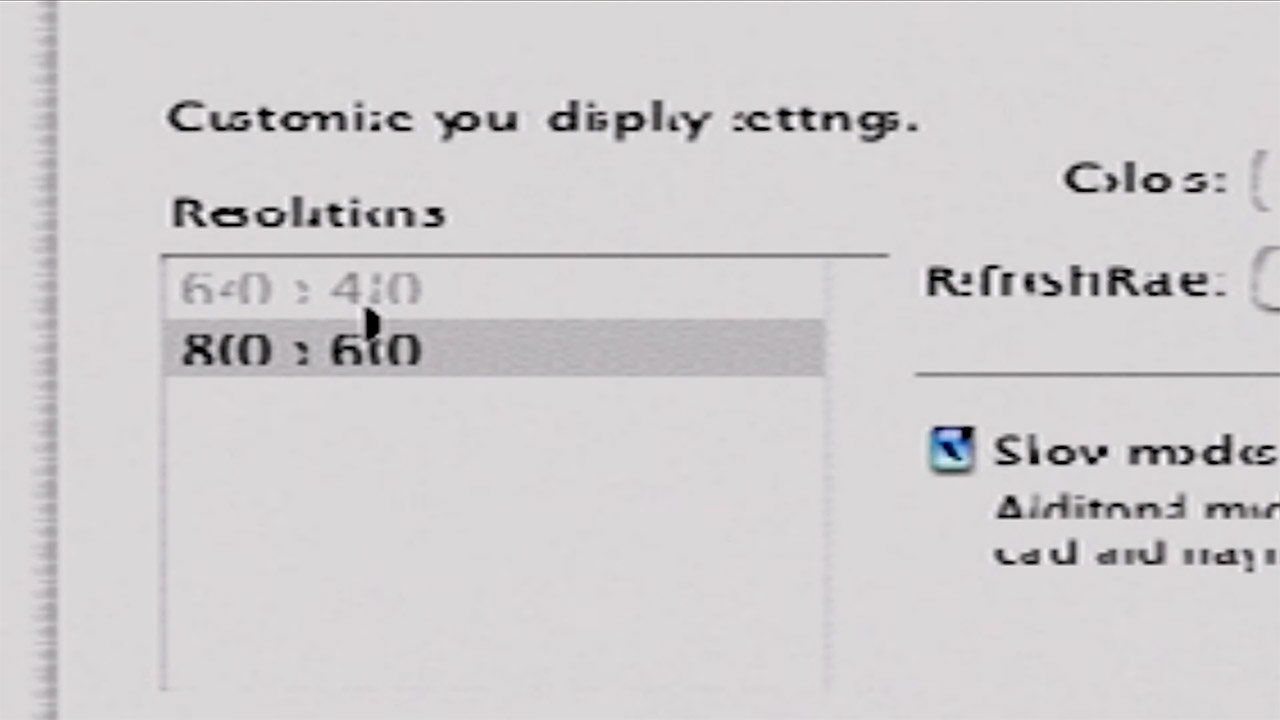
Once the installation is complete, the new operating system will boot. To get the newly loaded Mac OS X up and running, you must perform the same old card switch and bootloader dance. At this point, you’ll probably notice that the screen resolution is looking a little stretched out, so you’ll need to head directly to System Preferences and adjust it to a more reasonable 640×480 for readability. The next thing you do is run a few terminal commands to adjust the swap file size and compress the Dock down to size in order to squeeze out some more speed from the Wii’s not-so-modern 78 MB of useable RAM and 729 MHz processor. If you plug in a USB storage drive before starting the machine, it should connect OK, but don’t expect it to be reliable.
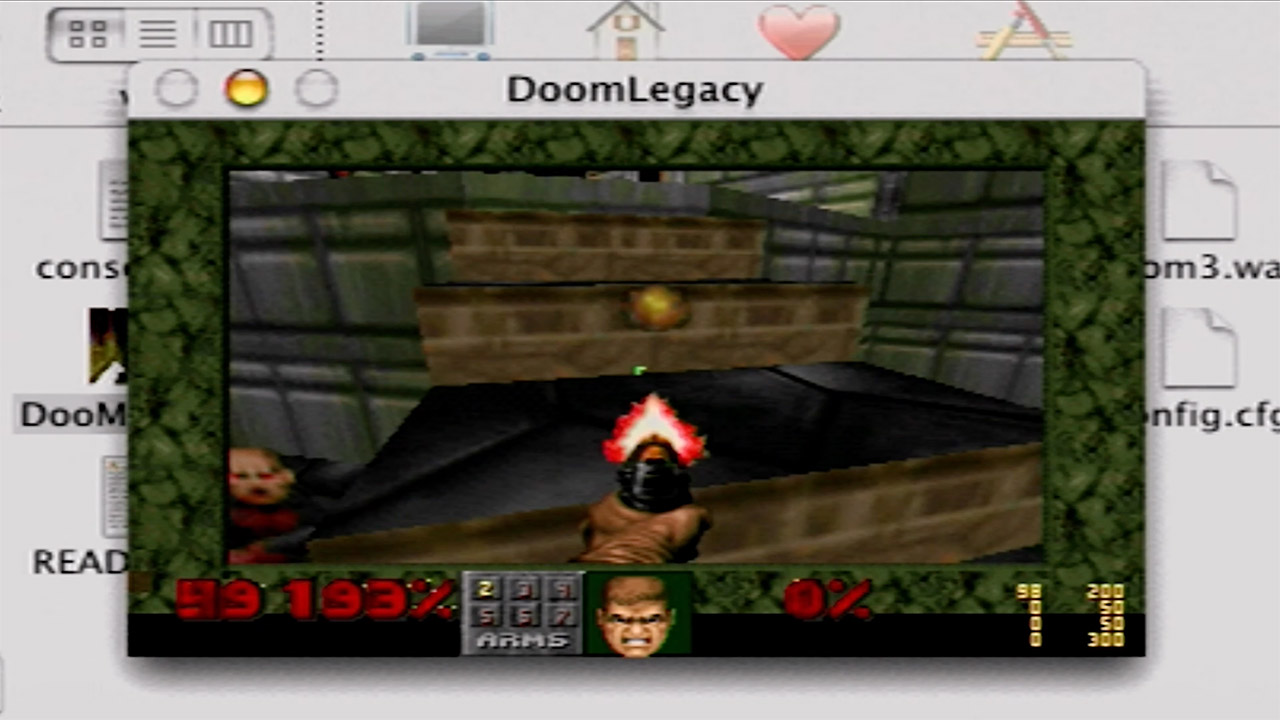
Performance is about what you’d expect: not exactly blistering speeds. The system handles the Finder and the fundamentals well, but Wi Fi, Bluetooth, the DVD drive, and any type of graphics or audio acceleration are all unsupported. The Classic environment is useful for running older Mac OS 9 software, but expect a slight lag. There is one small bright side, however: when you start the DOOM port, it runs nicely and even outperforms certain older Mac installations in certain scenarios.
The ASX-listed data centre operator is raising A$1.5 billion in a fully underwritten equity offering and expanding its hybrid securities programme by A$700 million, with La Caisse de dépôt et placement du Québec now committed to a total of A$1.7 billion.
The raise will fund accelerated development of the S4 Western Sydney campus, where contracted utilisation jumped 250 megawatts in a single quarter.
NEXTDC (ASX: NXT), Australia’s largest independent data centre operator, has halted trading to launch a A$2.2 billion capital plan anchored by a fully underwritten A$1.5 billion equity entitlement offer, the company announced on Monday.
The raise is a direct response to a step-change in demand: between December 2025 and 31 March 2026, NEXTDC’s pro forma contracted utilisation jumped 250 megawatts, a 60% increase in a single quarter, to reach 667MW.
Advertisement
The 💜 of EU tech
The latest rumblings from the EU tech scene, a story from our wise ol’ founder Boris, and some questionable AI art. It’s free, every week, in your inbox. Sign up now!
Its forward order book grew 83% over the same period to 544MW, driven by hyperscale cloud providers and AI infrastructure customers.
The equity component is structured as a 1-for-5.4 pro-rata accelerated non-renounceable entitlement offer, priced at A$12.70 per share, an 8.6% discount to the theoretical ex-rights price of A$13.90.
Advertisement
New shares are expected to be issued to retail shareholders by 18 May, with the institutional bookbuild already underway at the time of the halt. Prior to the suspension, NEXTDC shares had risen approximately 25% through April, reflecting mounting investor enthusiasm for data centre infrastructure plays across Asia-Pacific.
The A$2.2 billion total capital plan combines the A$1.5 billion equity offer with a A$700 million expansion of the company’s hybrid securities programme.
NEXTDC’s hybrid securities, which are deeply subordinated instruments ranking junior to all existing debt, had previously been backed by a A$1 billion binding commitment from La Caisse de dépôt et placement du Québec (CDPQ), Canada’s second-largest pension fund with approximately C$517 billion in assets.
The expanded commitment brings La Caisse’s total backing to A$1.7 billion, cementing what the Canadian investor described as a “promising first step toward a long-term partnership” with NEXTDC.
Advertisement
The primary use of proceeds is the accelerated development of S4, NEXTDC’s data centre campus in Western Sydney, where the company intends to invest approximately A$1.5 billion through the end of financial year 2027.
A record 250MW customer commitment at S4 during the quarter is what triggered the announcement: CEO Craig Scroggie described the capital raise as a way to “materially expand NEXTDC’s contracted capacity and de-risk the company’s Western Sydney developments ahead of potential strategic partnership transactions with private capital partners from 2027.”
That last phrase signals intent to bring in joint venture partners or asset-level investors once the facility is contracted and de-risked, a common monetisation mechanism for large-scale data centre infrastructure.
The financial guidance accompanying the announcement is striking. NEXTDC raised its FY26 capital expenditure guidance by A$300 million to a range of A$2.7 billion to A$3.0 billion.
Advertisement
For FY27, capex is forecast at approximately A$5.0 billion. The company is simultaneously maintaining its existing FY26 revenue and EBITDA guidance while projecting that contracted EBITDA from existing customer agreements alone will exceed A$1 billion over time, roughly four times the midpoint of current FY26 guidance of A$235 million.
Following the raise and recent funding activity, NEXTDC expects pro forma liquidity of approximately A$5.9 billion.
NEXTDC operates or is developing 20 data centres across Australia, in Sydney, Melbourne, Brisbane, Perth, Port Hedland, Canberra, Adelaide, the Sunshine Coast, and Darwin, and is evaluating sites in Tokyo, Bangkok, Johor and Kuala Lumpur in Malaysia, and Singapore.
Australia’s deployable data centre capacity stands at approximately 1,350 megawatts today, with consensus forecasts projecting 3,100 MW by 2030–31 and potentially up to 7.4 gigawatts by 2035 under AI-driven scenarios.
Advertisement
NSW has endorsed A$51.9 billion worth of data centre projects through its Investment Delivery Authority, effectively concentrating approvals, and the grid connections and planning support that come with them, in a small number of qualified operators.
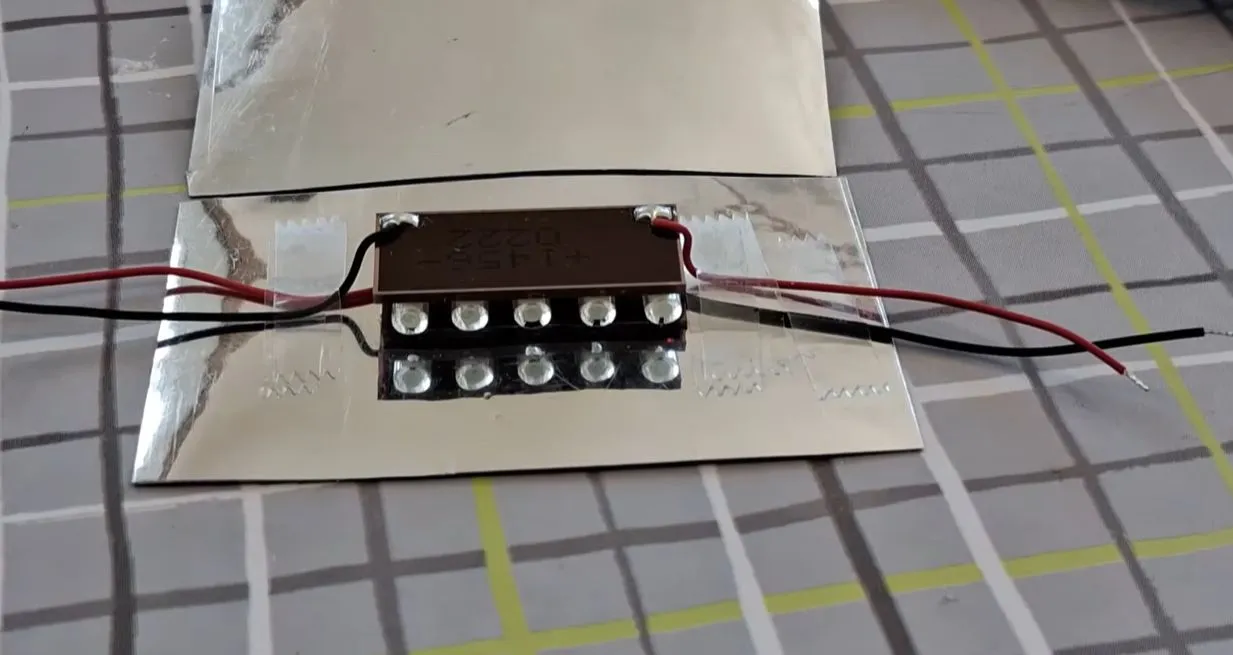
Nuclear batteries are pretty simple devices that are conceptually rather similar to photovoltaic (PV) solar, just using the radiation from a radioisotope rather than solar radiation. It’s also possible to make your own nuclear battery, with [Double M Innovations] putting together a version that uses standard PV cells combined with small tritium vials as radiation source.
The PV cells are the amorphous type, rated for 2.4 V, which means that they’re not too fussy about the exact wavelength at the cost of some general efficiency. You generally find these on solar-powered calculators for this reason. Meanwhile the tritium vials have an inner coating of phosphor so they glow. With a couple of these vials sandwiched in between two amorphous cells you thus have technically something that you could call a ‘nuclear battery’.
With an approximately 12 year half-life, tritium isn’t amazingly radioactive and thus the glow from the phosphor is also not really visible in daylight. With this DIY battery wrapped up in aluminium foil to cover it up fully, it does appear to generate some current in the nanoamp range, with a single-cell and series voltage of about 0.5 V.
Advertisement
A 170 VAC-rated capacitor is connected to collect some current over time, with just under 3 V measured after a night of charging. In how far the power comes from the phosphor and how much from sources like thermal radiation is hard to say in this setup. However, if you can match up the PV cell’s bandgap a bit more with the radiation source, you should be able to pull at least a few mW from a DIY nuclear battery, as seen with commercial examples.
This isn’t the first time we’ve seen this particular trick. A few years ago, a similar setup was used to power a handheld game, as long as you don’t mind waiting a few months for it to charge.
Surveillance and analytics company Palantir recently posted what it called a “brief” 22-point summary of CEO Alex Karp’s book “The Technological Republic.”
Written by Karp and Palantir’s head of corporate affairs, Nicholas Zamiska, “The Technological Republic” was published last year and described by its authors as “the beginnings of the articulation of the theory” behind Palantir’s work. (One critic said it was “not a book at all, but a piece of corporate sales material.”)
In fact, congressional Democrats recently sent a letter to ICE and the Department of Homeland Security demanding more information about how tools built by Palantir and “a range of surveillance companies” are being used in the Trump administration’s aggressive deportation strategy.
Advertisement
Palantir’s post doesn’t reference much of that context directly, simply saying that it’s providing the summary “because we get asked a lot.” It then suggests that “Silicon Valley owes a moral debt to the country that made its rise possible” and declares that “free email is not enough.”
“The decadence of a culture or civilization, and indeed its ruling class, will be forgiven only if that culture is capable of delivering economic growth and security for the public,” the company says.
The post is wide-ranging, at one point criticizing a culture that “almost snickers at [Elon] Musk’s interest in grand narrative” and at another point touching on recent debates about the use of artificial intelligence by the military.
Techcrunch event
Advertisement
San Francisco, CA | October 13-15, 2026
“The question is not whether A.I. weapons will be built; it is who will build them and for what purpose,” Palantir says. “Our adversaries will not pause to indulge in theatrical debates about the merits of developing technologies with critical military and national security applications. They will proceed.”
Advertisement
Similarly, the company suggests that “the atomic age is ending,” while “a new era of deterrence built on A.I. is set to begin.”
The post also takes a moment to denounce the “postwar neutering of Germany and Japan,” adding that the “defanging of Germany was an overcorrection for which Europe is now paying a heavy price” and that “a similar and highly theatrical commitment to Japanese pacifism” could “threaten to shift the balance of power in Asia.”
The post ends by criticizing “the shallow temptation of a vacant and hollow pluralism.” In Palantir’s argument, a blind devotion to pluralism and inclusivity “glosses over the fact that certain cultures and indeed subcultures . . . have produced wonders. Others have proven middling, and worse, regressive and harmful.”
After Palantir posted this on Saturday, Eliot Higgins, the CEO of the investigative website Bellingcat, dryly remarked that it was “extremely normal and fine for a company to put this in a public statement.”
Advertisement
Higgins also argued that there’s more to the post than a simple “defense of the West” — in his view, it’s an attack on what he said are key pillars of democracy that need rebuilding: verification, deliberation, and accountability.
“It’s also worth being clear about who’s doing the arguing,” Higgins wrote. “Palantir sells operational software to defense, intelligence, immigration & police agencies. These 22 points aren’t philosophy floating in space, they’re the public ideology of a company whose revenue depends on the politics it’s advocating.”
Home Depot has a launched a massive spring sale, appropriately named ‘Spring Black Friday‘, with up to 40% in savings on patio furniture, appliances, grills, lawn mowers, tools and more.
As TechRadar’s deals editor and a huge fan of Home Depot, I’ve gone through Home Depot’s sale and hand-picked the best deals. While Home Depot’s Black Friday sale is always a popular event, with impressive savings, Home Depot’s spring sale is even better, because you get to save on seasonal items.
The retailer has record-low prices on outdoor essentials like patio furniture, gardening tools and grills, as well Black Friday-like discounts on major appliances, including refrigerators, washing machines and dishwashers from brands like LG, Samsung and Whirlpool.
Advertisement
You’ll find links to Home Depot’s most popular sale categories below, followed by my pick of the top deals. Keep in mind that Home Depot’s sale ends on April 29, so time is running out to score spring savings.























































You must be logged in to post a comment Login