

Connect with us

Tech

Windows laptops are finally getting good, but Microsoft might have missed the moment

Published

on

For the better part of the past half a decade, Windows laptops have had a recurring identity crisis. You could either get absurd performance, or you could buy great battery life. Getting both at the same time wasn’t always accessible, and you often would have to make compromises with fan noise, heat, standby drain, or the kind of “why is it warm in my bag?” behavior MacBook owners never had to worry about.

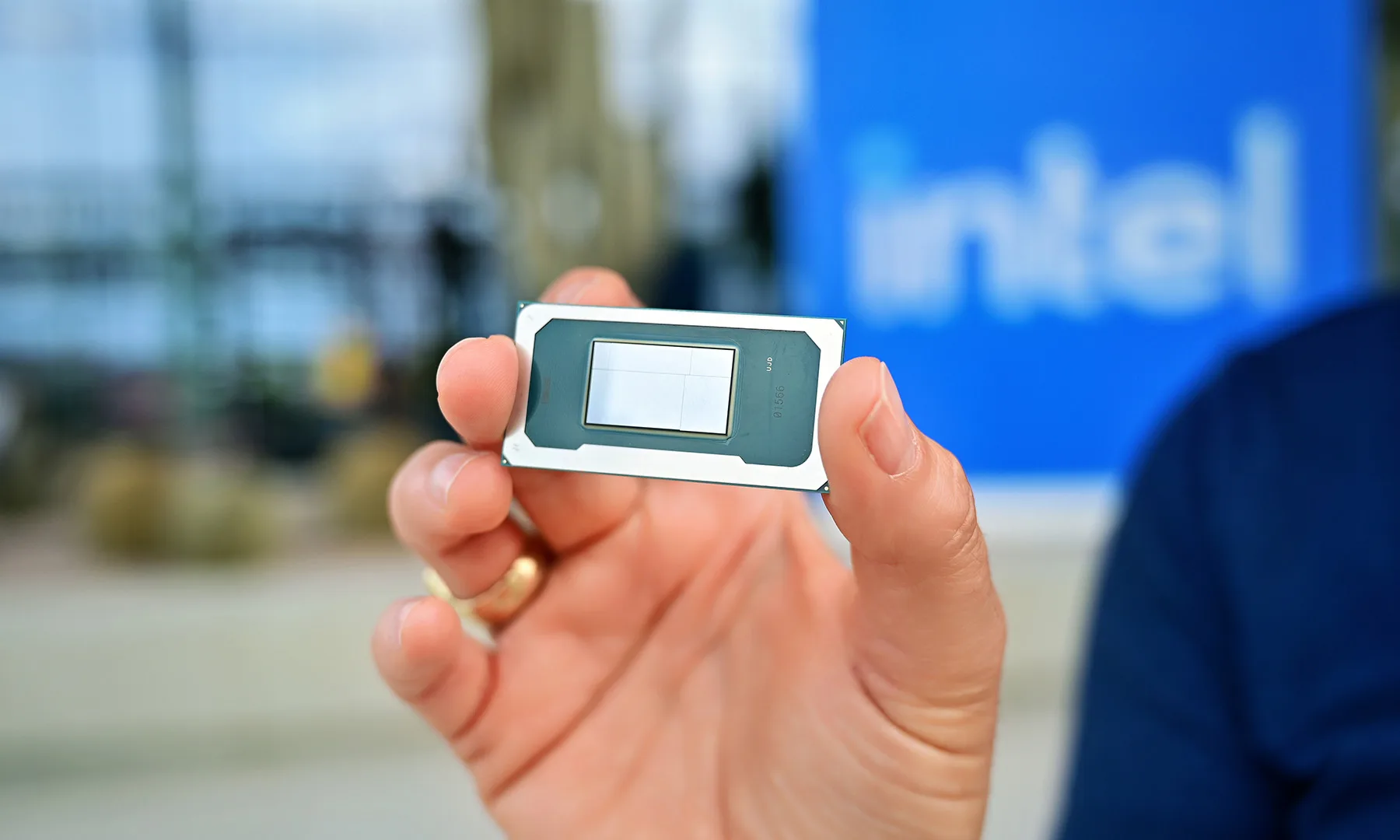
Now, the next-gen silicon is changing the story. Intel’s next wave (Panther Lake) is being positioned as a major efficiency and AI platform swing. Right alongside it, we have AMD’s Ryzen AI series chips that lean into on-device AI while still delivering the kind of performance per-watt that remains competitive with MacBooks. All of this makes it seem like Windows laptops have finally found their moment.

But that’s also what makes the timing feel awkward for Microsoft. Just as the hardware started to clean itself up, Windows PCs are getting squeezed from multiple angles: price hikes, memory costs, and a muddled “AI-first” sales pitch.

The best Windows laptop era is here (and it’s not because of Copilot)

With the latest processors like the Intel Core Ultra Series 3, it actually feels like Windows laptops are getting their act together. It’s not just that the benchmarks look good. The entire trajectory looks right. While Intel’s Panther Lake lineup and AMD’s new Ryzen AI series are pushing the “AI PC” narrative, they’re also delivering the kind of performance that makes thin-and-light laptops feel less compromised.

And this matters because Windows laptops have been stuck in an awkward loop for years. You either buy a thin-and-light laptop and live with mediocre performance, or buy something blazing fast and accept that carrying a bulky charger is part of the lifestyle.

Advertisement

So the most interesting thing happening in Windows laptops right now isn’t Copilot. It’s the fact that Intel, AMD, and Qualcomm are all chasing the same endgame: high performance without the battery tax. Processors like the Snapdragon X2 Plus, in particular, bring efficiency gains that rival MacBooks. But just when things were looking good, there was a shadow looming over the PC market — and even the brands are worried.

RAM-POCALYPSE is real, and it’s making everything worse

Here’s the part that turns the whole “Windows laptops are finally getting good again” story into a headache: memory pricing is becoming the real final boss. We can talk about Panther Lake, Ryzen AI, and Snap0dragon all day, but if PC components like RAM and storage get stupid expensive, it doesn’t matter how efficient the silicon is. The platform is improving while the value collapses.

This memory supply crunch has already kneecapped the market, and the numbers are wild. DDR5 memory has risen by around 500% in some cases, which is the kind of spike that doesn’t just nudge the laptop prices upward but reshapes what brands feel comfortable shipping as “baseline” configs. Even after 16GB became the standard in mid-range laptops, this could push 16GB back into “premium-only” territory and drag affordable models down to 8GB again.

AMD, which typically positions itself as the “value option”, is also acknowledging the squeeze. So yeah, the chipmakers might finally be delivering those low-powered performance improvements that Windows laptops have needed for ages. But if RAM pricing keeps spiraling, it risks turning away buyers who are already frustrated with having to pay more money for worse configurations and a higher entry cost just to get something that feels future-proof.

The MacBook comeback tour, now with a budget opener

And then there’s Apple, delivering a sharp hook to an already ailing opponent. The “wrong time for Microsoft” argument gets sharper once you zoom out and look at the market momentum Apple’s been building. Macs have quietly been climbing once again, after a brief period of stagnation. Apple’s notebooks seem like the default safe bet for a lot of buyers who care about reliability, performance, and battery life.

Advertisement

To make matters worse for Windows, Apple is reportedly preparing a lower-cost MacBook that could hit the shelves sometime in the first half of 2026. It is still Apple after all, so this won’t magically compete with true entry-level Windows laptops. But if Apple lands this anywhere near the $700 range, Windows OWMs are facing a nasty pressure point as they are already dealing with rising component costs and a messy AI-PC branding era.

So… is it the wrong time for Microsoft?

It might be.

Not because Windows laptops are doomed — the silicon progress is real, and it’s finally hitting the places users care about. But this momentum is arriving in the middle of a perfect storm:

  • AI messaging that’s confusing instead of compelling.
  • Rising component prices, like RAM and storage, are becoming a tax on buying new hardware.
  • A resurgent MacBook lineup that still owns the “easy recommendation” title.

The entire industry may have to ride out the storm for calmer waters. If Microsoft wants this to be the era where Windows laptops truly feel fixed, it needs to focus on the one thing it truly controls: Windows. Because chipmakers can fix performance-per-watt, but only Microsoft can fix what the platform feels like day to day.

Right now, “AI PC” is being sold as a badge, not a benefit. And when prices are rising, and configs are getting weird, buyers need clarity more than hype. Satya Nadella, CEO of Microsoft, said it best: “We will quickly lose even the social permission…” if AI isn’t improving real outcomes.

Advertisement

Source link

Continue Reading
Click to comment

Leave a Reply

Your email address will not be published. Required fields are marked *

Tech

I’m Enamored With Lenovo’s Desktop AI Companions, and I Could Use Their Help

Published

on

How well do you concentrate at work? For me, it very much depends on how I’m feeling that day, what else I have on my mind and a miscellany of other factors. One technique I use fairly successfully to keep me focused is a pomodoro timer, and at Mobile World Congress 2026 I found what I believe could be the perfect AI pomodoro companion.

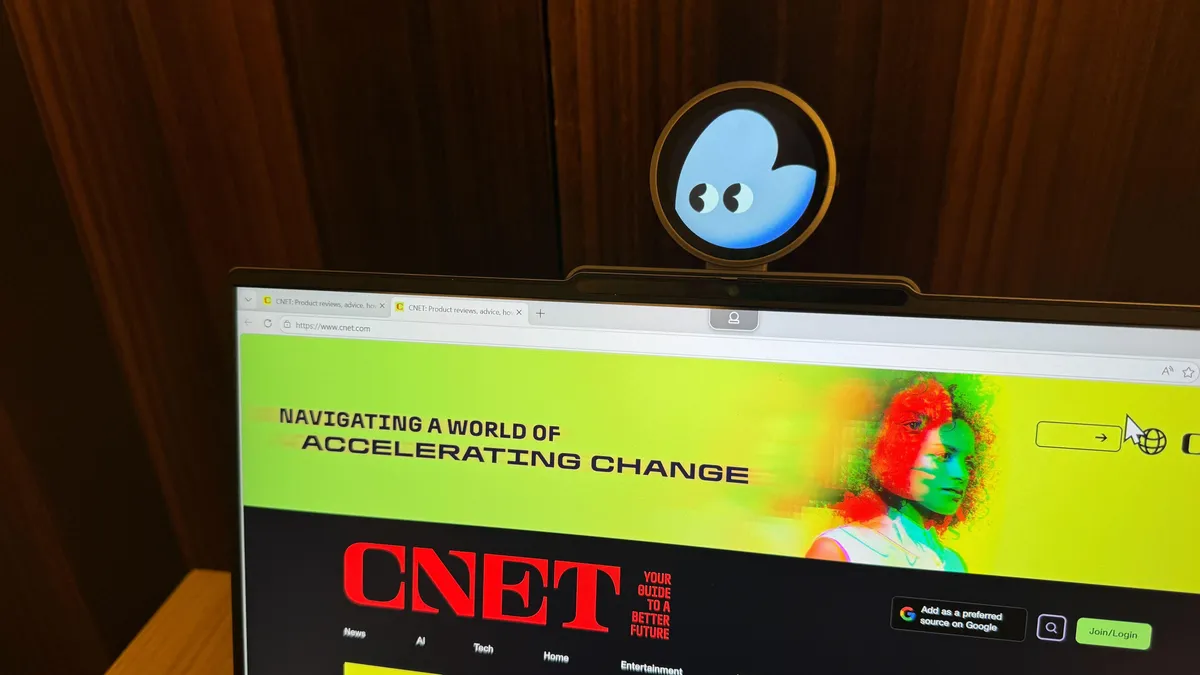
I first saw Lenovo’s Magic Bay Tiko at last year’s MWC, but at the time it was just a concept. The little circular module perches on the top of your Lenovo laptop display, attached via the magnetic Magic Bay on the rear. The module is home to an adorable animated companion called Tiko, who you can interact with via text or voice.

Accessories with AI agents are becoming increasingly popular, particularly in the wearables space, with many companies starting to offer pins and pendants. They can take on a variety of tasks, such as life logging and transcription. They can also carry out tasks for you, such as adding things to your calendar or checking your calendar to see if you’re busy.

Advertisement

Tiko has a number of standard agentic AI capabilities — it can start and stop your music, open a web page for you or answer a question. You can also interact with it by using emoji. Give it a book emoji, for example, and it will pop on its glasses and sit reading with you while you work. But my favorite Tiko feature effectively turns it into a body-doubling buddy, which I feel would be useful for keeping me on track on distracted days.

AI companion

Don’t tell me this little guy wouldn’t make you want to stay on track.

Katie Collins/CNET

Body doubling is a technique where you work alongside someone else — either physically or virtually — to keep you on track and accountable. Tiko comes with a timer, allowing you to track a focused work session. When you need a break, you can switch over to “wellness break” for 10 minutes of relaxation before you carry on. You can even choose to add 1 minute of breathing exercises, which Tiko will do with you, to keep you calm.

Advertisement

A traditional pomodoro timer is 25 minutes of work followed by a 5-minute break, but this is flexible. I’m enamored with the idea of a physical manifestation of the timer perched above my screen, with a sweet animated friend to help keep me in check.

The good news for me is that Tiko is no longer a concept from Lenovo. The company wants to sell the Magic Bay accessory later this year — although it doesn’t know exactly when, or how much it will cost. The less good news is that you’ll need to have a Lenovo laptop with a Magic Bay port, which I do not. It might be impractical to consider getting a new laptop just for Tiko, but it could sway me if I was already in the market for one.

Lenovo AI Workmate Concept

Desktop robot

Lenovo’s AI Workmate concept is still a work in progress.

Advertisement

Katie Collins/CNET

Another AI companion concept from Lenovo that remains a concept for now is its AI Workmate. This is a kind of stationary tabletop robot, not dissimilar to the Pixar lamp, but with an orb for a head.

With a combination of cameras, microphones and projectors, the AI Workmate can undertake a variety of tasks, including helping you generate and display presentations or turn your written work or art into a digital asset.

I asked the Workmate to make me a presentation about giraffes. Using Lenovo’s proprietary models, it generated a three-slide presentation entitled “The Majestic Giraffe: Nature’s Tall Enigma.” It was factually accurate, as far as I could tell, if disappointingly free of pictures. It’s robotic head swivelled around and projected the slides onto the wall next to me.

I also asked the Workmate to generate me a postcard of Barcelona. It displayed the work on the table in front of me, and I scribbled some text over the top. The Workmate then scanned the entire image, including my writing and sent it straight to the printer for me, leaving me with a tangible souvenir to take away from our encounter.

Advertisement

I can’t say I would necessarily want something as large and bulky on my own desk, and I’m not exactly sure what practical use I work make of the AI Workmate concept at this stage. But it was still fun to play with, and interesting to see how tech companies are imagining ways to bring AI to physical life so they can assist us in at our work.

Source link

Advertisement
Continue Reading

Tech

WWDC 2026 to introduce Core AI as replacement for Core ML

Published

on

Apple is expected to push its Gemini-trained Apple Foundation Models and new chatbot-like Siri functions during WWDC, but Core ML could also see an update to Core AI to emphasize the priority shift.

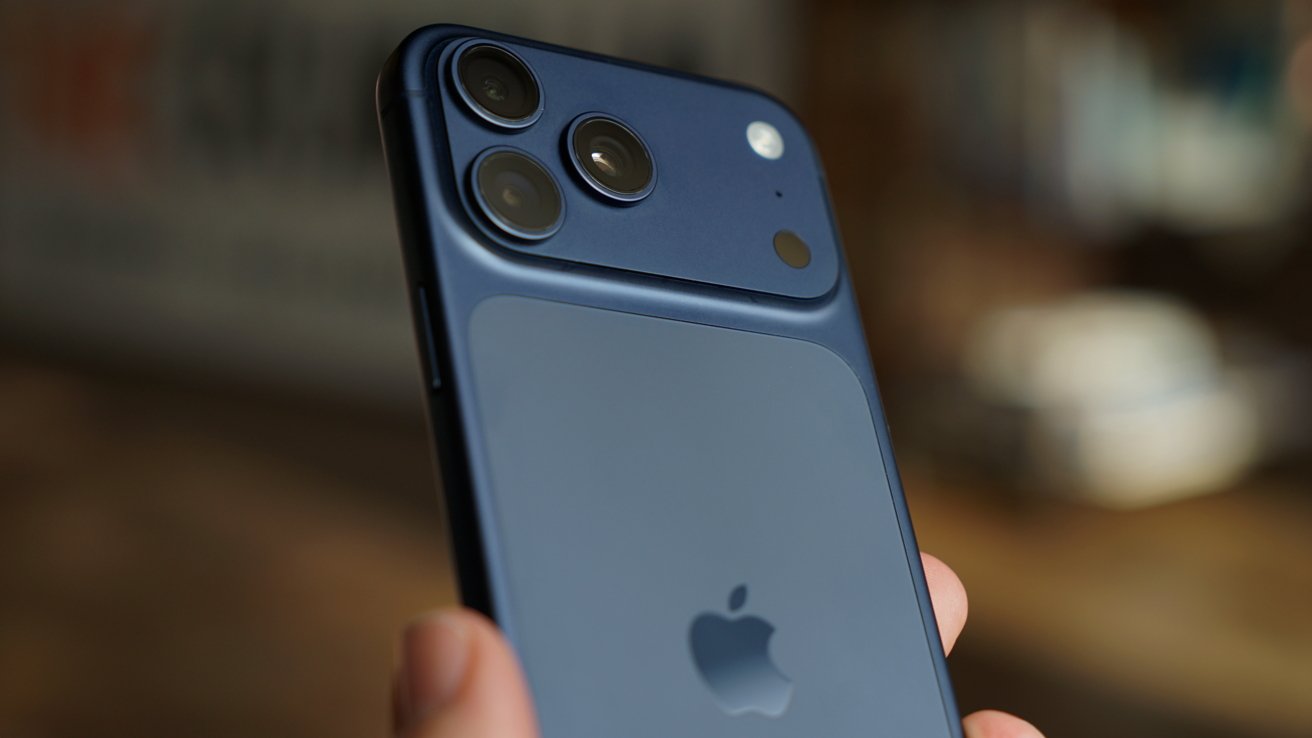
A hand holding the blue iPhone 17 Pro Max, the camera plateau emphasized with three large cameras. The background is blurred.
iPhone 17 Pro Max will be an AI powerhouse thanks to its feature set

Core ML is a framework that allows developers to implement machine learning technology into their apps. In recent years, its functionality has spread to generative tools and AI.
According to the Power On newsletter, Apple is going to release a Core AI framework during WWDC 2026. It is a replacement for Core ML, though both frameworks could exist in tandem for some time.
Rumor Score: 🤔 Possible
Continue Reading on AppleInsider | Discuss on our Forums

Source link

Continue Reading

Tech

Lenovo’s wild foldable gaming handheld, Honor’s Robot Phone, and more

Published

on

MWC 2026 officially gets underway on March 2 and will continue through March 5, but the announcements are already pouring in ahead of its start. We can always count on the annual tech event to bring tons of new phones, laptops and tablets, and we’re expecting to see some robots and other gadgets too — plus plenty of AI news, of course. In addition to the announcements, MWC is our chance to get hands-on time with some of the most interesting new devices, like the Xiaomi 17 Ultra and Honor’s Robot Phone.

Engadget’s Mat Smith is on the ground in Barcelona, and we’ll be updating this story as the week goes on to keep you in the loop on everything that caught our attention. Keep checking back here for the latest MWC news.

Lenovo

How silly does this look when its flexible display is fully extended in portrait mode?

How silly does this look when its flexible display is fully extended in portrait mode? (Sam Rutherford for Engadget)

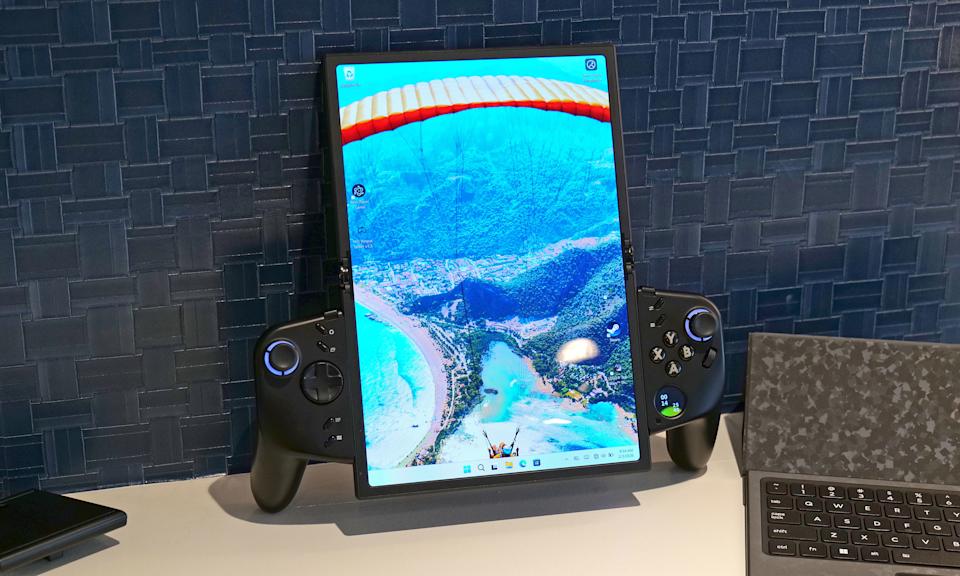
Lenovo pulled up to MWC with a bunch of new products and concepts, but if there’s one thing everyone’s going to be talking about, it’s the Legion Go Fold. (Check out Sam Rutherford’s coverage of the Legion Go Fold here). In short, the Legion Go Fold is a concept foldable gaming handheld with a flexible display that can unfurl to a massive 11.6 inches. Or, it can be folded in half to become a 7.7-inch display. It has detachable controllers, and there are multiple mounting points along the tablet so you can switch things up between landscape and portrait mode. The left and right gamepads can also be combined into one controller with an accessory, and the display can be propped up kickstand-style with the folio cover.

You think we’re done here? We’re not. The Legion Go Fold can go laptop mode too, with a strip of pogo pins where a wireless keyboard can be connected. Its right gamepad can serve as a mouse, thanks to the inclusion of a little scroll wheel and a hidden sensor. That gamepad also features a tiny circular OLED display below the buttons, which can both show widgets such as the time and be used as a touchpad.

Advertisement

It is a concept, though, so don’t get your hopes up too much about this one going into production. And if it does ever become a real, buyable product, it’ll no doubt be expensive.

The Lenovo Modular AI PC concept is an ambitious mashup between a traditional clamshell and a dual-screen notebook with hot swappable ports.

The Lenovo Modular AI PC concept is an ambitious mashup between a traditional clamshell and a dual-screen notebook with hot swappable ports. (Sam Rutherford for Engadget)

Lenovo also announced its Modular AI PC concept — a laptop with two displays and a detachable keyboard. As Sam Rutherford, who got a chance to check it out in person, explained, “This allows you to move its keyboard and secondary display around at will, so the system can better adjust to its environment or workload.” Perhaps even more exciting is that it has hot swappable ports. Lenovo demonstrated it with USB-C, USB-A and HDMI connectors, but said others could be possible too.

Still, while everything looked pretty polished in the demo, Lenovo says this one will remain a concept.

The Lenovo Yoga 9i 2-in-1 Aura Edition Gen 11

The Lenovo Yoga 9i 2-in-1 Aura Edition Gen 11 (Lenovo)

It hasn’t all been concepts at MWC. Lenovo also refreshed some of its existing tablet and laptop lineups for 2026. The company introduced the Yoga 9i 2-in-1 Aura Edition Gen 11 (with the new Canvas Mode configuration), starting at $1,949, and the new 15.3-inch Yoga Pro 7a, which starts at $2,099. It’s updated its more affordable IdeaPad Slim 5i Ultra laptop ($799) as well. All of those new laptops come with Copilot+ features. For students, Lenovo is launching the 13-inch Idea Tab Pro Gen 2, starting at $419, with its Quira AI assistant and AI tools. You can find all the specs and release dates for those here.

Advertisement

Honor

Honor's Robot Phone, a smartphone with a gimbal-mounted camera that folds out to sit on top of it, is shown on a stand at MWC displaying a live image of the reporters photographing it

The Robot Phone. (Image by Mat Smith for Engadget)

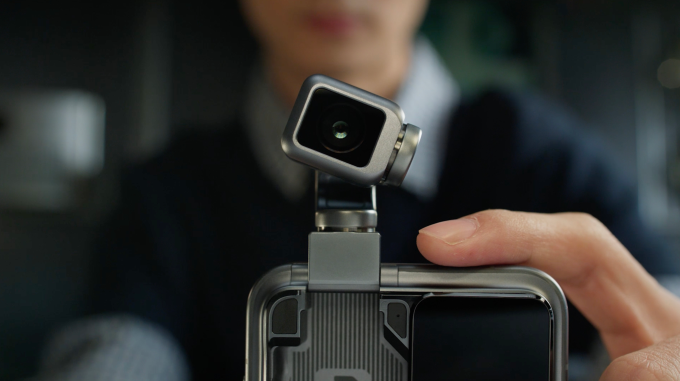
Honor teased its Robot Phone this past fall and we just finally got a proper look at it at MWC. And it’s pretty freakin’ cute. The phone is equipped with a camera that’s mounted on a highly mobile 4-degrees-of-freedom gimbal, which tucks away into a compartment on the back when it’s not in use (making for a pretty beefy camera bump). In a demo at MWC, the camera, which behaves like a little robot head, bobbed along to music and showed off some of its gesture skills, like cocking its “head” and nodding in agreement.

Honor didn’t reveal too much spec-wise, but the company says the primary camera uses a 200-megapixel sensor. The gimbal will offer three-axis stabilization, which will be coupled with camera modes such as Super Steady Video and AI Object Tracking. The Robot Phone isn’t quite ready for release at the moment, but the company says it will launch later this year.

Be sure to check out Mat Smith’s writeup on the Robot Phone for a more in-depth look.

Honor's humanoid robot is shown shaking hands with CEO James Li on stage at MWC

Honor’s humanoid robot. (Image by Mat Smith for Engadget) (Image by Mat Smith)

It’s not a humanoid robot reveal without some backflips and a choreographed dance performance. Honor introduced its robot at MWC with all the spectacle we’ve come to expect (though the bot didn’t do any talking).  It’s simply called the Honor Robot, and the company has plans for it to be used in both industrial and domestic settings.

Advertisement
Honor Magic V6 in red pictured closed, showing the back camera (left) and open book-style, with the front display and back camera facing the viewer (right)

Honor Magic V6 (Honor)

The Robot Phone isn’t the only phone Honor showed off at MWC. The company also announced its Magic V6 smartphone, which it says is the thinnest phone in its category, measuring 8.75mm folded and 4.0mm open in the white colorway. The other three colors — black, gold and red — are slightly thicker, at 9mm folded and 4.1mm open.

Not too much has changed from the V5, though, which only came out in August 2025. It does however have the Snapdragon 8 Elite Gen 5, with 16GB RAM and 512 GB storage. As for the cameras, there are two 50-megapixel lenses and a 64-megapixel telephoto, plus a 20-megapixel f/2.2 selfie lens on the cover and internal display.

The international version of the Magic V6 will have a 6660mAh battery with 25 percent silicon content, while the version sold only in China will boast a battery with a rated capacity of more than 7000mAh and 32 percent silicon content. Honor hasn’t yet shared details about pricing and availability.

Honor MagicPad 4

Honor MagicPad (Honor)

Ahead of MWC, Honor also announced what it claims is the thinnest Android tablet in the world: the 4.8mm thick MagicPad 4. We’re expecting to hear more about this at Honor’s press conference on Sunday, but so far we know it features a 12.3-inch 165Hz OLED display and weighs just 450g. It comes with up to 16GB of RAM and 512GB of storage, and is powered by Qualcomm’s Snapdragon 8 Gen 5 chipset. The thinness doesn’t count the camera bump, Honor notes. The MagicPad 4 has 13MP rear and 9MP front cameras. It also boasts spatial audio, with eight speakers.

Advertisement

Just as the display is slightly smaller than the previous MagicPad, the MagicPad 4 has a smaller battery at 10100 mAh. It comes with a 66W fast charger. The MagicPad 4 will run Honor’s MagicOS 10. We don’t yet know how much it will cost, but we’ll update this after Honor’s press conference (where we’re also expecting to see the company’s robot) with any new details.

Xiaomi x Leica

Mat Smith for Engadget

Xiaomi kicked off MWC this year by announcing the global launch of its 17 Ultra smartphone, which debuted first in China back in December. It’s unclear if the phone will ever come to the US, but it’s now rolling out in Europe. Xiaomi teamed up again with Leica to make a photography-focused smartphone, and the 17 Ultra sports a 1-inch 50-megapixel camera sensor with a f/1.67 lens, a telephoto setup with a 200MP 1/1.4-inch sensor, and a 50MP ultrawide camera. There’s also a manual zoom ring around the camera.

Check out our hands on for our first impressions of what it’s like shooting with the Xiaomi 17 Ultra. And there’s more to it than just the camera. The 17 Ultra has a 6.9-inch OLED 120 Hz display that peaks at 3,500 nits of brightness, and a 6000mAh silicon-carbon battery. The Xiaomi 17 Ultra starts at £1,299 (roughly $1,750).

Leica also announced a new phone made in partnership with Xiaomi at MWC. It looks a whole lot like Xiaomi’s 17 Ultra, but isn’t the 17 Ultra, exactly.

Advertisement
Leica Leitzphone by Xiaomi hands-on at MWC 2026§

Leica Leitzphone by Xiaomi hands-on at MWC 2026 (Image by Mat Smith for Engadget)

Like the 17 Ultra, Leica’s Leitzphone by Xiaomi has a 1-inch camera sensor and physical controls for zoom and other settings, using a mechanical ring around the camera unit. It features a Leica-designed intuitive camera interface with the option to show just the essentials when you’re shooting, hiding all the modes and labels. There’s a monochrome shooting mode and Leica filters.

The Leica branding is splashed all over it in design and wallpapers, but it’s otherwise pretty similar to the 17 Ultra, with the same specs. Like the 17 Ultra, it has a Snapdragon 8 Elite Gen 5 chip and a 6.9-inch 120Hz display. This one’s priced at €1,999 (roughly $2,362).

The Xiaomi Pad 8 Pro

The Xiaomi Pad 8 Pro (Xiaomi)

In addition to the 17 Ultra, Xiaomi announced two new tablets at MWC this year: the Xiaomi Pad 8 and Xiaomi Pad 8 Pro. There’s nothing revolutionary here, but they’re lightweight and thin, with both being 5.75mm thick and weighing 485g, and have a 9200mAh battery. The Pro model is powered by a Snapdragon 8 Elite chip, while the regular Pad 8 uses the Snapdragon 8s Gen 4 chipset.

Xiaomi also unveiled a new 5000mAh powerbank, the UltraThin Magnetic Power Bank 5000 15W. The 6mm thick power bank comes in three colors with an aluminum alloy shell: orange, silver and charcoal gray. Along with that, the company introduced the Xiaomi Tag, its own take on the Bluetooth item tracker. The Xiaomi Tag has a built-in hanging loop so it can be attached directly to a keyring, and the company says it will work with both Apple Find My and Google’s Find Hub for Android.

Advertisement

Tecno

Tecno

We can always expect to see some wild phone concepts at MWC, and this year we’re starting with one from Tecno. The company unveiled a modular concept smartphone design that can be as thin as 4.9mm in its base configuration. There’d be 10 modules to choose from based on the announcement, including various camera lenses, a gaming attachment and a power bank, relying on magnets to keep it all together — or Modular Magnetic Interconnection Technology, as Tecno is calling it.

Source link

Continue Reading

Tech

Honor says its ‘Robot phone’ with moving camera can dance to music

Published

on

Honor first teased its “Robot phone” with a movable camera arm earlier this year. Ahead of the Mobile World Congress (MWC) in Barcelona, the Chinese company provided more details about the device, including how the robot can respond to different situations without commands. The company said that it is planning to launch this device in the second half of this year.

Honor said that the robot also has a “personality” and can respond to you with “head shakes” and can also dance to the beat of music. The company noted that users can talk to the assistant on the phone through text and voice. Honor showed a video of a person asking for apparel suggestions, and the robot nodding or shaking to suggest an outfit.

The phone has a 200-megapixel camera on a moving robot three-axis gimbal with stabilization tech. The company said that the camera can smoothly rotate around and capture smooth videos and photos. It also has a Super Steady mode for video capture. The company said the phone can get cinematic shots through its Spinshot feature that makes the robot camera rotate by 90 or 180 degrees.

Image Credits: Honor

The robotic camera also allows for more fluid video calls that can track you through AI-powered object tracking. The tech is like Apple’s Center Stage on steroids if it works.

The company said that it developed its own micro motor to control the robotic camera’s movements. It noted that it used some techniques used in foldable phones to make the camera more sturdy and fit the four-degree-of-freedom gimbal system into the body of a phone. Honor said that it is using the same materials for the robotic arm as the Honor Magic V6’s hinge, with 2800 MPa tensile strength.

Advertisement
Image Credits: Honor

Honor also released the Honor Magic V6 foldable with a 6,600 mAh battery, the Honor MagicPad 4 tablet, and the Honor MagicBook 14 laptop at its event.

Techcrunch event

San Francisco, CA
|
October 13-15, 2026

Advertisement

Source link

Continue Reading

Tech

Baseus PicoGo AM52 Qi2.2 batteries review: multi-device charging & 25W MagSafe

Published

on

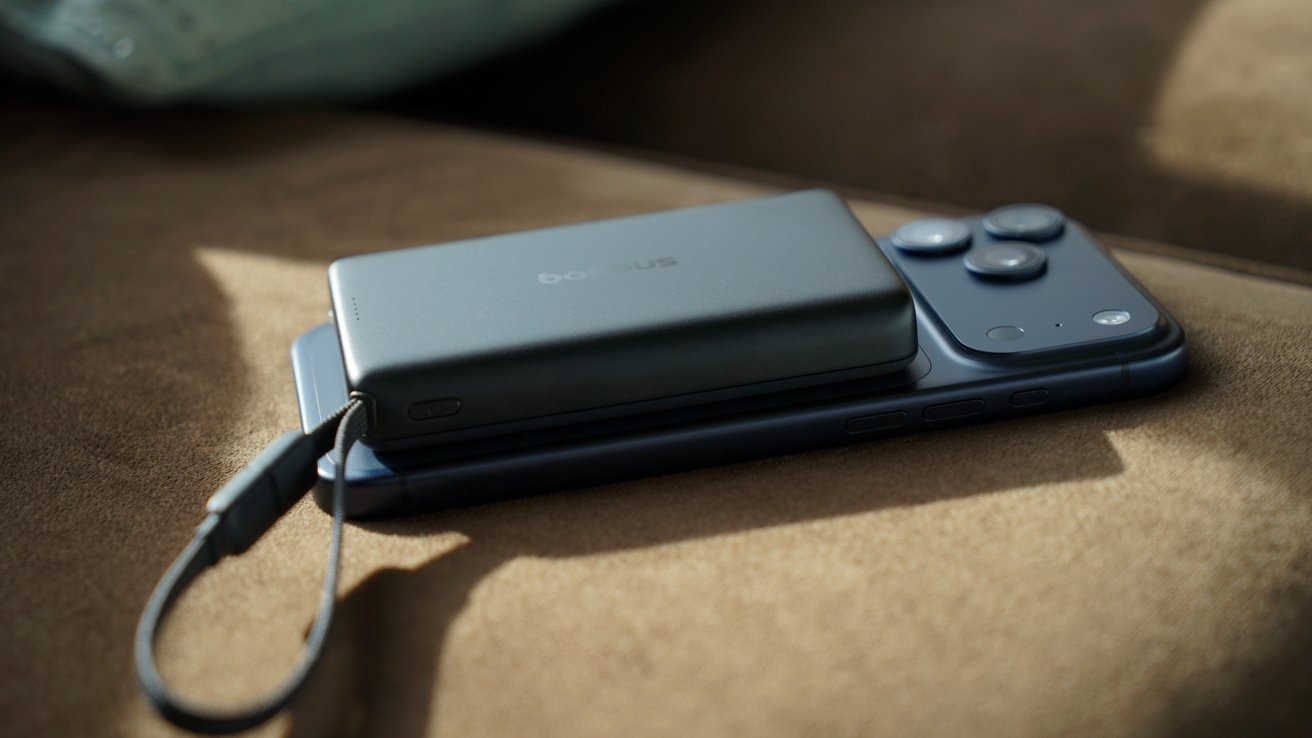
The Baseus PicoGo line has expanded with the AM52 Qi2.2 MagSafe battery packs, which bring more features and faster speeds to the pocketable chargers. One even has a built-in cable.

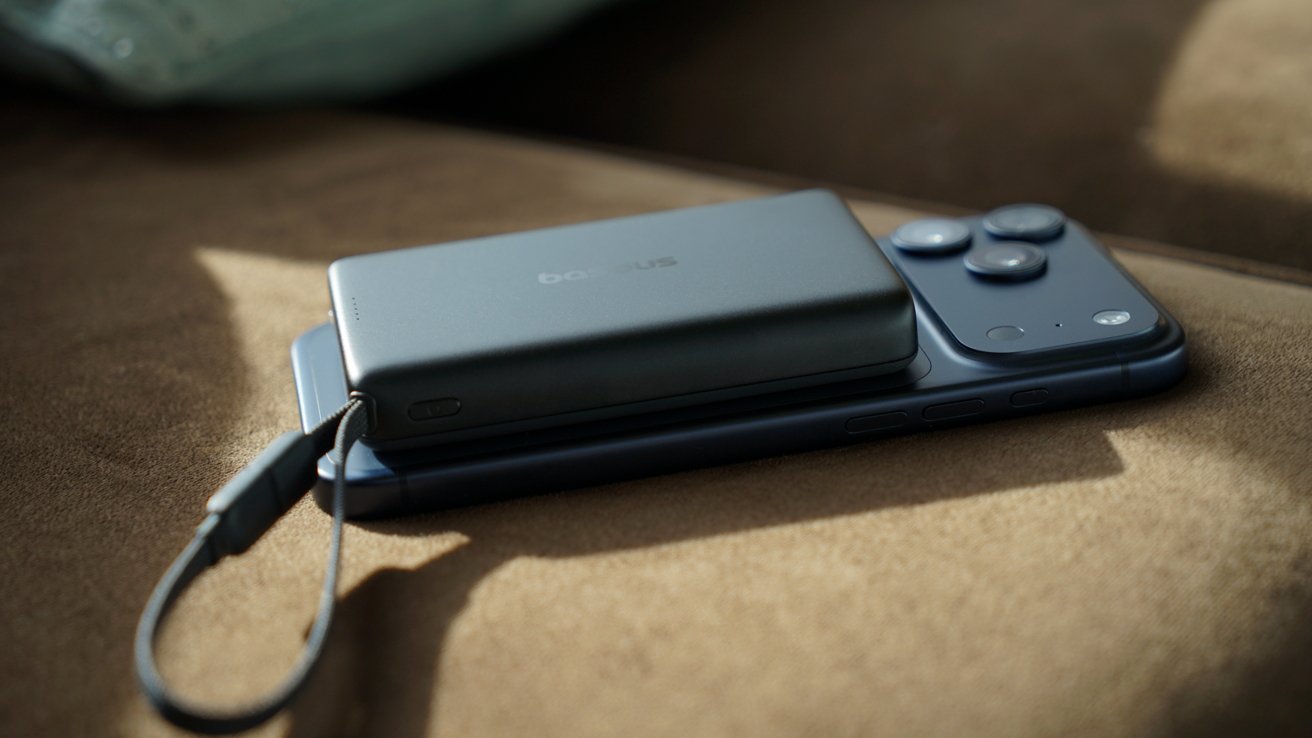
A thick black battery pack with an attached cable laying on a blue iPhone Pro Max, which is laying facedown on a brown couch
Baseus PicoGo AM52 review: 10,000 mAh packed as small as it can get

I already compared the fall lineup of Baseus battery packs to Apple’s odd iPhone Air MagSafe Battery, so there’s no need for it today. The two I’m reviewing are massive 10,000 mAh batteries packed in what qualifies as a “slim” case.
The Baseus PicoGo AM52 power bank is Qi2.2 certified and MagSafe compatible. One has an integrated cable and the other doesn’t.
Continue Reading on AppleInsider | Discuss on our Forums

Source link

Continue Reading

Tech

IEEE Presidents Note: A Modern Renaissance in Tech

Published

on

Consider a powerful parallel between the advancements made during the Renaissance and the developments made by today’s engineers.

The Renaissance was a uniquely fertile era. Its ethos of curiosity and creativity fostered unprecedented collaboration across disciplines. Artists, scientists, philosophers, and patrons engaged in a shared pursuit of human potential, beauty, and advancements in art, science, and literature.

But the Renaissance wasn’t just a cultural awakening. It was a systems-level transformation: a convergence of disciplines, minds, and methods that redefined what humanity could achieve. And in many ways, it mirrors the collaborative spirit we strive for within our IEEE communities.

Collaboration Is a Catalyst

During the Renaissance, breakthroughs didn’t happen in isolation. They emerged from intersections of different disciplines. Collaboration was the norm: Artists worked with mathematicians to perfect their creations’ accuracy, and architects consulted astronomers to design buildings that reflected celestial order. It was interdisciplinary design thinking centuries before the concept was given a name.

Advertisement

It is at the intersections where disciplines and communities meet that the sparks of transformation ignite. The intersection of engineering and medicine gives us lifesaving devices. The intersection of computing and art produces immersive experiences from virtual, augmented, and mixed reality technology that expands human imagination. The intersection of policy and technology ensures ethical innovation. The outcomes of these crossroads remind us that progress is rarely linear. It is woven from the threads of various expertise, perspectives, and values.

When we collaborate across specialties, from electrical and biomedical to aerospace and software, we unlock new possibilities. And when we engage with industry, educators, policymakers, standard developers, and the public, we elevate those possibilities into solutions. We do it together, because no single engineer or technologist, and no one discipline can solve all the challenges we face.

The Renaissance teaches us that collaboration is a catalyst for advancing society. And so, I ask: What if we are living in a new, modern renaissance?

What if our members are today’s da Vincis, designing systems that serve humanity? What if our volunteers are modern-day patrons, investing time, talent, and heart into building a better world? What if our students and young professionals are the architects of tomorrow’s breakthroughs, fluent in computer code, ethics, and global impact, ready to collaborate across borders, sectors, and disciplines?

Advertisement

What if our conferences, technical standards, and humanitarian technologies are the printing presses of our time, disseminating knowledge, sparking dialogue, and scaling solutions? What if our collective imagination is the canvas upon which the next century of innovation will be painted?

And what if, like the Renaissance, our era is defined not only by invention but also by intersection, where many voices and perspectives converge to shape technologies that reflect humanity’s full spectrum?

Imagine engineers working together with ethicists to ensure responsible AI; with environmental scientists to safeguard our planet; and with local communities to design solutions that solve their challenges. Also imagine engineers partnering with disaster relief agencies to design real-time systems, restore communication networks, and deliver lifesaving technologies when survivors need them most.

So let us think like Renaissance creators. Let us design with empathy and collaborate across boundaries. Let us honor that legacy by not just preserving the past but also by building systems that empower the future for everyone.

Advertisement

When we unite technical excellence with human purpose, we don’t just innovate; we elevate. And in doing so, we carry forward the timeless truth of the Renaissance: Humanity’s greatest achievements are born not from isolation but from intersection and connection.

—Mary Ellen Randall

IEEE president and CEO

Please share your thoughts with me: president@ieee.org.

Advertisement

From Your Site Articles

Related Articles Around the Web

Source link

Advertisement
Continue Reading

Tech

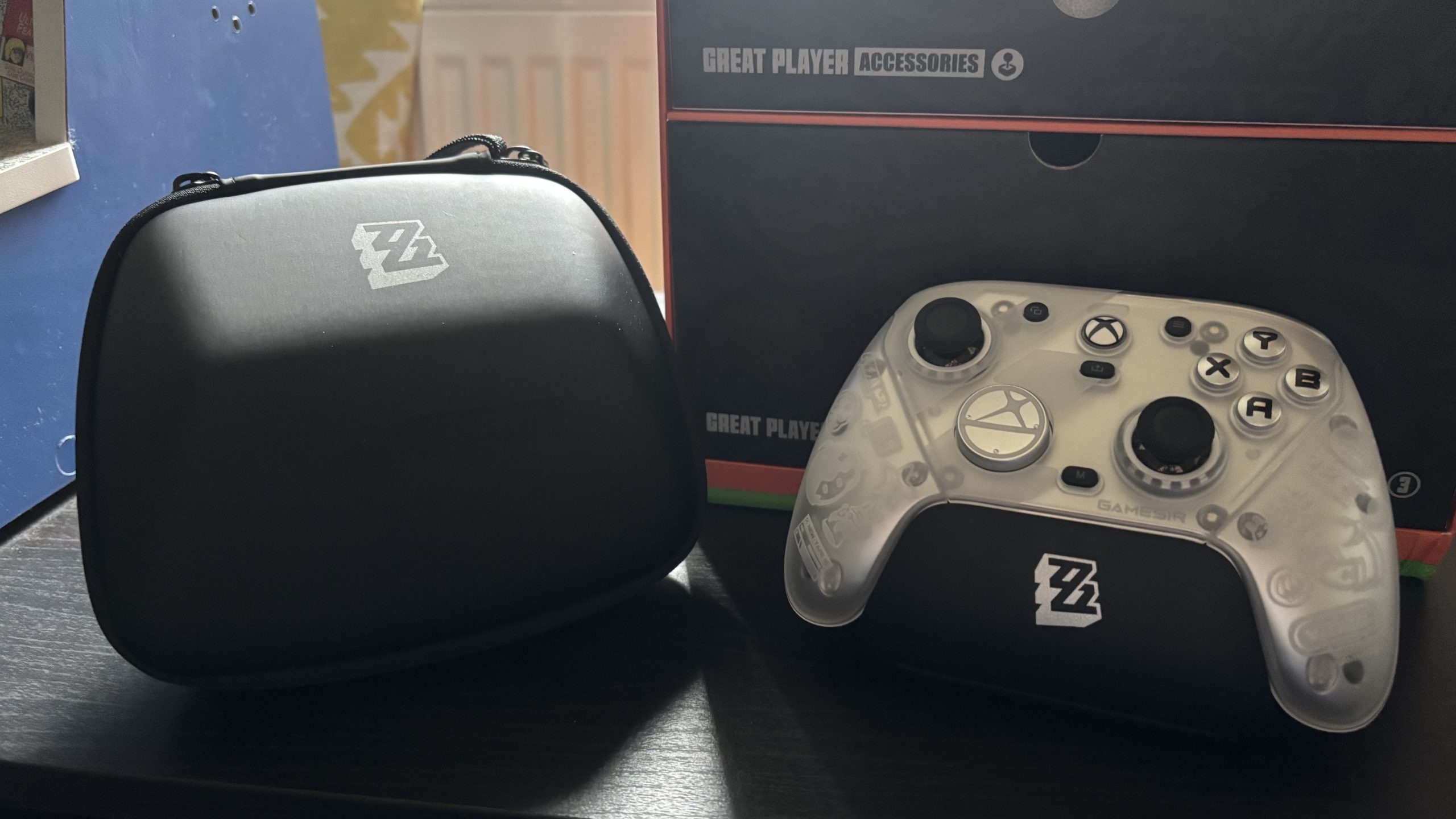
GameSir G7 Pro review: brilliant customizability and personality

Published

on

Why you can trust TechRadar


We spend hours testing every product or service we review, so you can be sure you’re buying the best. Find out more about how we test.

GameSir G7 Pro: one-minute review

GameSir is a controller brand that’s only gone from strength to strength over the last few years. Reliably offering forward-thinking controllers for Xbox and Switch consoles as well as PC and mobile, they’re (typically) competitively priced and offer more features and longevity than even first-party gamepads.

Advertisement

Source link

Continue Reading

Tech

Norway’s Consumer Council Calls for Right to Repair and Antitrust Enforcement – and Mocks ‘Enshittification’

Published

on

The Norwegian Consumer Council, a government funded organization advocating for consumer’s rights, released a report on the trend of “enshittification” in digital consumer goods and services, suggesting ways consumers for consumers to resist. But they’ve also dramatized the problem with a funny four-minute video about the man whose calls for him to make things shitty for people.

“It’s not just your imagination. Digital services are getting worse,” the video concludes — before adding that “Luckily, it doesn’t have to be this way.” The Consumer Council’s announcement recommends:

  • Stronger rights for consumers to control, adapt, repair, and alter their products and services,
  • Interoperability, data portability, and decentralisation as the norm, so the threshold for moving to different services becomes as low as possible,
  • Deterrent and vigorous enforcement of competition law, so that Big Tech companies are not allowed to indiscriminately acquire start-ups, competitors or otherwise steer the market to their advantage,
  • Better financing of initiatives to build, maintain or improve alternative digital services and infrastructure based on open source code and open protocols,
  • Reduce public sector dependence on big tech, to regain control and to contribute to a functioning market for service providers that respect fundamental rights,
  • Deterrent and consistent enforcement of other laws, including consumer and data protection law.

The Norwegian Consumer Council is also joining 58 organisations and experts in a letter asking the Norwegian government to rebalance power with enforcement resources and by prioritizing the procurement of services based on open source code. And “Our sister organisations are sending similar letters to their own governments in 12 countries.”

They’re also sending a second letter to the European Commission with 29 civil society organisations (including the EFF and Amnesty International) warning about the risks of deregulation and calling for reducing dependency on big tech.


Thanks to Slashdot reader DeanonymizedCoward for sharing the news.

Advertisement

Source link

Advertisement
Continue Reading

Tech

Windows 11 hits 72% share as Windows 10 fades, but not everyone is happy

Published

on


But this shift in Windows adoption looks less like a wave of enthusiastic upgrades and more like a forced march driven by expiring support deadlines, strict hardware policies, and a steady drumbeat of problematic patches.
Read Entire Article
Source link

Continue Reading

Tech

Save $100 on iPad mini 7, plus grab Apple Pencil Pro deal

Published

on

Amazon is kicking off March with an iPad mini 7 deal that takes $100 off multiple colors and storage capacities. Plus, grab an Apple Pencil Pro at $35 off.

Two iPad mini tablet devices with abstract swirl screens on a bright gradient background, overlaid by large bold white text reading on sale indicating a promotional electronics discount
Save $100 on Apple’s iPad mini 7 at Amazon – Image credit: Apple

Grab a $100 discount on Apple’s iPad mini 7, with all four color options eligible for the savings. This is the current model, which comes in your choice of 128GB, 256GB, or 512GB of storage.
Save $100 on iPad mini 7
Continue Reading on AppleInsider | Discuss on our Forums

Source link

Continue Reading

Trending

Copyright © 2025