

Business
Regulator’s concerns pertain to pockets of speculation, not entire derivatives market: Tuhin Kanta Pandey

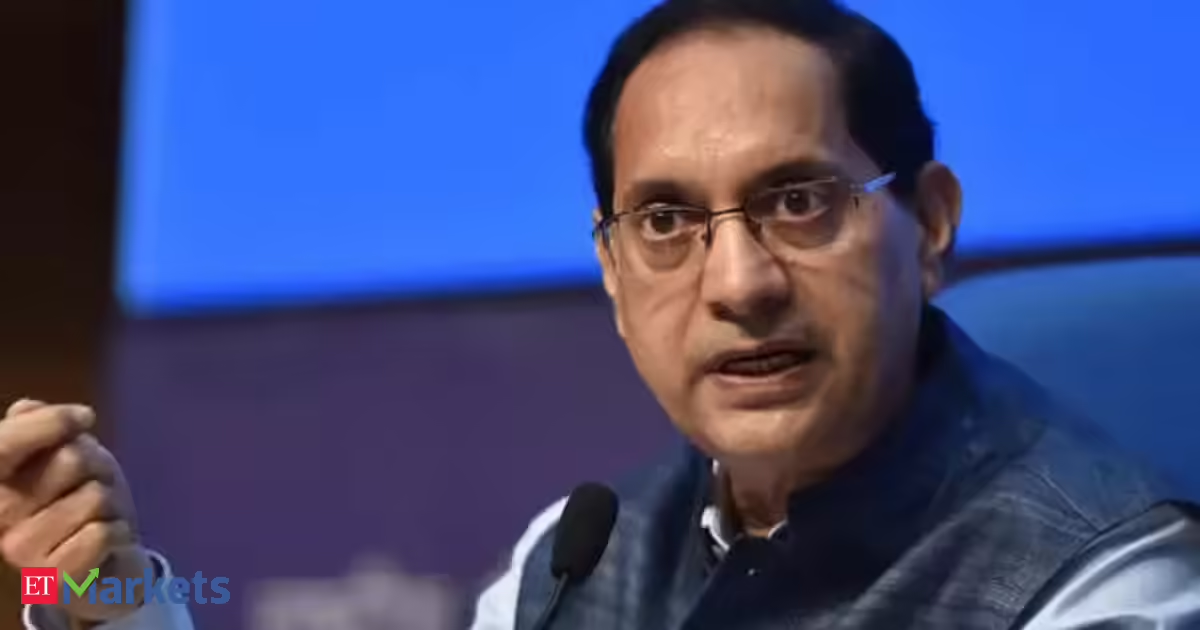
Pandey, who completes his first year as the head of India’s capital markets regulator, said the recent measures by Sebi were not aimed at the entire derivatives market but at pockets of speculation in the segment. The Sebi chief also spoke on settlement regulations and promoter norms, among other issues. Edited excerpts:
You’ve said your goal is to keep policies market-friendly as the ecosystem evolves. Are you satisfied with the progress so far?
Broadly, yes. Within Sebi, there is a growing emphasis on what I would call optimum regulation. We recognise that regulation has costs and can create unintended consequences. Where multiple options achieve the same objective, we should choose the simpler one with lower compliance costs. Over time, rules tend to accumulate, increasing compliance burdens for both regulated entities and the regulator. Our comprehensive regulatory review aims to rationalise and streamline this. Ultimately, investor protection and market development must go together.
Over the past two years, Sebi has taken several steps to curb excessive speculation in equity derivatives. Is there a measure or a level that you are targeting at which you would consider that the objective has been achieved? Are you following a number-driven or principle-driven approach?
We are not following a number-driven approach. Our approach is principle-driven. The focus has been on assessing the impact of the measures we’ve introduced. Often, finfluencers highlight only the winners, creating an exaggerated perception of returns. By placing collective data in the public domain, we aimed to present a realistic view of outcomes in the market. Transparency itself is a powerful form of investor education. We also introduced safeguards such as tighter margin norms, especially on expiry days, to curb lottery-like speculation. Now, we need to assess the impact of these steps through data, rather than reacting month to month. We must recognise that there are also genuine, informed participants in the derivatives market. The objective is not to shut down the market, but to ensure it operates responsibly. Future steps, if any, will be guided by careful data analysis and a balanced, mature approach.
Some market participants warn that India should avoid the path taken by countries such as China and South Korea, where curbs on derivatives speculation have led to a loss of liquidity that has been hard to restore. Has Sebi factored in the risk of liquidity leaving the market as a result of its recent measures?

It is too sweeping to treat the entire F&O segment as one block. Derivatives play a vital role in price discovery, hedging, and risk management, which is why they exist globally. Our concerns were not about the broader derivatives market, but about short-tenor index options, particularly weekly and expiry-day contracts, where speculative activity had become concentrated. If there is a problem in one area, the response should address that area, not disrupt the entire system. There are multiple viewpoints on this – some argue weekly options should continue unchanged, others warn about liquidity risks, and some suggest calibrated measures such as eligibility criteria. The objective is to address concentrated risks while preserving the overall role and liquidity of the derivatives market. So there is, in my opinion, a need even for the media not to really call it F&O, and rather to coin it as ‘O’ on the expiry day and weekly.
So, just to be clear, your concern about derivatives is the pocket of speculation rather than the broader segment.
Yes. You can’t start badgering your body just because you have a boil on your nose. There are several views, like it should continue or let’s get out of weekly, or can we have something in between. There are people who are talking about what kind of criteria could be made for access, for example. Collectively, we should be comfortable that this is the right approach to take. Has Sebi discussed the topic of access (eligibility to trade) in F&O?
No, I’m not saying that. All I am saying is these are already different points of view. F&O has been one of the most hotly debated subjects. All I am saying is please don’t call it F&O, and if you have a problem, call it ‘O’ on the expiry date.
There are also some concerns over growing speculation through margin trading facility (MTF) exposures. Is Sebi looking into this?
We continuously monitor the situation, but MTF already operates within defined guardrails. There are net worth requirements and leverage limits. We have taken the view that re-pledging of client securities for additional leverage should not lead to over-leveraging. At this stage, we believe MTF should be allowed to function within these guardrails while keeping risks under watch. Liquidity in the cash market is important, and we are examining ways to deepen it. For instance, a working group is reviewing the short-selling and SLBM framework to understand barriers and encourage broader participation. Derivatives and cash markets must function together. Derivatives, particularly longer-tenor contracts, play an essential role in price discovery and hedging. The key is to ensure appropriate position limits and risk controls so that excessive speculation is contained and markets remain stable.
Sebi is reviewing its settlement regulations. While settlements have increased over time, litigation and case backlogs remain high. Are further simplifications being considered?
Yes. Greater clarity and proportionality are needed in settlement regulations. Clearer rules reduce ambiguity, limit multiple interpretations, and help bring down disputes and litigation. We do not want the system to become a ‘litigation paradise’. Simpler, clearer rules ultimately strengthen market confidence.
How is Sebi rethinking the concept of promoter, particularly, under ICDR (Issue of Capital and Disclosure Requirements), after moving away from the ‘once a promoter, always a promoter’ approach?
The review is not limited to ICDR. We are also examining LODR (Listing Obligations and Disclosure Requirements). A working group is gathering feedback, and the proposals will go through multiple committees before consultation papers are issued.
There are concerns that some companies report profits just before an IPO and then slip back into losses, raising allegations of window-dressing. How does Sebi view this?
It is important not to generalise from a few instances. One egregious case does not indicate a systemic problem. The key is to distinguish between isolated misconduct and a broader pattern. Rushing to introduce additional rules in response to individual cases risks overregulation and could burden compliant companies without solving the underlying issue.
Sebi is reportedly issuing notices to lawyers and tax consultants for alleged confidentiality breaches during M&A deals. Do you foresee jurisdictional or enforcement challenges, given that they are also regulated by other professional bodies?
If the investigation finds evidence of a violation, the matter proceeds to a quasi-judicial process within Sebi. A show-cause notice is issued, and the concerned parties are given an opportunity to respond and be heard before any order is passed. The outcome may confirm, modify, or set aside the investigation’s findings. These orders are subject to appeal before the Securities Appellate Tribunal.

President Donald Trump addresses the American people following strikes by the U.S. and Israel on Iran.
Oil prices surged late Sunday as fears mounted that the escalating Iran conflict could drag on for weeks, rattling global energy markets.
Global benchmark Brent crude briefly jumped to $82.37 a barrel — its highest level since January 2025 — in the first wave of trading following U.S. and Israeli strikes on Iran that killed Supreme Leader Ali Khamenei, according to Reuters.
By 7:54 p.m. ET, Brent had pulled back slightly but was still up more than 7% at $78.24 a barrel.
U.S. West Texas Intermediate crude also surged nearly 7%, climbing to $71.68 after briefly hitting $75.33 — its highest since June of last year.
OIL MARKETS ON EDGE AS IRAN MOVES TO RESTRICT VITAL STRAIT OF HORMUZ SHIPPING LANE, REPORT SAYS
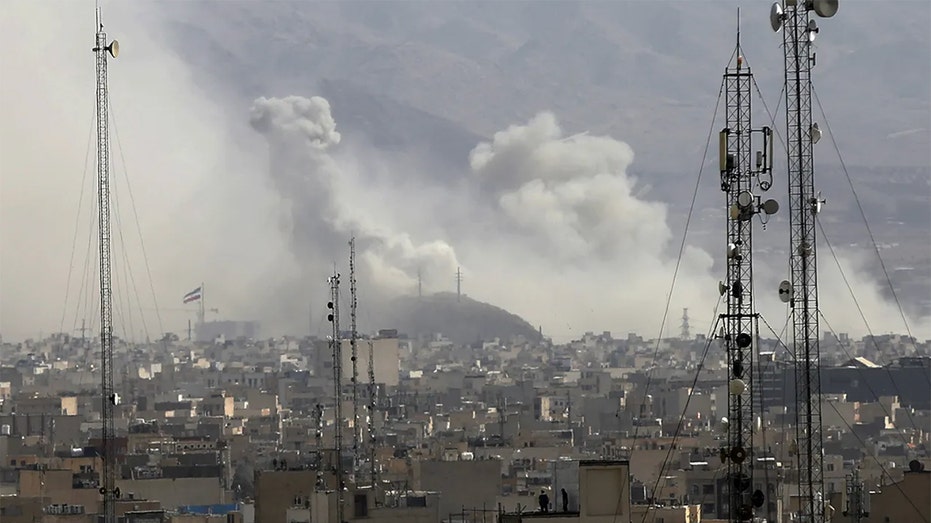
Smoke rises over the city center after the Israeli army launches airstrikes on Iran on Feb. 28, 2026. (Fatemeh Bahrami/Anadolu via Getty Images / Getty Images)
Analysts at Citi warned that prices could climb further if the conflict persists, projecting Brent could trade between $80 and $90 a barrel in the coming days.
Israel launched fresh strikes on Iran Sunday, with Tehran responding with new missile barrages, further escalating tensions in a region responsible for a significant share of the world’s oil production, Reuters reported.
MUSK POINTS TO HIGHEST ‘EVER’ USAGE OF X AMID US-ISRAEL STRIKES ON IRAN
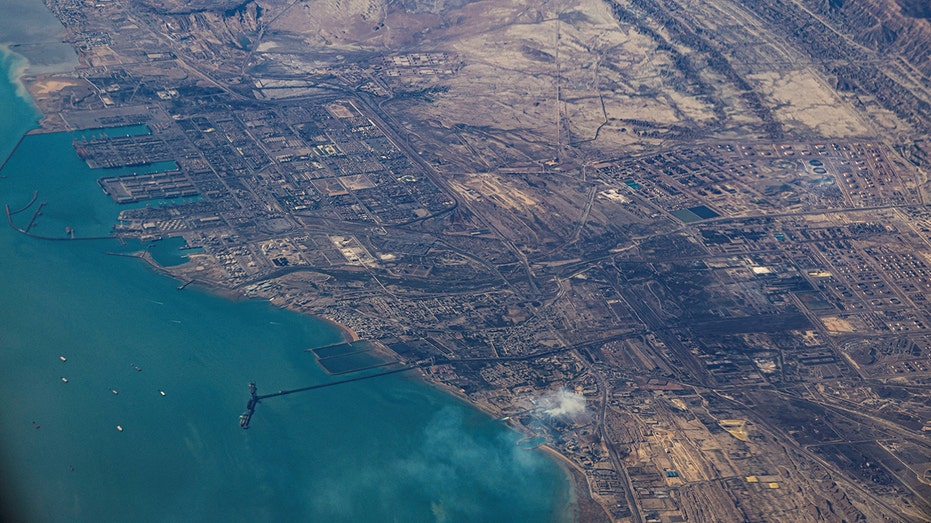
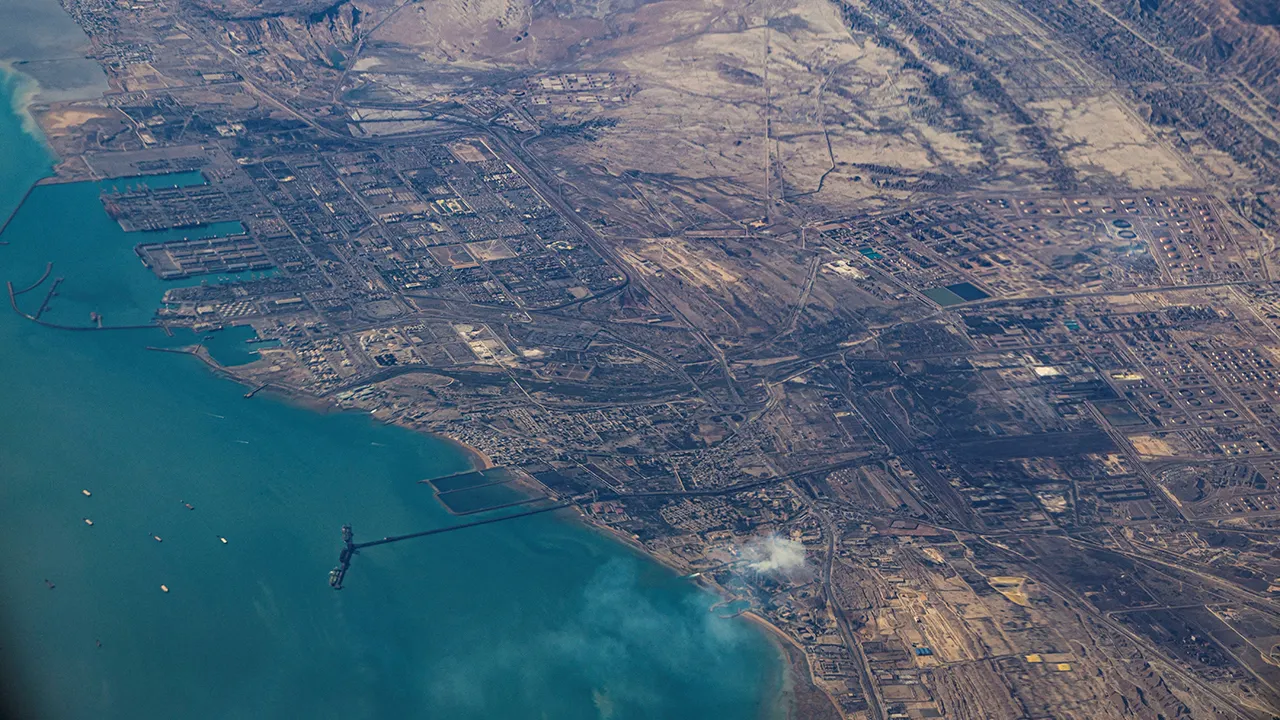
An aerial view of Port of Fujairah, United Arab Emirates, in the strait of Hormuz, Dec. 10, 2023. (REUTERS/Stringer / Reuters)
Missiles on Sunday also struck several oil tankers near the Strait of Hormuz — the world’s most critical oil export route — killing one crew member and raising alarms across global markets, Reuters reported.
As tensions mounted Sunday, more than 200 vessels — including oil and liquefied natural gas tankers — were anchored near the passage which carries roughly 20% of the world’s oil supply, according to Reuters.
‘IT’S CALLED A WHOOP’: CEO REJECTS SECURITY RISK CLAIM ABOUT SUSIE WILES
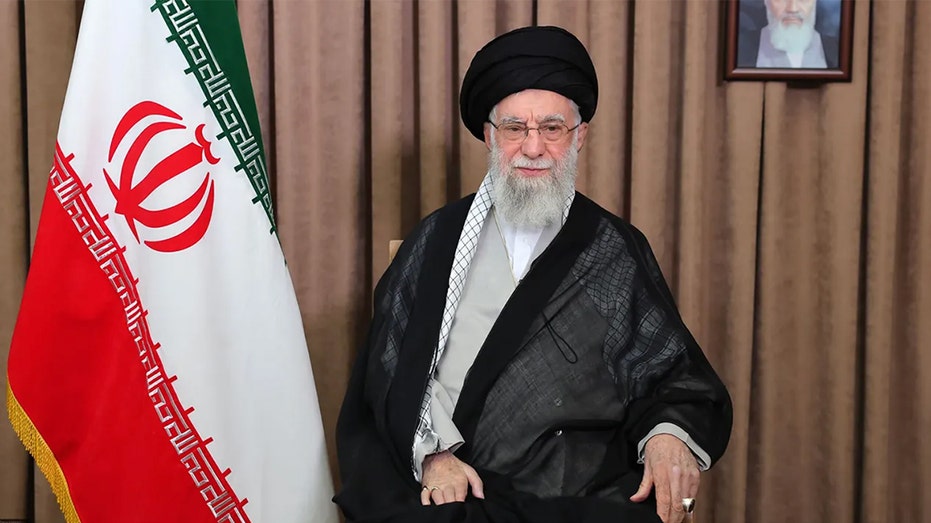
In this handout image provided by the Office of the Supreme Leader of Iran, Iranian Supreme Leader Ali Khamenei addresses the nation in a state television broadcast on June 18, 2025, in Tehran, Iran. (Office of the Supreme Leader of Iran via Getty Images / Getty Images)
CLICK HERE TO GET FOX BUSINESS ON THE GO
Iran reportedly moved to restrict navigation along the Strait of Hormuz following the strikes.
Major exporters including Saudi Arabia, Iraq, the United Arab Emirates, Kuwait and Iran depend heavily on the route.
Reuters contributed to this report.
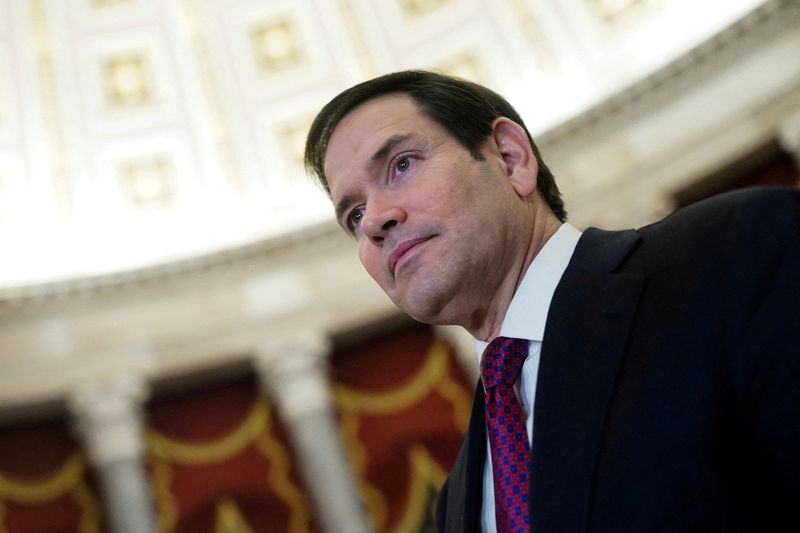

Rubio to brief US House and Senate leaders on Monday
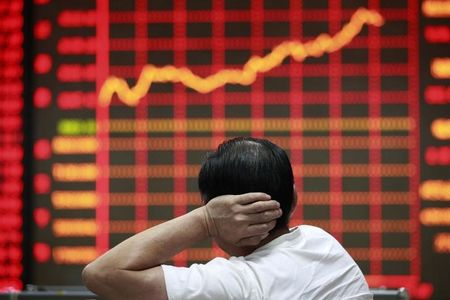
Asia stocks slide as US-Iran strikes batter risk appetite
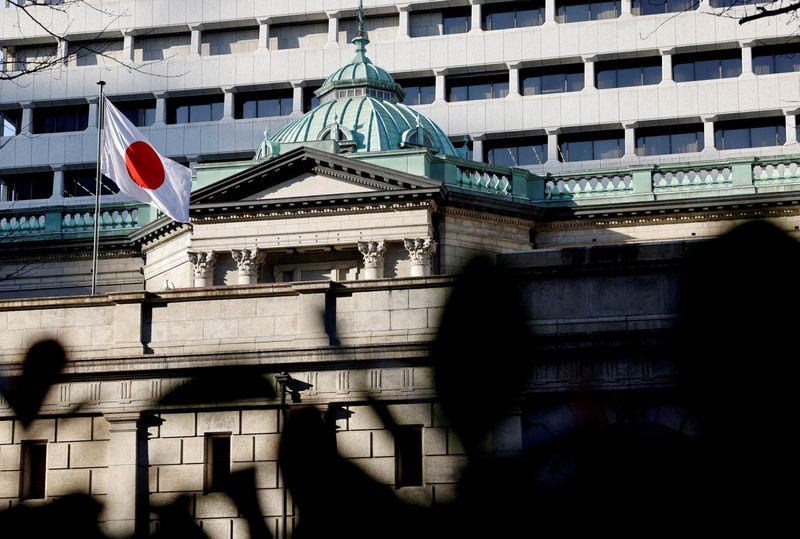

Japan faces growth risks, slower BOJ rate hikes from Iran conflict
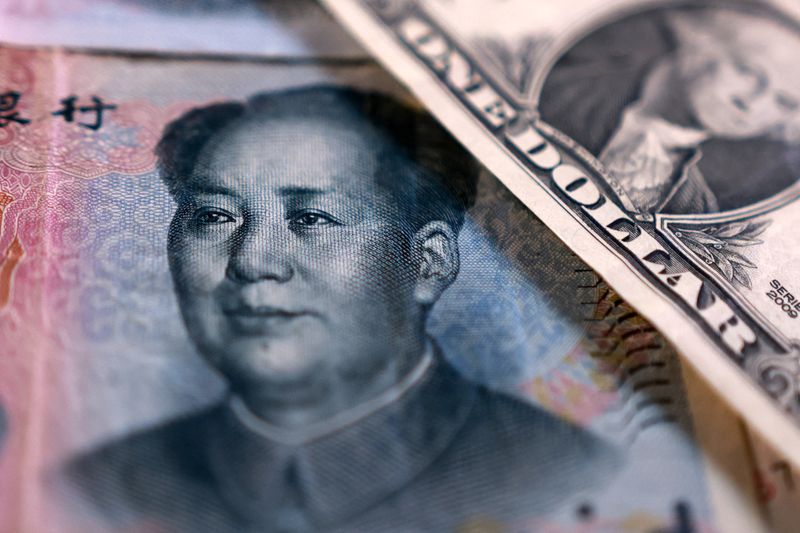

China encourages dollar buying to slow surging yuan


US officials skeptical of regime change in Tehran after Khamenei killing, say sources
RadNet earnings beat by $0.02, revenue topped estimates

In January, Thailand’s economy grew due to increased domestic and external demand, especially in tourism and private consumption. However, construction contracted, while inflation varied. Key issues include U.S. trade policy and tourism recovery.
Key Highlights 📊
- Overall Expansion: The Thai economy grew compared to December, supported by stronger domestic and external demand.
- External Demand:
- Merchandise exports (excluding gold) increased, especially electronics.
- Exports of gems, jewelry, and petroleum products rose temporarily due to firm-specific factors.
- Tourism improved with higher foreign arrivals and receipts.
- Domestic Demand:
- Private consumption and investment strengthened.
- Vehicle sales surged, driven by accelerated purchases ahead of the EV 3.0 scheme deadline and extended registration.
- Government Spending: Expanded but slowed, mainly due to reduced capital expenditure after earlier front-loading.
- Supply-Side Conditions:
- Services slightly contracted, mainly from a decline in construction activity.
- Tourism and trade-related services continued to expand.
- Manufacturing production remained broadly stable.
- Inflation & Stability
- Headline Inflation: Turned more negative, driven by lower raw food and energy prices.
- Core Inflation: Stayed positive and stable, reflecting higher vehicle prices (excise tax adjustments) but offset by promotional discounts in personal care.
- Current Account: Recorded a surplus, supported by net services, income, and transfers, despite a trade deficit from higher imports.
Thailand’s economy in January saw growth fueled by increased exports, particularly in electronics, gems, and jewelry, as well as improved tourism and domestic demand. Vehicle sales surged due to accelerated purchases before the EV 3.0 scheme’s expiration. However, government spending slowed due to previous capital expenditure front-loading, causing a decline in construction and a slight moderation in services, while manufacturing production remained stable.
Source : https://www.bot.or.th/en/news-and-media/news/news-20260227.html
Other People are Reading

How Greg Abel’s First Letter to Berkshire Shareholders Differs From Warren Buffett’s
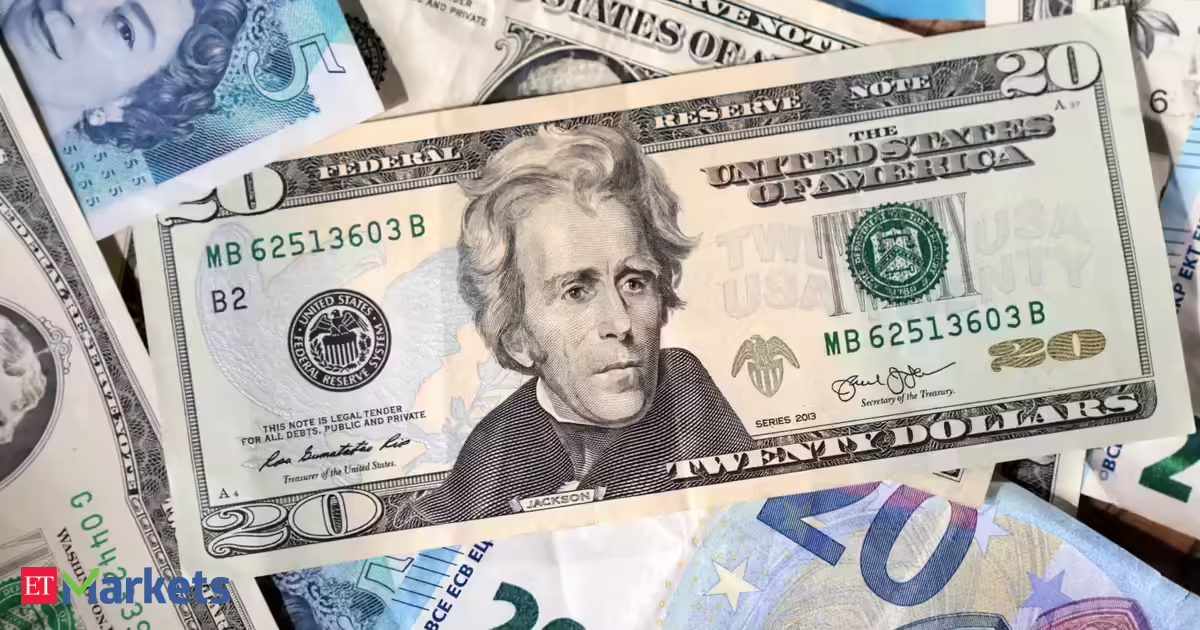
The franc climbed about 0.2% to 0.7674 per dollar and shot 0.6% higher to its strongest level since 2015 on the euro at 0.9030 in the early hours of the Asia session.
The euro fell 0.3% to $1.1781 and the yen initially rose but was held back by Japan’s big oil imports, and last traded a fraction weaker at 156.32 to the dollar.
Sterling and the Australian dollar slid by more than 0.5% and China’s yuan fell about 0.2% in offshore trade, since China is an energy importer and the main buyer of Iranian oil.
“You don’t know how long this is going to last, how high oil is going to go, how long the Strait of Hormuz is going to be closed,” said BNZ strategist Jason Wong in Wellington.
“The initial reaction is mild risk off, and you’ve just got to take each day as it comes.”
The Israeli military said its air force killed Khamenei and his death, at 86, was confirmed by Iranian state media, setting off a high-stakes succession race. Attacks extended into Sunday and Iran has hit back, with the Iranian Revolutionary Guard saying it had struck three U.S. and British oil tankers, while blasts were reported over Dubai and Doha.
Oil prices are markets’ initial top focus and leapt around 9% in early Monday trade on the disruption to seaborne trade.
Currencies of exporters such as Canada and Norway were steady in Asia’s early morning.
The risk-sensitive Australian dollar fell 0.7% to $0.7065, though traders thought the more durable pressure would probably fall on energy importers.
“The euro is in a difficult spot,” said Wells Fargo analysts in a note.
“Europe’s natural gas storage refill season is about to begin and the EU is heading into it with record-low gas in storage, implying it will need to buy a large chunk of energy right as prices potentially shoot higher.”
Israeli military spokesperson Lieutenant Colonel Nadav Shoshani said many targets remained, but deploying ground forces was not under consideration. U.S. President Donald Trump told the Daily Mail the campaign could run for a month.
“We figured it will be four weeks or so. It’s always been about a four-week process,” he said.
At least 150 tankers including crude oil and liquefied natural gas vessels dropped anchor in open Gulf waters beyond the Strait of Hormuz and dozens more were stationary on the other side of the chokepoint, shipping data showed on Sunday.

Lenovo unveils the 2026 refresh of its Yoga 9i 2-in-1 convertible laptop at MWC

Oil prices spike following U.S., Israeli strikes on Iran

Arthur Hayes Says Iran Conflict Could Trigger Fed Easing, Boost Bitcoin


![XRP Holders Becoming "FILTHY RICH" Is VERY REAL.. Many People Are About To Get Sidelined! [MUST SEE]](https://wordupnews.com/wp-content/uploads/2026/03/1772419855_maxresdefault-80x80.jpg)
-

 Sports6 days ago
Women’s college basketball rankings: Iowa reenters top 10, Auriemma makes history
-

 Fashion2 days ago
Weekend Open Thread: Iris Top
-

 Politics6 days ago
Nick Reiner Enters Plea In Deaths Of Parents Rob And Michele
-

 Business5 days ago
True Citrus debuts functional drink mix collection
-

 Politics3 days ago
ITV enters Gaza with IDF amid ongoing genocide
-

 Tech24 hours ago
Unihertz’s Titan 2 Elite Arrives Just as Physical Keyboards Refuse to Fade Away
-
Sports2 days ago
The Vikings Need a Duck
-

 Crypto World6 days ago
XRP price enters “dead zone” as Binance leverage hits lows
-

 Tech5 days ago
Unsurprisingly, Apple's board gets what it wants in 2026 shareholder meeting
-
 NewsBeat1 day ago
Dubai flights cancelled as Brit told airspace closed ’10 minutes after boarding’
-
 NewsBeat2 days ago
The empty pub on busy Cambridge road that has been boarded up for years
-

 NewsBeat4 days ago
Cuba says its forces have killed four on US-registered speedboat | World News
-

 NewsBeat13 hours ago
‘Significant’ damage to boarded-up Horden house after fire
-
 NewsBeat4 days ago
Manchester Central Mosque issues statement as it imposes new measures ‘with immediate effect’ after armed men enter
-
 NewsBeat7 days ago
‘Hourly’ method from gastroenterologist ‘helps reduce air travel bloating’
-

 NewsBeat1 day ago
Abusive parents will now be treated like sex offenders and placed on a ‘child cruelty register’ | News UK
-
 NewsBeat5 days ago
Police latest as search for missing woman enters day nine
-

 Business4 days ago
Discord Pushes Implementation of Global Age Checks to Second Half of 2026
-
 Sports7 days ago
2026 NFL mock draft: WRs fly off the board in first round entering combine week
-

 Business3 days ago
Only 4% of women globally reside in countries that offer almost complete legal equality