

Business
GIC Re withdraws marine hull war cover in high-risk regions

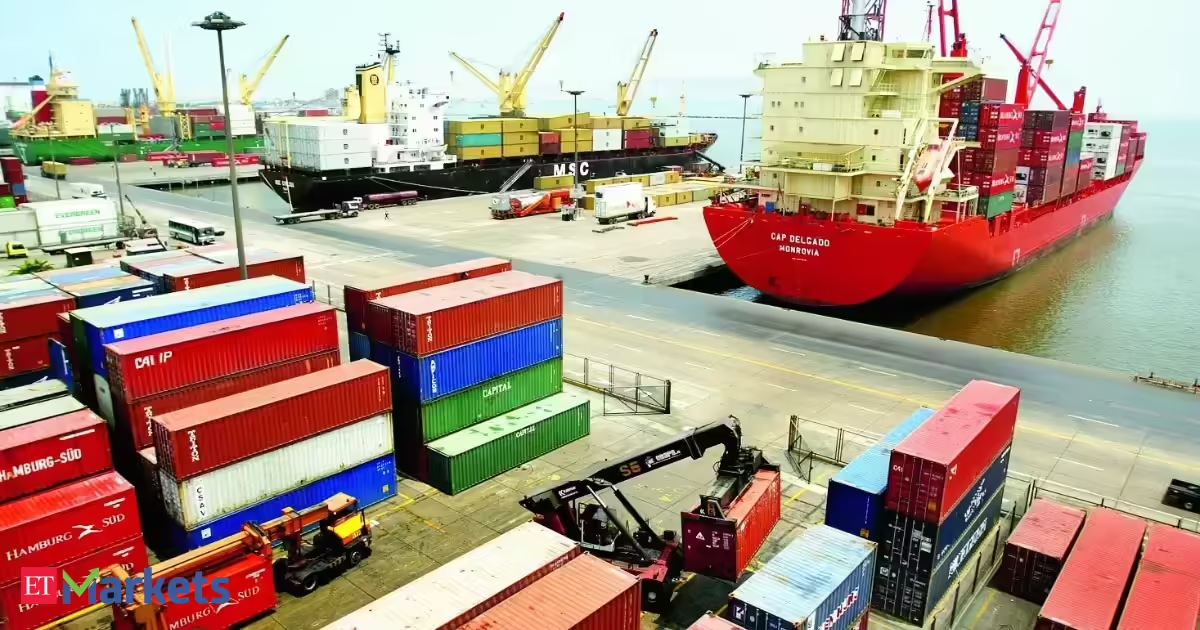
In a notice issued on March 1, GIC Re said the changes took effect from 7 pm India time Sunday. The reinsurer will cease to provide Marine Hull War risk cover in the specified zones from 7 pm on March 3 (Tuesday).
The move comes amid elevated geopolitical tensions in parts of West Asia, the Black Sea region and the Red Sea, where shipping routes have faced heightened security risks in recent years.
Ship owners operating international routes will now have to review their insurance arrangements carefully to ensure continued protection beyond March 3.
The revised High Risk Areas (HRA) include Pakistan waters, the Persian or Arabian Gulf and adjacent waters and ports, including the Gulf of Oman, Iran and all other countries under sanctions by the UN, UK, US or EU; and the Sea of Azov and parts of the Black Sea defined by specific geographical coordinates. The list also covers waters of Ukraine, Russia and Belarus, as well as parts of the Indian Ocean, Gulf of Aden and Southern Red Sea.

GIC Re has made it clear that Breach of Warranty cover will not be available in respect of any of these seven zones, therefore, if a vessel passes through, calls at a port, or is dry-docked in any of the listed areas, it will be treated as a breach of warranty under the policy.
In effect, ship owners and operators will not have war risk protection from GIC Re for operations in these regions after the cut-off date.Marine Hull War Risk insurance typically covers physical damage to ships arising from war, civil war, hostilities, terrorism, piracy and related perils. The withdrawal of cover in these areas could raise insurance costs for ship owners operating in or near conflict-prone waters, as they may need to seek alternate cover at higher premiums
In 2022, GIC had amended the policy clause, to include that while standard notice period is seven days, if the situation involves any of the five powers – China, France, Russia, the United Kingdom or the United States – the notice period reduces to 72 hours. Since the United States is involved in the current situation, the shorter 72-hour clause applies. The notice affects only War Risks cover, and amendments become binding automatically if no objection is raised.
GIC Re’s move comes as the Directorate General of Shipping has issued a fresh advisory to Indian-flag vessels amid rising tensions around Iran and the Strait of Hormuz. Ship owners have been asked to conduct risk assessments, security drills, test alert systems, and follow strict reporting protocols during transit.



The Sunday Investor is focused exclusively on U.S. Equity ETFs. He has a strong analytical background, has received a Certificate of Advanced Investment Advice from the Canadian Securities Institute, and has completed all the educational requirements for the Chartered Investment Manager designation.Having covered hundreds of ETFs on Seeking Alpha, The Sunday Investor has developed a complex, proprietary ETF Rankings system which he shares on his website, etf-rankings.com. Nearly 1,000 ETFs receive individual factor scores covering costs, liquidity, risk, size, value, dividends, growth, quality, momentum, and sentiment, which feed into an easy-to-understand composite score from 1-10. The Sunday Investor is always active in the comments section in his articles – please don’t hesitate to reach out via comment in any article or by visiting etf-rankings.com. Happy Investing!
Analyst’s Disclosure: I/we have no stock, option or similar derivative position in any of the companies mentioned, and no plans to initiate any such positions within the next 72 hours. I wrote this article myself, and it expresses my own opinions. I am not receiving compensation for it (other than from Seeking Alpha). I have no business relationship with any company whose stock is mentioned in this article.
Seeking Alpha’s Disclosure: Past performance is no guarantee of future results. No recommendation or advice is being given as to whether any investment is suitable for a particular investor. Any views or opinions expressed above may not reflect those of Seeking Alpha as a whole. Seeking Alpha is not a licensed securities dealer, broker or US investment adviser or investment bank. Our analysts are third party authors that include both professional investors and individual investors who may not be licensed or certified by any institute or regulatory body.
President Donald Trump addresses the American people following strikes by the U.S. and Israel on Iran.
Oil prices surged late Sunday as fears mounted that the escalating Iran conflict could drag on for weeks, rattling global energy markets.
Global benchmark Brent crude briefly jumped to $82.37 a barrel — its highest level since January 2025 — in the first wave of trading following U.S. and Israeli strikes on Iran that killed Supreme Leader Ali Khamenei, according to Reuters.
By 7:54 p.m. ET, Brent had pulled back slightly but was still up more than 7% at $78.24 a barrel.
U.S. West Texas Intermediate crude also surged nearly 7%, climbing to $71.68 after briefly hitting $75.33 — its highest since June of last year.
OIL MARKETS ON EDGE AS IRAN MOVES TO RESTRICT VITAL STRAIT OF HORMUZ SHIPPING LANE, REPORT SAYS
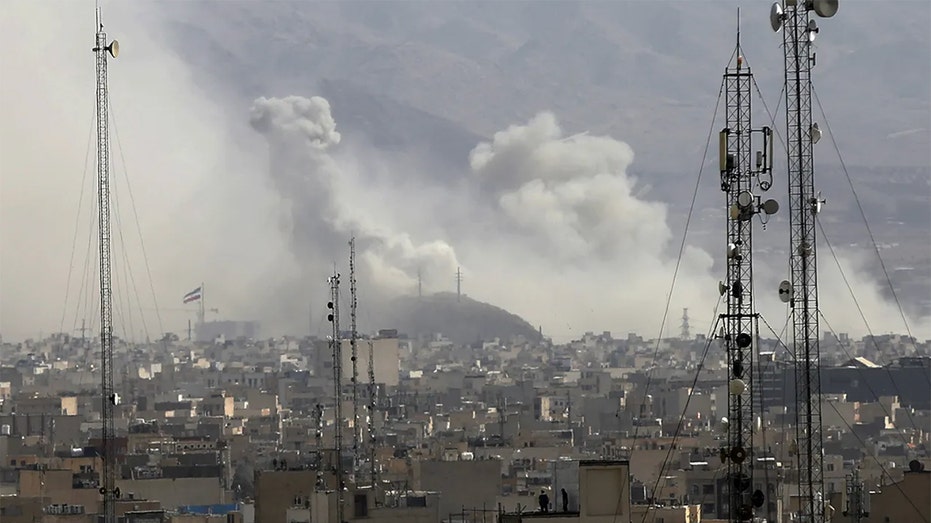
Smoke rises over the city center after the Israeli army launches airstrikes on Iran on Feb. 28, 2026. (Fatemeh Bahrami/Anadolu via Getty Images / Getty Images)
Analysts at Citi warned that prices could climb further if the conflict persists, projecting Brent could trade between $80 and $90 a barrel in the coming days.
Israel launched fresh strikes on Iran Sunday, with Tehran responding with new missile barrages, further escalating tensions in a region responsible for a significant share of the world’s oil production, Reuters reported.
MUSK POINTS TO HIGHEST ‘EVER’ USAGE OF X AMID US-ISRAEL STRIKES ON IRAN
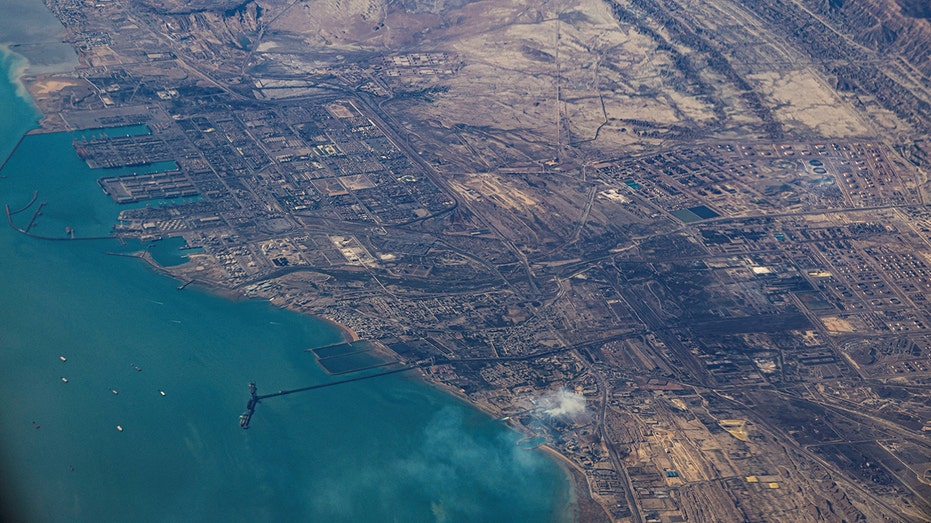
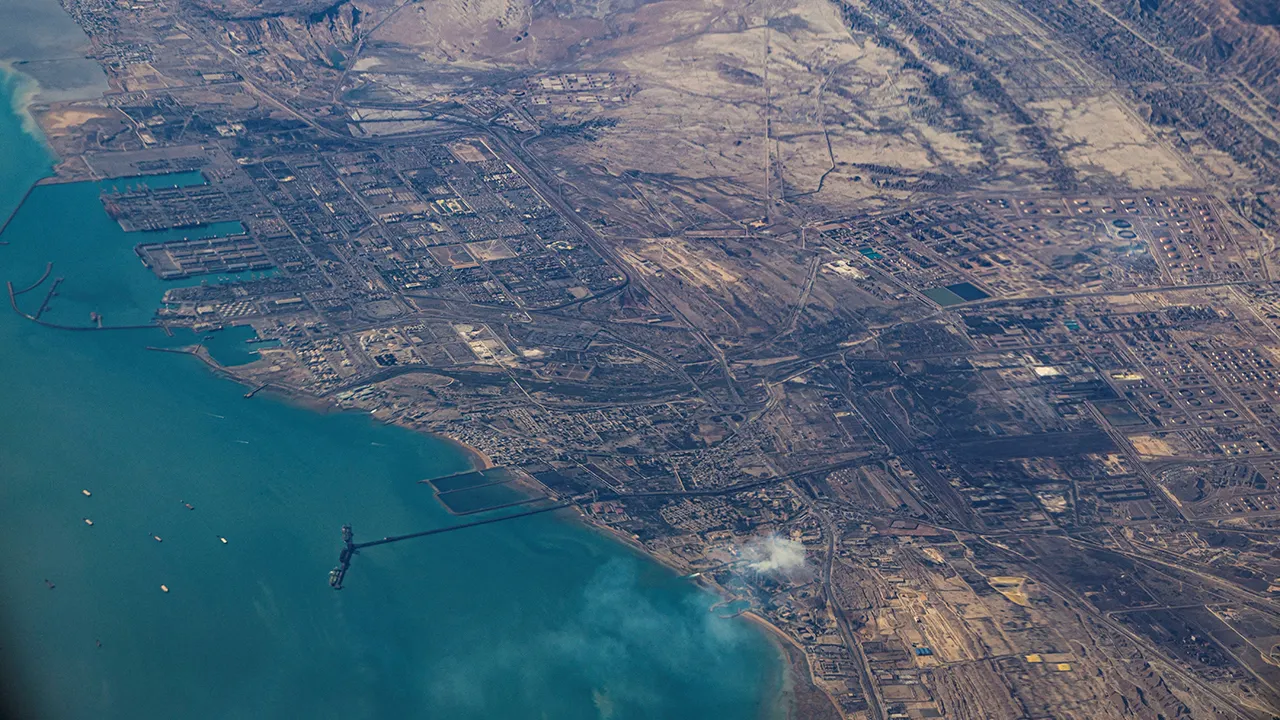
An aerial view of Port of Fujairah, United Arab Emirates, in the strait of Hormuz, Dec. 10, 2023. (REUTERS/Stringer / Reuters)
Missiles on Sunday also struck several oil tankers near the Strait of Hormuz — the world’s most critical oil export route — killing one crew member and raising alarms across global markets, Reuters reported.
As tensions mounted Sunday, more than 200 vessels — including oil and liquefied natural gas tankers — were anchored near the passage which carries roughly 20% of the world’s oil supply, according to Reuters.
‘IT’S CALLED A WHOOP’: CEO REJECTS SECURITY RISK CLAIM ABOUT SUSIE WILES

In this handout image provided by the Office of the Supreme Leader of Iran, Iranian Supreme Leader Ali Khamenei addresses the nation in a state television broadcast on June 18, 2025, in Tehran, Iran. (Office of the Supreme Leader of Iran via Getty Images / Getty Images)
CLICK HERE TO GET FOX BUSINESS ON THE GO
Iran reportedly moved to restrict navigation along the Strait of Hormuz following the strikes.
Major exporters including Saudi Arabia, Iraq, the United Arab Emirates, Kuwait and Iran depend heavily on the route.
Reuters contributed to this report.
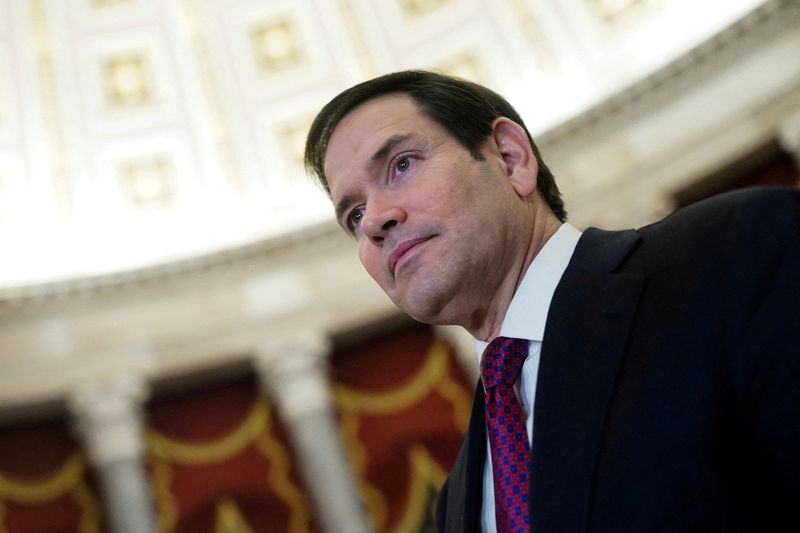

Rubio to brief US House and Senate leaders on Monday
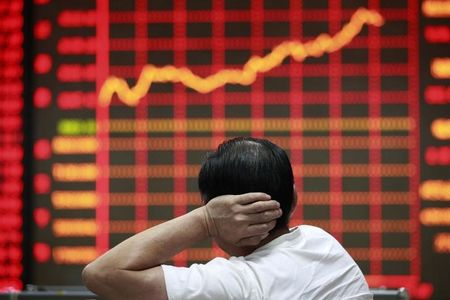
Asia stocks slide as US-Iran strikes batter risk appetite
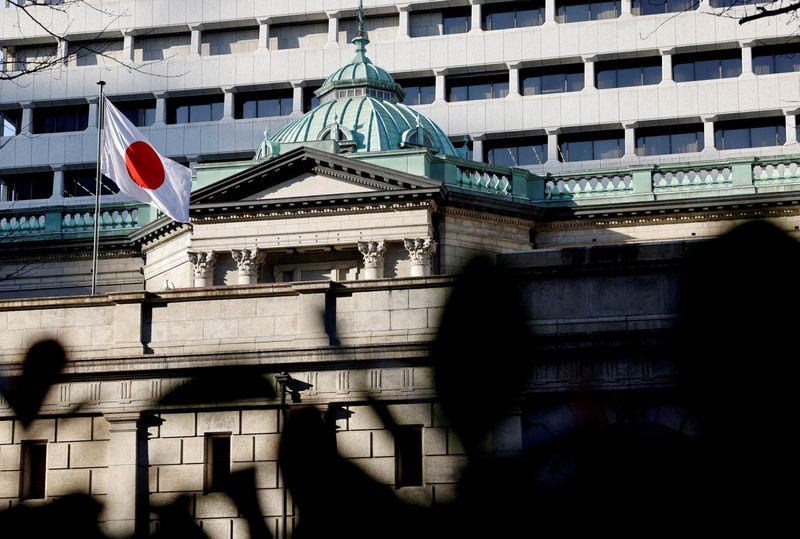

Japan faces growth risks, slower BOJ rate hikes from Iran conflict
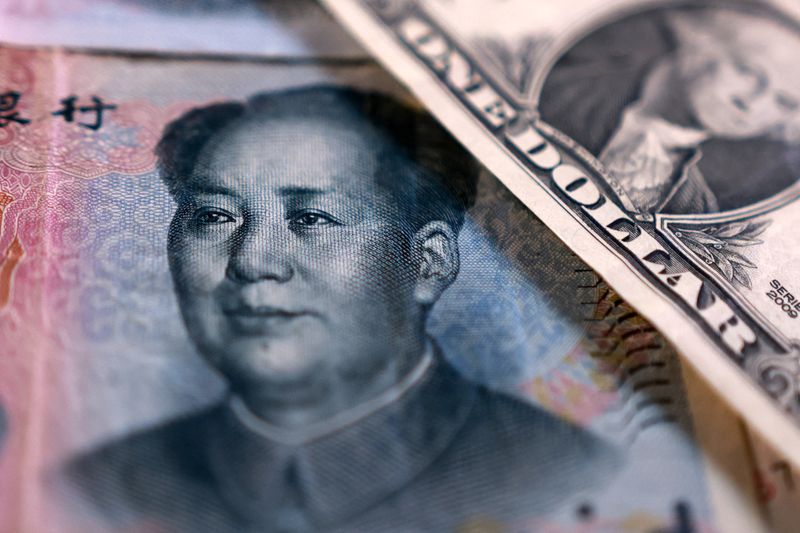

China encourages dollar buying to slow surging yuan


US officials skeptical of regime change in Tehran after Khamenei killing, say sources
RadNet earnings beat by $0.02, revenue topped estimates

In January, Thailand’s economy grew due to increased domestic and external demand, especially in tourism and private consumption. However, construction contracted, while inflation varied. Key issues include U.S. trade policy and tourism recovery.
Key Highlights 📊
- Overall Expansion: The Thai economy grew compared to December, supported by stronger domestic and external demand.
- External Demand:
- Merchandise exports (excluding gold) increased, especially electronics.
- Exports of gems, jewelry, and petroleum products rose temporarily due to firm-specific factors.
- Tourism improved with higher foreign arrivals and receipts.
- Domestic Demand:
- Private consumption and investment strengthened.
- Vehicle sales surged, driven by accelerated purchases ahead of the EV 3.0 scheme deadline and extended registration.
- Government Spending: Expanded but slowed, mainly due to reduced capital expenditure after earlier front-loading.
- Supply-Side Conditions:
- Services slightly contracted, mainly from a decline in construction activity.
- Tourism and trade-related services continued to expand.
- Manufacturing production remained broadly stable.
- Inflation & Stability
- Headline Inflation: Turned more negative, driven by lower raw food and energy prices.
- Core Inflation: Stayed positive and stable, reflecting higher vehicle prices (excise tax adjustments) but offset by promotional discounts in personal care.
- Current Account: Recorded a surplus, supported by net services, income, and transfers, despite a trade deficit from higher imports.
Thailand’s economy in January saw growth fueled by increased exports, particularly in electronics, gems, and jewelry, as well as improved tourism and domestic demand. Vehicle sales surged due to accelerated purchases before the EV 3.0 scheme’s expiration. However, government spending slowed due to previous capital expenditure front-loading, causing a decline in construction and a slight moderation in services, while manufacturing production remained stable.
Source : https://www.bot.or.th/en/news-and-media/news/news-20260227.html
Other People are Reading

How Greg Abel’s First Letter to Berkshire Shareholders Differs From Warren Buffett’s

Filmmaker Reveals Robert Carradine’s Behavior During Final Conversation

LPP + Financial Maths + Numerical Applications | One Shot | Applied Maths | Target Board Exams 2026

Harrison Ford says its ‘a little early’ to receive lifetime achievement Actor Award: ‘I’m still a working actor’


-

 Sports6 days ago
Women’s college basketball rankings: Iowa reenters top 10, Auriemma makes history
-

 Fashion2 days ago
Weekend Open Thread: Iris Top
-

 Politics6 days ago
Nick Reiner Enters Plea In Deaths Of Parents Rob And Michele
-

 Business5 days ago
True Citrus debuts functional drink mix collection
-

 Politics3 days ago
ITV enters Gaza with IDF amid ongoing genocide
-

 Tech24 hours ago
Unihertz’s Titan 2 Elite Arrives Just as Physical Keyboards Refuse to Fade Away
-
Sports2 days ago
The Vikings Need a Duck
-

 Crypto World6 days ago
XRP price enters “dead zone” as Binance leverage hits lows
-

 Tech5 days ago
Unsurprisingly, Apple's board gets what it wants in 2026 shareholder meeting
-
 NewsBeat1 day ago
Dubai flights cancelled as Brit told airspace closed ’10 minutes after boarding’
-
 NewsBeat2 days ago
The empty pub on busy Cambridge road that has been boarded up for years
-

 NewsBeat4 days ago
Cuba says its forces have killed four on US-registered speedboat | World News
-

 NewsBeat13 hours ago
‘Significant’ damage to boarded-up Horden house after fire
-
 NewsBeat4 days ago
Manchester Central Mosque issues statement as it imposes new measures ‘with immediate effect’ after armed men enter
-
 NewsBeat7 days ago
‘Hourly’ method from gastroenterologist ‘helps reduce air travel bloating’
-

 NewsBeat1 day ago
Abusive parents will now be treated like sex offenders and placed on a ‘child cruelty register’ | News UK
-
 NewsBeat5 days ago
Police latest as search for missing woman enters day nine
-

 Business4 days ago
Discord Pushes Implementation of Global Age Checks to Second Half of 2026
-
 Sports7 days ago
2026 NFL mock draft: WRs fly off the board in first round entering combine week
-

 Business3 days ago
Only 4% of women globally reside in countries that offer almost complete legal equality