

We’ll start this week off with a bit of controversy from Linux Land. Anyone who’s ever used the sudo command knows that you don’t see any kind of visual feedback while entering your password. This was intended as a security feature, as it was believed that an on-screen indicator of how many characters had been entered would allow somebody snooping over your shoulder to figure out the length of your password. But in Ubuntu 26.04, that’s no longer the case. The traditional sudo binary has been replaced with a one written in Rust, which Canonical has recently patched to follow the modern convention of showing asterisks on the password prompt.
As you might expect, this prompted an immediate reaction from Linux greybeards. A bug report was filed just a few days ago demanding that the change be reverted, arguing that breaking a decades-old expectation with no warning could be confusing for users. The official response from a Canonical dev was that they see it the other way around, and that the change was made to improve the user experience. It was also pointed out that those who want to revert to the old style of prompt can do so with a config change. The issue was immediately marked as “Won’t Fix”, but the discussion is ongoing.
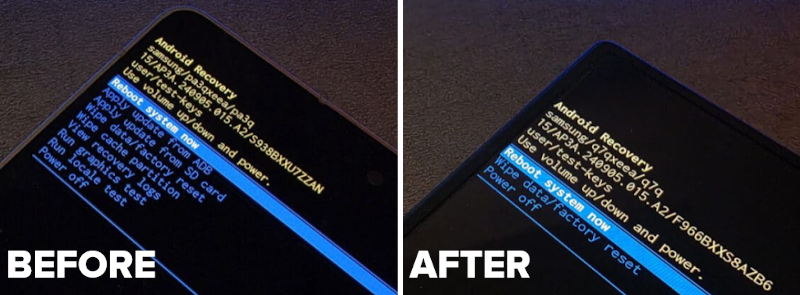
Speaking of unexpected changes, multiple reports are coming in that the February security update for Samsung Galaxy devices, which is currently rolling out, removes several functions from the Android recovery menu. After the update is applied to phones such as the S25 and Fold 7, long-standing features, such as the ability to wipe the device’s cache partition or install updates via Android Debug Bridge (ADB), disappear.
Just like with the change to sudo, this is the sort of thing that will aggravate veteran users the most. There’s been no official explanation for these changes, and it’s not immediately obvious why Samsung would fiddle with the recovery menu that’s remain largely unchanged since Android’s introduction. As 9to5Google mentions, it could be an attempt to prevent users from installing leaked firmware builds — a practice that’s gotten the attention of the electronic giant’s legal department.
These days, software updates are just one of the things you need to keep track of. Add in emails, RSS feeds, and incoming chat messages, and keeping up with the notifications on your computer or smartphone can be a challenge. But that’s nothing compared to the 800,000 alerts fired off earlier this week by the Vera Rubin Observatory. The observatory uses a 3.2 gigapixel camera to take long exposure images of the night sky, which are then compared with earlier shots to detect visual changes. Astronomers create filters to narrow down what they’re after, and can be notified when the automated system detects a match. A preview image is available in just seconds, while the full-resolution imagery takes around 80 hours to process. It’s still early days, but once the VRO gets up to speed, it’s expected that as many as seven million alerts will be generated each night.
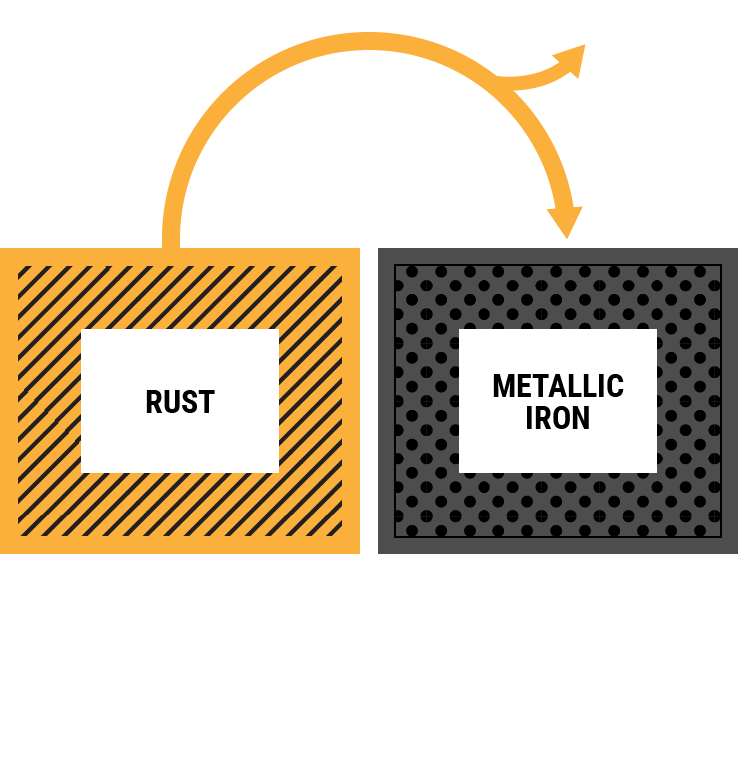 While on the subject of large-scale engineering projects, this week, Google announced that its new data center in Minnesota will be hooked up to the world’s largest battery. The 300 megawatt array built by Form Energy will use iron-air technology, which essentially uses a reversible rusting process to store energy produced by renewable sources such as wind and solar. When those sources aren’t available, the data center can run off of battery power for up to 100 hours.
While heavier and less efficient than lithium-ion, iron-air batteries have the advantage of being substantially cheaper to produce. So while it’s unlikely you’ll see the technology in smartphones anytime soon, it’s perfect for static installations like this.
Finally, some sad news from the world of retro computing/games: a very rare copy of Tsukihime Trial Edition was apparently destroyed while in transit from one collector to another. It might not look like much — the game was distributed by the indie developers on unbranded floppies at a Japanese convention in 1999 — but it represents one of only 50 copies known to exist. While the occasional damaged package is all but unavoidable, this one is particularly egregious as it appears that someone at US Customs intentionally ripped the disk to pieces. The purchaser has filed a complaint with Customs, and we’re interested in hearing what their version of the story sounds like.
See something interesting that you think would be a good fit for our weekly Links column? Drop us a line, we’d love to hear about it.