Connect with us

Politics

6 Books To Help Your Teenager Read More Again

Published

on

6 Books To Help Your Teenager Read More Again

We hope you love the products we recommend! All of them were independently selected by our editors. Just so you know, HuffPost UK may collect a share of sales or other compensation from the links on this page if you decide to shop from them. Oh, and FYI – prices are accurate and items in stock as of time of publication.

Daily reading and enjoyment of reading are at a more-than-20-year low among young people, according to new research.

The National Literacy Trust (NLT) surveyed over 80,000 young people aged 11 to 16 years old and found just one in five (18.8% of) boys aged 14 to 16 report enjoying reading, compared to 37.7% of girls.

The same survey, shared with the Guardian, found only 9.8% of boys between the ages of 14 and 16 read every day, compared to 17.6% of girls.

Advertisement

If these stats resonate and you’re hoping to gently steer your teen towards page-turners once more; these thrilling, funny, and ultra-engaging reads might just tempt them.

Source link

Advertisement
Continue Reading
Click to comment

Leave a Reply

Your email address will not be published. Required fields are marked *

Politics

Newslinks for Monday 2nd March 2026

Published

on

Newslinks for Friday 30th January 2026

RAF base in Cyrpus hit by drone strike after Starmer U-turn on military bases

“An RAF airbase in Cyprus was struck by a “kamikaze” attack drone shortly after Britain gave the US permission to mount strikes against Iran from joint bases. Families of service personnel in Cyprus are being evacuated from RAF Akrotiri as a “precautionary measure”, the Ministry of Defence said. The suicide drone, of the type used extensively in Ukraine, hit the base late on Sunday evening although there was minimal damage. The attack took place around midnight local time. A defence source told The Times there was a “full assessment” underway to establish whether it was deliberate or not. Due to the time taken for the drone to reach RAF Akrotiri, the UK believes it was probably launched before Sir Keir Starmer announced he had given the green light to the US to mount airstrikes against Iran from joint bases. The prime minister said he had given the US permission to use Diego Garcia, a joint military base in the Indian Ocean, and RAF Fairford in Gloucestershire. He said that the move would allow the US to carry out airstrikes for a “limited defensive purpose”… Britain remains opposed to “offensive” attacks against Iranian targets. John Healey, the defence secretary, refused to say whether Britain supports the original airstrikes by Israel and the US.” – The Times

  • Brit families evacuated from Cyprus RAF base & schools shut hours after Iranian drone attack as UK joins US blitz – The Sun
  • Foreign Office plans emergency evacuation for Britons stuck in Middle East – Daily Telegraph
  • Iran rejects Trump’s ultimatum and launches new strikes as F-15 fighter jet crashes over Kuwait and explosions rock Dubai, Doha and Cyprus – Daily Mail
  • ‘Several’ US warplanes crash in Kuwait, but crews survive, officials say as video shows jet on fire in a tailspin – Daily Mail
  • Britain at risk of terror attacks from Iran’s sleeper agents and militias – The i

Comment:

  • The Iran crisis has Labour insiders asking if Rayner could really be PM – Anne McElvoy, The i
  • I want a free Iran, but deep down I don’t trust Trump to do it – Matthew Syed, The Times
  • Starmer denies U-turn claims after giving go-ahead for US to use UK military for strikes on Iran – Sky News
  • Tell us, Trump, how this Iran operation ends – Max Hastings, The Times
  • Has Britain – once a major player in the Middle East – ever looked SO irrelevant on the world stage? – Stephen Glover, Daily Mail
  • Cowardly Starmer simply isn’t cut out to lead Britain – there are 2 very pressing reasons why he must go now – Rod Liddle, The Sun

> Today:

> Yesterday:

Channel migrant crossings hit record levels this year as authorities struggle to cope with surge

“The number of migrants crossing the Channel is up on this time last year. Figures show 2,209 made the perilous journey compared to 2,056 in the first two months of 2025. Home Secretary Shabana Mahmood is set to launch strict Danish-style immigration reforms that have cut asylum claims there to a 40-year low. But Shadow Home Secretary Chris Philp said only leaving the European Convention on Human Rights will fix the problem by deporting “every illegal immigrant within a week of arrival”. He told The Sun: “This weak Labour Government cannot control our borders. Under Labour, channel crossings are getting worse. Keir Starmer and Shabana Mahmood lack the strength to do what is needed.”” – The Sun

Advertisement
  • Britain to pay migrants ‘more than £3k’ to leave UK as Home Secretary faces 40-strong MP migration rebellion – LBC News
  • Shabana Mahmood tells GB News she WOULD live next door to a migrant camp – GBNews
  • Home Secretary will introduce stricter migrant rules today in crackdown that will see refugee status reviewed every 30 months – Daily Mail
  • Mahmood: I come from a migrant family. But the system is broken – Daily Telegraph

Labour’s employment shake-up ‘makes Britain worse than France’

“Labour is making Britain’s employment law “worse than France” with new workers’ rights that put bankers and lawyers in line for unlimited payouts if they win unfair dismissal claims. In a series of private meetings last month, business leaders warned the Government that multinational companies will shun Britain if new laws championed by Angela Rayner, the former deputy prime minister, come into force. Angry City bosses told officials at the Department for Business and Trade that scrapping a compensation cap on successful claims will make Britain less competitive than European countries such as France, Spain and Italy. At one meeting between government officials arranged by lobby group TheCityUK, several attendees highlighted that the UK was moving in the “180-degree opposite direction to what our competitors have done” on the Continent. The meeting – which was attended by legal and human resources executives at a number of Magic Circle law firms and City giants – stressed that it would leave Britain in a less competitive position than countries such as France, which is known for its onerous labour code. “We will end up with worse labour laws than France,” said one person at the meeting. “And that’s really saying something.”” – Daily Telegraph

  • Executives’ mood sours on economy as consumers cut spending – The Times
  • Economy could unlock £11bn GDP boost if Labour tackles ‘rising female unemployment’ – GBNews
  • Soaring numbers of jobless young women costing economy billions – report – The Independent

Comment:

  • Reeves has powerful reasons to resist pressure to spend – Roger Bootle, Daily Telegraph
  • Reeves should cut alcohol duty and watch the money roll in – Matthew Lynn, Daily Telegraph

> Today:

News in brief:

  • International law should not prevent regime change in Iran – Stephen Daisley, The Spectator
  • The Iran war makes it official – America is breaking with Europe – Freddie Hayward, The New Statesman
  • Starmer’s perfect storm: The rot in Labour runs deep – Helen Thompson, UnHerd
  • Trump goes to war – Peter Caddick-Adams, The Critic

Source link

Continue Reading

Politics

Women’s Health Statistics Show We Have A Long Way To Go

Published

on

Women's Health Statistics Show We Have A Long Way To Go

As we enter March, which marks endometriosis awareness month, it’s worth noting that not only is endometriosis woefully under-funded, most areas of women’s healthcare are still incredibly behind in research, diagnosis and treatment.

The thing is, once you realise the inequality and how many women are needlessly suffering, it’s hard to stop seeing it absolutely everywhere. It’s frustrating, to say the least.

For example, did you know that there’s more research on marathon running than there is on giving birth?

Writing for The Conversation, Anastasia Topalidou, an Associate Professor in Perinatal Biomechanics and Health Technologies at the University of Lancashire said: “Labour is one of the most physically demanding processes the human body experiences. It involves coordinated muscle activity, shifting pressure through the pelvis and spine, and joints adapting under intense physiological stress.

Advertisement

“Yet there are currently no studies directly measuring how labour positions, movement, hands-on techniques and physical forces affect the mother and baby in real time during active labour.

“As a result, many positioning strategies are based largely on tradition and accumulated clinical experience rather than direct measurement.”

This is sadly barely scratching the surface of women’s healthcare downfalls

According to the World Health Organization, 70% of people with Polycystic Ovary Syndrome (PCOS) do not know that they have the condition. PCOS causes heavy bleeding, fertility issues and thinning hair, just to name a few symptoms and it affects 10-13% of women worldwide.

Advertisement

If this isn’t maddening enough, even just looking into consumer menstrual health care, the first time human blood was ever used to test the absorbency of menstrual products was in… 2023.

As we explained at the time: “Until now, researchers have used saline water or even just water to test the efficacy of period products which means people may not have an entirely accurate idea of whether their periods are heavy or not.

“This is because menstrual blood contains not only blood cells but secretions and tissues from endometrial lining ― unlike water or its saline counterpart.”

People with menstrual health problems are no strangers to being dismissed so perhaps to them, these statistics aren’t as shocking as they ought to be but when you consider that women in Europe spend 25% more of their lives in pain than men, it’s fair to say this is something we should be keeping at the forefront of conversations about inequality.

Advertisement

It’s worse for women who aren’t white

In a government-commisioned review into maternity care services in England, it has been revealed that Black and Asian women face further discrimination during what is already an incredibly vulnerable time in their lives.

Speaking to BBC Breakfast, Baroness Amos who is leading the investigation said: “We have heard about stereotypes being used in maternity and neonatal services… This includes accounts of Asian women being stereotyped as ‘princesses’, with the implication that they are overly demanding or unable to cope with pain.

“Black women described experiences of being deemed as having “tough skin” and ‘able to tolerate pain’.”

Advertisement

The report also revealed that Muslim families described feeling discriminated against on the basis of their religion and feeling unable to raise concerns due to fear that discriminatory attitudes may result in poor treatment for their baby.

Outwith maternity care, The Royal College of Obstetricians and Gynaecologists reported in January that Black women are more likely to develop uterine fibroids, experience more severe symptoms, and face longer delays in diagnosis and treatment.

Left untreated, uterine fibroids can lead to symptoms such as bowel or bladder dysfunction, excessive fatigue and pain during sex, just to name a few symptoms.

If you are affected by any of the conditions mentioned, NHS surgeon Dr Karan Rajan has shared a guide to advocating for yourself in women’s healthcare.

Advertisement

Help and support:

  • Mind, open Monday to Friday, 9am-6pm on 0300 123 3393.
  • Samaritans offers a listening service which is open 24 hours a day, on 116 123 (UK and ROI – this number is FREE to call and will not appear on your phone bill).
  • CALM (the Campaign Against Living Miserably) offer a helpline open 5pm-midnight, 365 days a year, on 0800 58 58 58, and a webchat service.
  • The Mix is a free support service for people under 25. Call 0808 808 4994 or email help@themix.org.uk
  • Rethink Mental Illness offers practical help through its advice line which can be reached on 0808 801 0525 (Monday to Friday 10am-4pm). More info can be found on rethink.org.

Source link

Continue Reading

Politics

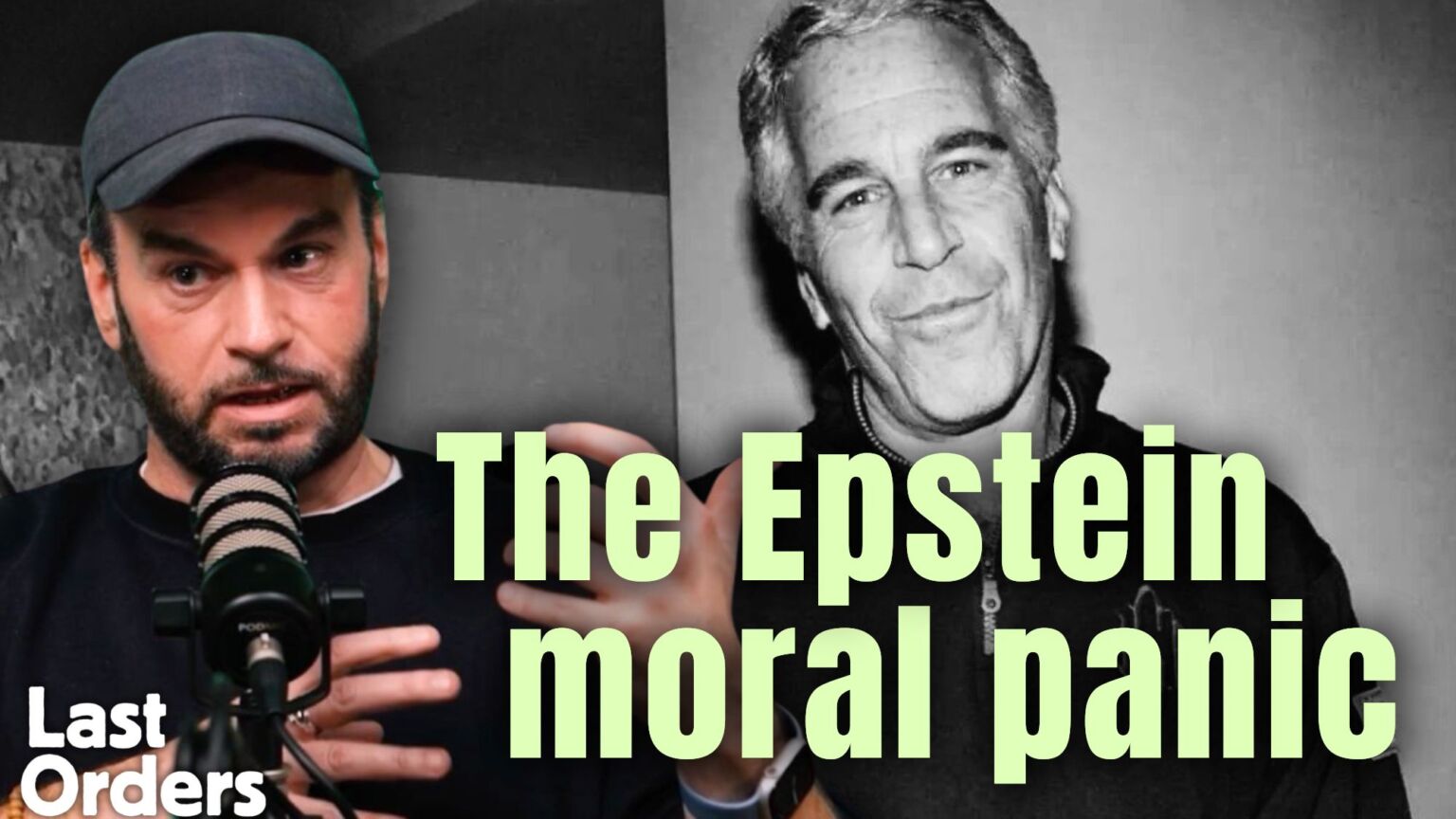
Is the Epstein scandal becoming a moral panic?

Published

on

Is the Epstein scandal becoming a moral panic?

The post Is the Epstein scandal becoming a moral panic? appeared first on spiked.

Source link

Continue Reading

Politics

Actor Awards 2026: All The Red Carpet Photos You Need To See

Published

on

Actor Awards 2026: All The Red Carpet Photos You Need To See

Some of the world’s most recognisable and beloved performers came together on Sunday night to find out who had been honoured by their peers at the 2026 Actor Awards.

The latest awards season stop – previously known as the SAG Awards, until a recent name change – recognised the most revered performances on both the big and small screen from over the last 12 months.

And yes, that meant an especially glittering red carpet.

Advertisement

Among this year’s A-list guests at the Actor Awards were some of Hollywood’s biggest names including the stars of hit films like Sinners, One Battle After Another, Marty Supreme and Hamnet, as well as the casts of TV smashes like Hacks, The Studio, The Pitt, The White Lotus and Severance.

Take a look at all of the must-see photos from this year’s red carpet below…

Jenna Ortega

Teyana Taylor

Michael B Jordan

Timothée Chalamet

Aimee Lou Wood

Britt Lower

Wunmi Mosaku

Jessie Buckley

Emma Stone

Parker Posey

Connor Storrie

Mia Goth

Allison Janney

Viola Davis

Chase Infiniti

Paul Mescal

Kristen Bell

Gwyneth Paltrow

Jean Smart

Kristen Wiig

Quinta Brunson

Yerin Ha

Keri Russell

Tyler The Creator

Calista Flockhart and Harrison Ford

Rose Byrne

Rhea Seehorn

Erin Doherty

Janelle James

Seth Rogen

Jack O’Connell

Adam Brody

Delroy Lindo

Delroy Lindo arrives at the 32nd Annual Actor Awards on Sunday, March 1, 2026, at the Shrine Auditorium and Expo Hall in Los Angeles. (Photo by Richard Shotwell/Invision/AP)

Mindy Kaling

Kate Hudson

Kathryn Hahn

Sheryl Lee Ralph

Megan Stalter

Claire Danes

Sarah Paulson

Amy Madigan

Ike Barinholtz

Paul W Downs

Ethan Hawke

Advertisement

Source link

Continue Reading

Politics

Politics Home | Oak National Academy: the DfE quango you’ve never heard of that’s decimating investment in UK education

Published

on

Oak National Academy: the DfE quango you’ve never heard of that’s decimating investment in UK education

Credit: DGL Images

Dan Conway, CEO


Dan Conway, CEO
| Publishers Association

Advertisement

Oak was created in the Covid-19 pandemic out of an urgent need to deliver support for our nation’s children, but with questions being asked about its scope and growth – including in the courts – now is the time for the government to take the concerns of teachers, schools leaders and the wider education sector seriously

During the darkest days of the pandemic, the publishing industry was quick to come together with the government and the teaching profession to find a way to ensure learning could continue online. Supported by then Education Secretary, Gavin Williamson, Oak’s job was to provide an online classroom with free online lessons and resources for teachers struggling to manage their remote cohorts.

Advertisement

Starting off as a charitable initiative, the then government decided in 2022 to take Oak into public ownership and create a new public body for curriculum. That quango has been backed to the tune of £53m in the last three years, public money that could have been diverted back to teachers and schools, and has become an agent of DfE state publishing, providing full sets of resources in a way that is directly replacing commercial provision.

So why does that matter?

It matters for publishers (and I declare an interest, of course) because it drives away investment. The government has set out plans for a new national curriculum by 2028. Typically, publishers would invest around £100 million in making resources for such radical change and bringing it to life for teachers and children around the country. But the industry cannot do that in a market where a public intervention like Oak is allowed to spiral in scope and delivery. Oak has caused education publishers’ investment footprint in the UK to shrink significantly – the latest Publishers Association statistics show an 11% drop in take-up year-on-year – and against the backdrop of the creative industries being a core pillar for growth in the UK’s Industrial Strategy.

Advertisement

It also matters for teachers. Teachers don’t want a single set of curriculum resources and to be boxed into one version of the curriculum. To quote Daniel Kebede (General Secretary of the National Education Union) last week: “The government must listen to educators and urgently review its support for Oak, which runs counter to its ambitions to address the recruitment and retention crisis and build a broader, richer and more inclusive curriculum for all.”

It matters for students up and down the country. Oak is providing a free offer, which is great in theory, but cannot possibly compete with the investment footprint of a properly competitive market for resources delivery. So the market is depressed, schools lose out on choice and quality, and a two-tier system is created: the well-off schools can afford a range of resources and the less well-off need to put up with the government’s free offer.

And, finally, it matters for society. Do we want to be in a situation where all of our children are taught from a government prescribed curriculum delivery body? One of the ways in which publishers can help in a world which is increasingly polarised on cultural issues is to provide choice and plurality of approaches away from direct government control.    

So, what do we need?

Advertisement
  1. We need Oak’s funding and scope sensibly curtailed in FY 2026-27. Parliamentary questions and direct approaches to officials have not yielded any transparency on funding plans for the public body this coming year.
  2. The DfE has so far refused not only to limit the delivery of Oak resources in the UK, but to take any responsible steps to “geo-block” the content internationally. This directly harms international markets and flies in the face of the government’s own international education strategy, published last month. Ministers need to act on this to stop UK taxpayers funding international education provision.
  3. The Schools White Paper, published last week, compounded the role of Oak in positioning the Arm’s Length Body as both advising on and hosting the new national curriculum in the latest of a number of conflicts of interest inherent in its birth and development. The DfE’s relationships with Oak were cosy from its beginning and ministers need to make sure that those conflicts of interest are addressed urgently.

Fundamentally, it’s high time for ministers to get a grip on the quango’s role in UK education before it’s too late.

It’s beginning to harm the department and the government’s reputation. Last week the Publishers Association, among other claimants, defeated the DfE in the High Court in adding an additional ground to the live Judicial Review taken following the 2022 decision to take Oak into public ownership. A loss in the High Court on a decision taken by the previous government that’s driving a wedge between industry and the teaching profession on one side, and the government on the other? You have to ask why ministers have not taken action to resolve the issue.

Oak itself has some brilliant people with great intentions in its ranks. They are trying to do their jobs and serve the sector. But the government has systemically failed to properly address the true implications of an unrestricted Oak on education resource provision in this country. Teachers don’t want it, classrooms don’t need it, and the money would be better spent elsewhere.

This year is the National Year of Reading and the government and the publishing industry are coming together to try and tackle the reading crisis in the UK. Perhaps this year of all years, we can find a compromise and a sensible way forward on Oak.

Advertisement

Source link

Advertisement
Continue Reading

Politics

Labour must not bind Britain’s fate to the failing electoral system

Published

on

MDU logo

It’s fair to say that British democracy is in ill health. Labour has inherited rock bottom public trust in politics and a state wracked by austerity. We are working to show that government can deliver again, and this Labour government has rightly set to the task of addressing the myriad problems left us by fourteen years of Conservative government.

Much of that work is not a quick fix – it is hard yards. We know it will take at least a decade to set things right. But if the foundations of our politics are not able to deliver stability then every bit of progress we make in this parliament is at risk of being swept away. Governing under first past the post is building on sand.

At the last general election, 58% of people who voted ended up with an MP they did not vote for. Unusually, despite the overwhelming parliamentary majority it produced, that election did little to restore public trust in democracy.

With at least five parties in contention across the UK, May’s local elections are set to continue and accelerate the UK’s 60-year trend towards political fragmentation. It is neither sustainable nor democratic for governments to be elected on an ever-diminishing fraction of the popular vote.

Advertisement

Dozens of leading academics have now warned that Westminster’s voting system is headed for chaos. They are not alone. Last month, business leaders came out in favour of electoral reform. They – like we – can see it would create the political stability and consensus required to deliver the long-term investment required to address the housing crisis, the cost of living and rebuilding our trading relationships with Europe.

Labour must not be complacent about the risk of inaction. An outdated electoral system is not just a matter of fairness – it is also a critical vulnerability for interference in British politics and the security of our elections. If extreme parties can win on 30% of the vote, it lowers the bar at which international threats from dark money and disinformation begin to destabilise our democracy.

Cynics might suggest that electoral reform cannot happen without a minor party forcing Labour’s hand – and that electoral reform is just one of many negotiating chips for a coalition deal. That received wisdom is now dangerously outdated. In the 1950s, Labour and the Conservatives won over 90% of the vote. In 1997 that figure was 74%. In 2024? Just 57%.

This trend is reaching a critical tipping point. Five parties are now crammed into a two-horse race across England – six in Scotland and Wales – making elections increasingly random. First past the post is turning British elections into a gamble with the country’s future, recently described by The Economist as “Slot Machine Politics“. Treating our democracy as a bargaining chip in an age of populist anti-democratic movements would be an act of reckless complacency – one that could see British politics follow America’s descent.

Advertisement

There is another way. Labour has a proud tradition of democratic reform – we remain the only party to introduce fair, proportional parliaments across the UK in Wales, Scotland, London and Northern Ireland. This Labour government can still build consensus for an alternative, but it must do so urgently. We need a national commission on electoral reform to examine the electoral system and recommend a modern alternative to first past the post.

We must not bind our party – or the country’s – fate to a broken, unfair democratic system and this clearly failing status quo. The Westminster system is crumbling. Labour must rebuild it – or we will find ourselves under the rubble.

Politics.co.uk is the UK’s leading digital-only political website. Subscribe to our daily newsletter for all the latest news and analysis.

Advertisement

Source link

Continue Reading

Politics

Keir Starmer Faces Backlash Over UK Bases Used For Iran Attack

Published

on

Keir Starmer Faces Backlash Over UK Bases Used For Iran Attack

Keir Starmer has been accused of jumping “into yet another Middle East illegal war” after agreeing to let America use UK bases to attack Iran.

The prime minister said he was “protecting British interests and British lives” after Iran launched missile attacks on countries across the Middle East.

That came after the US and Israel bombed Iran in a wave of strikes which killed Iran’s Supreme Leader Ayatollah Ali Khamanei as well as other senior regime officials.

In a statement from Downing Street, Starmer insisted the UK was not involved in the initial attacks on Iran – and that its actions did not break international law.

Advertisement

The US will use British bases at RAF Fairford and Diego Garcia to carry out strikes on storage depots and the launchers use to fire missiles.

Starmer said: “Iran is pursuing a scorched earth strategy. So we are supporting the collective self-defence of our allies and our people in the region, because that is our duty to the British people.

“It is the best way to eliminate the urgent threat and prevent the situation spiralling further.

“This is the British government protecting British interests and British lives.”

Advertisement

But the PM’s decision has been condemned by left-wing politicians, including Green Party leader Zack Polanski.

He said: “It took just one phone call from Donald Trump for Starmer to jump into yet another Middle East illegal war, failing to learn the lessons of the tragedies of Iraq, Libya and Syria.”

It took just one phone call from Donald Trump for Starmer to jump into yet another Middle East illegal war, failing to learn the lessons of the tragedies of Iraq, Libya and Syria. https://t.co/IhCUF9XJ3m

— Zack Polanski (@ZackPolanski) March 1, 2026

Labour MPs also joined in the criticism of the PM’s decision.

Advertisement

The UK is now being drawn into a war that the UN considers is contrary to the duties international law places on states & which is a threat to international peace & security. Subservience to Trump should not be the basis of the UK’s foreign policy. Lessons from Iraq forgotten. https://t.co/yoPBzaqOhe

— John McDonnell (@johnmcdonnellMP) March 1, 2026

I am deeply alarmed that British military bases will be used in Trump’s bombing of Iran – these attacks violate international law.

The UK government should be focused on de-escalation, diplomacy and a ceasefire – that’s the best way of keeping people safe, not following Trump.

— Richard Burgon MP (@RichardBurgon) March 1, 2026

Liberal Democrat leader Ed Davey demanded MPs be given a vote on the prime minister’s decision.

Advertisement

He said: “No matter how the prime minister tries to redefine offensive as defensive, this is a slippery slope. He must not let Trump drag Britain into another prolonged war in the Middle East.

“Starmer must come to parliament, set out the legal case in full, and give MPs a vote.

“We have a duty to defend our brave British troops and citizens in the region, and that must be the focus of any operations. The UK must not be complicit in illegal military action.”

But Reform UK leader Nigel Farage said Starmer had made the right decision “better late than never”.

Advertisement

Keir Starmer has finally given the US permission to use British bases to destroy Iranian missiles. Better late than never.

The Prime Minister is a follower, not a leader.

— Nigel Farage MP (@Nigel_Farage) March 1, 2026

Source link

Advertisement
Continue Reading

Politics

Harrison Ford Accepts 2026 SAG-AFTRA Life Achievement Award

Published

on

An emotional Harrison Ford on stage at the 2026 Actor Awards

Screen legend Harrison Ford received the highest honour at the 2026 Actor Awards (formerly the SAG Awards) on Sunday night.

Before presenting the Life Achievement Award, actor Woody Harrelson described Ford as a “living legend” and a friend.

“I’m here to celebrate one of the greatest actors of all time – Leo DiCaprio,” Woody teased. “You have more talent in your little finger than I have in my little finger. Of all the actors in the world, you’re one of them. Everyone in this industry knows you.”

Woody also called Harrison a “true renaissance man”, as well as an “iconic actor, distinguished pilot and a master carpenter who built his own home”.

Advertisement

“I don’t know how to work the coffee machine, and it’s a French press,” he then joked.

An emotional Harrison Ford on stage at the 2026 Actor Awards

After a montage of Harrison’s early career moments and biggest blockbuster movies, the veteran actor delivered an emotional speech that had the entire audience hanging on his every word.

“I feel incredibly grateful for this kind attention. But to be clear, I also am quite humbled,” the Star Wars actor began before joking: “That said, it is a little weird to be receiving a lifetime achievement award at the half point of my career. It’s a little weird, isn’t it? I’m still a working actor!”

Harrison – who has nearly 90 acting credits to his name – then quipped that he was at the event to “receive a prize for being alive”.

In addition, he gave shoutouts to Star Wars creator George Lucas and Indiana Jones director Steven Spielberg, and talked about how he was not an overnight success.

Advertisement

“This is a tough business to get into,” Harrison said. “In my case, it’s a tough business to get out of. Thank God, because I love what I do.”

As he teared up on stage, he explained why he was fortunate to be a working actor.

“The stories we tell have a unique capacity to create moments with emotional connection. They bring us together,” he said.

“,So while we’re all at different stages of our lives and careers in this room, we all share something fundamental: We share the privilege of working in the world of ideas, of empathy, of imagination.”

Advertisement
Woody Harrelson and Harrison Ford at the Actor Awards.

Michael Buckner via Getty Images

Harrison concluded by offering his gratitude to those who had helped him throughout his career.

“I want to say thank you, truly, from the bottom of my heart, to my peers, [and] to my extraordinary, beautiful wife Calista [Flockhart] and my family who have given me love and courage through all of it,” he said.

During Harrison’s seven decades in Hollywood, he has tackled numerous roles that became cultural icons, including Han Solo in the Star Wars franchise and archaeologist Dr. Henry “Indiana” Jones Jr. in the Indiana Jones movies.

He’s also known for portraying Rick Deckard in two Blade Runner films, analyst Jack Ryan (Patriot Games and Clear And Present Danger) and John Book in Witness, which scored him an Oscar nomination.

Advertisement

The life achievement accolade isn’t the only honour Harrson has received.

He previously earned the Critics’ Choice Career Achievement Award (2024), an honorary Palme d’Or at the Cannes Film Festival (2023), Bafta’s Albert R. Broccoli Britannia Award (2015), the Golden Globes’ Cecil B. DeMille Award (2002) and the AFI Life Achievement Award (2000).

He has also earned an Emmy nomination for playing Dr. Paul Rhoades in the Apple TV series Shrinking.

Ahead of the 2026 Actor Awards ceremony, Harrison said he was “deeply honoured to be chosen as this year’s recipient” of the lifetime achievement prize.

Advertisement

“To be acknowledged by my fellow actors means a great deal to me,” he said.

“I’ve spent most of my life on film sets, working alongside incredible actors and crews, and I’ve always felt grateful to be part of this community.”

Watch Harrison Ford’s Actor Awards speech below:

Advertisement

Source link

Continue Reading

Politics

James Ford: The Night Czar is dead. But for London’s publicans the Night Mayor has only just begun

Published

on

James Ford: The Night Czar is dead. But for London’s publicans the Night Mayor has only just begun

James Ford is a columnist for City AM and is a former adviser to Boris Johnson during his tenure as Mayor of London.

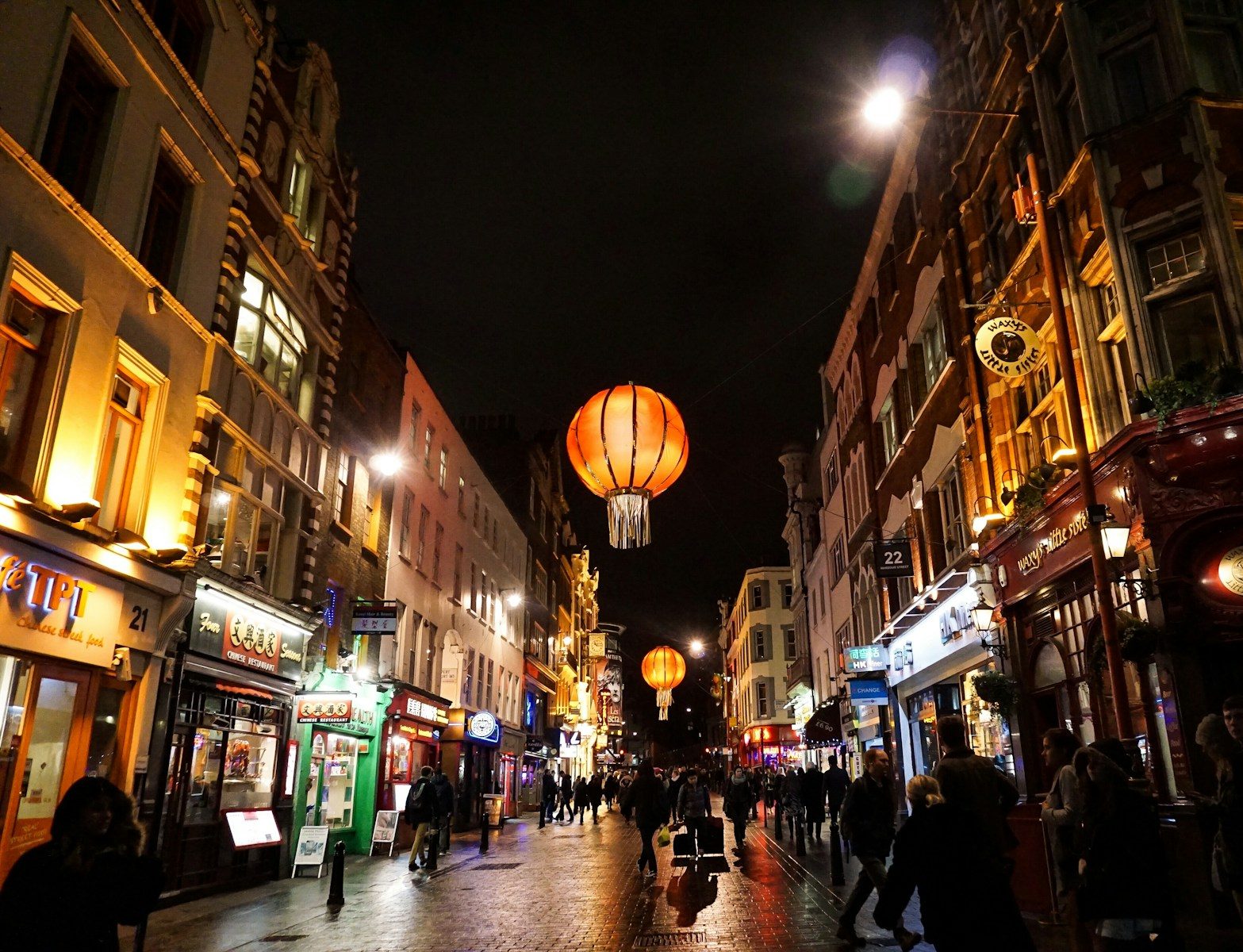
The Mayor of London’s dreaded Night Czar is no more. The post has been deleted. Permanently. This should come as no great surprise. The role was an unmitigated failure when occupied by Sadiq’s hapless appointee, Amy Lamé, and the post has sat vacant for more than a year following her resignation. We would probably raise a glass to celebrate this news, but sadly, all the clubs have closed down. (Thanks, Amy!)

Indeed, rejoicing that the Night Czar has gone the way of the Romanovs may be premature. On the recommendation of the Mayor’s Nightlife Taskforce (a committee of industry experts from across the nighttime economy) it is being replaced by a Nightlife Commission (a committee of…wait for it…industry experts from across the nighttime economy). Although the input of genuine business people with real frontline experience must surely be welcomed, it is not clear that City Hall is really taking the Commission, or the nighttime economy, seriously. The Commission has been allocated the rather miserly sum of £300,000 for its initial work, with the intention that it will ultimately become self-funded.

For comparison, £300,000 is what City Hall spent last year promoting al fresco dining. It is equivalent to the combined salary of just two of Sadiq’s nine deputy mayors. It is significantly less than the £958,000 that City Hall spent on providing stewards for the Notting Hill Carnival in 2025. Even more tellingly, £300,000 is slightly less than the total increase in business rates that would have been paid by the three London boozers (the Spread Eagle in Wandsworth, the Beaten Docket in Cricklewood, and the Dog & Bell in Deptford) worst hit by the government’s botched business rates hike prior to the recent screeching U-turn.

Advertisement

Given that the Nightlife Taskforce’s own report found that one in four working Londoners work in the evenings or at night and that the capital’s nighttime economy was worth more than £139bn in 2024, £300,000 now, and an uncertain future funded via GoFundMe and corporate sponsorship, does not really sound like it is going to move the dial much.

Whilst the capital’s overburdened boozers, bars and nightclubs should be concerned (and arguably insulted) that their future has been entrusted to an underfunded, underwhelming City Hall quango with a possibly short lifespan, this is sadly just one example of the indifference that Sadiq Khan’s City Hall has for the hospitality sector.

The sector has faced a torrid time during Khan’s tenure as Mayor. Data from the Night Time Industries Association found that more than 3,000 pubs, bars and nightclubs have closed in London since 2020. In 2024, research by Bonus Finder saw London ranked as the worst city in the UK for a night out because of the prohibitive cost of pints and hotel rooms and the dwindling number of licensed premises per 100,000 population. A further study found that just 24 per cent of all London bars, pubs and clubs were open past midnight on a Saturday night (compared to 44 per cent in Edinburgh and 38 per cent in Manchester). No surprise then that #LameLondon became a popular hashtag prior to Lamé’s departure because of public anger over the lack of late-night options in the capital. Even popular brewing brand Brewdog closed three of its London bars – in Camden, Shepherd’s Bush and Shoreditch – in July 2025. (And you know things must be bad if landlords even struggle to sell overpriced, trendy craft beers to hipsters in Shoreditch of all places).

What has London’s Mayor actually done to help the capital’s struggling hospitality sector during a decade at City Hall? He created the post of Night Czar…but gave it to a Labour Party crony. When clubs and venues continued to close at an accelerated rate, he gave that Night Czar a 40 per cent pay rise. It has taken him nearly a decade in office to get to the point where he has sourced industry recommendations on what the hospitality sector needs.

Advertisement

Was the Mayor one of the many voices that lobbied the Chancellor hard to reverse the business rates rise that licensed premises faced? Nope. Has he spoken out against the national insurance rises that are thought to have destroyed 100,000 jobs in the hospitality sector? Of course not. Is he a critic of the Employment Rights Act or the ‘banter ban’ contained within it? No, in fact he welcomed the legislation.

And it is not like Sadiq to stay quiet on issues of even peripheral relevance to Londoners. He was happy to fly to Los Angeles in 2022 to visit a cannabis farm to make the case for decriminalisation. He never shuts up about Brexit, even though it has been a decade since the referendum. He chose to use his annual keynote address to the City of London (arguably the biggest ‘state of the nation’ moment in the Mayor’s year) recently to warn of the possible dangers posed by AI in the future. But, on the fate of the capital’s historic pubs and the vital jobs they support, our mayor has been conspicuously silent. Other senior Labour figures have had the courage to speak out about the crisis engulfing licensed venues and directly challenge government policy – most notably Angela Rayner and Andy Burnham. But not London’s Mayor.

Where the Mayor has been busy on this issue it is to weaponise the crisis to his own advantage. He has been eager to use the travails of the hospitality sector to acquire new powers for himself. The devolution bill currently meandering its way through Parliament is set to grant City Hall sweeping new powers to call in strategic licensing applications and overrule decisions made by the boroughs. Worse still, he is one of many mayors set to impose a tourism tax on visitors to his city. This is set to clobber tourists visiting the capital to the tune of £350m a year.

All this is despite a lack of evidence that giving Sadiq Khan extra powers will make a positive difference. Afterall, City Hall was granted significant additional planning powers in 2010 but it has not prevented the collapse of housebuilding in London on the current mayor’s watch. And Sadiq Khan has not indicated that he will reinvest any of his tourism tax windfall in initiatives that will boost profits or ease burdens for tourism businesses.

Advertisement

When it comes to taking credit for the achievements of others when things are going well or grabbing additional powers to intervene, Sadiq Khan is always at the front of the queue, enthusiastically shouting “me, me, me”. But, when times are hard and his intervention could make a real difference to Londoner’s livelihoods or quality of life, the mayor is nowhere to be seen or heard. His much-trumpeted existing powers go unused, his high public profile remains unleveraged, and his lack of influence within his own party is vividly exposed. The crisis engulfing the capital’s hospitality industry and destroying essential jobs is not easing up or going away. If anything, it is accelerating. London needs a mayor that will roll his sleeves up and get stuck in or is at least willing to speak out on Londoners’ behalf. It’s a pity that we don’t have one.

Source link

Advertisement
Continue Reading

Politics

Regime change in Iran. Which UK political leaders are on the “right side of history”?

Published

on

Regime change in Iran. Which UK political leaders are on the "right side of history"?

That smug phrase, “the right side of history”, has always had a tiresome ring to it. It conflates winning with being morally superior. It also conveys a hubristic assumption of those using it that, as their cause is bound to triumph, there is no need to bother giving due consideration to objections. However, it is certainly true that historians will look at the current efforts to secure regime change in Iran and will offer verdicts on the actions taken by countries and their political leaders. Or not taken, as the case may be.

The British Government has got into a muddled position. It accepts that the Iranian regime and its unlamented “Supreme Leader” Ayatollah Ali Khamenei were a source of evil, not just to the Iranian people but to the rest of the world. Yet it has refused to take the necessary action to remove that evil. Or even offer support to those – the Americans and the Israelis – who were prepared to do something about. Other allies, such as the Canadians and the Australians, have expressed support. The best our government can manage is not to actually condemn our allies. Our Prime Minister has offered vacillation and equivocation when the time came for evil to be confronted. We can put the UK down as a “don’t know”. We will sit this one out. In an epic international battle by the forces of freedom and civilisation, we are passing by on the other side.

What painful viewing it made when the Defence Secretary was interviewed by the BBC yesterday. Laura Kuenssberg asked of the US/Israeli strikes:

“Does the government back what they’ve done?”

Advertisement

John Healey replied:

“Britain played no part in the strikes on Iran. We share however the primary aim of all allies in the region and the US that Iran should never have a nuclear weapon.”

Kuenssberg persisted, of course:

“This is a moment of history and everyone watching this morning will want to know, and will expect to know from their government, is Britain on the side of those two countries who have killed Iran’s supreme leader?”

Advertisement

Healey just wittered on about the need to “prevent further escalation” and to “return to the path of diplomacy.” It has been 47 years since the 1979 Iranian Revolution, during which the “path of diplomacy” has been given a pretty fair try. It has run parallel to an ever more brutal path of terrorism and oppression.

What of our other political leaders?

Sir Ed Davey for the Lib Dems offered a characteristically disingenuous response. He said that “the Iranian people deserve to live free from a brutal regime” but he opposes the liberation they have been so desperately waiting for.

At least, the Green Party and the Corbynistas don’t pretend.  The Deputy Leader of the Green Party, Mothin Ali, took part in a pro Iran regime demonstration. In an absurd twisting of reality, Jeremy Corbyn claimed that the United States and Israel were “rogue states” for taking action. He used to be paid to broadcast on behalf of the Iranian state broadcaster.

Advertisement

What of his neighbouring MP, Dame Emily Thornberry? She tweets:

“I am pleased to see the UK is not involved in these strikes on Iran. They are ill-advised and illegal.”

Ah, yes. International law. Subcontracting your conscience to that bunch of gangsters at the United Nations. No problem, providing you can get UN Security Council authorisation including from those epitomies of moral rectitude, China and Russia.

“When I use a word,” Humpty Dumpty said, “it means just what I choose it to mean — neither more nor less.” Thus it is with international law. Human rights? Rely on Cuba and North Korea to arbitrate such matters.

Advertisement

The legality of military action for the purpose of “eliminating imminent threats” – as covered by Article 51 of the UN Charter? What took the rest of the world so long? When hasn’t Iran been not merely threatening, but carrying out hostile actions, whether directly or via proxies? The Israelis have become rather familiar with the challenge. But not just them. There was an incident involving the murder of 29 Jews in Argentina, among so many other atrocities. Lord Hannan has noted that the UK, designated by the regime as “Little Satan”, has also been a target of the regime’s terrorism. That is why the contention of Rupert Lowe MP that “Britain has enough problems” and we should leave them alone is so misguided. We can not rely on them to leave us alone.

It’s not as if the Iranian regime’s denials of malevolent intent hold much credibility. “Death to America!” is a familiar approved chant which scarcely lacks ambiguity. How ridiculous that anyone should seriously claim that the rules of law is better served by allowing that criminal regime to continue wreaking havoc.

So Conservatives should be pleased that Kemi Badenoch has been robust. She says:

“I stand with our allies in the US and Israel as they take on the threat of the Islamic Republic of Iran and its vile regime. The same regime that carries out attacks on the UK and on our citizens, that seeks to build nuclear weapons that would threaten our country and that brutally repressed pro-democracy protests only months ago and murdered thousands of its own people. Under my leadership, the Conservative Party will always put our national security first and work with our allies to make the world a safer place.”

Advertisement

Reform UK supporters should similarly be proud that Nigel Farage says:

“As the American attacks against this evil regime in Iran begin, I pray for the right outcome for the wonderful Persian people…The Prime Minister needs to change his mind on the use of our military bases and back the Americans in this vital fight against Iran!”

Of course, I understand that Tony Blair’s debacle in Iraq has given regime change a bad name. It still remains a valid question as to whether leaving Saddam Hussein would really have saved lives or meant a better outcome. I think there is a danger in trying to define a “doctrine” that Donald Trump might be adopting, in terms of “America First” isolationism or neo-Conservative interventionism. Really he looks at the deal. The cost-benefit analysis. What would advance US interest without too heavy a cost in blood or treasure? US interests do not mean hiding under the duvet and hoping the rest of the world will go away. The chants in support of Reza Pahlavi, the Iranian Crown Prince, offer hope that restoration of a constitutional monarchy offers a prospect of unity and stability, while a transition to a Parliamentary democracy and market economy is pursued.

Given the shameful and pitiful irrelevance of our own Government during these momentous events, it might seem parochial to focus on the thoughts of our own politicians. But it does clarify what they stand for. Those appeasers of the Ayatollahs who are self-styled “progressives” should be treated with derision. Those are not a cohort unique to our generation or our country. The present endeavour is to remove Jimmy Carter’s legacy, after all. Still, they deserve to suffer what those in HR call “reputational damage.” However uncertain history may be, they will be on the wrong side of it so far as the long-suffering Iranian people are concerned.

Advertisement

Source link

Continue Reading

Trending

Copyright © 2025