

Politics
Luke Graham: Gorton’s lesson is not to take the easy negative option but the harder positive opportunity


Luke Graham was the Conservative Member of Parliament for Ochil and Perthshire South from 2017 to 2019, the candidate in Perth and Kinross-shire in 2024, and a former head of the Downing Street Union Unit.
While Iranian airstrikes and the latest developments in the Epstein files continue to dominate headlines, the result of the Gorton & Denton by-election deserves a second glance, looking beyond the Green’s headline victory.
This by election was not merely a local contest. It offered a snapshot of the unsettled and volatile condition of British politics in 2026 — and a warning about the direction of our modern election campaigns.
The Green Party’s victory was undeniably striking. Labour, despite clear voter frustration, still mobilised close to 10,000 votes. Reform UK, which had publicly signalled strong confidence of victory, secured just over 10,000 but fell short. The Conservatives and Lib Dems were never really contenders for this seat. Taken together, the numbers suggest three important conclusions.
First, Reform’s support, though real, may well have reached a ceiling. National polling continues to show Reform ahead, yet the party has now underperformed in successive by-elections and has fallen more than eight points from its November high-water mark. By-elections are imperfect barometers, but they do test GOTV ability and voter motivation. Reform’s difficulty in converting polling strength into parliamentary wins raises a serious question about whether it really can covert high polling percentages into a large swathe of seats in the House of Commons.
Second, Labour’s position is fragile but not collapsed. Even amid significant dissatisfaction with the government, Labour retains an organisational machine capable of turning out votes. That matters in marginal contests.
Third — and most troubling — the manner of this campaign may prove more consequential than the result itself.
The Gorton & Denton contest was bruising.
Personal accusations surfaced early. Nigel Farage publicly alleged links between the Conservative candidate and an LGBT charity in a manner that was, at best, misleading. The Reform candidate faced allegations of misconduct and locally Labour and the Greens went heavy on the doorsteps.
But it was the Green Party’s campaign tactics that marked a potentially more significant shift. A targeted Urdu-language video featuring images of Kier Starmer alongside Indian Prime Minister Narendra Modi was plainly designed to target a local Muslim community. The advert urged voters to “punish” Labour for its stance on Gaza, implicitly suggesting sectarian alignment. This was not accidental phrasing. It was calculated messaging.
There is nothing new with political parties tailoring communications to different communities. However, what makes this case distinct is the explicit framing of electoral choice along ethnic and religious lines, particularly in the context of an international conflict. This is not merely sharper campaigning; it is the normalisation of targeting voters along ethnic and religious grounds.
This kind of approach by the Greens would have been unthinkable under Caroline Lucas, who’s leadership of the Green Party focused on the climate, tackling inequality and pro-EU arguments. The tactics deployed in Gorton & Denton represent a departure from that tradition. They move the Green party into terrain historically occupied by more overtly nationalist movements — including elements of SNP and Plaid Cymru strategy — where identity becomes the organising principle of electoral competition.
This shift should concern us as Conservatives not simply because it benefits a rival party, but because of its broader implications for our democracy. Just as the 2014 Scottish and 2016 EU referenda became totemic political moments, reshaping party alignments and entrenching identities for years, religious campaigns risk creating similar hardened blocs within constituencies. Short-term gains can produce long-term fractures and build political tribalism.
Although the Greens are guilty in this instance, it’s important to remember that it was only a few months ago that Robert Jenrick turned up on a street in Birmingham, far from his constituency, to use local deprivation as a backdrop and evidence for divisive rhetoric. Ambitious politicians of all political stripes are not immune from the temptation of this kind of “emotion first” politics.
But this is what happens when a political system has been as battered as ours; selfish politicians have used national strife and instability as political opportunity, acting in recklessly unprepared way with poor results. When voters lose faith in large national projects — large scale infrastructure, productivity growth, defence renewal, or economic transformation — campaigns increasingly pivot toward emotional mobilisation. Outrage substitutes for vision.
This is the deeper lesson of Gorton & Denton. The volatility of Reform’s vote share, Labour’s fragility, and the Greens’ resort to identity-based messaging all point to a political environment hungry for conviction but starved of credible national direction.
For Conservatives, this presents both a danger and an opportunity.
The danger is obvious: fragmentation of the centre-right vote, further erosion of civic cohesion, and a political culture driven by grievance rather than aspiration. Reform’s rhetoric thrives where voters feel unheard. Identity politics flourish where national purpose is absent.
The opportunity lies in rebuilding something more durable.
Having been humbled in the 2024 General Election, our party has the rare political space to reconstruct its offer. The task is to articulate a compelling national project — one that addresses economic dynamism, defence resilience and social mobility without resorting to sectarian shortcuts.
As developments in the United States and elsewhere demonstrate, it is possible to win power and simultaneously deepen division. Britain, at a moment of international instability and economic uncertainty, cannot afford to further fracture our people or state.
Gorton & Denton was a by-election. Its parliamentary arithmetic is minor. Its cultural implications are not. If politics continues to descend into ever narrower identity politics and escalating grievance, the fragmentation of our party system will accelerate.
Any politician knows the importance of winning an election – if you don’t win, you’re not in. But in the rush for victory, all parties should consider the profound and lasting impact of their campaigns on our communities – we should not abandon the key tenants of our culture and democracy to win individual battles, but ultimately lose the war for the soul and cohesion of our country.


Tommy Birch is a behavioural scientist and Leadership Advisor at House of Birch, a local councillor and CPF Area Leader for Hertfordshire.
Britain’s housing debate is often a theatre of convenient myths. One of the most persistent is the idea that our country is cleanly divided into a righteous tribe of “Builders” and a selfish cohort of “Blockers”. In this narrative, the NIMBY is a fixed character: irrational, anti-growth, and fundamentally anti-young. It is a comforting story for politicians because it turns a complex national crisis into a simple moral binary of good versus greed.
It also happens to be wrong. As the party’s current CPF consultation paper on the Housing Crisis notes, the public is not uniformly opposed to building. Polling consistently reveals a far more awkward truth: support for new homes “in principle” often outweighs opposition. Yet, the moment a spade hits the ground, the silent majority vanishes and local resistance dominates the planning process. This is the great housing puzzle: if the majority accepts the need for development in theory, why does NIMBYism win in reality?
The answer is uncomfortable because it suggests that NIMBYism is more than a failure of information and planning law. It is a predictable response produced by the very architecture of human nature. If we are to achieve the national renewal we must first move beyond “better persuasion” and embrace a more sophisticated, biopsychosocial lens to solve what is, at its heart, a behavioural phenomenon.
To understand the NIMBY, we must first look at the biological layer of the problem. A human being is not primarily a truth-seeking machine; we are threat-reducing machines. For most of our evolutionary history, “change” in one’s immediate environment was rarely a harbinger of prosperity; it was usually a sign of danger.
When a large-scale development is proposed, it is not experienced as an abstract national project but as uncertainty landing on one’s own street. Uncertainty activates stress responses that narrow attention and increases risk aversion. In this state, people naturally prefer predictable problems to uncertain improvements. Academics like Helen Bao have explored this through the lens of “loss aversion,” but a biopsychosocial approach goes deeper, recognising that there is an underlying physiological defence mechanism. When the planning system triggers a threat and responds only with cold facts, it creates a misalignment that only hardens resistance.
The second mistake we make is a psychological one: misreading opposition as mere selfishness. Many opponents of development do not experience themselves as “blockers”, they feel they are defending something worthwhile: community, character, and standards. This is what psychologists often call “identity work”. People rarely defend a technical position on housing; they defend what that position protects: their sense of place and their self-image.
This is why the debate is so resistant to data. The conflict is not over numbers; it is over meaning. Once an issue becomes tied to identity, such as the perceived duty of a Conservative to “protect the green belt”, changing one’s mind is no longer a matter of accepting new facts, but of abandoning a deeply held sense of purpose. Katherine Einstein, who have written extensively on the matter, correctly identifies how “Neighbourhood Defenders” capture the planning process, however she often misses the psychological reality that for these residents, resistance is a form of stewardship, however poorly it may serve the national interest.
Finally, we must consider the social layer. Planning battles are not just private preferences expressed publicly; they are social contests. People watch each other, coalitions form, and status is conferred on those seen as protectors of the community. Research in social psychology suggests that when people engage within these like-minded groups, their opinions become more entrenched rather than more open.
The current planning system systematically rewards this socialised objection while penalising support. Those who oppose developments are highly motivated and visible, while the supportive majority stays silent. In this environment, local councillors respond rationally to the signals they receive. If the Right wants to build again, it must stop arguing with human nature and start designing a system that rewards different behaviours.
This is where the vision of Sir Simon Clarke and Build for Britain becomes so vital. By advocating for a pro-growth, pro-ownership agenda, they are seeking to restore the British dream of a property-owning democracy. But to achieve this, we must move from a strategy of “persuasion”, the endless leaflets and consultations that only provide a stage for opposition, to a strategy of design.
A strategy founded in biopsychosocial understanding of the issue means changing the sequence of engagement. We must reduce the perceived biological threat before we make the economic case. This means moving towards models like “Street Votes” or community-led design codes, ideas championed by Sir Simon, that give residents the agency of the “creator” rather than the victim. When people have a hand in the creation of beauty and the mitigation of impact, the threat-response is replaced by a sense of ownership.
Furthermore, we must change the framing. Development presented as “meeting targets” invites resistance, but development framed as strengthening a community invites cooperation. Language that emphasises continuity and stewardship lowers the psychological bar for acceptance.
The CPF consultation rightly asks how the party can address the challenges facing prospective homeowners. The answer lies in realising that home ownership is the greatest engine of social mobility we possess. Yet, for too long, the party has been caught between national necessity and local revolt.
Treating NIMBYism as a planning technicality is no longer tenable. It is a lived political crisis that is shaping the political allegiance of a generation. NIMBYism is not proof that the public is unreachable; it is proof that policy-makers have ignored a fundamental rule: if you want different behaviour, you need a different system.
Behavioural insight is not a “nice-to-have”; it is a fundamental part of the machinery of government. As Margaret Thatcher famously observed, “the facts of life are conservative”. If we are to build for Britain, we must start by taking human nature seriously. Our housing crisis will not be solved by louder arguments, but by a strategy that finally aligns the instincts of the individual with the renewal of the nation.

Ever since I’ve learned that some Italians add baking soda as well as sugar to tomato sauce to lessen its acidity, I’ve never gone back. The same goes for “salamoia Bolognese,” a herb mix that put my “Italian seasoning” to shame.
And while I’m very much on the pro-garlic side of Italy’s allicin divide, I’m pretty sold on the country’s subtler “aglio in camicia” approach in some dishes.
What does “in camicia” mean?
The technique, which literally translates to “in a shirt”, involves frying garlic with its skin still on.
Then, you remove the clove after it’s imparted the olive oil with its flavour.
It gives the cloves a “delicate, sweet and smoky flavour” (Iand saves you time), Roman chef Emiliano Amore shared on Instagram Reels.
In Italian food vlogger Ilaria’s TikTok video, meanwhile, a cook said, “The garlic is useless if you don’t put it with the skin. The skin has all the flavour”.
Because the flavour is gentler and less bitter, it can’t overwhelm dishes like seafood.
Chef David Rocco said it’s perfect for cooking garlic at higher temps, too.
Speaking to cookware company Ruffoni, he said the skin “covers the garlic so it doesn’t get burnt”, calling it “the best way to get that garlic flavour, but not that bitter… burnt flavour”.
Italian restaurant Angelini Osteria called the technique a “classic Italian cooking method”.
How can I make “aglio in camicia”?
Simply add garlic cloves to olive oil over medium heat (bash them first for extra flavour if you like) and cook for five minutes, until golden brown.
This can happen while you’re cooking meat for at least the amount of time it takes for the garlic to turn brown, too.
Some like to eat the insides of the cooked cloves separately. But for the dishes themselves, the flesh never becomes a part of the dish; garlic skin infuses the oil instead.
Which dishes suit “aglio in camicia”?
If you don’t want the flavour of garlic to overpower your food, the method is perfect.
That may be the case for seafood (Angelini Osteria uses the technique for an octopus dish), but it works for simpler dishes too.
It makes for a pretty great spaghetti dish, for instance. One recipe relies only on oil, a garlic clove, spaghetti, red peppers, and salt for a satisfying meal.
And because of that protective skin, it works when you’re searing meat, fish, or veggies, too.
4 min read
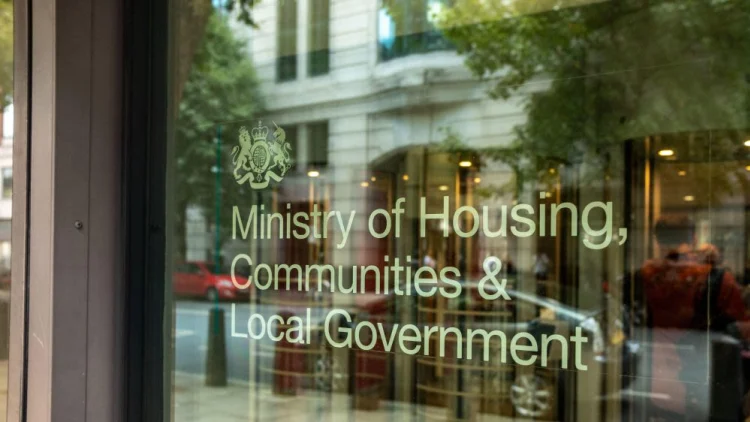
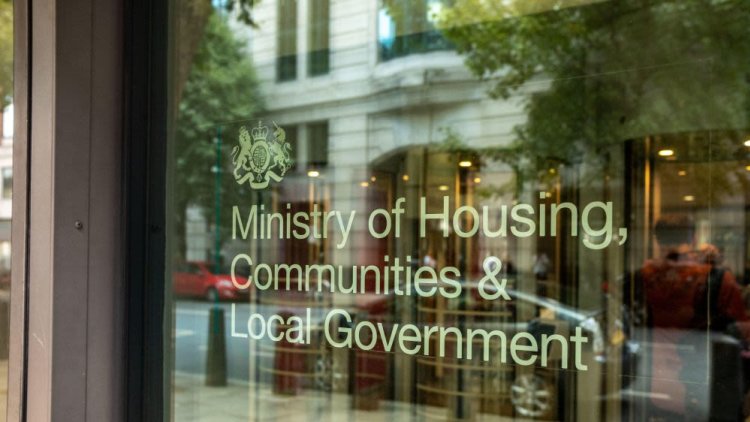
Whitehall should look to local government as a model for embracing AI.
The Ministry of Justice has sent a clear signal to the legal world: the era of the dusty ledger is over. The government is, rhetorically at least, leaning into the potential of technology to tackle the Crown Court backlog, as it has in other departments. As a founder who has spent years building tools to navigate these very challenges, I back the intent.
It’s a vision the Prime Minister feels strongly about.
He has publicly shared his frustration with the culture of paper files during his time running the Crown Prosecution Service. I’ve spoken with him directly about the truly transformational potential home grown technology has for public sector reform.
However, as any founder who has tried to sell a transformative idea to a government department will tell you, the “what” is often inspiring, but the “how” remains the bottleneck.
While Whitehall stumbles forward, there is revolution brewing in town halls. Local authorities across the UK are increasing spending on UK-born innovative technology at a rate that puts central departments to shame.
AI is increasingly being used by social care teams to create accurate, compliant social care documentation, saving over-stretched frontline workers over a day per week. Faced with the tightest budgets in a generation, councils have become the ultimate friends of innovation. Their fiscal constraints and little press coverage for their work show they don’t harness new technology to make a point or because it gives them a headline. They buy it because it secures them much-needed efficiencies, enhances their thin resources, and improves their services for the people they represent. It allows them to do more with less.
They are proving that harnessing tested and secure technology isn’t about replacing the soul of public service. It is about stripping away the administrative sludge that prevents human beings from doing their jobs.
My own experience with government procurement has been a mixed bag, which is a sentiment shared by many in the tech ecosystem. On one hand, there is a genuine desire to engage with SMEs. On the other, state machinery still favours the safe, the slow, and the scale of legacy providers.
The centre of government talks a good game about harnessing technology in its quest to bring services closer to people. In some areas, there’s been decent progress. The use of Claude in the gov.uk app is one. But there is a massive opportunity being missed by treating tech as a procurement exercise rather than a partnership. To truly reform public services, we must move beyond the buyer-vendor dynamic. We need a system that values the speed of a startup and the sovereignty of British-built AI, rather than one that bogs us down in eighteen-month tender cycles that risk outliving the technology itself.
This byzantine system is not only holding back government ambition. It also risks undermining the ambition of UK tech founders. Many of my fellow founders are ramping up focus on selling technology in the US, Europe and Australia, where it is already driving public service reform. It is somewhat absurd that UK tech is driving efficiencies in over a dozen countries around the world before Whitehall wakes up.
Political will is needed to demand change in the boiler room of Whitehall.
The whole of the UK tech ecosystem has ideas about how to jump this barrier, including changes to the procurement process so specialist startups can compete; increased risk tolerance, accepting that not every pilot will work, but the ones that do will save billions; and a call for buying in proven technologies to be considered on level pegging with building from scratch in-house.
Systemic change is needed, but the first step is in many ways far simpler. We need to ensure Whitehall allows a turbocharged AI-enabled reform of services, to be accompanied by a celebration of UK innovation. UK plc stands ready.
Alex Stephany is founder and CEO of Beam
Politics
Kemi Badenoch: “Targeting voters on the basis of their ethnicity or religion is neither healthy or British”


Brit Award winner Jacob Alon made a display of solidarity with Palestine during Sharon Osbourne’s speech at this year’s ceremony.
On Saturday night, Jacob attended the 2026 Brits at Manchester’s Co-Op Live arena, after becoming the latest recipient of the coveted Critics’ Choice prize, recognising emerging British talent.
Towards the end of the ceremony, Sharon delivered a speech to honour her late husband Ozzy Osbourne, in commemoration of his posthumous Lifetime Achievement win.
During Sharon’s speech, the Brits’ cameras panned to Jacob in the audience, who was seen holding up a Palestinian keffiyeh at their table.

In recent years, both Sharon and Ozzy had repeatedly made headlines with their vocal pro-Israel stance.
Last year, months before his death, the Black Sabbath frontman and his wife were two of 200 public figures who co-signed an open letter calling for an investigation into supposed anti-Israel bias at the BBC.
Sharon, meanwhile, had previously voiced her belief that the Irish musical group Kneecap should have their US work visas revoked over remarks they made in support of Palestine at the Coachella music festival in 2025.
Jacob is a staunch supporter of Palestine, and as part of their performance at the Mercury Music Prize last year, they sang “Free Palestine” during a rendition of their song Fairy In A Bottle.
Meanwhile, earlier in the ceremony, many Brit Awards viewers voiced their upset on social media when the awards show appeared to censor an acceptance speech made by Geese musician Max Bassin, in which he said: “Free Palestine, fuck ICE, go Geese.”
It was later indicated to HuffPost UK that this censorship was due to Max’s strong language after his pro-Palestine message, rather than his speech’s political content.
!function(n){if(!window.cnx){window.cnx={},window.cnx.cmd=[];var t=n.createElement(‘iframe’);t.display=’none’,t.onload=function(){var n=t.contentWindow.document,c=n.createElement(‘script’);c.src=”//cd.connatix.com/connatix.player.js”,c.setAttribute(‘async’,’1′),c.setAttribute(‘type’,’text/javascript’),n.body.appendChild(c)},n.head.appendChild(t)}}(document);(new Image()).src=”https://capi.connatix.com/tr/si?token=19654b65-409c-4b38-90db-80cbdea02cf4″;cnx.cmd.push(function(){cnx({“playerId”:”19654b65-409c-4b38-90db-80cbdea02cf4″,”mediaId”:”0d2116b2-73ae-4559-bd30-a65a05490593″}).render(“69a59a55e4b0d383f5041e83”);});

Iran says it has bombed wanted war criminal Benjamin Netanyahu’s office in Israel. The Islamic Revolutionary Guard Corps are also claiming that they have attacked the Israeli air force headquarters.
Palestine Chronicle reported that:
According to Tasnim News Agency, the Public Relations office of the Islamic Revolutionary Guard Corps announced that the office of Israeli Prime Minister Benjamin Netanyahu and the location of the commander of the Israeli air force were attacked in what it described as “targeted and surprise attacks.”
The Times of Israel has reported that:
Israel says there were no injuries in the strikes.
And, Netanyahu’s office have dismissed Iran’s claims that the “fate” of the Israeli PM is unclear. As yet, details remain entirely unclear – Iran’s assertions have not been verified, nor has Netanyahu’s location.
At the weekend, Netanyahu – along with various co-criminal Western leaders – crowed about the assassination of Iranian leader Ali Khamenei and his family. It’s hard to argue that turnabout is not fair play. However, it will be no surprise to see Keir Starmer and other ‘leaders’ condemn Iran for ‘disproportionately’ retaliating for what Israel did to it – just as Starmer did on 1 March after the US and Israel slaughtered Iranian schoolchildren and bombed hospitals.
Featured image via the Canary

Watching hacks tried a few questions on Mandelson, now out on bail, as he left his home and entered a waiting black cab. No dice…

The US military has admitted that its ally Kuwait shot down three US fighter jets that crashed in Kuwait in a so-called ‘friendly fire’ incident.
Footage of one of the fighters as it crashed also appeared to show pilots ejecting via parachute. The BBC reported that:
US Central Command has just now said three of its F-15 jets “flying in support of Operation Epic Fury” – the US operation against Iran – “went down over Kuwait due to an apparent friendly fire incident”.
All six crew ejected safely and have been recovered, it says.
The news is a massive embarrassment for the US, though it may suggest its other allies may have taken a leaf out of Israel’s book. The genocidal colony murdered hundreds of its own people on 7 October 2023 under its ‘Hannibal directive’. This was admitted by former Israeli defence secretary Yoav Gallant and has been common knowledge in Israel since a few weeks after it happened. Israel also killed the Bibas family, three escaping Israeli captives and numerous other Israelis in Gaza.
However, UK and other western media continue to ignore both facts.
Featured image via

Donald Trump has said he is “very disappointed” in Keir Starmer for not initially allowing the US to use British military bases to strike Iran.
The White House wanted to use the UK-US base in Diego Garcia – part of the Chagos Islands – to launch its attacks against Iran on Saturday, but the UK government refused.
The US president told The Telegraph that such a rejection had “never happened between our countries before”.
He said it “sounds like” Starmer was “worried about the legality” of using the base.
The prime minister then announced last night that Britain had allowed the US to use UK bases for “defensive” purposes to strike storage depots and missile launch sites in Iran.
However, Starmer made it clear the UK would not be getting involved with the offensive elements of this conflict.
In a video statement, Starmer suggested this move would allow Britain to adhere to international law.
Trump, who has recently U-turned on his previous support for the UK’s deal to hand sovereignty over Chagos to Mauritius, claimed Britain’s plan is a “very woke thing”.
“It would have been much better on the legal front if he just kept the ownership of the land and not given it to people that weren’t the rightful owners,” the president claimed.
While Labour want to give the archipelago to Mauritius, it has also proposed paying £99 billion lease over the next 99 years which would allow the Diego Garcia base to operate as usual.
However, Trump’s criticism of the deal last week saw minister Hamish Falconer admit the government had “paused” its plans while discussing it further with the US.
The president said: “All of a sudden [Mauritius] was claiming ownership. He should have fought it out and owned it or make him take it, if you want to know the truth. But no, we were very disappointed in Keir.”
Trump claimed Britain should have allowed the States to use Diego Garcia from the start because Iran is responsible for killing “a lot of people from your country”.
The Conservatives’ shadow foreign secretary Priti Patel said Trump’s reaction was “no surprise”.
She said: “The Labour government’s response to the crisis in Iran has been shameful.
“We should have been supporting our allies, not making it harder for them. Even now Starmer is still trying to sit on the fence, which is a complete failure of leadership.
“This is another reminder that Starmer’s Chagos surrender is not in our national interest. When I was in Washington last week, everyone I spoke to was critical of the deal. It is undermining the Special Relationship and should be scrapped.”

Tommy Birch: The architecture of human nature and how you solve the NIMBY problem

Man dual-wielding axes ‘sets Cane Corso on three police officers’ | News UK

Aave’s “Aave Will Win” Proposal Passes Temp Check, Advancing Governance Shift


-

 Sports7 days ago
Women’s college basketball rankings: Iowa reenters top 10, Auriemma makes history
-

 Politics7 days ago
Nick Reiner Enters Plea In Deaths Of Parents Rob And Michele
-

 Fashion3 days ago
Weekend Open Thread: Iris Top
-

 Business6 days ago
True Citrus debuts functional drink mix collection
-

 Politics4 days ago
ITV enters Gaza with IDF amid ongoing genocide
-

 Tech1 day ago
Unihertz’s Titan 2 Elite Arrives Just as Physical Keyboards Refuse to Fade Away
-
Sports2 days ago
The Vikings Need a Duck
-

 Crypto World6 days ago
XRP price enters “dead zone” as Binance leverage hits lows
-

 NewsBeat5 days ago
Cuba says its forces have killed four on US-registered speedboat | World News
-
 NewsBeat2 days ago
Dubai flights cancelled as Brit told airspace closed ’10 minutes after boarding’
-

 Tech6 days ago
Unsurprisingly, Apple's board gets what it wants in 2026 shareholder meeting
-
 NewsBeat5 days ago
Manchester Central Mosque issues statement as it imposes new measures ‘with immediate effect’ after armed men enter
-
 NewsBeat2 days ago
The empty pub on busy Cambridge road that has been boarded up for years
-

 NewsBeat1 day ago
‘Significant’ damage to boarded-up Horden house after fire
-

 NewsBeat2 days ago
Abusive parents will now be treated like sex offenders and placed on a ‘child cruelty register’ | News UK
-
 NewsBeat6 days ago
Police latest as search for missing woman enters day nine
-

 Entertainment7 hours ago
Baby Gear Guide: Strollers, Car Seats
-

 Business4 days ago
Discord Pushes Implementation of Global Age Checks to Second Half of 2026
-

 Business4 days ago
Only 4% of women globally reside in countries that offer almost complete legal equality
-
 Tech3 days ago
NASA Reveals Identity of Astronaut Who Suffered Medical Incident Aboard ISS