DWP plans to increase the length of awards for people making new PIP claims
Linda Howard Money and Consumer Writer and Kate Lally
11:51, 02 Mar 2026
The UK Government plans to extend the length of awards for people making a new claim for Personal Independence Payment (PIP) from April in order to help reduce the backlog of Work Capability Assessments (WCA). The Department for Work and Pensions (DWP) said the measure is designed to free up health professionals to conduct more face-to-face assessments and complete additional WCA reassessments.
Currently, the interval between PIP award reviews can be as short as nine months and the majority of people do not experience a change in their award at review. This is to be lengthened for most PIP claimants aged 25 and over to a minimum of three years for a new claim, increasing to five years at their subsequent review if they continue to be entitled.
Advertisement
These operational changes are separate from the Timms Review, which will examine the role of PIP, eligibility for the daily living and mobility components, assessment process and the criteria in supporting disabled people to achieve better health, higher living standards and greater independence.
The new measure in April will come into force alongside modifications to Universal Credit that narrows the gap between what people receive for being unemployed compared to long-term sickness. The alterations will see the UK Government fulfil a pledge it made in the Pathways to Work Green Paper to increase face-to-face assessments after they were suspended due to the Covid-19 pandemic, with contracts agreed by the previous government requiring 80 per cent of assessments to be completed virtually.
The proportion of face-to-face assessments will be increased, with those for PIP rising from 6 per cent in 2024 (57,000) to 30 per cent of all assessments, and the WCA from 13 per cent in 2024 (74,000) to 30 per cent, reports the Daily Record.
The UK Government said it is implementing these changes and “reforming the broken welfare system it inherited” by extending the time between assessments to check if a claimant’s condition still qualifies them for PIP, freeing up health professionals to conduct more assessments face-to-face and deliver more WCA reassessments.
Advertisement
It added: “Reassessments play an important role in taking account of how changes in health conditions and disabilities affect people over time.”
In total, the measures are expected to save the UK taxpayer £1.9 billion by the end of 2030/31 and comes alongside employment support aimed at sick or disabled people including Connect to Work, and the redeployment of 1,000 work coaches.
Secretary of State for Work and Pensions Pat McFadden recently stated: “We’re committed to reforming the welfare system we inherited, which for too long has written off millions as too sick to work.
“That is why we are ramping up the number of assessments we do face-to-face and taking action to tackle the inherited backlog of people waiting for a Work Capability Assessment.
Advertisement
“These reforms will allow us to save £1.9 billion, creating a welfare state that supports those who need it whilst helping people into work and delivering fairness to the taxpayer.”
Romanian defence ministry says radars caught Russian drone breaching air space
Romanian radar systems caught a drone breaching its national airspace during a Russian overnight attack on neighbouring Ukraine before losing contact southeast of the border village of Chilia Veche, the defence ministry said on Friday.
Romania, an EU and Nato state, shares a 650km (400-mile) land border with Ukraine and has had drones breach its airspace and fragments fall onto its territory repeatedly since Russia began attacking Ukrainian ports across the Danube river from the country.
Shweta Sharma17 April 2026 06:30
Advertisement
Russia sentences Pole who fought for Ukraine to 13 years in prison camp
A court in Russian-controlled Luhansk sentenced a Polish citizen to 13 years in a maximum-security penal colony for participating in armed conflict on the side of Ukraine, the Russian Prosecutor General’s Office said on Thursday.
The 47-year-old Pole, Krzysztof Flaczek, arrived in September 2024 in Ukraine, where he began participating in combat operations after receiving training, it said.
Russia said he received financial compensation for fighting for Ukraine. He was detained by the Russians in November 2024.
“Taking into account the position of the state prosecutor, the court sentenced the militant to 13 years of imprisonment to be served in a maximum-security penal colony,” prosecutors said.
Advertisement
Flaczek had been tried by a court in Russian-controlled Luhansk, one of four Ukrainian regions which Moscow claimed as its own in 2022 in a move Kyiv and the West rejected as an illegal land grab.
Russian courts have sentenced several western Europeans for fighting for Ukraine, including two Britons.
Shweta Sharma17 April 2026 06:15
Advertisement
Ukrainian PM says she feels optimistic of US support after visit
Ukrainian prime minister Yulia Svyrydenko left Washington on Thursday describing her talks with top US officials as “very supportive”, amid waning attention on Russia’s war as the focus has shifted to Iran conflict.
She said treasury secretary Scott Bessent backed Kyiv’s position on maintaining pressure on Russia in an interview with Reuters.
In her only interview during the visit, Svyrydenko said she urged US officials not to weaken, waive or delay sanctions imposed on Moscow after its full-scale invasion, stressing their importance in limiting Russia’s war capacity.
“I think Secretary Bessent stands with Ukraine,” she said, adding that US counterparts understand the need to tighten sanctions and prevent circumvention.
Advertisement
Svyrydenko also reiterated Kyiv’s stance that any peace deal with Russia must include firm security guarantees and a clear reconstruction plan.
“I dream that this war will end,” she said, “but with proper security guarantees and a recovery plan that allows Ukrainians to live the life they deserve.”
Shweta Sharma17 April 2026 05:45
Advertisement
Russia warns Finland and Baltic states it may invoke ‘self-defence’ over Ukraine drone strikes
Russia has warned Finland and the Baltic nations that Moscow reserves the “right to self-defence” if Ukrainian drones strike using their airspace.
Russian Security Council secretary Sergei Shoigu issued the warning to Finland, Estonia, Latvia, and Lithuania.
Sergei Shoigu, who was Russia’s defence minister at the time of Moscow’s full-scale invasion in 2022, pointed to incidents where drones crashed in Finland and the Baltic states during Ukrainian strikes on Ust-Luga, a key Russian deep-water port in the Gulf of Finland.
He said that Ukrainian drone attacks on Russia have been launched through the Baltic states via Finland.
Advertisement
“This could occur in two scenarios: either Western air defence systems are extremely ineffective… or the states in question are deliberately allowing their airspace to be used, meaning they are actively complicit in the aggression against Russia,” he said.
“In the latter case, under international law, Article 51 of the UN Charter regarding the inherent right of states to self-defence in the event of an armed attack comes into effect.”
It comes a day after Moscow warned that Europe’s support for Ukraine’s drone capabilities could bring “unpredictable consequences,” and said these countries have become part of Kyiv’s “strategic rear.”
The Baltic states have denied these accusations as false.
Advertisement
Shweta Sharma17 April 2026 05:30
Deadliest Russian aerial attack in months kills 18 in Ukraine
A Russian attack on Thursday with more than 700 drones and missiles across Ukraine has killed at least 18 people in what local officials said was the deadliest attack in months.
Officials said nine people were killed in the southern port city of Odesa, five in the central city of Dnipro, and four, including a child, in the capital, Kyiv.
Advertisement
In Russia, Moscow said a Ukrainian drone strike killed two people, including a child, in the southern Krasnodar region.
Ukrainian rescuers work at the site of heavily damaged buildings following a Russian air attack in Dnipro, on April 16, 2026, amid the Russian invasion of Ukraine (AFP/Getty)
The attacks follow a brief ceasefire over Orthodox Easter last weekend, with both sides accusing each other of hundreds of violations.
In Kyiv, air raid sirens woke residents at around 2.30 local time on Thursday (23.30 GMT Wednesday), with explosions heard shortly afterwards.
Shweta Sharma17 April 2026 05:00
Advertisement
Russia should not be the winner of the Iran war, German minister tells US
It is not in the interest of the United States that Russia is the winner of the Iran war, German finance minister Lars Klingbeil said on Thursday in Washington.
“It’s not in our interest and it cannot be in the interest of the United States,” he said in a joint statement with the finance ministers of Ukraine and Norway on the sidelines of the International Monetary Fund spring meetings.
Klingbeil said the Russian economy is growing thanks to the Middle East conflict and is making a profit from the energy situation.
Advertisement
“All the meetings here are about the question of what’s happening with the war in Iran, and I think it’s really important that we show solidarity with our friends in Ukraine,” Klingbeil said.
Shweta Sharma17 April 2026 04:30
Ukraine’s Zaporizhzhia nuclear power plant loses off-site power
Ukraine’s Zaporizhzhia nuclear power plant temporarily lost all off-site power for around 40 minutes before being restored on Thursday evening, the International Atomic Energy Agency (IAEA) said.
Advertisement
The cause of power loss is not yet known, the IAEA said in a post on X.
Shweta Sharma17 April 2026 03:59
EU set to release €2.5–2.7bn to Ukraine after reforms
The European Union is expected to disburse between €2.5bn and €2.7bn to Ukraine after its parliament completed key reforms last week, according to EU enlargement commissioner Marta Kos.
Advertisement
Speaking in Washington alongside Ukrainian finance minister Serhiy Marchenko, Kos said the EU would also move ahead with a €90bn loan package following Hungary’s election, which saw prime minister Viktor Orbán voted out of power.
Marchenko said Ukraine’s $52bn financing gap for 2026 would be covered once the EU loan is in place, though discussions are ongoing over how to bridge a projected shortfall in 2027.
Part of a high-level delegation attending the spring meetings of the International Monetary Fund and World Bank, Marchenko noted that the EU has already covered nearly two-thirds of Ukraine’s financial needs. However, uncertainty remains over whether other major governments will step up support.
“If Ukraine fails, it means all of our partners will feel this,” he said. “We cannot give even the slightest chance of failure.”
Advertisement
Shweta Sharma17 April 2026 03:54
Ukrainian drone attack kills 2 including 14-year-old, Russia says
A Ukrainian drone attack on the Russian Black Sea port of Tuapse killed two people, including a 14-year-old girl, injured seven, and sparked a large fire, Russian officials said on Thursday.
Tuapse is one of Russia’s major southern ports, serving as an oil product export hub and also handling dry bulk cargo such as coal and fertiliser. It is also home to a major oil refinery of the same name owned by Rosneft, Russia’s biggest oil producer.
Advertisement
Veniamin Kondratiev, governor of the Krasnodar region, said that an unidentified adult woman had been killed in what he called a massive attack by Ukrainian drones on Tuapse in addition to the teenager.
Drone fragments had damaged 24 private houses, six apartment blocks, two educational facilities and a music school, he added.
The Ukrainian military later said it had struck two oil depots in Russia-occupied Crimea and infrastructure in Russia’s southern port of Tuapse, Kyiv’s drone forces commander said on the Telegram app.
Alex Croft17 April 2026 03:00
Advertisement
Photos show damage after Russian strike in Kyiv, Ukraine, as residents take shelter
Residents surveyed the damage and took shelter Thursday following a Russian strike on a residential area in Kyiv, Ukraine.
This is a photo gallery curated by photo editors for The Associated Press:
But in late March 2026 – after one of the wettest winters since 1836 – the Environment Agency confirmed that eastern England the last region still in ‘recovery’ to ‘normal’ conditions.
The Mayor’s Community Fund, supporting projects across the region with grants from £500 to £30,000, closes to applications on Thursday, April 23.
Jo Coles, deputy mayor for policing, fire and crime, said: “The Mayor’s Community Fund provides valuable support for groups and organisations across the region, supporting 47 projects over the last two years.
“Last year, David Skaith, the Mayor, doubled the size of this pot, delivering more early intervention and prevention and creating more safe community spaces.
Advertisement
“If you have a project that will help to keep our communities safe and requires support, we would love to hear from you.”
The fund, focused on community safety, supports prevention and early intervention projects.
Recent recipients include the Pathfinders U17 driving course, which delivered a week of practical training at Rufforth Airfield for 36 young people and their parents.
Ian Goring, Yorkshire coordinator at Pathfinders U17, said: “We have been delighted by how many young people have signed up to attend our events.”
Advertisement
Further funding rounds will open later in the year.
To find out more information or apply, visit yorknorthyorks-ca.gov.uk.
WHAT could be nicer in spring than lunch in a peaceful green space with trees bursting into blossom and spring bulbs in full bloom?
With this thought in mind, I headed to Explore’s Reading Café at Rowntree Park to taste test their new lunch menu.
When Explore took over the café at Rowntree Park back in 2012 the vision was to create a new type of library experience, bringing together great books and great food in a beautiful and tranquil setting.
Rowntree Park Reading Café has been a huge success from the beginning, with customers valuing the mix of café and library services.
Advertisement
The café was busy, but I found a comfortable corner seat and enjoyed watching the customers – a lively mix of local residents, young families and teens (it was still the middle of the Easter holidays). I ordered a quiche with a Greek salad, and on the special recommendation of café manager Gosia, a refreshing mango matcha latte with coconut milk.
Quiche and salad at the Rowntree Park Reading Room cafe. Photo from Explore York
When my lunch arrived it was delicious – pillowy, tomato-flecked quiche with tender thin pastry and a crisp salad featuring a tasty mixture of leaves, peppers, onions and crumbled feta cheese. The latte was a real taste of spring, the matcha flavour a delightful contrast to the sweetness of the mango pulp, as well as being a visual work of art.
Susan Brook from Explore has oversight of all the Explore cafes and works with her team to make sure that menus keep up with changing tastes. She was excited to show me some of the new gluten free range she is introducing this spring, after being inspired at a recent food and drink show.
Recommended reading:
Advertisement
“We are introducing a full gluten free menu at Rowntree Park in the coming weeks, with really good quality breads”, she said “And we’ll have a new gluten-free range at all our other cafes too. I am sure our customers are going to love it, and I’m really happy that we can offer a wider range of choices for everyone, whatever their dietary needs, in all our cafes”
Serious coffee aficionados are in her sights as well, “We’ve got brand new coffee machines at York, Hungate and Tang Hall, and our new coffee supplier – Dancing Goat – will be providing a variety of speciality coffees throughout the year alongside our regular brews.”
A cosy corner at Rowntree Park Reading cafe
You can also grab an ice cream to enjoy as you wander through Rowntree Park with a wide selection from Yorvale. Flavours such as vanilla, chocolate, cookie dough, strawberry, mint choc chip, bubble gum and salted caramel are always available, with some specials over summer including red cherry, rum & raisin and coconut.
And if all those delights are not enough to tempt you, Susan is also planning a Family Fun Day at Rowntree Park on Saturday, May 23 with a specially designed treasure hunt, foodie prizes, sunflower planting, and of course, a chance to sample treats from the café.
Advertisement
Explore’s reading cafes are all designed to be welcoming, affordable spaces offering high-quality, locally-sourced products. All are family-friendly, offering children’s books and play areas, and dogs are welcome in the outdoor spaces. Four cafés are in libraries, with two standalone reading cafes at Rowntree Park and Hungate. All cafés provide free wifi and seasonal menus that include fresh, local ingredients. New menu items are introduced each month and options for vegetarians, vegans, and other dietary needs are always available. Right now, you can enjoy springtime specials including delicious quiches, salads, and wraps.
Gluten Free treats at the Reading Cafe. Photo by Explore York
Plus, with a prepaid café card, you can save 30per cent on hot drinks, or with a YorkCard you can save 10 per cent. Takeaway is available too.
Discover Explore’s Reading Cafés:
Retreat from the crowds, enjoy a quality coffee, and maybe even pick up your next great read. Even better while you’re enjoying a flat white at one of these cafés, you’re supporting York’s libraries and archives directly, as all profits go to them.
Advertisement
Rowntree Park Reading Café:
Surrounded by nature in Rowntree Park with lovely views, this vibrant café is perfect for all ages. It serves breakfast and seasonal dishes daily, and also offers a full library service with books to borrow. It’s open on bank holidays and you can even host special events here in this community-friendly space.
Hungate Reading Café:
Located within the Hungate residential area and just a short walk from the Shambles, this stylish urban café is a hidden gem. It offers hot and cold drinks, handmade sandwiches, wraps, and cakes, with a good selection of vegan and vegetarian dishes.
Advertisement
Enjoy a Yorvale ice cream at the Rowntree Park Reading Cafe. Photo by Explore York
Acomb Explore Reading Café:
This welcoming café on Front Street has a children’s area and an enclosed garden. It serves hot and cold drinks, handmade sandwiches, baked potatoes, and freshly baked cakes.
Tang Hall Explore Reading Café:
A modern, inviting café in the Centre@Burnholme with a strong community feel. It serves hot and cold drinks, handmade sandwiches, and cakes. The covered outdoor terrace is popular with cyclists, walkers, and dog walkers.
Advertisement
York Explore Reading Café:
This popular spot, inside York Explore Library, is ideal for informal meetings. It features an exhibition space with rotating art displays and offers a wide selection of drinks, wraps, sandwiches, and cakes.
Clifton Explore Reading Café:
A bright, airy café at Clifton Explore Centre with an outdoor terrace and a community-designed garden with play areas for children.
Geeta Sharma, who used to run SGF in Ferryhill which later became a Go Local, tragically died on Saturday, April 11, at the age of 67.
Geeta, who was married to husband Satish, known as Simon, was diagnosed with Motor Neurone Disease (MND) shortly after retiring in September 2023.
Alongside being at the helm of the Ferryhill shop, Geeta was also a devoted mum to six children, Nickyta, Poonam, Sheena, Misha, Karishma and Shivam.
Her daughter Sheena, 39, has paid tribute to her mum.
Advertisement
Sheena said her mum was ‘loving’ and ‘selfless’ (Image: SHEENA SHARMA)
She said: “She was more like a friend than a mum. She was really approachable with any problems we had; you were never ashamed to go to her for any advice or guidance.
“She was really loving and selfless. She always put us first and sacrificed so much in her life for all of us. She was always pushing us to do our best; she always used to say if we were one step ahead of her, she knew she succeeded in life.
“My little brother, Shivam, was the last one to graduate and she was so proud she had managed to get all the children through education.
“Shop life isn’t easy; it’s hard work and a lot of hours. We didn’t come from a very fortunate background, so we did struggle. But although my mum and dad struggled, they always put us first.”
Advertisement
Sheena’s parents owned the shop for more than 30 years and when they retired they moved to the Midlands – but not before the Ferryhill community threw a street party.
Geeta with her husband and six children (Image: SHEENA SHARMA)
Sheena said: “My mum and dad hadn’t just seen families grow up, but even saw their children have children. They were very much integrated within the community.
“The shop was like a central hub for a lot of people; it wasn’t just a place where people bought things. If anyone had any problems or concerns, it was a bit of a drop-in place.”
Sheena, who lives in Darlington, described her mum is being selfless.
Advertisement
She said: “My mum didn’t see her own mum for 16 years and when they could finally afford to go back to India, my mum sent me and my two older sisters. She was completely selfless.”
Geeta, who was originally from India, moved to the UK with her husband Satish, who was born in Nairobi, Kenya, in 1979. And Geeta was known for hosting an incredible Christmas.
Geeta was diagnosed with Motor Neurone Disease in September 2023 (Image: SHEENA SHARMA)
Geeta and Satish got married in India in 1979 (Image: SHEENA SHARMA)
“We all used to love Christmas, my mum would make it really special,” she said.
“Although we are Indian and Hindu, my parents wanted to integrate with where we lived. Christmas was always a big thing around ours. Other people used to feel confused that we would still celebrate Christmas in the same way.
Advertisement
“Our parents didn’t want us to feel isolated, but she would always make it really special. She was a really good cook.”
Geeta’s food was so good that people would always know when she was cooking. She would also cook curries for her customers too.
Geeta and Satish moved to the Midlands in September 2023, but Sheena said the North East was always home for her mum.
Geeta and Satish owned a shop in Ferryhill for more than 30 years (Image: SHEENA SHARMA)
“She would always ask me to connect with some of the customers, she used to love TikTok and Facebook. She’d send the customers messages and always wanted to hear how they were doing,” she said.
Advertisement
“She always used to say the North East felt like home. I think a large part of her heart was left in the North East.
“She missed everyone. The people in Ferryhill are so nice, they have a big heart. We didn’t realise how fortunate we were until we moved away to be surrounded by people like that.”
Following her MND diagnosis, Sheena said the entire family were devastated.
She said: “We were not fully aware of what MND was until mum was diagnosed, it is a really cruel condition. It takes everything away from a patient apart from the cognitive functions in the eyes.
Advertisement
A family wedding (Image: SHEENA SHARMA)
“She never had the time to enjoy life after working. She was really sad when we moved to the Midlands that she was not ever able to go back to Ferryhill to see the locals and the customers because of her mobility.”
And Sheena said the family were “astonished” at how many people had commented on her mum’s passing.
“It has been really nice that so many people, who we have been away from for a couple of years, still have a lot of love and respect for my mum.
“It shows how much she meant to the community and how many customers valued going into the shop to see her.
Advertisement
“We call her the queen of our family, but she literally was a little queen. She melted everyone’s heart.”
Following the news of her death, Ferryhill residents paid tribute to the much-loved former shop owner.
One said: “Such a big part of Dean Bank. Sending love to you all at this sad time, absolutely lovely lady. RIP Geeta.”
Another added: “So sorry to hear this. Geeta was lovely always had a smile for you, condolences to Simon & family.”
Advertisement
One resident said she would be missed by “so many”, adding: “I am thinking of you all at this difficult time. It is an honour to have had you in my life and I know we will cross paths again upon our reincarnation Geeta.”
Michael Harvey, general manager, said he hopes to turn the site into a “destination” venue despite saying the current state of the central market hall is “absolutely dire”.
Although all shop units around the market are now full and the street food hall is operating at 83 per cent full, other stalls in the market are facing uncertain futures.
In an update on the market’s performance to Darlington Borough Council, Mr Harvey said the majority of the market’s income comes from its two bars – The Vault and Market Tap – which are helping keep the facility afloat.
Michael Harvey, general manager of Darlington Market. (Image: Darlington Market Asset Management)
He told the council’s economy scrutiny committee: “Retailers are very cautious about committing to take on units in the market – and those who have are struggling to make it work. This is due to a combination of things: rising costs of energy, stock, and staffing.
Advertisement
“We are still competing against the convenience and value of supermarkets, retail parks and online shopping. Shoppers are increasingly looking for experiences – places to eat, drink, and socialise.”
In a bid to turn the tide, bosses are drawing up a programme of specialist events to attract new audiences. A specific focus has been placed on creating a family-friendly venue that will show men’s World Cup football matches throughout June and July.
“Our response is shifting focus from retail for the sake of retail to carefully curating the businesses that people actually use,” Mr Harvey added.
He told councillors: “Over the past year, we have phased out some of the low-quality offerings and raised the standards. We are closely monitoring the performance of all businesses within the street food hall and are working with and supporting them.”
Advertisement
Darlington Market (Image: The Northern Echo)
Market Asset Management (MAM) was tasked with improving the building in 2017 when the then Labour-led council relinquished responsibility.
It has overseen a significant redevelopment of the market, which has included creating a new street food area and an enhanced focus on hosting events to attract a younger and broader demographic of visitors.
However, the Labour and Liberal Democrat-controlled council has faced pressure to regain control of the site.
It will consist of officers from MAM, a councillor and council officer, and independent advisors from local businesses and market experts.
Despite recent closures, Mr Harvey said the market helped launch several new businesses in the town.
He added: “We have had three startups open in the market, and despite them struggling to make it work, we have nurtured them and they have moved on into the town. It proves Darlington Market’s ability as a launchpad for startup businesses.
“Darlington Market is evolving from a traditional retail space into a vibrant, experience-led destination, supporting local businesses, creating community moments, and building a more resilient financial model for the future.”
Advertisement
And council leaders remain committed to working with the market.
Chris McEwan, deputy council leader, said he is confident the market will improve over time.
He added: “The market has faced challenges. What we do as an authority is not run the market but work with it. I’m a great believer that if the market fails, we fail.”
What do you think is the solution for the future of Darlington Market? Have your say in the comments.
Magdalene Robertson believes Emma Caldwell killer Iain Packer had more victims and even struck while on holiday abroad
A woman raped by Iain Packer at the age of 15 believes his reign of terror extended to holiday hotspots abroad including the USA and Spain.
Magdalene Robertson has even contacted the FBI in America with her concerns.
Advertisement
Packer is serving life for the murder of Emma Caldwell and the rape and sexual assault of 22 other women, including Magdalene.
She says he visited Florida several times over the years including trips with his family on Boxing Day.
Magdalene gave the FBI a statement after contacting them in 2024 about Packer’s vacations in the Sunshine State.
She said:”You don’t be a serial rapist and sexual offender and say, I’m on holiday from that. Your habits go with you.
“For anything, you feel a bit more relaxed about your vices, don’t you?
“There is the fact of going to Florida and being around all these children and young people. that’s so scary in itself.
“There’s also the adult places that he would go to. We also know from the court case he used to join the sex clubs and he used to take it too far with the people who were already open-minded.
“We know that he’s committed so many rapes he’s been convicted of.
Advertisement
“There’s all the other potential victims that we haven’t heard about, it’s reasonable cause to believe that he would have attacked people in the States in Florida.”
Magdalene was indecently assaulted by Packer at 14 and raped by him when 15 in 1990 at a property in the Garrowhill area of Glasgow.
She gave up her right to anonymity two years ago when giving evidence to a Scottish Parliament Justice Committee about her experience of making a complaint against the police.
Advertisement
It has previously been reported that Packer visited Florida during the winter months including trips to theme parks like Walt Disney World.
Magdalene added:” The person I spoke to in the FBI was really polite and I told them the situation. We went over it from the beginning right to the end.
“He took down details of the police. He took the details of the court case.
“The court case was going on at the time and he took information down.”
Magdalene also claims she was told by police that they had carried out inquiries in Spain.
Advertisement
She said:”I don’t know why and I don’t know who it was, but they had a reason to go to Spain to question people.”
Magdalene says Police Scotland should be sharing what they know about Packer with the US authorities.
She added:”There an alliance between the UK and America?
“Do Scotland not owe a duty of care to the States?”
Advertisement
Magdalene also plans to hire a private investigator to probe Packer’s trips to Florida when she learns more about the places he visited.
She added: “That’s really what I want to do. I just need to find out that little bit of information.
“So if anybody’s got information to tell me exactly where he used to go in Florida.”
Magdalene believes that Packer, who was a sign erector, would be identified quite easily by other victims.
She added:” He didn’t wash, he wasn’t very clean.
“He stunk of cigarettes.
” He was small, he looked like a Neanderthal. And he’s very, very stocky.
Advertisement
“So he’s got an extremely wide neck and he’s very strong. I think he’s very distinctive, plus his accent would have stood out as well.
“We have lots of photos that could be shared and I don’t know why the police have just not handed that over to the states. “
Magdalene, now a successful renewable energy consultant, believes there are other victims closer to home.
She added: “He’s travelling everywhere, he’s going to different places, he’s in a white van.
Advertisement
“He’s working in a community. He has contracts.
“He had access. He worked in schools with children with disabilities and adults with learning difficulties.
“He had absolute access to different people.”
Magdalene, who is now in her early 50’s, believes she wasn’t Packer’s first victim and that there were others even younger than her.
Advertisement
She also believes that Packer’s victims could number in the hundreds.
Magdalene added:” He is psychopathic. You have to understand that. There’s no human side to him.
“I don’t believe that I was the first one. Not at all.
“Because the first time when he went to try and attack me he knew what he was doing.
Advertisement
“I swear to it, he’d been offending well before he even attacked me.
“There’s all the other people in my network that he approached when we were younger. There was a lot of them.
“There was basically every female, any young female. that wasn’t fully protected or didn’t have their parents with them or didn’t have somebody with them. I wasn’t the first.
“There’s many people that didn’t come forward
Advertisement
“How many hundreds would it be?”
Packer’s victim Emma Caldwell was one of seven women involved in prostitution who were murdered between 1991 and 2005 while working in Glasgow.
Her body was found in Limefield Woods near Biggar in Lanarkshire in May 2005 after she had been reported missing
Magdalene was speaking out in the latest episode of the Clyde1 podcast Beware Book, about the seven murders.
Advertisement
The title refers to a diary at a drop in centre where women like Emma logged dangerous clients’ names.
Packer was overlooked as a prime suspect in the original 2005 investigation even though he admitted taking Emma and other women to Limefield Woods for sex.
Instead senior officers focussed their attention on four Turks who were charged with Emma’s murder in 2007 but had the charges dropped the following year.
Packer then went on to carry out attacks on other women.
Advertisement
He was named as the “the forgotten suspect” in our sister paper, the Sunday Mail, in 2015 and a fresh probe began, leading to his 2022 arrest.
A public inquiry into the original investigation by Strathclyde Police has begun and is due to hear evidence later this year.
One of the cops involved in the original Emma Caldwell investigation in 2005 and who helped identify Iain Packer as a prime suspect also believes there are more victims, at home and abroad.
Former Detective Constable Stuart Hall said:”When people go on holiday, they go on holiday to relax, to let their hair down
Advertisement
“So I don’t see him going to stop any pattern of behaviour. That’s who he is.
“His campaign of violence towards women, goes way beyond my involvement.
“Prior to that, when he was a younger man, he was violent towards women. So that just seems to be who he is, how he deals with life and women.
“So, absolutely. There’ll be more in this country and I think wherever he’s holidayed. “
Advertisement
Stuart was one of a number of detectives who investigated Packer but were told by their bosses that he was not a suspect and would never be an accused in the case.
Instead they learned that the focus of the murder investigation was on the four Turkish suspects who were later cleared of any involvement in Emma’s death.
Deputy Chief Constable Alan Speirs said: “Emma Caldwell’s family have shown incredible courage and determination following her murder in 2005 and we are absolutely committed to supporting the Inquiry and getting her loved ones the answers they deserve.”
Advertisement
* The latest episode of Beware Book is available on the Rayo app, Apple, Amazon Music and Spotify.
France and Britain chair talks on Hormuz mission for when conflict ends
France and Britain are chairing a meeting of around 40 countries in Paris today aimed at planning a defensive multinational mission to restore freedom of navigation in the Strait of Hormuz once the conflict ends.
The meeting, attended in person by Emmanuel Macron, Keir Starmer, German chancellor Friedrich Merz and Italian prime minister Giorgia Meloni, will address the safety of more than 20,000 stranded seafarers and trapped commercial vessels, as well as outline military options including mine-clearance, intelligence sharing and naval escorts.
Advertisement
The initiative does not for now include the US or Iran, though European diplomats said any realistic mission would ultimately need to be coordinated with both. Britain, France and others have said joining Washington’s blockade on Iranian ports, imposed on Monday, would amount to entering the war, but have signalled willingness to help keep the strait open once a lasting ceasefire is in place.
“It can involve intelligence sharing, mine-clearance capabilities, military escorts, information procedures with neighbouring countries and more,” a senior French official told Reuters. “The resources deployed will naturally depend on the situation.”
Britain said today’s talks would feed into a multinational military planning meeting next week. China has been invited but it was not immediately clear whether it would attend.
Stuti Mishra17 April 2026 05:41
Advertisement
UN chief welcomes Israel-Lebanon ceasefire
António Guterres, the secretary-general of the United Nations, has welcomed the Israel-Lebanon ceasefire.
“I hope this will pave the way for negotiations towards a long-term solution to the conflict & contribute to ongoing efforts toward a lasting & comprehensive peace in the region”, he wrote on X Thursday night.
Rachel Dobkin17 April 2026 05:20
Advertisement
Trump hints at ‘historic’ developments in Lebanon in cryptic post
US president Donald Trump has hinted at significant developments in Lebanon without providing details, posting on Truth Social: “May have been a historic day for Lebanon. Good things are happening!!!”
The post comes as a 10-day ceasefire between Israel and Lebanon has come into effect, following weeks of Israeli strikes on Hezbollah targets. Earlier, Mr Trump said he had held “excellent conversations” with Israeli prime minister Benjamin Netanyahu and Lebanese president Joseph Aoun and planned to invite both to the White House for “meaningful talks.”
Stuti Mishra17 April 2026 05:00
Advertisement
Trump claims inflation in US caused by Iran war is ‘fake’
Donald Trump has claimed inflation in US caused by the Iran war is “fake.”
The US president called war-related inflation “fake inflation” at an event in Las Vegas Thursday local time.
Inflation surged 0.9 percent since February, according to the US government’s Consumer Price Index for March. Driving inflation is the cost of energy, with gas prices rising a whopping 21.2 percent in March.
Advertisement
After the US and Israel began launching strikes against Iran on February 28, Iran effectively closed the Strait of Hormuz, a vital oil passageway, which caused gas prices to surge.
Rachel Dobkin17 April 2026 04:40
Oil remains below $100 on Iran peace hopes as Asian stocks set for second week of strong gains
Oil prices fell below $100 a barrel, as investors grew cautiously optimistic about a near-term resolution to the Middle East war despite the Strait of Hormuz remaining closed, with Asian stocks on course for a second consecutive week of strong gains.
Advertisement
Brent crude futures fell more than 1 per cent to $98.14 a barrel and US West Texas Intermediate dropped 1.6 per cent to $93.15, after Donald Trump said the next meeting between the US and Iran could take place over the weekend, when the current ceasefire is due to expire. A 10-day ceasefire between Lebanon and Israel also went into effect yesterday.
MSCI’s broadest index of Asia-Pacific shares outside Japan slipped 0.6 per cent this morning but remained close to its highest level since 2 March, the first trading day after the Iran war broke out. The index is up 14.5 per cent in April after dropping 13.5 per cent in March, with almost all stock markets now back to pre-war levels. Japan’s Nikkei fell 0.9 per cent after hitting a record high yesterday. The S&P 500 and the Nasdaq rose to record closing highs for a second straight day yesterday.
Stuti Mishra17 April 2026 04:18
Advertisement
Israeli leader says ceasefire is ‘worse’ than status quo
Amit Sofer, head of the Merom HaGalil Regional Council in northern Israel, has said the Israel-Lebanon ceasefire is “worse” than the status quo of fighting.
“It is unreasonable for Donald Trump to tie the Lebanese arena to the Iranian arena; by doing so, he condemns northern residents to more years of a constant threat”, Sofer said in a statement shared by CNN.
Rachel Dobkin17 April 2026 04:00
Advertisement
Lebanese Army says citizens fired weapons into the air after ceasefire went into effect
The Lebanese Army has said citizens fired weapons into the air after the Israel-Lebanon ceasefire went into effect early Friday morning local time.
“Following the ceasefire agreement entering into force, a number of citizens resorted to firing into the air using military weapons and rocket-propelled grenades, thereby endangering citizens’ lives and causing damage to public and private property.
“The army command warns against this dangerous phenomenon and calls on citizens to adhere to the laws and refrain from firing under any circumstances. It also affirms that it will pursue those who fire, work to apprehend them, and refer them to the competent judiciary”, the Army said.
Rachel Dobkin17 April 2026 03:30
Advertisement
Hezbollah says it carried out nearly 60 military operations ahead of ceasefire
Hezbollah has said it carried out 56 military operations in the 24 hours before the Israel-Lebanon ceasefire took effect early Friday morning local time, Al Jazeera reported.
The Israeli military reported striking 380 Hezbollah targets ahead of the 10-day ceasefire, according to The New York Times.
Rachel Dobkin17 April 2026 03:00
Advertisement
Trump insists US economy booming despite ‘our little diversion’ to Iran
Donald Trump has insisted that the US economy is booming despite “our little diversion” to Iran.
The US president said at an event in Las Vegas Thursday local time, that the economy is even better than that of his first term “despite our little diversion to the lovely country of Iran”.
Trump painted a rosy picture for Americans struggling at the pump as the Iran war causes oil prices to surge. The national average price of gas has risen to more than $4 per gallon as Iran has effectively closed the Strait of Hormuz, a waterway that carries about a fifth of the world’s oil.
Advertisement
Rachel Dobkin17 April 2026 02:40
Israel says it struck nearly 400 targets in Lebanon in the 24 hours leading up to ceasefire
The Israeli military has said it struck 380 Hezbollah targets in Lebanon in the 24 hours leading up to the new ceasefire, The New York Times reported.
The 10-day pause in fighting started early Friday morning local time.
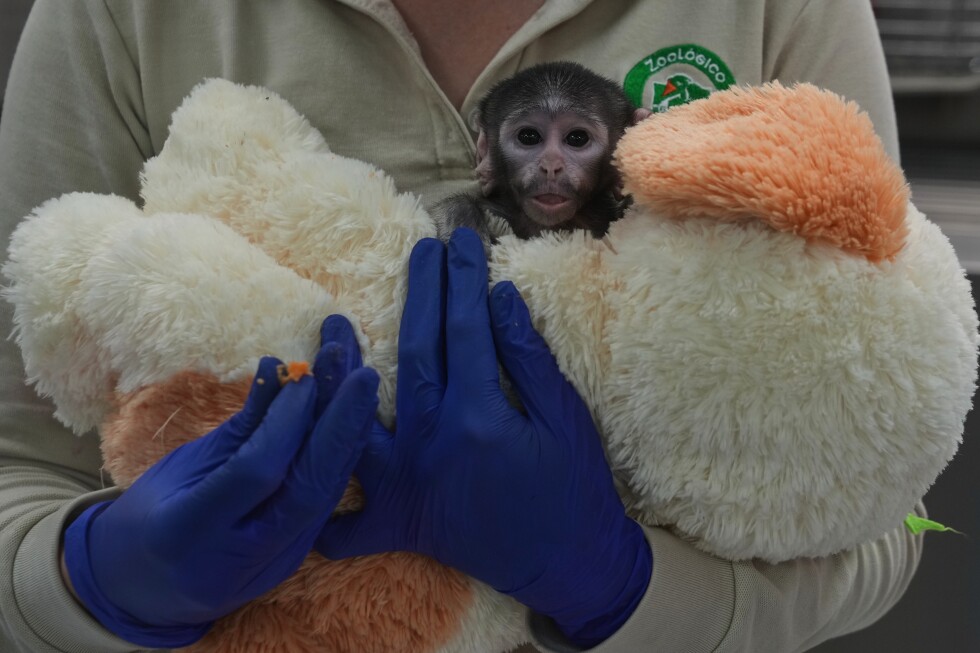
GUADALAJARA, Mexico (AP) — Yuji, a 6-week-old patas monkey in Mexico, wakes up every day clinging to a stuffed dog. More than a toy, this plush companion acts as a surrogate mom after the tiny primate was rejected by his own mother, Kamaria, a first-time parent unable to form a maternal bond.
Weighing a mere 673 grams (1.4 pounds), Yuji represents the most recent case of assisted rearing at the Guadalajara Zoo in western Mexico.
The story of Yuji has captured the attention of the Mexican public, drawing parallels to Punch, the Japanese macaque that went viral on social media after growing up clinging to a stuffed orangutan following his mother’s rejection.
Advertisement
A baby monkey named Yuji drinks milk while receiving care at a special care center at the zoo in Guadalajara, Mexico, Wednesday, April 15, 2026. (AP Photo/Refugio Ruiz)
Advertisement
A baby monkey named Yuji drinks milk while receiving care at a special care center at the zoo in Guadalajara, Mexico, Wednesday, April 15, 2026. (AP Photo/Refugio Ruiz)
Advertisement
Advertisement
Advertisement
Unlike Punch, Yuji has not yet had physical contact with other members of his species; he spends most of his time inside a monkey crate at the Guadalajara Zoo’s Comprehensive Center for Animal Medicine and Welfare, CIMBA, where he is under the care of 12 veterinarians and biologists.
Advertisement
No date has been set for Yuji’s transfer to a habitat shared by 12 other adult patas monkeys and three other infants. That will depend on when he is weaned from a milk-only diet and starts an adult diet complete with fruits and vegetables, said veterinarian Iván Reynoso Ruiz, head of the primate section at the Guadalajara Zoo. That could happen when Yuji is around 6 months old, he said.
Veterinarians take care of a baby monkey named Yuji at a special care center at the zoo in Guadalajara, Mexico, Wednesday, April 15, 2026. (AP Photo/Refugio Ruiz)
Advertisement
Veterinarians take care of a baby monkey named Yuji at a special care center at the zoo in Guadalajara, Mexico, Wednesday, April 15, 2026. (AP Photo/Refugio Ruiz)
Advertisement
Advertisement
Advertisement
Advertisement
A baby monkey named Yuji plays with with a stuffed dog that serves as a surrogate, while he receives care at a special care center at the zoo in Guadalajara, Mexico, Wednesday, April 15, 2026. (AP Photo/Refugio Ruiz)
Advertisement
A baby monkey named Yuji plays with with a stuffed dog that serves as a surrogate, while he receives care at a special care center at the zoo in Guadalajara, Mexico, Wednesday, April 15, 2026. (AP Photo/Refugio Ruiz)
Advertisement
Advertisement
Advertisement
Just hours after giving birth on March 3, Kamaria began exhibiting irregular behavior. She struggled to hold her firstborn correctly, leaving the infant unable to secure a grip on its mother.
Advertisement
After noticing a problem, keepers separated the mother from her newborn, who weighed just 443 grams (less than a pound) and required immediate placement in an incubator at CIMBA to stabilize his temperature and safeguard his health, Reynoso Ruiz said.
This was the start of the infant’s assisted rearing, a process often used by zoos to protect the health and development of at-risk offspring. A caregiver named him Yuji after a popular Japanese manga character.
During his first few weeks, Yuji was under round-the-clock supervision and was bottle-fed fortified milk.
From the start, Yuji was given a stuffed animal for comfort. Reynoso Ruiz explained that the toy fulfills the role of a mother by serving as his primary source of security. To maintain hygiene, staff rotate the original stuffed dog with two other toys — a bear and a monkey — to ensure he always has a clean companion.
Advertisement
A veterinarian holds a baby monkey named Yuji, who lives with a stuffed dog that serves as a surrogate, while he receives care at a special care center at the zoo in Guadalajara, Mexico, Wednesday, April 15, 2026. (AP Photo/Refugio Ruiz)
Advertisement
A veterinarian holds a baby monkey named Yuji, who lives with a stuffed dog that serves as a surrogate, while he receives care at a special care center at the zoo in Guadalajara, Mexico, Wednesday, April 15, 2026. (AP Photo/Refugio Ruiz)
Advertisement
Advertisement
Advertisement
To stimulate his development, caregivers outfitted Yuji’s crate with a small hammock and ropes. As he began gaining weight and sleeping for longer intervals, his team adjusted his feeding schedule. Yuji now receives the first of his four daily bottles at 7:00 a.m.
Advertisement
While the stories of Punch and Yuji have been popular on social media, some animal rights advocates oppose the practice of assisted rearing.
Diana Valencia, an animal rights activist, argues that there is no substitute for a natural habitat, and that animals “have the right to be born, grow, develop, and die where they belong.”
Responding to these criticisms, the Guadalajara Zoo’s primate expert emphasized that modern zoos provide a unique opportunity to protect species from global threats. He said the intervention was a matter of life or death, and that Yuji likely would have perished in the wild without a “second chance” at survival.
Universal Credit claimants may be entitled to some extra support and payments. The DWP has released an update regarding a grants scheme designed to assist claimants, as part of a wider package of reforms.
Advertisement
The Government issued the update in response to a written question from an MP. Liberal Democrat representative Dr Al Pinkerton asked ministers what assistance is available to help young people into employment.
DWP minister Andrew Western provided the Government’s response. He set out what support is on the way to help young people into work. The minister said: “Building on the Youth Guarantee and Growth and Skills Levy announcement at Budget, the Government committed a further £1billion for young people on 16th March 2026, taking total additional investment into the Youth Guarantee and the Growth and Skills Levy to £2.5billion over the next three years.
“This investment will support almost one million young people and create up to 500,000 opportunities to earn and learn.” He shared some details of a grant scheme designed to assist employers in taking on and upskilling younger workers.
New grants available
The minister said: “The Government is taking action to support employers to recruit and train young people, helping to unlock up to 200,000 more employment opportunities. This includes a new £3,000 Youth Jobs Grant for employers who hire 18 to 24-year-olds who have been on Universal Credit for over six months, a new £2,000 apprenticeship incentive for small and medium sized employers hiring 16 to 24-year-old, and the Jobs Guarantee scheme, providing long-term unemployed 18 to 24-year-olds with a fully funded six month job.”
Advertisement
A previous Government report indicated these grants could benefit around 60,000 young people over a three-year period. The DWP has also announced that from autumn 2026, the Jobs Guarantee will be extended to all eligible 18 to 24-year-olds who are claiming Universal Credit and have been seeking employment for 18 months.
Government guidance states: “They will benefit from 25 hours/week of fully subsidised six-month paid work. Young people on the scheme will be paid at the relevant minimum wage and also receive fully funded wrap around support.”
The minimum wage for those aged 18 to 20 currently stands at £10.85 per hour, or £12.71 for anyone aged 21 and above. At these rates, an 18 to 20 year old working 25 hours a week would take home £271.25 weekly, or £7,052.50 across six months. Someone aged 21 or over would earn £317.75 a week, or £8,261.50 over the same period.
Expanded support
Mr Western spoke about what other support is being brought in as part of the same package of reforms. He said: “The Government is delivering 8 Youth Guarantee Trailblazers in England, expanding Youth Hubs to more than 360 areas across Great Britain and introducing a new Youth Guarantee Gateway in Jobcentres.
Advertisement
“The Gateway will provide 16 to 24-year-olds on Universal Credit a dedicated session and follow-up support to help them move into work, training or education.” Further plans are also in place to bolster support in schools.
This includes widening access to work experience opportunities, as well as plans to work with local authorities to automatically enrol students into further education.






















































You must be logged in to post a comment Login