Thinking of opening a gym? Don’t expect quick money.
Running a gym in Singapore is not cheap.
When Vulcan Post spoke to Ryan Cheal, Group Chief Operating Officer of Inspire Brands Asia—the exclusive regional master franchisee of Anytime Fitness (AF)—in Jan 2026, he shared that it takes up to US$450,000 to become a franchisee of an AF gym here.
Despite the high startup costs, more gyms have been popping up across the island. As of Oct 15, 2025, Singapore had 505 gyms—a 3.05% increase since 2023. With rising fitness trends like HYROX, it’s no surprise that both individuals and operators are trying to ride the wave.
But hopping on trends doesn’t always guarantee success. The industry has also seen its share of closures, including Ritual, which abruptly shut all four of its Singapore outlets in 2024, and high-profile names like UFC Gym.
Advertisement
These examples show that even well-known brands can struggle to sustain operations in a competitive market. Even with sufficient startup capital, keeping a gym running—attracting members, covering monthly expenses, and managing unexpected costs—requires careful planning and a strong financial runway.
So what does it really cost to open and operate a gym in Singapore?
To find out, we dug into industry data and spoke with two operators: Unstoppable Fitness, a homegrown bodybuilding gym, and Snap Fitness, a US-born fitness chain with 10 outlets in Singapore (and one more at West Mall slated to open in Apr).
Opening doors is just step one
Based on industry estimates online, the startup capital required to open a gym can range between S$150,000 and over S$800,000, depending on size, location, equipment needs, and franchise fees.
Advertisement
Broadly speaking, here’s how it breaks down:
Category
Startup Investment Range
Typical Size (sqft.)
Focus
Key Calculations/Factors
1. Boutique/ Specialist Studio
S$150,000 – S$350,000
1,200 – 2,500
Personal training, Yoga, Pilates, or specialised strength.
Initial Franchise Fee: S$40,000 – S$90,000. Total Initial Investment: S$410,000 to S$650,000 (single outlet). Working Capital: Higher buffer required.
When we spoke to operators at Unstoppable Fitness and Snap Fitness, their startup costs largely lined up with these estimates.
Luke Yeo, 33, founder of Unstoppable Fitness, spent nearly S$400,000 to launch his 3,875 sqft. facility. On the other hand, Snap Fitness master franchisee Noah Oberman shared that it costs around S$600,000 to open a 4,000 sqft gym franchise. “Most gyms we’ve opened are anywhere between S$600,000 and over S$1 million,” he added.
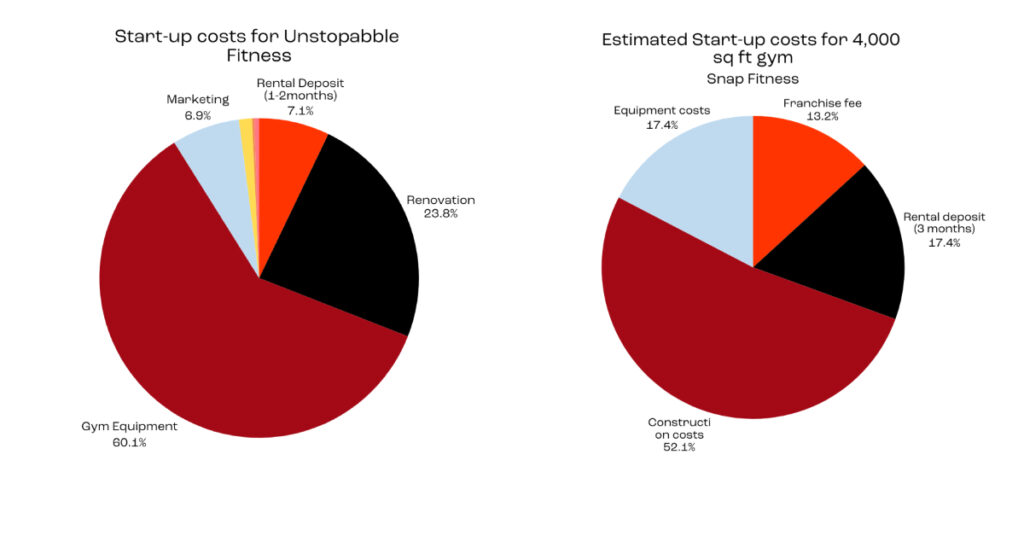
Gym equipment is one of the highest upfront costs for the two businesses, with Unstoppable Fitness spending more than half of its startup capital on machines and weights, while Snap Fitness’ equipment expenses can roughly match the rental deposit.
Advertisement
On top of that, miscellaneous inventory—from water dispensers to towels—can add thousands more, quickly increasing the total initial outlay before a single member walks through the door.
Cost breakdowns from Unstoppable Fitness and Snap Fitness.
These figures only cover the cost of opening a gym. To sustain and keep it running, owners needs to have additional capital—to market the business, grow membership, and maintain a buffer for unexpected expenses or changing client needs.
For Snap Fitness, monthly operating costs can reach at least S$55,000. Luke, on the other hand, shared that his monthly expenses hit around S$25,300, meaning he would need roughly another S$300,000 in reserves to stay adequately funded for a year.
Monthly running costs for Unstoppable Fitness
Monthly running costs for Snap Fitness
Luke added that bills continue regardless of early traction or revenue earned, emphasising the need for sufficient runway in the first year.
“Cash burns fast. Without strong reserves, you won’t fail slowly—you’ll shut down quickly,” he said. “Most gyms don’t close because the owner lacks passion or knowledge. They close because they run out of money before they earn trust,” he explained.
“Not the highest ROI business“
Gyms aren’t a quick-profit business. It can take years before you start seeing a real return on your investment.
Advertisement
“As gyms are not the highest ROI business, you are likely to break even only in year 2.5 or more,” said Noah.
Industry
Initial Capital Intensity
Operational Break-Even
Full ROI (Payback Period)
Primary Revenue Driver
Gyms & Fitness
High (Equipment/ Renovation)
4 – 18 Months
2 – 3 Years
Monthly recurring subscriptions
F&B (Restaurants)
Medium to High (Kitchen/ Interior)
6 – 12 Months
2 – 5 Years
Daily individual transactions
Retail (Physical)
Medium (Inventory/Fit-out)
12 – 24 Months
3 – 5 Years
Seasonal product sales
SaaS/Tech Startups
Low to Medium (R&D/Staff)
18 – 36 Months
3 – 7+ Years
Scalable user licenses
The average number of years for businesses to break even, according to industry estimates.
When Vulcan Post compared this to other industries, the break-even period for gyms is actually shorter than in sectors like F&B or retail.
However, startup costs are higher for gyms, and the figures we found are based on established franchises such as Anytime Fitness, which benefit from brand recognition and pre-existing systems. Some even claim that AF gyms can break even within six months or even before they open.
That said, these are outliers. Here’s a closer look at what it takes for different gym models to reach break-even:
Advertisement
Gym Model
Typical Size (sq. ft.)
Members Needed to Break-Even Each Month
Monthly Fee (Avg)
Time to Full ROI (Payback)
Boutique Studio
1,200 – 2,500
150 – 350
S$150 – S$350
18 – 24 Months
Mid-Sized Gym
2,500 – 5,000
400 – 700
S$90 – S$160
2 – 3 Years
Franchise Gym
3,500 – 6,000
800 – 1,000+
S$90 – S$130
2 – 3 Years
The average number of members for a gym to break even by gym size and monthly fees, based on industry estimates.
Based on its S$24,828 monthly costs and its lowest-tier annual plan (S$119/month), Unstoppable Fitness would need at least 277 members to break even each month.
Snap Fitness will need over 561 members to cover their monthly operating costs. It’s worth noting that more funds are needed to run a franchise gym than an independent gym, hence the difference in the number of members needed to break even.
No one “owes you a chance”
As newer and smaller players, both Unstoppable Fitness and Snap Fitness have to find a way to stand out in a crowded market against established brands, as they face a higher risk of failure.
Mockups of Snap Fitness’s newest gym in West Mall, which is slated to open in Apr 2026. According to Noah, this location would be the biggest in Western Singapore, having taken over the space where used to be, and would include space for a pilates studio./ Image credits: Snap Fitness Singapore
“The real problem? Opening your doors and having no customers at all,” Luke candidly shared. “No one owes you a chance. If you’re new, unknown, and lack social proof, people simply won’t walk in.”
As such, both operators not only have to spend more on marketing, but also focus their efforts on building strong communities within the brand that can tide them through the high and low seasons, through activities such as supporting members at competitions or celebrating physical transformations.
Advertisement
Gym-goers at Unstoppable Fitness./ Image Credit: Unstoppable Fitness
Independent gyms like Unstoppable Fitness often reinvest earnings into upgrades in their equipment and amenities. These might sound simple, but they help customers feel more comfortable in the space as they work out.
“People can leave for cheaper gyms, but they rarely leave a place that feels like home,” added Luke.
He added that many health and fitness businesses make the mistake of building around a single trend, so when the hype dies down, the brand goes with it. Building evergreen offerings beyond trends is key to long-term survival, and adjusting them to meet demand adds to their versatility.
“There’s a fine balance between hopping on trends and diluting the brand by changing too much, versus staying to the core of what the brand is supposed to do and service. But generally, we try to keep an open mind and see what the market really wants and try our best to accommodate that.”
Advertisement
Only those with strong foundations are likely to survive
Overall, opening a gym remains viable in Singapore, given the strong demand for health and fitness in the country. However, as the market becomes more saturated and competition for the lifestyle dollar intensifies, gyms can’t be seen as a way to get a quick buck.
Aspiring owners must carefully assess whether they have the financial runway to sustain at least two years, offer competitive prices, and ensure that their services provide enough value for their members to increase loyalty.
As Singapore’s fitness scene matures, newer players can’t win in scale: they have to differentiate themselves through other means to attract members and at least break even. Nevertheless, Noah and Luke remain optimistic.
“I would agree that the first mover advantage is definitely real, and some of the longstanding gyms will be very hard to displace. But I do think there’s still plenty of opportunity in the market,” Noah encouraged.
Advertisement
“We can’t compete with big box gyms on size. We win on service, elite equipment, and culture,” added Luke.
Read more about the gyms featured below:
Read more stories we’ve written on Singaporean businesses here.
Featured Image Credit: Unstoppable Fitness/ Snap Fitness
When a need arises, many people instinctively turn to someone they know. A quick message to a friend or a brief conversation often brings clarity, shaped by shared experiences and personal understanding. According to Stanley Fulton, founder of Trusti, this pattern has long guided everyday decisions, offering a sense of familiarity that extends beyond simple information. He notes that over time, digital platforms introduced new ways to explore options, creating access to vast amounts of feedback within seconds.
The scale of online reviews reflects their growing role in decision-making. Data shows that the majority of consumers read reviews before making a purchase, and 93% say those reviews influence their decisions. “Even with how widely reviews are used today, the experience can still feel a bit scattered. People often find themselves checking multiple platforms just to feel confident, paying close attention to how recent, genuine, and thoughtfully written those reviews seem,” Fulton says. A survey highlights that consumers increasingly expect recent, high-quality reviews and timely responses from businesses, signaling a desire for engagement that feels active and personal.
Trusti was developed with this insight in mind, offering a platform where recommendations flow through micro-communities built on common experiences. These communities may include coworkers, parents, educators, or local groups, each contributing perspectives that feel relevant to their members. Fulton emphasizes that within this environment, reviews may take on a more conversational quality, echoing the way people exchange advice in daily life. The platform’s new four-click review process further supports this dynamic, allowing users to share their experiences with ease while maintaining clarity and simplicity.
To encourage engagement, Trusti incorporates a coin-based system that rewards participation across the platform. Users earn coins by sharing recommendations, contributing reviews, and engaging with their communities. These coins can be used within the Surf Shop, a marketplace where businesses introduce offerings and connect with interested audiences. This system creates a cycle of contribution and discovery, where participation supports visibility and interaction fosters connection.
Advertisement
The Surf Shop itself reflects an effort to make exploration feel dynamic and community-oriented. Members can browse recommendations, follow discussions, and encounter businesses highlighted by their networks. This environment encourages ongoing interaction, allowing users to remain connected to evolving conversations while discovering new opportunities within familiar circles.
The 💜 of EU tech
The latest rumblings from the EU tech scene, a story from our wise ol’ founder Boris, and some questionable AI art. It’s free, every week, in your inbox. Sign up now!
Another layer of insight emerges through the “Where the Pros Go” feature, which draws on professional networks to highlight trusted expertise. “Recommendations from experienced professionals tend to carry a certain level of credibility, since they come from real, hands-on knowledge. Bringing that perspective into the experience gives people a broader way to explore their options, with input from both personal connections and professional insight,” Fulton explains.
Advertisement
For businesses, particularly smaller enterprises, Trusti’s model may offer meaningful visibility. “Bigger organizations tend to gather a lot of reviews across different platforms, which makes them easier to find when people search. For smaller businesses, so much of their reputation lives in personal referrals and community connections, and that doesn’t always show up the same way online,” Fulton explains. Trusti provides a bridge by helping amplify those existing relationships in an online setting.
Fulton regards this aspect with a sense of purpose shaped by experience. “Small businesses represent effort you can feel and stories you can follow,” he remarks. “Helping them connect with people who appreciate that journey adds a different kind of value.” His view highlights the importance of creating pathways where local enterprises can be discovered through meaningful interactions, aligning digital presence with the trust they cultivate offline.
Trusti’s broader vision also connects to a nonprofit Fulton founded, The Each Child Foundation (ECF), which reflects his longstanding interest in supporting communities beyond commerce. The foundation focuses on early childhood development and family well-being, emphasizing the importance of creating environments where individuals can thrive. This connection adds another dimension to the platform’s purpose, linking everyday interactions with a wider commitment to social impact.
Overall, Trusti builds systems that align with how people naturally seek guidance, allowing digital tools to extend the reach of trusted relationships. “I like to call it HI or human intelligence, using human ingenuity to solve human pain points,” Fulton shares. This approach values both innovation and familiarity, bringing them together intuitively.
Advertisement
As digital environments continue to evolve, approaches that listen closely to human behavior offer meaningful direction. Trusti illustrates how platforms can reflect everyday patterns of trust, creating connected experiences. In doing so, it contributes to a broader conversation about how technology can support relationships, helping individuals and businesses engage with one another naturally.
A recall notice is one of those things that no vehicle owner wants to read about in the news. Alas, in the age of mass-produced cars, trucks, and SUVs, they are often unavoidable, and can sometimes even affect the overall safety of your vehicle. That may well be the case for a mass automotive recall recently initiated by Japanese automaker Toyota.
For the record, that recall does not include any Toyota-branded vehicles. Instead, it is focused on various models from Toyota’s luxury shingle, Lexus, and includes vehicles that were manufactured between the 2015 and 2022 model years. That time span reportedly covers more than 9,100 vehicles, including Lexus RCs made between 2015 and 2022, Lexus GSs manufactured between 2016 and 2020 and IS models from the 2022 class.
According to statements from the National Highway Traffic Safety Administration, the issue with the recalled vehicles is a faulty fuel pump impeller. The NHTSA statement confirms the problematic pumps — which are located in the fuel tank and are designed to pump fuel into the vehicle’s fuel injection system — contain an impeller manufactured from “a certain material” that may be prone to swelling. It may even swell to the point that it interferes with surrounding components, which could eventually cause the fuel pump to fail. Such a failure would likely cause the vehicle to stall, and as that could happen while the car is in motion, the risk for drivers being involved in a dangerous on-road crash is significantly elevated.
Advertisement
What to do if your Lexus is included in the recall
Steve Lagreca/Shutterstock
Just to re-iterate, there are no Toyota models included in the recall, so that brand’s reputation for reliability should not be affected. Likewise, for the time being, no other Lexus models are included either, with reports showing that the fuel pump issue originated from a single supplier and production facility. Per Lexus, engine failure may not be the ultimate result of the fuel pump issue, which could only produce an illuminated Check Engine light or an engine that won’t start, so you’ll want to pay attention to such issues.
Per reports, Lexus will be sending an official recall notice to the owners of any vehicles affected by the fuel pump recall. It would seem, however, that those notices are not slated to be mailed out to owners until June 8 of 2026. The question then becomes what owners of affected Lexus vehicles who don’t want to wait until June can do about the recall?
Advertisement
If your vehicle is included in the Lexus recall, your first point of order should be to reach out to Toyota’s customer service division at 1-800-331-4331 for guidance. You will likely need the recall numbers when you make that call, by the way, which are 26LB05 and 26LA05. You can, reportedly, also skip that step entirely, with outlets noting drivers can simply take their recalled Lexus directly to a local dealer. Said dealer should replace the faulty fuel pump assembly free of charge. You will, however, be without your vehicle while that repair is being made. So, be sure to plan accordingly.
Looking for the most recent Mini Crossword answer? Click here for today’s Mini Crossword hints, as well as our daily answers and hints for The New York Times Wordle, Strands, Connections and Connections: Sports Edition puzzles.
Need some help with today’s Mini Crossword? It’s kind of a fun one, and the clue for 2-Down is simply a familiar shape. Read on for all the answers. And if you could use some hints and guidance for daily solving, check out our Mini Crossword tips.
If you’re looking for today’s Wordle, Connections, Connections: Sports Edition and Strands answers, you can visit CNET’s NYT puzzle hints page.
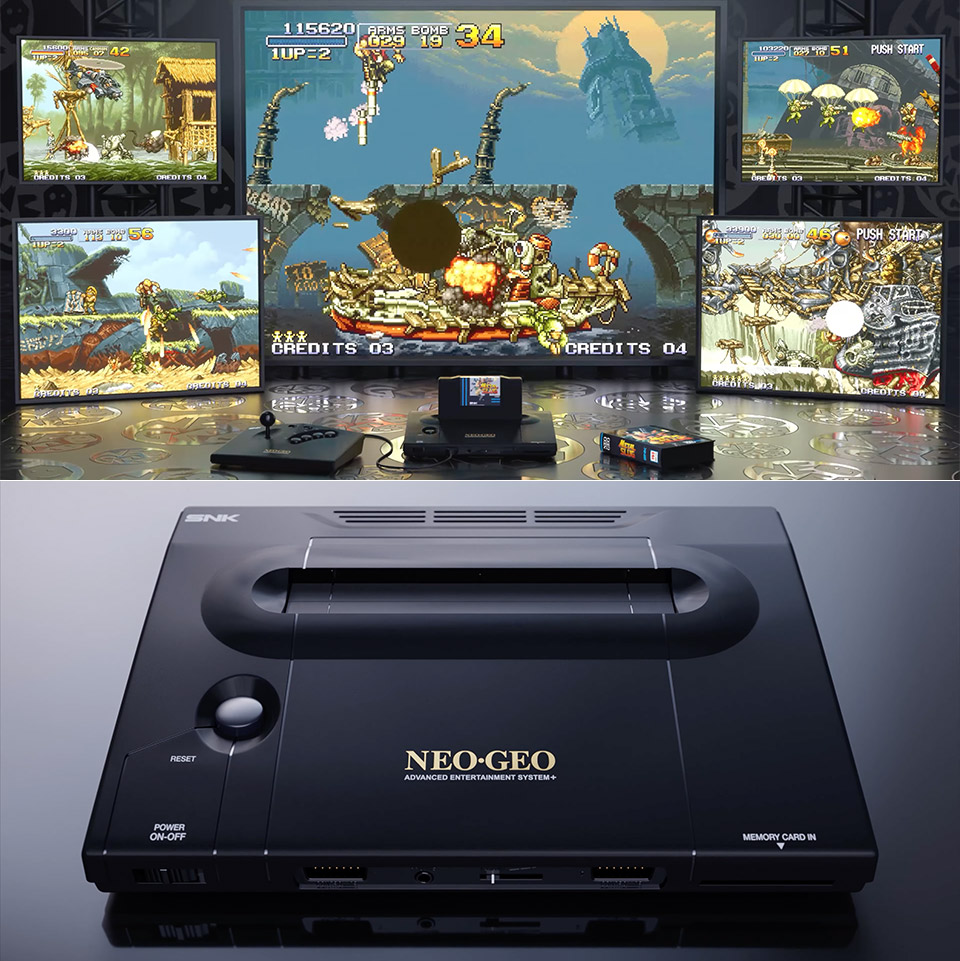
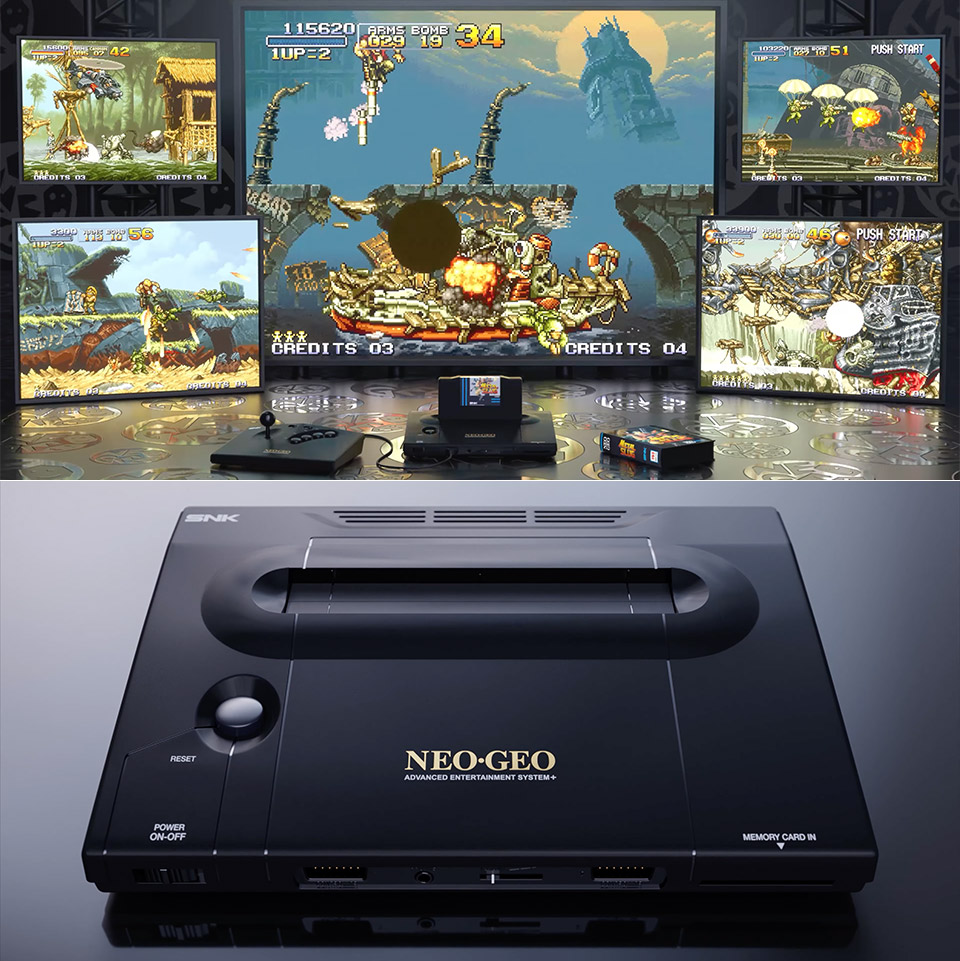
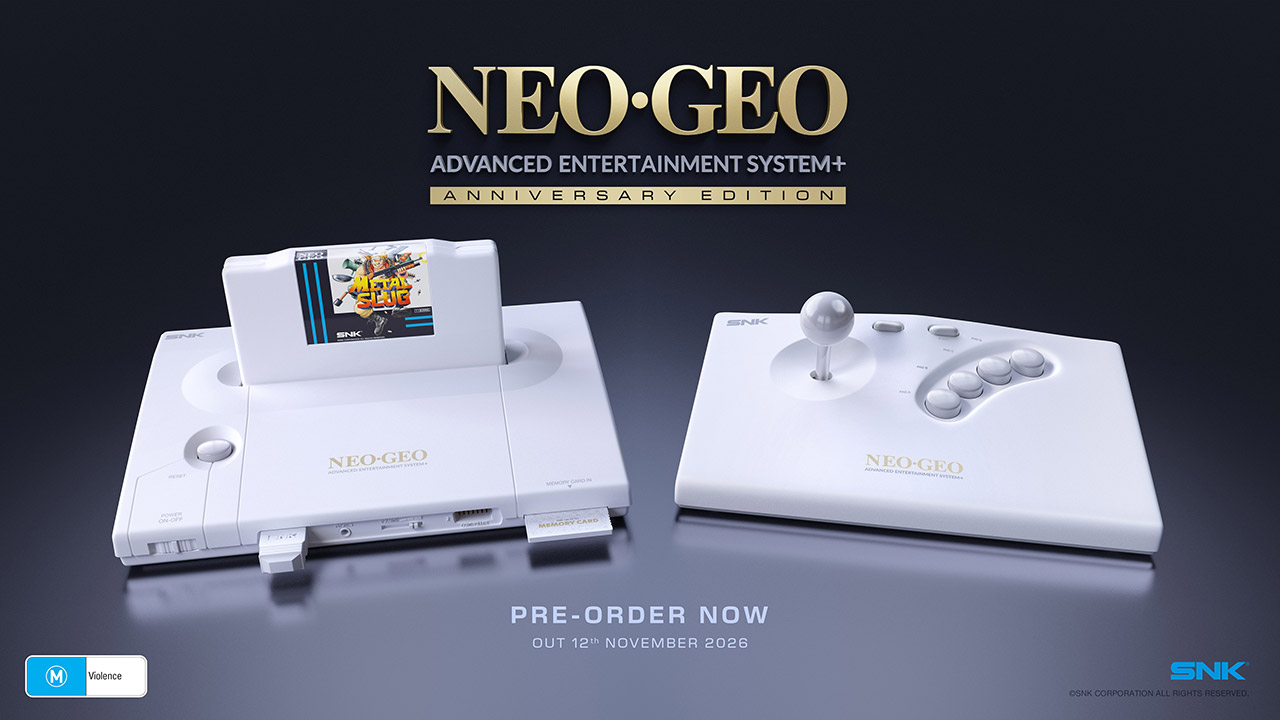
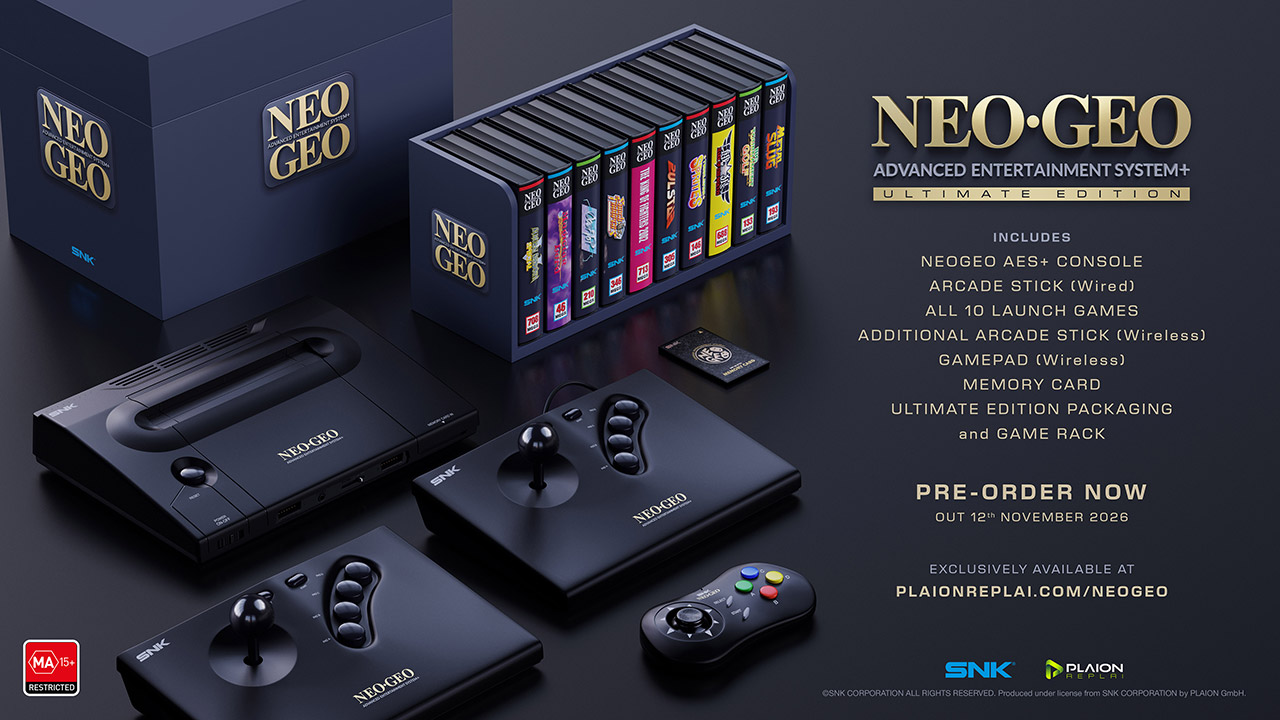
SNK and Plaion introduced an all-new NEOGEO AES+ console, allowing aficionados of the original hardware to play their old favorites in spectacular high definition on current screens. This console hits stores on November 12 and is available for preorder right now through the official website.
The console is based around re-engineered chips that copy that exact behavior of the original 1990 model rather than faking it with software, so every game operates exactly as it did in the arcades. You get access to every original NEOGEO AES cartridge ever manufactured, which is a terrific place to start; however, there are several brand-new titles designed particularly for your system. The console supports enormous games that even earlier systems can’t handle, like hundreds of megabytes, and then sends a crisp clear 1080p HDMI output to your television almost instantaneously. If you still want to use a CRT, there is an AV connector that you can plug into.
14 pre-loaded NEOGEO games including: Metal Slug X, Fatal Fury Special, Samurai Shodown II, Alpha Mission II, Blazing Star, King of the Monsters…
Works with all Evercade cartridges – this includes over 60 cartridges and 500+ games.
USB-C charging for fast charging.
At the bottom of the console, there are small dip switches that let you to change the language settings or mess around with the display modes if that’s your thing. If you have a memory card accessible, your high scores will be preserved for good. Furthermore, the power consumption is low, allowing the console to remain cool even after extended gaming sessions. There are two versions launching at the same time: the standard black one costs $250 / £180 / €200, and the 35th Anniversary Edition, which comes in a rather fetching white finish, costs $270 / £270 / €300, and includes a very nice looking white Metal Slug cartridge that cannot be purchased separately.
Each shipment will include the console, a power supply, an HDMI cable, and one of the old wired arcade sticks, constructed to match the originals, to get you started. At launch, you can also add other peripherals, such as a wireless version of the stick, a gamepad with the conventional layout, and a memory card that does not require a battery. To give you a head start, ten games will be released alongside the hardware, including Metal Slug, The King of Fighters 2002, Garou: Mark of the Wolves, Big Tournament Golf, Shock Troopers, Samurai Shodown V Special, Pulstar, Twinkle Star Sprites, Magician Lord, and Over Top. Each one will cost roughly £70 / €80, by the way.
If you’re a collector looking for the full package, you should be able to get the Ultimate bundle, which includes the console, every single accessory in both wired and wireless form, all ten launch games, a rather nice-looking game rack, and a slew of extra cables, all wrapped up in some limited-edition packaging.
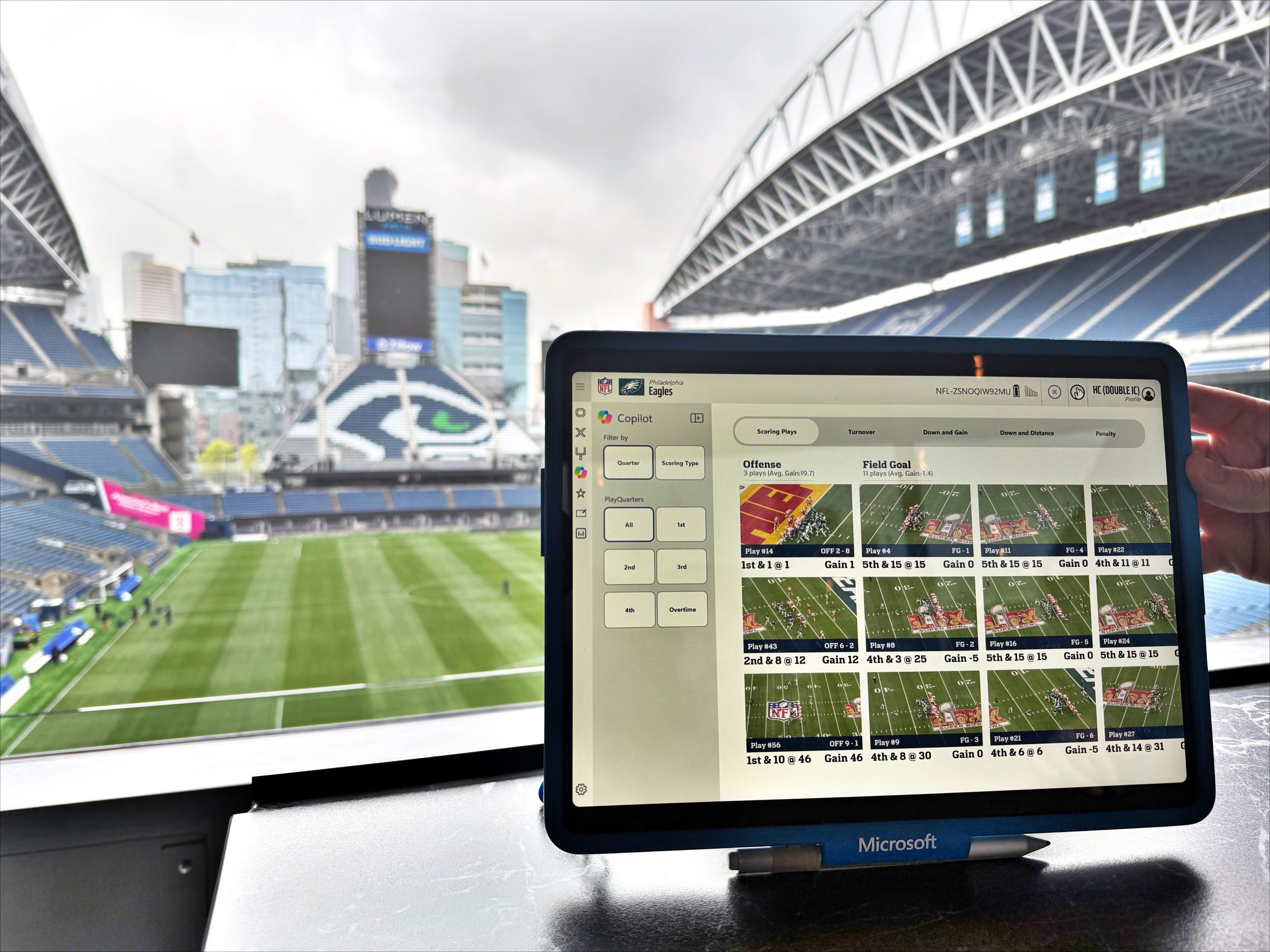
A Microsoft Surface tablet at Lumen Field in Seattle on Wednesday running Copilot as it’s seen by Seahawks and other NFL personnel who use the devices and technology during games. (GeekWire Photo / Kurt Schlosser)
When Bill Belichick famously spiked a Microsoft Surface tablet as the New England Patriots head coach in 2016, the moment was a symbol of frustration with technology on the sidelines.
But inside the company, it actually became a point of pride. Thomas Labuzienski, a senior partnerships manager at Microsoft, shared the rest of the story with us this week: the Belichick device made it back to the company — where testing showed, amazingly, that it still worked.
That rugged (and apparently indestructible) hardware remains the tech giant’s most visible presence on NFL game days. But these days, the action is inside: Copilot, AI agents, and live data tools that are changing how coaches, players, and scouts prepare and compete.
That was one of the takeaways from an event Wednesday at Seattle’s Lumen Field, where Microsoft walked content creators and this reporter through some of its latest NFL technology. High above the field, social media and YouTube influencers posed for photos and selfies with a Microsoft Surface Copilot+ PC much like NFL fans would with their favorite players.
It was an off-season glimpse into the evolution of Microsoft’s partnership with the league, which started in 2013 and was extended last summer to go deeper on AI and cloud tools.
Advertisement
Just as with business workflows, these tools are changing how teams operate on and off the field. One big benefit of AI, Microsoft says, is speed: getting the right information to the right person fast enough to shape the next play call or adjustment. But the coaches, players, and staff are ultimately still calling the plays, both literally and figuratively.
“We’re not using AI and technology to make decisions for them,” Labuzienski said. “They’re the experts. They know what they’re trying to do.”
Even with baseball and soccer well under way, Microsoft seems as excited as ever about football, especially with its hometown Seahawks coming off a Super Bowl championship.
Here’s what we saw and learned during the event:
Advertisement
In a suite at Lumen Field, Thomas Labuzienski, a senior partnerships manager at Microsoft, shows off Copilot functionality on a Surface tablet like those used by NFL players and coaches. (GeekWire Photo / Kurt Schlosser)
Copilot filtering: The NFL’s Sideline Viewing System now features Copilot-powered filters that let coaches and players instantly sort plays by down, distance, quarter, and gain type.
Labuzienski demonstrated how a play that took a minute to find manually could be located in seconds using the filters. “That five seconds can mean giving my coach the right information so they can make the right adjustment or the right play call,” he said.
Excel on the sidelines: One analyst per team has access to a real-time Excel dashboard in the coaches booth that pulls live play-by-play and player usage data from the NFL.
Coaches can load custom templates before the game and use Copilot to run analyses on the fly — tracking formation tendencies, snap counts, and player load without having to manually write formulas mid-game.
NFL Combine: Microsoft built a custom AI agent trained on 10 years of NFL Combine data, allowing scouts to query prospects using natural language. This helps teams assess players faster than ever during one of the most time-sensitive periods of the NFL calendar.
Advertisement
For example, Labuzienski said, “If I really love this defensive lineman, I can pull his data compared to other prospects over the last 10 years.”
Tablets on game days: Hardware is still a key part of the equation, of course. Labuzienski said there are 2,500 Copilot Plus PCs throughout the league on game day, with 20 on each sideline, and 10 in each coach’s booth.
Seattle Seahawks head coach Mike Macdonald. (GeekWire File Photo)
Tech as a coaching advantage: Back when Belichick got his start, NFL sidelines relied on thermal printers hardwired to stadium cameras. It was a process that took minutes, with runners ferrying photos into binders for coaches and players on the sidelines.
Technology has transformed all of that, and a new generation of coaches has grown up never knowing anything different.
Seattle Seahawks head coach Mike Macdonald, who has openly embraced his reputation as a “football nerd,” is a prime example. Labuzienski said he represents exactly the kind of coach Microsoft has built its NFL partnership around. Macdonald views technology as a differentiator across the league and has said it’s an advantage for the Seahawks to embrace it.
Advertisement
Even coaches less enthusiastic about AI are coming around, Labuzienski said, if only to avoid falling behind. “They do, sometimes begrudgingly, study up and make sure they get the most out of the technology,” he said.
A view of the new Hawks Nest seating area at the north end of Lumen Field, with a real grass playjng surface installed for the FIFA World Cup this summer. (GeekWire Photo / Kurt Schlosser)
Digital-first players: Labuzienski said he’s seen players become some of the most engaged users of sideline technology — sometimes more so than the staff around them.
“I was at the preseason game with the Bills against the Bears, and after every single drive, Josh Allen picked up this device,” Labuzienski said of the Bills QB. “He was talking with the other quarterbacks, and they were using it to go through the plays from that previous series.”
The system is designed to make that kind of real-time collaboration easy. The 20 devices on each sideline are all connected, with coaches in the booth able to write notes directly to individual player profiles — so a quarterback picking up a tablet can instantly see what his position coach upstairs is flagging, without having to radio up or wait for a break in the action.
That dynamic is likely to only deepen as younger players enter the league.
Advertisement
Microsoft was at last year’s Rookie Premier — an event where roughly 40 top draft picks gather for brand activations ahead of their first NFL season — and showed the incoming class the Sideline Viewing System for the first time. The reaction was telling.
“A lot of them really quickly picked it up and were able to click around,” Labuzienski said. “They’re very digital-first — very savvy.”
The app works with passports or ID cards, is built to be “completely anonymous” for the people who use it, works on any device (smartphones, tablets, and PCs), and is open source. “Best of all, online platforms can easily rely on our age verification app, so there are no more excuses,” said European Commission president Ursula von der Leyen at a press conference on Wednesday. “Europe offers a free and easy-to-use solution that can protect our children from harmful and illegal content.”
High Expectations
“It is our duty to protect our children in the online world just as we do in the offline world. And to do that effectively, we need a harmonized European approach,” von der Leyen said at Wednesday’s press conference. “And one of the central issues is the question, how can we ensure a technical solution for age verification that is valid throughout Europe? Today, I can announce that we have the answer.”
This answer takes the form of an open source app that any private company can repurpose, as long as it complies with European privacy standards and offers the same technical solution throughout the European Union. The user downloads the app, agrees to the terms and conditions, sets up a pin or biometric access, and proves their age through an electronic identification system, or by showing a passport or ID card (in which case biometric verification is also provided). The app does not store your name, date of birth, ID number, or any other personal information, according to the European Commission—only the fact that you are over a certain age.
Advertisement
After that, when a person using the app wants to access a social network (minimum age: 13), pornographic site (minimum age: 18), or any other age-protected content, if they are logged in from a computer, they need only scan the QR code shown on the site they want to visit. If, on the other hand, the person logs in from a smartphone, the app sends the proof of age directly. The platform does not access the document with which the user proved it in the first place.
Adoption Event
The need to introduce a common system for the entire European Union has been discussed for some time, and according to commission technicians, the technical work is now complete. Of course, it will still be possible to circumvent the system—all it takes is for an adult to lend their phone to a younger friend—but the technological architecture exists, and it will be up to EU member states to decide whether to integrate it into national digital wallets or develop independent apps.
“No More Excuses”
For the app to really be effective, platforms must be obligated to verify the age of their users—that’s where things get tricky. The Digital Services Act, which went into effect in 2024, requires “very large online platforms”—those with more than 45 million monthly users in the European Union—to take concrete steps to mitigate systemic risks related to child protection, with heavy penalties for noncompliance.
“And that’s why Europe has the DSA: to call online platforms to their responsibilities. Because Europe will not tolerate platforms making money at the expense of our children,” European Commission executive vice president Henna Virkkunen told a press conference. She added that after an investigation into TikTok, the European institutions plan to take similar action against Facebook, Instagram, and Snapchat, as well as four porn sites. “Since the platforms do not have adequate age verification tools, we developed the solution ourselves,” he concluded. In short, as von der Leyen also remarked, “there are no more excuses.”
Advertisement
Bare Minimum
So far, this is the European framework that sets the general rules. On this basis, member states can consider more restrictive measures. Italy was among the first to discuss how to regulate the use of social media by minors but has so far not landed on anything concrete. Elsewhere in the EU, France’s Emmanuel Macron has been a trailblazer on the issue, pushing France to discuss a rule to ban social networks for minors under the age of 15 entirely. So far, this measure has received broad political support—but the outcome depends largely on compatibility with the Digital Services Act and the availability of effective age verification systems like the app the European Commission just released.
This article originally appeared onWIRED Italiaand has been translated.
Chargers are often tucked into drawers and bags because most of us simply plug them in and forget about it, but Anker’s Nano 45W Smart Charger, priced at $27.99 (was $40), is different. Travelers are constantly looking for gear that does not take up too much room, and the Nano is a game changer. It’s small enough to put in a pocket or a carry-on, yet it delivers an impressive 45 watts of power via a single USB-C port. The prongs fold up in two directions.
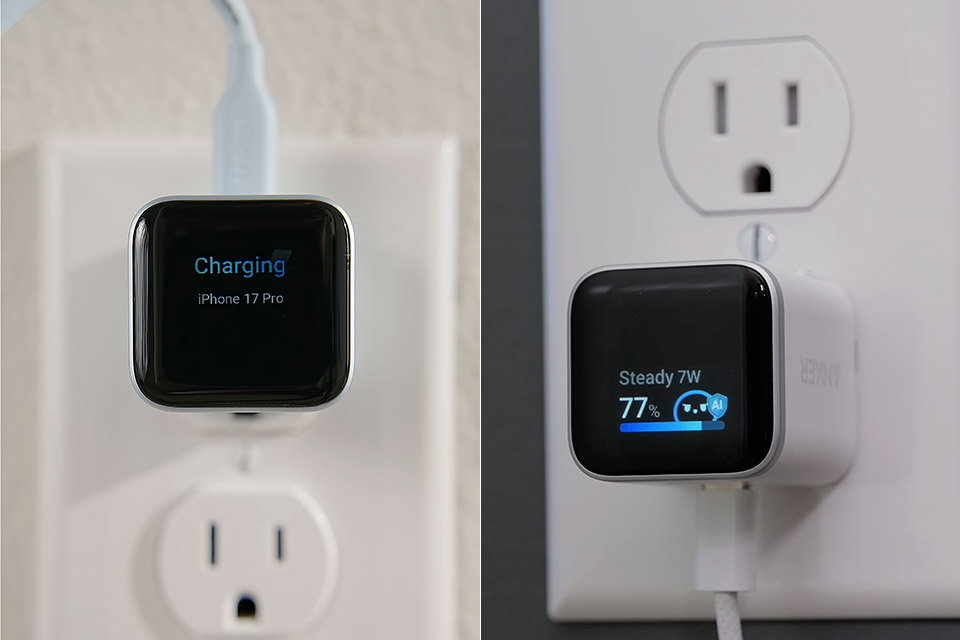
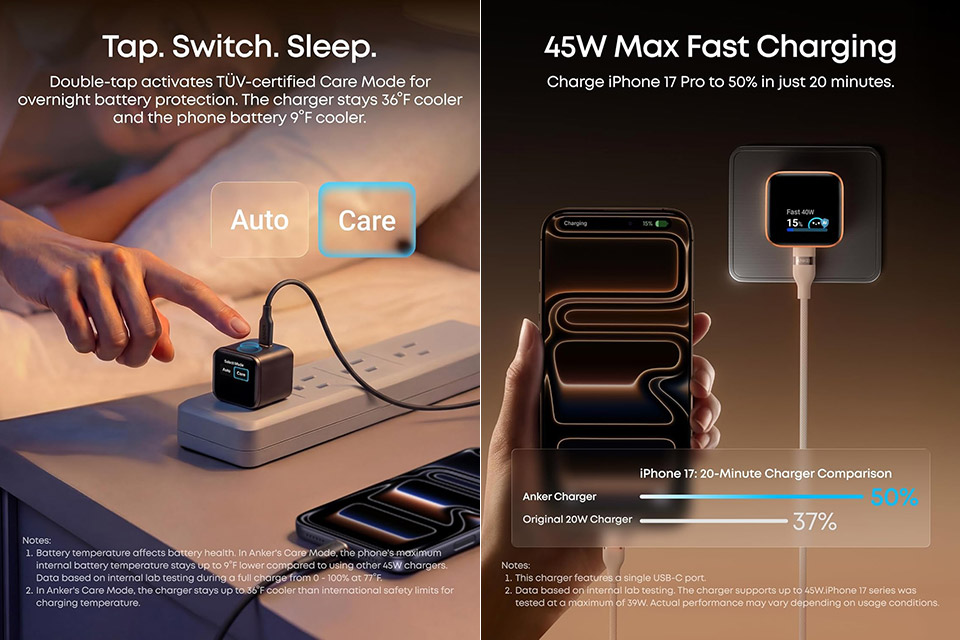
When you plug it in, the charger comes to life and displays all of the information on its small screen right in front of you. The latest iPhone models, starting with the 15 series, provide instant ID and display the actual phone name, amount of electricity coming through, battery level, and even the device’s temperature. This is very cool since it transforms what was once just a wall socket into a helpful small gadget that keeps you updated. It charges in three stages so that the charger does not overheat and you do not risk burning out your battery.
Smart iPhone Recognition with Care Mode: Automatically recognizes supported iPhone models and adjusts charging for smarter, safer power delivery…
45W Max Fast Charging with Smart Power Adjustment: Delivers up to 45W of high-speed charging while adjusting output based on your battery level…
Smart Display Controls: Tap once to view real-time charging status, double-tap to switch between modes, and press for 2 seconds to rotate the screen…
As a result, if your phone is supported, it can charge to half capacity in about 20 minutes, and this is not limited to phones. This works with tablets and lighter laptops as well, but it’s mainly designed for Apple devices because they’re always going to be the most comfortable with them. Leave it on your desk or nightstand and you’ll be able to see the status of your phone without having to unlock it. There’s no need to worry about it getting too hot or taking too long because it’ll all come naturally.
Anker definitely got it perfect with the Nano. With compatibility across a wide range of USB-C devices, it’s the one adapter that can do it all, regardless of your phone’s brand. As a result, you can travel light while remaining charged. When you go home, the same charger continues to provide you with detailed information on each session. The charger adjusts its output based on what it has learnt about your device, so your batteries will eventually care after themselves.
Advertisement
Once you’ve seen the light, or gotten used to using a smart charger, switching back to a standard charger feels sort of boring. Anker identified a genuine need for a quick, portable charger that tells you what’s happening on and simply nailed it with the Nano.
Tom Stanton has spent years fiddling with many strange flying machines. His current idea cleverly updates a traditional toy. Rubber band planes have been around forever, storing energy in twisted bands that then spin a propeller. The problem is that they must be wound up for several minutes merely to produce a short burst of flight. Stanton sought to create a flying machine that was faster, more practical, and could be built with easily accessible components.
Instead of relying on rubber bands, Stanton used supercapacitors to store energy. A hand crank generator charges the capacitors up to a 10-farad unit, which weighs just 3 grams and takes just a few seconds to charge. To keep an eye on things, an analog voltmeter is used to ensure that the voltage does not exceed 2.7 volts and destroy the capacitor. Once fully charged, the capacitor powers a small brushed motor repurposed from a toy drone, which propels a propeller engineered to work efficiently with the capacitor’s low voltages.
PILOTED FLIGHT – Grab a sheet of paper, fold it, and go! Instantly put yourself in the cockpit of an amazing smartphone controlled paper airplane that…
INCREDIBLE STABILITY – Loops, Barrel Rolls, & Hammerheads are achieved with the special Acro Mode! Your paper plane’s onboard computer automatically…
CONNECTED FLYING – Pair your plane with the POWERUP App to maneuver your plane, keep a robust flight log, compete with other flyers on the…
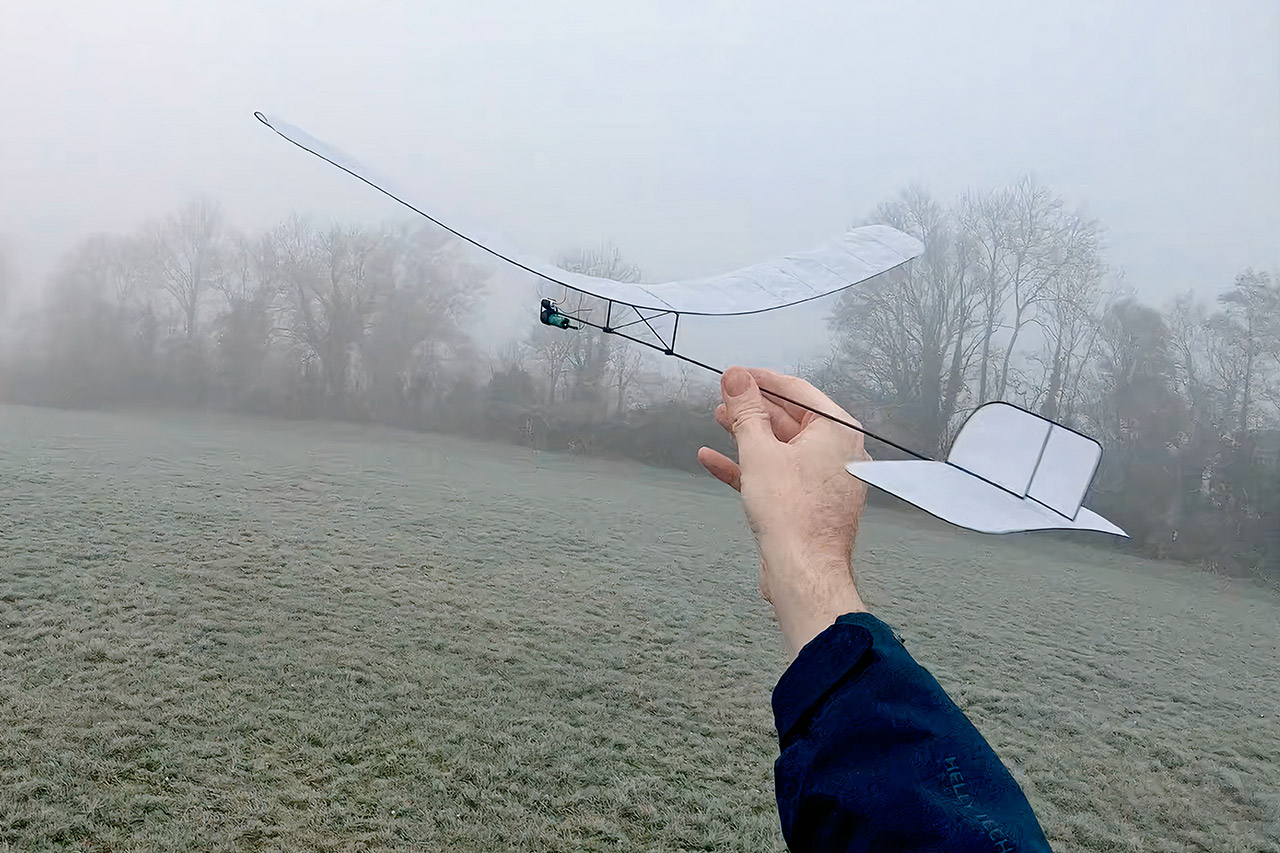
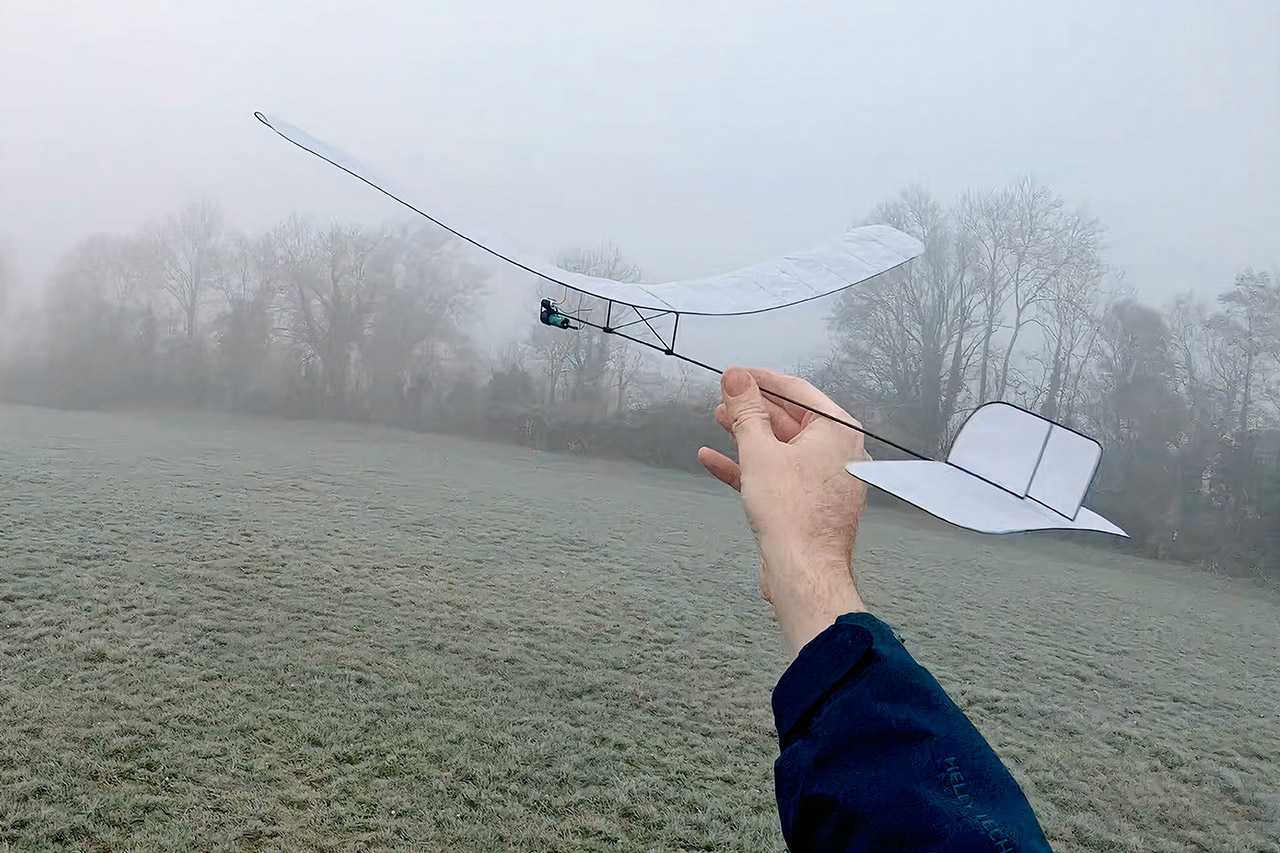
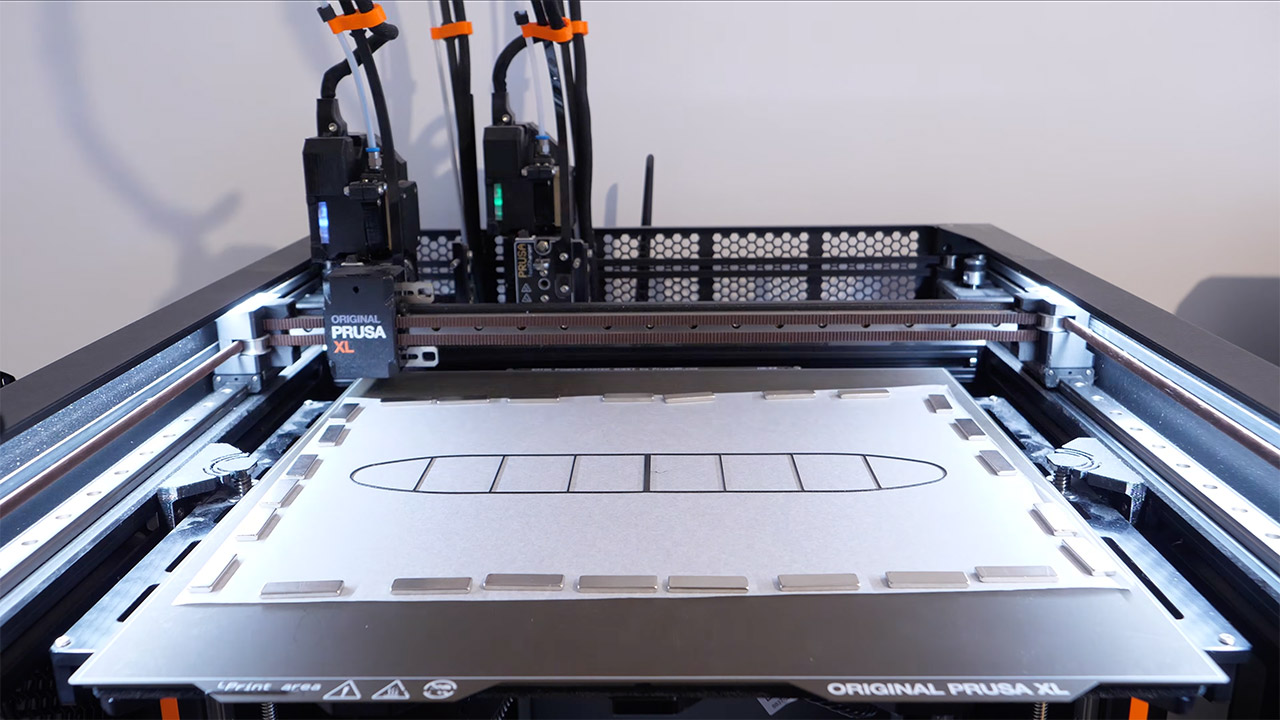
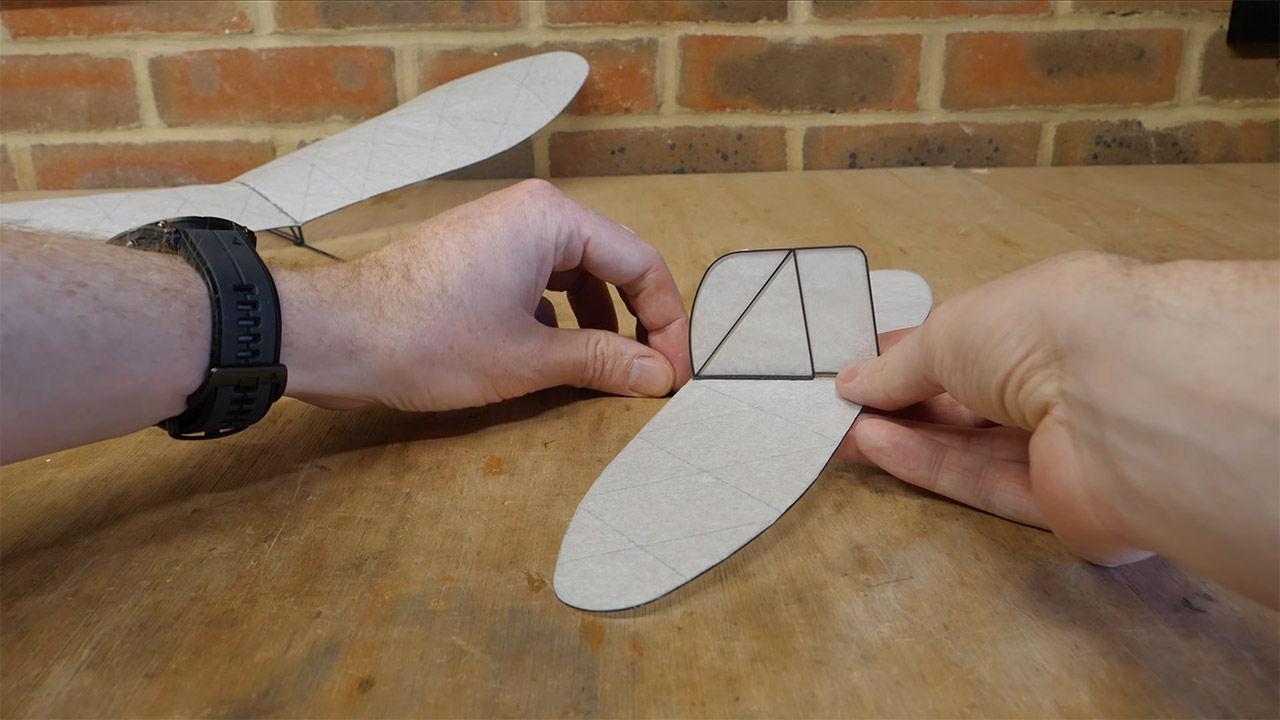
Stanton just printed the wings directly onto tissue paper. He used a textured construction plate secured with magnets so that the printer could lay down the structure without breaking the paper. After finishing the print, he simply clipped the edges, applied some adhesive, and used a heat gun to mold the paper so it could function as an airfoil. The initial effort at a wing was a disaster, as it flexed too much under load, sending the plane straight into the ground. However, later versions converted to shorter wings with a greater aspect ratio, which solved the problem by reducing flex and drag while adding minimal weight.
The plane’s fuselage is built of carbon fiber rods, which provide it strength without weighing a ton. Stanton built notches into the rod to prevent it from being drilled out of the holes, allowing the wings and tail to slip in and out with a simple friction fit, making changes easy when testing the plane. The tail is a 3D print that is glued to the back of the rod, and up front, a small steel bolt serves as the nose weight to keep everything balanced. Stanton adjusted the wing mount slightly to keep the propeller out of the line of the airflow, and a printed bracket connects the capacitor and motor and simply clips into the rod.
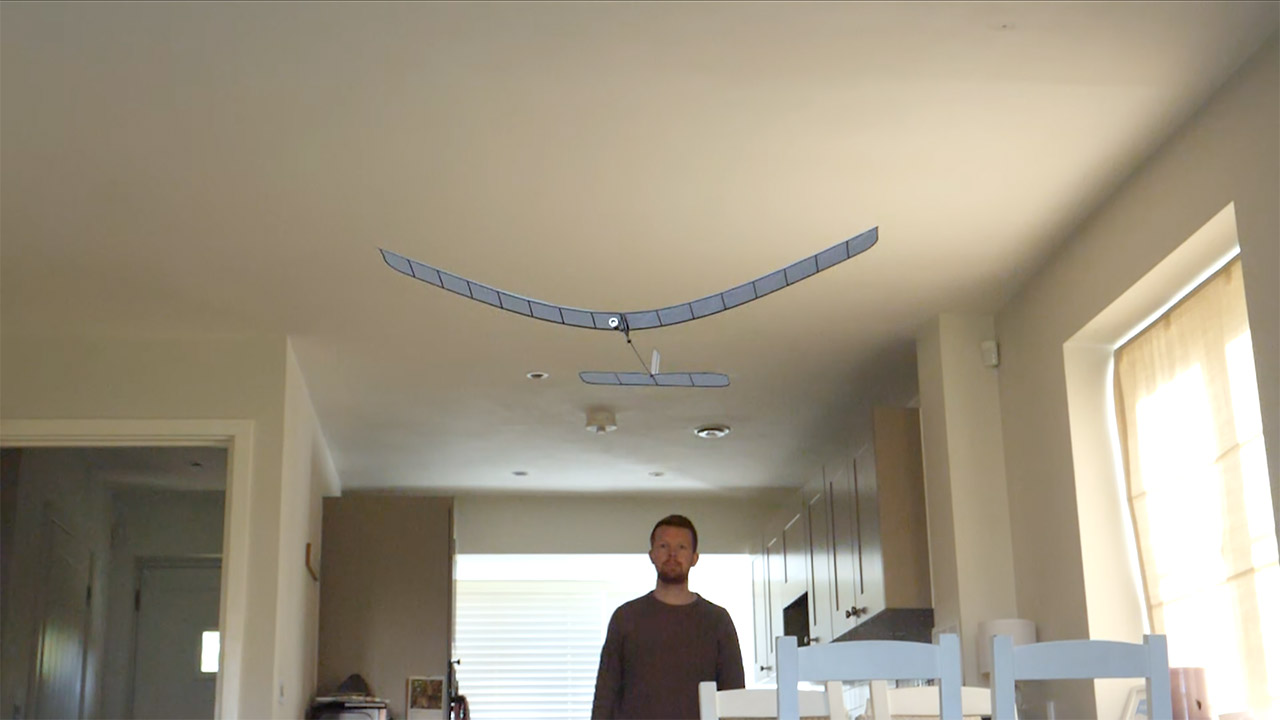
First, Stanton tested the basic glider on its own, as it was so light (weighing only 3.8 grams) that it flew through the air like a dream and outperformed a simple paper plane. Adding the power system increased the total weight to 15.6 grams, which isn’t terrible given it’s still lighter per square inch than most paper airplanes. When he tried it with the power system, it shot up high after launch and settled into a long, steady glide. Cranking the hand crank for 4 seconds gave him 45 seconds of flight time, but what about the charging time? It was a blazing 0.1 seconds. Stanton thought the charging-to-flight time ratio was impressive to say the least, especially since the charging process takes roughly the same amount of time as blinking.
Cold and damp air reveal one weakness: tissue paper absorbs moisture and loses rigidity quickly. The wings began to sag and the plane fought to stay aloft, as Stanton mentioned in his video, although other individuals have had success with minor repairs such as coatings on comparable planes. To be fair, the primary design of the product demonstrated that the concept works. In the end, the last plane popped right up off the ground, kept altitude far longer than I expected, and then glided down for a rather easy landing.
Stanton made the glider files accessible on Printables, allowing anyone to print their own version and try it out. The entire project is very simple, as it just requires some basic hardware: a 3D printer, a piece of tissue paper, a carbon rod, and the minimum essentials of some electronics. There are no sophisticated or high-tech materials or intricate machine work involved.
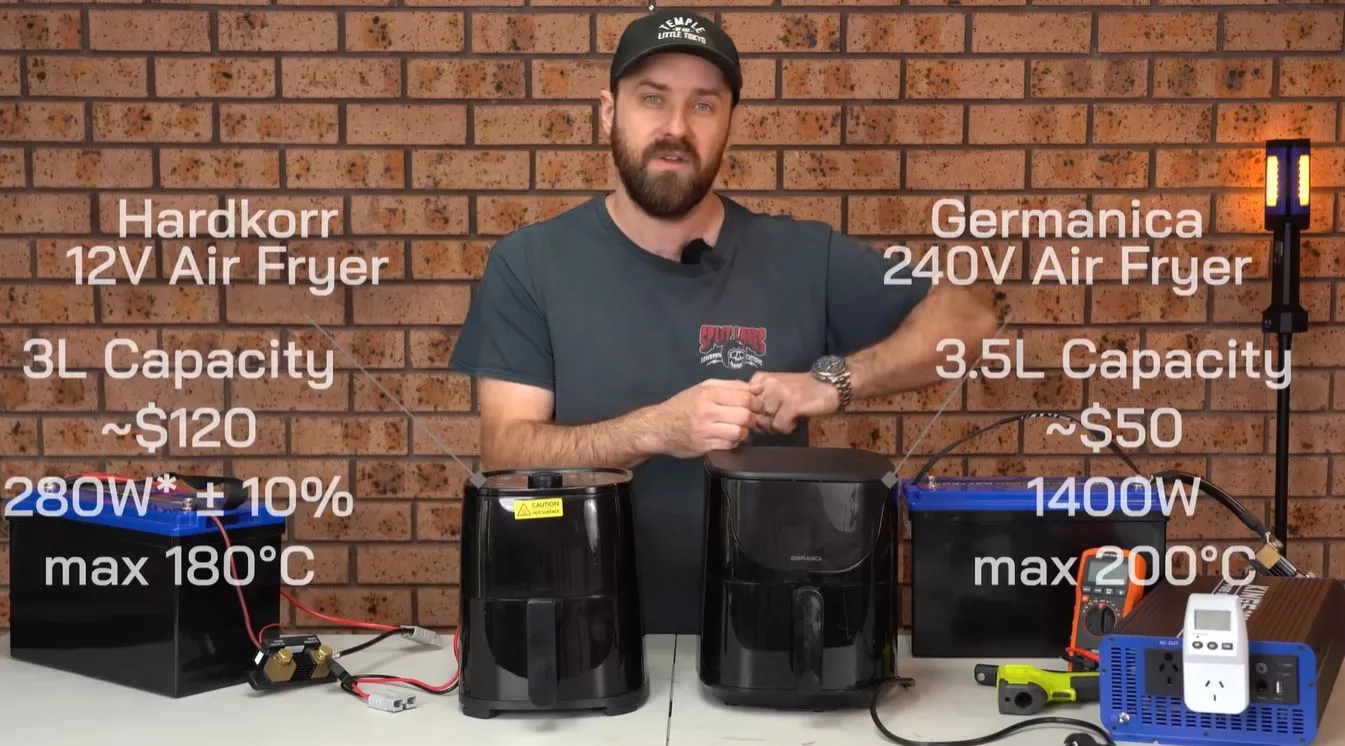
That boiling water is a contentious topic of discussion is clear, but what about hot air? When you take a 12 VDC, 280 Watt-rated air fryer and pit it against a bog-standard 240 VAC, 1400 Watt unit, which one would you want to use when you’re doing some camping or other exciting off-the-grid opportunities? Unlike with boiling water the physics aren’t as clear-cut here, so [Cahn] did some testing to figure out exactly what the efficiency numbers look like
Since air fryers rely on the transfer of thermal energy from the resistive heating element into the food, any thermal energy that’s not immediately transferred is effectively wasted. This, combined with the relatively low power rating and thus much higher time demand of the low-voltage air fryer is enough to set one’s expectations pretty low.
As scientific test samples chicken nuggets were used with the test, following a preheating period for the 12 VDC unit. Both units managed to hit a safe temperature inside the nuggets after 20 minutes, thus successfully staving off food poisoning, but the browning with the 240 VAC air fryer was much better.
As for the efficiency, the 12 VDC unit required 150 Wh for 20 minutes plus the 10 minutes of preheating, with 45 minutes total at 225 Watt to get proper browning. Meanwhile the 240 VAC unit burned through 250 Wh in 20 minutes, with no pre-heating, though only 230 Wh with no inverter losses included. As a final test, the 12 VDC unit was run at 400 Watt using 14.6 VDC input, which did indeed get it up to temperature much faster.
Advertisement
Thus both are equivalent, just with the caveat that the low-voltage unit will take considerably more time to get the same result. This mirrors the results with boiling water, where most options mostly vary in how much time they require to get water up to a boiling temperature.
An anonymous reader quotes a report from the Guardian: We may appear to have little in common with sperm whales – enormous, ocean-dwelling animals that last shared a common ancestor with humans more than 90 million years ago. But the whales’ vocalized communications are remarkably similar to our own, researchers have discovered. Not only do sperm whale have a form of “alphabet” and form vowels within their vocalizations but the structure of these vowels behaves in the same way as human speech, the new study has found.
Sperm whales communicate in a series of short clicks called codas. Analysis of these clicks shows that the whales can differentiate vowels through the short or elongated clicks or through rising or falling tones, using patterns similar to languages such as Mandarin, Latin and Slovenian. The structure of the whales’ communication has “close parallels in the phonetics and phonology of human languages, suggesting independent evolution,” the paper, published in the Proceedings B journal, states. Sperm whale coda vocalizations are “highly complex and represent one of the closest parallels to human phonology of any analyzed animal communication system,” it added.
[…] The new study shows that “sperm whale communication isn’t just about patterns of clicks — it involves multiple interacting layers of structure,” said Mauricio Cantor, a behavioral ecologist at the Marine Mammal Institute who was not involved in the research. “With this study, we’re starting to see that these signals are organized in ways we didn’t fully appreciate before.” The latest discovery around sperm whale speech has inched forward the possibility of someday fully understanding the creatures and even communicating with them. Project CETI has set a goal of being able to comprehend 20 different vocalized expressions, relating to actions such as diving and sleeping, within the next five years. A future where we’re able to fully understand what the whales are saying and be able to have a conversation with them is “totally within our grasp,” said David Gruber, founder and president of Project CETI. “We’ve already got a lot further than I thought we could. But it will take time, and funding. At the moment we are like a two-year-old, just saying a few words. In a few years’ time, maybe we will be more like a five-year-old.”























































You must be logged in to post a comment Login