

Crypto World
NEAR Protocol (NEAR) jumps 12.4% over weekend

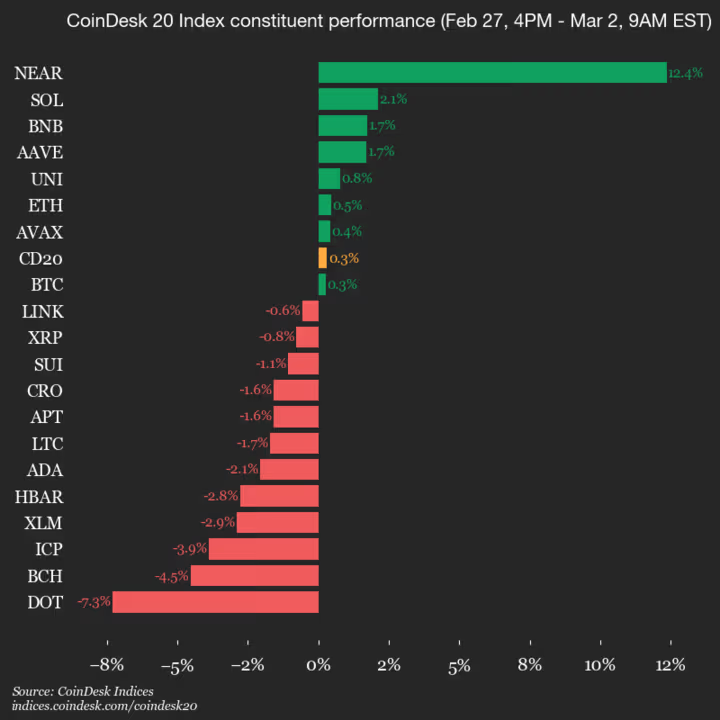
CoinDesk Indices presents its daily market update, highlighting the performance of leaders and laggards in the CoinDesk 20 Index.
The CoinDesk 20 is currently trading at 1907.12, up 0.3% (+5.99) since 4 p.m. ET on Friday.
Eight of the 20 assets are trading higher.

Leaders: NEAR (+12.4%) and SOL (+2.1%).
Laggards: DOT (-7.3%) and BCH (-4.5%).
The CoinDesk 20 is a broad-based index traded on multiple platforms in several regions globally.



Bitmine also continued adding to its crypto holdings with a fresh ETH purchase in the past week.
Strategy, formerly Microstragegy, announced today, March 2, that it has acquired an additional 3,015 Bitcoin (BTC), according to an X post from the firm. The purchase totalled approximately $204.1 million, at an average price of $67,700 per Bitcoin.
This latest BTC buy marks Strategy’s largest since January and brings its total Bitcoin holdings to 720,737 BTC, further solidifying its status as the largest corporate Bitcoin holder globally, according to data from BitcoinTreasuries. The firm, which pioneered the digital asset treasury (DAT) strategy as far back as 2020, has continued to make weekly BTC purchases in recent months.
Last week’s purchase is its largest since Jan. 20, when Strategy bought 22,305 BTC for an average cost of $91,519, according to its website, which marked its largest single purchase since late 2024.
Bitmine Also Buys ETH
Meanwhile, Bitmine Immersion Technologies continues to hold onto its position as the largest Ethereum DAT company, also announcing a fresh purchase today, according to a press release from the firm. The company accumulated nearly 51,000 ETH in the past week alone, bringing its holdings to 4,473,587 ETH, per the release. Bitmine also noted that it is staking a total of 3,040,483 ETH as of March 1.
The continued accumulation from the two largest DATs comes as BTC and ETH both post 24-hour gains in a broad crypto market rally today, despite the escalating military action in the Middle East, after the United States and Israel launched strikes against Iran this weekend, killing Iranian Supreme Leader Ayatollah Ali Khamenei.
BTC rallied back over $69,000 and ETH pushed over $2,000 today, supported by renewed inflows into spot crypto ETFs at the end of last week.
The DAT trend exploded last year, as an increasing number of publicly traded firms began accumulating not only BTC and ETH, but smaller cap assets. Experts, however, expressed concerns about the risks and questioned the viability of the DAT structure as a long-term strategy, especially for smaller, more volatile crypto assets.
This article was generated with the assistance of AI workflows.
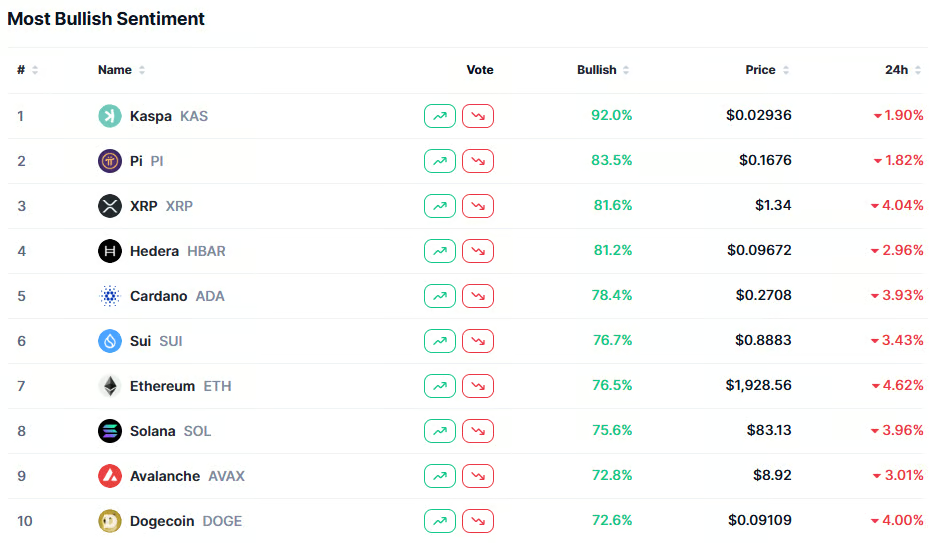
PI has the second-highest bullish sentiment today (March 2nd).
Last month, Pi Network’s team celebrated a special milestone and announced several important updates aimed at improving the entire ecosystem.
Despite the enhanced volatility, PI closed February in green, which could explain why it has been trending lately.
The Recent Developments and What’s Next?
It was on February 20, 2025, when Pi Network officially launched its Open Network, making PI publicly accessible and enabling exchanges to provide trading services with it. Last month, the team celebrated the first anniversary of that milestone and unveiled several important updates.
It revealed the completion of protocol v19.6, making v19.9 the final step ahead of the much-anticipated v20. The team also reminded that nodes need to migrate promptly, as outdated versions will no longer be able to participate in the network.
Shortly after, Pi Network introduced its long-awaited Ecosystem Token Design, a framework meant to ensure that new tokens on the Mainnet are tied to real utility rather than speculation. The team urged Pioneers to review the mode and provide feedback before final implementation.
Besides that, Pi Network’s co-founders, Chengdiao Fan and Nicolas Kokkalis, answered some hot questions involving the controversial KYC process, the entity’s jump into the AI sector, and other intriguing topics.
The community’s attention has now shifted to March 14: a date known across the community as Pi Day, due to its symbolic resemblance to the mathematical constant π (3.14). The team marked the same date last year with an ecosystem expansion, but it’s unclear whether they plan something similar in less than two weeks. X user Pi Community claimed that Pi Day has always been “a powerful moment to showcase major progress, current work, and what’s next.”
You may also like:
PI in Focus
PI closed in February at around $0.17, representing a 10% monthly increase. Currently, it trades just south of that mark, which could explain why the asset has been trending lately.
According to CoinMarketCap, PI has the second-highest bullish sentiment today (March 2nd), trailing only Kaspa (KAS). Further down the list are well-known altcoins such as Ripple (XRP), Cardano (ADA), and Ethereum (ETH).
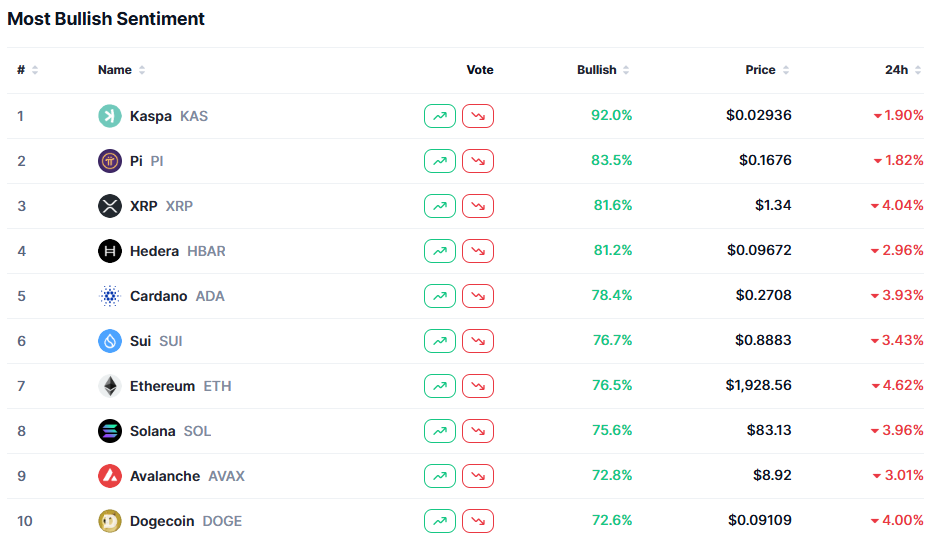
This development has left some market observers baffled. X user Mr. Brondor, for instance, wondered how “a useless crypto” like PI could have one of the strongest bullish sentiments.
Token Unlocks and More
While some industry participants have been floating the unrealistic (at least as of now) idea that PI could explode to as high as $50, certain technical indicators suggest a short-term correction could also be on the way.
Data shows that over the next few weeks, token unlocks will be quite aggressive with the record day being March 7 when almost 21 million coins will be released. This doesn’t guarantee a price decline, but it will allow some investors to offload holdings they have been waiting for some time.

Meanwhile, the amount of PI stored on centralized platforms has been gradually rising lately and now sits at nearly 435 million tokens. This trend is considered bearish, as a growing exchange supply increases the likelihood of a substantial sell-off.

Binance Free $600 (CryptoPotato Exclusive): Use this link to register a new account and receive $600 exclusive welcome offer on Binance (full details).
LIMITED OFFER for CryptoPotato readers at Bybit: Use this link to register and open a $500 FREE position on any coin!
Disclaimer: Information found on CryptoPotato is those of writers quoted. It does not represent the opinions of CryptoPotato on whether to buy, sell, or hold any investments. You are advised to conduct your own research before making any investment decisions. Use provided information at your own risk. See Disclaimer for more information.
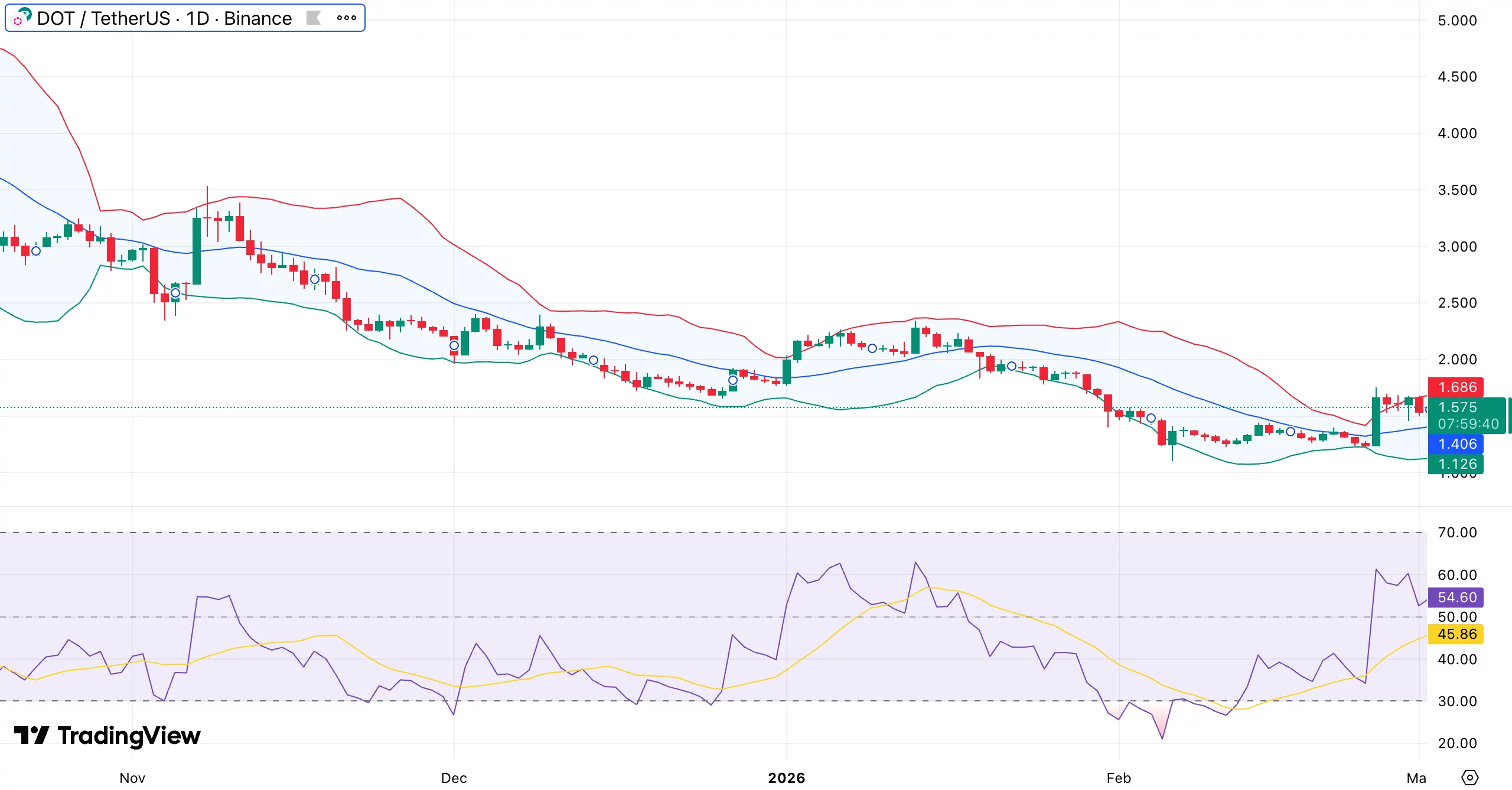
Polkadot price prediction leans bullish as traders position ahead of a major DOT supply cap upgrade.
Summary
- Polkadot price is up 22% in seven days and trades near the top of its weekly range.
- An upcoming tokenomics upgrade plans to cap DOT supply at 2.1 billion starting March 2026.
- A daily close above $1.70 could open the door to a move toward $2.00.
Polkadot (DOT) is trading at $1.57 at press time, up 1.6% over the past 24 hours. The token has climbed 22% in the last seven days, recovering from a sharp pullback. Even so, DOT is still down roughly 65% over the past year.
Price is moving near the top of its weekly range between $1.24 and $1.74. Spot trading volume came in at $250 million in the last 24 hours, down about 15% from the previous day. In derivatives markets, activity has also cooled.
CoinGlass data shows volume down 25% to $558 million, while open interest slipped 5% to $203 million. As the market awaits the next catalyst, some traders seem to be lowering their exposure.
Major tokenomics changes set for March
The shift in sentiment comes ahead of a key upgrade floated by Polkadot developer Parity Technologies. Starting March 12, Polkadot will introduce a new issuance framework built around a Dynamic Allocation Pool.
Under the proposal, DOT’s total supply will be capped at 2.1 billion tokens. Treasury burns will end. Instead of removing excess tokens from circulation, newly minted DOT, transaction fees, and slashes will be directed into the DAP, a permanent on-chain account governed by the network.
Issuance will follow a stepped schedule. Emissions will be cut by 53.6% in the first phase. After that, 13.14% of the remaining supply will be issued every two years. The first reduction begins on March 14, 2026. Based on current projections, the supply cap would be reached around the year 2160.
The goal is to create a predictable monetary structure while allowing governance to allocate funds across validator rewards, staking incentives, treasury spending, and a strategic reserve.
Staking reforms and validator rules
Staking rules will also change. Following a transition period, validators will need to hold at least 10,000 DOT as self-stake. 10% will be the minimum commission rate.
The introduction of a StakingOperator Proxy will enable service providers to run validators for institutional clients in a non-custodial setup. In April, the unbonding period will be shortened from 28 days to 24 to 48 hours, and nominators will no longer be slashable.
These adjustments are designed to improve capital efficiency while maintaining network security as issuance declines.
Polkadot price technical outlook
On the daily chart, DOT is trying to stabilize after months of lower highs and lower lows. The long-term structure is still bearish, but short-term momentum has improved.
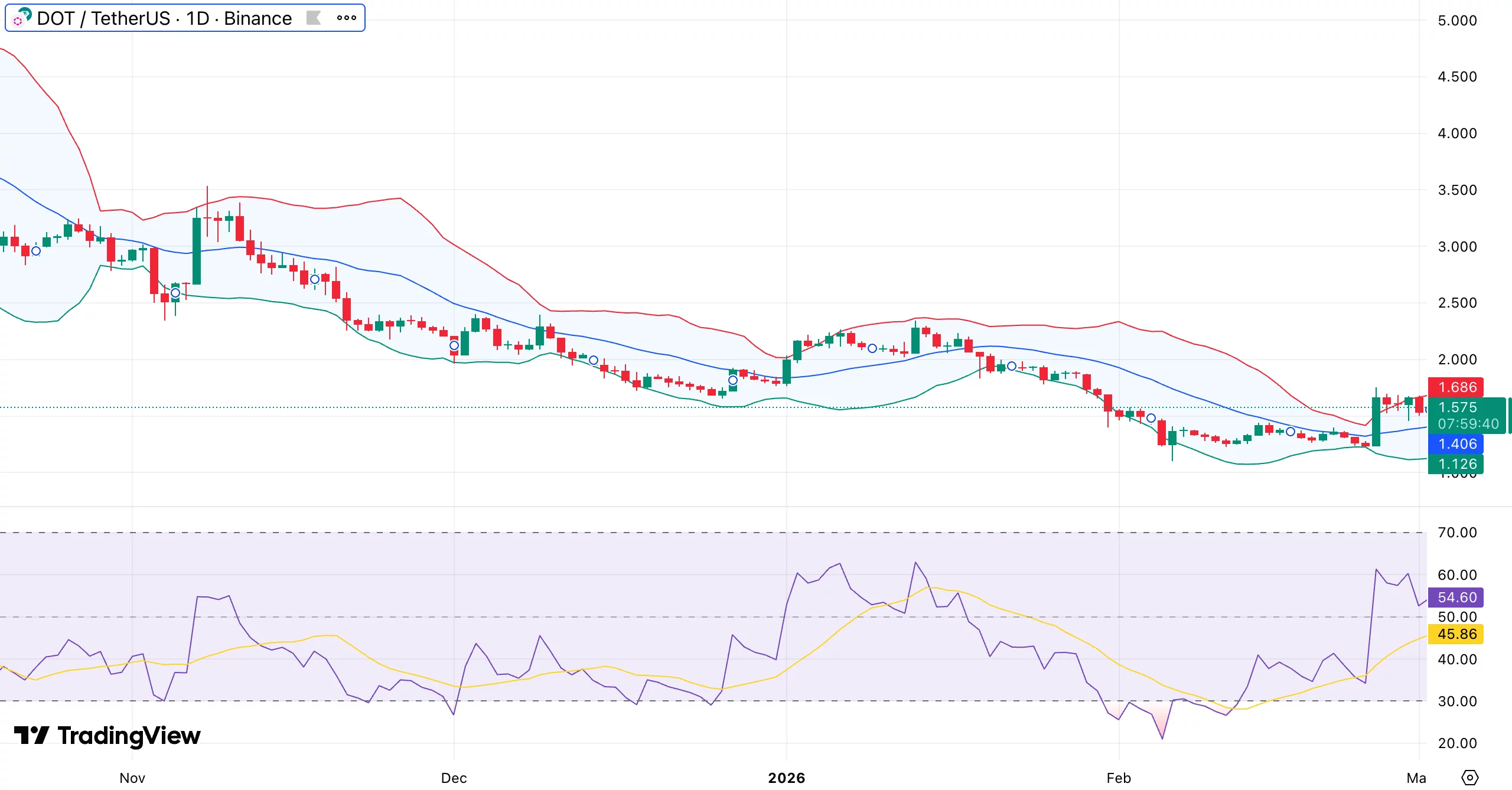
After a strong recovery from the $1.30–$1.40 demand zone, the price broke through resistance around $1.50–$1.55. Before the breakout, Bollinger Bands had tightened, and as the price tests the upper band around $1.68, volatility is currently increasing.
The relative strength index has recovered from near-oversold levels around 30 and is now in the mid-50s. Momentum is no longer deeply negative. A sustained move above 60 would add confidence to the recovery.
If DOT closes cleanly above $1.70, the next likely target sits near $2.00. A break above $2.20 would disrupt the pattern of lower highs and could shift the medium-term structure higher, opening the door to $2.40–$2.60.
If momentum fades and price drops back below $1.40, the recent breakout would weaken. A move under $1.12 would put $1.00 back in focus. With the supply cap narrative approaching and price holding above recent breakout levels, DOT is at a technical crossroads.


The crypto bear market has dragged down most major digital assets this year, but HYPE has moved in the opposite direction. Year to date, the token is up 23.9%, matching gold’s gain over the same period. The S&P 500 is slightly negative, while bitcoin has fallen 23.7% and ether more than 33%.
The divergence is notable not only because HYPE is crypto-native, but because it has decoupled from the broader digital asset market. Its performance increasingly reflects the value of the platform behind it rather than the market’s direction.
HyperLiquid, the decentralized derivatives exchange that underpins HYPE, is built to monetize activity rather than price appreciation. In bull markets, capital tends to concentrate in spot exposure. In choppier conditions marked by drawdowns and macro shocks, derivatives volume tends to persist. Traders shift from buying to positioning, and the platform collects fees on both sides.
While trading volume on competitor platforms Aster and Lighter has tumbled in recent months, HyperLiquid’s has increased, rising from $169 billion in December to more than $200 billion for both January and February. Aster, meanwhile, went from $177 billion in December to less than $100 billion in February, with Lighter suffering an even sharper drop, DefiLlama data shows.
Total volume on HyperLiquid since its inception has now hit a whopping $4 trillion.
Volatility as a business model
HyperLiquid’s core product is perpetual futures, which allow traders to go long or short with leverage. When prices grind higher, leverage amplifies upside. When markets slide, shorting and basis trades step in. The exchange collects fees on both sides.
That structure becomes particularly relevant in a year marked by turbulence across asset classes. Rather than relying on sustained price appreciation, the exchange captures turnover. In sideways or declining markets, traders often increase frequency, hedge exposure, or rotate into relative-value strategies. Activity replaces direction as the primary driver.
And that business model has yielded positive results. Gross protocol revenue grew by 96% in Q3 of 2025 to $354 million, with the fourth-quarter total hitting $286 million, the majority of which came from perpetual trading fees.
That revenue comes from a super-lean team of fewer than 15 employees, with half focused on engineering. HyperLiquid founder Jeff Yan has also refused investment from venture capitalists to maintain independence – a bold approach uncommon in the crypto industry.
Trading beyond market hours
More recently, HyperLiquid has expanded beyond crypto-native pairs. It now offers synthetic exposure to foreign exchange, commodities and major equity indices. It also provides weekend trading for U.S. equities, an innovation that resonates with retail traders accustomed to crypto’s round-the-clock rhythm.
For a generation raised on app-based brokerage platforms, the traditional market calendar feels restrictive. As seen over the past weekend, geopolitical escalations often land outside the typical weekday trading window. HyperLiquid’s structure allows traders to react in real time rather than wait for Monday’s open.
HyperLiquid’s silver market has also been a resounding success with trading volume nearing $750 million over a recent 24-hour trading period despite traditional markets being closed for the majority of Sunday.
The exchange has also introduced pre-IPO perpetual markets tied to companies such as Anthropic, OpenAI and SpaceX. These instruments are synthetic and do not confer equity ownership, but they offer directional exposure to private companies. In effect, they create a parallel venue for price discovery among retail participants otherwise excluded from late-stage venture valuations.
The product FTX tried to build
The model carries echoes of an earlier vision. FTX pitched 24-hour trading, tokenized equities and seamless leverage across asset classes. Its collapse stemmed from custody risk, shoddy balance-sheet practices, and the commingling of funds.
HyperLiquid operates on a non-custodial framework, with on-chain settlement and transparent vault mechanics. Users interact with smart contracts rather than deposit funds into a centralized entity’s balance sheet. In a post-FTX landscape, that distinction carries weight. Retail traders who absorbed losses from centralized failures remain sensitive to counterparty exposure.
HyperLiquid delivers many of the features once marketed by FTX, but through infrastructure designed to reduce reliance on a single custodian.
The exchange also leans into competition and gamification. Leaderboards prominently rank traders by performance, creating protagonists like James Wynn, who lost $100 million on HyperLiquid after engaging in a high-risk long-only trading strategy using leverage when bitcoin was above $100,000.
The mechanic encourages engagement. Traders can build reputations through short positions, market-neutral strategies or well-timed directional bets, and that creates a buzz on social media – effectively acting as a marketing vehicle even in volatile markets.
The centralization test
Claims that HyperLiquid is insulated from bear markets require context. One year ago, the protocol faced a credibility shock that raised questions about decentralization.
In April 2025, the total value locked in the Hyperliquidity Provider vault fell from $540 million to $150 million within a month. The trigger was a trading episode involving a token called JELLY. A trader opened a large short position on HyperLiquid while simultaneously buying the token on illiquid decentralized exchanges. Thin liquidity distorted price feeds and forced the vault into a toxic position via liquidation.
As JELLY’s reported price spiked to levels unsupported by deep liquidity, the vault’s unrealized losses mounted. HyperLiquid intervened, force-closing the market and settling JELLY at $0.0095 rather than the roughly $0.50 price being relayed by oracles. The decision protected the vault from substantial losses, but it ignited backlash.
Critics argued that a protocol marketed as decentralized had exercised discretionary control reminiscent of a centralized exchange. Governance optics deteriorated quickly. Yield on the vault fell sharply, and users withdrew capital.
Security researchers described the episode as an economic design flaw rather than a smart contract exploit. Jan Philipp Fritsche of Oak Security characterized it as unpriced vega risk, where leveraged exposure to volatile assets drained the risk fund in a predictable manner. The episode underscored that economic vulnerabilities can be as destabilizing as technical bugs.
HyperLiquid later modified its governance process, shifting asset delistings to an on-chain validator voting mechanism. The change did not eliminate scrutiny, but it addressed one of the central criticisms.
The vault has since recovered to $380 million in TVL, offering users a 6.93% APR.
Resilience through activity
Despite the controversy, trading volume on the exchange remained robust, and with competitors Aster and Lighter losing momentum, HyperLiquid is positioning itself as a mainstay in the ongoing cryptocurrency bear market.
Risks remain. Regulatory attention could intensify around synthetic exposure to private companies and U.S. equities. Liquidity fragmentation in thinner markets could resurface pricing distortions. Governance mechanisms will continue to be tested under stress.
Yet HYPE’s relative strength this year reflects a structural distinction. Rather than functioning as a high-beta bet on digital asset appreciation, it increasingly behaves like a claim on a venue that monetizes volatility.
In a cycle defined less by sustained rallies and more by sharp swings, that positioning has mattered.


Bitcoin’s latest governance clash escalated this week as the first block signaling support for a temporary soft fork designed to restrict arbitrary, non-monetary data in the blockchain’s transactions was produced by mining pool Ocean.
The proposal, formally assigned BIP-110 after evolving from earlier drafts, aims to reinstate strict limits on transaction output sizes and arbitrary data fields for about a year. The idea is to curb what proponents see as “spam” uses of block space for non-financial data. They argue that unchecked data, including large inscriptions and so-called OP_RETURN payloads, threaten the original blockchain’s role as sound monetary infrastructure and burden node operators.
The community remains deeply divided. Prominent critics, including Blockstream CEO Adam Back, have warned that consensus-level intervention could harm Bitcoin’s credibility and lead to preferential treatment of some transactions in violation of the principle of neutral transaction capacity. He also questioned the level of support for the proposal, which, he said, increased the risk of the blockchain being split.
Adding fuel to the debate, a developer recently inscribed a 66 KB image in a single transaction on Bitcoin, an apparent pushback against BIP-110’s core claims and a demonstration of how large amounts of data can be encoded even without relying on OP_RETURN.
OP_RETURN and similar approaches are script instructions used to mark a transaction output as invalid for spending, effectively allowing users to repurpose that space to permanently embed arbitrary data — like text or images — directly into the blockchain
As the controversy unfolds, it underscores enduring philosophical tensions within Bitcoin. Should network aggressively defend a narrowly defined monetary purpose or maintain maximal neutrality toward arbitrary uses of its base layer?
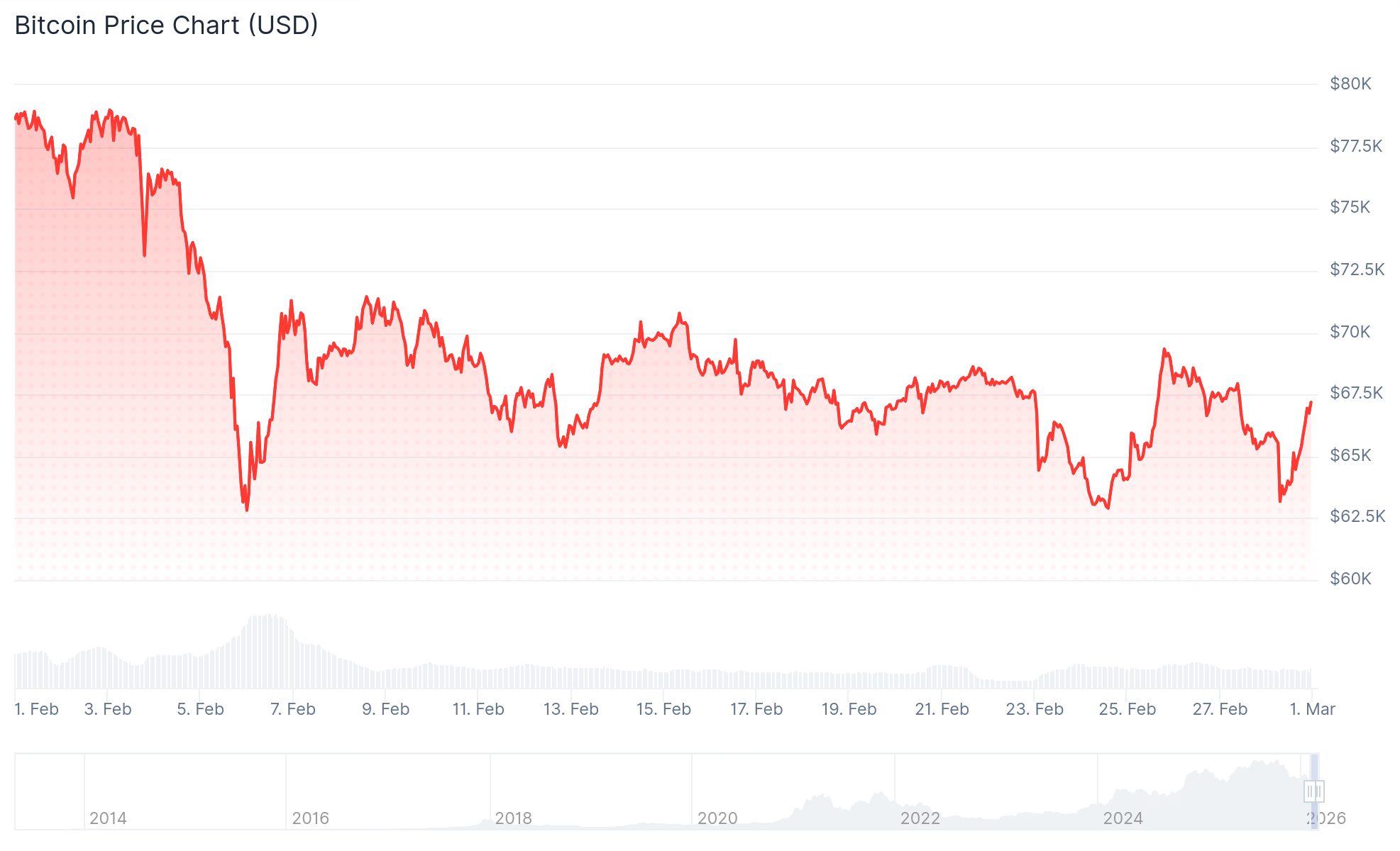
Spot crypto ETFs turned positive last week, but they’re still net negative for the month of February.
Both Bitcoin (BTC) and Ethereum (ETH) spot exchange-traded funds (ETF) closed out last week in the green, a reversal from a period of multi-week outflows.
After five straight weeks of net negative flows, Bitcoin spot ETFs recorded net inflows of $787.31 million for the week ending on Feb. 27, bringing total net assets to $83.4 billion, per data from SoSoValue. The previous three weeks of February all saw over $300 million in net outflows for BTC funds, while the last two weeks of January recorded over $1 billion in net outflows from the products.
Ethereum ETFs also saw a renewed interest last week, with net inflows totaling $80.46 million during the same timeframe, also reversing a five-week net outflow streak.
Despite the final weeks of last month shifting to the green, BTC and ETH ETFs were net negative for the month of February. However, the monthly losses for Bitcoin products were milder compared to the previous three months.
The flow reversal indicates renewed institutional investor interest in crypto exposure, while spot prices remain in a tight range since early February, after losing previous support levels.

While crypto markets are experiencing a broad recovery today, March 2, February was a rough month for both BTC and ETH. Bitcoin closed the month about 15% down, per data from CoinGlass, while ETH lost 17% last month.
This article was generated with the assistance of AI workflows.
Crypto World
BRR Stock Surges 5% Following 450 Bitcoin Acquisition and Enhanced Share Repurchase Initiative

Key Highlights
- BRR stock gains 5.43% following 450 BTC acquisition and enhanced buyback activity
- Total Bitcoin reserves reach 5,457 BTC after strategic purchase
- Share repurchase program gains traction as company addresses NAV gap
- 782K shares bought back at discounts ranging from 25% to 35% below NAV
- Combined strategy pushes BRR to $2.7944 closing price
ProCap Financial, Inc. (BRR) experienced notable gains in trading sessions following the announcement of expanded Bitcoin reserves and enhanced share buyback execution. Shares advanced 5.43% to reach $2.7944 as the firm disclosed a 450 BTC acquisition alongside active repurchase operations. This development underscores BRR’s twin-pillar approach to capital deployment during ongoing digital currency market fluctuations.
Corporate Bitcoin Reserves Reach New Heights
ProCap Financial bolstered its cryptocurrency treasury by securing 450 BTC during a period of market softness. This acquisition brought the company’s aggregate Bitcoin reserves to 5,457 BTC while lowering the per-coin average acquisition cost. The transaction, valued at approximately $35.4 million, was financed through operational capital and option exercise proceeds.
During the purchase window, Bitcoin was trading in the vicinity of $65,000, representing a substantial retreat from historical highs. Leadership interpreted this price correction as an opportune moment for strategic accumulation amid broader cryptocurrency market turbulence. Through this move, BRR enhanced its treasury exposure to the leading digital currency.
The enlarged Bitcoin position establishes BRR among the top 20 publicly listed corporate Bitcoin holders globally, specifically ranking 19th. The organization maintains its commitment to a treasury strategy centered on long-term digital asset value appreciation. Thus, BRR embeds cryptocurrency accumulation as a core component of its financial operations.
Share Repurchase Initiative Accelerates
Parallel to its cryptocurrency acquisitions, BRR amplified activity under its $100 million share buyback authorization. The board greenlit this program specifically to close the gap between trading price and underlying net asset value. Beginning in late December 2025, BRR has maintained consistent open-market share acquisitions.
Throughout the most recent ten-day period, the company repurchased 782,408 common shares at substantial discounts relative to NAV. Purchase transactions occurred at discounts spanning 25% to 35% beneath calculated intrinsic worth. These acquisitions decreased the share count while simultaneously boosting per-share asset metrics.
With roughly 82.6 million shares currently outstanding, the repurchase velocity carries material significance. Leadership maintains buyback operations as long as shares trade beneath intrinsic value thresholds. As such, BRR seeks to compress the NAV discount through measured capital redeployment.
Investor Response and Operational Framework
Equity markets reacted favorably to BRR’s coordinated Bitcoin acquisition and buyback intensification. The positive price movement signals investor endorsement of the company’s capital allocation methodology. ProCap Financial functions as a publicly listed agentic finance enterprise maintaining a digital asset-focused treasury strategy. The organization blends Bitcoin treasury management with equity optimization initiatives to enhance stockholder returns. This operational model sets BRR apart from conventional financial services entities.
Leadership remains committed to executing concurrent strategies encompassing asset accumulation and share count reduction. The firm preserves sufficient liquidity to enable additional Bitcoin purchases and share repurchases as market opportunities emerge. Consequently, BRR establishes positioning for sustained balance sheet expansion while simultaneously closing market valuation discrepancies.

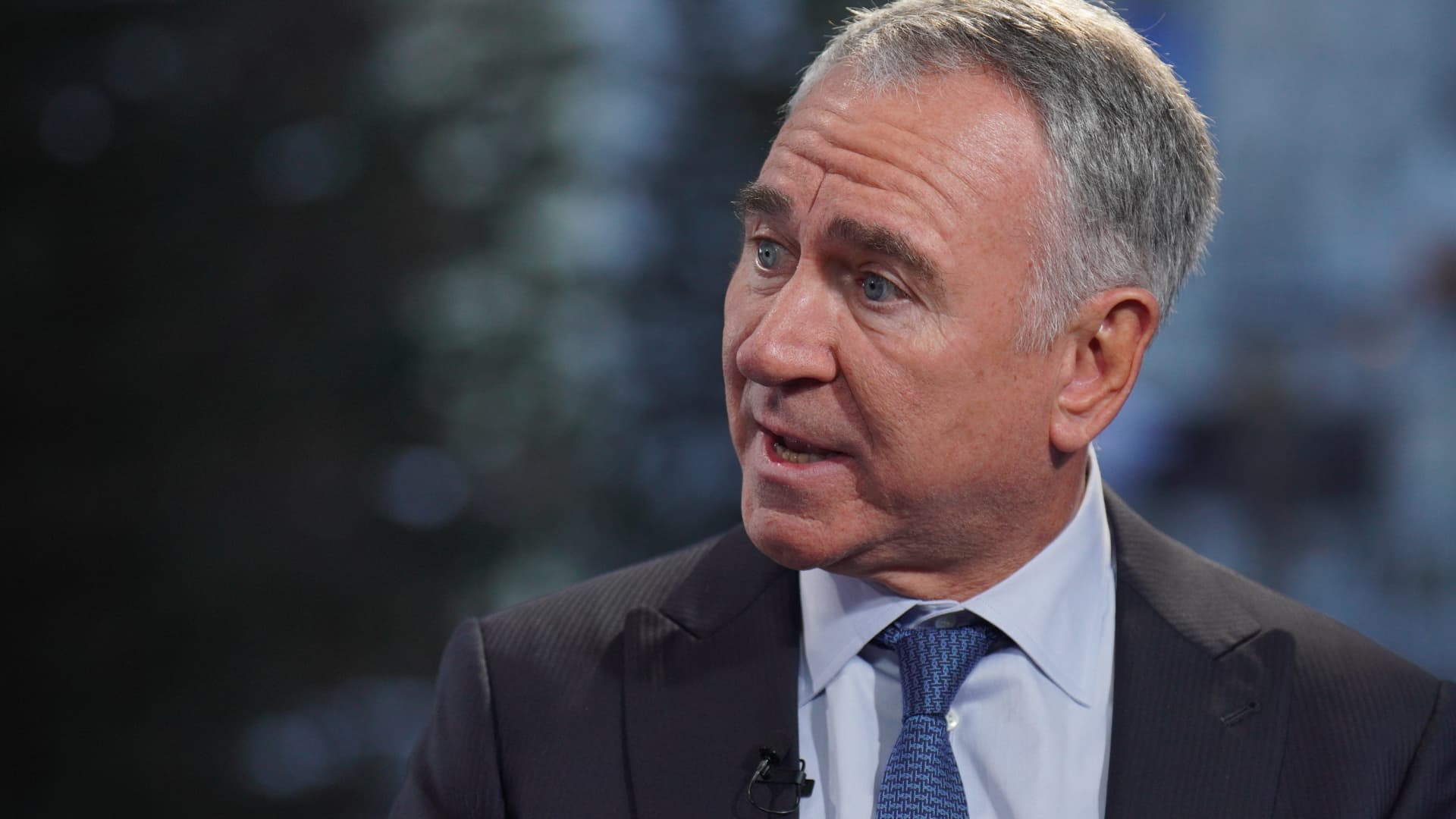
Ken Griffin, CEO of Citadel LLC speaks on Squawk on the Street at the World Economic Forum in Davos, Switzerland on Jan. 21, 2026.
Oscar Molina | CNBC
Billionaire investor Ken Griffin’s various hedge funds at Citadel generated positive returns in February, navigating a volatile month for markets as macro uncertainty and disruption from artificial intelligence whipsawed asset prices.
The firm’s flagship multistrategy Wellington fund rose 1.9% in February, bringing its year-to-date gain to 2.9%, according to a person familiar with the matter who asked not to be named because the information is private.
Performance was broad-based across the fund, with all five of Citadel’s core strategies — commodities, equities, fixed income, credit and quantitative — finishing the month in positive territory, the person said
The tactical trading fund advanced 1.5% in February, lifting its year-to-date return to 3.5%, the person said. The equities fund gained 1.0% for the month and is now up 2.2% in 2026. Meanwhile, the global fixed-income fund climbed 1.6% in February, bringing its year-to-date increase to 2.9%, according to the person.
The S&P 500 fell 0.9% in February amid fresh selling pressure in AI-linked and software shares. Fears that automation could erode established business models and trigger mounting layoffs have dampened investor sentiment, raising concerns about potential spillover effects on the broader economy. The market fell under massive pressure again after the U.S. and Israel’s attack on Iran caused oil prices to surge.
The firm declined to comment. Citadel oversaw $66 billion in assets under management as of Feb. 1.
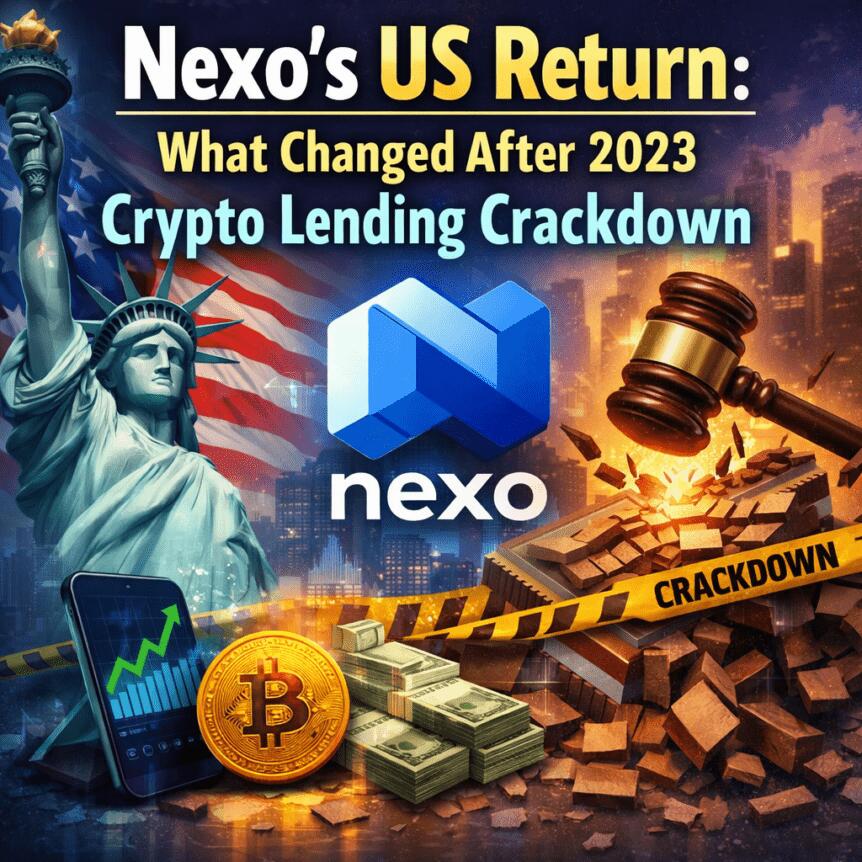
Three years after withdrawing from the US retail market and agreeing to a $45 million settlement, Nexo has quietly rebooted its US presence with a markedly different architecture. The relaunch is not a flashy rebrand of the old Earn product; it is a structural shift toward regulated infrastructure, designed to satisfy a regulatory framework that favors licensed intermediaries over direct yield issuance. The company’s comeback comes as the broader US crypto lending landscape continues to evolve—tethered to state-by-state licensing, disclosures, and ongoing scrutiny of how retail users are exposed to yield and risk. This piece examines what changed, why regulators pushed back in 2023, and how the 2026 model is positioned within a shifting enforcement environment, while outlining what US users should monitor before engaging with crypto-backed loans or yield-like offerings.
Key takeaways
-
After paying a $45 million settlement in 2023 and exiting the market, Nexo has reentered the US with a redesigned product model focused on regulatory alignment rather than direct yield issuance.
-
The 2023 crackdown centered on unregistered securities concerns. The SEC alleged that Nexo’s Earn Interest Product functioned as an unregistered security, raising questions about retail yield marketing, transparency, custody practices and counterparty risk.
-
The new model relies on licensed US partners. Instead of directly offering yield products, Nexo now operates through regulated US intermediaries, including licensed entities and, where required, SEC-registered investment advisers.
-
The Bakkt partnership anchors the compliance strategy. By collaborating with Bakkt, a publicly traded US crypto firm with regulatory licenses, Nexo shifts from a direct issuer model to a partner-delivered framework embedded within regulated infrastructure. (EXCHANGE: BKKT)
-
The comeback is a structural overhaul rather than a mere timing shift. US users should watch for disclosures, custody arrangements, and the role of intermediaries as the model unfolds.
Three years after exiting the US retail market and settling with federal and state regulators, Nexo’s return signals a deliberate pivot. It is not simply a resumption of old products under a new banner; it is an attempt to align with a regulated ecosystem that emphasizes transparency, risk controls and clearly defined counterparty relationships. The 2026 framework appears designed to keep yield-generating services within a compliant infrastructure, reducing the likelihood of unregistered securities concerns that previously drew regulatory heat.
What changed is not only the timing or political backdrop; it is the way these products are designed, delivered and supervised. The company’s latest disclosures stress an architecture in which licensed intermediaries and, when required, investment advisers sit between the user and any yield-like opportunity. The shift is part of a broader rethinking of how centralized crypto lending should operate in the United States, especially after the industry experienced liquidity strains and opaque yield structures in the wake of 2022’s market stress.
As part of its updated model, Nexo states that it will offer crypto-backed loans and yield-generating products through a network of licensed US partners. Crypto-backed loans, which use digital assets as collateral, require careful structuring around loan-to-value thresholds and liquidation terms. By channeling these products through regulated entities, Nexo aims to provide a more robust framework for risk disclosures and custody arrangements, addressing some of the concerns that regulators highlighted in the 2023 action.
The Bakkt partnership: Compliance by design
A central plank of the relaunch is the collaboration with Bakkt, a publicly traded US crypto firm with regulatory licenses. This partnership is meant to anchor the compliance framework by moving away from a direct issuer model to a partner-delivered ecosystem housed within regulated infrastructure. In practical terms, trading, custody, and advisory services would sit with licensed entities, while product components could be distributed through registered intermediaries. The approach is designed to satisfy regulator expectations for disclosures, risk management and clear line-of-sight into who is providing which service.
From a practical standpoint, the shift to a partner-led model reduces the direct exposure of retail customers to an issuer’s internal yield generation mechanics. Instead, the revenue and risk flow through an ecosystem of regulated participants, which in theory should improve oversight and reduce the potential conflicts of interest that can arise when an unregistered product is marketed to everyday investors. This approach also aligns with a broader trend in the US crypto industry: leveraging established, licensed infrastructure to deliver crypto services in a compliant manner rather than pushing the envelope on securities law through standalone product issuance.
It’s also worth noting that the regulatory backdrop remains nuanced. While enforcement actions shifted in late 2020s policy discussions, federal and state authorities continue to scrutinize offerings that resemble investment contracts or that blur the line between traditional banking and crypto lending. The Bakkt-backed model represents an attempt to thread the needle—offering access to lending and yield opportunities while embedding the activities within structures that regulators can monitor and regulate more effectively.
Beyond Bakkt, Nexo’s plan dovetails with ongoing regulatory discussions around custody, disclosures, and the sources of yield. The broader debate about how to classify crypto-based investment products—whether as securities, commodities or a new category—continues to shape the design of compliant offerings. For readers following the policy arc, recent coverage of how regulatory proposals could redefine commodities and securities remains relevant as the industry tests compliant wrappers for yield-related products.
Market context
Market context: The US regulatory environment for crypto lending remains fragmented, with federal and state authorities evaluating risk, disclosures and investor protection. The 2023 crackdown highlighted concerns about retail access to high-yield products and theOpacity around how returns were generated. Since then, enforcement has shown signs of recalibration, with some actions winding down and others continuing, but the industry is increasingly experimenting with partner-led models that align with licensed infrastructure and enhanced disclosures.
Why it matters
The Nexo return matters because it could signal a broader shift in how offshore or non-US-centric crypto firms re-enter the United States. If more projects adopt partner-led models with licensed intermediaries, it may reduce the likelihood of abrupt withdrawals and punitive penalties that followed early-2020s enforcement actions. For users, the implication is clearer disclosures, potentially better custody arrangements, and a framework where the counterparty risk and revenue sources are more explicit.
From a builder’s perspective, the emphasis on regulated wrappers could spur innovation in compliant product design. Companies may be more willing to collaborate with licensed intermediaries and investment advisers to offer yield-oriented products within a transparent, auditable structure. Critics, however, will watch closely to ensure that “compliant by design” does not become a cover for reduced access to liquidity or less competitive yields. The distinction between compliant structure and risk-free products remains critical; even with licensing and custody safeguards, users should assess loan terms, LTV thresholds, and potential fees with a critical eye.
In the broader industry, Nexo’s comeback is part of a larger pattern of cross-border crypto firms seeking to re-engage with the US market through compliant, partner-led approaches. If the model proves viable, it could open the door for other international players to reenter through similar regulatory wrappers rather than direct issuance. In the near term, the emphasis on disclosure quality, risk management, and clarity around revenue sources will be pivotal in determining whether this structural shift sustains long-term legitimacy in the eyes of regulators and investors alike.
What to watch next
-
Details of the licensing framework and the specific US partners involved in the model.
-
Regulatory approvals or filings at the federal or state level that may affect rollout timelines.
-
Progress of Bakkt’s integration and the distribution of product elements through licensed intermediaries.
-
Any new risk disclosures or consumer-protection measures required by regulators and how they are communicated to users.
-
Developments in US crypto lending regulation and how future policy could shape partner-led models.
Sources & verification
- Nexo’s 2023 settlement with the SEC and NASAA over the Earn product; verify via the referenced coverage describing a $45 million settlement and the scope of the unregistered securities allegations.
- Nexo’s 2026 return to the US through a press release announcing the relaunch and the partnership-driven structure.
- Nexo’s public blog post about the updated US strategy for clients, detailing the shift to licensed intermediaries and advisers.
- Cointelegraph reporting on related regulatory actions and market context, including coverage of Gemini Earn developments and broader enforcement trends.
Nexo’s US comeback: a structural overhaul anchored in regulated infrastructure
Nexo’s latest iteration presents a reimagined blueprint for delivering crypto-backed lending and yield opportunities within a regulated framework. The company emphasizes that the core idea—allowing users to borrow against digital assets and to earn yield through compliant means—remains intact. What has evolved is the wrapper around the product. The Earn-like offerings of the pre-2023 era were designed and marketed in ways regulators found problematic, particularly when returns were advertised to retail users without transparent disclosures or a clear line of counterparty risk. The 2023 settlement underscored these concerns and set the stage for a redesigned approach that prioritizes compliance from the outset.
In the 2026 structure, Nexo positions its services within the ecosystem of licensed US participants, with custody and advisory functions distributed across regulated entities. Bakkt (EXCHANGE: BKKT), a partner in this strategy, is intended to provide the regulated backbone that supports the delivery of crypto-backed loans and other yield-generating services. By embedding activities within a regulated infrastructure, the company aims to address the transparency and risk-management questions that regulators raised in 2023, including how returns are generated, who truly bears the risk, and how assets are custodied and safeguarded.
From a regulatory vantage point, the shift toward partner-led models reflects a broader trend in the industry: policymakers are seeking to separate product design from issuance while ensuring that every layer of the stack—custody, trading, lending, and advisory—operates under licensed oversight. The recalibration aligns with the idea that compliant structure can coexist with innovative financial services in the crypto space, provided clear disclosures, robust risk controls, and rigorous oversight are in place. While this does not guarantee a risk-free experience, it offers a pathway for legitimate participation in crypto lending that respects the nuanced regulatory landscape and the practical realities of retail investors seeking access to new financial instruments.
As the US regulatory conversation evolves, Nexo’s rehabilitation of its business model may serve as a blueprint for other firms seeking to re-enter through compliant channels rather than direct issuance of high-yield products. The ultimate test will be whether the heightened governance, partner alignment, and custody standards prove resilient to evolving rules and enforcement priorities. For users, the key takeaway remains vigilance: even within a compliant wrapper, understanding who the counterparty is, how assets are held, and how yields are generated remains essential as the market navigates a new era of governance and transparency in crypto finance.

TLDR
- Exxon Mobil’s share price reached a record $159.15, bringing its valuation to $635.43 billion.
- The stock has surged 41.69% in the past twelve months.
- Escalating Middle East conflicts — including a purported assault on Saudi Arabia’s Ras Tanura facility and warnings regarding the Strait of Hormuz — are boosting oil prices.
- XOM climbed 2% on Monday; ConocoPhillips (COP) posted the strongest performance with a 3.3% increase.
- Market watchers anticipate capital flowing into major energy corporations including XOM, CVX, COP, and EOG in the immediate future.
Shares of Exxon Mobil (XOM) reached an unprecedented peak of $159.15 during Monday’s trading session on March 2, driven by intensifying geopolitical instability in the Middle East that sent crude oil prices climbing and lifted the entire energy sector.
The energy giant’s shares advanced approximately 2% during morning trading hours. This latest gain extends an impressive 41.69% rally over the trailing twelve months, elevating XOM’s total market value to $635.43 billion.
Other major energy players posted similar advances. Chevron (CVX) appreciated 1.1%, ConocoPhillips (COP) jumped 3.3%, while Occidental Petroleum (OXY) climbed 1.9%. Each of these stocks exhibited even stronger momentum during pre-market hours before moderating slightly after the opening bell.
The primary driver was a sharp intensification of Middle Eastern hostilities throughout the weekend. News emerged regarding an alleged assault on Saudi Arabia’s Ras Tanura refinery, recognized as among the planet’s most significant oil export terminals. Additionally, three American service members lost their lives in Kuwait, while Israel maintained ongoing military exchanges with Hezbollah forces in Lebanon.
Iranian officials allegedly declared that vessels would be prohibited from transiting the Strait of Hormuz — a critical waterway responsible for transporting approximately 20% of global oil supplies. Although Tehran hasn’t officially blockaded the strait, mere speculation proved sufficient to influence commodity markets.
Why Large-Cap Energy Names Are in Focus
Mizuho analyst Nitin Kumar indicated his expectation that market participants will “favor large, bellwether stocks” such as Exxon, Chevron, ConocoPhillips, EOG Resources (EOG), and Occidental Petroleum during this period of uncertainty. While smaller or more highly leveraged companies might present greater upside potential, institutional capital is projected to concentrate on industry leaders in the near term.
Alpine Macro strategist Dan Alamariu put it plainly: “Out-of-region energy stocks should gain disproportionately; they track oil and gas prices and would be the only available source of supply if the Persian Gulf is shut off.”
It bears mentioning that XOM’s remarkable ascent hasn’t been entirely smooth. Data from InvestingPro indicates the shares might be trading above their Fair Value benchmark, despite hovering near their 52-week peak.
Recent XOM Developments
Fourth-quarter earnings figures fell short of year-over-year comparisons but managed to narrowly exceed Wall Street expectations, supported by output expansion in Guyana and the U.S. Permian Basin operations. BMO Capital subsequently elevated its price objective to $155 while retaining a Market Perform stance. Freedom Capital Markets maintained its Sell recommendation with a $123 valuation target.
Regarding legal matters, ExxonMobil’s Australian subsidiary received an $11.3 million penalty from the Federal Court of Australia for disseminating misleading information about fuel products in Queensland during the period spanning August 2020 through July 2024.
The corporation continues pursuing financial restitution for petroleum assets confiscated in Cuba over six decades ago, with judicial proceedings still underway.
XOM achieved its intraday peak of $159.15 on March 2, 2026.

FA want to trial ‘coach’s challenge’ in bid to reduce VAR delays

Strategy Makes Largest Bitcoin Purchase Since January

The X-Files Monster Episode So Gross It Made The Entire Crew Sick


-

 Sports7 days ago
Women’s college basketball rankings: Iowa reenters top 10, Auriemma makes history
-

 Politics7 days ago
Nick Reiner Enters Plea In Deaths Of Parents Rob And Michele
-

 Fashion3 days ago
Weekend Open Thread: Iris Top
-

 Business6 days ago
True Citrus debuts functional drink mix collection
-

 Politics4 days ago
ITV enters Gaza with IDF amid ongoing genocide
-

 Tech2 days ago
Unihertz’s Titan 2 Elite Arrives Just as Physical Keyboards Refuse to Fade Away
-
Sports3 days ago
The Vikings Need a Duck
-

 Crypto World6 days ago
XRP price enters “dead zone” as Binance leverage hits lows
-
 NewsBeat2 days ago
Dubai flights cancelled as Brit told airspace closed ’10 minutes after boarding’
-

 NewsBeat5 days ago
Cuba says its forces have killed four on US-registered speedboat | World News
-

 Tech6 days ago
Unsurprisingly, Apple's board gets what it wants in 2026 shareholder meeting
-
 NewsBeat5 days ago
Manchester Central Mosque issues statement as it imposes new measures ‘with immediate effect’ after armed men enter
-
 NewsBeat2 days ago
The empty pub on busy Cambridge road that has been boarded up for years
-

 NewsBeat1 day ago
‘Significant’ damage to boarded-up Horden house after fire
-

 NewsBeat2 days ago
Abusive parents will now be treated like sex offenders and placed on a ‘child cruelty register’ | News UK
-
 NewsBeat6 days ago
Police latest as search for missing woman enters day nine
-

 Entertainment10 hours ago
Baby Gear Guide: Strollers, Car Seats
-

 Business5 days ago
Discord Pushes Implementation of Global Age Checks to Second Half of 2026
-

 Business4 days ago
Only 4% of women globally reside in countries that offer almost complete legal equality
-
 Tech3 days ago
NASA Reveals Identity of Astronaut Who Suffered Medical Incident Aboard ISS