

Tech
Is my 7th grader falling behind? New Code.org leader offers insight and tips on the ‘tinkering age’ of AI



I recently asked my 13-year-old daughter, a Seattle Public Schools seventh grader, how much she was currently learning about and/or using artificial intelligence. “Not at all?” she sort of asked me back.
For a kid with an iPhone who interacts with Amazon’s Alexa on a daily basis, Kate is using AI more than she realizes. But aside from a STEM class she took as an elective in sixth grade, where she learned how to code a simple game, she was not getting any formal AI or computer science education this year at her middle school.
So I checked in with Karim Meghji, the new president and CEO at Code.org, the Seattle-based computer science education nonprofit, about whether I should be concerned that Kate is going to get left behind and never command a $500,000 salary at OpenAI.

Meghji is well positioned to know the answer. The tech vet spent 10 years at RealNetworks and is a former CTO at Seattle digital remittance company Remitly. He joined Code.org in 2022 to serve as chief product officer, leading a shift toward an AI-centered strategy at the organization, which was launched in 2013 by brothers Hadi and Ali Partovi with a goal of expanding computer science education to K-12 students.
Today, Code.org says its AI curriculum has already helped more than 6 million students learn foundational concepts around the technology, and more than 25 million students have completed activities in its “Hour of AI” campaign.
But while Meghji did briefly recommend some learning Kate could do through the Code.org curriculum, his goal was not promotional, and our conversation felt more like two parents, or a parent and a teacher, discussing the fundamentals of understanding a technology that will surely continue to shape the society Kate lives and works in.
A “glass box” approach: Meghji believes that middle school serves as the ideal transition point from basic AI literacy to true fluency, moving beyond introductory games to a “tinkering age” where students can finally look under the hood. Just as students dissect frogs to understand biology, Meghji believes this is the stage where they should begin “dissecting” AI models to understand the data and logic driving the technology.
“AI is this black box for most people today in the world. You put a prompt in, you get something back out,” Meghji said. “Our perspective is it needs to be a glass box, and we need to give them a screwdriver and a hammer and let them kind of get in there and unpack this thing.”
Students should learn about different kinds of data and how it all works, including the different ways information is input into AI models through prompts and context, and the how and why behind AI’s different outcomes.
Beyond the technical aspects: People who are older and allegedly smarter than Kate are fooled every day by content created by AI tools. That’s not going to slow down.
And Meghji said students today increasingly need to work in digital spaces where they understand such such things as how humans factors relate to design, and the ethics around AI.
“These are two very important components that are not technical, but about the application of technology that is really critical as more of us become builders and creators,” he said.
Students learning about technology also need to learn intangible skills that are important in almost any discipline. How do you work together? How do you communicate? How do you collaborate? How do you reflect, so that you can make something better?
What if she’s not going to be a software engineer? Kate shows more interest these days in ceramics than computer science, and I have a shelf of misshapen coffee mugs to prove it. But I’m smart enough to know — and have interviewed enough startup founders who agree — that AI is rapidly impacting all sorts of occupations and businesses.
“AI fluency and computer science foundations are so critical to just about every work experience you have,” Meghji said. “It doesn’t matter if you’re a software engineer, a biologist, a doctor, an architect, you are interacting and working with systems and tools, likely for a good portion of your day. And you have an ability to actually not only use those tools in the work you’re doing, but to make them better and make your work better if you understand what’s going on.”
So falling behind doesn’t just mean Kate isn’t learning how to build her own AI large language model, it means she might not understand how to use one to make herself a better doctor or welder.
Code.org aims to move students beyond “low literacy” interactions, which Meghji describes as simple, one-off prompts that treat AI like an “evolution of search.” Instead, he wants students to engage in deep, multi-step dialogues where they challenge the tool and inspect its “chain of thought” reasoning. By learning to guide and refine these autonomous systems, students can move from merely using technology to effectively collaborating with it.
Final tips for where to start with kids and AI: There are many things about AI that concern and confuse me, so pushing my kid toward adopting the skills to use the tech has admittedly been a slow roll. Meghji offered up a few ways to get started:
- Experiment together in low-stakes ways: Sit down as a family and explore AI tools for text, images, and video as a team. The goal is to find a child’s specific passion and layer on a “parental construct” of guidance, ensuring they learn to use these tools responsibly rather than just consuming them in isolation.
- Advocate for computer science in the classroom: Meghji encourages parents and students to ask for specific curricula, like Code.org’s “Computer Science Discoveries,” which teaches middle schoolers to build games and websites while working directly with AI models.
- Embrace the “tinkering age”: He recommends using platforms like Scratch or Code.org to keep coding skills fresh through play. By “experimenting with the technology of building” — whether through block-based coding or generating apps with AI tools — students develop the builder mindset necessary for any future career, “whether she’s a welder or a cancer researcher.”


Call of Duty is getting a new battle royale mode later this month. The popular first-person shooter will introduce Black Ops Royale as a free game mode on March 13.
Black Ops Royale pays homage to Blackout, the series’ first foray into a battle royale game mode back in CoD: Black Ops 4. Matches will have 100 players dropping in as four-person teams. The mode takes place on the massive Avalon map, but there will be no familiar Warzone features like loadouts, the gulag, or buy stations. Instead, it’s all about the scavenging the weapons from the recent Black Ops 7 game and upgrading them.
According to the team’s announcement, there will be other familiar features from the Blackout days such as the weapon handling and bullet drop that have been reimagined for modern-day Warzone players. You’ll also be able to further customize your play style with an open-ended perks system, another nod to the original Call of Duty BR perk mechanic.

Australia could soon force the Apple App Store to remove AI apps that let users access adult or violent content without age verification.

Australia might soon ask Apple to remove AI apps without age checks.
Though Apple has already complied with Australia’s social media ban for teens by updating the App Store’s age-assurance tools, the iPhone maker might soon need to take further action.
To be more specific, app marketplaces will likely be required to block AI apps that have not implemented age-checking measures. Regulators in Australia are targeting artificial intelligence apps that let users under 18 access adult content, extreme violence, self-harm, and eating disorder content.
Continue Reading on AppleInsider | Discuss on our Forums
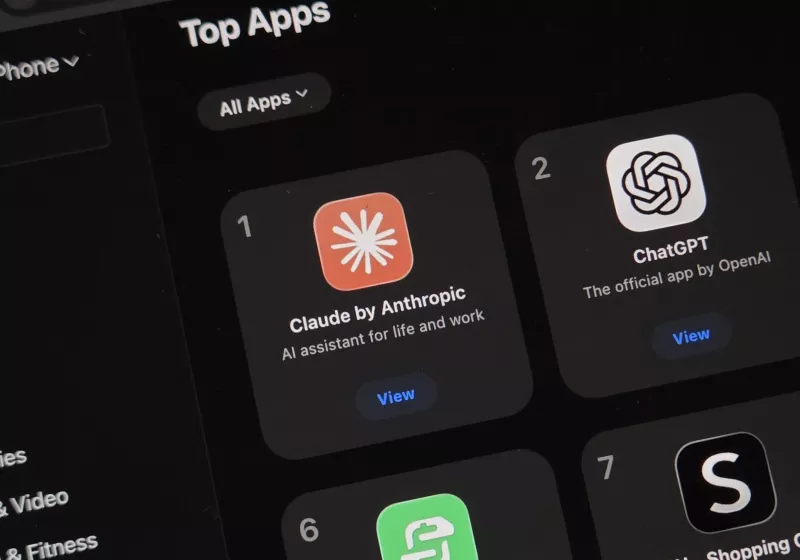
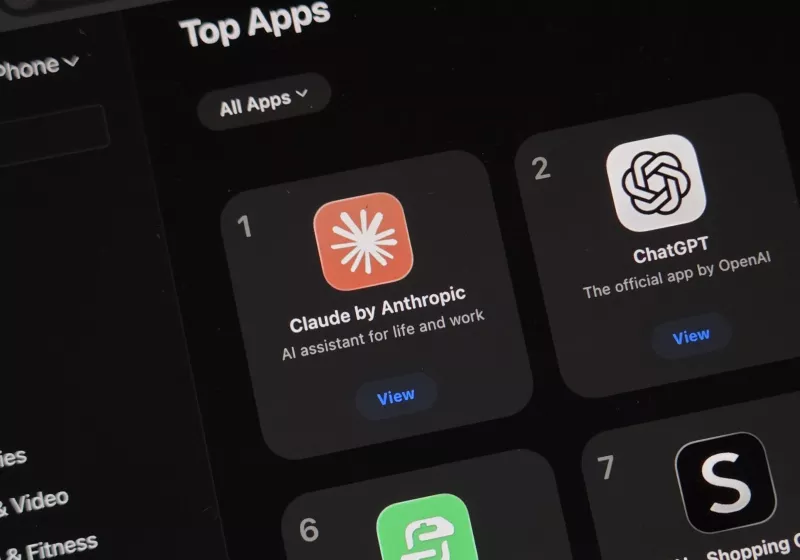
That happened late on Saturday, February 28, and as of this writing, Claude is still holding the top spot. ChatGPT has slipped to second place, with Google’s Gemini trailing in third. It’s a remarkable rise for an app that wasn’t even in the top 100 back in January.
Read Entire Article
Source link

Editor’s note: GeekWire publishes guest opinions to foster informed discussion and highlight a diversity of perspectives on issues shaping the tech and startup community. If you’re interested in submitting a guest column, email us at tips@geekwire.com. Submissions are reviewed by our editorial team for relevance and editorial standards.

The power of narratives is compelling. Humans trust story tellers and respond to stories more than facts. But, narratives can manipulate the public into supporting misguided policies with dire consequences. In Washington state, such narratives often go unchallenged. Let’s unpack the proposed income tax.
The term “millionaire’s tax” itself. This new tax is an income tax. No income tax in history has ever stopped at just high earners. The legislature is trying to convince you otherwise, but they’ve raised gas taxes, payroll taxes, revenue (B&O) taxes and capital gains taxes. In Olympia, it’s never enough! They are trying to claim that an income tax won’t broadly expand in a future “emergency.”
“Emergency” income tax bill. This is another narrative favorite. Last year the state increased spending $9 billion and is increasing spending $2 billion MORE this year to over $80 billion. The solution to balancing the budget is to modestly reduce spending, not increase it further. But, that reduces dollars flowing to labor unions and non-profits who benefit most from state spending. So, the income tax is labeled an “emergency” to avoid an initiative challenge. How can you trust legislators who play such games?
“Lowering” the highest estate tax. Washington already had the highest state estate tax in the country at 20%. Last year it increased to 35%. So, more people moved away. Now the legislature is trying to “sell” the new income tax by “reducing” the estate tax back to 20% — STILL the highest in the country. It is just a narrative to justify creating an income tax. The combination of 20% estate taxes, 10% capital gains tax and an additional 10% income tax will drive people out of Washington faster and keep others from ever coming.
People don’t leave because of taxes. This narrative is simply false. Of course, people leave — I already returned to Georgia! Law firms and tax advisors have created practices to serve the massive increase in clients re-domiciling out of Washington. Financial advisory groups are publishing tax analysis that is motivating others to move. Club member requests for non-resident status are surging. Non-profits are hearing from longtime donors that their giving is focused on causes in their new home state. Every day I hear about someone else leaving Washington for Nevada, Texas, Idaho or elsewhere. Countless others who still have children in schools are making their plans to leave as soon as they can. Even the legislature knows this — that is why they are posturing to reduce the estate tax. Washington’s reputation as a pro-business and pro-innovation state has plummeted (dropping from top 5 to bottom 5 in five years). Many future founders and job creators will not be coming to the state. A critical source of competitive advantage for attracting bright and ambitious people to Washington state is going away.
By now you have probably created a narrative about me — perhaps as a venture capitalist looking out for himself and the founders he has backed. But, my inspiration for working so hard to create opportunities for others derives from my life experiences. My mom never went to college, and my dad was the first in his family to attend college. They met in the U.S. Army, and both worked incredibly hard to provide an opportunity for our family. After graduating from a large public high school in Miami, I attended Dartmouth College and that experience changed the trajectory of my life. Twenty-six years ago, I took the greatest risk of my life to move our young family from Georgia to Seattle to join a fledgling investment firm backing founders right as the dot-com bubble burst! Our firm, Madrona, helped founders prioritize, cut costs and survive a true economic crisis exacerbated by 9/11. Founder resilience produced amazing success stories that contributed back to Washington state in countless ways. Now, most of those entrepreneurs have left the state for pro-business communities.
Everyone deserves an opportunity to realize their full potential in life and earn the benefits from their hard work and risk-taking. Most who succeed choose to be very generous with their time, talents and resources in the communities where they live. State political leaders, focused on dividing the pie rather than expanding the pie, are substantially driving innovators away from Washington! Sadly, that is not a narrative, but a reality the state will have to live with forever if they create an income tax today.

Australia’s government may take a strict stance on ensuring younger users cannot access AI chatbots. Reuters reports that Australian regulators may require app storefronts to block AI services that do not implement age verification for restricting mature content by March 9.
“eSafety will use the full range of our powers where there is non-compliance,” a representative for the commissioner said in a statement to the publication. Those paths could include “action in respect of gatekeeper services such as search engines and app stores that provide key points of access to particular services.”
A review by Reuters found that of 50 leading text-based AI chat services in the region, only nine had introduced or shared plans for age assurance. Eleven services reportedly “had blanket content filters or planned to block all Australians from using their service,” according to the report, leaving a large number that had not taken public action a week ahead of the country’s deadline. Failure to comply could see AI companies face fines of up to A$49.5 million ($35 million).
The question of which parties are responsible for keeping children from accessing potentially harmful content is being debated around the world. In the US, for instance, Apple and Google have been lobbying to have the task delegated to platforms rather than app store operators. The language from the Australian regulators about all stores is hardly definitive at this stage, but given the breadth of its sweeping ban on the use of social media and some highly social digital platforms for citizens under age 16 enacted last year, an aggressive stance seems to align with leaders’ priorities.

Take your streaming goodness to the next level with this phenomenal Google TV Streamer (4K) deal.
Head on over to the Google Store and you’ll see that the Google TV Streamer (4K) is down to just £79, marking one of the lowest prices yet for the device. Given that it normally costs £99 at retail, that’s quite a decent £20 saving to be had.
The Google TV Streamer 4K is now 20% off, making it one of the easiest ways to upgrade your setup without overspending.

Google TV Streamer 4K drops 20%, where affordable 4K streaming starts now
For those who don’t know, the Google TV Streamer (4K) provides Google’s most robust streaming solution that you can buy for watching movies and shows in beautiful 4K HDR. It’s also great for watching live TV, Netflix and more.
If you want a device that more than expertly handles paid and free streaming services, this is the device to get. You can check out our versus of the device, compared to Apple TV 4K and the Chromecast, too.
The reason why the Google TV Streamer (4K) is such a treat to use compared to the competition is down to its unrivalled interface, performance and much more.

Get Updates Straight to Your WhatsApp
No matter what app you’re manoeuvring through, be it Prime Video, YouTube or Netflix, the transitions between each will occur smoothly as you scroll through menus, so you never feel held up.
It also helps that the included remote makes it incredibly easy to search for the shows and actors you like, simply by using voice search and speaking into the connected remote.
Just as a quick side note, the 32GB of storage on board the device gives the Google TV Streamer (4K) a leg-up on the competition, as you can use the space to download and store apps. That’s not standard on most streaming sticks.
For what it can do, I still think it’s well worth the price it goes for full price, but when there’s a slick £20 off, it becomes a true bargain.
SQUIRREL_PLAYLIST_10148964

I was all ready to write a story this week on the entry-level iPad finally getting support for Apple Intelligence. That story never happened because that iPad never happened. The iPad I tend to recommend for people, the one that’s the best purchase for families and kids, the one that’s actually called “iPad,” remains un-updated. Instead, in the past six months, Apple’s been upgrading its already more powerful and more expensive iPads.
The iPad Pro M5, released last fall, took an already fast and expensive iPad and made it even faster. To whose benefit, though? I do very much appreciate the iPad Pro’s wonderful OLED display and its thinner size in a keyboard case, but with a starting price of $999, it’ll cost you as much as or more than a MacBook Air for the privilege.
The new iPad Air, Apple’s Goldilocks-in-the-middle iPad of sorts, just got a new M4 chip and faster wireless internals. It’s a $599 and up proposition, which isn’t awful for its capabilities, but depending on how much storage and how many accessories you get, it’s more like a mitigated-cost pro iPad with a few extras cut out. No OLED screen, for instance.
But what about the basic iPad?
The regular iPad is the iPad that most needs an upgrade. The existing model, which costs $349, only has an A16 chip inside. That’s the same chip Apple debuted in the iPhone 14 Pro in 2022, three and a half years ago.
That A16 chip is the only one in Apple’s current product lineup that can’t do Apple Intelligence. The iPad is cut off from Apple’s own heavily touted and heavily disappointing AI.
I’d say you won’t miss Apple Intelligence, but that’s right now. Things should change soon. Apple’s new deal with Google is going to knit Gemini into Siri, in ways that haven’t been explained but that should result in better AI on Apple products at last. And, again, as far as history suggests, this entry iPad won’t be able to access it.
The A16 chip is also another year older and comparatively slower. It’s still fine for everyday movie watching and games and basic things, but as an investment, it’s a dicier proposition. The base 128GB of storage is adequate, but Apple’s not doing any favors with storage space there.
Is this a stealth price bump in disguise?
The message seems clear: Apple wants you to spend up for a fancier iPad. And in this economy, that’s tougher than ever. It also makes me angrier that Apple still hasn’t found a way to truly turn iPads into Mac-compatible alternatives, even though iPadOS has gotten better at doing more things, and Apple is about to likely release an even more affordable MacBook. But it’s always made me feel that spending less on an iPad makes more sense, since it’s not a Mac replacement.
So I’m waiting. So are others, I bet. The iPad Air is fine, but it’s not a new everyday iPad. And for those of you who were hoping for a good family deal, I’m sorry: I guess Apple considers the Air the new basic iPad now. With better Pro and Air models, that basic iPad is looking, sadly, worse than ever.

Apple has reportedly asked Google to look into “seting up servers” for a Gemini-powered upgrade to Siri that meets Apple’s privacy standards. The Verge reports: Apple had already announced in January that Google’s Gemini AI models would help power the upgraded version of Siri it delayed last year, but The Information’s report indicates Apple might lean even more on Google so it can catch up in AI.
The original partnership announcement said that “the next generation of Apple Foundation Models will be based on Google’s Gemini models and cloud technology,” and that the models would “help power future Apple Intelligence features,” including “a more personalized Siri.” While the announcement noted that Apple Intelligence would “continue to run on Apple devices and Private Cloud Compute,” it didn’t specify if the new Siri would run on Google’s cloud. Apple’s Private Cloud Compute is not only underpowered but it’s also underutilized in its current state, notes 9to5Mac, “with the company only using about 10% of its capacity on average, leading to some already-manufactured Apple servers to be sitting dormant on warehouse shelves.”

Paramount Skydance plans to combine HBO Max and Paramount+ into a single streaming platform following its acquisition of Warner Bros. Discovery. “As we said, we do plan to put the two services together, which today gives us a little over 200 million direct-to-consumer subscribers,” said David Ellison, the company’s CEO. “We think that really positions us to compete with the leaders in the space.” The deal still needs regulatory approval. The Washington Post reports: He added that Paramount didn’t want to make changes to the HBO brand. “Our viewpoint is HBO should stay HBO,” Ellison said, noting that his favorite HBO product is “Game of Thrones.” If Justice Department regulators allow the deal to go through, it would place recent HBO Max hits, such as “The Pitt” and “A Knight of the Seven Kingdoms,” alongside Paramount offerings including “South Park” and “Yellowstone.” “They built a phenomenal brand,” he said. “They are a leader in the space, and we just want them to continue doing more of it.”
The deal to buy Warner Bros., valued at about $110 billion, will almost surely attract regulatory scrutiny from the Justice Department because — without divestments — it places major swaths of the film, television and news industries under one roof: Warner Bros. and Paramount studios, HBO Max and Paramount+, and CBS and CNN would all have the same parent company. Ellison expressed confidence on the call that the deal wouldn’t face hurdles with regulators.


Early bird ticket pricing ends this week for GeekWire’s Agents of Transformation, a half-day summit in Seattle that will explore how agentic AI is redefining work, creativity, and leadership.
The event, presented by Accenture, will take place Tuesday, March 24, at Block 41 in Seattle. Grab tickets now via the event site or below.

The focus is on questions that are top of mind for many right now: What does the rise of AI agents mean for productivity, the future of work, and the way companies and industries operate? We’re bringing together people who can speak to both the big picture and the practical realities of putting AI to work inside organizations.
Here are a few of the leaders who will be joining us:
- Charles Lamanna, president of Business Applications & Agents at Microsoft, where he leads efforts to embed AI agents into enterprise workflows across Microsoft’s customer base. A former startup founder, he previously led Microsoft’s Power Platform low-code technology.
- Deepak Singh, vice president of Kiro at Amazon Web Services, where he leads a new approach to building software through AI agents and spec-driven development — with Kiro, an agentic development environment, at the center of that work. He previously led the development of agents for software development and code transformation including with Amazon Q Developer.
- Angela Garinger, vice president of AI Go-to-Market Transformation at Outreach, where she helps organizations redesign revenue teams for the AI era. She leads the company’s human-and-AI integrated GTM strategy, combining AI Agents with modern sales workflows to drive predictable growth and operational resilience.
- Vijaye Raji, CTO of Apps and head of engineering at OpenAI where he oversees the foundations of OpenAI’s applications, leads major products, and is responsible for scaling the engineering organization. A Microsoft and Meta vet, Raji founded product experimentation platform Statsig, which was acquired by OpenAI in 2025.
The afternoon will also feature a startup zone where early stage companies will showcase their work and pitch for a live audience, along with panel discussions, fireside chats, and interviews. The main program runs from 1:30 p.m. to 5:30 p.m., followed by a networking reception.
This event builds on an ongoing GeekWire editorial series, underwritten by Accenture, spotlighting how startups, developers and tech giants are using intelligent agents to innovate.
Thanks to presenting sponsor Accenture; gold sponsors Nebius and AWS Marketplace; and silver sponsors Prime Team Partners, Astound Business Solutions, Pay-i and Cascade for helping to make the event possible. For sponsorship opportunities, to participate in the startup zone, or any other inquiries about the event, contact events@geekwire.com.
Details
- When: Tuesday, March 24, 2026, 1:30–5:30 p.m.
- Where: Block 41, 115 Bell St., Seattle
- Tickets: Early bird pricing is $145 through March 5.
Register here or below, and see you March 24 in Seattle!

Call of Duty will add Black Ops Royale, a new free game mode coming March 13

Why You Should Never Pick Up Money From The Ground #safety #psa

Plug Power Inc. (PLUG) Q4 2025 Earnings Call Transcript


![EXTREME WARNING: This Has NEVER Happened in Bitcoin History [Until Now]](https://wordupnews.com/wp-content/uploads/2026/03/1772497609_maxresdefault-80x80.jpg)
-

 Fashion3 days ago
Weekend Open Thread: Iris Top
-

 Politics4 days ago
ITV enters Gaza with IDF amid ongoing genocide
-

 Business6 days ago
True Citrus debuts functional drink mix collection
-

 Tech2 days ago
Unihertz’s Titan 2 Elite Arrives Just as Physical Keyboards Refuse to Fade Away
-
Sports3 days ago
The Vikings Need a Duck
-

 Crypto World7 days ago
XRP price enters “dead zone” as Binance leverage hits lows
-
 NewsBeat2 days ago
Dubai flights cancelled as Brit told airspace closed ’10 minutes after boarding’
-

 NewsBeat5 days ago
Cuba says its forces have killed four on US-registered speedboat | World News
-

 Tech6 days ago
Unsurprisingly, Apple's board gets what it wants in 2026 shareholder meeting
-
 NewsBeat3 days ago
The empty pub on busy Cambridge road that has been boarded up for years
-
 NewsBeat5 days ago
Manchester Central Mosque issues statement as it imposes new measures ‘with immediate effect’ after armed men enter
-

 NewsBeat1 day ago
‘Significant’ damage to boarded-up Horden house after fire
-

 NewsBeat2 days ago
Abusive parents will now be treated like sex offenders and placed on a ‘child cruelty register’ | News UK
-
 NewsBeat6 days ago
Police latest as search for missing woman enters day nine
-

 Entertainment16 hours ago
Baby Gear Guide: Strollers, Car Seats
-

 Business5 days ago
Discord Pushes Implementation of Global Age Checks to Second Half of 2026
-

 Business4 days ago
Only 4% of women globally reside in countries that offer almost complete legal equality
-
 Tech4 days ago
NASA Reveals Identity of Astronaut Who Suffered Medical Incident Aboard ISS
-

 Crypto World6 days ago
Entering new markets without increasing payment costs
-
Politics2 days ago
FIFA hypocrisy after Israel murder over 400 Palestinian footballers